

Preclinical Characterization and Phase I Trial Results of INBRX-109, A Third-Generation, Recombinant, Humanized, Death Receptor 5 Agonist Antibody, in Chondrosarcoma
Open accessPublished version of a preprint
The DOI matches its Crossref record; 46 of the 49 references it cites were found in a registry or an index.
Abstract
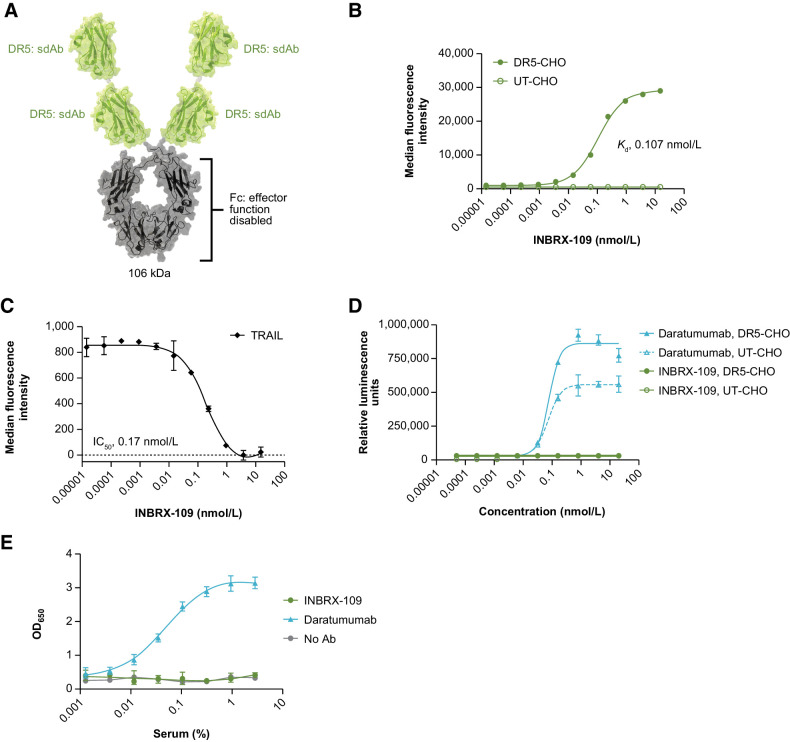
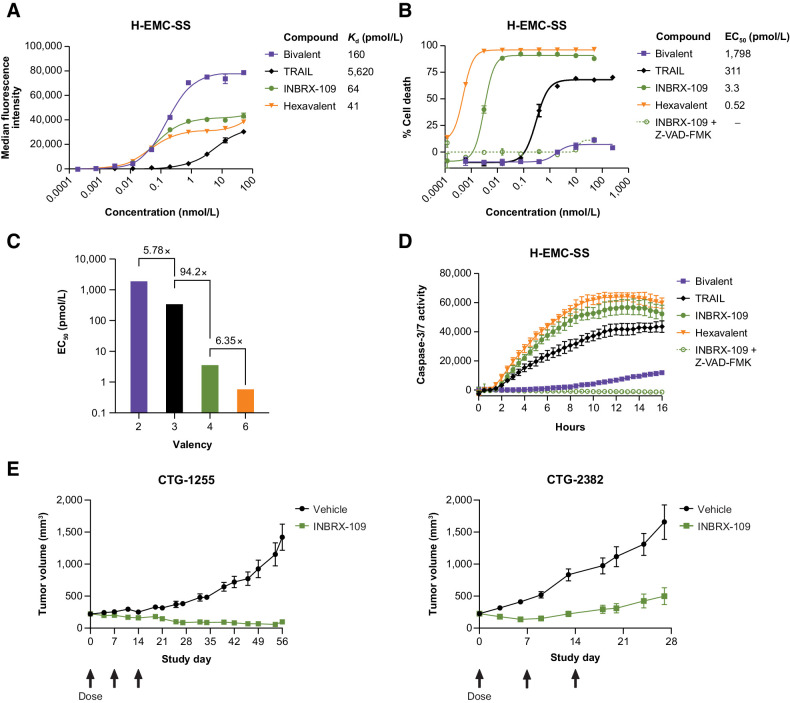
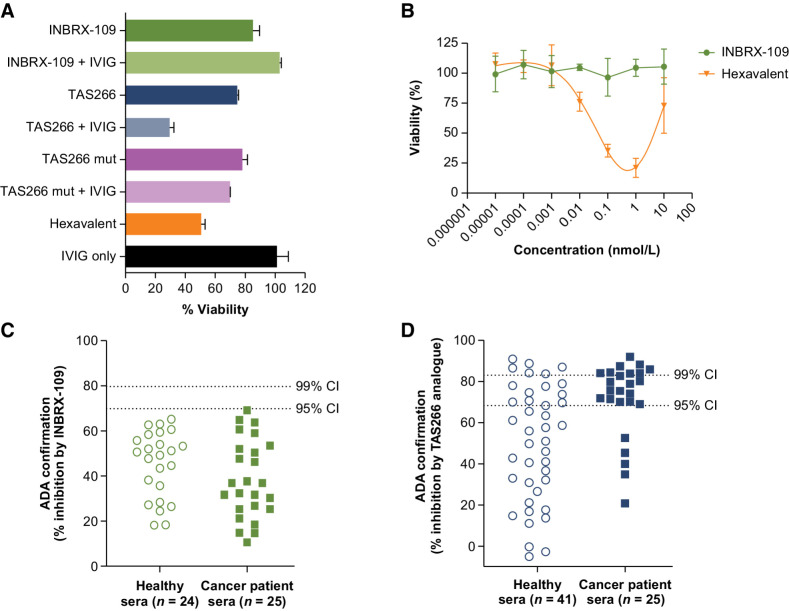
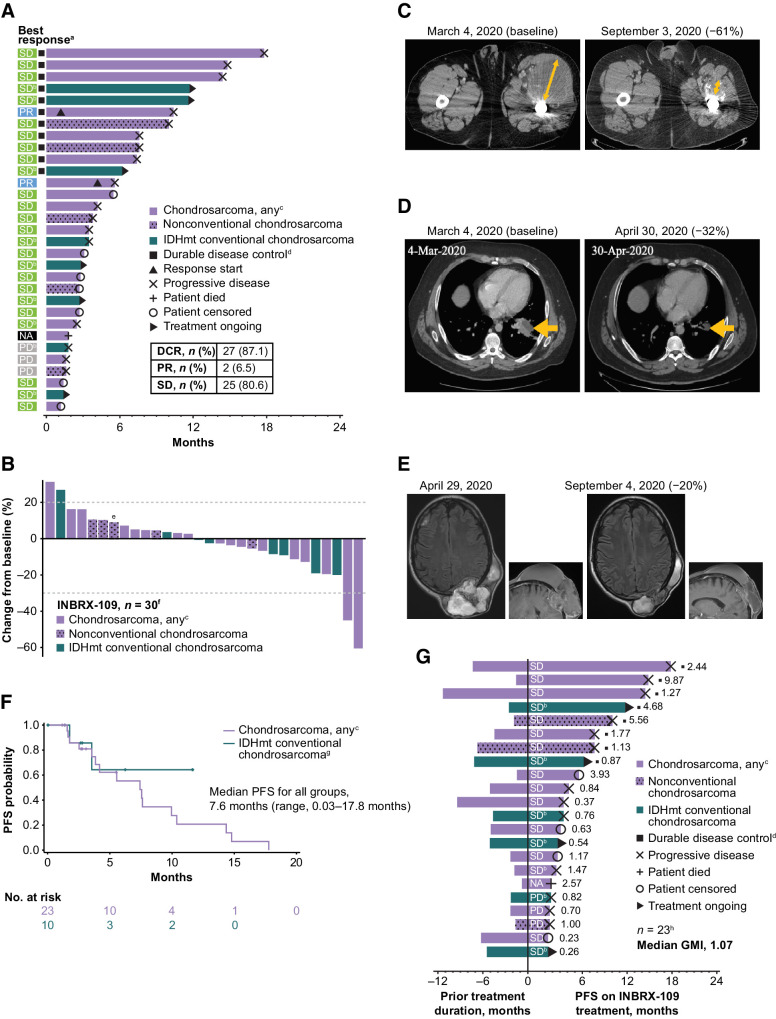
Purpose: Patients with unresectable/metastatic chondrosarcoma have poor prognoses; conventional chondrosarcoma is associated with a median progression-free survival (PFS) of <4 months after first-line chemotherapy. No standard targeted therapies are available. We present the preclinical characterization of INBRX-109, a third-generation death receptor 5 (DR5) agonist, and clinical findings from a phase I trial of INBRX-109 in unresectable/metastatic chondrosarcoma (NCT03715933). Patients and Methods: INBRX-109 was first characterized preclinically as a DR5 agonist, with binding specificity and hepatotoxicity evaluated in vitro and antitumor activity evaluated both in vitro and in vivo. INBRX-109 (3 mg/kg every 3 weeks) was then evaluated in a phase I study of solid tumors, which included a cohort with any subtype of chondrosarcoma and a cohort with IDH1/IDH2-mutant conventional chondrosarcoma. The primary endpoint was safety. Efficacy was an exploratory endpoint, with measures including objective response, disease control rate, and PFS. Results: In preclinical studies, INBRX-109 led to antitumor activity in vitro and in patient-derived xenograft models, with minimal hepatotoxicity. In the phase I study, INBRX-109 was well tolerated and demonstrated antitumor activity in unresectable/metastatic chondrosarcoma. INBRX-109 led to a disease control rate of 87.1% [27/31; durable clinical benefit, 40.7% (11/27)], including two partial responses, and median PFS of 7.6 months. Most treatment-related adverse events, including liver-related events, were low grade (grade ≥3 events in chondrosarcoma cohorts, 5.7%). Conclusions: INBRX-109 demonstrated encouraging antitumor activity with a favorable safety profile in patients with unresectable/metastatic chondrosarcoma. A randomized, placebo-controlled, phase II trial (ChonDRAgon, NCT04950075) will further evaluate INBRX-109 in conventional chondrosarcoma.
Overview
The claims and statistics of this paper haven’t been checked yet.
Free: it reads the open-access text and checks the first 5 claims that cite a source we can check. Create a free account to check every claim.
Integrity signals
Registry
Cites
Statistics
Figures
Verification
Claims the paper makes
The claims and statistics of this paper haven’t been checked yet.
Free: it reads the open-access text and checks the first 5 claims that cite a source we can check. Create a free account to check every claim.
Claims other papers make about this one
Each is checked against this paper’s own text: does it say what the citing paper says it does?
The source backs part of the claim, not all of it — or backs it for a different population, condition or comparison.
In the citing paper
“patients with unresectable and/or metastatic chondrosarcoma have poor prognoses, with a median PFS of <4 months after first‐line chemotherapy. 43 , 44”
From Nivolumab and sunitinib in patients with advanced bone sarcomas: A multicenter, single‐arm, phase 2 trial (2025) · cites this paper as [43]
Experimental — accuracy not yet measuredThe source backs part of the claim, not all of it — or backs it for a different population, condition or comparison.
In the citing paper
“In patients with conventional chondrosarcoma durable clinical benefit in 40.7% (11 of 27) patients, including two PRs, was observed with INBRX‐109, an antibody drug targeting a specific receptor (DR5). 43”
From Nivolumab and sunitinib in patients with advanced bone sarcomas: A multicenter, single‐arm, phase 2 trial (2025) · cites this paper as [43]
Experimental — accuracy not yet measured
Self-check
Percentages, sums and reported differences re-computed from the paper’s own numbers.
The self-check needs the paper’s full text.
Citations
Cites
Caspases: the executioners of apoptosis
COHEN, G. M. (1997) · Biochemical Journal · doi:10.1042/bj3260001 · Cited by 4,719 · cited 1×
“Multimerization of DR5 leads to the formation of the DISC, in which caspase-8 is activated, leading to the subsequent activation of the downstream executioner caspase-3 and caspase-7 (10, 12, 19) and the coordinated destruction of the cell.”
BackgroundTumoricidal activity of tumor necrosis factor-related apoptosis-inducing ligand in vivo.
Walczak, H., Miller, R. E., Ariail, K., Gliniak, B., Griffith, T. S., Kubin, M., Chin, W., Jones, J., Woodward, A., Le, T., et al. (1999) · Nature Medicine · doi:10.1038/5517 · Cited by 2,497 · cited 2×
“DR5 has long been of interest in oncology due to its ability to induce programmed cell death through the extrinsic apoptosis pathway in a cancer-biased manner (8, 9).”
BackgroundSafety and antitumor activity of recombinant soluble Apo2 ligand
Ashkenazi, A., Pai, R. C., Fong, S., Leung, S., Lawrence, D. A., Marsters, S. A., Blackie, C., Chang, L., McMurtrey, A. E., Hebert, A., et al. (1999) · Journal of Clinical Investigation · doi:10.1172/jci6926 · Cited by 2,213 · cited 2×
“DR5 has long been of interest in oncology due to its ability to induce programmed cell death through the extrinsic apoptosis pathway in a cancer-biased manner (8, 9).”
BackgroundOverview of cell death signaling pathways
Jin, Z., & El-Deiry, W. S. (2005) · Cancer Biology & Therapy · doi:10.4161/cbt.4.2.1508 · Cited by 1,326 · cited 1×
“Multimerization of DR5 leads to the formation of the DISC, in which caspase-8 is activated, leading to the subsequent activation of the downstream executioner caspase-3 and caspase-7 (10, 12, 19) and the coordinated destruction of the cell.”
BackgroundTRAIL receptor-2 signals apoptosis through FADD and caspase-8
Bodmer, J.-L., Holler, N., Reynard, S., Vinciguerra, P., Schneider, P., Juo, P., Blenis, J., & Tschopp, J. (2000) · Nature Cell Biology · doi:10.1038/35008667 · Cited by 649 · cited 1×
“Multimerization of DR5 leads to the formation of the DISC, in which caspase-8 is activated, leading to the subsequent activation of the downstream executioner caspase-3 and caspase-7 (10, 12, 19) and the coordinated destruction of the cell.”
BackgroundWe Should Desist Using RECIST, at Least in GIST
Benjamin, R. S., Choi, H., Macapinlac, H. A., Burgess, M. A., Patel, S. R., Chen, L. L., Podoloff, D. A., & Charnsangavej, C. (2007) · Journal of Clinical Oncology · doi:10.1200/jco.2006.07.3411 · Cited by 559
Lavrik, I., Golks, A., & Krammer, P. H. (2005) · Journal of Cell Science · doi:10.1242/jcs.01610 · Cited by 494
Kelley, S. K., Harris, L. A., Xie, D., DeForge, L., Totpal, K., Bussiere, J., & Fox, J. A. (2001) · The Journal of Pharmacology and Experimental Therapeutics · doi:10.1016/s0022-3565(24)29298-3 · Cited by 445
Olmos, D., Postel-Vinay, S., Molife, L. R., Okuno, S. H., Schuetze, S. M., Paccagnella, M. L., Batzel, G. N., Yin, D., Pritchard-Jones, K., Judson, I., et al. (2010) · The Lancet Oncology · doi:10.1016/s1470-2045(09)70354-7 · Cited by 340
Dahlin's Bone Tumors: General Aspects and Data on 10,165 Cases
Unni, K. K., Inwards, C. Y., & Dahlin, D. C. (1996) · Cited by 256
Research works printed but not linked: 1
- WHO Classification of Tumours editorial board, editor. WHO classification of tumours. Soft tissue and bone tumours. 5 ed. Volume 3. Lyon: IARC Press; 2020.
Cited by
Targeting apoptotic pathways for cancer therapy
Tian, X., Srinivasan, P. R., Tajiknia, V., Uruchurtu, A. S. S., Seyhan, A. A., Carneiro, B. A., Cruz, A. D. L., Pinho-Schwermann, M. P., George, A., Zhao, S., et al. (2024) · Journal of Clinical Investigation · doi:10.1172/jci179570 · Cited by 173
“In 2021, the FDA granted fast-track designation to INBRX-109 for the treatment of patients with unresectable or metastatic chondrosarcoma (Table 1).”
Cell death pathways: molecular mechanisms and therapeutic targets for cancer
Wang, S., Guo, S., Guo, J., Du, Q., Wu, C., Wu, Y., & Zhang, Y. (2024) · MedComm · doi:10.1002/mco2.693 · Cited by 134
“283,284 However, challenges persist, especially regarding resistance mechanisms and the selective induction of specific types of cell death in cancer cells without harming normal tissues.”
BackgroundTargeting the TNF and TNFR superfamilies in autoimmune disease and cancer
Croft, M., Salek‐Ardakani, S., & Ware, C. F. (2024) · Nature Reviews Drug Discovery · doi:10.1038/s41573-024-01053-9 · Cited by 109
“…a cadherin overexpressed on various adenocarcinomas, currently in early phase I trials; and a tetravalent TRAILR2 nanobody fusion protein construct (INBRX-109), with encouraging results in a phase I trial of chondrosarcoma 218 and in Ewing’s sarcoma when combined with irinotecan and temozolomide.”
Emerging therapies in Ewing sarcoma
Strauss, S. J., Berlanga, P., & McCabe, M. G. (2024) · Current Opinion in Oncology · doi:10.1097/cco.0000000000001048 · Cited by 55
“Increased collaboration between clinicians and researchers to prioritize these, as well as a focus on risk stratification and identification of biomarkers is required to ensure rapid translation”
BackgroundImmunotherapy in Sarcoma: Current Data and Promising Strategies
Wood, G. E., Meyer, C. F., Petitprez, F., & D’Angelo, S. P. (2024) · American Society of Clinical Oncology Educational Book · doi:10.1200/edbk_432234 · Cited by 54
Crescioli, S., Kaplon, H., Chenoweth, A. M., Hsu, Y.-S., Pinto, K., Kapoor, V., & Reichert, J. M. (2026) · mAbs · doi:10.1080/19420862.2026.2614669 · Cited by 45
Desai, T. A., Hedman, Å. K., Dimitriou, M., Koprulu, M., Figiel, S., Yin, W., Johansson, M., Watts, E. L., Atkins, J. R., Sokolov, A. V., et al. (2024) · EBioMedicine · doi:10.1016/j.ebiom.2024.105168 · Cited by 35
Cellular crosstalk in the bone marrow niche
Huang, Z., Iqbal, Z., Zhao, Z., Liu, J., Alabsi, A. M., Shabbir, M., Mahmood, A., Liang, Y., Li, W., & Deng, Z. (2024) · Journal of Translational Medicine · doi:10.1186/s12967-024-05900-6 · Cited by 34
Agonist Antibodies for Cancer Immunotherapy: History, Hopes, and Challenges
Lim, S. H., Beers, S. A., Al‐Shamkhani, A., & Cragg, M. S. (2023) · Clinical Cancer Research · doi:10.1158/1078-0432.ccr-23-1014 · Cited by 30
Palmerini, E., Lopez Pousa, A., Grignani, G., Redondo, A., Hindi, N., Provenzano, S., Sebio, A., Lopez Martin, J. A., Valverde, C., Martinez Trufero, J., et al. (2025) · Cancer · doi:10.1002/cncr.35628 · Cited by 29
“43 Controlled clinical trials with ivosidenib (AG ‐ 120), a selective inhibitor of mutant IDH1, are ongoing.”
InfluentialTap, W. D., Cote, G. M., Burris, H. A., Gore, L., ELIAS, A. D., Beeram, M., Conley, A. P., Gianolio, D. A., Qu, Z., Pandya, S. S., et al. (2025) · Clinical Cancer Research · doi:10.1158/1078-0432.ccr-24-4128 · Cited by 26
“INBRX-109, a third-generation death receptor 5 agonist, has shown encouraging antitumor activity in patients with unresectable/metastatic CS in a phase I trial (30).”
InfluentialSelf-citationUnderstanding IgM Structure and Biology to Engineer New Antibody Therapeutics
Büchner, J., Sitia, R., & Svilenov, H. L. (2025) · BioDrugs · doi:10.1007/s40259-025-00720-6 · Cited by 26
“GEN1029 showed promising data in preclinical tumor models [83, 84], but it was halted due to the narrow therapeutic window determined in dose escalation trials [85] (Table 1).”
Evers, A., Guarnera, E., Pekar, L., & Zielonka, S. (2025) · mAbs · doi:10.1080/19420862.2025.2583210 · Cited by 26
“187,188 Moreover, INBRX-106, a hexavalent (VHH-VHH-VHH)-Fc Ab derivative, targets and agonizes OX40, a costimulatory receptor important for T cell survival and differentiation.”
Landuzzi, L., Ruzzi, F., Lollini, P., & Scotlandi, K. (2025) · International Journal of Molecular Sciences · doi:10.3390/ijms26041542 · Cited by 20
“…(stable disease and partial response) was 87.1%, with a median PFS of 7.6 months, similar to that achieved with pazopanib (7.9 months), but increased compared to those observed with other treatments, where PFS was 4, 5, or 5.6 months with chemotherapy, regorafenib, or ivosidenib, respectively [82].”
InfluentialAdvances in the study of death receptor 5
Qiao, X., Guo, S., Meng, Z., Gan, H. K., Wu, Z., Sun, Y., Liu, S., Dou, G., & Gu, R. (2025) · Frontiers in Pharmacology · doi:10.3389/fphar.2025.1549808 · Cited by 20
IDH1/2 Mutations in Cancer: Unifying Insights and Unlocking Therapeutic Potential for Chondrosarcoma
Deshmukh, S., Kelly, C. M., & Tinoco, G. (2024) · Targeted Oncology · doi:10.1007/s11523-024-01115-3 · Cited by 16
“Another avenue of active therapeutic exploration in chon-drosarcoma is the use of INBRX-109, a recombinant humanized anti-DR5 antibody that confers DR5 agonism by binding TRAIL and promoting downstream apoptosis in a cancer-biased effect [102].”
Advancing Systemic Therapy in Chondrosarcoma: New Horizons
Li, K. H. C., Gulia, A., Duffaud, F., & Jones, R. L. (2024) · Oncology and Therapy · doi:10.1007/s40487-024-00317-z · Cited by 15
“The phase 1 study showed INBRX-109 to be well-tolerated (5.7% grade ≥ 3 events) with demonstrablesingle-agent activity in traditionally chemotherapy-resistant conventional chondrosarcoma (median PFS of 7.6 months), regardless of IDH1/IDH2 mutation status [79].”
InfluentialGiusti, V., Miserocchi, G., Sbanchi, G., Pannella, M., Hattinger, C. M., Cesari, M., Fantoni, L., Guerrieri, A. N., Bellotti, C., Vita, A. D., et al. (2024) · Biomedicines · doi:10.3390/biomedicines12081921 · Cited by 14
Gamie, Z., Krippner‐Heidenreich, A., Gerrand, C., & Rankin, K. S. (2024) · Frontiers in Molecular Biosciences · doi:10.3389/fmolb.2024.1384795 · Cited by 11
Reactivating apoptotic pathways in cancer: A review of novel therapeutic approaches
Mantri, S., & Doshi, G. (2025) · European Journal of Pharmacology · doi:10.1016/j.ejphar.2025.177965 · Cited by 10
Advances in the Molecular Biology of Chondrosarcoma for Drug Discovery and Precision Medicine
Walker, R. L., Hornicek, F. J., & Duan, Z. (2025) · Cancers · doi:10.3390/cancers17162689 · Cited by 10
“This outcome was comparable to PFS with pazopanib and superior to that of regorafenib and ivosidenib in CS [122].”
Chondrosarcoma: Clinical behavior, molecular mechanisms, and emerging therapeutic strategies
Agulnik, M., Wilky, B. A., Thorpe, S. W., & Zuckerman, L. M. (2025) · Critical Reviews in Oncology/Hematology · doi:10.1016/j.critrevonc.2025.105075 · Cited by 10
Self-citationCytokine TRAIL death receptor agonists: design strategies and clinical prospects
Yagolovich, A. V., Gasparian, M. E., Isakova, A. A., Artykov, A. A., Dolgikh, D. A., & Kirpichnikov, M. P. (2024) · Russian Chemical Reviews · doi:10.59761/rcr5154 · Cited by 8
Dedousis, D., Gadra, E. C., Galen, J. V., & von Mehren, M. (2025) · Current Treatment Options in Oncology · doi:10.1007/s11864-025-01304-w · Cited by 8
“Further, INBRX-109 has favorable tolerability in chondrosarcoma patients [86].”
Emerging treatments for sarcoma: from 2024 onward
Gómez-Puerto, D., Cicala, C. M., Valverde, C. M., & Serrano, C. (2025) · Expert Opinion on Emerging Drugs · doi:10.1080/14728214.2025.2460525 · Cited by 7
“Additionally, two partial responses (PRs) were observed, and the median PFS was 7.6 months [59].”
InfluentialChondrosarcomas: Multidisciplinary review and practical recommendations, on behalf of GroupOs
Boudou, P., Corradini, N., Sunyach, M., Larousserie, F., Cordero, C., Cardine, A. M., Piperno-Neumann, S., Bompas, E., Pinieux, G. D. B. D., Gouin, F., et al. (2025) · Bulletin du Cancer · doi:10.1016/j.bulcan.2024.07.013 · Cited by 7
Jung, P., Glaser, S. P., Han, J. D. J., Popa, A., Pisarsky, L., Feng, N., Geyer, A., Haderk, F., Alpár, D., Bristow, C. A., et al. (2024) · mAbs · doi:10.1080/19420862.2024.2438173 · Cited by 6
Goldmacher, V. S., Gershteyn, I. M., & Kovtun, Y. (2024) · Antibody Therapeutics · doi:10.1093/abt/tbae029 · Cited by 6
“It showed moderate activity in two patient-derived xenograft models and good anti-tumor activity in COLO205 xenografts in mice [64] [US Patent 10,308,720], a model known to be highly sensitive in the hands of many researchers.”
Goldmacher, V. S., Gershteyn, I. M., Chari, R. V. J., & Kovtun, Y. (2025) · Scientific Reports · doi:10.1038/s41598-025-93927-0 · Cited by 6
“Among other DR5-targeting agents that entered clinical trials were two TRAIL derivatives, Aponermin 38 and Eftozanermin α 39 and two multivalent anti-DR5 antibodies, Aplitabart 40 and Ozekibart 41 .”
Harding, J. J., Hofheinz, R., Élez, E., Kuboki, Y., Rasco, D. W., Cecchini, M., Shen, L., He, M., Archuadze, S., Chhaya, N., et al. (2026) · Cancer Research Communications · doi:10.1158/2767-9764.crc-25-0638 · Cited by 5
“…with other TRAILR2 agonists, TAS266 and INBRX-109, which have been associated with substantial hepatotoxicity, presumably due to extensive TRAILR2 cross-linking in healthy liver cells (7, 8), whereas TRAILR � CDH17 cross-linking seems to be sparing of liver function after BI 905711 treatment.”
InfluentialShin, G., Lee, J. E., Lee, D.-H., Lee, D.-H., & Lim, S. I. (2024) · Journal of Drug Delivery Science and Technology · doi:10.1016/j.jddst.2024.105638 · Cited by 5
Bahtiri, S., Hagens, T. M. S., van de Water, B., & Niemeijer, M. (2025) · Expert Opinion on Drug Metabolism & Toxicology · doi:10.1080/17425255.2025.2516051 · Cited by 3
“Commercially available models using spheroid co-cultures are, for example, human liver microtissue (hLiMT) (InSphero) [46,47].”
Ducrot, C., Dinart, D., Reich, M., Piffoux, M., Bonneau, M., Larroquette, M., Nannini, S., Berchoud, J., Bellio, H., Cherrier, G., et al. (2025) · International Journal of Cancer · doi:10.1002/ijc.70023 · Cited by 3
Chen, S., Lin, Y., Li, D., Zhou, X., Sun, X., Yang, C., & Liao, C. (2025) · Molecular Cancer Therapeutics · doi:10.1158/1535-7163.mct-24-0717 · Cited by 3
Overdijk, M. B., Strumane, K., Plummer, R., LoRusso, P. M., Rodon, J. A., Banerji, U., Garralda, E., Calvo, E., Si, H., Hoevenaars, N., et al. (2026) · Clinical and Translational Science · doi:10.1111/cts.70546 · Cited by 2
Chondrosarcoma: A comprehensive review of tumor biology, clinical behavior, and therapeutic advances
Li, L., Bertolet, G., Eid, J. E., Tap, W. D., Wagner, A. J., Conley, A. P., Hornicek, F. J., Duan, Z., Palmerini, E., & Trent, J. C. (2026) · Cancer Treatment Reviews · doi:10.1016/j.ctrv.2026.103197 · Cited by 2
Self-citationLipreri, M. V., Totaro, M. T., Raimondi, I., Cortini, M., Baldini, N., & Avnet, S. (2025) · Biomaterials Advances · doi:10.1016/j.bioadv.2025.214419 · Cited by 2
Trin, K., Dalleau, C., Mathoulin-Pélissier, S., Tourneau, C. L., Dinart, D., & Bellera, C. A. (2025) · Current Oncology Reports · doi:10.1007/s11912-025-01667-1 · Cited by 2
Boland, A. J., Greene, M. K., Herron, U. M., Johnston, M. C., Smyth, P., Yagita∥, H., Longley, D. B., & Scott, C. J. (2025) · Biomacromolecules · doi:10.1021/acs.biomac.5c01884 · Cited by 1
Xu, R., Zhu, Y., Zhang, L., Chen, Q., Hong, H., Zhou, Z., Wu, Z., Pieters, R. J., & Shi, J. (2025) · International Journal of Biological Macromolecules · doi:10.1016/j.ijbiomac.2025.150024 · Cited by 1
Dedifferentiated Chondrosarcoma: Current Advances and Future Perspectives
Ibrahim, R., Vibert, J., Moussa, T., Duong-Ngo, C., Faron, M., Verret, B., Zanella, C., Mikhael, R., Tabet, E. I., Lévy, A., et al. (2026) · Current Treatment Options in Oncology · doi:10.1007/s11864-026-01407-y · Cited by 1
“Efficacy in the 31 evaluable chondrosarcoma patients (including 5 patients with DDCS) was notable with a disease control rate of 87.1% (two partial responses, ORR 6.5%), a durable clinical benefit of ≥ 6 months in 40.7% of patients, and a median PFS of 7.6 months [94].”
InfluentialEmerging Treatments in Bone Tumors: Lessons Learned from the ESMO Annual Meeting
Kotapati, S., Manoharan, M., & Palmerini, E. (2026) · Biomolecules · doi:10.3390/biom16081167 · Cited by 1
“In parallel, INBRX-109, a tetravalent DR5 agonist antibody targeting the extrinsic apoptosis pathway, demonstrated a median PFS of 7.6 months and an ORR of 6.5% in a phase I study—a modest but noteworthy signal in a chemo refractory disease [103].”
InfluentialPrabhakaran, H. S., & Cross, N. A. (2025) · bioRxiv (Cold Spring Harbor Laboratory) · doi:10.64898/2025.12.10.693227
Zhao, R., Zhang, N., Song, Z., Li, T., Yang, C., Xin, Y., Gu, M., Wu, X., Wei, G., Guan, C., et al. (2026) · Colloids and Surfaces B Biointerfaces · doi:10.1016/j.colsurfb.2026.115514
Zhu, F., Wang, J. J., Ryan, C. E., Hackett, L. R., Zhang, J., Chamberlain, S., Ung, J., Chong, S. L., & Davids, M. S. (2026) · Blood Neoplasia · doi:10.1016/j.bneo.2026.100249
“38 In our study, transcriptomic analysis revealed variable expression of DR4, DR5, and decoy receptor 2 (supplemental Figure 6A).”
The Role of AXL Signaling and Mutant Isocitrate Dehydrogenase 1/2 in Conventional Chondrosarcoma
Chu, M., Barron, Z., Basbay, S., Weiss, K. R., Schoedel, K. E., & Lohse, I. (2026) · Cancers · doi:10.3390/cancers18121929
“Ozekibart (INBRX-109) has generated interest as an investigational death receptor 5 (DR5) agonist, but its clinical role remains under evaluation and should not be described as an established clinical benefit [10].”
Canty, J., Marsters, S. A., Lawrence, D., Lee, S., Koeppen, H., & Ashkenazi, A. (2026) · Cell Death and Differentiation · doi:10.1038/s41418-026-01798-3
Systemic therapy of bone sarcomas: current evidence and emerging strategies
Szkandera, J. (2026) · memo - Magazine of European Medical Oncology · doi:10.1007/s12254-026-01116-0
“In phase I, INBRX-109 achieved an 87.1% DCR, 40.7% durable clinical benefit, and a median PFS of 7.6 months, with mostly low-grade liver toxicity [26].”
InfluentialThe 100 most cited original research articles on chondrosarcoma: a bibliometric analysis
Ayhan, B., & Ayhan, Z. D. (2026) · Journal of Health Sciences and Medicine · doi:10.32322/jhsm.1921650
Helping Apo2L/TRAIL in the Battle: Synergistic Therapeutic Approaches for Cancer Therapies
Fuior, E. V., Dumitrescu, M., Multescu, M. G., Daraban, B. S., Ghinea, M., Mirancea, O., Petrescu, G. E. D., Brehar, F. M., Vacaru, A. M., Ioniță, R., et al. (2026) · International Journal of Molecular Sciences · doi:10.3390/ijms27167068
“DR4/DR5-targeting antibodies include the bispecific, tetravalent antibody RG7386 (RO6874813) [74] and the third-generation tetravalent DR5 agonistic antibody INBRX-109, built on a camelid-derived single-domain antibody platform [75].”
Masse solido-kystique médiastinale révélant un chondrosarcome thoracique : à propos d’un cas
-, H. A., BENTALEB, S., Msika, S., Chahboune, C., Bamha, H., Bougteb, N., Jabri, H., Khattabi, W. E., & Afif, H. (2026) · International Journal For Multidisciplinary Research · doi:10.36948/ijfmr.2026.v08i05.87180
Torrado, C., & Conley, A. P. (2026) · Expert Opinion on Investigational Drugs · doi:10.1080/13543784.2026.2734584
“…modulators or IDH inhibition with epigenetic therapy may enhance response depth and overcome resistance to therapy in patients with cCS. Multi-omic and functional profiling will be key to designing combination therapies that target complementary pathways and address tumor heterogeneity [21,91”
InfluentialSelf-citationMolecular landscape of chondrosarcoma: From tumor biology to therapeutic vulnerabilities
Belluzzi, E., Pozzuoli, A., Trovarelli, G., Angelini, A., & Ruggieri, P. (2026) · Biochimica et Biophysica Acta (BBA) - Reviews on Cancer · doi:10.1016/j.bbcan.2026.189736
Chondrosarcoma: from genomics to clinical trials
Dey, M., Remiszewski, P., Bartnik, E., Szumera‐Ciećkiewicz, A., & Czarnecka, A. M. (2026) · Oncology in Clinical Practice · doi:10.5603/ocp.114539
Hetero-hexamerization as a means to improve broadly neutralizing antibody activity against HIV-1
Kelkar, N. S., Li, S., Khanwalkar, U. S., Barnette, P. T., Hessell, A. J., Wolters, R. M., & Ackerman, M. E. (2026) · Antibody Therapeutics · doi:10.1093/abt/tbag056
Torrado, C., Nassif, E. F., Nakazawa, M. S., Denu, R. A., Araujo, D., Bird, J. E., Dumbrava, E. E. I., Fu, S., Hong, D. S., Lewis, V. O., et al. (2026) · ESMO rare cancers. · doi:10.1016/j.esmorc.2026.100547
Self-citationGomez-Mascard, A., Laitinen, M., Gouin, F., Courtot, L., Nail, L. L., ROPARS, M., Ducassou, A., Acker, N. V., Mattéi, J., Jeys, L. M., et al. (2026) · Journal of bone oncology · doi:10.1016/j.jbo.2026.100813
Metadata
- Authors
- Subbiah, V., Chawla, S. P., Conley, A. P., Wilky, B. A., Tolcher, A., Lakhani, N. J., Berz, D., Andrianov, V., Crago, W., Holcomb, M., Hussain, A., Veldstra, C., Kalabus, J., O’Neill, B., Senne, L., Rowell, E., Heidt, A. B., Willis, K. M., & Eckelman, B. P.
- Affiliations
- The University of Texas MD Anderson Cancer Center (US)
- Sarcoma Oncology Center (US)
- University of Colorado Anschutz (US)
- South Texas Accelerated Research Therapeutics (US)
- 6START Midwest, Michigan.
- 7Valkyrie Clinical Trials, Los Angeles, California.
- Inhibrx (United States) (US)
- Corresponding author
- Subbiah, Vivek
- ORCID
- Venue
- Clinical Cancer Research
- Published
- 2023-06-02
- Volume
- 29
- Issue
- 16
- Pages
- 2988-3003
- ISSN
- 1078-0432 (ISSN-L)
- 1557-3265
- PMC
- PMC10425732
- OpenAlex
- W4379094382
- Semantic Scholar
- 6a0ef87d7fe5dc5326dce8d71ac25b45b7de7af4
- Cited by
- 51
- References
- 49
- Citations by year
- 2026: 13 · 2025: 20 · 2024: 16 · 2023: 2
- FWCI
- 10.68
- Type
- journal article
- Language
- en
- Open access
- hybrid
- doi.org
- Licence
- Locations
- Clinical Cancer Research (publishedVersion, cc-by-nc-nd)
- PubMed Central (publishedVersion, cc-by-nc-nd)
- PubMed (publishedVersion)
- Funders
- not applicable
- Topics
- Health Sciences › Medicine › Orthopedics and Sports Medicine › Bone Tumor Diagnosis and Treatments
- Health Sciences › Medicine › Oncology › Sarcoma Diagnosis and Treatment
- Health Sciences › Medicine › Surgery › Cholangiocarcinoma and Gallbladder Cancer Studies
- Keywords
- chondrosarcoma, hepatotoxicity, anticancer activity, patient-derived xenografts
- MeSH terms
- Antibodies, Monoclonal, Bone Neoplasms, Chondrosarcoma, Humans, Receptors, TNF-Related Apoptosis-Inducing Ligand, Chemical and Drug Induced Liver Injury
About these checks
Registry, retraction, Cites and statistics results are computed, not judged, with one exception: a printed reference that no index lists is read once by a model before it counts as a citation error. Claims are extracted by a model and kept only when their quote appears verbatim in the text; each cited source is then checked, with a model’s help, for whether it says what the claim relies on. Those verdicts can be wrong — read the claim’s quote and the cited source before relying on one.
Statistics and arithmetic are recomputed, not judged.
Confidence bands are shown only for fields calibrated on our annotated test set. None is calibrated yet, so no band is shown.
What counts as a claim ›How we measure confidence ›How we check this ›
Are you an author, or do you see a problem with this page? Request a review
Data sources
Bibliographic data: Semantic Scholar, OpenAlex, Crossref.
Contains information from the Semantic Scholar Academic Graph Datasets, made available under the ODC Attribution License (ODC-BY 1.0).
Semantic Scholar’s data is described in: Kinney, R., et al. (2023). The Semantic Scholar Open Data Platform. arXiv:2301.10140.
