

Preclinical Characterization and Phase I Trial Results of INBRX-109, A Third-Generation, Recombinant, Humanized, Death Receptor 5 Agonist Antibody, in Chondrosarcoma
Open accessPublished version of a preprint
The DOI matches its Crossref record; 46 of the 49 references it cites were found in a registry or an index.
Abstract
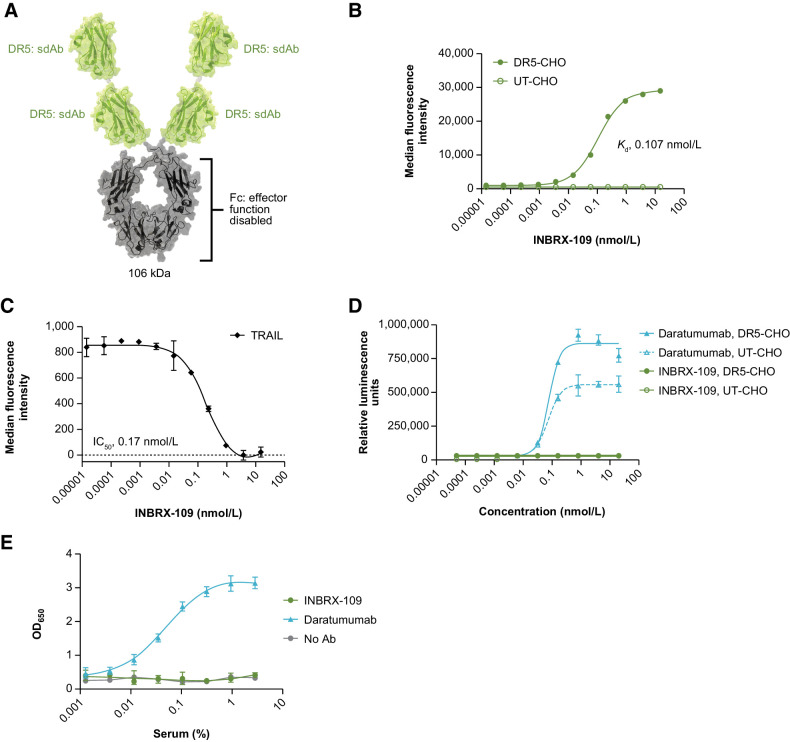
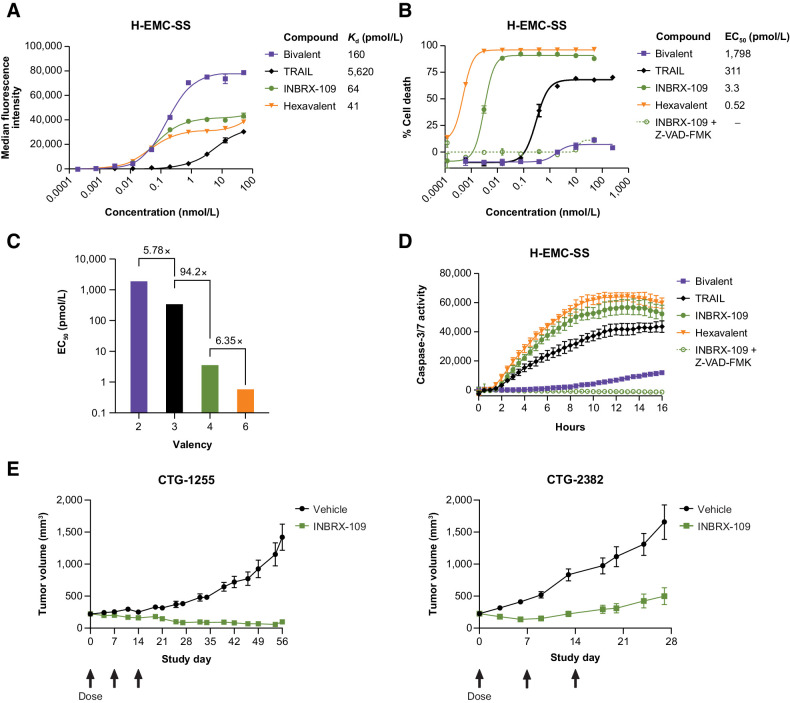
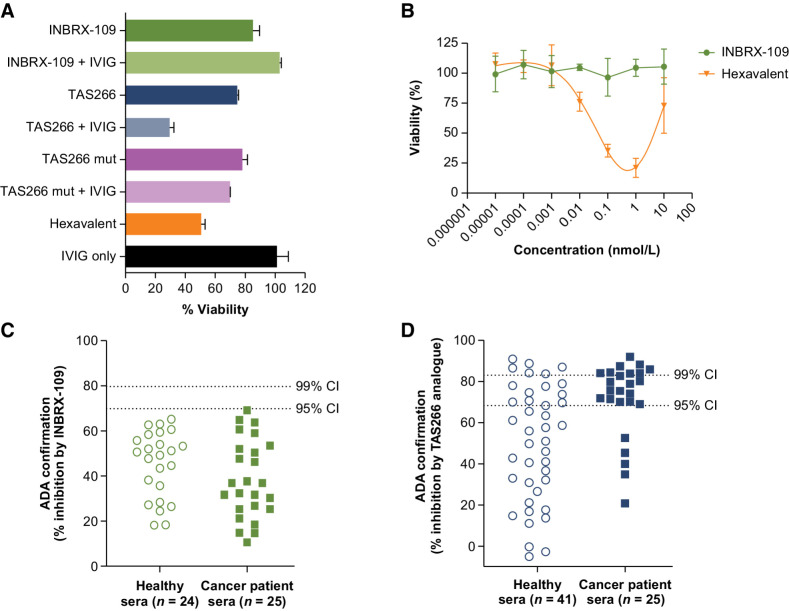
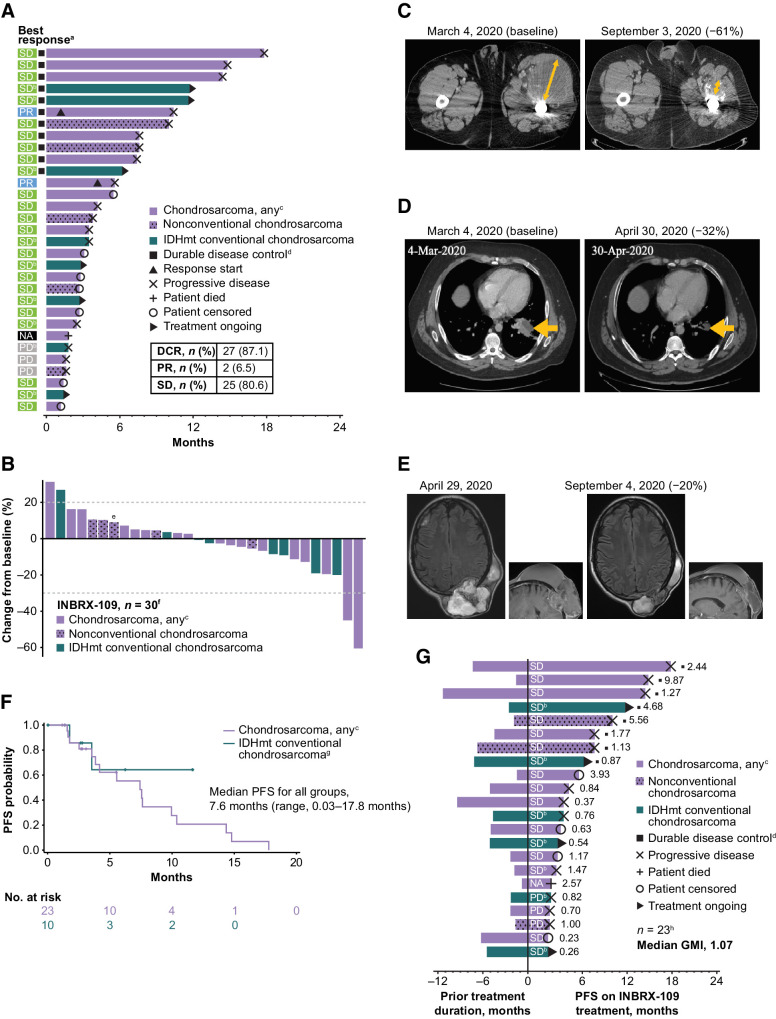
Purpose: Patients with unresectable/metastatic chondrosarcoma have poor prognoses; conventional chondrosarcoma is associated with a median progression-free survival (PFS) of <4 months after first-line chemotherapy. No standard targeted therapies are available. We present the preclinical characterization of INBRX-109, a third-generation death receptor 5 (DR5) agonist, and clinical findings from a phase I trial of INBRX-109 in unresectable/metastatic chondrosarcoma (NCT03715933). Patients and Methods: INBRX-109 was first characterized preclinically as a DR5 agonist, with binding specificity and hepatotoxicity evaluated in vitro and antitumor activity evaluated both in vitro and in vivo. INBRX-109 (3 mg/kg every 3 weeks) was then evaluated in a phase I study of solid tumors, which included a cohort with any subtype of chondrosarcoma and a cohort with IDH1/IDH2-mutant conventional chondrosarcoma. The primary endpoint was safety. Efficacy was an exploratory endpoint, with measures including objective response, disease control rate, and PFS. Results: In preclinical studies, INBRX-109 led to antitumor activity in vitro and in patient-derived xenograft models, with minimal hepatotoxicity. In the phase I study, INBRX-109 was well tolerated and demonstrated antitumor activity in unresectable/metastatic chondrosarcoma. INBRX-109 led to a disease control rate of 87.1% [27/31; durable clinical benefit, 40.7% (11/27)], including two partial responses, and median PFS of 7.6 months. Most treatment-related adverse events, including liver-related events, were low grade (grade ≥3 events in chondrosarcoma cohorts, 5.7%). Conclusions: INBRX-109 demonstrated encouraging antitumor activity with a favorable safety profile in patients with unresectable/metastatic chondrosarcoma. A randomized, placebo-controlled, phase II trial (ChonDRAgon, NCT04950075) will further evaluate INBRX-109 in conventional chondrosarcoma.
Overview
The claims and statistics of this paper haven’t been checked yet.
Free: it reads the open-access text and checks the first 5 claims that cite a source we can check. Create a free account to check every claim.
Integrity signals
Registry
Cites
Statistics
Figures
Verification
Claims the paper makes
The claims and statistics of this paper haven’t been checked yet.
Free: it reads the open-access text and checks the first 5 claims that cite a source we can check. Create a free account to check every claim.
Claims other papers make about this one
Each is checked against this paper’s own text: does it say what the citing paper says it does?
The source backs part of the claim, not all of it — or backs it for a different population, condition or comparison.
In the citing paper
“patients with unresectable and/or metastatic chondrosarcoma have poor prognoses, with a median PFS of <4 months after first‐line chemotherapy. 43 , 44”
From Nivolumab and sunitinib in patients with advanced bone sarcomas: A multicenter, single‐arm, phase 2 trial (2025) · cites this paper as [43]
Experimental — accuracy not yet measuredThe source backs part of the claim, not all of it — or backs it for a different population, condition or comparison.
In the citing paper
“In patients with conventional chondrosarcoma durable clinical benefit in 40.7% (11 of 27) patients, including two PRs, was observed with INBRX‐109, an antibody drug targeting a specific receptor (DR5). 43”
From Nivolumab and sunitinib in patients with advanced bone sarcomas: A multicenter, single‐arm, phase 2 trial (2025) · cites this paper as [43]
Experimental — accuracy not yet measured
Self-check
Percentages, sums and reported differences re-computed from the paper’s own numbers.
The self-check needs the paper’s full text.
Citations
Cites
Caspases: the executioners of apoptosis
COHEN, G. M. (1997) · Biochemical Journal · doi:10.1042/bj3260001 · Cited by 4,719 · cited 1×
“Multimerization of DR5 leads to the formation of the DISC, in which caspase-8 is activated, leading to the subsequent activation of the downstream executioner caspase-3 and caspase-7 (10, 12, 19) and the coordinated destruction of the cell.”
BackgroundTumoricidal activity of tumor necrosis factor-related apoptosis-inducing ligand in vivo.
Walczak, H., Miller, R. E., Ariail, K., Gliniak, B., Griffith, T. S., Kubin, M., Chin, W., Jones, J., Woodward, A., Le, T., et al. (1999) · Nature Medicine · doi:10.1038/5517 · Cited by 2,497 · cited 2×
“DR5 has long been of interest in oncology due to its ability to induce programmed cell death through the extrinsic apoptosis pathway in a cancer-biased manner (8, 9).”
BackgroundSafety and antitumor activity of recombinant soluble Apo2 ligand
Ashkenazi, A., Pai, R. C., Fong, S., Leung, S., Lawrence, D. A., Marsters, S. A., Blackie, C., Chang, L., McMurtrey, A. E., Hebert, A., et al. (1999) · Journal of Clinical Investigation · doi:10.1172/jci6926 · Cited by 2,213 · cited 2×
“DR5 has long been of interest in oncology due to its ability to induce programmed cell death through the extrinsic apoptosis pathway in a cancer-biased manner (8, 9).”
BackgroundOverview of cell death signaling pathways
Jin, Z., & El-Deiry, W. S. (2005) · Cancer Biology & Therapy · doi:10.4161/cbt.4.2.1508 · Cited by 1,326 · cited 1×
“Multimerization of DR5 leads to the formation of the DISC, in which caspase-8 is activated, leading to the subsequent activation of the downstream executioner caspase-3 and caspase-7 (10, 12, 19) and the coordinated destruction of the cell.”
BackgroundTRAIL receptor-2 signals apoptosis through FADD and caspase-8
Bodmer, J.-L., Holler, N., Reynard, S., Vinciguerra, P., Schneider, P., Juo, P., Blenis, J., & Tschopp, J. (2000) · Nature Cell Biology · doi:10.1038/35008667 · Cited by 649 · cited 1×
“Multimerization of DR5 leads to the formation of the DISC, in which caspase-8 is activated, leading to the subsequent activation of the downstream executioner caspase-3 and caspase-7 (10, 12, 19) and the coordinated destruction of the cell.”
BackgroundWe Should Desist Using RECIST, at Least in GIST
Benjamin, R. S., Choi, H., Macapinlac, H. A., Burgess, M. A., Patel, S. R., Chen, L. L., Podoloff, D. A., & Charnsangavej, C. (2007) · Journal of Clinical Oncology · doi:10.1200/jco.2006.07.3411 · Cited by 559
Lavrik, I., Golks, A., & Krammer, P. H. (2005) · Journal of Cell Science · doi:10.1242/jcs.01610 · Cited by 494
Kelley, S. K., Harris, L. A., Xie, D., DeForge, L., Totpal, K., Bussiere, J., & Fox, J. A. (2001) · The Journal of Pharmacology and Experimental Therapeutics · doi:10.1016/s0022-3565(24)29298-3 · Cited by 445
Olmos, D., Postel-Vinay, S., Molife, L. R., Okuno, S. H., Schuetze, S. M., Paccagnella, M. L., Batzel, G. N., Yin, D., Pritchard-Jones, K., Judson, I., et al. (2010) · The Lancet Oncology · doi:10.1016/s1470-2045(09)70354-7 · Cited by 340
Dahlin's Bone Tumors: General Aspects and Data on 10,165 Cases
Unni, K. K., Inwards, C. Y., & Dahlin, D. C. (1996) · Cited by 256
Wilson, N. S., Yang, B., Yang, A., Loeser, S., Marsters, S., Lawrence, D., Li, Y., Pitti, R., Totpal, K., Yee, S., et al. (2011) · Cancer Cell · doi:10.1016/j.ccr.2010.11.012 · Cited by 248
Soria, J.-C., Márk, Z., Zatloukal, P., Szima, B., Albert, I., Juhász, E., Pujol, J.-L., Kozielski, J., Baker, N., Smethurst, D., et al. (2011) · Journal of Clinical Oncology · doi:10.1200/jco.2011.37.2623 · Cited by 246
Soria, J.-C., Smit, E., Khayat, D., Besse, B., Yang, X., Hsu, C.-P., Reese, D., Wiezorek, J., & Blackhall, F. (2010) · Journal of Clinical Oncology · doi:10.1200/jco.2009.25.4847 · Cited by 231
Hoff, D. D. V. (1998) · PubMed · Cited by 199
Dominguez, G. A., Condamine, T., Mony, S., Hashimoto, A., Wang, F., Liu, Q., Forero, A., Bendell, J., Witt, R., Hockstein, N., et al. (2017) · Clinical Cancer Research · doi:10.1158/1078-0432.ccr-16-1784 · Cited by 187 · cited 1×
“advanced cancers (NCT02076451), the DR5 agonist DS8273a reduced the tumor-associated, myeloid-derived suppressor cell population (47), suggesting that INBRX-109 could be acting on this suppressive immune cell population in chondrosarcoma.”
BackgroundCamidge, D. R., Herbst, R. S., Gordon, M. S., Eckhardt, S. G., Kurzrock, R., Durbin, B., Ing, J., Tohnya, T. M., Sager, J., Ashkenazi, A., et al. (2010) · Clinical Cancer Research · doi:10.1158/1078-0432.ccr-09-1267 · Cited by 169
Tap, W. D., Villalobos, V. M., Cote, G. M., Burris, H., Janku, F., Mir, O., Beeram, M., Wagner, A. J., Jiang, L., Wu, B., et al. (2020) · Journal of Clinical Oncology · doi:10.1200/jco.19.02492 · Cited by 165
Papadopoulos, K. P., Isaacs, R., Bilic, S., Kentsch, K., Huet, H. A., Hofmann, M., Rasco, D., Kundamal, N., Tang, Z., Cooksey, J., et al. (2015) · Cancer Chemotherapy and Pharmacology · doi:10.1007/s00280-015-2712-0 · Cited by 162 · cited 10×
“org Clin Cancer Res; 29(16) August 15, 2023 2993”
BackgroundInfluentialHigher-Order Clustering of the Transmembrane Anchor of DR5 Drives Signaling
Pan, L., Fu, T., Zhao, W., Zhao, L., Chen, W., Qiu, C., Liu, W., Liu, Z., Piai, A., Fu, Q., et al. (2019) · Cell · doi:10.1016/j.cell.2019.02.001 · Cited by 148
Kostine, M., Cleven, A. H. G., de Miranda, N. F. C. C., Italiano, A., Cleton-Jansen, A., & Bovée, J. V. M. G. (2016) · Modern Pathology · doi:10.1038/modpathol.2016.108 · Cited by 130
Kaplan-Lefko, P. J., Graves, J. D., Zoog, S. J., Pan, Y., Wall, J., Branstetter, D. G., Moriguchi, J., Coxon, A., Huard, J. N., Xu, R., et al. (2010) · Cancer Biology & Therapy · doi:10.4161/cbt.9.8.11264 · Cited by 126
Li, F., & Ravetch, J. V. (2012) · Proceedings of the National Academy of Sciences · doi:10.1073/pnas.1208698109 · Cited by 118
Mick, R., Crowley, J. J., & Carroll, R. J. (2000) · Controlled Clinical Trials · doi:10.1016/s0197-2456(00)00058-1 · Cited by 116 · cited 1×
“In our study, nonprogression was determined by PFS, which has been suggested as a measure of success for targeted therapies in sarcomas (21, 34, 35, 41).”
BackgroundHuet, H. A., Growney, J. D., Johnson, J. A., Li, J., Bilic, S., Ostrom, L., Zafari, M., Kowal, C., Yang, G., Royo, A., et al. (2014) · mAbs · doi:10.4161/19420862.2014.975099 · Cited by 108
Valley, C. C., Lewis, A. K., Mudaliar, D. J., Perlmutter, J. D., Braun, A. R., Karim, C. B., Thomas, D. D., Brody, J. R., & Sachs, J. N. (2012) · Journal of Biological Chemistry · doi:10.1074/jbc.m111.306480 · Cited by 96
Yada, A., Yazawa, M., Ishida, S., Yoshida, H., Ichikawa, K., Kurakata, S., & Fujiwara, K. (2008) · Annals of Oncology · doi:10.1093/annonc/mdn015 · Cited by 94
Liguori, M., Buracchi, C., Pasqualini, F., Bergomas, F., Pesce, S., Sironi, M., Grizzi, F., Mantovani, A., Belgiovine, C., & Allavena, P. (2106) · Oncotarget · doi:10.18632/oncotarget.9340 · Cited by 88 · cited 1×
“Immune infiltrates in chondrosarcoma are largely composed of immunosuppressive macrophages (44, 45), which have been shown to express functional DR5 (46).”
BackgroundChow, W., Frankel, P., Ruel, C., Araujo, D. M., Milhem, M., Okuno, S., Hartner, L., Undevia, S., & Staddon, A. (2020) · Cancer · doi:10.1002/cncr.32515 · Cited by 86 · cited 1×
“Similarly, a phase II study of pazopanib in patients with unresectable or metastatic conventional chondrosarcoma (N 1⁄4 47) reported a DCR of 42% at week 16, with 1 patient achieving a PR (37); olaparib, a PARP inhibitor, led to aDCRof 40% in 5 patients with chondrosarcoma in a phase II, open-label study in patients w…”
BackgroundEnhancing the antitumor efficacy of a cell-surface death ligand by covalent membrane display
Nair, P. M., Flores, H., Gogineni, A., Marsters, S., Lawrence, D. A., Kelley, R. F., Ngu, H., Sagolla, M., Komuves, L., Bourgon, R., et al. (2015) · Proceedings of the National Academy of Sciences · doi:10.1073/pnas.1418962112 · Cited by 81
Zeng, Y., Wu, X., Fiscella, M., Shimada, O., Humphreys, R. C., Albert, V. R., & Kakehi, Y. (2006) · International Journal of Oncology · doi:10.3892/ijo.28.2.421 · Cited by 67
Subbiah, V., Brown, R. E., Buryanek, J., Trent, J., Ashkenazi, A., Herbst, R., & Kurzrock, R. (2012) · Molecular Cancer Therapeutics · doi:10.1158/1535-7163.mct-12-0358 · Cited by 67 · cited 2×
“2E), along with prior studies that suggested that targetingDR5 in this tumor type could be beneficial (17, 18),motivated our clinical evaluation of INBRX-109.”
BackgroundMethodSelf-citationThe Role of TRAIL/DRs in the Modulation of Immune Cells and Responses
Sag, D., Ayyildiz, Z. O., Gunalp, S., & Wingender, G. (2019) · Cancers · doi:10.3390/cancers11101469 · Cited by 62
Overdijk, M. B., Strumane, K., Beurskens, F. J. M., Buijsse, A. O., Vermot‐Desroches, C., Vuillermoz, B. S., Kroes, T., de Jong, B., Hoevenaars, N., Hibbert, R. G., et al. (2020) · Molecular Cancer Therapeutics · doi:10.1158/1535-7163.mct-20-0044 · Cited by 59
van Maldegem, A. M., Conley, A. P., Rutkowski, P. L., PATEL, S. R., Lugowska, I. A., Desar, I. M. E., Bovée, J. V. M. G., & Gelderblom, H. A. J. (2018) · The Oncologist · doi:10.1634/theoncologist.2017-0574 · Cited by 58 · cited 2×
“6 months with doxorubicin in combination with cisplatin or ifosfamide (5).”
BackgroundSelf-citationPicci, P., Manfrini, M., Donati, D. M., Gambarotti, M., Righi, A., Vanel, D., & Tos, A. P. D. (2019) · Springer eBooks · doi:10.1007/978-3-030-29676-6 · Cited by 58 · cited 1×
“On the basis of histology, chondrosarcoma is classified as conventional or nonconventional, with clinical characteristics varying by subtype (2, 3).”
BackgroundPenel, N., Demetri, G. D., Blay, J., Cousin, S., Maki, R. G., Chawla, S. P., Judson, I. R., von Mehren, M., Schöffski, P., Verweij, J., et al. (2012) · Annals of Oncology · doi:10.1093/annonc/mds470 · Cited by 53
Self-citationWang, B. T., Kothambawala, T., Wang, L., Matthew, T. J., Calhoun, S. E., Saini, A. K., Kotturi, M. F., Hernandez, G., Humke, E. W., Peterson, M. S., et al. (2021) · Molecular Cancer Therapeutics · doi:10.1158/1535-7163.mct-20-1132 · Cited by 53 · cited 1×
“This chondrosarcoma-like line has high DR5 expression, making it well suited for characterizing the activity of INBRX-109, and was previously used to evaluate an anti-DR5 pentameric IgM antibody that is currently in clinical development (32).”
BackgroundDuffaud, F., Italiano, A., Bompas, E., Rios, M., Penel, N., Mir, O., Piperno-Neumann, S., Chevreau, C., Delcambre, C., Bertucci, F., et al. (2021) · European Journal of Cancer · doi:10.1016/j.ejca.2021.03.039 · Cited by 52 · cited 4×
“Similar to our study, in the phase II study most patients had conventional chondrosarcoma; only 2 patients in the placebo arm had nonconventional subtypes (7).”
BackgroundResultInfluentialSharma, S., de Vries, E. G. E., Infante, J. R., Oldenhuis, C. N. A. M., Gietema, J. A., Yang, L., Bilic, S., Parker, K., Goldbrunner, M., Scott, J. W., et al. (2013) · Investigational New Drugs · doi:10.1007/s10637-013-9952-9 · Cited by 51
Therapeutic Targets and Emerging Treatments in Advanced Chondrosarcoma
Miwa, S., Yamamoto, N., Hayashi, K., Takeuchi, A., Igarashi, K., & Tsuchiya, H. (2022) · International Journal of Molecular Sciences · doi:10.3390/ijms23031096 · Cited by 51 · cited 1×
“However, treatment options for patients with unresectable or metastatic disease are greatly limited given that these tumors tend to be resistant to chemotherapy and radiation and that no standard targeted systemic therapies are available (5, 6).”
BackgroundDescription of the immune microenvironment of chondrosarcoma and contribution to progression
Simard, F. A., Richert, I., Vandermoeten, A., Decouvelaere, A.-V., Michot, J.-P., Caux, C., Blay, J.-Y., & Dutour, A. (2017) · OncoImmunology · doi:10.1080/2162402x.2016.1265716 · Cited by 48 · cited 1×
“Immune infiltrates in chondrosarcoma are largely composed of immunosuppressive macrophages (44, 45), which have been shown to express functional DR5 (46).”
BackgroundThe immune landscape of chondrosarcoma - potential for therapeutic targeting of CSFR1+ macrophages
Richert, I., Gomez-Brouchet, A., Bouvier, C., Du Bouexic De Pinieux, G., Karanian, M., Blay, J.-Y., & Dutour, A. (2020) · Journal of Bone Oncology · doi:10.1016/j.jbo.2019.100271 · Cited by 42 · cited 1×
“Immune infiltrates in chondrosarcoma are largely composed of immunosuppressive macrophages (44, 45), which have been shown to express functional DR5 (46).”
BackgroundClinical Efficacy of Olaparib in IDH1/IDH2- Mutant Mesenchymal Sarcomas
Eder, J. P., Doroshow, D. B., Do, K. T., Keedy, V. L., Sklar, J., Glazer, P. M., Bindra, R. S., & Shapiro, G. I. (2021) · JCO Precision Oncology · doi:10.1200/po.20.00247 · Cited by 41
Non-Conventional Treatments for Conventional Chondrosarcoma
Monga, V., Mani, H., Hirbe, A. C., & Milhem, M. M. (2020) · Cancers · doi:10.3390/cancers12071962 · Cited by 37
Livingston, J. A., Hess, K. R., Naing, A., Hong, D. S., PATEL, S. R., Benjamin, R. S., Ludwig, J. A., Conley, A. P., Herzog, C. E., Anderson, P. M., et al. (2016) · Oncotarget · doi:10.18632/oncotarget.10910 · Cited by 25
Self-citationYamaguchi, T., Shimizu, J., Oya, Y., Horio, Y., & Hida, T. (2021) · Case Reports in Oncology · doi:10.1159/000516276 · Cited by 21 · cited 2×
“It was later discovered that this patient had been selfmedicating with high doses of fenbendazole, a veterinary antihelminthic that has been linked to hepatic dysfunction (20); the patient had received no prior systemic therapies.”
Background
Research works printed but not linked: 1
- WHO Classification of Tumours editorial board, editor. WHO classification of tumours. Soft tissue and bone tumours. 5 ed. Volume 3. Lyon: IARC Press; 2020.
Cited by
Targeting apoptotic pathways for cancer therapy
Tian, X., Srinivasan, P. R., Tajiknia, V., Uruchurtu, A. S. S., Seyhan, A. A., Carneiro, B. A., Cruz, A. D. L., Pinho-Schwermann, M. P., George, A., Zhao, S., et al. (2024) · Journal of Clinical Investigation · doi:10.1172/jci179570 · Cited by 173
“In 2021, the FDA granted fast-track designation to INBRX-109 for the treatment of patients with unresectable or metastatic chondrosarcoma (Table 1).”
Cell death pathways: molecular mechanisms and therapeutic targets for cancer
Wang, S., Guo, S., Guo, J., Du, Q., Wu, C., Wu, Y., & Zhang, Y. (2024) · MedComm · doi:10.1002/mco2.693 · Cited by 134
“283,284 However, challenges persist, especially regarding resistance mechanisms and the selective induction of specific types of cell death in cancer cells without harming normal tissues.”
BackgroundTargeting the TNF and TNFR superfamilies in autoimmune disease and cancer
Croft, M., Salek‐Ardakani, S., & Ware, C. F. (2024) · Nature Reviews Drug Discovery · doi:10.1038/s41573-024-01053-9 · Cited by 109
“…a cadherin overexpressed on various adenocarcinomas, currently in early phase I trials; and a tetravalent TRAILR2 nanobody fusion protein construct (INBRX-109), with encouraging results in a phase I trial of chondrosarcoma 218 and in Ewing’s sarcoma when combined with irinotecan and temozolomide.”
Emerging therapies in Ewing sarcoma
Strauss, S. J., Berlanga, P., & McCabe, M. G. (2024) · Current Opinion in Oncology · doi:10.1097/cco.0000000000001048 · Cited by 55
“Increased collaboration between clinicians and researchers to prioritize these, as well as a focus on risk stratification and identification of biomarkers is required to ensure rapid translation”
BackgroundImmunotherapy in Sarcoma: Current Data and Promising Strategies
Wood, G. E., Meyer, C. F., Petitprez, F., & D’Angelo, S. P. (2024) · American Society of Clinical Oncology Educational Book · doi:10.1200/edbk_432234 · Cited by 54
Metadata
- Authors
- Subbiah, V., Chawla, S. P., Conley, A. P., Wilky, B. A., Tolcher, A., Lakhani, N. J., Berz, D., Andrianov, V., Crago, W., Holcomb, M., Hussain, A., Veldstra, C., Kalabus, J., O’Neill, B., Senne, L., Rowell, E., Heidt, A. B., Willis, K. M., & Eckelman, B. P.
- Affiliations
- The University of Texas MD Anderson Cancer Center (US)
- Sarcoma Oncology Center (US)
- University of Colorado Anschutz (US)
- South Texas Accelerated Research Therapeutics (US)
- 6START Midwest, Michigan.
- 7Valkyrie Clinical Trials, Los Angeles, California.
- Inhibrx (United States) (US)
- Corresponding author
- Subbiah, Vivek
- ORCID
- Venue
- Clinical Cancer Research
- Published
- 2023-06-02
- Volume
- 29
- Issue
- 16
- Pages
- 2988-3003
- ISSN
- 1078-0432 (ISSN-L)
- 1557-3265
- PMC
- PMC10425732
- OpenAlex
- W4379094382
- Semantic Scholar
- 6a0ef87d7fe5dc5326dce8d71ac25b45b7de7af4
- Cited by
- 51
- References
- 49
- Citations by year
- 2026: 13 · 2025: 20 · 2024: 16 · 2023: 2
- FWCI
- 10.68
- Type
- journal article
- Language
- en
- Open access
- hybrid
- doi.org
- Licence
- Locations
- Clinical Cancer Research (publishedVersion, cc-by-nc-nd)
- PubMed Central (publishedVersion, cc-by-nc-nd)
- PubMed (publishedVersion)
- Funders
- not applicable
- Topics
- Health Sciences › Medicine › Orthopedics and Sports Medicine › Bone Tumor Diagnosis and Treatments
- Health Sciences › Medicine › Oncology › Sarcoma Diagnosis and Treatment
- Health Sciences › Medicine › Surgery › Cholangiocarcinoma and Gallbladder Cancer Studies
- Keywords
- chondrosarcoma, hepatotoxicity, anticancer activity, patient-derived xenografts
- MeSH terms
- Antibodies, Monoclonal, Bone Neoplasms, Chondrosarcoma, Humans, Receptors, TNF-Related Apoptosis-Inducing Ligand, Chemical and Drug Induced Liver Injury
About these checks
Registry, retraction, Cites and statistics results are computed, not judged, with one exception: a printed reference that no index lists is read once by a model before it counts as a citation error. Claims are extracted by a model and kept only when their quote appears verbatim in the text; each cited source is then checked, with a model’s help, for whether it says what the claim relies on. Those verdicts can be wrong — read the claim’s quote and the cited source before relying on one.
Statistics and arithmetic are recomputed, not judged.
Confidence bands are shown only for fields calibrated on our annotated test set. None is calibrated yet, so no band is shown.
What counts as a claim ›How we measure confidence ›How we check this ›
Are you an author, or do you see a problem with this page? Request a review
Data sources
Bibliographic data: Semantic Scholar, OpenAlex, Crossref.
Contains information from the Semantic Scholar Academic Graph Datasets, made available under the ODC Attribution License (ODC-BY 1.0).
Semantic Scholar’s data is described in: Kinney, R., et al. (2023). The Semantic Scholar Open Data Platform. arXiv:2301.10140.
