

A First-in-Human Phase 1 Study of a Tumor-Directed RNA-Interference Drug against HIF2α in Patients with Advanced Clear Cell Renal Cell Carcinoma
Open accessPublished version of a preprint
The DOI matches its Crossref record; 30 of the 30 references it cites were found in a registry or an index.
Abstract
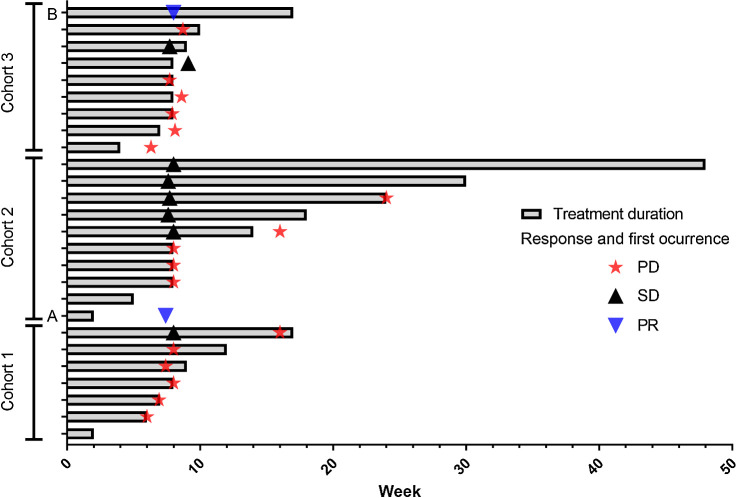
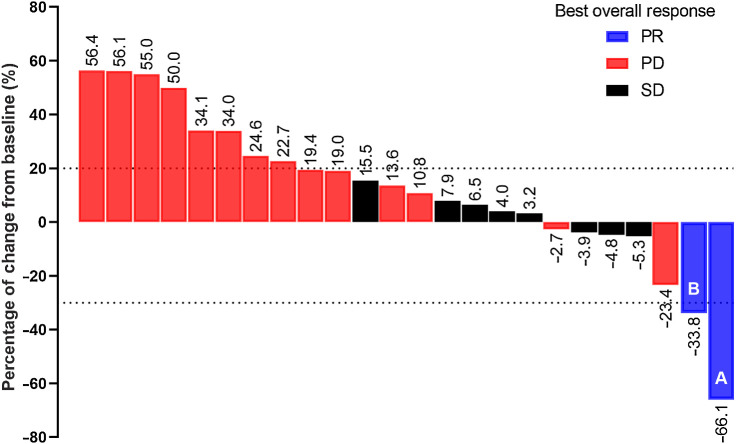
Purpose: ARO-HIF2 is an siRNA drug designed to selectively target hypoxia-inducible factor-2α (HIF2α) interrupting downstream pro-oncogenic signaling in clear cell renal cell carcinoma (ccRCC). The aims of this Phase 1 study (AROHIF21001) were to evaluate safety, tolerability, pharmacokinetics, and establish a recommended Phase 2 dose. Patients and Methods: Subjects with ccRCC and progressive disease after at least 2 prior therapies that included VEGF and immune checkpoint inhibitors were progressively enrolled into dose-escalation cohorts of ARO-HIF2 administered intravenously at 225, 525, or 1,050 mg weekly. Results: Twenty-six subjects received ARO-HIF2. The most common treatment emergent adverse events (AE) irrespective of causality were fatigue (50.0%), dizziness (26.9%), dyspnea (23.1%), and nausea (23.1%). Four subjects (15.4%) had treatment-related serious AEs. AEs of special interest included neuropathy, hypoxia, and dyspnea. ARO-HIF2 was almost completely cleared from plasma circulation within 48 hours with minimal renal clearance. Reductions in HIF2α were observed between pre- and post-dosing tumor biopsies, but the magnitude was quite variable. The objective response rate was 7.7% and the disease control rate was 38.5%. Responses were accompanied by ARO-HIF2 uptake in tumor cells, HIF2α downregulation, as well as rapid suppression of tumor produced erythropoietin (EPO) in a patient with paraneoplastic polycythemia. Conclusions: ARO-HIF2 downregulated HIF2α in advanced ccRCC—inhibiting tumor growth in a subset of subjects. Further development was hampered by off-target neurotoxicity and low response rate. This study provides proof of concept that siRNA can target tumors in a specific manner.
Overview
The claims and statistics of this paper haven’t been checked yet.
Free: it reads the open-access text and checks the first 5 claims that cite a source we can check. Create a free account to check every claim.
Integrity signals
Registry
Cites
Statistics
Figures
Verification
Claims the paper makes
The claims and statistics of this paper haven’t been checked yet.
Free: it reads the open-access text and checks the first 5 claims that cite a source we can check. Create a free account to check every claim.
Claims other papers make about this one
Each is checked against this paper’s own text: does it say what the citing paper says it does?
The cited source says what the claim attributes to it.
In the citing paper
“ARO-HIF2, an siRNA drug that selectively targets HIF-2α is also under clinical investigation, but Phase I results showed low response rates and off-target neurotoxicity [109].”
From The HIF Axes in Cancer - Angiogenesis, Metabolism and Immune-Modulation (2025) · cites this paper as [109]
Self-check
Percentages, sums and reported differences re-computed from the paper’s own numbers.
The self-check needs the paper’s full text.
Citations
Cites
Potent and specific genetic interference by double-stranded RNA in Caenorhabditis elegans
Fire, A., Xu, S., Montgomery, M. K., Kostas, S. A., Driver, S. E., & Mello, C. C. (1998) · Nature · doi:10.1038/35888 · Cited by 15,429
Integrins in cancer: biological implications and therapeutic opportunities
Desgrosellier, J. S., & Cheresh, D. A. (2010) · Nature Reviews Cancer · doi:10.1038/nrc2748 · Cited by 3,736 · cited 1×
“Inmetastatic ccRCC, alphav-beta3 ( a v b 3) integrin receptors are often overexpressed (26, 27).”
BackgroundDiscovery and development of bevacizumab, an anti-VEGF antibody for treating cancer
Ferrara, N., Hillan, K. J., Gerber, H.-P., & Novotny, W. (2004) · Nature Reviews Drug Discovery · doi:10.1038/nrd1381 · Cited by 2,625 · cited 1×
“…theexpressionof > 100genes(6, 9,10), including VEGF, which binds to VEGF receptor-2 (VEGFR2) on endothelial cells to promote angiogenesis (11). ccRCC is characterized byhighlevelsofVEGF(11),andmultipleinhibitorsofVEGF/VEGFR2 have been approved for the treatment of advanced ccRCC (12).”
BackgroundSystemic Therapy for Metastatic Renal-Cell Carcinoma
Choueiri, T. K., & Motzer, R. J. (2017) · New England Journal of Medicine · doi:10.1056/nejmra1601333 · Cited by 1,284
Raval, R. R., Lau, K. W., Tran, M. G. B., Sowter, H. M., Mandriota, S. J., Li, J.-L., Pugh, C. W., Maxwell, P. H., Harris, A. L., & Ratcliffe, P. J. (2005) · Molecular and Cellular Biology · doi:10.1128/mcb.25.13.5675-5686.2005 · Cited by 940
Covello, K. L., Kehler, J., Yu, H., Gordan, J. D., Arsham, A. M., Hu, C.-J., Labosky, P. A., Simon, M. C., & Keith, B. (2006) · Genes & Development · doi:10.1101/gad.1399906 · Cited by 821 · cited 1×
“In addition to promoting angiogenesis, HIF2 a stimulates cell-cycle progression and maintains stemness, which likely contributes to tumorigenesis (13).”
BackgroundTranscriptional regulation by hypoxia inducible factors
Dengler, V. L., Galbraith, M. D., & Espinosa, J. M. (2014) · Critical Reviews in Biochemistry and Molecular Biology · doi:10.3109/10409238.2013.838205 · Cited by 782 · cited 1×
“TheHIF2 complexpromotes theexpressionof > 100genes(6, 9,10), including VEGF, which binds to VEGF receptor-2 (VEGFR2) on endothelial cells to promote angiogenesis (11). ccRCC is characterized byhighlevelsofVEGF(11),andmultipleinhibitorsofVEGF/VEGFR2 have been approved for the treatment of advanced…”
BackgroundHIF-2α Promotes Hypoxic Cell Proliferation by Enhancing c-Myc Transcriptional Activity
Gordan, J. D., Bertout, J. A., Hu, C.-J., Diehl, J. A., & Simon, M. C. (2007) · Cancer Cell · doi:10.1016/j.ccr.2007.02.006 · Cited by 781 · cited 3×
“Among the three known HIF a subunits, HIF2 a is believed to be the critical ccRCC driver (2, 3, 6 – 8).”
BackgroundBelzutifan for Renal Cell Carcinoma in von Hippel–Lindau Disease
Jonasch, E., Donskov, F., Iliopoulos, O., Rathmell, W. K., Narayan, V. K., Maughan, B. L., Oudard, S., Else, T., Maranchie, J. K., Welsh, S. J., et al. (2021) · New England Journal of Medicine · doi:10.1056/nejmoa2103425 · Cited by 714 · cited 1×
“PT2977 (belzutifan) is FDA approved for patients with VHL disease (22) and was recently approved for patients with advanced ccRCC.”
BackgroundTargeting renal cell carcinoma with a HIF-2 antagonist
Chen, W., Hill, H., Christie, A., Kim, M. S., Holloman, E., Pavia-Jimenez, A., Homayoun, F., Ma, Y., Patel, N., Yell, P., et al. (2016) · Nature · doi:10.1038/nature19796 · Cited by 709
Self-citationSharp, P. A. (2001) · Genes & Development · doi:10.1101/gad.880001 · Cited by 701 · cited 1×
“RNAi is a naturally occurring catalytic gene silencing mechanism that is highly speci fi c and ef fi cient (24, 25).”
BackgroundThe Cancer Genome Atlas of renal cell carcinoma: findings and clinical implications
Linehan, W. M., & Ricketts, C. J. (2019) · Nature Reviews Urology · doi:10.1038/s41585-019-0211-5 · Cited by 621 · cited 1×
“VHL is frequently mutated in sporadic ccRCC, leading to constitutive HIF a accumulation (4, 5).”
BackgroundInhibition of HIF2α Is Sufficient to Suppress pVHL-Defective Tumor Growth
Kondo, K., Kim, W. Y., Lechpammer, M., & Kaelin, W. G. (2003) · PLoS Biology · doi:10.1371/journal.pbio.0000083 · Cited by 611
Improved Identification of von Hippel-Lindau Gene Alterations in Clear Cell Renal Tumors
Nickerson, M. L., Jaeger, E., Shi, Y., Durocher, J. A., Mahurkar, S., Zaridze, D., Matveev, V., Janout, V., Kollarova, H., Bencko, V., et al. (2008) · Clinical Cancer Research · doi:10.1158/1078-0432.ccr-07-4921 · Cited by 588
The growth of siRNA-based therapeutics: updated clinical studies
Zhang, M. M., Bahal, R., Rasmussen, T. P., Manautou, J. E., & Zhong, X.-B. (2021) · Biochemical Pharmacology · doi:10.1016/j.bcp.2021.114432 · Cited by 497
Hypoxia, Hypoxia-inducible Transcription Factors, and Renal Cancer
Schödel, J., Grampp, S., Maher, E. R., Moch, H., Ratcliffe, P. J., Russo, P., & Mole, D. R. (2016) · European Urology · doi:10.1016/j.eururo.2015.08.007 · Cited by 405
Courtney, K. D., Infante, J. R., Lam, E. T., Figlin, R. A., Rini, B. I., Brugarolas, J., Zojwalla, N. J., Lowe, A. M., Wang, K., Wallace, E. M., et al. (2018) · Journal of Clinical Oncology · doi:10.1200/jco.2017.74.2627 · Cited by 393
Self-citationThe VHL/HIF axis in clear cell renal carcinoma
Shen, C., & Kaelin, W. G. (2013) · Seminars in Cancer Biology · doi:10.1016/j.semcancer.2012.06.001 · Cited by 388 · cited 1×
“Among the three known HIF a subunits, HIF2 a is believed to be the critical ccRCC driver (2, 3, 6 – 8).”
BackgroundThe von Hippel-Lindau Tumor Suppressor Protein and Clear Cell Renal Carcinoma
Kaelin, W. G. (2007) · Clinical Cancer Research · doi:10.1158/1078-0432.ccr-06-1865 · Cited by 336 · cited 1×
“VHL can also be mutated in the germline, leading to ccRCC, hemangioblastomas, and paragangliomas in patients with VHL syndrome (1).”
BackgroundA Small-Molecule Antagonist of HIF2α Is Efficacious in Preclinical Models of Renal Cell Carcinoma
Wallace, E. M., Rizzi, J. P., Han, G., Wehn, P. M., Cao, Z., Du, X., Cheng, T., Czerwinski, R. M., Dixon, D. D., Goggin, B. S., et al. (2016) · Cancer Research · doi:10.1158/0008-5472.can-16-0473 · Cited by 336
Allosteric inhibition of hypoxia inducible factor-2 with small molecules
Scheuermann, T. H., Li, Q., Ma, H.-W., Key, J., Zhang, L., Chen, R., Garcia, J. A., Naidoo, J., Longgood, J., Frantz, D. E., et al. (2013) · Nature Chemical Biology · doi:10.1038/nchembio.1185 · Cited by 315 · cited 1×
“Although HIF2 a was considered “ undruggable, ” a structural vulnerability was identi fi ed (15).”
BackgroundChoueiri, T. K., Bauer, T. M., Papadopoulos, K. P., Plimack, E. R., Merchan, J. R., McDermott, D. F., Michaelson, M. D., Appleman, L. J., Thamake, S., Perini, R. F., et al. (2021) · Nature Medicine · doi:10.1038/s41591-021-01324-7 · Cited by 305 · cited 4×
“Second,onthebasisofthecollectiveexperiencewithHIF2inhibitorsin sporadicccRCC,responseratesarearound25%(20,21).”
BackgroundResultInfluentialHoefflin, R., Harlander, S., Schäfer, S., Metzger, P., Kuo, F., Schönenberger, D., Adlesic, M., Peighambari, A., Seidel, P., Chen, C.-Y., et al. (2020) · Nature Communications · doi:10.1038/s41467-020-17873-3 · Cited by 292
Xu, R., Wang, K., Rizzi, J. P., Huang, H., Grina, J. A., Schlachter, S. T., Wang, B., Wehn, P. M., Yang, H., Dixon, D. D., et al. (2019) · Journal of Medicinal Chemistry · doi:10.1021/acs.jmedchem.9b00719 · Cited by 220
Courtney, K. D., Ma, Y., Diaz de Leon, A., Christie, A., Xie, Z., Woolford, L., Singla, N., Joyce, A., Hill, H., Madhuranthakam, A. J., et al. (2020) · Clinical Cancer Research · doi:10.1158/1078-0432.ccr-19-1459 · Cited by 188 · cited 2×
“However,resistancemutationsoccurwithprolongedtreatment(16,23) highlighting the need for complementary therapeutic approaches. siRNAs are an emerging, highly speci fi c treatment modality.”
BackgroundSelf-citationαv‐Integrin isoform expression in primary human tumors and brain metastases
Vogetseder, A., Thies, S., Ingold, B., Roth, P., Weller, M., Schraml, P., Goodman, S. L., & Moch, H. (2013) · International Journal of Cancer · doi:10.1002/ijc.28267 · Cited by 113
Targeting HIF2 in Clear Cell Renal Cell Carcinoma
Cho, H., & Kaelin, W. G. (2016) · Cold Spring Harbor Symposia on Quantitative Biology · doi:10.1101/sqb.2016.81.030833 · Cited by 56
Advances in Quantitative Bioanalysis of Oligonucleotide Biomarkers and Therapeutics
Wang, L., & Ji, C. (2015) · Bioanalysis · doi:10.4155/bio.15.234 · Cited by 48
HIF2α-Targeted RNAi Therapeutic Inhibits Clear Cell Renal Cell Carcinoma
Wong, S. C., Cheng, W., Hamilton, H., Nicholas, A. L., Wakefield, D. H., Almeida, A., Blokhin, A. V., Carlson, J. C., Neal, Z. C., Subbotin, V. M., et al. (2017) · Molecular Cancer Therapeutics · doi:10.1158/1535-7163.mct-17-0471 · Cited by 35
Self-citationHIF2 Inactivation and Tumor Suppression with a Tumor-Directed RNA-Silencing Drug in Mice and Humans
Ma, Y., Joyce, A., Brandenburg, O., Saatchi, F., Stevens, C., Tcheuyap, V. T., Christie, A. L., Do, Q. N., Fatunde, O., Macchiaroli, A., et al. (2022) · Clinical Cancer Research · doi:10.1158/1078-0432.ccr-22-0963 · Cited by 21
Self-citation
Research works printed but not linked: 1
- Wong SC, Nicholas A, Carlson JC, Shu D, Liu C, Chu R,. Optimizing the potency and dosing design for ARO-HIF2: an RNAi therapeutic for clear cell renal cell carcinoma [abstract]. In: Proceedings of the American Association for Cancer Research Annual Meeting 2019; 2019 Mar 29-Apr 3; Atlanta, GA. Philadelphia (PA): AACR; Cancer Res 2019; 79 (13 Suppl):Abstract nr 4775.
Cited by
The HIF Axes in Cancer - Angiogenesis, Metabolism and Immune-Modulation
Acuña-Pilarte, K., & Koh, M. Y. (2025) · Trends in Biochemical Sciences · doi:10.1016/j.tibs.2025.06.005 · Cited by 64
Pal, S. K., Bernard‐Tessier, A., Grell, P., Gao, X., Kotecha, R. R., Picus, J., de Braud, F., Takahashi, S., Wong, A. S. C., Suárez, C., et al. (2025) · Clinical Cancer Research · doi:10.1158/1078-0432.ccr-24-2618 · Cited by 21
Self-citationSchweickert, P. G., Piovesan, D., Mitchell, C. G., Zepeda‐Carranza, B., Zhu, W. S., Espinoza, A. Y. L., Rocha, L., Singh, J., Malgapo, M. I. P., Meleza, C., et al. (2025) · British Journal of Pharmacology · doi:10.1111/bph.70075 · Cited by 19
“…(Pal et al., 2024), respectively], and a tumour-directed siRNA approach has been explored as well [ARO-HIF2/zifcasiran, NCT04169711 Development of the HIF-2 α -targeting siRNA, ARO-HIF2, also was halted due to low clinical response rate and off-target neurotoxicity (Brugarolas et al., 2024).”
Ochioni, A. C., Vieira, Í. R. S., & Conte‐Júnior, C. A. (2025) · Journal of Drug Delivery Science and Technology · doi:10.1016/j.jddst.2025.107519 · Cited by 18
Endogenous Targeting of Lipid Nanoparticles to Kidney Tumors
Vaidya, A., Sung, Y., Tcheuyap, V. T., Zhang, C. C., Butti, R., Mal, A., Dilliard, S. A., Liu, J., Song, E., Guerrero, E. D., et al. (2025) · ACS Nano · doi:10.1021/acsnano.5c05370 · Cited by 14
Self-citation
Metadata
- Authors
- Brugarolas, J., Obara, G., Beckermann, K. E., Rini, B., Lam, E. T., Hamilton, J., Schluep, T., Yi, M., Wong, S., Mao, Z. L., Gamelin, E., & Tannir, N. M.
- Affiliations
- The University of Texas Southwestern Medical Center (US)
- Comprehensive Cancer Centers of Nevada (US)
- Vanderbilt University (US)
- University of Colorado Cancer Center (US)
- Arrowhead Pharmaceuticals (United States) (US)
- 6Gamelin Biopharma Consulting, Wilmington, Delaware.
- The University of Texas MD Anderson Cancer Center (US)
- Corresponding author
- Brugarolas, James
- Tannir, Nizar M.
- ORCID
- Venue
- Clinical Cancer Research
- Published
- 2024-04-23
- Volume
- 30
- Issue
- 11
- Pages
- 2402-2411
- ISSN
- 1078-0432 (ISSN-L)
- 1557-3265
- PMC
- PMC11145158
- OpenAlex
- W4395036823
- Cited by
- 25
- References
- 30
- Citations by year
- 2026: 8 · 2025: 15 · 2024: 2
- FWCI
- 7.22
- Type
- journal article
- Language
- en
- Open access
- hybrid
- doi.org
- Licence
- Locations
- Clinical Cancer Research (publishedVersion, cc-by-nc-nd)
- PubMed Central (publishedVersion, cc-by-nc-nd)
- PubMed (publishedVersion)
- Funders
- National Cancer Institute (P50CA196516)
- Topics
- Health Sciences › Medicine › Oncology › Renal cell carcinoma treatment
- Life Sciences › Biochemistry, Genetics and Molecular Biology › Cancer Research › Cancer, Hypoxia, and Metabolism
- Life Sciences › Biochemistry, Genetics and Molecular Biology › Molecular Biology › RNA Interference and Gene Delivery
- Keywords
- HIF-2α, clear cell renal cell carcinoma, siRNA, RNA interference, hypoxia-inducible factor, pharmacokinetics, safety and tolerability, dose escalation, erythropoietin, neurotoxicity, targeted cancer therapy
- MeSH terms
- Endothelial PAS Domain-Containing Protein 1, Adult, Aged, Aged, 80 and over, Antineoplastic Agents, Carcinoma, Renal Cell, Female, Humans, Kidney Neoplasms, Male, Middle Aged, RNA Interference, RNA, Small Interfering, Basic Helix-Loop-Helix Proteins
About these checks
Registry, retraction, Cites and statistics results are computed, not judged, with one exception: a printed reference that no index lists is read once by a model before it counts as a citation error. Claims are extracted by a model and kept only when their quote appears verbatim in the text; each cited source is then checked, with a model’s help, for whether it says what the claim relies on. Those verdicts can be wrong — read the claim’s quote and the cited source before relying on one.
Statistics and arithmetic are recomputed, not judged.
Confidence bands are shown only for fields calibrated on our annotated test set. None is calibrated yet, so no band is shown.
What counts as a claim ›How we measure confidence ›How we check this ›
Are you an author, or do you see a problem with this page? Request a review
Data sources
Bibliographic data: Semantic Scholar, OpenAlex, Crossref.
Contains information from the Semantic Scholar Academic Graph Datasets, made available under the ODC Attribution License (ODC-BY 1.0).
Semantic Scholar’s data is described in: Kinney, R., et al. (2023). The Semantic Scholar Open Data Platform. arXiv:2301.10140.
