

Longitudinal Undetectable Molecular Residual Disease Defines Potentially Cured Population in Localized Non–Small Cell Lung Cancer
Open accessPublished version of a preprint
The DOI matches its Crossref record; 33 of the 33 references it cites were found in a registry or an index.
Abstract
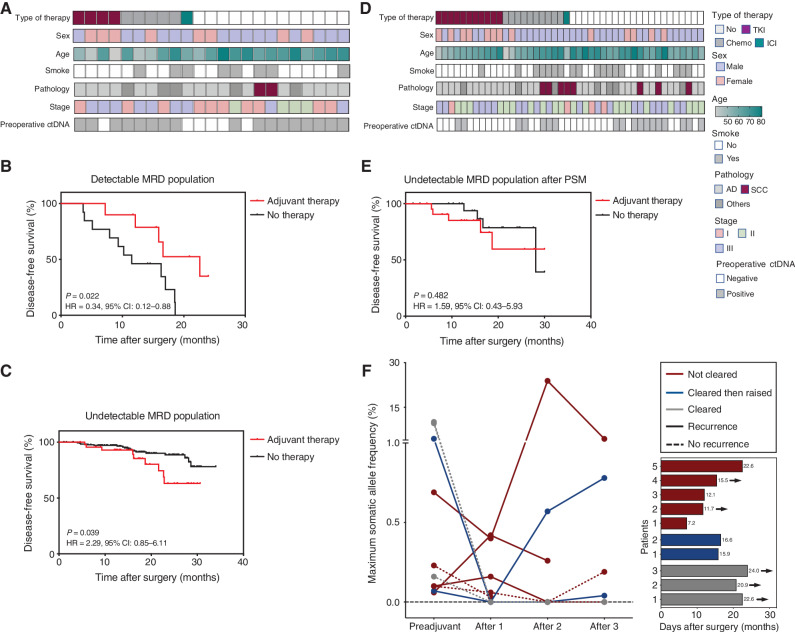
The efficacy and potential limitations of molecular residual disease (MRD) detection urgently need to be fully elucidated in a larger population of non-small cell lung cancer (NSCLC). We enrolled 261 patients with stages I to III NSCLC who underwent definitive surgery, and 913 peripheral blood samples were successfully detected by MRD assay. Within the population, only six patients (3.2%) with longitudinal undetectable MRD recurred, resulting in a negative predictive value of 96.8%. Longitudinal undetectable MRD may define the patients who were cured. The peak risk of developing detectable MRD was approximately 18 months after landmark detection. Correspondingly, the positive predictive value of longitudinal detectable MRD was 89.1%, with a median lead time of 3.4 months. However, brain-only recurrence was less commonly detected by MRD (n = 1/5, 20%). Further subgroup analyses revealed that patients with undetectable MRD might not benefit from adjuvant therapy. Together, these results expound the value of MRD in NSCLC. SIGNIFICANCE: This study confirms the prognostic value of MRD detection in patients with NSCLC after definitive surgery, especially in those with longitudinal undetectable MRD, which might represent the potentially cured population regardless of stage and adjuvant therapy. Moreover, the risk of developing detectable MRD decreased stepwise after 18 months since landmark detection. This article is highlighted in the In This Issue feature, p. 1599.
Overview
The claims and statistics of this paper haven’t been checked yet.
Free: it reads the open-access text and checks the first 5 claims that cite a source we can check. Create a free account to check every claim.
Integrity signals
Registry
Cites
Statistics
Figures
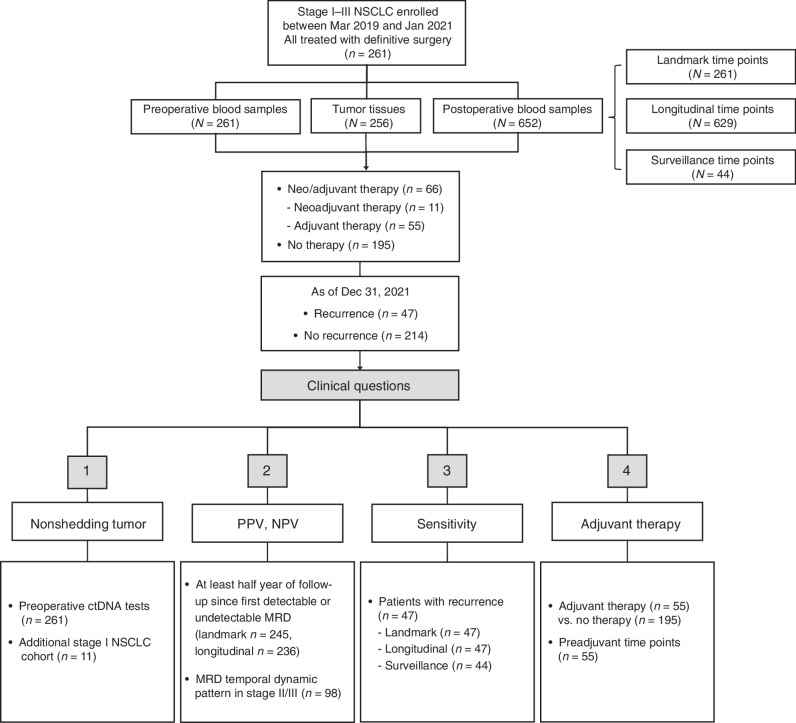
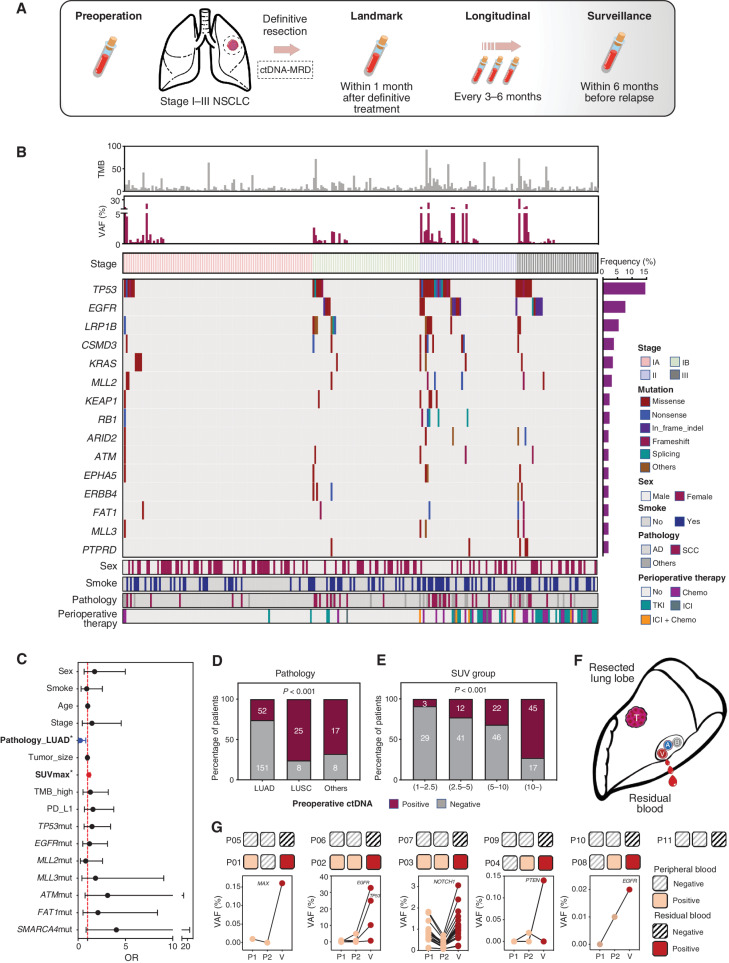
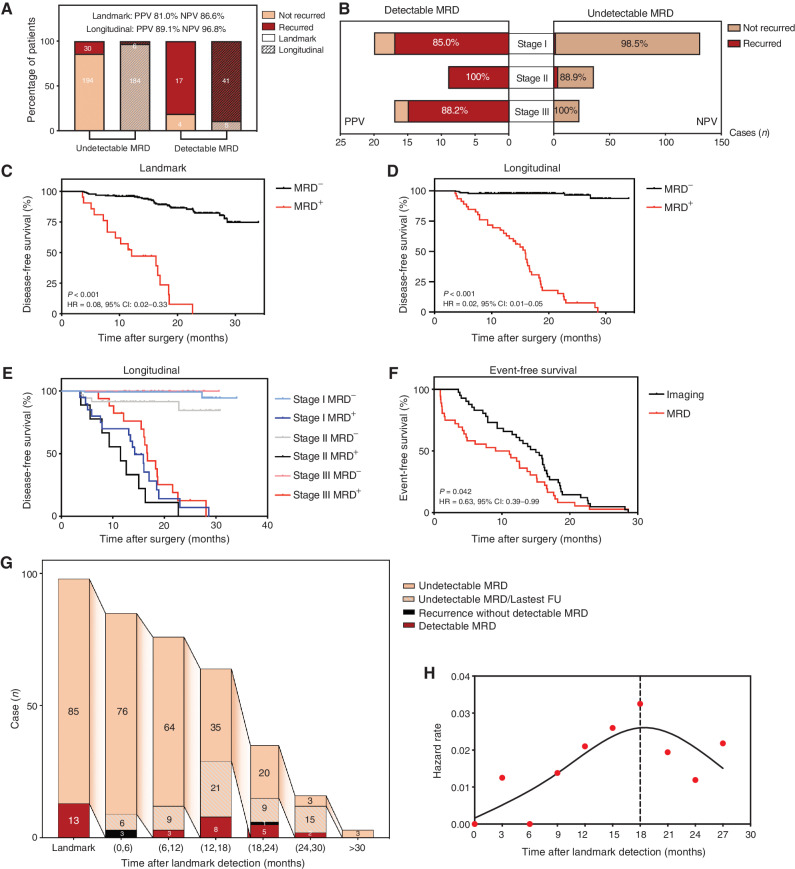
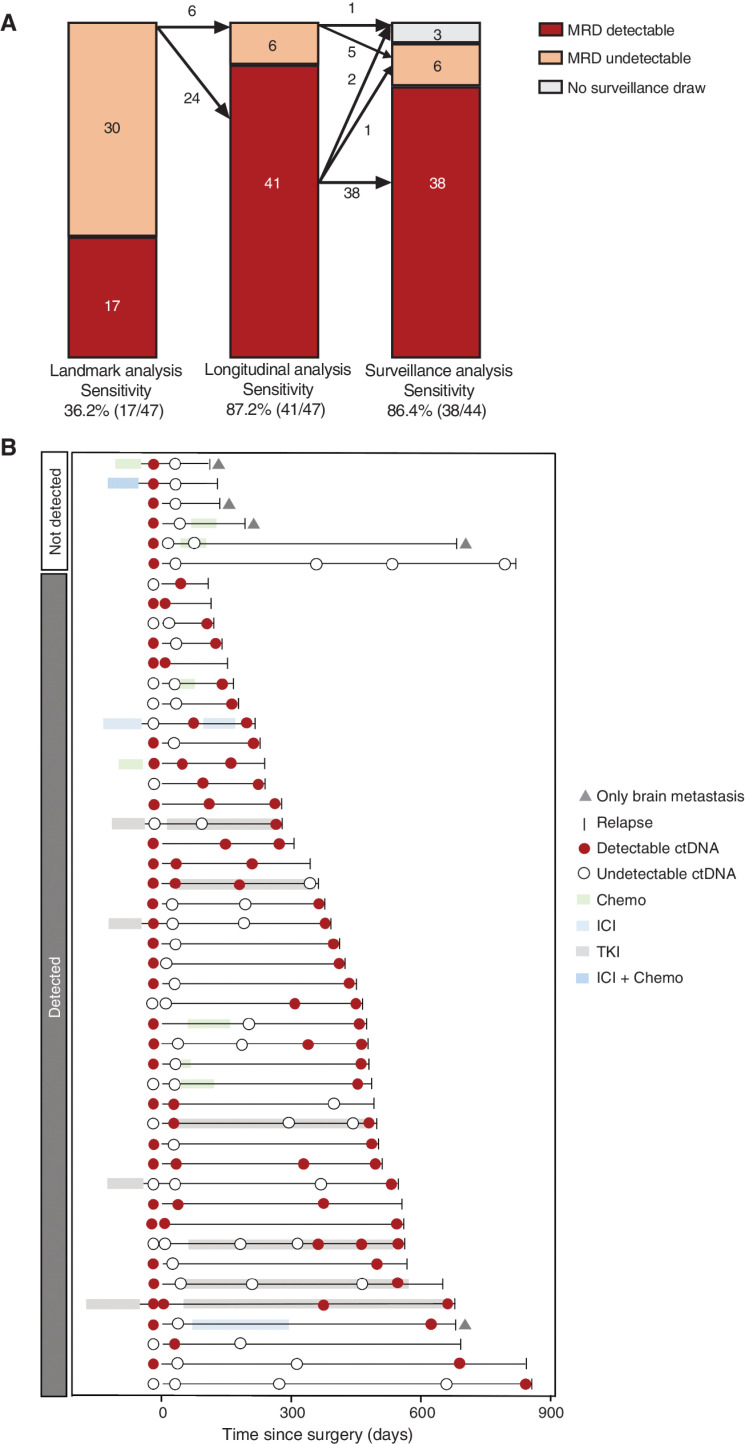
Verification
Claims the paper makes
The claims and statistics of this paper haven’t been checked yet.
Free: it reads the open-access text and checks the first 5 claims that cite a source we can check. Create a free account to check every claim.
Claims other papers make about this one
Each is checked against this paper’s own text: does it say what the citing paper says it does?
The cited source says what the claim attributes to it.
In the citing paper
“Circulating tumor DNA (ctDNA) detection based on next-generation sequencing (NGS) is increasingly employed to monitor minimal residual disease (MRD) in various cancers, including acute myeloid leukemia (AML), breast cancer, and lung cancer.5, 6, 7”
From Tumor-informed deep sequencing of ctDNA detects minimal residual disease and predicts relapse in osteosarcoma (2024) · cites this paper as [7]
Self-check
Percentages, sums and reported differences re-computed from the paper’s own numbers.
The self-check needs the paper’s full text.
Citations
Cites
Clonal hematopoiesis and blood-cancer risk inferred from blood DNA sequence
Genovese, G., Kähler, A. K., Handsaker, R. E., Lindberg, J., Rose, S. A., Bakhoum, S. F., Chambert, K., Mick, E., Neale, B. M., Fromer, M., et al. (2014) · New England Journal of Medicine · doi:10.1056/nejmoa1409405 · Cited by 3,531 · cited 1×
“, DNMT3A, TET2, and PPM1D), as reported in the previous studies (25, 26).”
ResultLung adjuvant cisplatin evaluation: a pooled analysis by the LACE Collaborative Group.
Pignon, J.-P., Tribodet, H., Scagliotti, G. V., Douillard, J.-Y., Shepherd, F. A., Stephens, R. J., Dunant, A., Torri, V., Rosell, R., Seymour, L., et al. (2008) · Journal of Clinical Oncology · doi:10.1200/jco.2007.13.9030 · Cited by 2,642
Tracking the Evolution of Non–Small-Cell Lung Cancer
Jamal-Hanjani, M., Wilson, G. A., McGranahan, N., Birkbak, N. J., Watkins, T. B. K., Veeriah, S., Shafi, S., Johnson, D. H., Mitter, R., Rosenthal, R., et al. (2017) · New England Journal of Medicine · doi:10.1056/nejmoa1616288 · Cited by 2,349 · cited 2×
“Moreover, the tissue local sampling itself cannot represent the whole picture of the tumor, as intratumoral heterogeneity may also contribute to the inconsistency (30).”
BackgroundAn ultrasensitive method for quantitating circulating tumor DNA with broad patient coverage
Newman, A. M., Bratman, S. V., To, J., Wynne, J. F., Eclov, N. C. W., Modlin, L. A., Liu, C. L., Neal, J. W., Wakelee, H. A., Merritt, R. E., et al. (2014) · Nature Medicine · doi:10.1038/nm.3519 · Cited by 2,220 · cited 4×
“Because cerebrospinal fluid (CSF) has been proven to be a comparable or superior detection medium to peripheral blood for central nervous system primary or metastatic tumors (21–23), high-depth ctDNA testing of CSF may be worthwhile, as is the case for the CAPP-seq technique on urine (uCAPP-seq; ref.”
MethodInfluentialPhylogenetic ctDNA analysis depicts early-stage lung cancer evolution
The TRACERx consortium, Abbosh, C., The PEACE consortium, Birkbak, N. J., Wilson, G. A., Jamal-Hanjani, M., Constantin, T., Salari, R., Le Quesne, J., Moore, D. A., et al. (2017) · Nature · doi:10.1038/nature22364 · Cited by 1,874
Osimertinib in Resected EGFR -Mutated Non–Small-Cell Lung Cancer
Wu, Y.-L., Tsuboi, M., He, J., John, T., Grohe, C., Majem, M., Goldman, J. W., Laktionov, K., Kim, S.-W., Kato, T., et al. (2020) · New England Journal of Medicine · doi:10.1056/nejmoa2027071 · Cited by 1,798 · cited 1×
“Encouragingly, substantial progress has been made since the introduction of tyrosine kinase inhibitors and immune-checkpoint inhibitors (ICI), as reported in the ADAURA and IMpower 010 trials (4, 5).”
BackgroundFelip, E., Altorki, N., Zhou, C., Csőszi, T., Vynnychenko, I., Goloborodko, O., Luft, A., Akopov, A., Martinez-Marti, A., Kenmotsu, H., et al. (2021) · The Lancet · doi:10.1016/s0140-6736(21)02098-5 · Cited by 1,486 · cited 1×
“Encouragingly, substantial progress has been made since the introduction of tyrosine kinase inhibitors and immune-checkpoint inhibitors (ICI), as reported in the ADAURA and IMpower 010 trials (4, 5).”
BackgroundLiquid biopsy and minimal residual disease - latest advances and implications for cure
Pantel, K., & Alix-Panabières, C. (2019) · Nature Reviews Clinical Oncology · doi:10.1038/s41571-019-0187-3 · Cited by 1,110
Integrated digital error suppression for improved detection of circulating tumor DNA
Newman, A. M., Lovejoy, A. F., Klass, D. M., Kurtz, D. M., Chabon, J. J., Scherer, F., Stehr, H., Liu, C. L., Bratman, S. V., Say, C., et al. (2016) · Nature Biotechnology · doi:10.1038/nbt.3520 · Cited by 1,099
Chaudhuri, A. A., Chabon, J. J., Lovejoy, A. F., Newman, A. M., Stehr, H., Azad, T. D., Khodadoust, M. S., Esfahani, M. S., Liu, C. L., Zhou, L., et al. (2017) · Cancer Discovery · doi:10.1158/2159-8290.cd-17-0716 · Cited by 1,072 · cited 1×
“Landmark (0,6) (6,12) (12,18) (18,24) (24,30) >30 0 50 100”
Cited by
Items 101–200 of 230
Li, F., & Cui, J. (2022) · Critical Reviews in Oncology/Hematology · doi:10.1016/j.critrevonc.2022.103800 · Cited by 9
Wang, B., Zou, B., Xu, S., Zhao, C., Pei, J., Wang, S., Zhao, K., Yu, J., & Liu, J. (2023) · Frontiers in Oncology · doi:10.3389/fonc.2023.1083417 · Cited by 9
“Notably, severalmore recent studies have also demonstrated that ctDNA can provide guidance on which patients to treat or not treat with adjuvant chemotherapy injection in resectable NSCLC (17, 18).”
BackgroundResultInfluentialClinical application of liquid biopsy genomic profiling in NSCLC: Asian perspectives
Li, M. S. C., Mok, K. K. S., Chan, L. L., & Mok, T. S. K. (2023) · The Journal of Liquid Biopsy · doi:10.1016/j.jlb.2023.100131 · Cited by 7
“Participants who attained longitudinal undetectable MRD had a negative predictive value of 97 % in ruling our recurrence [86].”
Sun, H., Zhu, X., Wang, Z., Gao, Q., Ji, Y., Shi, Y., Wang, X., Qiu, S.-J., Huang, C., Shen, Y., et al. (2024) · BMJ Oncology · doi:10.1136/bmjonc-2024-000578 · Cited by 9
Circulating tumor DNA minimal residual disease in clinical practice of non-small cell lung cancer
Xia, J., Zhang, J., Xiong, Y., Zhao, J., Zhou, Y., Jiang, T., & Zhu, J. (2023) · Expert Review of Molecular Diagnostics · doi:10.1080/14737159.2023.2252334 · Cited by 9
“believed that no matter what stage patients were in and how adjuvant therapy was, if MRD could not be detected continuously, it may represent a potentially cured population [71].”
BackgroundJin, Y., Yang, F., & Chen, K. (2023) · Holistic Integrative Oncology · doi:10.1007/s44178-023-00066-5 · Cited by 10
Drug development and evidence for lung cancer targeted therapy in Eastern Asia
Liu, S. M., Jin, Z., Deng, J., Zhong, S.-M., Ahn, M., Horinouchi, H., Li, Y., & Wu, Y.-L. L. C. (2024) · The Lancet Regional Health - Western Pacific · doi:10.1016/j.lanwpc.2024.101090 · Cited by 9
“Potentially cured patients were identi fi ed by dynamic monitoring with longitudinal negative MRD. 20 An increasing number of observational and interventional clinical trials were initiated to con fi rm the negative predictive value and the feasibility of using MRD-guided drug treatment in lung cancer patients after cur…”
BackgroundMethodInfluentialNie, W., Tao, G., Lu, Z., Qian, J., Ge, Y., Wang, S., Zhang, X., Zhong, H., & Yu, H. (2022) · Journal of Translational Medicine · doi:10.1186/s12967-022-03547-9 · Cited by 7
“Molecular residual disease (MRD) detection could precisely predict the recurrence in patients with NSCLC after definitive surgery [16].”
BackgroundAttieh, F., Chartouni, A., Boutros, M., Mouawad, A., & Kourié, H. R. (2023) · Immunotherapy · doi:10.2217/imt-2023-0128 · Cited by 8
Genomic profiling of aggressive pathologic features in lung adenocarcinoma
Lin, Y.-D., Li, H., Hong, H.-Z., Qi, Y., Li, Y.-Y., Yang, X., Wu, Y.-L. L. C., Chen, Z.-Y., & Zhong, W. (2025) · Lung Cancer · doi:10.1016/j.lungcan.2025.108460 · Cited by 9
Clinical practice guidelines for perioperative multimodality treatment of non-small cell lung cancer
Jiao, W., Zhao, L., Mei, J., Zhong, J., Yu, Y., Bi, N., Zhang, L., Wang, L., Fu, X., Wang, J., et al. (2025) · Chinese Medical Journal · doi:10.1097/cm9.0000000000003635 · Cited by 9
The role of circulating tumor DNA (ctDNA) in urothelial cancers
Aragon‐Ching, J. B. (2025) · Exploration of Targeted Anti-tumor Therapy · doi:10.37349/etat.2025.1002317 · Cited by 7
Optimizing management of stage IV EGFR mutant non‐small cell lung cancer in Asia: An expert opinion
Chang, G., Kapoor, A., Lee, C. K., Su, C., Chan, D. B. Y., Ladrera, G., Kim, H. R., Sumon, M. A., Suryavanshi, M., Andarini, S., et al. (2025) · International Journal of Cancer · doi:10.1002/ijc.35512 · Cited by 6
“33,34,36,37 A recent non-randomized study also demonstrated that ctDNA levels may also be used as a predictor for response while de-escalating treatment in patients with advanced NSCLC. 38 In the FLAURA2 and MARIPOSA trials, patients without baseline detectable ctDNA had improved progression-free…”
Luo, H., Wei, W., Li, P., Zhang, Q., Zhou, Z., Cui, L., Lin, Y., Yang, H., Zhong, X., Liu, Q., et al. (2025) · 癌症:英文版 · doi:10.1002/cac2.70071 · Cited by 9
“Further, EGFR-mutant lung tumors release less DNA into the bloodstream [48], which could reduce detection sensitivity for lung cancer in the Chinese population.”
Johnson, D. B., Nassar, A. H., Aijaz, A., Knight, A. D., Zerey, M., Rini, B. I., Naqash, A. R., & Sullivan, R. J. (2026) · Nature Reviews Clinical Oncology · doi:10.1038/s41571-026-01123-4 · Cited by 11
Recent advance of next-generation sequencing in patients with lung cancer
Qiu, T., Zhi, X., & Ren, S. (2023) · Expert Review of Molecular Diagnostics · doi:10.1080/14737159.2023.2260755 · Cited by 7
“Consistently, a positive predictive value of 89.1% was achieved in longitudinal detectable MRD [91].”
BackgroundInfluentialWang, J., Zhang, Z., Cai, Y., Lu, J., Zhang, H., Pang, J., Wu, H., & Liang, Z. (2023) · The American Journal of Surgical Pathology · doi:10.1097/pas.0000000000002158 · Cited by 6
Dong, S., Yan, B., Liu, S., Gao, X., Hong, H.-Z., Li, H.-J., Gao, W., Yan, H.-H., Liu, S.-Y. M., Tu, H., et al. (2024) · JTO Clinical and Research Reports · doi:10.1016/j.jtocrr.2024.100758 · Cited by 11
“In our previous study, 8 we con fi rmed the value of ctDNA-MRD detection for monitoring in a cohort of 261 patients with NSCLC who underwent complete resection.”
InfluentialRecent advances in the use of liquid biopsy for the diagnosis and treatment of lung cancer
Gristina, V., Russo, G., Russo, T. D. B., Busuito, G., Iannì, G., Pisapia, P., Scimone, C., Palumbo, L., Incorvaia, L., Badalamenti, G., et al. (2024) · Expert Review of Respiratory Medicine · doi:10.1080/17476348.2024.2423824 · Cited by 6
“LC patients due to scant torrent blood relapsing from central nervous system (CNS) tumors [82].”
Qin, Q., Yang, K., Ma, T., Wang, H., Yu, P., Yuan, M., Chen, Y., & Wang, H. (2022) · Journal of Immunotherapy · doi:10.1097/cji.0000000000000436 · Cited by 8
Xue, Y., Xia, X., Liu, X., Zheng, Y., Gu, H., & Wang, X. (2024) · Frontiers in Bioscience-Landmark · doi:10.31083/j.fbl2902086 · Cited by 7
“[46,47,49,53,57,58]).”
When can we be confident of surgical cure with ctDNA?
Frankell, A. M., & Jamal‐Hanjani, M. (2022) · Nature Reviews Clinical Oncology · doi:10.1038/s41571-022-00664-8 · Cited by 6
Wang, K., Ma, J., Luo, W., Yin, Q., Zhang, X., Li, Y., & Zhang, H. (2024) · American Journal of Cancer Research · doi:10.62347/ifrh7248 · Cited by 6
Li, J., Wu, C., Song, Y., Fan, Y., Li, C., Li, H., & Zhang, S. (2025) · Thoracic Cancer · doi:10.1111/1759-7714.70017 · Cited by 7
Chen, T., & Liu, F. (2025) · Lung Cancer · doi:10.1016/j.lungcan.2025.108588 · Cited by 8
Targeting Minimal Residual Disease
Chou, Y., Allegakoen, P., & Bivona, T. G. (2024) · Annual Review of Cancer Biology · doi:10.1146/annurev-cancerbio-070924-120742 · Cited by 7
Liu, J., Ren, Q., Cai, Y., Chen, D., Wu, X., & Xu, W. (2025) · Frontiers in Immunology · doi:10.3389/fimmu.2025.1704226 · Cited by 4
Xie, L.-J., Li-li, F., Liu, S.-C., Bai, C., Xu, B.-C., He, X.-W., Lin, H., Zeng, Y.-C., & Tang, W. (2026) · Translational Oncology · doi:10.1016/j.tranon.2025.102660 · Cited by 5
“Anatomical barriers, such as the blood-brain barrier (BBB), severely limit ctDNA release into systemic circulation, compromising sensitivity in patients with central nervous system involvement [69,86].”
Comparison of Circulating Tumor DNA Assays for Molecular Residual Disease Detection in NSCLC
Cui, Q., Zhang, J., Yin, H., Zhang, K.-P., Xu, J., Xu, F.-P., Zhong, W., Wu, Y.-L., & Zhang, Q.-L. (2026) · Journal of Thoracic Oncology · doi:10.1016/j.jtho.2026.104090 · Cited by 7
Comprehensive molecular findings in primary malignant melanoma of the esophagus: A multicenter study
Deng, L., Wang, H., Hu, C., Liu, X., Jiang, K., Yong, J., Wu, X., Guo, K., & Wang, F. (2023) · Pigment Cell & Melanoma Research · doi:10.1111/pcmr.13157 · Cited by 4
Systemic Therapy for Operable NSCLC: A Review of the Literature and Discussion of Future Directions
Mirsky, M. M., Myers, K. E., Abul-Khoudoud, S. O., Lee, J. Y., & Bruno, D. S. (2025) · Journal of Clinical Medicine · doi:10.3390/jcm14124127 · Cited by 8
Shi, Y., Chen, R., Xiong, Y., Geng, R., Guo, C., Liu, L., Chen, Y., & Wang, Y. (2025) · Lung Cancer · doi:10.1016/j.lungcan.2025.108634 · Cited by 4
Maffezzoli, M., Nagpal, R., Elewaily, M. I., Pedapati, L., Samuel, J., Buti, S., Malapelle, U., Maniam, A., & Banna, G. L. (2025) · Current Oncology Reports · doi:10.1007/s11912-025-01701-2 · Cited by 4
Lee, J., Jeon, S., Jun, H. R., Sung, C. O., Jang, S. J., Choi, C., & Chun, S. (2023) · Cancer Research and Treatment · doi:10.4143/crt.2023.712 · Cited by 4
“Moreover, it can aid in verifying the absence or presence of minimal residual disease after tumor resection surgery [6].”
Fu, R., Xiong, Y., Cai, M., Li, F., Chen, R., Wu, Y.-L. L. C., & Zhong, W. (2024) · Frontiers of Medicine · doi:10.1007/s11684-024-1060-z · Cited by 6
Arter, Z., & Nagasaka, M. (2024) · Lung Cancer Targets and Therapy · doi:10.2147/lctt.s478054 · Cited by 5
“12 The trend in treatment strategies is shifting towards personalization.”
BackgroundXu, F., Chen, H., Xu, H., Li, J., Hao, X., Xing, P., Ying, J., & Wang, Y. (2022) · Thoracic Cancer · doi:10.1111/1759-7714.14659 · Cited by 4
“In this cohort, 21.8% of patients had intracranial metastases, 63.9% had EGFR mutations, and 37.4% had received ACT.”
MethodInfluentialTang, J., Tian, Y., Wang, S., Liu, Y., Chen, M., Yang, X., Tong, X., Wang, M., Zhao, Y., Pang, J., et al. (2024) · Clinical and Translational Medicine · doi:10.1002/ctm2.70056 · Cited by 3
“2 Nonetheless, this does not seem to undermine the feasibility of ctDNA in detecting MRD for monitoring tumour relapse.”
BackgroundHeo, S., Ham, S., Lee, H., Han, B., Roh, H., Jeong, S., Kim, H., Bang, D., Song, S., & Kim, T. (2025) · PLoS ONE · doi:10.1371/journal.pone.0334282 · Cited by 5
Liu, L., Liang, W., Cao, W., Wang, H., Liang, H., Huang, L., Zhong, D., Gao, W. D., Deng, Q., Zhang, Y., et al. (2025) · MedComm · doi:10.1002/mco2.70483 · Cited by 7
“Although the current evidence for MRD-guided adjuvant therapy is still limited, several studies have suggested that detectable MRD after curative treatment may indicate potential benefit from adjuvant therapy [6, 7, 20].”
Influentialda Silva, M. C. E., de Campos, V. S., da Silva, M. P. A. D. V., & Ferrer, V. P. (2025) · ONCOLOGIE · doi:10.1515/oncologie-2025-0281 · Cited by 3
“…surveillance strategies in localized NSCLC. Patients with persistent ctDNA clearance exhibited durable survival bene fi ts, whereas those with re-emergent or sustained ctDNA positivity were at markedly higher risk of relapse, underscoring the potential value of ctDNA-guided interventions [71].”
Zhang, J., Chen, K., Gao, X., Huang, C., Cui, Q., Kong, J., Zhang, Y., Jiao, Z., Yin, R., Li, Z., et al. (2026) · Journal of Thoracic Oncology · doi:10.1016/j.jtho.2026.103729 · Cited by 3
Gene mutation, clinical characteristics and pathology in resectable lung adenocarcinoma
Zou, J. P., Han, W., Hu, Y. T., Zeng, C., Li, J., Lei, W., Cao, J., Fei, Q., Shao, M., Yi, J., et al. (2025) · World Journal of Surgical Oncology · doi:10.1186/s12957-025-03680-x · Cited by 4
Che, S., & Yu, D. (2025) · World Journal of Surgical Oncology · doi:10.1186/s12957-025-03890-3 · Cited by 3
Zhang, S., Jiang, Y., Zhou, L., Xu, J., Zhang, G., Shen, L., & Xu, Y. (2023) · Cancer Research and Treatment · doi:10.4143/crt.2023.1059 · Cited by 3
“For MRD testing of postoperative plasma, our study used tumor-informed assays to determine the status of plasma circulating tumor DNA (ctDNA) [16].”
Li, H., Zhang, J., Dong, S., Yang, X., Cui, S.-R., Wu, Y.-L. L. C., & Zhong, W. (2024) · Journal of Thoracic Disease · doi:10.21037/jtd-23-507 · Cited by 3
Somatic mutations of esophageal adenocarcinoma: a comparison between Black and White patients
Lim, H., Gingras, M., Zhao, J. Z., Byun, J., Castro, P. D., Tsavachidis, S., Hu, J., Doddapaneni, H., Han, Y., Muzny, D. M., et al. (2024) · Scientific Reports · doi:10.1038/s41598-024-59257-3 · Cited by 3
“This finding is consistent with previous studies of EAC patients in the US and China 18,21 .”
ResultEfil, S. C., Bilgin, B., Ceylan, F., Karakaş, H., Karahan, İ., Özsan, S. N., Kosku, H., Yaman, Ş., Akıncı, M. B., Dede, D. Ş., et al. (2024) · Journal of Oncology Pharmacy Practice · doi:10.1177/10781552241260864 · Cited by 3
“95 In the IMpower010 trial, 17 when strati fi ed by ctDNA status, a signi fi cant improvement in DFS was predominantly observed in patients with PD-L1 TC ≥ 1% in both the ctDNA-positive and ctDNA-negative groups.”
Where Is the Future of Adjuvant Therapy for Hepatocellular Carcinoma?
Fu, Y., Zhang, Y., Hu, D., Zhou, Z., Xu, L., & Chen, M. (2025) · Journal of Clinical Oncology · doi:10.1200/jco-24-02615 · Cited by 8
Landon, B. V., Huang, J., Evangelopoulou, E. G., Anagnostou, V., & Canzoniero, J. V. (2024) · International review of cytology · doi:10.1016/bs.ircmb.2024.12.002 · Cited by 3
Hashmi, A., Greiner, L. J., Chauhan, P. S., Szymanski, J. J., Park, S. S., Olivier, K. R., Owen, D., & Chaudhuri, A. A. (2024) · Hematology/Oncology Clinics of North America · doi:10.1016/j.hoc.2024.11.002 · Cited by 3
Cheng, L., Xu, S., Wang, Y., Li, S., Li, B., & Li, X. (2025) · Thoracic Cancer · doi:10.1111/1759-7714.15534 · Cited by 3
“TNSCOPE (Sentieon Inc., SanJose, CA, USA) improved detection of long indels. cfDNA variants were filtered out as references [9].”
Ruan, D., Huang, W., Li, Y., Zhao, Y., Shi, Y., Jia, Y., Cang, S., Zhang, W., Shi, J., Chen, J., et al. (2025) · Signal Transduction and Targeted Therapy · doi:10.1038/s41392-025-02155-5 · Cited by 2
Chen, Y., Li, X., Zhao, S., Zhang, Y., Wang, H., Na, F., Guan, Q., Li, Z., Li, H., & Zhao, M. (2025) · The EPMA Journal · doi:10.1007/s13167-025-00413-8 · Cited by 2
“Combining ctDNA with other information, such as consensus molecular sub-type (CMS) classification, clinical risk stratification [60, 61], or serial longitudinal monitoring [62], can further improve recurrence prediction accuracy and value [63].”
Lung Cancer with Isolated Pleural Dissemination as a Potential ctDNA Non-Shedding Tumor Type
Hong, H.-Z., Zhang, Y.-Q., Song, M.-M., Gao, X., Tang, W.-X., Li, H.-J., Cui, S., Dong, S., Wu, Y.-L., Zhong, W.-Z., et al. (2025) · Cancers · doi:10.3390/cancers17152525 · Cited by 3
Anchored random reverse primer sequencing for quantitative detection of novel gene fusions
Xiu, X., Wu, Y., Li, J., Lin, D., Sun, X., Su, X., Weng, Z., Zuo, X., Yang, X., Fan, C., et al. (2026) · Nature Biomedical Engineering · doi:10.1038/s41551-025-01564-9 · Cited by 4
“This advancement has the potential to be applied in minimum residual disease (MRD) detection, allowing for evaluation of drug and treatment protocol effectiveness 68,69 while also reducing costs by suppressing the domain WT template amplification using blockers.”
Adaptive therapy: a balanced triangle for chronic cancer management
Guan, W., Yang, Y., & Zhou, C. (2026) · Journal of the National Cancer Center · doi:10.1016/j.jncc.2026.01.006 · Cited by 2
Koutoukoglou, P., & Mountzios, G. (2026) · Cancers · doi:10.3390/cancers18030493 · Cited by 5
“In an exploratory analysis of the ADAURA trial, MRD preceded most radiographic DFS events in both arms during adjuvant treatment and follow-up period by a median of 4.7 months (95% CI 2.2–5.6), similarly to previous retrospective and prospective studies [74,124,125].”
InfluentialLim, J. U., Oya, Y., Fu, R., Sooi, K. W. X., Ang, Y., & Soo, R. A. (2026) · Expert Review of Anticancer Therapy · doi:10.1080/14737140.2026.2630026 · Cited by 4
“For example, one early-stage NSCLC cohort used a 338-gene panel (>30,000× depth, 0.1% limit of detection, 97.9% SNV/indel sensitivity) with tissue-informed result stratification to improve specificity [83].”
InfluentialLei, S., Yang, Y., Jiang, W., Xu, H., Mao, Y., & Wang, Y. (2026) · JCO Precision Oncology · doi:10.1200/po-25-00977 · Cited by 2
Wang, P., Peng, L., Hu, X., Liu, Y., Jiang, T., Yin, W., Wu, S., & 林金端 (2026) · Annals of Medicine · doi:10.1080/07853890.2026.2694796 · Cited by 2
Lung cancer surgery: innovations and future perspectives
Yu, X., Wang, F., Ma, K., & Yu, Z. (2024) · Clinical Cancer Bulletin · doi:10.1007/s44272-023-00007-3 · Cited by 2
“There is a need for further studies focusing on a combination of molecular residual disease, radiological response, and pathological status to guide cycles of neoadjuvant therapy and determine the need for adjuvant therapy [23].”
Perioperative Strategies in Non-Small Cell Lung Cancer: Immunotherapy and Targeted Therapy
Ramakrishna, K. N., Patel, M. R., Fujioka, N., Kratzke, R. A., & Kulkarni, A. A. (2024) · Advances in Oncology · doi:10.1016/j.yao.2024.01.006 · Cited by 3
Clinical efficacies of different neoadjuvant therapies for non-small cell lung cancer
Tan, X.-C., Song, X., Jiang, M. D. D., Wang, N., Liu, J., Yu, W. J., Zhang, Q., Cai, X., Feng, W., & Fu, X. (2024) · Translational Oncology · doi:10.1016/j.tranon.2024.102195 · Cited by 2
Li, Y., Yang, Z., Wu, F., Liang, Q., Herman, J. G., Brock, M. V., Liu, W., Yu, F., He, X., & Chen, C. (2025) · Clinical Epigenetics · doi:10.1186/s13148-025-01899-9 · Cited by 2
“Recent evidence suggests a stark contrast in recurrence rates between postoperative MRD-negative and MRD-positive patients, with the latter showing notable benefits from EGFR-TKI adjuvant therapy [14].”
Verlicchi, A., Canale, M., Chiadini, E., Cravero, P., Urbini, M., Andrikou, K., Pasini, L., Flospergher, M., Burgio, M. A., Crinò, L., et al. (2023) · Life · doi:10.3390/life13091915 · Cited by 3
“Furthermore, the authors found that for the patients with brain-only relapse, the sensitivity of MRD monitoring is limited [78].”
BackgroundZhou, Y., Zhao, Z.-R., Zhai, W., Feng, S., Sun, W., Lin, Y., & Long, H. (2025) · Journal of Thoracic Disease · doi:10.21037/jtd-2024-2266 · Cited by 2
“Molecular biomarkers, such as minimal residual disease (MRD) should be conducted to better assess the tumor regression and clearance level, and to predict the benefit of adjuvant therapy (25,26).”
Cheng, Y., Huang, G.-J., Chen, X.-B., Zhu, H., Lu, K.-Y., Yang, F., Zhang, J., Liu, Z., & Shao, D. (2025) · Lung Cancer · doi:10.1016/j.lungcan.2025.108660 · Cited by 2
Sato, Y. (2025) · Exploration of Medicine · doi:10.37349/emed.2025.1001349 · Cited by 8
Men, Y., Bao, Y., Bi, N., Zhou, Z., Liang, J., Lv, J., Feng, Q., Xiao, Z., Wang, Y., Li, J., et al. (2025) · EClinicalMedicine · doi:10.1016/j.eclinm.2025.103503 · Cited by 3
Liquid biopsy current techniques
Uner, B., & Çevik, Ö. D. (2025) · Elsevier eBooks · doi:10.1016/b978-0-443-27496-1.00007-5 · Cited by 1
New opportunities and challenges for nonshedder tumors
Li, Z., He, Y., Bai, J., Wang, H., & Chen, K. (2025) · Fundamental Research · doi:10.1016/j.fmre.2025.12.002 · Cited by 1
Wu, J., Jin, S., Bai, Q., Wang, H., 程欢庆, Zhou, X., Shen, Y., Ma, C., Gu, C., Chen, H., et al. (2026) · MedComm · doi:10.1002/mco2.70592 · Cited by 1
“Notably, patients maintaining persistent utLIFE-UC negativity remained recurrence-free throughout follow-up, similar with observations in lung and colorectal cancers [ 18, 19 ].”
Expanding role of cell-free DNA for the early diagnosis and monitoring of pulmonary diseases
Yang, L., Gu, Y., Shao, J., Lf, Z., & Wang, C. (2026) · Chinese Medical Journal · doi:10.1097/cm9.0000000000003955 · Cited by 3
“[66] For example, the PET/CT-based habitat imaging framework can extract imaging features from tumor subregions to divide lung cancer patients into three subtypes with different prognoses, and the model can be optimized after further fusion of ctDNA status, clinical features, and tumor volume.”
Circulating-tumour DNA (ctDNA) in NSCLC: mechanisms, evidence and the future of MRD detection
Jiménez-Munárriz, B., Urtecho, S. B., Rabey, M. R., & Leighl, N. B. (2026) · BMJ Oncology · doi:10.1136/bmjonc-2025-001002 · Cited by 4
Zhang, B., Dong, L., Gao, J., Yuan, L., Wang, W., Zhou, Z., Wang, N., & Chen, Z. (2026) · Integrated Diagnostics · doi:10.1016/j.intdia.2026.100003 · Cited by 1
Abodunrin, F., Cameron, R. B., Haque, W. Z., Bestvina, C. M., & Garassino, M. C. (2026) · Frontiers in Oncology · doi:10.3389/fonc.2026.1779081 · Cited by 3
Circulating tumor DNA (ctDNA) in early-stage NSCLC: a new frontier in precision oncology
Masini, S., Fila, M., Michelini, A., Vinciguerra, M., Rudini, N., Destro, A., Rossi, S., Lorenzi, E., Santoro, A., Toschi, L., et al. (2026) · Journal of Cancer Metastasis and Treatment · doi:10.20517/2394-4722.2025.136 · Cited by 1
Hashmi, A., Linford, J., Chauhan, P. S., Parikh, K., Pillai, M., Guittar, J. L., Ben‐Shachar, R., Patel, J. D., Nimeiri, H. S., Bergsagel, M., et al. (2026) · Clinical Cancer Research · doi:10.1158/1078-0432.ccr-25-4983 · Cited by 1
Toward generalizable prediction of cancer signal using a cell-free DNA language model
Xu, Y., Bao, H., Huang, D., Zhang, K., Zhu, J., Yang, L., Fu, S., Chang, Z., Zhang, J., Chang, S., et al. (2026) · Cell Reports Medicine · doi:10.1016/j.xcrm.2026.102866 · Cited by 2
“Similarly, ctDNA-based MRD monitoring, while clinically valuable due to its ability to detect recurrence months before radiographic imaging, 28–30 remains limited by the need for deep sequencing and longitudinal testing, which substantially increase costs.”
Wang, H. Y., Wang, K., Zheng, X., Dong, D., Zhu, X., Sui, X., Teng, H., Xing, B., & Wang, W. (2026) · Clinical Cancer Research · doi:10.1158/1078-0432.ccr-26-1352 · Cited by 1
“To mitigate technical noise, a background model derived from approximately 500 healthy plasma samples was utilized to estimate background error levels and remove potential artifacts (29).”
First person profile: Yi‐Long Wu, MD
Nierengarten, M. B. (2023) · Cancer · doi:10.1002/cncr.34695 · Cited by 1
Dong, D., Zhang, S., Jiang, B., Wei, W., Wang, C., Yang, Q., Yan, T., Chen, M., Zheng, L., Shao, W., et al. (2023) · Frontiers in Oncology · doi:10.3389/fonc.2023.1222716 · Cited by 1
Implementation of a Pilot Study to Analyze Circulating Tumor DNA in Early-Stage Lung Cancer
de Macedo, J. E., Taveira‐Gomes, T., Machado, J. C., & Hespanhol, V. P. (2023) · Acta Médica Portuguesa · doi:10.20344/amp.19487 · Cited by 1
Yang, Y., Pei, G., Li, M., Ma, X., Wang, S., Min, X., Meng, S., Qin, J., Wang, H., Liu, J., et al. (2024) · Frontiers in Oncology · doi:10.3389/fonc.2023.1276095 · Cited by 2
Chen, L., Chen, J., He, J., Rong, H., Zhuang, X., & Peng, J. (2024) · Anti-Cancer Drugs · doi:10.1097/cad.0000000000001581 · Cited by 1
“[14], it was concluded that patients whose MRD was not detected at the landmark time point or longitudinal time point had better DFS compared with patients who tested positive for MRD. Notably, the survival curve of MRD-positive patients without longitudinal detection closely resembled that of an…”
ResultPerioperative immunotherapy for nonsmall cell lung cancer
Huang, J., Li, W., & Guo, H. (2024) · Current Opinion in Oncology · doi:10.1097/cco.0000000000001100 · Cited by 1
Guo, X., Liu, X., Guo, C., Miao, Q., Cheng, X., Hong, X., Li, H., Qiu, X., Xiang, Y., Di, Z., et al. (2025) · Thoracic Cancer · doi:10.1111/1759-7714.70018 · Cited by 2
Xu, X., & Ma, Z. (2025) · Frontiers in Immunology · doi:10.3389/fimmu.2025.1601125 · Cited by 1
Wang, H., Li, S., Wu, Z., Xu, W., Wang, N., & Xiao, Z. (2025) · Frontiers in Pharmacology · doi:10.3389/fphar.2025.1673086 · Cited by 1
The expanding role of circulating tumor DNA in resectable non–small cell lung cancer
Morgensztern, D. (2024) · Cancer · doi:10.1002/cncr.35268 · Cited by 1
“14 The baseline preoperative ctDNA test was positive in 95 patients (36.4%).”
BackgroundInfluentialTracking Progression of EGFR Mutation Positive NSCLC From Blood: Is This the Prime Time?
Liu, S. M., & Li, M. S. C. (2024) · Journal of Thoracic Oncology · doi:10.1016/j.jtho.2024.08.032 · Cited by 1
Avances y perspectivas de la inmunoterapia perioperatoria en el cáncer de pulmón no-microcítico
Peng, Y., Li, Z., Fu, Y., Pan, Y., Zeng, Y., Liu, J., Xiao, C., Zhang, Y., Su, Y., Li, G., et al. (2023) · Kompass Neumología · doi:10.1159/000530379 · Cited by 1
Das, M. S. (2023) · JCO Oncology Practice · doi:10.1200/op.23.00170
Wang, S., Xia, Z., You, J., Gu, X., Meng, F., Chen, P., Tang, W., Bao, H., Zhang, J., Wu, X., et al. (2023) · doi:10.1158/2767-9764.c.6649207
Bertolaccini, L., Giglio, A. D., Gariazzo, E., & Metro, G. (2024) · Oncology and Therapy · doi:10.1007/s40487-024-00267-6
“Among these, the detection of circulating tumor DNA through liquid biopsy to assess minimal residual disease after surgery could be valuable in identifying which patients should receive intensifi-cation of antitumor treatment, such as adjuvant immunotherapy [24].”
BackgroundShi, Y., Lei, Y., Liu, Y., Wei, Z., Yang, Q., Zhang, F., Bian, L., Luo, X., Luo, K., Li, H., et al. (2024) · Research Square · doi:10.21203/rs.3.rs-5660291/v1
RetractedIs Assessment of cDNA Useful in Surveillance After Lung Cancer Resection
Chen, K., He, Y., Li, Z., & Wang, J. (2024) · Difficult decisions in surgery: an evidence-based approach · doi:10.1007/978-3-031-78663-1_30
Yang, W., Shen, Y., Tian, Y., Xiao, X., Shao, Z., Xia, X., Li, L., Yang, S., Wen, X., Liu, Y., et al. (2025) · Gynecologic Oncology · doi:10.1016/j.ygyno.2025.05.009
LIQUID BIOPSY: REVOLUTIONIZING MINIMAL RESIDUAL DISEASE DETECTION IN LUNG CANCER
Kaus, M., Adamska, H., Cudziło, Z., Grzesik, K., Klepacz, N., Malicka, M., Nowak, W. E., Pilarczyk, K., Rabęda, A., & Sawczuk, H. (2025) · Health Problems of Civilization · doi:10.5114/hpc.2025.151862 · Cited by 1
Metadata
- Authors
- Zhang, J.-T., Liu, S.-Y., Gao, W., Liu, S.-Y. M., Yan, H.-H., Ji, L., Chen, Y., Gong, Y., Lu, H.-L., Lin, J.-T., Yin, K., Jiang, B.-Y., Nie, Q., Liao, R.-Q., Dong, S., Guan, Y., Dai, P., Zhang, X.-C., Yang, J.-J., Tu, H.-Y., Xia, X., Yi, X., Zhou, Q., Zhong, W.-Z., Yang, X.-N., & Wu, Y.-L.
- Affiliations
- Guangdong Academy of Medical Sciences (CN)
- Jinan University (CN)
- 2Geneplus-Beijing Institute, Beijing, China.
- Corresponding author
- Yang, Xue-Ning
- Wu, Yi-Long
- ORCID
- Venue
- Cancer Discovery
- Published
- 2022-05-11
- Volume
- 12
- Issue
- 7
- Pages
- 1690-1701
- ISSN
- 2159-8274 (ISSN-L)
- 2159-8290
- PMC
- PMC9394392
- OpenAlex
- W4280569356
- Cited by
- 228
- References
- 33
- Citations by year
- 2026: 35 · 2025: 58 · 2024: 61 · 2023: 61 · 2022: 13
- FWCI
- 20.55
- Type
- journal article
- Language
- en
- Open access
- hybrid
- doi.org
- Licence
- Locations
- Cancer Discovery (publishedVersion, cc-by-nc-nd)
- PubMed Central (publishedVersion, cc-by-nc-nd)
- PubMed (publishedVersion)
- Funders
- Guangdong Science and Technology Department Translational Medicine in Lung Cancer (2017B030314120)
- Leading Medical Talents in Guangdong Province (KJ012019426)
- Guangdong Provincial People's Hospital Young Talent Project (GDPPHYTP201902, KY012021189)
- China Postdoctoral Science Foundation (2021M701422)
- Topics
- Life Sciences › Biochemistry, Genetics and Molecular Biology › Cancer Research › Cancer Genomics and Diagnostics
- Health Sciences › Medicine › Pulmonary and Respiratory Medicine › Lung Cancer Diagnosis and Treatment
- Health Sciences › Medicine › Pulmonary and Respiratory Medicine › Lung Cancer Treatments and Mutations
- Keywords
- molecular residual disease, non-small cell lung cancer, localized lung cancer, recurrence prediction, negative predictive value, adjuvant therapy, prognostic factors, postoperative follow-up
- MeSH terms
- Carcinoma, Non-Small-Cell Lung, Humans, Lung Neoplasms, Prognosis, Neoplasm, Residual
About these checks
Registry, retraction, Cites and statistics results are computed, not judged, with one exception: a printed reference that no index lists is read once by a model before it counts as a citation error. Claims are extracted by a model and kept only when their quote appears verbatim in the text; each cited source is then checked, with a model’s help, for whether it says what the claim relies on. Those verdicts can be wrong — read the claim’s quote and the cited source before relying on one.
Statistics and arithmetic are recomputed, not judged.
Confidence bands are shown only for fields calibrated on our annotated test set. None is calibrated yet, so no band is shown.
What counts as a claim ›How we measure confidence ›How we check this ›
Are you an author, or do you see a problem with this page? Request a review
Data sources
Bibliographic data: Semantic Scholar, OpenAlex, Crossref.
Contains information from the Semantic Scholar Academic Graph Datasets, made available under the ODC Attribution License (ODC-BY 1.0).
Semantic Scholar’s data is described in: Kinney, R., et al. (2023). The Semantic Scholar Open Data Platform. arXiv:2301.10140.
