

Longitudinal Undetectable Molecular Residual Disease Defines Potentially Cured Population in Localized Non–Small Cell Lung Cancer
Open accessPublished version of a preprint
The DOI matches its Crossref record; 33 of the 33 references it cites were found in a registry or an index.
Abstract
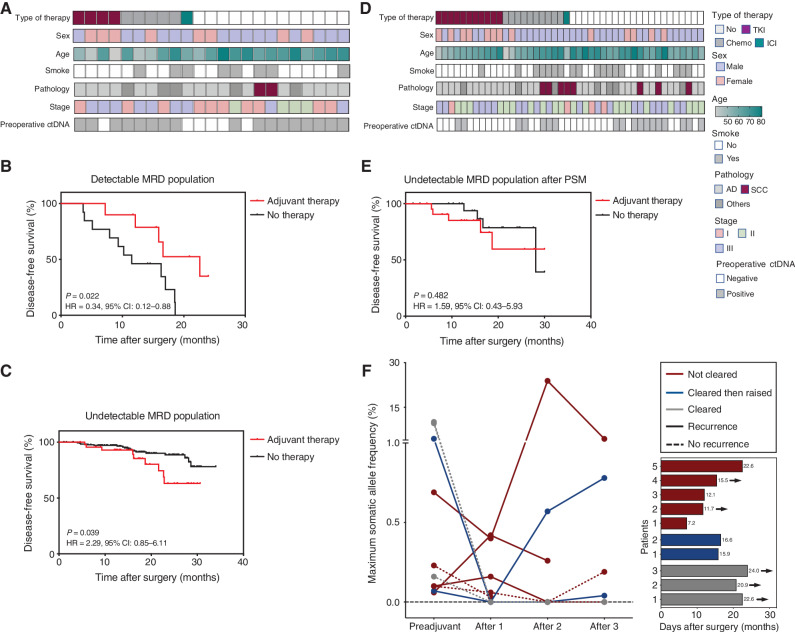
The efficacy and potential limitations of molecular residual disease (MRD) detection urgently need to be fully elucidated in a larger population of non-small cell lung cancer (NSCLC). We enrolled 261 patients with stages I to III NSCLC who underwent definitive surgery, and 913 peripheral blood samples were successfully detected by MRD assay. Within the population, only six patients (3.2%) with longitudinal undetectable MRD recurred, resulting in a negative predictive value of 96.8%. Longitudinal undetectable MRD may define the patients who were cured. The peak risk of developing detectable MRD was approximately 18 months after landmark detection. Correspondingly, the positive predictive value of longitudinal detectable MRD was 89.1%, with a median lead time of 3.4 months. However, brain-only recurrence was less commonly detected by MRD (n = 1/5, 20%). Further subgroup analyses revealed that patients with undetectable MRD might not benefit from adjuvant therapy. Together, these results expound the value of MRD in NSCLC. SIGNIFICANCE: This study confirms the prognostic value of MRD detection in patients with NSCLC after definitive surgery, especially in those with longitudinal undetectable MRD, which might represent the potentially cured population regardless of stage and adjuvant therapy. Moreover, the risk of developing detectable MRD decreased stepwise after 18 months since landmark detection. This article is highlighted in the In This Issue feature, p. 1599.
Overview
The claims and statistics of this paper haven’t been checked yet.
Free: it reads the open-access text and checks the first 5 claims that cite a source we can check. Create a free account to check every claim.
Integrity signals
Registry
Cites
Statistics
Figures
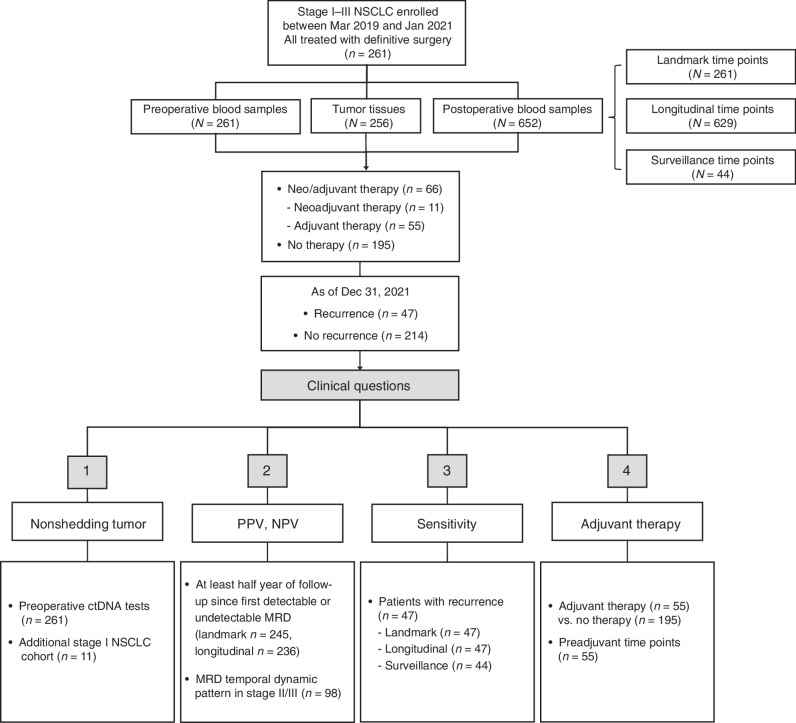
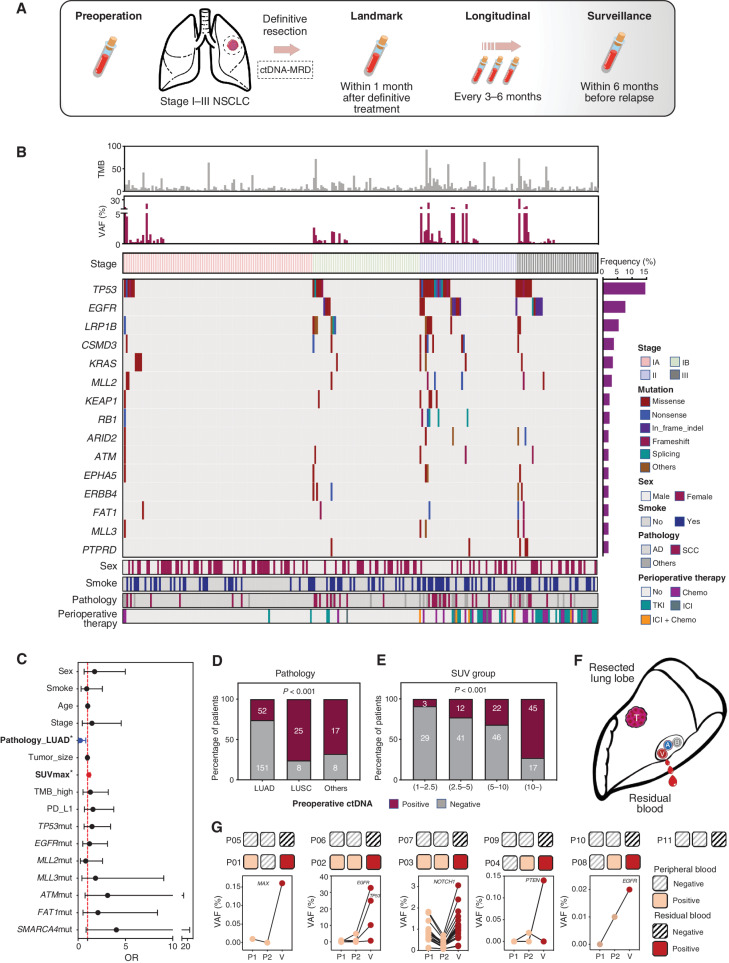
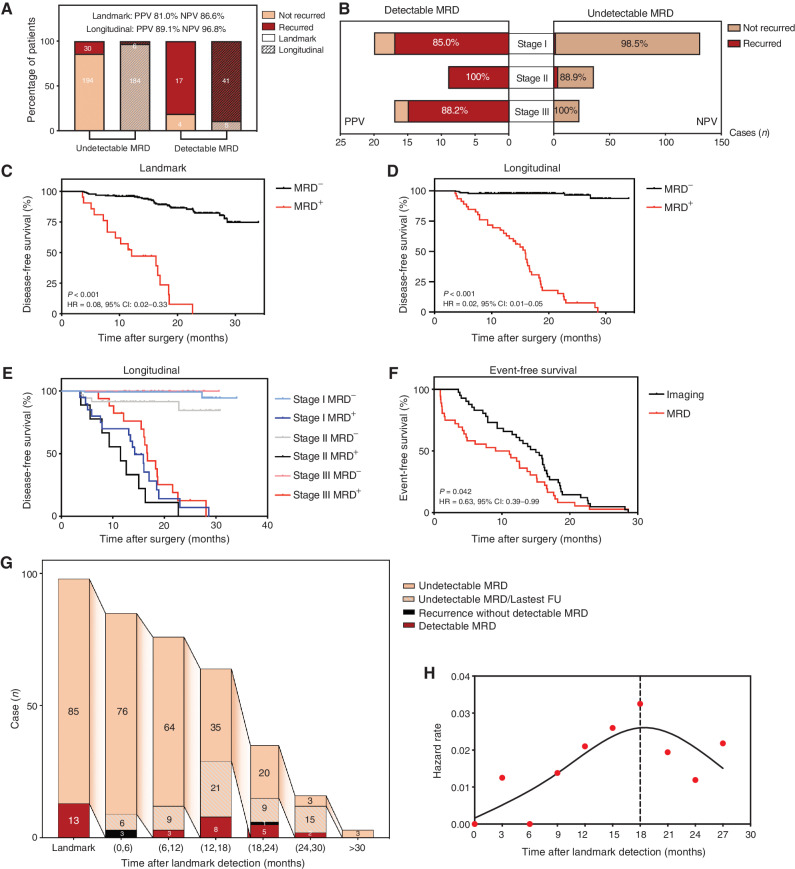
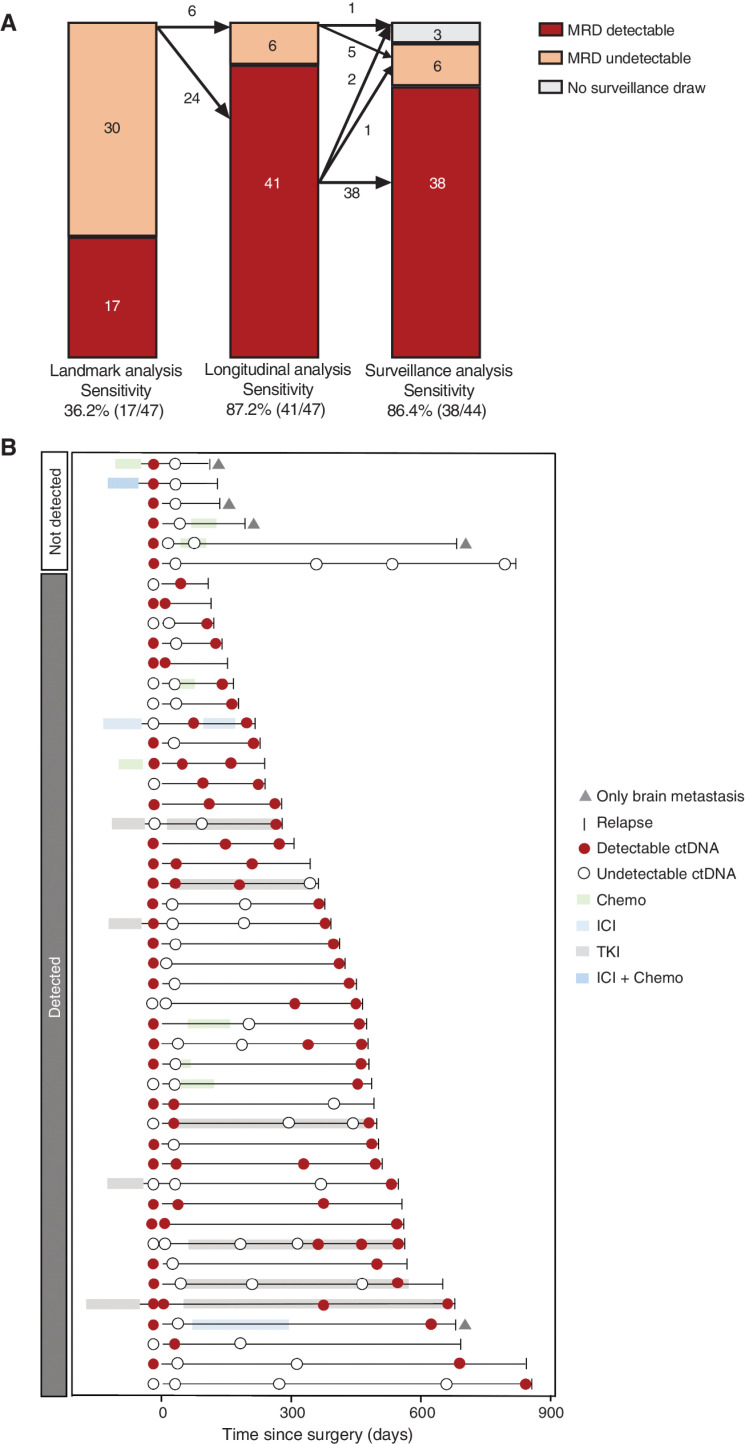
Verification
Claims the paper makes
The claims and statistics of this paper haven’t been checked yet.
Free: it reads the open-access text and checks the first 5 claims that cite a source we can check. Create a free account to check every claim.
Claims other papers make about this one
Each is checked against this paper’s own text: does it say what the citing paper says it does?
The cited source says what the claim attributes to it.
In the citing paper
“Circulating tumor DNA (ctDNA) detection based on next-generation sequencing (NGS) is increasingly employed to monitor minimal residual disease (MRD) in various cancers, including acute myeloid leukemia (AML), breast cancer, and lung cancer.5, 6, 7”
From Tumor-informed deep sequencing of ctDNA detects minimal residual disease and predicts relapse in osteosarcoma (2024) · cites this paper as [7]
Self-check
Percentages, sums and reported differences re-computed from the paper’s own numbers.
The self-check needs the paper’s full text.
Citations
Cites
Clonal hematopoiesis and blood-cancer risk inferred from blood DNA sequence
Genovese, G., Kähler, A. K., Handsaker, R. E., Lindberg, J., Rose, S. A., Bakhoum, S. F., Chambert, K., Mick, E., Neale, B. M., Fromer, M., et al. (2014) · New England Journal of Medicine · doi:10.1056/nejmoa1409405 · Cited by 3,531 · cited 1×
“, DNMT3A, TET2, and PPM1D), as reported in the previous studies (25, 26).”
ResultLung adjuvant cisplatin evaluation: a pooled analysis by the LACE Collaborative Group.
Pignon, J.-P., Tribodet, H., Scagliotti, G. V., Douillard, J.-Y., Shepherd, F. A., Stephens, R. J., Dunant, A., Torri, V., Rosell, R., Seymour, L., et al. (2008) · Journal of Clinical Oncology · doi:10.1200/jco.2007.13.9030 · Cited by 2,642
Tracking the Evolution of Non–Small-Cell Lung Cancer
Jamal-Hanjani, M., Wilson, G. A., McGranahan, N., Birkbak, N. J., Watkins, T. B. K., Veeriah, S., Shafi, S., Johnson, D. H., Mitter, R., Rosenthal, R., et al. (2017) · New England Journal of Medicine · doi:10.1056/nejmoa1616288 · Cited by 2,349 · cited 2×
“Moreover, the tissue local sampling itself cannot represent the whole picture of the tumor, as intratumoral heterogeneity may also contribute to the inconsistency (30).”
BackgroundAn ultrasensitive method for quantitating circulating tumor DNA with broad patient coverage
Newman, A. M., Bratman, S. V., To, J., Wynne, J. F., Eclov, N. C. W., Modlin, L. A., Liu, C. L., Neal, J. W., Wakelee, H. A., Merritt, R. E., et al. (2014) · Nature Medicine · doi:10.1038/nm.3519 · Cited by 2,220 · cited 4×
“Because cerebrospinal fluid (CSF) has been proven to be a comparable or superior detection medium to peripheral blood for central nervous system primary or metastatic tumors (21–23), high-depth ctDNA testing of CSF may be worthwhile, as is the case for the CAPP-seq technique on urine (uCAPP-seq; ref.”
MethodInfluentialPhylogenetic ctDNA analysis depicts early-stage lung cancer evolution
The TRACERx consortium, Abbosh, C., The PEACE consortium, Birkbak, N. J., Wilson, G. A., Jamal-Hanjani, M., Constantin, T., Salari, R., Le Quesne, J., Moore, D. A., et al. (2017) · Nature · doi:10.1038/nature22364 · Cited by 1,874
Osimertinib in Resected EGFR -Mutated Non–Small-Cell Lung Cancer
Wu, Y.-L., Tsuboi, M., He, J., John, T., Grohe, C., Majem, M., Goldman, J. W., Laktionov, K., Kim, S.-W., Kato, T., et al. (2020) · New England Journal of Medicine · doi:10.1056/nejmoa2027071 · Cited by 1,798 · cited 1×
“Encouragingly, substantial progress has been made since the introduction of tyrosine kinase inhibitors and immune-checkpoint inhibitors (ICI), as reported in the ADAURA and IMpower 010 trials (4, 5).”
BackgroundFelip, E., Altorki, N., Zhou, C., Csőszi, T., Vynnychenko, I., Goloborodko, O., Luft, A., Akopov, A., Martinez-Marti, A., Kenmotsu, H., et al. (2021) · The Lancet · doi:10.1016/s0140-6736(21)02098-5 · Cited by 1,486 · cited 1×
“Encouragingly, substantial progress has been made since the introduction of tyrosine kinase inhibitors and immune-checkpoint inhibitors (ICI), as reported in the ADAURA and IMpower 010 trials (4, 5).”
BackgroundLiquid biopsy and minimal residual disease - latest advances and implications for cure
Pantel, K., & Alix-Panabières, C. (2019) · Nature Reviews Clinical Oncology · doi:10.1038/s41571-019-0187-3 · Cited by 1,110
Integrated digital error suppression for improved detection of circulating tumor DNA
Newman, A. M., Lovejoy, A. F., Klass, D. M., Kurtz, D. M., Chabon, J. J., Scherer, F., Stehr, H., Liu, C. L., Bratman, S. V., Say, C., et al. (2016) · Nature Biotechnology · doi:10.1038/nbt.3520 · Cited by 1,099
Chaudhuri, A. A., Chabon, J. J., Lovejoy, A. F., Newman, A. M., Stehr, H., Azad, T. D., Khodadoust, M. S., Esfahani, M. S., Liu, C. L., Zhou, L., et al. (2017) · Cancer Discovery · doi:10.1158/2159-8290.cd-17-0716 · Cited by 1,072 · cited 1×
“Landmark (0,6) (6,12) (12,18) (18,24) (24,30) >30 0 50 100”
Cited by
Items 201–230 of 230
Wu, T., Lu, Z., & Chen, J. (2025) · Clinical Oncology · doi:10.1016/j.clon.2025.103891
Hou, Z., Yang, X., Lu, H.-G., Wang, P., Zhang, L., & Xie, Y. (2025) · Chinese Medicine Research and Development · doi:10.57237/j.cmrd.2025.01.002
A new reality of molecular surveillance for resected lung cancer
Shi, S., & Christopoulos, P. (2025) · Translational Lung Cancer Research · doi:10.21037/tlcr-2025-523
“Zhang et al. were globally among the first to recognize this huge potential and launched a pivotal prospective study, whose initial (7) and currently updated results (3) together contribute valuable experience and provide new data about how to best make use of this novel tool ( Table 1 ).”
InfluentialGong, Z., Cao, Y., Wang, X., Wang, H., Xu, J., Wang, H., Zhang, X., Gong, H., Liu, J., Yang, J., et al. (2025) · Research Square · doi:10.21203/rs.3.rs-7084858/v1
Perioperative Treatment Strategies for Lung Cancer in 2025: A Paradigm Shift
Samaha, R., Spicer, J. D., & Blais, N. (2025) · Canadian oncology today. · doi:10.58931/cot.2025.2236
Wang, X., Guan, Y., Gao, W., Lai, X., Cao, W., Zhu, X., Zeng, X., Liu, Y., Wang, S., Liu, R., et al. (2025) · PLoS Computational Biology · doi:10.1371/journal.pcbi.1013443 · Cited by 1
“8.0; Sentieon Inc.), as described previously [21,22].”
InfluentialShi, Y., Lei, Y., Liu, Y., Wei, Z., Yang, Q., Zhang, F., Bian, L., Luo, X., Luo, K., Li, H., et al. (2025) · BMC Cancer · doi:10.1186/s12885-025-15259-6
“All 16 patients who experienced radiographic recurrence had previously shown positive longitudinal MRD. Notably, the median lead time from MRD detection to imaging-confirmed recurrence was 8.1 months, surpassing previously reported lead times of 3.4 to 7.1 months [2, 8, 21].”
InfluentialFuture Trends in NSCLC and Care
Shahraki, R. A. (2025) · IGI Global eBooks · doi:10.4018/979-8-3373-2096-0.ch013
Jacobs, S. A., Wang, Y., Abraham, J., Feng, H., Montero, A. J., Lipchik, C., Finnigan, M., Jankowitz, R. C., Salkeni, M. A., Maley, S. K., et al. (2024) · Figshare · doi:10.6084/m9.figshare.26710016
Nie, W., 陶, 广., Lu, Z., Qian, J., Ge, Y., Wang, S., Zhang, X. S., Zhong, H., & Yu, H. (2022) · Figshare · doi:10.6084/m9.figshare.20401236
Mao, S., Yang, S., Liu, X., Li, X., Wang, Q., Zhang, Y., Chen, J., Wang, Y., Gao, G., Wu, F., et al. (2024) · Figshare · doi:10.6084/m9.figshare.26595953
Jacobs, S. A., Wang, Y., Abraham, J., Feng, H., Montero, A. J., Lipchik, C., Finnigan, M., Jankowitz, R. C., Salkeni, M. A., Maley, S. K., et al. (2024) · Figshare · doi:10.6084/m9.figshare.26710013
Mao, S., Yang, S., Liu, X., Li, X., Wang, Q., Zhang, Y., Chen, J., Wang, Y., Gao, G., Wu, F., et al. (2024) · Figshare · doi:10.6084/m9.figshare.26595956
Shan, J., Liu, Z., Chen, S., Du, C., Li, B., Ruan, L., Kong, M., Wang, L., Du, M., Shi, S., et al. (2024) · Figshare · doi:10.6084/m9.figshare.26000123
Shan, J., Liu, Z., Chen, S., Du, C., Li, B., Ruan, L., Kong, M., Wang, L., Du, M., Shi, S., et al. (2024) · Figshare · doi:10.6084/m9.figshare.26000072
Fu, R., Yin, H., Xiong, Y., Cai, M., Li, F., Chen, R., Li, H., Tang, W., Jiang, B., Dong, S., et al. (2026) · Journal of the National Cancer Center · doi:10.1016/j.jncc.2026.04.004
Circulating tumor DNA analysis in lung cancer: from molecular origins to analytical boundaries
Zhang, J., Lin, B.-X., Zhao, X.-G., Zhong, W., & Wu, Y.-L. (2026) · Lung Cancer · doi:10.1016/j.lungcan.2026.109473 · Cited by 1
You, T. T., Tang, H., Yuan, M., Song, D., Wang, C., Ying, J., Chen, R. R., Bai, C., Cheng, Y., & Wang, Y. (2026) · MedComm · doi:10.1002/mco2.70829 · Cited by 1
Chen, Y., Li, W., Qiu, P., Zhong, R., Jiang, B., He, M., Chen, P., Liu, H., Gao, R., Li, X., et al. (2026) · Artificial Intelligence Surgery · doi:10.20517/ais.2026.27 · Cited by 1
Caveolae in cancer: mechanochemical signaling in tumor progression, immunity, and therapy
Cai, W., Li, X. W., Chen, Y., Hu, H., & Zhang, J. (2026) · Cell Communication and Signaling · doi:10.1186/s12964-026-03062-0
“Several studies have suggested that caveolae contribute to the internalization of specific drugs or nanoparticles, and that alterations in caveolar structure or abundance may affect drug sensitivity [95].”
Targeting Classical EGFR Mutations in Lung Cancer: Twenty Years of Progress and Beyond
Uehara, Y., Hatano, H., Zhang, J., Han, J., Chua, K. L. M., & Saw, S. P. L. (2026) · Cancers · doi:10.3390/cancers18152401
“However, it is also pertinent to consider that MRD monitoring in EGFR -mutant NSCLC faces unique challenges, including low ctDNA shedding, brain metastasis coverage, and panel selection [93,94].”
Yang, M., Chang, Z.-H., Cai, J.-S., Hou, X., & Yang, H. (2026) · Annals of Surgical Oncology · doi:10.1245/s10434-026-20282-3
ctDNA-based detection of residual disease: implications for management of non-metastatic NSCLC
Leclercq, C., Wespiser, M., Tachon, G., Buisson, A., Pérol, M., & Swalduz, A. (2026) · Frontiers in Oncology · doi:10.3389/fonc.2026.1951454
“Across cohorts, molecular relapse has consistently preceded radiological relapse by a median of 3.5 – 7 months (40, 41).”
InfluentialFan, J., Han, Y., Jin, R., & Li, H. (2026) · Cancers · doi:10.3390/cancers18182933
“Complementary studies showed that sustained MRD negativity defined a very-low-risk population, whereas residual ctDNA predicted relapse months before imaging, supporting ctDNA-positive patients as candidates for intensified surveillance, or postoperative intervention [53,54].”
Verzè, M., Minari, R., Bordi, P., Bocchialini, G., Martines, G., Pluchino, M., D’Agnelli, S., Gnetti, L., Cosenza, A., Balestra, V., et al. (2026) · The Journal of Liquid Biopsy · doi:10.1016/j.jlb.2026.100501
Yadav, R., Ito, M., Ujiie, H., Ohara, S., Tsutani, Y., & Sunny, G. (2026) · Cancers · doi:10.3390/cancers18183043 · Cited by 1
“Longitudinal or surveillance MRD refers to serial sampling during follow-up, which captures patients who are MRD-negative at the landmark but later convert as subclinical disease re-expands [11].”
InfluentialWang, L., Zong, Y., Li, X., Tang, H., Yao, J., Cao, Y., Luo, Y., Li, J., Sun, Z., Lv, W., et al. (2026) · Radiology Imaging Cancer · doi:10.1148/rycan.250617
Value and research advances of ctDNA in perioperative therapy for non-small cell lung cancer
Diao, J., Cen, F., Gao, Y., Jiang, M., & Yin, H. (2026) · Clinical & Translational Oncology · doi:10.1007/s12094-026-04565-5
Exhaled breath patterns following tumour resection in patients with non-small cell lung cancer
Steenhuis, E. G. M., Kort, S., Schuurbiers, M. M. F., Stigt, J. A., van der Palen, J. A. M., Heuvel, M. M. V. D., & van Geffen, W. H. (2026) · BMJ Open Respiratory Research · doi:10.1136/bmjresp-2026-004235
“In this context, the correlation between circulating tumour DNA and clinical outcomes and pathological response is being investigated, 4 8–10 but no definitive conclusions have yet been drawn regarding its exact role and value in follow-up or in predicting treatment response.”
Xu, Y., Zhang, C., Liu, W., Feng, J., Wang, C., 何军明, Liang, W., Wu, Q., 吴印兵, Wang, W., et al. (2026) · Hepatology International · doi:10.1007/s12072-026-11163-8
Metadata
- Authors
- Zhang, J.-T., Liu, S.-Y., Gao, W., Liu, S.-Y. M., Yan, H.-H., Ji, L., Chen, Y., Gong, Y., Lu, H.-L., Lin, J.-T., Yin, K., Jiang, B.-Y., Nie, Q., Liao, R.-Q., Dong, S., Guan, Y., Dai, P., Zhang, X.-C., Yang, J.-J., Tu, H.-Y., Xia, X., Yi, X., Zhou, Q., Zhong, W.-Z., Yang, X.-N., & Wu, Y.-L.
- Affiliations
- Guangdong Academy of Medical Sciences (CN)
- Jinan University (CN)
- 2Geneplus-Beijing Institute, Beijing, China.
- Corresponding author
- Yang, Xue-Ning
- Wu, Yi-Long
- ORCID
- Venue
- Cancer Discovery
- Published
- 2022-05-11
- Volume
- 12
- Issue
- 7
- Pages
- 1690-1701
- ISSN
- 2159-8274 (ISSN-L)
- 2159-8290
- PMC
- PMC9394392
- OpenAlex
- W4280569356
- Cited by
- 228
- References
- 33
- Citations by year
- 2026: 35 · 2025: 58 · 2024: 61 · 2023: 61 · 2022: 13
- FWCI
- 20.55
- Type
- journal article
- Language
- en
- Open access
- hybrid
- doi.org
- Licence
- Locations
- Cancer Discovery (publishedVersion, cc-by-nc-nd)
- PubMed Central (publishedVersion, cc-by-nc-nd)
- PubMed (publishedVersion)
- Funders
- Guangdong Science and Technology Department Translational Medicine in Lung Cancer (2017B030314120)
- Leading Medical Talents in Guangdong Province (KJ012019426)
- Guangdong Provincial People's Hospital Young Talent Project (GDPPHYTP201902, KY012021189)
- China Postdoctoral Science Foundation (2021M701422)
- Topics
- Life Sciences › Biochemistry, Genetics and Molecular Biology › Cancer Research › Cancer Genomics and Diagnostics
- Health Sciences › Medicine › Pulmonary and Respiratory Medicine › Lung Cancer Diagnosis and Treatment
- Health Sciences › Medicine › Pulmonary and Respiratory Medicine › Lung Cancer Treatments and Mutations
- Keywords
- molecular residual disease, non-small cell lung cancer, localized lung cancer, recurrence prediction, negative predictive value, adjuvant therapy, prognostic factors, postoperative follow-up
- MeSH terms
- Carcinoma, Non-Small-Cell Lung, Humans, Lung Neoplasms, Prognosis, Neoplasm, Residual
About these checks
Registry, retraction, Cites and statistics results are computed, not judged, with one exception: a printed reference that no index lists is read once by a model before it counts as a citation error. Claims are extracted by a model and kept only when their quote appears verbatim in the text; each cited source is then checked, with a model’s help, for whether it says what the claim relies on. Those verdicts can be wrong — read the claim’s quote and the cited source before relying on one.
Statistics and arithmetic are recomputed, not judged.
Confidence bands are shown only for fields calibrated on our annotated test set. None is calibrated yet, so no band is shown.
What counts as a claim ›How we measure confidence ›How we check this ›
Are you an author, or do you see a problem with this page? Request a review
Data sources
Bibliographic data: Semantic Scholar, OpenAlex, Crossref.
Contains information from the Semantic Scholar Academic Graph Datasets, made available under the ODC Attribution License (ODC-BY 1.0).
Semantic Scholar’s data is described in: Kinney, R., et al. (2023). The Semantic Scholar Open Data Platform. arXiv:2301.10140.
