

Efficacy and Safety of Adagrasib plus Cetuximab in Patients with KRAS G12C-Mutated Metastatic Colorectal Cancer
Open accessPublished version of a preprint
The DOI matches its Crossref record; 28 of the 30 references it cites were found in a registry or an index; 27 of the 47 sources its claims cite were checked for support.
Abstract
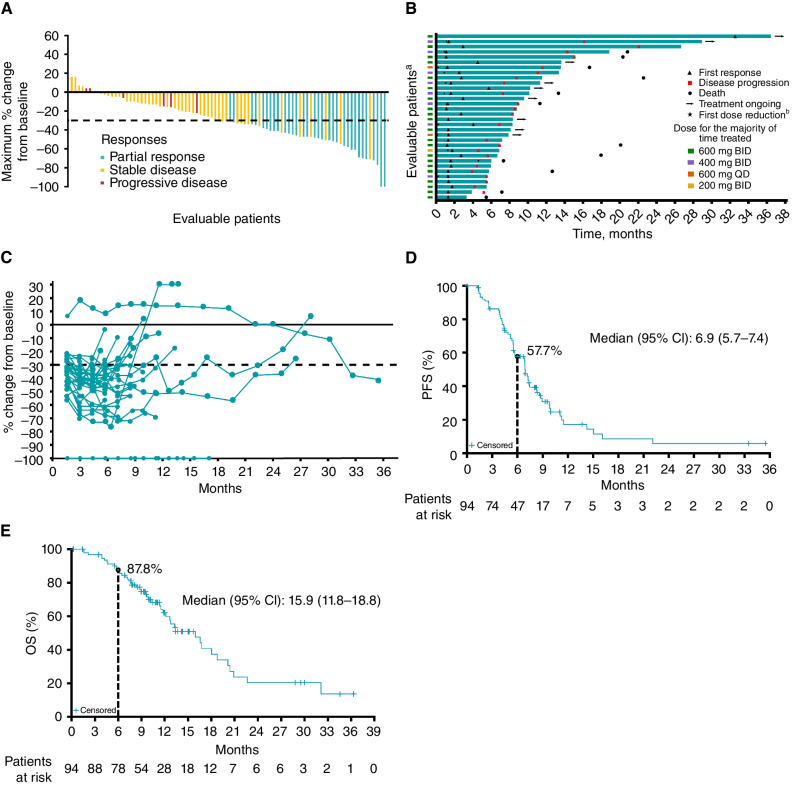
Adagrasib, an irreversible, selective KRASG12C inhibitor, may be an effective treatment in KRASG12C-mutated colorectal cancer, particularly when combined with an anti-EGFR antibody. In this analysis of the KRYSTAL-1 trial, patients with previously treated KRASG12C-mutated unresectable or metastatic colorectal cancer received adagrasib (600 mg twice daily) plus cetuximab. The primary endpoint was objective response rate (ORR) by blinded independent central review. Ninety-four patients received adagrasib plus cetuximab. With a median follow-up of 11.9 months, ORR was 34.0%, disease control rate was 85.1%, and median duration of response was 5.8 months (95% confidence interval [CI], 4.2–7.6). Median progression-free survival was 6.9 months (95% CI, 5.7–7.4) and median overall survival was 15.9 months (95% CI, 11.8–18.8). Treatment-related adverse events (TRAEs) occurred in all patients; grade 3–4 in 27.7% and no grade 5. No TRAEs led to adagrasib discontinuation. Exploratory analyses suggest circulating tumor DNA may identify features of response and acquired resistance. Significance: Adagrasib plus cetuximab demonstrates promising clinical activity and tolerable safety in heavily pretreated patients with unresectable or metastatic KRASG12C-mutated colorectal cancer. These data support a potential new standard of care and highlight the significance of testing and identification of KRASG12C mutations in patients with colorectal cancer. This article is featured in Selected Articles from This Issue, p. 897 See co-corresponding author Rona Yaeger discuss this research article, published simultaneously at the AACR Annual Meeting 2024: https://vimeo.com/932606282/f27a6e46f4
Overview
CoChat Summary
TL;DR
In the phase I/II KRYSTAL-1 trial, adagrasib plus cetuximab produced an ORR of 34.0% by BICR and median OS of 15.9 months in 94 heavily pretreated patients with KRASG12C-mutated unresectable or metastatic colorectal cancer, with no new safety signals. Exploratory ctDNA analyses showed 83% baseline KRASG12C concordance and frequent acquired RTK/MAPK alterations at end of therapy.
Key findings
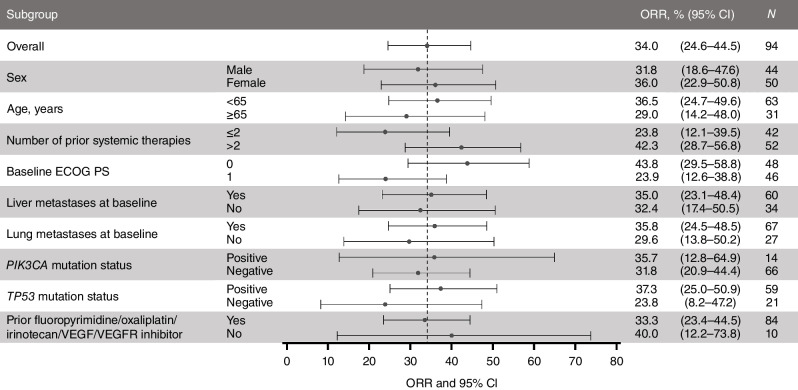
- Among 94 patients, BICR-assessed ORR was 34.0% (95% CI, 24.6–44.5), DCR was 85.1% (95% CI, 76.3–91.6), median DOR was 5.8 months (95% CI, 4.2–7.6), median PFS was 6.9 months (95% CI, 5.7–7.4), and median OS was 15.9 months (95% CI, 11.8–18.8). Investigator-assessed ORR was 42.6% (95% CI, 32.4–53.2).
- In the separate adagrasib monotherapy cohort, BICR ORR was 21.4% (95% CI, 10.3–36.8), median DOR was 15.2 months (95% CI, 2.8–not evaluable), median PFS was 4.1 months (95% CI, 2.8–6.5), and median OS was 12.2 months (95% CI, 8.1–15.2).
- Grade 3–4 TRAEs occurred in 27.7% of patients; there were no grade 5 TRAEs. Most frequent TRAEs were nausea (60.6%), vomiting (51.6%), diarrhea (48.9%), and dermatitis acneiform (47.9%). TRAEs led to adagrasib dose reduction in 29.8%, cetuximab dose reduction in 6.4%, and cetuximab discontinuation in 8.5%; no TRAEs led to adagrasib discontinuation.
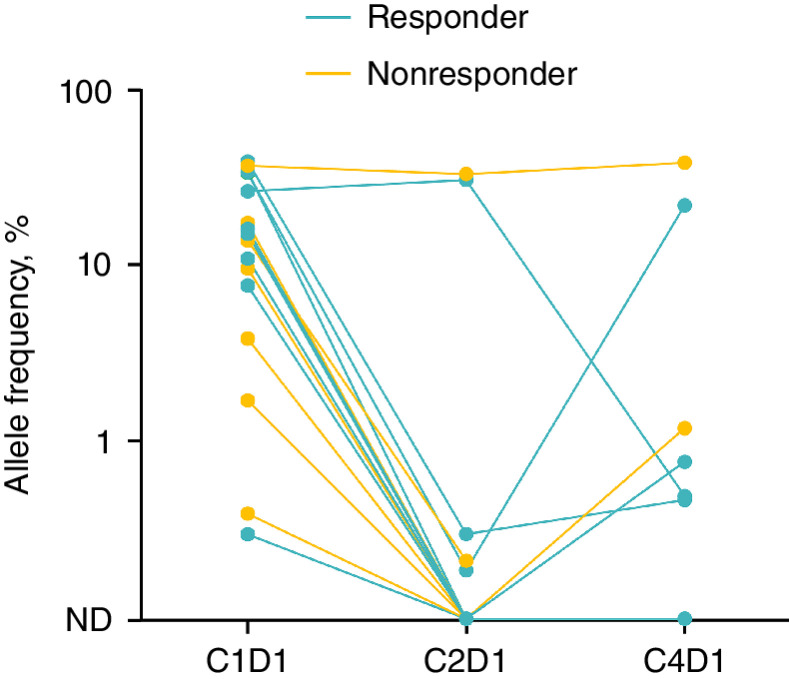
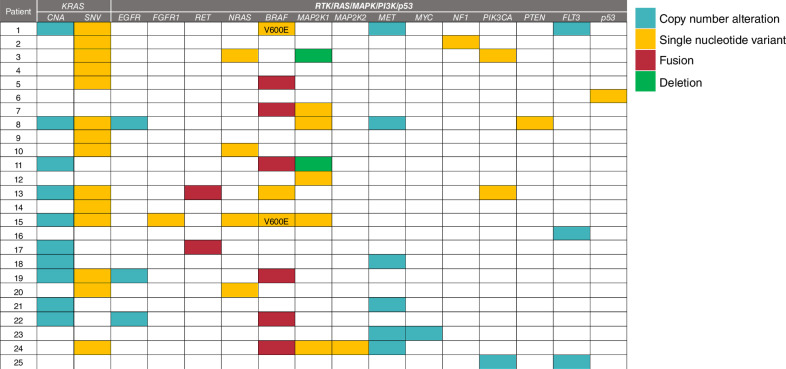
- Baseline KRASG12C ctDNA/tissue concordance was 83% (69/83). ORR was 39% when KRASG12C was detected in ctDNA versus 14% when not detected. At C4D1, 12/15 (80%) phase I patients had ≥90% decrease in KRASG12C ctDNA, with responses in 67% (8/12) of those versus 33% (1/3) with <90% clearance. Acquired alterations at EOT were found in 25/34 (74%) patients, including secondary KRAS mutations in 41%, KRAS amplification in 29%, RTK amplifications/fusions in 35%, EGFR amplification in 9%, and other MAPK gene mutations/fusions in 38%.
Methods
- Open-label, nonrandomized, multicenter, multiple-expansion cohort phase I/II study (KRYSTAL-1). Patients received adagrasib 600 mg orally twice daily plus cetuximab intravenously weekly (400 mg/m2 loading then 250 mg/m2) or every 2 weeks (500 mg/m2) until progression, unacceptable toxicity, consent withdrawal, or death.
- The pooled combination cohort included 94 patients with previously treated, histologically confirmed, unresectable or metastatic KRASG12C-mutated colorectal cancer and ECOG PS 0–1; median age was 57 years, median prior lines of systemic therapy was 3 (range, 1–9), and all had prior fluoropyrimidine. Data cutoff was June 30, 2023; median follow-up was 11.9 months.
- Primary endpoint was safety for phase I and confirmed ORR by BICR per RECIST v1.1 for phase II. Secondary endpoints included DOR, PFS, OS, and safety. DOR, PFS, and OS were estimated by Kaplan–Meier; ORR CIs used Clopper–Pearson. Exploratory ctDNA analyses used droplet digital PCR for KRASG12C kinetics and targeted hybrid capture NGS for acquired alterations at end of therapy.
Limitations
- The paper states the study was nonrandomized and open-label with no comparator arm, so causality and comparative efficacy cannot be established. It also notes the high proportion of lung metastases (71.3%) versus liver metastases (63.8%) and that all enrolled patients had MSS tumors, so efficacy in MSI-H/dMMR KRASG12C-mutated colorectal cancer could not be specifically tested.
- The paper states that ctDNA kinetics data were collected only in the phase I cohort and are not available for phase II; the ctDNA clearance and acquired alteration analyses are exploratory. It also notes there are no prospective data for continuing treatment beyond RECIST progression, which remains investigational.
- Evident from the text: the pooled analysis combines phase I and phase II cohorts with different median follow-up durations (30.0 vs. 10.0 months) and different cetuximab schedules, and some subgroup analyses were omitted because of small patient numbers (fewer than five in a subgroup category).
Model-written summary. Check it against the paper before relying on it.
Integrity signals
Registry
Cites
Statistics
Figures
Verification
Claims the paper makes
14 Valid · 1 Not valid · 9 Not checked · 59 Own results and interpretations
At least one cited source doesn’t support this claim or points to a different paper, and none confirmed it — see the verdicts below.
In the paper
“Consistent with a previous report (8), in this study, ORR, median PFS, and median OS with adagrasib plus cetuximab were numerically higher than observed with adagrasib monotherapy.”
§ Efficacy and Safety of Adagrasib plus Cetuximab in Patients with KRASG12C-Mutated Metastatic Colorectal Cancer > DISCUSSION
What the sources say
- Disputedcites [8] Yaeger R, Weiss J, Pelster MS, Spira AI, Barve M, Ou SI,. Adagrasib with or without cetuximab in colorectal cancer with mutated KRAS G12C. N Engl J Med 2023; 388: 44– 54. 36546659 PMC9908297 sourceExperimental — accuracy not yet measured
Our copy supports two of the three endpoints: in RESULTS > CLINICAL ACTIVITY the combination cohort had a response of 46% (95% CI, 28 to 66) and median PFS of 6.9 months versus 19% (investigator assessment; 23% by BICR) and median PFS of 5.6 months with adagrasib monotherapy. However, the same sections state the median overall survival was 13.4 months (95% CI, 9.5 to 20.1) with adagrasib plus cetuximab versus 19.8 months (95% CI, 12.5 to 23.0) with monotherapy, i.e. numerically LOWER with the combination, contradicting the claim that median OS was numerically higher. The DISCUSSION accordingly claims only 'a potential for enhanced clinical benefit' via improved response and PFS, and never an OS advantage, so attributing a median-OS increase to this trial is contrary to what the paper reports. (LLM, conf=0.85)
Checked by a reasoning model — may be wrong.
plainstates an association- Asserted: passes — The authors put it forward as true.
- Checkable: passes — It can be checked against evidence.
- Load-bearing: unclear — It is unclear whether the paper’s conclusions depend on it.
- Based: passes — The paper gives a reason why it holds.
- Rests on an assumption not shown here.
- Disputed
Every source the paper cites for this claim was checked and supports it.
In the paper
“Adagrasib is a selective, irreversible inhibitor of KRASG12C and has favorable properties, including long half-life (23 hours), dose-dependent pharmacokinetics, and central nervous system penetration (3–5).”
§ Efficacy and Safety of Adagrasib plus Cetuximab in Patients with KRASG12C-Mutated Metastatic Colorectal Cancer > INTRODUCTION
What the sources say
- Supportedcites [3] Hallin J, Engstrom LD, Hargis L, Calinisan A, Aranda R, Briere DM,. The KRAS(G12C) inhibitor MRTX849 provides insight toward therapeutic susceptibility of KRAS-mutant cancers in mouse models and patients. Cancer Discov 2020; 10: 54– 71. 31658955 PMC6954325 source
The Results section identifies MRTX849 (adagrasib) as a covalent KRASG12C inhibitor and reports high selectivity for KRASG12C Cys12. Its reported covalent modification supports the claim’s description of irreversible inhibition. No page number is available in our copy. (LLM, conf=0.91)
- Supportedcites [4] Jänne PA, Riely GJ, Gadgeel SM, Heist RS, Ou SI, Pacheco JM,. Adagrasib in non-small-cell lung cancer harboring a KRAS(G12C) mutation. N Engl J Med 2022; 387: 120– 31. 35658005 source
The paper’s introductory text (p. 121) states that adagrasib irreversibly and selectively binds KRAS G12C in its inactive, GDP-bound state. That directly supports the attributed description of it as a selective, irreversible inhibitor. (LLM, conf=0.95)
- Supportedcites [5] Ou SI, Jänne PA, Leal TA, Rybkin II, Sabari JK, Barve MA,. First-in-human phase I/IB dose-finding study of adagrasib (MRTX849) in patients with advanced KRAS(G12C) solid tumors (KRYSTAL-1). J Clin Oncol 2022; 40: 2530– 8. 35167329 PMC9362872 source
The Introduction (CONTEXT; page not provided) states that adagrasib selectively and irreversibly binds KRASG12C, directly supporting the attributed claim. (LLM, conf=0.95)
plain- Asserted: passes — The authors put it forward as true.
- Checkable: passes — It can be checked against evidence.
- Load-bearing: passes — The paper’s conclusions depend on it.
- Based: passes — The paper gives a reason why it holds.
- Supported
The sources with a verdict support this claim; the rest weren’t checked yet, have no full text we could read, or their verdicts aren’t rated yet.
In the paper
“The efficacy data reported here are consistent with data showing synergistic activity of KRASG12C and EGFR inhibitors in KRASG12C-mutated colorectal cancer cell lines (7, 16).”
§ Efficacy and Safety of Adagrasib plus Cetuximab in Patients with KRASG12C-Mutated Metastatic Colorectal Cancer > DISCUSSION
What the sources say
- Supportedcites [7] Amodio V, Yaeger R, Arcella P, Cancelliere C, Lamba S, Lorenzato A,. EGFR blockade reverts resistance to KRAS(G12C) inhibition in colorectal cancer. Cancer Discov 2020; 10: 1129– 39. 32430388 PMC7416460 source
The Results section 'Cetuximab sensitizes KRAS G12C CRC cell lines to AMG510...' (p. 6) states that concurrent treatment with the EGFR inhibitor cetuximab synergized with the KRAS G12C inhibitor AMG510 in all KRAS G12C mutant CRC cell lines tested (Figure 3B, Supplementary Figure 4A), and that the combination was synergistic in the isogenic LIM1215 knock-in clones (Figure 3G, Supplementary Figure 4B). The Abstract (p. 2) and Statement of significance (p. 2) likewise frame concomitant EGFR and KRAS G12C blockade as highly effective in CRC cells, so the cited paper does report synergistic activity of KRAS G12C and EGFR inhibitors in KRAS G12C-mutated CRC cell lines, exactly what the citing sentence attributes to it. (LLM, conf=0.92)
- Not checked yetcites [16] Tabernero J, Bendell J, Corcoran R, Kopetz S, Lee J, Davis M,. KRYSTAL-10: A randomized phase 3 study of adagrasib (MRTX849) in combination with cetuximab vs chemotherapy in patients with previously treated advanced colorectal cancer with KRASG12C mutation. Ann Oncol 32, 2021 (suppl 3; abstr P-71).
plainstates an association- Asserted: passes — The authors put it forward as true.
- Checkable: passes — It can be checked against evidence.
- Load-bearing: unclear — It is unclear whether the paper’s conclusions depend on it.
- Based: passes — The paper gives a reason why it holds.
- Rests on an assumption not shown here.
- Supported
Every source the paper cites for this claim was checked and supports it.
In the paper
“In colorectal cancer, adaptive resistance to KRASG12C inhibition can occur via EGFR-mediated reactivation of the MAPK pathway (7).”
§ Efficacy and Safety of Adagrasib plus Cetuximab in Patients with KRASG12C-Mutated Metastatic Colorectal Cancer > INTRODUCTION
What the sources say
- Supportedcites [7] Amodio V, Yaeger R, Arcella P, Cancelliere C, Lamba S, Lorenzato A,. EGFR blockade reverts resistance to KRAS(G12C) inhibition in colorectal cancer. Cancer Discov 2020; 10: 1129– 39. 32430388 PMC7416460 source
The Abstract (p. 2) states that KRAS G12C CRC models have high basal RTK activation and that 'we identify EGFR signaling as the dominant mechanism of CRC resistance to KRAS G12C inhibitors,' and the Introduction (p. 4) describes an 'adaptive response to KRAS G12C inhibition' in which 'EGFR reactivation restricts the efficacy of KRAS G12C inhibition in CRC.' The Results section 'ERK inhibition is not sustained in CRC cell lines treated with AMG510' (p. 4) documents the MAPK reactivation itself — all CRC lines rebounded in phospho-ERK by 24 h while NSCLC lines did not — and the Discussion (p. 8) concludes that 'treatment with AMG510 single agent induces strong reactivation of MAPK pathway' in CRC models and PDX. Adding cetuximab restored sustained phospho-MEK/ERK suppression (p. 6), confirming EGFR as the driver of the rebound. (LLM, conf=0.93)
plainstates a cause- Asserted: passes — The authors put it forward as true.
- Checkable: passes — It can be checked against evidence.
- Load-bearing: passes — The paper’s conclusions depend on it.
- Based: passes — The paper gives a reason why it holds.
- Supported
The sources with a verdict support this claim; the rest weren’t checked yet, have no full text we could read, or their verdicts aren’t rated yet.
In the paper
“Similarly, phase I/II data for other KRASG12C inhibitors in colorectal cancer demonstrated greater activity in combination with anti-EGFR antibodies versus monotherapy (17–21).”
§ Efficacy and Safety of Adagrasib plus Cetuximab in Patients with KRASG12C-Mutated Metastatic Colorectal Cancer > DISCUSSION
What the sources say
- Supportedcites [17] Kuboki Y, Fakih M, Strickler J, Yaeger R, Masuishi T, Kim EJ,. Sotorasib with panitumumab in chemotherapy-refractory KRAS(G12C)-mutated colorectal cancer: a phase 1b trial. Nat Med 2024; 30: 265– 70. 38177853 PMC11135132 source
The Discussion (p. 8) states that the finding 'that a combination approach is more effective than either agent alone is generally consistent with that of the recent phase 2 nonrandomized KRYSTAL-1 trial that tested the combination of the KRAS G12C inhibitor adagrasib with cetuximab in KRAS G12C mutated colorectal cancer', i.e. another KRAS G12C inhibitor given with an anti-EGFR antibody, and the Abstract/introduction (p. 5) likewise reports that adagrasib plus cetuximab 'demonstrated clinical activity and acceptable safety' in KRAS G12C-mutated mCRC while noting sotorasib monotherapy gave only a modest 9.7% ORR. The copy does not tabulate adagrasib-monotherapy response figures itself and cautions that direct cross-trial comparison with KRYSTAL-1 is difficult (different designs, prior lines, sample size, regions), but for a broad background sentence of this kind it clearly treats phase 2 combination-with-anti-EGFR data as showing greater activity than monotherapy. (LLM, conf=0.82)
- Not checked — no full text of the sourcecites [18] Fakih MG, Kopetz S, Kuboki Y, Kim TW, Munster PN, Krauss JC,. Sotorasib for previously treated colorectal cancers with KRAS(G12C) mutation (CodeBreaK100): a prespecified analysis of a single-arm, phase 2 trial. Lancet Oncol 2022; 23: 115– 24. 34919824 source
- Not checked yetcites [19] Desai J, Han S-H, Lee J-S, Shacham-Shmueli E, Massarelli E, Cervantes A,. Phase Ib study of GDC-6036 in combination with cetuximab in patients with colorectal cancer (CRC) with KRAS G12C mutation [abstract]. In: Proceedings of the American Association for Cancer Research Annual Meeting 2023; Part 2 (Clinical Trials and Late-Breaking Research); 2023 Apr 14–19; Orlando, FL. Philadelphia (PA): AACR; 2023. Abstract nr CT029. source
Checked before — its earlier verdict is held back until a new check runs.
- Not checked yetcites [20] Murciano-Goroff YR, Heist RS, Kuboki Y, Koyama T, Ammakkanavar N, Hollebecque A,. A first-in-human phase 1 study of LY3537982, a highly selective and potent KRAS G12C inhibitor in patients with KRAS G12C-mutant advanced solid tumors [abstract]. In: Proceedings of the American Association for Cancer Research Annual Meeting 2023; Part 2 (Clinical Trials and Late-Breaking Research); 2023 Apr 14-19; Orlando, FL. Philadelphia (PA): AACR; 2023. Abstract nr CT028. source
Checked before — its earlier verdict is held back until a new check runs.
- Not checked yetcites [21] Xu R, Xu Y, Yan D, Munster P, Ruan D, Deng Y,. Safety and efficacy of D-1553 in combination with cetuximab in KRAS G12C mutated colorectal cancer (CRC): a phase II study. Ann Oncol 34, 2023 (suppl 2; abstr 5500).
boostedstates a cause- Asserted: passes — The authors put it forward as true.
- Checkable: passes — It can be checked against evidence.
- Load-bearing: passes — The paper’s conclusions depend on it.
- Based: passes — The paper gives a reason why it holds.
- Supported
37 more claims · 4 with their cited sources checked
Create a free account to see all 83 claims and to verify the 16 references still open.
- Probably not a substantial claim. 22
- It may state two separate claims as one. 24
Claims other papers make about this one
Each is checked against this paper’s own text: does it say what the citing paper says it does?
The source backs part of the claim, not all of it — or backs it for a different population, condition or comparison.
In the citing paper
“Recent studies have identified several mechanisms of resistance to this combination, including secondary KRAS mutations, alterations in genes upstream or downstream of KRAS, and alterations in other RAS homologs.7,17,18”
From Paneth-like transition drives resistance to dual targeting of KRAS and EGFR in colorectal cancer (2026) · cites this paper as [18]
Experimental — accuracy not yet measuredThe source backs part of the claim, not all of it — or backs it for a different population, condition or comparison.
In the citing paper
“Moreover, about a third of relapsed tumors lack detectable genomic alterations,18,19 suggesting that non-genetic mechanisms also play a significant role in resistance to KRAS-EGFR dual therapy.”
From Paneth-like transition drives resistance to dual targeting of KRAS and EGFR in colorectal cancer (2026) · cites this paper as [18]
Experimental — accuracy not yet measuredThe source backs part of the claim, not all of it — or backs it for a different population, condition or comparison.
In the citing paper
“Notably, multiple resistance mutations often emerge in relapsed tumors within the same patient,7,17,18 which poses challenges to targeting heterogenous resistance mechanisms at the time of progressing disease.”
From Paneth-like transition drives resistance to dual targeting of KRAS and EGFR in colorectal cancer (2026) · cites this paper as [18]
Experimental — accuracy not yet measuredThe source backs part of the claim, not all of it — or backs it for a different population, condition or comparison.
In the citing paper
“KRAS-mutant CRC frequently exhibits strong dependency on EGFR-mediated feedback signaling, particularly after KRAS G12C inhibition [26,27,28,32,33,56].”
From Precision Targeting of KRAS-Mutant Cancers: Beyond G12C Toward G12D and Pan-RAS Therapeutic Strategies (2026) · cites this paper as [33]
Experimental — accuracy not yet measuredThe cited source says what the claim attributes to it.
In the citing paper
“Accordingly, KRASG12Ci plus SHP2 inhibitor (SHP2i; for example TNO155) or EGFR antagonist (EGFRi; for example cetuximab18) combination approaches are now being clinically tested13,16,19,20, with evidence of improved clinical response20–22.”
From Co-targeting SOS1 enhances the antitumor effects of KRASG12C inhibitors by addressing intrinsic and acquired resistance (2024) · cites this paper as [22]
4 more claims about this paper
Create a free account to see every claim other papers make about this one.
Self-check
Percentages, sums and reported differences re-computed from the paper’s own numbers.
Each contradiction between two passages listed here was confirmed by an independent check.
Rated minor: it would not touch a result — a value no result rests on, a p-value that stays on the same side of the significance level, or a conflict that is clerical, resolved elsewhere in the paper, or outside its own findings.
In the paper
§ Efficacy and Safety of Adagrasib plus Cetuximab in Patients with KRASG12C-Mutated Metastatic Colorectal Cancer > DISCUSSION
“Dual KRAS/EGFR inhibition with adagrasib plus cetuximab demonstrated promising clinical activity in patients with heavily pretreated (≥3 lines of therapy) unresectable or metastatic KRASG12C-mutated colorectal cancer from the KRYSTAL-1 trial.”
§ Efficacy and Safety of Adagrasib plus Cetuximab in Patients with KRASG12C-Mutated Metastatic Colorectal Cancer > RESULTS > Patients
“| 1/2/3/≥4, % | 8 (8.5)/34 (36.2)/29 (30.9)/23 (24.5) |”
Citations
Cites
Grothey, A., Cutsem, E. V., Sobrero, A., Siena, S., Falcone, A., Ychou, M., Humblet, Y., Bouché, O., Mineur, L., Barone, C., et al. (2013) · The Lancet · doi:10.1016/s0140-6736(12)61900-x · Cited by 2,895 · cited 1×
“%) underscores the high unmet need in heavily pretreated patients (23–25).”
BackgroundHallin, J., Engstrom, L. D., Hargis, L., Calinisan, A., Aranda, R., Briere, D. M., Sudhakar, N., Bowcut, V., Baer, B. R., Ballard, J. A., et al. (2020) · Cancer Discovery · doi:10.1158/2159-8290.cd-19-1167 · Cited by 1,304 · cited 1×
“Adagrasib is a selective, irreversible inhibitor of KRAS G12C and has favorable properties, including long half-life (23 hours), dose-dependent pharmacokinetics, and central nervous system penetration (3–5).”
BackgroundAdagrasib in Non–Small-Cell Lung Cancer Harboring a KRAS G12C Mutation
Jänne, P. A., Riely, G. J., Gadgeel, S. M., Heist, R. S., Ou, S.-H. I., Pacheco, J. M., Johnson, M. L., Sabari, J. K., Leventakos, K., Yau, E., et al. (2022) · New England Journal of Medicine · doi:10.1056/nejmoa2204619 · Cited by 1,061 · cited 1×
“Full study details have been published previously (4, 5, 8, 39).”
MethodSelf-citationClinical Sequencing Defines the Genomic Landscape of Metastatic Colorectal Cancer
Yaeger, R., Chatila, W. K., Lipsyc, M. D., Hechtman, J. F., Cercek, A., Sanchez-Vega, F., Jayakumaran, G., Middha, S., Zehir, A., Donoghue, M. T. A., et al. (2018) · Cancer Cell · doi:10.1016/j.ccell.2017.12.004 · Cited by 858
Self-citationTie, J., Kinde, I., Wang, Y., Wong, H. L., Roebert, J., Christie, M., Tacey, M., Wong, R., Singh, M., Karapetis, C. S., et al. (2015) · Annals of Oncology · doi:10.1093/annonc/mdv177 · Cited by 635 · cited 1×
“Clearance of KRAS G12C ctDNA was defined as more than 90% decrease in the variant allele fraction based on prior defined thresholds (15).”
BackgroundAdagrasib with or without Cetuximab in Colorectal Cancer with Mutated KRAS G12C
Yaeger, R., Weiss, J., Pelster, M. S., Spira, A. I., Barve, M., Ou, S.-H. I., Leal, T. A., Bekaii-Saab, T. S., Paweletz, C. P., Heavey, G. A., et al. (2023) · New England Journal of Medicine · doi:10.1056/nejmoa2212419 · Cited by 527 · cited 3×
“Full study details have been published previously (4, 5, 8, 39).”
BackgroundMethodResultSelf-citationTanaka, N., Lin, J. J., Li, C., Ryan, M. B., Zhang, J., Kiedrowski, L. A., Michel, A. G., Syed, M. U., Fella, K. A., Sakhi, M., et al. (2021) · Cancer Discovery · doi:10.1158/2159-8290.cd-21-0365 · Cited by 527
Self-citationEGFR Blockade Reverts Resistance to KRASG12C Inhibition in Colorectal Cancer.
Amodio, V., Yaeger, R., Arcella, P., Cancelliere, C., Lamba, S., Lorenzato, A., Arena, S., Montone, M., Mussolin, B., Bian, Y., et al. (2020) · Cancer Discovery · doi:10.1158/2159-8290.cd-20-0187 · Cited by 504 · cited 1×
“The efficacy data reported here are consistent with data showing synergistic activity of KRAS G12C and EGFR inhibitors in KRAS G12C -mutated colorectal cancer cell lines (7, 16).”
Self-citationTrifluridine–tipiracil and bevacizumab in refractory metastatic colorectal cancer
Prager, G. W., Taieb, J., Fakih, M., Ciardiello, F., Van Cutsem, E., Elez, E., Cruz, F. M., Wyrwicz, L., Stroyakovskiy, D., Pápai, Z., et al. (2023) · New England Journal of Medicine · doi:10.1056/nejmoa2214963 · Cited by 467 · cited 1×
“%) underscores the high unmet need in heavily pretreated patients (23–25).”
Background
Research works printed but not linked: 1
- Hong DS, Kuboki Y, Yaeger R, Strickler J, Masuishi T, Langer C,. Biomarkers of acquired resistance to sotorasib plus panitumumab in chemorefractory KRAS G12C-mutated metastatic colorectal cancer (mCRC) [abstract]. In: Proceedings of the American Association for Cancer Research Annual Meeting 2023; Part 1 (Regular and Invited Abstracts); 2023 Apr 14-19; Orlando, FL. Philadelphia (PA): AACR; 2023. Abstract nr 2308.
Cited by
KRAS inhibitors: resistance drivers and combinatorial strategies
Isermann, T., Sers, C., Der, C. J., & Papke, B. (2025) · Trends in Cancer · doi:10.1016/j.trecan.2024.11.009 · Cited by 196
RAS signaling in carcinogenesis, cancer therapy and resistance mechanisms
Yang, X., & Wu, H. K. (2024) · Journal of Hematology & Oncology · doi:10.1186/s13045-024-01631-9 · Cited by 146
MYC and KRAS cooperation: from historical challenges to therapeutic opportunities in cancer
Casacuberta‐Serra, S., González-Larreategui, Í., Capitán-Leo, D., & Soucek, L. (2024) · Signal Transduction and Targeted Therapy · doi:10.1038/s41392-024-01907-z · Cited by 100
Thatikonda, V., Lyu, H., Jurado, S., Kostyrko, K., Bristow, C. A., Albrecht, C., Alpar, D., Arnhof, H., Bergner, O., Bosch, K., et al. (2024) · Nature Cancer · doi:10.1038/s43018-024-00800-6 · Cited by 76
Self-citationResponse and Resistance to RAS Inhibition in Cancer
Ebright, R. Y., Dilly, J., Shaw, A. T., & Aguirre, A. J. (2025) · Cancer Discovery · doi:10.1158/2159-8290.cd-25-0349 · Cited by 83
Riedl, J. M., Fece de la Cruz, F., Lin, J. J., Parseghian, C., Kim, J. E., Matsubara, H., Barnes, H., Caughey, B., Norden, B. L., Morales-Giron, A. A., et al. (2025) · Annals of Oncology · doi:10.1016/j.annonc.2025.01.020 · Cited by 68
Self-citationKRAS: the Achilles’ heel of pancreas cancer biology
Drizyte‐Miller, K., Talabi, T., Somasundaram, A., Cox, A. D., & Der, C. J. (2025) · Journal of Clinical Investigation · doi:10.1172/jci191939 · Cited by 73
A neomorphic protein interface catalyzes covalent inhibition of RAS G12D aspartic acid in tumors
Weller, C. E., Burnett, G. L., Jiang, L., Chakraborty, S., Zhang, D., Vita, N. A., Dilly, J., Kim, E., Maldonato, B. J., Seamon, K. J., et al. (2025) · Science · doi:10.1126/science.ads0239 · Cited by 78
Targeting KRAS mutations: orchestrating cancer evolution and therapeutic challenges
Choucair, K., Imtiaz, H., Uddin, M. H., Nagasaka, M., Al-Hallak, M. N., Philip, P. A., El-Rayes, B., Pasche, B., & Azmi, A. S. (2025) · Signal Transduction and Targeted Therapy · doi:10.1038/s41392-025-02473-8 · Cited by 83
Pietrantonio, F., Salvatore, L., Esaki, T., Modest, D. P., Lopez-Bravo, D. P., Taieb, J., Karamouzis, M. V., Ruiz-Garcia, E., Kim, T. W., Kuboki, Y., et al. (2025) · Journal of Clinical Oncology · doi:10.1200/jco-24-02026 · Cited by 51
Glecirasib in KRASG12C-mutated nonsmall-cell lung cancer: a phase 2b trial
Shi, Y., Fang, J., Xing, L., Yao, Y., Zhang, J., Liu, L., Wang, Y., Hu, C., Xiong, J., Liu, Z., et al. (2025) · Nature Medicine · doi:10.1038/s41591-024-03401-z · Cited by 42
Emerging landscape of KRAS inhibitors in cancer treatment
Riedl, J. M., Matsubara, H., McNeil, R., Patel, P. S., de la Cruz, F. F., Gulhan, D., & Corcoran, R. B. (2026) · Cancer Cell · doi:10.1016/j.ccell.2026.01.001 · Cited by 53
Current and emerging concepts for systemic treatment of metastatic colorectal cancer
Steup, C., Kennel, K. B., Neurath, M. F., Fichtner-Feigl, S., & Greten, F. R. (2025) · Gut · doi:10.1136/gutjnl-2025-335412 · Cited by 39
“35 The phase III KRYSTAL-10 trial is currently recruiting, comparing adagrasib plus cetuximab to FOLFOX or FOLFIRI in the second-line treatment of KRAS p.G12C -mutated mCRC (NCT04793958).”
Ahn, D. H., Ridinger, M., Cannon, T. L., Mendelsohn, L., Starr, J. S., Hubbard, J. M., Kasi, A., Barzi, A., Samuëlsz, E., Karki, A., et al. (2024) · Journal of Clinical Oncology · doi:10.1200/jco-24-01266 · Cited by 43
Endothelial cell in tumor angiogenesis: Origins, mechanisms, and therapeutic implication
Han, Y., Zhu, B., & Meng, S. (2025) · Genes & Diseases · doi:10.1016/j.gendis.2025.101611 · Cited by 42
Holz, A., Paul, B., Zapf, A., Pantel, K., & Joosse, S. A. (2025) · Cancer Treatment Reviews · doi:10.1016/j.ctrv.2025.102999 · Cited by 27
D3S-001 in advanced solid tumors with KRASG12C mutations: a phase 1 trial
Cho, B. C., Lü, S., Lee, M. A., Song, Z., Park, J., Lim, S. M., Li, Z., Zhao, J., Richardson, G. E., Zhang, Y., et al. (2025) · Nature Medicine · doi:10.1038/s41591-025-03688-6 · Cited by 28
“…KRAS-G12Ci with EGFR antibodies to address epidermal growth factor (EGF)-mediated reactivation of KRAS and mitogen-activated protein kinase (MAPK) pathway signaling in CRC. ORRs of 34–46% were reported for adagrasib combined with cetuximab and 26% for sotorasib combined with panitumumab 16–18 .”
Paneth-like transition drives resistance to dual targeting of KRAS and EGFR in colorectal cancer
Zhang, Y., Chen, J., She, Y., Fang, Z., Zhang, Y., Ruan, D., Guo, W., Liao, J., Zhou, W., Lao, J., et al. (2026) · Cancer Cell · doi:10.1016/j.ccell.2025.10.010 · Cited by 23
“7,17,18 Moreover, about a third of relapsed tumors lack detectable genomic alterations, 18,19 suggesting that non-genetic mechanisms also play a significant role in resistance to KRAS-EGFR dual therapy.”
Self-citationRuan, D.-Y., Wu, H.-X., Xu, Y., Munster, P. N., Deng, Y., Richardson, G., Yan, D., Lee, M.-A., Lee, K.-W., Pan, H., et al. (2025) · Signal Transduction and Targeted Therapy · doi:10.1038/s41392-025-02274-z · Cited by 22
Zhang, F., Wang, B., Wu, M., Zhang, L., & Ji, M. Q. (2025) · Frontiers in Immunology · doi:10.3389/fimmu.2025.1509173 · Cited by 28
Targeting the KRAS Oncogene for Patients with Metastatic Colorectal Cancer
Miao, R., Yu, J. B., & Kim, R. D. (2025) · Cancers · doi:10.3390/cancers17091512 · Cited by 21
Becker, J. H., Metropulos, A. E., Spaulding, C., Marinelarena, A. M., Shields, M. A., Principe, D. R., Pham, T. D., & Munshi, H. G. (2024) · Cancer Research · doi:10.1158/0008-5472.can-23-3574 · Cited by 17
“For example, the combination of the KRAS G12C inhibitor adagrasib and the EGFR antibody cetuximab is under FDA consideration as a subsequent-line treatment for colon cancers with the KRAS G12C mutation (39, 40).”
NRF2 as a ferroptosis gatekeeper in colorectal cancer: implications for therapy
El‐Sehrawy, A. A. M. A., Al-dulaimi, A. A., Alkhathami, A. G., RenukaJyothi, S., Panigrahi, R., Pargaien, A. V., Singh, U., Husseini, A., & Alnajar, M. J. (2025) · Naunyn-Schmiedeberg s Archives of Pharmacology · doi:10.1007/s00210-025-04324-3 · Cited by 19
“However, the hurdle of KRAS mutations constitutes an enormously frustrating impediment in CRC patient populations, affecting 36–46% of cases (Yaeger et al. 2024).”
Palieri, R., Luca, M. D., Balestra, F., Panzetta, G., Lotesoriere, C., Rizzi, F. R., Ricci, A. D., Mastrogiacomo, R., Curri, M. L., Laghi, L., et al. (2025) · Oncology Reviews · doi:10.3389/or.2025.1702932 · Cited by 17
Combining EGFR and KRAS G12C Inhibitors for KRAS G12C Mutated Advanced Colorectal Cancer
Miyashita, H., & Hong, D. S. (2024) · Journal of Cancer Immunology · doi:10.33696/cancerimmunol.6.086 · Cited by 16
“27.7% of patients had grade 3-4 TRAEs, with nausea being the most common [21].”
BackgroundInfluentialMurciano-Goroff, Y. R., Hollebecque, A., Heist, R. S., Cassier, P. A., Han, J.-Y., Kim, S. Y., Sabari, J. K., Tosi, D., Sacher, A., Burns, T. F., et al. (2026) · Nature Communications · doi:10.1038/s41467-026-69943-7 · Cited by 13
Self-citationKhan, J., Ghosh, P. K., Bajpai, U., Dwivedi, K., & Saluja, D. (2024) · Discover Oncology · doi:10.1007/s12672-024-01712-8 · Cited by 16
“In this study, metastatic CRC patients treated with fruquintinib had a median survival of 7.4 months, compared to 4.8 months in the placebo [28, 29].”
InfluentialRecent advances in therapeutic targeting of the KRAS pathway in cancer
Hitchen, N., Williams, S., & Desai, J. (2025) · Pharmacology & Therapeutics · doi:10.1016/j.pharmthera.2025.108889 · Cited by 15
Candia, L., Cervantes, A. M. R., & Martinelli, E. (2024) · Annals of Oncology · doi:10.1016/j.annonc.2024.11.015 · Cited by 14
KRAS, a New Target for Precision Medicine in Colorectal Cancer?
Boilève, A., Smolenschi, C., Lambert, A., Boige, V., Delaye, M., Camilleri, G. M., Tarabay, A., Valéry, M., Fuerea, A., Pudlarz, T., et al. (2024) · Cancers · doi:10.3390/cancers16203455 · Cited by 11
“MRTX1133 induced tumor regression of 30% or more in 11 out of 25 KRASG12D mutant models (PDX or cell lines) [39].”
BackgroundDrosten, M., & Barbacid, M. (2025) · Molecular Oncology · doi:10.1002/1878-0261.70149 · Cited by 12
Švec, J., Onhajzer, J., & Kořínek, V. (2024) · Critical Reviews in Oncology/Hematology · doi:10.1016/j.critrevonc.2024.104544 · Cited by 10
Kale, R. R., Samant, C., Nandakumar, K., Pai, K. S. R., & Bhonde, M. (2025) · Biochemical and Biophysical Research Communications · doi:10.1016/j.bbrc.2025.151688 · Cited by 12
KRAS-targeted therapies in cancer: novel approaches and overcoming resistance
Tang, D., Kroemer, G., & Kang, R. (2025) · BMJ Oncology · doi:10.1136/bmjonc-2025-000946 · Cited by 16
Xu, Y., Shen, H., Shang, D., & Zhu, C. (2026) · Frontiers in Oncology · doi:10.3389/fonc.2025.1665239 · Cited by 10
Stahlhut, C. E., Maciag, A. E., Sullivan, K. A., Singh, K., Gitego, N., Zhang, Z., Chan, A. H., Sharma, A. K., Alexander, P., Shu, J., et al. (2026) · Cancer Discovery · doi:10.1158/2159-8290.cd-25-1280 · Cited by 12
“In addition, clinical studies have demonstrated the effectiveness of combining mutant KRAS inhibitors (e.g., with KRAS G12C off inhibitors sotorasib and adagrasib) and anti-EGFR antibodies in patients with colorectal cancer (22, 23).”
Wang, P., Sun, X., He, X., Kang, D., Liu, X., Liu, D., Li, A., Yang, G., Lin, Y., Li, S., et al. (2025) · Cancer Research Communications · doi:10.1158/2767-9764.crc-25-0001 · Cited by 9
“In vivo studies showed that once-daily dosing of glecirasib can strongly inhibit p-ERK for at least 24 hours and induce maximal tumor responses agent alone in patients with colorectal cancer (36, 37).”
Shi, Y., Ba, Y., Wang, J., Xiong, J., Gu, K., Chen, Y., Zheng, Z., Wang, Z., Guo, W., Cheng, Y., et al. (2025) · Signal Transduction and Targeted Therapy · doi:10.1038/s41392-025-02229-4 · Cited by 12
Zhang, J., Ma, J., Niu, Y., Liu, J., Wang, Z., Guo, J., Meng, Y., Sun, R., Zhang, Z., Liu, H., et al. (2025) · Cancer Immunology Immunotherapy · doi:10.1007/s00262-025-04187-w · Cited by 9
Adagrasib in the treatment of colorectal cancer
Haddad, S. F., Bouferraa, Y., & Nair, K. G. (2025) · Future Oncology · doi:10.1080/14796694.2025.2524311 · Cited by 10
“No new safety concerns were identified in the expanded dataset [52].”
InfluentialMetabolic reprogramming in colorectal cancer: Mechanisms and therapeutic insights
Xiao, W., Tan, D., Zeng, W., Nie, X., & Wang, M. (2026) · Genes & Diseases · doi:10.1016/j.gendis.2026.102054 · Cited by 8
Cherri, S., Libertini, M., Noventa, S., Oneda, E., Meriggi, F. A., & Zaniboni, A. (2025) · International Journal of Molecular Sciences · doi:10.3390/ijms26062522 · Cited by 9
“These patients were administered Adagrasib 600 mg twice daily in combination with Cetuximab at an initial loading dose of 400 mg per square meter of body surface area, followed by 250 mg per square meter weekly or 500 mg per square meter every two weeks [27].”
Rojas, M., Manzi, M., Madurga, S., Velásquez, F. E. G., Romero, M. A., Marín, S., Cascante, M., & Maurel, J. (2025) · Exploration of Targeted Anti-tumor Therapy · doi:10.37349/etat.2025.1002337 · Cited by 8
Advances in biomarkers of resistance to KRAS mutation-targeted inhibitors
Wang, L., Wei, D., Li, S., & Jiang, S. (2025) · Discover Oncology · doi:10.1007/s12672-025-03569-x · Cited by 8
“In the KRYSTAL-1 trial, ctDNA analysis revealed that among colorectal cancer patients with KRAS G12C mutations, those developing NRAS/ EGFR mutations demonstrated an improved objective response rate when treated with the combination of adagrasib and cetuximab [63, 135].”
Jameson, N. M., Kim, D., Lee, C., Skrable, B., Shea, A., Guo, X., Izadi, H., Abed, M., Harismendy, O., Ma, J., et al. (2025) · Cancer Research Communications · doi:10.1158/2767-9764.crc-24-0411 · Cited by 9
“Targeting feedback activation of receptor tyrosine kinase has demonstrated benefit in colorectal cancer (50).”
Wei, X., Blaj, C., Al-Radhawi, M. A., Lai, L., Maldonato, B. J., Yang, Y. C., Seu, L., Gundlapalli, H., Jiang, L., Ayala, M. A. M., et al. (2026) · Cancer Discovery · doi:10.1158/2159-8290.cd-25-1616 · Cited by 9
“63–65 ).”
Lin, Q., Morales-Giron, A. A., Sander, C., Curtis, J. M., Barnes, H., Patel, P. S., de la Cruz, F. F., Riedl, J. M., Matsubara, H., Nakamura, H., et al. (2026) · Clinical Cancer Research · doi:10.1158/1078-0432.ccr-25-1788 · Cited by 12
“…has been reported to drive MAPK feedback reactivation in colorectal cancer models (18, 37, 45), and inhibition of EGFR signaling with an anti-EGFR antibody in combination with BRAF or KRASi G12C has led to improved outcomes in patients with colorectal cancer and is now FDA-approved (25, 26).”
The Current Role of Circulating Tumor DNA in the Management of Pancreatic Cancer
Cox, M. C., Vitello, D. J., & Chawla, A. (2025) · Journal of Gastrointestinal Cancer · doi:10.1007/s12029-024-01129-0 · Cited by 6
Moving towards more personalized approaches in locally advanced and metastatic colorectal cancer
Sievers, C. K., & Eng, C. (2024) · Nature Reviews Gastroenterology & Hepatology · doi:10.1038/s41575-024-01025-9 · Cited by 5
“• Adagrasib combined with cetuximab is the first FDA-approved KRAS G12C targeted therapy approved for mCRC based on the phase I–II KRYSTAL-1 trial 1 .”
GAP mimetic activity of pan-Ras TCI daraxonrasib synergizes with K-Ras Switch-II pocket inhibition
Pfaff, P., & Shokat, K. M. (2026) · Biological Chemistry · doi:10.1515/hsz-2025-0249 · Cited by 5
Emerging and Established Targets in Colorectal Cancer: Translating Biology Into Therapeutics
Grochot, R. M., Bartolini, M., Algaze, S. D., Reimann, P., Winder, T., Lenz, H., & Fontana, E. (2026) · American Society of Clinical Oncology Educational Book · doi:10.1200/edbk-26-516576 · Cited by 5
Ying, L., Zhang, L., Chen, Y., Huang, C., Zhou, J., Xie, J., & Liu, L. (2025) · Scientific Reports · doi:10.1038/s41598-025-90899-z · Cited by 5
Akkuş, E., Öksüz, N. E., & Erul, E. (2025) · Critical Reviews in Oncology/Hematology · doi:10.1016/j.critrevonc.2025.104741 · Cited by 6
Evolution of structure-guided drug design strategies targeting mutations in codon 12 of KRAS
Dorandish, S., Bhayekar, K., Singh, A., Kushwaha, N. D., Malin, E., Serafimovski, S., Kelm, J. M., Gavande, N. S., & Lakkaniga, N. R. (2025) · RSC Medicinal Chemistry · doi:10.1039/d5md00169b · Cited by 7
Zhao, W., Noor, K. S., Sun, S., Xu, H., Meng, J., He, X., & Sheng, W. (2025) · Advanced Healthcare Materials · doi:10.1002/adhm.202503947 · Cited by 5
Covalent chemistry in targeted protein degradation
Tan, J., Liang, Y., Shao, S., & Shen, Y. (2026) · Advanced Drug Delivery Reviews · doi:10.1016/j.addr.2026.115777 · Cited by 5
Li, Y., Fu, S., Yang, J., Tang, W., Zhang, J., Mao, W., & Ouyang, L. (2026) · Journal of Medicinal Chemistry · doi:10.1021/acs.jmedchem.5c03212 · Cited by 4
Accardo, C., Vella, I., di Francesco, F., Rizzo, S., Calamia, S., Tropea, A., Bonsignore, P., Petri, S. L., & Gruttadauria, S. (2025) · BioScience Trends · doi:10.5582/bst.2025.01012 · Cited by 6
Sayed, M. S., Idrissi, Y. A., Ahmed, O., Samir, S., Pandita, S., Saeed, F. U., Elraggal, D., Abdulazeem, H. M., & Saeed, A. (2025) · Medical Oncology · doi:10.1007/s12032-025-02684-7 · Cited by 5
“Similarly, the combination of adagrasib with cetuximab was associated with considerable GI toxicity, nausea affected 60.6% of patients and diarrhea 48.9% [10, 20].”
InfluentialAdaptive Plasticity Tumor Cells Modulate MAPK-Targeting Therapy Response in Colorectal CancerPreprint
Villarreal, O. E., Xu, Y., Tran, H., Machado, A. A., Prescod, D., Anderson, A., Minelli, R., Peoples, M., Martinez, A. H., Lee, H. M., et al. (2025) · bioRxiv (Cold Spring Harbor Laboratory) · doi:10.1101/2025.01.22.634215 · Cited by 4
Self-citationLi, J., Wang, Z., Huang, J., Ba, Y., Cao, B., Luo, S., Li, W., Bai, C., Song, Z., Xiong, J., et al. (2026) · The Lancet Gastroenterology & Hepatology · doi:10.1016/s2468-1253(25)00267-5 · Cited by 3
Wang, B., Zhang, S., Guo, Y., Gao, W., Wu, H., Wang, J., Wang, Y., Tang, C., & Liu, L. (2025) · Oncogene · doi:10.1038/s41388-025-03331-1 · Cited by 3
EGFR blockade confers sensitivity to pan-RAS inhibitors in KRAS-mutated cancers
Han, J., Yu, B., Jing, J., He, X., Hua, Y., & Xu, G. (2025) · Cellular Oncology · doi:10.1007/s13402-025-01075-4 · Cited by 6
“…antibody cetuximab for KRAS G12C colorectal cancer in 2024, and sotorasib with EGFR-targeting monoclonal antibody panitumumab for KRAS G12C metastatic colorectal cancer in 2025, giving the promising clinical activities when combining KRAS G12C inhibitors with EGFR blockade [30, 31, 33, 35, 36].”
InfluentialDing, C., Yao, R., Wang, Y., Liu, H., Li, C., & Xie, H. (2025) · Frontiers in Pharmacology · doi:10.3389/fphar.2025.1656372 · Cited by 7
Ianniello, M., Ottaiano, A., Bocchetti, M., Ruggiero, R., Santorsola, M., Sirica, R., Caraglia, F., Ceccarelli, A., Toscano, E., Picone, C., et al. (2025) · Journal of Translational Medicine · doi:10.1186/s12967-025-07273-w · Cited by 3
“Similarly, adagrasib in combination with cetuximab inducedresponse rates of up to 34% and a median PFS of 6.9 months in KRAS p.G12C-refractory mCRC [39].”
InfluentialSystematic and precise interventions for KRAS-mutant cancers
Liang, J., Wu, J., Zhang, Y., Wang, H., Zheng, Y., & He, Q. (2026) · Experimental Hematology and Oncology · doi:10.1186/s40164-026-00763-7 · Cited by 4
Janne, P. A., Johnson, M. L., Li, J., Pant, S., Dünzinger, U., Ilia, L., Möldner, K., Soh, J. E., & Yamamoto, N. (2026) · Clinical Cancer Research · doi:10.1158/1078-0432.ccr-25-3725 · Cited by 4
Targeting KRAS for cancer therapy
Jia, J., Liu, R., Adamide, T. A., Fernandez, I. E., & Stathopoulos, G. T. (2026) · British Journal of Pharmacology · doi:10.1111/bph.70546 · Cited by 4
Primary urethral adenocarcinoma harbors recurrent KRAS and EGFR alterations
Zhao, T., Iafrate, A. J., & Wu, C. (2025) · Human Pathology · doi:10.1016/j.humpath.2025.105771 · Cited by 4
Wang, W., Alley, A., Sun, N., Tadesse, M., Wang, X., & Zhang, R. (2025) · Frontiers in Pharmacology · doi:10.3389/fphar.2025.1663766 · Cited by 7
Novel paradigms in KRAS targeting: Unveiling strategies to combat drug resistance
Luo, X., Zhou, F., Tang, Y., Liu, X., Xiao, R., Gu, M., Bai, J., Jiang, D., Yang, G., You, L., et al. (2025) · Chinese Medical Journal · doi:10.1097/cm9.0000000000003776 · Cited by 2
“[251,252] In December 2022, the FDA approved Adagasib combined with Cetuximab as a treatment option for CRC patients with KRAS G12C mutation based on these studies.”
Ahmad, O., Rath, S., Banatwala, U. E. S. S., Alam, U., Islam, M. R., Wahid, A., Sajjad, F., Khan, W. F., & Gain, A. (2025) · American Journal of Clinical Oncology · doi:10.1097/coc.0000000000001249 · Cited by 3
Bioinformatics mining and experimental validation of prognostic biomarkers in colorectal cancer
Huang, F., Alshehade, S. A., Zhao, W. G., Li, Z. Y., Fong, J. Y., Okechukwu, P. N., Ng, C. T., Venkatachalam, K., Jeleń, M., Mlodawsak, B. M., et al. (2025) · Discover Oncology · doi:10.1007/s12672-025-03301-9 · Cited by 2
“Comprehensive molecular profiling, encompassing MSI status, KRAS/BRAF mutation status, and other biomarkers, provides a robust foundation for developing personalized treatment regimens and serves as the cornerstone for precision medicine [13, 14].”
Davoudi, Z., Dexheimer, T. S., Coussens, N. P., Silvers, T. E., Fox, R. G., Kemp, S. B., Juneja, P., Morris, J., Hollingshead, M. G., Takebe, N., et al. (2025) · Cancer Research Communications · doi:10.1158/2767-9764.crc-24-0582 · Cited by 2
“Additionally, combining KRAS G12C inhibitors with anti-EGFR monoclonal antibodies has shown encouraging antitumor activity compared with the standard of care in colorectal cancer (88–91).”
Zhang, L., Xu, Q., Sun, G., Zhang, X., Xue, J., Yao, C., Liu, D., & Zhai, J. (2025) · Frontiers in Pharmacology · doi:10.3389/fphar.2025.1717293 · Cited by 2
Ai, X., Song, Z., Wu, L., Zhou, A., Cheng, D., Zong, H., Wu, H., Niu, Z., Sun, Y., Zhu, L., et al. (2026) · Nature Medicine · doi:10.1038/s41591-026-04559-4 · Cited by 3
“New genetic alterations were detected at the EOT in two patients: one with KRAS amplification and KRAS–CASC1 tandem duplication detected in PDAC, and one with APC , POM121L12 , SMAD4 and SOX9 mutations newly detected at the EOT in CRC.”
InfluentialAdvances in Targeting KRAS G12C in Gastrointestinal Malignancies: Focus on KRAS G12C Inhibitors
Hoyek, C., Pirozzi, A., Jones, J. M., Rimassa, L., Sonbol, M. B., & Bekaii‐Saab, T. (2024) · touchREVIEWS in Oncology & Haematology · doi:10.17925/ohr.2024.20.2.7 · Cited by 3
“87 42,44–46”
Self-citationCo-targeting KRASG12D and the HER family is efficacious in colorectal cancer
Kilroy, M. K., Wischmeier, C., Park, B. S., Choi, D., Feroz, W., Mishra, R., & Garrett, J. T. (2025) · Carcinogenesis · doi:10.1093/carcin/bgaf036 · Cited by 3
Zhou, J., Fang, Z., Zhang, W., Rao, G.-W., & Zheng, Q. (2025) · Mini-Reviews in Organic Chemistry · doi:10.2174/0118756298391640250731025705 · Cited by 1
Targeting RAS for Cancer Treatment: What a Long, Strange Trip It's Been
Cox, A. D., & Der, C. J. (2025) · Annual Review of Cancer Biology · doi:10.1146/annurev-cancerbio-071024-082459 · Cited by 1
Guo, L., Wang, Y., Yang, C., Qi, W., & Wang, S. (2025) · Scientific Reports · doi:10.1038/s41598-025-26317-1 · Cited by 1
Yang, Y., Cao, H., Xu, Z., Dai, Y., Dai, X., Shao, M., Yao, Y., & He, S. (2026) · Clinical Surgical Oncology · doi:10.1016/j.cson.2026.100119 · Cited by 1
Boby, J. M., Ilerhunmwuwa, N. P., Benny, J. M., Peniche, P. Z., Baytar, D. K., & Sahin, I. H. (2026) · Cancer Investigation · doi:10.1080/07357907.2026.2636581 · Cited by 1
Context defines precision: rethinking KRAS inhibition in oncology
Marchiò, S. (2026) · npj Precision Oncology · doi:10.1038/s41698-026-01422-0 · Cited by 1
The role of cancer-associated fibroblasts in various cancer drug resistance
Dang, F., Na, J., Xiao, L., Tian, X., Shao, J., Zhong, L., & Zhao, Y. (2026) · Cancer Letters · doi:10.1016/j.canlet.2026.218584 · Cited by 2
Antibody treatments for digestive cancers: Past, present, and future
Dadi, I., Mazard, T., Schmitt, L.-M., Chastel, T., Turtoï, A., Poul, M., & Pattingre, S. (2025) · Seminars in Oncology · doi:10.1016/j.seminoncol.2025.152369 · Cited by 1
EGFR as a biomarker in colorectal Cancer: An electrochemical biosensing approach
Break, M. K. B., Syed, R. U., Hussein, W., Nawaz, M., Abdalla, R. A. H., Aboshouk, N. A. M., Khoo, T.-J., Elariny, H. A., Mohammed, A. E., & Alghamdi, S. S. (2026) · Clinica Chimica Acta · doi:10.1016/j.cca.2026.120917 · Cited by 1
Oxazole derivatives as promising kinase inhibitors: a new era in Cancer drug discovery
Nath, R., Debnath, B., Maity, I., Ashique, S., Chakraborty, A., Akhtar, M. J., Nehra, B., Tariq, M., Ansari, M. Y., & Maity, A. (2026) · Bioorganic Chemistry · doi:10.1016/j.bioorg.2026.109979 · Cited by 2
Leto, S. M., Sassi, F. P., Zanella, E. R., Vurchio, V., Cottino, F., Ferri, M., Damico, A., Grassi, E., Bertotti, A., & Trusolino, L. (2026) · Cell Death and Disease · doi:10.1038/s41419-026-08900-0 · Cited by 1
RAS signaling at the crossroads of radioresistance and tumor immunity
Quevrin, C., Mondini, M., Meziani, L., de Thoré, M. G., Liu, W., Lopes, E., Morel, D., Clémenson, C., Deutsch, É., & Lévy, A. (2026) · Journal for ImmunoTherapy of Cancer · doi:10.1136/jitc-2026-015274 · Cited by 1
“First-generation KRASˆG12C inhibitors (sotorasib and adagrasib) have since gained regulatory approval for KRASˆG12C-mutated cancers, 5–9 while next-generation ON-state inhibitors, KRASˆG12D inhibitors, and pan-KRAS agents are progressing through clinical development.”
The current landscape of neoadjuvant therapy for resectable colon cancer
Chan, M., Krishnan, T., Townsend, A. R., Karapetis, C. S., Roy, A. C., Foo, T., Tebbutt, N. C., Dhillon, T., & Price, T. J. (2025) · Expert Review of Anticancer Therapy · doi:10.1080/14737140.2025.2517881 · Cited by 2
“BRAF inhibitors combined with an anti-EGFR monoclonal antibody is standard of care for BRAF V600E-mutant mCRC [52], while selective KRAS inhibitors in combination with anti-EGFR monoclonal antibodies have shown promising activity in KRAS G12C-mutant mCRC [53].”
Unlocking RAS: Finding the Right Combination Is the Key
Papke, B., & Der, C. J. (2025) · United European Gastroenterology Journal · doi:10.1002/ueg2.70138 · Cited by 1
Chang, W.-H., Vaughan, A. J., Stamey, A. G., Mancini, M., Hayashi, M., Yang, R. Y., Robb, R. N., Andrussier, D., Klomp, J. A., Waters, A. M., et al. (2026) · bioRxiv (Cold Spring Harbor Laboratory) · doi:10.64898/2026.04.18.719329 · Cited by 1
Kano, Y. (2026) · International Journal of Molecular Sciences · doi:10.3390/ijms27135796
An Evolving Landscape: New Therapies for Metastatic Colorectal Cancer
Mo, C., Chadha, B., & Kuang, C. (2024) · Clinical Colorectal Cancer · doi:10.1016/j.clcc.2024.08.003 · Cited by 3
Therapeutic Advances in Gastrointestinal Cancers: Immuno-oncology and Beyond
Jalali, S. (2024) · EMJ Oncology · doi:10.33590/emjoncol/pxtf9170
Therapiekonzepte sowie Prävention/Überwindung von Resistenzen: KRAS/RAS-mutierte Tumoren
Kretzschmar, A. (2025) · Onkologische Welt · doi:10.1055/a-2495-9943
Mechanism of Action and Research Progress of Drugs Targeting KRAS G12-Mutant Tumors
郑, 金. (2025) · World Journal of Cancer Research · doi:10.12677/wjcr.2025.152011
Miao, Y., Song, S., Ma, Y., Yue, W., Qiang, Y., & Zhao, J. (2025) · Lecture notes in computer science · doi:10.1007/978-981-96-9908-7_35
Zeng, J., Li, Q., Li, K., Yang, L., Xu, L., Wang, W., Yang, K., Wei, Q., Wang, J., Zhu, C., et al. (2025) · Frontiers in Immunology · doi:10.3389/fimmu.2025.1605227
Metadata
- Authors
- Yaeger, R., Uboha, N. V., Pelster, M. S., Bekaii-Saab, T. S., Barve, M., Saltzman, J., Sabari, J. K., Peguero, J. A., Paulson, A. S., Jänne, P. A., Cruz-Correa, M., Anderes, K., Velastegui, K., Yan, X., Der-Torossian, H., Klempner, S. J., & Kopetz, S. E.
- Affiliations
- Memorial Sloan Kettering Cancer Center (US)
- University of Wisconsin–Madison (US)
- Tennessee Oncology (US)
- 4Department of Medical Oncology and Hematology, Mayo Clinic, Scottsdale, Arizona.
- Mary Crowley Cancer Research Center (US)
- Cleveland Clinic (US)
- NYU Langone Health (US)
- 8Department of Research, Oncology Consultants PA, Houston, Texas.
- 9Department of Medical Oncology, Texas Oncology – Baylor Charles A. Sammons Cancer Center, Dallas, Texas.
- 10Dana-Farber Cancer Institute and Harvard Medical School, Boston, Massachusetts.
- 11PanOncology Trials, San Juan, Puerto Rico.
- 12Mirati Therapeutics, a wholly owned subsidiary of Bristol Myers Squibb Company, San Diego, California.
- Massachusetts General Hospital (US)
- The University of Texas MD Anderson Cancer Center (US)
- Corresponding author
- Yaeger, Rona
- Uboha, Nataliya V.
- ORCID
- Venue
- Cancer Discovery
- Published
- 2024-04-08
- Volume
- 14
- Issue
- 6
- Pages
- 982-993
- ISSN
- 2159-8274 (ISSN-L)
- 2159-8290
- PMC
- PMC11152245
- OpenAlex
- W4394566874
- Semantic Scholar
- 964dac7e6ec0a0dc728fb06a1c8975599c521414
- Cited by
- 139
- References
- 30
- Citations by year
- 2026: 59 · 2025: 65 · 2024: 15
- FWCI
- 23.68
- Type
- journal article
- Language
- en
- Open access
- hybrid
- doi.org
- Licence
- Locations
- Cancer Discovery (publishedVersion, cc-by-nc-nd)
- PubMed Central (publishedVersion, cc-by-nc-nd)
- PubMed (publishedVersion)
- Digital Commons-TMC (Texas Medical Center) (submittedVersion)
- Funders
- Mirati Therapeutics
- National Institutes of Health (P30 CA008748)
- Topics
- Health Sciences › Medicine › Oncology › Colorectal Cancer Treatments and Studies
- Health Sciences › Medicine › Pulmonary and Respiratory Medicine › Lung Cancer Treatments and Mutations
- Health Sciences › Medicine › Oncology › Colorectal Cancer Surgical Treatments
- Keywords
- adagrasib, cetuximab, KRAS G12C mutation, metastatic colorectal cancer, KRAS inhibitors, anti-EGFR monoclonal antibody, objective response rate, progression-free survival, overall survival, treatment-related adverse events, circulating tumor DNA, acquired drug resistance, previously treated patients
- MeSH terms
- Cetuximab, Acetonitriles, Adult, Aged, Aged, 80 and over, Antineoplastic Combined Chemotherapy Protocols, Female, Humans, Male, Middle Aged, Mutation, Neoplasm Metastasis, Piperazines, Pyrimidines, Colorectal Neoplasms, Proto-Oncogene Proteins p21(ras), Treatment Outcome
About these checks
Registry, retraction, Cites and statistics results are computed, not judged, with one exception: a printed reference that no index lists is read once by a model before it counts as a citation error. Claims are extracted by a model and kept only when their quote appears verbatim in the text; each cited source is then checked, with a model’s help, for whether it says what the claim relies on. Those verdicts can be wrong — read the claim’s quote and the cited source before relying on one.
The claim verdicts this report counts are experimental: their accuracy is not yet measured.
A language model drew the claims from the paper on 2026-10-06, under version 3 of the claim definition (model deepseek-v4.1-flash, prompt extract-v3).
A second model labelled each claim on 2026-10-06 (model jev-1.13-20260917, definition revision gold-guideline-v0.2).
Cited sources are checked with a language model’s help (qwen3.8-omni-flash and gpt-6-sol).
Statistics and arithmetic are recomputed, not judged.
Confidence bands are shown only for fields calibrated on our annotated test set. None is calibrated yet, so no band is shown.
What counts as a claim ›How we measure confidence ›How we check this ›
Are you an author, or do you see a problem with this page? Request a review
Data sources
Bibliographic data: Semantic Scholar, OpenAlex, Crossref.
Contains information from the Semantic Scholar Academic Graph Datasets, made available under the ODC Attribution License (ODC-BY 1.0).
Semantic Scholar’s data is described in: Kinney, R., et al. (2023). The Semantic Scholar Open Data Platform. arXiv:2301.10140.
