

Effectiveness of Fludrocortisone Plus Hydrocortisone versus Hydrocortisone Alone in Septic Shock: A Systematic Review and Network Meta-Analysis of Randomized Controlled Trials
Open accessThe DOI matches its Crossref record; 61 of the 61 references it cites were found in a registry or an index.
Abstract
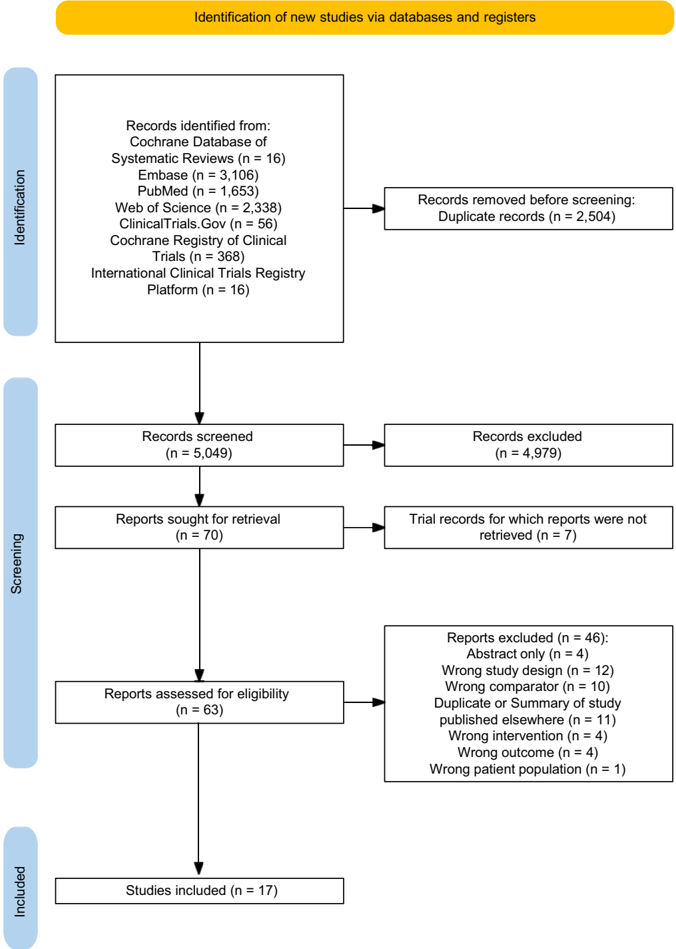
Rationale: The use of hydrocortisone in adult patients with septic shock is controversial, and the effectiveness of adding fludrocortisone to hydrocortisone remains uncertain. Objectives: To assess the comparative effectiveness and safety of fludrocortisone plus hydrocortisone, hydrocortisone alone, and placebo or usual care in adults with septic shock. Methods: A systematic review and a Bayesian network meta-analysis of peer-reviewed randomized trials were conducted. The primary outcome was all-cause mortality at last follow-up. Treatment effects are presented as relative risks (RRs) with 95% credible intervals (CrIs). Placebo or usual care was the reference treatment. Measurements and Main Results: Among 7,553 references, we included 17 trials (7,688 patients). All-cause mortality at last follow-up was lowest with fludrocortisone plus hydrocortisone (RR, 0.85; 95% CrI, 0.72–0.99; 98.3% probability of superiority, moderate-certainty evidence), followed by hydrocortisone alone (RR, 0.97; 95% CrI, 0.87–1.07; 73.1% probability of superiority, low-certainty evidence). The comparison of fludrocortisone plus hydrocortisone versus hydrocortisone alone was based primarily on indirect evidence (only two trials with direct evidence). Fludrocortisone plus hydrocortisone was associated with a 12% lower risk of all-cause mortality compared with hydrocortisone alone (RR, 0.88; 95% CrI, 0.74–1.03; 94.2% probability of superiority, moderate-certainty evidence). Conclusions: In adult patients with septic shock, fludrocortisone plus hydrocortisone was associated with lower risk of all-cause mortality at last follow-up than placebo and hydrocortisone alone. The scarcity of head-to-head trials comparing fludrocortisone plus hydrocortisone versus hydrocortisone alone led our network meta-analysis to rely primarily on indirect evidence for this comparison. Although we undertook several sensitivity analyses and assessments, these findings should be considered while also acknowledging the heterogeneity of included trials.
Overview
The claims and statistics of this paper haven’t been checked yet.
Free: it reads the open-access text and checks the first 5 claims that cite a source we can check. Create a free account to check every claim.
Integrity signals
Registry
Cites
Statistics
Figures




Verification
Claims the paper makes
The claims and statistics of this paper haven’t been checked yet.
Free: it reads the open-access text and checks the first 5 claims that cite a source we can check. Create a free account to check every claim.
Claims other papers make about this one
Each is checked against this paper’s own text: does it say what the citing paper says it does?
The check wasn’t confident either way, so it gives no verdict — never disputed.
In the citing paper
“Previous studies have also shown that reproducibility failures can occur at every stage of the SR process 20-24 .”
From Automation of Systematic Reviews with Large Language Models (2025) · cites this paper as [21]
Experimental — accuracy not yet measured
Self-check
Percentages, sums and reported differences re-computed from the paper’s own numbers.
The self-check needs the paper’s full text.
Citations
Cites
RoB 2: a revised tool for assessing risk of bias in randomised trials
Sterne, J. A. C., Savović, J., Page, M. J., Elbers, R. G., Blencowe, N. S., Boutron, I., Cates, C. J., Cheng, H.-Y., Corbett, M. S., Eldridge, S. M., et al. (2019) · BMJ · doi:10.1136/bmj.l4898 · Cited by 34,787
The third international consensus definitions for sepsis and septic shock (Sepsis-3).
Singer, M., Deutschman, C. S., Seymour, C. W., Shankar-Hari, M., Annane, D., Bauer, M., Bellomo, R., Bernard, G. R., Chiche, J.-D., Coopersmith, C. M., et al. (2016) · JAMA · doi:10.1001/jama.2016.0287 · Cited by 28,250
Bone, R. C., Balk, R. A., Cerra, F. B., Dellinger, R. P., Fein, A. M., Knaus, W. A., Schein, R. M. H., & Sibbald, W. J. (1992) · Chest · doi:10.1378/chest.101.6.1644 · Cited by 13,198
Kass, R. E., & Raftery, A. E. (1995) · Journal of the American Statistical Association · doi:10.1080/01621459.1995.10476572 · Cited by 12,558
Surviving Sepsis Campaign: International Guidelines for Management of Severe Sepsis and Septic Shock
Dellinger, R. P., Levy, M. M., Rhodes, A., Annane, D., Gerlach, H., Opal, S. M., Sevransky, J. E., Sprung, C. L., Douglas, I. S., Jaeschke, R., et al. (2013) · Critical Care Medicine · doi:10.1097/ccm.0b013e31827e83af · Cited by 9,694
Hutton, B., Salanti, G., Caldwell, D. M., Chaimani, A., Schmid, C. H., Cameron, C., Ioannidis, J. P. A., Straus, S., Thorlund, K., Jansen, J. P., et al. (2015) · Annals of Internal Medicine · doi:10.7326/m14-2385 · Cited by 8,269
Sterne, J. A. C., Sutton, A. J., Ioannidis, J. P. A., Terrin, N., Jones, D. R., Lau, J., Carpenter, J., Rucker, G., Harbord, R. M., Schmid, C. H., et al. (2011) · BMJ · doi:10.1136/bmj.d4002 · Cited by 7,709
Intravenous Fluids and Acute Kidney Injury
Ding, X., Cheng, Z., & Qian, Q. (2017) · Blood Purification · doi:10.1159/000452702 · Cited by 6,827
Severe Sepsis and Septic Shock
Angus, D. C., & van der Poll, T. (2013) · New England Journal of Medicine · doi:10.1056/nejmra1208623 · Cited by 3,961
Surviving Sepsis Campaign: International guidelines for management of sepsis and septic shock: 2016.
Rhodes, A., Evans, L. E., Alhazzani, W., Levy, M. M., Antonelli, M., Ferrer, R., Kumar, A., Sevransky, J. E., Sprung, C. L., Nunnally, M. E., et al. (2017) · Critical Care Medicine · doi:10.1097/ccm.0000000000002255 · Cited by 3,652
Cited by
Meyer, N. J., & Prescott, H. C. (2024) · New England Journal of Medicine · doi:10.1056/nejmra2403213 · Cited by 395
Development of Prompt Templates for Large Language Model–Driven Screening in Systematic Reviews
Cao, C., Sang, J., Arora, R., Chen, D., Kloosterman, R., Cecere, M., Gorla, J., Saleh, R., Drennan, I., Teja, B., et al. (2025) · Annals of Internal Medicine · doi:10.7326/annals-24-02189 · Cited by 91
Self-citationPrompting is all you need: LLMs for systematic review screening
(2024) · doi:10.1101/2024.06.01.24308323 · Cited by 72
Automation of Systematic Reviews with Large Language Models
Cao, C., Arora, R., Cento, P., Budak, A., Manta, K., Farahani, E., Cecere, M., Selemon, A., Sang, J., Gong, L. X., et al. (2025) · medRxiv · doi:10.1101/2025.06.13.25329541 · Cited by 33
Self-citationEmergency medicine updates: Management of sepsis and septic shock
Long, B., & Gottlieb, M. A. (2025) · The American Journal of Emergency Medicine · doi:10.1016/j.ajem.2025.01.054 · Cited by 34
Corticosteroids for treating sepsis in children and adults
Annane, D., Briegel, J., Granton, D., Bellissant, É., Bollaert, P., Keh, D., Kupfer, Y. Y., Pirracchio, R., & Rochwerg, B. N. (2025) · Cochrane Database of Systematic Reviews · doi:10.1002/14651858.cd002243.pub5 · Cited by 40
Wunsch, H., Bosch, N. A., Law, A. C., Vail, E. A., Hua, M. S., Shen, B. H., Lindenauer, P. K., Juurlink, D. N., Walkey, A. J., & Gershengorn, H. B. (2024) · American Journal of Respiratory and Critical Care Medicine · doi:10.1164/rccm.202404-0813oc · Cited by 25
Self-citationMachine learning identifies clinical sepsis phenotypes that translate to the plasma proteome
Bracht, T., Weber, M., Kappler, K., Palmowski, L., Bayer, M., Schork, K., Rahmel, T., Unterberg, M., Haberl, H., Wolf, A., et al. (2025) · Infection · doi:10.1007/s15010-025-02628-3 · Cited by 19
Corticosteroids in critically ill patients: A narrative review
Haan, B. J., Blackmon, S. N., Cobb, A., Cohen, H. E., DeVier, M., Perez, M. M., & Winslow, S. F. (2024) · Pharmacotherapy The Journal of Human Pharmacology and Drug Therapy · doi:10.1002/phar.2944 · Cited by 17
Zhang, X., Huang, K., Wu, Z., Ding, R., Han, J., Zhang, Y., Lu, Y., Lu, Y., & Si, Y. (2025) · Pharmacology & Therapeutics · doi:10.1016/j.pharmthera.2025.108971 · Cited by 14
Cao, L., Xiang, Y., Wu, Z., Chen, Q., Chen, F., Gui-ying, Y., & Li, H. (2025) · BMC Anesthesiology · doi:10.1186/s12871-025-03196-7 · Cited by 11
Toxicity and safety profile evaluation of Shenfu injection in a murine sepsis model
Yang, B., Wang, S., Yang, Y., & Yang, Y. (2024) · Journal of Ethnopharmacology · doi:10.1016/j.jep.2024.118903 · Cited by 6
Fujishima, S. (2025) · Journal of Intensive Care · doi:10.1186/s40560-025-00809-8 · Cited by 6
Fludrocortisone with hydrocortisone in sepsis: new evidence in an ongoing debate
Ranzani, O., Annane, D., & Singer, M. (2024) · Intensive Care Medicine · doi:10.1007/s00134-024-07699-8 · Cited by 5
Teja, B. J., Pereira, T., Law, A. C., Mazer, C. D., & Bosch, N. A. (2024) · Intensive Care Medicine · doi:10.1007/s00134-024-07552-y · Cited by 4
Self-citationAn overview of the recent trials of corticosteroids for severe community-acquired pneumonia
Edland, B., & WATERER, G. W. (2025) · Expert Review of Respiratory Medicine · doi:10.1080/17476348.2025.2513518 · Cited by 4
“The addition of fludrocortisone to glucocorticoids in the setting of septic shock appears to offer a small survival advantage [12], but glucocorticoids alone do not appear to offer significant benefit [13,14].”
Imai, R., Yamamoto, R., Niitsu, T., Tukpah, A.-M. C., Kamidani, R., Sato, H., Iwasaki, Y., Kodama, H., Shinzato, Y., Kataoka, J., et al. (2026) · American Journal of Respiratory and Critical Care Medicine · doi:10.1093/ajrccm/aamag061 · Cited by 3
Mineralocorticoid Receptor and Sleep Quality in Chronic Kidney Disease
de la Puente-Aldea, J., Lopez-Llanos, O., Horrillo, D., Marcos-Sánchez, H., Sanz-Ballesteros, S., Franco, R., Jaisser, F., Senovilla, L., & Palacios, R. (2024) · International Journal of Molecular Sciences · doi:10.3390/ijms252212320 · Cited by 4
Xu, J., Cai, H., & Zheng, X. (2025) · BMC Infectious Diseases · doi:10.1186/s12879-025-10731-x · Cited by 4
“Another meta-analysis corroborated these findings [24].”
Xuebijing injection reduces 28-day mortality in patients with septic shock
Kang, J., Hu, D., Li, Y., Ma, L., Chen, H., Xie, J., Yang, Y., Yang, T., Feng, Z., Liu, Y., et al. (2025) · Critical Care · doi:10.1186/s13054-025-05666-3 · Cited by 2
Kortikosteroide in der Intensivmedizin
Sensen, B., Nierhaus, A., & Kluge, S. (2024) · DMW - Deutsche Medizinische Wochenschrift · doi:10.1055/a-2128-5319 · Cited by 1
Nuclear receptors shape sepsis pathophysiology
Jelinek, M., Bosscher, K. D., Libert, C., & Vandewalle, J. (2026) · Endocrine Reviews · doi:10.1210/endrev/bnag017 · Cited by 1
Was ist gesichert in der Therapie der Sepsis? Ein Update
Hillebrand, U., Rex, N., Seeliger, B., Stahl, K., & Schenk, H. J. (2024) · Die Innere Medizin · doi:10.1007/s00108-024-01794-0 · Cited by 1
Corticosteroid Treatment in Septic Shock
Liu, J., Xing, Q., Pan, X., Zhang, S., Chen, D., & Annane, D. (2025) · Seminars in Respiratory and Critical Care Medicine · doi:10.1055/a-2694-4823 · Cited by 1
Monotherapy or Combination Therapy for Septic Shock? A Debate on Steroids
Tsolaki, V., & Siempos, I. Ι. (2024) · American Journal of Respiratory and Critical Care Medicine · doi:10.1164/rccm.202401-0175ed · Cited by 1
Teja, B. J. (2024) · American Journal of Respiratory and Critical Care Medicine · doi:10.1164/rccm.202407-1437le
Self-citationTrue Effect of Fludrocortisone for Septic Shock: Baseline Risk and Transitivity Concerns
Yoshihiro, S., & Taito, S. (2024) · American Journal of Respiratory and Critical Care Medicine · doi:10.1164/rccm.202406-1104le
[Impact of tumor lysis syndrome on the prognosis of pediatric mature B-cell lymphoma].
Zeng, C. G., Wei, Z. Q., Huang, J. T., Zhu, J., Sun, F. F., Wang, J., Lu, S. Y., Zhang, Y. Z., Sun, X. F., & Zhen, Z. Z. (2024) · PubMed Central · doi:10.3760/cma.j.cn121090-20240624-00234
Vélez-Páez, J. L., Torres-Carpio, D. A., & Avellanas-Chavala, M. L. (2025) · Acta Colombiana de Cuidado Intensivo · doi:10.1016/j.acci.2025.01.007
Andrade, G. M. A., da Silveira, S. C., Chaves, L. F. M., & Barros, G. B. D. G. M. (2025) · Revista Foco · doi:10.54751/revistafoco.v18n4-121
A double-edged sword: a narrative review on steroids in sepsis and septic shock
Guarino, M., Luppi, F., Perna, B., Maritati, M., Contini, C., Spampinato, M. D., & GIORGIO, R. D. (2025) · Internal and Emergency Medicine · doi:10.1007/s11739-025-04008-z
Corticosteroids in septic shock: a double-edged sword
Wang, J. Y., & Kollef, M. H. (2025) · Current Opinion in Critical Care · doi:10.1097/mcc.0000000000001297 · Cited by 1
Sepsis in Pregnancy: Exploring Recent Advances in Diagnosis and Management
LeBeau, O. S., Murrin, E. M., Howell, H. H., & Saad, A. (2025) · Current Obstetrics and Gynecology Reports · doi:10.1007/s13669-025-00444-y · Cited by 1
“Emerging data also suggest that combining fludrocortisone with hydrocortisone may offer additional survival benefits without added risk, though therapy should be tailored to individual clinical severity and risk profiles [43–47 ].”
When and How Much? Steroids in Sepsis
CROSLEY, E. L., Yang, P., & Esper, A. M. (2025) · Clinics in Chest Medicine · doi:10.1016/j.ccm.2025.10.004
Adjunctive Therapies in Sepsis: Corticosteroids, IVIG, Blood Purification, and More
Ekici, H., & Türe, Z. (2025) · doi:10.59537/saupress.2500
Precision Medicine in Sepsis: From Biomarkers to Bedside
MEŞE, E. A., YÜCE, Z. T., Eren, E. E., Tufan, Z. K., Eser, F., Oktay, Z., Beder, D., Yaman, M., Altındiş, M., Baddal, B., et al. (2025) · doi:10.59537/saupress.2486
Sun, A., Gao, X., Gao, Z., Zhang, Q., & He, W. (2026) · Frontiers in Medicine · doi:10.3389/fmed.2026.1755626
“While recent RCT-only meta-analyses (41, 43) may suggest a survival trend for combination therapy, our stratified data show that in clinical practice settings, the incremental survival gain of fludrocortisone remains statistically neutral.”
Fludrocortisone Deserves More Attention in Septic Shock
Rahhal, A. A. A., Sivadasan, P. C., Omar, A. S., & Wieruszewski, P. M. (2026) · Journal of Cardiothoracic and Vascular Anesthesia · doi:10.1053/j.jvca.2026.05.020
Munroe, E. S., Peltan, I. D., & Prescott, H. C. (2026) · Critical Care Clinics · doi:10.1016/j.ccc.2026.05.002
Mineralocorticoid magic? Evaluating fludrocortisone in septic shock
Tran, N., Ragoonanan, D., Posgai, L., Noble, M., & Cummings, J. (2026) · British Journal of Clinical Pharmacology · doi:10.1002/bcp.70638
“20 Monocytes, macrophages, dendritic cells and neutrophils are impacted through MR signalling, resulting in an enhanced innate immune system activation.”
Fludrocortisone in septic shock: revisiting the potential role of mineralocorticoid supplementation
Nguyen, T. L. (2026) · Emergency and Critical Care Medicine · doi:10.1097/ec9.0000000000000203
Hydrocortisone Use for Septic Shock in Patients With CKD
Dhamelia, P. M., Abeyagunawardene, H., Kore, R. A., Raghavan, D., Arthur, J. M., Vyas, K. S., Khandekar, N., & Jain, N. (2026) · Kidney International Reports · doi:10.1016/j.ekir.2026.106686
Use of corticosteroids in sepsis and infectious diseases: a narrative review
Kim, J. H. (2026) · The Korean Journal of Internal Medicine · doi:10.3904/kjim.2025.283
Pérez, I., Paredes, M. C., Barajas, O. L. T., & Sánchez, A. (2026) · Medicina Crítica · doi:10.35366/123477
An International Survey of Corticosteroid Use in Septic Shock
Ho, J. C., Zamir, N., Pereira, T. V., Rochwerg, B. N., Bosch, N. A., Mazer, C. D., Kaufman, D. A., Yarnell, C. J., Law, A. C., Jivraj, N. K., et al. (2026) · CHEST Critical Care · doi:10.1016/j.chstcc.2026.100297
Self-citationFludrokortison im septischen Schock
Schmoch, T., & Brenner, T. (2026) · Die Anaesthesiologie · doi:10.1007/s00101-026-01712-z
Hydrokortison beim septischen Schock: Mit oder ohne Fludrokortison?
Briegel, J. (2026) · Die Anaesthesiologie · doi:10.1007/s00101-026-01711-0
Li, J. (2026) · Pakistan Journal of Pharmaceutical Sciences · doi:10.36721/pjps.2026.39.11.324.1
Zhang, Y. F., Liang, L., Zhang, X., & Zhao, Y. (2026) · Frontiers in Cellular and Infection Microbiology · doi:10.3389/fcimb.2026.1856196
Rad, N. K., Lakzaei, T., Nakhostin, M., & Soltanmohammadi, S. (2026) · Pneumonia · doi:10.1186/s41479-026-00209-y · Cited by 1
“A 2024 network meta-analysis of 17 trials found that hydrocortisone plus fludrocortisone was associated with a 12% relative risk reduction in all-cause mortality compared with hydrocortisone alone (RR 0.88; 95% credible interval 0.74– 1.03), corresponding to a 3.8% absolute risk reduction [91].”
InfluentialKwon, S., Kwak, S. G., & Hong, H. (2026) · Journal of Critical Care · doi:10.1016/j.jcrc.2026.155750
Lo, K. M., & Lim, H. S. (2026) · SN Comprehensive Clinical Medicine · doi:10.1007/s42399-026-02689-x
Metadata
- Authors
- Teja, B., Berube, M., Pereira, T. V., Law, A. C., Schanock, C., Pang, B., Wunsch, H., Walkey, A. J., & Bosch, N. A.
- Affiliations
- St. Michael's Hospital (CA)
- Boston University (US)
- University of Oxford (GB)
- Medical College of Wisconsin (US)
- University of Toronto (CA)
- University of Massachusetts Boston (US)
- ORCID
- Venue
- American Journal of Respiratory and Critical Care Medicine
- Publisher
- Oxford University Press (OUP)
- Published
- 2024-05
- Volume
- 209
- Issue
- 10
- Pages
- 1219-1228
- ISSN
- 1073-449X (ISSN-L)
- 1535-4970
- PMC
- PMC11146553
- OpenAlex
- W4391215456
- Cited by
- 48
- References
- 61
- Citations by year
- 2026: 16 · 2025: 19 · 2024: 13
- FWCI
- 3.15
- Type
- journal article
- Language
- en
- Open access
- green
- www.ncbi.nlm.nih.gov
- Locations
- American Journal of Respiratory and Critical Care Medicine (publishedVersion)
- PubMed Central (publishedVersion)
- PubMed (publishedVersion)
- Funders
- NIH National Center for Advancing Translational Sciences (1KL2TR001411)
- Boston University School of Medicine Department of Medicine Career Investment Award
- Topics
- Health Sciences › Medicine › Critical Care and Intensive Care Medicine › Sepsis Diagnosis and Treatment
- Health Sciences › Medicine › Endocrinology, Diabetes and Metabolism › Adrenal Hormones and Disorders
- Health Sciences › Medicine › Endocrinology, Diabetes and Metabolism › Hyperglycemia and glycemic control in critically ill and hospitalized patients
- Keywords
- septic shock, fludrocortisone, cortisol, all-cause mortality, corticosteroid therapy, glucocorticoids, circumstantial evidence, treatment effectiveness, trial heterogeneity, sensitivity analysis, credible intervals
- MeSH terms
- Adult, Anti-Inflammatory Agents, Bayes Theorem, Drug Therapy, Combination, Female, Fludrocortisone, Humans, Hydrocortisone, Male, Middle Aged, Shock, Septic, Randomized Controlled Trials as Topic, Treatment Outcome
About these checks
Registry, retraction, Cites and statistics results are computed, not judged, with one exception: a printed reference that no index lists is read once by a model before it counts as a citation error. Claims are extracted by a model and kept only when their quote appears verbatim in the text; each cited source is then checked, with a model’s help, for whether it says what the claim relies on. Those verdicts can be wrong — read the claim’s quote and the cited source before relying on one.
Statistics and arithmetic are recomputed, not judged.
Confidence bands are shown only for fields calibrated on our annotated test set. None is calibrated yet, so no band is shown.
What counts as a claim ›How we measure confidence ›How we check this ›
Are you an author, or do you see a problem with this page? Request a review
Data sources
Bibliographic data: Semantic Scholar, OpenAlex, Crossref.
Contains information from the Semantic Scholar Academic Graph Datasets, made available under the ODC Attribution License (ODC-BY 1.0).
Semantic Scholar’s data is described in: Kinney, R., et al. (2023). The Semantic Scholar Open Data Platform. arXiv:2301.10140.
