

Apolipoprotein profiling as a personalized approach to the diagnosis and treatment of dyslipidaemia
Open accessThe DOI matches its Crossref record; 187 of the 188 references it cites were found in a registry or an index, and 1 are not checked yet.
Abstract
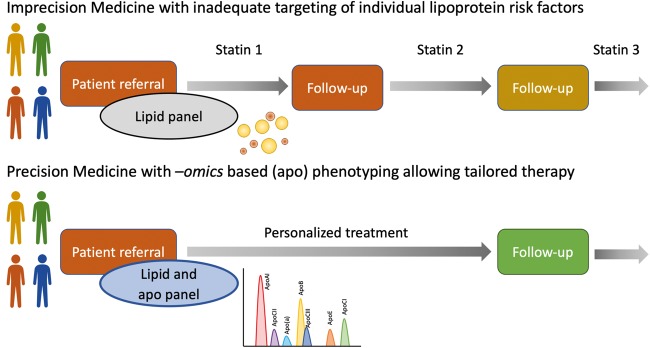
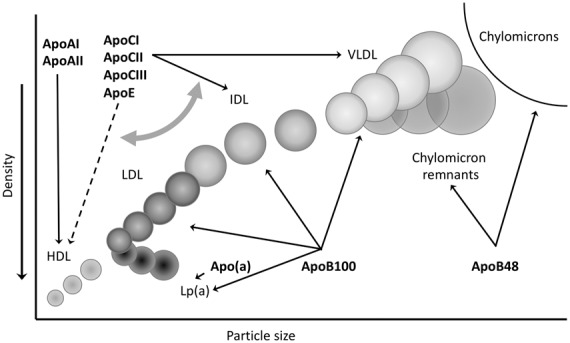
An elevated low-density lipoprotein cholesterol concentration is a classical risk factor for cardiovascular disease. This has led to pharmacotherapy in patients with atherosclerotic heart disease or high heart disease risk with statins to reduce serum low-density lipoprotein cholesterol. Even in patients in whom the target levels of low-density lipoprotein cholesterol are reached, there remains a significant residual cardiovascular risk; this is due, in part, to a focus on low-density lipoprotein cholesterol alone and neglect of other important aspects of lipoprotein metabolism. A more refined lipoprotein analysis will provide additional information on the accumulation of very low-density lipoproteins, intermediate density lipoproteins, chylomicrons, chylomicron-remnants and Lp(a) concentrations. Instead of measuring the cholesterol and triglyceride content of the lipoproteins, measurement of their apolipoproteins (apos) is more informative. Apos are either specific for a particular lipoprotein or for a group of lipoproteins. In particular measurement of apos in atherogenic particles is more biologically meaningful than the measurement of the cholesterol concentration contained in these particles. Applying apo profiling will not only improve characterization of the lipoprotein abnormality, but will also improve definition of therapeutic targets. Apo profiling aligns with the concept of precision medicine by which an individual patient is not treated as ‘average’ patient by the average (dose of) therapy. This concept of precision medicine fits the unmet clinical need for stratified cardiovascular medicine. The requirements for clinical application of proteomics, including apo profiling, can now be met using robust mass spectrometry technology which offers desirable analytical performance and standardization.
Overview
The claims and statistics of this paper haven’t been checked yet.
Free: it reads the open-access text and checks the first 5 claims that cite a source we can check. Create a free account to check every claim.
Integrity signals
Registry
Cites
Statistics
Figures
Verification
Claims the paper makes
The claims and statistics of this paper haven’t been checked yet.
Free: it reads the open-access text and checks the first 5 claims that cite a source we can check. Create a free account to check every claim.
Claims other papers make about this one
Each is checked against this paper’s own text: does it say what the citing paper says it does?
The cited source says what the claim attributes to it.
In the citing paper
“These novel technologies provide complementary diagnostic information regarding the complex molecular basis of dyslipidemias and, as such, can be used to explore and evaluate precision medicine approaches for identifying better and individualized treatment options for patients at high risk of ASCVD [99].”
From Quantifying atherogenic lipoproteins for lipid-lowering strategies: Consensus-based recommendations from EAS and EFLM (2020) · cites this paper as [99]
Self-check
Percentages, sums and reported differences re-computed from the paper’s own numbers.
The self-check needs the paper’s full text.
Citations
Cites
Friedewald, W. T., Levy, R. I., & Fredrickson, D. S. (1972) · Clinical Chemistry · doi:10.1093/clinchem/18.6.499 · Cited by 32,423 · cited 1×
“Currently, the standard procedure for patients that present with symptoms of CVD is to monitor the patient’s lipid profile by determining the concentrations of total cholesterol, TG, and HDL-C, followed by calculation of LDL-C using Friedewald’s formula.(166) Several risk assessment systems have been developed, among…”
MethodEuropean Guidelines on cardiovascular disease prevention in clinical practice (version 2012)
Authors/Task Force Members:, Perk, J., De Backer, G., Gohlke, H., Graham, I., Reiner, Ž., Verschuren, M., Albus, C., Benlian, P., Boysen, G., et al. (2012) · European Heart Journal · doi:10.1093/eurheartj/ehs092 · Cited by 8,490
Prevention of Coronary Heart Disease with Pravastatin in Men with Hypercholesterolemia
Shepherd, J., Cobbe, S. M., Ford, I., Isles, C. G., Lorimer, A. R., Macfarlane, P. W., McKillop, J. H., & Packard, C. J. (1995) · New England Journal of Medicine · doi:10.1056/nejm199511163332001 · Cited by 7,449
Sacks, F. M., Pfeffer, M. A., Moye, L. A., Rouleau, J. L., Rutherford, J. D., Cole, T. G., Brown, L., Warnica, J. W., Arnold, J. M. O., Wun, C.-C., et al. (1996) · New England Journal of Medicine · doi:10.1056/nejm199610033351401 · Cited by 7,439
Antihyperlipidemic and Biochemical Activities of Mcy Protein in Streptozotocin Induced Diabetic Rats
Marella, S., Maddirela, D. R., Badri, K. R., Jyothi Kumar, M. V., & Chippada, A. (2015) · Cellular Physiology and Biochemistry · doi:10.1159/000373954 · Cited by 5,938
Davey Smith, G., & Ebrahim, S. (2003) · International Journal of Epidemiology · doi:10.1093/ije/dyg070 · Cited by 5,882 · cited 2×
“Genotypes are randomly inherited from parents to offspring, known as Mendelian randomization, and as such, the genotype distribution used in RCTs should be unrelated to confounders that may affect conventional observational studies.(108) Moreover, a genetic polymorphism can, by definition, only be causative to a chang…”
BackgroundEstimation of ten-year risk of fatal cardiovascular disease in Europe: the SCORE project
Conroy, R. (2003) · European Heart Journal · doi:10.1016/s0195-668x(03)00114-3 · Cited by 5,290
(1998) · New England Journal of Medicine · doi:10.1056/nejm199811053391902 · Cited by 5,261
Downs, J. R., Clearfield, M., Weis, S., Whitney, E., Shapiro, D. R., Beere, P. A., Langendorfer, A., Stein, E. A., Kruyer, W., Gotto, Jr., et al. (1998) · JAMA · doi:10.1001/jama.279.20.1615 · Cited by 5,236
Research works printed but not linked: 2
- Superko HR. The failure of LDL cholesterol reduction and the importance of reverse cholesterol transport. The role of nicotinic acid. Br J Cardiol 2006; 13: 131– 136.
- Goldstein J Hobbs H Brown M. Familial hypercholesterolemia In: Scriver C Beaudet A Sly W et al (eds) The metabolic and molecular basis of inherited disease. New York: McGraw-Hill, 2001, pp. 2863– 2913.
Cited by
After another decade: LC–MS/MS became routine in clinical diagnostics
Seger, C., & Salzmann, L. (2020) · Clinical Biochemistry · doi:10.1016/j.clinbiochem.2020.03.004 · Cited by 301
Nordestgaard, B. G., Langlois, M. R., Langsted, A., Chapman, M. J., Aakre, K. M., Baum, H., Borén, J., Bruckert, E., Catapano, A., Cobbaert, C., et al. (2020) · Atherosclerosis · doi:10.1016/j.atherosclerosis.2019.12.005 · Cited by 246
Self-citationLanglois, M. R., Nordestgaard, B. G., Langsted, A., Chapman, M. J., Aakre, K. M., Baum, H., Borén, J., Bruckert, E., Catapano, A., Cobbaert, C., et al. (2020) · Clinical Chemistry and Laboratory Medicine (CCLM) · doi:10.1515/cclm-2019-1253 · Cited by 211
Self-citationShibabaw, T. (2020) · Molecular and Cellular Biochemistry · doi:10.1007/s11010-020-03965-7 · Cited by 132
Cobbaert, C. M., Althaus, H., Begcevic Brkovic, I., Ceglarek, U., Coassin, S., Delatour, V., Deprez, L., Dikaios, I., Dittrich, J., Hoofnagle, A. N., et al. (2021) · Clinical Chemistry · doi:10.1093/clinchem/hvaa239 · Cited by 88
Self-citationLanglois, M. R., & Sniderman, A. D. (2020) · Current Cardiology Reports · doi:10.1007/s11886-020-01323-z · Cited by 79
Reijnders, E., van der Laarse, A., Jukema, J. W., & Cobbaert, C. M. (2023) · Frontiers in Cardiovascular Medicine · doi:10.3389/fcvm.2023.1264319 · Cited by 61
“…binding and apoE-mediated binding of LDLR and LRP-1, resulting in a decreased hepatic uptake of VLDL and CM, and (5) accumulation of apoC-III leads to conformational changes of HDL resulting in decreased apoA-I content, impaired insulin sensitivity and reduced cholesterol ef fl ux capacity (18, 84).”
BackgroundInfluentialSelf-citationApolipoprotein E and Atherosclerosis
Marais, A. D. (2021) · Current Atherosclerosis Reports · doi:10.1007/s11883-021-00933-4 · Cited by 57
Blanchard, V., Garçon, D., Jaunet, C., Chemello, K., Billon‐Crossouard, S., Aguesse, A., Garfa, A., Famchon, G., Torres, A., May, C. L., et al. (2020) · Journal of Lipid Research · doi:10.1194/jlr.d120000835 · Cited by 54
“As apolipoproteins are involved in pro- and anti-atherosclerotic processes, they are important circulating biomarkers of metabolic dysfunction and atherosclerotic CVD (1, 3, 4).”
BackgroundInfluentialThe Time Has Come for Quantitative Protein Mass Spectrometry Tests That Target Unmet Clinical Needs
Smit, N. P. M., Ruhaak, L. R., Romijn, F. P. H. T. M., Pieterse, M., van der Burgt, Y. E. M., & Cobbaert, C. M. (2021) · Journal of the American Society for Mass Spectrometry · doi:10.1021/jasms.0c00379 · Cited by 52
Self-citationDiederiks, N. M., van der Burgt, Y. E. M., Ruhaak, L. R., & Cobbaert, C. M. (2023) · Critical Reviews in Clinical Laboratory Sciences · doi:10.1080/10408363.2023.2199353 · Cited by 46
“This principle of using MS for global standardization of apo(a)/Lp(a) tests at the molar level has great potential, provided the method can be established for serum and/or lithiumheparin-plasma as these are the common matrices collected for lipid profiling in medical laboratories [59,60,76,82].”
BackgroundMethodSelf-citationQuantifying apolipoprotein(a) in the era of proteoforms and precision medicine
Ruhaak, L. R., & Cobbaert, C. M. (2020) · Clinica Chimica Acta · doi:10.1016/j.cca.2020.10.010 · Cited by 44
Self-citationThe known unknowns of apolipoprotein glycosylation in health and disease
Subramanian, S. P., & Gundry, R. L. (2022) · iScience · doi:10.1016/j.isci.2022.105031 · Cited by 32
“However, lipid levels alone do not fully explain residual cardiovascular risk despite lifestyle changes and lipid-lowering therapies (Renee Ruhaak et al., 2019).”
BackgroundNurtazina, A., Kozhakhmetova, D., Dautov, D., А.Т., Ш., & Chattu, V. K. (2020) · Diagnostics · doi:10.3390/diagnostics10080510 · Cited by 20
Rao, C., & Ping, F. (2021) · Journal of Diabetes and its Complications · doi:10.1016/j.jdiacomp.2021.107948 · Cited by 20
Xu, C., Garcia, D., Lu, Y., Ozuna, K., Adjeroh, D. A., Wang, K., & Initiative, O. B. O. T. A. D. N. (2021) · Cells · doi:10.3390/cells11010029 · Cited by 19
“Moreover, APOs also show association with AD, CVD, and EMD [29].”
Enhancing precision medicine through clinical mass spectrometry platform
Hristova, J., & Svinarov, D. A. (2022) · Biotechnology & Biotechnological Equipment · doi:10.1080/13102818.2022.2053342 · Cited by 15
Langlois, M. R., Nordestgaard, B. G., Langsted, A., Chapman, M. J., Aakre, K. M., Baum, H. H. E., Borén, J., Bruckert, É., Catapano, A. L., Cobbaert, C. M., et al. (2021) · Laboratory Service · doi:10.17116/labs20211001145 · Cited by 13
Self-citationReijnders, E., van der Laarse, A., Ruhaak, L. R., & Cobbaert, C. M. (2024) · Clinical Proteomics · doi:10.1186/s12014-024-09465-w · Cited by 12
“Reproduced from Ruhaak et al. [16]. detect the repeating KIV2 of Apo(a), making their results Apo(a) isoform dependent, resulting in large between-method variation [178].”
BackgroundInfluentialSelf-citationStraat, M. E., Martínez‐Téllez, B., Nahon, K. J., Janssen, L. G. M., Verhoeven, A., van der Zee, L., Mulder, M. T., Kooijman, S., Boon, M. R., van Lennep, J. E. R., et al. (2022) · Journal of clinical lipidology · doi:10.1016/j.jacl.2022.04.004 · Cited by 12
Self-citationCamilleri, E., van Rein, N., van Vlijmen, B. J. M., Biedermann, J. S., Kruip, M. J. H. A., Leebeek, F. W. G., van der Meer, F. J., Cobbaert, C. M., Cannegieter, S. C., & Lijfering, W. M. (2023) · Research and Practice in Thrombosis and Haemostasis · doi:10.1016/j.rpth.2023.100063 · Cited by 10
“LRP1 and LDLR contribute to the hepatic clearance and to the variation in FVIII plasma levels through binding with FVIII [29].”
BackgroundMethodInfluentialSelf-citationQuality Assurance for Multiplex Quantitative Clinical Chemistry Proteomics in Large Clinical Trials
Reijnders, E., Romijn, F. P. H. T. M., Arslan, F., Georges, J. J. J., Pieterse, M., Schipper, E. R., Didden-Buitendijk, S., Martherus-Bultman, M. C., Smit, N. P. M., Diederiks, N. M., et al. (2024) · The Journal of Applied Laboratory Medicine · doi:10.1093/jalm/jfae092 · Cited by 8
Self-citationReijnders, E., Bossuyt, P. M., Jukema, J. W., Ruhaak, L. R., Romijn, F. P. H. T. M., Szarek, M. J., Trompet, S., Bhatt, D. L., Bittner, V., Díaz, R., et al. (2025) · Arteriosclerosis Thrombosis and Vascular Biology · doi:10.1161/atvbaha.124.322336 · Cited by 8
Self-citationNurtazina, A., Kozhakhmetova, D., Dautov, D., Khaidarova, N., & Chattu, V. K. (2021) · Diagnostics · doi:10.3390/diagnostics11050871 · Cited by 7
Implementing cardiovascular precision diagnostics: laboratory specialists as catalysts?
Cobbaert, C. M. (2023) · Annals of Clinical Biochemistry International Journal of Laboratory Medicine · doi:10.1177/00045632231166855 · Cited by 8
Self-citationOxidative impact on lipoprotein structure: Insights from dynamic light scattering
Kong, N., Penaloza, N., Agreda, G., Nguyen, A. B., Gutheinz, J., Tran, A., Nguyen, N., Ho, T. V., Marin, A., Mellis, B., et al. (2025) · Biochemistry and Biophysics Reports · doi:10.1016/j.bbrep.2025.101945 · Cited by 6
“…marker of CVD risk, clinical utility for this methodology might be better suited for personalized or precision medicine approaches in future work [49] As such, future work should explore the use of DLS with consistent isolation and processing methods, such as immunoseparation or alternative…”
Liu, Y., Xiong, Z., Zhou, W., Chen, Y., Huang, Q., & Wu, Y. (2022) · Clinics · doi:10.1016/j.clinsp.2022.100046 · Cited by 6
“These findings suggest that the expression of APOO may be related to cardiomyocyte autophagy and apoptosis in MI. Inhibition of autophagy by APOO gene silencing in cells To further determine the relationship between APOO, autophagy, and apoptosis, the authors transfected AC16 cells with si-APOO and silenced the expres…”
ResultInfluentialTorossian, A., Genoux, A., Cai, Z., Jolivet, N., Croyal, M., Oliveira, A. R., Dejean, S., Viguerie, N., Cabou, C., Perret, B., et al. (2025) · Atherosclerosis Plus · doi:10.1016/j.athplu.2025.04.003 · Cited by 5
Hussain, S., Jha, S., Berger, E., Molander, L., Sevastianova, V., Sheybani, Z., Espinosa, A. S., Elmahdy, A., Al-Awar, A., Kakaei, Y., et al. (2024) · Cells · doi:10.3390/cells13211764 · Cited by 3
Chen, X., Lu, X., Li, W., Zhang, H., & Wang, T. (2022) · Emergency Medicine International · doi:10.1155/2022/6403645 · Cited by 3
RetractedMaryanto, S., & Oktianti, D. (2023) · Amerta Nutrition · doi:10.20473/amnt.v7i1.2023.112-119 · Cited by 2
Diederiks, N. M., Romijn, F. P. H. T. M., van Neer, N. J. M., Pieterse, M., Dittrich, J., Ceglarek, U., Cobbaert, C. M., Ruhaak, L. R., the IFCC Working Group for Standardization of Apolipoproteins by Mass Spectrometry, Ruhaak, L. R., et al. (2026) · Clinical Chemistry · doi:10.1093/clinchem/hvag041 · Cited by 2
Self-citationHuman apolipoprotein CIII levels; evaluation of three assay methods
Sandin, Å., Olofsson, C., Strålfors, A., Ekberg, N. R., Brismar, K., Juntti‐Berggren, L., & Eggertsen, G. (2020) · Scandinavian Journal of Clinical and Laboratory Investigation · doi:10.1080/00365513.2020.1725976 · Cited by 2
“Some even predict that future apo-profiling will guide personalized treatment of dyslipidemia [22].”
BackgroundSharma, A., Sharma, C., Sharma, L. K., Wal, P., Mishra, P., Sachdeva, N., Yadav, S., Vargas-De-La-Cruz, C. B., Arora, S., Subramaniyan, V., et al. (2024) · Canadian Journal of Physiology and Pharmacology · doi:10.1139/cjpp-2023-0259 · Cited by 1
Santos, T. R. (2025) · EPITAYA eBooks · doi:10.47879/ed.ep.2025820p580 · Cited by 1
Gender differences in lipid metabolism
Mittova, V. O., Олеговна, Х. А., Земченкова, О. В., Ryazantsev, S. V., Maslov, O. V., Korzh, E. V., Ryasnaya-Lokinskaya, L. S., & Alabovsky, V. V. (2021) · Конденсированные среды и межфазные границы · doi:10.17308/kcmf.2021.23/3436 · Cited by 1
Apolipoproteins and cardiovascular disease: Risk factors, biomarkers, and potential treatments
Kaur, R., & Chaudhary, P. (2024) · The Applied Biology & Chemistry Journal · doi:10.52679/tabcj.2024.0009
Langlois, M. R., Nordestgaard, B. G., Langsted, A., Chapman, M. J., Aakre, K. M., Baum, H., Borén, J., Bruckert, É., Catapano, A., Cobbaert, C., et al. (2022) · UTUPub (University of Turku)
Proteomics of Human Lipoproteins in Cardiovascular Diseases
Banfi, C. (2026) · Wiley eBooks · doi:10.1002/9781394211166.ch7
Dikaios, I., Cobbaert, C. M., Delatour, V., Dieplinger, B., Egger, M., Giangrande, C., Girardi, R., Grimmler, M., Li, Z., Lyle, A. N., et al. (2026) · Clinical Chemistry · doi:10.1093/clinchem/hvag063
Self-citationApolipoprotein A (ApoA) in Cardiovascular Disorders: Connections and Insights
Hassanein, A., Rajha, H. E., Hamid, M. A., Hashem, I. E.-A., Al-Saady, R., & Pedersen, S. (2026) · Angiology · doi:10.1177/00033197261491118
Reijnders, E., van der Laarse, A., Jukema, J. W., & Cobbaert, C. M. (2023) · doi:10.3389/fcvm.2023.1264319.s001
Self-citation
Metadata
- Authors
- Renee Ruhaak, L., van der Laarse, A., & Cobbaert, C. M.
- Affiliations
- Department of Clinical Chemistry and Laboratory Medicine, Leiden University Medical Center, Leiden, The Netherlands
- Leiden University Medical Center (NL)
- Corresponding author
- Cobbaert, Christa M
- Venue
- Annals of Clinical Biochemistry: International Journal of Laboratory Medicine
- Publisher
- SAGE Publications
- Published
- 2019-03-19
- Volume
- 56
- Issue
- 3
- Pages
- 338-356
- ISSN
- 0004-5632 (ISSN-L)
- 1758-1001
- PMC
- PMC6595551
- OpenAlex
- W2922613166
- Cited by
- 38
- References
- 188
- Citations by year
- 2026: 3 · 2025: 3 · 2024: 5 · 2023: 5 · 2022: 5 · 2021: 7 · 2020: 9 · 2019: 1
- FWCI
- 1.13
- Type
- journal article
- Language
- en
- Open access
- hybrid
- doi.org
- Locations
- Annals of Clinical Biochemistry International Journal of Laboratory Medicine (publishedVersion, cc-by)
- Europe PMC (PubMed Central) (publishedVersion, cc-by)
- PubMed Central (publishedVersion, cc-by)
- PubMed (publishedVersion)
- Data Archiving and Networked Services (DANS) (submittedVersion)
- Leiden Repository (Leiden University) (submittedVersion)
- Topics
- Health Sciences › Medicine › Cardiology and Cardiovascular Medicine › Lipoproteins and Cardiovascular Health
- Health Sciences › Medicine › Cardiology and Cardiovascular Medicine › Lipid metabolism and disorders
- Life Sciences › Biochemistry, Genetics and Molecular Biology › Biochemistry › Cholesterol and Lipid Metabolism
- Keywords
- dyslipidemia, lipoprotein metabolism, atherogenic lipoproteins, VLDL, intermediate density lipoprotein, chylomicron remnants, lipoprotein(a), residual cardiovascular risk, statin therapy, precision medicine, mass spectrometry, proteomics, cardiovascular risk stratification
- MeSH terms
- Apolipoproteins, Humans, Risk Assessment, Dyslipidemias, Atherosclerosis, Precision Medicine
About these checks
Registry, retraction, Cites and statistics results are computed, not judged, with one exception: a printed reference that no index lists is read once by a model before it counts as a citation error. Claims are extracted by a model and kept only when their quote appears verbatim in the text; each cited source is then checked, with a model’s help, for whether it says what the claim relies on. Those verdicts can be wrong — read the claim’s quote and the cited source before relying on one.
Statistics and arithmetic are recomputed, not judged.
Confidence bands are shown only for fields calibrated on our annotated test set. None is calibrated yet, so no band is shown.
What counts as a claim ›How we measure confidence ›How we check this ›
Are you an author, or do you see a problem with this page? Request a review
Data sources
Bibliographic data: Semantic Scholar, OpenAlex, Crossref.
Contains information from the Semantic Scholar Academic Graph Datasets, made available under the ODC Attribution License (ODC-BY 1.0).
Semantic Scholar’s data is described in: Kinney, R., et al. (2023). The Semantic Scholar Open Data Platform. arXiv:2301.10140.
