

A longitudinal study of the impacts of a stay in a Prevention and Recovery Care service in Victoria, Australia
Open accessThe DOI matches its Crossref record; 24 of the 25 references it cites were found in a registry or an index.
Abstract
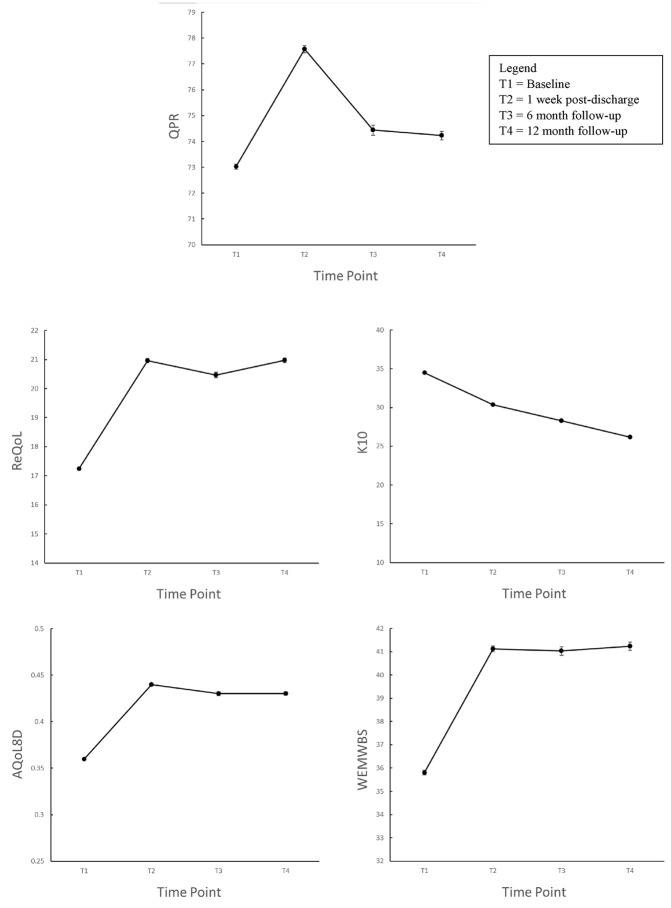
Background: Prevention and Recovery Care services are residential sub-acute services in Victoria, Australia, guided by a commitment to recovery-oriented practice. The evidence regarding the effectiveness of this service model is limited, largely relying on small, localised evaluations. This study involved a state-wide investigation into the personal recovery, perceived needs for care, well-being and quality-of-life outcomes experienced by Prevention and Recovery Care services’ consumers. Methods: A longitudinal cohort design examined the trajectory of self-reported personal recovery and other outcomes for consumers in 19 Victorian Prevention and Recovery Care services over 4 time points (T1 – 1 week after admission; T2 – within 1 week of discharge; T3 – 6 months after discharge; T4 – 12 months after discharge). T2–T4 time frames were extended by approximately 3 weeks due to recruitment challenges. The Questionnaire about the Process of Recovery was the primary outcome measure. Results: At T1, 298 consumers were recruited. By T4, 114 remained in the study. Participants scored higher on the Questionnaire about the Process of Recovery at all three time points after T1. There were also sustained improvements on all secondary outcome measures. Improvements were then sustained at each subsequent post-intervention time point. Community inclusion and having needs for care met also improved. Conclusion: The findings provide a consistent picture of benefits for consumers using Prevention and Recovery Care services, with significant improvement in personal recovery, quality of life, mental health and well-being following an admission to a Prevention and Recovery Care service. Further attention needs to be given to how to sustain the gains made through a Prevention and Recovery Care service admission in the long term.
Overview
The claims and statistics of this paper haven’t been checked yet.
Free: it reads the open-access text and checks the first 5 claims that cite a source we can check. Create a free account to check every claim.
Integrity signals
Registry
Cites
Statistics
Figures
Verification
Claims the paper makes
The claims and statistics of this paper haven’t been checked yet.
Free: it reads the open-access text and checks the first 5 claims that cite a source we can check. Create a free account to check every claim.
Claims other papers make about this one
Each is checked against this paper’s own text: does it say what the citing paper says it does?
The cited source says what the claim attributes to it.
In the citing paper
“a longitudinal study examining the quantitative recovery and wellbeing outcomes of PARC services for participants found that there were significant improvements for consumers relating to their personal recovery, quality of life, mental health and wellbeing [24].”
From Consumers lived experiences and satisfaction with sub-acute mental health residential services (2024) · cites this paper as [24]
The cited source says what the claim attributes to it.
In the citing paper
“Therefore, many participants completed Time 2 measures more than 1 week after leaving the service, the mean (SD) days from exit to Time 2 data collection was 22.97 (34.86) [24].”
From Consumers lived experiences and satisfaction with sub-acute mental health residential services (2024) · cites this paper as [24]
Self-check
Percentages, sums and reported differences re-computed from the paper’s own numbers.
The self-check needs the paper’s full text.
Citations
Cites
KESSLER, R. C., ANDREWS, G., COLPE, L. J., HIRIPI, E., MROCZEK, D. K., NORMAND, S.-L. T., WALTERS, E. E., & ZASLAVSKY, A. M. (2002) · Psychological Medicine · doi:10.1017/s0033291702006074 · Cited by 10,327
The Warwick-Edinburgh Mental Well-being Scale (WEMWBS): development and UK validation
Tennant, R., Hiller, L., Fishwick, R., Platt, S., Joseph, S., Weich, S., Parkinson, J., Secker, J., & Stewart-Brown, S. (2007) · Health and Quality of Life Outcomes · doi:10.1186/1477-7525-5-63 · Cited by 5,031
Leamy, M., Bird, V., Boutillier, C. L., Williams, J., & Slade, M. (2011) · British Journal of Psychiatry · doi:10.1192/bjp.bp.110.083733 · Cited by 3,038 · cited 1×
“This pattern suggests recov-ery-related outcomes, such as connectedness, hope, identity, meaning and purpose, and empowerment (Leamy et al., 2011), are enhanced during a PARC service stay but may not endure over time.”
BackgroundRichardson, J., Iezzi, A., Khan, M. A., & Maxwell, A. (2014) · The Patient - Patient-Centered Outcomes Research · doi:10.1007/s40271-013-0036-x · Cited by 504 · cited 1×
“…Mental Wellbeing Scale (WEMWBS; Tennant et al., 2007), the Recovering Quality of Life (ReQoL; Keetharuth et al., 2018), the Assessment of Quality of Life–8D (AQol8D) (Richardson et al., 2014), the PNCQ (Meadows et al., 2000) and the Living in the Community Questionnaire (LCQ) (Coombs et al., 2016).”
BackgroundNeil, S. T., Kilbride, M., Pitt, L., Nothard, S., Welford, M., Sellwood, W., & Morrison, A. P. (2009) · Psychosis · doi:10.1080/17522430902913450 · Cited by 362
Keetharuth, A. D., Brazier, J., Connell, J., Bjorner, J. B., Carlton, J., Taylor Buck, E., Ricketts, T., McKendrick, K., Browne, J., Croudace, T., et al. (2018) · The British Journal of Psychiatry · doi:10.1192/bjp.2017.10 · Cited by 264
Meadows, G., Harvey, C., Fossey, E., & Burgess, P. (2000) · Social Psychiatry and Psychiatric Epidemiology · doi:10.1007/s001270050260 · Cited by 173
Self-citationMorgan, V. A., Waterreus, A., Carr, V., Castle, D., Cohen, M., Harvey, C., Galletly, C., Mackinnon, A., McGorry, P., McGrath, J. J., et al. (2017) · Australian & New Zealand Journal of Psychiatry · doi:10.1177/0004867416679738 · Cited by 117
Self-citationMeadows, G., Brophy, L., Shawyer, F., Enticott, J. C., Fossey, E., Thornton, C. D., Weller, P. J., Wilson-Evered, E., Edan, V., & Slade, M. (2019) · The Lancet Psychiatry · doi:10.1016/s2215-0366(18)30429-2 · Cited by 59 · cited 2×
“This represents an opportunity for future research, potentially adopting a stepped-wedge randomised controlled trial (RCT) design such as that conducted in the Principles Unite Local Services Assisting Recovery (PULSAR) study (Meadows et al., 2019).”
BackgroundMethodSelf-citationEmbracing participation in mental health research: conducting authentic interviews
Morrison, P., & Stomski, N. J. (2015) · Qualitative Research Journal · doi:10.1108/qrj-05-2014-0021 · Cited by 33
Siskind, D., Harris, M., Kisely, S., Brogan, J., Pirkis, J., Crompton, D., & Whiteford, H. (2013) · Australian & New Zealand Journal of Psychiatry · doi:10.1177/0004867413484369 · Cited by 29 · cited 1×
“…measures (Forwood et al., 2008; Lee et al., 2014; Ngo et al., 2020), the evidence has previously relied on small, localised evaluations and has rarely considered comparison groups or long-term outcomes (Heyeres et al., 2018; Ngo et al., 2020; Siskind et al., 2013; Thomas et al., 2017).”
BackgroundSelf-citationHomman, L. E., Smart, S. E., O’Neill, F. A., & MacCabe, J. H. (2021) · Psychiatry Research · doi:10.1016/j.psychres.2021.114211 · Cited by 26
Lee, S. J., Collister, L., Stafrace, S., Crowther, E., Kroschel, J., & Kulkarni, J. (2014) · Australasian Psychiatry · doi:10.1177/1039856214545979 · Cited by 24
Harvey, C. A., Lewis, J., & Farhall, J. (2018) · Epidemiology and Psychiatric Sciences · doi:10.1017/s2045796018000288 · Cited by 22
Self-citationThomas, K. A., Rickwood, D. J., & Brown, P. M. (2017) · Health & Social Care in the Community · doi:10.1111/hsc.12301 · Cited by 18
Evaluation of a Residential Mental Health Recovery Service in North Queensland
Heyeres, M., Kinchin, I., Whatley, E., Brophy, L., Jago, J., Wintzloff, T., Morton, S., Mosby, V., Gopalkrishnan, N., & Tsey, K. (2018) · Frontiers in Public Health · doi:10.3389/fpubh.2018.00123 · Cited by 16
Self-citationHarvey, C., Brophy, L., Tibble, H., Killaspy, H., Spittal, M. J., Hamilton, B., Ennals, P., Newton, R., Cruickshank, P., Hall, T., et al. (2019) · Frontiers in Psychiatry · doi:10.3389/fpsyt.2019.00383 · Cited by 16 · cited 6×
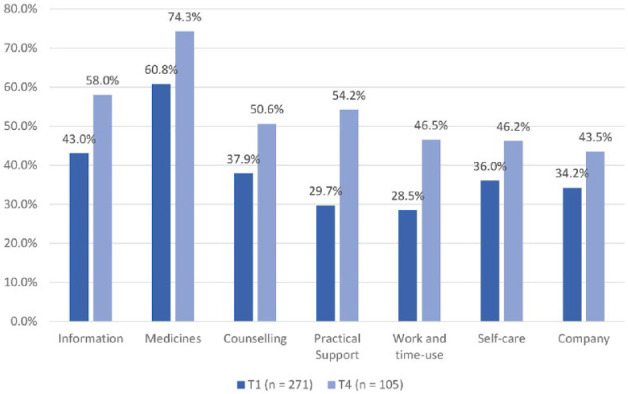
“The PNCQ results suggest perceived needs for medication are by far the most consistently met of consumers’ identified needs in these services (Harvey et al., 2019b; Morgan et al., 2017).”
BackgroundMethodInfluentialSelf-citationFletcher, J., Brophy, L., Killaspy, H., Ennals, P., Hamilton, B., Collister, L., Hall, T., & Harvey, C. (2019) · Frontiers in Psychiatry · doi:10.3389/fpsyt.2019.00735 · Cited by 15 · cited 8×
“They involve a partnership between Mental Health Community Support Services (MHCSS) responsible for the delivery of 24-hour psychosocial support and clinical mental health service providers (Fletcher et al., 2019).”
BackgroundInfluentialSelf-citationCommunity based residential mental health services: What do we need to know?
Parker, S., Siskind, D., & Harris, M. (2015) · Australian & New Zealand Journal of Psychiatry · doi:10.1177/0004867414557163 · Cited by 14 · cited 1×
“This paucity of evidence has led to calls for rigorous research to elucidate the models under which these services operate and their impacts on consumers and stakeholders (Parker et al., 2015).”
BackgroundNgo, H., Ennals, P., Turut, S., Geelhoed, E., Celenza, A., & Wolstencroft, K. (2020) · BMC Psychiatry · doi:10.1186/s12888-020-02609-w · Cited by 12 · cited 4×
“Outcomes were self-reported and did not rely on administrative data or service providers’ assessment of change (Ngo et al., 2020; Thomas et al., 2017).”
BackgroundResultInfluentialSutherland, G., Harvey, C., Tibble, H., Spittal, M. J., Farhall, J., Fletcher, J., Meadows, G., Newton, J. R., Vine, R., & Brophy, L. (2020) · BMC Health Services Research · doi:10.1186/s12913-020-05402-3 · Cited by 12
Self-citationMigliorini, C., Fossey, E. M., & Harvey, C. A. (2022) · Frontiers in Psychiatry · doi:10.3389/fpsyt.2022.1013919 · Cited by 12
Self-citationCoombs, T., Reed, C. A., & Rosen, A. (2016) · Asia Pacific Journal of Social Work and Development · doi:10.1080/02185385.2016.1218359 · Cited by 10
Outcomes of Victorian Prevention and Recovery Care Services: A matched pairs comparison
Farhall, J., Brophy, L., Reece, J., Tibble, H., Le, L. K.-D., Mihalopoulos, C., Fletcher, J., Harvey, C., Morrisroe, E., Newton, R., et al. (2021) · Australian & New Zealand Journal of Psychiatry · doi:10.1177/0004867420983473 · Cited by 10 · cited 14×
“An emphasis on these outcomes is an important component of addressing the effectiveness of Victoria’s PARC services.”
BackgroundInfluentialSelf-citation
Research works printed but not linked: 8
- 1. Brophy L, Fletcher J, Morrisroe E, et al. (2020) Building the Evidence Base of Prevention and Recovery Care (PARC) Services in Victoria, A Report to the Community (ed. MSoPaG Health). Melbourne, VIC, Australia: Melbourne School of Population and Global Health.
- 2. Commonwealth of Australia (2013) A National Framework for Recovery-Oriented Mental Health Services: Policy and Theory (ed. Department of Health and Ageing). Canberra, ACT, Australia: Commonwealth of Australia.
- 6. Forwood A, Reed C, Reed M, et al. (2008) Evaluation of the prevention and recovery care (PARC) services project. Research Report. Carlton VIC: Melbourne School of Population and Global Health.
- 7. Galloway J, Scollo G, Thomson N. (2016) Mental Health Prevention and Recovery Care: A Clinical and Community Partnership Model of Sub-Acute Mental Health Care (ed. Department of Health and Human Services). Melbourne, VIC, Australia: Victorian Government.
- 27. StataCorp (2017) Stata Statistical Software: Release 15. College Station, TX: StataCorp LLC.
- 28. State of Victoria (2021) Royal commission into Victoria’s mental health system. Final Report, Summary and Recommendations, Parl Paper no. 202, Session 2018–21. Melbourne, VIC, Australia: Victorian Government.
- 32. Victorian Department of Health (2010) Adult Prevention and Recovery Care (PARC) Services Framework and Operational Guidelines. Melbourne, VIC, Australia: Mental Health Drugs and Regions Division Victorian Government.
- 33. World Health Organization (2019) Recovery Practices for Mental Health and Well-Being: WHO Quality Rights Specialized Training. Geneva: World Health Organization.
Cited by
Consumers lived experiences and satisfaction with sub-acute mental health residential services
Waks, S., Morrisroe, E., Reece, J., Fossey, E., Brophy, L., & Fletcher, J. (2024) · Social Psychiatry and Psychiatric Epidemiology · doi:10.1007/s00127-024-02631-3 · Cited by 7
Self-citationBibb, J., Robins–Browne, K., Brophy, L. M., Harvey, C. A., Fletcher, J. R., Morrisroe, E., Hamilton, B. E., Ennals, P., Hayes, L., Fossey, E. M., et al. (2025) · Community Mental Health Journal · doi:10.1007/s10597-025-01571-9 · Cited by 1
Self-citationLooi, J. C., Allison, S. C., Bastiampillai, T. J., Kisely, S. R., & Maguire, P. A. (2026) · Australasian Psychiatry · doi:10.1177/10398562261444987
Experiences and wellbeing of family members and carers, regarding PARCS across Victoria
Hamilton, B. E., Brophy, L. M., Harvey, C. A., Fossey, E. M., Swann, M., Reece, J., Morrisroe, E., Palmer, V. J., Meadows, G. N., Mihalopoulos, C., et al. (2026) · Frontiers in Psychiatry · doi:10.3389/fpsyt.2026.1777053
Self-citationKindred, C., Kulkarni, K., & Loi, S. M. (2026) · Australasian Psychiatry · doi:10.1177/10398562261486321
Metadata
- Authors
- Brophy, L., Fletcher, J., Dawadi, S., Reece, J., Edan, V., Enticott, J., Farhall, J., Fossey, E., Hamilton, B., Harvey, C., Meadows, G., Mihalopoulos, C., Morrisroe, E., Newton, R., Palmer, V., Vine, R., Waks, S., & Pirkis, J.
- Affiliations
- The University of Melbourne (AU)
- Monash University (AU)
- Discipline of Psychological Sciences, Australian College of Applied Professions, Melbourne, VIC, Australia
- La Trobe University (AU)
- Deakin University (AU)
- University of Technology Sydney (AU)
- Corresponding author
- Brophy, Lisa
- ORCID
- Venue
- Australian & New Zealand Journal of Psychiatry
- Publisher
- SAGE Publications
- Published
- 2024-04-28
- Volume
- 58
- Issue
- 7
- Pages
- 615-626
- ISSN
- 0004-8674 (ISSN-L)
- 1440-1614
- PMC
- PMC11193319
- OpenAlex
- W4396229769
- Cited by
- 5
- References
- 25
- Citations by year
- 2026: 3 · 2025: 1 · 2024: 1
- FWCI
- 2.50
- Type
- journal article
- Language
- en
- Open access
- hybrid
- doi.org
- Licence
- Locations
- Australian & New Zealand Journal of Psychiatry (publishedVersion, cc-by-nc)
- PubMed Central (publishedVersion, cc-by-nc)
- PubMed (publishedVersion)
- Figshare (submittedVersion, cc-by-nc)
- Minerva Access (University of Melbourne) (submittedVersion, cc-by-nc)
- La Trobe University
- Funders
- National Health and Medical Research Council (GNT1115907)
- Topics
- Social Sciences › Psychology › Clinical Psychology › Psychiatric care and mental health services
- Health Sciences › Health Professions › General Health Professions › Mental Health and Patient Involvement
- Health Sciences › Medicine › Epidemiology › Substance Abuse Treatment and Outcomes
- Keywords
- recovery-oriented care, personal recovery, quality of life, well-being, community inclusion, service effectiveness, mental health service users, Victoria, Australia
- MeSH terms
- Adult, Aged, Mental Disorders, Female, Humans, Longitudinal Studies, Male, Mental Health Services, Middle Aged, Quality of Life, Victoria
About these checks
Registry, retraction, Cites and statistics results are computed, not judged, with one exception: a printed reference that no index lists is read once by a model before it counts as a citation error. Claims are extracted by a model and kept only when their quote appears verbatim in the text; each cited source is then checked, with a model’s help, for whether it says what the claim relies on. Those verdicts can be wrong — read the claim’s quote and the cited source before relying on one.
Statistics and arithmetic are recomputed, not judged.
Confidence bands are shown only for fields calibrated on our annotated test set. None is calibrated yet, so no band is shown.
What counts as a claim ›How we measure confidence ›How we check this ›
Are you an author, or do you see a problem with this page? Request a review
Data sources
Bibliographic data: Semantic Scholar, OpenAlex, Crossref.
Contains information from the Semantic Scholar Academic Graph Datasets, made available under the ODC Attribution License (ODC-BY 1.0).
Semantic Scholar’s data is described in: Kinney, R., et al. (2023). The Semantic Scholar Open Data Platform. arXiv:2301.10140.
