

Global, Regional, and National Levels and Trends in Burden of Oral Conditions from 1990 to 2017: A Systematic Analysis for the Global Burden of Disease 2017 Study
Open accessThe DOI matches its Crossref record; 38 of the 39 references it cites were found in a registry or an index; 6 of the 19 sources its claims cite were checked for support.
Abstract
This Global Burden of Disease analysis estimated 3.5 billion cases of oral conditions worldwide in 2017, highlighting the scale of unmet oral-health need.
Overview
CoChat Summary
TL;DR
This GBD 2017 systematic analysis estimated the global, regional, and national burden of oral conditions in 195 countries and territories from 1990 to 2017. It found oral diseases remained a major public health challenge, with 3.5 billion cases globally in 2017 and marked socioeconomic patterns: untreated caries and severe periodontitis were lowest in more developed countries, while tooth loss was highest there.
Key findings
- In 2017, there were 3.5 billion global cases of oral conditions, including 2.3 billion untreated caries in permanent teeth, 796 million severe periodontitis cases, 532 million untreated caries in deciduous teeth, 267 million total tooth loss cases, and 139 million other oral conditions.
- Untreated caries in permanent teeth had an age-standardized prevalence of 29.4% in 2017 and increased in number of prevalent cases by 35.9% from 1990 to 2017, while age-standardized prevalence declined by 8.8%.
- Severe periodontitis had an age-standardized prevalence of 9.8% in 2017 and showed large growth from 1990 to 2017: 90.1% increase in prevalent cases and 90.2% increase in YLDs.
- Total tooth loss had an age-standardized prevalence of 3.3% in 2017; its number of prevalent cases increased by 75.5% from 1990 to 2017, even as age-standardized prevalence declined by 10.4%.
Methods
- This was a systematic analysis within the GBD 2017 study, covering 195 countries and territories and estimating prevalence, incidence, and YLDs for oral conditions from 1990 to 2017 by sex, age, country, World Bank income group, and SDI.
- Data came from systematic reviews, updated searches, and a WHO-supported effort to identify unpublished survey reports; only random-sample national or regional surveys with acceptable response/attrition and prevalence/incidence data were included.
- Estimates were modeled using DisMod-MR 2.1 (Bayesian meta-regression), with age-standardization and percentage change calculations to assess trends.
Limitations
- The paper states that estimates for “other oral disorders” should be interpreted cautiously because they were based on surveys from a single country (United States).
- The report did not include mouth cancers, congenital malformations (including orofacial clefts), or temporomandibular disorders; this is stated in the paper.
- The paper also states that data were scarce despite efforts to identify gray literature, and most identified sources did not meet GBD eligibility criteria; this likely limits completeness of the estimates.
Model-written summary. Check it against the paper before relying on it.
Integrity signals
Registry
Cites
Statistics
Figures
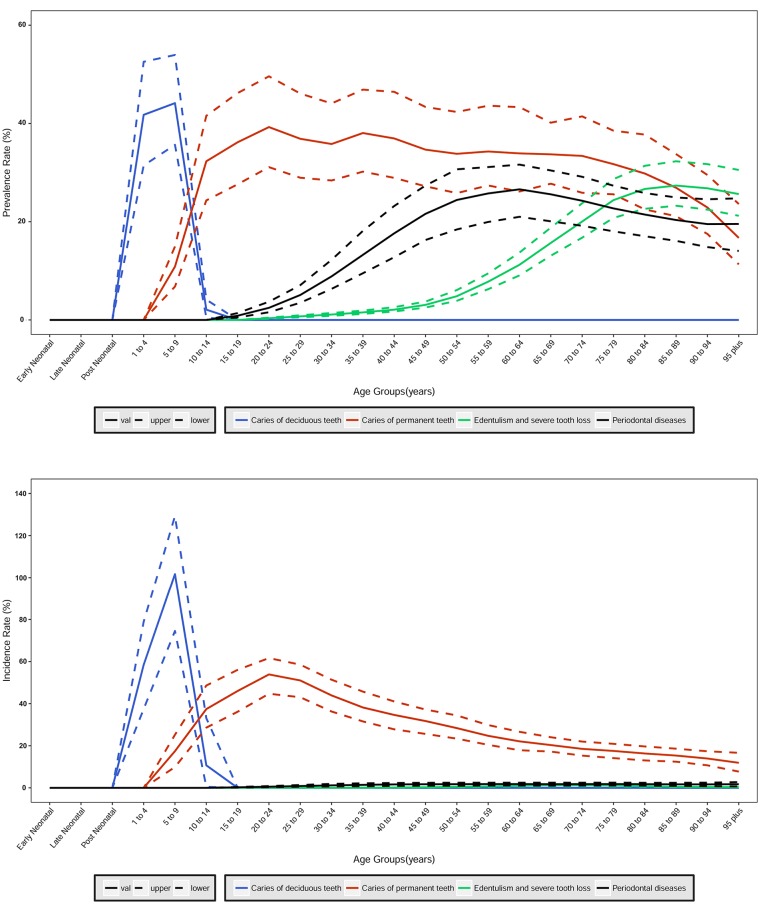
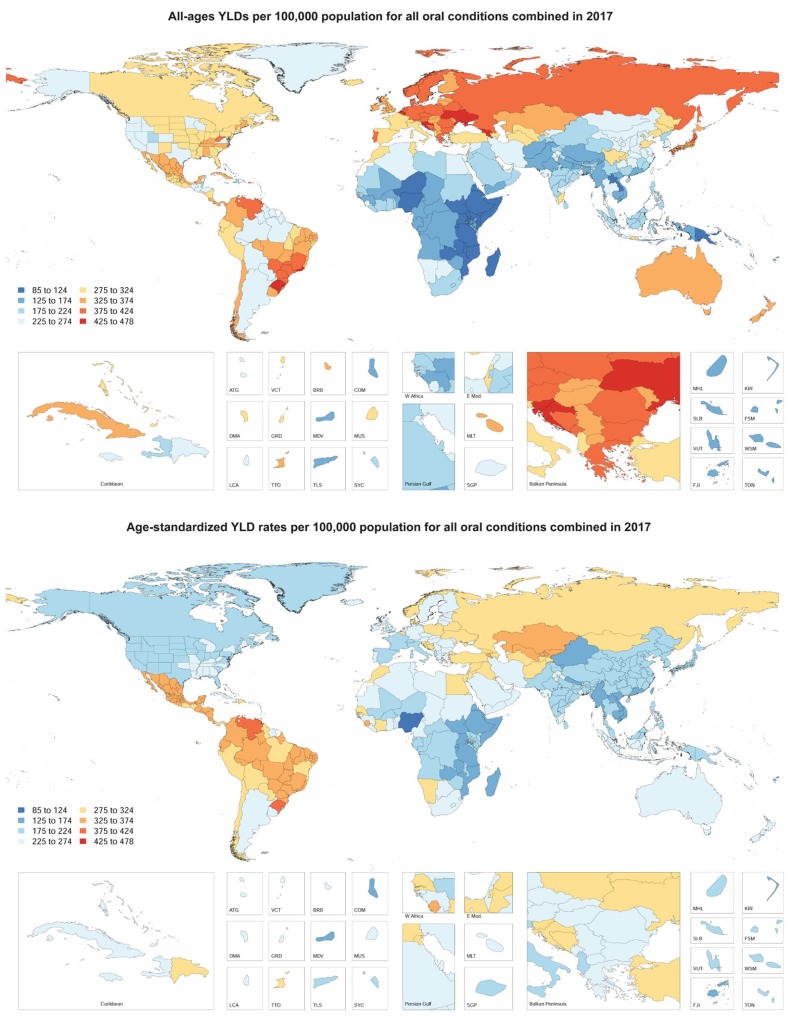
Verification
Claims the paper makes
4 Valid · 0 Not valid · 6 Not checked · 77 Own results and interpretations
A result the paper reports from its own data — it cites no other source for it, so there is none to check. The quote shows it is in the paper.
In the paper
“India, China, Indonesia, Brazil, and United States were in the top 10 countries with the highest normative treatment need associated with all 4 dental conditions assessed in this study.”
§ Global, Regional, and National Levels and Trends in Burden of Oral Conditions from 1990 to 2017: A Systematic Analysis for the Global Burden of Disease 2017 Study > Discussion
plainstates an association- Asserted: passes — The authors put it forward as true.
- Checkable: passes — It can be checked against evidence.
- Load-bearing: unclear — It is unclear whether the paper’s conclusions depend on it.
- Based: passes — The paper gives a reason why it holds.
A result the paper reports from its own data — it cites no other source for it, so there is none to check. The quote shows it is in the paper.
In the paper
“Their corresponding percentage changes between 1990 and 2017 were –7.9% (95% UI, –9.8% to –6.6%) and 1.3% (95% UI, –0.9% to 3.0%; Table 2).”
§ Global, Regional, and National Levels and Trends in Burden of Oral Conditions from 1990 to 2017: A Systematic Analysis for the Global Burden of Disease 2017 Study > Results > Untreated Dental Caries in Deciduous Teeth
plain- Asserted: passes — The authors put it forward as true.
- Checkable: passes — It can be checked against evidence.
- Load-bearing: unclear — It is unclear whether the paper’s conclusions depend on it.
- Based: passes — The paper gives a reason why it holds.
A result the paper reports from its own data — it cites no other source for it, so there is none to check. The quote shows it is in the paper.
In the paper
“Similarly, the lowest age-standardized prevalence and YLD rate were found in high-income countries (6.1% [95% UI, 4.8% to 7.3%] and 2.3 per 100,000 population [95% UI, 1.0 to 4.6], respectively; Table 3).”
§ Global, Regional, and National Levels and Trends in Burden of Oral Conditions from 1990 to 2017: A Systematic Analysis for the Global Burden of Disease 2017 Study > Results > Untreated Dental Caries in Deciduous Teeth
plainn = 41- Asserted: passes — The authors put it forward as true.
- Checkable: passes — It can be checked against evidence.
- Load-bearing: unclear — It is unclear whether the paper’s conclusions depend on it.
- Based: passes — The paper gives a reason why it holds.
A result the paper reports from its own data — it cites no other source for it, so there is none to check. The quote shows it is in the paper.
In the paper
“Their corresponding percentage changes between 1990 and 2017 were 5.8% (95% UI, 4.9% to 6.6%) and 90.1% (95% UI, 87.4% to 92.5%; Table 2).”
§ Global, Regional, and National Levels and Trends in Burden of Oral Conditions from 1990 to 2017: A Systematic Analysis for the Global Burden of Disease 2017 Study > Results > Severe Periodontitis
plain- Asserted: passes — The authors put it forward as true.
- Checkable: passes — It can be checked against evidence.
- Load-bearing: unclear — It is unclear whether the paper’s conclusions depend on it.
- Based: passes — The paper gives a reason why it holds.
A result the paper reports from its own data — it cites no other source for it, so there is none to check. The quote shows it is in the paper.
In the paper
“Their corresponding percentage changes between 1990 and 2017 were –7.9% (95% UI, –9.8% to –6.6%) and 1.3% (95% UI, –0.9% to 3.0%; Table 2).”
§ Global, Regional, and National Levels and Trends in Burden of Oral Conditions from 1990 to 2017: A Systematic Analysis for the Global Burden of Disease 2017 Study > Results > Untreated Dental Caries in Deciduous Teeth
plain- Asserted: passes — The authors put it forward as true.
- Checkable: passes — It can be checked against evidence.
- Load-bearing: unclear — It is unclear whether the paper’s conclusions depend on it.
- Based: passes — The paper gives a reason why it holds.
29 more claims
Create a free account to see all 87 claims and to verify the 3 references still open.
- Probably not a substantial claim. 38
- It may state two separate claims as one. 20
Claims other papers make about this one
Each is checked against this paper’s own text: does it say what the citing paper says it does?
In the citing paper
“Cleft lip and/or palate are among the most frequent congenital disorders [1,2,5].”
From Oral health workforce in Africa: a scarce resource (2023) · cites this paper as [2]
Citations
Cites
James, S. L., Abate, D., Abate, K. H., Abay, S. M., Abbafati, C., Abbasi, N., Abbastabar, H., Abd-Allah, F., Abdela, J., Abdelalim, A., et al. (2018) · The Lancet · doi:10.1016/s0140-6736(18)32279-7 · Cited by 13,867
Self-citationVos, T., Abajobir, A. A., Abate, K. H., Abbafati, C., Abbas, K. M., Abd-Allah, F., Abdulkader, R. S., Abdulle, A. M., Abebo, T. A., Abera, S. F., et al. (2017) · The Lancet · doi:10.1016/s0140-6736(17)32154-2 · Cited by 13,220
Self-citationMurray, C. J. L., Vos, T., Lozano, R., Naghavi, M., Flaxman, A. D., Michaud, C., Ezzati, M., Shibuya, K., Salomon, J. A., Abdalla, S., et al. (2012) · The Lancet · doi:10.1016/s0140-6736(12)61689-4 · Cited by 8,888 · cited 1×
“Sugar consumption is the main cause of dental caries (Moynihan and Kelly 2014; Bernabe et al. 2016), and tobacco consumption is a major cause of periodontal diseases (Nociti et al. 2015; Leite et al. 2018).”
Self-citationGlobal nutrition transition and the pandemic of obesity in developing countries
Popkin, B. M., Adair, L. S., & Ng, S. W. (2012) · Nutrition Reviews · doi:10.1111/j.1753-4887.2011.00456.x · Cited by 4,313 · cited 2×
“The nutrition transition has affected the global distribution of the burden of obesity (Popkin et al. 2012), diabetes (Popkin 2015), and untreated caries in permanent teeth (Moynihan and Petersen 2004), as less economically developed countries still have a traditional diet low in carbohydrates and more economically de…”
BackgroundKyu, H. H., Abate, D., Abate, K. H., Abay, S. M., Abbafati, C., Abbasi, N., Abbastabar, H., Abd-Allah, F., Abdela, J., Abdelalim, A., et al. (2018) · The Lancet · doi:10.1016/s0140-6736(18)32335-3 · Cited by 4,081
Self-citationOral diseases: a global public health challenge
Peres, M. A., Macpherson, L. M. D., Weyant, R. J., Daly, B., Venturelli, R., Mathur, M. R., Listl, S., Celeste, R. K., Guarnizo-Herreño, C. C., Kearns, C., et al. (2019) · The Lancet · doi:10.1016/s0140-6736(19)31146-8 · Cited by 4,054 · cited 1×
“The GBD 2015 findings were used to advocate for integrating oral conditions with noncommunicable disease prevention and including dental services in universal health coverage (Peres et al. 2019; Watt et al. 2019).”
MethodSelf-citationGlobal Burden of Severe Periodontitis in 1990-2010: A Systematic Review and Meta-regression
Kassebaum, N. J., Bernabé, E., Dahiya, M., Bhandari, B., Murray, C. J. L., & Marcenes, W. (2014) · Journal of Dental Research · doi:10.1177/0022034514552491 · Cited by 2,209 · cited 1×
“Data Input Data to inform models for oral conditions were from systematic reviews on the epidemiology of each oral condition (Kassebaum et al. 2014a, 2014b, 2015), which were updated for this new iteration of the project.”
MethodSelf-citationKassebaum, N. J., Arora, M., Barber, R. M., Bhutta, Z. A., Brown, J., Carter, A., Casey, D. C., Charlson, F. J., Coates, M. M., Coggeshall, M., et al. (2016) · The Lancet · doi:10.1016/s0140-6736(16)31460-x · Cited by 2,163
Self-citationKassebaum, N. J., Smith, A. G. C., Bernabé, E., Fleming, T. D., Reynolds, A. E., Vos, T., Murray, C. J. L., Marcenes, W., Collaborators, G. 2. O. H., Abyu, G. Y., et al. (2017) · Journal of Dental Research · doi:10.1177/0022034517693566 · Cited by 1,981
Self-citationGuidelines for accurate and transparent health estimates reporting: the GATHER statement
Stevens, G. A., Alkema, L., Black, R. E., Boerma, J. T., Collins, G. S., Ezzati, M., Grove, J. T., Hogan, D. R., Hogan, M. C., Horton, R., et al. (2016) · The Lancet · doi:10.1016/s0140-6736(16)30388-9 · Cited by 1,798 · cited 1×
“This report adheres to the GATHER statement (Guidelines for Accurate and Transparent Health Estimates Reporting; Stevens et al. 2016).”
Research works printed but not linked: 2
- Flaxman AD, Vos T, Murray CJL, Kiyono P. 2015. An integrative metaregression framework for descriptive epidemiology. Seattle (WA): University of Washington Press.
- Qvist V. 2015. Longevity of restorations: the “death spiral.” In: Fejerskov O, Nyvad B, Kidd E, editors. Dental caries: the disease and its clinical management. London (UK): Wiley-Blackwell. p. 443–456.
Cited by
Items 1,001–1,100 of 1,518
Rirattanapong, P., Phruksaniyom, C., Asanahsark, S., Cheevarungnapakul, Y., Putthanuparp, T., & Ruangsawasdi, N. (2025) · BMC Oral Health · doi:10.1186/s12903-025-07532-8 · Cited by 4
“Dental caries is one of the most common chronic diseases worldwide, affecting approximately 3.5 billion people in 2017 [1].”
InfluentialParvez, R., Roy, A., Ramasamy, J., et al. (2025) · Journal of Indian Association of Public Health Dentistry · doi:10.4103/jiaphd.jiaphd_252_23 · Cited by 1
Wang, L., Wu, J., Li, B., Yang, Z., Pei, Y., Chen, X., & Xu, K. (2025) · International Dental Journal · doi:10.1016/j.identj.2025.109352 · Cited by 3
Zhang, Y., Xu, X., Pan, W., Lv, C., Tang, Y., & Li, J. (2025) · International Dental Journal · doi:10.1016/j.identj.2025.109345 · Cited by 1
Flink, H., Hedenbjörk‐Lager, A., Liljeström, S., Nohlert, E., & Tegelberg, Å. (2026) · Acta Odontologica Scandinavica · doi:10.2340/aos.v85.45204 · Cited by 1
“Untreated dental caries is the most prevalent non-communicable disease of both the primary and permanent dentitions globally [1, 2].”
Shifting burden of nasopharyngeal carcinoma: global patterns and forecasts to 2050 from the GBD 2021
Zhou, E., Feifei, X., Zhou, T., Zhang, J., Song, F., Li, J., Yi, H., Wang, Q., & HUANG, W. (2026) · Frontiers in Oncology · doi:10.3389/fonc.2025.1687320 · Cited by 1
Wang, Q., Wei, M., Meng, N., Peng, W. A. N. G., Wang, Y., Liu, H., Zhang, X., Zhuge, R., Wang, Y., Yu, T., et al. (2026) · Scientific Reports · doi:10.1038/s41598-025-34017-z · Cited by 3
“Previous studies have found that developed countries, with advanced medical systems and high socio-economic levels, have matured the popularization of oral health care, and the progression patterns of edentulism and NDs are relatively slow 44 .”
Survey on oral health prevention in long-term care facilities in Lombardy
Binello, M., Strohmenger, L., Ghitti, D., Rossi, F. L., & Nardi, G. M. (2025) · Oral Hygiene Journal · doi:10.33393/ohj.2025.3694 · Cited by 1
“The World Health Organization (WHO) and the FDI World Dental Federation define oral health as "a fundamental component for essential functions, psychosocial well-being, and social participation" (1, 2, 3).”
Loza, M. G. L., Alvarado-Romero, S. D. P., Ledesma, K. N. F., Robles, N. C., & Díaz, D. R. R. (2026) · F1000Research · doi:10.12688/f1000research.161146.6 · Cited by 1
Peerbhay, F., & Mash, R. J. (2026) · African Journal of Primary Health Care & Family Medicine · doi:10.4102/phcfm.v18i1.5231 · Cited by 2
Shenoy, A., Shenoy, N., Ramesh, A., Kumar, B. A., & Chandra, K. S. (2026) · World Academy of Sciences Journal · doi:10.3892/wasj.2026.434 · Cited by 1
“The most prevalent cause of tooth loss worldwide and the sixth most common disease affecting individuals globally is periodontitis, a chronic inflammatory disease that damages the supporting tissues of the periodontium (1).”
Basunbul, G. I., Katib, A., Almabadi, A. A., & Shinawi, L. A. (2026) · International Dental Journal · doi:10.1016/j.identj.2026.109463 · Cited by 1
Kuderewska, S., Korczak, L., Majewski, P., Chludzińska, D., Sacha, P., Kuźmiuk, J., Kochańska, A., Tryniszewska, E. A., & Marczuk-Kolada, G. (2026) · Clinical Oral Investigations · doi:10.1007/s00784-026-06858-z · Cited by 2
Cui, G., Tao, Y., Zhou, Y., Zhou, Y., & Lin, H. (2026) · Journal of Oral Microbiology · doi:10.1080/20002297.2026.2648321 · Cited by 2
“Dental caries is a chronic bacterial infectious disease caused by biofilms, affecting 80%–90% of the global population and imposing substantial strain on public health and economic resources [1,2].”
Trends in Periodontitis by Socioeconomic Status in Brazil: National Surveys 1986–2023
Celeste, R. K., Augustsson, E., Bomfim, R. A., Agahi, N., Haas, A. N., & Fritzell, J. (2026) · Journal Of Clinical Periodontology · doi:10.1111/jcpe.70130 · Cited by 2
“A decline in prevalence with maintenance of inequalities has also been reported among HICs (Borrell et al. 2005; Rozier et al. 2017; Li et al. 2021).”
InfluentialOral health payment systems around the world: structures, challenges, and trends, a scoping review
Susi, S., Machmud, R., Aljunid, S. M., Astoeti, T. E., & Syafrawati (2026) · BMC Oral Health · doi:10.1186/s12903-026-08463-8 · Cited by 1
“This condition causes significant pain, makes it hard to perform daily activities, and reduces quality of life, especially in low-and middle-income countries where access to preventive and restorative care is limited [4].”
Okesanya, O. J., Adebayo, U. O., Oso, T. A., Ayelaagbe, O. B., Obadeyi, K. B., Lamem, M. F. H., Othman, Z. K., Ahmed, M. M., Jamil, S., & Lucero‐Prisno, D. E. (2026) · Discover Public Health · doi:10.1186/s12982-026-01964-5 · Cited by 4
Multivariate GWAS reveals shared genetic basis of common oral diseases
Ma, X., & Zheng, X. (2026) · Frontiers in Genetics · doi:10.3389/fgene.2026.1807175 · Cited by 3
“According to the Global Burden of Disease Study, oral diseases affect nearly 3.5 billion people worldwide, with untreated dental caries in permanent teeth being the most prevalent health condition globally (Bernabe et al., 2020).”
InfluentialMorgado, S. V., Marques, J. G., Nunes, M. T., Canta, A., & Marques, P. F. (2026) · Dentistry Journal · doi:10.3390/dj14050297 · Cited by 1
“Globally, an estimated 532 million children have untreated caries in primary teeth [5].”
Jumaah, F. H. (2026) · International Journal of Dentistry · doi:10.1155/ijod/2713944 · Cited by 1
“Strengthening health systems toward preventive and minimally invasive care has been recommended as a key strategy to reduce avoidable tooth loss and improve population oral health outcomes [7, 33].”
Zhang, Y., Xu, X., Xun, W., Tang, Y., He, F., & Li, J. (2026) · International Dental Journal · doi:10.1016/j.identj.2026.109655 · Cited by 2
Remineralization of Initial Carious Lesions Using Peptides: A Comprehensive Review
Santamaría, R. M., Alkilzy, M., Splieth, C. H., & Schmoeckel, J. (2026) · Medicina · doi:10.3390/medicina62061086 · Cited by 2
“Dental caries remains a major global health challenge and continues to affect a substantial proportion of children, adolescents, and adults worldwide [1,2].”
Rios-Blancas, M. J., Razo, C., Morales‐Juárez, L., Martinez, R. X., Lopez-Lopez, L., Hugo, F. N., Borges-Yáñez, S. A., Guarnizo-Herreño, C. C., Hommes, C., Stein, C., et al. (2026) · The Lancet Regional Health - Americas · doi:10.1016/j.lana.2026.101517 · Cited by 5
Self-citationAdcBC-dependent zinc uptake influences physiological responses in Streptococcus mutans
Pedrosa, M. D. S., Schuls, C. S., Iannaccone, L. L., & Ribeiro, A. A. (2026) · Journal of Oral Microbiology · doi:10.1080/20002297.2026.2691469 · Cited by 1
Penttala, M. T. (2026) · Dentistry Journal · doi:10.3390/dj14070398 · Cited by 1
Interpretable Machine Learning for Population-Level Tooth Loss Prediction
Lam, Q. T., Fan, F.-Y., Wang, Y. L., Wu, C.-Y., Sun, Y.-S., Vo, T. T. T., Kuo, H., Kha, Q. H., Le, M. H. N., Vu, G. T., et al. (2026) · Journal of Dental Research · doi:10.1177/00220345261464887 · Cited by 1
Self-citationVitamin D as a candidate host susceptibility factor in sugar-driven oral dysbiosis
Turaliyeva, M., Akimbekov, N. S., Digel, I., Yerezhepov, A. Y., & Razzaque, M. S. (2026) · Frontiers in Oral Health · doi:10.3389/froh.2026.1850800 · Cited by 1
“Oral diseases are among the most common non-communicable conditions worldwide, with caries and periodontal disease driving major disability and health-system costs (1 – 3).”
Bernabé, E., Marcenes, W. S., Abdullah, Ababneh, H. S., Abate, B. J., Abbastabar, H., Abdel‐Rahman, W. M., Abd-Elsalam, S. M., Abdou, H. A., Abdoun, M., et al. (2026) · The Lancet Public Health · doi:10.1016/s2468-2667(26)00143-x · Cited by 4
Self-citationPANDEMIC METAPHORS: BIBLIOMETRIC STUDY OF THE COVID-19 (CO)LLATERAL EFFECTS
Silva, P. C. D. (2021) · Synapse Editora eBooks · doi:10.36599/editpa-2021_mint-0014 · Cited by 1
A Hands-On Exercise on Caries Diagnostics among Dental Students—A Qualitative Study
Kangas, H., Karki, S., Tanner, T., et al. (2021) · Dentistry Journal · doi:10.3390/dj9100113 · Cited by 1
“, it is polarized, especially in the developed countries [1].”
Pakistan's Beveridge Curve- an Exploration of Structural Unemployment
Waqas, M., & Hyder, A. (2012) · eScholarship (California Digital Library) · Cited by 1
Taalab, M. R., Makled, S., El-Khordagui, L. K., et al. (2022) · Egyptian Dental Journal /Egyptian Dental Journal · doi:10.21608/edj.2021.103287.1843 · Cited by 1
[Inhibitory Effects of Nicotinamide on Streptococcus mutans Growth and Biofilm Formation].
Lin, Y.-W., Jing, M.-L., Li, Y., & Zhou, X. (2022) · PubMed Central · doi:10.12182/20220360205 · Cited by 1
Hugo, F. N., da Cunha, A. R., Dieleman, J. L., Kassebaum, N. J., & Lamster, I. B. (2022) · The Journal of the American Dental Association · doi:10.1016/j.adaj.2022.05.003 · Cited by 3
Self-citationKhudan, R., Krynytska, І., Марущак, М. І., & Korda, M. M. (2022) · Journal of Stomatology · doi:10.5114/jos.2022.119129 · Cited by 1
Aberrant pulmonary immune response of obese mice to periodontal infection
Zhou, W., Xuan, D., Yu, T., & Zhang, J. (2022) · Open Life Sciences · doi:10.1515/biol-2022-0089 · Cited by 1
Facultad de Odontología, U. D. C., Moraga-Aros, L., Correa-Ramirez, A., Escuela de Salud Pública, U. D. C., Aubert, J., Facultad de Medicina y Ciencia, U. S. S., Escuela de Salud Pública, U. D. C., Monsalves-Villalobos, M. J., Facultad de Odontología, U. D. C., & Facultad de Medicina y Ciencia, U. S. S. (2022) · Journal Of Oral Research · doi:10.17126/joralres.2022.020 · Cited by 1
Maltz, M., Alves, L. S., de Araújo, F. B., & Fuks, A. B. (2023) · Springer eBooks · doi:10.1007/978-3-031-23980-9_10 · Cited by 2
Dang, Q. V., Dang, V. Q., Ngo, T. T. H., Nguyen, P. T. T., Nguyen, T. N. Y., & Nguyen, T. N. (2023) · Tạp chí Y Dược học Cần Thơ · doi:10.58490/ctump.2023i5.647 · Cited by 2
Self-citationHussien, G. G., & Ali, O. H. (2023) · The Egyptian Journal of Hospital Medicine · doi:10.21608/ejhm.2023.293475 · Cited by 4
Association between serum HE4 and poor periodontal health in adult women
Cao, R., Zhang, S., Zhang, J., Miao, D., Zhou, H., & Chen, Y. (2023) · Clinical Oral Investigations · doi:10.1007/s00784-023-05111-1 · Cited by 1
“Epidemiological evidence indicates that periodontitis affects approximately 50% of the global population with 10% have serve periodontitis, impairing patient’s quality of life [2, 3].”
BackgroundRadwan, W. (2023) · Cureus · doi:10.7759/cureus.41542 · Cited by 1
Epidemiology of Dental Diseases
Conway, D. I., Robertson, D., & McMahon, A. D. (2023) · Springer eBooks · doi:10.1007/978-1-4614-6625-3_51-1 · Cited by 1
Common risk factors for dental caries and impaired glucose regulation in Guangxi, China
Chen, S., Liu, Q., Yu, X., & Zeng, X. (2023) · International Journal of Dental Hygiene · doi:10.1111/idh.12730 · Cited by 1
Cost components of school-based oral health-promoting programs: A systematic review protocol
Matoso, B. D. S. M., Gomes, V. E., Marcenes, W. S., Noronha, K., de Oliveira, C. A. S., & Ferreira, R. C. (2023) · PLoS ONE · doi:10.1371/journal.pone.0287244 · Cited by 1
Self-citationChrysanthakopoulos, N. A., & Vryzaki, E. (2024) · Archives of Dentistry · doi:10.33696/dentistry.5.026
Das, B., Barman, S., Baishya, A., Haloi, R., & Das, D. (2024) · Cureus · doi:10.7759/cureus.52060 · Cited by 1
“The canines and second molars have less opportunity to be affected due to their eruption at a later stage, but they do eventually get involved in cases of neglected oral health [7].”
BackgroundYin, X., Yadong, W., & Song, J. (2024) · Health Science Reports · doi:10.1002/hsr2.1895 · Cited by 1
“8 11 Nevertheless, there are still unidentified modifiable factors linked to dental caries and periodontitis.”
BackgroundGo, H., Jung, H., Ahn, S. V., et al. (2024) · Yonsei Medical Journal · doi:10.3349/ymj.2023.0380 · Cited by 1
Souza‐Oliveira, A. C., Paschoal, M. A. B., Rezende, T., Alvarenga‐Brant, R., de Abreu, M. H. N. G., & Martins, C. C. (2024) · International Journal of Paediatric Dentistry · doi:10.1111/ipd.13190 · Cited by 3
Extraction of primary maxillary incisors and children’s speech production: A case series
Hurley, C. R., McLeod, S. L., & Anthonappa, R. P. (2024) · Clinical Linguistics & Phonetics · doi:10.1080/02699206.2024.2355481 · Cited by 1
Aroonratana, P., Lertpimonchai, A., Samaranayake, L. P., Vathesatogkit, P., Thienpramuk, L., & Tavedhikul, K. (2024) · BMC Oral Health · doi:10.1186/s12903-024-04980-6 · Cited by 6
“Periodontal disease is considered one of the most common diseases of the human kind with approximately 10% of the world population suffering from severe periodontitis at one time or another during their lifespan [1].”
BackgroundChung, D., Wang, J., & Meng, Y. (2024) · Behavioral Sciences · doi:10.3390/bs14100968 · Cited by 6
“Oral diseases are a growing global public health problem, affecting more than 3.5 billion people worldwide [1].”
BackgroundInfluentialLaaksonen, E., Tanner, T., Patinen, P., Päkkilä, J., Tjäderhane, L., Anttonen, V., & Kämppi, A. (2024) · Caries Research · doi:10.1159/000542212 · Cited by 3
van Doorn, B. C., Hesse, D., Olegário, I. C., & Bonifácio, C. C. (2024) · European Archives of Paediatric Dentistry · doi:10.1007/s40368-024-00978-4 · Cited by 2
AlNatheer, Y., Alghamdi, O. G., Devanesan, S., Alsalhi, M. S., Alshawakir, Y. A., Khounganian, R. M., Alrahlah, A. A., & Seif, S. A. (2024) · Journal of Craniofacial Surgery · doi:10.1097/scs.0000000000011037 · Cited by 1
Syafrida, A., Deriansyah, M., Fardian, N., et al. (2024) · AVERROUS Jurnal Kedokteran dan Kesehatan Malikussaleh · doi:10.29103/averrous.v10i2.16136 · Cited by 1
Effectiveness of dental sealant under insurance coverage in South Korea
Shin, B., Lee, W.-R., & Lee, B. (2025) · Clinical Oral Investigations · doi:10.1007/s00784-025-06185-9 · Cited by 2
“Additionally, oral hygiene and dietary habits from the oral examination data 1 3 1 3 significant difference in caries incidence rates between the sexes worldwide [35 ].”
Saekel, R. (2025) · Journal of Dental Health Oral Disorders and Therapy · doi:10.15406/jdhodt.2025.16.00636 · Cited by 1
Artificial Intelligence in Cariology
Schwendicke, F., & Uribe, S. E. (2025) · Springer eBooks · doi:10.1007/978-3-031-84047-0_7 · Cited by 1
Self-citationHuang, Y., Lu, H., Li, J., Guan, W., Li, S., Zhang, Y., Xu, X., Li, J., & Xu, X. (2025) · Clinical Oral Investigations · doi:10.1007/s00784-025-06343-z · Cited by 4
“The Global Burden of Disease (GBD) Study consistently shows that untreated caries in permanent teeth is the most prevalent disease worldwide [4–6].”
InfluentialAmmar, N., El‐Tekeya, M. M., Talat, D. M., Essa, S., Essawy, M. M., Kühnisch, J., Hamed, H., Nabil, N., Achy, S. E., & Tantawi, M. E. (2025) · BMC Oral Health · doi:10.1186/s12903-025-06325-3 · Cited by 2
“Early childhood caries (ECC) is a prevalent global health challenge, particularly in low-to lower-middle-income countries and incurs substantial economic burdens [1].”
Self-citationThe fundamental foundations of periodontal aging. Part 1
Моисеев, Д. А., Zueva, A. A., Kopetskiy, I., Budkina, D. A., Galchabekova, M. A., & Gus, L. A. (2025) · Operativnaâ hirurgiâ i kliničeskaâ anatomiâ (Pirogovskij naučnyj žurnal) · doi:10.17116/operhirurg2025902163 · Cited by 1
Zhang, S., Liu, S., Xu, Z.-H., Li, T.-T., Li, S.-N., Song, Y., Suo, Y.-X., & Xie, L. (2025) · BMC Oral Health · doi:10.1186/s12903-025-06606-x · Cited by 2
“SDI, Sociodemographic Index; ASIR, age-standardized incidence rate; ASR of YLDs, age-standardized rate of years lived with disability oral disorders and the results of the GBD 2019 for periodontitis [11, 12].”
Madera, M., & Bernabé, E. (2020) · Journal of Public Health Dentistry · doi:10.1111/jphd.12425 · Cited by 3
Self-citationAtividade antimicrobiana e antibiofilme da imunoglobulina Y: uma revisão de literatura
da Silva, F. H., Machado, G. D. L., & Marquezan, P. K. (2020) · Research Society and Development · doi:10.33448/rsd-v9i12.11215 · Cited by 1
Entamoeba gingivalis and Evaluation of its Effectiveness in Periodontal Diseases
Taşbent, F. E., & Boran, C. C. (2020) · Türk Mikrobiyoloji Cemiyeti Dergisi · doi:10.5222/tmcd.2020.204 · Cited by 2
Ayurveda And Oral Health: A Review
Meena, D. S., Amrutha, D. C., Dr.Sakhitha.K.S, D. S. K. S., et al. (2021) · International Research Journal of Ayurveda & Yoga · doi:10.47223/irjay.2021.4301 · Cited by 1
“It contains total sixty -five number of diseases of the mouth, localized in seven aaytana (seats)viz, oshtha (lips-8),dantamula (roots of the teeth, gums-15), danta (teeth-8),jihva (tongue5),talu (palate-9),kantha (throat-17) and the entire mouth (3)(13,14).”
BackgroundZimmer, K., Ribeiro, Y. S., Kozlowski, V. A., et al. (2021) · Research Society and Development · doi:10.33448/rsd-v10i8.17386 · Cited by 1
Association between passive smoking and dental caries among 3-8 years children in Bangalore city
Rao, C. S. K., Agarwal, M., Konde, S., Peethambar, P., & Prasad, S. N. (2021) · International Journal of Oral Health Dentistry · doi:10.18231/j.ijohd.2021.037 · Cited by 1
Los retos de la integración centroamericana
Cáceres, L. R. (2007) · Comercio exterior · Cited by 7
Evaluation of Trans-Resveratrol as a Treatment for Periodontitis
Harney, T. L. (2022) · Dentistry · doi:10.5772/intechopen.101477 · Cited by 1
Haider, T., Yousaf, Z., Khan, A. G., et al. (2022) · Pakistan BioMedical Journal · doi:10.54393/pbmj.v5i2.301 · Cited by 1
Santiago, P. H. R., Milosevic, M., Ju, X., Cheung, W. W. S., Haag, D. G., & Jamieson, L. (2022) · PLoS ONE · doi:10.1371/journal.pone.0273373 · Cited by 3
Role of paediatricians in oral disease prevention
Peedikayil, F. C. (2022) · Karnataka Pediatric Journal · doi:10.25259/kpj_23_2022 · Cited by 1
Factores de virulencia de los componentes de Porphyromona gingivalis: una revisión narrativa
Programa de Maestría en Ciencias Biomédicas y de la Salud del Área Académica de Medicina del Instituto de Ciencias de la Salud de la Universidad Autónoma del Estado de Hidalgo. Pachuca, M., & Godínez-López, M. J. (2023) · Gaceta Médica de Caracas · doi:10.47307/gmc.2023.131.1.19 · Cited by 9
Global Health: No Borders, Just Health Care
Sharma, I., Kaushal, S. K., & Pinki, P. (2023) · International Healthcare Research Journal · doi:10.26440/ihrj/0701.04603 · Cited by 1
Silva, M. F., Pacheco, E. C., Bastos, N. A., Borges, P. K. D. O., & Baldani, M. H. (2023) · Brazilian Dental Journal · doi:10.1590/0103-6440202305003 · Cited by 1
Probiotics - A New Era in Eradication of Dental Caries
Prasanth, P. S., Kumar, R. K., & Srinivasulu, G. (2023) · International Journal of Research and Review · doi:10.52403/ijrr.20231122
Sofi‐Mahmudi, A., Shamsoddin, E., Ghasemi, P., Nasser, M., & Mesgarpour, B. (2020) · medRxiv · doi:10.1101/2020.08.01.20157065 · Cited by 2
“int/gho/health_workforce/dentists_density/en), YLDs of oral conditions in 100,000 (Collaborators et al. 2020), estimated individual Internet access in 2020 (based on World Bank’s data for previous years, available from: https://data.”
BackgroundAssefa, Y. A., Gilks, C. F., Reid, S. A., van de Pas, R., Gete, D. G., & Damme, W. V. (2021) · Research Square · doi:10.21203/rs.3.rs-779388/v1 · Cited by 1
Dasgupta, D., Peddi, S., Saini, D. K., & Ghosh, A. (2021) · ChemRxiv · doi:10.26434/chemrxiv.14494914 · Cited by 1
Primus, C., & Woldman, S. (2022) · Journal of the American Heart Association · doi:10.1161/jaha.122.026788 · Cited by 1
Aguirre, P. E. A. (2022) · Digital Library of Theses and Dissertations (Universidade de São Paulo) · doi:10.11606/t.25.2022.tde-01092022-084507 · Cited by 2
Human Resources for Oral Health and Dentistry: Time for Action
Gallagher, J. E. (2024) · Elsevier eBooks · doi:10.1016/b978-0-323-99967-0.00168-x · Cited by 1
Choi, S.-A., & Shon, C. (2025) · Research Square · doi:10.21203/rs.3.rs-7170950/v1 · Cited by 1
Oral microbiota in relation to host traits, environment, and dental caries
Eriksson, L. (2020) · DiVA at Umeå University (Umeå University)
Oral Health in the Arab World: The Silent Epidemic of Dental Caries
Nurelhuda, N. M., Lee, H., & Bridge, G. (2021) · Springer eBooks · doi:10.1007/978-3-319-74365-3_87-1 · Cited by 2
Lages, V. A., Meirelles, M. P. M. R., Batista, M. J., Lino, C. M., da Costa, A. M., Moreno, L. A., & de Sousa, M. D. L. R. (2021) · Brazilian journal of oral sciences/Brazilian Journal of Oral Sciences · doi:10.20396/bjos.v20i00.8661359 · Cited by 2
da Silva, B. B. L., Alves, A. K. R., Pereira, R. D. B., Alves, A. K. R., Alves, A. K. R., Nogueira, F. D., & Varela, D. S. S. (2021) · Synapse Editora eBooks · doi:10.36599/editpa-2021_mint-0001
Brum, N. F., & Marquezan, P. K. (2021) · Synapse Editora eBooks · doi:10.36599/editpa-2021_mint-0012
O EFEITO DO MINDFULNESS E MINDFUL EATING COMO SUPORTE AO TRATAMENTO DA OBESIDADE
Retrão, É. V. D. S., & Landim, L. A. D. S. R. (2021) · Synapse Editora eBooks · doi:10.36599/editpa-2021_mint-0002
Preventing and arresting primary tooth enamel lesions using self-assembling peptide P11-4 in vitroPreprint
Wahba, N., Schwendicke, F., Kamel, M. A., et al. (2021) · Research Square · doi:10.21203/rs.3.rs-228625/v1
Self-citationPRODUTO EDUCACIONAL PARA ACOMPANHANTE IDOSO: O LÚDICO E A HEUTAGOGIA
Aniceto, S. C., & Loureiro, L. H. (2021) · Synapse Editora eBooks · doi:10.36599/editpa-2021_mint-0006
Evangelista, D. D. S., Marins, T. V. D. O., Crispim, C. G., Neves, K. D. C., Fassarella, B. P. A., Ribeiro, W. A., Guinancio, J. C., de Sousa, J. G. M., de Carvalho, B. L., de Souza, A. B. T., et al. (2021) · Synapse Editora eBooks · doi:10.36599/editpa-2021_mint-0011
The effect of instrumentation technique on the outcome of treatment for periodontitis
Paterson, M. J. (2021) · Enlighten: Theses (The University of Glasgow) · doi:10.5525/gla.thesis.81911 · Cited by 1
Pala, Á. C. D. S., Silva, R. M. C. R. A., Pereira, E. R., Flores, I. P., de Alcântara, V. C. G., & de Deus, V. A. H. (2021) · Synapse Editora eBooks · doi:10.36599/editpa-2021_mint-0009
HIPOTIREOIDISMO NO DESENVOLVIMENTO DA CRIANÇA E DO ADOLESCENTE
Monteiro, P. D. M., Neto, P. D. S. G., Ferreira, M. B., Arouche, R., Ferreira, C. D. F. V., da Silva, L. D. A., de Menezes, K. K. C., Brasil, M. D. J. D. S., Melo, M. M. C., & Vidal, F. C. B. (2021) · Synapse Editora eBooks · doi:10.36599/editpa-2021_mint-0007
Pereira, F. M. M., Câmara, J. T., Lima, D. L. D. S., Oliveira, A. S., da Conceição, H. N., & Magalhães, M. D. J. S. (2021) · Synapse Editora eBooks · doi:10.36599/editpa-2021_mint-0003
ACT for behaviour change in adults with poor oral health
Werner, H. (2021) · Gothenburg University Publications Electronic Archive (Gothenburg University) · Cited by 1
Metadata
- Authors
- Collaborators, G. 2. O. D., Bernabe, E., Marcenes, W., Hernandez, C. R., Bailey, J., Abreu, L. G., Alipour, V., Amini, S., Arabloo, J., Arefi, Z., Arora, A., Ayanore, M. A., Bärnighausen, T. W., Bijani, A., Cho, D. Y., Chu, D. T., Crowe, C. S., Demoz, G. T., Demsie, D. G., Dibaji Forooshani, Z. S., Du, M., El Tantawi, M., Fischer, F., Folayan, M. O., Futran, N. D., Geramo, Y. C. D., Haj-Mirzaian, A., Hariyani, N., Hasanzadeh, A., Hassanipour, S., Hay, S. I., Hole, M. K., Hostiuc, S., Ilic, M. D., James, S. L., Kalhor, R., Kemmer, L., Keramati, M., Khader, Y. S., Kisa, S., Kisa, A., Koyanagi, A., Lalloo, R., Le Nguyen, Q., London, S. D., Manohar, N. D., Massenburg, B. B., Mathur, M. R., Meles, H. G., Mestrovic, T., Mohammadian-Hafshejani, A., Mohammadpourhodki, R., Mokdad, A. H., Morrison, S. D., Nazari, J., Nguyen, T. H., Nguyen, C. T., Nixon, M. R., Olagunju, T. O., Pakshir, K., Pathak, M., Rabiee, N., Rafiei, A., Ramezanzadeh, K., Rios-Blancas, M. J., Roro, E. M., Sabour, S., Samy, A. M., Sawhney, M., Schwendicke, F., Shaahmadi, F., Shaikh, M. A., Stein, C., Tovani-Palone, M. R., Tran, B. X., Unnikrishnan, B., Vu, G. T., Vukovic, A., Warouw, T. S. S., Zaidi, Z., Zhang, Z. J., & Kassebaum, N. J.
- Affiliations
- King's College London (GB)
- Corresponding author
- GBD 2017 Oral Disorders Collaborators
- ORCID
- Bernabe, E.
- Marcenes, W.
- Bailey, J.
- Abreu, L.G.
- Amini, S.
- Arabloo, J.
- Arefi, Z.
- Arora, A.
- Ayanore, M.A.
- Bärnighausen, T.W.
- Bijani, A.
- Cho, D.Y.
- Chu, D.T.
- Crowe, C.S.
- Demoz, G.T.
- Demsie, D.G.
- Du, M.
- El Tantawi, M.
- Fischer, F.
- Folayan, M.O.
- Futran, N.D.
- Hariyani, N.
- Hasanzadeh, A.
- Hassanipour, S.
- Hay, S.I.
- Hostiuc, S.
- James, S.L.
- Kalhor, R.
- Kemmer, L.
- Khader, Y.S.
- Kisa, A.
- Lalloo, R.
- Manohar, N.D.
- Massenburg, B.B.
- Mathur, M.R.
- Meles, H.G.
- Mohammadian-Hafshejani, A.
- Mohammadpourhodki, R.
- Morrison, S.D.
- Nazari, J.
- Nguyen, T.H.
- Olagunju, T.O.
- Pakshir, K.
- Pathak, M.
- Rabiee, N.
- Rafiei, A.
- Roro, E.M.
- Sabour, S.
- Samy, A.M.
- Schwendicke, F.
- Shaahmadi, F.
- Shaikh, M.A.
- Stein, C.
- Tran, B.X.
- Unnikrishnan, B.
- Vu, G.T.
- Warouw, T.S.S.
- Zaidi, Z.
- Venue
- Journal of Dental Research
- Publisher
- SAGE Publications
- Published
- 2020-03-02
- Volume
- 99
- Issue
- 4
- Pages
- 362-373
- ISSN
- 0022-0345 (ISSN-L)
- 1544-0591
- PMC
- PMC7088322
- OpenAlex
- W3010457767
- Cited by
- 1,526
- References
- 39
- Citations by year
- 2026: 210 · 2025: 272 · 2024: 317 · 2023: 249 · 2022: 243 · 2021: 183 · 2020: 44
- FWCI
- 182.45
- Type
- journal article
- Language
- en
- Open access
- hybrid
- doi.org
- Licence
- Locations
- Journal of Dental Research (publishedVersion, cc-by-nc)
- Europe PMC (PubMed Central) (publishedVersion, cc-by-nc)
- PubMed Central (publishedVersion, cc-by-nc)
- PubMed (publishedVersion)
- Research Portal (King's College London) (submittedVersion, cc-by-nc)
- NORA - Norwegian Open Research Archives (submittedVersion, cc-by-nc)
- Queen Mary Research Online (Queen Mary University of London) (submittedVersion, cc-by-nc)
- SMILE – School of dental Medicine dIgitaL archivE (University of Belgrade, School of Dental Medicine) (submittedVersion, other-oa)
- Funders
- Sanofi
- Alexander von Humboldt-Stiftung
- Harvard University
- University of Washington
- Iran University of Medical Sciences
- Institute for Health Metrics and Evaluation
- Aksum University
- Kasturba Medical College, Manipal
- King's College London
- Bundesministerium für Bildung und Forschung
- Tehran University of Medical Sciences and Health Services
- Babol University of Medical Sciences
- Arak University of Medical Sciences
- Universidade Federal de Minas Gerais
- Addis Ababa University
- Western Sydney University
- Adigrat University
- University of Health and Allied Sciences
- Sanofi Pasteur
- Đại học Quốc gia Hà Nội
- Topics
- Health Sciences › Dentistry › General Dentistry › Dental Health and Care Utilization
- Health Sciences › Dentistry › Periodontics › Oral microbiology and periodontitis research
- Health Sciences › Medicine › Public Health, Environmental and Occupational Health › Global Health and Epidemiology
- Keywords
- oral diseases, dental caries, untreated dental caries, severe periodontitis, tooth loss, years lived with disability, prevalence, incidence, socioeconomic disparities, World Bank income classification, socio-demographic index, oral health policy, non-communicable disease prevention
- MeSH terms
- Global Burden of Disease, Dental Caries, Humans, Mouth Diseases, Global Health, Incidence, Prevalence, Quality-Adjusted Life Years
About these checks
Registry, retraction, Cites and statistics results are computed, not judged, with one exception: a printed reference that no index lists is read once by a model before it counts as a citation error. Claims are extracted by a model and kept only when their quote appears verbatim in the text; each cited source is then checked, with a model’s help, for whether it says what the claim relies on. Those verdicts can be wrong — read the claim’s quote and the cited source before relying on one.
The claim verdicts this report counts are experimental: their accuracy is not yet measured.
A language model drew the claims from the paper on 2026-10-11, under version 3 of the claim definition (model deepseek-v4.1-flash, prompt extract-v3).
A second model labelled each claim on 2026-10-11 (model jev-1.13-20260917, definition revision gold-guideline-v0.2).
Statistics and arithmetic are recomputed, not judged.
Confidence bands are shown only for fields calibrated on our annotated test set. None is calibrated yet, so no band is shown.
What counts as a claim ›How we measure confidence ›How we check this ›
Are you an author, or do you see a problem with this page? Request a review
Data sources
Bibliographic data: Semantic Scholar, OpenAlex, Crossref.
Contains information from the Semantic Scholar Academic Graph Datasets, made available under the ODC Attribution License (ODC-BY 1.0).
Semantic Scholar’s data is described in: Kinney, R., et al. (2023). The Semantic Scholar Open Data Platform. arXiv:2301.10140.
