

Global, Regional, and National Levels and Trends in Burden of Oral Conditions from 1990 to 2017: A Systematic Analysis for the Global Burden of Disease 2017 Study
Open accessThe DOI matches its Crossref record; 38 of the 39 references it cites were found in a registry or an index; 6 of the 19 sources its claims cite were checked for support.
Abstract
This Global Burden of Disease analysis estimated 3.5 billion cases of oral conditions worldwide in 2017, highlighting the scale of unmet oral-health need.
Overview
CoChat Summary
TL;DR
This GBD 2017 systematic analysis estimated the global, regional, and national burden of oral conditions in 195 countries and territories from 1990 to 2017. It found oral diseases remained a major public health challenge, with 3.5 billion cases globally in 2017 and marked socioeconomic patterns: untreated caries and severe periodontitis were lowest in more developed countries, while tooth loss was highest there.
Key findings
- In 2017, there were 3.5 billion global cases of oral conditions, including 2.3 billion untreated caries in permanent teeth, 796 million severe periodontitis cases, 532 million untreated caries in deciduous teeth, 267 million total tooth loss cases, and 139 million other oral conditions.
- Untreated caries in permanent teeth had an age-standardized prevalence of 29.4% in 2017 and increased in number of prevalent cases by 35.9% from 1990 to 2017, while age-standardized prevalence declined by 8.8%.
- Severe periodontitis had an age-standardized prevalence of 9.8% in 2017 and showed large growth from 1990 to 2017: 90.1% increase in prevalent cases and 90.2% increase in YLDs.
- Total tooth loss had an age-standardized prevalence of 3.3% in 2017; its number of prevalent cases increased by 75.5% from 1990 to 2017, even as age-standardized prevalence declined by 10.4%.
Methods
- This was a systematic analysis within the GBD 2017 study, covering 195 countries and territories and estimating prevalence, incidence, and YLDs for oral conditions from 1990 to 2017 by sex, age, country, World Bank income group, and SDI.
- Data came from systematic reviews, updated searches, and a WHO-supported effort to identify unpublished survey reports; only random-sample national or regional surveys with acceptable response/attrition and prevalence/incidence data were included.
- Estimates were modeled using DisMod-MR 2.1 (Bayesian meta-regression), with age-standardization and percentage change calculations to assess trends.
Limitations
- The paper states that estimates for “other oral disorders” should be interpreted cautiously because they were based on surveys from a single country (United States).
- The report did not include mouth cancers, congenital malformations (including orofacial clefts), or temporomandibular disorders; this is stated in the paper.
- The paper also states that data were scarce despite efforts to identify gray literature, and most identified sources did not meet GBD eligibility criteria; this likely limits completeness of the estimates.
Model-written summary. Check it against the paper before relying on it.
Integrity signals
Registry
Cites
Statistics
Figures
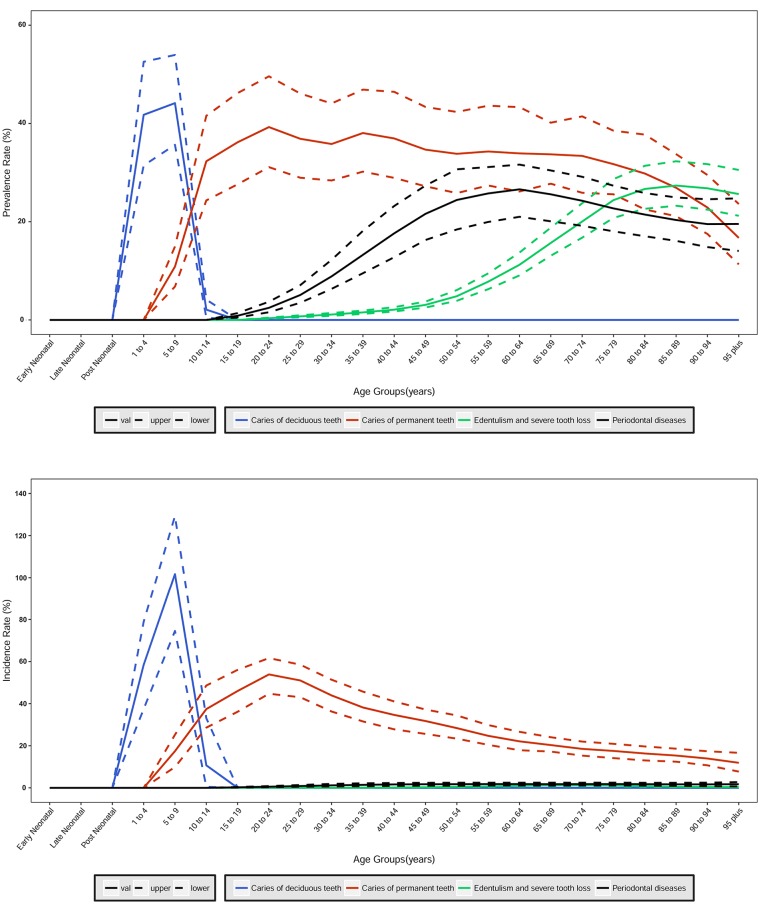
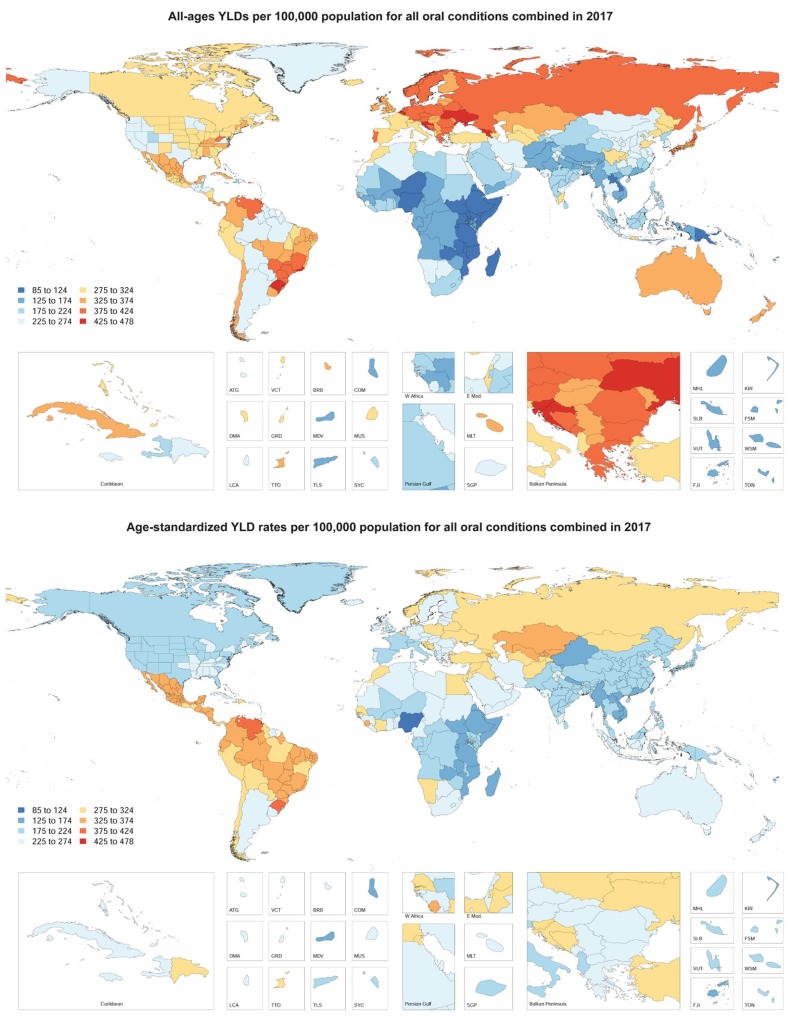
Verification
Claims the paper makes
4 Valid · 0 Not valid · 6 Not checked · 77 Own results and interpretations
A result the paper reports from its own data — it cites no other source for it, so there is none to check. The quote shows it is in the paper.
In the paper
“India, China, Indonesia, Brazil, and United States were in the top 10 countries with the highest normative treatment need associated with all 4 dental conditions assessed in this study.”
§ Global, Regional, and National Levels and Trends in Burden of Oral Conditions from 1990 to 2017: A Systematic Analysis for the Global Burden of Disease 2017 Study > Discussion
plainstates an association- Asserted: passes — The authors put it forward as true.
- Checkable: passes — It can be checked against evidence.
- Load-bearing: unclear — It is unclear whether the paper’s conclusions depend on it.
- Based: passes — The paper gives a reason why it holds.
A result the paper reports from its own data — it cites no other source for it, so there is none to check. The quote shows it is in the paper.
In the paper
“Their corresponding percentage changes between 1990 and 2017 were –7.9% (95% UI, –9.8% to –6.6%) and 1.3% (95% UI, –0.9% to 3.0%; Table 2).”
§ Global, Regional, and National Levels and Trends in Burden of Oral Conditions from 1990 to 2017: A Systematic Analysis for the Global Burden of Disease 2017 Study > Results > Untreated Dental Caries in Deciduous Teeth
plain- Asserted: passes — The authors put it forward as true.
- Checkable: passes — It can be checked against evidence.
- Load-bearing: unclear — It is unclear whether the paper’s conclusions depend on it.
- Based: passes — The paper gives a reason why it holds.
A result the paper reports from its own data — it cites no other source for it, so there is none to check. The quote shows it is in the paper.
In the paper
“Similarly, the lowest age-standardized prevalence and YLD rate were found in high-income countries (6.1% [95% UI, 4.8% to 7.3%] and 2.3 per 100,000 population [95% UI, 1.0 to 4.6], respectively; Table 3).”
§ Global, Regional, and National Levels and Trends in Burden of Oral Conditions from 1990 to 2017: A Systematic Analysis for the Global Burden of Disease 2017 Study > Results > Untreated Dental Caries in Deciduous Teeth
plainn = 41- Asserted: passes — The authors put it forward as true.
- Checkable: passes — It can be checked against evidence.
- Load-bearing: unclear — It is unclear whether the paper’s conclusions depend on it.
- Based: passes — The paper gives a reason why it holds.
A result the paper reports from its own data — it cites no other source for it, so there is none to check. The quote shows it is in the paper.
In the paper
“Their corresponding percentage changes between 1990 and 2017 were 5.8% (95% UI, 4.9% to 6.6%) and 90.1% (95% UI, 87.4% to 92.5%; Table 2).”
§ Global, Regional, and National Levels and Trends in Burden of Oral Conditions from 1990 to 2017: A Systematic Analysis for the Global Burden of Disease 2017 Study > Results > Severe Periodontitis
plain- Asserted: passes — The authors put it forward as true.
- Checkable: passes — It can be checked against evidence.
- Load-bearing: unclear — It is unclear whether the paper’s conclusions depend on it.
- Based: passes — The paper gives a reason why it holds.
A result the paper reports from its own data — it cites no other source for it, so there is none to check. The quote shows it is in the paper.
In the paper
“Their corresponding percentage changes between 1990 and 2017 were –7.9% (95% UI, –9.8% to –6.6%) and 1.3% (95% UI, –0.9% to 3.0%; Table 2).”
§ Global, Regional, and National Levels and Trends in Burden of Oral Conditions from 1990 to 2017: A Systematic Analysis for the Global Burden of Disease 2017 Study > Results > Untreated Dental Caries in Deciduous Teeth
plain- Asserted: passes — The authors put it forward as true.
- Checkable: passes — It can be checked against evidence.
- Load-bearing: unclear — It is unclear whether the paper’s conclusions depend on it.
- Based: passes — The paper gives a reason why it holds.
29 more claims
Create a free account to see all 87 claims and to verify the 3 references still open.
- Probably not a substantial claim. 38
- It may state two separate claims as one. 20
Claims other papers make about this one
Each is checked against this paper’s own text: does it say what the citing paper says it does?
In the citing paper
“Cleft lip and/or palate are among the most frequent congenital disorders [1,2,5].”
From Oral health workforce in Africa: a scarce resource (2023) · cites this paper as [2]
Citations
Cites
James, S. L., Abate, D., Abate, K. H., Abay, S. M., Abbafati, C., Abbasi, N., Abbastabar, H., Abd-Allah, F., Abdela, J., Abdelalim, A., et al. (2018) · The Lancet · doi:10.1016/s0140-6736(18)32279-7 · Cited by 13,867
Self-citationVos, T., Abajobir, A. A., Abate, K. H., Abbafati, C., Abbas, K. M., Abd-Allah, F., Abdulkader, R. S., Abdulle, A. M., Abebo, T. A., Abera, S. F., et al. (2017) · The Lancet · doi:10.1016/s0140-6736(17)32154-2 · Cited by 13,220
Self-citationMurray, C. J. L., Vos, T., Lozano, R., Naghavi, M., Flaxman, A. D., Michaud, C., Ezzati, M., Shibuya, K., Salomon, J. A., Abdalla, S., et al. (2012) · The Lancet · doi:10.1016/s0140-6736(12)61689-4 · Cited by 8,888 · cited 1×
“Sugar consumption is the main cause of dental caries (Moynihan and Kelly 2014; Bernabe et al. 2016), and tobacco consumption is a major cause of periodontal diseases (Nociti et al. 2015; Leite et al. 2018).”
Self-citationGlobal nutrition transition and the pandemic of obesity in developing countries
Popkin, B. M., Adair, L. S., & Ng, S. W. (2012) · Nutrition Reviews · doi:10.1111/j.1753-4887.2011.00456.x · Cited by 4,313 · cited 2×
“The nutrition transition has affected the global distribution of the burden of obesity (Popkin et al. 2012), diabetes (Popkin 2015), and untreated caries in permanent teeth (Moynihan and Petersen 2004), as less economically developed countries still have a traditional diet low in carbohydrates and more economically de…”
BackgroundKyu, H. H., Abate, D., Abate, K. H., Abay, S. M., Abbafati, C., Abbasi, N., Abbastabar, H., Abd-Allah, F., Abdela, J., Abdelalim, A., et al. (2018) · The Lancet · doi:10.1016/s0140-6736(18)32335-3 · Cited by 4,081
Self-citationOral diseases: a global public health challenge
Peres, M. A., Macpherson, L. M. D., Weyant, R. J., Daly, B., Venturelli, R., Mathur, M. R., Listl, S., Celeste, R. K., Guarnizo-Herreño, C. C., Kearns, C., et al. (2019) · The Lancet · doi:10.1016/s0140-6736(19)31146-8 · Cited by 4,054 · cited 1×
“The GBD 2015 findings were used to advocate for integrating oral conditions with noncommunicable disease prevention and including dental services in universal health coverage (Peres et al. 2019; Watt et al. 2019).”
MethodSelf-citationGlobal Burden of Severe Periodontitis in 1990-2010: A Systematic Review and Meta-regression
Kassebaum, N. J., Bernabé, E., Dahiya, M., Bhandari, B., Murray, C. J. L., & Marcenes, W. (2014) · Journal of Dental Research · doi:10.1177/0022034514552491 · Cited by 2,209 · cited 1×
“Data Input Data to inform models for oral conditions were from systematic reviews on the epidemiology of each oral condition (Kassebaum et al. 2014a, 2014b, 2015), which were updated for this new iteration of the project.”
MethodSelf-citationKassebaum, N. J., Arora, M., Barber, R. M., Bhutta, Z. A., Brown, J., Carter, A., Casey, D. C., Charlson, F. J., Coates, M. M., Coggeshall, M., et al. (2016) · The Lancet · doi:10.1016/s0140-6736(16)31460-x · Cited by 2,163
Self-citationKassebaum, N. J., Smith, A. G. C., Bernabé, E., Fleming, T. D., Reynolds, A. E., Vos, T., Murray, C. J. L., Marcenes, W., Collaborators, G. 2. O. H., Abyu, G. Y., et al. (2017) · Journal of Dental Research · doi:10.1177/0022034517693566 · Cited by 1,981
Self-citationGuidelines for accurate and transparent health estimates reporting: the GATHER statement
Stevens, G. A., Alkema, L., Black, R. E., Boerma, J. T., Collins, G. S., Ezzati, M., Grove, J. T., Hogan, D. R., Hogan, M. C., Horton, R., et al. (2016) · The Lancet · doi:10.1016/s0140-6736(16)30388-9 · Cited by 1,798 · cited 1×
“This report adheres to the GATHER statement (Guidelines for Accurate and Transparent Health Estimates Reporting; Stevens et al. 2016).”
Research works printed but not linked: 2
- Flaxman AD, Vos T, Murray CJL, Kiyono P. 2015. An integrative metaregression framework for descriptive epidemiology. Seattle (WA): University of Washington Press.
- Qvist V. 2015. Longevity of restorations: the “death spiral.” In: Fejerskov O, Nyvad B, Kidd E, editors. Dental caries: the disease and its clinical management. London (UK): Wiley-Blackwell. p. 443–456.
Cited by
Items 801–900 of 1,518
Gimenez, T., Estevam, L. R., Ponte, Y. D. O., Dalboni, A., Calvo, A. F. B., Tedesco, T. K., Pontes, L. R. A., Moro, B. L. P., Raggio, D. P., Braga, M. M., et al. (2023) · Community Dentistry And Oral Epidemiology · doi:10.1111/cdoe.12861 · Cited by 4
Maheswari, G. U., Yamini, B., Dhandapani, V. E., et al. (2023) · The Saudi Dental Journal · doi:10.1016/j.sdentj.2023.08.008 · Cited by 3
“…demonstrating the detailed oral manifestations in a MTHFR-SNP carrier shows that certain dental issues are associated with hyper-homocysteinemia (Bernabe et al., 2020), wherein the patient has C667T SNP, mild hyper-homocysteinemia, osteoclastic activity and uneven oral tissue remodeling. iii) A…”
BackgroundKhoramrooz, M., Mirrezaie, S. M., Emamian, M. H., Pasandi, H. G., Dadgari, A., Hashemi, H., & Fotouhi, A. (2023) · BMC Oral Health · doi:10.1186/s12903-023-03471-4 · Cited by 7
Oral Health Service Use in Older Peruvians Before and During the COVID-19 Pandemic
Azañedo, D., Visconti-Lopez, F. J., & Hernández‐Vásquez, A. (2024) · International Dental Journal · doi:10.1016/j.identj.2023.12.003 · Cited by 8
Yang, Q., Zhang, J., Mao, J., Zeng, T., & Tian, S.-W. (2024) · Geriatric Nursing · doi:10.1016/j.gerinurse.2024.05.009 · Cited by 4
Caries Incidence and Its Associated Factors in Hong Kong Kindergarten Children
Sun, I. G., Duangthip, D., Yan, I. G., Zheng, F. M., Lo, E. C. M., & Chu, C. H. (2024) · International Dental Journal · doi:10.1016/j.identj.2024.05.015 · Cited by 4
“This prospective study reveals that one third of children entering kindergarten level 1 developed new caries by the time they reached kindergarten level 3.”
de la Court, A. J., Opdam, N. J. M., Bronkhorst, E. M., et al. (2024) · BMC Oral Health · doi:10.1186/s12903-024-04687-8 · Cited by 3
Association between LTF/MMP20/CA6/TAS1R2 polymorphisms and susceptibility to dental caries
Li, Y., Pan, J., Li, H., Liu, Q., Ma, F., Xiao, L., & Zeng, X. (2024) · Clinical Oral Investigations · doi:10.1007/s00784-024-05894-x · Cited by 4
Dissecting Cellular Heterogeneity: Single-Cell Metabolomics for Unmasking Hidden Variations
Abdi, G., Jain, M., Bhardwaj, R., Thakkar, K., Dewangan, I., Dhariwal, R., & Tarighat, M. A. (2024) · Springer eBooks · doi:10.1007/978-981-97-7459-3_4 · Cited by 3
dos Santos, R. D. C., Queiroz, I. Q. D., Andrade, R. S. E., & Piovesan, É. T. D. A. (2025) · Saúde Coletiva (Barueri) · doi:10.36489/saudecoletiva.2025v15i94p15367-15380 · Cited by 4
Zhou, W., Liu, Y., Yin, T., He, M., Fang, C., Peng, S., & Liu, Y. (2025) · International Dental Journal · doi:10.1016/j.identj.2025.03.012 · Cited by 4
Nationwide Prevalence of Dental Caries in Turkish Children: A Meta-Analysis
Çakmakoğlu, E. E., & Günay, A. (2025) · Children · doi:10.3390/children12060777 · Cited by 6
“These challenges are global; the WHO’s 2010 oral health goals remain unmet in many countries [7].”
Mendoza, M. F., Anzelmo, M. A., Suan, N. M., Cuccia, C. S., & Lavie, C. J. (2025) · Biomedicines · doi:10.3390/biomedicines13071512 · Cited by 6
“The public health implications of these findings are substantial, given that PD affects approximately 796 million people globally and roughly 42% of U.S. adults aged 30 and above, including 7.8% with severe disease [1].”
InfluentialWeijdijk, L. P. M., Slot, D. E., el Kadi, M., & van der Weijden, G. A. (2025) · International Dental Journal · doi:10.1016/j.identj.2025.100846 · Cited by 3
García-Calderón, A. G., Cuevas-González, M. V., Cuevas‐González, J. C., Espinosa-Cristóbal, L. F., López, S. Y. R., Tovar-Carrillo, K. L., Saucedo-Acuña, R. A., Zambrano-Galván, G., Osornio-Rojas, J. L., del Campo, L. F. F.-M., et al. (2025) · Head & Face Medicine · doi:10.1186/s13005-025-00527-4 · Cited by 3
“These data change geographically depending on population size; India, China, Indonesia, Brazil, and the United States are among the 10 countries with the greatest need for dental treatment [5].”
Bælum, V., López, R., & Raittio, E. J. (2025) · European Journal Of Oral Sciences · doi:10.1111/eos.70033 · Cited by 4
Abdurrahman, F., Kusama, T., Tamada, Y., Kiuchi, S., Saito, M., Ojima, T., Aida, J., Kondo, K., Osaka, K., & Takeuchi, K. (2025) · Scientific Reports · doi:10.1038/s41598-025-24357-1 · Cited by 3
Is Pediatric Dentistry a Topic of Interest for Pediatric Journals? A Scoping Review
Cagetti, M. G., Balian, A., Cirio, S., Camoni, N., Salerno, C., & Tartaglia, G. M. (2021) · Children · doi:10.3390/children8090720 · Cited by 3
Sulo, G., Nasir, E. F., Toftesund, A.-L., Mustafa, M., Åstrøm, A. N., & Berggreen, E. (2021) · Acta Odontologica Scandinavica · doi:10.1080/00016357.2021.2005824 · Cited by 2
Encounters and management of oral conditions at general medical practices in Australia
Cheng, A.-L., Eberhard, J., Gordon, J., Balasubramanian, M., Willink, A., Sohn, W., Dai, J., & Harrison, C. M. (2022) · BMC Health Services Research · doi:10.1186/s12913-022-08299-2 · Cited by 3
The research status and progress of core outcome set in oral health
Song, Y., Ren, L., Liu, J., Zeng, X. Y., Chen, Q., & Dan, H. (2022) · Oral Surgery Oral Medicine Oral Pathology and Oral Radiology · doi:10.1016/j.oooo.2022.11.002 · Cited by 3
Ferro, R., Besostri, A., Olivieri, A., & Benacchio, L. (2022) · International Journal of Clinical Pediatric Dentistry · doi:10.5005/jp-journals-10005-2469 · Cited by 8
Girard, I. M., Ward, P., Durey, A., Lund, S., Calache, H., Baker, S. R., & Slack-Smith, L. M. (2023) · BMJ Open · doi:10.1136/bmjopen-2022-068444 · Cited by 7
Hamalaw, S. J., Kareem, F. A., & Noori, A. (2023) · Coatings · doi:10.3390/coatings13061018 · Cited by 3
“Dental caries are a major worldwide public health issue [6,7].”
BackgroundAssociation between place of dental check-ups and work absenteeism among Japanese workers
Masuko, S., Zaitsu, T., Oshiro, A., Ishimaru, M., & Aida, J. (2023) · Journal of Occupational Health · doi:10.1002/1348-9585.12415 · Cited by 4
“” In response to this question, participants were asked to answer the following: (1) the number of days they missed work to go to the dentist, (2) the number of days they came to work late or left work early to go to the dentist, (3) the number of days they used holidays to go to the dentist, and (4) the number of day…”
BackgroundThe effect of mass media campaigns on oral health knowledge: A systematic review and meta‐analysis
Banakar, M., Lankarani, K. B., Vali, M., Tabrizi, R., Taherifard, E., & Akbari, M. (2023) · International Journal of Dental Hygiene · doi:10.1111/idh.12715 · Cited by 5
Wang, Y., Ni, B., Yuan, X. H., Lin, Y., & Zhang, Y. (2023) · Medicine · doi:10.1097/md.0000000000036659 · Cited by 4
“[1] Over the past 3 decades, severe periodontitis has become a major and growing global health concern.”
BackgroundMálaga‐Figueroa, L., Alarcón, M. A., Pannuti, C. M., Valle, P. H., López‐Pacheco, A., Gómez, M., Jiménez, P., Romito, G. A., Lozano, E., Duque, A., et al. (2023) · Journal of Periodontal Research · doi:10.1111/jre.13221 · Cited by 3
Dental health and lung cancer risk in the Golestan Cohort Study
Yano, Y., Abnet, C. C., Roshandel, G., Graf, A., Poustchi, H., Khoshnia, M., Pourshams, A., Kamangar, F., Boffetta, P., Brennan, P., et al. (2024) · BMC Cancer · doi:10.1186/s12885-024-11850-5 · Cited by 4
“Around 3.5 billion people worldwide are affected by oral diseases, predominantly untreated dental caries (tooth decay), severe periodontal disease, and tooth loss [2].”
BackgroundInfluentialDigital Dentistry Applications in Pediatric Dentistry
Orhan, A. I., Bezgin, T., & Orhan, K. (2024) · Springer eBooks · doi:10.1007/978-3-031-52826-2_13 · Cited by 4
Oral Health for all Schools: A Call to Integrate Oral Health in School Systems
Wordley, V., Prabhakar, R. V., & Lee, H. (2024) · Journal of School Health · doi:10.1111/josh.13450 · Cited by 6
Dental Caries in Children: An Update
Kumar, C. M., & Swarnim, S. (2024) · Indian Pediatrics · doi:10.1007/s13312-024-3190-4 · Cited by 6
“The age-standardized prevalence worldwide of untreated caries is approximately 8% in deciduous teeth and 29% in permanent teeth [1].”
Sun, I. G., Duangthip, D., Chai, H. H., Luo, B. W., Lo, E. C. M., & Chu, C. H. (2024) · Journal of Dentistry · doi:10.1016/j.jdent.2024.105029 · Cited by 5
The Minhang Pediatric Biobank cohort study: protocol overview and baseline characteristics
Wen, X., Zhang, X., Qiu, Y., Wang, Y., Zhu, L., Liu, T., & Ruan, Z. (2024) · BMC Pediatrics · doi:10.1186/s12887-024-04763-6 · Cited by 3
“Moreover, our findings indicated that dental caries, bronchitis, pneumonia, asthma and overweight/obese were the top five prevalent primary childhood diseases, consistent with previous studies [27–29].”
ResultOral health status of prisoners in India: A systematic review and meta‐analysis
Mehta, V., Tripathy, S., Shamim, M. A., Sarode, G. S., Abdulkader, R. S., Mathur, A. S., & Sarode, S. C. (2024) · Special Care in Dentistry · doi:10.1111/scd.13010 · Cited by 6
Zaheer, K., Hossain, M. J., Isha, I., DELGADO-ANGULO, E. K., & Nibali, L. (2024) · Community Dentistry And Oral Epidemiology · doi:10.1111/cdoe.12985 · Cited by 3
Saekel, R. (2024) · Journal of Dental Health Oral Disorders and Therapy · doi:10.15406/jdhodt.2024.15.00621 · Cited by 3
Smoking status and edentulism among older Chinese: a cohort study
Song, J., Li, S., Yadong, W., & Tang, Z. (2024) · Clinical Oral Investigations · doi:10.1007/s00784-024-06091-6 · Cited by 4
“Among these, 267 million cases are identified as edentulism [1], the total loss of teeth, which results from a complex interplay of oral diseases and comorbidities, significantly affecting individuals’ oral and general health [2].”
Gender and Geographic Equity in the International Association for Dental Research Awards
Lalloo, R., & Borrell, L. N. (2024) · JDR Clinical & Translational Research · doi:10.1177/23800844241296829 · Cited by 3
Self-citationThe Relationship Among Obesity, Diabetes, and Oral Health: a Narrative Review of Real-World Evidence
Miyazawa, I., Morino, K., Harada, K. S., Ishikado, A., & Kume, S. (2025) · Current Oral Health Reports · doi:10.1007/s40496-025-00397-4 · Cited by 6
Oral health among children participating in an extended home visiting programme—a case‒control study
Brännemo, I., Norman, J., Kvist, T., Lindberg, L., & Tsilingaridis, G. (2025) · European Archives of Paediatric Dentistry · doi:10.1007/s40368-025-01009-6 · Cited by 4
“Early childhood caries (ECC) is a common chronic disease particularly affecting children in areas with low socioeconomic status (Bernabe et al. 2020; Tinanoff et al. 2019).”
Silver diamine fluoride for early childhood caries- A boon for dentists during COVID-19 pandemic
Arachchige, A. P. L., Sultan, A., & Herath, C. (2021) · International Journal of Oral Health Dentistry · doi:10.18231/j.ijohd.2021.033 · Cited by 3
Lienhart, G., Thivichon‐Prince, B., Farge, P., Schott, A., & Chanelière, M. (2022) · BMJ Open · doi:10.1136/bmjopen-2022-066680 · Cited by 3
Alves, N. S., Abreu, M. N. S., & Assunção, A. Á. (2023) · Revista Brasileira de Saúde Ocupacional · doi:10.1590/2317-6369/21322pt2023v48edepi7 · Cited by 4
“Em 2017, o Brasil foi posicionado entre os países com alta carga de doença bucal, além de figurar entre os dez primeiros com maior necessidade de tratamento das doenças que foram estudadas, por meio de comparação interpaíses 1 .”
BackgroundFuture directions for studying resilience of the oral ecosystem
Zemouri, C., Ofiţeru, I. D., & Jakubovics, N. S. (2020) · BDJ · doi:10.1038/s41415-020-2407-8 · Cited by 2
Delivering urgent oral healthcare in Sub-Saharan Africa: supporting sustainable local development
England, R., Paterson, A. J., & Jones, A. (2021) · Primary Dental Journal · doi:10.1177/20501684211029420 · Cited by 3
Botelho, J., Mascarenhas, P., Viana, J., Proença, L., Orlandi, M., Leira, Y., Chambrone, L., Mendes, J. J., & Machado, V. (2022) · medRxiv · doi:10.1101/2022.04.11.22273715 · Cited by 3
Association between tamoxifen and tooth loss in women with breast cancerPreprint
Sensever, F. D. A., Jardim, L. C., Ferrazzo, K. L., et al. (2022) · Research Square · doi:10.21203/rs.3.rs-1629465/v1 · Cited by 3
Editorial: Nutrition and oral health: Public health relevance
Haque, M., Majumder, M. A. A., & Razzaque, M. S. (2023) · Frontiers in Oral Health · doi:10.3389/froh.2023.1130786 · Cited by 3
Antimicrobial Coatings in Dental Implants
Agrawal, D., & Minhas, A. P. (2024) · Wiley eBooks · doi:10.1002/9781394263172.ch3 · Cited by 4
Periodontal Treatment Protocol for Decompensated Diabetes Patients
Dallaserra, M., Morales, A., Hussein, N., Rivera, M., Cavalla, F., Baeza, M., Strauß, F. J., Yoma, Y., SUAZO, C., Jara, G., et al. (2021) · Frontiers in Oral Health · doi:10.3389/froh.2021.666713 · Cited by 3
Oliveira, L. M., Pelissari, T. R., & Oliveira, M. D. M. (2023) · International Journal of Dental Hygiene · doi:10.1111/idh.12671 · Cited by 2
Prevalence of Dental Caries among Adult Patients in Bungoma County, Kenya
Sumba, C. M., Kokonya, D., & Wesonga, B. (2023) · European Journal of Dental and Oral Health · doi:10.24018/ejdent.2023.4.4.273 · Cited by 5
Oferta de Prótese Dentária na Atenção Básica: Expansão e Diferenças Regionais no Brasil
Silva, M. F., Darabansk, J. A. G., Núgoli, V. Z., et al. (2023) · Revista Contexto & Saúde · doi:10.21527/2176-7114.2023.47.13696 · Cited by 2
Thongmuang, P., Thongkao, K., Owen, R. W., et al. (2024) · Journal of Pharmacy And Bioallied Sciences · doi:10.4103/jpbs.jpbs_422_24 · Cited by 2
“[1] The etiology of dental caries is also intricately linked to the involvement of microorganisms.”
Haider, S. S., Martins, R. S., Ali, R., Rizvi, N. A., Mustafa, M. A., Aamdani, S. S., Rehman, A. A., Pervez, A., Nadeem, S., Siddiqui, H. K., et al. (2024) · Oral · doi:10.3390/oral4030028 · Cited by 2
“In lower-middle-income countries (LMICs), the weight of this issue is particularly heavy, with an occurrence rate totaling nearly 1.2 billion cases [2].”
BackgroundInfluentialPrevalence and Distribution of Dental Caries among Iraqi People
Al‐Sultani, H. F. F., Ali, I. H., Khafaji, S. Y. A., & Alhelal, A. G. M. (2024) · Medical Journal of Babylon · doi:10.4103/mjbl.mjbl_16_23 · Cited by 2
Rojas-Senador, C. D., León-Manco, R. A., & Garcés‐Elías, M. C. (2024) · Gerontology and Geriatric Medicine · doi:10.1177/23337214241302722 · Cited by 3
“Recent years have witnessed significant changes in the global prevalence and incidence of oral diseases, with studies indicating that approximately 30% of individuals aged 60 experience periodontal disease, and edentulism prevalence among those aged 60 to 95 reaches 40% (Bernabe et al., 2020).”
Byrne, H., Ríordáin, R. N., Cronin, M. S., & O’Reilly, S. (2024) · Oral Surgery Oral Medicine Oral Pathology and Oral Radiology · doi:10.1016/j.oooo.2024.11.091 · Cited by 2
Tadokoro, D., Honda, K., Kusama, T., Takeuchi, K., Osaka, K., & Aida, J. (2024) · Community Dentistry And Oral Epidemiology · doi:10.1111/cdoe.13024 · Cited by 3
An Overview on the Relation Between Blood Disorders, Periodontitis and Dental Caries
Mohammed, S., Zahmoul, A., & Jbireal, J. M. (2025) · AlQalam Journal of Medical and Applied Sciences · doi:10.54361/ajmas.258106 · Cited by 5
“Dental caries is becoming more common despite a lot of work to identify, forecast, and stop it [52].”
The impact of parental migration on left-behind children’s tooth health in China
Zhang, Y., & Du, K. (2025) · BMC Public Health · doi:10.1186/s12889-024-21193-2 · Cited by 3
Dental Caries and Caries Epidemiology
Frencken, J. E. (2025) · Springer eBooks · doi:10.1007/978-3-031-79152-9_1 · Cited by 3
The Impact of Toothbrushing Timing on Perceived Oral Health Status among Older Adults
Son, J. (2025) · Journal of dental hygiene science · doi:10.17135/jdhs.2025.25.1.19 · Cited by 2
Environmental particulate matter—one of the culprits in the development of caries
Du, W., Hou, R., Li, X., Liu, J., Yang, T., Li, J., Liu, J., & Wang, X. (2025) · Frontiers in Public Health · doi:10.3389/fpubh.2025.1559384 · Cited by 3
Zhang, F., Liu, G., An, Y., & Liang, Y.-H. (2025) · BMC Oral Health · doi:10.1186/s12903-025-05814-9 · Cited by 4
“In the Global Burden of Disease Study in 2017, 7.8% of the global population was reported to have untreated primary tooth caries [3].”
InfluentialBody mass index, physical activity and dental caries: cross-sectional HUNT4 oral health study
Jiang, L., Kordy, N., Myhr, A., Stangvaltaite‐Mouhat, L., Skudutyte‐Rysstad, R., Bhatta, L., & Sen, A. (2025) · Scientific Reports · doi:10.1038/s41598-025-12282-2 · Cited by 4
“Number of teeth with untreated dentine caries (D 3 T) were defined as teeth with primary or secondary caries in dentine (caries registration grades 3–5) and root caries with cavitation 4 , based on clinical examination and bitewing radiographs 4,28 and regarded as another main outcome.”
Abreu‐Placeres, N., Fragoso, P. Y., Rodriguez, A., Martignon, S., Ekstrand, K., Beltrán, E. O., Cortés, A., Douglas, G. V. A., Newton, T., Pitts, N. B., et al. (2025) · Community Dentistry And Oral Epidemiology · doi:10.1111/cdoe.70017 · Cited by 3
Jiménez‐Díez, D., Fernández-García, P., Navas, F., Morales, V., Sanz, R., García‐Muñoz, R. A., Ruiz‐Linares, M., Ferrer-Luque, C. M., Loguércio, A. D., Fuentes, V., et al. (2025) · Dental Materials · doi:10.1016/j.dental.2025.08.004 · Cited by 4
Zhang, X., Zhao, C., Zheng, H., Zhao, C., Wang, Y., Pan, H., & Li, W. (2025) · Clinical and Experimental Dental Research · doi:10.1002/cre2.70211 · Cited by 2
“Similarly, studies using the GBD 2017 (GBD 2017 Oral Disorders Collaborators 2020) and GBD 2021 (Bernabe et al. 2025) databases showed no significant sex ‐ based differences in the global burden of dental caries.”
Accuracy of smartphone photographs for detecting active carious lesions in orthodontic patients
Takahama, R. K., Dettmer, B. S., Nagipe, L. L., Marquezan, P. K., Alves, L. S., & Zenkner, J. E. D. A. (2025) · Brazilian Oral Research · doi:10.1590/1807-3107bor-2025.vol39.069 · Cited by 3
Chen, Y., Jiang, Z., Liu, L., Pan, J., Cao, Y., Lai, W., & Hu, L. (2025) · PLOS Global Public Health · doi:10.1371/journal.pgph.0005274 · Cited by 7
Köse, E., & Hoşgör, S. (2025) · Oral Radiology · doi:10.1007/s11282-025-00872-9 · Cited by 3
Liu, Z., Yan, M., Liu, Y., Zhao, P., Wang, Z., Zhang, Y., & Hu, M. (2025) · Journal of Oral Rehabilitation · doi:10.1111/joor.70083 · Cited by 3
Kloeckner, F. L., Uliana, J. C., & Kantorski, K. Z. (2025) · Community Dental Health · doi:10.1177/0265539x251400586 · Cited by 4
“We included oral health conditions considered public health problems according to the global burden of diseases (Bernabe et al., 2020).”
Cheng, A. Y., Chen, K. J., Zheng, F. M., Duangthip, D., & Chu, C. H. (2025) · Dentistry Journal · doi:10.3390/dj13120552 · Cited by 4
Exploring community members’ perceptions of oral health in rural South Africa
Nghayo, H. A., Ramphoma, K., & Maart, R. D. (2025) · BMC Oral Health · doi:10.1186/s12903-025-07490-1 · Cited by 2
Han, S.-Y., Lee, Y., Heo, S., Kwon, Y., Lee, Y.-C., & Lee, J. (2025) · Community Dental Health · doi:10.1177/0265539x251405067 · Cited by 2
Global burden and trends of oral disorders in adults aged 60 + (1990–2021) with projections to 2040
Dai, X., Li, X., Dai, M., Li, J., & Zhao, W. (2025) · BMC Oral Health · doi:10.1186/s12903-025-07021-y · Cited by 3
“Global oral health inequality remains a significant global challenge, with unmet dental care needs on the rise, particularly in low-and middle-income countries [2].”
Al-Hassan, S. I., Kazlak, M. M., & Kateeb, E. T. (2026) · Dentistry Journal · doi:10.3390/dj14010053 · Cited by 3
Naratippakorn, M., Wiriyakijja, P., Akkarasrisawad, D., Raoprajong, N., Itthipolchai, P., Thongchotchat, V., & Sutthiboonyapan, P. (2026) · Clinical and Experimental Dental Research · doi:10.1002/cre2.70297 · Cited by 3
“Globally, more than 800 million people are affected by severe periodontitis, and approximately one‐fifth of Thai adults are diagnosed with the condition (Bernabe et al. 2020; Niyomsilp et al. 2024).”
Feng, N., 田艳珍, Zhang, S., Xiang, Q., Wei, S., Zhang, Z., & Chen, J. (2026) · Frontiers in Public Health · doi:10.3389/fpubh.2026.1687651 · Cited by 4
Self-citationAssociation of Edentulism With Subsequent Biological Age: A Cohort Study
Matsuyama, Y., Kiuchi, S., & Aida, J. (2026) · Journal Of Clinical Periodontology · doi:10.1111/jcpe.70106 · Cited by 2
“Poor oral health conditions are highly prevalent, and their effects accumulate over the life course (Kassebaum et al. 2017), resulting in a high incidence of tooth loss with advancing age (Bernabe et al. 2020).”
Cheng, T., & Jin, L. (2026) · Journal of Dentistry · doi:10.1016/j.jdent.2026.106576 · Cited by 3
He, X., Zhang, S., Yan, X., Huang, X., He, J., & Mai, S. (2026) · Journal of Dentistry · doi:10.1016/j.jdent.2026.106610 · Cited by 4
Gondo, T., Abe, S., Hiraishi, N., et al. (2026) · Journal of Dentistry · doi:10.1016/j.jdent.2026.106615 · Cited by 2
Liao, Y., 李欣欣, Sethupathy, S., Zhong, L., Cheng, X. M., Wang, F., Ding, Z., Hao, C., Ye, L., Li, Y., et al. (2026) · Journal of Oral Microbiology · doi:10.1080/20002297.2026.2645305 · Cited by 2
“Globally, 60%–90% of school-aged children are affected by dental caries, highlighting the need for effective prevention and treatment [1].”
Ossowska, A., Kusiak, A., Camlet, A., & Świetlik, D. (2026) · Journal of Clinical Medicine · doi:10.3390/jcm15124837 · Cited by 2
“…indicates that periodontal diseases rank among the most common chronic disorders globally and impose a substantial burden on healthcare systems [2,4]. studies focusing primarily on overall accuracy, the present study additionally evaluated the qualitative structure of diagnostic errors, which…”
Reisine, S., Schensul, J. J., Salvi, A., Grady, J. J., Ha, T., & Li, J. (2021) · Community Dentistry And Oral Epidemiology · doi:10.1111/cdoe.12663 · Cited by 3
Desafíos de la Odontología Chilena en el Contexto del Nuevo Pacto Social
Fajreldin-Chuaqui, V., Borgeat, M., Danke, K., Valenzuela-Faunes, B., & Torres-Ceballos, C. (2021) · International journal of odontostomatology · doi:10.4067/s0718-381x2021000401005 · Cited by 6
Tantawi, M. E., Foláyan, M. O., & Bhayat, A. (2022) · JMIR Research Protocols · doi:10.2196/33552 · Cited by 7
“Oral diseases and dental caries are public health problems [1,2].”
BackgroundSelf-citationOral Health in the Arab World: The Silent Epidemic of Dental Caries
Nurelhuda, N. M., Lee, H., & Bridge, G. (2021) · Springer eBooks · doi:10.1007/978-3-030-36811-1_87 · Cited by 5
Sridharan, G. (2022) · Dentistry · doi:10.5772/intechopen.100796 · Cited by 2
Ruhe, T., Broadbent, J. M., Schlüter, P. J., Bowden, N., Theodore, R. F., Richards, R., & Kokaua, J. (2022) · Community Dentistry And Oral Epidemiology · doi:10.1111/cdoe.12791 · Cited by 2
Terapias no Invasivas en base a fluoruros de alta concentración para lesiones de caries radicular.
León, S. (2022) · International journal of interdisciplinary dentistry · doi:10.4067/s2452-55882022000300240 · Cited by 9
Javed, U., Zafar, S., & Javed, S. (2022) · Journal of Basic & Clinical Medical Sciences · doi:10.58398/0002.000005 · Cited by 4
¿Cómo Intervenir el Proceso de Caries en Personas Mayores? Adaptación del Consenso de ORCA/EFCD/DGZ
León, S., Castro, R. J., Santamaría, R. M., Splieth, C. H., Paris, S., Schwendicke, F., & Giacaman, R. A. (2023) · International journal of interdisciplinary dentistry · doi:10.4067/s2452-55882023000200163 · Cited by 2
Self-citationAdiposity is not associated with caries among youth in the United States
Piovesan, É. T. D. A., Leal, S. C., & Bernabé, E. (2023) · The Journal of the American Dental Association · doi:10.1016/j.adaj.2023.07.013 · Cited by 2
Self-citationGarcia, M. C. U., de la Vega, S. A. F., & Yanga-Mabunga, M. S. T. (2023) · Acta Medica Philippina · doi:10.47895/amp.vi0.7630 · Cited by 7
Farhadi, A., Saffarzadeh, A., Nekouei, A. H., Sabeti, M. A., Manochehrifar, H., & Shahravan, A. (2024) · Iranian endodontic Journal/Iranian endodontic journal. · doi:10.22037/iej.v19i1.43894 · Cited by 2
“The Global Burden of Disease report revealed a striking statistic: untreated caries in permanent teeth affected 2.3 billion individuals between1990 to 2017 [2].”
BackgroundInfluential
Metadata
- Authors
- Collaborators, G. 2. O. D., Bernabe, E., Marcenes, W., Hernandez, C. R., Bailey, J., Abreu, L. G., Alipour, V., Amini, S., Arabloo, J., Arefi, Z., Arora, A., Ayanore, M. A., Bärnighausen, T. W., Bijani, A., Cho, D. Y., Chu, D. T., Crowe, C. S., Demoz, G. T., Demsie, D. G., Dibaji Forooshani, Z. S., Du, M., El Tantawi, M., Fischer, F., Folayan, M. O., Futran, N. D., Geramo, Y. C. D., Haj-Mirzaian, A., Hariyani, N., Hasanzadeh, A., Hassanipour, S., Hay, S. I., Hole, M. K., Hostiuc, S., Ilic, M. D., James, S. L., Kalhor, R., Kemmer, L., Keramati, M., Khader, Y. S., Kisa, S., Kisa, A., Koyanagi, A., Lalloo, R., Le Nguyen, Q., London, S. D., Manohar, N. D., Massenburg, B. B., Mathur, M. R., Meles, H. G., Mestrovic, T., Mohammadian-Hafshejani, A., Mohammadpourhodki, R., Mokdad, A. H., Morrison, S. D., Nazari, J., Nguyen, T. H., Nguyen, C. T., Nixon, M. R., Olagunju, T. O., Pakshir, K., Pathak, M., Rabiee, N., Rafiei, A., Ramezanzadeh, K., Rios-Blancas, M. J., Roro, E. M., Sabour, S., Samy, A. M., Sawhney, M., Schwendicke, F., Shaahmadi, F., Shaikh, M. A., Stein, C., Tovani-Palone, M. R., Tran, B. X., Unnikrishnan, B., Vu, G. T., Vukovic, A., Warouw, T. S. S., Zaidi, Z., Zhang, Z. J., & Kassebaum, N. J.
- Affiliations
- King's College London (GB)
- Corresponding author
- GBD 2017 Oral Disorders Collaborators
- ORCID
- Bernabe, E.
- Marcenes, W.
- Bailey, J.
- Abreu, L.G.
- Amini, S.
- Arabloo, J.
- Arefi, Z.
- Arora, A.
- Ayanore, M.A.
- Bärnighausen, T.W.
- Bijani, A.
- Cho, D.Y.
- Chu, D.T.
- Crowe, C.S.
- Demoz, G.T.
- Demsie, D.G.
- Du, M.
- El Tantawi, M.
- Fischer, F.
- Folayan, M.O.
- Futran, N.D.
- Hariyani, N.
- Hasanzadeh, A.
- Hassanipour, S.
- Hay, S.I.
- Hostiuc, S.
- James, S.L.
- Kalhor, R.
- Kemmer, L.
- Khader, Y.S.
- Kisa, A.
- Lalloo, R.
- Manohar, N.D.
- Massenburg, B.B.
- Mathur, M.R.
- Meles, H.G.
- Mohammadian-Hafshejani, A.
- Mohammadpourhodki, R.
- Morrison, S.D.
- Nazari, J.
- Nguyen, T.H.
- Olagunju, T.O.
- Pakshir, K.
- Pathak, M.
- Rabiee, N.
- Rafiei, A.
- Roro, E.M.
- Sabour, S.
- Samy, A.M.
- Schwendicke, F.
- Shaahmadi, F.
- Shaikh, M.A.
- Stein, C.
- Tran, B.X.
- Unnikrishnan, B.
- Vu, G.T.
- Warouw, T.S.S.
- Zaidi, Z.
- Venue
- Journal of Dental Research
- Publisher
- SAGE Publications
- Published
- 2020-03-02
- Volume
- 99
- Issue
- 4
- Pages
- 362-373
- ISSN
- 0022-0345 (ISSN-L)
- 1544-0591
- PMC
- PMC7088322
- OpenAlex
- W3010457767
- Cited by
- 1,526
- References
- 39
- Citations by year
- 2026: 210 · 2025: 272 · 2024: 317 · 2023: 249 · 2022: 243 · 2021: 183 · 2020: 44
- FWCI
- 182.45
- Type
- journal article
- Language
- en
- Open access
- hybrid
- doi.org
- Licence
- Locations
- Journal of Dental Research (publishedVersion, cc-by-nc)
- Europe PMC (PubMed Central) (publishedVersion, cc-by-nc)
- PubMed Central (publishedVersion, cc-by-nc)
- PubMed (publishedVersion)
- Research Portal (King's College London) (submittedVersion, cc-by-nc)
- NORA - Norwegian Open Research Archives (submittedVersion, cc-by-nc)
- Queen Mary Research Online (Queen Mary University of London) (submittedVersion, cc-by-nc)
- SMILE – School of dental Medicine dIgitaL archivE (University of Belgrade, School of Dental Medicine) (submittedVersion, other-oa)
- Funders
- Sanofi
- Alexander von Humboldt-Stiftung
- Harvard University
- University of Washington
- Iran University of Medical Sciences
- Institute for Health Metrics and Evaluation
- Aksum University
- Kasturba Medical College, Manipal
- King's College London
- Bundesministerium für Bildung und Forschung
- Tehran University of Medical Sciences and Health Services
- Babol University of Medical Sciences
- Arak University of Medical Sciences
- Universidade Federal de Minas Gerais
- Addis Ababa University
- Western Sydney University
- Adigrat University
- University of Health and Allied Sciences
- Sanofi Pasteur
- Đại học Quốc gia Hà Nội
- Topics
- Health Sciences › Dentistry › General Dentistry › Dental Health and Care Utilization
- Health Sciences › Dentistry › Periodontics › Oral microbiology and periodontitis research
- Health Sciences › Medicine › Public Health, Environmental and Occupational Health › Global Health and Epidemiology
- Keywords
- oral diseases, dental caries, untreated dental caries, severe periodontitis, tooth loss, years lived with disability, prevalence, incidence, socioeconomic disparities, World Bank income classification, socio-demographic index, oral health policy, non-communicable disease prevention
- MeSH terms
- Global Burden of Disease, Dental Caries, Humans, Mouth Diseases, Global Health, Incidence, Prevalence, Quality-Adjusted Life Years
About these checks
Registry, retraction, Cites and statistics results are computed, not judged, with one exception: a printed reference that no index lists is read once by a model before it counts as a citation error. Claims are extracted by a model and kept only when their quote appears verbatim in the text; each cited source is then checked, with a model’s help, for whether it says what the claim relies on. Those verdicts can be wrong — read the claim’s quote and the cited source before relying on one.
The claim verdicts this report counts are experimental: their accuracy is not yet measured.
A language model drew the claims from the paper on 2026-10-11, under version 3 of the claim definition (model deepseek-v4.1-flash, prompt extract-v3).
A second model labelled each claim on 2026-10-11 (model jev-1.13-20260917, definition revision gold-guideline-v0.2).
Statistics and arithmetic are recomputed, not judged.
Confidence bands are shown only for fields calibrated on our annotated test set. None is calibrated yet, so no band is shown.
What counts as a claim ›How we measure confidence ›How we check this ›
Are you an author, or do you see a problem with this page? Request a review
Data sources
Bibliographic data: Semantic Scholar, OpenAlex, Crossref.
Contains information from the Semantic Scholar Academic Graph Datasets, made available under the ODC Attribution License (ODC-BY 1.0).
Semantic Scholar’s data is described in: Kinney, R., et al. (2023). The Semantic Scholar Open Data Platform. arXiv:2301.10140.
