

Global, Regional, and National Levels and Trends in Burden of Oral Conditions from 1990 to 2017: A Systematic Analysis for the Global Burden of Disease 2017 Study
Open accessThe DOI matches its Crossref record; 38 of the 39 references it cites were found in a registry or an index; 6 of the 19 sources its claims cite were checked for support.
Abstract
This Global Burden of Disease analysis estimated 3.5 billion cases of oral conditions worldwide in 2017, highlighting the scale of unmet oral-health need.
Overview
CoChat Summary
TL;DR
This GBD 2017 systematic analysis estimated the global, regional, and national burden of oral conditions in 195 countries and territories from 1990 to 2017. It found oral diseases remained a major public health challenge, with 3.5 billion cases globally in 2017 and marked socioeconomic patterns: untreated caries and severe periodontitis were lowest in more developed countries, while tooth loss was highest there.
Key findings
- In 2017, there were 3.5 billion global cases of oral conditions, including 2.3 billion untreated caries in permanent teeth, 796 million severe periodontitis cases, 532 million untreated caries in deciduous teeth, 267 million total tooth loss cases, and 139 million other oral conditions.
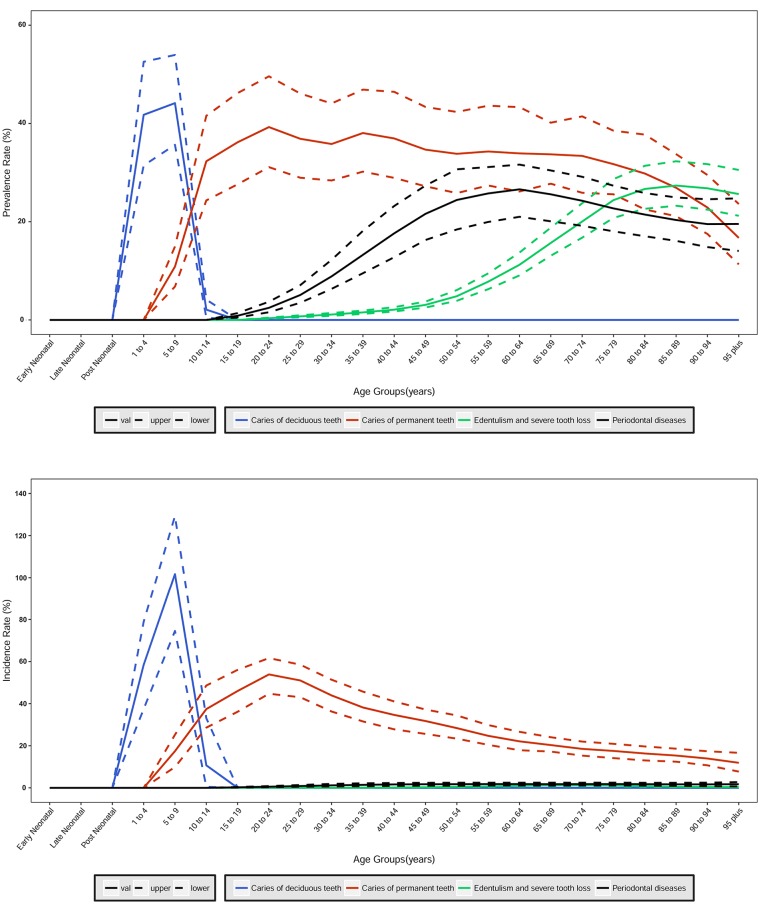
- Untreated caries in permanent teeth had an age-standardized prevalence of 29.4% in 2017 and increased in number of prevalent cases by 35.9% from 1990 to 2017, while age-standardized prevalence declined by 8.8%.
- Severe periodontitis had an age-standardized prevalence of 9.8% in 2017 and showed large growth from 1990 to 2017: 90.1% increase in prevalent cases and 90.2% increase in YLDs.
- Total tooth loss had an age-standardized prevalence of 3.3% in 2017; its number of prevalent cases increased by 75.5% from 1990 to 2017, even as age-standardized prevalence declined by 10.4%.
Methods
- This was a systematic analysis within the GBD 2017 study, covering 195 countries and territories and estimating prevalence, incidence, and YLDs for oral conditions from 1990 to 2017 by sex, age, country, World Bank income group, and SDI.
- Data came from systematic reviews, updated searches, and a WHO-supported effort to identify unpublished survey reports; only random-sample national or regional surveys with acceptable response/attrition and prevalence/incidence data were included.
- Estimates were modeled using DisMod-MR 2.1 (Bayesian meta-regression), with age-standardization and percentage change calculations to assess trends.
Limitations
- The paper states that estimates for “other oral disorders” should be interpreted cautiously because they were based on surveys from a single country (United States).
- The report did not include mouth cancers, congenital malformations (including orofacial clefts), or temporomandibular disorders; this is stated in the paper.
- The paper also states that data were scarce despite efforts to identify gray literature, and most identified sources did not meet GBD eligibility criteria; this likely limits completeness of the estimates.
Model-written summary. Check it against the paper before relying on it.
Integrity signals
Registry
Cites
Statistics
Figures
Verification
Claims the paper makes
4 Valid · 0 Not valid · 6 Not checked · 77 Own results and interpretations
A result the paper reports from its own data — it cites no other source for it, so there is none to check. The quote shows it is in the paper.
In the paper
“India, China, Indonesia, Brazil, and United States were in the top 10 countries with the highest normative treatment need associated with all 4 dental conditions assessed in this study.”
§ Global, Regional, and National Levels and Trends in Burden of Oral Conditions from 1990 to 2017: A Systematic Analysis for the Global Burden of Disease 2017 Study > Discussion
plainstates an association- Asserted: passes — The authors put it forward as true.
- Checkable: passes — It can be checked against evidence.
- Load-bearing: unclear — It is unclear whether the paper’s conclusions depend on it.
- Based: passes — The paper gives a reason why it holds.
A result the paper reports from its own data — it cites no other source for it, so there is none to check. The quote shows it is in the paper.
In the paper
“Their corresponding percentage changes between 1990 and 2017 were –7.9% (95% UI, –9.8% to –6.6%) and 1.3% (95% UI, –0.9% to 3.0%; Table 2).”
§ Global, Regional, and National Levels and Trends in Burden of Oral Conditions from 1990 to 2017: A Systematic Analysis for the Global Burden of Disease 2017 Study > Results > Untreated Dental Caries in Deciduous Teeth
plain- Asserted: passes — The authors put it forward as true.
- Checkable: passes — It can be checked against evidence.
- Load-bearing: unclear — It is unclear whether the paper’s conclusions depend on it.
- Based: passes — The paper gives a reason why it holds.
A result the paper reports from its own data — it cites no other source for it, so there is none to check. The quote shows it is in the paper.
In the paper
“Similarly, the lowest age-standardized prevalence and YLD rate were found in high-income countries (6.1% [95% UI, 4.8% to 7.3%] and 2.3 per 100,000 population [95% UI, 1.0 to 4.6], respectively; Table 3).”
§ Global, Regional, and National Levels and Trends in Burden of Oral Conditions from 1990 to 2017: A Systematic Analysis for the Global Burden of Disease 2017 Study > Results > Untreated Dental Caries in Deciduous Teeth
plainn = 41- Asserted: passes — The authors put it forward as true.
- Checkable: passes — It can be checked against evidence.
- Load-bearing: unclear — It is unclear whether the paper’s conclusions depend on it.
- Based: passes — The paper gives a reason why it holds.
A result the paper reports from its own data — it cites no other source for it, so there is none to check. The quote shows it is in the paper.
In the paper
“Their corresponding percentage changes between 1990 and 2017 were 5.8% (95% UI, 4.9% to 6.6%) and 90.1% (95% UI, 87.4% to 92.5%; Table 2).”
§ Global, Regional, and National Levels and Trends in Burden of Oral Conditions from 1990 to 2017: A Systematic Analysis for the Global Burden of Disease 2017 Study > Results > Severe Periodontitis
plain- Asserted: passes — The authors put it forward as true.
- Checkable: passes — It can be checked against evidence.
- Load-bearing: unclear — It is unclear whether the paper’s conclusions depend on it.
- Based: passes — The paper gives a reason why it holds.
A result the paper reports from its own data — it cites no other source for it, so there is none to check. The quote shows it is in the paper.
In the paper
“Their corresponding percentage changes between 1990 and 2017 were –7.9% (95% UI, –9.8% to –6.6%) and 1.3% (95% UI, –0.9% to 3.0%; Table 2).”
§ Global, Regional, and National Levels and Trends in Burden of Oral Conditions from 1990 to 2017: A Systematic Analysis for the Global Burden of Disease 2017 Study > Results > Untreated Dental Caries in Deciduous Teeth
plain- Asserted: passes — The authors put it forward as true.
- Checkable: passes — It can be checked against evidence.
- Load-bearing: unclear — It is unclear whether the paper’s conclusions depend on it.
- Based: passes — The paper gives a reason why it holds.
29 more claims
Create a free account to see all 87 claims and to verify the 3 references still open.
- Probably not a substantial claim. 38
- It may state two separate claims as one. 20
Claims other papers make about this one
Each is checked against this paper’s own text: does it say what the citing paper says it does?
In the citing paper
“Cleft lip and/or palate are among the most frequent congenital disorders [1,2,5].”
From Oral health workforce in Africa: a scarce resource (2023) · cites this paper as [2]
Citations
Cites
James, S. L., Abate, D., Abate, K. H., Abay, S. M., Abbafati, C., Abbasi, N., Abbastabar, H., Abd-Allah, F., Abdela, J., Abdelalim, A., et al. (2018) · The Lancet · doi:10.1016/s0140-6736(18)32279-7 · Cited by 13,867
Self-citationVos, T., Abajobir, A. A., Abate, K. H., Abbafati, C., Abbas, K. M., Abd-Allah, F., Abdulkader, R. S., Abdulle, A. M., Abebo, T. A., Abera, S. F., et al. (2017) · The Lancet · doi:10.1016/s0140-6736(17)32154-2 · Cited by 13,220
Self-citationMurray, C. J. L., Vos, T., Lozano, R., Naghavi, M., Flaxman, A. D., Michaud, C., Ezzati, M., Shibuya, K., Salomon, J. A., Abdalla, S., et al. (2012) · The Lancet · doi:10.1016/s0140-6736(12)61689-4 · Cited by 8,888 · cited 1×
“Sugar consumption is the main cause of dental caries (Moynihan and Kelly 2014; Bernabe et al. 2016), and tobacco consumption is a major cause of periodontal diseases (Nociti et al. 2015; Leite et al. 2018).”
Self-citationGlobal nutrition transition and the pandemic of obesity in developing countries
Popkin, B. M., Adair, L. S., & Ng, S. W. (2012) · Nutrition Reviews · doi:10.1111/j.1753-4887.2011.00456.x · Cited by 4,313 · cited 2×
“The nutrition transition has affected the global distribution of the burden of obesity (Popkin et al. 2012), diabetes (Popkin 2015), and untreated caries in permanent teeth (Moynihan and Petersen 2004), as less economically developed countries still have a traditional diet low in carbohydrates and more economically de…”
BackgroundKyu, H. H., Abate, D., Abate, K. H., Abay, S. M., Abbafati, C., Abbasi, N., Abbastabar, H., Abd-Allah, F., Abdela, J., Abdelalim, A., et al. (2018) · The Lancet · doi:10.1016/s0140-6736(18)32335-3 · Cited by 4,081
Self-citationOral diseases: a global public health challenge
Peres, M. A., Macpherson, L. M. D., Weyant, R. J., Daly, B., Venturelli, R., Mathur, M. R., Listl, S., Celeste, R. K., Guarnizo-Herreño, C. C., Kearns, C., et al. (2019) · The Lancet · doi:10.1016/s0140-6736(19)31146-8 · Cited by 4,054 · cited 1×
“The GBD 2015 findings were used to advocate for integrating oral conditions with noncommunicable disease prevention and including dental services in universal health coverage (Peres et al. 2019; Watt et al. 2019).”
MethodSelf-citationGlobal Burden of Severe Periodontitis in 1990-2010: A Systematic Review and Meta-regression
Kassebaum, N. J., Bernabé, E., Dahiya, M., Bhandari, B., Murray, C. J. L., & Marcenes, W. (2014) · Journal of Dental Research · doi:10.1177/0022034514552491 · Cited by 2,209 · cited 1×
“Data Input Data to inform models for oral conditions were from systematic reviews on the epidemiology of each oral condition (Kassebaum et al. 2014a, 2014b, 2015), which were updated for this new iteration of the project.”
MethodSelf-citationKassebaum, N. J., Arora, M., Barber, R. M., Bhutta, Z. A., Brown, J., Carter, A., Casey, D. C., Charlson, F. J., Coates, M. M., Coggeshall, M., et al. (2016) · The Lancet · doi:10.1016/s0140-6736(16)31460-x · Cited by 2,163
Self-citationKassebaum, N. J., Smith, A. G. C., Bernabé, E., Fleming, T. D., Reynolds, A. E., Vos, T., Murray, C. J. L., Marcenes, W., Collaborators, G. 2. O. H., Abyu, G. Y., et al. (2017) · Journal of Dental Research · doi:10.1177/0022034517693566 · Cited by 1,981
Self-citationGuidelines for accurate and transparent health estimates reporting: the GATHER statement
Stevens, G. A., Alkema, L., Black, R. E., Boerma, J. T., Collins, G. S., Ezzati, M., Grove, J. T., Hogan, D. R., Hogan, M. C., Horton, R., et al. (2016) · The Lancet · doi:10.1016/s0140-6736(16)30388-9 · Cited by 1,798 · cited 1×
“This report adheres to the GATHER statement (Guidelines for Accurate and Transparent Health Estimates Reporting; Stevens et al. 2016).”
Research works printed but not linked: 2
- Flaxman AD, Vos T, Murray CJL, Kiyono P. 2015. An integrative metaregression framework for descriptive epidemiology. Seattle (WA): University of Washington Press.
- Qvist V. 2015. Longevity of restorations: the “death spiral.” In: Fejerskov O, Nyvad B, Kidd E, editors. Dental caries: the disease and its clinical management. London (UK): Wiley-Blackwell. p. 443–456.
Cited by
Items 601–700 of 1,518
A systematic review and meta-analysis of CA VI, AMBN, and TUFT1 polymorphisms and dental caries risk
Sharifi, R., Shayan, A., Jamshidy, L., Mozaffari, H. R., Hatipoğlu, Ö., Tadakamadla, S. K., & Sadeghi, M. (2021) · Meta Gene · doi:10.1016/j.mgene.2021.100866 · Cited by 8
Edentulism‐free life expectancy among older Brazilian adults: SABE study, 2006‐2016
Oliveira, E. J. P., Alves, L. C., Duarte, Y. A. D. O., & de Andrade, F. B. (2021) · Gerodontology · doi:10.1111/ger.12541 · Cited by 11
Tavares, R. D. C. R., Ortigara, G. B., Tatsch, K. F., Ferreira, C. M., Boligon, J., & Moreira, C. H. C. (2021) · Clinical Oral Investigations · doi:10.1007/s00784-021-03980-y · Cited by 10
Abulhamael, A. M., Bhandi, S., Albar, N. H., et al. (2023) · Microorganisms · doi:10.3390/microorganisms11071764 · Cited by 6
“3 billion individuals suffer from untreated caries [1].”
Ganbavale, S. G., Papachristou, E., Mathers, J. C., et al. (2024) · Journal of Dental Research · doi:10.1177/00220345231224337 · Cited by 6
“Globally and within the United Kingdom, tooth loss, periodontal (gum) disease, and dry mouth are among the most prevalent health conditions and significantly greater in older age (Petersen and Yamamoto 2005; Gil-Montoya et al. 2015; Ramsay, Whincup, et al. 2015; Bernabe et al. 2020).”
BackgroundGanbavale, S., Louca, C., Twigg, L., & Wanyonyi, K. (2024) · Community Dentistry and Oral Epidemiology · doi:10.1111/cdoe.12957 · Cited by 7
Kataoka, M., Adam, L. A., Ball, L., Crowley, J., & McLean, R. M. (2024) · European Journal Of Dental Education · doi:10.1111/eje.13045 · Cited by 12
Gaskin, D. J., Kanwar, O., McCleary, R. R., Davis, A. L., Weatherspoon, D. J., Fleming, E., Iftikhar, A., Balsara, K., & Zare, H. (2024) · Healthcare · doi:10.3390/healthcare12212191 · Cited by 6
Multimorbidity and tooth loss: data from Chilean National Health Survey 2016–2017
Santos-López, M., Martín, P. G.-S., Margozzini, P., & Ortuño, D. (2024) · BMC Oral Health · doi:10.1186/s12903-024-05184-8 · Cited by 12
Raja, M., Nazzal, H., Cyprian, F. S., Elwerfelli, M. M., & Duggal, M. S. (2025) · European Archives of Paediatric Dentistry · doi:10.1007/s40368-024-00994-4 · Cited by 7
“A recent systematic review reported 2.3 billion cases (95% UI, 2.1 to 2.5 billion) of untreated caries in permanent teeth (Bernabe et al. 2020).”
InfluentialDental and oral health assessments in the German National Cohort (NAKO)
Samietz, S., Borof, K., Hertrampf, K., Aarabi, G., Ciardo, A., Finke, H., Hagenfeld, D., Kühnisch, J., Ruetters, M., Baumeister, S., et al. (2025) · BMC Oral Health · doi:10.1186/s12903-025-05454-z · Cited by 9
Global Burden of Oral Diseases in Adolescents and Young Adults Aged 10–24 Years
Lü, W., Wang, B., Du, M., & Ge, S. (2025) · International Dental Journal · doi:10.1016/j.identj.2025.100875 · Cited by 15
“3,23 While fluoride use and sugar consumption control have reduced dental caries, NCODs have seen a rise in ASPR and ASDR.”
Self-citationOzdemir, D., Ozcan, C., Karaoğlu, A., Pekince, A., Yaşa, Y., Kazangirler, B. Y., & Meşeci, E. (2026) · Neural Computing and Applications · doi:10.1007/s00521-025-11730-4 · Cited by 12
Impact of oral health literacy and psychoactive substances on tooth loss in adolescents
Lopes, R. T., Neves, É. T. B., Dutra, L. D. C., et al. (2022) · Oral Diseases · doi:10.1111/odi.14249 · Cited by 6
Rocha-Ortiz, J., Tepox-Puga, S., Borges-Yáñez, S. A., Mendoza-Rodríguez, M., Escoffié-Ramírez, M., Minaya-Sánchez, M., Casanova-Rosado, J. F., Casanova-Rosado, A. J., Pontigo-Loyola, A., & Medina-Solís, C. (2023) · BioMed Research International · doi:10.1155/2023/4169097 · Cited by 6
Patel, J., Bear, N., Long, R., Naoum, S. J., Slack-Smith, L. M., & Kruger, E. (2023) · Community Dentistry And Oral Epidemiology · doi:10.1111/cdoe.12885 · Cited by 6
Aguirre, P. E. A., Anibal, I., Lotto, M., Strieder, A. P., & Cruvinel, T. (2023) · European Archives of Paediatric Dentistry · doi:10.1007/s40368-023-00830-1 · Cited by 6
Martignon, S., Cortés, A., Ávila, V., VELASCO, K., Abreu‐Placeres, N., Aránguiz, V., Bullen, M., Giacaman, R. A., Malheiros, Z., Pozos‐Guillén, A., et al. (2023) · Brazilian Oral Research · doi:10.1590/1807-3107bor-2023.vol37.0119 · Cited by 8
Tekpınar, L., & Yiğit, V. (2024) · Value in Health Regional Issues · doi:10.1016/j.vhri.2024.01.001 · Cited by 7
Dental Caries among the Elderly in Iran: A Meta-analysis
Shoaee, S., Sharifi, F., Parsa, P. G., Sobhaninejad, S., Heydari, M., & Sofi‐Mahmudi, A. (2024) · Medical Journal of the Islamic Republic of Iran · doi:10.47176/mjiri.38.11 · Cited by 6
Assessment of Oral Health Status and Pregnancy Outcomes Among Women in Saudi Arabia
AlHumaid, G., Alshehri, T., Alwalmani, R., et al. (2024) · Patient Preference and Adherence · doi:10.2147/ppa.s456721 · Cited by 6
“34 Western societies have always reported better oral hygiene measures as well as access to correct oral health information, 35 all these factors collectively might explain the observed differences in oral health status during pregnancy.”
BackgroundHan, C., Lin, C., Raichur, A., Hall, M., & Nguyen, T. M. (2024) · Health Promotion International · doi:10.1093/heapro/daae050 · Cited by 6
Self-citationSharda, S., Gupta, A., Jyani, G., Prinja, S., & Goyal, A. (2024) · International Journal of Paediatric Dentistry · doi:10.1111/ipd.13214 · Cited by 8
Rajbhandari, A., & Aryal, N. (2024) · BMJ Public Health · doi:10.1136/bmjph-2023-000438 · Cited by 17
Molina, A., Martínez, M., Montero, E., Carasol, M., Herrera, D., Figuero, E., & Sanz, M. (2024) · Journal of Periodontal Research · doi:10.1111/jre.13340 · Cited by 12
“3 One of the limitations of the present investigation is the use of partial mouth recordings (10 index teeth) in the periodontal evaluation, which could have led to a biased estimation of disease prevalence and severity, either by under-or overestimation.”
Raheem, Z. J., & Abdulbaqi, H. R. (2024) · International Journal of Dentistry · doi:10.1155/2024/8006278 · Cited by 8
“With increases in age, these numbers are expected to rise [2].”
Physio‐Mechanic and Microscopic Analyses of Bioactive Glass‐Based Resin Infiltrants
Ahmed, S. Z., Khan, A. S., Nasser, W. W., Alrushaid, M. A., Alfaraj, Z. M., Aljeshi, M. M., Shah, A. T., Sabri, B. A. M., Akhtar, S., & Hassan, M. I. A. (2024) · Microscopy Research and Technique · doi:10.1002/jemt.24725 · Cited by 6
“Untreated dental caries in permanent teeth stand out as the most prevalent disease on a global scale, with 2.3 billion people having it, followed by severe periodontitis, which affects approximately 1 billion people (Bernabe et al. 2020).”
InfluentialKerguen, J., Nabet, C., Azogui‐Lévy, S., Bonnet, A., Vital, S. O., Pierrat, V., Kaminski, M., Dufourg, M., & Germa, A. (2025) · European Journal of Pediatrics · doi:10.1007/s00431-025-06093-w · Cited by 6
“Similarly, untreated caries prevalence in deciduous teeth was estimated at 6.1% in high-income countries [36].”
InfluentialBehavioral Pathway between Social Support and Network, and Edentulism
Alobaidi, F., Heidari, E., & Sabbah, W. (2025) · Journal of Dental Research · doi:10.1177/00220345251329337 · Cited by 6
“As the population ages, the prevalence of tooth loss has increased, with rates peaking among adults 60 y and older around the world (Kassebaum et al. 2014; Bernabe et al. 2020).”
Oral Health: A Major Global Public Health Concern
Denis, F., & Clément, C. (2025) · Journal of Clinical Medicine · doi:10.3390/jcm14124101 · Cited by 6
“These conditions share several modifiable risk factors with other NCDs, including excessive sugar intake, tobacco use, and harmful alcohol consumption, in addition to common social and environmental determinants [1].”
Khalil, M. I. M., Sorour, D. M., Mousa, E. F. S., & Shaala, R. S. (2020) · NILES Journal forGeriatric and Gerontology/NILES Journal for Geriatric and Gerontology · doi:10.21608/niles.2020.176388 · Cited by 6
“5 billion people worldwide, with caries of permanent teeth being the most common condition ([2]).”
BackgroundInoue, Y., Zaitsu, T., Oshiro, A., et al. (2021) · Tobacco Induced Diseases · doi:10.18332/tid/143177 · Cited by 6
Chisini, L. A., Costa, F. D. S., Salvi, L. C., Poletto-Neto, V., de Carvalho, R. V., & Demarco, F. F. (2022) · International Journal of Environmental Health Research · doi:10.1080/09603123.2022.2043250 · Cited by 5
Reckelkamm, S. L., Hannemann, A., Kocher, T., Nauck, M. A., Völzke, H., Ehmke, B., Rauner, M., Alayash, Z., Baumeister, S., Nolde, M., et al. (2022) · Journal Of Clinical Periodontology · doi:10.1111/jcpe.13649 · Cited by 7
Sim, C. P. C., Li, H., & Peres, M. A. (2022) · Journal of Personalized Medicine · doi:10.3390/jpm12060931 · Cited by 8
Engh, M. S., Muhoozi, G. K. M., Ngari, M. M., Skaare, A. B., Westerberg, A. C., Iversen, P. O., Brusevold, I. J., & Atukunda, P. (2022) · American Journal of Tropical Medicine and Hygiene · doi:10.4269/ajtmh.22-0248 · Cited by 13
Removable partial dentures and mortality among partially edentulous adults
Bashir, N. Z., & Bernabé, E. (2022) · Journal of Dentistry · doi:10.1016/j.jdent.2022.104304 · Cited by 7
Self-citationHarnessing the behavioral and social sciences to promote oral health: Where do we go from here?
Randall, C. L., & McNeil, D. W. (2023) · Community Dentistry And Oral Epidemiology · doi:10.1111/cdoe.12834 · Cited by 7
Min, S. N., Duangthip, D., Gao, S. S., et al. (2023) · PLoS ONE · doi:10.1371/journal.pone.0282880 · Cited by 6
“Untreated caries in deciduous teeth is common, affecting 532 million children worldwide and its prevalence peaks in 5-year-old children [4].”
BackgroundYamamoto‐Kuramoto, K., Kusama, T., Kiuchi, S., Kondo, K., Osaka, K., Takeuchi, K., & Aida, J. (2023) · Gerodontology · doi:10.1111/ger.12688 · Cited by 9
Güvenç, K. K., Fentoğlu, Ö., Calapoğlu, M., Aksoy, F., & Orhan, H. (2023) · Clinical Oral Investigations · doi:10.1007/s00784-023-05174-0 · Cited by 7
Prioritizing population oral health through public policy in Australia: the Victorian experience
Nguyen, T. M., Lin, C., Raichur, A., Patterson, A., Hall, M., Aldrich, R., & Robinson, S. (2023) · Health Promotion International · doi:10.1093/heapro/daad086 · Cited by 7
Self-citationSaekel, R. (2024) · Journal of Dental Health Oral Disorders and Therapy · doi:10.15406/jdhodt.2024.15.00611 · Cited by 6
Ciurea, A., Stanomir, A., Șurlin, P., Micu, I. C., Pamfil, C. A. M., Leucuta, D., Rednic, S., Rasperini, G., Șoancă, A., Țigu, A. B., et al. (2024) · Diagnostics · doi:10.3390/diagnostics14050540 · Cited by 6
Association of sense of coherence and periodontal disease severity, in two cross‐sectional studies
Wahlin, Å., Lindmark, U., & Norderyd, O. M. (2024) · International Journal of Dental Hygiene · doi:10.1111/idh.12806 · Cited by 7
A new approach to oral health can lead to healthier societies
Fisher, J., Matanhire‐Zihanzu, C. N., & Buse, K. (2024) · BMJ · doi:10.1136/bmj.q925 · Cited by 8
Dental caries from the past to the future: is it possible to reduce caries prevalence?
Kara, E., & İpek, B. (2024) · Anatolian Current Medical Journal · doi:10.38053/acmj.1472247 · Cited by 7
Trajectories of Sugar-Sweetened Beverage Intake in Early Life: Evidence from a Birth Cohort Study
Arora, A., Rahaman, K. S., Parmar, J. S., Gupta, A., Evans, N., Chandio, N., Selvaratnam, N. C., & Manohar, N. (2024) · Nutrients · doi:10.3390/nu16142336 · Cited by 8
“Childhood obesity and dental caries are global public health issues [1,2].”
BackgroundSelf-citationRana, B. K., Kiyani, A., Hassan, S., Masood, R., Javed, M. Q., Abulhamael, A. M., Atique, S., & Zafar, M. S. (2024) · BMC Oral Health · doi:10.1186/s12903-024-04658-z · Cited by 13
Functional Dentition and 12-Month Changes in Body Measurements among Thai Older Adults
Gaewkhiew, P., Sabbah, W., & Bernabé, E. (2020) · International Journal of Environmental Research and Public Health · doi:10.3390/ijerph17124200 · Cited by 6
“Tooth loss is a major oral health problem among older adults globally [1].”
BackgroundSelf-citationThe acid-resistance potential of arginine-fluoride varnish treated enamel
Bijle, M. N., Abdalla, M. M., Ashraf, U., Siu, K. W., Tsoi, J. K. H., & Yiu, C. K. Y. (2021) · Journal of the mechanical behavior of biomedical materials/Journal of mechanical behavior of biomedical materials · doi:10.1016/j.jmbbm.2021.104763 · Cited by 5
The economic benefits of increased sugar-free chewing gum in China: a budget impact analysis
Du, S., Zhang, C., Wang, W., Liu, J., Yuan, C., Yu, Y., Chang, Q., Zhang, S., & Si, Y. (2021) · BMC Oral Health · doi:10.1186/s12903-021-01786-8 · Cited by 6
“9 billion people worldwide, and untreated caries in permanent teeth are the most prevalent condition accounted for by the global burden of disease studies [1, 2]The treatment of oral diseases is the 4th greatest expense in most industrial countries [3].”
BackgroundAssociation between tamoxifen and tooth loss in women with breast cancer
Sensever, F. D. A., Jardim, L. C., Ferrazzo, K. L., Skupien, J. A., & Antoniazzi, R. P. (2022) · Supportive Care in Cancer · doi:10.1007/s00520-022-07271-4 · Cited by 8
“Indeed, meta-analysis on TL in general determined an increase in the prevalence of TL with age [1].”
BackgroundInfluentialGu, L., Chen, L., Li, X., Chen, W., & Zhang, L. (2022) · Nursing Open · doi:10.1002/nop2.1295 · Cited by 7
“Oral health is a primary global public health concern, with 46% of the world's population suffering from varying degrees of oral disease (Bernabe et al., 2020).”
BackgroundTabassum, A., Madi, M. I., Alabdulaziz, A., Nasrallah, Y. A., Alabdulaziz, M., Siddiqui, I. A., & Kazmi, F. (2022) · The Saudi Dental Journal · doi:10.1016/j.sdentj.2022.11.006 · Cited by 7
“This great worldwide burden of periodontal and oral diseases has a deleterious impact on the overall health, efficiency, and quality of life of the individuals suffering from these diseases (Tonetti et al., 2017; Bernabe et al., 2020).”
Rigo, L., Bidinotto, A. B., Hugo, F. N., Neves, M., & Hilgert, J. B. (2023) · Brazilian Dental Journal · doi:10.1590/0103-6440202305123 · Cited by 6
Dental Caries in Latin American and Caribbean countries: urgent need for a regional consensus
Sampaio, F. C., Malheiros, Z., Benítez, C. G., Stewart, B., & Bönecker, M. (2021) · Brazilian Oral Research · doi:10.1590/1807-3107bor-2021.vol35.0057 · Cited by 6
Fit for Purpose? The Suitability of Oral Health Outcome Measures to Inform Policy
Nguyen, T. M., Rogers, H. J., Taylor, G., Tonmukayakul, U., Lin, C., Hall, M., Calache, H., & Vernazza, C. R. (2023) · JDR Clinical & Translational Research · doi:10.1177/23800844231189997 · Cited by 8
“Dental caries incidence is typically quantified by the incremental mean value of DMFT in the population between age cohorts (GBD 2017 Oral Disorders Collaborators et al. 2020).”
MethodSelf-citationPreventing and Arresting Primary Tooth Enamel Lesions Using Self- Assembling Peptide P11-4 In Vitro
Wahba, N., Schwendicke, F., Kamel, M. A., Allam, G. G., Paris, S., Kabil, N., Jost-Brinkmann, P.-G., & Elhennawy, K. (2022) · Journal of International Society of Preventive and Community Dentistry · doi:10.4103/jispcd.jispcd_257_21 · Cited by 14
Self-citationAlvenfors, A., Lingström, P., Oskarsson, E., Milton, C., & Bernson, J. M. (2024) · Journal of Dentistry · doi:10.1016/j.jdent.2024.104990 · Cited by 5
Terahertz Imaging Detects Oral Cariogenic Microbial Domains Characteristics
Zhang, A., Lei, L., Cheng, L., Yin, H., Zhang, C., Luo, J., Wu, F., Hu, M., Cheng, R., & Hu, T. (2024) · Journal of Dental Research · doi:10.1177/00220345241287733 · Cited by 5
“Indeed, 3.5 billion cases of oral diseases are reported globally, with 2.3 billion cases of untreated caries in permanent teeth (Bernabe et al. 2020).”
InfluentialMahmoud, E. S. A., El-Baky, A. M. A., Gouda, O., & Mogahed, H. G. H. (2025) · Head & Face Medicine · doi:10.1186/s13005-025-00502-z · Cited by 10
“Study exclusion criteria encompassed: [1] compromised medical status, particularly uncontrolled diabetes; [2] need for bone grafting at the intended implant location; [3] current facial radiotherapy or chemotherapy; [4] suboptimal oral hygiene; [5] previous TMJ disorders; and [6] concurrent oral or…”
InfluentialGbadebo, S. O., Udohchukwu, O. P., Oke, G. A., & Dosumu, O. O. (2025) · BMC Oral Health · doi:10.1186/s12903-025-06634-7 · Cited by 5
“A 2017 review on the global burden of oral diseases reported that approximately 3.5 billion people suffer from oral health conditions, with 2.3 billion cases of untreated dental caries in permanent teeth [6].”
Influentialde Andrade, F. B., Antunes, J. L. F., Boing, A. C., Andrade, F. C. D., Teixeira, D. S. D. C., Pavez, P. C., Mrejen, M., Gomes, G. N., & Guarnizo-Herreño, C. C. (2025) · BMC Oral Health · doi:10.1186/s12903-025-06709-5 · Cited by 10
“Inequalities in access to and use of dental services remain a persistent public health challenge, particularly in low-and middle-income countries [1–3].”
Gender differences in roles of health behavior between marital status and oral health
Sharmin, F., Matsuyama, Y., Kino, S., Kiuchi, S., Kondo, K., & Aida, J. (2025) · Geriatrics and gerontology international/Geriatrics & gerontology international · doi:10.1111/ggi.70170 · Cited by 7
Duan, L., Yang, L., Ruan, H., Alimjan, H., Zhao, L., Wang, Z., Liu, L., Song, N., & He, S. (2025) · BMC Geriatrics · doi:10.1186/s12877-025-06419-1 · Cited by 6
Sakanaka, A., Furuno, M., Ishikawa, A., Katakami, N., Inoue, M., Mayumi, S., Kurita, D., Nishizawa, H., Omori, K., Taya, N., et al. (2025) · Microbiome · doi:10.1186/s40168-025-02256-x · Cited by 7
“T2D causes oral complications, most commonly dental caries and periodontal diseases with 2.3 billion and 796 million adults worldwide having untreated caries and severe periodontitis, respectively, in 2017 [2].”
InfluentialLai, J., Guo, S., Wang, K., Li, X. C., Yu, X., & Wang, X. (2026) · BMC Oral Health · doi:10.1186/s12903-026-07770-4 · Cited by 13
GABAergic signalling in modulation of dental pain
Sivakumar, D., & Ramli, R. B. (2022) · European Journal of Pharmacology · doi:10.1016/j.ejphar.2022.174958 · Cited by 8
Hayyan, F. M. B., Heidari, E., & Bernabé, E. (2023) · BDJ · doi:10.1038/s41415-023-5577-3 · Cited by 6
Self-citationCPP‐ACP paste's effect on salivary conditions in patients with removable dentures
Curtis, C., Qian, F., & Bowers, R. (2023) · Journal of Prosthodontics · doi:10.1111/jopr.13797 · Cited by 6
Axe, A. S., Patel, N. R., Qaqish, J. G., Ling, M. R., Araga, M., Parkinson, C., & Goyal, C. R. (2024) · BMC Oral Health · doi:10.1186/s12903-024-03981-9 · Cited by 10
“Despite being largely preventable with effective plaque control, the incidence of periodontal disease remains high [1, 3–6].”
BackgroundInfluentialCasey, M., Odhiambo, L. A., Aggarwal, N., Shoukier, M., Islam, K. M., & Cortes, J. E. (2024) · Cancers · doi:10.3390/cancers16162838 · Cited by 6
Assessing oral health knowledge among public school children in Saudi Arabian subpopulation
Almalki, S. A., Adil, A. H., Mustafa, M., & Karobari, M. I. (2024) · Journal of Health Population and Nutrition · doi:10.1186/s41043-024-00617-0 · Cited by 8
“A significant number of studies have been conducted in developing and developed countries, which have focused on the importance of oral health [29–32].”
BackgroundOral Diseases as a Manifestation of Inborn Errors of Immunity
Napiórkowska-Baran, K., Darwish, S., Kaczor, J., Treichel, P., Szymczak, B., Szota, M., Koperska, K., & Bartuzi, Z. (2024) · Journal of Clinical Medicine · doi:10.3390/jcm13175079 · Cited by 5
Genetically Supported Drug Targets and Dental Traits: A Mendelian Randomization Study
Liu, L., Wang, T., Duan, C., Mao, S., Wu, B.-T., Chen, Y., Huang, D., & Cao, Y. (2024) · Journal of Dental Research · doi:10.1177/00220345241272045 · Cited by 6
Chang, X., Song, J., Du, X. P., Sun, J., Chen, X., Zhang, J., Luo, Y., & Bai, G. (2024) · BMC Oral Health · doi:10.1186/s12903-024-05119-3 · Cited by 7
“The results of epidemiological surveys from 2017 indicate that an estimated 800 million individuals globally are presently afflicted with severe periodontitis, which is the sixth most prevalent diseases in humans, which significantly impacts the economy and public health [3, 4].”
BackgroundCaries Level in 3-Year-Olds in Germany: National Caries Trends and Gaps in Primary Dental Care
Santamaría, R. M., Splieth, C. H., Basner, R., Schankath, E., & Schmoeckel, J. (2024) · Children · doi:10.3390/children11121426 · Cited by 6
“An estimated 2.4 billion people experience caries in permanent dentition, and 486 million children have caries in the primary dentition, with significant regional variation [5–7].”
InfluentialAbogazalah, N., Yiannoutsos, C. T., Soto-Rojas, A. E., Bindayel, N. A., Yepes, J. F., & Martinez-Mier, E. A. (2024) · JMIR Public Health and Surveillance · doi:10.2196/53585 · Cited by 7
“Between 1990 and 2017, the global burden of these conditions increased by 38% [1].”
Cross-sectional survey on dental caries among preschool children in Guangzhou city in 2022
Xu, Z., Zeng, L., Liang, Y., Zhu, G., Zhang, Z., Xia, J., Weng, J., & Yu, L. (2025) · BMJ Open · doi:10.1136/bmjopen-2024-097334 · Cited by 5
Self-citationPadaru, M., Shetty, P., Kini, A., & Bhat, R. (2025) · World Academy of Sciences Journal · doi:10.3892/wasj.2025.349 · Cited by 5
AI-powered digital probing improves periodontal disease diagnosis
Wu, J., & Tsoi, J. K. H. (2025) · Cell Reports Medicine · doi:10.1016/j.xcrm.2025.102185 · Cited by 8
Zhang, W., Xie, Q. Y., Huang, S., Chu, C. H., & Lo, E. C. M. (2025) · Journal of Dentistry · doi:10.1016/j.jdent.2025.105941 · Cited by 8
Yao, L., Tao, R., Feng, Z., Mei, G., Liu, Z., Yang, W., Mo, F., & Liu, Z. (2025) · Human and Ecological Risk Assessment An International Journal · doi:10.1080/10807039.2025.2530028 · Cited by 5
“Between 1990 and 2017, global periodontitis prevalence increased by 5.8%, with case numbers surging by 90.1% (Bernabe et al. 2020).”
Influentialde Assis, E. L., Silveira, F. D., da Ponte, A. V. A., & Regis, R. R. (2021) · Planta Medica · doi:10.1055/a-1554-6947 · Cited by 10
Karam, S. A., Costa, F. D. S., Corrêa, M. B., Bertoldi, A. D., Barros, F. C., & Demarco, F. F. (2022) · Community Dentistry And Oral Epidemiology · doi:10.1111/cdoe.12779 · Cited by 5
Mohammed, I. E., Shariff, N., Hanim, M. F. M., Yusof, M. Y. P. M., Sabri, B. A. M., Bohari, N. F. M., & Venkiteswaran, A. (2022) · Children · doi:10.3390/children9121936 · Cited by 10
Zang, X., Luo, C., Qiao, B., Jin, N., Zhao, Y. C., & Zhang, H. (2022) · Annals of Translational Medicine · doi:10.21037/atm-22-5816 · Cited by 8
“However, in some low- and lower-middle-income countries, a lack of dentists and unequal distribution of medical resources (4)—most of which are concentrated in big cities—can make it difficult for ordinary people to seek regular medical care.”
Kanmodi, K. K., Abolade, O., Amzat, J., & Nnyanzi, L. A. (2022) · Oral · doi:10.3390/oral3010002 · Cited by 5
Paterson, M. J., Johnston, W., Sherriff, A., & Culshaw, S. (2023) · BDJ · doi:10.1038/s41415-022-5405-1 · Cited by 6
Relationship between the Social Development Index and Self-Reported Periodontal Conditions
Martínez-García, M., Rodríguez-Hernández, A.-P., Gutiérrez-Esparza, G. O., Castrejón‐Pérez, R. C., Lemus, E. H., & Borges-Yáñez, S. A. (2023) · Healthcare · doi:10.3390/healthcare11111548 · Cited by 7
Economic Forecast Model and Development Path Analysis Based on BP and RBF Neural Network
Du, M. (2023) · IEEE International Conference on Communication Systems and Network Technologies (CSNT) · doi:10.1109/csnt57126.2023.10134678 · Cited by 5
Self-citationExplaining public dental service utilization: A theoretical model
Galvão, M. H. R., & Roncalli, Â. G. (2023) · PLoS ONE · doi:10.1371/journal.pone.0290992 · Cited by 8
“economically vulnerable groups experience a disproportionate burden of oral diseases [2].”
BackgroundThe global distribution of oral and maxillofacial surgeons: a mixed-methods study
Y, C., Beck, N. A., Hockaday, M., Niedziela, C. J., Ritchie, C. A., Harris, J. A., Roudnitsky, E., Guntaka, P. K., Yeh, S. Y., Middleton, J., et al. (2023) · International Journal of Oral and Maxillofacial Surgery · doi:10.1016/j.ijom.2023.09.002 · Cited by 6
Manchanda, S., Sardana, D., Peng, S., Lo, E. C. M., & Yiu, C. K. Y. (2023) · Scientific Reports · doi:10.1038/s41598-023-45636-9 · Cited by 5
FoxO1 knockdown inhibits RANKL ‐induced osteoclastogenesis by blocking NLRP3 inflammasome activation
Wang, Z., Luo, W., Zhang, G., Li, H., Zhou, F., Wang, D., Feng, X., Xiong, Y., & Wu, Y. (2023) · Oral Diseases · doi:10.1111/odi.14800 · Cited by 7
Role of Artificial Intelligence in Periodontology
Moosa, Y., Bacha, S. H., Raza, S. A., Zia, M. H., Fatima, A., & Shaikh, A. A. (2023) · Pakistan Journal of Medical and Health Sciences · doi:10.53350/pjmhs2023175363 · Cited by 5
Fluoride release potential of arginine-incorporated fluoride varnishes
Alblooshi, N. A., Krithikadatta, J., Yiu, C. K. Y., & Bijle, M. N. (2024) · Dental Materials Journal · doi:10.4012/dmj.2023-238 · Cited by 6
Association between Periodontitis and Hematologic Cancer: An NHIRD Cohort Study in Taiwan
Huang, L., Yu, C., Lin, M.-C., Wang, Y., & Chang, Y. (2024) · Cancers · doi:10.3390/cancers16091671 · Cited by 6
“Periodontal disease is prevalent worldwide, affecting 20–50% of the global population, with approximately 10% of people suffering from severe periodontitis [1–3].”
BackgroundAbdelrahman, H., Hamza, M., Essam, W., et al. (2024) · BMC Oral Health · doi:10.1186/s12903-024-04550-w · Cited by 5
“Early Child-hood Caries (ECC) in primary teeth is the most prevalent chronic childhood disease [2].”
BackgroundInfluential
Metadata
- Authors
- Collaborators, G. 2. O. D., Bernabe, E., Marcenes, W., Hernandez, C. R., Bailey, J., Abreu, L. G., Alipour, V., Amini, S., Arabloo, J., Arefi, Z., Arora, A., Ayanore, M. A., Bärnighausen, T. W., Bijani, A., Cho, D. Y., Chu, D. T., Crowe, C. S., Demoz, G. T., Demsie, D. G., Dibaji Forooshani, Z. S., Du, M., El Tantawi, M., Fischer, F., Folayan, M. O., Futran, N. D., Geramo, Y. C. D., Haj-Mirzaian, A., Hariyani, N., Hasanzadeh, A., Hassanipour, S., Hay, S. I., Hole, M. K., Hostiuc, S., Ilic, M. D., James, S. L., Kalhor, R., Kemmer, L., Keramati, M., Khader, Y. S., Kisa, S., Kisa, A., Koyanagi, A., Lalloo, R., Le Nguyen, Q., London, S. D., Manohar, N. D., Massenburg, B. B., Mathur, M. R., Meles, H. G., Mestrovic, T., Mohammadian-Hafshejani, A., Mohammadpourhodki, R., Mokdad, A. H., Morrison, S. D., Nazari, J., Nguyen, T. H., Nguyen, C. T., Nixon, M. R., Olagunju, T. O., Pakshir, K., Pathak, M., Rabiee, N., Rafiei, A., Ramezanzadeh, K., Rios-Blancas, M. J., Roro, E. M., Sabour, S., Samy, A. M., Sawhney, M., Schwendicke, F., Shaahmadi, F., Shaikh, M. A., Stein, C., Tovani-Palone, M. R., Tran, B. X., Unnikrishnan, B., Vu, G. T., Vukovic, A., Warouw, T. S. S., Zaidi, Z., Zhang, Z. J., & Kassebaum, N. J.
- Affiliations
- King's College London (GB)
- Corresponding author
- GBD 2017 Oral Disorders Collaborators
- ORCID
- Bernabe, E.
- Marcenes, W.
- Bailey, J.
- Abreu, L.G.
- Amini, S.
- Arabloo, J.
- Arefi, Z.
- Arora, A.
- Ayanore, M.A.
- Bärnighausen, T.W.
- Bijani, A.
- Cho, D.Y.
- Chu, D.T.
- Crowe, C.S.
- Demoz, G.T.
- Demsie, D.G.
- Du, M.
- El Tantawi, M.
- Fischer, F.
- Folayan, M.O.
- Futran, N.D.
- Hariyani, N.
- Hasanzadeh, A.
- Hassanipour, S.
- Hay, S.I.
- Hostiuc, S.
- James, S.L.
- Kalhor, R.
- Kemmer, L.
- Khader, Y.S.
- Kisa, A.
- Lalloo, R.
- Manohar, N.D.
- Massenburg, B.B.
- Mathur, M.R.
- Meles, H.G.
- Mohammadian-Hafshejani, A.
- Mohammadpourhodki, R.
- Morrison, S.D.
- Nazari, J.
- Nguyen, T.H.
- Olagunju, T.O.
- Pakshir, K.
- Pathak, M.
- Rabiee, N.
- Rafiei, A.
- Roro, E.M.
- Sabour, S.
- Samy, A.M.
- Schwendicke, F.
- Shaahmadi, F.
- Shaikh, M.A.
- Stein, C.
- Tran, B.X.
- Unnikrishnan, B.
- Vu, G.T.
- Warouw, T.S.S.
- Zaidi, Z.
- Venue
- Journal of Dental Research
- Publisher
- SAGE Publications
- Published
- 2020-03-02
- Volume
- 99
- Issue
- 4
- Pages
- 362-373
- ISSN
- 0022-0345 (ISSN-L)
- 1544-0591
- PMC
- PMC7088322
- OpenAlex
- W3010457767
- Cited by
- 1,526
- References
- 39
- Citations by year
- 2026: 210 · 2025: 272 · 2024: 317 · 2023: 249 · 2022: 243 · 2021: 183 · 2020: 44
- FWCI
- 182.45
- Type
- journal article
- Language
- en
- Open access
- hybrid
- doi.org
- Licence
- Locations
- Journal of Dental Research (publishedVersion, cc-by-nc)
- Europe PMC (PubMed Central) (publishedVersion, cc-by-nc)
- PubMed Central (publishedVersion, cc-by-nc)
- PubMed (publishedVersion)
- Research Portal (King's College London) (submittedVersion, cc-by-nc)
- NORA - Norwegian Open Research Archives (submittedVersion, cc-by-nc)
- Queen Mary Research Online (Queen Mary University of London) (submittedVersion, cc-by-nc)
- SMILE – School of dental Medicine dIgitaL archivE (University of Belgrade, School of Dental Medicine) (submittedVersion, other-oa)
- Funders
- Sanofi
- Alexander von Humboldt-Stiftung
- Harvard University
- University of Washington
- Iran University of Medical Sciences
- Institute for Health Metrics and Evaluation
- Aksum University
- Kasturba Medical College, Manipal
- King's College London
- Bundesministerium für Bildung und Forschung
- Tehran University of Medical Sciences and Health Services
- Babol University of Medical Sciences
- Arak University of Medical Sciences
- Universidade Federal de Minas Gerais
- Addis Ababa University
- Western Sydney University
- Adigrat University
- University of Health and Allied Sciences
- Sanofi Pasteur
- Đại học Quốc gia Hà Nội
- Topics
- Health Sciences › Dentistry › General Dentistry › Dental Health and Care Utilization
- Health Sciences › Dentistry › Periodontics › Oral microbiology and periodontitis research
- Health Sciences › Medicine › Public Health, Environmental and Occupational Health › Global Health and Epidemiology
- Keywords
- oral diseases, dental caries, untreated dental caries, severe periodontitis, tooth loss, years lived with disability, prevalence, incidence, socioeconomic disparities, World Bank income classification, socio-demographic index, oral health policy, non-communicable disease prevention
- MeSH terms
- Global Burden of Disease, Dental Caries, Humans, Mouth Diseases, Global Health, Incidence, Prevalence, Quality-Adjusted Life Years
About these checks
Registry, retraction, Cites and statistics results are computed, not judged, with one exception: a printed reference that no index lists is read once by a model before it counts as a citation error. Claims are extracted by a model and kept only when their quote appears verbatim in the text; each cited source is then checked, with a model’s help, for whether it says what the claim relies on. Those verdicts can be wrong — read the claim’s quote and the cited source before relying on one.
The claim verdicts this report counts are experimental: their accuracy is not yet measured.
A language model drew the claims from the paper on 2026-10-11, under version 3 of the claim definition (model deepseek-v4.1-flash, prompt extract-v3).
A second model labelled each claim on 2026-10-11 (model jev-1.13-20260917, definition revision gold-guideline-v0.2).
Statistics and arithmetic are recomputed, not judged.
Confidence bands are shown only for fields calibrated on our annotated test set. None is calibrated yet, so no band is shown.
What counts as a claim ›How we measure confidence ›How we check this ›
Are you an author, or do you see a problem with this page? Request a review
Data sources
Bibliographic data: Semantic Scholar, OpenAlex, Crossref.
Contains information from the Semantic Scholar Academic Graph Datasets, made available under the ODC Attribution License (ODC-BY 1.0).
Semantic Scholar’s data is described in: Kinney, R., et al. (2023). The Semantic Scholar Open Data Platform. arXiv:2301.10140.
