

Mindfulness Meditation Improves Visual Short-Term Memory
Open accessThe DOI matches its Crossref record; 44 of the 44 references it cites were found in a registry or an index.
Abstract
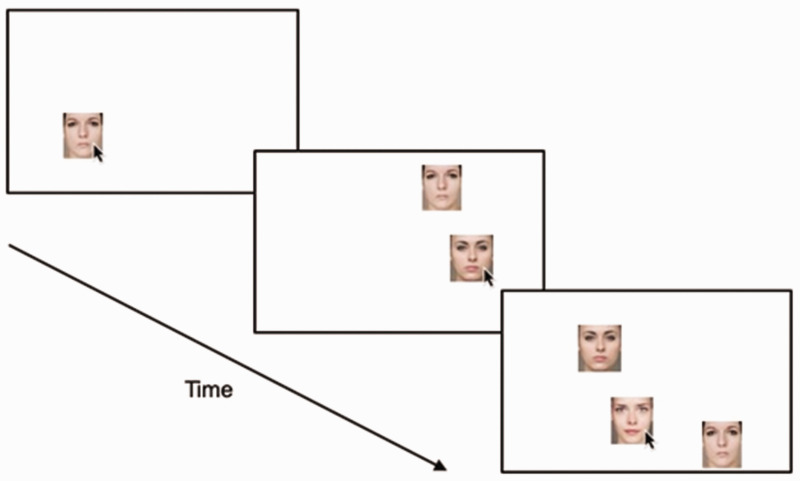
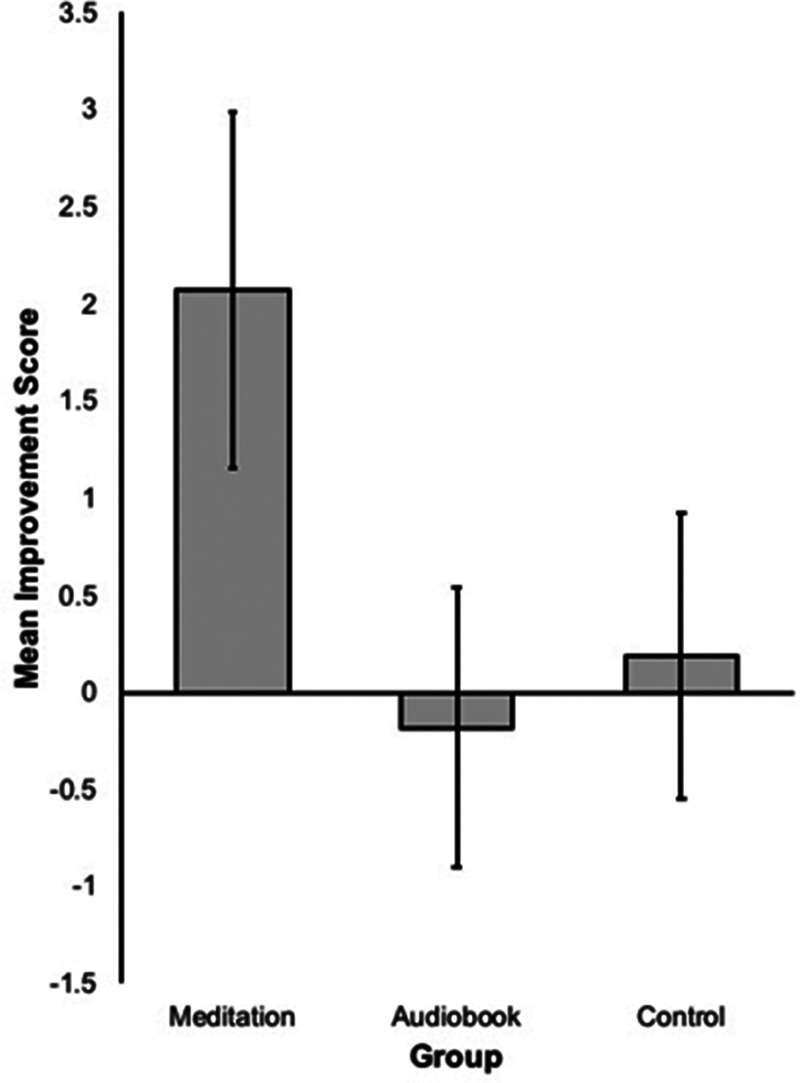
Research into the effects of mindfulness meditation on behavioral outcomes has received much interest in recent years, with benefits for both short-term memory and working memory identified. However, little research has considered the potential effects of brief mindfulness meditation interventions or the nature of any benefits for visual short-term memory. Here, we investigate the effect of a single, 8-minute mindfulness meditation intervention, presented via audio recording, on a short-term memory task for faces. In comparison with two control groups (listening to an audiobook or simply passing the time however they wished), our mindfulness meditation participants showed greater increases in visual short-term memory capacity from pre- to post-intervention. In addition, only mindfulness meditation resulted in significant increases in performance. In conclusion, a single, brief mindfulness meditation intervention led to improvements in visual short-term memory capacity for faces, with important implications regarding the minimum intervention necessary to produce measurable changes in short-term memory tasks.
Overview
The claims and statistics of this paper haven’t been checked yet.
Free: it reads the open-access text and checks the first 5 claims that cite a source we can check. Create a free account to check every claim.
Integrity signals
Registry
Cites
Statistics
Figures
Verification
Claims the paper makes
The claims and statistics of this paper haven’t been checked yet.
Free: it reads the open-access text and checks the first 5 claims that cite a source we can check. Create a free account to check every claim.
Claims other papers make about this one
Each is checked against this paper’s own text: does it say what the citing paper says it does?
The cited source says what the claim attributes to it.
In the citing paper
“In addition, the practice of mindfulness has been shown to improve visual short-term memory 49 and improve cognitive flexibility.50”
From Nursing Implications of Mindfulness-Informed Interventions for Stroke Survivors and Their Families. (2022) · cites this paper as [49]
Self-check
Percentages, sums and reported differences re-computed from the paper’s own numbers.
The self-check needs the paper’s full text.
Citations
Cites
The benefits of being present: Mindfulness and its role in psychological well-being
Brown, K. W., & Ryan, R. M. (2003) · Journal of Personality and Social Psychology · doi:10.1037/0022-3514.84.4.822 · Cited by 13,448
Using Self-Report Assessment Methods to Explore Facets of Mindfulness
Baer, R. A., Smith, G. T., Hopkins, J., Krietemeyer, J., & Toney, L. (2006) · Assessment · doi:10.1177/1073191105283504 · Cited by 7,511 · cited 3×
“However, since such relationships are far from perfect (Baer et al., 2006) and both measures remain popular, we decided to include both questionnaires in the current study.”
BackgroundMethodInfluentialAnxiety and cognitive performance: Attentional control theory
Eysenck, M. W., Derakshan, N., Santos, R., & Calvo, M. G. (2007) · Emotion · doi:10.1037/1528-3542.7.2.336 · Cited by 5,289 · cited 1×
“For instance, Eysenck et al. (2007) suggested that the attentional control aspect of the central executive is impaired by anxiety.”
BackgroundEffects of mindfulness on psychological health: A review of empirical studies
Keng, S.-L., Smoski, M. J., & Robins, C. J. (2011) · Clinical Psychology Review · doi:10.1016/j.cpr.2011.04.006 · Cited by 2,687 · cited 1×
“One promising avenue for improvement has been the introduction of mindfulness meditation (MM), gaining popularity in recent years and triggering substantial research (Keng et al., 2011).”
BackgroundAttention and memory: an integrated framework
(1995) · Choice Reviews Online · doi:10.5860/choice.33-2415 · Cited by 1,656
A controlled-attention view of working-memory capacity.
Kane, M. J., Bleckley, M. K., Conway, A. R. A., & Engle, R. W. (2001) · Journal of Experimental Psychology: General · doi:10.1037/0096-3445.130.2.169 · Cited by 1,414 · cited 1×
“…was effective is an important result, building upon earlier research showing that MM sessions as brief as 10 minutes can improve attentional control and reduce psychological stress (Norris et al., 2018), two aspects considered important in WM performance (Kane et al., 2001; Schoofs et al., 2008).”
ResultMindfulness meditation improves cognition: evidence of brief mental training
Zeidan, F., Johnson, S. K., Diamond, B. J., David, Z., & Goolkasian, P. (2010) · Consciousness and Cognition · doi:10.1016/j.concog.2010.03.014 · Cited by 1,363 · cited 1×
“Indeed, several studies have recently demonstrated similar improvements on various measures of WM, including the adaptive n-back task and operation span, although no improvements in STM (e.g., forward digit span) were found (e.g., Mrazek et al., 2013; Zeidan et al., 2010).”
BackgroundChiesa, A., Calati, R., & Serretti, A. (2011) · Clinical Psychology Review · doi:10.1016/j.cpr.2010.11.003 · Cited by 1,295 · cited 2×
“In terms of implementation, there is a clear demand for research surrounding the effectiveness of MM in even shorter sessions, such as a single sitting (Chiesa et al., 2011).”
BackgroundMethodTraining of Working Memory in Children With ADHD
Klingberg, T., Forssberg, H., & Westerberg, H. (2002) · Journal of Clinical and Experimental Neuropsychology · doi:10.1076/jcen.24.6.781.8395 · Cited by 1,225 · cited 1×
“Specific courses designed to improve WM have been implemented using different techniques and with varying levels of success (Klingberg et al., 2002; for a review, see Morrison & Chein, 2011).”
MethodMrazek, M. D., Franklin, M. S., Phillips, D. T., Baird, B., & Schooler, J. W. (2013) · Psychological Science · doi:10.1177/0956797612459659 · Cited by 1,063 · cited 1×
“Indeed, several studies have recently demonstrated similar improvements on various measures of WM, including the adaptive n-back task and operation span, although no improvements in STM (e.g., forward digit span) were found (e.g., Mrazek et al., 2013; Zeidan et al., 2010).”
Background
Research works printed but not linked: 3
- Delis D. C. Kramer J. H. Kaplan E. Ober B. A. (1987). California verbal learning test: Adult version manual. The Psychological Corporation.
- Wechsler D. (1997). Wechsler adult intelligence scale: Administration and scoring manual (3rd ed.). Oxford University Press.
- Williams M. Penman D. (2011). Mindfulness: An eight-week plan for finding peace in a frantic world (Track 1). Piatkus.
Cited by
Nursing Implications of Mindfulness-Informed Interventions for Stroke Survivors and Their Families.
Saban, K. L., Tell, D., & De La Pena, P. (2022) · Stroke · doi:10.1161/strokeaha.122.038457 · Cited by 22
Marson, F., Fano, A. D., PELLEGRINO, M. A., Pesce, C., Glicksohn, J., & Ben‐Soussan, T. D. (2021) · Children · doi:10.3390/children8070583 · Cited by 19
Rebecchi, K., & Hagège, H. (2022) · Frontiers in Education · doi:10.3389/feduc.2022.774685 · Cited by 16
“Indeed, it may also improve visual (Youngs et al., 2021) and verbal memory (Lueke and Lueke, 2019).”
BackgroundBishop, C., Brown, T., & Yu, M. (2022) · British Journal of Occupational Therapy · doi:10.1177/03080226221128184 · Cited by 12
Meditation in Qualitative Research for Bracketing and Beyond
Grajzel, K. (2025) · International Journal of Qualitative Methods · doi:10.1177/16094069241312826 · Cited by 31
“Cognitive effects of meditation include improved memory and increased cognitive ef fi ciency (Deepeshwar et al., 2015; Horowitz, 2010; Khalsa, 2015; Kozasa et al., 2012; Youngs et al., 2021).”
Association of PPP1R1B polymorphisms with working memory in healthy Han Chinese adults
Ma, H., Qiu, R., Zhang, W., Chen, X., Zhang, L., & Wang, M. (2022) · Frontiers in Neuroscience · doi:10.3389/fnins.2022.989046 · Cited by 10
“, 2020), mindfulness (Li et al., 2021; Youngs et al., 2021), fluid intelligence (Brydges et al.”
BackgroundMindfulness and time perception: A systematic integrative review
Morin, A., & Grondin, S. (2024) · Neuroscience & Biobehavioral Reviews · doi:10.1016/j.neubiorev.2024.105657 · Cited by 12
Giannou, K., Frowd, C. D., Taylor, J. R., & Lander, K. (2021) · Applied Cognitive Psychology · doi:10.1002/acp.3829 · Cited by 8
Giannou, K., Lander, K., & Taylor, J. R. (2022) · Psychological Reports · doi:10.1177/00332941211061698 · Cited by 7
“…has reported brief mindfulness-based practices to lead to better memory recall in eyewitness processes (Giannou et al., 2021; Hammond et al., 2006; Wagstaff et al., 2004) and significant increases in short-term memory capacity for faces, measured preand post-intervention (Youngs et al., 2020).”
BackgroundJong, F. J. X., Ng, A. L. O., Phang, C. K., Omran, S., & Teoh, S. L. (2025) · Applied Cognitive Psychology · doi:10.1002/acp.70056 · Cited by 9
Ren, Y., Wu, B., Ge, C., Shi, L., Zhang, C., Zhu, M., Zhao, D., & Wang, L. (2025) · Age and Ageing · doi:10.1093/ageing/afaf069 · Cited by 5
“Compared to the wait-list control group, the M-bCCDT had a positive impact on improving memory function and psychomotor speed, with gains sustained at 20 weeks, consistent with prior findings on MBIs [37].”
Rajesh, P. G., Parvathy, P., Meenu, K. S., Krishnan, S., Lekshmi, K., Sushama, S., Mohanan, N., Gomathy, S. B., & Menon, R. N. (2024) · Neurology India · doi:10.4103/neurol-india.neurol-india-d-23-00513 · Cited by 3
Eydi-Baygi, M., Aflakseir, A., Imani, M., Goodarzi, M. A., & Harirchian, M. H. (2022) · PubMed Central · doi:10.22088/cjim.13.3.607 · Cited by 6
“(64), Brunoni, Vanderhasselt (65), Kedzior et al.”
Hinkle, J. L., & Miller, E. (2023) · Stroke · doi:10.1161/strokeaha.123.042307 · Cited by 2
Mindfulness and meditation: Promoting emotional and cognitive health
Sirimanne, N., Dahiya, N., Papazian, G., Nazeer, N., Tasmiya, & Elemam, B. (2025) · Progress in brain research · doi:10.1016/bs.pbr.2025.08.015 · Cited by 2
Wang, M., & Guo, Y. (2025) · Consciousness and Cognition · doi:10.1016/j.concog.2025.103975 · Cited by 1
Mindful but forgetful: The negative effect of trait mindfulness on memories of immoral behavior
Reynolds, S. J., Eliseo, M. S., Watkins, T., & Mariam, M. (2023) · Business and Society Review · doi:10.1111/basr.12328 · Cited by 1
Effect of Meditation on Neuropsychological Profile of Prisoners
Maity, K., Majumdar, V., Lal, P., Patra, S., Avti, P., & Kumar, K. (2024) · Springer eBooks · doi:10.1007/978-981-97-2851-0_12 · Cited by 1
ZHANG, S., & Xuebing, L. I. (2022) · Advances in Psychological Science · doi:10.3724/sp.j.1042.2022.02053 · Cited by 2
“…Brunelin, et al., 2020; Haller, Senner, et al., 2020)、情绪匹配 和标记任务等测量患者的社会认知能力。结果表明,tACS 能够显著提高患者的注意力、语 言沟通能力等各种认知功能。 以往研究发现,通过各种认知训练提高患者的注意、记忆、问题处理等认知能力,不仅 能够直接提升目标能力,也可以提高其他关联能力,进而整体上缓解患者的临床症状。例如, 快感缺乏是精神分裂症的典型阴性症状,Li 等人发现,工作记忆训练不仅可以提高工作记 忆表现,也能改善快感加工过程,提高对奖赏的敏感性(Li et al., 2016);以保持注意为主要…”
Luo, H. (2022) · Proceedings of the 2022 International Conference on Science Education and Art Appreciation (SEAA 2022) · doi:10.2991/978-2-494069-05-3_38 · Cited by 1
Meditation and Its Applications in Mind–Body Problems in Children and Adolescents
Polk, K., & Gokarakonda, S. B. (2023) · Springer eBooks · doi:10.1007/978-3-031-18377-5_31
The effect of a course mindfulness exercises on working memory indexes in adolescents
Behaein, N., Farsi, A., Franz, E. A., & Lipowski, M. (2023) · Shenakht Journal of Psychology and Psychiatry · doi:10.32598/shenakht.10.3.94 · Cited by 1
How Do Dispositional Mindfulness and Statistical Anxiety Affect Student Performance on an Exam?
Diaz, M. (2023) · ISU Red - Research and eData (Illinois State University) · doi:10.30707/etd2023.20231004061827980208.999986
The Mechanism Associated with Stress-Induced Memory Alterations and Improvement Methods
许, 珂. (2023) · Advances in Psychology · doi:10.12677/ap.2023.1312806
The Correlation Between Neuroticism in Big Five Personality Traits with Short-term Memory
Song, K. (2025) · Lecture Notes in Education Psychology and Public Media · doi:10.54254/2753-7048/2024.25003
Sarita, S., Deshmukh, S. G., Varma, A. R., & Varma, R. (2025) · Multidisciplinary Reviews · doi:10.31893/multirev.2026001
Mindfulness training enhances face working memory: evidence from the drift-diffusion model
Kou, H., Luo, W., Li, X., Wu, J., Xiao, Q., & Bi, T. (2025) · npj Science of Learning · doi:10.1038/s41539-025-00389-0 · Cited by 1
“A ,includingvariousformsofperception 7 – 9 , attention 10 – 14 , and memory 15 – 17 .”
Esmaeilnejad, M., Zandi, H. G., Khajavi, D., Parsa, M., & Esmaeilnejad, S. (2026) · Sport Sciences for Health · doi:10.1007/s11332-025-01631-3 · Cited by 1
“Regarding the MSPE group, the findings of this study align with those of previous studies [23, 29, 42, 43].”
Black, A., Dewey, D. P., Bell, T. R., Hatcher, J., Christensen, S., & Barwick, M. (2026) · International Journal of Cognitive Sciences · doi:10.3390/ijcs2020010
Yaemrattanakul, W., Manachamni, K., Ruangrattanapong, J., Supajumroon, W., Intarapakdee, W., Klangkhong, K., Wannasangthong, K., Madhay, N., Kaewkeaw, P., Paphatarinan, K., et al. (2026) · BMC Psychology · doi:10.1186/s40359-026-04923-6
“For example, Youngs et al. [42] found that even a single brief mind-fulness meditation session significantly enhanced visual short-term memory, while Quach et al. [26] showed that a mindfulness meditation intervention significantly improved WM capacity in adolescents compared to a Hatha yoga and…”
Metadata
- Authors
- Youngs, M. A., Lee, S. E., Mireku, M. O., Sharma, D., & Kramer, R. S. S.
- Affiliations
- University of Lincoln (GB)
- University of Kent (GB)
- Corresponding author
- Kramer, Robin S. S.
- Venue
- Psychological Reports
- Publisher
- SAGE Publications
- Published
- 2020-05-25
- Volume
- 124
- Issue
- 4
- Pages
- 1673-1686
- ISSN
- 0033-2941 (ISSN-L)
- 1558-691X
- PMC
- PMC8242403
- OpenAlex
- W3026343419
- Semantic Scholar
- 15773b115f423fa43945e9acd6570132d4ef021e
- Cited by
- 31
- References
- 44
- Citations by year
- 2026: 3 · 2025: 8 · 2024: 3 · 2023: 7 · 2022: 8 · 2021: 2
- FWCI
- 1.70
- Type
- journal article
- Language
- en
- Open access
- hybrid
- doi.org
- Licence
- Locations
- Psychological Reports (publishedVersion, cc-by-nc)
- PubMed Central (publishedVersion, cc-by-nc)
- PubMed (publishedVersion)
- Lincoln Repository (University of Lincoln) (acceptedVersion)
- Kent Academic Repository (University of Kent) (acceptedVersion)
- Figshare (submittedVersion, cc-by)
- Topics
- Social Sciences › Psychology › Clinical Psychology › Mindfulness and Compassion Interventions
- Social Sciences › Psychology › Experimental and Cognitive Psychology › Cognitive Abilities and Testing
- Social Sciences › Psychology › Experimental and Cognitive Psychology › Cognitive Functions and Memory
- Keywords
- mindfulness meditation, visual short-term memory, face recognition (cognition), working memory, memory capacity
- MeSH terms
- Adolescent, Adult, Female, Humans, Male, Memory, Short-Term, Pattern Recognition, Visual, Photic Stimulation, Meditation, Young Adult, Mindfulness
About these checks
Registry, retraction, Cites and statistics results are computed, not judged, with one exception: a printed reference that no index lists is read once by a model before it counts as a citation error. Claims are extracted by a model and kept only when their quote appears verbatim in the text; each cited source is then checked, with a model’s help, for whether it says what the claim relies on. Those verdicts can be wrong — read the claim’s quote and the cited source before relying on one.
Statistics and arithmetic are recomputed, not judged.
Confidence bands are shown only for fields calibrated on our annotated test set. None is calibrated yet, so no band is shown.
What counts as a claim ›How we measure confidence ›How we check this ›
Are you an author, or do you see a problem with this page? Request a review
Data sources
Bibliographic data: Semantic Scholar, OpenAlex, Crossref.
Contains information from the Semantic Scholar Academic Graph Datasets, made available under the ODC Attribution License (ODC-BY 1.0).
Semantic Scholar’s data is described in: Kinney, R., et al. (2023). The Semantic Scholar Open Data Platform. arXiv:2301.10140.
