

The conceptual models and mechanisms of action that underpin advance care planning for cancer patients: A systematic review of randomised controlled trials
Open accessThe DOI matches its Crossref record; 57 of the 57 references it cites were found in a registry or an index.
Abstract
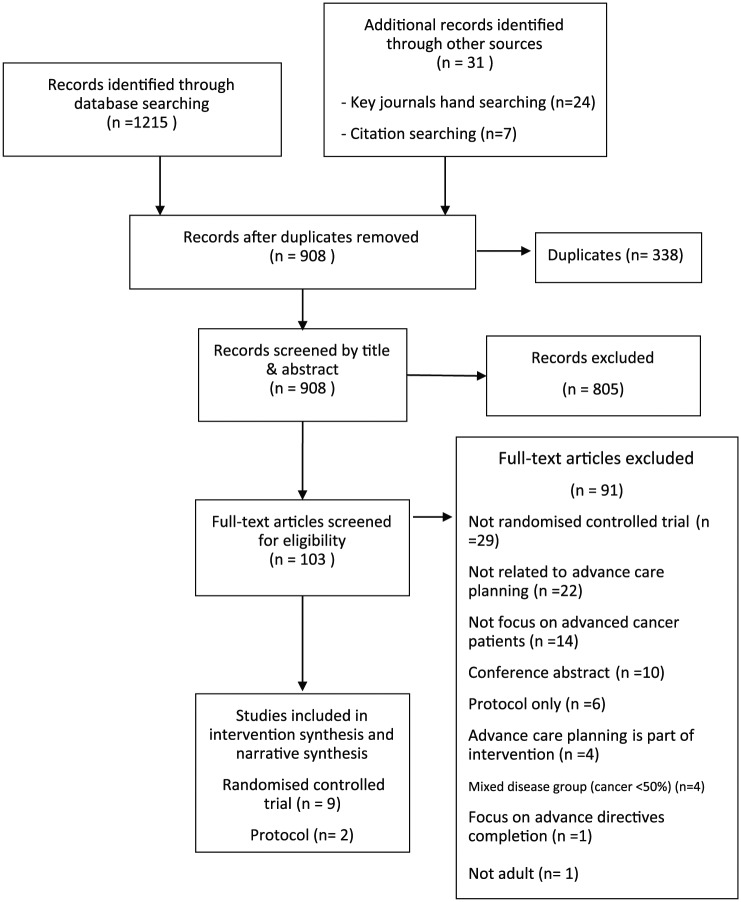
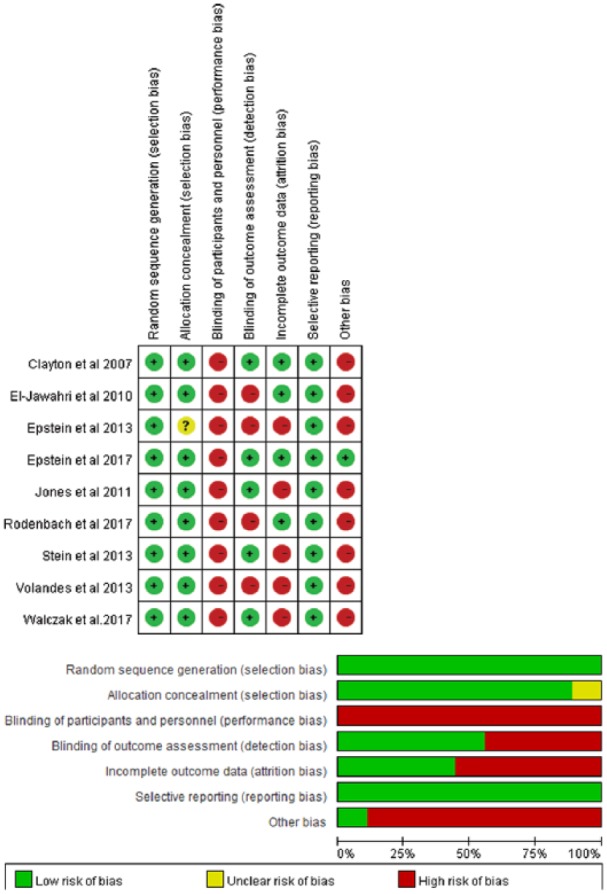
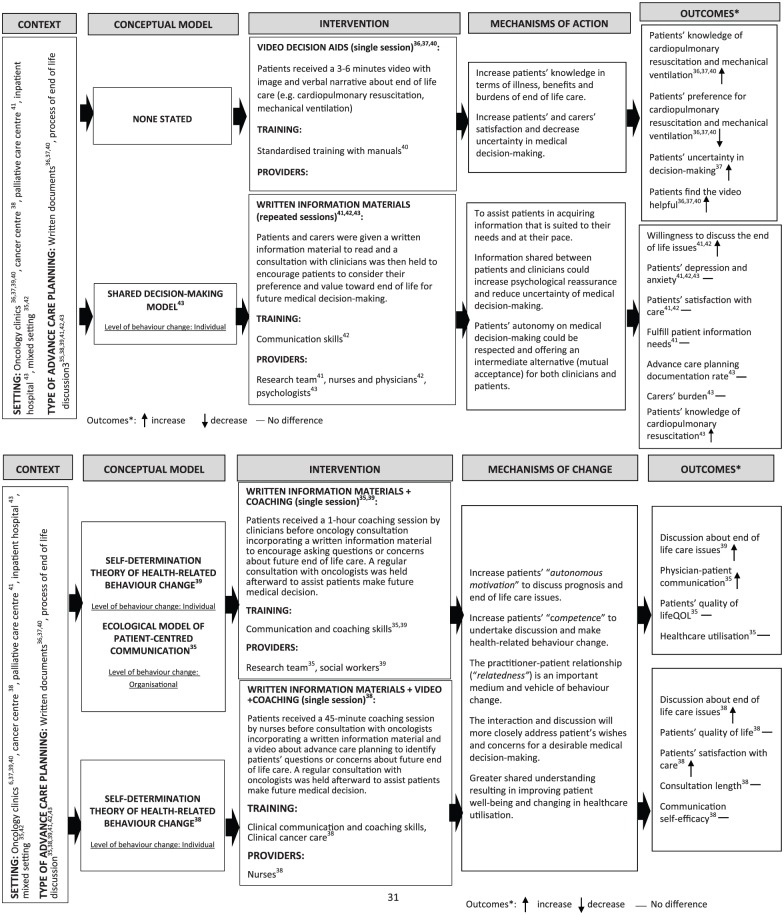
Background: No systematic review has focused on conceptual models underpinning advance care planning for patients with advanced cancer, and the mechanisms of action in relation to the intended outcomes. Aim: To appraise conceptual models and develop a logic model of advance care planning for advanced cancer patients, examining the components, processes, theoretical underpinning, mechanisms of action and linkage with intended outcomes. Design: A systematic review of randomised controlled trials was conducted, and was prospectively registered on PROSPERO. Narrative synthesis was used for data analysis. Data sources: The data sources were MEDLINE, CINAHL, PsycINFO, EMBASE, CENTRAL, PROSPERO, CareSearch, and OpenGrey with reference chaining and hand-searching from inception to 31 March 2017, including all randomised controlled trials with advance care planning for cancer patients in the last 12 months of life. Cochrane quality assessment tool was used for quality appraisal. Results: Nine randomised controlled trials were included, with only four articulated conceptual models. Mechanisms through which advance care planning improved outcomes comprised (1) increasing patients’ knowledge of end-of-life care, (2) strengthening patients’ autonomous motivation, (3) building patients’ competence to undertake end-of-life discussions and (4) enhancing shared decision-making in a trustful relationship. Samples were largely highly educated Caucasian. Conclusion: The use of conceptual models underpinning the development of advance care planning is uncommon. When used, they identify the individual behavioural change. Strengthening patients’ motivation and competence in participating advance care planning discussions are key mechanisms of change. Understanding cultural feasibility of the logic model for different educational levels and ethnicities in non-Western countries should be a research priority.
Overview
The claims and statistics of this paper haven’t been checked yet.
Free: it reads the open-access text and checks the first 5 claims that cite a source we can check. Create a free account to check every claim.
Integrity signals
Registry
Cites
Statistics
Figures
Verification
Claims the paper makes
The claims and statistics of this paper haven’t been checked yet.
Free: it reads the open-access text and checks the first 5 claims that cite a source we can check. Create a free account to check every claim.
Self-check
Percentages, sums and reported differences re-computed from the paper’s own numbers.
The self-check needs the paper’s full text.
Citations
Cites
Ryan, R. M., & Deci, E. L. (2000) · American Psychologist · doi:10.1037//0003-066x.55.1.68 · Cited by 54,599
Liberati, A., Altman, D. G., Tetzlaff, J., Mulrow, C., Gøtzsche, P. C., Ioannidis, J. P. A., Clarke, M., Devereaux, P. J., Kleijnen, J., & Moher, D. (2009) · PLoS Medicine · doi:10.1371/journal.pmed.1000100 · Cited by 28,164
Developing and evaluating complex interventions: the new Medical Research Council guidance
Craig, P., Dieppe, P., Macintyre, S., Michie, S., Nazareth, I., & Petticrew, M. (2008) · BMJ · doi:10.1136/bmj.a1655 · Cited by 10,995
Liberati, A., Altman, D. G., Tetzlaff, J., Mulrow, C., Gøtzsche, P. C., Ioannidis, J. P. A., Clarke, M., Devereaux, P. J., Kleijnen, J., & Moher, D. (2009) · Journal of Clinical Epidemiology · doi:10.1016/j.jclinepi.2009.06.006 · Cited by 10,578
Hoffmann, T. C., Glasziou, P. P., Boutron, I., Milne, R., Perera, R., Moher, D., Altman, D. G., Barbour, V., Macdonald, H., Johnston, M., et al. (2014) · BMJ · doi:10.1136/bmj.g1687 · Cited by 10,548
Process evaluation of complex interventions: Medical Research Council guidance
Moore, G. F., Audrey, S., Barker, M., Bond, L., Bonell, C., Hardeman, W., Moore, L., O'Cathain, A., Tinati, T., Wight, D., et al. (2015) · BMJ · doi:10.1136/bmj.h1258 · Cited by 6,204
Charles, C., Gafni, A., & Whelan, T. (1997) · Social Science & Medicine · doi:10.1016/s0277-9536(96)00221-3 · Cited by 4,137
How does communication heal? Pathways linking clinician–patient communication to health outcomes
Street, R. L., Makoul, G., Arora, N. K., & Epstein, R. M. (2009) · Patient Education and Counseling · doi:10.1016/j.pec.2008.11.015 · Cited by 2,465
Detering, K. M., Hancock, A. D., Reade, M. C., & Silvester, W. (2010) · BMJ · doi:10.1136/bmj.c1345 · Cited by 2,332 · cited 1×
“Mechanisms through which advance care planning improved outcomes comprised (1) increasing patients’ knowledge of end-of-life care, (2) strengthening patients’ autonomous motivation, (3) building patients’ competence to undertake end-of-life discussions and (4) enhancing shared decision-making in a trustful relationshi…”
BackgroundSudore, R. L., Lum, H. D., You, J. J., Hanson, L. C., Meier, D. E., Pantilat, S. Z., Matlock, D. D., Rietjens, J. A. C., Korfage, I. J., Ritchie, C. S., et al. (2017) · Journal of Pain and Symptom Management · doi:10.1016/j.jpainsymman.2016.12.331 · Cited by 1,726
Research works printed but not linked: 13
- Ke LS Wang SP. The effectiveness of advance care planning for hospitalized elderly patients: a systematic review. Taiwan J Hospice Palliat Care 2012; 17: 48– 61.
- Henry C Seymour J Ryder S. Advance care planning: a guide for health and social care staff. Leicester: The National Council of Palliative Care, 2008.
- Higgins J Green S. Cochrane handbook for systematic reviews of intervention version 5.1.0. London: The Cochrane Collaboration, 2011.
- Popay J Roberts H Sowden A et al Guidance on the conduct of narrative synthesis in systematic reviews, version 1. 2006, pp. 1– 92.
- Lin CP Evans CJ Koffman J et al The conceptual models that underpin advance care planning for advanced cancer patients and their mechanisms of action: a systematic review of randomised controlled trials. PROSPERO 2017: CRD42017067628, http://www.crd.york.ac.uk/PROSPERO/display_record.php?ID=CRD42017067628 PMC6291906 30362897
- O’Connor D Green S Higgins JP. Defining the review question and developing criteria for including studies. In: Higgins JP Green S (eds) Cochrane handbook for systematic reviews of interventions version 5.1.0. London: The Cochrane Collaboration, 2011, pp. 81– 94.
- Endnote. EndNote X8 for Windows. Philadelphia, PA: Clarivate Analytics, 2016.
- Cochrane Consumers Communication Review Group. Data extraction template for included studies Australia. London: The Cochrane Collaboration, 2016.
- Review Manager. Review manager (RevMan) version 5.3. Copenhagen: The Nordic Cochrane Centre and The Cochrane Collaboration, 2014.
- Gillick MR Volandes AE. The psychology of using and creating video decision aids for advance care planning. In: Lynch TE (ed.) Psychology of decision making in medicine and health care. New York: Nova Science Publishers, 2007, pp. 193– 206.
- Ryan RM Patrick H Deci EL et al Facilitating health behaviour change and its maintenance: interventions based on Self-Determination Theory. Euro Health Psycol 2008; 10: 2– 5.
- Lord Chancellor. Mental Capacity Act 2005: code of practice. London: TSO, 2007.
- Laws and Regulations Databases of The Republic of China. Patient autonomy act. Taipei, Taiwan: Ministry of Health and Welfare, 2016.
Cited by
Korfage, I. J., Carreras, G., Christensen, C. A., Billekens, P., Bramley, L., Briggs, L. A., Bulli, F., Caswell, G., Červ, B., van Delden, J. J. M., et al. (2020) · PLoS Medicine · doi:10.1371/journal.pmed.1003422 · Cited by 181
“We updated a 2019 systematic review of randomised controlled trials (RCTs) about ACP for patients with advanced cancer [10] and identified 6 RCTs of complex ACP interventions for advanced cancer patients: 1 conducted in the UK (n = 77) [11], 2 in Australia (n = 120–208) [12,13], and 3 in the US (n = 155–278) [14–16].”
MethodLin, C., Evans, C., Koffman, J., Sheu, S., Hsu, S.-H., & Harding, R. (2019) · Palliative Medicine · doi:10.1177/0269216319866641 · Cited by 79
“patients weighing up perceived benefits to others as more important than benefits for themselves; and (3) ‘no opportunity to choose”
BackgroundMethodSelf-citationMcCauley, R., McQuillan, R., Ryan, K., & Foley, G. (2021) · Palliative Medicine · doi:10.1177/0269216321999962 · Cited by 91
Palliative Care in the Greater China Region: A Systematic Review of Needs, Models, and Outcomes
Chung, H., Harding, R., & Guo, P. (2020) · Journal of Pain and Symptom Management · doi:10.1016/j.jpainsymman.2020.08.040 · Cited by 64
Self-citationBradshaw, A., Dunleavy, L., Walshe, C., Preston, N. J., Cripps, R. L., Hocaoğlu, M., Bajwah, S., Maddocks, M. M., Oluyase, A. O., Sleeman, K. E., et al. (2021) · Palliative Medicine · doi:10.1177/02692163211017387 · Cited by 54
Self-citationFahner, J. C., Rietjens, J. A. C., van der Heide, A., Milota, M., van Delden, J. J. M., & Kars, M. C. (2020) · Acta Paediatrica · doi:10.1111/apa.15370 · Cited by 51
Lin, C., Cheng, S., & Chen, P. (2018) · Geriatrics · doi:10.3390/geriatrics3030043 · Cited by 48
Self-citationAdvance Care Planning (ACP) vs. Advance Serious Illness Preparations and Planning (ASIPP)
Heyland, D. K. (2020) · Healthcare · doi:10.3390/healthcare8030218 · Cited by 48
Jia, Z., Leiter, R. E., Yeh, I. M., Tulsky, J. A., & Sanders, J. J. (2020) · Journal of Palliative Medicine · doi:10.1089/jpm.2020.0330 · Cited by 42
“16,19,24,25 Finally, we hand searched the Cochrane Library, York Center (PROSPERO), and reference lists of included studies to be comprehensive.”
Lin, C., Evans, C., Koffman, J., Chen, P., Hou, M., & Harding, R. (2020) · Palliative Medicine · doi:10.1177/0269216320902666 · Cited by 40
“Six areas for further refinement of the advance care planning intervention were suggested and included (1) early initiation of end-of-life care discussion in the cancer trajectory; (2) enabling patients to make informed decisions; (3) documentation to guide future care and reduce patient and family distress; (4) simpl…”
BackgroundSelf-citationA realist review of advance care planning for people with multiple sclerosis and their families
Cottrell, L., Economos, G. P. S., Evans, C., Silber, E., Burman, R., Nicholas, R. S., Farsides, B., Ashford, S. A., & Koffman, J. (2020) · PLoS ONE · doi:10.1371/journal.pone.0240815 · Cited by 44
Self-citationAdvance Care Planning in Neurodegenerative Disorders: A Scoping Review
Giordano, A., Panfilis, L. D., Perin, M., Servidio, L., Cascioli, M., Grasso, M. G., Lugaresi, A., Pucci, E., Veronese, S., & Solari, A. (2022) · International Journal of Environmental Research and Public Health · doi:10.3390/ijerph19020803 · Cited by 42
“Lastly, while a conceptual scheme for ACP in cancer patients has been developed [23], there is no single theoretical understanding of the contexts or circumstances in which ACP is relevant to people with neurodegenerative disorders, due to the huge differences in the characteristics of the disorders.”
BackgroundJia, Z., Stokes, S. C., Pan, S., Leiter, R. E., Lum, H. D., & Pan, C. X. (2021) · American Journal of Hospice and Palliative Medicine® · doi:10.1177/1049909121989986 · Cited by 39
“Among interventions aimed at promoting patient-centered, goal-concordant EOL care, advance care planning (ACP) stands out due to its large evidence base.(9-15) ACP is defined as “a process that supports adults at any age or stage of health in understanding and sharing their personal values, life goals, and preferences…”
BackgroundTishelman, C., Eneslätt, M., Menkin, E. S., & Lindqvist, O. (2019) · Death Studies · doi:10.1080/07481187.2019.1701145 · Cited by 46
Jia, Z., Yeh, I. M., Lee, C. H., Yeung, A., Tulsky, J. A., & Leiter, R. E. (2022) · Journal of Palliative Medicine · doi:10.1089/jpm.2021.0404 · Cited by 38
“5,6 Recent efforts to culturally adapt ACP have largely focused on black and Latinx communities, 7–10 but the preferences for and effectiveness of ACP among ethnically Chinese adults, the largest and fastest growing Asian American subpopulation, 11–13 remain underinvestigated.”
Ellis-Smith, C. I., Tunnard, I., Dawkins, M., Gao, W., Higginson, I. J., Evans, C., SPACE, O. B. O., Ellis-Smith, ̆, Y., Gao, et al. (2021) · BMC Palliative Care · doi:10.1186/s12904-021-00845-9 · Cited by 39
Self-citationCrooks, J., Rizk, N., Greene, C., Hopwood, G., Smith, O., Seddon, K., & Hudson, B. F. (2025) · Palliative Medicine · doi:10.1177/02692163251344428 · Cited by 33
Guccione, L., Fullerton, S., Gough, K., Hyatt, A., Tew, M., Aranda, S. K., & Francis, J. (2023) · Frontiers in Oncology · doi:10.3389/fonc.2023.1040589 · Cited by 28
Mosher, C. E., Beck-Coon, K. A., Wu, W., Lewson, A. B., Stutz, P. V., Brown, L. F., Tang, Q., Helft, P. R., Levoy, K., Hickman, S. E., et al. (2024) · BMC Palliative Care · doi:10.1186/s12904-024-01564-7 · Cited by 23
“Rather, they have primarily focused on advance care planning education and traditional communication skills training [27–29], typically producing limited increases in advance care planning discussions and documentation [27].”
BackgroundCOVID-19—Impact on DNR Orders in the Largest Cancer Center in Jordan
Shamieh, O. M., Richardson, K., Abdel‐Razeq, H., Harding, R., Sullivan, R. J., & Mansour, A. H. (2020) · Journal of Pain and Symptom Management · doi:10.1016/j.jpainsymman.2020.04.023 · Cited by 21
“These procedures have been developed to ensure that decision making reflects cultural preferences and practices.(9) Importantly, this approach means that the majority of patients and families receiving palliative care at KHCC understand and agree with reaching a DNR decision.”
Self-citationTsuruwaka, M., Ikeguchi, Y., & Nakamura, M. (2020) · Asian Bioethics Review · doi:10.1007/s41649-020-00135-1 · Cited by 18
Buiar, P. G., & Goldim, J. R. (2019) · ecancermedicalscience · doi:10.3332/ecancer.2019.974 · Cited by 31
“One way to overcome these barriers related to scenario projection is the use of complementary instruction mechanisms like educational videos, something that gives more power to the patient in the decision process [43].”
BackgroundCaetano, P., Querido, A., & Laranjeira, C. (2024) · Healthcare · doi:10.3390/healthcare12191915 · Cited by 19
“However, our participants expressed a strong desire to actively participate in decision-making and provide support to patients by advocating for them and respecting their autonomy [62–64].”
BackgroundNurse manager intentional rounding and outcomes: Findings of a systematic review
Bayram, A., Özsaban, A., Longhini, J., & Palese, A. (2022) · Journal of Advanced Nursing · doi:10.1111/jan.15307 · Cited by 22
Advance care planning in oncology: a scoping review and some recommendations
Libert, Y., Choucroun, L., Razavi, D., & Merckaert, I. (2023) · Current Opinion in Oncology · doi:10.1097/cco.0000000000000951 · Cited by 14
“In addition to interventions targeting the cancer care setting [54] and the involvement of patients’ relatives in ACP [8 && ], interventions may seek to lessen this discomfort.”
BackgroundLin, M.-H., Hsu, J.-L., Chen, T., & Hwang, S. (2020) · Journal of the Chinese Medical Association · doi:10.1097/jcma.0000000000000459 · Cited by 12
Howard, M., Elston, D., Borhan, S., Hafid, S., Arora, N., Forbes, R. E. F., Bernard, C., & Heyland, D. K. (2021) · BMJ Supportive & Palliative Care · doi:10.1136/bmjspcare-2021-003040 · Cited by 15
“38 Models of adapting ACP tools for other populations exist 39 and should be considered in the future.”
Carrasco, A. J. P., Koch, M., Machacek, T., Genz, A., Herzog, S., Knorrenschild, J. R., von Blanckenburg, P., & Seifart, C. (2021) · Palliative Medicine · doi:10.1177/02692163211043209 · Cited by 15
Caregiver preparedness for death in dementia: an evaluation of existing tools
Durepos, P., Ploeg, J., Akhtar‐Danesh, N., Sussman, T., Orr, E., & Kaasalainen, S. (2019) · Aging & Mental Health · doi:10.1080/13607863.2019.1622074 · Cited by 18
Preferences for end‐of‐life care: A cross‐sectional survey of Chinese frail nursing home residents
Xu, X., Chau, P. H., Cheung, D. S. T., Ho, M., & Lin, C. (2022) · Journal of Clinical Nursing · doi:10.1111/jocn.16483 · Cited by 17
Self-citationCancer Patients’ Satisfaction with In-Home Palliative Care and Its Impact on Disease Symptoms
Valero-Cantero, I., Casals, C., Espinar-Toledo, M., Barón-López, F. J., Martínez-Valero, F. J., & Vázquez‐Sánchez, M. Á. (2023) · Healthcare · doi:10.3390/healthcare11091272 · Cited by 24
“On the other hand, according to prior research in the area of palliative care, advance health care planning between physicians and patients does not increase the latter’s satisfaction with the medical care received [20], nor does it produce differences in treatment, in perceived quality of life, or in physical and men…”
BackgroundMichael, N. G., Georgousopoulou, E. N., Hepworth, G., Melia, A., Tuohy, R., Sulistio, M., & Kissane, D. W. (2022) · BMJ Supportive & Palliative Care · doi:10.1136/bmjspcare-2021-003240 · Cited by 13
Macchi, M. J., Pérez, M., & Alonso, J. P. (2020) · Sexualidad Salud y Sociedad (Rio de Janeiro) · doi:10.1590/1984-6487.sess.2020.35.11.a · Cited by 23
“Como lo ha mostrado revisiones recientes (Lin et al., 2019), estas iniciativas suelen apuntar al cambio de comportamiento a nivel individual (sensibilizar y modificar actitudes los/as profesionales y de las personas en fin de vida), descuidando los factores contextuales que son centrales para…”
BackgroundDyadic advance care planning: systematic review of patient–caregiver interventions and effects
Liu, X., Wang, T., Cheung, D. S. T., Chau, P. H., Ho, M., Han, Y., & Lin, C. (2023) · BMJ Supportive & Palliative Care · doi:10.1136/spcare-2023-004430 · Cited by 11
“61 62 Second , most ACP interventions were conducted via personalised discussions.”
BackgroundSelf-citationGoals of care conversations and telemedicine
Saldivar, R., Tew, W. P., Shahrokni, A., & Nelson, J. E. (2021) · Journal of Geriatric Oncology · doi:10.1016/j.jgo.2021.02.016 · Cited by 11
Pilch, M., Lunt, V. C., May, P., Mockler, D., Thomas, S., & Doyle, F. (2020) · HRB Open Research · doi:10.12688/hrbopenres.13082.2 · Cited by 9
“To date, most approaches to behaviour change have focused on individuals, and although this level is crucial when highly sensitive ACP conversations are considered, approaches that ignore contextual influences are open to criticism (Lin et al. , 2019).”
Early palliative care integration trial: consultation content and interaction dynamics
Kleiner, N., Zambrano, S. C., Eychmüller, S., & Zwahlen, S. (2021) · BMJ Supportive & Palliative Care · doi:10.1136/bmjspcare-2020-002419 · Cited by 9
Rozman, L. M., Campolina, A. G., Patiño, E. G., & de Soárez, P. C. (2021) · Journal of Palliative Medicine · doi:10.1089/jpm.2020.0600 · Cited by 7
“25,26 32 Thus, oncologists and PC specialists must work toward finding the optimal time to discuss end-of-lifecare options for each patient to achieve high-quality ACP.”
Bradshaw, A., Dunleavy, L., Walshe, C., Preston, N. J., Cripps, R., Hocaoğlu, M., Bajwah, S., Maddocks, M. M., Oluyase, A. O., Sleeman, K. E., et al. (2020) · medRxiv · doi:10.1101/2020.10.28.20200725 · Cited by 7
Self-citationLibert, Y., Langhendries, C., Choucroun, L., & Merckaert, I. (2024) · Current Opinion in Oncology · doi:10.1097/cco.0000000000001045 · Cited by 7
Emotional Self-Care: Exploring the Influencing Factors Among Individuals With Cancer
Sebastian, A. T., Rajkumar, E., Romate, J., Daniel, M., George, A. J., Greeshma, R., & James, T. (2022) · Frontiers in Psychology · doi:10.3389/fpsyg.2022.898345 · Cited by 12
“Modeling someone who actively engages in emotional self-care activities encourages others to engage in such health-promoting behaviors on their own, allowing them to care for themselves both physically and emotionally (Lin et al., 2019).”
BackgroundZhou, Y., Wang, A., Ellis-Smith, C. I., Braybrook, D. E., Feng, H., & Harding, R. (2025) · Health Expectations · doi:10.1111/hex.70291 · Cited by 6
“Several reviews have highlighted this fact and that cultural differences play a crucial role in its successful implementation [15 – 17].”
Self-citationStevens, J., Deliëns, L., Pype, P. F., Vleminck, A. D., & Pardon, K. (2021) · BMJ Supportive & Palliative Care · doi:10.1136/bmjspcare-2021-003310 · Cited by 5
Howard, M., Slaven, M., Bernard, C., Borhan, S., Elston, D., Arora, N., Tan, A., & Heyland, D. K. (2019) · BMJ Open · doi:10.1136/bmjopen-2018-027897 · Cited by 5
“The decision aid intervention has not been translated to languages other than English or adapted for varying cultures, therefore, study participants may represent the typical Caucasian English speaking more educated population as found in many previous studies of ACP.47 Successful models of adapting ACP tools for othe…”
ResultInfluentialLin, C., Chiang, C.-H., & Sheu, S. (2023) · Palliative & Supportive Care · doi:10.1017/s1478951523001256 · Cited by 5
“Furthermore,moststudiesstillneedtoreportthedetailsofthe decision-makingprocessinACPdelivery,andtherelevantempir-icalevidenceonolderpatientswithcancerislimitedtoAsian culture(Linetal.2019b).”
Self-citationBuilding evidence and capacity in global health palliative care
Harding, R. (2022) · ecancermedicalscience · doi:10.3332/ecancer.2022.1378 · Cited by 5
“The evidence underpinning many core interventions in palliative care may be rooted in very Western contexts and conceptual models, for example, a logic model of the mechanisms and concepts underpinning ACP found an almost exclusively Western evidence base [39].”
BackgroundSelf-citationMcFarlane, P. G., Sleeman, K. E., Bunce, C., Koffman, J., Orlović, M., Rosling, J., Bearne, A., Powell, M., Riley, J., & Droney, J. (2023) · Journal of Patient Experience · doi:10.1177/23743735231188826 · Cited by 4
“Records contain individuals’ clinical and demographic information, as well as their wishes and preferences for care, including listing preferences for the setting of their care and place of death.(21) Coordinate My Care is integrated with the National Health Service central IT infrastructure “Spine” which allows healt…”
BackgroundSelf-citationDao‐Tran, T., Yeoh, L., Comans, T. A., Karusoo‐Musumeci, A., Auret, K. A., Sinclair, R. G., Hilgeman, M. M., Clayton, J. M., Halcomb, E., Campbell, E., et al. (2024) · Journal of Clinical Nursing · doi:10.1111/jocn.17458 · Cited by 4
“As uncertainty can increase individuals' anxiety levels (Cheng et al. 2022), healthcare providers should provide clear health information, likely prognosis and treatment options to reduce anxiety for their patients (Lin et al. 2019).”
Advance Care Planning and palliative care for patients with advanced cancer in Uganda
Guma, S., Namisango, E., & Ddungu, H. (2023) · Zeitschrift für Evidenz Fortbildung und Qualität im Gesundheitswesen · doi:10.1016/j.zefq.2023.07.002 · Cited by 6
End‐of‐life conversations for the older person: A concept analysis
Yip, W. S., Chung, P. M., & Christensen, M. (2024) · Scandinavian Journal of Caring Sciences · doi:10.1111/scs.13263 · Cited by 3
Collaborative advance care planning in palliative care: a randomised controlled trial
Seifart, C., Koch, M., Herzog, S., Leppin, N., Nagelschmidt, K., Knorrenschild, J. R., Timmesfeld, N., Denz, R., Seifart, U., Rief, W., et al. (2024) · BMJ Supportive & Palliative Care · doi:10.1136/spcare-2023-004175 · Cited by 5
Cancer advance care planning: development of a screening tool
Berlin, P., Göggelmann, L., Herzog, S., Carrasco, A. J. P., Hauck, J., Timmesfeld, N., Kruse, J., Rief, W., Knorrenschild, J. R., von Blanckenburg, P., et al. (2023) · BMJ Supportive & Palliative Care · doi:10.1136/spcare-2022-003965 · Cited by 4
Li, Y., Xiong, X., Wang, H., Chen, L., Wu, R., Liu, S., Chen, H., Zhang, M., & Xiang, Q. (2025) · Worldviews on Evidence-Based Nursing · doi:10.1111/wvn.70070 · Cited by 4
Tan, M., Tang, S., Huang, C., Xiao, J., & Ding, J. (2024) · PubMed Central · doi:10.11817/j.issn.1672-7347.2024.230291 · Cited by 3
Uzun, S. (2024) · Journal of Hospice and Palliative Nursing · doi:10.1097/njh.0000000000001053 · Cited by 3
Ogbenna, A. A., Caputo, M., Onyeka, T. C., Ohanete, D. O., Johnson, L. S., Sam-Agudu, N. A., Obiezu‐Umeh, C., Akodu, B. A., Drane, D. L., Evans, C. T., et al. (2025) · PLOS Global Public Health · doi:10.1371/journal.pgph.0004638 · Cited by 3
Self-citationChu, S. T.-W., Chan, H. Y. L., Chen, T. O., Kwok, A. O. L., Gill, H., Tsang, K.-W., Tse, D. M. W., Yap, D. Y. H., Yip, T. P.-S., Yuen, S. K., et al. (2026) · Palliative Medicine · doi:10.1177/02692163251394892 · Cited by 2
Lin, C.-P., Huang, C., Peng, J.-K., & Chang, H.-T. (2026) · Nursing Inquiry · doi:10.1111/nin.70109 · Cited by 1
“As such, a one‐size‐fits‐all model, predominantly based on Western paradigms, may fail to resonate with multicultural and non‐Western populations (Lin et al. 2019).”
Self-citationAdvance care planning in the Asia Pacific region: comparative implementation study
Ng, R. H. L., Mori, M., Lin, C., Sinclair, C., Giam, T., Chee, J. H., Clayton, J. M., Suh, S., Martina, D., Takenouchi, S., et al. (2026) · BMJ Supportive & Palliative Care · doi:10.1136/spcare-2026-006110 · Cited by 1
Self-citationAdvance Care Planning in Healthcare Systems: A Literature Review and Call to Action
(2019) · ARC Journal of Nursing and Healthcare · doi:10.20431/2455-4324.0503005 · Cited by 1
Obama, K., Fujimori, M., Okamura, M., Kadowaki, M., Ueno, T., Boku, N., Mori, M., Akechi, T., Yamaguchi, T., Oyamada, S., et al. (2022) · medRxiv · doi:10.1101/2022.11.15.22281288 · Cited by 1
Lucas, A. H., & Dimmer, A. (2021) · Journal of the Advanced Practitioner in Oncology · doi:10.6004/jadpro.2021.12.4.3 · Cited by 3
“A proactive ACP intervention led by an AP not only lessens patient and family decisional conflict but also promotes a trusting shared decision-making opportunity where the uniqueness of the patient’s cancer journey can be heard (Lin et al., 2019).”
BackgroundLiu, V. L.-X., Lin, S., & Harding, R. (2021) · Journal of Palliative Medicine · doi:10.1089/jpm.2021.0223
“28 This review aims to appraise the conceptual models and mechanisms of action underpinning end-of-life interventions to improve spiritual well-being.”
Self-citationHeggs, K. (2019) · International Journal of Palliative Nursing · doi:10.12968/ijpn.2019.25.1.47
Gotfrit, J., Leung, M., Marginean, H., Kobewka, D. M., Fergusson, D. A., & Goodwin, R. A. (2023) · European Journal of Cancer Care · doi:10.1155/2023/3119940
Li, S.-Z., Chen, S., Chang, Y., Fang, C., Fujimori, M., & Tang, W. (2024) · Supportive Care in Cancer · doi:10.1007/s00520-024-08815-6 · Cited by 1
“This practice aligns with the findings from some Southeast Asian countries [16–18]; however, it differs from practices in Western countries [19, 20].”
Enhancing Quality of Life for Cancer Patients Through Innovations in Palliative Care
Madhavan, S., Shukla, A., Srinath, G., Bhushan, B., Gupta, A., & Salini, R. (2025) · Health Leadership and Quality of Life · doi:10.56294/hl2025607
Ellis-Smith, C. I., Tunnard, I., Dawkins, M., Gao, W., Higginson, I. J., & Evans, C. (2021) · Figshare · doi:10.6084/m9.figshare.16851039
Self-citationEllis-Smith, C. I., Tunnard, I., Dawkins, M., Gao, W., Higginson, I. J., & Evans, C. (2021) · Figshare · doi:10.6084/m9.figshare.16851042
Self-citationEllis-Smith, C. I., Tunnard, I., Dawkins, M., Gao, W., Higginson, I. J., & Evans, C. (2021) · Figshare · doi:10.6084/m9.figshare.16851045
Self-citationMosher, C. E., Beck‐Coon, K., Wu, W., Lewson, A. B., Stutz, P. V., Brown, L. F., Tang, Q., Helft, P. R., Levoy, K. N., Hickman, S. E., et al. (2024) · Figshare · doi:10.6084/m9.figshare.27129621
Mosher, C. E., Beck‐Coon, K., Wu, W., Lewson, A. B., Stutz, P. V., Brown, L. F., Tang, Q., Helft, P. R., Levoy, K. N., Hickman, S. E., et al. (2024) · Figshare · doi:10.6084/m9.figshare.27129624
Mosher, C. E., Beck‐Coon, K., Wu, W., Lewson, A. B., Stutz, P. V., Brown, L. F., Tang, Q., Helft, P. R., Levoy, K. N., Hickman, S. E., et al. (2024) · Figshare · doi:10.6084/m9.figshare.27129627
Nakazawa, Y., Hamano, J., Miyashita, M., Morita, T., Kizawa, Y., Okumura, Y., Kawagoe, S., Yamamoto, H., Takeuchi, E., Yamazaki, R., et al. (2025) · BMJ Supportive & Palliative Care · doi:10.1136/spcare-2025-005832
Lin, G.-F., Yeh, Y.-L., Shun, S., Yang, C., & Lin, C. (2026) · Palliative Care and Social Practice · doi:10.1177/26323524251408892 · Cited by 1
Self-citationLi, X.-X., Huang, Z.-P., & Quan, K.-J. (2026) · Psycho-Oncologie · doi:10.18282/po5837
Metadata
- Authors
- Lin, C.-P., Evans, C. J., Koffman, J., Armes, J., Murtagh, F. E. M., & Harding, R.
- Affiliations
- King's College London (GB)
- University of Surrey (GB)
- Corresponding author
- Lin, Cheng-Pei
- Venue
- Palliative Medicine
- Publisher
- SAGE Publications
- Published
- 2018-10-26
- Volume
- 33
- Issue
- 1
- Pages
- 5-23
- ISSN
- 0269-2163 (ISSN-L)
- 1477-030X
- PMC
- PMC6291906
- OpenAlex
- W2898307076
- Cited by
- 77
- References
- 57
- Citations by year
- 2026: 5 · 2025: 6 · 2024: 12 · 2023: 9 · 2022: 7 · 2021: 17 · 2020: 13 · 2019: 7 · 2018: 1
- FWCI
- 1.72
- Type
- journal article
- Language
- en
- Open access
- hybrid
- doi.org
- Licence
- cc-by-nc
- journals.sagepub.com/page/policies/text-and-data-mining-license (tdm)
- Locations
- Palliative Medicine (publishedVersion, cc-by-nc)
- Europe PMC (PubMed Central) (publishedVersion, cc-by-nc)
- PubMed Central (publishedVersion, cc-by-nc)
- PubMed (publishedVersion)
- Research Portal (King's College London) (publishedVersion, cc-by-nc)
- Surrey Research Insight Open Access (The University of Surrey) (submittedVersion)
- Repository@Hull (Worktribe) (University of Hull) (submittedVersion, cc-by-nc)
- Funders
- National Institute for Health and Care Research (ICA-SCL-2015-01-001)
- Department of Health and Social Care
- Topics
- Health Sciences › Medicine › Public Health, Environmental and Occupational Health › Palliative Care and End-of-Life Issues
- Health Sciences › Medicine › Public Health, Environmental and Occupational Health › Palliative and Oncologic Care
- Health Sciences › Medicine › Public Health, Environmental and Occupational Health › Ethics and bioethics in healthcare
- Keywords
- advance care planning, advanced cancer, end-of-life care, conceptual model, logic model, mechanisms of change, shared decision-making, patient autonomy, end-of-life discussions, patient knowledge, behavior change
- MeSH terms
- Adult, Aged, Aged, 80 and over, Decision Making, Female, Humans, Male, Middle Aged, Neoplasms, Patient Participation, Terminal Care, Randomized Controlled Trials as Topic, Advance Care Planning
About these checks
Registry, retraction, Cites and statistics results are computed, not judged, with one exception: a printed reference that no index lists is read once by a model before it counts as a citation error. Claims are extracted by a model and kept only when their quote appears verbatim in the text; each cited source is then checked, with a model’s help, for whether it says what the claim relies on. Those verdicts can be wrong — read the claim’s quote and the cited source before relying on one.
Statistics and arithmetic are recomputed, not judged.
Confidence bands are shown only for fields calibrated on our annotated test set. None is calibrated yet, so no band is shown.
What counts as a claim ›How we measure confidence ›How we check this ›
Are you an author, or do you see a problem with this page? Request a review
Data sources
Bibliographic data: Semantic Scholar, OpenAlex, Crossref.
Contains information from the Semantic Scholar Academic Graph Datasets, made available under the ODC Attribution License (ODC-BY 1.0).
Semantic Scholar’s data is described in: Kinney, R., et al. (2023). The Semantic Scholar Open Data Platform. arXiv:2301.10140.
