

Efficacy and Tolerability of Combination Treatments for Major Depression: Antidepressants plus Second-Generation Antipsychotics vs. Esketamine vs. Lithium
Open accessThe DOI matches its Crossref record; 81 of the 81 references it cites were found in a registry or an index.
Abstract
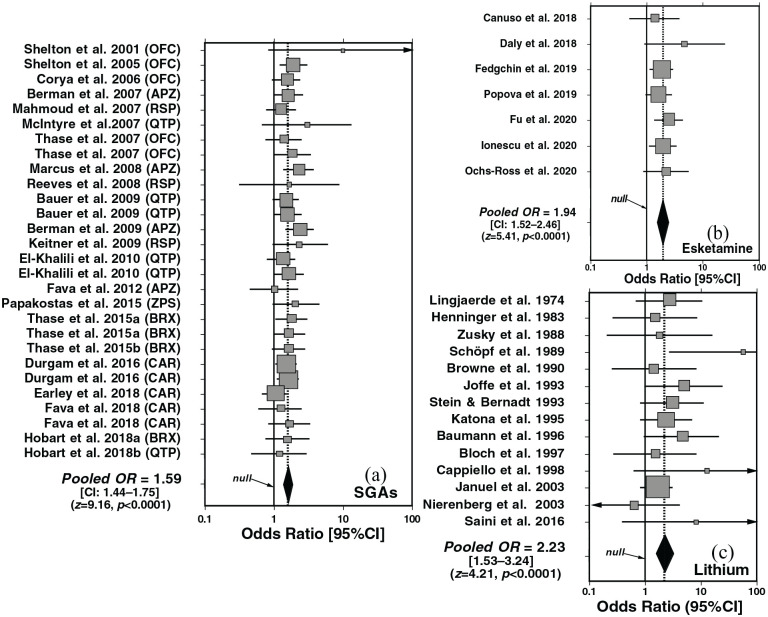
Background: Successful treatment of major depressive disorder (MDD) can be challenging, and failures ("treatment-resistant depression" [TRD]) are frequent. Steps to address TRD include increasing antidepressant dose, combining antidepressants, adding adjunctive agents, or using nonpharmacological treatments. Their relative efficacy and tolerability remain inadequately tested. In particular, the value and safety of increasingly employed second-generation antipsychotics (SGAs) and new esketamine, compared to lithium as antidepressant adjuncts remain unclear. Methods: We reviewed randomized, placebo-controlled trials and used random-effects meta-analysis to compare odds ratio (OR) versus placebo, as well as numbers-needed-to-treat (NNT) and to-harm (NNH), for adding SGAs, esketamine, or lithium to antidepressants for major depressive episodes. Results: Analyses involved 49 drug-placebo pairs. By NNT, SGAs were more effective than placebo (NNT = 11 [CI: 9–15]); esketamine (7 [5–10]) and lithium (5 [4–10]) were even more effective. Individually, aripiprazole, olanzapine+fluoxetine, risperidone, and ziprasidone all were more effective (all NNT < 10) than quetiapine (NNT = 13), brexpiprazole (16), or cariprazine (16), with overlapping NNT CIs. Risk of adverse effects, as NNH for most-frequently reported effects, among SGAs versus placebo was 5 [4–6] overall, and highest with quetiapine (NNH = 3), lowest with brexpiprazole (19), 5 (4–6) for esketamine, and 9 (5–106) with lithium. The risk/benefit ratio (NNH/NNT) was 1.80 (1.25–10.60) for lithium and much less favorable for esketamine (0.71 [0.60–0.80]) or SGAs (0.45 [0.17–0.77]). Conclusions: Several modern antipsychotics and esketamine appeared to be useful adjuncts to antidepressants for acute major depressive episodes, but lithium was somewhat more effective and better tolerated. Limitations: Most trials of adding lithium involved older, mainly tricyclic, antidepressants, and the dosing of adjunctive treatments were not optimized.
Overview
The claims and statistics of this paper haven’t been checked yet.
Free: it reads the open-access text and checks the first 5 claims that cite a source we can check. Create a free account to check every claim.
Integrity signals
Registry
Cites
Statistics
Figures
Verification
Claims the paper makes
The claims and statistics of this paper haven’t been checked yet.
Free: it reads the open-access text and checks the first 5 claims that cite a source we can check. Create a free account to check every claim.
Claims other papers make about this one
Each is checked against this paper’s own text: does it say what the citing paper says it does?
The source backs part of the claim, not all of it — or backs it for a different population, condition or comparison.
In the citing paper
“Previous meta-analyses have shown evidence for the use of AAs, lithium, ketamine and esketamine (Carter et al., 2020; Strawbridge et al., 2019; Vázquez et al., 2021; Zhou et al., 2015).”
From Augmentation strategies for treatment resistant major depression: A systematic review and network meta-analysis (2022) · cites this paper as Vázquez et al., 2021
Experimental — accuracy not yet measuredThe source backs part of the claim, not all of it — or backs it for a different population, condition or comparison.
In the citing paper
“Meta- analytic data also indicate that glutamatergic treatment strategies may be superior to antipsychotic agents in adults with TRD 200,201 .”
From Treatment‐resistant depression: definition, prevalence, detection, management, and investigational interventions (2023) · cites this paper as [201]
Experimental — accuracy not yet measuredThe cited source says what the claim attributes to it.
In the citing paper
“Importantly, these data provide further evidence of lithium’s antidepressant efficacy which is consistent with the results of a recent meta-analysis (Vázquez et al., 2021).”
From Augmentation strategies for treatment resistant major depression: A systematic review and network meta-analysis (2022) · cites this paper as Vázquez et al., 2021
Self-check
Percentages, sums and reported differences re-computed from the paper’s own numbers.
The self-check needs the paper’s full text.
Citations
Cites
Quantifying heterogeneity in a meta‐analysis
Higgins, J. P. T., & Thompson, S. G. (2002) · Statistics in Medicine · doi:10.1002/sim.1186 · Cited by 36,763 · cited 1×
“We measured heterogeneity using the I2 statistic (Higgins and Thompson, 2002).”
MethodHamilton, M. (1960) · Journal of Neurology, Neurosurgery & Psychiatry · doi:10.1136/jnnp.23.1.56 · Cited by 32,817 · cited 1×
“Most identified studies defined “response” as at least a 50% reduction in scores with standardized depressive symptom rating-scales, commonly the Hamilton depression rating scale [HDRS17] or MontgomeryÅsberg Depression Rating Scale [MADRS]) (Hamilton, 1960; Montgomery and Åsberg, 1979).”
BackgroundLiberati, A., Altman, D. G., Tetzlaff, J., Mulrow, C., Gøtzsche, P. C., Ioannidis, J. P. A., Clarke, M., Devereaux, P. J., Kleijnen, J., & Moher, D. (2009) · PLoS Medicine · doi:10.1371/journal.pmed.1000100 · Cited by 28,164 · cited 2×
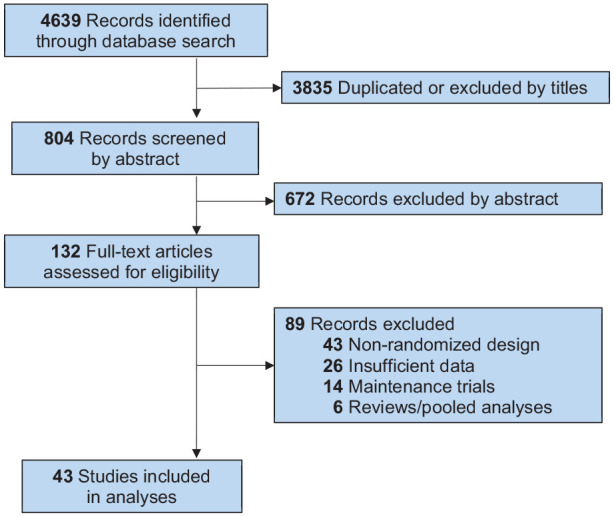
“The PRISMA-guided process of selecting reports for inclusion is summarized in Appendix Figure A1.”
MethodA new depression scale designed to be sensitive to change
Montgomery, S. A., & Åsberg, M. (1979) · British Journal of Psychiatry · doi:10.1192/bjp.134.4.382 · Cited by 13,962 · cited 1×
“Most identified studies defined “response” as at least a 50% reduction in scores with standardized depressive symptom rating-scales, commonly the Hamilton depression rating scale [HDRS17] or MontgomeryÅsberg Depression Rating Scale [MADRS]) (Hamilton, 1960; Montgomery and Åsberg, 1979).”
BackgroundFerrari, A. J., Somerville, A. J., Baxter, A. J., Norman, R., Patten, S. B., Vos, T., & Whiteford, H. A. (2013) · Psychological Medicine · doi:10.1017/s0033291712001511 · Cited by 1,230 · cited 6×
“Major depressive disorder (MDD) is a highly prevalent, episodic, or sometimes chronic illness associated with potentially severe functional impairment, co-occurring psychiatric and general medical morbidity, and excess mortality from suicide as well as from general medical conditions (Baldessarini and Tondo, 2020; Cel…”
BackgroundInfluentialKennedy, S. H., Lam, R. W., McIntyre, R. S., Tourjman, S. V., Bhat, V., Blier, P., Hasnain, M., Jollant, F., Levitt, A. J., MacQueen, G. M., et al. (2016) · The Canadian Journal of Psychiatry · doi:10.1177/0706743716659417 · Cited by 1,181
Popova, V., Daly, E. J., Trivedi, M., Cooper, K., Lane, R., Lim, P., Mazzucco, C., Hough, D., Thase, M. E., Shelton, R. C., et al. (2019) · American Journal of Psychiatry · doi:10.1176/appi.ajp.2019.19020172 · Cited by 904
Daly, E. J., Singh, J. B., Fedgchin, M., Cooper, K., Lim, P., Shelton, R. C., Thase, M. E., Winokur, A., Van Nueten, L., Manji, H., et al. (2018) · JAMA Psychiatry · doi:10.1001/jamapsychiatry.2017.3739 · Cited by 718
Report by the ACNP Task Force on Response and Remission in Major Depressive Disorder
Rush, A. J., Kraemer, H. C., Sackeim, H. A., Fava, M., Trivedi, M. H., Frank, E., Ninan, P. T., Thase, M. E., Gelenberg, A. J., Kupfer, D. J., et al. (2006) · Neuropsychopharmacology · doi:10.1038/sj.npp.1301131 · Cited by 707
Canuso, C. M., Singh, J. B., Fedgchin, M., Alphs, L., Lane, R., Lim, P., Pinter, C., Hough, D., Sanacora, G., Manji, H., et al. (2018) · American Journal of Psychiatry · doi:10.1176/appi.ajp.2018.17060720 · Cited by 676
Cited by
McIntyre, R. S., Alsuwaidan, M., Baune, B. T., Berk, M., Demyttenaere, K., Goldberg, J. F., Gorwood, P., Ho, R., Kasper, S., Kennedy, S. H., et al. (2023) · World Psychiatry · doi:10.1002/wps.21120 · Cited by 836
Nuñez, N. A., Joseph, B., Pahwa, M., Kumar, R., Resendez, M. G., Prokop, L. J., Veldic, M., Seshadri, A., Biernacka, J. M., Frye, M. A., et al. (2022) · Journal of Affective Disorders · doi:10.1016/j.jad.2021.12.134 · Cited by 215
Treatment-resistant depression: molecular mechanisms and management
Kajumba, M. M., Kakooza‐Mwesige, A., Nakasujja, N., Attix, D. K., & Canli, T. (2024) · Molecular Biomedicine · doi:10.1186/s43556-024-00205-y · Cited by 106
“…dose optimization, switching, combination, and/or augmentation with other agents, such as atypical antipsychotics [11–14], ketamine [15, 16], lithium [7, 17], Chinese herbal medicine [18, 19], and/or non-pharmacological therapies, like neurostimulation [16, 20], and psycho-therapy [21].”
BackgroundEsketamine Treatment for Depression in Adults: A PRISMA Systematic Review and Meta-Analysis
Fountoulakis, K. N., Saitis, A., & Schatzberg, A. F. (2025) · American Journal of Psychiatry · doi:10.1176/appi.ajp.20240515 · Cited by 90
Understanding the habenula: A major node in circuits regulating emotion and motivation
Ables, J. L., Park, K., & Ibáñez-Tallon, I. (2023) · Pharmacological Research · doi:10.1016/j.phrs.2023.106734 · Cited by 88
Bahji, A., Zarate, C. A., & Vazquez, G. H. (2022) · Expert Opinion on Drug Safety · doi:10.1080/14740338.2022.2047928 · Cited by 73
Self-citationNew Advances in the Pharmacology and Toxicology of Lithium: A Neurobiologically Oriented Overview
Bortolozzi, A. A., Fico, G., Berk, M., Solmi, M., Fornaro, M., Quevedo, J., Zarate, C. A., Kessing, L. V., Vieta, E., & Carvalho, A. F. (2024) · Pharmacological Reviews · doi:10.1124/pharmrev.120.000007 · Cited by 74
Dopamine Receptor Partial Agonists: Do They Differ in Their Clinical Efficacy?
Mohr, P., Masopust, J., & Kopeček, M. (2022) · Frontiers in Psychiatry · doi:10.3389/fpsyt.2021.781946 · Cited by 69
The treatment of depression — searching for new ideas
Stachowicz, K., & Sowa-Kućma, M. (2022) · Frontiers in Pharmacology · doi:10.3389/fphar.2022.988648 · Cited by 66
Therapeutic Drug Monitoring in Psychiatry: Enhancing Treatment Precision and Patient Outcomes
Biso, L., Aringhieri, S., Carli, M., Scarselli, M., & Longoni, B. (2024) · Pharmaceuticals · doi:10.3390/ph17050642 · Cited by 53
Brexpiprazole—Pharmacologic Properties and Use in Schizophrenia and Mood Disorders
Siwek, M., Wojtasik-Bakalarz, K., Krupa, A. J., & Chrobak, A. A. (2023) · Brain Sciences · doi:10.3390/brainsci13030397 · Cited by 50
“(in patients with schizophrenia) depending on the dose of the drug [45,46].”
BackgroundResultWinter, J. R., Curtis, K. J., Hu, B., & Clayton, A. H. (2022) · Expert Opinion on Drug Safety · doi:10.1080/14740338.2022.2049753 · Cited by 45
“Many atypical antipsychotics have been approved by the FDA as augmentation strategies for treatment of MDD refractory to antidepressant monotherapy with SSRIs and SNRIs [92,93].”
BackgroundInfluentialAlmeida, T. M., da Silva, U. R. L., Pires, J. P., Borges, I. N., Martins, C. R. M., Cordeiro, Q., & Uchida, R. R. (2024) · PubMed Central · doi:10.36131/cnfioritieditore20240102 · Cited by 51
“These data are consistent with previous studies that have assessed the safety and tolerability of ketamine (Wan et al., 2015; Vázquez et al., 2021).”
ResultCalder, C. N., Kwan, A. T. H., Teopiz, K. M., Wong, S., Rosenblat, J. D., Mansur, R. B., Rhee, T. G., Ho, R., Cao, B., & McIntyre, R. S. (2024) · Journal of Affective Disorders · doi:10.1016/j.jad.2024.04.039 · Cited by 42
Brandwein, C., Leenaars, C. H. C., Becker, L., Pfeiffer, N., Iorgu, A.-M., Hahn, M., Vairani, G. A., Lewejohann, L., Bleich, A., Mallien, A. S., et al. (2023) · Pharmacological Research · doi:10.1016/j.phrs.2023.106917 · Cited by 44
Quan, Z., Li, H., Quan, Z., & Qing, H. (2023) · International Journal of Molecular Sciences · doi:10.3390/ijms24087098 · Cited by 39
The Potential Use of Ebselen in Treatment-Resistant Depression
Ramli, F. F., Cowen, P. J., & Godlewska, B. R. (2022) · Pharmaceuticals · doi:10.3390/ph15040485 · Cited by 39
Fang, S., Yang, X., & Zhang, W. (2024) · Frontiers in Psychiatry · doi:10.3389/fpsyt.2024.1359088 · Cited by 36
Yan, Y., Xiao, Y., Wang, M., Chen, B., Yin, L., & Ma, X. (2022) · Psychological Medicine · doi:10.1017/s0033291722001246 · Cited by 40
“According to the report, overlapping CrIs restrict their usefulness in providing recommendations for which medicine should be administered first (Vázquez et al., 2021).”
BackgroundTerao, I., Tsuge, T., Endo, K., & Kodama, W. (2024) · Journal of Affective Disorders · doi:10.1016/j.jad.2023.11.023 · Cited by 33
Ekman, C. J., Popiołek, K., Bodén, R., Nordenskjöld, A., & Lundberg, J. (2023) · Journal of Affective Disorders · doi:10.1016/j.jad.2023.02.098 · Cited by 36
Guo, Q., Guo, L., Yong, W., & Shang, S. (2024) · Psychiatry Research · doi:10.1016/j.psychres.2024.116018 · Cited by 30
Hsu, T., Chu, C., Ching, P., Chen, G., & Pan, C. (2022) · Journal of Affective Disorders · doi:10.1016/j.jad.2022.03.047 · Cited by 30
Boivin, E., Daré, B. L., Bellay, R., Vigneau, C. M., Mercerolle, M., & Bacle, A. (2023) · International Journal of Bipolar Disorders · doi:10.1186/s40345-023-00286-8 · Cited by 30
“2015), major depression (Vázquez et al. 2021), alcoholism and cluster headaches (Timmer and Sands 1999).”
BackgroundKuvarzin, S. R., Sukhanov, I., Onokhin, K., Анатольевич, З. К., & Gainetdinov, R. R. (2023) · Biomedicines · doi:10.3390/biomedicines11071977 · Cited by 23
Ketamine, benzoate, and sarcosine for treating depression
Cheng, Y., Lin, C., & Lane, H. (2022) · Neuropharmacology · doi:10.1016/j.neuropharm.2022.109351 · Cited by 21
Esketamine Nasal Spray: Rapid Relief for TRD and Suicide Prevention—Mechanisms and Pharmacodynamics
Song, H., Luo, Y., & Fang, L. (2024) · Neuropsychiatric Disease and Treatment · doi:10.2147/ndt.s486118 · Cited by 21
“38,51,52 By day 28, the response and remission rates stood at 52.0% and 31.0% for placebo recipients, while for the esketamine cohort, they reached 69.3% and 52.5%, respectively, 43 underlining the superior performance of the treatment.”
BackgroundInfluentialFlynn, L. T., & Gao, W. (2023) · Molecular Psychiatry · doi:10.1038/s41380-023-02235-4 · Cited by 19
“Notably, the non-competitive NMDAR antagonist ketamine has consistently demonstrated rapid, long-lasting antidepressant effects in numerous clinical populations [138 – 142] (reviewed in refs.”
Batinić, B., Ristić, I., Žugić, M., & Baldwin, D. S. (2021) · Frontiers in Psychiatry · doi:10.3389/fpsyt.2021.784370 · Cited by 19
Ren, X., Xiong, J., Liang, L., Chen, Y., & Zhang, G. (2022) · Molecules · doi:10.3390/molecules27092755 · Cited by 17
“For the treatment of TRD, the main strategy is to switch to another antidepressant, to use two or more antidepressants, or to combine an antidepressant with an enhancer [13,14].”
MethodBai, B., Li, Y., Chen, X., Huang, J., Chen, Q., Du, X., Huang, C., & Yang, Y. (2025) · BMC Psychiatry · doi:10.1186/s12888-025-06783-7 · Cited by 15
Wang, S., Cai, Q., Xu, L., Sun, Y., Wang, M., Wang, Y., Zhang, L., Li, K., & Ni, Z. (2023) · Psychopharmacology · doi:10.1007/s00213-023-06413-8 · Cited by 16
Nikdasti, A., Khodadadi, E. S., Ferdosi, F., Dadgostar, E., Yahyazadeh, S., Heidari, P., Ehtiati, S., Vakili, O., & Khatami, S. H. (2024) · Molecular Neurobiology · doi:10.1007/s12035-024-04446-4 · Cited by 14
Kang, M. J. Y., & Vázquez, G. H. (2022) · Journal of Affective Disorders · doi:10.1016/j.jad.2022.08.047 · Cited by 15
Self-citationSu, Y., Qiu, P., Cheng, L., Zhang, L., Peng, W., & Meng, X. (2024) · Current Gene Therapy · doi:10.2174/0115665232261045231215054305 · Cited by 14
Walaszek, M., Kachlik, Z., & Cubała, W. J. (2024) · Nutritional Neuroscience · doi:10.1080/1028415x.2024.2303218 · Cited by 16
Metabolic adverse effects of antipsychotics: the state of the problem and management options
Владимировна, Б. А., Валерьевна, М. Д., Machekhina, L. V., & Dudinskaya, Е. N. (2023) · Obesity and metabolism · doi:10.14341/omet12935 · Cited by 12
Cognitive changes in patients with unipolar TRD treated with IV ketamine: A systematic review
Grasso, V., Gutiérrez, G., Alzbeidi, N., Hernandorena, C. V., & Vázquez, G. H. (2024) · Progress in Neuro-Psychopharmacology and Biological Psychiatry · doi:10.1016/j.pnpbp.2024.111095 · Cited by 14
Self-citationFloriano, I., Silvinato, A., & Bernardo, W. M. (2023) · Revista da Associação Médica Brasileira · doi:10.1590/1806-9282.2023d694 · Cited by 12
Characteristics Associated with Depression Severity in 270 Juveniles in a Major Depressive Episode
Serra, G., Iannoni, M. E., Trasolini, M., Maglio, G., Frattini, C., Casini, M. P., Baldessarini, R. J., & Vicari, S. (2021) · Brain Sciences · doi:10.3390/brainsci11040440 · Cited by 12
Self-citationTreatment-resistant depression and intranasal esketamine: Spanish consensus on theoretical aspects
Mora, F., Ramos‐Quiroga, J. A., Baca‐García, E., Crespo, J. M., Gutiérrez-Rojas, L., Madrazo, A., Pérez-Costillas, L., Sáiz, P. A., Tordera, V., & Vieta, E. (2025) · Frontiers in Psychiatry · doi:10.3389/fpsyt.2025.1623659 · Cited by 11
CASALE, A. D., Simmaco, M., Modesti, M. N., Zocchi, C., Arena, J. F., Bilotta, I., Alcibiade, A., Sarli, G., Cutillo, L., Antonelli, G., et al. (2023) · Biomedicines · doi:10.3390/biomedicines11072088 · Cited by 11
Cho, Y., Lee, D., Baek, J. H., & Hong, K. S. (2022) · International Journal of Bipolar Disorders · doi:10.1186/s40345-022-00249-5 · Cited by 12
Ketamine versus ECT for Nonpsychotic Treatment-Resistant Major Depression
Souza, S. A., Josino, T. R., & Bisol, L. W. (2023) · New England Journal of Medicine · doi:10.1056/nejmc2308757 · Cited by 12
Hernandorena, C. V., Dines, M., Miola, A., Núñez, N. A., Tondo, L., Baldessarini, R. J., & Vázquez, G. H. (2025) · International Journal of Bipolar Disorders · doi:10.1186/s40345-025-00381-y · Cited by 12
“Adverse effects of SGAs include excessive sedation and extrapyramidal symptoms (prominent akathisia, some risk of tardive dyskinesia), increased appetite, weight-gain and metabolic disturbances (Galling et al. 2015; Vázquez et al. 2021).”
Self-citationZhang, Y., Cai, Q., Wang, L., & Zhang, B. (2025) · Neuropsychiatric Disease and Treatment · doi:10.2147/ndt.s502090 · Cited by 9
“25 Similarly, a meta-analysis by Bahji et al confirmed esketamine’s efficacy, safety, and tolerability as a therapy for depression.”
Floriano, I., Silvinato, A., & Bernardo, W. M. (2023) · Revista da Associação Médica Brasileira · doi:10.1590/1806-9282.2023d696 · Cited by 9
“Vazquez 2021 Does not meet eligibility criteria Wajs 2020 Depression resistant to conventional antidepressants 21 https://doi.org/10.1371/journal.pmed1000097 5 Rev Assoc Med Bras.”
BackgroundInfluentialXie, M., Qiu, Y., Wang, M., Wei, X., Tao, Y., Duan, A., Shang, J., Gao, W., & Wang, Z. (2024) · Journal of Psychiatric Research · doi:10.1016/j.jpsychires.2024.02.018 · Cited by 9
Wang, J., Li, W., Li, M., Wu, H.-B., & Qiu, Z.-K. (2023) · Medicine · doi:10.1097/md.0000000000034670 · Cited by 12
How does IL-6 change after combined treatment in MDD patients? A systematic review
Lombardi, A. L., Manfredi, L., & Conversi, D. (2022) · Brain Behavior & Immunity - Health · doi:10.1016/j.bbih.2022.100579 · Cited by 11
von Knorring, J., Baryshnikov, I., Jylhä, P. J., Talaslahti, T., Heikkinen, M. E., & Isometsä, E. T. (2023) · BMC Psychiatry · doi:10.1186/s12888-023-05390-8 · Cited by 8
“…conducted AD monotherapy trials; [7]) and significant psychiatric comorbidity, functional disability, or suicidality should be referred to psychiatric care as they often require more complex pharmacotherapy, including AD combinations and augmentation with lithium or an antipsychotic [8–14].”
BackgroundHe, Y., Gan, X., Li, X., Wang, T., Li, J., Lei, T., Huang, Y., Liu, R., Chen, F., Teng, T., et al. (2023) · BMC Psychiatry · doi:10.1186/s12888-023-05221-w · Cited by 9
“Lithium carbonate, a mood stabilizer, was chosen for its demonstrated antidepressant efficacy, which has been supported by two meta-analyses of adult MDD patients who were nonresponders [33, 38].”
MethodLithium Augmentation in Treatment‐Resistant Depression: A Qualitative Review of the Literature
Acero-González, Á., Guzmán, Y., Proaños, N., Bustos, R., Aconcha, M., Guerrero, I., Martinez, L. A., Berk, M., & Dodd, S. (2025) · Pharmacotherapy · doi:10.1002/phar.70063 · Cited by 5
“Randomized, placebo-controlled trials were reviewed using meta-analysis to compare the odds ratio (OR) to achieve response versus placebo [48].”
Fan, P., Zeng, L., Ding, Y., Kofler, J., Silverstein, J. C., Krivinko, J. M., Sweet, R. A., & Wang, L. (2023) · CPT Pharmacometrics & Systems Pharmacology · doi:10.1002/psp4.12979 · Cited by 8
Newer Treatments for Mood and Anxiety Disorders
Markman, J., & Combs, H. L. (2024) · Medical Clinics of North America · doi:10.1016/j.mcna.2024.03.006 · Cited by 5
Pros and cons of esketamine treatment in psychiatry
Gutiérrez, G., & Vázquez, G. H. (2022) · European Neuropsychopharmacology · doi:10.1016/j.euroneuro.2022.09.003 · Cited by 5
Self-citationMertens, L. J., Betzler, F., Brand, M., Evens, R., Jungaberle, A., Jungaberle, H., Kärtner, L., Majić, T., Schmitz, C. N., Ströhle, A., et al. (2026) · Psychotherapy and Psychosomatics · doi:10.1159/000552272 · Cited by 5
Chen, J., Zhou, Y., Lai, M., Zhang, Y., Hu, Y., Zhuang, D., Zhou, W., & Zhang, Y. (2024) · Psychopharmacology · doi:10.1007/s00213-024-06610-z · Cited by 5
“Lithium, an inhibitor of GSK-3β, has been widely used to treat mood disorders (Vazquez et al. 2021 ), implicating the role of GSK-3β in mood disorders (Costemale-Lacoste et al. 2016 ).”
BackgroundGarcia, G. (2024) · Journal of the American Association of Nurse Practitioners · doi:10.1097/jxx.0000000000001108 · Cited by 4
“Patients with poor metabolizer phenotypes for these genes may experience higher drug concentrations and increased side effects, whereas ultra-rapid metabolizers may not achieve therapeutic drug levels (V´azquez et al., 2021).”
InfluentialKetamine pharmacotherapy for major depressive disorder: A narrative review
Miller, C. H., Hickman, A., Baten, C., Ali, Z., Kahlon, S. K., Klassen, A. M., Zamora, G., Shepherd, J. H., Venegas, G., Miller, J. A., et al. (2026) · Progress in Neuro-Psychopharmacology and Biological Psychiatry · doi:10.1016/j.pnpbp.2026.111651 · Cited by 3
Oleichik, I. V., Shishkovskaya, T. I., Баранов, П. А., & Nikiforova, I. Y. (2022) · Psikhiatriya · doi:10.30629/2618-6667-2022-20-3-134-142 · Cited by 3
Wang, Z., Xiao, T., & Qi, G. (2024) · Journal of obstetrics and gynaecology research · doi:10.1111/jog.15912 · Cited by 2
“…studies, education, PIR, smoking, physical activity, sleep disorders, 27 hypertension, 28 diabetes, 29 dyslipidemia, CVD, 30 pelvic infection, 31 total PUFA, 32 copper, 33 BMI, 34 antidepressants, and antipsychotics 35 were confounding factors associated with the risk of depressive symptoms.”
Choi, W.-S., Woo, Y. S., Bahk, W., Kim, N.-Y., Park, S., Kim, W., Lee, J. G., Yang, C.-M., Sung, H. M., Wang, S., et al. (2025) · 신경정신의학 · doi:10.4306/jknpa.2025.64.3.178 · Cited by 1
Eckert, D., & Kasper, S. F. (2026) · The World Journal of Biological Psychiatry · doi:10.1080/15622975.2026.2617195 · Cited by 3
“In a meta-analysis comparing different augmenta-tive strategies (Vázquez et al. 2021), it was found that NNTs (number to treat) do not differ significantly, yet show a lower number (more favourable) on a descriptive level for lithium (NNT 5) compared to Esketamine (NNT 7) and SGAs (NNT 11), with,…”
Zol, N. M. C., Hasain, Z., Shakrin, N. N. S. M., Jati, A. K. K., Chong, C. W., Loganathan, A. L., Lim, S. Y., Ling, F. Y., Mahmud, A. A., Bon, R. S., et al. (2025) · Malaysian Journal of Medicine and Health Sciences · doi:10.47836/mjmhs.v21.i6.1359 · Cited by 1
Papakostas, G. I., Masand, P. S., Clayton, A., Maletic, V., Adams, J., Rekeda, L., Singh, M. K., & Kerolous, M. (2026) · Neuropsychiatric Disease and Treatment · doi:10.2147/ndt.s561112 · Cited by 1
Vázquez, G. H., Dines, M., Bamondez, P., Grasso, V., Hernandorena, C. V., & Cetkovich, M. (2026) · Journal of Affective Disorders · doi:10.1016/j.jad.2026.122253 · Cited by 1
Self-citationHsu, T., Hsu, C., Thompson, T., Carvalho, A. F., Stubbs, B., Tseng, P., Yang, F.-C., YU, C., Tu, Y., & Liang, C. (2026) · BMJ Mental Health · doi:10.1136/bmjment-2026-302656 · Cited by 1
Remission rates after complex treatment of depression using general magnetic therapy
Bakhmutsky, I. N., Kosenko, V. G., Guba, S., & Георгиевич, Б. Н. (2024) · Vestnik nevrologii psihiatrii i nejrohirurgii (Bulletin of Neurology Psychiatry and Neurosurgery) · doi:10.33920/med-01-2405-01 · Cited by 1
Guo, Z., Zhang, Z. M., Li, L., Zhang, M., Huang, S., Li, Z., & Shang, D. (2025) · Current Neuropharmacology · doi:10.2174/1570159x23666241016090634 · Cited by 2
“A meta-analysis evaluated the efficacy and tolerability of combination treatments for major depression [79], when antidepressants combine ari-piprazole, risperidone, quetiapine or other AAPs, the efficacy is better than monotherapy.”
Evaluating a New Addition to the Treatment Toolbox for Major Depressive Disorder
Sanacora, G., & Katz, R. B. (2025) · American Journal of Psychiatry · doi:10.1176/appi.ajp.20251132 · Cited by 1
The Journal of Psychopharmacology : La Plus ça change. . .
Young, A. H. (2021) · Journal of Psychopharmacology · doi:10.1177/02698811211036951
“Vázquez et al. (2021) report an interesting study on combined treatments for major depression.”
BackgroundTerao, I., Honyashiki, M., & Inoue, T. (2022) · Journal of Psychopharmacology · doi:10.1177/02698811221092504
“…sagepub.com/journals-permissions DOI: 10.1177 0269881122109 5 4 journals.sagepub.com/home/jop Dear Editor We read with much interest the article where Vázquez et al. (2021) reviewed randomized, placebo-controlled trials and used random-effects meta-analysis to compare odds ratio (OR) versus…”
MethodInfluentialKöhler, S., & Schefft, C. (2022) · Springer eBooks · doi:10.1007/978-3-662-65734-8_7
Hernandorena, C. V., Gilmar, G., Casimiro, C. A., & Vázquez, G. H. (2023) · Journal of Affective Disorders Reports · doi:10.1016/j.jadr.2023.100620
Self-citationLow-dose Esketamine promotes brain protection via the ERK/Nrf2 pathway in vascular dementia ratsPreprint
Shi, J., Guo, M., Yu, X., Zhang, H., Li, X., & Gan, J. (2023) · Research Square · doi:10.21203/rs.3.rs-3599975/v1
Lithium Initiation and Monitoring
Meyer, J. M., & Stahl, S. M. (2023) · Cambridge University Press eBooks · doi:10.1017/9781009225069.007
Meyer, J. M., & Stahl, S. M. (2023) · Cambridge University Press eBooks · doi:10.1017/9781009225069.004
ANTIPSYCHOTIC DRUGS: THREE GENERATIONS OF ANTIPSYCHOTICS
Sukiasyan, S. G. (2024) · ARMENIAN JOURNAL OF MENTAL HEALTH · doi:10.55436/10.54436/1829202x-15.2024.1-3
Low-Dose Esketamine Promotes Brain Protection Via the Erk/Nrf2 Pathway in Vascular Dementia RatsPreprint
Wang, C., Yu, X., Zheng, Z., Wang, Y., Guo, M., & Gan, J. (2024) · SSRN Electronic Journal · doi:10.2139/ssrn.5026732
Makar, M., Michałka, D., Gałuszka, Z., Papachristoforou, N., Głowacka, J., Kocjan, A., Bąk, E., Tekiela, N., Chmiel, R., & Bartuś, T. (2025) · Quality in Sport · doi:10.12775/qs.2024.35.57665
Déficits du traitement émotionnel dans l’épisode dépressif caractérisé
Imbert, L. (2024) · theses.fr (ABES) · doi:10.70675/6081cad6zd768z4dc5z97cez522e35a98bbb
(2025) · Wiley eBooks · doi:10.1002/9781119870203.mpg002.pub2
Brexpiprazole augmentation and mitochondrial gene expression changes in major depressive disorder
Kondo, K., Yoshino, Y., Kumon, H., Okano, M., Mori, H., Iga, J., & Ueno, S. (2025) · Journal of Psychopharmacology · doi:10.1177/02698811251337365
Jagsch, C., Wirnsberger, G. H., & Simhandl, C. (2025) · Neuropsychiatrie · doi:10.1007/s40211-025-00532-8
Vázquez, G. H. (2025) · Elsevier eBooks · doi:10.1016/b978-0-443-33580-8.00022-2
Self-citationVázquez, G. H. (2025) · Elsevier eBooks · doi:10.1016/b978-0-443-33580-8.00001-5
Self-citationAntipsychotic medications in affective disorders
Vázquez, G. H. (2025) · Elsevier eBooks · doi:10.1016/b978-0-443-33580-8.00009-x
Self-citationMa, M., Nikonova, E. Y., Ashurova, G. C., Trushkova, V. V., Radchenko, A. Y., Petukhova, N. S., & Rupchev, G. (2025) · S S Korsakov Journal of Neurology and Psychiatry · doi:10.17116/jnevro202512511169
Cho, Y., Lee, D., Baek, J. H., & Hong, K. S. (2022) · Figshare · doi:10.6084/m9.figshare.19129123
Applying Quantitative Systems Pharmacology Methods to Study Psychosis in Alzheimer’s Disease
Fan, P. (2023) · D-Scholarship@Pitt (University of Pittsburgh) · Cited by 1
Sequenced treatment alternatives to relieve adolescent depression: A pragmatic clinical trial
He, Y., Xian, Y., Li, X., Qiu, T., Jiang, X., Wang, T., Wen, Y., Qin, B., Teng, T., Li, Y., et al. (2026) · Journal of Affective Disorders · doi:10.1016/j.jad.2026.121511
Vaishnavi, V., Kumar, T. P., Valluru, R., Syamala, Y., Siva, C., & Bhavana, R. (2026) · SA pharmaceutical journal. · doi:10.36303/sapj.3549
Kosiarski, B., Skrzypek, A., Markowicz, P., Zbrożek, M., Biłyk, K., Hutkowski, M., Chwostek, Z., Maruchniak, H., Marzec, W., & Biedroń, P. (2026) · Journal of Pre-Clinical and Clinical Research · doi:10.26444/jpccr/221219
“Network meta-analysis conducted by Vázquez et al. generally ranks esketamine and lithium as having lower numbers-needed-to-treat (NNT) for response (NNT = 7 and 5, respectively), compared to atypical antipsychotics like aripiprazole or brexpiprazole (NNT = 9–16) [19].”
Shelton, R. C. (2024) · American Psychiatric Association Publishing eBooks · doi:10.1176/appi.books.9798894551913.lg05 · Cited by 1
Siddique, A., Naeem, U., Khokhar, M. M., Irshad, M., Farooq, T., & Kanwal, S. (2026) · Naunyn-Schmiedeberg s Archives of Pharmacology · doi:10.1007/s00210-026-05540-1
“This can include combining two antidepressants with different mechanisms (Martín-López et al. 2011). or adding agents such as dietary supplements (Wang et al. 2023; Siddique et al. 2025a), antipsychotics, esketamine, or lithium (Vázquez et al. 2021).”
Meta analytic evidence on esketamine in major depressive disorder: An umbrella review
Tatlı, S. Z., Ceylan, D., & Cankorur, V. Ş. (2026) · Journal of Clinical Psychiatry · doi:10.5505/kpd.2026.68856
Lithium Prescription in Unipolar Depression: Findings from a Nationwide Greek Cohort Study
Karageorgiou, V., Michopoulos, I., Hadjulis, M., Mitrou, P., Thireos, E., Mathioudakis, K., Skapinakis, P., & Gournellis, R. (2026) · Pharmacopsychiatry · doi:10.1055/a-2924-4384
Fan, Y., Wang, Y., Xu, Q., Zhao, M., Zhao, C., Ma, D., Baba, Y. A., Li, W., & Hong, B. (2026) · Psychiatry Research · doi:10.1016/j.psychres.2026.117369
Psychopharmakotherapie – klinisch-empirische Grundlagen
Kasper, S. F., Hasan, A., & Möller, H. (2026) · Springer Reference Medizin · doi:10.1007/978-3-642-45028-0_31-2
Metadata
- Authors
- Vázquez, G. H., Bahji, A., Undurraga, J., Tondo, L., & Baldessarini, R. J.
- Affiliations
- Queen's University (CA)
- University of Calgary (CA)
- Universidad del Desarrollo (CL)
- Harvard University (US)
- Corresponding author
- Vázquez, Gustavo H.
- Venue
- Journal of Psychopharmacology
- Publisher
- SAGE Publications
- Published
- 2021-07-09
- Volume
- 35
- Issue
- 8
- Pages
- 890-900
- ISSN
- 0269-8811 (ISSN-L)
- 1461-7285
- PMC
- PMC8358538
- OpenAlex
- W3182403469
- Cited by
- 95
- References
- 81
- Citations by year
- 2026: 12 · 2025: 17 · 2024: 21 · 2023: 24 · 2022: 18 · 2021: 3
- FWCI
- 9.63
- Type
- journal article
- Language
- en
- Open access
- hybrid
- doi.org
- Licence
- cc-by-nc
- creativecommons.org/licenses/by-nc/4.0/ (unspecified)
- journals.sagepub.com/page/policies/text-and-data-mining-license (tdm)
- Locations
- Journal of Psychopharmacology (publishedVersion, cc-by-nc)
- PubMed Central (publishedVersion, cc-by-nc)
- PubMed (publishedVersion)
- Funders
- aretaeus foundation of rome (ANID-PIA-ACT192064)
- Centro Bini Private Donors Research Fund (ANID-FONDECYT 1180358, ANID-FONDECYT 1200601)
- clínica alemana de santiago (ID 863)
- Bruce J. Anderson Foundation
- McLean Private Donors Research Fund
- Topics
- Health Sciences › Medicine › Pharmacology (medical) › Treatment of Major Depression
- Health Sciences › Medicine › Psychiatry and Mental health › Bipolar Disorder and Treatment
- Health Sciences › Medicine › Psychiatry and Mental health › Electroconvulsive Therapy Studies
- Keywords
- major depressive disorder, antidepressant augmentation, atypical antipsychotics, esketamine, lithium, aripiprazole, olanzapine, risperidone, quetiapine, brexpiprazole, cariprazine, ziprasidone, efficacy, tolerability, risk-benefit ratio, adverse effects
- MeSH terms
- Antidepressive Agents, Depressive Disorder, Major, Major Depressive Disorder, Dose-Response Relationship, Drug, Drug Therapy, Combination, Humans, Ketamine, Antipsychotic Agents, Randomized Controlled Trials as Topic, Lithium Compounds, Depressive Disorder, Treatment-Resistant
About these checks
Registry, retraction, Cites and statistics results are computed, not judged, with one exception: a printed reference that no index lists is read once by a model before it counts as a citation error. Claims are extracted by a model and kept only when their quote appears verbatim in the text; each cited source is then checked, with a model’s help, for whether it says what the claim relies on. Those verdicts can be wrong — read the claim’s quote and the cited source before relying on one.
Statistics and arithmetic are recomputed, not judged.
Confidence bands are shown only for fields calibrated on our annotated test set. None is calibrated yet, so no band is shown.
What counts as a claim ›How we measure confidence ›How we check this ›
Are you an author, or do you see a problem with this page? Request a review
Data sources
Bibliographic data: Semantic Scholar, OpenAlex, Crossref.
Contains information from the Semantic Scholar Academic Graph Datasets, made available under the ODC Attribution License (ODC-BY 1.0).
Semantic Scholar’s data is described in: Kinney, R., et al. (2023). The Semantic Scholar Open Data Platform. arXiv:2301.10140.
