

Efficacy and Tolerability of Combination Treatments for Major Depression: Antidepressants plus Second-Generation Antipsychotics vs. Esketamine vs. Lithium
Open accessThe DOI matches its Crossref record; 81 of the 81 references it cites were found in a registry or an index.
Abstract
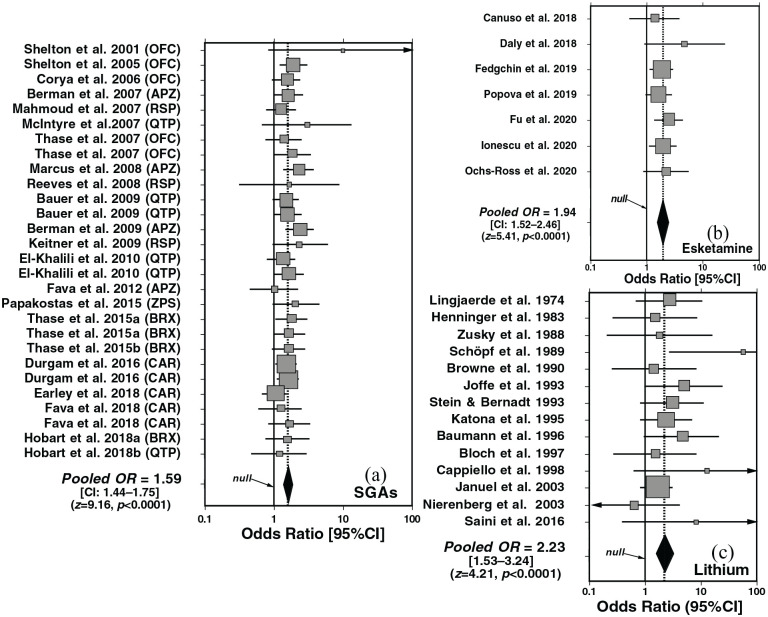
Background: Successful treatment of major depressive disorder (MDD) can be challenging, and failures ("treatment-resistant depression" [TRD]) are frequent. Steps to address TRD include increasing antidepressant dose, combining antidepressants, adding adjunctive agents, or using nonpharmacological treatments. Their relative efficacy and tolerability remain inadequately tested. In particular, the value and safety of increasingly employed second-generation antipsychotics (SGAs) and new esketamine, compared to lithium as antidepressant adjuncts remain unclear. Methods: We reviewed randomized, placebo-controlled trials and used random-effects meta-analysis to compare odds ratio (OR) versus placebo, as well as numbers-needed-to-treat (NNT) and to-harm (NNH), for adding SGAs, esketamine, or lithium to antidepressants for major depressive episodes. Results: Analyses involved 49 drug-placebo pairs. By NNT, SGAs were more effective than placebo (NNT = 11 [CI: 9–15]); esketamine (7 [5–10]) and lithium (5 [4–10]) were even more effective. Individually, aripiprazole, olanzapine+fluoxetine, risperidone, and ziprasidone all were more effective (all NNT < 10) than quetiapine (NNT = 13), brexpiprazole (16), or cariprazine (16), with overlapping NNT CIs. Risk of adverse effects, as NNH for most-frequently reported effects, among SGAs versus placebo was 5 [4–6] overall, and highest with quetiapine (NNH = 3), lowest with brexpiprazole (19), 5 (4–6) for esketamine, and 9 (5–106) with lithium. The risk/benefit ratio (NNH/NNT) was 1.80 (1.25–10.60) for lithium and much less favorable for esketamine (0.71 [0.60–0.80]) or SGAs (0.45 [0.17–0.77]). Conclusions: Several modern antipsychotics and esketamine appeared to be useful adjuncts to antidepressants for acute major depressive episodes, but lithium was somewhat more effective and better tolerated. Limitations: Most trials of adding lithium involved older, mainly tricyclic, antidepressants, and the dosing of adjunctive treatments were not optimized.
Overview
The claims and statistics of this paper haven’t been checked yet.
Free: it reads the open-access text and checks the first 5 claims that cite a source we can check. Create a free account to check every claim.
Integrity signals
Registry
Cites
Statistics
Figures
Verification
Claims the paper makes
The claims and statistics of this paper haven’t been checked yet.
Free: it reads the open-access text and checks the first 5 claims that cite a source we can check. Create a free account to check every claim.
Claims other papers make about this one
Each is checked against this paper’s own text: does it say what the citing paper says it does?
The source backs part of the claim, not all of it — or backs it for a different population, condition or comparison.
In the citing paper
“Previous meta-analyses have shown evidence for the use of AAs, lithium, ketamine and esketamine (Carter et al., 2020; Strawbridge et al., 2019; Vázquez et al., 2021; Zhou et al., 2015).”
From Augmentation strategies for treatment resistant major depression: A systematic review and network meta-analysis (2022) · cites this paper as Vázquez et al., 2021
Experimental — accuracy not yet measuredThe source backs part of the claim, not all of it — or backs it for a different population, condition or comparison.
In the citing paper
“Meta- analytic data also indicate that glutamatergic treatment strategies may be superior to antipsychotic agents in adults with TRD 200,201 .”
From Treatment‐resistant depression: definition, prevalence, detection, management, and investigational interventions (2023) · cites this paper as [201]
Experimental — accuracy not yet measuredThe cited source says what the claim attributes to it.
In the citing paper
“Importantly, these data provide further evidence of lithium’s antidepressant efficacy which is consistent with the results of a recent meta-analysis (Vázquez et al., 2021).”
From Augmentation strategies for treatment resistant major depression: A systematic review and network meta-analysis (2022) · cites this paper as Vázquez et al., 2021
Self-check
Percentages, sums and reported differences re-computed from the paper’s own numbers.
The self-check needs the paper’s full text.
Citations
Cites
Quantifying heterogeneity in a meta‐analysis
Higgins, J. P. T., & Thompson, S. G. (2002) · Statistics in Medicine · doi:10.1002/sim.1186 · Cited by 36,763 · cited 1×
“We measured heterogeneity using the I2 statistic (Higgins and Thompson, 2002).”
MethodHamilton, M. (1960) · Journal of Neurology, Neurosurgery & Psychiatry · doi:10.1136/jnnp.23.1.56 · Cited by 32,817 · cited 1×
“Most identified studies defined “response” as at least a 50% reduction in scores with standardized depressive symptom rating-scales, commonly the Hamilton depression rating scale [HDRS17] or MontgomeryÅsberg Depression Rating Scale [MADRS]) (Hamilton, 1960; Montgomery and Åsberg, 1979).”
BackgroundLiberati, A., Altman, D. G., Tetzlaff, J., Mulrow, C., Gøtzsche, P. C., Ioannidis, J. P. A., Clarke, M., Devereaux, P. J., Kleijnen, J., & Moher, D. (2009) · PLoS Medicine · doi:10.1371/journal.pmed.1000100 · Cited by 28,164 · cited 2×
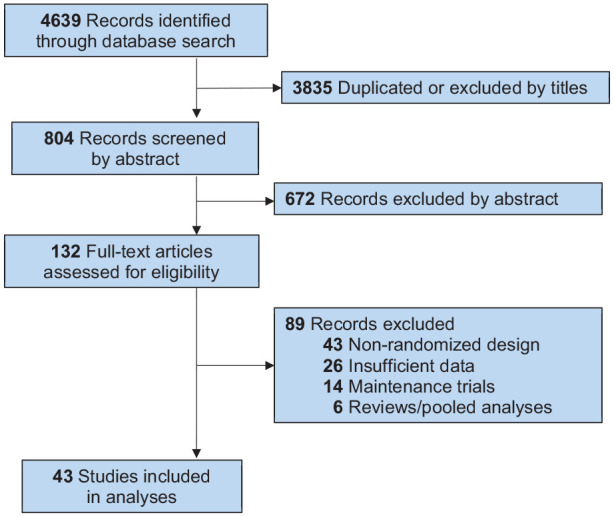
“The PRISMA-guided process of selecting reports for inclusion is summarized in Appendix Figure A1.”
MethodA new depression scale designed to be sensitive to change
Montgomery, S. A., & Åsberg, M. (1979) · British Journal of Psychiatry · doi:10.1192/bjp.134.4.382 · Cited by 13,962 · cited 1×
“Most identified studies defined “response” as at least a 50% reduction in scores with standardized depressive symptom rating-scales, commonly the Hamilton depression rating scale [HDRS17] or MontgomeryÅsberg Depression Rating Scale [MADRS]) (Hamilton, 1960; Montgomery and Åsberg, 1979).”
BackgroundFerrari, A. J., Somerville, A. J., Baxter, A. J., Norman, R., Patten, S. B., Vos, T., & Whiteford, H. A. (2013) · Psychological Medicine · doi:10.1017/s0033291712001511 · Cited by 1,230 · cited 6×
“Major depressive disorder (MDD) is a highly prevalent, episodic, or sometimes chronic illness associated with potentially severe functional impairment, co-occurring psychiatric and general medical morbidity, and excess mortality from suicide as well as from general medical conditions (Baldessarini and Tondo, 2020; Cel…”
BackgroundInfluentialKennedy, S. H., Lam, R. W., McIntyre, R. S., Tourjman, S. V., Bhat, V., Blier, P., Hasnain, M., Jollant, F., Levitt, A. J., MacQueen, G. M., et al. (2016) · The Canadian Journal of Psychiatry · doi:10.1177/0706743716659417 · Cited by 1,181
Popova, V., Daly, E. J., Trivedi, M., Cooper, K., Lane, R., Lim, P., Mazzucco, C., Hough, D., Thase, M. E., Shelton, R. C., et al. (2019) · American Journal of Psychiatry · doi:10.1176/appi.ajp.2019.19020172 · Cited by 904
Daly, E. J., Singh, J. B., Fedgchin, M., Cooper, K., Lim, P., Shelton, R. C., Thase, M. E., Winokur, A., Van Nueten, L., Manji, H., et al. (2018) · JAMA Psychiatry · doi:10.1001/jamapsychiatry.2017.3739 · Cited by 718
Report by the ACNP Task Force on Response and Remission in Major Depressive Disorder
Rush, A. J., Kraemer, H. C., Sackeim, H. A., Fava, M., Trivedi, M. H., Frank, E., Ninan, P. T., Thase, M. E., Gelenberg, A. J., Kupfer, D. J., et al. (2006) · Neuropsychopharmacology · doi:10.1038/sj.npp.1301131 · Cited by 707
Canuso, C. M., Singh, J. B., Fedgchin, M., Alphs, L., Lane, R., Lim, P., Pinter, C., Hough, D., Sanacora, G., Manji, H., et al. (2018) · American Journal of Psychiatry · doi:10.1176/appi.ajp.2018.17060720 · Cited by 676
Bauer, M., Pfennig, A., Severus, E., Whybrow, P. C., Angst, J., Möller, H.-J., & Šon behalf of the Task Force on Unipolar Depressive Disorders (2013) · The World Journal of Biological Psychiatry · doi:10.3109/15622975.2013.804195 · Cited by 632
Depression and anxiety in heart failure: a review.
Celano, C. M., Villegas, A. C., Albanese, A. M., Gaggin, H. K., & Huffman, J. C. (2018) · Harvard Review of Psychiatry · doi:10.1097/hrp.0000000000000162 · Cited by 610
Fedgchin, M., Trivedi, M., Daly, E. J., Melkote, R., Lane, R., Lim, P., Vitagliano, D., Blier, P., Fava, M., Liebowitz, M., et al. (2019) · International Journal of Neuropsychopharmacology · doi:10.1093/ijnp/pyz039 · Cited by 606
Milev, R. V., Giacobbe, P., Kennedy, S. H., Blumberger, D. M., Daskalakis, Z. J., Downar, J., Modirrousta, M., Patry, S., Vila-Rodriguez, F., Lam, R. W., et al. (2016) · The Canadian Journal of Psychiatry · doi:10.1177/0706743716660033 · Cited by 586 · cited 2×
“Modern antidepressants, with or without psychotherapy, are the leading form of treatment provided to MDD patients (Baldessarini, 2013; Bauer et al., 2013; Kennedy et al., 2016).”
BackgroundParikh, S. V., Quilty, L. C., Ravitz, P., Rosenbluth, M., Pavlova, B., Grigoriadis, S., Velyvis, V., Kennedy, S. H., Lam, R. W., MacQueen, G. M., et al. (2016) · The Canadian Journal of Psychiatry · doi:10.1177/0706743716659418 · Cited by 562
Nelson, J. C., & Papakostas, G. I. (2009) · American Journal of Psychiatry · doi:10.1176/appi.ajp.2009.09030312 · Cited by 552 · cited 1×
“We also examined previously published, partially relevant, systematic reviews (Bahji et al., 2020, 2021; Nelson and Papakostas, 2009; Ruberto et al., 2020; Spielmans et al., 2013; Undurraga et al., 2019) and references identified in them.”
Marcus, R. N., McQuade, R. D., Carson, W. H., Hennicken, D., Fava, M., Simon, J. S., Trivedi, M. H., Thase, M. E., & Berman, R. M. (2008) · Journal of Clinical Psychopharmacology · doi:10.1097/jcp.0b013e31816774f9 · Cited by 518
A Novel Augmentation Strategy for Treating Resistant Major Depression
Shelton, R. C., Tollefson, G. D., Tohen, M., Stahl, S., Gannon, K. S., Jacobs, T. G., Buras, W. R., Bymaster, F. P., Zhang, W., Spencer, K. A., et al. (2001) · American Journal of Psychiatry · doi:10.1176/appi.ajp.158.1.131 · Cited by 504
Ochs-Ross, R., Daly, E. J., Zhang, Y., Lane, R., Lim, P., Morrison, R. L., Hough, D., Manji, H., Drevets, W. C., Sanacora, G., et al. (2020) · The American Journal of Geriatric Psychiatry · doi:10.1016/j.jagp.2019.10.008 · Cited by 481
Solmi, M., Murru, A., Pacchiarotti, I., Undurraga, J., Veronese, N., Fornaro, M., Stubbs, B., Monaco, F., Vieta, E., Seeman, M., et al. (2017) · Therapeutics and Clinical Risk Management · doi:10.2147/tcrm.s117321 · Cited by 438 · cited 2×
“Tolerability and efficacy is essential in deciding which treatment should be used, as adverse effects can reduce subjective wellbeing and treatment-adherence and adversely affect treatment outcomes (Solmi et al., 2017).”
BackgroundSelf-citationIonescu, D. F., Fu, D.-J., Qiu, X., Lane, R., Lim, P., Kasper, S., Hough, D., Drevets, W. C., Manji, H., & Canuso, C. M. (2021) · International Journal of Neuropsychopharmacology · doi:10.1093/ijnp/pyaa068 · Cited by 418
Berman, R. M., Marcus, R. N., Swanink, R., McQuade, R. D., Carson, W. H., Corey-Lisle, P. K., & Khan, A. (2007) · The Journal of Clinical Psychiatry · doi:10.4088/jcp.v68n0604 · Cited by 409
Bahji, A., Vazquez, G. H., & Zarate, C. A. (2021) · Journal of Affective Disorders · doi:10.1016/j.jad.2020.09.071 · Cited by 408
Self-citationFu, D.-J., Ionescu, D. F., Li, X., Lane, R., Lim, P., Sanacora, G., Hough, D., Manji, H., Drevets, W. C., & Canuso, C. M. (2020) · The Journal of Clinical Psychiatry · doi:10.4088/jcp.19m13191 · Cited by 376
Baldessarini, R. J. (2013) · doi:10.1007/978-1-4614-3710-9 · Cited by 365 · cited 5×
“Lithium is effective for treating affective disorders with evidence of reduction of suicidal risk and mortality, but is underutilized (Baldessarini, 2013; Undurraga et al., 2019) especially in MDD. Concerns that limit the use of lithium include a narrow therapeutic index, with risks of intoxication…”
BackgroundInfluentialSelf-citationHeninger, G. R. (1983) · Archives of General Psychiatry · doi:10.1001/archpsyc.1983.01790110077013 · Cited by 286
Spielmans, G. I., Berman, M. I., Linardatos, E., Rosenlicht, N. Z., Perry, A., & Tsai, A. C. (2013) · PLoS Medicine · doi:10.1371/journal.pmed.1001403 · Cited by 275 · cited 1×
“We also examined previously published, partially relevant, systematic reviews (Bahji et al., 2020, 2021; Nelson and Papakostas, 2009; Ruberto et al., 2020; Spielmans et al., 2013; Undurraga et al., 2019) and references identified in them.”
Heterogeneity of DSM-IV Major Depressive Disorder as a Consequence of Subthreshold Bipolarity
Zimmermann, P., Brückl, T., Nocon, A., Pfister, H., Lieb, R., Wittchen, H.-U., Holsboer, F., & Angst, J. (2009) · Archives of General Psychiatry · doi:10.1001/archgenpsychiatry.2009.158 · Cited by 265 · cited 5×
“Major depressive disorder (MDD) is a highly prevalent, episodic, or sometimes chronic illness associated with potentially severe functional impairment, co-occurring psychiatric and general medical morbidity, and excess mortality from suicide as well as from general medical conditions (Baldessarini and Tondo, 2020; Cel…”
BackgroundInfluentialBerman, R. M., Fava, M., Thase, M. E., Trivedi, M. H., Swanink, R., McQuade, R. D., Carson, W. H., Adson, D., Taylor, L., Hazel, J., et al. (2009) · CNS Spectrums · doi:10.1017/s1092852900020216 · Cited by 260
Citrome, L., & Ketter, T. A. (2013) · International Journal of Clinical Practice · doi:10.1111/ijcp.12142 · Cited by 250
Thase, M. E., Corya, S. A., Osuntokun, O., Case, M., Henley, D. B., Sanger, T. M., Watson, S. B., & Dubé, S. (2007) · The Journal of Clinical Psychiatry · doi:10.4088/jcp.v68n0207 · Cited by 228
Bauer, M., Pretorius, H. W., Constant, E. L., Earley, W. R., Szamosi, J., & Brecher, M. (2009) · The Journal of Clinical Psychiatry · doi:10.4088/jcp.08m04629 · Cited by 210
Long-term morbidity in bipolar-I, bipolar-II, and unipolar major depressive disorders
Forte, A., Baldessarini, R. J., Tondo, L., Vázquez, G. H., Pompili, M., & Girardi, P. (2015) · Journal of Affective Disorders · doi:10.1016/j.jad.2015.02.011 · Cited by 203 · cited 2×
“Moreover, long-term levels of treatment-unresponsive depression in MDD and bipolar disorder (BD) are surprisingly high and typically involve more than 40% of the time in follow-up, despite treatment by community standards (Forte et al., 2015).”
BackgroundSelf-citationEl-Khalili, N., Joyce, M., Atkinson, S., Buynak, R. J., Datto, C., Lindgren, P., & Eriksson, H. (2010) · The International Journal of Neuropsychopharmacology · doi:10.1017/s1461145710000015 · Cited by 185
Parikh, S. V., Segal, Z. V., Grigoriadis, S., Ravindran, A. V., Kennedy, S. H., Lam, R. W., & Patten, S. B. (2009) · Journal of Affective Disorders · doi:10.1016/j.jad.2009.06.042 · Cited by 183 · cited 1×
“Email: g.vazquez@queensu.ca treatments (Bauer et al., 2013; Davies et al., 2019; MacQueen et al., 2017; Milev et al., 2016; Parikh et al., 2009).”
Thase, M. E., Youakim, J. M., Skuban, A., Hobart, M., Augustine, C., Zhang, P., McQuade, R. D., Carson, W. H., Nyilas, M., Sanchez, R., et al. (2015) · The Journal of Clinical Psychiatry · doi:10.4088/jcp.14m09688 · Cited by 182
Baumann, P., Nil, R., Souche, A., Montaldi, S., Baettig, D., Lambert, S., Uehlinger, C., Kasas, A., Amey, M., & Jonzier-Perey, M. (1996) · Journal of Clinical Psychopharmacology · doi:10.1097/00004714-199608000-00006 · Cited by 173
Corya, S. A., Williamson, D., Sanger, T. M., Briggs, S. D., Case, M., & Tollefson, G. (2006) · Depression and Anxiety · doi:10.1002/da.20130 · Cited by 170
Number needed to treat (NNT) in clinical literature: an appraisal
Mendes, D., Alves, C., & Batel-Marques, F. (2017) · BMC Medicine · doi:10.1186/s12916-017-0875-8 · Cited by 169 · cited 1×
“NNT is a convenient and clinically readily interpretable measure of therapeutic effect-size and may support comparisons of different treatments given under comparable conditions, but it has important limitations (Andrade, 2015; Mendes et al., 2017).”
BackgroundThase, M. E., Youakim, J. M., Skuban, A., Hobart, M., Zhang, P., McQuade, R. D., Nyilas, M., Carson, W. H., Sanchez, R., & Eriksson, H. (2015) · The Journal of Clinical Psychiatry · doi:10.4088/jcp.14m09689 · Cited by 165
Corya, S. A. (2005) · doi:10.4088/jcp.v66n1012 · Cited by 162
Placebo-Controlled Trial of Lithium Augmentation of Fluoxetine and Lofepramine
Katona, C. L. E., Abou-Saleh, M. T., Harrison, D. A., Nairac, B. A., Edwards, D. R. L., Lock, T., Burns, R. A., & Robertson, M. M. (1995) · British Journal of Psychiatry · doi:10.1192/bjp.166.1.80 · Cited by 158
Pharmacological Treatments for Patients with Treatment-Resistant Depression
Ruberto, V. L., Jha, M. K., & Murrough, J. W. (2020) · Pharmaceuticals · doi:10.3390/ph13060116 · Cited by 147 · cited 1×
“We also examined previously published, partially relevant, systematic reviews (Bahji et al., 2020, 2021; Nelson and Papakostas, 2009; Ruberto et al., 2020; Spielmans et al., 2013; Undurraga et al., 2019) and references identified in them.”
McIntyre, A., Gendron, A., & McIntyre, A. (2007) · Depression and Anxiety · doi:10.1002/da.20275 · Cited by 145
Fava, M., Mischoulon, D., Iosifescu, D., Witte, J., Pencina, M., Flynn, M., Harper, L., Levy, M., Rickels, K., & Pollack, M. (2012) · Psychotherapy and Psychosomatics · doi:10.1159/000332050 · Cited by 141
Risperidone for Treatment-Refractory Major Depressive Disorder: A Randomized Trial
Mahmoud, R. A., Pandina, G. J., Turkoz, I., Kosik-Gonzalez, C., Canuso, C. M., Kujawa, M. J., & Gharabawi-Garibaldi, G. M. (2007) · Annals of Internal Medicine · doi:10.7326/0003-4819-147-9-200711060-00003 · Cited by 140
Bahji, A., Ermacora, D., Stephenson, C., Hawken, E. R., & Vazquez, G. (2020) · Journal of Affective Disorders · doi:10.1016/j.jad.2020.03.030 · Cited by 139
Self-citationThe interface of depression and cardiovascular disease: therapeutic implications
Seligman, F., & Nemeroff, C. B. (2015) · Annals of the New York Academy of Sciences · doi:10.1111/nyas.12738 · Cited by 138 · cited 1×
“…sometimes chronic illness associated with potentially severe functional impairment, co-occurring psychiatric and general medical morbidity, and excess mortality from suicide as well as from general medical conditions (Baldessarini and Tondo, 2020; Celano et al., 2018; Seligman and Nemeroff, 2015).”
BackgroundDurgam, S., Earley, W., Guo, H., Li, D., Németh, G., Laszlovszky, I., Fava, M., & Montgomery, S. A. (2016) · The Journal of Clinical Psychiatry · doi:10.4088/jcp.15m10070 · Cited by 125
MacQueen, G., Santaguida, P., Keshavarz, H., Jaworska, N., Levine, M., Beyene, J., & Raina, P. (2017) · The Canadian Journal of Psychiatry · doi:10.1177/0706743716664885 · Cited by 123 · cited 1×
“Email: g.vazquez@queensu.ca treatments (Bauer et al., 2013; Davies et al., 2019; MacQueen et al., 2017; Milev et al., 2016; Parikh et al., 2009).”
Stein, G., & Bernadt, M. (1993) · British Journal of Psychiatry · doi:10.1192/bjp.162.5.634 · Cited by 118
Katsanos, K., Spiliopoulos, S., Saha, P., Diamantopoulos, A., Karunanithy, N., Krokidis, M., Modarai, B., & Karnabatidis, D. (2015) · PLOS ONE · doi:10.1371/journal.pone.0135692 · Cited by 114 · cited 1×
“Generally, small NNTs are preferable, although larger values (>10) may be acceptable if the outcome is the prevention of mortality or severe morbidity (Katsanos et al., 2015).”
BackgroundKeitner, G. I., Garlow, S. J., Ryan, C. E., Ninan, P. T., Solomon, D. A., Nemeroff, C. B., & Keller, M. B. (2009) · Journal of Psychiatric Research · doi:10.1016/j.jpsychires.2008.05.003 · Cited by 108
Lithium Augmentation of Nortriptyline for Subjects Resistant to Multiple Antidepressants
Nierenberg, A. A., Papakostas, G. I., Petersen, T., Montoya, H. D., Worthington, J. J., Tedlow, J., Alpert, J. E., & Fava, M. (2003) · Journal of Clinical Psychopharmacology · doi:10.1097/00004714-200302000-00013 · Cited by 103
Reeves, H., Batra, S., May, R. S., Zhang, R., Dahl, D. C., & Li, X. (2008) · The Journal of Clinical Psychiatry · doi:10.4088/jcp.v69n0805 · Cited by 102
Mixed symptoms in major depressive and bipolar disorders: A systematic review
Vázquez, G. H., Lolich, M., Cabrera, C., Jokic, R., Kolar, D., Tondo, L., & Baldessarini, R. J. (2017) · Journal of Affective Disorders · doi:10.1016/j.jad.2017.09.006 · Cited by 95 · cited 5×
“Major depressive disorder (MDD) is a highly prevalent, episodic, or sometimes chronic illness associated with potentially severe functional impairment, co-occurring psychiatric and general medical morbidity, and excess mortality from suicide as well as from general medical conditions (Baldessarini and Tondo, 2020; Cel…”
BackgroundInfluentialSelf-citationLithium treatment for unipolar major depressive disorder: Systematic review
Undurraga, J. P., Sim, K., Tondo, L., Gorodischer, A., de Azúa, E. R., Tay, K. H., Tan, D. S. P., & Baldessarini, R. J. (2019) · Journal of Psychopharmacology · doi:10.1177/0269881118822161 · Cited by 94 · cited 7×
“Lithium is effective for treating affective disorders with evidence of reduction of suicidal risk and mortality, but is underutilized (Baldessarini, 2013; Undurraga et al., 2019) especially in MDD.”
BackgroundInfluentialSelf-citationApplication of antidepressants in depression: A systematic review and meta-analysis
Yuan, Z., Chen, Z., Xue, M., Zhang, J., & Leng, L. (2020) · Journal of Clinical Neuroscience · doi:10.1016/j.jocn.2020.08.013 · Cited by 94 · cited 2×
“However, response rates with commonly employed antidepressants for acute episodes of major depression are moderate (40%– 60%), and remission rates are even lower (30%–45%) (Baldessarini, 2013; Rush et al., 2006; Yuan et al., 2020).”
BackgroundSchöpf, J., Baumann, P., Lemarchand, T., & Rey, M. (1989) · Pharmacopsychiatry · doi:10.1055/s-2007-1014603 · Cited by 80
Pharmacological interventions for treatment-resistant depression in adults
Davies, P., Ijaz, S., Williams, C. J., Kessler, D., Lewis, G., & Wiles, N. (2019) · Cochrane Database of Systematic Reviews · doi:10.1002/14651858.cd010557.pub2 · Cited by 73 · cited 1×
“Email: g.vazquez@queensu.ca treatments (Bauer et al., 2013; Davies et al., 2019; MacQueen et al., 2017; Milev et al., 2016; Parikh et al., 2009).”
Suicidal Risks in 12 DSM-5 Psychiatric Disorders
Baldessarini, R. J., & Tondo, L. (2020) · Journal of Affective Disorders · doi:10.1016/j.jad.2020.03.083 · Cited by 73 · cited 2×
“Major depressive disorder (MDD) is a highly prevalent, episodic, or sometimes chronic illness associated with potentially severe functional impairment, co-occurring psychiatric and general medical morbidity, and excess mortality from suicide as well as from general medical conditions (Baldessarini and Tondo, 2020; Cel…”
BackgroundSelf-citationLingjærde, O. C., Edlund, A. H., Gormsen, C. A., Gottfries, C. G., Haugstad, A., Hermann, I. L., Hollnagel, P., Mäkimattila, A., Rasmussen, K. E., Remvig, J., et al. (1974) · Acta Psychiatrica Scandinavica · doi:10.1111/j.1600-0447.1974.tb08212.x · Cited by 69
Hobart, M., Skuban, A., Zhang, P., Augustine, C., Brewer, C., Hefting, N., Sanchez, R., & McQuade, R. D. (2018) · The Journal of Clinical Psychiatry · doi:10.4088/jcp.17m12058 · Cited by 68
Characteristics of depressive and bipolar disorder patients with mixed features
Tondo, L., Vázquez, G. H., Pinna, M., Vaccotto, P. A., & Baldessarini, R. J. (2018) · Acta Psychiatrica Scandinavica · doi:10.1111/acps.12911 · Cited by 66 · cited 5×
“Major depressive disorder (MDD) is a highly prevalent, episodic, or sometimes chronic illness associated with potentially severe functional impairment, co-occurring psychiatric and general medical morbidity, and excess mortality from suicide as well as from general medical conditions (Baldessarini and Tondo, 2020; Cel…”
BackgroundInfluentialSelf-citationAdjunct low dose lithium carbonate in treatment-resistant depression: a placebo-controlled study.
Zusky, P. M., Biederman, J., Rosenbaum, J. F., Manschreck, T. C., Gross, C. C., Weilberg, J. B., & Gastfriend, D. R. (1988) · PubMed · Cited by 63
Hobart, M., Skuban, A., Zhang, P., Josiassen, M. K., Hefting, N., Augustine, C., Brewer, C., Sanchez, R., & McQuade, R. D. (2018) · Current Medical Research and Opinion · doi:10.1080/03007995.2018.1430220 · Cited by 63
Gierisch, J. M., Nieuwsma, J. A., Bradford, D. W., Wilder, C. M., Mann-Wrobel, M. C., McBroom, A. J., Hasselblad, V., & Williams, J. W. (2014) · The Journal of Clinical Psychiatry · doi:10.4088/jcp.13r08558 · Cited by 59 · cited 1×
“Use of SGAs can lead to a range of adverse effects, including excessive sedation, akathisia, and risks of weight gain and adverse cardiometabolic effects with some SGAs (Baldessarini, 2013; Centorrino et al., 2012; Gierisch et al., 2014; Solmi et al., 2017).”
BackgroundAndrade, C. (2015) · The Journal of Clinical Psychiatry · doi:10.4088/jcp.15f09870 · Cited by 58 · cited 2×
“NNT is a convenient and clinically readily interpretable measure of therapeutic effect-size and may support comparisons of different treatments given under comparable conditions, but it has important limitations (Andrade, 2015; Mendes et al., 2017).”
BackgroundMethodPapakostas, G. I., Fava, M., Baer, L., Swee, M. B., Jaeger, A., Bobo, W. V., & Shelton, R. C. (2015) · American Journal of Psychiatry · doi:10.1176/appi.ajp.2015.14101251 · Cited by 58
Fava, M., Durgam, S., Earley, W., Lu, K., Hayes, R., Laszlovszky, I., & Németh, G. (2018) · International Clinical Psychopharmacology · doi:10.1097/yic.0000000000000235 · Cited by 58
Adjunct Low Dose Lithium Carbonate in Treatment-Resistant Depression: A Placebo-Controlled Study
ZUSKY, P. M., BIEDERMAN, J., ROSENBAUM, J. F., MANSCHRECK, T. C., GROSS, C. C., WEILBERG, J. B., & GASTFRIEND, D. R. (1988) · Journal of Clinical Psychopharmacology · doi:10.1097/00004714-198804000-00007 · Cited by 52
Centorrino, F., Masters, G. A., Talamo, A., Baldessarini, R. J., & Öngür, D. (2012) · Human Psychopharmacology: Clinical and Experimental · doi:10.1002/hup.2257 · Cited by 51
Self-citationTreating depression with adjunctive antipsychotics
Mulder, R., Hamilton, A., Irwin, L., Boyce, P. M., Morris, G., Porter, R., & Malhi, G. S. (2018) · Bipolar Disorders · doi:10.1111/bdi.12701 · Cited by 49 · cited 1×
“Also, addition of second-generation antipsychotic drugs (SGAs) to antidepressants has been increasing (Mulder et al., 2018), and esketamine is emerging as a novel, rapidly acting agent that can be added safely to antidepressants (Bahji et al., 2020, 2021).”
BackgroundJoffe, R. T., LEVITT, A. J., Bagby, R. M., MacDonald, C., & Singer, W. (1993) · The British Journal of Psychiatry · doi:10.1192/bjp.163.5.574 · Cited by 47
Earley, W. R., Guo, H., Németh, G., Harsányi, J., & Thase, M. E. (2025) · Psychopharmacology Bulletin · doi:10.64719/pb.4578 · Cited by 44
Januel, D., Poirier, M.-F., D'alche-Biree, F., Dib, M., & Olié, J.-P. (2003) · Journal of Affective Disorders · doi:10.1016/s0165-0327(02)00086-1 · Cited by 30
Managing inadequate antidepressant response in depressive illness
Haddad, P. M., Talbot, P. S., Anderson, I. M., & McAllister-Williams, H. (2015) · British Medical Bulletin · doi:10.1093/bmb/ldv034 · Cited by 30 · cited 2×
“…led us to evaluate trials testing short-term efficacy and tolerability of a currently prevalent option: SGAs, and their comparison with adjunctive esketamine as another innovative option, and with lithium as one of the oldest such adjunctive options (Haddad et al., 2015; Undurraga et al., 2019).”
BackgroundLithium as an Adjunct in the Treatment of Major Depression
BROWNE, M., Lapierre, Y. D., Hrdina, P. D., & HORN, E. (1990) · International Clinical Psychopharmacology · doi:10.1097/00004850-199004000-00004 · Cited by 27
Lithium and desipramine versus desipramine alone in the treatment of severe major depression
Cappiello, A., McDougle, C. J., Delgado, P. L., Malison, R. T., Jatlow, P., Charney, D. S., Heninger, G. R., & Price, L. H. (1998) · International Clinical Psychopharmacology · doi:10.1097/00004850-199809000-00001 · Cited by 22
Concurrent Treatment of Nonresistant Major Depression With Desipramine and Lithium
Bloch, M., Schwartzman, Y., Bonne, O. B., & Lerer, B. (1997) · Journal of Clinical Psychopharmacology · doi:10.1097/00004714-199702000-00008 · Cited by 13
Accelerated antidepressant response to lithium augmentation of imipramine
Chaudhury, S., Saini, R. K., Raju, M. S. V. K., & Srivastava, K. (2016) · Industrial Psychiatry Journal · doi:10.4103/0972-6748.196057 · Cited by 2
Cited by
McIntyre, R. S., Alsuwaidan, M., Baune, B. T., Berk, M., Demyttenaere, K., Goldberg, J. F., Gorwood, P., Ho, R., Kasper, S., Kennedy, S. H., et al. (2023) · World Psychiatry · doi:10.1002/wps.21120 · Cited by 836
Nuñez, N. A., Joseph, B., Pahwa, M., Kumar, R., Resendez, M. G., Prokop, L. J., Veldic, M., Seshadri, A., Biernacka, J. M., Frye, M. A., et al. (2022) · Journal of Affective Disorders · doi:10.1016/j.jad.2021.12.134 · Cited by 215
Treatment-resistant depression: molecular mechanisms and management
Kajumba, M. M., Kakooza‐Mwesige, A., Nakasujja, N., Attix, D. K., & Canli, T. (2024) · Molecular Biomedicine · doi:10.1186/s43556-024-00205-y · Cited by 106
“…dose optimization, switching, combination, and/or augmentation with other agents, such as atypical antipsychotics [11–14], ketamine [15, 16], lithium [7, 17], Chinese herbal medicine [18, 19], and/or non-pharmacological therapies, like neurostimulation [16, 20], and psycho-therapy [21].”
BackgroundEsketamine Treatment for Depression in Adults: A PRISMA Systematic Review and Meta-Analysis
Fountoulakis, K. N., Saitis, A., & Schatzberg, A. F. (2025) · American Journal of Psychiatry · doi:10.1176/appi.ajp.20240515 · Cited by 90
Understanding the habenula: A major node in circuits regulating emotion and motivation
Ables, J. L., Park, K., & Ibáñez-Tallon, I. (2023) · Pharmacological Research · doi:10.1016/j.phrs.2023.106734 · Cited by 88
Metadata
- Authors
- Vázquez, G. H., Bahji, A., Undurraga, J., Tondo, L., & Baldessarini, R. J.
- Affiliations
- Queen's University (CA)
- University of Calgary (CA)
- Universidad del Desarrollo (CL)
- Harvard University (US)
- Corresponding author
- Vázquez, Gustavo H.
- Venue
- Journal of Psychopharmacology
- Publisher
- SAGE Publications
- Published
- 2021-07-09
- Volume
- 35
- Issue
- 8
- Pages
- 890-900
- ISSN
- 0269-8811 (ISSN-L)
- 1461-7285
- PMC
- PMC8358538
- OpenAlex
- W3182403469
- Cited by
- 95
- References
- 81
- Citations by year
- 2026: 12 · 2025: 17 · 2024: 21 · 2023: 24 · 2022: 18 · 2021: 3
- FWCI
- 9.63
- Type
- journal article
- Language
- en
- Open access
- hybrid
- doi.org
- Licence
- cc-by-nc
- creativecommons.org/licenses/by-nc/4.0/ (unspecified)
- journals.sagepub.com/page/policies/text-and-data-mining-license (tdm)
- Locations
- Journal of Psychopharmacology (publishedVersion, cc-by-nc)
- PubMed Central (publishedVersion, cc-by-nc)
- PubMed (publishedVersion)
- Funders
- aretaeus foundation of rome (ANID-PIA-ACT192064)
- Centro Bini Private Donors Research Fund (ANID-FONDECYT 1180358, ANID-FONDECYT 1200601)
- clínica alemana de santiago (ID 863)
- Bruce J. Anderson Foundation
- McLean Private Donors Research Fund
- Topics
- Health Sciences › Medicine › Pharmacology (medical) › Treatment of Major Depression
- Health Sciences › Medicine › Psychiatry and Mental health › Bipolar Disorder and Treatment
- Health Sciences › Medicine › Psychiatry and Mental health › Electroconvulsive Therapy Studies
- Keywords
- major depressive disorder, antidepressant augmentation, atypical antipsychotics, esketamine, lithium, aripiprazole, olanzapine, risperidone, quetiapine, brexpiprazole, cariprazine, ziprasidone, efficacy, tolerability, risk-benefit ratio, adverse effects
- MeSH terms
- Antidepressive Agents, Depressive Disorder, Major, Major Depressive Disorder, Dose-Response Relationship, Drug, Drug Therapy, Combination, Humans, Ketamine, Antipsychotic Agents, Randomized Controlled Trials as Topic, Lithium Compounds, Depressive Disorder, Treatment-Resistant
About these checks
Registry, retraction, Cites and statistics results are computed, not judged, with one exception: a printed reference that no index lists is read once by a model before it counts as a citation error. Claims are extracted by a model and kept only when their quote appears verbatim in the text; each cited source is then checked, with a model’s help, for whether it says what the claim relies on. Those verdicts can be wrong — read the claim’s quote and the cited source before relying on one.
Statistics and arithmetic are recomputed, not judged.
Confidence bands are shown only for fields calibrated on our annotated test set. None is calibrated yet, so no band is shown.
What counts as a claim ›How we measure confidence ›How we check this ›
Are you an author, or do you see a problem with this page? Request a review
Data sources
Bibliographic data: Semantic Scholar, OpenAlex, Crossref.
Contains information from the Semantic Scholar Academic Graph Datasets, made available under the ODC Attribution License (ODC-BY 1.0).
Semantic Scholar’s data is described in: Kinney, R., et al. (2023). The Semantic Scholar Open Data Platform. arXiv:2301.10140.
