

Adverse events in clinical treatments with serotonergic psychedelics and MDMA: a mixed-methods systematic review.
Open accessThe DOI matches its Crossref record; 116 of the 116 references it cites were found in a registry or an index.
Abstract
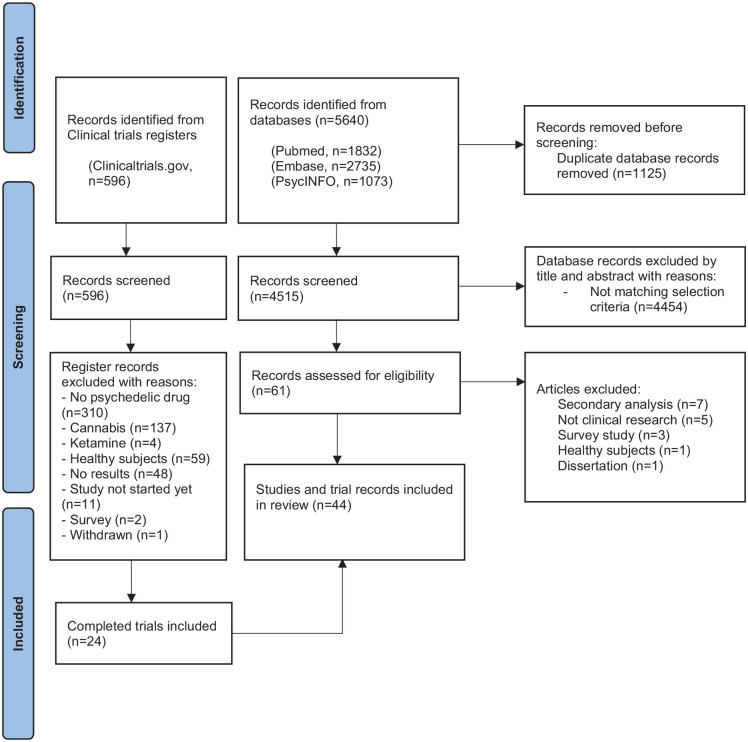
Introduction: Small-scale clinical studies with psychedelic drugs have shown promising results for the treatment of several mental disorders. Before psychedelics become registered medicines, it is important to know the full range of adverse events (AEs) for making balanced treatment decisions. Objective: To systematically review the presence of AEs during and after administration of serotonergic psychedelics and 3,4-methyenedioxymethamphetamine (MDMA) in clinical studies. Methods: We systematically searched PubMed, PsycINFO, Embase, and ClinicalTrials.gov for clinical trials with psychedelics since 2000 describing the results of quantitative and qualitative studies. Results: We included 44 articles (34 quantitative + 10 qualitative), describing treatments with MDMA and serotonergic psychedelics (psilocybin, lysergic acid diethylamide, and ayahuasca) in 598 unique patients. In many studies, AEs were not systematically assessed. Despite this limitation, treatments seemed to be overall well tolerated. Nausea, headaches, and anxiety were commonly reported acute AEs across diagnoses and compounds. Late AEs included headaches (psilocybin, MDMA), fatigue, low mood, and anxiety (MDMA). One serious AE occurred during MDMA administration (increase in premature ventricular contractions requiring brief hospitalization); no other AEs required medical intervention. Qualitative studies suggested that psychologically challenging experiences may also be therapeutically beneficial. Except for ayahuasca, a large proportion of patients had prior experience with psychedelic drugs before entering studies. Conclusions: AEs are poorly defined in the context of psychedelic treatments and are probably underreported in the literature due to study design (lack of systematic assessment of AEs) and sample selection. Acute challenging experiences may be therapeutically meaningful, but a better understanding of AEs in the context of psychedelic treatments requires systematic and detailed reporting.
Overview
The claims and statistics of this paper haven’t been checked yet.
Free: it reads the open-access text and checks the first 5 claims that cite a source we can check. Create a free account to check every claim.
Integrity signals
Registry
Cites
Statistics
Figures
Verification
Claims the paper makes
The claims and statistics of this paper haven’t been checked yet.
Free: it reads the open-access text and checks the first 5 claims that cite a source we can check. Create a free account to check every claim.
Claims other papers make about this one
Each is checked against this paper’s own text: does it say what the citing paper says it does?
The source backs part of the claim, not all of it — or backs it for a different population, condition or comparison.
In the citing paper
“recent critiques highlight notable limitations in many of these studies, [16][17][18][19] including small sample sizes, assessments by raters likely to be functionally unblinded, an open or waitlist comparator design, and an inadequate assessment of adverse events (AEs).”
From Single-Dose Psilocybin Treatment for Major Depressive Disorder: A Randomized Clinical Trial (2023) · cites this paper as [17]
Experimental — accuracy not yet measuredThe source backs part of the claim, not all of it — or backs it for a different population, condition or comparison.
In the citing paper
“No serious TEAEs were reported in the current study; however, psilocybin treatment was associated with a higher rate of overall AEs and a higher rate of severe AEs compared with niacin, with these severe AEs being known effects of psilocybin.17”
From Single-Dose Psilocybin Treatment for Major Depressive Disorder: A Randomized Clinical Trial (2023) · cites this paper as [17]
Experimental — accuracy not yet measuredThe source backs part of the claim, not all of it — or backs it for a different population, condition or comparison.
In the citing paper
“Controlled clinical trials with psilocybin, as well as other psychedelics, have occasionally reported increases in suicidality after treatment, sometimes with extremely brief information about treatment-relatedness (Breeksema et al., 2022; Goodwin et al., 2022).”
From Naturalistic psychedelic therapy: The role of relaxation and subjective drug effects in antidepressant response (2024) · cites this paper as Breeksema et al., 2022
Experimental — accuracy not yet measuredThe source backs part of the claim, not all of it — or backs it for a different population, condition or comparison.
In the citing paper
“The absence of SAEs and low rates of TRAEs that were mild or moderate and self-limiting is also consistent with prior studies of PAT, and supports the hypothesis that PAT has an acceptable safety profile for a selected group of people with MAUD [55].”
From Psilocybin‐assisted psychotherapy for methamphetamine use disorder: A pilot open‐label safety and feasibility study. (2025) · cites this paper as [55]
Experimental — accuracy not yet measuredThe cited source says what the claim attributes to it.
In the citing paper
“[100] have drawn attention to a potential underreporting of adverse events in PAT studies due to a lack of systematic assessment and disclosure.”
Self-check
Percentages, sums and reported differences re-computed from the paper’s own numbers.
The self-check needs the paper’s full text.
Citations
Cites
1 retracted
Mithoefer, M. C., Feduccia, A. A., Jerome, L., Mithoefer, A., Wagner, M., Walsh, Z., Hamilton, S., Yazar-Klosinski, B., Emerson, A., & Doblin, R. (2019) · Psychopharmacology · doi:10.1007/s00213-019-05249-5 · Cited by 359 · cited 4×
“Two RCTs systematically assessed AEs (Mitchell et al., 2021; Mithoefer et al., 2019), another study employed the UKU scale of secondary effects; this was the only study reporting AE severity (Oehen et al.”
BackgroundResultInfluentialRetractedPreferred Reporting Items for Systematic Reviews and Meta-Analyses: the PRISMA statement
Moher, D., Liberati, A., Tetzlaff, J., Altman, D. G., & for the PRISMA Group (2009) · BMJ · doi:10.1136/bmj.b2535 · Cited by 83,823
Preferred Reporting Items for Systematic Reviews and Meta-Analyses: The PRISMA Statement
Moher, D., Liberati, A., Tetzlaff, J., & Altman, D. G. (2009) · Journal of Clinical Epidemiology · doi:10.1016/j.jclinepi.2009.06.005 · Cited by 19,575
Griffiths, R. R., Johnson, M. W., Carducci, M. A., Umbricht, A., Richards, W. A., Richards, B. D., Cosimano, M. P., & Klinedinst, M. A. (2016) · Journal of Psychopharmacology · doi:10.1177/0269881116675513 · Cited by 2,201 · cited 15×
“(2014) EOLA: End-of-life anxiety; LSD: lysergic acid diethylamide; PTSD: post-traumatic stress disorder; TRD: treatment-resistant depression. occurred more often in the MDMA than in the placebo groups, with some exceptions (e.g., one RCT found a slightly higher prevalence of anxiety and fatigue in the placebo group) (…”
BackgroundResultInfluentialRoss, S., Bossis, A., Guss, J., Agin-Liebes, G., Malone, T., Cohen, B., Mennenga, S. E., Belser, A., Kalliontzi, K., Babb, J., et al. (2016) · Journal of Psychopharmacology · doi:10.1177/0269881116675512 · Cited by 1,698 · cited 14×
“(2014) EOLA: End-of-life anxiety; LSD: lysergic acid diethylamide; PTSD: post-traumatic stress disorder; TRD: treatment-resistant depression. occurred more often in the MDMA than in the placebo groups, with some exceptions (e.g., one RCT found a slightly higher prevalence of anxiety and fatigue in the placebo group) (…”
BackgroundInfluentialGriffiths, R. R., Richards, W. A., McCann, U., & Jesse, R. (2006) · Psychopharmacology · doi:10.1007/s00213-006-0457-5 · Cited by 1,684
Carhart-Harris, R. L., Bolstridge, M., Rucker, J., Day, C. M. J., Erritzoe, D., Kaelen, M., Bloomfield, M., Rickard, J. A., Forbes, B., Feilding, A., et al. (2016) · The Lancet Psychiatry · doi:10.1016/s2215-0366(16)30065-7 · Cited by 1,540 · cited 3×
“Open-label studies investigated the treatment of treatment-resistant depression (TRD; Carhart-Harris et al., 2016, 2018), AUD (Bogenschutz et al., 2015), tobacco smoking (Johnson et al., 2014), and demoralization in older AIDSsurvivors (Anderson et al., 2020).”
BackgroundTrial of Psilocybin versus Escitalopram for Depression
Carhart-Harris, R., Giribaldi, B., Watts, R., Baker-Jones, M., Murphy-Beiner, A., Murphy, R., Martell, J., Blemings, A., Erritzoe, D., & Nutt, D. J. (2021) · New England Journal of Medicine · doi:10.1056/nejmoa2032994 · Cited by 1,391 · cited 7×
“, 2016), two RCTs on MDD (Carhart-Harris et al., 2021; Davis et al., 2020), one RCT on migraine headaches (Schindler et al.”
BackgroundResultInfluentialEffects of Psilocybin-Assisted Therapy on Major Depressive Disorder: A Randomized Clinical Trial
Davis, A. K., Barrett, F. S., May, D. G., Cosimano, M. P., Sepeda, N. D., Johnson, M. W., Finan, P. H., & Griffiths, R. R. (2021) · JAMA Psychiatry · doi:10.1001/jamapsychiatry.2020.3285 · Cited by 1,301
Pilot Study of Psilocybin Treatment for Anxiety in Patients With Advanced-Stage Cancer
Grob, C. S., Danforth, A. L., Chopra, G. S., Hagerty, M., McKay, C. R., Halberstadt, A. L., & Greer, G. R. (2011) · Archives of General Psychiatry · doi:10.1001/archgenpsychiatry.2010.116 · Cited by 1,206 · cited 15×
“Quality appraisal Two studies did not report on AEs (Grob et al., 2011; Moreno et al., 2006).”
BackgroundInfluential
Research works printed but not linked: 5
- Kirkpatrick M De Wit H (2014) The acute effects of MDMA in social contexts. Neuropsychopharmacology 39: S466. PMC4023138 24448644
- Lindsay B (2022) Health Canada announces review of all MDMA trials, as complaint alleges major flaws and safety issues. CBC News. Available at: https://www.cbc.ca/news/canada/british-columbia/health-canada-mdma-trial-complaints-flaws-safety-issues-1.6409849 (accessed 8 April 2022).
- Mithoefer MC Doblin R Mithoefer A, et al. (2013a) A Manual for MDMA-Assisted Psychotherapy in the Treatment of Posttraumatic Stress Disorder. Santa Cruz, CA: MAPS.
- Peryer G Golder S Junqueira D, et al. (2021) Chapter 19: Adverse effects. In: Higgins JPT Thomas J Chandler J, et al. (eds) Cochrane Handbook for Systematic Reviews of Interventions Version 6.2 (Updated February 2021). Cochrane. Available at: http://www.training.cochrane.org/handbook (accessed 21 March 2022).
- Vizeli P Holze F Schmid Y, et al. (2019) At ease-subjective effects of MDMA in placebo-controlled studies with healthy subjects. Psychother Psychosom 88: 133– 134.
Cited by
Single-Dose Psilocybin Treatment for Major Depressive Disorder: A Randomized Clinical Trial
Raison, C. L., Sanacora, G., Woolley, J., Heinzerling, K., Dunlop, B. W., Brown, R. T., Kakar, R., Hassman, M., Trivedi, R. P., Robison, R., et al. (2023) · JAMA · doi:10.1001/jama.2023.14530 · Cited by 545
Extended difficulties following the use of psychedelic drugs: A mixed methods study
Evans, J., Robinson, O. C., Argyri, E. K., Suseelan, S., Murphy-Beiner, A., McAlpine, R., Luke, D., Michelle, K., & Prideaux, E. (2023) · PLOS ONE · doi:10.1371/journal.pone.0293349 · Cited by 185
McNamee, S., Devenot, N., & Buisson, M. (2023) · JAMA Psychiatry · doi:10.1001/jamapsychiatry.2023.0099 · Cited by 168
Adverse Events in Studies of Classic Psychedelics: A Systematic Review and Meta-Analysis
Hinkle, J. T., Graziosi, M., Nayak, S. M., & Yaden, D. B. (2024) · JAMA psychiatry · doi:10.1001/jamapsychiatry.2024.2546 · Cited by 156
History repeating: guidelines to address common problems in psychedelic science
van Elk, M., & Fried, E. I. (2023) · Therapeutic Advances in Psychopharmacology · doi:10.1177/20451253231198466 · Cited by 137
The Psychedelic Future of Post-Traumatic Stress Disorder Treatment
Zaretsky, T. G., Jagodnik, K. M., Barsic, R., Antonio, J. H., Bonanno, P. A., MacLeod, C., Pierce, C., Carney, H., Morrison, M. T., Saylor, C., et al. (2024) · Current Neuropharmacology · doi:10.2174/1570159x22666231027111147 · Cited by 85
Therapeutic mechanisms of psychedelics and entactogens
Heifets, B. D., & Olson, D. E. (2023) · Neuropsychopharmacology · doi:10.1038/s41386-023-01666-5 · Cited by 80
“…settings are intended to constrain the chaos of psychedelic subjective effects, it would be reasonable to wonder why reported sessions seem as likely to result in ‘ blissful ’ versus ‘ terrifying ’ trips, either of which may ultimately be deemed meaningful and therapeutic [203, 231, 238].”
BackgroundClinically relevant acute subjective effects of psychedelics beyond mystical experience
Yaden, D. B., Goldy, S. P., Weiss, B., & Griffiths, R. R. (2024) · Nature Reviews Psychology · doi:10.1038/s44159-024-00345-6 · Cited by 72
“…owing to issues of design, sample size and blinding 27 , and caution ought to remain the rule regarding clinical recommendations 28 because psych-edelics can elicit serious adverse experiences (such as psychosis, dissociation and suicidal ideation) even in controlled research settings 29,30 .”
Psychedelic Commercialization: A Wide-Spanning Overview of the Emerging Psychedelic Industry
Aday, J. S., Barnett, B. S., Grossman, D., Murnane, K. S., Nichols, C. D., & Hendricks, P. S. (2023) · Psychedelic Medicine · doi:10.1089/psymed.2023.0013 · Cited by 68
“101 Given the powerful and potentially destabilizing PSYCHEDELIC COMMERCIALIZATION nature of these experiences, 102 reducing support could be a slippery slope, with the cost potentially manifesting as increases in adverse outcomes among patients and legal liability for clinicians.”
Kopra, E. I., Ferris, J., WINSTOCK, A. R., Kuypers, K. P. C., Young, A. H., & Rucker, J. (2023) · Journal of Psychopharmacology · doi:10.1177/02698811231158245 · Cited by 68
“…important to help ensure provision of personal support for people using psychedelics (Glynos et al., 2022; Gorman et al., 2021; Pilecki et al., 2021), the importance of which we highlighted previously (Breeksema et al., 2022; Glynos et al., 2022; Johnson et al., 2008; Murphy et al., 2022).”
BackgroundInfluentialBreeksema, J. J., Niemeijer, A., Krediet, E., Karsten, T., Kamphuis, J., Vermetten, E., van den Brink, W., & Schoevers, R. (2024) · Scientific Reports · doi:10.1038/s41598-024-53188-9 · Cited by 58
“As we reported elsewhere, adverse events are often registered inadequately and inconsistently, and our understanding of difficult emotional experiences, often categorized as ‘anxiety’, needs to be improved in the context of psychedelic treatment 59 .”
BackgroundSelf-citationEvens, R., Schmidt, M. E., Majić, T., & Schmidt, T. T. (2023) · Therapeutic Advances in Psychopharmacology · doi:10.1177/20451253231172254 · Cited by 56
Mechanisms and molecular targets surrounding the potential therapeutic effects of psychedelics
Jaster, A. M., & González‐Maeso, J. (2023) · Molecular Psychiatry · doi:10.1038/s41380-023-02274-x · Cited by 61
Holze, F., Singh, N., Liechti, M. E., & D’Souza, D. C. (2024) · Biological Psychiatry Cognitive Neuroscience and Neuroimaging · doi:10.1016/j.bpsc.2024.01.007 · Cited by 78
Hashimoto, K. (2024) · European Archives of Psychiatry and Clinical Neuroscience · doi:10.1007/s00406-024-01770-7 · Cited by 63
Argyri, E. K., Evans, J., Luke, D. P., Michael, P., Michelle, K., Rohani-Shukla, C., Suseelan, S., Prideaux, E., McAlpine, R. G., Murphy-Beiner, A., et al. (2025) · PLoS ONE · doi:10.1371/journal.pone.0322501 · Cited by 59
Brennan, B., Kelman, A. R., & Belser, A. (2023) · Psychedelic Medicine · doi:10.1089/psymed.2023.0007 · Cited by 52
“42 They stated that ‘‘treatment designs that reduce or minimize positive contextual components (e.g., time spent preparing patients, number of therapists, strength of the therapeutic relationship, time spent providing aftercare and integration) may increase the incidence of AEs,’’ 42(p. 14) citing agreement with earli…”
InfluentialBorkel, L. F., Rojas‐Hernández, J., Henríquez‐Hernández, L. A., Santana, Á., & Hernández, D. J. Q. (2023) · Expert Review of Clinical Pharmacology · doi:10.1080/17512433.2023.2295997 · Cited by 60
“However, despite the low organic risk associated with the use of psychedelics, the risks in terms of psychological disorders like psychosis as well as the risk of hallucinogen persisting perception disorder must be studied thoroughly before their safety can be established [16–18].”
BackgroundThe risk of chronic psychedelic and MDMA microdosing for valvular heart disease
Tagen, M., Mantuani, D., van Heerden, L., Holstein, A., Klumpers, L. E., & Knowles, R. G. (2023) · Journal of Psychopharmacology · doi:10.1177/02698811231190865 · Cited by 48
“In many past studies of psychedelics and MDMA, AEs were not systematically assessed (Breeksema et al., 2022).”
Rucker, J., Roberts, C., Seynaeve, M., Young, A. H., Suttle, B., Yamamoto, T., Ermakova, A. O., Dunbar, F., & Wiegand, F. (2024) · Journal of Psychopharmacology · doi:10.1177/02698811241246857 · Cited by 51
“Generally, less AEs were observed in this study when compared to psychedelic use in uncontrolled circumstances (Barrett et al., 2016; Breeksema et al., 2022; Johnson et al., 2008), reinforcing 5-MeO-DMT administration is safer in a clinical setting.”
BackgroundSide-effects of mdma-assisted psychotherapy: a systematic review and meta-analysis
Colcott, J., Guerin, A. A., Carter, O. L., Meikle, S. E., & Bedi, G. (2024) · Neuropsychopharmacology · doi:10.1038/s41386-024-01865-8 · Cited by 48
“…have been determined in detail in placebo-controlled studies in healthy subjects [11], previous reviews of the safety and tolerability of MDMA-AP did not include meta-analyses of safety outcomes [14 – 22], or were limited to PTSD [15, 16, 20 – 23], terminal illness [19], or depression [18].”
BackgroundMethodResultInfluentialA framework for assessment of adverse events occurring in psychedelic-assisted therapies
Palitsky, R., Kaplan, D. M., Perna, J., Bosshardt, Z., Maples‐Keller, J. L., Levin-Aspenson, H. F., Zarrabi, A. J., Peacock, C., Mletzko, T., Rothbaum, B. O., et al. (2024) · Journal of Psychopharmacology · doi:10.1177/02698811241265756 · Cited by 49
“Although established methods and terminology for assessing harms in clinical trials exist and in many cases have been applied in PAT research (Breeksema et al., 2022; Schlag et al., 2022), two aspects of PAT necessitate additional tailoring of approaches to AE assessment.”
Psychedelic‐assisted treatment for substance use disorder: A narrative systematic review
Piper, T., Small, F., Brown, S., Kelleher, M., Mitcheson, L., Rucker, J., Young, A. H., & Marsden, J. (2025) · Addiction · doi:10.1111/add.16762 · Cited by 47
Role of Psychedelics in Treatment-Resistant Depression
Kamal, S., Jha, M. K., & Radhakrishnan, R. (2023) · Psychiatric Clinics of North America · doi:10.1016/j.psc.2023.02.004 · Cited by 38
Robinson, O. C., Evans, J., Luke, D. P., McAlpine, R. G., Sahely, A., Fisher, A. M., Sundeman, S., Argyri, E. K., Murphy-Beiner, A., Michelle, K., et al. (2024) · Frontiers in Psychology · doi:10.3389/fpsyg.2024.1369715 · Cited by 42
Mind the Psychedelic Hype: Characterizing the Risks and Benefits of Psychedelics for Depression
Meling, D., Ehrenkranz, R. C., Nayak, S. M., Aicher, H., Funk, X., van Elk, M., Graziosi, M., Bauer, P. R., Scheidegger, M., & Yaden, D. B. (2024) · Psychoactives · doi:10.3390/psychoactives3020014 · Cited by 35
“Reviews of the psychedelic literature show that when administered in a regulated or medical context, the medical risks of psychedelics are low and adverse events requiring medical intervention are rare [25,36,37].”
BackgroundPsilocybin therapy for mood dysfunction in Parkinson’s disease: an open-label pilot trial
Bradley, E., Sakai, K., Fernandes‐Osterhold, G., Szigeti, B., Ludwig, C., Ostrem, J. L., Tanner, C. M., Bock, M., Llerena, K., Finley, P. R., et al. (2025) · Neuropsychopharmacology · doi:10.1038/s41386-025-02097-0 · Cited by 40
“The experiences of these participants underscore the risks associated with high-dose psychedelic treatments, even when provided using a consistent medicinal product in a monitored setting and paired with skilled psychotherapeutic support [71].”
Breeksema, J. J., Niemeijer, A. R., Kuin, B., Veraart, J. K. E., Vermetten, E. H. G. J. M., Kamphuis, J., van den Brink, W., & Schoevers, R. A. (2023) · Psychopharmacology · doi:10.1007/s00213-023-06388-6 · Cited by 36
Self-citationOn Minimizing Risk and Harm in the Use of Psychedelics
Evans, J., Aixalà, M., Anderson, B. T., Brennan, W., Bremler, R., Breeksema, J. J., Burback, L., Calder, A. E., Carhart-Harris, R. L., Cheung, K., et al. (2025) · Psychiatric Research and Clinical Practice · doi:10.1176/appi.prcp.20240128 · Cited by 34
Self-citationThe therapeutic potential of psychedelics: the European regulatory perspective
Butlen‐Ducuing, F., McCulloch, D. E.-W., Haberkamp, M., Mattila, T., Bałkowiec-Iskra, E., Aislaitner, G., Balabanov, P., Lundberg, J., Stenbæk, D. S., Elferink, A. J. A., et al. (2023) · The Lancet · doi:10.1016/s0140-6736(23)00264-7 · Cited by 35
History repeating: A roadmap to address common problems in psychedelic science
van Elk, M., & Fried, E. I. (2023) · doi:10.31234/osf.io/ak6gx · Cited by 9
The Mystical Experience Questionnaire 4-Item and Challenging Experience Questionnaire 7-Item
Strickland, J. C., Garcia‐Romeu, A., & Johnson, M. W. (2024) · Psychedelic Medicine · doi:10.1089/psymed.2023.0046 · Cited by 30
“35 ), these findings align with the high rates of negative symptoms such as gastrointestinal distress and nausea reported with ayahuasca use (e.g., Refs.”
Safety pharmacology of acute psilocybin administration in healthy participants
Straumann, I., Holze, F., Becker, A., Ley, L., Halter, N., & Liechti, M. E. (2024) · Neuroscience Applied · doi:10.1016/j.nsa.2024.104060 · Cited by 32
Calder, A. E., & Hasler, G. (2024) · Journal of Affective Disorders · doi:10.1016/j.jad.2024.08.091 · Cited by 28
When the Trial Ends: The Case for Post-Trial Provisions in Clinical Psychedelic Research
Jacobs, E., Murphy-Beiner, A., Rouiller, I., Nutt, D. J., & Spriggs, M. J. (2023) · Neuroethics · doi:10.1007/s12152-023-09536-z · Cited by 35
Garel, N., Garel, N., Nash, K., & Lembke, A. (2024) · Addiction · doi:10.1111/add.16432 · Cited by 29
Can psychedelics enhance group psychotherapy? A discussion on the therapeutic factors
Ponomarenko, P., Seragnoli, F., Calder, A. E., Oehen, P., & Hasler, G. (2023) · Journal of Psychopharmacology · doi:10.1177/02698811231155117 · Cited by 34
“Serious adverse events are rare in both healthy and clinical populations (Breeksema et al., 2022), suggesting that well-trained therapists would likely be able to manage adverse effects from psychedelics in a group setting.”
BackgroundBahji, A., Lunsky, I. O., Gutiérrez, G., & Vázquez, G. H. (2023) · Journal of Psychoactive Drugs · doi:10.1080/02791072.2023.2278586 · Cited by 35
“In this regard, a review by Breeksema et al. (2022) found that adverse events were poorly defined, poorly understood, and likely to be underreported in psychedelic studies.”
Do the therapeutic effects of psilocybin involve actions in the gut?
Reed, F. M., & Foldi, C. J. (2024) · Trends in Pharmacological Sciences · doi:10.1016/j.tips.2023.12.007 · Cited by 28
Psilocybin-enhanced fear extinction linked to bidirectional modulation of cortical ensembles
Rogers, S. A., Heller, E. A., & Corder, G. F. (2025) · Nature Neuroscience · doi:10.1038/s41593-025-01964-9 · Cited by 30
“Upon first pass metabolism, psilocybin is dephosphorylated into its active metabolite psilocin – a potent serotonin receptor agonist 16,17 .”
The safety of psilocybin-assisted psychotherapy: A systematic review
de Freitas, R. R., Gotsis, E. S., Gallo, A. T., Fitzgibbon, B. M., Bailey, N. W., & Fitzgerald, P. B. (2024) · Australian & New Zealand Journal of Psychiatry · doi:10.1177/00048674241289024 · Cited by 29
“The current systematic analysis revealed similar AEs to those reported in a previous systematic review (Breeksema et al., 2022), including headache, nausea, anxiety and increases in systolic blood pressure (SBP), diastolic blood pressure (DBP) and heart rate (HR) during the session.”
InfluentialMDMA-assisted psychotherapy for PTSD in adolescents: rationale, potential, risks, and considerations
Kangaslampi, S., & Zijlmans, J. (2023) · European Child & Adolescent Psychiatry · doi:10.1007/s00787-023-02310-9 · Cited by 28
Psychedelic renaissance: Revitalized potential therapies for psychiatric disorders
Rhee, T. G., Davoudian, P. A., Sanacora, G., & Wilkinson, S. T. (2023) · Drug Discovery Today · doi:10.1016/j.drudis.2023.103818 · Cited by 24
Calder, A. E., Rausch, B., Liechti, M. E., Holze, F., & Hasler, G. (2024) · Journal of Psychopharmacology · doi:10.1177/02698811241278873 · Cited by 20
“Controlled clinical trials with psilocybin, as well as other psychedelics, have occasionally reported increases in suicidality after treatment, sometimes with extremely brief information about treatment-relatedness (Breeksema et al., 2022; Goodwin et al., 2022).”
BackgroundThe immunomodulatory effects of classical psychedelics: A systematic review of preclinical studies
Low, Z. X. B., Ng, W. S., Lim, E. S. Y., Goh, B. H., & Kumari, Y. (2024) · Progress in Neuro-Psychopharmacology and Biological Psychiatry · doi:10.1016/j.pnpbp.2024.111139 · Cited by 27
Yong, A. S. J., Bratuskins, S., Sultani, M. S., Blakeley, B., Davey, C. G., & Bell, J. S. (2025) · Australian & New Zealand Journal of Psychiatry · doi:10.1177/00048674251315642 · Cited by 22
“On the other hand, Breeksema et al. (2022) posited that adverse events in psychedelic studies need to be redefined because certain adverse events are ‘challenging but potentially therapeutically beneficial’.”
InfluentialHøjlund, M., Kafalı, H. Y., Kırmızı, B., Fusar‐Poli, P., Correll, C. U., Cortese, S., Sabé, M., Fiedorowicz, J. G., Saraf, G., Zein, J., et al. (2025) · European Neuropsychopharmacology · doi:10.1016/j.euroneuro.2025.09.011 · Cited by 25
Modlin, N. L., Creed, M., Sarang, M., Maggio, C., Rucker, J., & Williamson, V. (2024) · Neuropsychiatric Disease and Treatment · doi:10.2147/ndt.s432537 · Cited by 24
Basedow, L. A., Majić, T., Hafiz, N. J., Algharably, E. A. E., Kreutz, R. H., & Riemer, T. (2024) · Scientific Reports · doi:10.1038/s41598-024-65391-9 · Cited by 23
Sjöström, D. K., Claesdotter‐Knutsson, E., & Kajonius, P. (2024) · Scientific Reports · doi:10.1038/s41598-024-60890-1 · Cited by 20
Concurrent stress modulates the acute and post-acute effects of psilocybin in a sex-dependent manner
Farinha‐Ferreira, M., Miranda‐Lourenço, C., Galipeau, C., Lenkei, Z., & Sebastião, A. M. (2024) · Neuropharmacology · doi:10.1016/j.neuropharm.2024.110280 · Cited by 20
Gomez-Escolar, A., Folch‐Sanchez, D., Stefaniuk, J., Swithenbank, Z., Nisa, A., Braddick, F., Chaudhary, N. I., van der Meer, P. B., & Batalla, A. (2024) · CNS Drugs · doi:10.1007/s40263-024-01101-3 · Cited by 22
“In nine MDMA studies which measured blood pressure, body temperature and heart rate, all reported mild, transient, statistically significant elevations during the MDMA session, but none requiring medical intervention [96].”
Experiential Training in Psychedelic‐Assisted Therapy: A Risk‐Benefit Analysis
Rosenbaum, D., Hare, C., Hapke, E., Herman, Y., Abbey, S. E., Sisti, D. A., & Buchman, D. Z. (2024) · The Hastings Center Report · doi:10.1002/hast.1602 · Cited by 20
Askariyan, K., Joghataei, M. T., Dehghan, S., Nohesara, S., Rihipour, L., Mohammadi, M. H., & Ahmadirad, N. (2025) · Progress in Neuro-Psychopharmacology and Biological Psychiatry · doi:10.1016/j.pnpbp.2025.111461 · Cited by 15
Downey, A. E., Chaphekar, A. V., Woolley, J. D., & Raymond‐Flesch, M. (2024) · Journal of Eating Disorders · doi:10.1186/s40337-024-01005-z · Cited by 17
“Psilocybin risks and mechanisms Nausea is one of the most common adverse effects reported in clinical trials of psilocybin therapy [49], with Goodwin et al. noting this adverse effect in 22% of participants and Raison et al. noting this adverse effect in 48% of participants within their respective…”
BackgroundVanderijst, L., Hever, F., Buot, A., Dauré, C., Benoit, J., Hanak, C., Veeser, J., Morgiève, M., Campanella, S., Kornreich, C., et al. (2024) · BMC Psychiatry · doi:10.1186/s12888-024-05502-y · Cited by 13
“[100] have drawn attention to a potential underre-porting of adverse events in PAT studies due to a lack of systematic assessment and disclosure.”
BackgroundPsychedelic and MDMA-Related Adverse Effects—A Call for Action
Simonsson, O., Johnson, M. W., & Hendricks, P. S. (2024) · JAMA Health Forum · doi:10.1001/jamahealthforum.2024.3630 · Cited by 18
Psychedelics and autobiographical memory – six open questions
Kangaslampi, S., & Lietz, M. P. (2025) · Psychopharmacology · doi:10.1007/s00213-025-06771-5 · Cited by 15
“With psychedelic-related adverse events increasingly being discussed (Breeksema et al. 2022; Evans et al. 2023), this potential highlights the need for systematic evaluation of prevalence rates and impact of such phenomena in patients and users.”
Extrapharmacological Safety Topics in Psychedelic-Assisted Psychotherapy
Calder, A. E., & Hasler, G. (2023) · JAMA Psychiatry · doi:10.1001/jamapsychiatry.2023.1031 · Cited by 14
Primum non nocere: The onus to characterize the potential harms of psychedelic treatment
Ghaznavi, S., Ruskin, J. N., Haggerty, S. J., King, F., & Rosenbaum, J. F. (2025) · American Journal of Psychiatry · doi:10.1176/appi.ajp.20230914 · Cited by 12
Incremental efficacy systematic review and meta-analysis of psilocybin-for-depression RCTs
Borgogna, N. C., Owen, T., Petrovitch, D., Vaughn, J., Johnson, D. A., Pagano, L. A., Aita, S. L., & Hill, B. D. (2025) · Psychopharmacology · doi:10.1007/s00213-025-06788-w · Cited by 20
A landscape analysis of psychedelic retreat organizations advertising online
Neitzke‐Spruill, L., Beit, C. S., Robinson, J. O., Singh, N., Kambala, S., Ramesh, R., & McGuire, A. L. (2025) · PLoS ONE · doi:10.1371/journal.pone.0321648 · Cited by 15
Psychedelic-related deaths in England, Wales and Northern Ireland (1997–2022)
Kopra, E. I., Penttinen, J., Rucker, J., & Copeland, C. S. (2024) · Progress in Neuro-Psychopharmacology and Biological Psychiatry · doi:10.1016/j.pnpbp.2024.111177 · Cited by 13
Sutherland, I., Ho, M., & Croarkin, P. E. (2025) · Journal of Child and Adolescent Psychopharmacology · doi:10.1089/cap.2024.0082 · Cited by 12
“Some studies have been critiqued with concerns focused on functional unblinding, inadequate assessment of adverse events, and short durations of follow-up (Aday et al., 2022; Breeksema et al., 2022).”
The Epidemiology of Psychedelic Use Among United States Military Veterans
Davis, A. K., Bates, M. J., Lund, E. M., Sepeda, N. D., Levin, A. W., Armstrong, S. B., Koffman, R. L., Hooyer, K., & Yehuda, R. (2024) · Journal of Psychoactive Drugs · doi:10.1080/02791072.2024.2401977 · Cited by 12
“Establishing such intentions and facilitating these attitudes are a central focus of the therapeutic support provided in clinical trials (Johnson, Richards, and Griffiths 2008) and may explain the relatively low rates of adverse outcomes in those trials (Breeksema et al. 2022).”
Weleff, J., Nunes, J. C., Costa, G. P. A., Sofuoglu, M., MacLean, R. R., & Aquino, J. P. D. (2024) · British Journal of Clinical Pharmacology · doi:10.1111/bcp.16045 · Cited by 15
“150 Other serotonergic psychedelics have cardiovascular risks, including QTc prolongation and possible valvular disease, warranting adequate screening and monitoring of participants with OUD, whose QTc interval may be prolonged at baseline, and who may have underlying cardiac disorders as a…”
Extended Difficulties Following the Use of Psychedelic Drugs: A Mixed Methods StudyPreprint
Evans, J., Robinson, O. C., Argyri, E. K., Suseelan, S., Murphy-Beiner, A., & McAlpine, R. G. (2023) · SSRN Electronic Journal · doi:10.2139/ssrn.4487243 · Cited by 12
Do classic psychedelics increase the risk of seizures? A scoping review
Soto-Angona, Ó., Fortea, A., Fortea, L., Martínez-Ramírez, M., Santamarina, E., Gil-López, F., Knudsen, G. M., & Oña, G. (2024) · European Neuropsychopharmacology · doi:10.1016/j.euroneuro.2024.05.002 · Cited by 9
Wilkes, R., Roberts, D. M., Liknaitzky, P., & Brett, J. (2024) · Clinical Toxicology · doi:10.1080/15563650.2024.2346612 · Cited by 9
Milshteyn, Y., & Bensimon, M. (2023) · Harm Reduction Journal · doi:10.1186/s12954-023-00908-5 · Cited by 12
Safety pharmacology of acute mescaline administration in healthy participants
Klaiber, A., Humbert‐Droz, M., Ley, L., Schmid, Y., & Liechti, M. E. (2024) · British Journal of Clinical Pharmacology · doi:10.1111/bcp.16349 · Cited by 9
Use of psychedelic treatments in psychiatric clinical practice: an EPA policy paper
Destoop, M., Mohr, P., Butlen‐Ducuing, F., Kéri, P., Samochowiec, J., Picker, L. D., Fiorillo, A., Kuypers, K. P. C., & Dom, G. (2025) · European Psychiatry · doi:10.1192/j.eurpsy.2024.1806 · Cited by 11
Caraccio, M., Cheung, K., Mann, S. P., Bruce, L., Jacobs, E., Villiger, D., Sandbrink, J. D., Register, C., Hannikainen, I. R., Høeg, M. L., et al. (2025) · Philosophical Psychology · doi:10.1080/09515089.2025.2532761 · Cited by 11
“The most common acute physiological adverse event was anxiety (Breeksema et al., 2022).”
Olofsson, M., Osika, W., Goldberg, S. B., Hendricks, P. S., Petrović, P., White, T. J. H., Stenfors, C. U. D., Chaturvedi, S., & Simonsson, O. (2025) · International Journal of Drug Policy · doi:10.1016/j.drugpo.2025.105105 · Cited by 12
“Further, a recent systematic review suggested adverse effects may be underreported in clinical studies due to a lack of systematic assessment (Breeksema et al., 2022).”
EMBARK Psychedelic Therapy for Depression: A New Approach for the Whole Person
Brennan, B., & Belser, A. (2024) · doi:10.1093/9780197762622.001.0001 · Cited by 8
A suicide attempt following psilocybin ingestion in a patient with no prior psychiatric history
Kramer, E. N., Reddy, K., & Shapiro, B. B. (2023) · Psychiatry Research Case Reports · doi:10.1016/j.psycr.2023.100118 · Cited by 11
Knock, E., Siefried, K. J., Bedi, G., Albert, S., Day, R. O., Ezard, N., Ross, M., Liknaitzky, P., & Brett, J. (2025) · Addiction · doi:10.1111/add.70187 · Cited by 9
Black, J. C., Monte, A. A., Dasgupta, N., Jewell, J. S., Rockhill, K. M., Olson, R. A., & Dart, R. C. (2024) · Nature Mental Health · doi:10.1038/s44220-024-00233-1 · Cited by 7
“…help define population-level drug exposure 25 , which in turn influences individual choices, such as initiation or discontinuation of use, switching between medical and Perspective https://doi.org/10.1038/s44220-024-00233-1 can lead to unpleasant hallucinations, anxiety and psychosis 35,36 .”
InfluentialProtective Behavioral Strategies for Psychedelic Use: A Mini Review of the Evidence
Piercey, C. J., Gray, B. A., Sung, A., Henry, D., & Karoly, H. C. (2024) · Psychedelic Medicine · doi:10.1089/psymed.2023.0052 · Cited by 7
Guiding Through Challenging Psychedelic Experiences and “Bad Trips”
Koslowski, M., & Gasser, P. (2024) · Current topics in behavioral neurosciences · doi:10.1007/7854_2024_515 · Cited by 9
Psychedelika und Dissoziativa in der Psychiatrie: Herausforderungen in der Behandlung
Jungwirth, J., Bavato, F., & Quednow, B. B. (2024) · Der Nervenarzt · doi:10.1007/s00115-024-01727-0 · Cited by 10
Kruger, D. J., Argyri, E. K., Mogilski, J. K., Herberholz, M., Barron, J., Aday, J. S., & Boehnke, K. F. (2025) · The Journal of Sex Research · doi:10.1080/00224499.2025.2479197 · Cited by 8
“Psychedelic experiences are not always positive and can lead to prolonged difficulties (Argyri et al., 2024; Evans et al., 2023; Kruger et al., 2024; Robinson et al., 2024; Schlag et al., 2022) which are underreported in psychedelic research (Breeksema et al., 2022; McNamee et al., 2023).”
Rojas‐Hernández, J., Borkel, L. F., Hernández, D. J. Q., Santana, Á., & Henríquez‐Hernández, L. A. (2024) · Current Psychology · doi:10.1007/s12144-024-07017-x · Cited by 8
“Such late effects have not been reported when LSD is taken in controlled environments (Breeksema et al., 2022), suggesting a relevant role of the set and setting (parties) and the combinations with other substances: cannabis, alcohol and amphetamines (as shown in Table 3 ).”
Ramos, L., & Vicente, S. (2024) · Journal of Clinical and Experimental Neuropsychology · doi:10.1080/13803395.2024.2363343 · Cited by 8
“Due to individual and contextual variability and inconsistent definitions of adverse effects (AEs) in the context of psychedelic intervention, it is difficult to predict the potential AEs associated with psilocybin (Breeksema et al., 2022).”
Ketamine-assisted psychotherapies for mental disorders: A historical overview and systematic review
Veraart, J. K. E., Schimmers, N., Breeksema, J. J., Seybert, C., Kamphuis, J., Huber, L. F. T., Rota, A., Coerts, D. T., Oliveira-Maia, A. J., & Schoevers, R. A. (2026) · Clinical Psychology Review · doi:10.1016/j.cpr.2026.102706 · Cited by 9
Self-citationNarrative review of the potential for psychedelics to treat Prolonged Grief Disorder
Ehrenkranz, R. C., Agrawal, M., Penberthy, J. K., & Yaden, D. B. (2024) · International Review of Psychiatry · doi:10.1080/09540261.2024.2357668 · Cited by 6
“Even with psychological support in a controlled environment, adverse events and challenging experiences can and do occur during the psychedelic experience (Breeksema et al., 2022).”
Psychedelics and psychoanalysis: The journey from talking cure to transformation
Lichtenstein, J., & Hoeh, N. R. (2024) · Journal of Psychedelic Studies · doi:10.1556/2054.2024.00373 · Cited by 9
Adapting psychedelic medicine for headache and chronic pain disorders
Schindler, E. A. D., & Hendricks, P. S. (2023) · Expert Review of Neurotherapeutics · doi:10.1080/14737175.2023.2246655 · Cited by 9
“Indeed, it has been suggested that effect sizes in randomized controlled trials of psychedelics are overestimated due to heightened pre-trial expectations and functional unblinding [72], and that adverse effects are underreported [73].”
BackgroundEnriquez‐Geppert, S., Krc, J., O'Higgins, F., & Lietz, M. P. (2024) · Philosophical Transactions of the Royal Society B Biological Sciences · doi:10.1098/rstb.2023.0095 · Cited by 6
Leveraging meditation research for the study of psychedelic-related adverse effects
Palitsky, R., Canby, N. K., Dam, N. T. V., Levin-Aspenson, H. F., Kaplan, D. M., Maples‐Keller, J. L., Raison, C. L., Grant, G. H., Dunlop, B. W., & Britton, W. B. (2024) · International Review of Psychiatry · doi:10.1080/09540261.2024.2420745 · Cited by 8
“Notwithstanding, appraisals of AE incidence and severity based on clinical trials may underestimate AEs due to limited assessment of AEs, especially those occurring beyond the acute dosing period (Breeksema et al., 2022; Palitsky et al., 2024; Schlag et al., 2022).”
Bukovsky, D., Amaev, A., Song, J., Kyte, S., Carmona-Torres, E., Ueno, F., Luca, V. D., Strafella, A. P., Husain, M. I., Graff‐Guerrero, A., et al. (2025) · Progress in Neuro-Psychopharmacology and Biological Psychiatry · doi:10.1016/j.pnpbp.2025.111541 · Cited by 10
The Psychedelic Renaissance: A Catholic Perspective
Carroll, T. (2024) · The Linacre Quarterly · doi:10.1177/00243639241274818 · Cited by 5
“Indeed, Breeksema et al. (2022) found only a total of 598 subjects enrolled among 24 trials.”
InfluentialBrouwer, A., Brown, J. K., Erowid, E., Erowid, F., Thyssen, S., Raison, C. L., & Carhart-Harris, R. L. (2024) · Research Square · doi:10.21203/rs.3.rs-3941205/v1 · Cited by 5
Psychedelics for military and Veteran communities? Research, practice, and policy considerations
Shore, R. (2023) · Journal of Military Veteran and Family Health · doi:10.3138/jmvfh.9.5.ed01 · Cited by 5
Mastelić, T., Marasović, T. B., Žuljević, M. F., Ercegovac, M. S., Kaliterna, M., Pleić, N., Vukorepa, D., Topić, J., Cvitanović, M., Lasić, D., et al. (2024) · Journal of Psychoactive Drugs · doi:10.1080/02791072.2024.2370343 · Cited by 5
“…the interaction of psychedelics and antidepressants, and the lack of monitoring of the duration of positive effects (Bender and Hellerstein 2022; Breeksema et al. 2022; Carhart-Harris et al. 2021; Gukasyan et al. 2023; Hovmand et al. 2023; IsHak et al. 2023; Kisely et al. 2023; Ko et al. 2023;…”
Into the wild frontier: Mapping the terrain of adverse events in psychedelic-assisted therapies
Simonsson, O., Goldberg, S. B., & Hendricks, P. S. (2024) · Journal of Psychopharmacology · doi:10.1177/02698811241292944 · Cited by 4
“This framework will hopefully lead to standardized assessments of AEs in PATs that contrast with the inconsistency and lack of specificity of previous assessments (Breeksema et al., 2022).”
ResultPerspectives of Psychotherapists Regarding Psychedelic Assisted Therapy
Kinahan, S. P., & Wilson, E. J. (2025) · Counselling and Psychotherapy Research · doi:10.1002/capr.12881 · Cited by 5
Silva, F., Butlen‐Ducuing, F., Guizzaro, L., & Balabanov, P. (2025) · Neuroscience Applied · doi:10.1016/j.nsa.2025.105516 · Cited by 7
“Existing evidence appears to support that the incidence of these effects is dose-dependent (Breeksema et al., 2022).”
The psychedelic-peptide paradox: a hormetic hypothesis
Carter, C. S. (2025) · Comprehensive Psychoneuroendocrinology · doi:10.1016/j.cpnec.2025.100303 · Cited by 5
Walker, C., Piatkowski, T. M., Ferris, J., Davies, E., Barratt, M. J., WINSTOCK, A. R., & Puljević, C. (2024) · Journal of Psychopharmacology · doi:10.1177/02698811241265762 · Cited by 6
“For example, Breeksema et al. (2022) have emphasised the need for a more thorough examination of adverse events in clinical treatments involving serotonergic psychedelics and MDMA.”
Background
Metadata
- Authors
- Breeksema, J. J., Kuin, B. W., Kamphuis, J., van den Brink, W., Vermetten, E., & Schoevers, R. A.
- Affiliations
- University Medical Center Groningen (NL)
- Department of Psychiatry, Amsterdam University Medical Center, Amsterdam, The Netherlands
- Leiden University Medical Center (NL)
- Corresponding author
- Breeksema, Joost J
- Venue
- Journal of Psychopharmacology
- Publisher
- SAGE Publications
- Published
- 2022-08-26
- Volume
- 36
- Issue
- 10
- Pages
- 1100-1117
- ISSN
- 0269-8811 (ISSN-L)
- 1461-7285
- PMC
- PMC9548934
- OpenAlex
- W4293194637
- Semantic Scholar
- 3be719319c74dcced429f26ce5a53968e97eb19f
- Cited by
- 178
- References
- 116
- Citations by year
- 2026: 29 · 2025: 47 · 2024: 73 · 2023: 29
- FWCI
- 6.20
- Type
- journal article
- Language
- en
- Open access
- hybrid
- doi.org
- Licence
- cc-by-nc
- creativecommons.org/licenses/by-nc/4.0/ (unspecified)
- journals.sagepub.com/page/policies/text-and-data-mining-license (tdm)
- Locations
- Journal of Psychopharmacology (publishedVersion, cc-by-nc)
- PubMed Central (publishedVersion, cc-by-nc)
- PubMed (publishedVersion)
- Data Archiving and Networked Services (DANS) (submittedVersion, other-oa)
- Data Archiving and Networked Services (DANS) (submittedVersion)
- Leiden Repository (Leiden University) (submittedVersion)
- Pure Amsterdam UMC (submittedVersion, other-oa)
- University of Groningen research database (University of Groningen / Centre for Information Technology) (submittedVersion, cc-by-nc)
- Topics
- Social Sciences › Psychology › Clinical Psychology › Psychedelics and Drug Studies
- Health Sciences › Medicine › Psychiatry and Mental health › Schizophrenia research and treatment
- Social Sciences › Psychology › Clinical Psychology › Psychotherapy Techniques and Applications
- Keywords
- adverse events, serotonergic psychedelics, MDMA, psilocybin, lysergic acid diethylamide, ayahuasca, psychedelic therapy, adverse event reporting, premature ventricular contractions, tolerability
- MeSH terms
- Hallucinogens, Headache, Humans, Lysergic Acid Diethylamide, Psilocybin, N-Methyl-3,4-methylenedioxyamphetamine, Banisteriopsis
About these checks
Registry, retraction, Cites and statistics results are computed, not judged, with one exception: a printed reference that no index lists is read once by a model before it counts as a citation error. Claims are extracted by a model and kept only when their quote appears verbatim in the text; each cited source is then checked, with a model’s help, for whether it says what the claim relies on. Those verdicts can be wrong — read the claim’s quote and the cited source before relying on one.
Statistics and arithmetic are recomputed, not judged.
Confidence bands are shown only for fields calibrated on our annotated test set. None is calibrated yet, so no band is shown.
What counts as a claim ›How we measure confidence ›How we check this ›
Are you an author, or do you see a problem with this page? Request a review
Data sources
Bibliographic data: Semantic Scholar, OpenAlex, Crossref.
Contains information from the Semantic Scholar Academic Graph Datasets, made available under the ODC Attribution License (ODC-BY 1.0).
Semantic Scholar’s data is described in: Kinney, R., et al. (2023). The Semantic Scholar Open Data Platform. arXiv:2301.10140.
