

Adverse events in clinical treatments with serotonergic psychedelics and MDMA: a mixed-methods systematic review.
Open accessThe DOI matches its Crossref record; 116 of the 116 references it cites were found in a registry or an index.
Abstract
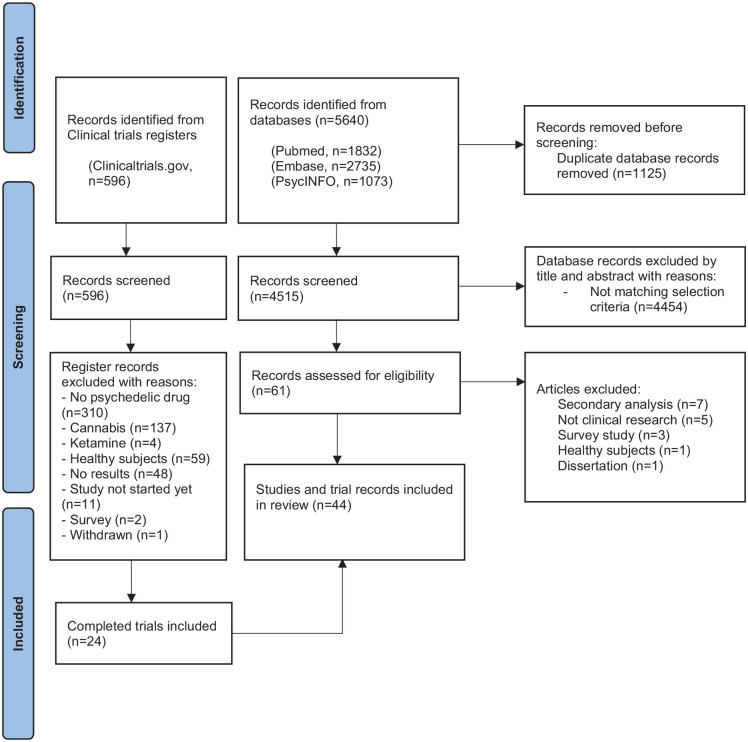
Introduction: Small-scale clinical studies with psychedelic drugs have shown promising results for the treatment of several mental disorders. Before psychedelics become registered medicines, it is important to know the full range of adverse events (AEs) for making balanced treatment decisions. Objective: To systematically review the presence of AEs during and after administration of serotonergic psychedelics and 3,4-methyenedioxymethamphetamine (MDMA) in clinical studies. Methods: We systematically searched PubMed, PsycINFO, Embase, and ClinicalTrials.gov for clinical trials with psychedelics since 2000 describing the results of quantitative and qualitative studies. Results: We included 44 articles (34 quantitative + 10 qualitative), describing treatments with MDMA and serotonergic psychedelics (psilocybin, lysergic acid diethylamide, and ayahuasca) in 598 unique patients. In many studies, AEs were not systematically assessed. Despite this limitation, treatments seemed to be overall well tolerated. Nausea, headaches, and anxiety were commonly reported acute AEs across diagnoses and compounds. Late AEs included headaches (psilocybin, MDMA), fatigue, low mood, and anxiety (MDMA). One serious AE occurred during MDMA administration (increase in premature ventricular contractions requiring brief hospitalization); no other AEs required medical intervention. Qualitative studies suggested that psychologically challenging experiences may also be therapeutically beneficial. Except for ayahuasca, a large proportion of patients had prior experience with psychedelic drugs before entering studies. Conclusions: AEs are poorly defined in the context of psychedelic treatments and are probably underreported in the literature due to study design (lack of systematic assessment of AEs) and sample selection. Acute challenging experiences may be therapeutically meaningful, but a better understanding of AEs in the context of psychedelic treatments requires systematic and detailed reporting.
Overview
The claims and statistics of this paper haven’t been checked yet.
Free: it reads the open-access text and checks the first 5 claims that cite a source we can check. Create a free account to check every claim.
Integrity signals
Registry
Cites
Statistics
Figures
Verification
Claims the paper makes
The claims and statistics of this paper haven’t been checked yet.
Free: it reads the open-access text and checks the first 5 claims that cite a source we can check. Create a free account to check every claim.
Claims other papers make about this one
Each is checked against this paper’s own text: does it say what the citing paper says it does?
The source backs part of the claim, not all of it — or backs it for a different population, condition or comparison.
In the citing paper
“recent critiques highlight notable limitations in many of these studies, [16][17][18][19] including small sample sizes, assessments by raters likely to be functionally unblinded, an open or waitlist comparator design, and an inadequate assessment of adverse events (AEs).”
From Single-Dose Psilocybin Treatment for Major Depressive Disorder: A Randomized Clinical Trial (2023) · cites this paper as [17]
Experimental — accuracy not yet measuredThe source backs part of the claim, not all of it — or backs it for a different population, condition or comparison.
In the citing paper
“No serious TEAEs were reported in the current study; however, psilocybin treatment was associated with a higher rate of overall AEs and a higher rate of severe AEs compared with niacin, with these severe AEs being known effects of psilocybin.17”
From Single-Dose Psilocybin Treatment for Major Depressive Disorder: A Randomized Clinical Trial (2023) · cites this paper as [17]
Experimental — accuracy not yet measuredThe source backs part of the claim, not all of it — or backs it for a different population, condition or comparison.
In the citing paper
“Controlled clinical trials with psilocybin, as well as other psychedelics, have occasionally reported increases in suicidality after treatment, sometimes with extremely brief information about treatment-relatedness (Breeksema et al., 2022; Goodwin et al., 2022).”
From Naturalistic psychedelic therapy: The role of relaxation and subjective drug effects in antidepressant response (2024) · cites this paper as Breeksema et al., 2022
Experimental — accuracy not yet measuredThe source backs part of the claim, not all of it — or backs it for a different population, condition or comparison.
In the citing paper
“The absence of SAEs and low rates of TRAEs that were mild or moderate and self-limiting is also consistent with prior studies of PAT, and supports the hypothesis that PAT has an acceptable safety profile for a selected group of people with MAUD [55].”
From Psilocybin‐assisted psychotherapy for methamphetamine use disorder: A pilot open‐label safety and feasibility study. (2025) · cites this paper as [55]
Experimental — accuracy not yet measuredThe cited source says what the claim attributes to it.
In the citing paper
“[100] have drawn attention to a potential underreporting of adverse events in PAT studies due to a lack of systematic assessment and disclosure.”
Self-check
Percentages, sums and reported differences re-computed from the paper’s own numbers.
The self-check needs the paper’s full text.
Citations
Cites
1 retracted
Mithoefer, M. C., Feduccia, A. A., Jerome, L., Mithoefer, A., Wagner, M., Walsh, Z., Hamilton, S., Yazar-Klosinski, B., Emerson, A., & Doblin, R. (2019) · Psychopharmacology · doi:10.1007/s00213-019-05249-5 · Cited by 359 · cited 4×
“Two RCTs systematically assessed AEs (Mitchell et al., 2021; Mithoefer et al., 2019), another study employed the UKU scale of secondary effects; this was the only study reporting AE severity (Oehen et al.”
BackgroundResultInfluentialRetractedPreferred Reporting Items for Systematic Reviews and Meta-Analyses: the PRISMA statement
Moher, D., Liberati, A., Tetzlaff, J., Altman, D. G., & for the PRISMA Group (2009) · BMJ · doi:10.1136/bmj.b2535 · Cited by 83,823
Preferred Reporting Items for Systematic Reviews and Meta-Analyses: The PRISMA Statement
Moher, D., Liberati, A., Tetzlaff, J., & Altman, D. G. (2009) · Journal of Clinical Epidemiology · doi:10.1016/j.jclinepi.2009.06.005 · Cited by 19,575
Griffiths, R. R., Johnson, M. W., Carducci, M. A., Umbricht, A., Richards, W. A., Richards, B. D., Cosimano, M. P., & Klinedinst, M. A. (2016) · Journal of Psychopharmacology · doi:10.1177/0269881116675513 · Cited by 2,201 · cited 15×
“(2014) EOLA: End-of-life anxiety; LSD: lysergic acid diethylamide; PTSD: post-traumatic stress disorder; TRD: treatment-resistant depression. occurred more often in the MDMA than in the placebo groups, with some exceptions (e.g., one RCT found a slightly higher prevalence of anxiety and fatigue in the placebo group) (…”
BackgroundResultInfluentialRoss, S., Bossis, A., Guss, J., Agin-Liebes, G., Malone, T., Cohen, B., Mennenga, S. E., Belser, A., Kalliontzi, K., Babb, J., et al. (2016) · Journal of Psychopharmacology · doi:10.1177/0269881116675512 · Cited by 1,698 · cited 14×
“(2014) EOLA: End-of-life anxiety; LSD: lysergic acid diethylamide; PTSD: post-traumatic stress disorder; TRD: treatment-resistant depression. occurred more often in the MDMA than in the placebo groups, with some exceptions (e.g., one RCT found a slightly higher prevalence of anxiety and fatigue in the placebo group) (…”
BackgroundInfluentialGriffiths, R. R., Richards, W. A., McCann, U., & Jesse, R. (2006) · Psychopharmacology · doi:10.1007/s00213-006-0457-5 · Cited by 1,684
Carhart-Harris, R. L., Bolstridge, M., Rucker, J., Day, C. M. J., Erritzoe, D., Kaelen, M., Bloomfield, M., Rickard, J. A., Forbes, B., Feilding, A., et al. (2016) · The Lancet Psychiatry · doi:10.1016/s2215-0366(16)30065-7 · Cited by 1,540 · cited 3×
“Open-label studies investigated the treatment of treatment-resistant depression (TRD; Carhart-Harris et al., 2016, 2018), AUD (Bogenschutz et al., 2015), tobacco smoking (Johnson et al., 2014), and demoralization in older AIDSsurvivors (Anderson et al., 2020).”
BackgroundTrial of Psilocybin versus Escitalopram for Depression
Carhart-Harris, R., Giribaldi, B., Watts, R., Baker-Jones, M., Murphy-Beiner, A., Murphy, R., Martell, J., Blemings, A., Erritzoe, D., & Nutt, D. J. (2021) · New England Journal of Medicine · doi:10.1056/nejmoa2032994 · Cited by 1,391 · cited 7×
“, 2016), two RCTs on MDD (Carhart-Harris et al., 2021; Davis et al., 2020), one RCT on migraine headaches (Schindler et al.”
BackgroundResultInfluentialEffects of Psilocybin-Assisted Therapy on Major Depressive Disorder: A Randomized Clinical Trial
Davis, A. K., Barrett, F. S., May, D. G., Cosimano, M. P., Sepeda, N. D., Johnson, M. W., Finan, P. H., & Griffiths, R. R. (2021) · JAMA Psychiatry · doi:10.1001/jamapsychiatry.2020.3285 · Cited by 1,301
Pilot Study of Psilocybin Treatment for Anxiety in Patients With Advanced-Stage Cancer
Grob, C. S., Danforth, A. L., Chopra, G. S., Hagerty, M., McKay, C. R., Halberstadt, A. L., & Greer, G. R. (2011) · Archives of General Psychiatry · doi:10.1001/archgenpsychiatry.2010.116 · Cited by 1,206 · cited 15×
“Quality appraisal Two studies did not report on AEs (Grob et al., 2011; Moreno et al., 2006).”
BackgroundInfluentialHuman hallucinogen research: guidelines for safety
Johnson, M., Richards, W., & Griffiths, R. (2008) · Journal of Psychopharmacology · doi:10.1177/0269881108093587 · Cited by 1,203 · cited 6×
“Moreover, adverse drug reactions may lead to non-adherence and discontinuation of treatment (Carvalho et al., 2016), and unresolved and non-integrated difficult experiences may lead to persisting negative outcomes (Grof, 2001; Johnson et al., 2008).”
BackgroundInfluentialPsilocybin-assisted treatment for alcohol dependence: A proof-of-concept study
Bogenschutz, M. P., Forcehimes, A. A., Pommy, J. A., Wilcox, C. E., Barbosa, P., & Strassman, R. J. (2015) · Journal of Psychopharmacology · doi:10.1177/0269881114565144 · Cited by 1,151 · cited 10×
“However, some studies do not report post-acute decreases in mood (Borissova et al., 2021), including the open-label study on MDMA in patients with an AUD (Sessa et al., 2021a).”
BackgroundInfluentialMDMA-assisted therapy for severe PTSD: a randomized, double-blind, placebo-controlled phase 3 study
Mitchell, J. M., Bogenschutz, M., Lilienstein, A., Harrison, C., Kleiman, S., Parker-Guilbert, K., Ot’alora G., M., Garas, W., Paleos, C., Gorman, I., et al. (2021) · Nature Medicine · doi:10.1038/s41591-021-01336-3 · Cited by 1,004 · cited 4×
“In total, 10 publications described MDMA-assisted treatment of PTSD (total N = 214 patients): seven RCTs (Mitchell et al., 2021; Mithoefer et al., 2011; 2013b, 2018, 2019; Oehen et al., 2013; Ot’alora et al., 2018), one openlabel trial (Jardim et al., 2020), one case series (Monson et al., 2020;…”
BackgroundResultInfluentialPsilocybin with psychological support for treatment-resistant depression: six-month follow-up
Carhart-Harris, R. L., Bolstridge, M., Day, C. M. J., Rucker, J., Watts, R., Erritzoe, D. E., Kaelen, M., Giribaldi, B., Bloomfield, M., Pilling, S., et al. (2018) · Psychopharmacology · doi:10.1007/s00213-017-4771-x · Cited by 970 · cited 2×
“One participant experienced confusing traumatic memories, in which a parent held a pillow over his face, which worsened his depression for several weeks post-treatment (Carhart-Harris et al., 2018; Watts et al., 2017); another patient became incommunicative during the psilocybin session (Carhart-Harris et al.”
BackgroundPilot study of the 5-HT 2A R agonist psilocybin in the treatment of tobacco addiction
Johnson, M. W., Garcia-Romeu, A., Cosimano, M. P., & Griffiths, R. R. (2014) · Journal of Psychopharmacology · doi:10.1177/0269881114548296 · Cited by 914 · cited 7×
“Qualitative studies described treatment experiences among patients with EOLA (Belser et al., 2017; Malone et al., 2018; Swift et al., 2017), TRD (Kaelen et al., 2018; Watts et al., 2017), and substance use disorder (SUD; Bogenschutz et al., 2018; Nielson et al., 2018; Noorani et al., 2018).”
BackgroundInfluentialNock, M. K., Hwang, I., Sampson, N., Kessler, R. C., Angermeyer, M., Beautrais, A., Borges, G., Bromet, E., Bruffaerts, R., de Girolamo, G., et al. (2009) · PLoS Medicine · doi:10.1371/journal.pmed.1000123 · Cited by 912 · cited 1×
“That said, it is important to remember that mental disorders increase the risk of suicidal thoughts in general (Andersson et al., 2022; Nock et al., 2009).”
BackgroundPalhano-Fontes, F., Barreto, D., Onias, H., Andrade, K. C., Novaes, M. M., Pessoa, J. A., Mota-Rolim, S. A., Osório, F. L., Sanches, R., dos Santos, R. G., et al. (2019) · Psychological Medicine · doi:10.1017/s0033291718001356 · Cited by 852 · cited 7×
“, 2016); one study did not report on physiological parameters (Palhano-Fontes et al., 2019).”
BackgroundInfluentialRoseman, L., Nutt, D. J., & Carhart-Harris, R. L. (2018) · Frontiers in Pharmacology · doi:10.3389/fphar.2017.00974 · Cited by 808 · cited 1×
“In the case of anxiety, the severity and the length of the difficult episode may also predict suboptimal or even negative clinical outcomes (Carbonaro et al., 2016; Roseman et al., 2018).”
BackgroundSafety, tolerability, and efficacy of psilocybin in 9 patients with obsessive-compulsive disorder
Moreno, F. A., Wiegand, C. B., Taitano, E. K., & Delgado, P. L. (2006) · The Journal of Clinical Psychiatry · doi:10.4088/jcp.v67n1110 · Cited by 789 · cited 7×
“Quality appraisal Two studies did not report on AEs (Grob et al., 2011; Moreno et al., 2006).”
BackgroundInfluentialGasser, P., Holstein, D., Michel, Y., Doblin, R., Yazar-Klosinski, B., Passie, T., & Brenneisen, R. (2014) · Journal of Nervous & Mental Disease · doi:10.1097/nmd.0000000000000113 · Cited by 750 · cited 6×
“Physiological data No significant between-group differences were observed on HR or blood pressure (Gasser et al., 2014).”
BackgroundMethodInfluentialMithoefer, M. C., Wagner, M. T., Mithoefer, A. T., Jerome, L., & Doblin, R. (2011) · Journal of Psychopharmacology · doi:10.1177/0269881110378371 · Cited by 674
Carvalho, A. F., Sharma, M. S., Brunoni, A. R., Vieta, E., & Fava, G. A. (2016) · Psychotherapy and Psychosomatics · doi:10.1159/000447034 · Cited by 650 · cited 2×
“Moreover, adverse drug reactions may lead to non-adherence and discontinuation of treatment (Carvalho et al., 2016), and unresolved and non-integrated difficult experiences may lead to persisting negative outcomes (Grof, 2001; Johnson et al.”
BackgroundPsychedelics and Psychedelic-Assisted Psychotherapy
Reiff, C. M., Richman, E. E., Nemeroff, C. B., Carpenter, L. L., Widge, A. S., Rodriguez, C. I., Kalin, N. H., McDonald, W. M., & and the Work Group on Biomarkers and Novel Treatments, A. D. O. T. A. P. A. C. O. R. (2020) · American Journal of Psychiatry · doi:10.1176/appi.ajp.2019.19010035 · Cited by 649 · cited 1×
“Despite relevant pharmacological distinctions, both MDMA and serotonergic hallucinogens are often classified as “psychedelics” and administered under similar therapeutic conditions (Garcia-Romeu et al., 2016; Reiff et al., 2020).”
BackgroundThe concept of boundaries in clinical practice: theoretical and risk- management dimensions
(1993) · American Journal of Psychiatry · doi:10.1176/ajp.150.2.188 · Cited by 590
Watts, R., Day, C., Krzanowski, J., Nutt, D., & Carhart-Harris, R. (2017) · Journal of Humanistic Psychology · doi:10.1177/0022167817709585 · Cited by 589 · cited 4×
“…confusing traumatic memories, in which a parent held a pillow over his face, which worsened his depression for several weeks post-treatment (Carhart-Harris et al., 2018; Watts et al., 2017); another patient became incommunicative during the psilocybin session (Carhart-Harris et al., 2018).”
BackgroundInfluentialSide-effects associated with ketamine use in depression: a systematic review
Short, B., Fong, J., Galvez, V., Shelker, W., & Loo, C. K. (2018) · The Lancet Psychiatry · doi:10.1016/s2215-0366(17)30272-9 · Cited by 558 · cited 1×
“AEs of the atypical psychedelics ketamine (Short et al., 2018; Van Amsterdam and Van Den Brink, 2021) and ibogaine (Ona et al., 2022) have recently been reviewed elsewhere.”
BackgroundCarbonaro, T. M., Bradstreet, M. P., Barrett, F. S., MacLean, K. A., Jesse, R., Johnson, M. W., & Griffiths, R. R. (2016) · Journal of Psychopharmacology · doi:10.1177/0269881116662634 · Cited by 553 · cited 6×
“, 2008); such events may contribute to enduring psychological problems (Carbonaro et al., 2016).”
BackgroundInfluentialOsório, F. D. L., Sanches, R. F., Macedo, L. R., dos Santos, R. G., Maia-de-Oliveira, J. P., Wichert-Ana, L., de Araujo, D. B., Riba, J., Crippa, J. A., & Hallak, J. E. (2015) · Revista Brasileira de Psiquiatria · doi:10.1590/1516-4446-2014-1496 · Cited by 488 · cited 5×
“, 2019), and one open-label study in MDD patients (Osorio et al., 2015; Sanches et al., 2016), all involving a single administration of ayahuasca.”
BackgroundInfluentialSanches, R. F., de Lima Osório, F., dos Santos, R. G., Macedo, L. R. H., Maia-de-Oliveira, J. P., Wichert-Ana, L., de Araujo, D. B., Riba, J., Crippa, J. A. S., & Hallak, J. E. C. (2016) · Journal of Clinical Psychopharmacology · doi:10.1097/jcp.0000000000000436 · Cited by 466 · cited 6×
“None of the studies systematically assessed AEs, and only one reported acute AEs spontaneously reported or observed by therapists (Sanches et al., 2016).”
BackgroundInfluentialGasser, P., Kirchner, K., & Passie, T. (2015) · Journal of Psychopharmacology · doi:10.1177/0269881114555249 · Cited by 456 · cited 21×
“In one RCT, patients reported moderate to strong emotional and psychological AEs, with patients endorsing statements such as “I felt like crying,” sadness, emotional and/or physical suffering, feelings of grief, and feelings of isolation (Davis et al., 2020).”
BackgroundMethodInfluentialVollenweider, F. X., Gamma, A., Liechti, M., & Huber, T. (1998) · Neuropsychopharmacology · doi:10.1016/s0893-133x(98)00013-x · Cited by 448 · cited 2×
“…et al., 2019), headache after psilocybin use (Johnson et al., 2012), and acute, transient elevated vital signs, jaw clenching, perspiration, and lack of appetite with MDMA (Dumont and Verkes, 2006; Liechti et al., 2000; Vizeli and Liechti, 2017; Vizeli et al., 2019; Vollenweider et al., 1998).”
BackgroundMithoefer, M. C., Mithoefer, A. T., Feduccia, A. A., Jerome, L., Wagner, M., Wymer, J., Holland, J., Hamilton, S., Yazar-Klosinski, B., Emerson, A., et al. (2018) · The Lancet Psychiatry · doi:10.1016/s2215-0366(18)30135-4 · Cited by 439 · cited 7×
“, 2021); in another study, three out of four SAEs were considered unrelated to the treatment (Mithoefer et al., 2018); one patient developed an exacerbation of pre-existing premature ventricular contractions, which resolved without evidence for cardiac disease, and was considered potentially related (Mithoefer et al.”
BackgroundResultInfluentialEmotional breakthrough and psychedelics: Validation of the Emotional Breakthrough Inventory
Roseman, L., Haijen, E., Idialu-Ikato, K., Kaelen, M., Watts, R., & Carhart-Harris, R. (2019) · Journal of Psychopharmacology · doi:10.1177/0269881119855974 · Cited by 413 · cited 3×
“The qualitative studies in this review illustrated how, in hindsight, patients considered working through difficult feelings and emotions as therapeutically beneficial (Barrett et al., 2016; Roseman et al., 2019).”
BackgroundOehen, P., Traber, R., Widmer, V., & Schnyder, U. (2013) · Journal of Psychopharmacology · doi:10.1177/0269881112464827 · Cited by 400
Mithoefer, M. C., Wagner, M. T., Mithoefer, A. T., Jerome, L., Martin, S. F., Yazar-Klosinski, B., Michel, Y., Brewerton, T. D., & Doblin, R. (2013) · Journal of Psychopharmacology · doi:10.1177/0269881112456611 · Cited by 376
Prediction of Psilocybin Response in Healthy Volunteers
Studerus, E., Gamma, A., Kometer, M., & Vollenweider, F. X. (2012) · PLoS ONE · doi:10.1371/journal.pone.0030800 · Cited by 369 · cited 1×
“…and/or low in absorption, openness to experience, and acceptance, as well as those in a apprehensive, preoccupied or confused mental state may be more prone to challenging experiences, which can worsen their preexisting problems (Aday et al., 2021; Barrett et al., 2017; Studerus et al., 2012).”
BackgroundBarrett, F. S., Bradstreet, M. P., Leoutsakos, J.-M. S., Johnson, M. W., & Griffiths, R. R. (2016) · Journal of Psychopharmacology · doi:10.1177/0269881116678781 · Cited by 366 · cited 5×
“The use of psychedelics, particularly in uncontrolled circumstances, is associated with acute adverse events (AEs) such as anxiety, panic, dysphoria, paranoia, and/or dangerous behaviors (Barrett et al., 2016; Johnson et al., 2008); such events may contribute to enduring psychological problems (Carbonaro et al.”
BackgroundInfluentialGender differences in the subjective effects of MDMA
Liechti, M. E., Gamma, A., & Vollenweider, F. X. (2001) · Psychopharmacology · doi:10.1007/s002130000648 · Cited by 360 · cited 1×
“Low mood is also commonly reported, 3–4 days after MDMA use, in studies with healthy subjects and by recreational “ecstasy” users (Baggott et al., 2016; Dolder et al., 2018; Kirkpatrick and De Wit, 2014; Liechti et al., 2000, 2001; Vollenweider et al., 1998).”
BackgroundAndersen, K. A. A., Carhart‐Harris, R., Nutt, D. J., & Erritzoe, D. (2021) · Acta Psychiatrica Scandinavica · doi:10.1111/acps.13249 · Cited by 347 · cited 4×
“Clinical research with psychedelics has provided promising positive results for various mental disorders (Andersen et al., 2020; Bahji et al., 2020; Dos Santos et al., 2018; Vargas et al., 2020).”
BackgroundInfluentialPsychiatry & the psychedelic drugs. Past, present & future
Rucker, J. J. H., Iliff, J., & Nutt, D. J. (2018) · Neuropharmacology · doi:10.1016/j.neuropharm.2017.12.040 · Cited by 343 · cited 2×
“…psychedelic use, and safety and tolerability have been demonstrated in small clinical trials (Andersen et al., 2020; Dos Santos et al., 2018; Rucker et al., 2018), administration in larger, more heterogeneous patient populations with higher levels of comorbidity may lead to unexpected…”
BackgroundAdverse effects of psychedelics: From anecdotes and misinformation to systematic science
Schlag, A. K., Aday, J., Salam, I., Neill, J. C., & Nutt, D. J. (2022) · Journal of Psychopharmacology · doi:10.1177/02698811211069100 · Cited by 325 · cited 1×
“A recent non-systematic, narrative review explored the evidence base for the most frequently mentioned AEs in public discourse, to elucidate which of these harms are based largely on anecdotes versus those that stand up to current scientific scrutiny (Schlag et al., 2022).”
BackgroundBlinding and expectancy confounds in psychedelic randomized controlled trials
Muthukumaraswamy, S. D., Forsyth, A., & Lumley, T. (2021) · Expert Review of Clinical Pharmacology · doi:10.1080/17512433.2021.1933434 · Cited by 324 · cited 1×
“…treatment and AEs; effectively blinding study participants to their treatment condition is notably hard in psychedelic drug studies (Aday et al., 2022; Muthukumaraswamy et al., 2021), particularly given the high percentages of patients who have had previous experience with a psychedelic.”
BackgroundADVERSE REACTIONS TO PSYCHEDELIC DRUGS. A REVIEW OF THE LITERATURE
Strassman, R. J. (1984) · The Journal of Nervous and Mental Disease · doi:10.1097/00005053-198410000-00001 · Cited by 312 · cited 3×
“Careful screening, preparation, session monitoring, psychological support, and post-session integration are crucial prerequisites to maintain a low incidence of AEs and to maximize therapeutic efficacy (Johnson et al., 2008; Strassman, 1984).”
BackgroundBelser, A. B., Agin-Liebes, G., Swift, T. C., Terrana, S., Devenot, N., Friedman, H. L., Guss, J., Bossis, A., & Ross, S. (2017) · Journal of Humanistic Psychology · doi:10.1177/0022167817706884 · Cited by 311 · cited 12×
“(2014) EOLA: End-of-life anxiety; LSD: lysergic acid diethylamide; PTSD: post-traumatic stress disorder; TRD: treatment-resistant depression. occurred more often in the MDMA than in the placebo groups, with some exceptions (e.g., one RCT found a slightly higher prevalence of anxiety and fatigue in the placebo group) (…”
BackgroundInfluentialLYSERGIC ACID DIETHYLAMIDE: SIDE EFFECTS AND COMPLICATIONS
COHEN, S. (1960) · The Journal of Nervous and Mental Disease · doi:10.1097/00005053-196001000-00005 · Cited by 287 · cited 1×
“Email: j.j.breeksema@umcg.nl patients with schizophrenia, and that these drugs were generally safe when administered with care (Cohen, 1960).”
BackgroundPsychedelic therapy for smoking cessation: qualitative analysis of participant accounts
Noorani, T., Garcia-Romeu, A., Swift, T. C., Griffiths, R. R., & Johnson, M. W. (2018) · Journal of Psychopharmacology · doi:10.1177/0269881118780612 · Cited by 285 · cited 3×
“Quality of the eight qualitative studies was high; one study reported no AEs (Noorani et al., 2018).”
BackgroundAnderson, B. T., Danforth, A., Daroff, P. R., Stauffer, C., Ekman, E., Agin-Liebes, G., Trope, A., Boden, M. T., Dilley, P. J., Mitchell, J., et al. (2020) · EClinicalMedicine · doi:10.1016/j.eclinm.2020.100538 · Cited by 284 · cited 15×
“Self-limiting severe hypertension (systolic BP > 180 or diastolic BP > 110 mmHg) occurred in 4 of 18 patients in one study, which seemed related to severe anxiety and resolved upon reassurance by therapists (Anderson et al., 2020).”
BackgroundMethodResultInfluentialDanforth, A. L., Grob, C. S., Struble, C., Feduccia, A. A., Walker, N., Jerome, L., Yazar-Klosinski, B., & Emerson, A. (2018) · Psychopharmacology · doi:10.1007/s00213-018-5010-9 · Cited by 280 · cited 6×
“, 2021b); prior exposure to MDMA in the other nine quantitative studies varied from none (Danforth et al., 2018) to 56% (Wolfson et al.”
BackgroundInfluentialGolder, S., Loke, Y. K., Wright, K., & Norman, G. (2016) · PLOS Medicine · doi:10.1371/journal.pmed.1002127 · Cited by 277 · cited 1×
“…AEs are not always pre-specified, the range of potential reactions can be broad, reporting can be erratic, and terminology is often inconsistent (Golder et al., 2016, 2019) and includes side effects, toxic effects, adverse effects, treatment-emergent AEs (TEAEs), adverse drug reactions,…”
BackgroundInclusion of people of color in psychedelic-assisted psychotherapy: a review of the literature.
Michaels, T. I., Purdon, J., Collins, A., & Williams, M. T. (2018) · BMC Psychiatry · doi:10.1186/s12888-018-1824-6 · Cited by 265 · cited 1×
“Moreover, minorities are underrepresented in clinical research with psychedelics (Michaels et al., 2018).”
BackgroundSystematic reviews of adverse effects: framework for a structured approach
Loke, Y. K., Price, D., Herxheimer, A., & the Cochrane Adverse Effects Methods Group (2007) · BMC Medical Research Methodology · doi:10.1186/1471-2288-7-32 · Cited by 253
Liechti, M. (2000) · Neuropsychopharmacology · doi:10.1016/s0893-133x(00)00126-3 · Cited by 245 · cited 3×
“, 2012), and acute, transient elevated vital signs, jaw clenching, perspiration, and lack of appetite with MDMA (Dumont and Verkes, 2006; Liechti et al., 2000; Vizeli and Liechti, 2017; Vizeli et al., 2019; Vollenweider et al., 1998).”
BackgroundAday, J. S., Heifets, B. D., Pratscher, S. D., Bradley, E., Rosen, R., & Woolley, J. D. (2022) · Psychopharmacology · doi:10.1007/s00213-022-06123-7 · Cited by 237
Misuses and Misunderstandings of Boundary Theory in Clinical and Regulatory Settings
Gutheil, T. G., & Gabbard, G. O. (1998) · American Journal of Psychiatry · doi:10.1176/ajp.155.3.409 · Cited by 235 · cited 1×
“Furthermore, therapists may have developed their own personal approaches to therapy that not always adhere to professional codes of conduct (Gutheil and Gabbard, 1998).”
BackgroundHartogsohn, I. (2018) · Frontiers in Neuroscience · doi:10.3389/fnins.2018.00129 · Cited by 229 · cited 1×
“It might well be that the field of psychedelic treatments is especially at risk, as patients under influence are vulnerable, suggestible and highly dependent on the therapist(s) (Hartogsohn, 2018).”
Backgrounddos Santos, R. G., Bouso, J. C., Alcázar-Córcoles, M. Á., & Hallak, J. E. C. (2018) · Expert Review of Clinical Pharmacology · doi:10.1080/17512433.2018.1511424 · Cited by 227 · cited 2×
“Clinical research with psychedelics has provided promising positive results for various mental disorders (Andersen et al., 2020; Bahji et al., 2020; Dos Santos et al., 2018; Vargas et al., 2020).”
BackgroundOt’alora G, M., Grigsby, J., Poulter, B., Van Derveer, J. W., Giron, S. G., Jerome, L., Feduccia, A. A., Hamilton, S., Yazar-Klosinski, B., Emerson, A., et al. (2018) · Journal of Psychopharmacology · doi:10.1177/0269881118806297 · Cited by 226
Developing Guidelines and Competencies for the Training of Psychedelic Therapists
Phelps, J. (2017) · Journal of Humanistic Psychology · doi:10.1177/0022167817711304 · Cited by 225 · cited 1×
“Therapist interventions helped resolve this episode by calming this patient down, emphasizing the importance of trained, skilled, and trusting therapists (Mithoefer, et al., 2013a; Phelps, 2017, 2019).”
BackgroundBreeksema, J. J., Niemeijer, A. R., Krediet, E., Vermetten, E., & Schoevers, R. A. (2020) · CNS Drugs · doi:10.1007/s40263-020-00748-y · Cited by 224 · cited 1×
“This is further complicated by the highly variable and context-dependent subjective effects elicited by psychedelics (Breeksema et al., 2020; Carbonaro et al., 2016).”
BackgroundSelf-citationAday, J. S., Davis, A. K., Mitzkovitz, C. M., Bloesch, E. K., & Davoli, C. C. (2021) · ACS Pharmacology & Translational Science · doi:10.1021/acsptsci.1c00014 · Cited by 224 · cited 3×
“…and/or low in absorption, openness to experience, and acceptance, as well as those in a apprehensive, preoccupied or confused mental state may be more prone to challenging experiences, which can worsen their preexisting problems (Aday et al., 2021; Barrett et al., 2017; Studerus et al., 2012).”
BackgroundHallucinogen persisting perception disorder: what do we know after 50 years?
Halpern, J. (2003) · Drug and Alcohol Dependence · doi:10.1016/s0376-8716(02)00306-x · Cited by 219
Psychedelics alter metaphysical beliefs
Timmermann, C., Kettner, H., Letheby, C., Roseman, L., Rosas, F. E., & Carhart-Harris, R. L. (2021) · Scientific Reports · doi:10.1038/s41598-021-01209-2 · Cited by 218 · cited 1×
“Finally, recent articles have described how psychedelics may alter metaphysical or ontological beliefs (Nayak and Griffiths, 2022; Timmermann et al., 2021).”
BackgroundBouso, J. C., Doblin, R., Farré, M., Alcázar, M. Á., & Gómez-Jarabo, G. (2008) · Journal of Psychoactive Drugs · doi:10.1080/02791072.2008.10400637 · Cited by 205 · cited 3×
“Five pilot studies did not report any AEs (Bouso et al., 2008; Grob et al., 2011; Moreno et al., 2006; Searchfield et al., 2020; Sessa, et al., 2021b).”
BackgroundClinical applications of hallucinogens: a review
Garcia-Romeu, A., Kersgaard, B., & Addy, P. H. (2016) · Experimental and Clinical Psychopharmacology · doi:10.1037/pha0000084 · Cited by 201 · cited 1×
“Despite relevant pharmacological distinctions, both MDMA and serotonergic hallucinogens are often classified as “psychedelics” and administered under similar therapeutic conditions (Garcia-Romeu et al., 2016; Reiff et al., 2020).”
BackgroundSwift, T. C., Belser, A. B., Agin-Liebes, G., Devenot, N., Terrana, S., Friedman, H. L., Guss, J., Bossis, A. P., & Ross, S. (2017) · Journal of Humanistic Psychology · doi:10.1177/0022167817715966 · Cited by 195 · cited 1×
“Qualitative studies described treatment experiences among patients with EOLA (Belser et al., 2017; Malone et al., 2018; Swift et al., 2017), TRD (Kaelen et al., 2018; Watts et al., 2017), and substance use disorder (SUD; Bogenschutz et al., 2018; Nielson et al., 2018; Noorani et al., 2018).”
BackgroundHamill, J., Hallak, J., Dursun, S. M., & Baker, G. (2019) · Current Neuropharmacology · doi:10.2174/1570159x16666180125095902 · Cited by 178 · cited 2×
“Many of the physiological AEs described in this review are well known from the literature on healthy subjects: for example, nausea, and vomiting with ayahuasca (Dos Santos et al., 2016; Durante et al., 2021; Guimarães dos Santos, 2013; Hamill et al., 2019), headache after psilocybin use (Johnson et al.”
BackgroundGashi, L., Sandberg, S., & Pedersen, W. (2021) · International Journal of Drug Policy · doi:10.1016/j.drugpo.2020.102997 · Cited by 170 · cited 2×
“This is corroborated by (survey) studies showing that users frequently transform challenging experiences into personally, morally, or spiritually meaningful ones (Barrett et al., 2016; Carbonaro et al., 2016; Gashi et al., 2021; Roseman et al., 2019).”
BackgroundWolfson, P. E., Andries, J., Feduccia, A. A., Jerome, L., Wang, J. B., Williams, E., Carlin, S. C., Sola, E., Hamilton, S., Yazar-Klosinski, B., et al. (2020) · Scientific Reports · doi:10.1038/s41598-020-75706-1 · Cited by 169 · cited 12×
“(2014) EOLA: End-of-life anxiety; LSD: lysergic acid diethylamide; PTSD: post-traumatic stress disorder; TRD: treatment-resistant depression. occurred more often in the MDMA than in the placebo groups, with some exceptions (e.g., one RCT found a slightly higher prevalence of anxiety and fatigue in the placebo group) (…”
BackgroundInfluentialExploratory Controlled Study of the Migraine-Suppressing Effects of Psilocybin
Schindler, E. A. D., Sewell, R. A., Gottschalk, C. H., Luddy, C., Flynn, L. T., Lindsey, H. M., Pittman, B. P., Cozzi, N. V., & D’Souza, D. C. (2020) · Neurotherapeutics · doi:10.1007/s13311-020-00962-y · Cited by 157 · cited 8×
“Most reported acute AEs in the migraine RCT were nausea, anxiety and lightheadedness; headache and migraine attacks were the only late AEs (Schindler et al., 2020).”
BackgroundInfluentialA review of acute effects of 3,4-methylenedioxymethamphetamine in healthy volunteers
Dumont, G. J. H., & Verkes, R. J. (2006) · Journal of Psychopharmacology · doi:10.1177/0269881106063271 · Cited by 149 · cited 2×
“, 2012), and acute, transient elevated vital signs, jaw clenching, perspiration, and lack of appetite with MDMA (Dumont and Verkes, 2006; Liechti et al., 2000; Vizeli and Liechti, 2017; Vizeli et al., 2019; Vollenweider et al., 1998).”
BackgroundSafety pharmacology of acute MDMA administration in healthy subjects
Vizeli, P., & Liechti, M. E. (2017) · Journal of Psychopharmacology · doi:10.1177/0269881117691569 · Cited by 145 · cited 1×
“…et al., 2019), headache after psilocybin use (Johnson et al., 2012), and acute, transient elevated vital signs, jaw clenching, perspiration, and lack of appetite with MDMA (Dumont and Verkes, 2006; Liechti et al., 2000; Vizeli and Liechti, 2017; Vizeli et al., 2019; Vollenweider et al., 1998).”
BackgroundEffects of MDMA and intranasal oxytocin on social and emotional processing
Kirkpatrick, M. G., Lee, R., Wardle, M. C., Jacob, S., & de Wit, H. (2014) · Neuropsychopharmacology · doi:10.1038/npp.2014.12 · Cited by 143
Halpern, J. H., Lerner, A. G., & Passie, T. (2016) · Current Topics in Behavioral Neurosciences · doi:10.1007/7854_2016_457 · Cited by 133 · cited 2×
“Flashbacks were later included in the diagnostic category “hallucinogen persisting perception disorder” (HPPD, which appears in the Diagnostic and Statistical Manual of Mental Disorders (DSM-V) but not in the International Statistical Classification of Diseases and Related Health Problems (ICD10); HPPD is reported occ…”
BackgroundIndividual experiences in four cancer patients following psilocybin-assisted psychotherapy
Malone, T. C., Mennenga, S. E., Guss, J., Podrebarac, S. K., Owens, L. T., Bossis, A. P., Belser, A. B., Agin-Liebes, G., Bogenschutz, M. P., & Ross, S. (2018) · Frontiers in Pharmacology · doi:10.3389/fphar.2018.00256 · Cited by 131 · cited 11×
“(2014) EOLA: End-of-life anxiety; LSD: lysergic acid diethylamide; PTSD: post-traumatic stress disorder; TRD: treatment-resistant depression. occurred more often in the MDMA than in the placebo groups, with some exceptions (e.g., one RCT found a slightly higher prevalence of anxiety and fatigue in the placebo group) (…”
BackgroundInfluentialSessa, B., Higbed, L., O’Brien, S., Durant, C., Sakal, C., Titheradge, D., Williams, T. M., Rose-Morris, A., Brew-Girard, E., Burrows, S., et al. (2021) · Journal of Psychopharmacology · doi:10.1177/0269881121991792 · Cited by 129 · cited 5×
“However, some studies do not report post-acute decreases in mood (Borissova et al., 2021), including the open-label study on MDMA in patients with an AUD (Sessa et al., 2021a).”
BackgroundInfluentialBogenschutz, M. P., Podrebarac, S. K., Duane, J. H., Amegadzie, S. S., Malone, T. C., Owens, L. T., Ross, S., & Mennenga, S. E. (2018) · Frontiers in Pharmacology · doi:10.3389/fphar.2018.00100 · Cited by 128 · cited 3×
“(Bogenschutz et al., 2018)”
BackgroundPsilocybin dose-dependently causes delayed, transient headaches in healthy volunteers
Johnson, M. W., Andrew Sewell, R., & Griffiths, R. R. (2012) · Drug and Alcohol Dependence · doi:10.1016/j.drugalcdep.2011.10.029 · Cited by 127 · cited 2×
“, 2019), headache after psilocybin use (Johnson et al., 2012), and acute, transient elevated vital signs, jaw clenching, perspiration, and lack of appetite with MDMA (Dumont and Verkes, 2006; Liechti et al.”
Backgrounddos Santos, R. G., Balthazar, F. M., Bouso, J. C., & Hallak, J. E. (2016) · Journal of Psychopharmacology · doi:10.1177/0269881116652578 · Cited by 125 · cited 1×
“…physiological AEs described in this review are well known from the literature on healthy subjects: for example, nausea, and vomiting with ayahuasca (Dos Santos et al., 2016; Durante et al., 2021; Guimarães dos Santos, 2013; Hamill et al., 2019), headache after psilocybin use (Johnson et al.,…”
BackgroundTimmermann, C., Watts, R., & Dupuis, D. (2022) · Transcultural Psychiatry · doi:10.1177/13634615221082796 · Cited by 119 · cited 1×
“This introduces ethical and metaphysical challenges, and a deep responsibility for therapists to mitigate potential adversity when patients are confronted with profound metaphysical experiences (Timmermann et al., 2022).”
BackgroundBehavioral Neurobiology of Psychedelic Drugs
(2018) · Current topics in behavioral neurosciences · doi:10.1007/978-3-662-55880-5 · Cited by 118
Dolder, P. C., Müller, F., Schmid, Y., Borgwardt, S. J., & Liechti, M. E. (2018) · Psychopharmacology · doi:10.1007/s00213-017-4650-5 · Cited by 117 · cited 1×
“Low mood is also commonly reported, 3–4 days after MDMA use, in studies with healthy subjects and by recreational “ecstasy” users (Baggott et al., 2016; Dolder et al., 2018; Kirkpatrick and De Wit, 2014; Liechti et al., 2000, 2001; Vollenweider et al., 1998).”
BackgroundNielson, E. M., May, D. G., Forcehimes, A. A., & Bogenschutz, M. P. (2018) · Frontiers in Pharmacology · doi:10.3389/fphar.2018.00132 · Cited by 113 · cited 4×
“(Nielson et al., 2018) In the second session, [she] received a higher dose of medication and experienced an amplification of thought moving her into a confused and chaotic state.”
BackgroundInfluentialVargas, A. S., Luís, Â., Barroso, M., Gallardo, E., & Pereira, L. (2020) · Biomedicines · doi:10.3390/biomedicines8090331 · Cited by 113 · cited 1×
“Clinical research with psychedelics has provided promising positive results for various mental disorders (Andersen et al., 2020; Bahji et al., 2020; Dos Santos et al., 2018; Vargas et al., 2020).”
BackgroundEfficacy and Enlightenment: LSD Psychotherapy and the Drug Amendments of 1962
Oram, M. (2014) · Journal of the History of Medicine and Allied Sciences · doi:10.1093/jhmas/jrs050 · Cited by 98 · cited 1×
“…designs that reduce or minimize positive contextual components (e.g., time spent preparing patients, number of therapists, strength of the therapeutic relationship, time spent providing aftercare and integration) may increase the incidence of AEs (Erritzoe and Richards, 2017; Oram, 2012, 2016).”
BackgroundNeuroticism is associated with challenging experiences with psilocybin mushrooms
Barrett, F. S., Johnson, M. W., & Griffiths, R. R. (2017) · Personality and Individual Differences · doi:10.1016/j.paid.2017.06.004 · Cited by 98 · cited 2×
“…and/or low in absorption, openness to experience, and acceptance, as well as those in a apprehensive, preoccupied or confused mental state may be more prone to challenging experiences, which can worsen their preexisting problems (Aday et al., 2021; Barrett et al., 2017; Studerus et al., 2012).”
BackgroundRegistered clinical studies investigating psychedelic drugs for psychiatric disorders
Siegel, A. N., Meshkat, S., Benitah, K., Lipsitz, O., Gill, H., Lui, L. M. W., Teopiz, K. M., McIntyre, R. S., & Rosenblat, J. D. (2021) · Journal of Psychiatric Research · doi:10.1016/j.jpsychires.2021.05.019 · Cited by 97 · cited 1×
“With the first phase III randomized clinical trials (RCTs) nearing completion (Mitchell et al., 2021) and many trials currently investigating novel applications (Siegel et al., 2021), some compounds seem close to registration.”
BackgroundMonson, C. M., Wagner, A. C., Mithoefer, A. T., Liebman, R. E., Feduccia, A. A., Jerome, L., Yazar-Klosinski, B., Emerson, A., Doblin, R., & Mithoefer, M. C. (2020) · European Journal of Psychotraumatology · doi:10.1080/20008198.2020.1840123 · Cited by 96 · cited 4×
“, 2020), one case series (Monson et al., 2020; Wagner et al., 2019), and one qualitative study (Barone et al.”
BackgroundInfluentialWagner, A. C., Mithoefer, M. C., Mithoefer, A. T., & Monson, C. M. (2019) · Journal of Psychoactive Drugs · doi:10.1080/02791072.2019.1589028 · Cited by 92 · cited 1×
“…(total N = 214 patients): seven RCTs (Mitchell et al., 2021; Mithoefer et al., 2011; 2013b, 2018, 2019; Oehen et al., 2013; Ot’alora et al., 2018), one openlabel trial (Jardim et al., 2020), one case series (Monson et al., 2020; Wagner et al., 2019), and one qualitative study (Barone et al., 2019).”
Backgrounddos Santos, R. G., Osório, F. D. L., Rocha, J. M., Rossi, G. N., Bouso, J. C., Rodrigues, L. S., de Oliveira Silveira, G., Yonamine, M., & Hallak, J. E. C. (2021) · Journal of Clinical Psychopharmacology · doi:10.1097/jcp.0000000000001428 · Cited by 90 · cited 4×
“In the SAD study, one participant experienced an intense episode of transient fear of dying and/or going crazy, distress, and dissociation, which resolved after reassurance by therapists (Dos Santos et al., 2021).”
BackgroundMethodInfluentialPurging and the body in the therapeutic use of ayahuasca
Fotiou, E., & Gearin, A. K. (2019) · Social Science & Medicine · doi:10.1016/j.socscimed.2019.112532 · Cited by 89 · cited 1×
“To illustrate the complexity of this challenge: vomiting, the most commonly reported AE in ayahuasca studies, is often considered a therapeutic element both in traditional indigenous and in “neoshamanic” ayahuasca practices (Fotiou and Gearin, 2019).”
BackgroundBahji, A., Forsyth, A., Groll, D., & Hawken, E. R. (2020) · Progress in Neuro-Psychopharmacology and Biological Psychiatry · doi:10.1016/j.pnpbp.2019.109735 · Cited by 88 · cited 2×
“Clinical research with psychedelics has provided promising positive results for various mental disorders (Andersen et al., 2020; Bahji et al., 2020; Dos Santos et al., 2018; Vargas et al., 2020).”
BackgroundSafety and Side Effects of Ayahuasca in Humans—An Overview Focusing on Developmental Toxicology
Guimarães dos Santos, R. (2013) · Journal of Psychoactive Drugs · doi:10.1080/02791072.2013.763564 · Cited by 87 · cited 1×
“…well known from the literature on healthy subjects: for example, nausea, and vomiting with ayahuasca (Dos Santos et al., 2016; Durante et al., 2021; Guimarães dos Santos, 2013; Hamill et al., 2019), headache after psilocybin use (Johnson et al., 2012), and acute, transient elevated vital signs,…”
BackgroundAcute subjective effects in LSD- and MDMA-assisted psychotherapy
Schmid, Y., Gasser, P., Oehen, P., & Liechti, M. E. (2021) · Journal of Psychopharmacology · doi:10.1177/0269881120959604 · Cited by 85 · cited 4×
“39% of participants in the compassionate group therapy (Schmid et al., 2020) had prior drug (including cannabis) experience; only one participant (8”
BackgroundInfluentialLitjens, R. P. W., Brunt, T. M., Alderliefste, G. J., & Westerink, R. H. S. (2014) · European Neuropsychopharmacology · doi:10.1016/j.euroneuro.2014.05.008 · Cited by 83 · cited 2×
“Flashbacks were later included in the diagnostic category “hallucinogen persisting perception disorder” (HPPD, which appears in the Diagnostic and Statistical Manual of Mental Disorders (DSM-V) but not in the International Statistical Classification of Diseases and Related Health Problems (ICD10); HPPD is reported occ…”
BackgroundBaggott, M. J., Coyle, J. R., Siegrist, J. D., Garrison, K. J., Galloway, G. P., & Mendelson, J. E. (2016) · Journal of Psychopharmacology · doi:10.1177/0269881115626348 · Cited by 79 · cited 1×
“Low mood is also commonly reported, 3–4 days after MDMA use, in studies with healthy subjects and by recreational “ecstasy” users (Baggott et al., 2016; Dolder et al., 2018; Kirkpatrick and De Wit, 2014; Liechti et al., 2000, 2001; Vollenweider et al., 1998).”
BackgroundNayak, S. M., & Griffiths, R. R. (2022) · Frontiers in Psychology · doi:10.3389/fpsyg.2022.852248 · Cited by 73 · cited 1×
“Finally, recent articles have described how psychedelics may alter metaphysical or ontological beliefs (Nayak and Griffiths, 2022; Timmermann et al., 2021).”
BackgroundWorking with Weirdness: A Response to “Moving Past Mysticism in Psychedelic Science”
Breeksema, J. J., & van Elk, M. (2021) · ACS Pharmacology & Translational Science · doi:10.1021/acsptsci.1c00149 · Cited by 71 · cited 1×
“Such experiences may be highly meaningful but can also induce an “ontological shock,” particularly when conflicting with prior held religious, personal, or spiritual beliefs (Breeksema and Van Elk, 2021).”
BackgroundSelf-citationBarone, W., Beck, J., Mitsunaga-Whitten, M., & Perl, P. (2019) · Journal of Psychoactive Drugs · doi:10.1080/02791072.2019.1580805 · Cited by 61 · cited 3×
“The qualitative study was of medium/high quality (Barone et al., 2019) but did not report on AEs.”
BackgroundMüller, F., Kraus, E., Holze, F., Becker, A., Ley, L., Schmid, Y., Vizeli, P., Liechti, M. E., & Borgwardt, S. (2022) · Psychopharmacology · doi:10.1007/s00213-022-06066-z · Cited by 61 · cited 2×
“, 2014); flashbacks seem to be mostly perceived as mild and neutral to pleasant (Müller et al., 2022).”
BackgroundSessa, B., Sakal, C., O’Brien, S., & Nutt, D. (2019) · BMJ Case Reports · doi:10.1136/bcr-2019-230109 · Cited by 55 · cited 4×
“Open-label studies investigated the treatment of treatment-resistant depression (TRD; Carhart-Harris et al., 2016, 2018), AUD (Bogenschutz et al., 2015), tobacco smoking (Johnson et al., 2014), and demoralization in older AIDSsurvivors (Anderson et al., 2020).”
BackgroundInfluentialJardim, A. V., Jardim, D. V., Chaves, B. R., Steglich, M., Ot’alora G., M., Mithoefer, M. C., da Silveira, D. X., Tófoli, L. F., Ribeiro, S., Matthews, R., et al. (2021) · Brazilian Journal of Psychiatry · doi:10.1590/1516-4446-2020-0980 · Cited by 54 · cited 2×
“, 2018), one openlabel trial (Jardim et al., 2020), one case series (Monson et al.”
BackgroundAndersson, H. W., Lilleeng, S. E., Ruud, T., & Ose, S. O. (2022) · BMC Psychiatry · doi:10.1186/s12888-021-03663-8 · Cited by 51 · cited 1×
“That said, it is important to remember that mental disorders increase the risk of suicidal thoughts in general (Andersson et al., 2022; Nock et al., 2009).”
BackgroundThe adverse events of ibogaine in humans: an updated systematic review of the literature (2015–2020)
Oña, G., Rocha, J. M., Bouso, J. C., Hallak, J. E. C., Cabacés, T. B. I., Colomina, M. T., & SANTOS, R. G. D. (2021) · Psychopharmacology · doi:10.1007/s00213-021-05964-y · Cited by 50
Durante, Í., dos Santos, R. G., Bouso, J. C., & Hallak, J. E. (2021) · Brazilian Journal of Psychiatry · doi:10.1590/1516-4446-2020-0913 · Cited by 49 · cited 2×
“Many of the physiological AEs described in this review are well known from the literature on healthy subjects: for example, nausea, and vomiting with ayahuasca (Dos Santos et al., 2016; Durante et al., 2021; Guimarães dos Santos, 2013; Hamill et al., 2019), headache after psilocybin use (Johnson et al.”
BackgroundVan Amsterdam, J., & Van Den Brink, W. (2022) · Expert Opinion on Drug Safety · doi:10.1080/14740338.2021.1949454 · Cited by 44 · cited 1×
“AEs of the atypical psychedelics ketamine (Short et al., 2018; Van Amsterdam and Van Den Brink, 2021) and ibogaine (Ona et al., 2022) have recently been reviewed elsewhere.”
BackgroundLSD Psychotherapy: Exploring the Frontiers of the Hidden Mind
Grof, S. (1976) · Cited by 42
Borissova, A., Ferguson, B., Wall, M. B., Morgan, C. J. A., Carhart-Harris, R. L., Bolstridge, M., Bloomfield, M., Williams, T. M., Feilding, A., Murphy, K., et al. (2020) · Journal of Psychopharmacology · doi:10.1177/0269881120926673 · Cited by 42 · cited 1×
“However, some studies do not report post-acute decreases in mood (Borissova et al., 2021), including the open-label study on MDMA in patients with an AUD (Sessa et al.”
BackgroundProhibited or regulated? LSD psychotherapy and the United States Food and Drug Administration
Oram, M. (2016) · History of Psychiatry · doi:10.1177/0957154x16648822 · Cited by 39 · cited 1×
“…designs that reduce or minimize positive contextual components (e.g., time spent preparing patients, number of therapists, strength of the therapeutic relationship, time spent providing aftercare and integration) may increase the incidence of AEs (Erritzoe and Richards, 2017; Oram, 2012, 2016).”
BackgroundMüller, F., Mühlhauser, M., Holze, F., Lang, U. E., Walter, M., Liechti, M. E., & Borgwardt, S. (2020) · Frontiers in Psychiatry · doi:10.3389/fpsyt.2020.573953 · Cited by 31 · cited 2×
“…describing EOLA treatment (Gasser et al., 2014, 2015); one observational study on compassionate use of LSD and/or MDMA (Schmid et al., 2020) in group therapy with patients, mostly with PTSD and/or MDD; and one case report on LSD treatment for a complex personality disorder (Müller et al., 2020).”
BackgroundMethodDebunking the myth of ‘Blue Mondays’: No evidence of affect drop after taking clinical MDMA
Sessa, B., Aday, J. S., O’Brien, S., Curran, H. V., Measham, F. C., Higbed, L., & Nutt, D. J. (2021) · Journal of Psychopharmacology · doi:10.1177/02698811211055809 · Cited by 24 · cited 5×
“However, some studies do not report post-acute decreases in mood (Borissova et al., 2021), including the open-label study on MDMA in patients with an AUD (Sessa et al., 2021a).”
BackgroundInfluentialA Review of Methods for Monitoring Adverse Events in Pediatric Psychopharmacology Clinical Trials
Coates, M., Spanos, M., Parmar, P., Chandrasekhar, T., & Sikich, L. (2018) · Drug Safety · doi:10.1007/s40264-017-0633-z · Cited by 23 · cited 1×
“Unfortunately, this is a general problem in psychopharmacology (Coates et al., 2018) and not unique for psychedelic drug studies.”
BackgroundTraining Psychedelic Therapists
Phelps, J. (2019) · doi:10.5040/9798400607196.ch-014 · Cited by 18
Lessons to be learned from early psychedelic therapy in Denmark
Erritzoe, D., & Richards, W. A. (2017) · Nordic Journal of Psychiatry · doi:10.1080/08039488.2017.1336252 · Cited by 14 · cited 2×
“…designs that reduce or minimize positive contextual components (e.g., time spent preparing patients, number of therapists, strength of the therapeutic relationship, time spent providing aftercare and integration) may increase the incidence of AEs (Erritzoe and Richards, 2017; Oram, 2012, 2016).”
BackgroundGolder, S., Peryer, G., & Loke, Y. K. (2019) · Journal of Clinical Epidemiology · doi:10.1016/j.jclinepi.2019.05.019 · Cited by 10 · cited 1×
“…AEs are not always pre-specified, the range of potential reactions can be broad, reporting can be erratic, and terminology is often inconsistent (Golder et al., 2016, 2019) and includes side effects, toxic effects, adverse effects, treatment-emergent AEs (TEAEs), adverse drug reactions,…”
BackgroundSearchfield, G. D., Poppe, T. N. E. R., Durai, M., Jensen, M., Kennedy, M. A., Maggo, S. D. S., Miller, A. L., Park, J., Russell, B., Shekhawat, G. S., et al. (2020) · International Journal of Neuroscience · doi:10.1080/00207454.2019.1702544 · Cited by 10 · cited 7×
“Five pilot studies did not report any AEs (Bouso et al., 2008; Grob et al., 2011; Moreno et al., 2006; Searchfield et al., 2020; Sessa, et al., 2021b).”
BackgroundInfluentialCorrection to: The hidden therapist: evidence for a central role of music in psychedelic therapy
Kaelen, M., Giribaldi, B., Raine, J., Evans, L., Timmermann, C., Rodriguez, N., Roseman, L., Feilding, A., Nutt, D., & Carhart-Harris, R. L. (2018) · Psychopharmacology · doi:10.1007/s00213-018-4886-8 · Cited by 9 · cited 10×
“(2014) EOLA: End-of-life anxiety; LSD: lysergic acid diethylamide; PTSD: post-traumatic stress disorder; TRD: treatment-resistant depression. occurred more often in the MDMA than in the placebo groups, with some exceptions (e.g., one RCT found a slightly higher prevalence of anxiety and fatigue in the placebo group) (…”
BackgroundInfluential
Research works printed but not linked: 5
- Kirkpatrick M De Wit H (2014) The acute effects of MDMA in social contexts. Neuropsychopharmacology 39: S466. PMC4023138 24448644
- Lindsay B (2022) Health Canada announces review of all MDMA trials, as complaint alleges major flaws and safety issues. CBC News. Available at: https://www.cbc.ca/news/canada/british-columbia/health-canada-mdma-trial-complaints-flaws-safety-issues-1.6409849 (accessed 8 April 2022).
- Mithoefer MC Doblin R Mithoefer A, et al. (2013a) A Manual for MDMA-Assisted Psychotherapy in the Treatment of Posttraumatic Stress Disorder. Santa Cruz, CA: MAPS.
- Peryer G Golder S Junqueira D, et al. (2021) Chapter 19: Adverse effects. In: Higgins JPT Thomas J Chandler J, et al. (eds) Cochrane Handbook for Systematic Reviews of Interventions Version 6.2 (Updated February 2021). Cochrane. Available at: http://www.training.cochrane.org/handbook (accessed 21 March 2022).
- Vizeli P Holze F Schmid Y, et al. (2019) At ease-subjective effects of MDMA in placebo-controlled studies with healthy subjects. Psychother Psychosom 88: 133– 134.
Cited by
Single-Dose Psilocybin Treatment for Major Depressive Disorder: A Randomized Clinical Trial
Raison, C. L., Sanacora, G., Woolley, J., Heinzerling, K., Dunlop, B. W., Brown, R. T., Kakar, R., Hassman, M., Trivedi, R. P., Robison, R., et al. (2023) · JAMA · doi:10.1001/jama.2023.14530 · Cited by 545
Extended difficulties following the use of psychedelic drugs: A mixed methods study
Evans, J., Robinson, O. C., Argyri, E. K., Suseelan, S., Murphy-Beiner, A., McAlpine, R., Luke, D., Michelle, K., & Prideaux, E. (2023) · PLOS ONE · doi:10.1371/journal.pone.0293349 · Cited by 185
McNamee, S., Devenot, N., & Buisson, M. (2023) · JAMA Psychiatry · doi:10.1001/jamapsychiatry.2023.0099 · Cited by 168
Adverse Events in Studies of Classic Psychedelics: A Systematic Review and Meta-Analysis
Hinkle, J. T., Graziosi, M., Nayak, S. M., & Yaden, D. B. (2024) · JAMA psychiatry · doi:10.1001/jamapsychiatry.2024.2546 · Cited by 156
History repeating: guidelines to address common problems in psychedelic science
van Elk, M., & Fried, E. I. (2023) · Therapeutic Advances in Psychopharmacology · doi:10.1177/20451253231198466 · Cited by 137
Metadata
- Authors
- Breeksema, J. J., Kuin, B. W., Kamphuis, J., van den Brink, W., Vermetten, E., & Schoevers, R. A.
- Affiliations
- University Medical Center Groningen (NL)
- Department of Psychiatry, Amsterdam University Medical Center, Amsterdam, The Netherlands
- Leiden University Medical Center (NL)
- Corresponding author
- Breeksema, Joost J
- Venue
- Journal of Psychopharmacology
- Publisher
- SAGE Publications
- Published
- 2022-08-26
- Volume
- 36
- Issue
- 10
- Pages
- 1100-1117
- ISSN
- 0269-8811 (ISSN-L)
- 1461-7285
- PMC
- PMC9548934
- OpenAlex
- W4293194637
- Semantic Scholar
- 3be719319c74dcced429f26ce5a53968e97eb19f
- Cited by
- 178
- References
- 116
- Citations by year
- 2026: 29 · 2025: 47 · 2024: 73 · 2023: 29
- FWCI
- 6.20
- Type
- journal article
- Language
- en
- Open access
- hybrid
- doi.org
- Licence
- cc-by-nc
- creativecommons.org/licenses/by-nc/4.0/ (unspecified)
- journals.sagepub.com/page/policies/text-and-data-mining-license (tdm)
- Locations
- Journal of Psychopharmacology (publishedVersion, cc-by-nc)
- PubMed Central (publishedVersion, cc-by-nc)
- PubMed (publishedVersion)
- Data Archiving and Networked Services (DANS) (submittedVersion, other-oa)
- Data Archiving and Networked Services (DANS) (submittedVersion)
- Leiden Repository (Leiden University) (submittedVersion)
- Pure Amsterdam UMC (submittedVersion, other-oa)
- University of Groningen research database (University of Groningen / Centre for Information Technology) (submittedVersion, cc-by-nc)
- Topics
- Social Sciences › Psychology › Clinical Psychology › Psychedelics and Drug Studies
- Health Sciences › Medicine › Psychiatry and Mental health › Schizophrenia research and treatment
- Social Sciences › Psychology › Clinical Psychology › Psychotherapy Techniques and Applications
- Keywords
- adverse events, serotonergic psychedelics, MDMA, psilocybin, lysergic acid diethylamide, ayahuasca, psychedelic therapy, adverse event reporting, premature ventricular contractions, tolerability
- MeSH terms
- Hallucinogens, Headache, Humans, Lysergic Acid Diethylamide, Psilocybin, N-Methyl-3,4-methylenedioxyamphetamine, Banisteriopsis
About these checks
Registry, retraction, Cites and statistics results are computed, not judged, with one exception: a printed reference that no index lists is read once by a model before it counts as a citation error. Claims are extracted by a model and kept only when their quote appears verbatim in the text; each cited source is then checked, with a model’s help, for whether it says what the claim relies on. Those verdicts can be wrong — read the claim’s quote and the cited source before relying on one.
Statistics and arithmetic are recomputed, not judged.
Confidence bands are shown only for fields calibrated on our annotated test set. None is calibrated yet, so no band is shown.
What counts as a claim ›How we measure confidence ›How we check this ›
Are you an author, or do you see a problem with this page? Request a review
Data sources
Bibliographic data: Semantic Scholar, OpenAlex, Crossref.
Contains information from the Semantic Scholar Academic Graph Datasets, made available under the ODC Attribution License (ODC-BY 1.0).
Semantic Scholar’s data is described in: Kinney, R., et al. (2023). The Semantic Scholar Open Data Platform. arXiv:2301.10140.
