

The DOI matches its Crossref record; 18 of the 24 references it cites were found in a registry or an index.
Older People’s Use of Digital Technology During the COVID-19 Pandemic
Open accessAbstract
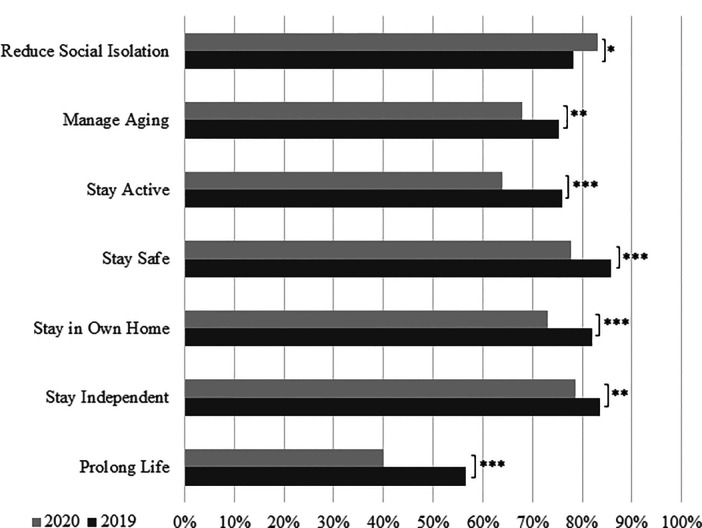
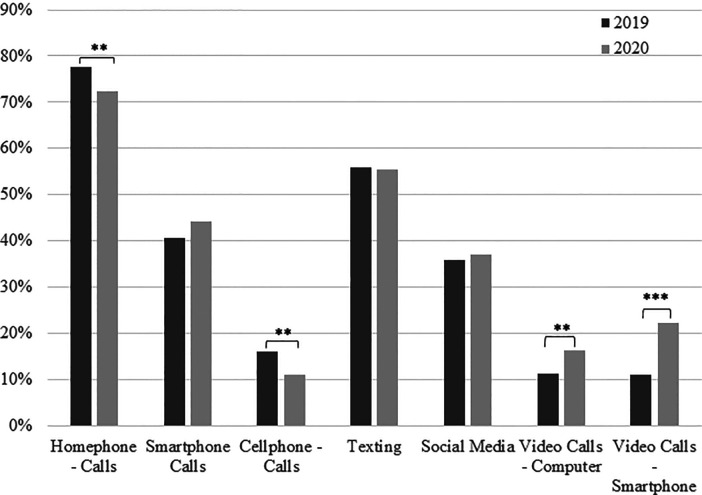
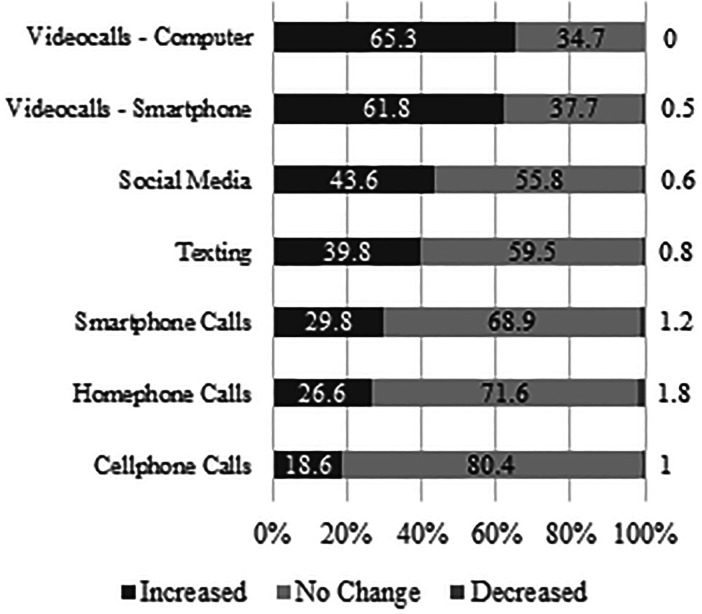
Objectives: The COVID-19 pandemic is having a major impact on the lives of everyone, but in particular on the health and well-being of older people. It has also disrupted the way that individuals access services and interact with one another, and physical distancing and “Stay at Home” orders have seen digital interaction become a necessity. While these restrictions have highlighted the importance of technology in everyday life, little is known about how older adults have responded to this change. Methods: Two surveys, one in 2019 and another in 2020 collected data on a combined total of 1923 older adults aged 65 years and older in Canada. These looked at how older adults think about and use technology, with the 2020 survey additionally questioning how COVID-19 has impacted their use and attitudes towards technology. Results: While older adults feel more isolated in 2020, many feel positive about the benefits of technology and have increased technology use during the pandemic to support their health, wellness, and communication needs. Discussion: The results highlight the potential of technology for supporting older adults in various aspects of healthy aging. While these results point to the opportunities afforded by technology, challenges remain, such as how social and economic factors influence technology uptake.
Overview
The claims and statistics of this paper haven’t been checked yet.
Run the check — free, no account needed. It reads the open-access text and checks the sources it cites.
Integrity signals
Registry
Cites
Statistics
Figures
Verification
Claims the paper makes
The claims and statistics of this paper haven’t been checked yet.
Run the check — free, no account needed. It reads the open-access text and checks the sources it cites.
Claims other papers make about this one
Each is checked against this paper’s own text: does it say what the citing paper says it does?
The source backs part of the claim, not all of it — or backs it for a different population, condition or comparison.
In the citing paper
“More recent studies, particularly those conducted during or after the COVID-19 pandemic, were shaped by accelerated digital adoption, heightened reliance on remote communication, and growing familiarity with AI-driven devices [40].”
From Smart Speakers for Health and Well-Being of Older Adults: A Mixed-Methods Review (2025) · cites this paper as [40]
Experimental — accuracy not yet measured
Self-check
Percentages, sums and reported differences re-computed from the paper’s own numbers.
The self-check needs the paper’s full text.
Citations
Cites
Older Adults' Reasons for Using Technology while Aging in Place
Peek, S. T. M., Luijkx, K. G., Rijnaard, M. D., Nieboer, M. E., van der Voort, C. S., Aarts, S., van Hoof, J., Vrijhoef, H. J., & Wouters, E. (2015) · Gerontology · doi:10.1159/000430949 · Cited by 19,852
Czaja, S. J., Charness, N., Fisk, A. D., Hertzog, C., Nair, S. N., Rogers, W. A., & Sharit, J. (2006) · Psychology and Aging · doi:10.1037/0882-7974.21.2.333 · Cited by 2,113 · cited 1×
“However, these trends may not be equal across different demographic groups, especially older adults who may have additional barriers in using technology (Czaja et al., 2006; Gitlow, 2014).”
BackgroundSocial Isolation, Loneliness and Health Among Older Adults
Coyle, C. E., & Dugan, E. (2012) · Journal of Aging and Health · doi:10.1177/0898264312460275 · Cited by 875 · cited 1×
“For example, more older adults in 2020 agreed that technology can be used to help combat social isolation, which is known to lead to stress, depression, and poor health outcomes (Coyle & Dugan, 2012).”
BackgroundA review of Internet use among older adults
Hunsaker, A., & Hargittai, E. (2018) · New Media & Society · doi:10.1177/1461444818787348 · Cited by 770 · cited 1×
“Yet, historically older adults have been less likely to use technology for everyday services and communication than younger cohorts, due to factors such as digital literacy and access to the internet (Anderson et al., 2021; Hunsaker & Hargittai, 2018).”
BackgroundExploring Privilege in the Digital Divide: Implications for Theory, Policy, and Practice
Fang, M. L., Canham, S. L., Battersby, L., Sixsmith, J., Wada, M., & Sixsmith, A. (2019) · The Gerontologist · doi:10.1093/geront/gny037 · Cited by 353
Self-citationPerceptions of Technology among Older Adults
Heinz, M., Martin, P., Margrett, J. A., Yearns, M., Franke, W., Yang, H.-I., Wong, J., & Chang, C. K. (2013) · Journal of Gerontological Nursing · doi:10.3928/00989134-20121204-04 · Cited by 300 · cited 1×
“Older adults are often reported as being resistant to adopting new technologies unless the feelings of usefulness and usability of the technology are greater than feelings of inadequacy (Heinz et al., 2013).”
BackgroundSzabo, A., Allen, J., Stephens, C., & Alpass, F. (2019) · The Gerontologist · doi:10.1093/geront/gny036 · Cited by 291 · cited 1×
“…positively contributes to older adults ’ subjective well-being and healthy aging (Nimrod, 2019; 1 Simon Fraser University, Department of Gerontology 2 Western University, Department of Neuroscience 3 AGE-WELL NCE 4 University of Toronto, AGE-WELL NCE Ollevier et al., 2020; Szabo et al., 2019).”
BackgroundRethinking social relationships in old age: Digitalization and the social lives of older adults
Hülür, G., & Macdonald, B. (2020) · American Psychologist · doi:10.1037/amp0000604 · Cited by 200 · cited 1×
“…use as the younger cohort under pandemic restrictions, despite being an age group that typically reports slower uptake and less use of technology in general (Anderson & Perrin, 2017; Davidson & Schimmele, 2019; Hülür & Macdonald, 2020; Mariano et al., 2021; Siren & Grønborg Knudsen, 2017).”
BackgroundToo old for technology? Stereotype threat and technology use by older adults
Mariano, J., Marques, S., Ramos, M. R., Gerardo, F., da Cunha, C. L., Girenko, A., Alexandersson, J., Stree, B., Lamanna, M., Lorenzatto, M., et al. (2021) · Behaviour and Information Technology · doi:10.1080/0144929x.2021.1882577 · Cited by 196
Technology Use by Older Adults and Barriers to Using Technology
Gitlow, L. (2014) · Physical & Occupational Therapy In Geriatrics · doi:10.3109/02703181.2014.946640 · Cited by 178 · cited 1×
“However, these trends may not be equal across different demographic groups, especially older adults who may have additional barriers in using technology (Czaja et al., 2006; Gitlow, 2014).”
Background
Research works printed but not linked: 2
- Ollevier A., 2020, Public Health Reviews, 41
- Wherton J., 2015, Implementation Science, 10
Cited by
Sorted by citations
Items 101–188 of 188
2024 Annual Demographic Survey of Parkinson’s Disease and Movement Disorder Nurse Specialists
Heaton, H. C., Tsui, D., & Williams, S. (2025) · Australasian Journal of Neuroscience · doi:10.2478/ajon-2025-0004 · Cited by 2
Portela, D., Freitas, A., Costa, E., Giovannini, M., Bousquet, J., Fonseca, J. A., & Sousa-Pinto, B. (2025) · Journal of Medical Internet Research · doi:10.2196/51804 · Cited by 2
“However, that access has also been proliferating very quickly among older adults, who may possibly be more concerned about their health [46].”
Garnett, A., Yurkiv, H., Connelly, D. M., Booth, R. G., & Donelle, L. (2025) · JMIR Aging · doi:10.2196/73213 · Cited by 2
Ezinne, N. E., Koomson, I., Anyasodor, A. E., Antwi-Adjei, E. K., Bhattarai, D., Armitage, J. A., & Osuagwu, U. L. (2025) · Health Science Reports · doi:10.1002/hsr2.70420 · Cited by 2
“…involves the use of digital media, email, short messaging service (text messaging), mobile applications, interactive voice response, video conferencing, asynchronous store ‐ and ‐ forward communication, wireless communication and information technology usability or digital competency [1, 2, 6].”
Purcell, L., Mahon, J. M., Daly, D., Doncker, I. D., & Nyhan, M. (2024) · The Science of The Total Environment · doi:10.1016/j.scitotenv.2024.178152 · Cited by 2
“I’ve Got a Lot of Other Things I Do”: The Nuances of Digital Engagement among Older People
Wells, T., & Russell, E. (2024) · Canadian Journal on Aging/La Revue canadienne du vieillissement · doi:10.1017/s0714980824000266 · Cited by 2
“However, since many people increased their frequency of digital communication during the pandemic lockdowns (Sixsmith et al., 2022), it is possible that increased use of these technologies may have impacted some older peoples ’ comfort with digital communication, therefore influencing their digital…”
InfluentialGilleard, C., & Higgs, P. (2024) · Journal of Global Ageing · doi:10.1332/29767202y2024d000000005 · Cited by 2
Online Learning for Older Adults: Teachers’ Transition During the Pandemic in Taiwan
Lee, Y.-H., & Wang, Y.-F. (2024) · SN Computer Science · doi:10.1007/s42979-024-02843-z · Cited by 2
“Sixsmith et al. demonstrated during the COVID-19 pandemic, older adults perceived technology more favorably the more they used it; this in turn facilitated the maintenance of health and social support networks [33].”
Yazdani, N., Falzarano, F., Zucchetto, J. M., & Siedlecki, K. L. (2024) · The International Journal of Aging & Human Development · doi:10.1177/00914150241240122 · Cited by 2
“The generally lower levels of technology pro fi ciency in this population further hindered older adults ’ ability to remain socially engaged through virtual means during the pandemic (Sixsmith et al., 2022).”
Diversity in the study of aging and lifespan development
Rolison, J. J. (2024) · Current Opinion in Psychology · doi:10.1016/j.copsyc.2024.101802 · Cited by 4
Moody, L., Wood, E., Needham, A., Booth, A., & Tindale, W. B. (2024) · Digital Health · doi:10.1177/20552076241247196 · Cited by 1
Biset, N., Rosière, A., Lartigue, V., Pochet, S., & Vriese, C. D. (2024) · Digital Health · doi:10.1177/20552076241288317 · Cited by 4
“45 The issue of age can be seen as temporary because today ’ s young people will become tomorrow ’ s older patients.”
Malthouse, R., Križaj, T., Warren, A., & Turner, K. (2023) · Journal of Housing and the Built Environment · doi:10.1007/s10901-023-10077-3 · Cited by 3
“Technology use to support health, wellbeing and communication has increased amongst adults aged fifty-five years and older (Chen & Schulz, 2016; Morris et al., 2014) intensified since the COVID-19 pandemic (Sixsmith et al., 2022).”
Ng, G., Desai, C., Gagliardi, L., Donaghy, S., & Prospero, L. D. (2023) · Journal of Medical Imaging and Radiation Sciences · doi:10.1016/j.jmir.2023.11.004 · Cited by 2
Chang, F.-Y. (2023) · IASDR 2023: Life-Changing Design · doi:10.21606/iasdr.2023.351 · Cited by 2
“…the acceptance of specific technologies during the pandemic (Benge et al., 2022; Balki et al., 2022; Parlapani et al., 2021), and explored the process through which older adults gradually accept technology in domestic environments (Sixsmith et al., 2022; Ankuda et al., 2022; Iancu & Iancu, 2022).”
Older adults’ digital inclusion: New challenges for Lithuanian social policy
Žemaitaitytė, I., Pivorienė, J., Bardauskiene, R., & Katkonienė, A. (2024) · SHS Web of Conferences · doi:10.1051/shsconf/202418405004 · Cited by 2
Lin, R., Bartels, S. L., PhD, J. J. S., PhD, Y. C., Mace, R. A., & Heffner, K. L. (2026) · Digital Health · doi:10.1177/20552076261444579 · Cited by 2
Wang, G. (2026) · Frontiers in Public Health · doi:10.3389/fpubh.2026.1804827 · Cited by 1
“It thus forms a foundational dimension of older adults’ digital practices (51, 52).”
Zhu, D. T., Mitragotri, S., & Lin, J. C. (2026) · Community mental health journal · doi:10.1007/s10597-026-01630-9 · Cited by 1
Ekoh, P., Guruge, S., Zhang, J., Metersky, K., Cloutier, D., Tong, H.-M., & Walsh, C. A. (2026) · Innovation in aging · doi:10.1093/geroni/igag032 · Cited by 1
“Sixsmith et al. (2022) document increased reliance on smart-phones among older adults to mitigate social isolation and lone-liness during this period.”
Golant, S. (2026) · Frontiers in Public Health · doi:10.3389/fpubh.2026.1724293 · Cited by 1
Sanal Bir Mezarlık ve Yas Mekânı Olarak Facebook
Özdoğan, M. (2025) · Türkiye İletişim Araştırmaları Dergisi · doi:10.17829/turcom.1613466 · Cited by 1
Determinants of e-zakat payment adoption intention: Evidence from Muslim entrepreneurs in Malaysia
Radzi, S. H. M., Mutia, E., Evayani, E., Rahman, R. A., & Zakaria, N. (2025) · Multidisciplinary Reviews · doi:10.31893/multirev.2026248 · Cited by 1
Mehrabi, S., Drisdelle, S., Dutt, H. R., & Middleton, L. E. (2025) · Frontiers in Public Health · doi:10.3389/fpubh.2025.1643477 · Cited by 2
“This urgency drove the rapid development and implementation of remote strategies to counter physical inactivity risks (26–28).”
Platt, N., & Bolland, B. (2025) · European Journal of Orthopaedic Surgery & Traumatology · doi:10.1007/s00590-025-04479-y · Cited by 1
“Nonethe-less, evidence from the COVID-19 pandemic suggests that older adults have shown a rapid adaptation to digital health care, increasingly using telehealth, smartphone applications, and other digital tools to maintain communication with providers and support self-management [28, 29].”
Milnamow, M., Agyemang, L., Bakk, L., Dauenhauer, J. A., & Allen, K. (2025) · Journal of Technology in Human Services · doi:10.1080/15228835.2025.2548214 · Cited by 1
Xie, A., Ma, M., Dixon, C., Garo, W., Khemraj, U., Choi, N. G., Jimenez, D. E., & Joo, J. (2025) · Journal of general internal medicine · doi:10.1007/s11606-025-09782-2 · Cited by 1
Ferrara, M., Zambom-Ferraresi, F., Galbete, A., de la Riva, M. F. G., Izco-Cubero, M., García-Baztán, A., Capón-Sáez, A., Domínguez-Mendoza, S., Marín-Epelde, I., Zambom-Ferraresi, F., et al. (2025) · Revista Española de Geriatría y Gerontología · doi:10.1016/j.regg.2025.101646 · Cited by 1
Andrade, A., Bastos, A. C. R. D. F., D'Oliveira, A., & Vilarino, G. (2025) · Aging · doi:10.18632/aging.206180 · Cited by 1
Investigational Study for Overcoming Security Challenges in Implantable Medical Devices
Naser, M., Bazar, H. A., & Abdel-jaber, H. (2025) · International Journal of Computing and Digital Systems · doi:10.12785/ijcds/1571024987 · Cited by 1
Kemppainen, L. M. (2024) · Global Networks · doi:10.1111/glob.12516 · Cited by 1
Tuohy, D., Cassidy, I., Graham, M., Murphy, J., Shanahan, J., Tuohy, T., & McCarthy, J. (2024) · Journal of Advanced Nursing · doi:10.1111/jan.16613 · Cited by 1
Kilaberia, T. R., Hu, Y., & Bell, J. F. (2024) · JMIR Formative Research · doi:10.2196/58242 · Cited by 1
“Aside from telehealth, older adults used technology during the pandemic for leisure and entertainment, social connectedness, and education and information seeking [1,3,5,14].”
BackgroundVaca-Benavides, D., Uthayakumar, S., McSwiggan, E., Ostrishko, K., Wanok, G., Halpenny, C., & Cardamone, E. (2024) · The social science · doi:10.3390/socsci13100526 · Cited by 1
“The pandemic further exposed massive digital inequalities, with older adults among those who faced some of the most significant barriers to the use of technology (Sixsmith et al. 2022).”
Karampatakis, G. D., Kimber, S., Wood, H. E., Griffiths, C., Taylor, S. J., Li, X., Day, B., Mant, J., Relton, C., Watson, J., et al. (2024) · European Journal of General Practice · doi:10.1080/13814788.2024.2407594 · Cited by 1
“…electronic format for the recruiting survey, which emphasises the digital literacy of the majority of the population, regardless of age, ethnic and socioeconomic group. in fact, a recent study revealed that the cOViD-19 pandemic has upskilled digital proficiency also in the elderly [27].”
What do patients want from a digital device that supports heart failure self-management?
McCune, C., McNulty, A., Tonry, C. L., Fitzsimons, D., Thompson, D. R., Watson, J. A., Watson, C. J., Dixon, L., & Hill, L. (2024) · Patient Education and Counseling · doi:10.1016/j.pec.2024.108396 · Cited by 1
PRIZNANJE PRAVA NA PRISTUP INTERNETU KAO SAMOSTALNOG LJUDSKOG PRAVA – POTENCIJALI I PREPREKE
Jelisavac-Trošić, S., & Gordanić, J. B. (2023) · Strani pravni zivot · doi:10.56461/spz_23301kj · Cited by 1
INCEPTNET: Precise And Early Disease Detection Application For Medical Images AnalysesPreprint
Sajedi, A., & Fadaeieslam, M. J. (2023) · arXiv.org · doi:10.48550/arxiv.2309.02147 · Cited by 1
Bertocchi, F., Lucchetti, G., de Oliveira, A. C., Martins, L. C., de Oliveira, M. E. D., de Oliveira, V. M. G., & Lucchetti, A. L. G. (2025) · Computers in Human Behavior · doi:10.1016/j.chb.2025.108868 · Cited by 2
Tseng, J. T., Peña, J. F., & Xue, H. (2025) · Technology in Society · doi:10.1016/j.techsoc.2025.102979 · Cited by 3
Clarke, N. M. A. (2023) · Zeitschrift für Gerontologie und Geriatrie (Print) · doi:10.1007/s00391-023-02174-3
O’Neill, M., Poli, A., Vogel, C., & Walsh, P. K. (2026) · Journal of Aging Studies · doi:10.1016/j.jaging.2026.101453
Baert, L., Vandekerckhove, R., Bernolet, S., & de Wit, A. (2026) · Written Language & Literacy · doi:10.1075/wll.00101.bae
Stojanović, S., Pirbaglou, M., Tyner, C., Smith, E., Kerry, C., & Ritvo, P. (2026) · American Journal of Community Psychology · doi:10.1002/ajcp.70110
Choi, S., & Kim, J. (2026) · Sustainability · doi:10.3390/su18189449
Coşkun, S., Karaman, F. N., Uytun, H. A., & Akar, G. C. (2026) · Healthcare · doi:10.3390/healthcare14172797
“At the same time, increasing use of digital health resources among older populations highlights the need to consider not only accessibility but also the quality, clarity, and reliability of the information provided [8,9].”
Aslan, A., Mold, F., van Marwijk, H., & Armes, J. (2026) · Educational Gerontology · doi:10.1080/03601277.2026.2684737
‘Age Brings Experience’: Challenging Ageism in an Online Community
Mimbs, H., & Barrett, A. E. (2026) · Population Space and Place · doi:10.1002/psp.70334
“Digital spaces, including online communities, are increasingly vital components of the social networks in which individuals age (Ebardo and Suarez 2021; Gao et al. 2024; Ho et al. 2024; Sixsmith et al. 2022).”
Vasavada, A., Palazzo, L. G., Luce, C., Sanchez, M., Triplette, M., Ralston, J. D., Carter‐Harris, L., Green, B. B., Gao, H., Li, C. I., et al. (2026) · BMC Health Services Research · doi:10.1186/s12913-026-15124-7
“However, since the COVID-19 pandemic, older adults have increased their engagement with digital health through telemedicine visits and frequently communicate with their care teams through the electronic health record (EHR) patient portal [6, 12].”
Media Transitions in Later Life: A Seven-Year Longitudinal Study of Digital Pioneers in Romania
Fernández-Ardèvol, M., Ivan, L., & Francisca, M. (2026) · Romanian Journal of Communication and Public Relations · doi:10.21018/rjcpr.2026.1.893
Lipič, N., Bagari, M., Krašovec, N., & Ovsenik, M. (2026) · Journal of Health and Rehabilitation Sciences · doi:10.33700/jhrs.5.1.219
Bokšová, J., Horák, J., & Bokša, M. (2026) · Information Polity · doi:10.1177/15701255261446236
“Studies on older adults emphasize that gains concentrated in synchronous communication (voice/video) while other media showed less change, reinforcing that modality matters and that being online more is not equivalent to being digitally empowered (Kung & Steptoe, 2023; Sixsmith et al., 2022).”
Technology access and preferences for remote assessments at Alzheimer's Disease Research Centers
Chan, C. K., Lane, K. A., Gao, S.-J., Adeoye-Olatunde, O., Shih, P. C., Johnson, D. K., Saykin, A. J., & Wang, S. (2026) · Alzheimer's & Dementia · doi:10.1002/alz.71467
Koizumi, Y., Miura, T., Kubota, K., Aishima, M., Matsumura, Y., Kanoya, Y., & Tabuchi, T. (2026) · Annals of Geriatric Medicine and Research · doi:10.4235/agmr.25.0215
“15) A growing body of research has examined the associations be-tween social interactions and loneliness among older adults.”
Cai, Q.-M., & Ju, L. (2026) · Educational Gerontology · doi:10.1080/03601277.2026.2648418
Kim, Y., Kim, Y., Lee, C.-J., Han, J., Ihm, J., & Ko, Y.-N. (2026) · New Media & Society · doi:10.1177/14614448261428630
Davison, N., Waddell, A., Ivaturi, A., Chandrasekara, D., Tran, T. D., Kirkman, M., Hammarberg, K., Nimesh, S., Lowthian, J. A., Olivier, P. L., et al. (2026) · BMC Health Services Research · doi:10.1186/s12913-026-14129-6 · Cited by 1
“However, as a result of the COVID-19 pandemic older adults were reported to rapidly adopt and adapted to the use of digital health technologies [57].”
Lim, J. Y., Yu, H., Kwon, Y. E., Do, J. G., & Hwang, J. H. (2026) · Journal of the American Geriatrics Society · doi:10.1111/jgs.70263
“Older adults exhibited relatively higher adherence to mobile application-based health management than other age cohorts [27], and showed a strong willingness to engage in self-health management utilizing digital health [28].”
Higgins, A. L., Benford, S., Hall, M. C., Blake, H., Murray, K., & Caleb-Solly, P. (2026) · Journal of Medical Internet Research · doi:10.2196/92816
“[20], Saudi Arabia [21], Spain [17], and across a cross-cultural study of Spain, France, and Israel, which highlighted that knowledge, affordability, social support, and cultural context all shaped technology usability [22].”
Bal, B., & Apaydın, E. (2026) · BMC Geriatrics · doi:10.1186/s12877-026-07073-x
“Telehealth services, wearable monitoring devices, and digital communication platforms can strengthen health management, facilitate social interaction, and support cognitive functioning [19, 20].”
Zhou, L.-Y., Zuo, X., Cho, J., Zheng, C., Jing, S.-Y., & Xiang, X.-L. (2026) · Interactive Journal of Medical Research · doi:10.2196/92542
“Despite the age-related digital divide, older adults have increasingly used technologies for health promotion and maintenance, particularly since the COVID-19 pandemic [21].”
Frenette, J., Mazerolle, M.-P., Chowdhury, S. J., Handrigan, G., & Jbilou, J. (2026) · BMC Public Health · doi:10.1186/s12889-026-26204-y
“The COVID-19 pandemic has also played a role in increasing comfort with technology [69], thus making its integration more feasible.”
Sandström, S. L., Frankel, J., Lindelöf, N., Hedlund, M., Frykholm, E., Fridberg, H., Rosendahl, E., Boraxbekk, C., & Sandlund, M. (2026) · European Review of Aging and Physical Activity · doi:10.1186/s11556-026-00401-5
“Research on older adults’ digital literacy has previously assumed this age group less capable [49], however the number of older adults using smart technology has increased, and was found to play an important role for older adults in isolation during the Covid-19 pandemic [50, 51].”
Connecting despite instrumental activities decline: The role of internet use
Silva, P., Matos, A. D., & Martinez-Pecino, R. (2026) · Educational Gerontology · doi:10.1080/03601277.2025.2610315
Shifting News Habits: A Content Analysis of Digital News Consumption in India and Beyond
Sen, S., & Das, A. (2025) · Indian Journal of Mass Communication and Journalism · doi:10.54105/ijmcj.b1148.05021225
Cha, H., & Oh, M. (2025) · Educational Gerontology · doi:10.1080/03601277.2025.2596307
Berre, M. L., Filiatrault, J., Reichetzer, B., Kairy, D., Lachance, C., & Dumoulin, C. L. (2025) · Physiotherapy Canada · doi:10.3138/ptc-2024-0028
Rutter, L. A., Jiang, J., Bollen, J., Valdez, D., Edwards, A., Boyle, A., Coats, L., Hu, H., & Lorenzo‐Luaces, L. (2025) · International Journal of Adolescence and Youth · doi:10.1080/02673843.2025.2587284 · Cited by 1
“Overall, the increase in digital technology use in adolescents is consistent with trends observed in adults (Sixsmith et al., 2022).”
Vasavada, A., Palazzo, L., Luce, C., Sanchez, M., Triplette, M., Ralston, J., Carter-Bawa, L., Green, B., Gao, H.-Y., Li, C. I., et al. (2025) · Research Square · doi:10.21203/rs.3.rs-8001649/v1
“However, since the COVID-19 pandemic, older adults have increased their engagement with digital health through telemedicine visits and frequently communicate with their care teams through the electronic health record (EHR) patient portal [6, 12].”
Social ties in old age: the effect of the COVID-19 pandemic
Menashe‐Oren, A., Uccheddu, D., & Rizzi, E. L. (2025) · European Journal of Ageing · doi:10.1007/s10433-025-00889-3
“Close ties could be sustained, typically with existing digital media (in fact, mostly home phones), but also with an increase in video calls (Sixsmith et al. 2022).”
Genge, C., Ayaz, B., Freeman, S., Mohammed, H. T., Fraser, R. D. J., Abejirinde, I., O'Sullivan-Drombolis, D., & Brookham, R. L. (2025) · JMIR Nursing · doi:10.2196/85644
“While the stereotype of older adults as technophobic is increasingly being disproven [57], structural barriers such as the cost of technology and access to reliable internet remain significant hurdles for many older adults in rural and remote communities [58].”
The associations between screen time and mental health in older adults: a systematic review
Santos, R. M. S., Ventura, S. D. A., Nogueira, Y. J. D. A., Mendes, C. G., de Miranda, D. M., & Romano‐Silva, M. A. (2025) · Behaviour and Information Technology · doi:10.1080/0144929x.2025.2564366
“Staying connected has been associated with the concept of healthy ageing, increasing the number of older people involved with Information and Communication Technology (ICT) (Kebede et al. 2022; Sixsmith et al. 2022).”
Amoah, P., Ameyaw, E., Bhowmik, M., Adotey, P. N., & Donkor, A. (2025) · JMIR Aging · doi:10.2196/84962
“Other studies among ethnic minority older adults have found similar results, showing that people used video calls to maintain social connections [63,64].”
Tseng, J. T. (2025) · Educational Gerontology · doi:10.1080/03601277.2025.2564389 · Cited by 1
“The increasing use of IM among older adults, both globally and in Taiwan, has been documented by recent studies (Barbosa Neves et al., 2019; Chou & Liu, 2016; Sixsmith et al., 2022), highlighting its relevance as a social tool for maintaining familial ties.”
Tseng, J. T. (2026) · JMIR Aging · doi:10.2196/80541
“Designing inclusive digital programs that recognize cultural variation in communication norms and family roles may enhance both participation and perceived benefits among diverse aging populations [58,63].”
InfluentialFu, L., Li, M., He, L.-P., & Fang, Y. (2025) · Frontiers in Public Health · doi:10.3389/fpubh.2025.1560539
Goncalves, R., Faisal, W., Stebbins, T., & Blackberry, I. (2025) · Journal of Cancer Policy · doi:10.1016/j.jcpo.2025.100589
Wright, A. L., Butt, M. L., Pace, J. E., & Freeman, B. (2025) · International Journal of Qualitative Methods · doi:10.1177/16094069251333208
“…report the initiation of digital research participant databases, some with messaging capabilities, in which participants register for future contact for research they are eligible for (Barbour et al., 2021; Helmer et al., 2021; Lessard & Puhl, 2021; Pogue et al., 2022; Sixsmith et al., 2022).”
Liang, N., Li, G., Werner, L., & Pitts, B. J. (2025) · Universal Access in the Information Society · doi:10.1007/s10209-024-01187-y
“One particular type of technology designed to enable such communication and social exchanges, and that saw a rapid uptick in usage by older populations, is videoconferencing platforms (VCPs) [4].”
Understanding the world of physical and digital objects: A qualitative exploration
Kohli, S., & Kharshiing, K. D. (2025) · Current Psychology · doi:10.1007/s12144-024-07213-9
“Moreover, they continued to use these technologies even after the pandemic (Sixsmith et al., 2022 ).”
The Role of Sociability in Mental Health in Mid to Late Life during COVID-19
Fiori, K. L., Rauer, A., Marini, C. M., Khan, A., & So, C. (2024) · Journal of Social Behavioral and Health Sciences · doi:10.5590/jsbhs.2024.18.1.23
The place of older people in the 5.0 society – the rightful presence or cyberexclusion
Adamczyk, M., Karpiuk, M., & Soler, U. (2024) · Community Notebook. People, Education and Welfare in the Society 5.0 · doi:10.61007/qdc.2024.1.257
Xiang, A., Lecompte, M., & Yang, L. (2024) · Journal of Applied Gerontology · doi:10.1177/07334648241282593
“Despite the increasing popularity of VC and its well-documented importance in older adults ’ social life (e.g., Sixsmith et al., 2022) and cognition (e.g., Nie et al., 2021), it remains unclear how features speci fi c to a VC environment might affect older adults ’ memory for critical social…”
InfluentialMather, C. A., Bailey, J. F., & Almond, H. M. (2023) · Knowledge · doi:10.3390/knowledge3040042
Lee, W., Lee, H., Yoo, C., Kim, D.-E., & Pan, Y. (2023) · Linköping Electronic Conference Proceedings · doi:10.3384/ecp203027
Lee, K., Cassidy, J., Mitchell, J., & Hall, A. (2023) · Journal of social service research · doi:10.1080/01488376.2023.2265420
“Some evidence indicates technology use greatly increased in this population during COVID-19 (Sixsmith et al., 2022).”
BackgroundInfluentialKandt, J., Deng, H., & Porter, M. M. (2025) · Travel Behaviour and Society · doi:10.1016/j.tbs.2025.101213
Features of Delayed Aging in the Post-COVID World. Review of Studies
Galkin, K. (2023) · Social area / Социальное пространство · doi:10.15838/sa.2023.2.38.2
“Пандемия показала, что цифровая грамотность пожилых открывала доступ к таким важным источникам инфор мации, как ehealth, заказу продуктов на дом, а также поиску альтернативной медицин ской информации относительно коронави русной инфекции и ее влияния (Парфенова, Петухова, 2022; Sixsmith et al., 2022).”
Metadata
- Authors
- Sixsmith, A., Horst, B. R., Simeonov, D., & Mihailidis, A.
- Affiliations
- Simon Fraser University (CA)
- Western University (CA)
- AGE-WELL (CA)
- University of Toronto (CA)
- Corresponding author
- Sixsmith, Andrew
- Venue
- Bulletin of Science, Technology & Society
- Publisher
- SAGE Publications
- Published
- 2022-04-21
- Volume
- 42
- Issue
- 1-2
- Pages
- 19-24
- ISSN
- 0270-4676 (ISSN-L)
- 1552-4183
- PMC
- PMC9038938
- OpenAlex
- W4224228754
- Cited by
- 205
- References
- 24
- Citations by year
- 2026: 33 · 2025: 59 · 2024: 65 · 2023: 40 · 2022: 8
- FWCI
- 71.75
- Type
- journal article
- Language
- en
- Open access
- hybrid
- doi.org
- Locations
- Bulletin of Science Technology & Society (publishedVersion, cc-by)
- PubMed Central (publishedVersion, cc-by)
- PubMed (publishedVersion)
- Topics
- Health Sciences › Medicine › Geriatrics and Gerontology › Technology Use by Older Adults
- Social Sciences › Life-span and Life-course Studies › Aging, Elder Care, and Social Issues
- Social Sciences › Psychology › Developmental and Educational Psychology › Aging and Gerontology Research
- Keywords
- older adults, digital technology use, COVID-19 pandemic, technology adoption, social isolation, healthy aging, telemedicine, social communication, stay-at-home orders, social distancing, attitudes toward technology, socioeconomic factors
About these checks
Registry, retraction, Cites and statistics results are computed, not judged, with one exception: a printed reference that no index lists is read once by a model before it counts as a citation error. Claims are extracted by a model and kept only when their quote appears verbatim in the text; each cited source is then checked, with a model’s help, for whether it says what the claim relies on. Those verdicts can be wrong — read the claim’s quote and the cited source before relying on one.
Statistics and arithmetic are recomputed, not judged.
Confidence bands are shown only for fields calibrated on our annotated test set. None is calibrated yet, so no band is shown.
What counts as a claim ›How we measure confidence ›How we check this ›
Are you an author, or do you see a problem with this page? Request a review
