

Treatment-Resistant Depression in Primary Care across Canada
Open accessThe DOI matches its Crossref record; 66 of the 66 references it cites were found in a registry or an index.
Abstract
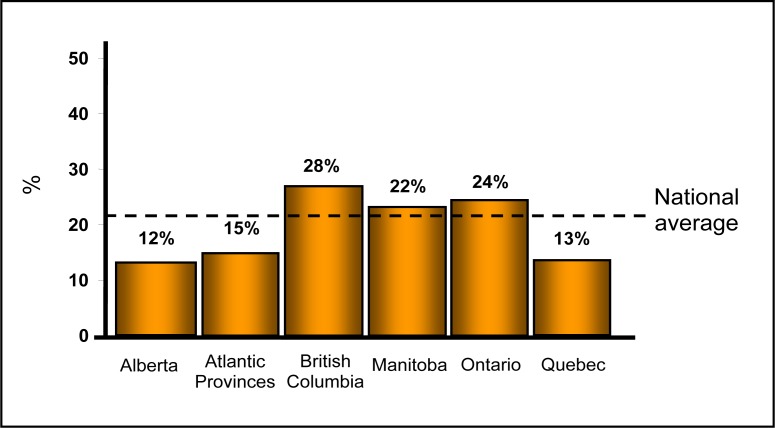
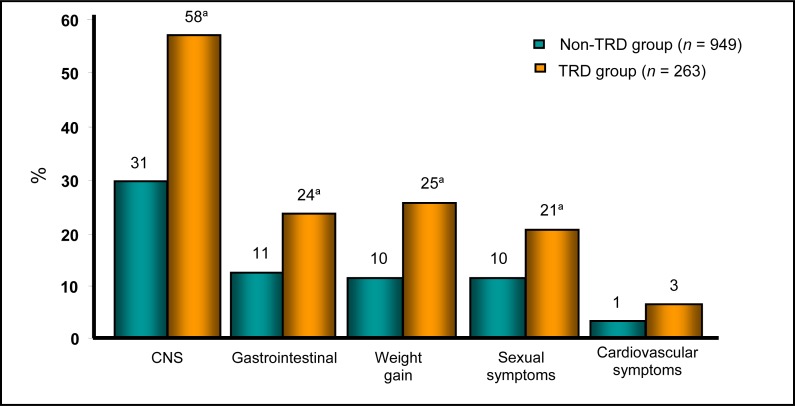
Objective: Treatment-resistant depression (TRD) represents a considerable global health concern. The goal of the InSight study was to investigate the prevalence of TRD and to evaluate its clinical characterization and management, compared with nonresistant depression, in primary care centres. Methods: Physicians completed a case report on a consecutive series of patients with major depressive disorder ( n = 1212), which captured patient demographics and comorbidity, as well as current and past medication. Results: Using failure to respond to at least 2 antidepressants (ADs) from different classes as the definition of TRD, the overall prevalence was 21.7%. There were no differences in prevalence between men and women or among ethnicities. Patients with TRD had longer episode duration, were more likely to receive polypharmacy (for example, psychotropic, lipid-lowering, and antiinflammatory agents), and reported more AD related side effects. Higher rates of disability and comorbidity (axes I to III) were associated with treatment resistance. Obesity and being overweight were also associated with treatment resistance. While the selection and sequencing of pharmacotherapy by family physicians in this sample was in line with recommendations from evidence-based treatment guidelines, the wait time to make a change in treatment was 6 to 8 weeks in both groups, which exceeds guideline recommendations. Conclusions: These real-world data demonstrate the high prevalence of TRD in primary care settings, and underscore the substantial burden of illness associated with TRD.
Overview
The claims and statistics of this paper haven’t been checked yet.
Free: it reads the open-access text and checks the first 5 claims that cite a source we can check. Create a free account to check every claim.
Integrity signals
Registry
Cites
Statistics
Figures
Verification
Claims the paper makes
The claims and statistics of this paper haven’t been checked yet.
Free: it reads the open-access text and checks the first 5 claims that cite a source we can check. Create a free account to check every claim.
Claims other papers make about this one
Each is checked against this paper’s own text: does it say what the citing paper says it does?
The source backs part of the claim, not all of it — or backs it for a different population, condition or comparison.
In the citing paper
“Prevalence estimates of TRS, TRD, and treatment resistant OCD vary from 20-60% of the population with the condition. 26, 35–40”
From Treatment resistance in psychiatry: state of the art and new directions (2022) · cites this paper as [40]
Experimental — accuracy not yet measured
Self-check
Percentages, sums and reported differences re-computed from the paper’s own numbers.
The self-check needs the paper’s full text.
Citations
Cites
The PHQ-9: Validity of a brief depression severity measure
Kroenke, K., Spitzer, R. L., & Williams, J. B. W. (2001) · Journal of General Internal Medicine · doi:10.1046/j.1525-1497.2001.016009606.x · Cited by 44,910
A new depression scale designed to be sensitive to change
Montgomery, S. A., & Åsberg, M. (1979) · British Journal of Psychiatry · doi:10.1192/bjp.134.4.382 · Cited by 13,962
Comparison of Beck Depression Inventories -IA and -II in psychiatric outpatients
Beck, A. T., Steer, R. A., Ball, R., & Ranieri, W. F. (1996) · Journal of Personality Assessment · doi:10.1207/s15327752jpa6703_13 · Cited by 5,965
Rush, A. J., Trivedi, M. H., Wisniewski, S. R., Nierenberg, A. A., Stewart, J. W., Warden, D., Niederehe, G., Thase, M. E., Lavori, P. W., Lebowitz, B. D., et al. (2006) · American Journal of Psychiatry · doi:10.1176/ajp.2006.163.11.1905 · Cited by 5,643
Regier, D. A. (1993) · Archives of General Psychiatry · doi:10.1001/archpsyc.1993.01820140007001 · Cited by 1,999
Global burden of depressive disorders in the year 2000
Üstün, T. B., Ayuso-Mateos, J. L., Chatterji, S., Mathers, C., & Murray, C. J. L. (2004) · British Journal of Psychiatry · doi:10.1192/bjp.184.5.386 · Cited by 1,735
Cognitive Effects of Long-Term Benzodiazepine Use: A Meta-Analysis
Barker, M. J., Greenwood, K. M., Jackson, M., & Crowe, S. F. (2004) · CNS Drugs · doi:10.2165/00023210-200418010-00004 · Cited by 552
Kennedy, S. H., Lam, R. W., Parikh, S. V., Patten, S. B., & Ravindran, A. V. (2009) · Journal of Affective Disorders · doi:10.1016/j.jad.2009.06.043 · Cited by 525
Self-citationSouery, D., Oswald, P., Massat, I., Bailer, U., Bollen, J., Demyttenaere, K., Kasper, S., Lecrubier, Y., Montgomery, S., Serretti, A., et al. (2007) · The Journal of Clinical Psychiatry · doi:10.4088/jcp.v68n0713 · Cited by 521
What Does Research Tell Us About Depression, Job Performance, and Work Productivity?
Lerner, D., & Henke, R. M. (2008) · Journal of Occupational & Environmental Medicine · doi:10.1097/jom.0b013e31816bae50 · Cited by 509
Cited by
Items 101–144 of 144
Moderie, C., King, J. D., Núñez, N. A., Comai, S., & Gobbi, G. (2023) · Journal of Clinical Psychopharmacology · doi:10.1097/jcp.0000000000001768 · Cited by 9
Sussman, D., Tassone, V. K., Nezhad, F. G., Wu, M., Adamsahib, F., Mattina, G. F., Pazmino‐Canizares, J., Demchenko, I., Jung, H., Lou, W. Y. W., et al. (2023) · Chronic Stress · doi:10.1177/24705470231160315 · Cited by 6
“Due to the heterogeneous nature of MDD and its associated neurobiology, nearly one-third of patients remain resistant to available antidepressants.(2) New treatments and medications are being developed; however, despite the effective initial outcomes, some interventions do not show significantly more benefits than pla…”
BackgroundShpaner, M., Tulipani, L. J., Bishop, J. H., & Naylor, M. R. (2017) · Current Behavioral Neuroscience Reports · doi:10.1007/s40473-017-0126-5 · Cited by 5
Sealock, J., Tubbs, J. D., Lake, A. M., Straub, P., Smoller, J. W., & Davis, L. K. (2024) · medRxiv · doi:10.1101/2024.09.11.24313478 · Cited by 5
Akram, A., Al‐Sabahy, M., Al-Jedai, A. H., Almudaiheem, H., Farghally, M., Fallata, E. O., Alibrahim, O. A., Shoukry, T. M., Basu, S., Chalouhi, D., et al. (2022) · International Journal of Methods in Psychiatric Research · doi:10.1002/mpr.1952 · Cited by 3
“population Ewas calculated based on epidemiological sources and KOLs inputs (Bergfeld et al., 2018; Hunt et al., 2011; Kessler et al., 2015; Rizvi et al., 2014).”
MethodGöke, K., Downar, J. H., Vila‐Rodriguez, F., Daskalakis, Z. J., Rajji, T. K., Mulsant, B. H., & Blumberger, D. M. (2025) · Psychological Medicine · doi:10.1017/s0033291725102079 · Cited by 4
“TRD not only leads to increased disability rates, higher medical costs, and worse long-term outcomes but also contributes tofurther declines inQoL (Fekadu et al., 2009; Johnston et al., 2019; Mrazek et al., 2014; Rizvi et al., 2014).”
Barbara, A. M., Xie, W., Mahood, Q., & Hamson, A. (2024) · Canadian Journal of Health Technologies · doi:10.51731/cjht.2024.817 · Cited by 5
A Systematic Review of Long-term Antidepressant Outcomes in Comorbid Depression and Type 2 DiabetesPreprint
Jeffery, A., Buckman, J. E. J., Francis, E., Walters, K. R., Wong, I. C. K., Osborn, D., & Hayes, J. (2022) · medRxiv · doi:10.1101/2022.04.11.22273519 · Cited by 5
Singh, S., Cunningham, J. E. A., Uher, R., Becker, S., & Nunes, A. (2026) · Neuroscience & Biobehavioral Reviews · doi:10.1016/j.neubiorev.2026.106652 · Cited by 3
Rathod, S., Skórniewska, Z., Engelthaler, T., Fell, B., Sajid, S., & Phiri, P. (2024) · Journal of Affective Disorders · doi:10.1016/j.jad.2024.02.027 · Cited by 5
Anhedonia as a Crucial Factor of Depression: Assessment, Neurobiological Underpinnings and Treatment
Chow, T. K., Kennedy, S. H., & Rizvi, S. J. (2017) · Springer eBooks · doi:10.1007/978-981-10-6577-4_7 · Cited by 5
Self-citationMössinger, H., & Kostev, K. (2021) · Journal of Psychiatric Research · doi:10.1016/j.jpsychires.2021.10.033 · Cited by 4
Siyoum, M., Kibrom, E., Fanta, T., Matheyose, E., Adem, K., Dechasa, D. B., Asfaw, H., Darcho, S. D., & Dereje, J. (2024) · BMJ Open · doi:10.1136/bmjopen-2024-087006 · Cited by 6
Denee, T., Kerr, C., Richards, S., Dennis, N., Foix-Colonier, A., Fischer, C., & Larkin, F. (2024) · BMC Psychiatry · doi:10.1186/s12888-024-05961-3 · Cited by 2
“In clinical practice, patient response to antidepressant treatment often remains unsatisfactory, with 20–50% of MDD patients who had non-response from at least two antidepressant drug classes [8, 9].”
BackgroundCernat, A., Pahwa, M., Hadid, D., Shen, K., Abelson, J., Samaan, Z., Ramdyal, A., & Vanstone, M. G. (2024) · PLOS mental health. · doi:10.1371/journal.pmen.0000128 · Cited by 6
“…one study published in 2014 found the prevalence of TRD among Canadian primary care patients seeking treatment for depression was approximately 22% [13], while another published in 2021 used two large claims databases in the United States to find that the prevalence of TRD among…”
Understanding antidepressant change patterns in the UK Biobank
Li, D., Lo, C. W. H., Lewis, C. M., Vassos, E., & Breen, G. D. (2026) · The British Journal of Psychiatry · doi:10.1192/bjp.2026.10719 · Cited by 3
“Late discontinuation was associated with obesity, in line with previous studies showing that a higher BMI reduced effectiveness and increased risk of treatment resistance (29,30).”
Suleman, R., Tucker, B. V., Dursun, S. M., & Demas, M. L. (2021) · JMIR Research Protocols · doi:10.2196/22805 · Cited by 5
“Owing to their cost-effectiveness and ease of administration, medication and psychotherapy are first-line treatments for most subtypes of depression; however, 1 in 5 Canadians with MDD are deemed to have treatment-resistant depression that does not adequately respond to either of these modalities [7].”
Role of the Pharmacist in Managing Treatment-Resistant Depression: A Focus on Ketamine
Liu, L. X. Y., Golts, M., & Fernandes, V. (2021) · Pharmacy · doi:10.3390/pharmacy9030118 · Cited by 2
“Among Canadian patients with depression, a study found that 22% of these patients in primary care settings were considered treatment-resistant [4].”
BackgroundRecco, K. C. C., Bonetto, G. G., Lupo, C., Nardi, A. E., Morales, A., Becerra‐Palars, C., Perocco, S., & Pfau, A. (2023) · Frontiers in Psychiatry · doi:10.3389/fpsyt.2023.1221746 · Cited by 2
The economic burden of treatment-resistant depression: Cost-of-illness perspective
Niazi, S. K., & Bobo, W. V. (2022) · Elsevier eBooks · doi:10.1016/b978-0-12-824067-0.00003-7 · Cited by 3
Ladha, K. S., Lee, J., Mattina, G. F., Pazmino‐Canizares, J., Wijeysundera, D. N., Nezhad, F. G., Tassone, V. K., Adamsahib, F., Lou, W. Y. W., Kennedy, S. H., et al. (2025) · BJPsych Open · doi:10.1192/bjo.2025.10823 · Cited by 3
Self-citationRefractory Depression and the Right to Terminate Active Treatment
Sommer, B. R., & Raj, K. S. (2016) · Springer eBooks · doi:10.1007/978-3-319-32672-6_4 · Cited by 1
Adu, M. K., Dias, R. D. L., Agyapong, B., Eboreime, E., Sapara, A. O., Lawal, M. A., Chew, C., Frost, K. D., Li, D., Flynn, M., et al. (2023) · JMIR Research Protocols · doi:10.2196/46830 · Cited by 1
“In Canada, TRD is diagnosed based on nonresponse to at least two antidepressant medications from different classes [18].”
Tailoring antidepressant therapy based on genetic profiles
Shammari, Y. H. A., Shammari, H. A. A., Barak, T. M. B., Alharbi, B. S., Alshammari, S. T., Alnais, S. A., Aljohani, S. A., Alorf, A. A., Alnawmasi, M. A., Alshammari, M. A., et al. (2018) · International Journal of Health Sciences · doi:10.53730/ijhs.v2ns1.14915 · Cited by 1
“Being overweight or obese has been linked to an increased risk of Major Depressive Disorder (MDD) and is also thought to contribute to treatment-resistant depression (TRD) [14,15].”
BackgroundClinical associations with treatment resistance in depression: An electronic health record study
Coombes, B. J., Sánchez-Ruiz, J. A., Fennessy, B., Pazdernik, V. K., Adekkanattu, P. M., Núñez, N. A., Lepow, L., Beaupre, L. M., Ryu, E., Talati, A., et al. (2024) · Psychiatry Research · doi:10.1016/j.psychres.2024.116203 · Cited by 2
Crossing Death Valley: Bringing Neurotechnology to Psychiatric Clinics in Alberta, Canada
MacMaster, F. P., Mitchell, N., Bichel, A., Bercov, M., Thompson, G., Suen, V. Y. M., Strilchuk, A., & Rittenbach, K. (2020) · Frontiers in Psychiatry · doi:10.3389/fpsyt.2020.00135 · Cited by 1
“Frontline treatments for depression are not effective in 20–60% of patients, and success rates vary depending on the treatment used (11, 12).”
BackgroundPatten, S. B. (2014) · The Canadian Journal of Psychiatry · doi:10.1177/070674371405900701 · Cited by 1
Denee, T. R., Kerr, C., Richards, S., Dennis, N., Colonier, A. F., Fischer, C., & Larkin, F. (2022) · SSRN Electronic Journal · doi:10.2139/ssrn.4181707 · Cited by 1
Szkultecka-Dębek, M. (2014) · Journal of Health Policy & Outcomes Research · doi:10.7365/jhpor.2014.2.10
Pergolizzi, J. V., Tabor, A., LeQuang, J. A., Annabi, M., & Annabi, H. M. (2019) · OBM Integrative and Complementary Medicine · doi:10.21926/obm.icm.1904062
Shah, D. (2019) · The Research Repository @ WVU (West Virginia University) · doi:10.33915/etd.3855
Peripheral biomarkers in Repeated Ketamine Infusions Trial
Geel, A. V. (2021) · Carleton University's Institutional Repository (MacOdrum Library, Carleton University) · doi:10.22215/etd/2021-14775
de Souza, I. M. (2021) · Digital Library of Theses and Dissertations (Universidade de São Paulo) · doi:10.11606/d.6.2021.tde-07012022-122626 · Cited by 1
Wu, P.-C., Tsai, S., Chen, T.-J., & Chen, M. (2023) · Taiwanese Journal of Psychiatry · doi:10.4103/tpsy.tpsy_14_23
Sex Differences in the Antidepressant Effects of Ketamine
Myers, M. (2023) · Carleton University's Institutional Repository (MacOdrum Library, Carleton University) · doi:10.22215/etd/2023-15485
Incidence of treatment-resistant depression during the first mood depressive episode.
Said, M., Hosni, R., Jemli, H., Zgueb, Y., Ouali, U., Zalila, H., Nacef, F., & Jomli, R. (2023) · PubMed Central
Focused ultrasound for psychiatric indications
Nestor, S. M., Giacobbe, P., Rabin, J. S., Sewell, I. J., Davidson, B., Meng, Y., Hynynen, K., Richter, M. A., LEVITT, A. J., Lipsman, N., et al. (2024) · Elsevier eBooks · doi:10.1016/b978-0-443-18496-3.00022-7
Supervised Machine-Learning Classification of Treatment-Resistant Depression in U.S. Claims DataPreprint
Wing, V. K., Lerner, J., Clarke, P., O’Connor, S. J., Tran, S., Darer, J. D., Gill, J. S., & Orsini, L. S. (2025) · medRxiv · doi:10.1101/2025.03.26.25324691
“…- General Information COMPASS Pathways - General Information depression are managed in primary care settings, assessment of symptom change may be performed by providers with limited experience treating severe depression or without the use of formal assessment instruments (Rizvi et al., 2014).”
Nist, A. N., Walsh, S. J., & Shahan, T. A. (2025) · Psychopharmacology · doi:10.1007/s00213-025-06794-y
“…as first-line drugs like selective serotonin reuptake inhibitors (SSRIs) are limited in their effectiveness (e.g., see Machado-Viera et al. 2008; Rizvi et al. 2014; Rush et al. 2006), and have little to no impact on the reward-processing deficits commonly present in MDD (e.g., Craske et al.…”
Managing treatment resistant depression in primary care settings
Chauhan, M., Bogucki, O. E., Leasure, W. B., Sawchuk, C. N., Williams, M. D., & Katzelnick, D. J. (2022) · Elsevier eBooks · doi:10.1016/b978-0-12-824067-0.00036-0 · Cited by 2
Cernat, A., Abelson, J., Samaan, Z., Ramdyal, A., & Vanstone, M. G. (2025) · BMJ Open · doi:10.1136/bmjopen-2024-091562 · Cited by 1
Godinho, A., Dalmia, S., Selchen, S., Tziatis, D., & Wegier, P. (2026) · JMIR Research Protocols · doi:10.2196/82491
“In Canada, more than 20% of primary care patients with MDD meet the minimum criteria for TRD, defined as the failure to respond to at least 2 adequate trials of antidepressant medication [2].”
Sex-specific role of body weight in mediating stress susceptibility through MeA Tac2-Nk3R signaling
Wei, M.-D., Deng, S.-F., Lan, J.-Z., Chen, Z.-Y., Li, S., Ma, X.-X., & Liu, J. H. (2026) · Translational Psychiatry · doi:10.1038/s41398-026-04239-4
“…causes of treatment resistance remain unclear; however, evidence suggests that the prevalence of treatment-resistant depression is higher in obese and overweight individuals compared to those with a normal weight [6], which prompts the critical role of body weight in the development of depression.”
Metadata
- Authors
- Rizvi, S. J., Grima, E., Tan, M., Rotzinger, S., Lin, P., McIntyre, R. S., & Kennedy, S. H.
- Affiliations
- University Health Network (CA)
- Canadian Heart Research Centre (CA)
- Corresponding author
- Kennedy, Sidney H
- Venue
- The Canadian Journal of Psychiatry
- Publisher
- SAGE Publications
- Published
- 2014-07
- Volume
- 59
- Issue
- 7
- Pages
- 349-357
- ISSN
- 0706-7437 (ISSN-L)
- 1497-0015
- PMC
- PMC4086317
- OpenAlex
- W1575113542
- Semantic Scholar
- eb5f06957e009c03dea1ab4e8ab3b9959aed67a4
- Cited by
- 144
- References
- 66
- Citations by year
- 2026: 4 · 2025: 8 · 2024: 14 · 2023: 12 · 2022: 14 · 2021: 26 · 2020: 20 · 2019: 13 · 2018: 9 · 2017: 7 · 2016: 8 · 2015: 7 · 2014: 2
- FWCI
- 5.83
- Type
- journal article
- Language
- en
- Open access
- green
- www.ncbi.nlm.nih.gov
- Licence
- cc-by
- journals.sagepub.com/page/policies/text-and-data-mining-license (tdm)
- Locations
- The Canadian Journal of Psychiatry (publishedVersion)
- PubMed Central (publishedVersion, cc-by)
- PubMed (publishedVersion)
- Funders
- Eli Lilly and Company
- Sanofi
- St. Jude Medical
- Topics
- Health Sciences › Medicine › Pharmacology (medical) › Treatment of Major Depression
- Health Sciences › Medicine › Psychiatry and Mental health › Mental Health Treatment and Access
- Social Sciences › Psychology › Experimental and Cognitive Psychology › Anxiety, Depression, Psychometrics, Treatment, Cognitive Processes
- Keywords
- treatment-resistant depression, major depressive disorder, primary care, antidepressant non-response, antidepressant side effects, polypharmacy, comorbidities, obesity, treatment wait times, pharmacotherapy, prevalence, general practitioners
- MeSH terms
- Adult, Antidepressive Agents, Canada, Cross-Sectional Studies, Depressive Disorder, Major, Major Depressive Disorder, Drug Therapy, Combination, Female, Health Surveys, Humans, Male, Middle Aged, Primary Health Care, Retrospective Studies, Comorbidity, Guideline Adherence, Drug Substitution, Depressive Disorder, Treatment-Resistant
About these checks
Registry, retraction, Cites and statistics results are computed, not judged, with one exception: a printed reference that no index lists is read once by a model before it counts as a citation error. Claims are extracted by a model and kept only when their quote appears verbatim in the text; each cited source is then checked, with a model’s help, for whether it says what the claim relies on. Those verdicts can be wrong — read the claim’s quote and the cited source before relying on one.
Statistics and arithmetic are recomputed, not judged.
Confidence bands are shown only for fields calibrated on our annotated test set. None is calibrated yet, so no band is shown.
What counts as a claim ›How we measure confidence ›How we check this ›
Are you an author, or do you see a problem with this page? Request a review
Data sources
Bibliographic data: Semantic Scholar, OpenAlex, Crossref.
Contains information from the Semantic Scholar Academic Graph Datasets, made available under the ODC Attribution License (ODC-BY 1.0).
Semantic Scholar’s data is described in: Kinney, R., et al. (2023). The Semantic Scholar Open Data Platform. arXiv:2301.10140.
