

Acceptability and Feasibility of a Mindfulness Intervention Delivered via Videoconferencing for People With Parkinson’s
Open accessThe DOI matches its Crossref record; 59 of the 61 references it cites were found in a registry or an index, and 2 are not checked yet.
Abstract
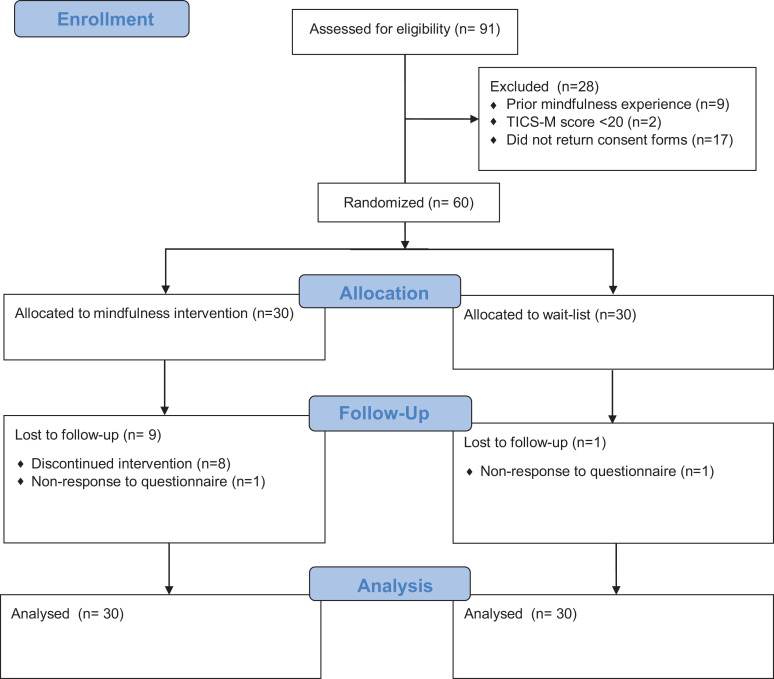
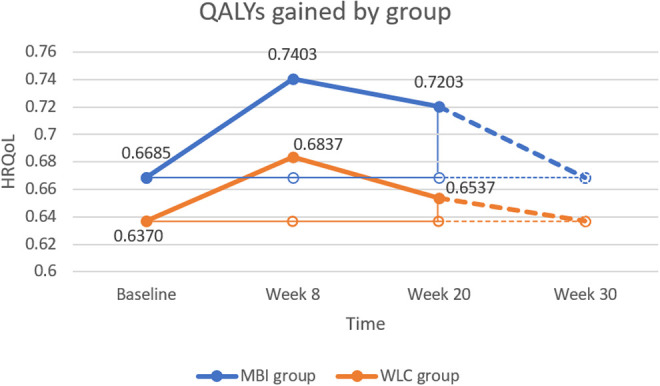
Mindfulness-based group therapy is a rapidly growing psychological approach that can potentially help people adjust to chronic illness and manage unpleasant symptoms. Emerging evidence suggests that mindfulness-based interventions may benefit people with Parkinson’s. The objective of the paper is to examine the appropriateness, feasibility, and potential cost-effectiveness of an online mindfulness intervention, designed to reduce anxiety and depression for people with Parkinson’s. We conducted a feasibility randomized control trial and qualitative interviews. Anxiety, depression, pain, insomnia, fatigue, impact on daily activities and health-related quality of life were measured at baseline, 4, 8, and 20 weeks. Semi-structured interviews were conducted at the end of the intervention. Participants were randomized to the Skype delivered mindfulness group (n = 30) or wait-list (n = 30). Participants in the mindfulness group were also given a mindfulness manual and a CD with mindfulness meditations. The intervention did not show any significant effects in the primary or secondary outcome measures. However, there was a significant increase in the quality of life measure. The incremental cost-effectiveness ratio was estimated to be £27,107 per Quality-Adjusted Life Year gained. Also, the qualitative study showed that mindfulness is a suitable and acceptable intervention. It appears feasible to run a trial delivering mindfulness through Skype, and people with Parkinson’s found the sessions acceptable and helpful.
Overview
The claims and statistics of this paper haven’t been checked yet.
Free: it reads the open-access text and checks the first 5 claims that cite a source we can check. Create a free account to check every claim.
Integrity signals
Registry
Cites
Statistics
Figures
Verification
Claims the paper makes
The claims and statistics of this paper haven’t been checked yet.
Free: it reads the open-access text and checks the first 5 claims that cite a source we can check. Create a free account to check every claim.
Claims other papers make about this one
Each is checked against this paper’s own text: does it say what the citing paper says it does?
The source backs part of the claim, not all of it — or backs it for a different population, condition or comparison.
In the citing paper
“A RCT of adapted MBCT delivered via Skype proved its feasibility and found significantly improved quality of life, but there were no differences between the intervention group and waitlist/control group with regard to any of the other study outcomes: anxiety, depression, pain, insomnia, fatigue, or daily activities (Bogosian et al., 2022).”
From Online Mindfulness-Based Cognitive Therapy for People with Parkinson’s Disease and Their Caregivers: a Pilot Study (2022) · cites this paper as Bogosian et al., 2022
Experimental — accuracy not yet measuredIn the citing paper
“MBCT adaptions (Bogosian et al., 2021) included reducing mindfulness home practice time from 45 to 20 minutes and reducing the length of weekly sessions from 2/ 2.5 hours to 1 hour, as a larger time commitment may be a barrier to their participation.PD-specific examples were added to the manual.”
From A Systematic Review of Third-Wave Therapies to Reduce Distress and Improve Wellbeing and Quality of Life in People with Parkinson's Disease. (2025) · cites this paper as Bogosian et al., 2021
In the citing paper
“The group mode of therapy used in all of the included studies may have the added benefit of decreasing isolation and fostering a sense of closeness, as participants were able to explore ways in which mindfulness may be applied in managing some of the problems they were experiencing (Bogosian et al., 2021).”
From A Systematic Review of Third-Wave Therapies to Reduce Distress and Improve Wellbeing and Quality of Life in People with Parkinson's Disease. (2025) · cites this paper as Bogosian et al., 2021
Self-check
Percentages, sums and reported differences re-computed from the paper’s own numbers.
The self-check needs the paper’s full text.
Citations
Cites
Using thematic analysis in psychology
Braun, V., & Clarke, V. (2006) · Qualitative Research in Psychology · doi:10.1191/1478088706qp063oa · Cited by 194,414 · cited 1×
“The analysis was conducted following Braun and Clarke’s guidelines.(43) The analysis of the transcripts was conducted in parallel with ongoing data collection.”
MethodThe Hospital Anxiety and Depression Scale
Zigmond, A. S., & Snaith, R. P. (1983) · Acta Psychiatrica Scandinavica · doi:10.1111/j.1600-0447.1983.tb09716.x · Cited by 47,139
Qualitative evaluation and research methods
Ellis, D. (1990) · International Journal of Information Management · doi:10.1016/0268-4012(90)90041-p · Cited by 17,943
Depression and quality of life in older persons: A review
Sivertsen, H., Bjørkløf, G. H., Engedal, K., Selbæk, G., & Helvik, A.-S. (2015) · Dementia and Geriatric Cognitive Disorders · doi:10.1159/000437299 · Cited by 14,152
The validity of the Hospital Anxiety and Depression Scale
Bjelland, I., Dahl, A. A., Haug, T. T., & Neckelmann, D. (2002) · Journal of Psychosomatic Research · doi:10.1016/s0022-3999(01)00296-3 · Cited by 9,779
Validation of the Insomnia Severity Index as an outcome measure for insomnia research
Bastien, C. (2001) · Sleep Medicine · doi:10.1016/s1389-9457(00)00065-4 · Cited by 8,067
Krupp, L. B. (1989) · Archives of Neurology · doi:10.1001/archneur.1989.00520460115022 · Cited by 6,172
EuroQol: the current state of play
Brooks, R. (1996) · Health Policy · doi:10.1016/0168-8510(96)00822-6 · Cited by 5,815 · cited 1×
“HRQoL in this analysis is measured by the instrument EQ-5D-3 L.(39) The instrument describes the quality of a health state by means of 5 dimensions (mobility, self-care, usual activities, pain/discomfort, and anxiety/depression).”
MethodThe Warwick-Edinburgh Mental Well-being Scale (WEMWBS): development and UK validation
Tennant, R., Hiller, L., Fishwick, R., Platt, S., Joseph, S., Weich, S., Parkinson, J., Secker, J., & Stewart-Brown, S. (2007) · Health and Quality of Life Outcomes · doi:10.1186/1477-7525-5-63 · Cited by 5,031
(1997) · doi:10.1097/00005650-199711000-00002 · Cited by 4,544 · cited 1×
“Each EQ-5D-3 L response was linked to a HRQoL weight, obtained from the UK social tariffs.(41) We derived the average HRQoL reported by the MBI and WLC groups, at every data collection point.”
Method
Research works printed but not linked: 1
- NICE U. Guide to the Methods of Technology Appraisal. National Institute for Health and Clinical Excellence (NICE). 2013. 27905712
Cited by
Gkintoni, E., Vassilopoulos, S. P., & Νικολάου, Γ. (2025) · Medicina · doi:10.3390/medicina61030431 · Cited by 96
Economic Evaluations of Mindfulness-Based Interventions: a Systematic Review
Zhang, L., Lopes, S. S., Lavelle, T. A., Jones, K. O., Chen, L., Jindal, M., Zinzow, H. M., & Shi, L. (2022) · Mindfulness · doi:10.1007/s12671-022-01960-1 · Cited by 71
“, 2014), and £27,107 (equivalent to $40,872 in 2020) as compared to usual care (Bogosian et al., 2021).”
Trinh, J., de Vries, N. M., Chan, P., Dekker, M. C. J., Helmich, R. C. G., & Bloem, B. R. (2025) · The Lancet Neurology · doi:10.1016/s1474-4422(25)00305-9 · Cited by 49
Pinto, C., Geraghty, A. W. A., McLoughlin, C., Pagnini, F., Yardley, L., & Dennison, L. (2022) · Health Psychology Review · doi:10.1080/17437199.2022.2073901 · Cited by 39
“…2018; Berk et al., 2019; Craig et al., 2018; Larochette et al., 2020; Lavoie et al., 2005; Marconi et al., 2016; Swannell, 2017) more openness, (Bogosian et al., 2021; de Wit et al., 2019; Giovannetti et al., 2020; Sessanna et al., 2021; Vandenberg et al., 2019) and overall better…”
InfluentialFolkerts, A., Nielsen, J., Gollan, R., Lansu, A., Solfronk, D., Monsef, I., Ernst, M., Skoetz, N., Zeuner, K. E., & Kalbe, E. (2023) · Journal of Parkinson s Disease · doi:10.3233/jpd-225116 · Cited by 36
“485 Fatigue was assessed pre- and post-intervention; 486 only two studies reported an additional point of mea487 surement for fatigue during the intervention [48, 61].”
Kalbe, E., Folkerts, A., Witt, K., Buhmann, C., Liepelt‐Scarfone, I., & for the German Parkinson’s Guidelines Group (2024) · Journal of Neurology · doi:10.1007/s00415-024-12503-0 · Cited by 31
“A recent RCT that Bogosian et al. [149] conducted also did not demonstrate any significant effects of a mindfulness-based intervention on the fatigue symptoms of PwPD compared to a passive control group.”
Updates in Parkinson’s disease integrative therapies: an evidence-based review
Kola, S., & Subramanian, I. (2023) · Current Neurology and Neuroscience Reports · doi:10.1007/s11910-023-01312-z · Cited by 24
“Tel-ehealth mindfulness-based CBT for depression and anxiety had mixed results in RCTs but did improve quality of life [57, 58].”
Reangsing, C., Trakooltorwong, P., Maneekunwong, K., Thepsaw, J., & Oerther, S. E. (2023) · BMC Complementary Medicine and Therapies · doi:10.1186/s12906-023-04102-9 · Cited by 35
Gandy, M., Woldhuis, T., Wu, W., Youssef, M., Bisby, M. A., Dear, B. F., Heriseanu, A. I., & Scott, A. J. (2024) · Psychological Medicine · doi:10.1017/s0033291724001995 · Cited by 20
Kwok, J. Y. Y., Chan, L. M. L., Lai, C. A., Ho, P. W., Choi, Z. Y.-K., Auyeung, M., Pang, S., Choi, E. P. H., Fong, D., Yu, D. S. F., et al. (2025) · Psychotherapy and Psychosomatics · doi:10.1159/000543457 · Cited by 40
A Systematic Review of Psychotherapy Approaches for Anxiety in Parkinson's Disease.
Roper, A., Pacas Fronza, G., Dobkin, R. D., Beaudreau, S. A., Mitchell, L. K., Pachana, N. A., Thangavelu, K., & Dissanayaka, N. N. (2024) · Clinical Gerontologist · doi:10.1080/07317115.2022.2074814 · Cited by 19
Lin, H., Tam, K., & Kuan, Y. (2023) · European Journal of Neurology · doi:10.1111/ene.15839 · Cited by 19
“Two of the included studies comparing mindfulness and meditation therapies with a control intervention reported changes in sleep disturbance [27, 33].”
BackgroundMethodInfluentialWang, Y., Sun, X. K., Li, F. Y., Li, Q., & Jin, Y. J. (2022) · Frontiers in Aging Neuroscience · doi:10.3389/fnagi.2022.1050715 · Cited by 23
“Among all eligible studies, 60 RCTs were two-arm trials (Wade et al., 2003; Craig et al., 2006; Paus et al., 2007; Veazey et al., 2009; Modugno et al., 2010; Pal et al., 2010; Smania et al., 2010; Sproesser et al., 2010; Dobkin et al., 2011, 2021; Edwards et al., 2013; Naismith et al., 2013; Okai et al., 2013; Rios Ro…”
Interian, A., Miller, R. B., Hill, L. M. S., Latorre-Millán, M., King, A. R., Rodriguez, K. M., Mann, S., Kashan, R. S., Dissanayaka, N. N., & Dobkin, R. D. (2022) · Journal of Geriatric Psychiatry and Neurology · doi:10.1177/08919887221103579 · Cited by 22
“It is also only one of two telehealth mindfulness-based studies conducted with PWP in general.(23) Results provide initial support for the feasibility and effect of mindfulness-based cognitive therapy for treating depression in PD.”
BackgroundLiu, J., Duan, W., Xiao, Z., & Wu, Y. (2024) · Journal of Affective Disorders · doi:10.1016/j.jad.2024.01.223 · Cited by 16
Seritan, A. L., Iosif, A.-M., Prakash, P., Wang, S. S., & Eisendrath, S. (2022) · Journal of Technology in Behavioral Science · doi:10.1007/s41347-022-00261-7 · Cited by 16
Alleviating Stress in Parkinson’s Disease: Symptomatic Treatment, Disease Modification, or Both?
Goltz, F., van der Heide, A., & Helmich, R. C. G. (2024) · Journal of Parkinson s Disease · doi:10.3233/jpd-230211 · Cited by 17
Yi, M., Zhang, W., Zhao, B., & Wang, Z. (2024) · Clinical Gerontologist · doi:10.1080/07317115.2024.2314192 · Cited by 17
Latella, D., Calderone, A., Casella, C., Luca, R. D., Gangemi, A., Impellizzeri, F., Caliri, S., Quartarone, A., & Calabrò, R. S. (2025) · Frontiers in Psychology · doi:10.3389/fpsyg.2025.1700496 · Cited by 11
Park, B., Choi, Y., Lee, J., Ahn, Y., Lee, E. J., & Son, C. (2024) · General Hospital Psychiatry · doi:10.1016/j.genhosppsych.2024.08.001 · Cited by 8
Mudiyanselage, C. A. K. R. A., Ewens, B. A., Smyth, A. M., Dickson, J. M., & Ang, S. G. M. (2024) · Mindfulness · doi:10.1007/s12671-024-02365-y · Cited by 9
“…in face-to-face modes (Kabat-Zinn, 1982; Segal et al., 2002), but are being increasingly delivered online via pre-recorded guidance (Bailey et al., 2018), or via online courses with synchronous mindfulness practice sessions (Bogosian et al., 2021; Cavalera et al., 2019; Krusche et al., 2012).”
Wang, S., Wu, M., Wei, J., Xia, W., Luo, Z., & Tian, L. (2025) · General Hospital Psychiatry · doi:10.1016/j.genhosppsych.2025.07.017 · Cited by 13
Blard, F., Erraud, J., Bonnet, M., Auzou, N., & Tison, F. (2024) · Revue Neurologique · doi:10.1016/j.neurol.2024.03.013 · Cited by 5
Bert, F., Moro, G. L., Giacomini, G., Minutiello, E., & Siliquini, R. (2023) · Health Promotion International · doi:10.1093/heapro/daad006 · Cited by 5
Hartmann-Nardin, D., Stock, S., Kalbe, E., & Folkerts, A. (2024) · Journal of Parkinson s Disease · doi:10.3233/jpd-230213 · Cited by 6
“One study examined a mindfulness-based intervention [38], another one an education (psychosocial support) program [43].”
BackgroundMethodResultInfluentialChristodoulou, D., Reeves, S., Carvalho, N. P., Stellman, J., & Gould, R. L. (2025) · Clinical Gerontologist · doi:10.1080/07317115.2025.2511957 · Cited by 4
“In terms of selection bias, four trials ( n = 4; Advocat et al., 2016; Bogosian et al., 2021; Buchwitz et al., 2021; Rodgers et al., 2019) were classified as “strong,” four trials ( n = 4; Ayromlou et al., 2020; Kwok et al., 2019; Pickut et al., 2015; Son & Choi, 2018) were classified as…”
InfluentialRawlinson, C. V., Gould, R. L., McDermott, C. J., Thompson, B. T., Weeks, K., Gossage-Worrall, R., Serfaty, M. A., Graham, C. D., McCracken, L. M., White, D. A., et al. (2024) · The Cognitive Behaviour Therapist · doi:10.1017/s1754470x24000333 · Cited by 5
“…with qualitative feedback showing that mindfulness-based interventions are acceptable for those with neurodegenerative diseases of the motor system, including MND (Marconi et al ., 2016), Parkinson ’ s disease (Bogosian et al ., 2022) and premanifest Huntington ’ s disease (Eccles et al., 2021).”
Self-citationMcVey, L., Fitzgerald, M., Montague, J., Sutton, C., Branney, P., Briggs, A., Chater, M., Edwards, L., Eyers, E., Khan, K., et al. (2024) · PLOS Digital Health · doi:10.1371/journal.pdig.0000654 · Cited by 5
Pinto, C., Brown, J., Hurt, C. S., Cubí‐Mollá, P., Chowdhury, S., McCracken, L. M., Norton, S., Volpato, R., Stumpf, S., & Bogosian, A. (2025) · Pilot and Feasibility Studies · doi:10.1186/s40814-025-01594-9 · Cited by 8
“…the recruitment rate out of all of those assessed for eligibility with a 95% CI (binomial exact) with precision (i.e. width) of ± 10%, assuming a 60% rate based on previous studies with similar recruitment [22], and higher precision (i.e. narrower 95% CI) if the rate is lower than anticipated.”
Self-citationNg, M. S. N., Li, C., Chan, Z. K. W., & Steindl, S. R. (2024) · Mindfulness · doi:10.1007/s12671-024-02436-0 · Cited by 3
Martorella, G., Hanley, A. W., & Muessig, K. E. (2025) · JMIR Nursing · doi:10.2196/69010 · Cited by 2
Tang, Y., Jiang, G., Jin, M., Wu, S., & Wu, J. (2025) · Frontiers in Psychology · doi:10.3389/fpsyg.2025.1618513 · Cited by 4
Senthilnathan, V., Zahir, S., Simpson, R., Jaglal, S. B., Craven, B. C., Fetterly, M.-J., Perrier, L., & Munce, S. (2025) · BMJ Open · doi:10.1136/bmjopen-2024-086287 · Cited by 3
Trait mindfulness: a potential health asset?
Bartlett, L., Roche, M., Bindoff, A. D., Roccati, E., Sinclair, D., & Vickers, J. C. (2025) · Journal of Public Health · doi:10.1007/s10389-025-02584-0 · Cited by 2
Lin, H., Zhong, Y., Zheng, S., Jiang, X., Xu, Y., Chan, S., Liu, S., Chow, K. M., Yang, Q., Huang, W., et al. (2026) · Journal of Medical Internet Research · doi:10.2196/85913 · Cited by 4
MacDonald, H. Z., Bradley, M., & Neville, T. (2025) · Counselling and Psychotherapy Research · doi:10.1002/capr.12893 · Cited by 2
Shah, N., Morris, M., Cohn, E. S., Morone, N. E., Ellis, T. D., & Kumar, D. (2025) · Journal of Integrative and Complementary Medicine · doi:10.1177/27683605251364715 · Cited by 2
“34,36,37 Recent evidence suggests that telehealth rehabilitation interventions are similar to in-person interventions for people with knee OA.”
Gandy, M., Coleman, H., Cutler, H., Jones, M., Karin, E., Kwan, P., Nikpour, A., Parratt, K. L., Rayner, G., Titov, N., et al. (2024) · Epilepsia Open · doi:10.1002/epi4.12913 · Cited by 1
“16,17 There is emerging evidence for the efficacy of digital psychological interventions to improve symptoms of depression and anxiety in adults with neurological disorders including Parkinson's disease, 18,19 multiple sclerosis (MS), 20–22 migraine, 23 and epilepsy.”
BackgroundPinto, C., Norton, S., Cubi-Molla, P., Hurt, C., Chowdhury, S., Dooley, N., Safwi, A., Brown, J., Volpato, R., Stumpf, S., et al. (2025) · Aging & Mental Health · doi:10.1080/13607863.2025.2478508 · Cited by 2
Self-citationLiu, R., Zhang, S., Xiao, Y., Cheng, Y., & Shang, H. (2026) · Journal of Medical Internet Research · doi:10.2196/79935 · Cited by 2
“…to 0.99) indicates that the true effect is uncertain and could range from a substantial benefit to being inferior to the control condition in future implementations (Figure 6 [30,52,53,55,57,63,66-68, 73, 75, 77, 82, 85 , 87, 102, 107 , 109, 111 , 117, 118 , 120,125,137,139,141,142,145,157,158 ]).”
InfluentialStress Management and Resiliency Training in People with Parkinson's Disease and their Care Partners
Maurer, C. W., Skinner, S., Kulikov, V. N., & Gonzalez, A. (2026) · Movement Disorders Clinical Practice · doi:10.1002/mdc3.70676 · Cited by 1
Wilson, C., Hanrahan, M., Brittain, K., Ardle, R. M., Arieh, T. G., Rochester, L., & Keogh, A. (2025) · Age and Ageing · doi:10.1093/ageing/afaf338 · Cited by 1
de Souza, D. M. X., de Oliveira, L. N., Pinto, M. J. D. S., Demarzo, M., & Hortense, P. (2022) · Research Society and Development · doi:10.33448/rsd-v11i1.25110
Lewis-Morton, R., Thomas, C., Mohamed, B., Mahon, S., & Williams, T. (2022) · Clinical Psychology Forum · doi:10.53841/bpscpf.2022.1.359.20 · Cited by 1
Efficacy of Meditation in Management of Fatigue: A Systematic Review and Meta-AnalysisPreprint
Park, B. J., Choi, Y., Lee, J.-S., Ahn, Y., Lee, E., & Son, C. (2023) · SSRN Electronic Journal · doi:10.2139/ssrn.4641145
Martorella, G., Hanley, A. W., & Muessig, K. E. (2024) · doi:10.2196/preprints.69010
Paredes-Gonzales, Y., Centeno-Terrazas, G., la Cruz-Torralva, K. D., Romani-Huacani, E., Lozada, Y. P. A.-M., & Villarreal‐Zegarra, D. (2025) · medRxiv · doi:10.1101/2025.05.05.25327011
Reangsing, C., Trakooltorwong, P., Maneekunwong, K., Thepsaw, J., & Oerther, S. E. (2023) · Figshare · doi:10.6084/m9.figshare.23803102
Catubig, N., & Gandy, M. (2026) · Australian Psychologist · doi:10.1080/00050067.2026.2650151
Hunsdon, R., & Ho, A. K. (2026) · Aging & Mental Health · doi:10.1080/13607863.2026.2648693
Cohen, R. G., Norcia, M., Condie, C. L., & Gross, M. (2026) · Journal of Bodywork and Movement Therapies · doi:10.1016/j.jbmt.2026.06.022
Li, T., Zhang, S., Ding, X., Zhu, M., Chen, H., Luo, Z., Wei, W., & Li, Z. (2026) · American Journal of Geriatric Psychiatry · doi:10.1016/j.jagp.2026.08.015
Gwak, J., & Park, J. (2026) · BMC Psychology · doi:10.1186/s40359-026-05436-y · Cited by 1
“Omitting Bogosian et al. (2022) reduced I² from 40.7% to 0%, whereas omitting any other single trial left it between 34% and 46%.”
InfluentialBogahawatta, P., Wijekoon, A., Harini, S., & Wettasinghe, A. H. (2026) · Neuropsychological Rehabilitation · doi:10.1080/09602011.2026.2725697
Chappell, H., Woldhuis, T., Wu, W., & Gandy, M. (2026) · Neuropsychological Rehabilitation · doi:10.1080/09602011.2026.2744268
Metadata
- Authors
- Bogosian, A., Hurt, C. S., Hindle, J. V., McCracken, L. M., Vasconcelos e Sa, D. A., Axell, S., Tapper, K., Stevens, J., Hirani, P. S., Salhab, M., Ye, W., & Cubi-Molla, P.
- Affiliations
- University of London (GB)
- Bangor University (GB)
- King's College London (GB)
- Division of Health Services Research and Management, City, University of London, London, United Kingdom
- Amaris Technology Consulting Co., Ltd, Huang Pu District Shanghai
- Office of Health Economics, London, United Kingdom
- Corresponding author
- Bogosian, Angeliki
- Venue
- Journal of Geriatric Psychiatry and Neurology
- Publisher
- SAGE Publications
- Published
- 2021-01-28
- Volume
- 35
- Issue
- 1
- Pages
- 155-167
- ISSN
- 0891-9887 (ISSN-L)
- 1552-5708
- PMC
- PMC8678660
- OpenAlex
- W3125659738
- Cited by
- 55
- References
- 59
- Citations by year
- 2026: 10 · 2025: 16 · 2024: 14 · 2023: 7 · 2022: 8
- FWCI
- 4.95
- Type
- journal article
- Language
- en
- Open access
- hybrid
- doi.org
- Locations
- Journal of Geriatric Psychiatry and Neurology (publishedVersion, cc-by)
- PubMed Central (publishedVersion, cc-by)
- PubMed (publishedVersion)
- City Research Online (City University London) (acceptedVersion)
- Figshare (submittedVersion, cc-by)
- Research Portal (King's College London) (submittedVersion, other-oa)
- Funders
- Parkinson's UK (K-1409)
- Topics
- Social Sciences › Psychology › Clinical Psychology › Mindfulness and Compassion Interventions
- Health Sciences › Medicine › Clinical Neurology › Parkinson's Disease Mechanisms and Treatments
- Social Sciences › Psychology › Applied Psychology › Digital Mental Health Interventions
- Keywords
- mindfulness-based interventions, Parkinson's disease, videoconferencing, online group therapy, Skype, feasibility, acceptability, anxiety, depression, health-related quality of life, cost-effectiveness, quality-adjusted life years, symptom management
- MeSH terms
- Feasibility Studies, Humans, Parkinson Disease, Quality of Life, Videoconferencing, Mindfulness
About these checks
Registry, retraction, Cites and statistics results are computed, not judged, with one exception: a printed reference that no index lists is read once by a model before it counts as a citation error. Claims are extracted by a model and kept only when their quote appears verbatim in the text; each cited source is then checked, with a model’s help, for whether it says what the claim relies on. Those verdicts can be wrong — read the claim’s quote and the cited source before relying on one.
Statistics and arithmetic are recomputed, not judged.
Confidence bands are shown only for fields calibrated on our annotated test set. None is calibrated yet, so no band is shown.
What counts as a claim ›How we measure confidence ›How we check this ›
Are you an author, or do you see a problem with this page? Request a review
Data sources
Bibliographic data: Semantic Scholar, OpenAlex, Crossref.
Contains information from the Semantic Scholar Academic Graph Datasets, made available under the ODC Attribution License (ODC-BY 1.0).
Semantic Scholar’s data is described in: Kinney, R., et al. (2023). The Semantic Scholar Open Data Platform. arXiv:2301.10140.
