

Organized Persuasive Communication: A new conceptual framework for research on public relations, propaganda and promotional culture
Open accessThe DOI matches its Crossref record; 49 of the 49 references it cites were found in a registry or an index.
Abstract
Organized persuasive communication is essential to the exercise of power at national and global levels. It has been studied extensively by scholars of public relations, promotional culture and propaganda. There exists, however, considerable confusion and conceptual limitations across these fields: scholars of PR largely focus on what they perceive to be non-manipulative forms of organized persuasive communication; scholars of propaganda focus on manipulative forms but tend either to examine historical cases or non-democratic states; scholars of promotional culture focus on ‘salesmanship’ in public life. All approaches show minimal conceptual development concerning manipulative organized persuasive communication involving deception, incentivization and coercion. As a consequence, manipulative, propagandistic organized persuasive communication within liberal democracies is a blind spot; it is rarely recognized let alone researched with the result that our understanding and grasp of these activities is stunted. To overcome these limitations, we propose a new conceptual framework that theorizes precisely manipulative forms of persuasion, as well as demarcating what might count as non-manipulative or consensual forms of persuasion. This framework advances PR and propaganda scholarship by clarifying our understanding of manipulative and propagandistic forms of organized persuasive communication and by providing a starting point for more fully evaluating the role of deception, incentivization and coercion, within contemporary liberal democracies.
Overview
The claims and statistics of this paper haven’t been checked yet.
Free: it reads the open-access text and checks the first 5 claims that cite a source we can check. Create a free account to check every claim.
Integrity signals
Registry
Cites
Statistics
Figures

Verification
Claims the paper makes
The claims and statistics of this paper haven’t been checked yet.
Free: it reads the open-access text and checks the first 5 claims that cite a source we can check. Create a free account to check every claim.
Claims other papers make about this one
Each is checked against this paper’s own text: does it say what the citing paper says it does?
The source backs part of the claim, not all of it — or backs it for a different population, condition or comparison.
In the citing paper
“Bakir et al. (2019) argue that persuasive communications, to avoid being manipulative, should be both informed (with sufficient information provided, and none of it deceptive) and freely chosen (namely, no coercion, such as threats, and no incentivization, such as subsidies).”
From On manipulation by emotional AI: UK adults’ views and governance implications (2024) · cites this paper as Bakir et al., 2019
Experimental — accuracy not yet measuredIn the citing paper
“Scholars from diverse disciplines agree that manipulation involves undermining of autonomy, or freedom to choose, reflect and deliberate (Sunstein, 2016; Bakir et al., 2019; Susser et al., 2019).”
From On manipulation by emotional AI: UK adults’ views and governance implications (2024) · cites this paper as Bakir et al., 2019
Self-check
Percentages, sums and reported differences re-computed from the paper’s own numbers.
The self-check needs the paper’s full text.
Citations
Cites
Nudge: Improving Decisions About Health, Wealth and Happiness
Adkisson, R. V. (2008) · The Social Science Journal · doi:10.1016/j.soscij.2008.09.003 · Cited by 5,543
Manufacturing Consent: The Political Economy of the Mass Media.
Bennett, J. R., Herman, E. S., & Chomsky, N. (1989) · Contemporary Sociology · doi:10.2307/2074220 · Cited by 5,437 · cited 2×
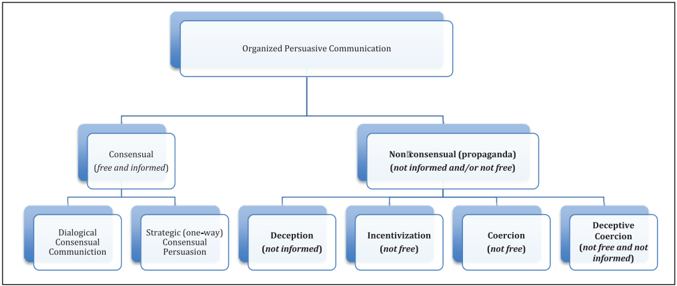
“Although the terms ‘coerced consent’ (Kaplan and Dixon, 1996/97: 74) and ‘manufacture of consent’ (Lippman, 1925; Herman and Chomsky, 1988) are common, we prefer the term non-consensual persuasive communication to emphasize that in neither case is the person truly consenting.”
Backgroundvan Dijk, T. A. (2006) · Discourse & Society · doi:10.1177/0957926506060250 · Cited by 1,339
Defining Strategic Communication
Hallahan, K., Holtzhausen, D., van Ruler, B., Verčič, D., & Sriramesh, K. (2007) · International Journal of Strategic Communication · doi:10.1080/15531180701285244 · Cited by 1,260
Fake News and The Economy of Emotions: Problems, causes, solutions
Bakir, V., & McStay, A. (2018) · Digital Journalism · doi:10.1080/21670811.2017.1345645 · Cited by 765
Self-citationManaging Public Relations: Business Principles and Tools for Strategic Communication, 2e
Smudde, P. M. (2023) · Routledge eBooks · doi:10.4324/9781003208280 · Cited by 678
Detecting and Tracking Political Abuse in Social Media
Ratkiewicz, J., Conover, M., Meiss, M., Goncalves, B., Flammini, A., & Menczer, F. (2021) · Proceedings of the International AAAI Conference on Web and Social Media · doi:10.1609/icwsm.v5i1.14127 · Cited by 579 · cited 1×
“During the 2010 US midterm elections and Massachusetts special election, social bots were reportedly used to support some candidates and smear their opponents, by creating thousands of tweets pointing to websites with fake news (Metaxas and Mustafaraj, 2012; Ratkiewicz et al., 2011).”
BackgroundWernick, A. (1991) · Ideology and Power in the Age of Lenin in Ruins · doi:10.1007/978-1-349-22346-6_17 · Cited by 516
(2013) · Smolensk under the Nazis · doi:10.1515/9781580468299-010 · Cited by 467
Moloney, K. (2006) · Routledge eBooks · doi:10.4324/9780203030592 · Cited by 313
Research works printed but not linked: 28
- Arendt H (1972) Lying in politics: Reflections on The Pentagon Papers . In: Arendt H Crises of the Republic . Orlando, FL: Harcourt Brace, 1-47.
- Bakir V (2013) Torture, Intelligence and Sousveillance in the War on Terror . Farnham: Ashgate.
- Carney JD and Scheer RK (1980) Fundamentals of Logic . 3rd ed. New York, NY: Macmillan.
- Carson TL (2012) Lying and Deception . Oxford: Oxford University Press.
- Coote A and Lenaghan J (1997) Citizens' Juries . London: Institute for Public Policy Research.
- Dearth DH (2002) Shaping the 'information space'. Journal of Information Warfare 1(3): 1-15.
- Ellul J, 1965, Propaganda
- Grunig J and Hunt T (1984) Managing Public Relations . New York, NY: Rinehart.
- Habermas J (1984) The Theory of Communicative Action, Volume 1: Reason and the Rationalization of Society , trans. McCarthyT. Boston, MA: Beacon Press.
- Jowett GS and O'Donnell VJ (2012) Propaganda and Persuasion . 5th ed. London: SAGE.
- Kaplan DS and Dixon L (1996/97) Coerced waiver and coerced consent. Denver University Law Review 74: 941-956.
- Kavanagh D (1995) Election Campaigning . London: Blackwell.
- Lippman W (1922) Public Opinion . New York, NY: Harcourt, Brace.
- Lyotard J-F (1979) The Postmodern Condition , trans. Bennington G and Massumi B. Manchester: Manchester University Press.
- Mearsheimer J (2011) Why Leaders Lie . London: Duckworth Overlook.
- Michaels D (2008) Doubt is Their Product . Oxford: Oxford University Press.
- Miller D and Dinan W (2008) A Century of Spin . London: Pluto Press.
- Oreskes N and Conway EM (2011) Merchants of Doubt . New York, NY: Bloomsbury.
- Sheehan N (1971) The Pentagon Papers . New York, NY: Bantam.
- Simon H (1972) Persuasion in social conflicts. Speech Monographs 39(4): 227-247.
- Simpson C (1994) Science of Coercion . Oxford: Oxford University Press.
- Sokolon M (2006) Political Emotions . DeKalb, IL: Northern Illinois University Press.
- Solorio T, Hasan R and Mizan M (2013) Sockpuppet detection in wikipedia: A corpus of real-world deceptive writing for linking identities. arXiv preprint arXiv:1310.6772 . · arXiv
- Taylor PM (1992) Propaganda from Thucydides to Thatcher: Some problems, perspectives and pitfalls. Opening address to the annual conference of the Social History Society of Great Britain. Available (accessed 22 September 2017) at: https://www.scribd.com/document/57111621/Propaganda-FromThucydides-to-Thatcher
- Taylor PM (2002) Perception management and the 'war' against terrorism. Journal of Information Warfare 1(3): 16-29.
- Wernick A (1988) Promotional culture. Canadian Journal of Political and Social Theory/Revue canadienne de théorie politique et sociale 12(1-2): 180-201.
- Wertheimer A (1987) Coercion . Princeton, NJ: Princeton University Press.
- Woolley, S. C., & Howard, P. N. (2017). Computational propaganda worldwide: Executive summary, Computational propaganda research project, Working Paper No. 2017.11 . Oxford: Oxford University. Available (accessed 25 March 2018) http://275rzy1ul4252pt1hv2dqyuf.wpengine.netdna-cdn.com/wpcontent/uploads/2017/07/Casestudies-ExecutiveSummary-1.pdf
Cited by
Bakir, V. (2020) · Frontiers in Communication · doi:10.3389/fcomm.2020.00067 · Cited by 127
“To ethically persuade people to a particular political point of view demands that the persuadee’s decision should be both informed and freely chosen (Bakir et al., 2019).”
BackgroundSelf-citationThe Pervasive Presence of Chinese Government Content on Douyin Trending Videos
Lu, Y., & Pan, J. (2022) · Computational Communication Research · doi:10.5117/ccr2022.2.002.lu · Cited by 86
The Palgrave Handbook of Deceptive Communication
Winget, J. R., & Tindale, R. S. (2019) · Springer eBooks · doi:10.1007/978-3-319-96334-1 · Cited by 75
Dong, C., Zheng, Q., & Morehouse, J. (2023) · Public Relations Review · doi:10.1016/j.pubrev.2022.102284 · Cited by 67
Robinson, P. (2019) · Frontiers in Communication · doi:10.3389/fcomm.2019.00026 · Cited by 66
“There is in fact an extensive literature on the issue of deception in politics (Bakir et al., 2019b), but little normative work aimed at thinking through the conditions under which deception (and hence propaganda) might be justified.”
BackgroundInfluentialSelf-citationSoft Power, Hard News: How Journalists at State-Funded Transnational Media Legitimize Their Work
Wright, K., Scott, M., & Bunce, M. (2020) · The International Journal of Press/Politics · doi:10.1177/1940161220922832 · Cited by 64
“Instead, a “grey” spectrum seems to exist between the two, involving different kinds and degrees of selectivity, deception, incentivization, and coercion (Bakir et al. 2018).”
BackgroundInfluentialMust Read: A Comprehensive Survey of Computational Persuasion
Bozdag, N. B., Mehri, S., Yang, X., Ha, H., Cheng, Z., Durmus, E., You, J., Ji, H., Tür, G., & Hakkani-Tur, D. Z. (2026) · ACM Computing Surveys · doi:10.1145/3800687 · Cited by 51
“Dual-process theories such as the Elaboration Likelihood Model [126] and the Heuristic-Systematic Model [20] further advanced the field by explaining how cognitive effort and motivation shape persuasive outcomes.”
Kim, C., Yan, X., & Park, S. (2022) · International Journal of Emerging Markets · doi:10.1108/ijoem-03-2021-0312 · Cited by 38
Online Child Sexual Grooming Discourse
Lorenzo-Dus, N., Evans, C. A., & Mullineux-Morgan, R. (2023) · Cambridge University Press eBooks · doi:10.1017/9781009314626 · Cited by 42
Chew, M. M.-T., & Yi, W. (2021) · Media Culture & Society · doi:10.1177/01634437211029846 · Cited by 37
Bakir, V., & McStay, A. (2022) · Springer eBooks · doi:10.1007/978-3-031-13551-4 · Cited by 38
Self-citationDigital Grooming: Discourses of Manipulation and Cyber-Crime
Lorenzo-Dus, N. (2022) · doi:10.1093/oso/9780190845193.001.0001 · Cited by 41
On manipulation by emotional AI: UK adults’ views and governance implications
Bakir, V., Laffer, A., McStay, A., Miranda, D., & Urquhart, L. (2024) · Frontiers in Sociology · doi:10.3389/fsoc.2024.1339834 · Cited by 34
Self-citationStrategies of Chinese State Media on Twitter
Fan, Y., Pan, J., & Sheng, J. (2023) · Political Communication · doi:10.1080/10584609.2023.2233911 · Cited by 34
“There is debate over the distinction between these concepts, especially since the term propaganda is used differently across disciplines – ranging from any content produced by statecontrolled outlets to only content that persuades through deception or coercion (Bakir et al., 2019; H. Huang, 2015; Macdonald, 2006; L. J…”
BackgroundCapturing News, Capturing Democracy: Trump and the Voice of America
Wright, K., Scott, M., & Bunce, M. (2024) · doi:10.1093/oso/9780197768488.001.0001 · Cited by 34
Revisiting the Theoretical Foundations of Propaganda
Hyzen, A. (2021) · International journal of communication · Cited by 30
Urio, P. (2019) · Springer eBooks · doi:10.1007/978-981-13-8879-8_6 · Cited by 22
Propaganda and the Web 3.0: Truth and ideology in the digital age
Hyzen, A. (2023) · Nordic Journal of Media Studies · doi:10.2478/njms-2023-0004 · Cited by 22
Curiel, C. P., & Rivas-de-Roca, R. (2022) · Journalism and Media · doi:10.3390/journalmedia3010012 · Cited by 23
Moreno, J. M., & Calatrava, A. (2022) · Media War & Conflict · doi:10.1177/17506352221082608 · Cited by 21
Propaganda, Politics and Deception
Miller, D., & Robinson, P. (2019) · Springer eBooks · doi:10.1007/978-3-319-96334-1_50 · Cited by 18
Self-citation“Putin’s War of Choice”: U.S. Propaganda and the Russia–Ukraine Invasion
Hyzen, A., & den Bulck, H. V. (2024) · Journalism and Media · doi:10.3390/journalmedia5010016 · Cited by 17
Patil, R., Singh, S., & Agarwal, S. (2020) · International Workshop on Semantic Evaluation (SemEval) · doi:10.18653/v1/2020.semeval-1.226 · Cited by 17
Zhao, X. (2020) · Communication Teacher · doi:10.1080/17404622.2020.1807579 · Cited by 17
Sowing the seeds of value? Persuasive practices and the embedding of big data analytics
Hughes, J., & Ball, K. S. (2020) · Technological Forecasting and Social Change · doi:10.1016/j.techfore.2020.120300 · Cited by 17
Public Engagement with Romanian Government Social Media Accounts during the COVID-19 Pandemic
Gherheș, V., Cernicova-Bucă, M., & Fărcașiu, M. A. (2023) · International Journal of Environmental Research and Public Health · doi:10.3390/ijerph20032372 · Cited by 16
“In part, the pro-vaccination campaigns were unfolded as strategic consensual persuasion ones [55], having used both reasoned and emotional arguments regarding the necessity of the vaccination.”
BackgroundWatterson, A. E., & Dinan, W. (2020) · International Journal of Environmental Research and Public Health · doi:10.3390/ijerph17124320 · Cited by 17
“This fits into a wider pattern of organised strategic communication, where corporations are active in projecting and protecting their interests in policy circles, expert networks, public fora and in judicial setting like public hearings and the courts [54,55].”
BackgroundHoffjann, O. (2024) · Journal of Communication Management · doi:10.1108/jcom-09-2023-0103 · Cited by 15
Bergmann, S., & Lindström, M. (2022) · Routledge eBooks · doi:10.4324/9781003289364 · Cited by 16
Public Relations to Foster Organization's Values and Identity: The Case of Muhammadiyah
Sumarlan, I., & Ukka, I. T. I. (2024) · Komunikator · doi:10.18196/jkm.23747 · Cited by 14
The discursive flexibility of changecraft: Platform change discourse in Meta, TikTok, YouTube, and X
De, A., & Cotter, K. (2026) · Platforms & Society · doi:10.1177/29768624251408212 · Cited by 14
Krytyczne studia nad dyskursem mediów publicznych na przykładzie „Wiadomości” TVP 1
Nowak‐Teter, E. (2021) · Res Rhetorica · doi:10.29107/rr2021.1.3 · Cited by 14
Anand, A., Sinitsyna, E., Takács, S., & Kazakov, S. (2024) · European Business Review · doi:10.1108/ebr-01-2024-0027 · Cited by 13
Optimizing the human learnability of abstract network representations
Qian, W., Lynn, C. W., Klishin, A. A., Stiso, J., Christianson, N., & Bassett, D. S. (2022) · Proceedings of the National Academy of Sciences · doi:10.1073/pnas.2121338119 · Cited by 11
“Indeed, teaching and other forms of communication often involve the purposeful emphasis or exaggeration of some pieces of information over others [31, 32, 33].”
BackgroundMartínez, R. (2023) · Brazilian Journal of Development · doi:10.34117/bjdv9n3-234 · Cited by 10
Ofori, D. F., Appiah-Nimo, C., & Boachie-Mensah, F. O. (2023) · Palgrave studies of public sector management in Africa · doi:10.1007/978-3-031-17863-4_8 · Cited by 10
Robinson, P. (2019) · European Journal of Communication · doi:10.1177/0267323119875251 · Cited by 10
“Activities today labelled with euphemisms such as ‘strategic communication’ or ‘public relations’ were historically referred to as ‘propaganda’ (Bakir et al., 2018).”
BackgroundSelf-citationQAnon Propaganda on Twitter as Information Warfare: Influencers, Networks, and NarrativesPreprint
Dilley, L. C., Welna, W., & Foster, F. (2022) · arXiv (Cornell University) · doi:10.48550/arxiv.2207.05118 · Cited by 10
“The framework of Bakir et al. (2019) allows for understanding the role of incentivization in deceptive, organized persuasion campaigns.”
BackgroundInfluentialXu, K., & He, Y. (2022) · Journalism Practice · doi:10.1080/17512786.2022.2067584 · Cited by 9
“Even relatively mild white propaganda may conceal deception, motivation, and coercion of people ’ s thoughts (Bakir et al. 2019).”
BackgroundFrom Silence to Primary Definer: The Emergence of an Intelligence Lobby in the Public Sphere
Lashmar, P. (2018) · Critical Sociology · doi:10.1177/0896920518780987 · Cited by 9
Film-Making the Nation Great Again: Audio-visualizing History in the Authoritarian Toolkit
Hintz, L., & Draege, J. B. (2025) · Perspectives on Politics · doi:10.1017/s1537592725102326 · Cited by 8
“” See Bakir et al. (2019).”
Müller, N. (2024) · Public Relations Inquiry · doi:10.1177/2046147x241232753 · Cited by 8
“…problematic to achieve in the context of critical public relations theory (Ciszek and Logan, 2018; Davidson, 2016; Ganesh and Zoller, 2012) since strategic attempts to persuade are apparently unavoidable in contemporary mass promotional cultures (Bakir et al., 2019; Fawkes, 2007; Müller, 2023).”
BackgroundKarell, D., & Agrawal, A. (2021) · Poetics · doi:10.1016/j.poetic.2021.101641 · Cited by 8
Reconciling Governmental Use of Online Targeting With Democracy
Andric, K., & Kasirzadeh, A. (2023) · ACM Conference on Fairness, Accountability, and Transparency (FAccT) · doi:10.1145/3593013.3594133 · Cited by 9
Researching Influence Operations: ‘Dark Arts’ Mercenaries and The Digital Influence Industry
Briant, E. L. (2024) · Oxford University Press eBooks · doi:10.1093/oxfordhb/9780192859198.013.5 · Cited by 7
Gaw, F., Agonos, M. J., Ruijgrok, K., & Suarez, G. M. (2025) · International journal of communication · Cited by 7
Propaganda and Conflict: War, Media and Shaping the Twentieth Century
(2019) · Bloomsbury Publishing Plc eBooks · doi:10.5040/9781788316736 · Cited by 7
Hacking Hybrid Media: Power and Practice in an Age of Manipulation
Barnard, S. R. (2024) · doi:10.1093/oso/9780197570272.001.0001 · Cited by 8
The Dilemma of Information Security of the Individual in the Information Society
Zakirov, М., & Zakirova, S. (2022) · Naukovì pracì Nacìonalʹnoï bìblìoteki Ukraïni ìmenì V Ì Vernadsʹkogo · doi:10.15407/np.63.050 · Cited by 7
Adi, A., Stoeckle, T., & Arzuaga-Williams, M. (2023) · LA Referencia (Red Federada de Repositorios Institucionales de Publicaciones Científicas) · Cited by 7
The what, how and why of fake news: An overview
Simons, G., & Manoilo, A. V. (2021) · World of Media Journal of Russian Media and Journalism Studies · doi:10.30547/worldofmedia.2.2021.2 · Cited by 7
Dj, F., Suharto, T., & bin Salman, A. M. (2022) · al-Balagh Jurnal Dakwah dan Komunikasi · doi:10.22515/albalagh.v7i2.5900 · Cited by 6
Benecke, D. R., Moodley, P., Meintjes, C., Holtzhausen, L., Degenaar, A., & Levy, N. L. (2025) · Communicare Journal for Communication Studies in Africa · doi:10.36615/7s3kt098 · Cited by 6
Äänirautaa rajalle: Musiikki, Suomi ja Neuvostoliitto 1960–1985
Mikkonen, S. (2025) · doi:10.21435/ht.295 · Cited by 6
Simon, C., Rees, S. E., & Thomas, R. (2023) · Public Relations Inquiry · doi:10.1177/2046147x231200891 · Cited by 6
“It seems the government effectively used Bakir et al. (2019) ’ s strategic consensual persuasion and non-consensual (propaganda) to maintain power and organizational ideologies.”
InfluentialSMARTPHONES: OPPORTUNITIES AND RISKS
Villaseñor, H. O. (2022) · Perspectivas de la comunicación · doi:10.4067/s0718-48672022000100111 · Cited by 6
From Outside In: Profiling, Persuasion and Political Opinion in the Age of Big Data
Dhawan, S., & Hegelich, S. (2022) · Studies in neuroscience, psychology and behavioral economics · doi:10.1007/978-3-030-98546-2_10 · Cited by 6
Persuasion, promotion, spin, propaganda?
Macnamara, J. (2022) · Edward Elgar Publishing eBooks · doi:10.4337/9781800379893.00009 · Cited by 6
Larrosa-Fuentes, J. (2020) · Media War & Conflict · doi:10.1177/1750635220929520 · Cited by 6
“Nevertheless, the production and reproduction of narcocorridos as propaganda remains an issue that affects public communication because it entails deceptive and false communication (Bakir et al., 2018; Martín Serrano, 1982).”
BackgroundInfluentialHayward, T. (2019) · doi:10.1093/oso/9780198842767.001.0001 · Cited by 6
Storytelling: representaciones mediáticas de las memorias en Colombia
Abril, N. G. P. (2020) · Pragmática Sociocultural / Sociocultural Pragmatics · doi:10.1515/soprag-2020-0004 · Cited by 6
Horgan, S., Collier, B., Stewart, J., Wilson, L., & Thomas, D. (2023) · Edinburgh Napier Research Repository (Edinburgh Napier University) · Cited by 6
Strategic communication theory: a systematic overview
Pfleger, A. (2025) · Annals of the International Communication Association · doi:10.1093/anncom/wlaf025 · Cited by 5
The Constructs of Leadership and Politics: Theory to Praxis
Akande, A., Coker, D. C., & Pinto, J. F. (2024) · Springer studies on populism, identity politics and social justice · doi:10.1007/978-3-031-56415-4_1 · Cited by 5
The Nature and Circulation of False Information
Bakir, V., & McStay, A. (2022) · Springer eBooks · doi:10.1007/978-3-031-13551-4_4 · Cited by 5
Self-citationAgrochemical Exposure & Environmental Illness: Legal Repression of Latin American Banana Workers
Bray, L. A., Membrez-Weiler, N. J., & Shriver, T. E. (2020) · Sociological Quarterly · doi:10.1080/00380253.2020.1841585 · Cited by 5
“However, CSR discourse frequently relies on deception and other manipulative forms of persuasion (Bakir et al. 2019).”
BackgroundThe Ukraine crisis and media systems: Comparison of UK and Russian media coverage
Liu, Z. (2020) · University of Liverpool · doi:10.17638/03071360 · Cited by 5
An Ethnographic Communication Analysis of Indian Political Public Relations Practitioners
Rasquinha, M. B. (2024) · Tuwhera (Auckland University of Technology) · Cited by 5
Persuasive Communication and Emotional Appeals: The Contribution of Psychology
Benucci, S. B., & Gesto, C. D. (2025) · Springer eBooks · doi:10.1007/978-3-031-82467-8_8 · Cited by 4
Peran underwriter sebagai komunikator pemasaran saham perdana di bursa efek Indonesia
Istikhoroh, S., Jannah, M. M., Sukamdani, Y., & Suhardiyah, M. (2022) · Jurnal Studi Komunikasi (Indonesian Journal of Communications Studies) · doi:10.25139/jsk.v6i1.4123 · Cited by 4
Az álhír fogalma és helye a hibrid hadviselésben
Horváth, D. (2023) · Nemzet és Biztonság · doi:10.32576/nb.2023.1.2 · Cited by 4
This is how we .win! Capital-building and media manipulation practices on The_Donald
Barnard, S. R. (2024) · Information Communication & Society · doi:10.1080/1369118x.2024.2352637 · Cited by 4
“Whereas the scholarship on propaganda, OPC, deception, and disinformation is quite expansive, the literature on media manipulation has focused more narrowly on the uses of media to garner public attention and influence public discourse by means of deception.”
InfluentialSetyawan, A. Z. S., & Adhisty, J. M. (2022) · Jurnal Nomosleca · doi:10.26905/nomosleca.v8i2.8258 · Cited by 4
Sosrohadi, S., Syukri, M., & Sosrohadi, A. A. (2024) · ELS Journal on Interdisciplinary Studies in Humanities · doi:10.34050/elsjish.v7i1.34225 · Cited by 4
“Bakir et al., (2019) state the same thing that persuasive communication is a process that is influenced by people's attitudes, beliefs and behavior by using psychological manipulation so that someone acts according to their own will (p. 102).”
La cobertura mediática de los conflictos armados
Moreno Mercado, J. M. (2023) · Institutional Repository of the University of Granada (University of Granada) · Cited by 4
Curiel, C. P., Benito, C. D., & Pineda, A. (2024) · Estudios sobre el Mensaje Periodístico · doi:10.5209/esmp.93703 · Cited by 3
Rasquinha, M. B., & Sissons, H. A. (2025) · Public Relations Inquiry · doi:10.1177/2046147x251409227 · Cited by 3
“By foregrounding these micro-level dynamics, this research moves away from the prevailing macro-level portrayals of public relations as organised persuasive communication (Bakir et al., 2019) or even organised lying (Edwards, 2020).”
Persuasion and Influence in Linguistic Research
Dayter, D., & Rüdiger, S. (2025) · Cambridge University Press eBooks · doi:10.1017/9781009105194.002 · Cited by 3
Fool Me Twice, Shame on Me: Being Deceived by a Robot Does Not Make People More Cautious
Kimura, Y., Anzai, E., Saiwaki, N., & Shiomi, M. (2025) · IEEE RO-MAN · doi:10.1109/ro-man63969.2025.11217809 · Cited by 3
“At the with condition, the robot behaved on the basis of the following four deception strategies [20] to make the participants check the checkbox without reading the text on each page: Lying (2nd page) : “ This is just between you and me, but other participants have been skipping this section.”
Political marketing versus propaganda: Dilemmas of political persuasión
Rojas, G. A. P. (2024) · Salud Ciencia y Tecnología - Serie de Conferencias · doi:10.56294/sctconf2024674 · Cited by 3
Setyawati, S., Rahmanto, A. N., & Satyawan, I. A. (2021) · International Journal of Research and Innovation in Social Science · doi:10.47772/ijriss.2021.51201 · Cited by 3
“The previous research discussing persuasive communication had been studied in the health field [6] [7] [12], political campaign [13] [14], non-profit organization [15] [16], to a situation of conflict and propaganda [17].”
BackgroundHarnos, É. J., & Murányi, E. (2022) · Acta Universitatis Sapientiae Communicatio · doi:10.2478/auscom-2022-0006 · Cited by 3
Public Relations and Feminist Activism: Strategic Consensual Persuasion or Propaganda?
Müller C., N. (2023) · Revista Comunicando · doi:10.58050/comunicando.v12i1.303 · Cited by 3
Selling the Dream: The Darker Side of the “Superman” Athlete
Apostolopoulos, N. C. (2020) · Springer international handbooks of education · doi:10.1007/978-3-319-56988-8_39 · Cited by 3
The roles of linguistic meaning and context in the concept of lying
Weissman, B. (2019) · Illinois Digital Environment for Access to Learning and Scholarship (University of Illinois at Urbana-Champaign) · Cited by 3
Wilful Construction of Ignorance: A Tale of Two OntologiesPreprint
Lewandowsky, S. (2024) · PsyArXiv (OSF Preprints) · doi:10.31234/osf.io/eq9ma · Cited by 3
The social media challenge for democracy: propaganda and disinformation in a platform society
Bradshaw, S. (2020) · Oxford University Research Archive (ORA) (University of Oxford) · doi:10.5287/ora-6g07bx0g1 · Cited by 3
Edlom, J. (2023) · Digitala vetenskapliga arkivet (Diva) (Karlstad University) · Cited by 3
Cheong, N. (2020) · Nottingham ePrints (University of Nottingham) · Cited by 3
Relações públicas ativistas: pluralismo mediático e direitos humanos
Müller, N. (2024) · Portuguese National Funding Agency for Science, Research and Technology (RCAAP Project by FCT) · doi:10.34632/9789725410226 · Cited by 2
Les embeddings, nouvel outil d’une histoire numérique des grands corpus de presse?
Michelet, A., & Grandjean, M. (2026) · doi:10.63744/r2llvrsbenui · Cited by 2
Suhesti, N., Liliweri, A., & Widowati, D. (2023) · International Journal of Social Science · doi:10.53625/ijss.v3i2.6310 · Cited by 2
UTJECAJ EDWARDA BERNAYSA NA RAZVOJ ODNOSA S JAVNOŠĆU I PROPAGANDE
Bijakšić, S., Buljubašić, I., & Šain, M. (2023) · South Eastern European Journal of Communication · doi:10.47960/2712-0457.2023.1.s.5.73 · Cited by 2
Corporate Communication Strategy In Creating The Awareness Of The Covid-19 Through Instagram
Ayunarini, S., & Delliana, S. (2021) · CHANNEL Jurnal Komunikasi · doi:10.12928/channel.v9i1.18692 · Cited by 2
“The goal is to create two-way reciprocal communication, build good relationships, and one-way persuasive communication, which aims to build mutual understanding, mutual respect, and support to create a positive image (Ruslan, 2016, p. 30), (Bakir et al., 2018).”
BackgroundZollmann, F. (2021) · Springer eBooks · doi:10.1007/978-3-319-32103-5_49 · Cited by 2
Harms to the Civic Body from False Information Online
Bakir, V., & McStay, A. (2022) · Springer eBooks · doi:10.1007/978-3-031-13551-4_7 · Cited by 2
Self-citation‘Russophobia’ and the New Cold War: The Case of the OPCW-Douma Controversy
Robinson, P. (2023) · Springer eBooks · doi:10.1007/978-3-031-30940-3_8 · Cited by 2
Self-citationArboledas-Lérida, L., & Liñán, M. V. (2024) · Communication & Society · doi:10.15581/003.37.3.39-53 · Cited by 2
“As a result, propaganda is a distinctive form of organised persuasive communication because it is non-consensual (Bakir et al. , 2019; compare Zollmann, 2019).”
BackgroundInfluentialRobinson, P. (2024) · doi:10.53291/9783949925214_11 · Cited by 2
Self-citationRastrilla, L. P., & García, C. M. (2024) · Tiempo devorado · doi:10.5565/rev/tdevorado.219 · Cited by 1
Metadata
- Authors
- Bakir, V., Herring, E., Miller, D., & Robinson, P.
- Affiliations
- Bangor University (GB)
- University of Bristol (GB)
- University of Sheffield (GB)
- Corresponding author
- Miller, David
- Venue
- Critical Sociology
- Publisher
- SAGE Publications
- Published
- 2018-05-15
- Volume
- 45
- Issue
- 3
- Pages
- 311-328
- ISSN
- 0896-9205 (ISSN-L)
- 1569-1632
- OpenAlex
- W2803708382
- Cited by
- 148
- References
- 48
- Citations by year
- 2026: 8 · 2025: 14 · 2024: 45 · 2023: 17 · 2022: 23 · 2021: 7 · 2020: 12 · 2019: 21 · 2018: 1
- FWCI
- 70.21
- Type
- journal article
- Language
- en
- Open access
- hybrid
- doi.org
- Licence
- cc-by
- journals.sagepub.com/page/policies/text-and-data-mining-license (tdm)
- Locations
- Critical Sociology (publishedVersion, cc-by)
- Bristol Research (University of Bristol) (publishedVersion, cc-by)
- White Rose Research Online (University of Leeds, The University of Sheffield, University of York) (acceptedVersion)
- Explore Bristol Research (submittedVersion, cc-by)
- Funders
- Economic and Social Research Council (ES/K000292/1)
- Topics
- Social Sciences › Communication › Rhetoric and Communication Studies
- Social Sciences › Communication › Public Relations and Crisis Communication
- Social Sciences › Sociology and Political Science › Media Influence and Politics
- Keywords
- propaganda, public relations, promotional culture, deception, coercion, liberal democracy, conceptual framework, persuasion theory
About these checks
Registry, retraction, Cites and statistics results are computed, not judged, with one exception: a printed reference that no index lists is read once by a model before it counts as a citation error. Claims are extracted by a model and kept only when their quote appears verbatim in the text; each cited source is then checked, with a model’s help, for whether it says what the claim relies on. Those verdicts can be wrong — read the claim’s quote and the cited source before relying on one.
Statistics and arithmetic are recomputed, not judged.
Confidence bands are shown only for fields calibrated on our annotated test set. None is calibrated yet, so no band is shown.
What counts as a claim ›How we measure confidence ›How we check this ›
Are you an author, or do you see a problem with this page? Request a review
Data sources
Bibliographic data: Semantic Scholar, OpenAlex, Crossref.
Contains information from the Semantic Scholar Academic Graph Datasets, made available under the ODC Attribution License (ODC-BY 1.0).
Semantic Scholar’s data is described in: Kinney, R., et al. (2023). The Semantic Scholar Open Data Platform. arXiv:2301.10140.
