

The DOI matches its Crossref record; 53 of the 53 references it cites were found in a registry or an index.
Neural Stem Cell Transplantation Is Associated with Inhibition of Apoptosis, Bcl-xL Upregulation, and Recovery of Neurological Function in a Rat Model of Traumatic Brain Injury
Abstract
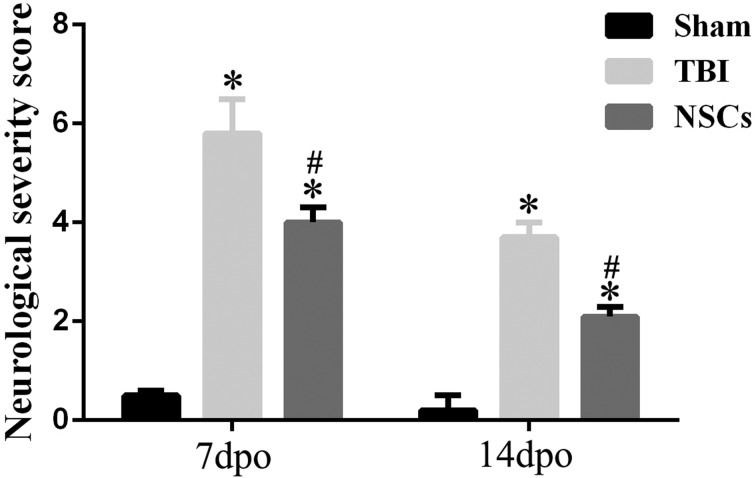
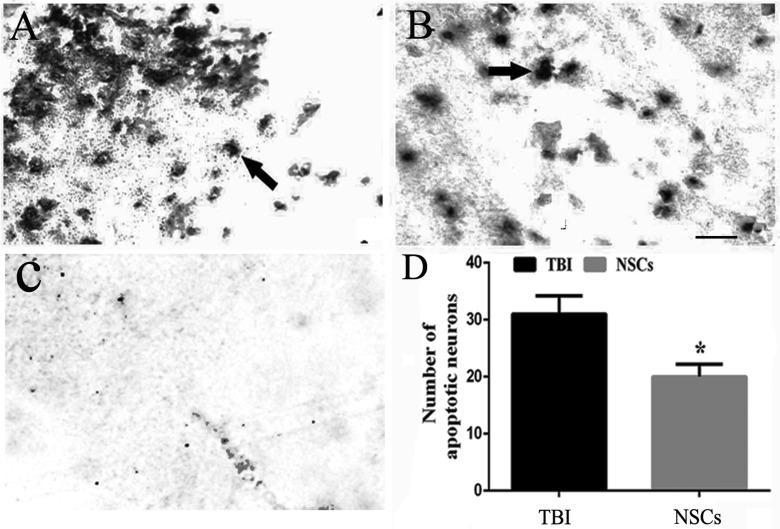
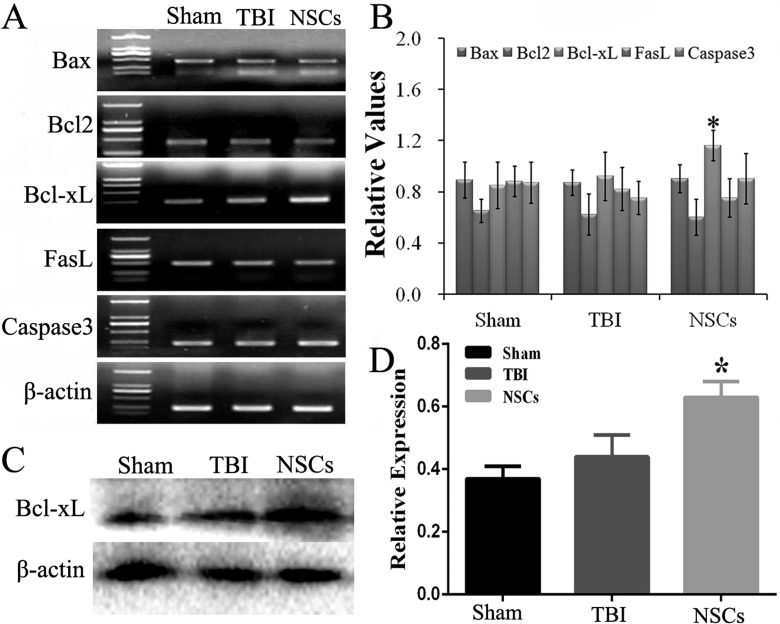
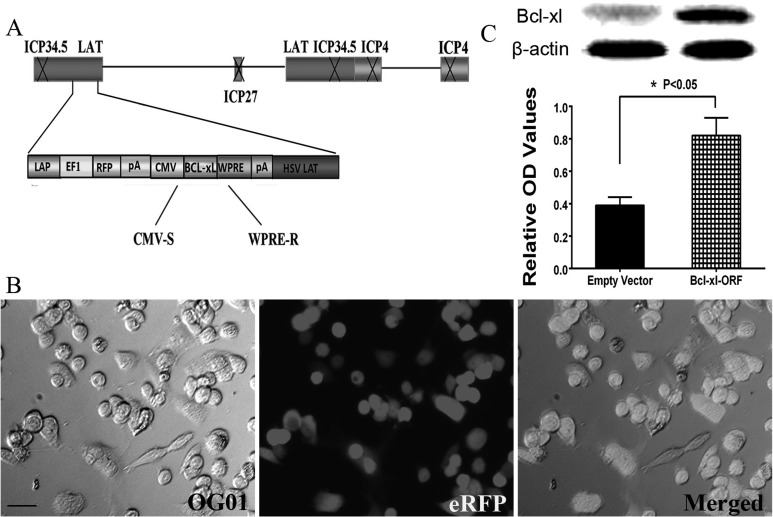
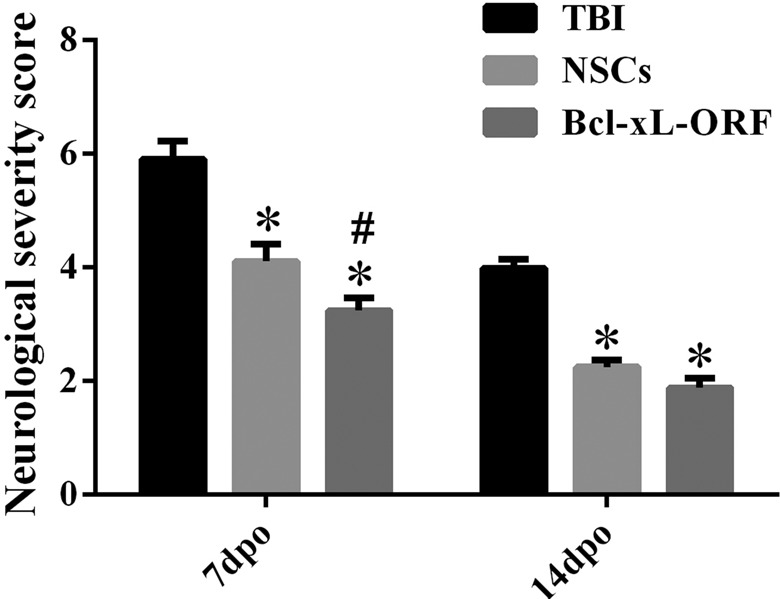
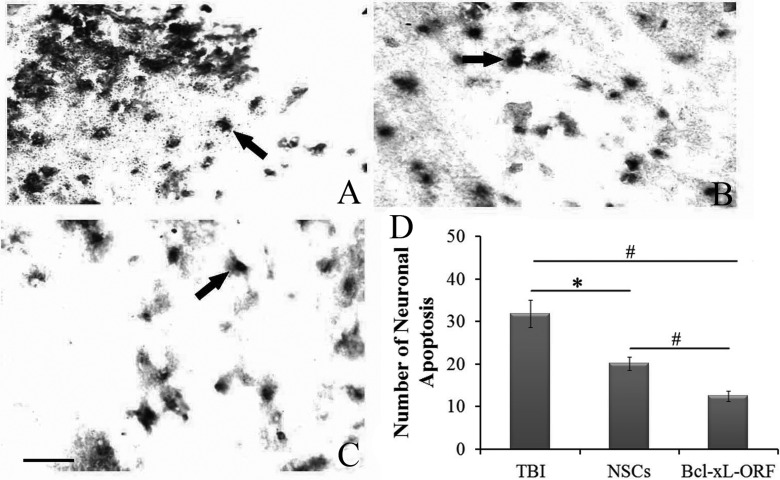
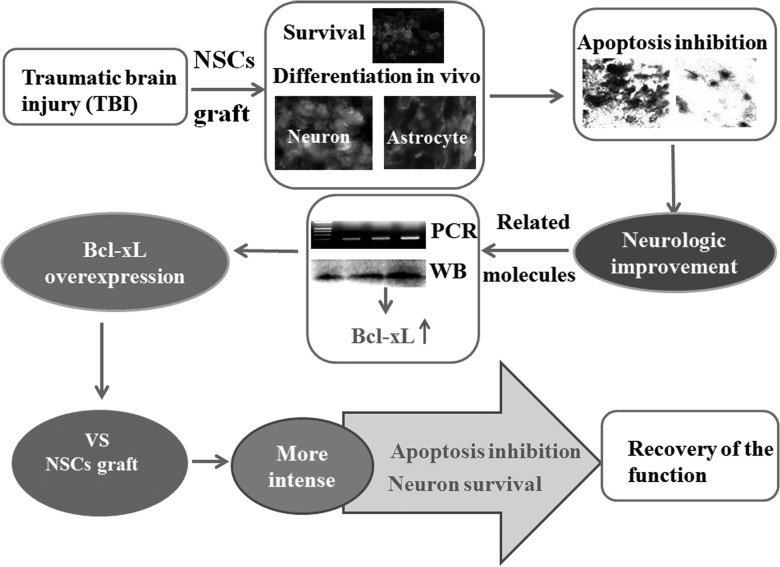
Traumatic brain injury (TBI) is a common disease that usually causes severe neurological damage, and current treatment is far from satisfactory. The neuroprotective effects of neural stem cell (NSC) transplantation in the injured nervous system have largely been known, but the underlying mechanisms remain unclear, and their limited sources impede their clinical application. Here, we established a rat model of TBI by dropping a weight onto the cortical motor area of the brain and explored the effect of engrafted NSCs (passage 3, derived from the hippocampus of embryonic 12- to 14-d green fluorescent protein transgenic mice) on TBI rats. Moreover, RT-PCR and Western blotting were employed to investigate the possible mechanism associated with NSC grafts. We found rats with TBI exhibited a severe motor and equilibrium dysfunction, while NSC transplantation could partly improve the motor function and significantly reduce cell apoptosis and increase B-cell lymphoma–extra large (Bcl-xL) expression at 7 d postoperation. However, other genes including Bax, B-cell lymphoma 2, Fas ligand, and caspase3 did not exhibit significant differences in expression. Moreover, to test whether Bcl-xL could be used as a therapeutic target, herpes simplex virus (HSV) 1 carrying Bcl-xL recombinant was constructed and injected into the pericontusional cortices. Bcl-xL overexpression not only resulted in a significant improvement in neurological function but also inhibits cell apoptosis, as compared with the TBI rats, and exhibits the same effects as the administration of NSC. The present study therefore indicated that NSC transplantation could promote the recovery of TBI rats in a manner similar to that of Bcl-xL overexpression. Therefore, Bcl-xL overexpression, to some extent, could be considered as a useful strategy to replace NSC grafting in the treatment of TBI in future clinical practices.
Overview
The claims and statistics of this paper haven’t been checked yet.
Run the check — free, no account needed. It reads the open-access text and checks the sources it cites.
Integrity signals
Registry
Cites
Statistics
Figures
Verification
Claims the paper makes
The claims and statistics of this paper haven’t been checked yet.
Run the check — free, no account needed. It reads the open-access text and checks the sources it cites.
Claims other papers make about this one
Each is checked against this paper’s own text: does it say what the citing paper says it does?
In the citing paper
“Following brain injury, NSC proliferate actively, mobilize to the injury site, and regulate differentiation pathways, ultimately fulfilling critical roles during tissue repair [45].”
From M2 microglia-derived small extracellular vesicles modulate NSC fate after ischemic stroke via miR-25-3p/miR-93-5p-TGFBR/PTEN/FOXO3 axis (2025) · cites this paper as [45]
Self-check
Percentages, sums and reported differences re-computed from the paper’s own numbers.
The self-check needs the paper’s full text.
Citations
Cites
bcl-x, a bcl-2-related gene that functions as a dominant regulator of apoptotic cell death
Boise, L. H., González-García, M., Postema, C. E., Ding, L., Lindsten, T., Turka, L. A., Mao, X., Nuñez, G., & Thompson, C. B. (1993) · Cell · doi:10.1016/0092-8674(93)90508-n · Cited by 3,087
Lu, P., Jones, L. L., Snyder, E. Y., & Tuszynski, M. H. (2003) · Experimental Neurology · doi:10.1016/s0014-4886(03)00037-2 · Cited by 867
Neural stem cells improve cognition via BDNF in a transgenic model of Alzheimer disease
Blurton-Jones, M., Kitazawa, M., Martinez-Coria, H., Castello, N. A., Müller, F.-J., Loring, J. F., Yamasaki, T. R., Poon, W. W., Green, K. N., & LaFerla, F. M. (2009) · Proceedings of the National Academy of Sciences · doi:10.1073/pnas.0901402106 · Cited by 860
A self-renewing multipotential stem cell in embryonic rat cerebral cortex
Davis, A. A., & Temple, S. (1994) · Nature · doi:10.1038/372263a0 · Cited by 580
Seaberg, R. M., & van der Kooy, D. (2002) · The Journal of Neuroscience · doi:10.1523/jneurosci.22-05-01784.2002 · Cited by 519
Controlled Cortical Impact: A New Experimental Brain Injury Model
LIGHTHALL, J. W. (1988) · Journal of Neurotrauma · doi:10.1089/neu.1988.5.1 · Cited by 476
Motor and cognitive function evaluation following experimental traumatic brain injury
Fujimoto, S. T., Longhi, L., Saatman, K. E., & McIntosh, T. K. (2004) · Neuroscience & Biobehavioral Reviews · doi:10.1016/j.neubiorev.2004.06.002 · Cited by 299
Advances in Secondary Spinal Cord Injury: Role of Apoptosis
Lu, J., Ashwell, K. W. S., & Waite, P. (2000) · Spine · doi:10.1097/00007632-200007150-00022 · Cited by 256
Cell transplantation in Parkinson's disease: how can we make it work?
Winkler, C., Kirik, D., & Björklund, A. (2005) · Trends in Neurosciences · doi:10.1016/j.tins.2004.12.006 · Cited by 255
Factors affecting the clinical outcome after neural transplantation in Parkinson's disease
Piccini, P., Pavese, N., Hagell, P., Reimer, J., Björklund, A., Oertel, W. H., Quinn, N. P., Brooks, D. J., & Lindvall, O. (2005) · Brain · doi:10.1093/brain/awh649 · Cited by 254
Research works printed but not linked: 5
- Dewall J, 2010, JEMS, 35, 54
- Zhou FC, 2001, Restor Neurol Neurosci, 18, 95
- Xing RX, 2015, Ibrain, 1, 36
- Olanow CW, 1996, J Neural Transm Suppl, 48, 75
- Duan K, 2016, Nan Fang Yi Ke Da Xue Xue Bao, 36, 32
Cited by
Zhang, Q., Yi, Y., Chen, T., Ai, Y., Chen, Z., Liu, G., Tang, Z., Chen, J., Xu, T., Chen, X., et al. (2025) · Journal of Nanobiotechnology · doi:10.1186/s12951-025-03390-2 · Cited by 27
Metadata
- Authors
- Pang, A.-L., Xiong, L.-L., Xia, Q.-J., Liu, F., Wang, Y.-C., Liu, F., Zhang, P., Meng, B.-L., Tan, S., & Wang, T.-H.
- Affiliations
- Department of Neurology, Zhujiang Hospital Southern Medical University, Guangzhou, Guangdong, China
- Institute of Neurological Disease, Department of Anesthesiology, Translational Neuroscience Center, West China Hospital, Sichuan University, Chengdu, China
- Institute of Neuroscience, Kunming Medical University, Kunming, China
- Department of Human Anatomy Histology and Embryology, Kunming Medical University, Kunming, China
- Venue
- Cell Transplantation
- Publisher
- SAGE Publications
- Published
- 2017-06-30
- Volume
- 26
- Issue
- 7
- Pages
- 1262-1275
- ISSN
- 0963-6897
- 1555-3892
- PMC
- PMC5657736
- Cited by
- 35
- References
- 53
- Language
- en
- Licence
- journals.sagepub.com/page/policies/text-and-data-mining-license (tdm)
About these checks
Registry, retraction, Cites and statistics results are computed, not judged, with one exception: a printed reference that no index lists is read once by a model before it counts as a citation error. Claims are extracted by a model and kept only when their quote appears verbatim in the text; each cited source is then checked, with a model’s help, for whether it says what the claim relies on. Those verdicts can be wrong — read the claim’s quote and the cited source before relying on one.
Statistics and arithmetic are recomputed, not judged.
Confidence bands are shown only for fields calibrated on our annotated test set. None is calibrated yet, so no band is shown.
What counts as a claim ›How we measure confidence ›How we check this ›
Are you an author, or do you see a problem with this page? Request a review
Data sources
Bibliographic data: Semantic Scholar, OpenAlex, Crossref.
Contains information from the Semantic Scholar Academic Graph Datasets, made available under the ODC Attribution License (ODC-BY 1.0).
Semantic Scholar’s data is described in: Kinney, R., et al. (2023). The Semantic Scholar Open Data Platform. arXiv:2301.10140.
