

The DOI matches its Crossref record; 65 of the 65 references it cites were found in a registry or an index.
Effects of COVID-19 Misinformation on Information Seeking, Avoidance, and Processing: A Multicountry Comparative Study
Open accessAbstract
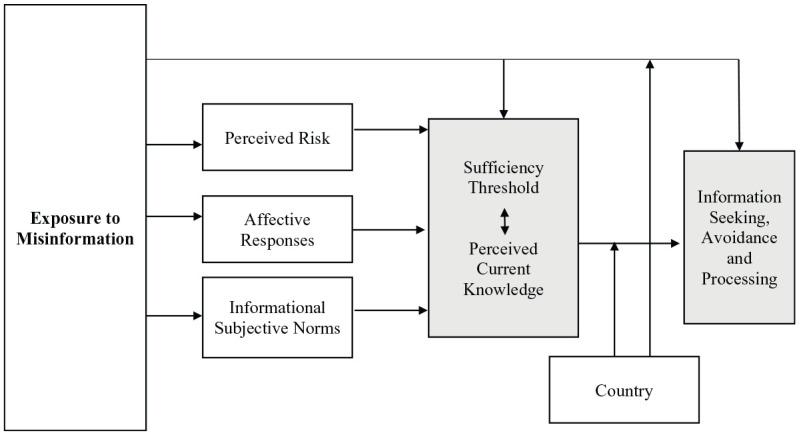
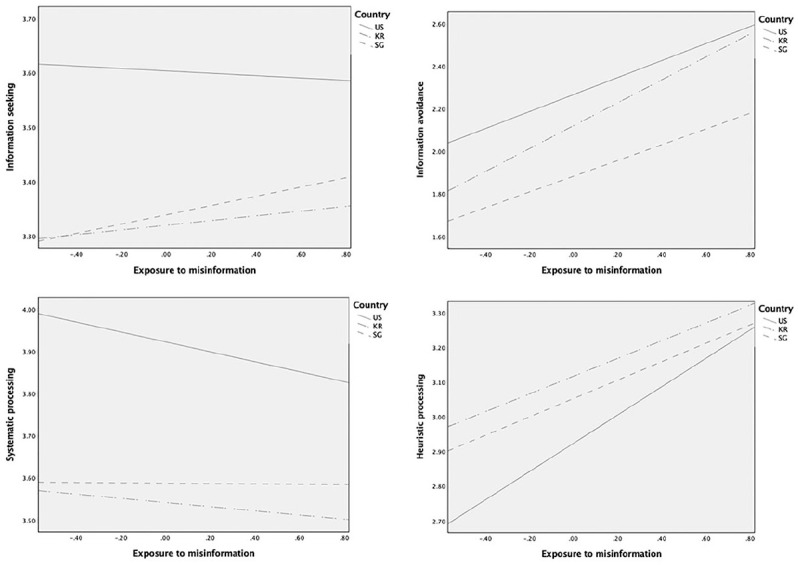
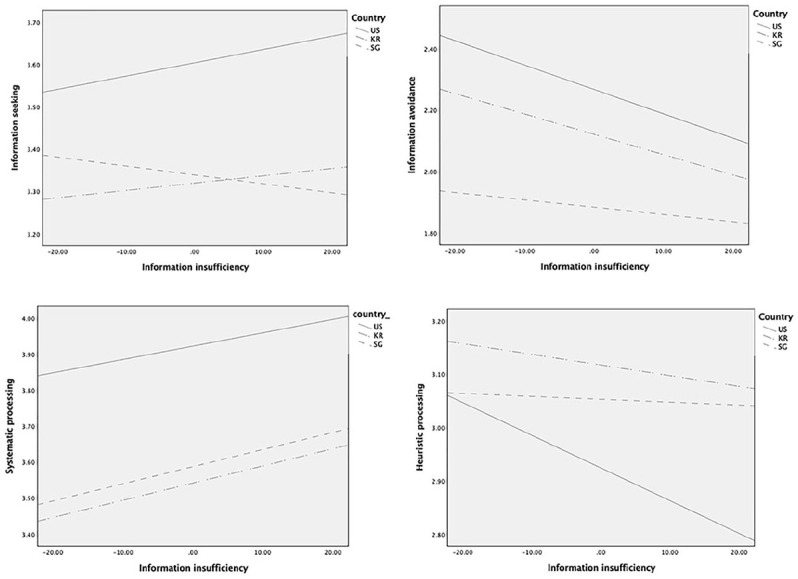
We examined the implications of exposure to misinformation about COVID-19 in the United States, South Korea, and Singapore in the early stages of the global pandemic. The online survey results showed that misinformation exposure reduced information insufficiency, which subsequently led to greater information avoidance and heuristic processing, as well as less systematic processing of COVID-19 information. Indirect effects differ by country and were stronger in the U.S. sample than in the Singapore sample. This study highlights negative consequences of misinformation during a global pandemic and addresses possible cultural and situational differences in how people interpret and respond to misinformation.
Overview
The claims and statistics of this paper haven’t been checked yet.
Run the check — free, no account needed. It reads the open-access text and checks the sources it cites.
Integrity signals
Registry
Cites
Statistics
Figures
Verification
Claims the paper makes
The claims and statistics of this paper haven’t been checked yet.
Run the check — free, no account needed. It reads the open-access text and checks the sources it cites.
Claims other papers make about this one
Each is checked against this paper’s own text: does it say what the citing paper says it does?
The source backs part of the claim, not all of it — or backs it for a different population, condition or comparison.
In the citing paper
“misinformation has even been shown to lead to information avoidance and less systematic processing of COVID-19 information 32”
From Measuring the impact of COVID-19 vaccine misinformation on vaccination intent in the UK and USA (2021) · cites this paper as [32]
Experimental — accuracy not yet measured
Self-check
Percentages, sums and reported differences re-computed from the paper’s own numbers.
The self-check needs the paper’s full text.
Citations
Cites
The theory of planned behavior
Ajzen, I. (1991) · Organizational Behavior and Human Decision Processes · doi:10.1016/0749-5978(91)90020-t · Cited by 90,587
(2013) · Cited by 44,563
Cultures and Organizations: Software of the Mind.
Triandis, H. C., & Hofstede, G. (1993) · Administrative Science Quarterly · doi:10.2307/2393257 · Cited by 17,696
Applied Multiple Regression/Correlation Analysis for the Behavioral Sciences.
Fong, G. T., Cohen, J., & Cohen, P. R. (1985) · Journal of the American Statistical Association · doi:10.2307/2287930 · Cited by 4,610
When Corrections Fail: The Persistence of Political Misperceptions
Nyhan, B., & Reifler, J. (2010) · Political Behavior · doi:10.1007/s11109-010-9112-2 · Cited by 3,173
Systematic Literature Review on the Spread of Health-related Misinformation on Social Media
Wang, Y., McKee, M., Torbica, A., & Stuckler, D. (2019) · Social Science & Medicine · doi:10.1016/j.socscimed.2019.112552 · Cited by 1,806 · cited 1×
“There is limited understanding of why certain individuals or societies are more or less vulnerable to misinformation (Wang et al., 2019).”
BackgroundNational Cultures in Four Dimensions: A Research-Based Theory of Cultural Differences among Nations
Hofstede, G. H. (1983) · International Studies of Management and Organization · doi:10.1080/00208825.1983.11656358 · Cited by 1,684
Cultures and organizations: Software of the mind
(1992) · International Journal of Intercultural Relations · doi:10.1016/0147-1767(92)90033-q · Cited by 1,653
Less than you think: Prevalence and predictors of fake news dissemination on Facebook
Guess, A., Nagler, J., & Tucker, J. (2019) · Science Advances · doi:10.1126/sciadv.aau4586 · Cited by 1,652
Garfin, D. R., Silver, R. C., & Holman, E. A. (2020) · Health Psychology · doi:10.1037/hea0000875 · Cited by 1,270
Research works printed but not linked: 2
- Cohen J., 2003, Appplied multiple regression/correlation analysis for the behavioral sciences
- Eagly A. H., 1993, The psychology of attitudes
Cited by
Sorted by citations
Measuring the impact of COVID-19 vaccine misinformation on vaccination intent in the UK and USA
Loomba, S., de Figueiredo, A., Piatek, S. J., de Graaf, K., & Larson, H. J. (2021) · Nature Human Behaviour · doi:10.1038/s41562-021-01056-1 · Cited by 1,800
Attitudes towards COVID-19 vaccination, vaccine hesitancy and intention to take the vaccine
Cordina, M., Lauri, M. A., & Lauri, J. (2021) · Pharmacy Practice · doi:10.18549/pharmpract.2021.1.2317 · Cited by 273
Pian, W., Chi, J., & Ma, F. (2021) · Information Processing & Management · doi:10.1016/j.ipm.2021.102713 · Cited by 198
Shin, D., Koerber, A., & Lim, J. S. (2025) · New Media & Society · doi:10.1177/14614448241234040 · Cited by 137
Link, E. (2021) · Information Processing & Management · doi:10.1016/j.ipm.2021.102714 · Cited by 119
Metadata
- Authors
- Kim, H. K., Ahn, J., Atkinson, L., & Kahlor, L. A.
- Affiliations
- Nanyang Technological University (SG)
- Hallym University (KR)
- The University of Texas at Austin (US)
- Corresponding author
- Kim, Hye Kyung
- Venue
- Science Communication
- Publisher
- SAGE Publications
- Published
- 2020-09-13
- Volume
- 42
- Issue
- 5
- Pages
- 586-615
- ISSN
- 0164-0259 (ISSN-L)
- 1075-5470
- 1552-8545
- PMC
- PMC7492825
- OpenAlex
- W3086361638
- Cited by
- 313
- References
- 64
- Citations by year
- 2026: 22 · 2025: 33 · 2024: 43 · 2023: 71 · 2022: 93 · 2021: 45 · 2020: 5
- FWCI
- 71.69
- Type
- journal article
- Language
- en
- Open access
- hybrid
- doi.org
- Locations
- Science Communication (publishedVersion, cc-by)
- PubMed Central (publishedVersion, cc-by)
- PubMed (publishedVersion)
- DR-NTU (Nanyang Technological University) (submittedVersion, cc-by)
- Funders
- ministry of education - singapore (Academic Research Fund Tier 1)
- national research foundation of korea (NRF-2018S1A3A2074932)
- Ministry of Education of the Republic of Korea
- Topics
- Social Sciences › Sociology and Political Science › Misinformation and Its Impacts
- Social Sciences › Communication › Communication and COVID-19 Impact
- Social Sciences › Communication › Public Relations and Crisis Communication
- Keywords
- COVID-19 misinformation, information seeking, information avoidance, heuristic processing, systematic processing, information insufficiency, cross-cultural comparison, pandemic response, United States, South Korea, Singapore
About these checks
Registry, retraction, Cites and statistics results are computed, not judged, with one exception: a printed reference that no index lists is read once by a model before it counts as a citation error. Claims are extracted by a model and kept only when their quote appears verbatim in the text; each cited source is then checked, with a model’s help, for whether it says what the claim relies on. Those verdicts can be wrong — read the claim’s quote and the cited source before relying on one.
Statistics and arithmetic are recomputed, not judged.
Confidence bands are shown only for fields calibrated on our annotated test set. None is calibrated yet, so no band is shown.
What counts as a claim ›How we measure confidence ›How we check this ›
Are you an author, or do you see a problem with this page? Request a review
