

The DOI matches its Crossref record; 65 of the 65 references it cites were found in a registry or an index.
Effects of COVID-19 Misinformation on Information Seeking, Avoidance, and Processing: A Multicountry Comparative Study
Open accessAbstract
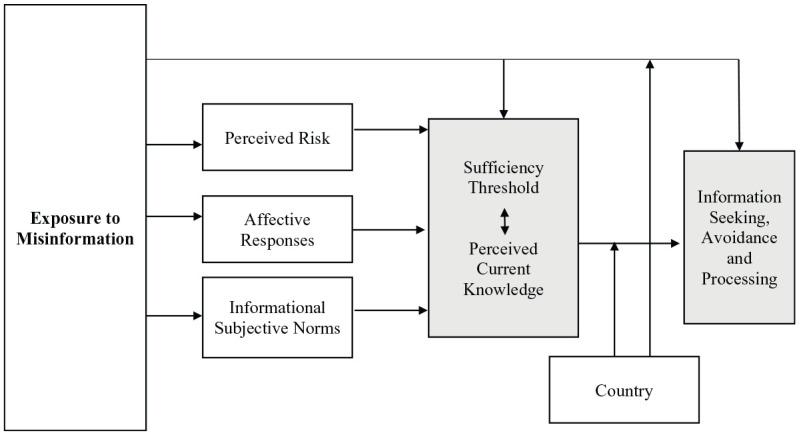
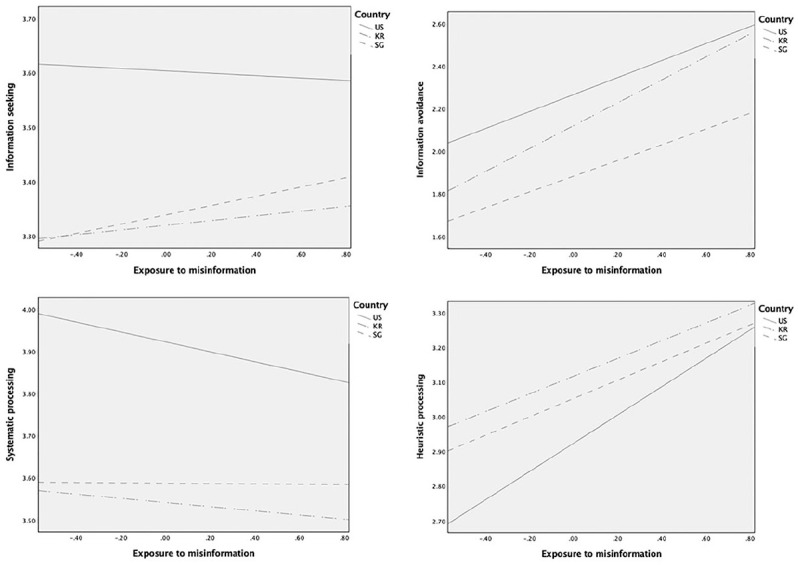
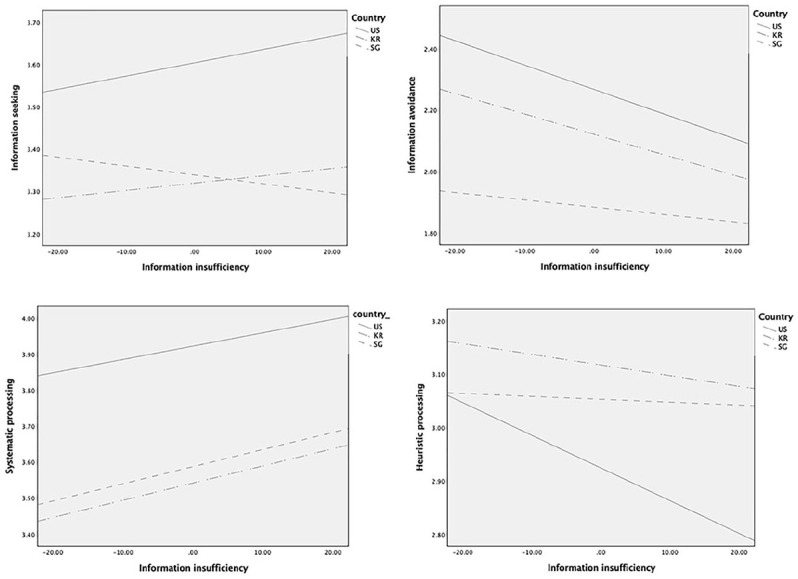
We examined the implications of exposure to misinformation about COVID-19 in the United States, South Korea, and Singapore in the early stages of the global pandemic. The online survey results showed that misinformation exposure reduced information insufficiency, which subsequently led to greater information avoidance and heuristic processing, as well as less systematic processing of COVID-19 information. Indirect effects differ by country and were stronger in the U.S. sample than in the Singapore sample. This study highlights negative consequences of misinformation during a global pandemic and addresses possible cultural and situational differences in how people interpret and respond to misinformation.
Overview
The claims and statistics of this paper haven’t been checked yet.
Run the check — free, no account needed. It reads the open-access text and checks the sources it cites.
Integrity signals
Registry
Cites
Statistics
Figures
Verification
Claims the paper makes
The claims and statistics of this paper haven’t been checked yet.
Run the check — free, no account needed. It reads the open-access text and checks the sources it cites.
Claims other papers make about this one
Each is checked against this paper’s own text: does it say what the citing paper says it does?
The source backs part of the claim, not all of it — or backs it for a different population, condition or comparison.
In the citing paper
“misinformation has even been shown to lead to information avoidance and less systematic processing of COVID-19 information 32”
From Measuring the impact of COVID-19 vaccine misinformation on vaccination intent in the UK and USA (2021) · cites this paper as [32]
Experimental — accuracy not yet measured
Self-check
Percentages, sums and reported differences re-computed from the paper’s own numbers.
The self-check needs the paper’s full text.
Citations
Cites
The theory of planned behavior
Ajzen, I. (1991) · Organizational Behavior and Human Decision Processes · doi:10.1016/0749-5978(91)90020-t · Cited by 90,587
(2013) · Cited by 44,563
Cultures and Organizations: Software of the Mind.
Triandis, H. C., & Hofstede, G. (1993) · Administrative Science Quarterly · doi:10.2307/2393257 · Cited by 17,696
Applied Multiple Regression/Correlation Analysis for the Behavioral Sciences.
Fong, G. T., Cohen, J., & Cohen, P. R. (1985) · Journal of the American Statistical Association · doi:10.2307/2287930 · Cited by 4,610
When Corrections Fail: The Persistence of Political Misperceptions
Nyhan, B., & Reifler, J. (2010) · Political Behavior · doi:10.1007/s11109-010-9112-2 · Cited by 3,173
Systematic Literature Review on the Spread of Health-related Misinformation on Social Media
Wang, Y., McKee, M., Torbica, A., & Stuckler, D. (2019) · Social Science & Medicine · doi:10.1016/j.socscimed.2019.112552 · Cited by 1,806 · cited 1×
“There is limited understanding of why certain individuals or societies are more or less vulnerable to misinformation (Wang et al., 2019).”
BackgroundNational Cultures in Four Dimensions: A Research-Based Theory of Cultural Differences among Nations
Hofstede, G. H. (1983) · International Studies of Management and Organization · doi:10.1080/00208825.1983.11656358 · Cited by 1,684
Cultures and organizations: Software of the mind
(1992) · International Journal of Intercultural Relations · doi:10.1016/0147-1767(92)90033-q · Cited by 1,653
Less than you think: Prevalence and predictors of fake news dissemination on Facebook
Guess, A., Nagler, J., & Tucker, J. (2019) · Science Advances · doi:10.1126/sciadv.aau4586 · Cited by 1,652
Garfin, D. R., Silver, R. C., & Holman, E. A. (2020) · Health Psychology · doi:10.1037/hea0000875 · Cited by 1,270
A postmodern Pandora's box: anti-vaccination misinformation on the internet
Kata, A. (2010) · Vaccine · doi:10.1016/j.vaccine.2009.12.022 · Cited by 1,208
Griffin, R. J., Dunwoody, S., & Neuwirth, K. (1999) · Environmental Research · doi:10.1006/enrs.1998.3940 · Cited by 1,187
Risk perceptions and their relation to risk behavior
Brewer, N. T., Weinstein, N. D., Cuite, C. L., & Herrington, J. E. (2004) · Annals of Behavioral Medicine · doi:10.1207/s15324796abm2702_7 · Cited by 833
Belief Echoes: The Persistent Effects of Corrected Misinformation
Thorson, E. A. (2015) · Political Communication · doi:10.1080/10584609.2015.1102187 · Cited by 675
Bode, L., & Vraga, E. K. (2015) · Journal of Communication · doi:10.1111/jcom.12166 · Cited by 666
Effects of Quality and Quantity of Information on Decision Effectiveness
Keller, K. L., & Staelin, R. (1987) · Journal of Consumer Research · doi:10.1086/209106 · Cited by 634
Problem Solving and Communicative Action: A Situational Theory of Problem Solving
Kim, J., & Grunig, J. E. (2011) · Journal of Communication · doi:10.1111/j.1460-2466.2010.01529.x · Cited by 589
PRISM: A Planned Risk Information Seeking Model
Kahlor, L. (2010) · Health Communication · doi:10.1080/10410231003775172 · Cited by 531
Self-citationVraga, E. K., & Bode, L. (2020) · Political Communication · doi:10.1080/10584609.2020.1716500 · Cited by 486
Pulido, C., Villarejo-Carballido, B., Redondo-Sama, G., & Gómez, A. (2020) · International Sociology · doi:10.1177/0268580920914755 · Cited by 484
Partisan Perceptual Bias and the Information Environment
Jerit, J., & Barabas, J. (2012) · The Journal of Politics · doi:10.1017/s0022381612000187 · Cited by 425
Bridgman, A., Merkley, E., Loewen, P. J., Owen, T., Ruths, D. A., Teichmann, L., & Zhilin, O. (2020) · Harvard Kennedy School Misinformation Review · doi:10.37016/mr-2020-028 · Cited by 419
Risk Information Seeking and Processing Model: A Meta-Analysis
Yang, J. Z., Aloe, A. M., & Feeley, T. H. (2014) · Journal of Communication · doi:10.1111/jcom.12071 · Cited by 411
Testing the Difference Between Reliability Coefficients Alpha and Omega
Deng, L., & Chan, W. (2016) · Educational and Psychological Measurement · doi:10.1177/0013164416658325 · Cited by 405
After the Flood: Anger, Attribution, and the Seeking of Information
Griffin, R. J., Yang, Z., ter Huurne, E., Boerner, F., Ortiz, S., & Dunwoody, S. (2008) · Science Communication · doi:10.1177/1075547007312309 · Cited by 361
Valenzuela, S., Halpern, D. M., Katz, J. E., & Miranda, J. P. (2019) · Digital Journalism · doi:10.1080/21670811.2019.1623701 · Cited by 356
What, Me Worry? The Role of Affect in Information Seeking and Avoidance
Yang, Z. J., & Kahlor, L. (2013) · Science Communication · doi:10.1177/1075547012441873 · Cited by 346
Self-citationkeersmaecker, J. D., & Roets, A. (2017) · Intelligence · doi:10.1016/j.intell.2017.10.005 · Cited by 329
Audiences’ acts of authentication in the age of fake news: A conceptual framework
Tandoc, E. C., Ling, R., Westlund, O., Duffy, A., Goh, D., & Wei, L.-Z. (2018) · New Media & Society · doi:10.1177/1461444817731756 · Cited by 319
Bento, A. I., Nguyen, T. D., Wing, C., Lozano-Rojas, F. A., Ahn, Y., & Simon, K. I. (2020) · Proceedings of the National Academy of Sciences · doi:10.1073/pnas.2005335117 · Cited by 312
From “information” to “knowing”: Exploring the role of social media in contemporary news consumption
Pentina, I., & Tarafdar, M. (2014) · Computers in Human Behavior · doi:10.1016/j.chb.2014.02.045 · Cited by 302
Jin, Y., Pang, A., & Cameron, G. T. (2012) · Journal of Public Relations Research · doi:10.1080/1062726x.2012.676747 · Cited by 281
Linking the Heuristic-Systematic Model and Depth of Processing
Griffin, R. J., Neuwirth, K., Giese, J. K., & Dunwoody, S. (2002) · Communication Research · doi:10.1177/009365002237833 · Cited by 265
Perceived probability, perceived severity, and health-protective behavior.
Weinstein, N. D. (2000) · Health Psychology · doi:10.1037/0278-6133.19.1.65 · Cited by 255
An Augmented Risk Information Seeking Model: The Case of Global Warming
Kahlor, L. A. (2007) · Media Psychology · doi:10.1080/15213260701532971 · Cited by 243
Self-citationIdeological asymmetries in conformity, desire for shared reality, and the spread of misinformation
Jost, J. T., van der Linden, S., Panagopoulos, C., & Hardin, C. D. (2018) · Current Opinion in Psychology · doi:10.1016/j.copsyc.2018.01.003 · Cited by 242
Rains, S. A. (2007) · Journal of Health Communication · doi:10.1080/10810730701619992 · Cited by 236
Studying Heuristic‐Systematic Processing of Risk Communication
Kahlor, L. A., Dunwoody, S., Griffin, R. J., Neuwirth, K., & Giese, J. K. (2003) · Risk Analysis · doi:10.1111/1539-6924.00314 · Cited by 233
Self-citationSommariva, S., Vamos, C. A., Mantzarlis, A., Đào, L. U.-L., & Tyson, D. M. (2018) · American Journal of Health Education · doi:10.1080/19325037.2018.1473178 · Cited by 226
Information overload: Causes and consequences*
Schneider, S. C. (1987) · Human Systems Management · doi:10.3233/hsm-1987-7207 · Cited by 224
Assessment of Health Information About COVID-19 Prevention on the Internet: Infodemiological Study
Hernández-García, I., & Giménez-Júlvez, T. (2020) · JMIR Public Health and Surveillance · doi:10.2196/18717 · Cited by 218
Perceived probability, perceived severity, and health-protective behavior.
Weinstein, N. D. (2000) · Health Psychology · doi:10.1037//0278-6133.19.1.65 · Cited by 210
Gharpure, R. V., Hunter, C. M., Schnall, A. H., Barrett, C., Kirby, A. E., Kunz, J. M., Berling, K., Mercante, J. W., Murphy, J. L., & Garcia‐Williams, A. G. (2020) · MMWR Morbidity and Mortality Weekly Report · doi:10.15585/mmwr.mm6923e2 · Cited by 198
Tan, A. S. L., Lee, C., & Chae, J. (2015) · Journal of Communication · doi:10.1111/jcom.12163 · Cited by 192
Miles, A., Voorwinden, S., Chapman, S., & Wardle, J. (2008) · Cancer Epidemiology Biomarkers & Prevention · doi:10.1158/1055-9965.epi-08-0074 · Cited by 183
The Role of Emotional Response during an H1N1 Influenza Pandemic on a College Campus
Kim, H. K., & Niederdeppe, J. (2013) · Journal of Public Relations Research · doi:10.1080/1062726x.2013.739100 · Cited by 165
Self-citationSource monitoring and suggestibility to misinformation: adult age‐related differences
Mitchell, K., Johnson, M. K., & Mather, M. (2002) · Applied Cognitive Psychology · doi:10.1002/acp.857 · Cited by 158
So, J., Kuang, K., & Cho, H. (2016) · Communication Research · doi:10.1177/0093650216679536 · Cited by 155
Establishing an Information Avoidance Scale.
Howell, J. L., & Shepperd, J. A. (2016) · Psychological Assessment · doi:10.1037/pas0000315 · Cited by 145
What Makes People Hot? Applying the Situational Theory of Problem Solving to Hot-Issue Publics
Kim, J., Ni, L., Kim, S., & Kim, J. R. (2012) · Journal of Public Relations Research · doi:10.1080/1062726x.2012.626133 · Cited by 119
Porter, E. V., & Wood, T. (2019) · Cambridge University Press eBooks · doi:10.1017/9781108688338 · Cited by 112
Dixon, G., & Clarke, C. J. (2012) · Health Education Research · doi:10.1093/her/cys110 · Cited by 94
A United States-China Comparison of Risk Information–Seeking Intentions
Yang, Z. J., Kahlor, L., & Li, H. (2014) · Communication Research · doi:10.1177/0093650213479795 · Cited by 90
Self-citationHameleers, M., van der Meer, T. G. L. A., & Brosius, A. (2020) · Harvard Kennedy School Misinformation Review · doi:10.37016/mr-2020-023 · Cited by 85
Yang, J. Z., Kahlor, L. A., & Griffin, D. J. (2013) · Human Communication Research · doi:10.1111/hcre.12018 · Cited by 83
Self-citationKalichman, S. C., Cherry, C., Cain, D. N., Weinhardt, L. S., Benotsch, E. G., Pope, H. L., & Kalichman, M. O. (2006) · Health Psychology · doi:10.1037/0278-6133.25.2.205 · Cited by 82
Social Networks and Popular Understanding of Science and Health: Sharing Disparities
Southwell, B. G. (2013) · doi:10.3768/rtipress.2013.bk.0011.1307 · Cited by 80
Yang, J. Z. (2015) · Risk Analysis · doi:10.1111/risa.12526 · Cited by 61
Psychometric properties of the Japanese version of the mental adjustment to cancer (MAC) scale
Akechi, T., Fukue, M., Kugaya, A., Okamura, H., Nishiwaki, Y., Yamawaki, S., & Uchitomi, Y. (2000) · Psycho-Oncology · doi:10.1002/1099-1611(200009/10)9:5 · Cited by 60
Yang, J. Z., McComas, K. A., Gay, G. K., Leonard, J. P., Dannenberg, A. J., & Dillon, H. (2009) · Patient Education and Counseling · doi:10.1016/j.pec.2009.08.010 · Cited by 59
Introduction: Misinformation among Mass Audiences as a Focus for Inquiry
Southwell, B. G., Thorson, E. A., & Sheble, L. (2018) · University of Texas Press eBooks · doi:10.7560/314555-002 · Cited by 43
Yang, J. Z., Chu, H., & Kahlor, L. A. (2018) · Journalism & Mass Communication Quarterly · doi:10.1177/1077699018811089 · Cited by 41
Self-citationMeasuring Differentials in Communication Research: Issues With Multicollinearity in Three Methods
Rosenthal, S. (2013) · Communication Methods and Measures · doi:10.1080/19312458.2013.789837 · Cited by 35
Ethics Information Seeking and Sharing Among Scientists
Kahlor, L. A., Dudo, A. D., Liang, M.-C., Lazard, A. J., & AbiGhannam, N. (2015) · Science Communication · doi:10.1177/1075547015617942 · Cited by 9
Self-citation
Research works printed but not linked: 2
- Cohen J., 2003, Appplied multiple regression/correlation analysis for the behavioral sciences
- Eagly A. H., 1993, The psychology of attitudes
Cited by
Sorted by citations
Measuring the impact of COVID-19 vaccine misinformation on vaccination intent in the UK and USA
Loomba, S., de Figueiredo, A., Piatek, S. J., de Graaf, K., & Larson, H. J. (2021) · Nature Human Behaviour · doi:10.1038/s41562-021-01056-1 · Cited by 1,800
Attitudes towards COVID-19 vaccination, vaccine hesitancy and intention to take the vaccine
Cordina, M., Lauri, M. A., & Lauri, J. (2021) · Pharmacy Practice · doi:10.18549/pharmpract.2021.1.2317 · Cited by 273
Pian, W., Chi, J., & Ma, F. (2021) · Information Processing & Management · doi:10.1016/j.ipm.2021.102713 · Cited by 198
Shin, D., Koerber, A., & Lim, J. S. (2025) · New Media & Society · doi:10.1177/14614448241234040 · Cited by 137
Link, E. (2021) · Information Processing & Management · doi:10.1016/j.ipm.2021.102714 · Cited by 119
Metadata
- Authors
- Kim, H. K., Ahn, J., Atkinson, L., & Kahlor, L. A.
- Affiliations
- Nanyang Technological University (SG)
- Hallym University (KR)
- The University of Texas at Austin (US)
- Corresponding author
- Kim, Hye Kyung
- Venue
- Science Communication
- Publisher
- SAGE Publications
- Published
- 2020-09-13
- Volume
- 42
- Issue
- 5
- Pages
- 586-615
- ISSN
- 0164-0259 (ISSN-L)
- 1075-5470
- 1552-8545
- PMC
- PMC7492825
- OpenAlex
- W3086361638
- Cited by
- 313
- References
- 64
- Citations by year
- 2026: 22 · 2025: 33 · 2024: 43 · 2023: 71 · 2022: 93 · 2021: 45 · 2020: 5
- FWCI
- 71.69
- Type
- journal article
- Language
- en
- Open access
- hybrid
- doi.org
- Locations
- Science Communication (publishedVersion, cc-by)
- PubMed Central (publishedVersion, cc-by)
- PubMed (publishedVersion)
- DR-NTU (Nanyang Technological University) (submittedVersion, cc-by)
- Funders
- ministry of education - singapore (Academic Research Fund Tier 1)
- national research foundation of korea (NRF-2018S1A3A2074932)
- Ministry of Education of the Republic of Korea
- Topics
- Social Sciences › Sociology and Political Science › Misinformation and Its Impacts
- Social Sciences › Communication › Communication and COVID-19 Impact
- Social Sciences › Communication › Public Relations and Crisis Communication
- Keywords
- COVID-19 misinformation, information seeking, information avoidance, heuristic processing, systematic processing, information insufficiency, cross-cultural comparison, pandemic response, United States, South Korea, Singapore
About these checks
Registry, retraction, Cites and statistics results are computed, not judged, with one exception: a printed reference that no index lists is read once by a model before it counts as a citation error. Claims are extracted by a model and kept only when their quote appears verbatim in the text; each cited source is then checked, with a model’s help, for whether it says what the claim relies on. Those verdicts can be wrong — read the claim’s quote and the cited source before relying on one.
Statistics and arithmetic are recomputed, not judged.
Confidence bands are shown only for fields calibrated on our annotated test set. None is calibrated yet, so no band is shown.
What counts as a claim ›How we measure confidence ›How we check this ›
Are you an author, or do you see a problem with this page? Request a review
