

The DOI matches its Crossref record; 38 of the 38 references it cites were found in a registry or an index.
Miss. Diagnosis: A Systematic Review of ADHD in Adult Women
Open accessAbstract
OBJECTIVE: The aim of this review was to explore the impact of living with undiagnosed ADHD and adult diagnosis on women. METHOD: A systematic literature search was completed using three databases. Eight articles were considered relevant based on strict inclusion criteria. Thematic analysis was used to analyze the results of the articles. RESULTS: Four key themes emerged: Impacts on social-emotional wellbeing, Difficult relationships, Lack of control, and Self-acceptance after diagnosis. CONCLUSION: This knowledge can be used to advance the understanding of ADHD in adult women and the implications for late diagnosis in women.
Overview
The claims and statistics of this paper haven’t been checked yet.
Run the check — free, no account needed. It reads the open-access text and checks the sources it cites.
Integrity signals
Registry
Cites
Statistics
Figures
Verification
Claims the paper makes
The claims and statistics of this paper haven’t been checked yet.
Run the check — free, no account needed. It reads the open-access text and checks the sources it cites.
Claims other papers make about this one
Each is checked against this paper’s own text: does it say what the citing paper says it does?
The source backs part of the claim, not all of it — or backs it for a different population, condition or comparison.
In the citing paper
“We developed this female-specific treatment option in response to the dire need expressed by many [1,17,19,23,24,25,26,28,41,55,85], including patients.”
From A Female-Specific Treatment Group for ADHD—Description of the Programme and Qualitative Analysis of First Experiences (2024) · cites this paper as [17]
Experimental — accuracy not yet measuredThe cited source says what the claim attributes to it.
In the citing paper
“We decided on a group programme because of the importance of social difficulties for women with ADHD [10,17].”
From A Female-Specific Treatment Group for ADHD—Description of the Programme and Qualitative Analysis of First Experiences (2024) · cites this paper as [17]
Self-check
Percentages, sums and reported differences re-computed from the paper’s own numbers.
The self-check needs the paper’s full text.
Citations
Cites
Using thematic analysis in psychology
Braun, V., & Clarke, V. (2006) · Qualitative Research in Psychology · doi:10.1191/1478088706qp063oa · Cited by 194,414 · cited 2×
“Using techniques of thematic analysis (Braun & Clarke, 2006), eight articles were reviewed.”
MethodPreferred Reporting Items for Systematic Reviews and Meta-Analyses: the PRISMA statement
Moher, D., Liberati, A., Tetzlaff, J., Altman, D. G., & for the PRISMA Group (2009) · BMJ · doi:10.1136/bmj.b2535 · Cited by 83,823
Preferred Reporting Items for Systematic Reviews and Meta-Analyses: The PRISMA Statement
Moher, D., Liberati, A., Tetzlaff, J., Altman, D. G., & The PRISMA Group (2009) · PLoS Medicine · doi:10.1371/journal.pmed.1000097 · Cited by 64,042 · cited 2×
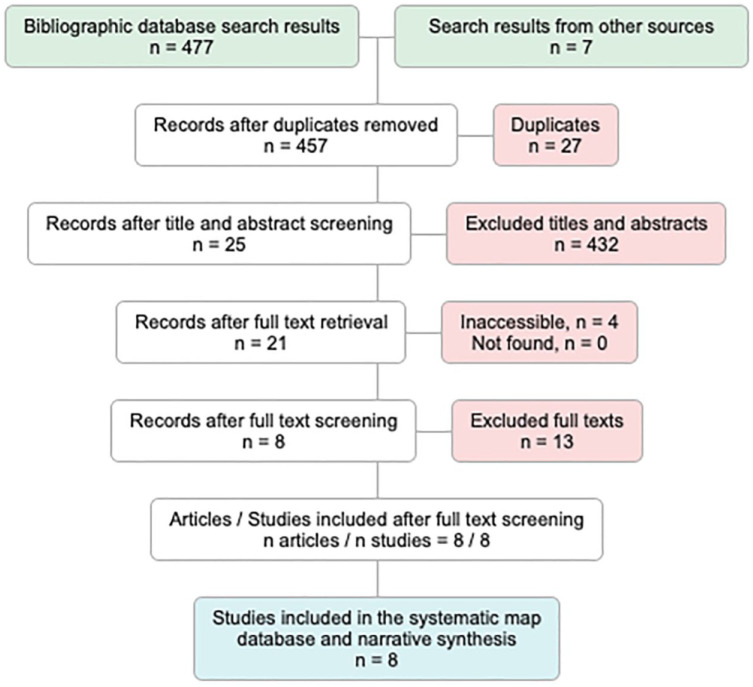
“A flow chart created by Preferred Reporting Items for Systematic Reviews (PRISMA; Moher et al., 2009) was used to visually track the number of articles at each step in the review process (see Figure 1).”
Diagnostic and Statistical Manual of Mental Disorders
American Psychiatric Association (2022) · doi:10.1176/appi.books.9780890425787 · Cited by 23,476
Wang, G., Ma, R., Qiao, G., Wada, K., Aizawa, Y., & Satoh, T. (2015) · Integrative Medicine International · doi:10.1159/000368408 · Cited by 18,762
Advancing social connection as a public health priority in the United States.
Holt-Lunstad, J., Robles, T. F., & Sbarra, D. A. (2017) · American Psychologist · doi:10.1037/amp0000103 · Cited by 978 · cited 1×
“Relationships with others are an important part of life; high quality close relationships and feeling socially connected to those in one’s life have been associated with decreased mortality and disease morbidity (Holt-Lunstad et al., 2017).”
BackgroundSong, P., Zha, M., Yang, Q., Zhang, Y., Li, X., & Rudan, I. (2021) · Journal of Global Health · doi:10.7189/jogh.11.04009 · Cited by 896 · cited 2×
“, 2020), impacting 2% to 6% of the global population (Song et al., 2021).”
BackgroundYoung, S., Adamo, N., Ásgeirsdóttir, B. B., Branney, P., Beckett, M., Colley, W., Cubbin, S., Deeley, Q., Farrag, E., Gudjonsson, G., et al. (2020) · BMC Psychiatry · doi:10.1186/s12888-020-02707-9 · Cited by 610 · cited 5×
“Women with ADHD are also at a higher risk of engaging in risky sexual behavior, unplanned pregnancy, and are more likely to be coerced into having sex than women without ADHD (Young et al., 2020).”
BackgroundInfluentialSex differences in predicting ADHD clinical diagnosis and pharmacological treatment
Mowlem, F. D., Rosenqvist, M. A., Martin, J., Lichtenstein, P., Asherson, P. J., & Larsson, H. (2018) · European Child & Adolescent Psychiatry · doi:10.1007/s00787-018-1211-3 · Cited by 432 · cited 8×
“Mowlem et al. (2018) found that females referred for and diagnosed with ADHD exhibited symptoms that were a significant deviation from their typical behaviors, suggesting that females may have a slightly higher threshold for symptom severity for referral and diagnosis.”
BackgroundInfluentialThe Impact of Illness Identity on Recovery from Severe Mental Illness
Yanos, P. T., Roe, D., & Lysaker, P. H. (2010) · American Journal of Psychiatric Rehabilitation · doi:10.1080/15487761003756860 · Cited by 391 · cited 1×
“Assigning meaning to diagnosis can affect hope and self-esteem (Yanos et al., 2010), while receiving a diagnosis provides an individual with a model in which to compare themselves and can help them to form their identity.”
Background
Research works printed but not linked: 4
- Bartlett L. M., Mackay F., Minichiello V. (2005). The experience of self-esteem in women with attention- deficit/hyperactivity disorder. Research University of New England. https://hdl.handle.net/1959.11/18430
- Burgess E. R. (2000). The effect of attention deficit/hyperactivity disorder (ADHD) on psychosocial development in women [Unpublished doctoral dissertation]. The Union Institute.
- Cohen J., Onunaku N., Clothier S., Poppe J. (2005). Helping young children succeed: strategies to promote early childhood social and emotional development. National Conference of State Legislatures. https://edn.ne.gov/cms/sites/default/files/u1/pdf/se18Helping%20Young%20Children%20Succeed.pdf
- Quinn P. O., 2004, Behavioral Health Management, 24, 30
Cited by
Sorted by citations
Musullulu, H. (2025) · Frontiers in Psychology · doi:10.3389/fpsyg.2025.1466088 · Cited by 89
“In girls, on the other hand, internalized symptoms; more inwardness, shyness, and inattention are observed (Attoe and Climie, 2023).”
Exploring women’s experiences of diagnosis of ADHD in adulthood: a qualitative study
Morgan, J. (2023) · Advances in Mental Health · doi:10.1080/18387357.2023.2268756 · Cited by 78
“Furthermore, girls may be more likely, than males, to be misdiagnosed or have a late diagnosis because of the co-occurrence with mental health conditions such as depression and anxiety which are often treated fi rst (Attoe & Climie, 2023; Young et al., 2020).”
Craddock, E. (2024) · Qualitative Health Research · doi:10.1177/10497323241253412 · Cited by 64
Neurodevelopmental Disorders Associated with Gut Microbiome Dysbiosis in Children
Borrego-Ruiz, A., & Borrego, J. J. (2024) · Children · doi:10.3390/children11070796 · Cited by 42
“Tourette syndrome (TS) is the most severe form of TD. Specifically, TS can be defined as a chronic NDD that typically begins in childhood and is characterized by motor and phonic tics, which can significantly reduce the quality of life of affected individuals [208,209].”
BackgroundWissell, S., Hudson, J., Flower, R. L., & Goh, W. S. H. (2025) · Neurodiversity · doi:10.1177/27546330241308540 · Cited by 35
“…as dyslexia, Attention De fi cit Hyperactivity Disorder (ADHD), and autism, and the application of these classi fi cation labels across varying contexts has shown a marked rise on a global scale, notable within the adult population (Attoe & Climie, 2023; Werkhoven et al., 2022; Wissell et al., 2021).”
Metadata
- Authors
- Attoe, D. E., & Climie, E. A.
- Affiliations
- University of Calgary (CA)
- Corresponding author
- Climie, Emma A.
- Venue
- Journal of Attention Disorders
- Publisher
- SAGE Publications
- Published
- 2023-03-30
- Volume
- 27
- Issue
- 7
- Pages
- 645-657
- ISSN
- 1087-0547 (ISSN-L)
- 1557-1246
- PMC
- PMC10173330
- OpenAlex
- W4361270904
- Cited by
- 173
- References
- 38
- Citations by year
- 2026: 63 · 2025: 73 · 2024: 31 · 2023: 6
- FWCI
- 7.88
- Type
- journal article
- Language
- en
- Open access
- hybrid
- doi.org
- Licence
- Locations
- Journal of Attention Disorders (publishedVersion, cc-by-nc)
- PubMed Central (publishedVersion, cc-by-nc)
- PubMed (publishedVersion)
- Topics
- Health Sciences › Medicine › Psychiatry and Mental health › Attention Deficit Hyperactivity Disorder
- Life Sciences › Neuroscience › Cognitive Neuroscience › Autism Spectrum Disorder Research
- Social Sciences › Psychology › Clinical Psychology › Psychology and Mental Health
- Keywords
- adult ADHD, women, undiagnosed ADHD, delayed diagnosis, social and emotional wellbeing, interpersonal relationships, self-acceptance, lack of control, quality of life
- MeSH terms
- Adult, Attention Deficit Disorder with Hyperactivity, Emotions, Female, Humans
About these checks
Registry, retraction, Cites and statistics results are computed, not judged, with one exception: a printed reference that no index lists is read once by a model before it counts as a citation error. Claims are extracted by a model and kept only when their quote appears verbatim in the text; each cited source is then checked, with a model’s help, for whether it says what the claim relies on. Those verdicts can be wrong — read the claim’s quote and the cited source before relying on one.
Statistics and arithmetic are recomputed, not judged.
Confidence bands are shown only for fields calibrated on our annotated test set. None is calibrated yet, so no band is shown.
What counts as a claim ›How we measure confidence ›How we check this ›
Are you an author, or do you see a problem with this page? Request a review
