

Diagnosis of autism in adulthood: A scoping review
Open accessThe DOI matches its Crossref record; 98 of the 100 references it cites were found in a registry or an index; 92 of the 320 sources its claims cite were checked for support.
Abstract
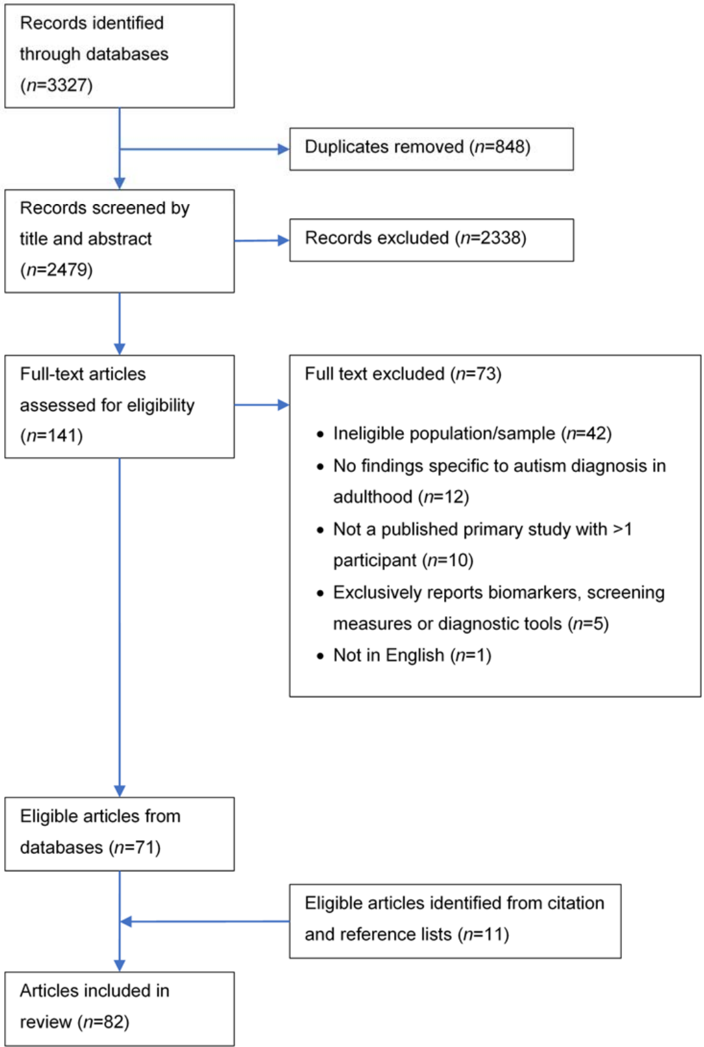
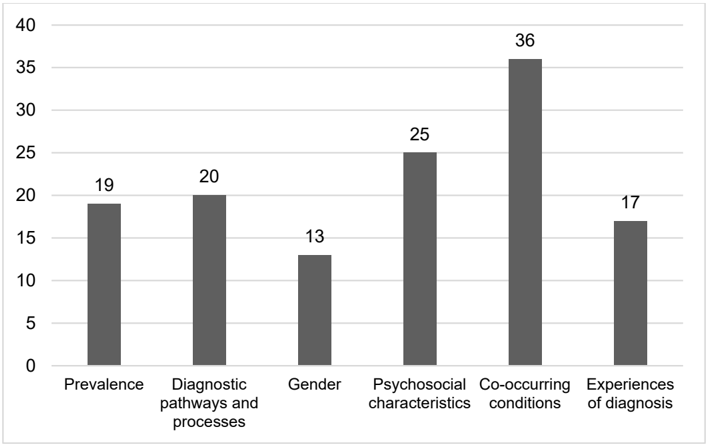
More adults are undergoing autism assessment due to recent changes in awareness, diagnostic criteria and professional practices. This scoping review aimed to summarise research on autism diagnosis in adulthood and identify any gaps for future study. The authors searched for studies involving first-time assessment and diagnosis of autism in adults, which identified 82 studies from 13 countries using various methodologies. Six themes of (1) prevalence, (2) diagnostic pathways and processes, (3) gender, (4) psychosocial characteristics, (5) co-occurring conditions and (6) experiences of diagnosis were identified across the studies. Findings suggest that receiving an autism diagnosis has a significant emotional impact on adults, but accessibility and processes are inconsistent, and formal support services are lacking. More research is needed on autism diagnosis in adults with intellectual disability, consequences of the timing of diagnosis, and support after diagnosis. Lay abstract More adults are getting assessed for possible autism. Here, we give an overview on what is already known about autism diagnosis in adulthood and find areas that need more research. We divided results from the studies we found into six topics of (1) rates of autism in different groups; (2) the process of getting an autism diagnosis in adulthood; (3) gender; (4) personality traits, abilities and behaviours of diagnosed adults; (5) mental and physical health conditions that occur together with autism; and (6) how adults think and feel about being assessed and diagnosed. We found that adults often have strong emotions after being diagnosed, the process of getting a diagnosis can be unclear and different for everyone, and not many support services are available for adults. More research on diagnosing adults with intellectual disability, differences between early and late-diagnosed adults, and support after diagnosis would be useful.
Overview
CoChat Summary
TL;DR
This scoping review synthesises 82 studies from 13 countries on first-time autism diagnosis in adulthood, identifying six themes: prevalence, diagnostic pathways/processes, gender, psychosocial characteristics, co-occurring conditions, and experiences of diagnosis. It concludes that diagnosis has a significant emotional impact but access and processes are inconsistent, and formal post-diagnosis support is lacking.
Key findings
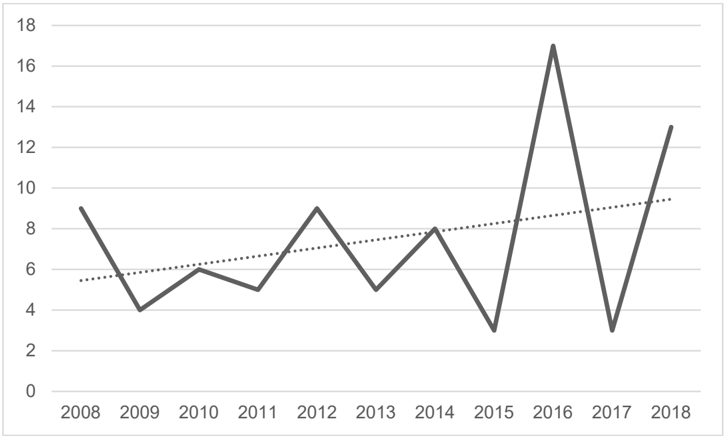
- The review included 82 studies: 62 quantitative, 16 qualitative, and 4 mixed-methods; most were from the UK (39%), USA (12%), and Sweden (10%). Mean quality appraisal score was 1.54 (range 0.89–2.00), with 61% scoring ≥1.5.
- Prevalence estimates varied: a large UK community study estimated autism prevalence in adults at 9.8 per 1000, adjusted to 11 per 1000 after including a sample with intellectual disability; prevalence was elevated in prisoners (3–5%) and in young adults with low birth weight (5%).
- In studies of DSM-5 criteria, between 22% and 62% of adults who met DSM-IV-TR criteria for an autism subtype did not meet DSM-5 ASD criteria. Adults experienced a mean duration of 159.2 days between referral and diagnosis, and a 12-month intervention reduced total duration by a mean of 29.9 days.
- Depression (13–50%) and anxiety (10–50%) were highly prevalent among adults undergoing autism assessment; suicidal ideation was 66% and suicidal behaviour 35% in one sample. Almost half of adults in one study were offered no post-diagnosis support.
Methods
- Scoping review using Arksey and O’Malley’s framework, PRISMA-ScR, and JBI Reviewer’s Manual; protocol registered on Open Science Framework.
- Searched MEDLINE, Embase, PsycINFO, and CINAHL for English-language primary studies published 2008–2018, with sample size >1, involving first-time autism diagnosis in adulthood; final search 28 November 2018.
- Data were charted, quality-appraised with JBI, CASP, or MMAT tools, and synthesised into six themes; no study was excluded based on quality.
Limitations
- Stated by the authors: grey literature and reviews were excluded; the review did not exclude studies based on methodological rigour and could not discuss each theme in great detail; stakeholder representatives were not consulted as optionally recommended by Arksey and O’Malley.
- Evident from the text: UK studies dominate the literature; samples were predominantly men with average-to-high intellectual ability, and many studies excluded adults with intellectual disability; reporting of demographics and co-occurring conditions was inconsistent across studies, limiting comparison.
Model-written summary. Check it against the paper before relying on it.
Integrity signals
Registry
Cites
Statistics
Figures
Verification
Claims the paper makes
75 Valid · 7 Not valid · 187 Not checked · 55 Own results and interpretations
The sources with a verdict support this claim; the rest weren’t checked yet, have no full text we could read, or their verdicts aren’t rated yet.
In the paper
“Due to these issues, there is often a gap of several years between first concern, professional consultation, and diagnosis (Begeer et al., 2013; Jones et al., 2014).”
What the sources say
- Not checked — no full text of the sourcecites Begeer et al., 2013 matched to “Sex Differences in the Timing of Identification Among Children and Adults with Autism Spectrum Disorders” (2013) source
- Supportedcites Jones et al., 2014 matched to “Experiences of Receiving a Diagnosis of Autism Spectrum Disorder: A Survey of Adults in the United Kingdom” (2014) source
The First consultation section (p. 15) reports that respondents sought professional help an average of 3.3 years after concerns emerged. The Final diagnosis section (p. 16) reports diagnosis an average of 5.2 years after first concerns and 2 years after seeking help, supporting a years-long gap across those stages. (LLM, conf=0.94)
plain- Asserted: passes — The authors put it forward as true.
- Checkable: passes — It can be checked against evidence.
- Load-bearing: unclear — It is unclear whether the paper’s conclusions depend on it.
- Based: passes — The paper gives a reason why it holds.
The cited sources support only part of this claim — read each source’s verdict below.
In the paper
“A 12-month intervention co-developed by Rutherford et al. (2018) and 11 adult diagnostic services (Rutherford, McKenzie, Forsyth, et al., 2016) reduced total duration by a mean of 29.9 days.”
What the sources say
- Supportedcites Rutherford et al., 2018 matched to “Implementation of a Practice Development Model to Reduce the Wait for Autism Spectrum Diagnosis in Adults” (2018) source
The Abstract reports a 12-month change program in 11 adult diagnostic services. The Discussion describes participants and researchers co-creating locally relevant changes, and Results > Multi-level Models reports that mean time from referral to sharing the diagnosis fell from 149.4 to 119.5 days—a reduction of 29.9 days. (LLM, conf=0.91)
- Not matchedcites Rutherford, McKenzie, Forsyth, et al., 2016
More than one paper fits this citation.
plainstates a cause- Asserted: passes — The authors put it forward as true.
- Checkable: passes — It can be checked against evidence.
- Load-bearing: unclear — It is unclear whether the paper’s conclusions depend on it.
- Based: passes — The paper gives a reason why it holds.
- Supported
The cited sources support only part of this claim — read each source’s verdict below.
In the paper
“Diagnostic services tended to report a male-female ratio of 2-3 to 1 (e.g. Happé et al., 2016; Rutherford, McKenzie, Johnson, et al., 2016; Wilson et al., 2016).”
What the sources say
- Supportedcites Happé et al., 2016 matched to “Demographic and Cognitive Profile of Individuals Seeking a Diagnosis of Autism Spectrum Disorder in Adulthood” (2016) source
The Demographic Information section (p. 11) reports that 25% of those receiving an ASD diagnosis were female, equivalent to a male-to-female ratio of 3:1. The Discussion (p. 18) gives the counts as 71 men and 25 women, a ratio of approximately 2.8:1, within the cited range for this diagnostic service. (LLM, conf=0.91)
- Not checked — no full text of the sourcecites Rutherford, McKenzie, Johnson, et al., 2016 matched to “Gender ratio in a clinical population sample, age of diagnosis and duration of assessment in children and adults with autism spectrum disorder” (2016) source
- Partly supportedcites Wilson et al., 2016 matched to “Does sex influence the diagnostic evaluation of autism spectrum disorder in adults?” (2016) sourceExperimental — accuracy not yet measured
The Aim 1 results (p. 6) report a 2.8:1 male-to-female ratio for the partial-ASD subtype, within the claimed range. But the Discussion (p. 9) reports 3.4:1 for the high-functioning ASD group, so this paper does not establish 2–3:1 as the typical ratio for its diagnostic service overall. (LLM, conf=0.85)
plain- Asserted: passes — The authors put it forward as true.
- Checkable: passes — It can be checked against evidence.
- Load-bearing: unclear — It is unclear whether the paper’s conclusions depend on it.
- Based: passes — The paper gives a reason why it holds.
- Supported
The sources with a verdict support this claim; the rest weren’t checked yet, have no full text we could read, or their verdicts aren’t rated yet.
In the paper
“Gender ratio (1.2:1) was close to equal in studies assessing autism in adults with intellectual disability (Brugha et al., 2016; Rutherford, McKenzie, Johnson, et al., 2016).”
What the sources say
- Supportedcites Brugha et al., 2016 matched to “Epidemiology of autism in adults across age groups and ability levels” (2016) source
In “Autism prevalence by age, gender and intellectual ability,” the paper reports autism prevalence of 42.3% in men and 35.2% in women with moderate to profound intellectual disability—a ratio of approximately 1.2:1—and says the difference was not statistically significant. The Discussion likewise describes similar prevalence in men and women in this group. (LLM, conf=0.91)
- Not checked — no full text of the sourcecites Rutherford, McKenzie, Johnson, et al., 2016 matched to “Gender ratio in a clinical population sample, age of diagnosis and duration of assessment in children and adults with autism spectrum disorder” (2016) source
plain- Asserted: passes — The authors put it forward as true.
- Checkable: passes — It can be checked against evidence.
- Load-bearing: unclear — It is unclear whether the paper’s conclusions depend on it.
- Based: passes — The paper gives a reason why it holds.
- Supported
The cited sources support only part of this claim — read each source’s verdict below.
In the paper
“Referral via general practitioners (GP) and mainstream mental health professionals were common pathways to adult autism diagnosis, as shown by data from self-report surveys (Jones et al., 2014) and diagnostic service records (Happé et al., 2016; Hofvander et al., 2009; Nydén et al., 2010; Wilson et al., 2016).”
What the sources say
- Supportedcites Jones et al., 2014 matched to “Experiences of Receiving a Diagnosis of Autism Spectrum Disorder: A Survey of Adults in the United Kingdom” (2014) source
The First consultation section reports that just over half of respondents initially visited a GP, while psychiatrists and psychologists were the next most common professionals visited. The First referral section says that over half of those referred after the initial visit saw a psychiatrist, psychologist, or other mental health worker. Together, these survey findings support the described common pathways. (LLM, conf=0.89)
- Partly supportedcites Happé et al., 2016 matched to “Demographic and Cognitive Profile of Individuals Seeking a Diagnosis of Autism Spectrum Disorder in Adulthood” (2016) sourceExperimental — accuracy not yet measured
The Participants section (p. 7) identifies GP surgeries as a referral route to the adult diagnostic service. It names Autism Oxford as the other route, not mainstream mental health professionals; the paper therefore does not support that part of the attributed claim. (LLM, conf=0.88)
- Partly supportedcites Hofvander et al., 2009 matched to “Psychiatric and psychosocial problems in adults with normal-intelligence autism spectrum disorders” (2009) sourceExperimental — accuracy not yet measured
The Methods (page not provided) say that more than half of the Gothenburg group were referred by specialists in adult psychiatry for further diagnostic work-up. This supports psychiatric specialists as a common referral route in that clinical group, but the paper does not identify general practitioners as a referral route or establish how common either route was across adult autism diagnosis generally. (LLM, conf=0.86)
plainstates an association- Asserted: passes — The authors put it forward as true.
- Checkable: passes — It can be checked against evidence.
- Load-bearing: unclear — It is unclear whether the paper’s conclusions depend on it.
- Based: passes — The paper gives a reason why it holds.
- Supported
90 more claims · 29 with their cited sources checked
Create a free account to see all 324 claims and to verify the 18 references still open.
- Probably not a substantial claim. 173
- It may state two separate claims as one. 94
- The quote only partly states this claim. 7
Self-check
Percentages, sums and reported differences re-computed from the paper’s own numbers.
Each contradiction between two passages listed here was confirmed by an independent check.
Rated major: it would touch a result — a value a result rests on, reported and recomputed p-values on opposite sides of the significance level, two passages that conflict with no sign which is right, or a cited work retracted before this paper was published.
In the paper
§ Attention-deficit hyperactivity disorder (ADHD) · p. 24
“Adults with both conditions did not differ from autism or ADHD-only groups on neurocognitive measures (Nydén et al., 2010).”
§ Appendix C · p. 54
“Combined autism/ADHD adults scored differently from autism-only group on some tasks.”
Rated minor: it would not touch a result — a value no result rests on, a p-value that stays on the same side of the significance level, or a conflict that is clerical, resolved elsewhere in the paper, or outside its own findings.
In the paper
§ Prevalence · p. 13
“A large UK epidemiological study estimated autism prevalence among adults living in the community to be 9.8 per 1000 (Brugha et al., 2011)”
§ Appendix C · p. 47
“Prevalence of ASD estimated to be 9.9 per 1000.”
Rated minor: it would not touch a result — a value no result rests on, a p-value that stays on the same side of the significance level, or a conflict that is clerical, resolved elsewhere in the paper, or outside its own findings.
In the paper
“6 of 41 women with BPD (10.6%) met criteria for ASD diagnosis.”
Reported 10.6 · recomputed 14.634146
Rated minor: it would not touch a result — a value no result rests on, a p-value that stays on the same side of the significance level, or a conflict that is clerical, resolved elsewhere in the paper, or outside its own findings.
In the paper
“Adults receiving autism diagnosis ( n =28, 18 male, age 18-57, mean age 26.5)”
Reported 80 · recomputed 75
Citations
Cites
PRISMA Extension for Scoping Reviews (PRISMA-ScR): Checklist and Explanation
Tricco, A. C., Lillie, E., Zarin, W., O'Brien, K. K., Colquhoun, H., Levac, D., Moher, D., Peters, M. D. J., Horsley, T., Weeks, L., et al. (2018) · Annals of Internal Medicine · doi:10.7326/m18-0850 · Cited by 43,565 · cited 2×
“…in adulthood?’ based on Arksey and O’Malley’s (2005) framework for scoping studies, the Preferred Reporting Items for Systematic Reviews and Meta-Analyses Extension for Scoping Reviews (PRISMA-ScR) (Tricco et al., 2018) and the Joanna Briggs Institute (JBI) Reviewer’s Manual (Peters et al., 2017).”
MethodScoping studies: towards a methodological framework
Arksey, H., & O'Malley, L. (2005) · International Journal of Social Research Methodology · doi:10.1080/1364557032000119616 · Cited by 36,742 · cited 5×
“This heterogeneity lends itself to a scoping review approach to integrate the diversity of research in this emerging area (Arksey & O’Malley, 2005).”
BackgroundInfluentialPeters, M., Godfrey, C., McInerney, P., Munn, Z., Tricco, A., & Khalil, H. (2019) · JBI Reviewer's Manual · doi:10.46658/jbirm-20-01 · Cited by 2,222
Bargiela, S., Steward, R., & Mandy, W. (2016) · Journal of Autism and Developmental Disorders · doi:10.1007/s10803-016-2872-8 · Cited by 1,087 · cited 21×
“Adults generally expressed relief and happiness that their concerns were validated (Jones et al., 2014; Lewis, 2016b, 2017b; Punshon et al., 2009), but also described negative reactions such as shock, anger or confusion (Bargiela et al., 2016; Jones et al., 2014; Lewis, 2016b; Powell & Acker, 2016).”
BackgroundResultInfluentialThe Changing Epidemiology of Autism Spectrum Disorders
Lyall, K., Croen, L., Daniels, J., Fallin, M. D., Ladd-Acosta, C., Lee, B. K., Park, B. Y., Snyder, N. W., Schendel, D., Volk, H., et al. (2017) · Annual Review of Public Health · doi:10.1146/annurev-publhealth-031816-044318 · Cited by 1,011 · cited 1×
“Research in adult autism diagnosis expanded alongside increased autism awareness and prevalence statistics (Lyall et al., 2017; Nylander et al., 2013), with a growing number of studies that encompass diverse methodologies and areas of interest.”
BackgroundA meta-analysis of depression severity and cognitive function
McDermott, L. M., & Ebmeier, K. P. (2009) · Journal of Affective Disorders · doi:10.1016/j.jad.2009.04.022 · Cited by 956 · cited 1×
“As common co-occurring conditions like depression and ADHD are known to negatively affect cognitive function (McDermott & Ebmeier, 2009; Nydén et al., 2010), it is challenging for researchers to disentangle autism’s relationship with cognitive abilities while using samples representative of the…”
BackgroundEpidemiology of Autism Spectrum Disorders in Adults in the Community in England
Brugha, T. S., McManus, S., Bankart, J., Scott, F., Purdon, S., Smith, J., Bebbington, P., Jenkins, R., & Meltzer, H. (2011) · Archives of General Psychiatry · doi:10.1001/archgenpsychiatry.2011.38 · Cited by 903 · cited 5×
“A large UK epidemiological study estimated autism prevalence among adults living in the community to be 9.8 per 1000 (Brugha et al., 2011), adjusted to 11 per 1000 following inclusion of a sample with intellectual disability (Brugha et al., 2016).”
BackgroundInfluentialPsychiatric and psychosocial problems in adults with normal-intelligence autism spectrum disorders
Hofvander, B., Delorme, R., Chaste, P., Nydén, A., Wentz, E., Ståhlberg, O., Herbrecht, E., Stopin, A., Anckarsäter, H., Gillberg, C., et al. (2009) · BMC Psychiatry · doi:10.1186/1471-244x-9-35 · Cited by 812 · cited 26×
“Sixty-two percent of autistic adults met criteria for at least one PD, primarily obsessive-compulsive (32%), avoidant (25%) and schizoid PDs (21%) (Hofvander et al., 2009).”
BackgroundMethodInfluentialIdentifying the lost generation of adults with autism spectrum conditions
Lai, M.-C., & Baron-Cohen, S. (2015) · The Lancet Psychiatry · doi:10.1016/s2215-0366(15)00277-1 · Cited by 756 · cited 3×
“Autism’s conceptual expansion, broadening of diagnostic criteria and increased awareness have resulted in a ‘lost generation’ whose autism remained undetected until adulthood (Lai & Baron-Cohen, 2015, p. 1013).”
BackgroundQuantifying and exploring camouflaging in men and women with autism
Lai, M.-C., Lombardo, M. V., Ruigrok, A. N., Chakrabarti, B., Auyeung, B., Szatmari, P., Happé, F., Baron-Cohen, S., & MRC AIMS Consortium (2017) · Autism · doi:10.1177/1362361316671012 · Cited by 705 · cited 1×
“Furthermore, autistic adults sometimes use learned coping strategies that reduce the impact of autistic traits on everyday functioning, known as ‘camouflaging’ (Lai et al., 2017, p. 690).”
Background
Research works printed but not linked: 7
- Crucitti, M., Muscatello, M. R. A., Bruno, A., Pandolfo, G., Zoccali, R. A., & Mento, C. (2018). The hidden faces of autism and misdiagnosis in the lifespan: Clinical observations in adults with autism spectrum disorders. Life Span and Disability, 21 (1), 31-45.
- Marriage, S., Wolverton, A., & Marriage, K. (2009). Autism spectrum disorder grown up: A chart review of adult functioning. Journal of the Canadian Academy of Child and Adolescent Psychiatry, 18 (4), 322-328.
- National Institute for Health and Care Excellence [NICE]. (2012). Autism: recognition, referral, diagnosis and management of adults on the autism spectrum. Clinical guideline 142 . London: National Institute for Health and Clinical Excellence.
- Noyes, J., & Lewin, S. (2011). Chapter 5: Extracting qualitative evidence. In J. Noyes, A. Booth, K. Hannes, A. Harden, J. Harris, S. Lewin, & C. Lockwood (Eds.), Supplementary Guidance for Inclusion of Qualitative Research in Cochrane Systematic Reviews of Interventions. Version 1 (updated August 2011) . Retrieved from http://cqrmg.cochrane.org/supplemental-handbook-guidance
- Prichard, E., Palucka, A., Reid, M., & Lunsky, Y. (2010). Review of admissions of individuals with autism spectrum disorders to a specialized Dual Diagnosis Program. Journal on Developmental Disabilities, 16 (1), 76-84.
- Rydén, E., & Bejerot, S. (2008). Autism spectrum disorders in an adult psychiatric population: A naturalistic cross-sectional controlled study. Clinical Neuropsychiatry, 5 (1), 13-21.
- Rydén, G., Rydén, E., & Hetta, J. (2008). Borderline personality disorder and autism spectrum disorder in females: A cross-sectional study. Clinical Neuropsychiatry, 5 (1), 22-30.
Cited by
Items 201–284 of 284
Khudiakova, V., Sin, J., Bhattacharya, P., & Barnicot, K. (2026) · Research in Neurodiversity · doi:10.1016/j.rin.2026.100058 · Cited by 2
Diagnostic Issues and Complexities in Autism and Related Conditions
Volkmar, F. R., Woodbury‐Smith, M., Macari, S. L., & Øien, R. A. (2022) · Oxford University Press eBooks · doi:10.1093/med-psych/9780197516881.003.0001 · Cited by 2
Chipeur, S., & Zwicker, J. D. (2023) · Developments in neuroethics and bioethics · doi:10.1016/bs.dnb.2023.05.008 · Cited by 3
Romão, M. N. (2023) · Editora Inovar eBooks · doi:10.36926/editorainovar-978-65-5388-174-7_001 · Cited by 1
Simoncini, M., Violi, M., Valetto, A., Bertini, V., Sanabria, F. C., Massoni, L., Dell’Osso, L., & Carmassi, C. (2023) · Frontiers in Psychiatry · doi:10.3389/fpsyt.2023.1240663 · Cited by 1
“Despite increasing attention, many cases, particularly those with normal intelligence, remain undiagnosed or misdiagnosed until adulthood (2).”
BackgroundA repeated cross‐sectional study of daily activities of autistic adults
Bury, S. M., Hedley, D., Uljarević, M., Stokes, M. A., & Begeer, S. (2024) · Autism Research · doi:10.1002/aur.3135 · Cited by 2
“However, we do note that it is becoming increasingly common for autistic adults to receive their diagnosis in adulthood, sometimes following their own child ’ s diagnosis or an assessment for other co-occurring mental health concerns as an adult (Huang et al., 2020).”
BackgroundSpecificity of the short‐story task for autism diagnosis when controlling for depression
Jarvers, I., Pfisterer, J., Döhnel, K., Blaas, L., Ullmann, M., Langguth, B., Rupprecht, R., & Sommer, M. (2024) · Autism Research · doi:10.1002/aur.3191 · Cited by 2
“Notably, autistic women, who frequently employ camouflaging techniques and have developed coping strategies into adulthood (Hull et al., 2020), are particularly prone to not receiving a formal ASC diagnosis (Huang et al., 2020).”
Autism Among Adults with Down Syndrome: Prevalence, Medicaid Usage, and Co-Occurring Conditions
Rubenstein, E., Toth, M., & Tewolde, S. (2024) · Journal of Autism and Developmental Disorders · doi:10.1007/s10803-024-06484-2 · Cited by 2
“Autism prevalence is consistently lower in adults than children due to known diagnostic trends and lack of appropriate measures (Huang et al., 2020).”
Trajectories of positive affect in autistic individuals during the transition to adulthood
McCauley, J. B., Clarke, E. M., Schiltz, H. K., & Lord, C. (2024) · Autism · doi:10.1177/13623613241263902 · Cited by 3
“…of autistic individuals entering adulthood each year (e.g. Hughes, et al., 2023b), as well as dramatic increases in the number of individuals receiving an autism diagnosis for the first time as adults (Huang et al., 2020), the gaps in our current understanding of autistic adulthood are concerning.”
Music Evoked Nostalgia and Wellbeing in Autistic and Non-Autistic Young Adults
Bennett, J., Wilmut, K., & Rathbone, C. J. (2024) · International Journal of Applied Positive Psychology · doi:10.1007/s41042-024-00192-z · Cited by 2
“Although many autistic people have a diagnosis of autism, due to the barriers to getting a diagnosis (Cage & McManemy, 2021; Huang et al., 2020), increasingly there are many who self-identify as autistic (Lewis, 2017).”
Myers, D., & Cage, E. (2022) · PsyArXiv (OSF Preprints) · doi:10.31234/osf.io/k7dgz · Cited by 1
Carter, V. J. (2025) · FHSU Scholars Repository (Fort Hays State University) · doi:10.58809/rsij7168 · Cited by 1
Ederer, J. E., Lampinen, L. A., Vo, L. T. V., & Bal, V. H. (2026) · Journal of Autism and Developmental Disorders · doi:10.1007/s10803-026-07278-4 · Cited by 1
Bertrams, A., & Shah, P. (2020) · Experimental Results · doi:10.1017/exp.2020.70.pr2
Important Knowledge for Diagnosing Autistic Patients
Bennett, M., & Goodall, E. (2022) · Emerald Group Publishing Limited eBooks · doi:10.1108/978-1-80382-463-520221009
Peachey, M., & Crane, L. (2023) · doi:10.31219/osf.io/rd574
Zhuang, S., Tan, D. W., Reddrop, S., Dean, L., Maybery, M. T., & Magiati, I. (2023) · doi:10.31219/osf.io/cgzbu
Heady, N. (2023) · Cronfa (Swansea University) · doi:10.23889/suthesis.63857
Koehler, J. C., Dong, M. S., Song, D., et al. (2023) · medRxiv · doi:10.1101/2023.07.27.23293186
Transtornos do espectro autista e comportamento delituoso
Valença, A. M., de Moraes, T. M., da Silva, A. G., Nardi, A. E., & Telles, L. E. D. B. (2023) · Debates em Psiquiatria · doi:10.25118/2763-9037.2023.v13.1000
O USO DA REALIDADE VIRTUAL EM INTERVENÇÕES ABA COM CRIANÇAS COM TEA
de Oliveira, C. H. A. (2023) · Editora Inovar eBooks · doi:10.36926/editorainovar-978-65-5388-174-7_010
DIAGNÓSTICO TARDIO DE TRANSTORNO DO ESPECTRO AUTISTA (TEA) EM MULHERES: UMA REVISÃO BIBLIOGRÁFICA
da Silva, B. L., Petian, B. P., Xavier, D. D. O., et al. (2023) · Editora Inovar eBooks · doi:10.36926/editorainovar-978-65-5388-174-7_007
AUTISMO E ATENDIMENTO MULTIPROFISSIONAL: UMA REVISÃO E PROPOSIÇÃO DE NOVOS CAMINHOS
Pereira, F. N., Ferraro, L. I. G., & de Mesquita, N. B. (2023) · Editora Inovar eBooks · doi:10.36926/editorainovar-978-65-5388-174-7_006
PERSPECTIVAS DA LUDICIDADE NA EDUCAÇÃO ESPECIAL E INCLUSIVA
Pereira, G. J. G., & Lopes, A. F. (2023) · Editora Inovar eBooks · doi:10.36926/editorainovar-978-65-5388-174-7_012
ATUAÇÃO PSICOPEDAGÓGICA CLÍNICA COM CRIANÇAS COM TRANSTORNO DO ESPECTRO AUTISTA
Silva, J. D. S., Rodrigues, L. V., Almeida, E. P., et al. (2023) · Editora Inovar eBooks · doi:10.36926/editorainovar-978-65-5388-174-7_005
A IMPORTÂNCIA DA TUTORIA DE PARES COMO FERRAMENTA DE INCLUSÃO
Oliveira, J. F., Cardoso, B. O., & Figueiredo, P. V. S. (2023) · Editora Inovar eBooks · doi:10.36926/editorainovar-978-65-5388-174-7_002
Porcino, J. M. A., Saraiva, N. M. P., Paulino, W. M. D. S., et al. (2023) · Editora Inovar eBooks · doi:10.36926/editorainovar-978-65-5388-174-7_003
O TRANSTORNO DO ESPECTRO AUTISTA: DEBATE TEÓRICO E CONCEITUAL
da Silva, A. L., de Meneses, A. S. S., Vieira, G. N., et al. (2023) · Editora Inovar eBooks · doi:10.36926/editorainovar-978-65-5388-174-7_009
INDICADORES NO DIAGNÓSTICO DO TRANSTORNO DO ESPECTRO DO AUTISMO-TEA
Porcino, J. M. A., Saraiva, N. M. P., Paulino, W. M. D. S., et al. (2023) · Editora Inovar eBooks · doi:10.36926/editorainovar-978-65-5388-174-7_008
Torres, B. D. L. (2023) · Editora Inovar eBooks · doi:10.36926/editorainovar-978-65-5388-174-7_011
AS DIFICULDADES ACADÊMICAS DE ACADÊMICOS COM TRANSTORNO DO ESPECTRO AUTISTA
Lima, A. N. V., Cardoso, D. E. C., Santos, K. S., et al. (2023) · Editora Inovar eBooks · doi:10.36926/editorainovar-978-65-5388-174-7_004
IMPLICAÇÕES DO DIAGNÓSTICO TARDIO DO TRANSTORNO DO ESPECTRO AUTISTA
BARBOSA, M. H., Simionato, B. B., de Morais, G. H. D., Santana, R. C. D. S., & de Aquino, É. C. (2023) · doi:10.58871/conbrasca.v4.26
Professionals’ perspectives on neurodiversity-affirmative autism diagnostic assessmentPreprint
Pritchard-Rowe, E., & Gibson, J. L. (2024) · doi:10.31234/osf.io/58uwj
Autismus-Spektrum-Störung im Erwachsenenalter
Brouzou, K. O., Chaliani, I., & Schilbach, L. (2024) · InFo Neurologie + Psychiatrie · doi:10.1007/s15005-024-3829-7
Wigham, S., Welsh, P., Ingham, B., Wilson, C., Fisher-Rogers, A., Lees, R., McConnell, O., Nedyalkova, A., Nicholson, L., Couteur, A. S. L., et al. (2024) · Autism in Adulthood · doi:10.1089/aut.2023.0079 · Cited by 2
Babatope, T. T., Pagán, A. F., McCool, C. W., Parks, N. R., Koch, N., Welch, L., & Daghighi, P. (2025) · Cambridge University Press eBooks · doi:10.1017/9781009334730.030
Experiences of students diagnosed with autism at a Brazilian university
Barbosa, A. D. C., Sobrinho, R. C., & Fero, K. (2024) · Revista Educação Especial · doi:10.5902/1984686x88589 · Cited by 2
Steiner‐Hofbauer, V., Dorczok, M. C., & Mittmann, G. (2025) · Advances in Autism · doi:10.1108/aia-05-2024-0035
DIAGNÓSTICO TARDIO DE PESSOAS AUTISTAS: desafios, possibilidades e ações do RH
Bachetta, P. F., & da Costa, E. C. (2025) · Revista Interface Tecnológica · doi:10.31510/infa.v21i1.1880
Using Photovoice to Capture the Quality of Life of the Australian Autistic Community
Kuzminski, R., Black, M. H., Bölte, S., Lawson, W. B., Falkmer, M., Philips, S., Girdler, S. J., & Milbourn, B. T. (2025) · Autism in Adulthood · doi:10.1089/aut.2023.0178 · Cited by 1
“62,63 Autistic identity also positively in fl uenced personal self-esteem and psychological well-being of autistic adults.”
Persistent Verbal Fluency Challenges in Autistic Adults
Coria, S. A. C., & Braden, B. B. (2025) · Springer eBooks · doi:10.1007/978-3-031-40858-8_456-1
Adamou, M., Jones, S. L., Fullen, T., Alty, B., Ward, J., & Mills, J. N. (2025) · Journal of Clinical Medicine · doi:10.3390/jcm14092933 · Cited by 2
“Research is needed to identify evidence-based, cost-effective models of triage without unnecessary risk to the service user [17,40].”
Brief Report: Mental Health and Wellbeing Across the Autism Assessment Experience
Tivey, P., Blatchford, L., Kaspar, P., Powell, A., & Surtees, A. D. R. (2025) · Journal of Autism and Developmental Disorders · doi:10.1007/s10803-025-06826-8
Methods to diagnose Autism using Artificial intelligence: A review
Aggarwal, H., Manhas, P., Chauhan, R., Katiyar, V., Kumar, A., Ravindran, C., & Sheikh, K. (2024) · International Conference on Communication, Computing and Energy Efficient Technologies (I3CEET) · doi:10.1109/i3ceet61722.2024.10993577
School-Based Universal Screening for Autism
James, S., Smith, C. J., Boyd, S., Doebler, T., Madigan, R., & Matthews, N. L. (2025) · School Psychology Review · doi:10.1080/2372966x.2025.2503135
Skill Maintenance and Special Considerations for Aging Autistic Clients
Sharp, R. A., Roschke, O., Beights, R., Arnold-Saritepe, A. M., & Mennega, O. (2025) · Autism and child psychopathology series · doi:10.1007/978-3-031-88594-5_14
Graduates stories of the university living experiences with and without an autism diagnosis
der Mel, L. V., & Moriña, A. (2025) · International Journal of Developmental Disabilities · doi:10.1080/20473869.2025.2555957
Optimising general practice support for autistic adults: a realist review protocol
Birtwell, K., Planner, C., Epton, T., Gowen, E., Corsellis, E., Botha, M., Longley, S., Khan, G., Stratton, C., & Wong, G. (2025) · Systematic Reviews · doi:10.1186/s13643-025-02936-7
“Many autistic individuals are also diagnosed with additional co-occurring neurodivergence such as attention deficit hyperactivity disorder (ADHD), dyslexia or dyspraxia [2, 3] and some have co-occurring intellectual disability (ID) [5].”
Black, M. H., Segers, J., Moormann, E., Torell, S., Ingard, C., & Bölte, S. (2025) · Scientific Reports · doi:10.1038/s41598-025-19154-9
“The impact of diagnosis appears to align with previous research, suggesting that a diagnosis can positively influence self-understanding and acceptance 30 .”
Autism Sensitive Mindfulness-Based Programmes
Birtwell, K., Andexer, J., & Corsellis, E. (2025) · Springer eBooks · doi:10.1007/978-3-032-00353-9_29 · Cited by 2
Expressive Behaviour Model as a Language Learning for Autism: A Pilot Study
Prameswari, A., Suyono, S., & Nurhadi, N. (2025) · PSYCHOLINGUISTICS · doi:10.31470/2309-1797-2025-38-1-153-174
Delayed Diagnosis of Autism Spectrum Disorder in Adolescent Boys
Pardalou, G., Panagouli, E. D., Tzila, E., & Τσίτσικα, Ά. (2025) · Advances in experimental medicine and biology · doi:10.1007/978-3-032-03394-9_31
Łaskawiec, J., & Krogulska, A. (2025) · Psychology and Sexuality · doi:10.1080/19419899.2025.2596049
“Additionally, although most medical diagnoses are still received in childhood (Fairman et al., 2020; Van ’t Hof et al., 2020), a growing number of individuals are discovering their neurodivergence in adulthood (Chahboun et al., 2022; Huang et al., 2020).”
Jones, C. R. G., Livingston, L. A., Fretwell, C., Uljarević, M., Carrington, S. J., Shah, P., & Leekam, S. (2024) · Figshare · doi:10.6084/m9.figshare.25989201
André, V. (2025) · Éducation et socialisation · doi:10.4000/14rnw · Cited by 1
Groba, S., Kniese, A., Deest‐Gaubatz, S., Seifert, J., Eberlein, C. K., Bleich, S., Deest, M., Frieling, H., & Wieting, J. (2026) · Research in Autism · doi:10.1016/j.reia.2026.202806
Cognitive Profile of Autism and Intellectual Disorder in Wechsler’s Scales: Meta-Analysis
Ferreira, G. V., Silva, C. M. D. S., Pereira, A. S. R., Bonasser, L. S. S., Araújo, M. G. D. N., Barros, M. D. O., Damasceno, R. S., NEGREIROS, F., & da Silva, I. C. R. (2026) · European Journal of Investigation in Health Psychology and Education · doi:10.3390/ejihpe16010012
“Notably, some studies failed to report racial demographics of their samples (Huang et al., 2020; Rosen et al., 2021).”
Community views on the assessment and diagnosis of autism: Principles to guide clinical practice
Sulek, R., Wicks, R., Hinze, E., Dargue, N., Dempsey, B., Goodall, E., Groves, L., Trembath, D. L., Waddington, H. L., Whitehouse, A., et al. (2026) · Autism · doi:10.1177/13623613251406094 · Cited by 1
“While childhood diagnoses predominate, current trends also indicate increasing rates of adulthood diagnoses (Australian Institute of Health and Welfare, 2017; Huang et al., 2020).”
Burns, H. E., Taylor, R. D., & Jones, S. (2026) · Advances in Autism · doi:10.1108/aia-07-2025-0076
O’Connor, E. E., Treyvaud, K., Green, C. C., Barbaro, J., Maybery, M. T., Varcin, K. J., Wan, M. W., Whitehouse, A., & Hudry, K. (2026) · Research in Autism · doi:10.1016/j.reia.2026.202870
Case series of autistic people diagnosed in adulthood: Factors leading to late diagnoses
Porthukaran, A., Man, L., Fernandes, N., Matsuba, E. S. M., & Lunsky, Y. (2026) · Research in Autism · doi:10.1016/j.reia.2026.202868 · Cited by 3
Iliffe‐Lewis, R., & Bacon, A. M. (2026) · Review Journal of Autism and Developmental Disorders · doi:10.1007/s40489-026-00541-5
Watt, H., Weber, N., Lim, A., & Young, R. L. (2026) · Journal of Autism and Developmental Disorders · doi:10.1007/s10803-026-07294-4
Roy, M. L. (2023) · theses.fr (ABES) · doi:10.70675/ae632721z4d9bz4e2az8959z4272ce648706 · Cited by 1
Discrimination, self-stigma and microaggressions: perspectives of adults with autism in Slovenia
Žumbar, T., & Lesar, I. (2026) · Advances in Autism · doi:10.1108/aia-11-2025-0121
From Traits to Trades: Empathizing and Systemizing Map onto Data-Driven Occupation DimensionsPreprint
Procyshyn, T. L., Kiluu-Ngila, K., Braschi, S., Allison, C. L., Baron‐Cohen, S., Levine, B., & Sokolowski, H. M. (2026) · SSRN Electronic Journal · doi:10.2139/ssrn.6571599
“Autism Diagnosis as a Guide”: Taiwanese Adolescents’ Own Experiences of Receiving Autism Diagnoses
Liu, C.-H., Lin, W.-C., Man, L. L. Y., Wu, C.-J., Tafarodi, R. W., Fang, L., Penner, M., Ni, H., & Lai, M. (2026) · Autism · doi:10.1177/13623613261444800
“Besides self-acceptance and self-understanding, which are commonly noted in previous studies (Huang et al., 2020), our study found that receiving autism diagnoses in Taiwanese culture particularly helps autistic adolescents be accepted and understood by non-autistic people.”
Mastrantonio, F., Kovshoff, H., & Armstrong, H. L. (2026) · International Journal of Transgender Health · doi:10.1080/26895269.2026.2697290
Brice, S., Petrou, A., Hamilton, J., McConachie, H., Couteur, A. S. L., Ingham, B., Wilson, C., Hardy, R., Berney, T., Mason, D., et al. (2026) · Research in Autism · doi:10.1016/j.reia.2026.202963
Chen, Y., Qian, Z., Gao, B., Xiong, Y., & You, Y. (2026) · Biological Psychology · doi:10.1016/j.biopsycho.2026.109358
Centring reflexivity through the polyphonic life histories of autistic university graduates
der Mel, L. V., & Vincent, J. (2026) · Research in Education · doi:10.1177/00345237261475832
A Diagnosis Buried in the Closet: How Autistic People Learn of Their Autism Diagnoses
Lee, D., RYU, I. S., Kwon, J., Yoon, W.-H., Yoo, H. J., & Kim, S. Y. (2026) · Autism in Adulthood · doi:10.1177/25739581261472708
Are There Sex or Gender Differences in Autistic Characteristics? An Umbrella Systematic Review
Gundeslioglu, H., Gray, K. M., Hewitt, O. M., & Langdon, P. E. (2026) · Journal of Autism and Developmental Disorders · doi:10.1007/s10803-026-07484-0 · Cited by 4
Esfahlani, S. S., Prothero, L., Abdulmohdi, N., Nantheswaran, N., Turvey, J., & Jacobs, C. (2026) · JMIR Formative Research · doi:10.2196/100237
“Although awareness and early identification have improved in children, a substantial proportion of adults with autism remain undiagnosed or are diagnosed later in life [2, 3].”
Anunciação, L., & Rochelle, J. L. (2026) · Research in Neurodiversity · doi:10.1016/j.rin.2026.100066
Development of the Tele-ASD Diagnostic Assessment Tool for Adolescents and Adults (TADA)
Hartnett, H., Weitlauf, A. S., Coleman, R., Feldman, J. I., Hundley, R. J., Stone, C., Castillo-Martinez, G., Swanson, A., Vehorn, A. C., Wade, J. W., et al. (2026) · Research in Autism · doi:10.1016/j.reia.2026.203009
Fabiani, M., Iacomini, S., & Caricati, L. (2026) · Journal of Community & Applied Social Psychology · doi:10.1002/casp.70324
Jones, S., Barnicot, K., & Sin, J. (2026) · Advances in Autism · doi:10.1108/aia-05-2026-0071
Xiao, Q., Ochi, R., Yamazawa, Y., Saitoh, S., & Midorikawa, A. (2026) · Research in Neurodiversity · doi:10.1016/j.rin.2026.100076
Chakravarthy, M. K., & Haslan, R. H. (2026) · Human Resource Development International · doi:10.1080/13678868.2026.2734746
Diagnostic Agreement of a Structured Telehealth Adult Autism Assessment
Crehan, E., Whaling, K. M., Jones, H., Shinall, J., & Loftin, R. L. (2026) · Journal of Autism and Developmental Disorders · doi:10.21203/rs.3.rs-11166196/v1
Froese, E. L., Boucher, K. L., Zhang, H., & Poulakis, M. (2026) · Research in Neurodiversity · doi:10.1016/j.rin.2026.100081
Metadata
- Authors
- Huang, Y., Arnold, S. R., Foley, K.-R., & Trollor, J. N.
- Affiliations
- UNSW Sydney (AU)
- Corresponding author
- Arnold, Samuel RC
- Venue
- Autism
- Publisher
- SAGE Publications
- Published
- 2020-02-28
- Volume
- 24
- Issue
- 6
- Pages
- 1311-1327
- ISSN
- 1362-3613 (ISSN-L)
- 1461-7005
- OpenAlex
- W3008810253
- Cited by
- 289
- References
- 100
- Citations by year
- 2026: 47 · 2025: 67 · 2024: 58 · 2023: 58 · 2022: 34 · 2021: 21 · 2020: 4
- FWCI
- 3.94
- Type
- journal article
- Language
- en
- Open access
- green
- hdl.handle.net
- Licence
- cc-by-nc-nd
- journals.sagepub.com/page/policies/text-and-data-mining-license (tdm)
- Locations
- Autism (publishedVersion)
- PubMed (publishedVersion)
- UNSWorks (University of New South Wales, Sydney, Australia) (submittedVersion, cc-by-nc-nd)
- Figshare (submittedVersion, cc-by)
- Minerva Access (University of Melbourne) (submittedVersion)
- OSF Preprints (OSF Preprints) (submittedVersion)
- Funders
- Cooperative Research Centre for Living with Autism
- Australian Government
- Topics
- Life Sciences › Neuroscience › Cognitive Neuroscience › Autism Spectrum Disorder Research
- Social Sciences › Psychology › Clinical Psychology › Family and Disability Support Research
- Social Sciences › Psychology › Clinical Psychology › Psychology and Mental Health
- Keywords
- autism diagnosis, autistic adults, diagnostic pathway, autism prevalence, gender differences, socio-psychological factors, co-occurring conditions, emotional impact of diagnosis, intellectual disability, timing of diagnosis, diagnostic accessibility
- MeSH terms
- Autism Spectrum Disorder, Adult, Autistic Disorder, Humans, Intellectual Disability
About these checks
Registry, retraction, Cites and statistics results are computed, not judged, with one exception: a printed reference that no index lists is read once by a model before it counts as a citation error. Claims are extracted by a model and kept only when their quote appears verbatim in the text; each cited source is then checked, with a model’s help, for whether it says what the claim relies on. Those verdicts can be wrong — read the claim’s quote and the cited source before relying on one.
The claim verdicts this report counts are experimental: their accuracy is not yet measured.
A language model drew the claims from the paper on 2026-10-10, under version 3 of the claim definition (model deepseek-v4.1-flash, prompt extract-v3).
A second model labelled each claim on 2026-10-10 (model jev-1.13-20260917, definition revision gold-guideline-v0.2).
Cited sources are checked with a language model’s help (gpt-6-sol).
Statistics and arithmetic are recomputed, not judged.
Confidence bands are shown only for fields calibrated on our annotated test set. None is calibrated yet, so no band is shown.
What counts as a claim ›How we measure confidence ›How we check this ›
Are you an author, or do you see a problem with this page? Request a review
Data sources
Bibliographic data: Semantic Scholar, OpenAlex, Crossref.
Contains information from the Semantic Scholar Academic Graph Datasets, made available under the ODC Attribution License (ODC-BY 1.0).
Semantic Scholar’s data is described in: Kinney, R., et al. (2023). The Semantic Scholar Open Data Platform. arXiv:2301.10140.
