

Acute Mesenteric Ischemia: A Challenge for the Acute Care Surgeon
Open accessThe DOI matches its Crossref record; 35 of the 35 references it cites were found in a registry or an index.
Abstract
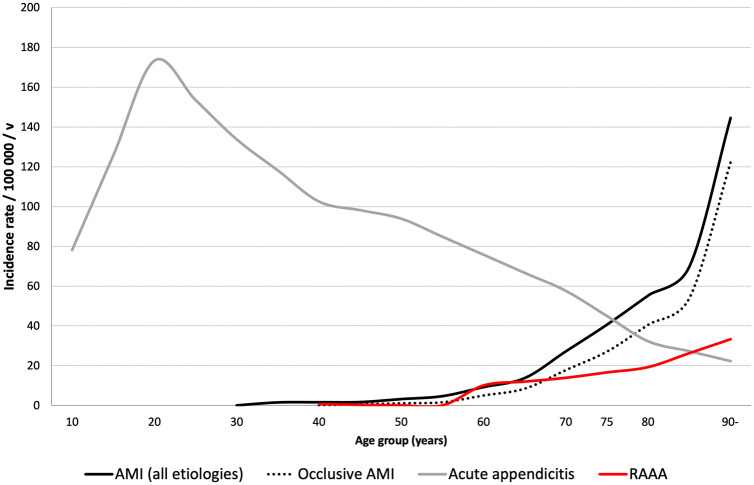
Acute mesenteric ischemia is considered uncommon, but it appears to be more frequent cause of acute abdomen than appendicitis or ruptured abdominal aortic aneurysm in elderly patients. Surgical treatment without revascularization is associated with high overall mortality, up to 80%. The modern treatment of acute mesenteric ischemia requires collaboration of gastrointestinal surgeons, vascular surgeons, and interventional radiologists. Early revascularization may reduce the overall mortality associated with acute mesenteric ischemia by up to 50%. Clinical suspicion and contrast-enhanced computed tomography performed at early stage are keys to improve outcomes of acute mesenteric ischemia treatment. This review summarizes what the acute care surgeon needs to know about acute mesenteric ischemia with special emphasis on slowly progressing “acute on chronic” mesenteric ischemia.
Overview
The claims and statistics of this paper haven’t been checked yet.
Free: it reads the open-access text and checks the first 5 claims that cite a source we can check. Create a free account to check every claim.
Integrity signals
Registry
Cites
Statistics
Figures
Verification
Claims the paper makes
The claims and statistics of this paper haven’t been checked yet.
Free: it reads the open-access text and checks the first 5 claims that cite a source we can check. Create a free account to check every claim.
Claims other papers make about this one
Each is checked against this paper’s own text: does it say what the citing paper says it does?
The source backs part of the claim, not all of it — or backs it for a different population, condition or comparison.
In the citing paper
“In addition, mesenteric venous thrombosis Is considered a common cause of venous mesenteric ischemia that might lead to advanced bowel necrosis [4, 5].”
From Outcome of Acute Mesenteric Ischemia in Patients with COVID 19 Infection Our Experience at Royal Medical Services (2022) · cites this paper as [5]
Experimental — accuracy not yet measuredThe source backs part of the claim, not all of it — or backs it for a different population, condition or comparison.
In the citing paper
“Acute Mesenteric ischemia is a life threatening surgical emergency resulting from abrupt occlusion of mesenteric vessels caused by atherosclerotic disease, arterial thromboembolism and dissection.”
From Outcome of Acute Mesenteric Ischemia in Patients with COVID 19 Infection Our Experience at Royal Medical Services (2022) · cites this paper as [5]
Experimental — accuracy not yet measuredThe source backs part of the claim, not all of it — or backs it for a different population, condition or comparison.
In the citing paper
“More than 90% of patients will have an abnormally elevated leukocyte count [48].”
From Acute mesenteric ischemia: updated guidelines of the World Society of Emergency Surgery. (2022) · cites this paper as [48]
Experimental — accuracy not yet measuredThe cited source says what the claim attributes to it.
In the citing paper
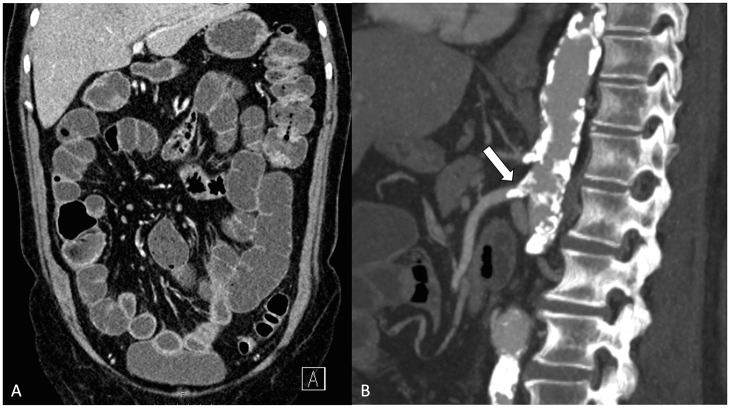
“AMI maydevelop upon severely obstructed or chronically occluded mesenteric arteries, typically involving both the CA and SMA, without any objective evidence of an acute thrombotic event (such as a soft thrombotic clot superimposed on a calcified stenosis in the SMA).This is the classic presentation of acute on chronic mesenteric ischaemia. 123”
Self-check
Percentages, sums and reported differences re-computed from the paper’s own numbers.
The self-check needs the paper’s full text.
Citations
Cites
Chiu, C.-J. (1970) · Archives of Surgery · doi:10.1001/archsurg.1970.01340280030009 · Cited by 1,800 · cited 1×
“The old notion that irreversible bowel damage occurs within 6 h after complete vascular occlusion has little significance in the clinical decision-making (17).”
BackgroundEditor's Choice – Management of the Diseases of Mesenteric Arteries and Veins
Björck, M., Koelemay, M., Acosta, S., Bastos Goncalves, F., Kölbel, T., Kolkman, J. J., Lees, T., Lefevre, J. H., Menyhei, G., Oderich, G., et al. (2017) · European Journal of Vascular and Endovascular Surgery · doi:10.1016/j.ejvs.2017.01.010 · Cited by 658 · cited 4×
“resection because it may be unclear what part of the bowel is still salvageable before restoration of the blood flow (4).”
BackgroundInfluentialWiesner, W., Khurana, B., Ji, H., & Ros, P. R. (2003) · Radiology · doi:10.1148/radiol.2263011540 · Cited by 402 · cited 2×
“Thus, pneumatosis and decreased bowel wall enhancement are suggestive but not definitive signs of irreversible bowel necrosis (12, 27).”
BackgroundMenke, J. (2010) · Radiology · doi:10.1148/radiol.10091938 · Cited by 319 · cited 1×
“The sensitivity and specificity of biphasic CT in AMI has been estimated as 89%–100% in two systematic reviews (24, 25).”
BackgroundThe Diagnosis of Acute Mesenteric Ischemia: A Systematic Review and Meta-analysis
Cudnik, M. T., Darbha, S., Jones, J., Macedo, J., Stockton, S. W., & Hiestand, B. C. (2013) · Academic Emergency Medicine · doi:10.1111/acem.12254 · Cited by 275 · cited 1×
“The sensitivity and specificity of biphasic CT in AMI has been estimated as 89%–100% in two systematic reviews (24, 25).”
BackgroundAcute Mesenteric Ischemia: Diagnostic Approach and Surgical Treatment
Wyers, M. C. (2010) · Seminars in Vascular Surgery · doi:10.1053/j.semvascsurg.2009.12.002 · Cited by 259 · cited 1×
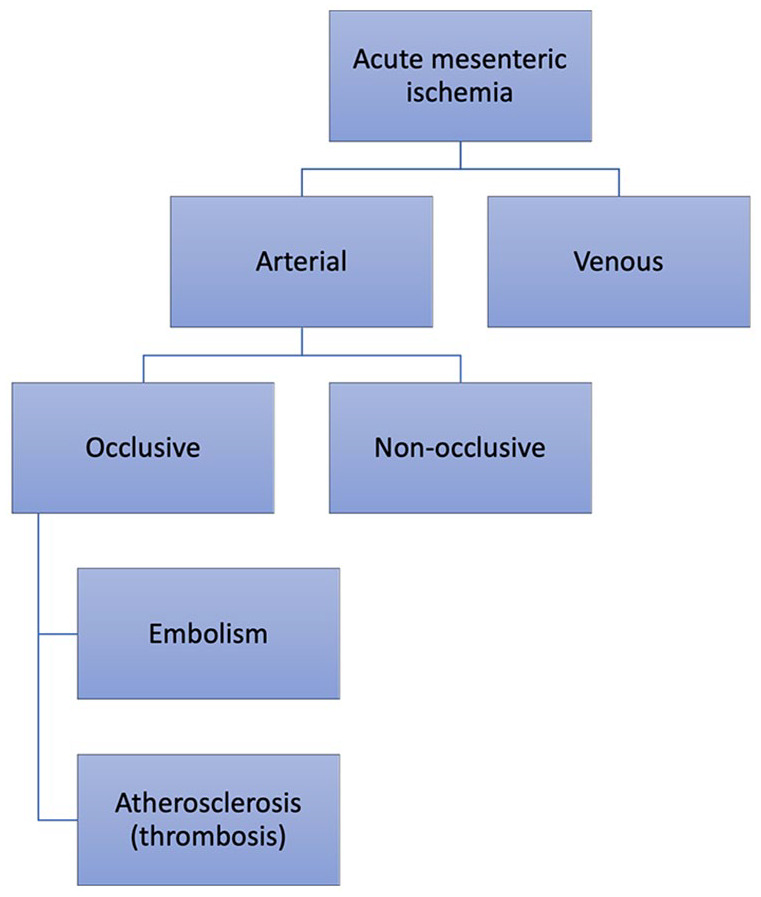
“The common risk factors for embolic AMI are atrial fibrillation, congestive heart failure, prior embolic events (such as a stroke), and recent myocardial infarction, which may be associated with a cardiac thrombus (10).”
BackgroundMitsuyoshi, A., Obama, K., Shinkura, N., Ito, T., & Zaima, M. (2007) · Annals of Surgery · doi:10.1097/01.sla.0000263157.59422.76 · Cited by 202 · cited 12×
“Another interesting experimental treatment that may be worth studying further is the administration of prostaglandin or iloprost intravenously to improve the hepatosplanchnic blood flow and oxygen intake in NOMI (21, 22).”
BackgroundInfluentialACR appropriateness criteria® imaging of mesenteric ischemia
Oliva, I. B., Davarpanah, A. H., Rybicki, F. J., Desjardins, B., Flamm, S. D., Francois, C. J., Gerhard-Herman, M. D., Kalva, S. P., Ashraf Mansour, M., Mohler, E. R., et al. (2013) · Abdominal Imaging · doi:10.1007/s00261-012-9975-2 · Cited by 200
Terlouw, L. G., Moelker, A., Abrahamsen, J., Acosta, S., Bakker, O. J., Baumgartner, I., Boyer, L., Corcos, O., van Dijk, L. J., Duran, M., et al. (2020) · United European Gastroenterology Journal · doi:10.1177/2050640620916681 · Cited by 178
Self-citationAcute mesenteric ischemia (part I) – Incidence, etiologies, and how to improve early diagnosis
Kärkkäinen, J. M., & Acosta, S. (2017) · Best Practice & Research Clinical Gastroenterology · doi:10.1016/j.bpg.2016.10.018 · Cited by 172 · cited 2×
“The diagnosis and the presentation pattern of atherosclerotic AMI is much more complicated than that of embolic AMI (16).”
BackgroundMethodSelf-citationAcosta, S., & Björck, M. (2003) · European Journal of Vascular and Endovascular Surgery · doi:10.1053/ejvs.2002.1893 · Cited by 158
Acute Mesenteric Ischemia Is a More Common Cause than Expected of Acute Abdomen in the Elderly
Kärkkäinen, J. M., Lehtimäki, T. T., Manninen, H., & Paajanen, H. (2015) · Journal of Gastrointestinal Surgery · doi:10.1007/s11605-015-2830-3 · Cited by 150 · cited 1×
“5/100,000/year for arterial occlusive AMI (9).”
Self-citationNon-occlusive mesenteric ischaemia: a common disorder in gastroenterology and intensive care
Kolkman, J. J., & Mensink, P. (2003) · Best Practice & Research Clinical Gastroenterology · doi:10.1016/s1521-6918(03)00021-0 · Cited by 120 · cited 1×
“The typical clinical scenarios in which NOMI may develop are heart failure, hypotension, hypovolemia, sepsis, and abdominal compartment syndrome (18).”
BackgroundLehtimäki, T. T., Kärkkäinen, J. M., Saari, P., Manninen, H., Paajanen, H., & Vanninen, R. (2015) · European Journal of Radiology · doi:10.1016/j.ejrad.2015.09.006 · Cited by 104 · cited 4×
“Thus, pneumatosis and decreased bowel wall enhancement are suggestive but not definitive signs of irreversible bowel necrosis (12, 27).”
BackgroundMethodSelf-citationACR appropriateness criteria® imaging of mesenteric ischemia
Ginsburg, M., Obara, P., Lambert, D. L., Hanley, M., Steigner, M. L., Camacho, M. A., Chandra, A., Chang, K. J., Gage, K. L., Peterson, C. M., et al. (2018) · Journal of the American College of Radiology · doi:10.1016/j.jacr.2018.09.018 · Cited by 99
Oderich, G. S., Macedo, R., Stone, D. H., Woo, E. Y., Panneton, J. M., Resch, T., Dias, N. V., Sonesson, B., Schermerhorn, M. L., Lee, J. T., et al. (2018) · Journal of Vascular Surgery · doi:10.1016/j.jvs.2017.11.086 · Cited by 97
Tallarita, T., Oderich, G. S., Gloviczki, P., Duncan, A. A., Kalra, M., Cha, S., Misra, S., & Bower, T. C. (2013) · Journal of Vascular Surgery · doi:10.1016/j.jvs.2012.09.047 · Cited by 83 · cited 1×
“The SMA is a high-flow vessel and acute stent thrombosis in the SMA is rare (33).”
BackgroundEndovascular Therapy as a Primary Revascularization Modality in Acute Mesenteric Ischemia
Kärkkäinen, J. M., Lehtimäki, T. T., Saari, P., Hartikainen, J., Rantanen, T., Paajanen, H., & Manninen, H. (2015) · CardioVascular and Interventional Radiology · doi:10.1007/s00270-015-1064-9 · Cited by 77 · cited 10×
“In our series of 18 patients with embolic AMI, 60% had acute onset with symptom duration less than 24 h, 72% had atrial fibrillation, and only one-third were on anticoagulation therapy prior to hospitalization; C-reactive protein (CRP) ranged from normal to more than 200 mg/L and arterial lactate was elevated in less…”
BackgroundResultSelf-citationManagement of Abdominal Compartment Syndrome and the Open Abdomen
Björck, M., & Wanhainen, A. (2014) · European Journal of Vascular and Endovascular Surgery · doi:10.1016/j.ejvs.2013.12.014 · Cited by 73 · cited 1×
“In any of these situations, the stapled bowel ends are left in the abdomen, the abdomen is left open, and a vacuum dressing is applied (31).”
BackgroundAcute mesenteric ischemia: A critical role for the radiologist
Copin, P., Zins, M., Nuzzo, A., Purcell, Y., Beranger-Gibert, S., Maggiori, L., Corcos, O., Vilgrain, V., & Ronot, M. (2018) · Diagnostic and Interventional Imaging · doi:10.1016/j.diii.2018.01.004 · Cited by 73
Management of Acute Mesenteric Venous Thrombosis: A Systematic Review of Contemporary Studies
Acosta, S., & Salim, S. (2021) · Scandinavian Journal of Surgery · doi:10.1177/1457496920969084 · Cited by 66 · cited 2×
“There is another review on mesenteric venous thrombosis in this special issue of Scandinavian Journal of Surgery (6).”
BackgroundSymptomatic Mesenteric Atherosclerotic Disease—Lessons Learned from the Diagnostic Workup
Björnsson, S., Resch, T., & Acosta, S. (2013) · Journal of Gastrointestinal Surgery · doi:10.1007/s11605-013-2139-z · Cited by 65 · cited 2×
“These premonitory symptoms have been reported prior to the final admission in 25%–84% of patients with AMI caused by atherosclerotic mesenteric vascular disease (2, 14).”
Background(1994) · PubMed · Cited by 58
Epidemiology and Prognostic Factors in Acute Superior Mesenteric Artery Occlusion
Acosta, S., Wadman, M., Syk, I., Elmståhl, S., & Ekberg, O. (2010) · Journal of Gastrointestinal Surgery · doi:10.1007/s11605-009-1130-1 · Cited by 57
Acute mesenteric ischemia (Part II) – Vascular and endovascular surgical approaches
Kärkkäinen, J. M., & Acosta, S. (2017) · Best Practice & Research Clinical Gastroenterology · doi:10.1016/j.bpg.2016.11.003 · Cited by 55 · cited 1×
“For example, papaverine can be administrated as a 60 mg bolus followed by infusion at the rate of 30–60 mg/h (19).”
BackgroundSelf-citationDiagnostic accuracy of hematological parameters in Acute mesenteric ischemia-A systematic review
Khan, S. M., Emile, S. H., Wang, Z., & Agha, M. A. (2019) · International Journal of Surgery · doi:10.1016/j.ijsu.2019.04.005 · Cited by 51 · cited 1×
“Although many experimental laboratory tests have been investigated as possible diagnostic markers for AMI, these have not been evaluated in the setting of acute-on-chronic mesenteric ischemia (15).”
BackgroundKiefer, P., Tugtekin, I., Wiedeck, H., Bracht, H., Vogt, J. A., Wachter, U. A., Weiß, M., Altin, C., Georgieff, M., & Radermacher, P. (2001) · Intensive Care Medicine · doi:10.1007/s001340100954 · Cited by 48 · cited 12×
“Another interesting experimental treatment that may be worth studying further is the administration of prostaglandin or iloprost intravenously to improve the hepatosplanchnic blood flow and oxygen intake in NOMI (21, 22).”
BackgroundInfluentialDAMAGE CONTROL SURGERY AND ANGIOGRAPHY IN CASES OF ACUTE MESENTERIC ISCHAEMIA
Freeman, A. J., & Graham, J. C. (2005) · ANZ Journal of Surgery · doi:10.1111/j.1445-2197.2005.03373.x · Cited by 42 · cited 1×
“The abdomen is re-entered usually after 36–48 h (32).”
BackgroundInterpretation of Abdominal CT Findings in Patients Who Develop Acute on Chronic Mesenteric Ischemia
Kärkkäinen, J. M., Saari, P., Kettunen, H.-P., Lehtimäki, T. T., Vanninen, R., Paajanen, H., & Manninen, H. (2016) · Journal of Gastrointestinal Surgery · doi:10.1007/s11605-015-3013-y · Cited by 40 · cited 1×
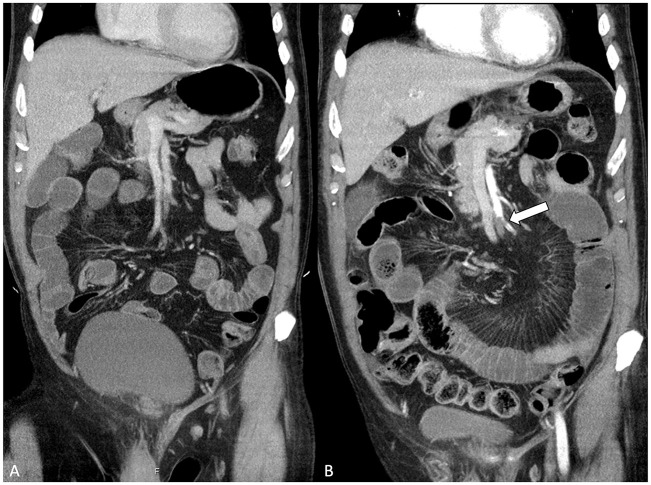
“In another study, we compared CT findings of 27 patients with atherosclerotic AMI with 20 patients with intermittent chronic mesenteric ischemia (28).”
ResultSelf-citationEmile, S. H., Khan, S. M., & Barsoum, S. H. (2021) · Updates in Surgery · doi:10.1007/s13304-020-00857-9 · Cited by 34 · cited 1×
“A recent meta-analysis identified several clinical features (such as organ failure, systemic inflammatory response syndrome, long duration of symptoms, coronary artery disease, and shock), biochemical markers (such as elevated serum lactate, acidosis, leukocytosis, hemoconcentration, hyperamylasemia), and radiological…”
BackgroundStahl, K., Rittgerodt, N., Busch, M., Maschke, S. K., Schneider, A., Manns, M. P., Fuge, J., Meyer, B. C., Hoeper, M. M., Hinrichs, J. B., et al. (2020) · Journal of Intensive Care Medicine · doi:10.1177/0885066619879884 · Cited by 33 · cited 1×
“In four comparative studies between patients receiving intra-arterial vasodilator therapy and those who received standard care, the pooled odds of death was significantly lower for those receiving the experimental therapy (20).”
BackgroundLemma, A. N., Tolonen, M., Vikatmaa, P., Mentula, P., Vikatmaa, L., Kantonen, I., Leppäniemi, A., & Sallinen, V. (2019) · European Journal of Vascular and Endovascular Surgery · doi:10.1016/j.ejvs.2019.01.002 · Cited by 31 · cited 1×
“It has been shown that 20% to 60% of patients with AMI are admitted to non-surgical emergency room such as internal medicine, and this may cause a significant delay of the diagnosis (2, 11).”
BackgroundMultidetector computed tomography of mesenteric ischaemia
Costa, A. F., Chidambaram, V., Lee, J. J., Asquith, J., Skaff, E. R., & Thipphavong, S. (2014) · Insights into Imaging · doi:10.1007/s13244-014-0361-1 · Cited by 26 · cited 1×
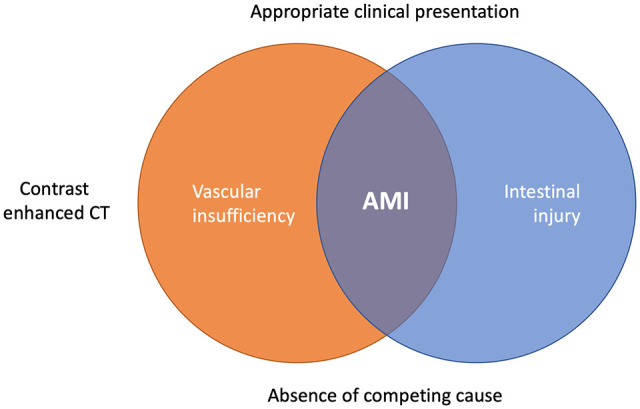
“More importantly, AMI should be diagnosed early when the definitive signs of bowel ischemia may still be absent and the diagnosis is based on clinical suspicion, findings of vascular insufficiency, and unspecific CT findings of possible intestinal injury (Table 1) (26, 27).”
BackgroundClinical Presentation, Etiology, and Diagnostic Considerations
David, R. A., Erben, Y., & Kalra, M. (2015) · Mesenteric Vascular Disease · doi:10.1007/978-1-4939-1847-8_15 · Cited by 6 · cited 1×
“In addition, prolonged hypotension, hypovolemia, and hypercoagulable states have been associated with the risk of atherosclerotic AMI (13).”
BackgroundPlasma levels and hemodynamics in acute glyphosate poisoning
Talbot, A. R., Zl, C., Goo, T. S., Js, H., Wang, S., Shiaw, M. H., & Yang, S. F. (1991) · Annals of Emergency Medicine · doi:10.1016/s0196-0644(05)81375-7 · Cited by 3
Cited by
2024 ESC Guidelines for the management of peripheral arterial and aortic diseases
Mazzolai, L., Teixido-Tura, G., Lanzi, S., Boc, V., Bossone, E., Brodmann, M., Bura-Rivière, A., De Backer, J., Deglise, S., Della Corte, A., et al. (2024) · European Heart Journal · doi:10.1093/eurheartj/ehae179 · Cited by 993
Acute mesenteric ischemia: updated guidelines of the World Society of Emergency Surgery.
Bala, M., Catena, F., Kashuk, J., De Simone, B., Gomes, C. A., Weber, D., Sartelli, M., Coccolini, F., Kluger, Y., Abu-Zidan, F. M., et al. (2022) · World Journal of Emergency Surgery · doi:10.1186/s13017-022-00443-x · Cited by 380
“More than 90% of patients will have an abnormally elevated leukocyte count [48].”
BackgroundKoelemay, M. J., Geelkerken, R. H., Kärkkäinen, J., Leone, N., Antoniou, G. A., de Bruin, J. L., Gombert, A., Gottsätter, A., Iborra, E., Ronchey, S., et al. (2025) · European Journal of Vascular and Endovascular Surgery · doi:10.1016/j.ejvs.2025.06.010 · Cited by 123
Self-citationImaging of Bowel Ischemia: An Update, From the AJR Special Series on Emergency Radiology
Olson, M. C., Bach, C. R., Wells, M. L., Andrews, J. C., Khandelwal, A., Welle, C. L., & Fidler, J. L. (2023) · American Journal of Roentgenology · doi:10.2214/ajr.22.28140 · Cited by 34
Chen, Z., Liu, X., Shou, C., Yang, W., & Yu, J. (2023) · PeerJ · doi:10.7717/peerj.15307 · Cited by 23
“Several studies have reported the diagnostic value of D-dimer and lactate in AMI (Acosta, Nilsson & Björck, 2004; Block et al., 2008; Chiu et al., 2009; Cudnik et al., 2013; Montagnana, Danese & Lippi, 2018), but the sensitivity rate was far from satisfactory.”
ResultInfluential
Metadata
- Authors
- Kärkkäinen, J. M.
- Affiliations
- Kuopio University Hospital (FI)
- Corresponding author
- Kärkkäinen, J. M.
- ORCID
- Kärkkäinen, J. M.
- Venue
- Scandinavian Journal of Surgery
- Publisher
- SAGE Publications
- Published
- 2021-04-19
- Volume
- 110
- Issue
- 2
- Pages
- 150-158
- ISSN
- 1457-4969 (ISSN-L)
- 1799-7267
- PMC
- PMC8258713
- OpenAlex
- W3153947775
- Cited by
- 78
- References
- 35
- Citations by year
- 2026: 9 · 2025: 20 · 2024: 21 · 2023: 17 · 2022: 8 · 2021: 3
- FWCI
- 2.95
- Type
- journal article
- Language
- en
- Open access
- hybrid
- doi.org
- Locations
- Scandinavian Journal of Surgery (publishedVersion, cc-by)
- PubMed Central (publishedVersion, cc-by)
- PubMed (publishedVersion)
- Topics
- Health Sciences › Medicine › Surgery › Abdominal vascular conditions and treatments
- Health Sciences › Medicine › Emergency Medicine › Appendicitis Diagnosis and Management
- Health Sciences › Medicine › Surgery › Omental and Epiploic Conditions
- Keywords
- acute mesenteric ischemia, acute abdomen, mesenteric revascularization, mortality, contrast-enhanced CT, interventional radiology, vascular surgery, gastrointestinal surgery, elderly patients
- MeSH terms
- Acute Disease, Aged, Aortic Rupture, Humans, Ischemia, Vascular Surgical Procedures, Mesenteric Ischemia, Surgeons
About these checks
Registry, retraction, Cites and statistics results are computed, not judged, with one exception: a printed reference that no index lists is read once by a model before it counts as a citation error. Claims are extracted by a model and kept only when their quote appears verbatim in the text; each cited source is then checked, with a model’s help, for whether it says what the claim relies on. Those verdicts can be wrong — read the claim’s quote and the cited source before relying on one.
Statistics and arithmetic are recomputed, not judged.
Confidence bands are shown only for fields calibrated on our annotated test set. None is calibrated yet, so no band is shown.
What counts as a claim ›How we measure confidence ›How we check this ›
Are you an author, or do you see a problem with this page? Request a review
Data sources
Bibliographic data: Semantic Scholar, OpenAlex, Crossref.
Contains information from the Semantic Scholar Academic Graph Datasets, made available under the ODC Attribution License (ODC-BY 1.0).
Semantic Scholar’s data is described in: Kinney, R., et al. (2023). The Semantic Scholar Open Data Platform. arXiv:2301.10140.
