

Researcher Positionality: Ways to Include it in a Qualitative Research Design
Open accessThe DOI matches its Crossref record; 34 of the 34 references it cites were found in a registry or an index; 12 of the 55 sources its claims cite were checked for support.
Abstract
When conducting research, a researcher’s perspective and worldview are referred to as positionality. It also “reflects the position that the researcher has chosen to adopt within a given research study” and describes the researcher’s relationship to their research subjects. What the researcher chooses to study, how it is carried out, and the outcomes are all influenced by their position. In this paper, I argue that the positionality of a researcher is shaped by a variety of factors, including gender, race, personal experiences, values, and beliefs. These factors then influence the researchers’ assumptions, methods of accessing and interacting with participants, the questions they pose, and how they interpret the findings. For higher degree research in the social sciences, there should be a section that clarifies researcher positionality. Making these declarations gives the study clarity and credibility in that the researcher is aware of their ‘insider and outsider hat’ so to say. This paper discusses ways in which Masters, Doctor of Education, Doctor of Social Work, Doctor of Teaching English to Speakers of Other Languages, and Ph.D. scholars can explain positionality in their research design. Crucial elements that must be disclosed in the study are the identities, viewpoints, and positions of the researchers. This work contributes to the growing corpus of scholarship on researcher positionality, which is based on my findings as a novice researcher conducting qualitative research. My paper takes an inductive systematic review approach which relates to noting observations and seeking to find patterns within them. I provide examples from my Ph.D. thesis which looked at academic English writing skills of first-year undergraduate students. The examples will be helpful to novice researchers and post-graduate students interested in providing precision in conducting qualitative methodology and examining positionality in their study. They can use the article as a starting point in approaching the concept of researcher positionality and ways in which it can be embedded in their study design.
Overview
CoChat Summary
TL;DR
This article argues that qualitative researchers, especially higher degree researchers, should explicitly declare their positionality because it shapes assumptions, participant access, questions, and interpretation. It offers practical examples from the author’s Ph.D. thesis on Fijian first-year undergraduates’ academic English writing skills to show how insider–outsider status, educational background, gender, and power balance can be embedded in a research design.
Key findings
- Researcher positionality is shaped by factors including gender, race, personal experiences, values, and beliefs, and it influences what is studied, how research is conducted, and how findings are interpreted.
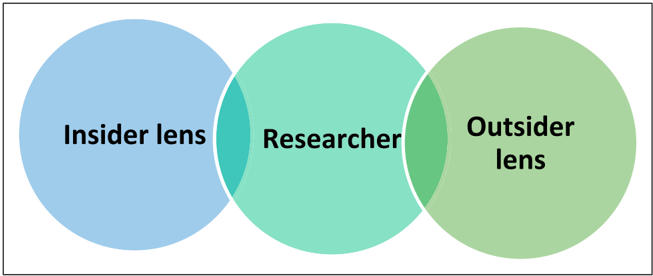
- The paper identifies key positions qualitative researchers should acknowledge: researcher positionality, insider–outsider lens, balance of power, and lived experiences; it argues these should be clarified in a thesis section.
- Insider and outsider positions are not fixed but fluid and situated on a continuum; the author describes himself as a quasi-insider in his study because he shared cultural and linguistic familiarity with participants but was also an outsider due to educational background, age, and gender.
- In the author’s Ph.D. study, most participants were female, the researcher was male, and none of the participants left the longitudinal study during the one year of data collection.
Methods
- The article takes an inductive systematic review approach described as noting observations and seeking to find patterns within them, drawing on grounded theory research and examples from the author’s Ph.D. thesis.
- The author’s Ph.D. thesis examined academic English writing skills of first-year undergraduate university students in Fiji; the article uses pseudonyms to protect individuals and institutions.
- The paper is a reflective, practical guide rather than a formal empirical study; it draws on the author’s experience as a novice qualitative researcher and his Ph.D. work conducted between 2020 and 2023.
Limitations
- The author states he could have recruited more participants through his network or contacts, but that would have required additional time for data analysis, transcribing interviews, and collating language test results.
- The author states he is a novice researcher who was unfamiliar with researcher positionality before his higher degree, so some reflections about his various positions may not have been fully acknowledged.
- The author notes that students might have felt participation would get them “in my good books,” and he cites Holmes (2020) that reflexive positionality statements do not guarantee higher-quality research; evident from the text, the article reports no formal systematic review search strategy or participant sample size.
Model-written summary. Check it against the paper before relying on it.
Integrity signals
Registry
Cites
Statistics
Figures

Verification
Claims the paper makes
11 Valid · 1 Not valid · 35 Not checked · 55 Own results and interpretations
The cited sources support only part of this claim — read each source’s verdict below.
In the paper
“According to Yip (2024, p. 223), the two positions at play for the researcher are not clearly delineated but are fluid and situated within a continuum.”
What the sources say
- Partly supportedcites Yip (2024, p. 223) matched to “Positionality and reflexivity: negotiating insider-outsider positions within and across cultures” (2024) sourceExperimental — accuracy not yet measured
The sentence appears almost verbatim in Yip's 'Positionality and reflexivity' section: 'Researchers have long recognized that a binary approach to insider/outsider positionality is overly simplistic and instead suggest that the two positions are not clearly delineated but are fluid and situated within a continuum (Eppley 2006, Katyal and King 2014).' So the fluidity/continuum point is indeed stated and relied on in this paper, and Yip's own Discussion and conclusion reinforces it ('the need to pay attention to the different facets and fluidity of their insider/outsider positions'). However, Yip presents the formulation as established literature credited to Eppley (2006) and Katyal and King (2014) rather than as her own finding, so citing 'According to Yip (2024, p. 223)' as the origin of the claim overstates this source's role; the unattributed remainder of that sentence (the crediting of the idea to earlier works) is the part not supported. (LLM, conf=0.72)
plain- Asserted: passes — The authors put it forward as true.
- Checkable: passes — It can be checked against evidence.
- Load-bearing: unclear — It is unclear whether the paper’s conclusions depend on it.
- Based: passes — The paper gives a reason why it holds.
- Partly supported
Every source the paper cites for this claim was checked and supports it.
In the paper
“The relationship between the researcher and the participant is a legitimate factor (Yip, 2024).”
What the sources say
- Supportedcites Yip, 2024 matched to “Positionality and reflexivity: negotiating insider-outsider positions within and across cultures” (2024) source
In the section 'Reflection 3: nature of researcher–researched relationship' (p. ~6 of our copy), Yip states directly that 'The relationship between the researcher and the participants is another legitimate factor,' then illustrates it with participants' motives (Michiko's goodwill, Kai Meng's interview venue request) and the effects of shared positioning on what participants disclose. The surrounding passages in the same section (Kate's wariness, the 'recorder phenomenon', Pezalla et al.'s 'differently calibrated instruments') reinforce that the researcher–participant relationship is treated as a legitimate analytical factor. The only difference from the citing sentence is the word 'another', which marks it as one factor among others in Yip's account and does not alter the attributed point. (LLM, conf=0.92)
plain- Asserted: passes — The authors put it forward as true.
- Checkable: passes — It can be checked against evidence.
- Load-bearing: passes — The paper’s conclusions depend on it.
- Based: passes — The paper gives a reason why it holds.
- Supported
Every source the paper cites for this claim was checked and supports it.
In the paper
“some participants in the doctoral research conducted by Yip (2024) engaged in her study out of goodwill and personal reasons.”
What the sources say
- Supportedcites Yip, 2024 matched to “Positionality and reflexivity: negotiating insider-outsider positions within and across cultures” (2024) source
In 'Reflection 3: nature of researcher–researched relationship' (p. ~7 of our copy) Yip writes that 'Some participants may participate in the research out of goodwill, while others may do so for other personal reasons,' and illustrates it factually: Michiko participated to repay a mutual acquaintance's kindness, and Kai Meng asked to be interviewed at her workplace because he is interested in a similar doctoral programme. The same paper ('Reflection 1', p. ~5) confirms this was 'my doctoral research' on Asian-Australian immigrant teachers, so the claim's attribution to Yip's doctoral study is accurate. The general statement is hedged with 'may', but the two named cases are reported as actual motivations, which matches the citing sentence. (LLM, conf=0.85)
plain- Asserted: passes — The authors put it forward as true.
- Checkable: passes — It can be checked against evidence.
- Load-bearing: unclear — It is unclear whether the paper’s conclusions depend on it.
- Based: passes — The paper gives a reason why it holds.
- Supported
A result the paper reports from its own data — it cites no other source for it, so there is none to check. The quote shows it is in the paper.
In the paper
“some of the participants in my study attended religious faith-based education institutions.”
plain- Asserted: passes — The authors put it forward as true.
- Checkable: passes — It can be checked against evidence.
- Load-bearing: unclear — It is unclear whether the paper’s conclusions depend on it.
- Based: passes — The paper gives a reason why it holds.
In the paper
“Due to my gender, my status was that of an outsider for female participants in the study (Goundar, 2023d).”
What the sources say
- Not matchedcites Goundar, 2023d
More than one paper fits this citation.
plainstates a cause- Asserted: passes — The authors put it forward as true.
- Checkable: passes — It can be checked against evidence.
- Load-bearing: passes — The paper’s conclusions depend on it.
- Based: passes — The paper gives a reason why it holds.
- Not matched
15 more claims
Create a free account to see all 102 claims and to verify the 15 references still open.
- Probably not a substantial claim. 68
- It may state two separate claims as one. 27
Self-check
Percentages, sums and reported differences re-computed from the paper’s own numbers.
Each contradiction between two passages listed here was confirmed by an independent check.
Rated minor: it would not touch a result — a value no result rests on, a p-value that stays on the same side of the significance level, or a conflict that is clerical, resolved elsewhere in the paper, or outside its own findings.
In the paper
§ Framing Researcher Positionality in Introductions · p. 3
“My interest stems from attending a rural primary school where English and standard Hindi languages were used as medium of instructions and moving into a semiurban high school”
§ Researcher ' s Educational Background · p. 4
“For instance, my primary and secondary education took place in a semi-urban part of the western region of Fiji Island.”
Citations
Cites
Using thematic analysis in psychology
Braun, V., & Clarke, V. (2006) · Qualitative Research in Psychology · doi:10.1191/1478088706qp063oa · Cited by 194,414
Qualitative Research: The essential guide to theory and practice
Savin‐Baden, M., & Major, C. H. (2012) · Cited by 1,627
Designing Social Research: The Logic of Anticipation
Blaikie, N. W. H. (2009) · Cited by 1,547
Darwin Holmes, A. G. (2020) · Shanlax International Journal of Education · doi:10.34293/education.v8i4.3232 · Cited by 1,341 · cited 12×
“Holmes (2020, p. 3) explained that “ positionality affects the totality of the research process as it acknowledges and recognises that researchers are part of the social world they are researching, and that this world has already been interpreted by existing social actors.”
InfluentialPower and positionality: negotiating insider/outsider status within and across cultures
Merriam, S. B., Johnson-Bailey, J., Lee, M.-Y., Kee, Y., Ntseane, G., & Muhamad, M. (2001) · International Journal of Lifelong Education · doi:10.1080/02601370120490 · Cited by 1,134 · cited 1×
“In qualitative research at the Masters, Doctor of Education, Doctor of Social Work, Doctor of Teaching English to Speakers of Other Languages, and Ph.D. level, it is critical to clarify the researcher ’ s position (Goundar, 2023d; Kerstetter, 2012; Merriam et al., 2001; Yip, 2024).”
Inductive/deductive hybrid thematic analysis in mixed methods research
Proudfoot, K. (2023) · Journal of Mixed Methods Research · doi:10.1177/15586898221126816 · Cited by 934 · cited 2×
“…grounded theory research and examples from my thesis, this article contributes to ongoing discissions (Bourke, 2014; Braun & Clarke, 2006; Holmes, 2020; Proudfoot, 2023) in the researcher positionality space to highlight key positions that qualitative researchers should acknowledge in their study.”
Positionality: Reflecting on the Research Process
Bourke, B. (2014) · The Qualitative Report · doi:10.46743/2160-3715/2014.1026 · Cited by 814
Mercer, J. (2007) · Oxford Review of Education · doi:10.1080/03054980601094651 · Cited by 727 · cited 1×
“As an insider, the re-searcher can have some critical information, but as an out-sider, they may not have prior knowledge of the participants ’ lived experiences in the study (Ali et al., 2022; Mercer, 2007).”
Theory and Methods in Political Science
(2018) · doi:10.1057/978-1-137-60353-1 · Cited by 493
Kerstetter, K. (2012) · Journal of Rural Social Sciences · Cited by 446
Research works printed but not linked: 2
- Goundar, P. R. (2023d). Writing skills for undergraduate students in Fiji: Tackling educational inequalities, facilitating epistemic access . University of New England.
- Rowe, W. E. (2014). Positionality. In D. Coghlan & M. BrydonMiller (Eds.), The sage encyclopaedia of action research (pp. 627 -628). Sage.
Cited by
Roberts, M., & Appiah, R. (2025) · International Journal of Qualitative Studies on Health and Well-Being · doi:10.1080/17482631.2025.2508946 · Cited by 10
“Rather than treating positionality as a bias to be controlled, the researcher approached it as a resource that enriched meaning-making (Goundar, 2025).”
Rinchen, K., Banham, V. F., & Pelden, S. (2025) · International Journal of Qualitative Methods · doi:10.1177/16094069251371471 · Cited by 25
A qualitative study of doctoral students’ experiences with written supervisory feedback
Goundar, P. R., Azam, N., Bogitini, L. J. K. D., Narayan, R., & Devi, K. N. (2025) · Policy Futures in Education · doi:10.1177/14782103251381547 · Cited by 9
“To address this, we engaged in ongoing re fl exivity, critically re fl ecting on our assumptions and interpretations throughout the research process (Goundar, 2025b).”
Self-citationSackey, M. E., Markey, K., & Grealish, A. (2025) · International Journal of Nursing Studies · doi:10.1016/j.ijnurstu.2025.105080 · Cited by 4
The Reflexive Insider-Outsider Researcher: A Falcon Observes its Reflection on a Clear Lake
Alderaan, O. (2026) · The Journal of Quality in Education · doi:10.29333/ajqr/18016 · Cited by 3
“Positionality refers to the stance a researcher intentionally assumes within the context of a particular study (Goundar, 2025).”
Developing qualitative interview guides: A methodological framework for novice researchers
Abraham, D. M., & Padmakumari, P. (2026) · Nurse Education Today · doi:10.1016/j.nedt.2026.107116 · Cited by 12
Roisenberg, B. B., Boulton, K., Thomas, E. E., Perry, N., Yu, D., & Guastella, A. J. (2025) · Autism · doi:10.1177/13623613251377930 · Cited by 1
“Throughout this stage, analytic memos were kept to document evolving ideas, the researcher’s assumptions and decisions shaping the analysis (Chenail, 2015; Goundar, 2025; Mohajan & Mohajan, 2022).”
Hâncean, M.-G., McCarty, C., Molina, J. L., Geantă, M., Lerner, J., Mihăilă, B.-E., Oană, I., & Cioroboiu, C. (2026) · International Journal of Qualitative Methods · doi:10.1177/16094069261456267 · Cited by 3
Ritter, C., McLachlan, K., Wolff, O. D., McMurtry, C. M., & Lumley, M. N. (2025) · Health & Justice · doi:10.1186/s40352-025-00371-3 · Cited by 2
“Reflexive journaling and regular consul-tation with co-researchers were used to mitigate potential biases, but complete neutrality is neither possible nor the goal in interpretive work (Goundar, 2025).”
Ai, B., Tian, S., & Qiao, X. (2025) · Applied Linguistics Review · doi:10.1515/applirev-2025-0099 · Cited by 1
The role of mentoring expertise in school-based teacher educator recruitment
Mankki, V. (2026) · Teaching and Teacher Education · doi:10.1016/j.tate.2026.105383 · Cited by 2
Ai, B., Shen, J., & Li, L. (2026) · Current Issues in Language Planning · doi:10.1080/14664208.2026.2642896 · Cited by 1
Nakonechny, L., Schroeder, K., & Stellato, A. C. (2026) · Frontiers in Veterinary Science · doi:10.3389/fvets.2026.1761014 · Cited by 3
Mupaku, W. M., Kelly, B., & van Breda, A. D. P. (2026) · Child and Adolescent Social Work Journal · doi:10.1007/s10560-026-01097-3 · Cited by 1
“A positionality statement is appropriate given the research design and topic (Goundar, 2025; The QR Collective et al., 2023 ).”
Roisenberg, B. B., Boulton, K., Thomas, E. E., Perry, N., Yu, D., & Guastella, A. J. (2026) · Autism · doi:10.1177/13623613261424830 · Cited by 2
“Coding proceeded iteratively and reflexively, with analytic memos used to record methodological decisions and developing insights (Chenail, 2015; Goundar, 2025; Mohajan & Mohajan, 2022).”
Hernández, P. T. (2026) · Science & Justice · doi:10.1016/j.scijus.2026.101436 · Cited by 3
Onaji-Benson, T., Hurd, F., & Rašković, M. M. (2026) · Critical Perspectives on International Business · doi:10.1108/cpoib-10-2025-0229 · Cited by 1
Esfehani, M. H., Ghaderi, Z., Bagheri, F., & Hatamifar, P. (2026) · Journal of Travel Research · doi:10.1177/00472875261447277 · Cited by 1
Vender, D., & Klaas-Lang, B. (2026) · Education Sciences · doi:10.3390/educsci16060881 · Cited by 3
“The researcher functioned as a creator of dialogue and mediator of meaning and was an active participant in the research process, which requires conscious reflexivity and critical reflection on one’s positionality when addressing issues related to language and identity (Goundar, 2025).”
Parent-to-parent advice before the birth of a stillborn baby
Kremkow, J. M. D., & Lamberson, J. (2025) · Frontiers in Psychiatry · doi:10.3389/fpsyt.2025.1736265
“The two authors have different backgrounds related to stillbirth providing insider and outsider perspectives (29).”
Parent hospital experiences following stillbirth
Kremkow, J. M. D., & Lamberson, J. (2026) · Frontiers in Psychiatry · doi:10.3389/fpsyt.2026.1706931
“The research team consisted of two researchers, each with a different background related to stillbirth, providing insider and outsider perspectives (17).”
Grounded Theory Coding Quality Assurance Methods
Shen, T. (2025) · Methodology Insight · doi:10.71290/mi01010001 · Cited by 1
“As Goundar (2025) emphasizes, researcher positionality significantly impacts qualitative research design and outcomes, an issue particularly relevant to coding practices in grounded theory.”
InfluentialArdengui, L. V., Pinto, L. R., Guimarães, M. B., et al. (2025) · European Journal Of Dental Education · doi:10.1111/eje.13120
Mesana, J. C. B., de Guzman, A. B., & Cristobal, J. M. (2025) · NABE Journal of Research and Practice · doi:10.1080/26390043.2025.2507740 · Cited by 1
“To help authors remain objective in their data analysis, a hybrid approach to positionality (Goundar, 2025) and reflexivity (Bott, 2010) was consistently upheld.”
bin Kadasah, T. A., & Allehyani, S. H. (2025) · SAGE Open · doi:10.1177/21582440251375402
“Goundar (2025) stated that the researcher’s internal and external position stems from how researchers see themselves and how others see them.”
Coding/categorizing of social data
Cromley, J. G., & Mirabelli, J. F. (2025) · Elsevier eBooks · doi:10.1016/b978-0-443-26629-4.00221-5
Clossey, L., DiLauro, M. D., Pazaki, S. H., & DiLauro, D. N. (2025) · Social Work in Mental Health · doi:10.1080/15332985.2025.2603958
“The insider advantage allows a familiarity that may enhance sharing, while the outsider position of being white requires that the professors be aware of that and foster trust through the demonstration of genuine and non-judgmental interest (Goundar, 2025).”
Fraser, J. D. (2025) · Update Applications of Research in Music Education · doi:10.1177/87551233251395680 · Cited by 1
“Recognizing that a variety of social, cultural, political, and historical forces influence how I approach this study, I begin by reflexively analyzing my positional-ity to ensure transparency and trustworthiness (Goundar, 2025).”
Cultural diversity and inclusion in Italian media: Between (in)visibility and self-representation
Mauro, M. (2026) · Journalism · doi:10.1177/14648849261418351
Sherratt, F. C., Biggs, K., Green, H. R., Bishop, L., de Barros, C. M., & Treweek, S. P. (2026) · Trials · doi:10.1186/s13063-026-09448-2 · Cited by 4
“Providing further context of contributors’ background or positionality may ensure a transparent approach and enhance the quality of the resource being developed [34, 35].”
Technological affordances, low-power AI, and climate justice among the Ogiek in Kenya’s Mau forest
Mukhongo, L. L., Edwards, C., Edwards, A. P., Cunningham, C. K., Mano, W., Abdulrauf, H., & Mohaimen, A. (2026) · New Media & Society · doi:10.1177/14614448251413711
Ujeh, K. C., & Munongi, L. (2026) · Discover Education · doi:10.1007/s44217-025-01049-6 · Cited by 3
“We acknowledged our positionality by reflecting on our position as researchers and the power dynamics that could exist, as the first researcher was a teacher at the research site [53].”
Salvador-García, C., Chiva-Bartoll, Ó., Maravé-Vivas, M., et al. (2026) · European Physical Education Review · doi:10.1177/1356336x261417122
Ontological security implications of COVID-19 border restrictions in Goondiwindi, Queensland
Kneipp, J. (2026) · Rural Society · doi:10.1080/10371656.2026.2624943
Community Organisations’ Role in Diabetes Self-Management in Ethiopia: A Phenomenological Study
Molla, I. B., Hagger, V. L., Rothmann, M. J., & Rasmussen, B. (2026) · Journal of Primary Care & Community Health · doi:10.1177/21501319251398632 · Cited by 1
“38 The other authors are experienced qualitative researchers who approached the interpretation of the findings with careful consideration and judgment.”
Simpson, R., Cohen, E., Posa, S., Wasilewski, M. B., Feinstein, A., Bayley, M. T., Robinson, L. L., Munce, S., Gray, C. S., & Kokorelias, K. M. (2026) · JMIR Rehabilitation and Assistive Technologies · doi:10.2196/80499
“Our positionality as a team influenced this process, as we were mindful of how our own experiences and professional backgrounds shaped the way we coded and interpreted the data [29].”
Sprague, B. N., & Beverly, A. (2026) · BMJ Open · doi:10.1136/bmjopen-2026-116827
Mbah, M. F., Jarvis, L., Johnson, A. T., Ezegwu, C., Nsama, P., & Nakanga, A. (2026) · British Educational Research Journal · doi:10.1002/berj.70141
Pre-Service Physical Sciences Teachers’ Epistemic Agency in Reflecting on Learner Struggles
MAMASHELA, D., Sihlangu, S., Chuene, K., Kibirige, I., & Singh, S. K. (2026) · Education Sciences · doi:10.3390/educsci16030454
Zou, Y., Sharpe, A., Stratten, M., & Demant, D. (2026) · PLoS ONE · doi:10.1371/journal.pone.0343514
“The researchers’ assumptions and perspectives inevitably influenced the thematic development, even though they used reflexive practices [36].”
Mbah, M. F., & Jarvis, L. (2026) · International Journal of Qualitative Methods · doi:10.1177/16094069261426140
Meacham, H., Cavanagh, J. M., Bartram, T., Dahanayake, P., & Borg, J. (2026) · Asia Pacific Journal of Human Resources · doi:10.1111/1744-7941.70071
Identifying Hurdles to Making Sleep Wearables Data Actionable for Users: A Grounded Theory Study
Nolasco, H. R., Vargo, A. W., Blakely, C., Watanabe, K., Armstrong, M., Stricker, M., & Kise, K. (2026) · Electronics · doi:10.3390/electronics15071480
Researcher Positionality Approach in Indigenous Research: A Contextual AutoethnographyPreprint
Mbele, P. (2026) · SSRN Electronic Journal · doi:10.2139/ssrn.6476798
Saleem, M., Zafar, S., Abbasi, F., Pohlabeln, H., Sikander, S., Fuhr, D. C., & Zeeb, H. (2026) · Scientific Reports · doi:10.1038/s41598-026-49596-8
“These procedures are consistent with best practice recommendations for managing positionality in qualitative health research 32 .”
Younes, R. S., Ibrahim, C. D., Moukarzel, C., & Mzawak, M. A. (2026) · Social Sciences · doi:10.3390/socsci15050300 · Cited by 2
“…the researchers are themselves Lebanese and have experienced, to varying degrees, the broader societal crisis affecting families, their interpretations may have been influenced by their own contextual familiarity with the phenomenon under study, despite their efforts for objectivity (Goundar 2025).”
Kantzou, V., & Iakovou, M. (2026) · Social Sciences & Humanities Open · doi:10.1016/j.ssaho.2026.102824
Eliasi, L. G., Zahan, S., & Anis, M. (2026) · Nordic Social Work Research · doi:10.1080/2156857x.2026.2671050 · Cited by 1
Unpacking the strategic bridge-building capabilities of legitimating agencies
Nweke, U., Faye, S., & Greenfields, M. (2026) · Strategy and Leadership · doi:10.1108/sl-02-2026-0052 · Cited by 1
NVivo as a reflexive tool for insider-researchers: early observations from an ongoing study
Kelly, M. (2026) · Qualitative Research Journal · doi:10.1108/qrj-11-2025-0424
Hindu Culture in the Pacific: Fiji—from Indenture to Inheritance
Goundar, P. R. (2026) · Society · doi:10.1007/s12115-026-01221-0
Self-citationDonald, K. J., Li, X., & Lin, C. (2026) · American Journal of Qualitative Research · doi:10.66815/ajqr/18495
Stitching sustainable change: unveiling pathways in fashion activist entrepreneurship
Monteverde, G., Runfola, A., & Guercini, S. (2026) · Journal of Small Business and Enterprise Development · doi:10.1108/jsbed-10-2025-0721
Between Boundaries: Reflexivity of Discomfort With ‘Significant Other’
Evan, A. A. Z. (2026) · Area · doi:10.1111/area.70128
“In the end, people are people”: positionality statements in the archival enterprise
Poole, A. H., & Todd‐Diaz, A. (2026) · Archival Science · doi:10.1007/s10502-026-09542-z
“…from marginalized or underrepresented populations (Massoud 2022; Secules et al. 2021 ); bolster the research or researcher’s credibility (Goundar 2025; Massoud 2022; Rinchen et al. 2025; Secules et al. 2021 ); address author bias (American Psychological Association 2025); encourage…”
Ethical and Political Dimensions of Research With Children and Young People
Gupta, D., Iroda, K., Tashibekova, M. K., Gulshanoy, U., Kasimova, M., Yuldibayevna, B. G., & Ismatulloev, A. (2026) · IGI Global eBooks · doi:10.4018/979-8-3373-8541-9.ch009
Ekpe, L., Weinberg, N., Daly, G., Przymus, S. D., Hernández, F., Huddleston, G., & Kyzar, K. B. (2026) · Teachers College Record The Voice of Scholarship in Education · doi:10.1177/01614681261463740
Hafner, C. A., & Ho, W. Y. J. (2026) · Language Teaching Research · doi:10.1177/13621688261459662 · Cited by 4
Zeng, J., Zhu, X., Liu, X., Li, S., Shen, S., Zhang, Q., & Cao, S. (2026) · BMC Nursing · doi:10.1186/s12912-026-04942-z · Cited by 1
“The analysis team comprised nursing professionals with diverse research expertise, including nursing informatics, nursing education, and psychological and mental health nursing, and this supported a broader interpretation of the data [22, 24].”
A Socio-Spatial Analysis of Black School Leadership in the Canadian Prairies
Swapp, D. (2026) · Education Sciences · doi:10.3390/educsci16071071
Schadow, F., Gerling, K., Kretzer, F., & Maedche, A. (2026) · Annual Symposium on Human-Computer Interaction for Work (CHIWORK) · doi:10.1145/3805029.3818286
“Considering the subjective nature of reflexive TA [2], we briefly want to reflect on our positionality [11].”
Luna, L. (2026) · Revista Guillermo de Ockham · doi:10.21500/22563202.8132
Argan, M., & Slobodin, O. (2026) · Gifted Child Quarterly · doi:10.1177/00169862261459357
Hockey, S. J., McKenna, S., Hill, A., Shim, A. W., Treneman, A., Linker, E., Bhattacharya, N., To, T., Song, Y. J. C., LaMonica, H. M., et al. (2026) · doi:10.2196/preprints.106859
Vellesalu, A., Salomonson, N., & Hjelmgren, D. (2026) · Journal of Business and Industrial Marketing · doi:10.1108/jbim-04-2025-0335 · Cited by 2
“Reflexivity was maintained throughout the study through awareness of how the researchers’ perspectives, experiences and assumptions influence what is studied and how findings are interpreted (Goundar, 2025).”
Shamur, T. (2026) · International Journal of Qualitative Methods · doi:10.1177/16094069261456094
Poitras, M., Dumont, M., Hudon, A., & Geoffrion, S. (2026) · Journal of Forensic Psychology Research and Practice · doi:10.1080/24732850.2026.2703099
Horváth, G. (2026) · International journal of evidence based coaching and mentoring · doi:10.1177/17418305261472069
Exploring the Lived Experiences of Canadian Occupational Therapists in International Fieldwork
Kwasnica, J., Akl, A., Byce, J., Duncan, A., Boniface, J., & Davis, A. (2026) · Canadian Journal of Occupational Therapy · doi:10.1177/00084174261449995
Abubakar, N. M. (2026) · African Journalism Studies · doi:10.1080/23743670.2026.2698687
Piloting sexual conduct and consent training co-developed and delivered by varsity athletes
Marques, O. (2026) · Sport Education and Society · doi:10.1080/13573322.2026.2713080
Positionality Statements in Health Professions Education: A Practical Guide for Novice Researchers
John, I., & Rashid, M. (2026) · Education Sciences · doi:10.3390/educsci16081247
Essential counselling skills for multicultural counselling practice
Otu, M. (2026) · Elsevier eBooks · doi:10.1016/b978-0-443-33939-4.00006-9
Adamson, G., Malik, A., Okeke, S., & Bayley-Hay, J. (2026) · Journalism · doi:10.1177/14648849261484320 · Cited by 1
Practising Reflexivity and Positionality: Saviour or Villain of Qualitative Management Researchers
Mishra, S. (2026) · South Asian Journal of Business and Management Cases · doi:10.1177/22779779261472680
“It is seen through an insider–outsider lens (Goundar, 2025; Holmes, 2020).”
Shemesh, M., & Zarhin, D. (2026) · International Journal of Qualitative Methods · doi:10.1177/16094069261473128
Integrating R&D space projects into aerospace engineering master's education at MCAST
Barilaro, L., & Vella, R. (2026) · Higher Education Skills and Work-based Learning · doi:10.1108/heswbl-06-2026-0543
Moore, R. A., McElfish, P. A., Teeter, B. S., Mayberry, L. S., Andersen, J. A., Hudson, J. S., Mayo, R., Macechko, M. D., Over, D. R., Curran, G. M., et al. (2026) · Patient Education and Counseling · doi:10.1016/j.pec.2026.109868
Abdelhadi, A., & Sahli, N. (2026) · Review of Artificial Intelligence in Education · doi:10.37497/rev.artif.intell.educ.v7ii.1391
Servellon, F. J. G., Spence, K. L., Renaud, D. L., et al. (2026) · JDS Communications · doi:10.3168/jdsc.2026-1124
Tucker, A. (2026) · Journal of Participatory Research Methods · doi:10.35844/001c.167265
Estudio de casos y evaluación formativa: una práctica de enseñanza situada en Cali, Colombia
Serrano, M. V., & Franco-Vélez, P. (2026) · Voces y Silencios Revista Latinoamericana de Educación · doi:10.18175/vys17.3.2026.10
Self-Leadership and Female Entrepreneurship: A Narrative Multi-Case Study
Richardson, S. D. (2026) · American Journal of Qualitative Research · doi:10.66815/ajqr/19290
Harrison, C., Cohen‐Vogel, L., Hutson, L., Feller, T., Myers, E., & Simmons, E. (2026) · Educational Administration Quarterly · doi:10.1177/0013161x261493478
Metadata
- Authors
- Goundar, P. R.
- Affiliations
- University of New England (US)
- Corresponding author
- Goundar, Prashneel Ravisan
- Venue
- International Journal of Qualitative Methods
- Publisher
- SAGE Publications
- Published
- 2025-02-12
- Volume
- 24
- ISSN
- 1609-4069 (ISSN-L)
- OpenAlex
- W4407556553
- Semantic Scholar
- 6c12008f9041f9199504375da2aa717847dc1a8a
- Cited by
- 88
- References
- 33
- Citations by year
- 2026: 73 · 2025: 15
- FWCI
- 151.13
- Type
- journal article
- Language
- en
- Open access
- gold
- doi.org
- Licence
- cc-by-nc
- creativecommons.org/licenses/by-nc/4.0/ (unspecified)
- journals.sagepub.com/page/policies/text-and-data-mining-license (tdm)
- Locations
- International Journal of Qualitative Methods (publishedVersion, cc-by-nc)
- SSRN Electronic Journal (acceptedVersion)
- RUNE (Research UNE) (submittedVersion, cc-by-nc)
- DOAJ (DOAJ: Directory of Open Access Journals) (submittedVersion)
- Topics
- Social Sciences › Sociology and Political Science › Qualitative Research Methods and Ethics
- Social Sciences › Education › Qualitative Research Methods and Applications
- Social Sciences › Education › Educational Research and Methods
- Keywords
- researcher positionality, qualitative research design, insider and outsider perspectives, higher degree research, doctoral students, English academic writing, first-year students, reflexivity, research credibility
About these checks
Registry, retraction, Cites and statistics results are computed, not judged, with one exception: a printed reference that no index lists is read once by a model before it counts as a citation error. Claims are extracted by a model and kept only when their quote appears verbatim in the text; each cited source is then checked, with a model’s help, for whether it says what the claim relies on. Those verdicts can be wrong — read the claim’s quote and the cited source before relying on one.
The claim verdicts this report counts are experimental: their accuracy is not yet measured.
A language model drew the claims from the paper on 2026-10-29, under version 3 of the claim definition (model deepseek-v4.1-flash, prompt extract-v3).
A second model labelled each claim on 2026-10-29 (model jev-1.13-20260917, definition revision gold-guideline-v0.2).
Cited sources are checked with a language model’s help (qwen3.8-omni-flash).
Statistics and arithmetic are recomputed, not judged.
Confidence bands are shown only for fields calibrated on our annotated test set. None is calibrated yet, so no band is shown.
What counts as a claim ›How we measure confidence ›How we check this ›
Are you an author, or do you see a problem with this page? Request a review
Data sources
Bibliographic data: Semantic Scholar, OpenAlex, Crossref.
Contains information from the Semantic Scholar Academic Graph Datasets, made available under the ODC Attribution License (ODC-BY 1.0).
Semantic Scholar’s data is described in: Kinney, R., et al. (2023). The Semantic Scholar Open Data Platform. arXiv:2301.10140.
