

Effects of mindfulness-based cognitive therapy on mental disorders: a systematic review and meta-analysis of randomised controlled trials
Open accessThe DOI matches its Crossref record; 32 of the 32 references it cites were found in a registry or an index.
Abstract
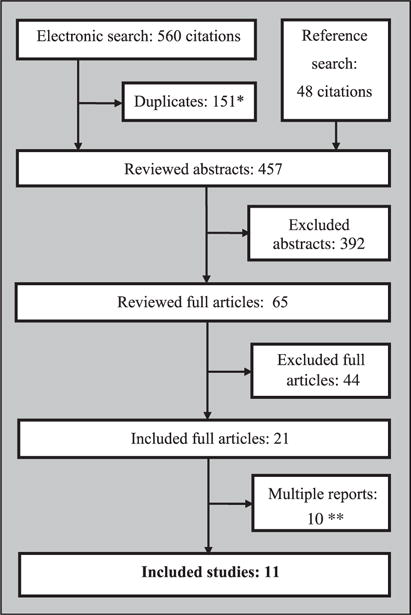
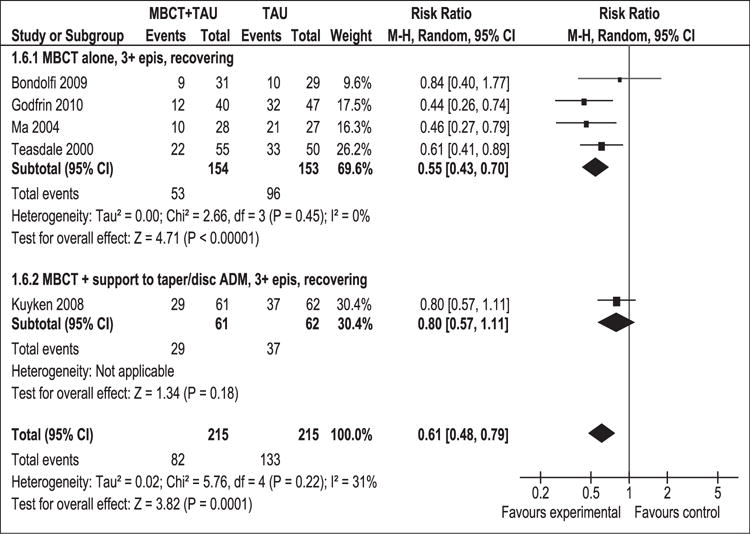
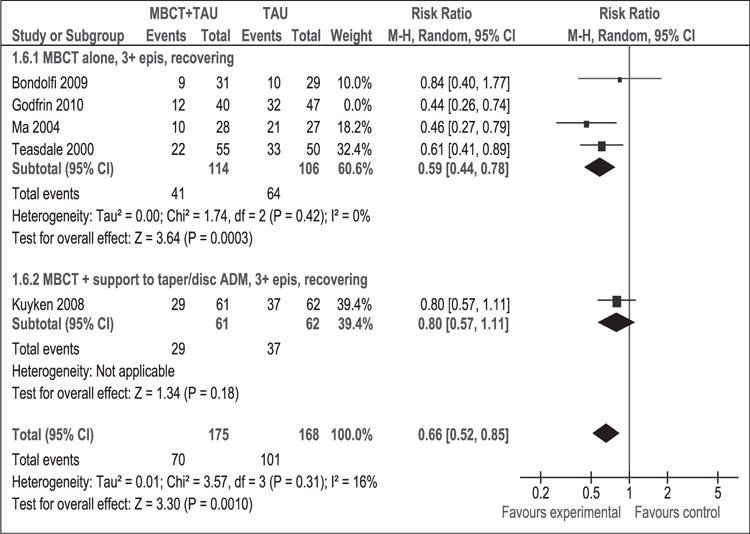
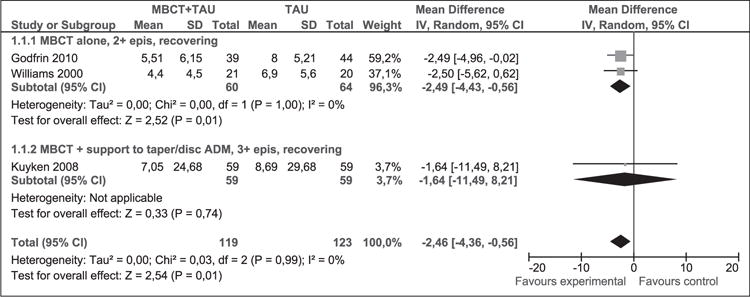
Objective: Mindfulness-based cognitive therapy (MBCT) is a programme developed to prevent depression relapse, but has been applied for other disorders. Our objective was to systematically review and meta-analyse the evidence on the effectiveness and safety of MBCT for the treatment of mental disorders. Methods: Searches were completed in CENTRAL, MEDLINE, EMBASE, LILACS, PsychINFO, and PsycEXTRA in March 2011 using a search strategy with the terms ‘mindfulness-based cognitive therapy’, ‘mindfulness’, and ‘randomised controlled trials’ without time restrictions. Selection criteria of having a randomised controlled trial design, including patients diagnosed with mental disorders, using MBCT according to the authors who developed MBCT and providing outcomes that included changes in mental health were used to assess 608 reports. Two reviewers applied the pre-determined selection criteria and extracted the data into structured tables. Meta-analyses and sensitivity analyses were completed. Results: Eleven studies were included. Most of them evaluated depression and compared additive MBCT against usual treatment. After 1 year of follow-up MBCT reduced the rate of relapse in patients with three or more previous episodes of depression by 40% (5 studies, relative risk [95% confidence interval]: 0.61 [0.48, 0.79]). Other meta-analysed outcomes were depression and anxiety, both with significant results but unstable in sensitivity analyses. Methodological quality of the reports was moderate. Conclusion: Based on this review and meta-analyses, MBCT is an effective intervention for patients with three or more previous episodes of major depression.
Overview
The claims and statistics of this paper haven’t been checked yet.
Free: it reads the open-access text and checks the first 5 claims that cite a source we can check. Create a free account to check every claim.
Integrity signals
Registry
Cites
Statistics
Figures
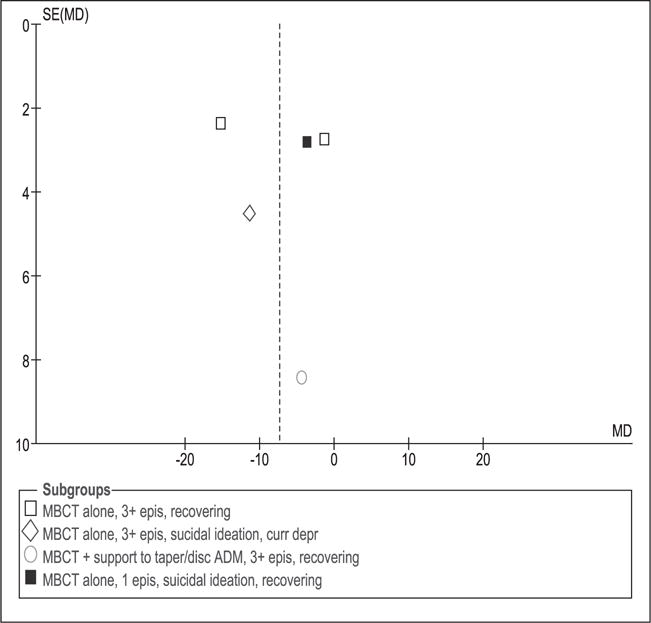
Verification
Claims the paper makes
The claims and statistics of this paper haven’t been checked yet.
Free: it reads the open-access text and checks the first 5 claims that cite a source we can check. Create a free account to check every claim.
Claims other papers make about this one
Each is checked against this paper’s own text: does it say what the citing paper says it does?
The source backs part of the claim, not all of it — or backs it for a different population, condition or comparison.
In the citing paper
“A large body of research supports the benefits of mindfulness interventions for improving mood, emotion regulation abilities, physical health, and interpersonal relationships (e.g., references [23,47,48,49,50,51]).”
From Being in the moment so you can keep moving forward: Mindfulness and rumination mediate the relationship between attachment orientations and negative conflict styles (2020) · cites this paper as [48]
Experimental — accuracy not yet measuredThe cited source says what the claim attributes to it.
In the citing paper
“Meta-analyses of specific, manualized mindfulness based interventions (MBIs) such as mindfulness-based cognitive therapy and mindfulness-based stress reduction have shown moderate reductions in symptoms of depression (Chi et al., 2018; Galante et al., 2013).”
From Exploratory and Confirmatory Bayesian Networks Identify the Central Role of Non-judging in Symptoms of Depression (2021) · cites this paper as Galante et al., 2013
The cited source says what the claim attributes to it.
In the citing paper
“With several meta-analyses demonstrating efficacy 67,68 and a large, high-quality RCT (N ¼ 424) 69 demonstrating equal efficacy of MBCT to medication as maintenance treatment for recurrent MDD”
From Canadian Network for Mood and Anxiety Treatments (CANMAT) 2016 Clinical Guidelines for the Management of Adults with Major Depressive Disorder (2016) · cites this paper as [67]
The cited source says what the claim attributes to it.
In the citing paper
“Galante et al. [31] found significant but unstable positive effects (depending on the studies selected).”
From The effectiveness of mindfulness-based interventions on anxiety disorders. A systematic meta-review (2020) · cites this paper as [31]
The check wasn’t confident either way, so it gives no verdict — never disputed.
In the citing paper
“For the studies with positive results for mindfulness in comparison to control or other intervention groups, the range of effect size was large for 20% of studies [23,30], moderate for 50% [26,29,32,33,39], and small for 30% [31,34,36].”
From The effectiveness of mindfulness-based interventions on anxiety disorders. A systematic meta-review (2020) · cites this paper as [31]
Experimental — accuracy not yet measured
Self-check
Percentages, sums and reported differences re-computed from the paper’s own numbers.
The self-check needs the paper’s full text.
Citations
Cites
Development of a Rating Scale for Primary Depressive Illness
HAMILTON, M. (1967) · British Journal of Social and Clinical Psychology · doi:10.1111/j.2044-8260.1967.tb00530.x · Cited by 8,410 · cited 1×
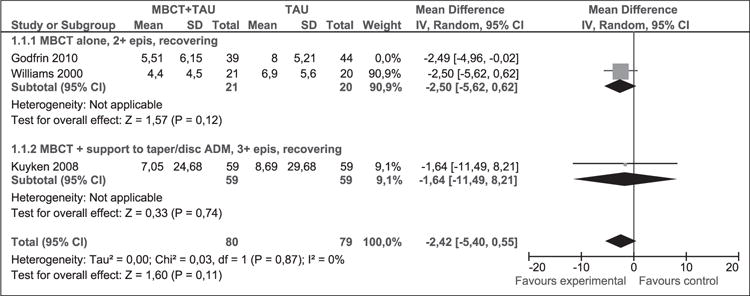
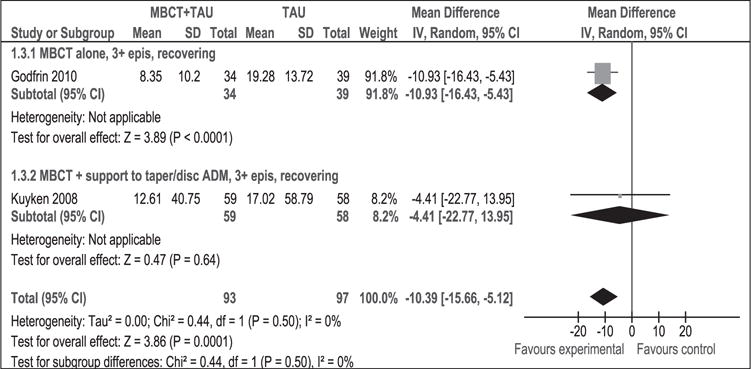
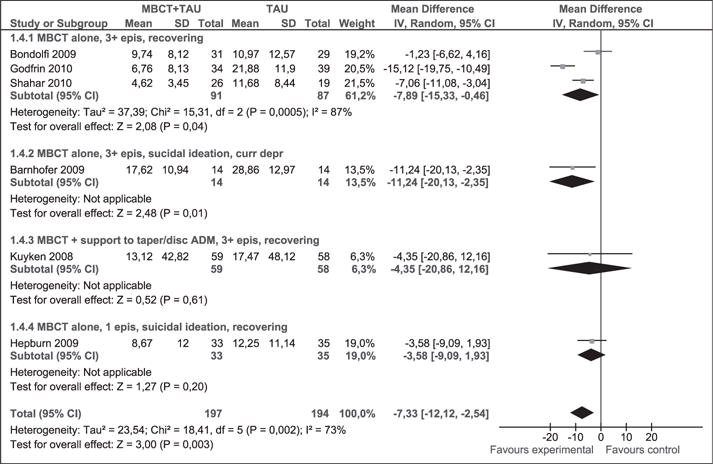
“Depression measured with HAM-D at 1 year post-intervention The Hamilton Rating Scale for Depression (HAM-D) scale ranges from 0 (minimal depression) to 53 (severe depression) (Hamilton, 1967).”
MethodComparison of Beck Depression Inventories -IA and -II in psychiatric outpatients
Beck, A. T., Steer, R. A., Ball, R., & Ranieri, W. F. (1996) · Journal of Personality Assessment · doi:10.1207/s15327752jpa6703_13 · Cited by 5,965 · cited 1×
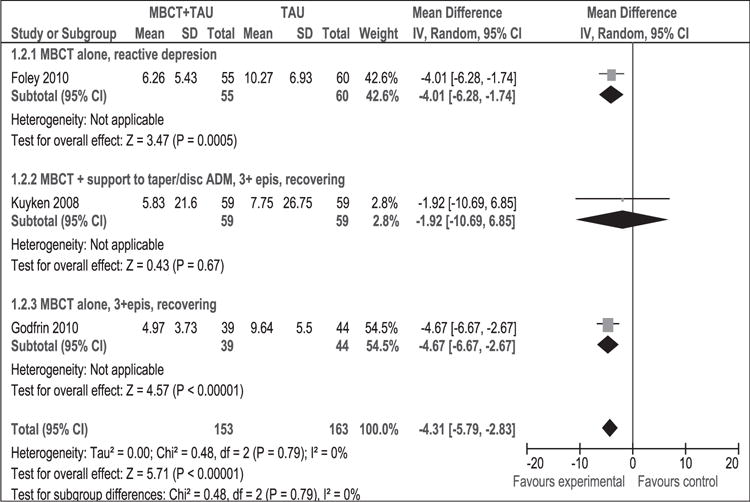
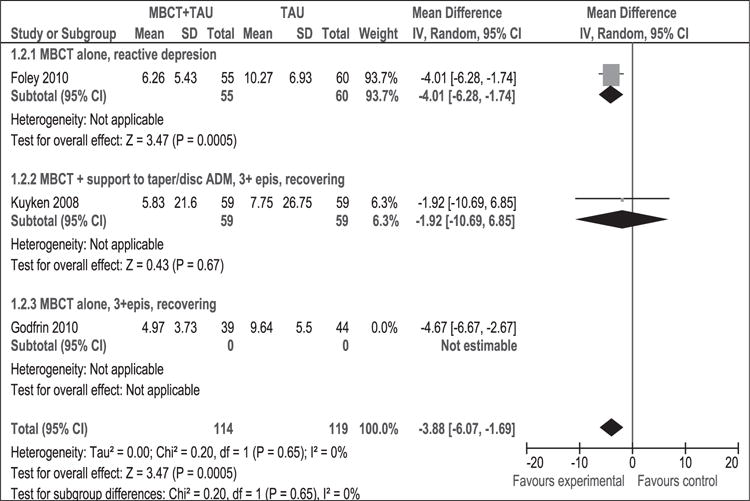
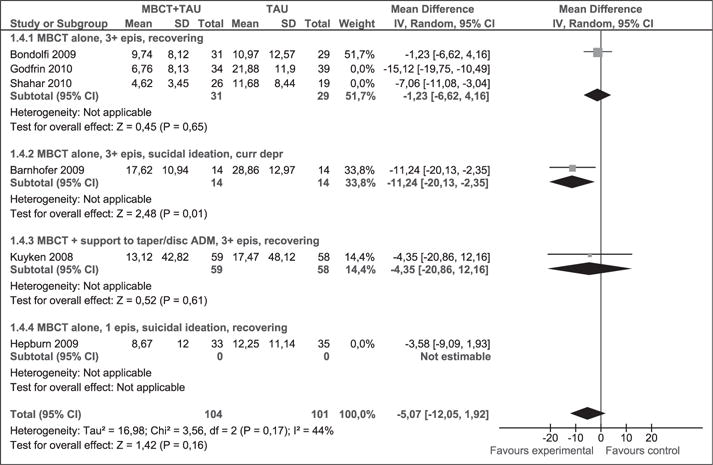
“Depression measured with BDI-II at 1 year post-intervention The Beck Depression Inventory – second edition (BDI-II) ranges from 0 (minimal depression) to 63 (severe depression) (Beck et al., 1996), and a difference of 5 points is considered clinically relevant (Hiroe et al.”
MethodMoher, D., Cook, D. J., Eastwood, S., Olkin, I., Rennie, D., & Stroup, D. F. (1999) · The Lancet · doi:10.1016/s0140-6736(99)04149-5 · Cited by 4,826
The effect of mindfulness based therapy on anxiety and depression: A meta analytic review
Hofmann, S. G., Sawyer, A. T., Witt, A. A., & Oh, D. (2010) · Journal of Consulting and Clinical Psychology · doi:10.1037/a0018555 · Cited by 3,846 · cited 2×
“Systematic reviews on MBCT have been published (Chiesa and Serretti, 2011; Coelho et al., 2007; Fjorback et al., 2011; Hofmann et al., 2010; Piet and Hougaard, 2011).”
BackgroundPrevention of relapse/recurrence in major depression by mindfulness-based cognitive therapy.
Teasdale, J. D., Segal, Z. V., Williams, J. M. G., Ridgeway, V. A., Soulsby, J. M., & Lau, M. A. (2000) · Journal of Consulting and Clinical Psychology · doi:10.1037/0022-006x.68.4.615 · Cited by 3,236 · cited 7×
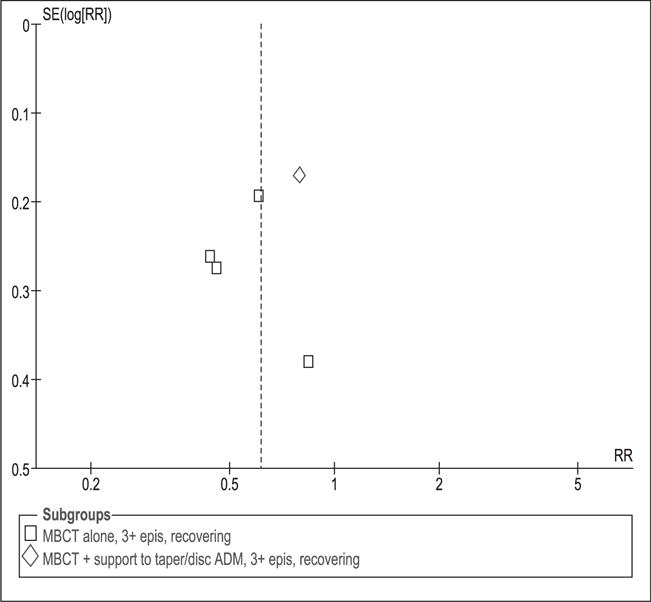
“Subgroup analysis examined patients with MDD (≥3 episodes) in remission receiving MBCT alone or in combination with support (MBCT+) to discontinue or reduce the amount of anti-depressant medications (ADs) taken.”
MethodInfluentialMindfulness-Based Cognitive Therapy for Depression: A New Approach to Preventing Relapse
HODO, D. W. (2002) · American Journal of Psychiatry · doi:10.1176/appi.ajp.159.7.1257 · Cited by 1,401
Ma, S. H., & Teasdale, J. D. (2004) · Journal of Consulting and Clinical Psychology · doi:10.1037/0022-006x.72.1.31 · Cited by 1,390
Metacognitive awareness and prevention of relapse in depression: Empirical evidence
Teasdale, J. D., Moore, R. G., Hayhurst, H., Pope, M., Williams, S., & Segal, Z. V. (2002) · Journal of Consulting and Clinical Psychology · doi:10.1037/0022-006x.70.2.275 · Cited by 1,221
Piet, J., & Hougaard, E. (2011) · Clinical Psychology Review · doi:10.1016/j.cpr.2011.05.002 · Cited by 807 · cited 1×
“Systematic reviews on MBCT have been published (Chiesa and Serretti, 2011; Coelho et al., 2007; Fjorback et al., 2011; Hofmann et al., 2010; Piet and Hougaard, 2011).”
BackgroundFjorback, L. O., Arendt, M., Ørnbøl, E., Fink, P., & Walach, H. (2011) · Acta Psychiatrica Scandinavica · doi:10.1111/j.1600-0447.2011.01704.x · Cited by 803 · cited 2×
“Systematic reviews on MBCT have been published (Chiesa and Serretti, 2011; Coelho et al., 2007; Fjorback et al., 2011; Hofmann et al., 2010; Piet and Hougaard, 2011).”
BackgroundResult
Research works printed but not linked: 3
- 13. Galante J 2009 Thesis protocol: Revisión Sistemática y metanalisis: terapia cognitiva basada en la atención plena para transtornos mentales (Spanish) University of Buenos Aires Argentina Available at: http://www.iecs.org.ar/iecs-visor-publicacion.php?cod_publicacion=1076&origen_publicacion=publicaciones
- 25. National Collaborating Centre for Mental Health 2004 Depression: Management of Depression in Primary and Secondary Care (Clinical Guideline 23) London, UK National Institute for Clinical Excellence
- 37. Welch A 2005 Mindfulness-based cognitive therapy and life-role functioning in co-morbid mood, anxiety and substance-related disorders: A pilot study The 25TH Annual Conference of the Anxiety Disorders Association of America Seattle, WA 17–20 March
Cited by
Mindfulness-based cognitive therapy for depression
Kumari, D., & Satyapal, N. (2025) · Industrial Psychiatry Journal · doi:10.4103/ipj.ipj_127_24 · Cited by 997
Parikh, S. V., Quilty, L. C., Ravitz, P., Rosenbluth, M., Pavlova, B., Grigoriadis, S., Velyvis, V., Kennedy, S. H., Lam, R. W., MacQueen, G. M., et al. (2016) · The Canadian Journal of Psychiatry · doi:10.1177/0706743716659418 · Cited by 562
Gotink, R. A., Chu, P., Busschbach, J. J. V., Benson, H., Fricchione, G. L., & Hunink, M. G. M. (2015) · PLOS ONE · doi:10.1371/journal.pone.0124344 · Cited by 539
“Relapse prevention was still significant at 1 year follow-up [15].”
BackgroundRetractedGoldberg, S. B., Riordan, K. M., Sun, S., & Davidson, R. J. (2022) · Perspectives on Psychological Science · doi:10.1177/1745691620968771 · Cited by 520
Effect of kindness-based meditation on health and well-being: A systematic review and meta-analysis.
Galante, J., Galante, I., Bekkers, M.-J., & Gallacher, J. (2014) · Journal of Consulting and Clinical Psychology · doi:10.1037/a0037249 · Cited by 380
Self-citationMindfulness-Based Programs in the Workplace: a Meta-Analysis of Randomized Controlled Trials
Vonderlin, R., Biermann, M., Bohus, M., & Lyssenko, L. (2020) · Mindfulness · doi:10.1007/s12671-020-01328-3 · Cited by 259
“…applies to the evaluation of mindfulness programs across research areas, such as general mental health prevention (Khoury et al. 2015), clinical psychology (Galante et al. 2013; Singh and Gorey 2018; Strauss et al. 2014), physical health (Haller et al. 2017), and primary care (Demarzo et al. 2015).”
BackgroundMindfulness-based training interventions for employees: A qualitative review of the literature
Eby, L. T., Allen, T. D., Conley, K. M., Williamson, R. L., Henderson, T. G., & Mancini, V. S. (2019) · Human Resource Management Review · doi:10.1016/j.hrmr.2017.03.004 · Cited by 232
Parmentier, F. B. R., García-Toro, M., García-Campayo, J., Yañez, A. M., Andrés, P., & Gili, M. (2019) · Frontiers in Psychology · doi:10.3389/fpsyg.2019.00506 · Cited by 172
Tovote, K. A., Fleer, J., Snippe, E., Peeters, A. C. T. M., Emmelkamp, P. M. G., Sanderman, R., Links, T. P., & Schroevers, M. J. (2014) · Diabetes Care · doi:10.2337/dc13-2918 · Cited by 163
“also to an active evidence-based intervention (15,16).”
Complementary therapies for clinical depression: an overview of systematic reviews
Haller, H., Anheyer, D., Cramer, H., & Dobos, G. J. (2019) · BMJ Open · doi:10.1136/bmjopen-2018-028527 · Cited by 152
Mindfulness-Based Interventions for Youth With Anxiety: A Systematic Review and Meta-Analysis
Borquist-Conlon, D. S., Maynard, B. R., Brendel, K. E., & Farina, A. S. J. (2019) · Research on Social Work Practice · doi:10.1177/1049731516684961 · Cited by 111
Coronado-Montoya, S., Levis, A. W., Kwakkenbos, L., Steele, R. J., Turner, E. H., & Thombs, B. D. (2016) · PLOS ONE · doi:10.1371/journal.pone.0153220 · Cited by 107
Apolinário-Hagen, J., Drüge, M., & Fritsche, L. (2020) · Advances in Experimental Medicine and Biology · doi:10.1007/978-981-32-9705-0_17 · Cited by 100
Efficacy of psychological treatment for headache disorder: a systematic review and meta-analysis
Lee, H. J., Lee, J. H., Cho, E. Y., Kim, S. M., & Yoon, S. (2019) · The Journal of Headache and Pain · doi:10.1186/s10194-019-0965-4 · Cited by 100
Noone, C., & Hogan, M. J. (2016) · BMC Psychology · doi:10.1186/s40359-016-0122-7 · Cited by 81
“This design has been used to test the effects of Mindfulness-based Stress reduction, Mindfulness-based Cognitive Therapy and focused mindfulness meditation training programmes on health, wellbeing and cognitive outcomes (see reviews – [10, 35–37]).”
MethodA Mindfulness-Based Intervention for Pregnant African-American Women
Zhang, H., & Emory, E. K. (2015) · Mindfulness · doi:10.1007/s12671-014-0304-4 · Cited by 66
“Significant findings are consistent with the mindfulness literature that supports the treatment effect on reduction in depressive symptoms (Coelho et al. 2013; Galante et al. 2013).”
BackgroundResultThe effectiveness of mindfulness-based interventions on anxiety disorders. A systematic meta-review
Fumero, A., Peñate, W., Oyanadel, C., & Porter, B. (2020) · European Journal of Investigation in Health, Psychology and Education · doi:10.3390/ejihpe10030052 · Cited by 64
“[31] 11 randomized controlled trials Patients diagnosed with anxiety disorders MBCT TAU The average degree of anxiety decreased compared to TAU (Hedges’ g = −0.”
BackgroundMethodInfluentialHedman-Lagerlöf, M., Hedman-Lagerlöf, E., & Öst, L.-G. (2018) · Psychological Medicine · doi:10.1017/s0033291718000259 · Cited by 61
“Thirdly, most previous meta-analyses specifically evaluating the effect of MBCT (Chiesa & Serretti, 2011; Piet & Hougaard, 2011; Galante et al. 2013) have investigated prevention of relapse in depression with the notable exception of Lenz et al. (2016); who concluded that MBCT was effective in reducing symptoms of acu…”
InfluentialA meta-analysis of third wave mindfulness-based cognitive behavioral therapies for older people
Kishita, N., Takei, Y., & Stewart, I. (2017) · International Journal of Geriatric Psychiatry · doi:10.1002/gps.4621 · Cited by 60
“…of RCTs on the efficacy of MBCT for all ages demonstrated that MBCT for depression was significantly superior to treatment as usual when measured using the Hamilton Rating Scale for Depression (weighted mean difference [WMD]= 4.31) and Beck Depression Inventory (WMD= 7.33) (Galante et al., 2012).”
BackgroundMethodInfluentialPrevalence of mindfulness practices in the us workforce: national health interview survey
Kachan, D., Olano, H., Tannenbaum, S. L., Annane, D. W., Mehta, A., Arheart, K. L., Fleming, L. E., Yang, X., McClure, L. A., & Lee, D. J. (2017) · Preventing Chronic Disease · doi:10.5888/pcd14.160034 · Cited by 56
(2014) · Europe PMC (PubMed Central) · Cited by 56
Asensio-Martínez, A., Oliván-Blázquez, B., Montero-Marin, J., Masluk, B., Fueyo-Diaz, R., Gascón-Santos, S., Gudé, F., Gónzalez-Quintela, A., García-Campayo, J., & Magallón-Botaya, R. (2019) · Psychology Research and Behavior Management · doi:10.2147/prbm.s225169 · Cited by 49
O’Doherty, V., Carr, A., McGrann, A., O’Neill, J. O., Dinan, S., Graham, I., & Maher, V. (2015) · Mindfulness · doi:10.1007/s12671-013-0272-0 · Cited by 47
“Drop-out rates from MBCT in 11 randomized controlled trials included in a recent systematic review (Galante et al., 2013) ranged from 4 to 58%, and the average drop-out rate was 20%.”
Asensio-Martínez, Á., Masluk, B., Montero-Marin, J., Olivan-Blázquez, B., Navarro-Gil, M. T., García-Campayo, J., & Magallón-Botaya, R. (2019) · PLOS ONE · doi:10.1371/journal.pone.0214503 · Cited by 45
Mental Health, Religion, and Spirituality
Oman, D., & Lukoff, D. G. (2018) · Religion, spirituality and health: a social scientific approach · doi:10.1007/978-3-319-73966-3_13 · Cited by 58
Does rumination mediate the relationship between mindfulness and depressive relapse?
Kearns, N. P., Shawyer, F., Brooker, J. E., Graham, A. L., Enticott, J. C., Martin, P. R., & Meadows, G. N. (2016) · Psychology and Psychotherapy: Theory, Research and Practice · doi:10.1111/papt.12064 · Cited by 39
Phillips, S. T., & Mychailyszyn, M. P. (2022) · School Mental Health · doi:10.1007/s12310-021-09492-0 · Cited by 47
Reviewing Mindfulness-Based Interventions for Suicidal Behavior
Chesin, M., Interian, A., Kline, A., Benjamin-Phillips, C., Latorre, M., & Stanley, B. (2016) · Archives of Suicide Research · doi:10.1080/13811118.2016.1162244 · Cited by 37
Tovote, K. A., Schroevers, M. J., Snippe, E., Sanderman, R., Links, T. P., Emmelkamp, P. M. G., & Fleer, J. (2015) · Psychotherapy and Psychosomatics · doi:10.1159/000375453 · Cited by 35
Simione, L., Frolli, A., Sciattella, F., & Chiarella, S. G. (2024) · Brain Sciences · doi:10.3390/brainsci14101001 · Cited by 46
“Other interventions such as Mindfulness-Based Cognitive Therapy (MBCT) were designed explicitly to treat mood disorders and anxiety disorders [48], and it was proven effective in treating also a wide range of mental [49] and psychiatric disorders [50].”
Citation patterns and trends of systematic reviews about mindfulness
Chiesa, A., Fazia, T., Bernardinelli, L., & Morandi, G. (2017) · Complementary Therapies in Clinical Practice · doi:10.1016/j.ctcp.2017.04.006 · Cited by 38
Meditation: Evidence Map of Systematic Reviews
Portella, C. F. S., Ghelman, R., Abdala, V., Schveitzer, M. C., & Afonso, R. F. (2021) · Frontiers in Public Health · doi:10.3389/fpubh.2021.742715 · Cited by 38
Francis, S. E. B., Shawyer, F., Cayoun, B. A., Grabovac, A. D., & Meadows, G. N. (2024) · Frontiers in Psychology · doi:10.3389/fpsyg.2024.1342592 · Cited by 37
Ducasse, D., Jaussent, I., Guillaume, S., Azorin, J., Bellivier, F., Belzeaux-R, R., Bougerol, T., Étain, B., Gard, S., Henry, C., et al. (2017) · Acta Psychiatrica Scandinavica · doi:10.1111/acps.12710 · Cited by 33
Cludius, B., Landmann, S., Rose, N. L. J., Heidenreich, T., Hottenrott, B., Schröder, J., Jelinek, L., Voderholzer, U., Külz, A. K., & Moritz, S. (2020) · Psychiatry Research · doi:10.1016/j.psychres.2020.113119 · Cited by 32
“MBCT has also been shown to be effective in reducing the rate of relapse in patients with three or more previous episodes of depression by 40% at a one-year follow-up (Galante et al., 2013).”
BackgroundResultInfluentialNúñez, D., Ulloa, J. L., Guillaume, S., Olié, É., Alacreu‐Crespo, A., & Courtet, P. (2020) · Journal of Affective Disorders · doi:10.1016/j.jad.2020.04.004 · Cited by 30
Landmann, S., Cludius, B., Tuschen‐Caffier, B., Moritz, S., & Külz, A. K. (2020) · Psychiatry Research · doi:10.1016/j.psychres.2020.112842 · Cited by 28
Time trends in the effects of mindfulness‐based cognitive therapy for depression: A meta‐analysis
Thimm, J. C., & Johnsen, T. J. (2020) · Scandinavian Journal of Psychology · doi:10.1111/sjop.12642 · Cited by 25
Choi, K., Vickers, K., & Tassone, A. (2014) · Europe's Journal of Psychology · doi:10.5964/ejop.v10i2.754 · Cited by 16
Mindfulness or expectancy? The label of mindfulness leads to expectancy effects
Ghanbari Noshari, M., Kempton, H. M., & Kreplin, U. (2023) · Counselling and Psychotherapy Research · doi:10.1002/capr.12589 · Cited by 16
Pahlevan, T., Ung, C., & Segal, Z. V. (2020) · The Canadian Journal of Psychiatry · doi:10.1177/0706743720904613 · Cited by 17
Quickert, R. E., & MacDonald, T. K. (2020) · International Journal of Environmental Research and Public Health · doi:10.3390/ijerph17186472 · Cited by 14
Rubin, M., Papini, S., Dainer-Best, J., Zaizar, E. D., Smits, J. A. J., & Telch, M. J. (2021) · Mindfulness · doi:10.1007/s12671-021-01726-1 · Cited by 13
Psychedelic-Assisted Psychotherapy and Mindfulness-Based Cognitive Therapy: Potential Synergies
Chambers, R., Stoliker, D., & Simonsson, O. (2023) · Mindfulness · doi:10.1007/s12671-023-02206-4 · Cited by 17
“In addition to reducing depressive relapse, meta-analyses also show that MBCT can have a significant impact on mental health and wellbeing more generally in both clinical (e.g. Chiesa & Serretti, 2011; Galante et al., 2013; Ghahari et al., 2020; Goldberg et al., 2019; Gu et al., 2015; Xuan et al., 2020) and nonclinica…”
Mindfulness Interventions in Older Adults for Mental Health and Well-Being: A Meta-Analysis
Verhaeghen, P., Aikman, S. N., & Mirabito, G. (2024) · The Journals of Gerontology Series B · doi:10.1093/geronb/gbae205 · Cited by 26
Liu, X. (2019) · Community Mental Health Journal · doi:10.1007/s10597-019-00426-4 · Cited by 18
The Effects of Mindfulness-Based Therapy: A Meta-Analytic Study
이혜진, & 박형인 (2015) · The Korean Journal of Clinical Psychology · doi:10.15842/kjcp.2015.34.4.007 · Cited by 11
Long, J., Briggs, M., Long, A., & Astin, F. (2016) · Journal of Advanced Nursing · doi:10.1111/jan.12998 · Cited by 15
“2446 © 2016 John Wiley & Sons Ltd Hougaard 2011, Galante et al. 2013, Strauss et al. 2014).”
BackgroundTraditional Meditation, Mindfulness and Psychodynamic Approach: An Integrative Perspective
Bianco, S., Barilaro, P., & Palmieri, A. (2016) · Frontiers in Psychology · doi:10.3389/fpsyg.2016.00552 · Cited by 10
Prowse, P.-T., Meadows, G. N., & Enticott, J. (2015) · Mindfulness · doi:10.1007/s12671-015-0412-9 · Cited by 7
Correa, P. S., Michelini, Y., Bravo, A. J., Mezquita, L., & Pilatti, A. (2023) · Mindfulness · doi:10.1007/s12671-023-02152-1 · Cited by 6
“…< rdiff < 0.21), large differences in bold (0.21 < rdiff < 0.27) and substantial differences in bold and underlined (rdiff ≥ 0.27) 1 3 Mindfulness (2023) 14:1479–1492 skills that may be useful to reduce mental health problems (Fjorback et al., 2011; Galante et al., 2013; Hofmann et al., 2010).”
BackgroundInfluentialMindfulness and Obsessive Compulsive Disorder; Implications for Psychological Intervention
Fairfax, H. (2018) · JOURNAL OF MENTAL HEALTH AND CLINICAL PSYCHOLOGY · doi:10.29245/2578-2959/2018/4.1146 · Cited by 7
“It was initially designed as a treatment for recurrent depression but has been found to be successful in other psychological difficulties such as anxiety and mood disorders (Galante, Iribarren, and Pearce, 2013, Williams et al., 2008)22,74.”
BackgroundEven Buddhist Monks Use a Gong
Reilly, G. O., Coyle, D., & Tunney, C. (2016) · International Journal of Game-Based Learning · doi:10.4018/ijgbl.2016100103 · Cited by 5
Bagarić, B., & Markanović, D. (2021) · Kriminologija & socijalna integracija : časopis za kriminologiju, penologiju i poremećaje u ponašanju · doi:10.31299/ksi.29.1.4 · Cited by 4
“As regards effectiveness, a large number of surveys conducted with different populations have already confirmed the effectiveness of mindfulness-based cognitive therapy programmes (Chiesa and Serretti, 2011; Galante et al., 2013; Goldberg, Tucker, Greene, Davidson, Kearney and Simpson, 2019; Kuyken et al., 2016; Quers…”
BackgroundMindfulness and Sexual Violence
Szoke, D. R., & Hazlett‐Stevens, H. (2019) · Springer eBooks · doi:10.1007/978-3-030-23645-8_28 · Cited by 4
Use of mindfulness training to improve BAC self-estimation during a drinking episode.
Kelly, A. R., & Fillmore, M. T. (2023) · Psychology of Addictive Behaviors · doi:10.1037/adb0000955 · Cited by 4
Alexander, S., Vue, Z., Sevel, L. S., Vang, C., Neikirk, K., Hinton, A. O., Jr., & Oliver, K. H. (2024) · Journal of Cellular Physiology · doi:10.1002/jcp.31252 · Cited by 4
Psychiatric rehabilitation and cognitive deficit for treatment-resistant depression
Cheng, C., & Jeng, J. (2023) · Progress in brain research · doi:10.1016/bs.pbr.2023.02.006 · Cited by 2
Integrating Mindfulness Meditation Into the Organizational Behaviour Curriculum
Rothenberg, N., & Emanuel, T. (2022) · Journal of Higher Education Theory and Practice · doi:10.33423/jhetp.v22i2.5060 · Cited by 3
Holy be the Lay: A Way to Mindfulness Through Christian Poetry
Kempton, H. M. (2022) · OBM Integrative and Complementary Medicine · doi:10.21926/obm.icm.2201011 · Cited by 4
Nguyen, T. H. H., Bui, H. T., My, H. H., Tran, T. N., Nguyen, A. C., Nguyen, T. C., Do, Q. T., Nguyen, Q. N. B., & Dang, A. Q. (2026) · SAGE Open Nursing · doi:10.1177/23779608261457726 · Cited by 1
“…broad category, making it difficult to determine whether outcomes attributed to mindfulness are also observed specifically in MBCT. Prior meta-analyses combining multiple MBIs obscure MBCT’s distinct effects (Galante et al., 2013; Kairen McCloy et al., 2022; Lin et al., 2022; Nissen et al., 2020).”
Hacia un enfoque terapéutico integrado: musicoterapia y mindfulness contra el estrés y la ansiedad
García, M. S. (2023) · Revista de Investigación en Musicoterapia · doi:10.15366/rim2023.7.003 · Cited by 6
Laeequddin, M., Abdul, W. K., & Sahay, V. S. (2024) · Mental Health and Social Inclusion · doi:10.1108/mhsi-12-2023-0136 · Cited by 3
Williams, C. L. (2016) · KU ScholarWorks (The University of Kansas) · Cited by 2
Molina, E., Fernández‐Prieto, I., Andrés, P., & Parmentier, F. B. R. (2020) · PsyArXiv (OSF Preprints) · doi:10.31234/osf.io/8ynca · Cited by 1
Depression : can we predict who will relapse?
Buckman, J. E. J. (2014) · UCL Discovery (University College London) · Cited by 2
Long, J. A. (2014) · White Rose eTheses Online (University of Leeds, The University of Sheffield, University of York) · Cited by 1
Clinical Perspectives: Mindfulness-Based Cognitive Therapy and Mood Disorders
Willett, B. R., & Lau, M. A. (2015) · Springer eBooks · doi:10.1007/978-1-4939-2263-5_13 · Cited by 1
Chillemi, K. (2015) · Figshare · doi:10.25916/sut.26271118 · Cited by 1
Martial Arts as a Mindfulness in Motion: A Neurocognitive View
Velasques, B. (2019) · Current Trends On Biotechnology & Microbiology Open Access Publishers · doi:10.32474/ctbm.2019.01.000111
Meditation for Major Depressive Disorder: A Systematic Review
Sorbero, M. E. S., Ahluwalia, S. C., Reynolds, K. A., Lovejoy, S. L., Farris, C. A., Sloan, J., Miles, J. N. V., Vaughan, C., Kandrack, R., Apaydin, E. A., et al. (2015) · RAND Corporation eBooks · doi:10.7249/rr1138 · Cited by 1
Khodaparast, S., Abdi, H., Naghibi, S. H., & Rezaei, Z. (2021) · Journal of Research in Behavioural Sciences · doi:10.52547/rbs.19.3.404
(2022) · Carrefour des psychothérapies · doi:10.3917/dbu.zylow.2022.01.0249
Postpartum Depression: Overcoming Mental Health Challenges during Parenthood
Walls, J., Leiferman, J. A., Farewell, C. V., & Lacy, R. (2023) · Health · doi:10.4236/health.2023.157046
Sommers-Flanagan, J., & Sommers-Flanagan, R. (2018) · Wiley eBooks · doi:10.1002/9781394258963.refs
Li, X., Ni, X., & Zhang, J. (2024) · Behavioral Sciences · doi:10.3390/bs14080654
“Furthermore, it can reduce the occurrence of psychiatric disorders and their negative impact on people [27,37–39].”
Bakır, V., & Dilmaç, B. (2025) · Asia Pacific Journal of Counselling and Psychotherapy · doi:10.1080/21507686.2025.2589102
Do personality traits moderate the relationship between mindfulness and satisfaction with life?
Biro, F., & Popov, B. (2025) · Psiholoska istrazivanja · doi:10.5937/psistra0-53630
NasrollahiMola, N., Shaliha, F., Griffiths, M. D., & Alimoradi, Z. (2026) · Journal of Behavioral and Cognitive Therapy · doi:10.1016/j.jbct.2026.100620
Metadata
- Authors
- Galante, J., Iribarren, S. J., & Pearce, P. F.
- Affiliations
- Cardiff University (GB)
- University of Utah (US)
- Loyola University New Orleans (US)
- Corresponding author
- Galante, Julieta
- Venue
- Journal of Research in Nursing
- Publisher
- SAGE Publications
- Published
- 2012-11-29
- Volume
- 18
- Issue
- 2
- Pages
- 133-155
- ISSN
- 1361-4096 (ISSN-L)
- 1744-9871
- 1744-988X
- PMC
- PMC5030069
- OpenAlex
- W2119639574
- Semantic Scholar
- a34a84f172999808ec81846a0f82e7c05529aebe
- Cited by
- 79
- References
- 32
- Citations by year
- 2026: 2 · 2025: 2 · 2024: 7 · 2023: 6 · 2022: 5 · 2021: 5 · 2020: 10 · 2019: 8 · 2018: 4 · 2017: 4 · 2016: 10 · 2015: 8 · 2014: 8
- FWCI
- 0.74
- Type
- journal article
- Language
- en
- Open access
- green
- www.ncbi.nlm.nih.gov
- Licence
- cc-by-nc
- journals.sagepub.com/page/policies/text-and-data-mining-license (tdm)
- Locations
- Journal of research in nursing (publishedVersion)
- PubMed (publishedVersion)
- PubMed Central (acceptedVersion, cc-by-nc)
- Minerva Access (University of Melbourne) (submittedVersion, cc-by-nc)
- Apollo (University of Cambridge) (submittedVersion)
- Apollo
- Funders
- Foundation for the National Institutes of Health
- American Psychiatric Foundation
- American Nurses Foundation
- University of North Carolina at Chapel Hill
- National Institute of Nursing Research (F31NR012614)
- Fogarty International Center
- Topics
- Social Sciences › Psychology › Clinical Psychology › Mindfulness and Compassion Interventions
- Social Sciences › Psychology › Experimental and Cognitive Psychology › Anxiety, Depression, Psychometrics, Treatment, Cognitive Processes
- Social Sciences › Psychology › Clinical Psychology › Psychotherapy Techniques and Applications
- Keywords
- mindfulness-based cognitive therapy, depression relapse prevention, major depressive disorder, anxiety, mental illness, treatment effectiveness, treatment safety, psychological intervention
About these checks
Registry, retraction, Cites and statistics results are computed, not judged, with one exception: a printed reference that no index lists is read once by a model before it counts as a citation error. Claims are extracted by a model and kept only when their quote appears verbatim in the text; each cited source is then checked, with a model’s help, for whether it says what the claim relies on. Those verdicts can be wrong — read the claim’s quote and the cited source before relying on one.
Statistics and arithmetic are recomputed, not judged.
Confidence bands are shown only for fields calibrated on our annotated test set. None is calibrated yet, so no band is shown.
What counts as a claim ›How we measure confidence ›How we check this ›
Are you an author, or do you see a problem with this page? Request a review
Data sources
Bibliographic data: Semantic Scholar, OpenAlex, Crossref.
Contains information from the Semantic Scholar Academic Graph Datasets, made available under the ODC Attribution License (ODC-BY 1.0).
Semantic Scholar’s data is described in: Kinney, R., et al. (2023). The Semantic Scholar Open Data Platform. arXiv:2301.10140.
