

A randomized control trial of intensive aphasia therapy after acute stroke: The Very Early Rehabilitation for SpEech (VERSE) study
Open accessThe DOI matches its Crossref record; 34 of the 34 references it cites were found in a registry or an index; 10 of the 29 sources its claims cite were checked for support.
Abstract
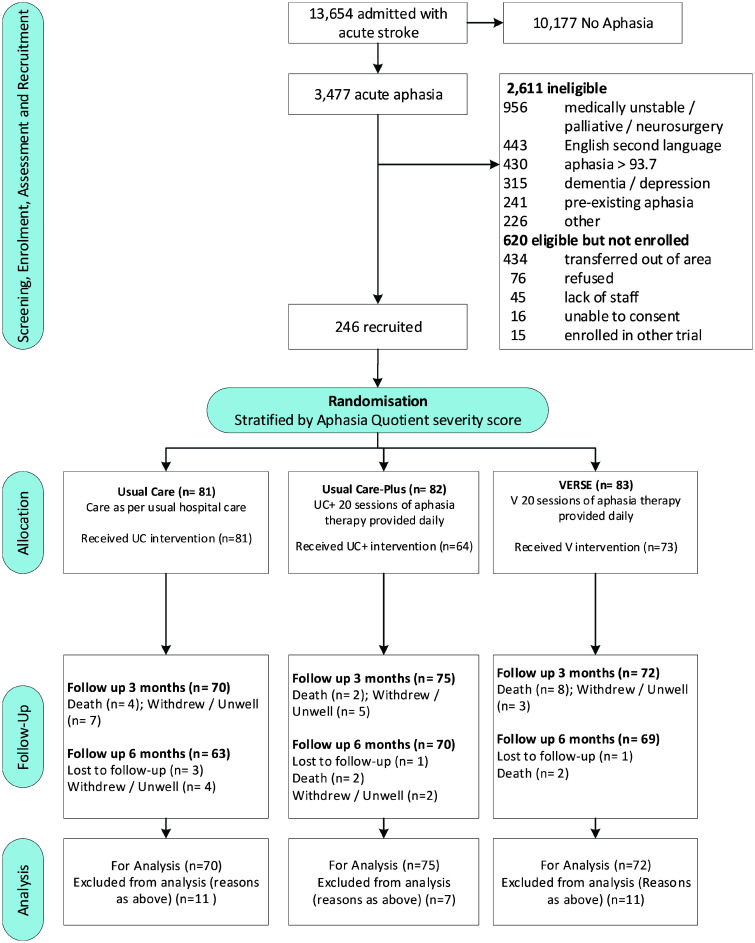
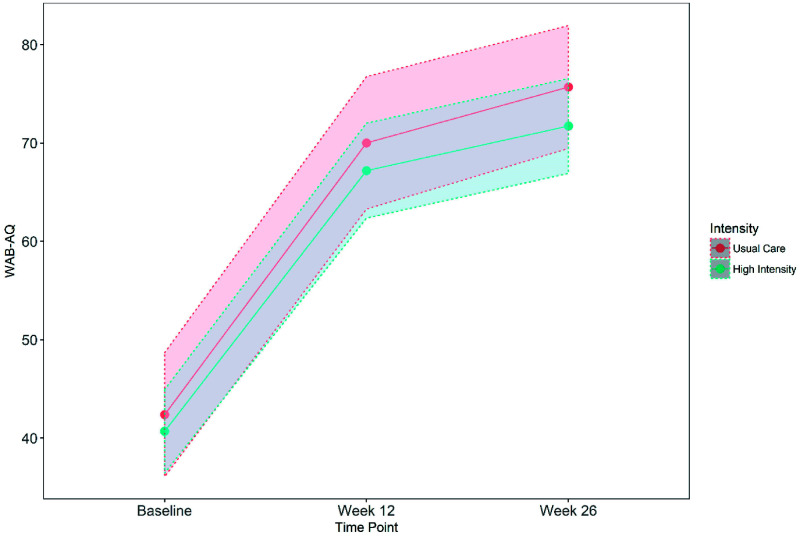
Background: Effectiveness of early intensive aphasia rehabilitation after stroke is unknown. The Very Early Rehabilitation for SpEech trial (VERSE) aimed to determine whether intensive aphasia therapy, beginning within 14 days after stroke, improved communication recovery compared to usual care. Methods: Prospective, randomized, single-blinded trial conducted at 17 acute-care hospitals across Australia/New Zealand from 2014 to 2018. Participants with aphasia following acute stroke were randomized to receive usual care (direct usual care aphasia therapy), or one of two higher intensity regimens (20 sessions of either non-prescribed (usual care-plus or prescribed (VERSE) direct aphasia therapy). The primary outcome was improvement of communication on the Western Aphasia Battery-Revised Aphasia Quotient (AQ) at 12 weeks after stroke. Our pre-planned intention to treat analysis combined high intensity groups for the primary outcome. Findings: Among 13,654 acute stroke patients screened, 25% (3477) had aphasia, of whom 25% (866) were eligible and 246 randomized to usual care ( n = 81; 33%), usual care-plus ( n = 82; 33%) or VERSE ( n = 83; 34%). At 12 weeks after stroke, the primary outcome was assessed in 217 participants (88%); 14 had died, 9 had withdrawn, and 6 were too unwell for assessment. Communication recovery was 50.3% (95% CI 45.7–54.8) in the high intensity group ( n = 147) and 52.1% (95% CI 46.1–58.1) in the usual care group ( n = 70; difference −1.8, 95% CI −8.7–5.0). There was no difference between groups in non-fatal or fatal adverse events ( p = 0.72). Interpretation: Early, intensive aphasia therapy did not improve communication recovery within 12 weeks post stroke compared to usual care.
Overview
CoChat Summary
## TL;DR
In this multicenter randomized controlled trial, intensive early aphasia therapy started within 14 days of stroke did not improve communication recovery at 12 weeks compared with usual care. The high-intensity groups received more therapy, but outcomes, adverse events, and secondary measures were not better than control.
## Key findings
- Of 13,654 acute stroke patients screened, 3,477 (25%) had aphasia; 866 (25% of those with aphasia) were eligible, and 246 were randomized to usual care (n=81), usual care-plus (n=82), or VERSE (n=83).
- The primary analysis at 12 weeks found communication recovery of 50.3% (95% CI 45.7–54.8) in the high-intensity group versus 52.1% (95% CI 46.1–58.1) in usual care, a between-group difference of −1.8 (95% CI −8.7 to 5.0; p=0.59).
- The high-intensity groups received a mean of 22.7 h of aphasia therapy over 32 days, compared with 9.5 h over 28 days in usual care; 82% of those assigned to high-intensity therapy received the intervention per protocol.
- There was no difference in non-fatal or fatal adverse events (p=0.72), and the paper reports no statistically significant differences on secondary outcomes or subgroup analyses.
## Methods
- Phase III, prospective, randomized, single-blinded, multicenter trial conducted at 17 acute-care hospitals in Australia and New Zealand, with blinded outcomes at 12 weeks (primary) and 26 weeks post-stroke.
- Included adults >18 years with acute stroke and aphasia of any type within 14 days of onset, with WAB-R Aphasia Quotient <93.7; participants were followed at 45 subacute and community healthcare centers.
- Participants were randomized 1:1:1 to usual care, usual care-plus, or VERSE; the primary intention-to-treat analysis combined the two higher-intensity groups and used a linear mixed model adjusted for baseline WAB-R AQ, baseline NIHSS, and hospital site.
## Limitations
- The paper states there was no no-treatment arm because “inclusion of a no treatment arm was not considered ethical,” so spontaneous recovery could not be separated from treatment effects.
- The paper notes that monitoring other therapies and social interactions was outside the funding scope, and this may have influenced language recovery; this is an evident limitation of the design, as stated in the text.
- The study was conducted in English-speaking participants who required capacity to consent and excluded several groups (e.g., pre-existing aphasia, dementia, inability to participate in English-based therapy), which limits generalizability; this is evident from the eligibility criteria.
Model-written summary. Check it against the paper before relying on it.
Integrity signals
Registry
Cites
Statistics
Figures
Verification
Claims the paper makes
7 Valid · 0 Not valid · 12 Not checked · 23 Own results and interpretations
The cited sources support only part of this claim — read each source’s verdict below.
In the paper
“Together, these trials3–6 provide compelling evidence to challenge the ‘intensive’ mindset in early stroke language and communication recovery.”
§ A randomized control trial of intensive aphasia therapy after acute stroke: The Very Early Rehabilitation for SpEech (VERSE) study > Discussion
What the sources say
- Supportedcites [3] Nouwens F de Lau LML Visch-Brink EG, et al. on behalf of the RATS-3 investigators. Efficacy of early cognitive-linguistic treatment for aphasia due to stroke: a randomised controlled trial (Rotterdam Aphasia Therapy Study-3). Euro Stroke J 2017; 2: 126– 136. PMC5992741 29900407 source
The Abstract Conclusion states that four weeks of intensive CLT initiated within 2 weeks of stroke was not more effective than no language treatment and that the results 'exclude a clinically relevant effect of very early cognitive-linguistic treatment on everyday language'. The Discussion (Principal findings) adds that their meta-analysis shows SLT 'whether or not intensive, when started within 4 weeks after stroke onset, is not more effective... than regular, less intensive or deferred treatment', and the Introduction notes the evidence for early intensive CLT is 'frail' with feasibility 'questionable'. This RATS-3 trial therefore is one of the early-stroke trials that challenges the intensive best-practice regime, matching the attributed point; the source's own mild hedges ('lack of unequivocal proof', therapy not redundant) do not contradict the claim's framing. (LLM, conf=0.85)
- Not checked yetcites [4] Laska AC Kahan T Hellblom A Murray V von Arbin M. A randomized controlled trial on very early speech and language therapy in patients with acute stroke and aphasia. Cerebrovasc Dis Extra 2011; 1: 66– 74. 22566984 PMC3343759
- Not checked yetcites [5] Godecke E Hird K Lalor EE Rai T Phillips M. Very early post-stroke aphasia therapy: a pilot randomised controlled efficacy trial. Int J Stroke 2012; 7: 635– 644. 21978210 source
- Partly supportedcites [6] Godecke E Armstrong E Ciccone N, et al. The design of “A prospective multicentre, randomised controlled trial of Very Early Rehabilitation in Speech (VERSE) in patients with aphasia following acute stroke”. Int J Stroke 2016; 11: 586– 592. 27151156 sourceExperimental — accuracy not yet measured
Our copy of the VERSE paper is a trial design/protocol document: the Introduction and Rationale states the aim and hypotheses ("VERSE aims to determine if intensive aphasia therapy provides greater efficacy... our primary hypothesis is that compared to UC, early intensive aphasia therapy will result in improved communication ability... at 12 weeks post stroke"), and the Discussion (Secondary analyses section) closes with "This trial is designed to test whether the intensive and prescribed VERSE intervention is effective... Since the trial commenced recruitment, 81 patients have been enrolled from 11 hospitals." So the source IS the VERSE very-early intensive aphasia trial the citing sentence pools, but it reports no outcome results and therefore contains no evidence — let alone "compelling evidence" — that challenges the intensive mindset; if anything its stated premise is that intensive very early therapy may enhance recovery. The evidentiary conclusion attributed here would come from later results publications, not this protocol. (LLM, conf=0.72)
boosted- Asserted: passes — The authors put it forward as true.
- Checkable: passes — It can be checked against evidence.
- Load-bearing: passes — The paper’s conclusions depend on it.
- Based: passes — The paper gives a reason why it holds.
- Supported
The cited sources support only part of this claim — read each source’s verdict below.
In the paper
“Based on benchmarking of aphasia intervention studies, a 5-point change on the WAB-R AQ represents a conservative, clinically meaningful effect. 29”
§ A randomized control trial of intensive aphasia therapy after acute stroke: The Very Early Rehabilitation for SpEech (VERSE) study > Methods > Outcomes
What the sources say
- Partly supportedcites [29] Gilmore N, Dwyer M and Kiran S. Benchmarks of significant change after aphasia rehabilitation. Arch Phys Med Rehabil. Epub ahead of print 2018. DOI: 10.1016/j.apmr.2018.08.177. PMC6422764 30240594 sourceExperimental — accuracy not yet measured
The Results report WAB-AQ treatment effects of 5.03 points within groups and 5.05 points between groups. The Discussion says a 5-point measurement benchmark has been framed as clinically meaningful, but does not call a 5-point change conservative; it also notes that measurement error varies substantially with aphasia severity. Thus, the paper supports the approximate benchmark but not an unqualified claim that it is a conservative, clinically meaningful change for every patient. (LLM, conf=0.84)
plain- Asserted: passes — The authors put it forward as true.
- Checkable: passes — It can be checked against evidence.
- Load-bearing: passes — The paper’s conclusions depend on it.
- Based: passes — The paper gives a reason why it holds.
- Partly supported
The cited sources support only part of this claim — read each source’s verdict below.
In the paper
“The more recent RATS-3 trial 3 (N = 153) demonstrated no benefit of early therapy consisting of 24.5 h over four weeks (6.1 h per week) when compared to no therapy in the first month, measured at 4, 12, and 26 weeks post stroke.”
§ A randomized control trial of intensive aphasia therapy after acute stroke: The Very Early Rehabilitation for SpEech (VERSE) study > Background
What the sources say
- Partly supportedcites [3] Nouwens F de Lau LML Visch-Brink EG, et al. on behalf of the RATS-3 investigators. Efficacy of early cognitive-linguistic treatment for aphasia due to stroke: a randomised controlled trial (Rotterdam Aphasia Therapy Study-3). Euro Stroke J 2017; 2: 126– 136. PMC5992741 29900407 sourceExperimental — accuracy not yet measured
The core attribution is supported: the Abstract/Results report 80 patients allocated to intensive CLT versus 72 controls, a median treatment intensity of 24.5 h in 4 weeks, an adjusted ANELT-A difference of 0.39 (95% CI −2.70 to 3.47, p = 0.805) at 4 weeks, and no significant differences at 3 and 6 months (Methods, Assessments; Results, Compliance). Two attributed details do not match our copy: RATS-3 included 152 patients, not N = 153, and the follow-up points (4 weeks, 3 months, 6 months) were anchored to randomisation, which occurred on average 8 days after stroke onset, not to stroke onset itself (so '4, 12 and 26 weeks post stroke' is off); the per-week figure of 6.1 h is the citing authors' division of 24.5 h by 4 and is not stated (the intended intensity was 28 h in 4 weeks). Note also that the on-treatment analysis did show a significant 4-week benefit for the 23 patients reaching ≥28 h, which the neutral framing omits but does not contradict, since the claim concerns the primary intention-to-treat result. (LLM, conf=0.72)
boostedn = 153- Asserted: passes — The authors put it forward as true.
- Checkable: passes — It can be checked against evidence.
- Load-bearing: passes — The paper’s conclusions depend on it.
- Based: passes — The paper gives a reason why it holds.
- Partly supported
The cited sources support only part of this claim — read each source’s verdict below.
In the paper
“Evidence from human motor and animal stroke recovery models suggests the first 90 days post stroke is the ‘window of opportunity’ 2 where the greatest potential to harness spontaneous recovery exists. 12”
§ A randomized control trial of intensive aphasia therapy after acute stroke: The Very Early Rehabilitation for SpEech (VERSE) study > Background
What the sources say
- Partly supportedcites [2] Hermann DM Chopp M. Promoting brain remodelling and plasticity for stroke recovery: therapeutic promise and potential pitfalls of clinical translation. Lancet Neurol 2012; 11: 369– 380. 22441198 PMC3964179 sourceExperimental — accuracy not yet measured
Our copy supports only the general idea: the 'Timing of treatment...' section states that 'because of the neurovascular remodelling processes activated in response to stroke, a time interval of a few days to months after stroke exists in which neurological recovery presumably is most promising' — hedged, and with no defined endpoint. The specific 'first 90 days' figure and the phrase 'window of opportunity' appear nowhere in our copy (searched: window of opportunity, 90 days, spontaneous improvement, timing). Moreover the same section opens by denying a sharp boundary ('The promotion of brain remodelling and plasticity is not limited to a sharp and well defined therapeutic window'), and 'Benefits of neurorestorative therapies' plus 'Consequences for clinical translation' report success when treatment began days, weeks or months after stroke, 'far into the rehabilitation phase'. So the 90-day delimitation is not attributable to this source. (LLM, conf=0.70)
- Supportedcites [12] Krakauer JW Thomas Carmichael S Corbett D Wittenberg GF. Getting neurorehabilitation right: What can be learned from animal models? Neurorehabil Neural Repair 2012; 26: 923– 931. 22466792 PMC4554531 source
The Abstract (p.1) frames the review around 'the time course of spontaneous recovery in the first three months after stroke' and interventions 'to enhance recovery from impairment in the first three months after stroke', describing a 'time-limited window of heightened plasticity... early after stroke when most recovery from impairment occurs'. The Human Perspective section (Current Rehabilitation Methods do not Sufficiently Target Impairment) adds that patients achieve about 70% of maximal potential recovery by 3 months, and Current approaches to rehabilitation calls this 'this critical period of spontaneous biological recovery'. One nuance: the paper locates the peak window in animal models at ~4 weeks and notes the human 3-month figure differs for unknown reasons (Comparing the time courses of stroke recovery in animal models and humans), so the 90-day bound is chiefly the human data, but the overall claim of a first-three-months window to harness spontaneous recovery is the paper's stated thesis. (LLM, conf=0.85)
hedgedstates an association- Asserted: passes — The authors put it forward as true.
- Checkable: passes — It can be checked against evidence.
- Load-bearing: passes — The paper’s conclusions depend on it.
- Based: passes — The paper gives a reason why it holds.
- Partly supported
A result the paper reports from its own data — it cites no other source for it, so there is none to check. The quote shows it is in the paper.
In the paper
“Early, intensive aphasia therapy did not improve communication recovery within 12 weeks post stroke compared to usual care.”
- Also stated in: § Discussion · plain
“We found that 22 h (or an average 5 h per week) of aphasia therapy (regardless of type) delivered over 32 days, showed no benefit over 9.5 h delivered over 28 days (2.3 h per week) for the primary outcome WAB-R AQ at 12 weeks post stroke.”
§ A randomized control trial of intensive aphasia therapy after acute stroke: The Very Early Rehabilitation for SpEech (VERSE) study > Abstract > Interpretation
plain- Asserted: passes — The authors put it forward as true.
- Checkable: passes — It can be checked against evidence.
- Load-bearing: passes — The paper’s conclusions depend on it.
- Based: passes — The paper gives a reason why it holds.
- Also stated in: § Discussion · plain
15 more claims
Create a free account to see all 42 claims and to verify the 19 references still open.
- Probably not a substantial claim. 12
- It may state two separate claims as one. 17
Claims other papers make about this one
Each is checked against this paper’s own text: does it say what the citing paper says it does?
The check wasn’t confident either way, so it gives no verdict — never disputed.
In the citing paper
“The app provided 6 components of speech exercises for 1 day based on established behavioral therapies [5,10].”
From Smartphone-Based Speech Therapy for Poststroke Dysarthria: Pilot Randomized Controlled Trial Evaluating Efficacy and Feasibility (2024) · cites this paper as [10]
Experimental — accuracy not yet measured
Citations
Cites
Harris, P. A., Taylor, R., Thielke, R., Payne, J., Gonzalez, N., & Conde, J. G. (2009) · Journal of Biomedical Informatics · doi:10.1016/j.jbi.2008.08.010 · Cited by 51,384 · cited 1×
“Baseline assessments were completed by trained staff before randomizing participants using a computer-generated, block randomization sequence (permutated block of six, with 1:1:1 randomization to three groups (UC, UC-Plus, VERSE) to achieve an overall ratio of 1:2 (UC; high intensity therapy, combined UC-Plus and VERS…”
MethodHoffmann, T. C., Glasziou, P. P., Boutron, I., Milne, R., Perera, R., Moher, D., Altman, D. G., Barbour, V., Macdonald, H., Johnston, M., et al. (2014) · BMJ · doi:10.1136/bmj.g1687 · Cited by 10,548
SPIRIT 2013 explanation and elaboration: guidance for protocols of clinical trials
Chan, A.-W., Tetzlaff, J. M., Gotzsche, P. C., Altman, D. G., Mann, H., Berlin, J. A., Dickersin, K., Hrobjartsson, A., Schulz, K. F., Parulekar, W. R., et al. (2013) · BMJ · doi:10.1136/bmj.e7586 · Cited by 6,251
Cerebral Vascular Accidents in Patients over the Age of 60: II. Prognosis
Rankin, J. (1957) · Scottish Medical Journal · doi:10.1177/003693305700200504 · Cited by 2,506
Western Aphasia Battery--Revised
Kertesz, A. (2012) · PsycTESTS Dataset · doi:10.1037/t15168-000 · Cited by 1,367
Speech and language therapy for aphasia following stroke
Brady, M. C., Kelly, H., Godwin, J., Enderby, P., & Campbell, P. (2016) · Cochrane Database of Systematic Reviews · doi:10.1002/14651858.cd000425.pub4 · Cited by 1,159
(2015) · The Lancet · doi:10.1016/s0140-6736(15)60690-0 · Cited by 789
Clinical Guidelines for Stroke Management 2010
Boddice, G., Brauer, S., Gustafsson, L. A., Kenardy, J. A., & Hoffmann, T. (2010) · Cited by 767
Engelter, S. T., Gostynski, M., Papa, S., Frei, M., Born, C., Ajdacic-Gross, V., Gutzwiller, F., & Lyrer, P. A. (2006) · Stroke · doi:10.1161/01.str.0000221815.64093.8c · Cited by 688 · cited 1×
“We believe the trial sample was representative of a typical population with post-stroke aphasia evidenced by the severity of stroke and aphasia recruited to this trial.(8) Our 7% recruitment rate is consistent with recruitment for acute stroke trials.”
BackgroundGetting Neurorehabilitation Right: What Can Be Learned From Animal Models?
Krakauer, J. W., Carmichael, S. T., Corbett, D., & Wittenberg, G. F. (2012) · Neurorehabilitation and Neural Repair · doi:10.1177/1545968312440745 · Cited by 591 · cited 3×
“Evidence from human motor and animal stroke recovery models suggests the first 90 days post stroke is the ‘window of opportunity’(2) where the greatest potential to harness spontaneous recovery exists.(12) This theory suggests that high frequency repetition should strengthen neural networks and minimize independent ne…”
Background
Research works printed but not linked: 4
- Reinvang I Engvik H. Norsk Grunntest Afasi, Oslo: Norbok, 1980.
- Sarno MT. Functional communication profile, London: Whurr Publishers, 1969.
- Kaplan EF Goodglass H Weintraub S. Boston naming test, 2nd ed. New York, NY: NCS Pearson, 2000.
- Brady MC, Ali M, VandenBerg K, et al. RELEASE: an individual participant data meta-analysis, incorporating systematic review and network meta-analysis, of complex speech-language therapy interventions for stroke-related aphasia. National Institute for Health Research – Program Grant for Applied Research, 2019. 36223438
Cited by
Current Approaches to the Treatment of Post-Stroke Aphasia
Fridriksson, J., & Hillis, A. E. (2021) · Journal of Stroke · doi:10.5853/jos.2020.05015 · Cited by 172
“Much like Breitenstein et al.,18 Nouwens et al.,29 and Godecke et al.,30 these preliminary data from POLAR suggest participants with more severe aphasia are less likely to respond to SLT.”
BackgroundResultInfluentialStroke: Molecular mechanisms and therapies: Update on recent developments
Shehjar, F., Maktabi, B., Rahman, Z. A., Bahader, G. A., James, A. W., Naqvi, A., Mahajan, R., & Shah, Z. A. (2022) · Neurochemistry International · doi:10.1016/j.neuint.2022.105458 · Cited by 165
Ischemic Stroke: Pathophysiology and Evolving Treatment Approaches
Majumder, D. (2024) · Neuroscience Insights · doi:10.1177/26331055241292600 · Cited by 130
Kristinsson, S., den Ouden, D., Rorden, C., Newman‐Norlund, R., Neils‐Strunjas, J., & Fridriksson, J. (2022) · Journal of Stroke · doi:10.5853/jos.2022.01102 · Cited by 71
Brazilian practice guidelines for stroke rehabilitation: Part II
Minelli, C., Luvizutto, G. J., Cacho, R. D. O., Neves, L. D. O., Magalhães, S. C. S. A., Pedatella, M. T. A., de Mendonça, L. I. Z., Ortiz, K. Z., Lange, M. C., Ribeiro, P. W., et al. (2022) · Arquivos de Neuro-Psiquiatria · doi:10.1055/s-0042-1757692 · Cited by 92
Kristinsson, S., Basilakos, A., den Ouden, D., Cassarly, C. N., Spell, L. A., Bonilha, L., Rorden, C., Hillis, A. E., Hickok, G. S., Johnson, L., et al. (2023) · Journal of Speech Language and Hearing Research · doi:10.1044/2022_jslhr-22-00347 · Cited by 64
Liu, Q., Li, W., Yin, Y., Zhao, Z., Yang, Y., Zhao, Y., Tan, Y., & Yu, J. (2021) · Neurological Sciences · doi:10.1007/s10072-021-05743-9 · Cited by 54
“The main characteristics of patients with aphasia after stroke are impaired language expression and comprehension, which severely affects patients’ daily activities and increases the burden on families and society [3].”
BackgroundTreatment of post-stroke aphasia: A narrative review for stroke neurologists
Vitti, E., & Hillis, A. E. (2021) · International Journal of Stroke · doi:10.1177/17474930211017807 · Cited by 55
“However, as most patients improve in the first three months after stroke irrespective of intervention, it is very difficult to show a significant effect over and above the spontaneous recovery.(14) However, carefully controlled studies of interventions more targeted to the individual’s particular deficits in the early…”
BackgroundStroke Rehabilitation and Motor Recovery
O’Dell, M. W. (2023) · CONTINUUM Lifelong Learning in Neurology · doi:10.1212/con.0000000000001218 · Cited by 56
Operationalising treatment success in aphasia rehabilitation
Breitenstein, C., Hilari, K., Menahemi-Falkov, M., Rose, M. L., Wallace, S. J., Brady, M., Hillis, A. E., Kiran, S., Szaflarski, J. P., Tippett, D. C., et al. (2022) · Aphasiology · doi:10.1080/02687038.2021.2016594 · Cited by 41
“…for WAB AQ change scores (e.g., Babbitt et al., 2016; Cherney, 2010; Elman & Bernstein-Ellis, 1999; Eom & Sung, 2016; Falconer & Antonucci, 2012; Godecke et al., 2021; Katz & Wertz, 1997; Kempler & Goral, 2011; Maher et al., 2006; Mozeiko et al., 2018; Peach et al., 2019; Persad et al., 2013).”
BackgroundSelf-citationMonnelly, K., Marshall, J., Dipper, L. T., & Cruice, M. N. (2023) · International Journal of Language & Communication Disorders · doi:10.1111/1460-6984.12918 · Cited by 41
European Stroke Organisation (ESO) guideline on aphasia rehabilitation
Brady, M., Mills, C. S., Øra, H. P., Novaes, N. P., Becker, F., Constantinidou, F., Flöel, A., Sunnerhagen, K. S., Isaksen, J., Jagoe, C., et al. (2025) · European Stroke Journal · doi:10.1177/23969873241311025 · Cited by 49
“Lastly, two trials reported on emotional wellbeing 31,33 but there was no difference between high and low intensity SLT groups at follow up.”
InfluentialEapen, B. C., Tran, J., Ballard‐Hernandez, J., Buelt, A., Hoppes, C. W., Matthews, C. T., Pundik, S., Reston, J., Tchopev, Z. N., Wayman, L. M., et al. (2025) · Annals of Internal Medicine · doi:10.7326/annals-24-02205 · Cited by 38
Advances in Stroke: Therapies Targeting Stroke Recovery
Richards, L. G., & Cramer, S. C. (2020) · Stroke · doi:10.1161/strokeaha.120.033231 · Cited by 31
A systematic review of aphasia therapy provided in the early period of post-stroke recovery
Husak, R. S., Wallace, S. E., Marshall, R. C., & Visch-Brink, E. G. (2021) · Aphasiology · doi:10.1080/02687038.2021.1987381 · Cited by 21
“Clinical questions 3: Is there a difference on language and/or communication outcome measures between individuals who receive lower and higher weekly intensive treatments when aphasia therapy is initiated within 4 months of aphasia onset? Six studies were located in the search that compared the outcomes of participant…”
BackgroundKim, Y., Kim, M., Kim, J., & Song, T.-J. (2024) · Journal of Medical Internet Research · doi:10.2196/56417 · Cited by 20
“Therefore, further research is needed to define the benefits and risks of early interventions after stroke [10].”
Behn, N., Harrison, M., Brady, M., Breitenstein, C., Carragher, M., Fridriksson, J., Godecke, E., Hillis, A. E., Kelly, H., Palmer, R., et al. (2022) · Aphasiology · doi:10.1080/02687038.2022.2037502 · Cited by 21
Self-citationSang, B., Deng, S., Zhai, J., Hao, T., Zhuo, B., Qin, C., Zhang, M., Zhao, X.-F., & Meng, Z. (2022) · Neurorehabilitation · doi:10.3233/nre-220007 · Cited by 20
Georgiou, A. M., & Kambanaros, M. (2023) · Medicina · doi:10.3390/medicina59091674 · Cited by 25
“The VERSE study by Godecke and colleagues [27] revealed that early, intensive aphasia therapy did not improve communication recovery within 12 weeks post-stroke compared to usual care.”
BackgroundManagement of communication disability in the first 90 days after stroke: a scoping review
Baker, C., Foster, A. M., D’Souza, S., Godecke, E., Shiggins, C., Lamborn, E., Lanyon, L., Kneebone, I., & Rose, M. L. (2021) · Disability and Rehabilitation · doi:10.1080/09638288.2021.2012843 · Cited by 20
Self-citationOptimising rehabilitation and recovery after a stroke
Bonifacio, G., Ward, N., Emsley, H. C. A., Cooper, J., & Bernhardt, J. A. (2022) · Practical Neurology · doi:10.1136/practneurol-2021-003004 · Cited by 18
Self-citationReversing the Ruin: Rehabilitation, Recovery, and Restoration After Stroke
Stockbridge, M. D., Bunker, L. D., & Hillis, A. E. (2022) · Current Neurology and Neuroscience Reports · doi:10.1007/s11910-022-01231-5 · Cited by 21
Monnelly, K., Marshall, J., Dipper, L. T., & Cruice, M. N. (2023) · Disability and Rehabilitation · doi:10.1080/09638288.2023.2274877 · Cited by 19
“The VERSE trial found that non-ICAP SLT delivered in the acute stage (starting within 2 weeks post-stroke) at an intensity of 5 h/week × 4 weeks (mean total dose of 23 h) did not produce additional benefit for PWA when compared with usual care (mean total dose of 9.5 h) [75].”
InfluentialLangton‐Frost, N., Orient, S., Adeyemo, J., Bahouth, M. N., Daley, K. N., Ye, B., Lavezza, A., & Pruski, A. (2023) · American Journal of Physical Medicine & Rehabilitation · doi:10.1097/phm.0000000000002132 · Cited by 22
“Conversely, in a randomized single-blind trial after acute stroke, starting within the first 2 wks, participants were not found to improve communication recovery with early treatment.(11) Although these recent results do not support early aphasia intervention, the usual care group in the study received intervention 3…”
BackgroundResting-State Neural-Activity Alterations in Subacute Aphasia after Stroke
Xie, X., Zhang, T., Bai, T., Chen, C., Ji, G., Tian, Y., Yang, J., & Wang, K. (2022) · Brain Sciences · doi:10.3390/brainsci12050678 · Cited by 14
“Recent studies showed the better efficacy of speech and language therapy (SLT) on acute and subacute aphasia [7,8], while another report suggested that intensive SLT beginning during acute aphasia could not improve efficacy than routine SLT [9].”
BackgroundRoberts, S. M., Bruce, R. M., Lim, L., Woodgate, H., Ledingham, K., Anderson, S., Lorca‐Puls, D. L., Gajardo‐Vidal, A., Leff, A. P., Hope, T. M. H., et al. (2021) · Neuropsychological Rehabilitation · doi:10.1080/09602011.2021.1944883 · Cited by 20
Yan, Z., Wei, D., Xu, S., Zhang, J., Yang, C., He, X., Li, C., Zhang, Y., Chen, M., Li, X., et al. (2022) · Scientific Reports · doi:10.1038/s41598-022-17997-0 · Cited by 11
Kim, Y., Kim, M., Kim, J., & Song, T.-J. (2024) · Frontiers in Neurology · doi:10.3389/fneur.2024.1305297 · Cited by 10
Examining Dose Frameworks to Improve Aphasia Rehabilitation Research
Harvey, S., Rose, M. L., Brogan, E., Pierce, J. E., Godecke, E., Brownsett, S. L. E., Churilov, L. P., Copland, D. A., Dickey, M. W., Dignam, J. K., et al. (2022) · Archives of Physical Medicine and Rehabilitation · doi:10.1016/j.apmr.2022.12.002 · Cited by 12
Self-citationLiscano, Y., Sandoval, L. M. B., & Díaz-Vallejo, J. A. (2025) · Brain Sciences · doi:10.3390/brainsci15091007 · Cited by 15
“However, the optimal timing to initiate intervention and its duration remain controversial, as they depend on multiple factors, including the patient’s immediate context, individual variability in cognitive reserve, and the specificity of interventions [7,8].”
D’Souza, S., Godecke, E., Ciccone, N., Hersh, D., Armstrong, E., Tucak, C., & Janssen, H. (2021) · Clinical Rehabilitation · doi:10.1177/02692155211032655 · Cited by 12
Self-citationThayabaranathan, T., Baker, C., Andrew, N. E., Stolwyk, R. J., Thrift, A. G., Carter, H., Moss, K. M., Kim, J., Wallace, S. J., Brogan, E., et al. (2022) · Topics in Stroke Rehabilitation · doi:10.1080/10749357.2022.2095087 · Cited by 12
Self-citationLangton‐Frost, N., & Brodsky, M. B. (2021) · PM&R · doi:10.1002/pmrj.12717 · Cited by 12
“Smaller research studies have demonstrated quicker improvement in functional language and scores on standardized aphasia testing with increased frequency of language intervention during the acute care hospital stay(63); however, a large study by the same authors revealed no significant differences in the amount of imp…”
ResultA Review of Poststroke Aphasia Recovery and Treatment Options
Tilton-Bolowsky, V. E., & Hillis, A. E. (2023) · Physical Medicine and Rehabilitation Clinics of North America · doi:10.1016/j.pmr.2023.06.010 · Cited by 9
Richards, L. G., Ifejika, N. L., Stein, J., Bahouth, M. N., Saylor, M. A., Barrett, A. M., Chen, P., Deutsch, A. F., Dusenbury, W., Ellis, C., et al. (2026) · Stroke · doi:10.1161/str.0000000000000536 · Cited by 15
Pizov, N. A. (2023) · Meditsinskiy sovet = Medical Council · doi:10.21518/ms2023-429 · Cited by 11
Features of speech disorders in patients with acute ischemic stroke
Kotov, S. V., Shcherbakova, M. M., Zenina, V. A., Валентиновна, И. Е., & Котов, А. С. (2023) · Annals of Clinical and Experimental Neurology · doi:10.54101/acen.2023.3.2 · Cited by 7
Lin, L.-Y., Yao, S., Chen, Q., Du, M., Kang, X.-H., Jiang, D.-Y., & Peng, Y. J. (2025) · Frontiers in Neurology · doi:10.3389/fneur.2025.1629640 · Cited by 10
Liu, Q.-Q., Li, W. B., Zhao, Z.-B., Zhang, W., Lv, P., Yang, Y.-H., & Yin, Y. (2022) · Folia Neuropathologica · doi:10.5114/fn.2022.118188 · Cited by 7
Advances in Stroke Recovery Therapeutics
Richards, L. G., & Cramer, S. C. (2021) · Stroke · doi:10.1161/strokeaha.121.038018 · Cited by 7
Ma, H., & Zhu, L. (2024) · Medicine · doi:10.1097/md.0000000000039685 · Cited by 7
“[7] Activity-based therapies aim to accelerate the recovery of motor function after IS, including robot-assisted upper limb training after stroke, [8] early speech rehabilitation, [9] etc.”
BackgroundInvaluable Benefits of 10 Years of the International Collaboration of Aphasia Trialists (CATs)
Breitenstein, C., Wallace, S. J., Gilmore, N., Finch, E., Pettigrove, K., Brady, M., Brady, M., Breitenstein, C., Hilari, K., Wallace, S. J., et al. (2024) · Stroke · doi:10.1161/strokeaha.124.046487 · Cited by 6
Self-citationGong, D., & Ye, F. (2024) · Noise and Health · doi:10.4103/nah.nah_24_24 · Cited by 6
Impact assessment of the Centre for Research Excellence in Stroke Rehabilitation and Brain Recovery
Ramanathan, S. A., Lynch, E. A., Bernhardt, J. A., Nilsson, M., Cadilhac, D. A.-M., Carey, L. M., Middleton, S., Chamberlain, J., Walker, F. R., Reeves, P., et al. (2023) · Health Research Policy and Systems · doi:10.1186/s12961-023-00974-y · Cited by 5
“The SENSe [Study of the Effectiveness of Neurorehabilitation on Sensation] trial has contributed knowledge on improving somatosensory recovery and arm use [21], the VERSE [Very Early Rehabilitation in Speech] trial is informing therapy selection for aphasia [22] and the BUST and other trials have contributed to inform…”
BackgroundSelf-citationRubi‐Fessen, I., Gerbershagen, K., Stenneken, P., & Willmes, K. (2024) · Brain Sciences · doi:10.3390/brainsci14080789 · Cited by 4
Bahouth, M. N., Deluzio, S., Pruski, A., & Zink, E. K. (2023) · Neurotherapeutics · doi:10.1007/s13311-023-01392-2 · Cited by 5
Varkanitsa, M., & Kiran, S. (2023) · Cortex · doi:10.1016/j.cortex.2023.12.002 · Cited by 5
Godecke, E., Brogan, E., Ciccone, N., Rose, M. L., Armstrong, E., Whitworth, A., Ellery, F., Holland, A. L., Middleton, S., Rai, T., et al. (2022) · Trials · doi:10.1186/s13063-022-06433-3 · Cited by 7
“A full description of therapy including setting, participant inclusion and exclusion criteria, intervention description and planned data analysis is provided in the VERSE trial manual in the main trial publication supplement [17].”
BackgroundMethodResultInfluentialSelf-citationEconomic evaluation of the Very Early Rehabilitation in SpEech (VERSE) intervention
Kim, J., Sookram, G., Godecke, E., Brogan, E., Armstrong, E., Ellery, F., Rai, T., Rose, M. L., Ciccone, N., Middleton, S., et al. (2023) · Topics in Stroke Rehabilitation · doi:10.1080/10749357.2023.2229039 · Cited by 4
Self-citationDigital tool as speech and language therapy for patients with post-stroke aphasia
Ruiz Ares, G., Martin Alonso, M., Rigual, R., Hervás Testal, C., Torres Iglesias, G., Casado Fernandez, L., de Celis Ruiz, E., Rodríguez Pardo, J., Carvajal Muñoz, J., González Martín, L., et al. (2025) · DIGITAL HEALTH · doi:10.1177/20552076251314551 · Cited by 3
The Role of Speech and Language Therapists (SLTs) in International Stroke Teams: A Systematic Review
Charalambous, M., Pierce, J. E., Pastou, G., Κολά, Ε., & Savitz, S. I. (2025) · International Journal of Language & Communication Disorders · doi:10.1111/1460-6984.70062 · Cited by 4
A randomized crossover single-case series comparing blocked versus random treatment for anomia
Diedrichs, V. A., Lundine, J. P., Blackett, D. S., Durfee, A. Z., Pan, X. J., & Harnish, S. M. (2022) · Neuropsychological Rehabilitation · doi:10.1080/09602011.2022.2050411 · Cited by 3
“Previous studies have examined factors such as intensity (Godecke et al., 2021; Dignam et al., 2015; Cherney, 2012), dosing (Harvey et al., 2021; Pierce et al., 2021; Harnish et al., 2014), and feedback (Fillingham et al., 2006; McKissock & Ward, 2007).”
BackgroundNarrative Discourse Intervention for Patients in Posttraumatic Amnesia: A Feasibility Study
Vazirani, A., Checklin, M., McKay, A., McKenzie, D. P., & Steel, J. (2025) · American Journal of Speech-Language Pathology · doi:10.1044/2025_ajslp-24-00096 · Cited by 4
The role of speech-language pathology weekend service in inpatient subacute care: A national survey
Davies, L., Lanyon, L., & O’Halloran, R. (2021) · International Journal of Speech-Language Pathology · doi:10.1080/17549507.2021.1970226 · Cited by 3
Wang, X., Hui, X., Wang, X., Huang, B., Gan, X., Liu, X., Shen, Z., Sun, Y., & Li, L. (2023) · Frontiers in Neuroscience · doi:10.3389/fnins.2023.1222541 · Cited by 5
“compared with conventional nursing care (Cumming et al., 2019; Godecke et al., 2021).”
Eley, E., van den Berg, M., Rose, M. L., Pierce, J. E., Foster, A. M., Lamborn, E., D’Souza, S., Godecke, E., Lanyon, L., Shiggins, C., et al. (2023) · Aphasiology · doi:10.1080/02687038.2023.2282659 · Cited by 9
“Aphasia rehabilitation is underpinned by cognitive and motor theories (Godecke et al., 2020), psycholinguistic models of language processing, neuropsychology and cognitive psychology concepts, and theories of language impairment based on linguistic models (Boyle et al., 2022).”
BackgroundSelf-citationKuyler, A., Johnson, E., & Bornman, J. (2021) · International Journal of Language & Communication Disorders · doi:10.1111/1460-6984.12691 · Cited by 4
Time to RE-Act: Ellis and Kendall’s Discussion of Systemic Racism
Page, S. J. (2022) · American Journal of Speech-Language Pathology · doi:10.1044/2022_ajslp-21-00316 · Cited by 3
Verbal memory network mapping in individual patients predicts postoperative functional impairments
Wang, F., Ren, J., Cui, W., Zhou, Y. C., Yao, P., Lai, X., Pang, Y., Chen, Z., Lin, Y., & Liu, H. (2024) · Human Brain Mapping · doi:10.1002/hbm.26691 · Cited by 4
“A 5-point change is regarded as a clinically significant change (Godecke et al., 2021).”
BackgroundZang, S., Ye, M., Qi, W., Wu, Z., He, M., Lou, Q., & Cui, Z. (2026) · BMJ Open · doi:10.1136/bmjopen-2025-103985 · Cited by 6
“Early and effective rehabilitation interventions can activate neuroplasticity, helping patients recover limb motor function, language communication ability 6 and cognitive function.”
Savage, W., & Harel, N. Y. (2022) · Neurorehabilitation and neural repair · doi:10.1177/15459683221124112 · Cited by 3
Wei, X., Zhang, W., Zhang, X., Sui, Y., Yu, W., & Yuan, Y. (2023) · PubMed Central · Cited by 2
Pilepić, L., & Bedeković, M. R. (2025) · Applied Neuropsychology Adult · doi:10.1080/23279095.2025.2454346 · Cited by 3
Williams, E. E. R., Hordacre, B. G., Rogasch, N. C., Goldsworthy, M. R., & Attrill, S. (2025) · International Journal of Language & Communication Disorders · doi:10.1111/1460-6984.70041 · Cited by 2
“To achieve this, the profession could aim for more multi-site clinical trials as per the models of the NORTHSTAR (Zumbansen et al. 2020), VERSE (Godecke et al. 2021), and COMPARE (Rose et al. 2022) studies, and could expand research into historically under-served, developing nations to enhance…”
Lin, X., Li, H., Wu, X., & Huang, R. (2025) · Frontiers in Neurology · doi:10.3389/fneur.2025.1600065 · Cited by 4
Wang, X. (2025) · International Journal of Language & Communication Disorders · doi:10.1111/1460-6984.70076 · Cited by 2
Intensive speech therapy after stroke
Markus, H. S. (2021) · International Journal of Stroke · doi:10.1177/17474930211027503 · Cited by 5
“The Very Early Rehabilitation for SpEech (VERSE) collaborators applied a similar approach to determine whether early intensive aphasia therapy resulted in improved recovery compared with usual care, and they describe their results in this issue.(3) Two hundred and forty-six aphasic acute stroke patients were randomize…”
MethodAphasia associated with non-traumatic subarachnoid haemorrhage: a systematic review
Dunn, K., Finch, E., & Rumbach, A. F. (2023) · Disability and Rehabilitation · doi:10.1080/09638288.2022.2157056 · Cited by 1
“Recent studies in the general acute stroke population have indicated no benefit to early aphasia therapy in the acute phase [61,62].”
BackgroundSwann, Z., Tesman, N., Rogalsky, C., & Honeycutt, C. F. (2023) · American Journal of Speech-Language Pathology · doi:10.1044/2023_ajslp-22-00296 · Cited by 4
Speech Language Pathology in the Neurocritical Care Unit
Frost, N., Yuan, G., Zhang, J., Rickard, A., McGee, E., DiMattia, M., & Mayer, S. A. (2023) · Current Treatment Options in Neurology · doi:10.1007/s11940-023-00772-5 · Cited by 4
Gibbons, N., Cook, K. J., Sutherland, D., & Tillard, G. (2024) · Folia Phoniatrica et Logopaedica · doi:10.1159/000538988 · Cited by 2
“50% of participants were seen in the subacute phase of rehabilitation (within 6 months post-stroke), while the other 50% were in a more chronic phase of rehabilitation (over 12 months post injury) [6].”
Zhao, B., Zhao, Y., Wang, S., Tan, M., Pei, J., & Li, R. (2025) · Frontiers in Public Health · doi:10.3389/fpubh.2025.1568759 · Cited by 1
Pulvermüller, F., Jäger, A., Osterloh, M. R., Knechtges, J., Arndt, V., Sadlon, A., Berthier, M. L., & Mohr, B. (2026) · Brain Communications · doi:10.1093/braincomms/fcag252 · Cited by 1
“7,8 The strongest support for better outcomes with relatively higher amounts and intensities of treatment came from randomized controlled trials.”
Godecke, E., Brogan, E., Palmer, R., Brady, M., Becker, F., Breitenstein, C., Brownsett, S. L. E., Fridriksson, J., Hilari, K., Hillis, A. E., et al. (2026) · Aphasiology · doi:10.1080/02687038.2026.2693093 · Cited by 1
Self-citationThe Progress of Functional Magnetic Resonance Imaging in Patients with Poststroke Aphasia
Tang, J., Xiang, X., & Cheng, X. (2022) · Journal of Healthcare Engineering · doi:10.1155/2022/3270534 · Cited by 1
“found that the number and integrity of left arcuate fiber bundles in a patient with poststroke aphasia also increased [43].”
BackgroundRetractedEfficacy of Digital Speech Therapy for Poststroke Dysarthria: Randomized Noninferiority Trial
Kim, Y., Kim, M., Kim, S., Kim, J., Shin, J.-H., Chang, Y., Na, J. Y., Kim, J., & Song, T.-J. (2026) · Journal of Medical Internet Research · doi:10.2196/81938
“The app was specifically designed for individuals with poststroke dysarthria and incorporated the established principles of behavioral speech therapy [3,28].”
Improving coordination of international aphasia research
Ali, M., & Rose, M. L. (2022) · Aphasiology · doi:10.1080/02687038.2021.1985350 · Cited by 1
“high-quality aphasia studies including well-powered randomised controlled trials (Breitenstein et al., 2017; Godecke et al., 2020; Kristinsson et al., 2021; Nouwens et al., 2017; Palmer et al., 2019; Rose et al., 2019).”
BackgroundSelf-citationTreatments to improve recovery after stroke
Markus, H. S. (2022) · International Journal of Stroke · doi:10.1177/17474930221136176
PROBLEMS OF CREATING SCIENTIFIC IDEAS ABOUT WORLD DEVELOPMENT
International Science Group, & Vladlenov, D. (2023) · doi:10.46299/isg.p.2023.2.3
Foong, J. H., & Hassan, F. H. (2023) · Evidence-Based Communication Assessment and Intervention · doi:10.1080/17489539.2023.2274408
“This contradicts the traditional view that increasing treatment dosage entails enhanced outcomes following the principle of neuroplasticity (Godecke et al., 2020; Persad et al., 2013; Rose et al., 2013).”
BackgroundEfficacy of Script Training on Broca’s Aphasia Patients
Arif, A., Khan, M. A., Khan, M. S. G., Nawaz, S., Rashid, A., Sattar, A., & Arshad, F. (2023) · Journal of Health and Rehabilitation Research · doi:10.61919/jhrr.v3i2.78
Rehabilitation von Menschen mit einem Schlaganfall
Frommelt, P., & Meinhart, M. (2024) · Springer eBooks · doi:10.1007/978-3-662-66957-0_29
Subudhi, N. M., Anil, M. A., Mohan, M., & Bhat, J. S. (2024) · Neurorehabilitation · doi:10.1177/10538135241291364
“Within this context, Speech language pathologists (SLPs) play a pivotal role in mitigating language, speech, cognitive and literacy impairments, thus enhancing the outcome of acquired neurogenic communication disorders through organized care within healthcare units (Godecke et al., 2021).”
25 Rehabilitation Measures and Prognosis of Acquired Language Disorders: Aphasia
Albrecht, K., Banco, E., Ellis, C., Hüsgen, A., Jebahi, F., Lehtihalmes, M., Mozzanica, F., Muò, R., Neubauer, K., Niepelt, R., et al. (2025) · European manual of medicine · doi:10.1007/978-3-031-48091-1_10 · Cited by 1
Rückbildung und Rehabilitation von Aphasien
Meffert, E., & Biedermann, B. (2025) · Springer eBooks · doi:10.1007/978-3-662-70454-7_4 · Cited by 1
Machine learning predicts significant improvement in motor aphasia with tongue acupuncture
Wang, Q., Zhan, G., Zhou, H., & Liu, J. (2025) · Frontiers in Neurology · doi:10.3389/fneur.2025.1554208
Ramanathan, S. A., Lynch, E., Bernhardt, J., Nilsson, M., Cadilhac, D. A.-M., Carey, L., Middleton, S., Chamberlain, J., Walker, F. R., Reeves, P., et al. (2024) · Figshare · doi:10.6084/m9.figshare.26586165
Self-citationA Provisional Theory of Change and Basic Logic Model for Intensive Comprehensive Aphasia Programs
Monnelly, K., Marshall, J., Dipper, L. T., & Cruice, M. N. (2026) · Journal of Speech Language and Hearing Research · doi:10.1044/2025_jslhr-25-00519 · Cited by 1
ALDH2 in stroke: from genetic susceptibility to therapeutic target: a narrative review
Dai, T., Li, Y., Jin, C., Xue, Y., Li, J., Wang, Y., Wang, J., & Zhang, R. (2026) · Emergency and Critical Care Medicine · doi:10.1097/ec9.0000000000000177 · Cited by 1
Li, Q., Chen, M., & Zhang, Y. (2026) · BMC Neurology · doi:10.1186/s12883-026-04964-9
“In contrast, Godecke et al. [6] found that intensive SLT in the acute stage is no better than that in the chronic stage.”
Badawy, M. (2026) · The Egyptian Journal of Neurology Psychiatry and Neurosurgery · doi:10.1186/s41983-026-01174-5
“Post-ischemic stroke aphasia has been linked to lower rates of functional recovery, lower quality of life, and lengthier hospitalization [1, 2].”
Gainullin, R. A., Fedorov, D. D., Kuznetsova, Y. A., Imankuliev, R. R., Gazislamova, D. R., & Mazur, D. A. (2026) · Russian Journal of Physiotherapy Balneology and Rehabilitation · doi:10.17816/rjpbr702991
Rubi‐Fessen, I., Gerbershagen, K., Stenneken, P., & Willmes, K. (2026) · Brain Sciences · doi:10.3390/brainsci16070727
“In the acute and subacute phases, however, the evidence is more limited and less consistent [19,23,24], in part because spon-taneous recovery during this period makes it difficult to isolate treatment-related change from spontaneous remission.”
Improving equity of aphasia care for stroke survivors who require an interpreter
Mellahn, K., Larkman, C. S., Siyambalapitiya, S., Lanyon, L., O’Halloran, R., Lakhani, A., & Rose, M. L. (2026) · Aphasiology · doi:10.1080/02687038.2026.2726935
Self-citationHoei, T., Matsubara, T., Natsume, K., Kawamura, K., Ohama, R., Inoue, Y., & Shimodozono, M. (2026) · Neuropsychological Rehabilitation · doi:10.1080/09602011.2026.2706702
Sancho, L. C., Saiz-Vázquez, O., Huerta, J. H. O., & Santamaría-Vázquez, M. (2026) · Clinics · doi:10.1016/j.clinsp.2026.101152
“3,7,17,26 Likewise, the exploratory categorized analysis suggested that receiving at least 20-hours of therapy over eight weeks was associated with greater language improvement, which is broadly consistent with the 20 – hour range proposed in previous research as a potentially relevant therapeutic…”
Duhigg, C. C., Dalton, S. G., Hsiao, Y., Hubbard, H. I., & Richardson, J. D. (2026) · American Journal of Speech-Language Pathology · doi:10.1044/2026_ajslp-25-00419
Plasticity in Human Brain Language Areas After Stroke: What Can the Right Hemisphere Do?
Seydell‐Greenwald, A., & Martin, K. C. (2026) · The Neuroscientist · doi:10.1177/10738584261490865
Hong, S., Xiao, H., Li, C., Lai, X., Zhen Tong, M. E. I., Huang, X., Tian, Y., Lin, L., Pang, Y., Luo, Z., et al. (2026) · Acta Epileptologica · doi:10.1186/s42494-026-00282-2
“To exclude the influence of language deficits, language function was assessed using the Chinese version of the Western Aphasia Battery Aphasia Quotient (WAB-AQ), with ≥ 5-point change considered clinically meaningful [20].”
Metadata
- Authors
- Godecke, E., Armstrong, E., Rai, T., Ciccone, N., Rose, M. L., Middleton, S., Whitworth, A., Holland, A., Ellery, F., Hankey, G. J., Cadilhac, D. A., Bernhardt, J., & on behalf of the VERSE Collaborative Group
- Affiliations
- Edith Cowan University (AU)
- School of Mathematical and Physical Sciences, University of Technology NSW, Broadway, Australia
- La Trobe University (AU)
- Australian Catholic University (AU)
- Curtin University (AU)
- University of Arizona (US)
- The University of Melbourne (AU)
- The University of Western Australia (AU)
- Monash Health (AU)
- Corresponding author
- Godecke, Erin
- ORCID
- Venue
- International Journal of Stroke
- Publisher
- SAGE Publications
- Published
- 2020-10-06
- Volume
- 16
- Issue
- 5
- Pages
- 556-572
- ISSN
- 1747-4930 (ISSN-L)
- 1747-4949
- PMC
- PMC8267088
- OpenAlex
- W3090842330
- Cited by
- 100
- References
- 34
- Citations by year
- 2026: 17 · 2025: 15 · 2024: 12 · 2023: 23 · 2022: 20 · 2021: 12 · 2020: 1
- FWCI
- 7.52
- Type
- journal article
- Language
- en
- Open access
- hybrid
- doi.org
- Licence
- cc-by-nc
- creativecommons.org/licenses/by-nc/4.0/ (vor)
- journals.sagepub.com/page/policies/text-and-data-mining-license (tdm)
- Locations
- International Journal of Stroke (publishedVersion, cc-by-nc)
- PubMed Central (publishedVersion, cc-by-nc)
- UWA Profiles and Research Repository (UWA) (publishedVersion, cc-by-nc)
- PubMed (publishedVersion)
- Minerva Access (University of Melbourne) (submittedVersion, cc-by-nc)
- Australasian Journal of Paramedicine (submittedVersion, cc-by-nc)
- Figshare (submittedVersion, cc-by-nc)
- Figshare (submittedVersion, cc-by)
- UTS ePRESS (University of Technology Sydney) (submittedVersion, other-oa)
- La Trobe University
- Funders
- Australian Catholic University
- La Trobe University
- University of Melbourne
- Curtin University of Technology
- Edith Cowan University
- Tavistock Trust for Aphasia
- Medical Research Council
- National Health and Medical Research Council (1153236, 1058635, 1083010, 1063761, 1132468)
- Topics
- Life Sciences › Neuroscience › Cognitive Neuroscience › Neurobiology of Language and Bilingualism
- Health Sciences › Medicine › Rehabilitation › Stroke Rehabilitation and Recovery
- Health Sciences › Health Professions › Speech and Hearing › Dysphagia Assessment and Management
- Keywords
- aphasia, stroke, aphasia rehabilitation, early rehabilitation, communication recovery, usual care, acute stroke
- MeSH terms
- Stroke Rehabilitation, Aphasia, Humans, Prospective Studies, Speech, Speech Therapy, Treatment Outcome, Stroke
About these checks
Registry, retraction, Cites and statistics results are computed, not judged, with one exception: a printed reference that no index lists is read once by a model before it counts as a citation error. Claims are extracted by a model and kept only when their quote appears verbatim in the text; each cited source is then checked, with a model’s help, for whether it says what the claim relies on. Those verdicts can be wrong — read the claim’s quote and the cited source before relying on one.
The claim verdicts this report counts are experimental: their accuracy is not yet measured.
A language model drew the claims from the paper on 2026-10-11, under version 3 of the claim definition (model deepseek-v4.1-flash, prompt extract-v3).
A second model labelled each claim on 2026-10-11 (model jev-1.13-20260917, definition revision gold-guideline-v0.2).
Cited sources are checked with a language model’s help (qwen3.8-omni-flash and gpt-6-sol).
Statistics and arithmetic are recomputed, not judged.
Confidence bands are shown only for fields calibrated on our annotated test set. None is calibrated yet, so no band is shown.
What counts as a claim ›How we measure confidence ›How we check this ›
Are you an author, or do you see a problem with this page? Request a review
Data sources
Bibliographic data: Semantic Scholar, OpenAlex, Crossref.
Contains information from the Semantic Scholar Academic Graph Datasets, made available under the ODC Attribution License (ODC-BY 1.0).
Semantic Scholar’s data is described in: Kinney, R., et al. (2023). The Semantic Scholar Open Data Platform. arXiv:2301.10140.
