

The DOI matches its Crossref record; 310 of the 311 references it cites were found in a registry or an index.
Neural Functions of Hypothalamic Oxytocin and its Regulation
Open accessAbstract
Oxytocin (OT), a nonapeptide, has a variety of functions. Despite extensive studies on OT over past decades, our understanding of its neural functions and their regulation remains incomplete. OT is mainly produced in OT neurons in the supraoptic nucleus (SON), paraventricular nucleus (PVN) and accessory nuclei between the SON and PVN. OT exerts neuromodulatory effects in the brain and spinal cord. While magnocellular OT neurons in the SON and PVN mainly innervate the pituitary and forebrain regions, and parvocellular OT neurons in the PVN innervate brainstem and spinal cord, the two sets of OT neurons have close interactions histologically and functionally. OT expression occurs at early life to promote mental and physical development, while its subsequent decrease in expression in later life stage accompanies aging and diseases. Adaptive changes in this OT system, however, take place under different conditions and upon the maturation of OT release machinery. OT can modulate social recognition and behaviors, learning and memory, emotion, reward, and other higher brain functions. OT also regulates eating and drinking, sleep and wakefulness, nociception and analgesia, sexual behavior, parturition, lactation and other instinctive behaviors. OT regulates the autonomic nervous system, and somatic and specialized senses. Notably, OT can have different modulatory effects on the same function under different conditions. Such divergence may derive from different neural connections, OT receptor gene dimorphism and methylation, and complex interactions with other hormones. In this review, brain functions of OT and their underlying neural mechanisms as well as the perspectives of their clinical usage are presented.
Overview
The claims and statistics of this paper haven’t been checked yet.
Run the check — free, no account needed. It reads the open-access text and checks the sources it cites.
Integrity signals
Registry
Cites
Statistics
Figures
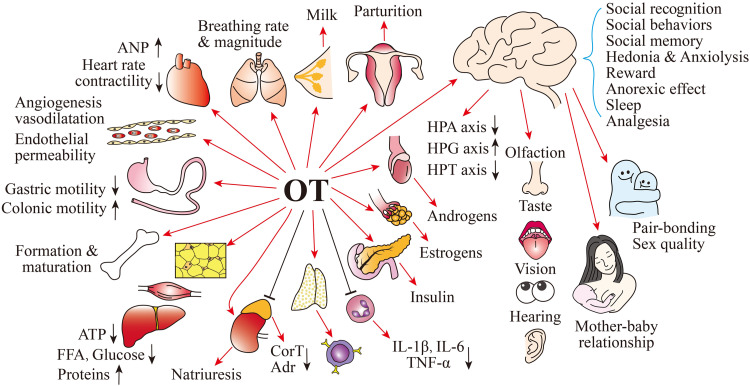
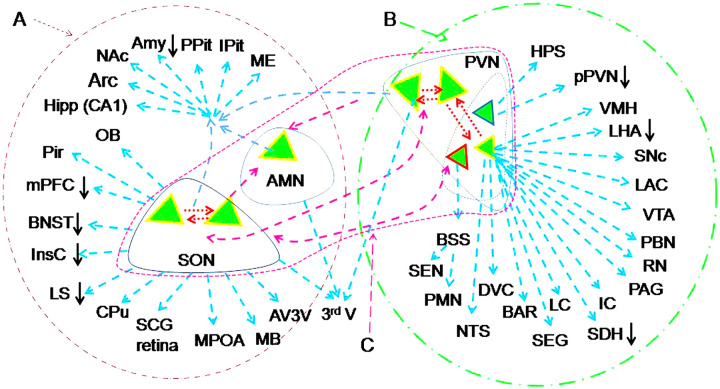
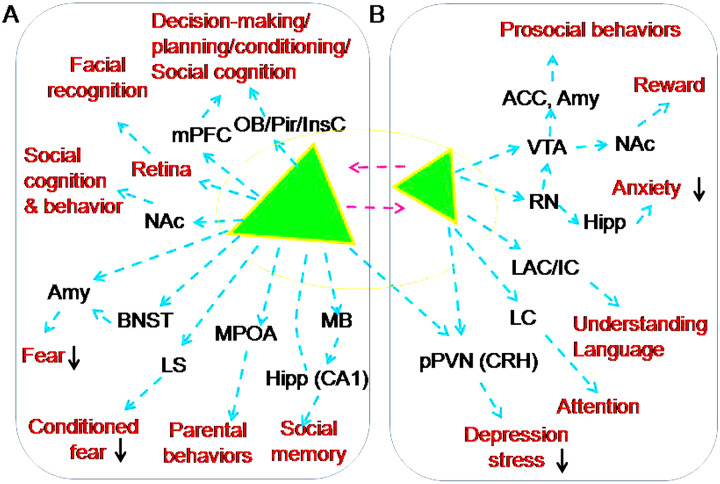
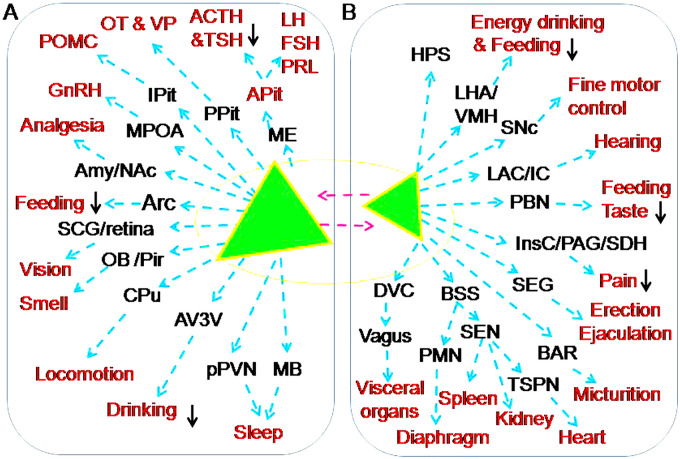
Verification
Claims the paper makes
The claims and statistics of this paper haven’t been checked yet.
Run the check — free, no account needed. It reads the open-access text and checks the sources it cites.
Claims other papers make about this one
Each is checked against this paper’s own text: does it say what the citing paper says it does?
The cited source says what the claim attributes to it.
In the citing paper
“Certain brain regions such as the paraventricular nucleus (PVN) and supraoptic nucleus (SON) of the hypothalamus have been identified as essential components concerning social behaviour (Wang et al., 2022).”
From Convergence of oxytocin and dopamine signalling in neuronal circuits: Insights into the neurobiology of social interactions across species (2024) · cites this paper as Wang et al., 2022
Self-check
Percentages, sums and reported differences re-computed from the paper’s own numbers.
The self-check needs the paper’s full text.
Citations
Cites
Items 201–310 of 310
Oxytocin modulates intrinsic neural activity in patients with chronic low back pain
Schneider, I., Schmitgen, M. M., Boll, S., Roth, C., Nees, F., Usai, K., Herpertz, S. C., & Wolf, R. C. (2020) · European Journal of Pain · doi:10.1002/ejp.1543 · Cited by 26
Can intranasal oxytocin reduce craving in automated addictive behaviours? A systematic review
Houghton, B., Kouimtsidis, C., Duka, T., Paloyelis, Y., & Bailey, A. (2021) · British Journal of Pharmacology · doi:10.1111/bph.15617 · Cited by 26
Smith, J. A., Pati, D., Wang, L. A., de Kloet, A. D., Frazier, C. J., & Krause, E. G. (2015) · Frontiers in Systems Neuroscience · doi:10.3389/fnsys.2015.00046 · Cited by 25
Neural Basis of Ventromedial Hypothalamic Oxytocin-Driven Decrease in Appetite
Klockars, O. A., Waas, J. R., Klockars, A., Levine, A. S., & Olszewski, P. K. (2017) · Neuroscience · doi:10.1016/j.neuroscience.2017.10.008 · Cited by 25
Acute cocaine treatment decreases oxytocin levels in the rat hippocampus
Johns, J. M., Caldwell, J. D., & Pedersen, C. A. (1993) · Neuropeptides · doi:10.1016/0143-4179(93)90081-k · Cited by 24
Wang, Y.-F., Negoro, H., & Honda, K. (1995) · Journal of Endocrinology · doi:10.1677/joe.0.1440463 · Cited by 24
Self-citationDevarajan, K., Marchant, E. G., & Rusak, B. (2005) · Neuroscience · doi:10.1016/j.neuroscience.2005.04.034 · Cited by 24
Effects of Intranasal Oxytocin on Stress-Induced Cigarette Craving in Daily Smokers
Hedger, K. V., Bershad, A. K., Lee, R., & de Wit, H. (2018) · Nicotine & Tobacco Research · doi:10.1093/ntr/nty159 · Cited by 24
Astroglial Regulation of Magnocellular Neuroendocrine Cell Activities in the Supraoptic Nucleus
Wang, S. C., Parpura, V., & Wang, Y. (2020) · Neurochemical Research · doi:10.1007/s11064-020-03172-2 · Cited by 24
Self-citationPlessow, F., Marengi, D. A., Perry, S. K., & Lawson, E. A. (2020) · Obesity · doi:10.1002/oby.23010 · Cited by 24
Liu, C., Lan, C., Li, K., Zhou, F., Yao, S., Xu, L., Yang, N., Zhou, X., Yang, J., Yong, X., et al. (2021) · Biological Psychiatry Cognitive Neuroscience and Neuroimaging · doi:10.1016/j.bpsc.2021.04.009 · Cited by 24
Oxytocin within auditory nuclei: a neuromodulatory function in sensory processing?
Kanwal, J. S., & Rao, P. D. P. (2002) · Neuroreport · doi:10.1097/00001756-200212030-00006 · Cited by 23
Flynn, M. J., Campbell, T. S., Robert, M., Nasr‐Esfahani, M., & Rash, J. A. (2020) · International Journal of Gynecology & Obstetrics · doi:10.1002/ijgo.13441 · Cited by 23
Oxytocin modulates neural processing of mitral/tufted cells in the olfactory bulb
Sun, C., Yin, Z., Li, B., Du, H., Tang, K., Liu, P., Pun, S. H., Lei, T. C., & Li, A. (2021) · Acta Physiologica · doi:10.1111/apha.13626 · Cited by 23
A new hypothesis linking oxytocin to menstrual migraine
Bharadwaj, V. N., Porreca, F., Cowan, R. P., Kori, S. H., Silberstein, S. D., & Yeomans, D. C. (2021) · Headache The Journal of Head and Face Pain · doi:10.1111/head.14152 · Cited by 23
Ocakoğlu, F. T., Köse, S., Özbaran, B., & Onay, H. (2018) · Asian Journal of Psychiatry · doi:10.1016/j.ajp.2018.01.002 · Cited by 23
Skinner, J. A., Garg, M. L., Dayas, C. V., Fenton, S., & Burrows, T. L. (2018) · Nutrition Reviews · doi:10.1093/nutrit/nux078 · Cited by 22
Tsushima, H., Zhang, Y., Muratsubaki, T., Kanazawa, M., & Fukudo, S. (2021) · Neuroscience Research · doi:10.1016/j.neures.2021.04.011 · Cited by 22
Oxytocin excites BNST interneurons and inhibits BNST output neurons to the central amygdala
Francesconi, W., Berton, F., Olivera-Pasilio, V., & Dabrowska, J. (2020) · Neuropharmacology · doi:10.1016/j.neuropharm.2021.108601 · Cited by 22
Tracy, L. M., Gibson, S. J., Labuschagne, I., Georgiou‐Karistianis, N., & Giummarra, M. J. (2017) · Progress in Neuro-Psychopharmacology and Biological Psychiatry · doi:10.1016/j.pnpbp.2017.08.016 · Cited by 21
Tichelman, E., Warmink-Perdijk, W. D. B., Henrichs, J., Peters, L., Schellevis, F., Berger, M. Y., & Burger, H. (2021) · Midwifery · doi:10.1016/j.midw.2021.103045 · Cited by 21
Hernández‐Díaz, Y., González‐Castro, T. B., Tovilla‐Zárate, C. A., López‐Narváez, M. L., Mendoza, A. D. G., Castillo-Ávila, R. G., Ramos-Méndez, M. Á., & Juárez‐Rojop, I. E. (2021) · Metabolic Brain Disease · doi:10.1007/s11011-021-00836-y · Cited by 21
Raymond, J. S., Rehn, S., Hoyos, C. M., & Bowen, M. T. (2021) · Neuroscience & Biobehavioral Reviews · doi:10.1016/j.neubiorev.2021.10.016 · Cited by 21
Oxytocin’s role on the cardiorespiratory activity of endotoxemic rats
Elorza-Ávila, A. R., Lagos, J. J. R., Hadamitzky, M., Peña‐Castillo, M. Á., Echeverría, J. C., Ortíz-Pedroza, M. D. R., Lückemann, L., Schedlowski, M., & Pacheco‐López, G. (2016) · Respiratory Physiology & Neurobiology · doi:10.1016/j.resp.2016.10.008 · Cited by 21
Wang, Y.-F., Negoro, H., & Higuchi, T. (2013) · Journal of neuroendocrinology · doi:10.1111/j.1365-2826.2012.02368.x · Cited by 20
Self-citationMunetomo, A., Ishii, H., Miyamoto, T., Sakuma, Y., & Kondo, Y. (2015) · Journal of Reproduction and Development · doi:10.1262/jrd.2015-046 · Cited by 20
Graph Theoretic Analysis Reveals Intranasal Oxytocin Induced Network Changes Over Frontal Regions
Zheng, S., Punia, D., Wu, H., & Liu, Q. (2021) · Neuroscience · doi:10.1016/j.neuroscience.2021.01.018 · Cited by 20
Wang, X., Escobar, J. B., & Mendelowitz, D. (2021) · International Journal of Molecular Sciences · doi:10.3390/ijms22168510 · Cited by 20
Self-citationZohrabi, I., Abedi, P., Ansari, S., Maraghi, E., Maram, N. S., & Houshmand, G. (2020) · BMC Women s Health · doi:10.1186/s12905-020-00935-5 · Cited by 20
Histaminergic tuberomammillary neuron loss in multiple system atrophy and dementia with Lewy bodies
Benarroch, E. E., Schmeichel, A. M., Parisi, J. E., & Low, P. A. (2015) · Movement Disorders · doi:10.1002/mds.26287 · Cited by 19
The role of oxytocin signaling in depression and suicidality in returning war veterans
Warrener, C., Valentin, E. M., Gallin, C., Richey, L., Ross, D. B., Hood, C. J., Lori, A., Cubells, J. F., Rauch, S. A. M., & Rilling, J. K. (2020) · Psychoneuroendocrinology · doi:10.1016/j.psyneuen.2020.105085 · Cited by 19
Barrett, L. R., Nunez, J., & Zhang, X. (2021) · Neuropsychopharmacology · doi:10.1038/s41386-021-00961-3 · Cited by 19
Moussa, S. S., Fawaz, L., Ibrahim, W., Elsayed, M. F., & Ahmed, M. (2021) · Journal of Primary Care & Community Health · doi:10.1177/21501327211012942 · Cited by 19
Rung, J. M., Horta, M., Tammi, E. M., Perez, E., Ojeda, M., Lin, T., Harris, G., Somerville, J. E. T., Salmeron, D., Beltz, S. E., et al. (2021) · Psychopharmacology · doi:10.1007/s00213-021-05862-3 · Cited by 19
Oxytocin in dorsal hippocampus facilitates auditory fear memory extinction in rats
Bazaz, A., Ghanbari, A., Vafaei, A. A., Khaleghian, A., & Rashidy‐Pour, A. (2021) · Neuropharmacology · doi:10.1016/j.neuropharm.2021.108844 · Cited by 19
Influence of aging on the neurochemical organization of the rat paraventricular nucleus.
Calzà, L., Giardino, L., Velardo, A., Battistini, N., & Marrama, P. (1990) · PubMed · Cited by 19
Liu, X. Y., Li, D., Li, T., Liu, H., Cui, D., Liu, Y., Jia, S., Wang, X., Jiao, R., Zhu, H. F., et al. (2019) · Frontiers in Neuroscience · doi:10.3389/fnins.2019.00122 · Cited by 18
Self-citationThe neuroprotective effect of oxytocin on vincristine-induced neurotoxicity in mice
Zhu, J., Li, Y., Liang, J., Li, J., Huang, K., Li, J., & Liu, C. (2021) · Toxicology Letters · doi:10.1016/j.toxlet.2021.01.008 · Cited by 18
Oxytocin and CD38 in the paraventricular nucleus play a critical role in paternal aggression in mice
Shabalova, A. A., Liang, M., Zhong, J., Huang, Z., Tsuji, C., Shnayder, N. A., Lopatina, O. L., Salmina, A. B., Okamoto, H., Yamamoto, Y., et al. (2020) · Hormones and Behavior · doi:10.1016/j.yhbeh.2020.104695 · Cited by 18
Lee, G., & Yoon, M. (2020) · Domestic Animal Endocrinology · doi:10.1016/j.domaniend.2020.106482 · Cited by 17
Zheng, X., Xu, X., Xu, L., Kou, J., Luo, L., Ma, X., & Kendrick, K. M. (2021) · Journal of Psychopharmacology · doi:10.1177/0269881121991576 · Cited by 17
Ciosek, J., & Drobnik, J. (2012) · Pharmacological Reports · doi:10.1016/s1734-1140(12)70942-8 · Cited by 16
Crowley, S. K., Pedersen, C. A., Leserman, J., & Girdler, S. S. (2015) · Biological Psychology · doi:10.1016/j.biopsycho.2015.04.003 · Cited by 16
Meixner, F., Montag, C., & Herbert, C. (2019) · Frontiers in Psychology · doi:10.3389/fpsyg.2019.00068 · Cited by 16
Rocha-Santos, C., Braga, D. C., Ceroni, A., & Michelini, L. C. (2020) · Frontiers in Physiology · doi:10.3389/fphys.2020.00309 · Cited by 16
Riem, M. M. E., Kunst, L. E., & Kop, W. J. (2020) · Journal of Affective Disorders · doi:10.1016/j.jad.2020.09.057 · Cited by 16
Li, D., Liu, H., Liu, X., Wang, H., Li, T., Wang, X., Jia, S., Wang, P., & Wang, Y. (2020) · ASN NEURO · doi:10.1177/1759091420944658 · Cited by 16
Self-citationLi, D., Liu, X., Liu, H., Li, T., Jia, S., Wang, X., Wang, P., Qin, D., & Wang, Y. (2020) · Neuroscience · doi:10.1016/j.neuroscience.2020.10.016 · Cited by 16
Self-citationOkabe, S., Takayanagi, Y., Yoshida, M., & Onaka, T. (2021) · Scientific Reports · doi:10.1038/s41598-021-83314-w · Cited by 16
Serum Oxytocin Levels and Logical Memory in Older People in Rural Japan
Kunitake, Y., Imamura, Y., Mizoguchi, Y., Matsushima, J., Tateishi, H., Murakawa‐Hirachi, T., Nabeta, H., Kawashima, T., Kojima, N., Yamada, S., et al. (2020) · Journal of Geriatric Psychiatry and Neurology · doi:10.1177/0891988720915526 · Cited by 16
Li, T., Jia, S.-W., Hou, D., Liu, X., Li, D., Liu, Y., Cui, D., Wang, X., Hou, C., Brown, C. H., et al. (2021) · Neuroscience · doi:10.1016/j.neuroscience.2021.06.020 · Cited by 15 · cited 16×
“Notably, OT neurons in the SON are also implicated in maintenance of maternal behaviors as highlighted in a series of observations recently in rats (Li et al., 2020; Li et al., 2021a; Li et al., 2021b; Li et al., 2021c).”
BackgroundResultInfluentialSelf-citationLi, D., Li, T., Yu, J., Liu, X., Jia, S., Wang, X., Wang, P., & Wang, Y. (2020) · Neurochemical Research · doi:10.1007/s11064-020-03129-5 · Cited by 15
Self-citationWoolley, J. D., Lam, O., Chuang, B., Ford, J. M., Mathalon, D. H., & Vinogradov, S. (2015) · Psychoneuroendocrinology · doi:10.1016/j.psyneuen.2014.12.018 · Cited by 14
Yoshimura, Y., Kikuchi, M., Hiraishi, H., Hasegawa, C., Hirosawa, T., Takahashi, T., Munesue, T., Kosaka, H., Hiagashida, H., & Minabe, Y. (2018) · Psychiatry Research Neuroimaging · doi:10.1016/j.pscychresns.2018.05.003 · Cited by 14
Xie, S., Hu, Y., Fang, L., Chen, S., Botchway, B. O. A., Tan, X., Fang, M., & Hu, Z. (2021) · Reviews in the Neurosciences · doi:10.1515/revneuro-2020-0128 · Cited by 14
Brackley, A. D., & Toney, G. M. (2021) · Journal of Pharmacology and Experimental Therapeutics · doi:10.1124/jpet.121.000535 · Cited by 14
Depressive symptoms and social context modulate oxytocin’s effect on negative memory recall
Wong, S. F., Cardoso, C., Orlando, M. A., Brown, C. A., & Ellenbogen, M. A. (2021) · Social Cognitive and Affective Neuroscience · doi:10.1093/scan/nsab072 · Cited by 14
The Importance of Experimental Investigation of the Peripheral Oxytocin System
Assinder, S. J. (2021) · Methods in molecular biology · doi:10.1007/978-1-0716-1759-5_1 · Cited by 14
Wigton, R. L., Tracy, D. K., Verneuil, T., Johns, M., White, T. P., Michalopoulou, P. G., Averbeck, B. B., & Shergill, S. S. (2021) · Schizophrenia Research Cognition · doi:10.1016/j.scog.2021.100221 · Cited by 14
OXTR rs53576 Variation with Breast and Nipple Pain in Breastfeeding Women
Lucas, R., Zhang, Y., Walsh, S. J., Starkweather, A. R., & Young, E. E. (2020) · Pain Management Nursing · doi:10.1016/j.pmn.2020.09.007 · Cited by 14
Feeding regulation by oleoylethanolamide synthesized from dietary oleic acid
Igarashi, M., Iwasa, K., & Yoshikawa, K. (2020) · Prostaglandins Leukotrienes and Essential Fatty Acids · doi:10.1016/j.plefa.2020.102228 · Cited by 14
Osako, Y., Otsuka, T., Taniguchi, M., Oka, T., & Kaba, H. (2000) · Neuroscience Letters · doi:10.1016/s0304-3940(00)01235-0 · Cited by 13
Voluntary alcohol consumption is increased in female, but not male, oxytocin receptor knockout mice
Rodriguez, K. M., Smith, B. L., & Caldwell, H. K. (2020) · Brain and Behavior · doi:10.1002/brb3.1749 · Cited by 13
Acosta, H., Tuulari, J. J., Kantojärvi, K., Lewis, J. D., Hashempour, N., Scheinin, N. M., Lehtola, S. J., Fonov, V., Collins, D. L., Evans, A. C., et al. (2020) · Psychiatry Research Neuroimaging · doi:10.1016/j.pscychresns.2020.111207 · Cited by 13
Role of cholecystokinin and oxytocin in slower gastric emptying induced by physical exercise in rats
da Silva, M. T. B., Palheta, R. C., Silva, C. M. S., Cavalcante, A. K. M., Quetz, J. D. S., Havt, A., de Lima, J. B. M., Mecawi, A. S., de Castro, M., Antunes‐Rodrigues, J., et al. (2021) · Physiology & Behavior · doi:10.1016/j.physbeh.2021.113355 · Cited by 13
Villa, P. D. S., Menani, J. V., Camargo, G. M. P. D. A., Camargo, L. A. D. A., & Saad, W. A. (2008) · Regulatory Peptides · doi:10.1016/j.regpep.2008.05.003 · Cited by 13
Liu, X., Cui, D., Li, D., Jiao, R., Wang, X., Jia, S., Hou, D., Li, T., Liu, H., Wang, P., et al. (2017) · Frontiers in Cellular Neuroscience · doi:10.3389/fncel.2017.00327 · Cited by 12
Self-citationEye-Tracking Reveals a Role of Oxytocin in Attention Allocation Towards Familiar Faces
Marsh, N., Scheele, D., Postin, D., Onken, M., & Hurlemann, R. (2021) · Frontiers in Endocrinology · doi:10.3389/fendo.2021.629760 · Cited by 12
Potential of Endogenous Oxytocin in Endocrine Treatment and Prevention of COVID-19
Wang, S. C., Zhang, F., Zhu, H. F., Yang, H.-P., Liu, Y., Wang, P., Parpura, V., & Wang, Y. (2022) · Frontiers in Endocrinology · doi:10.3389/fendo.2022.799521 · Cited by 12
Self-citationJung, T., Jang, M., & Noh, J. (2021) · Experimental Neurobiology · doi:10.5607/en20038 · Cited by 12
McConn, B. R., Koskinen, A., Denbow, D. M., Gilbert, E. R., Siegel, P. B., & Cline, M. A. (2018) · Domestic Animal Endocrinology · doi:10.1016/j.domaniend.2018.10.005 · Cited by 12
Saito, H., Hidema, S., Otsuka, A., Suzuki, J., Kumagai, M., Kanaya, A., Murakami, T., Takei, Y., Saito, K., Sugino, S., et al. (2021) · Biochemical and Biophysical Research Communications · doi:10.1016/j.bbrc.2021.08.042 · Cited by 12
Pedretti, G., Wirobski, G., Range, F., & Marshall‐Pescini, S. (2021) · Physiology & Behavior · doi:10.1016/j.physbeh.2021.113451 · Cited by 11
Does oxytocin shield against negative effects of ostracism? A replication and extension
Pfundmair, M., & Echterhoff, G. (2021) · Biological Psychology · doi:10.1016/j.biopsycho.2021.108128 · Cited by 11
Li, T., Jia, S., Hou, D., Wang, X., Li, D., Liu, Y., Cui, D., Liu, X., Hou, C.-M., Wang, P., et al. (2021) · ASN NEURO · doi:10.1177/17590914211014731 · Cited by 11
Self-citationWang, Y.-F., Negoro, H., & Honda, K. (1997) · Neuroscience Letters · doi:10.1016/s0304-3940(97)00300-5 · Cited by 11
Self-citationUta, D., Oti, T., Sakamoto, T., & Sakamoto, H. (2021) · International Journal of Molecular Sciences · doi:10.3390/ijms22073400 · Cited by 11
Role of Connexin 36 in Autoregulation of Oxytocin Neuronal Activity in Rat Supraoptic Nucleus
Wang, P., Wang, S. C., Li, D., Li, T., Yang, H.-P., Wang, L., Wang, Y., & Parpura, V. (2019) · ASN NEURO · doi:10.1177/1759091419843762 · Cited by 10
Self-citationMurtaza, S., Sattar, A., Ahmad, N., Ahmad, M. J., Akhtar, S., Ahmad, E., Ahmad, T., & Omer, T. (2021) · Reproduction in Domestic Animals · doi:10.1111/rda.14001 · Cited by 10
Tapias-Espinosa, C., Cañete, T., Sampedro-Viana, D., Brudek, T., Kaihøj, A., Oliveras, I., Tobeña, A., Aznar, S., & Fernández‐Teruel, A. (2021) · Physiology & Behavior · doi:10.1016/j.physbeh.2021.113547 · Cited by 10
Martı́nez-Lorenzana, G., Palma‐Tirado, L., Cifuentes-Díaz, C., González‐Hernández, A., & Condés‐Lara, M. (2021) · Neuroscience · doi:10.1016/j.neuroscience.2021.09.004 · Cited by 10
Opioids and the hormone oxytocin
Kovatsi, L., & Nikolaou, K. (2019) · Vitamins and hormones · doi:10.1016/bs.vh.2019.05.003 · Cited by 9
Washio, H., Takeshita, D., & Sakata, S. (2020) · Clinical and Experimental Pharmacology and Physiology · doi:10.1111/1440-1681.13267 · Cited by 9
Oral oxytocin delivery with proton pump inhibitor pretreatment decreases food intake
Maejima, Y., Horita, S., Otsuka, A., Hidema, S., Nishimori, K., & Shimomura, K. (2020) · Peptides · doi:10.1016/j.peptides.2020.170312 · Cited by 9
Shishido, E., Shuo, T., Shinohara, K., & Horiuchi, S. (2021) · Japan Journal of Nursing Science · doi:10.1111/jjns.12406 · Cited by 9
Valdes-Hernandez, P. A., Polk, R. J., Horta, M., Frazier, I. R., Perez, E., Ojeda, M., Porges, E. C., Cruz‐Almeida, Y., Feifel, D., & Ebner, N. C. (2021) · Aging Brain · doi:10.1016/j.nbas.2021.100023 · Cited by 9
McConn, B. R., Siegel, P. B., Cline, M. A., & Gilbert, E. R. (2019) · Comparative Biochemistry and Physiology Part A Molecular & Integrative Physiology · doi:10.1016/j.cbpa.2019.03.009 · Cited by 9
Logan, C. N., Rojas, G., Wilkinson, C. S., Escorcia, A. K. P., Reichel, C. M., Peris, J., & Knackstedt, L. A. (2021) · Behavioural Brain Research · doi:10.1016/j.bbr.2021.113590 · Cited by 9
Maternal oxytocin responsiveness improves specificity of positive social memory recall
Tse, W. S., Siu, A. F. Y., Zhang, Q., & Chan, H. Y. E. (2018) · Psychoneuroendocrinology · doi:10.1016/j.psyneuen.2018.08.026 · Cited by 8
Li, D., Liu, H., Wang, H., Jia, S., Wang, X., Ling, S., Chen, G., Liu, X., & Wang, Y. (2021) · ASN NEURO · doi:10.1177/17590914211043087 · Cited by 8
Self-citationLiu, X., Hou, D., Wang, J., Lv, C., Jia, S., Zhang, Y., Wang, R., Jin, H., Zhu, H., & Wang, Y. (2016) · PubMed · Cited by 8
Self-citationCsáki, Á., Köves, K., Boldogkői, Z., Tombácz, D., & Tóth, Z. (2021) · NeuroSci · doi:10.3390/neurosci2010002 · Cited by 8
Fisher, E. R., Rocha, N. P., Morales-Scheihing, D. A., Venna, V. R., Furr-Stimming, E. E., Teixeira, A. L., & Rossetti, M. A. (2021) · Journal of Huntington's disease · doi:10.3233/jhd-210467 · Cited by 8
Wong, S. F., Vaillancourt, S., Grossman, S., Kelly‐Turner, K., Blackwell, S. E., & Ellenbogen, M. A. (2021) · International Journal of Psychophysiology · doi:10.1016/j.ijpsycho.2021.03.013 · Cited by 7
Liu, Y. T., Wang, D., & Li, H. (2021) · Cerebral Cortex · doi:10.1093/cercor/bhab277 · Cited by 7
Tsuji, T., Inatani, M., Tsuji, C., Cheranov, S. M., & Kadonosono, K. (2020) · Tissue and Cell · doi:10.1016/j.tice.2019.101328 · Cited by 7
Suckling induced activation pattern in the brain of rat pups
Barna, J., Renner, É., Arszovszki, A., Cservenák, M., Kovács, Z., Palkovits, M., & Dobolyi, Á. (2017) · Nutritional Neuroscience · doi:10.1080/1028415x.2017.1286446 · Cited by 6
Kreutzmann, J. C., & Fendt, M. (2021) · Neurobiology of Stress · doi:10.1016/j.ynstr.2021.100313 · Cited by 6
Positive Psychosocial Factors and Oxytocin in the Ovarian Tumor Microenvironment
Cuneo, M. G., Szeto, A., Schrepf, A., Thaker, P. H., Goodheart, M. J., Cole, S. W., Sood, A. K., McCabe, P. M., Mendez, A. J., & Lutgendorf, S. K. (2021) · Psychosomatic Medicine · doi:10.1097/psy.0000000000000935 · Cited by 6
Macneil, B. J., Jansen, A. H., Greenberg, A. H., & Nance, D. M. (2003) · Brain Behavior and Immunity · doi:10.1016/s0889-1591(03)00050-3 · Cited by 6
Ishizuka, T., Wei, X., & Kubo, T. (1993) · PubMed · Cited by 6
Salivary oxytocin after play with parents predicts behavioural problems in preschool children
Torres, N., Martins, D., Monteiro, L., dos Santos, A. J., Vaughn, B. E., & Veríssimo, M. (2021) · Psychoneuroendocrinology · doi:10.1016/j.psyneuen.2021.105609 · Cited by 5
Effect of oxytocin nasal spray on auditory automatic discrimination measured by mismatch negativity
Ochiai, H., Shiga, T., Hoshino, H., Horikoshi, S., Kanno, K., Wada, T., Osakabe, Y., Miura, I., & Yabe, H. (2021) · Psychopharmacology · doi:10.1007/s00213-021-05807-w · Cited by 5
dos Santos, K. M., Moraes, D. J. D. A., da Silva, M. P., & Antunes, V. R. (2021) · Journal of Neuroendocrinology · doi:10.1111/jne.12977 · Cited by 5
The Preventive Effect of Oxytocin on Retinopathy in Streptozotocin- Induced Diabetic Rats
Değirmenci, C., Afrashı, F., Erbaş, O., Aktuğ, H., & Taşkıran, D. (2019) · Turkish Journal of Ophthalmology · doi:10.4274/tjo.galenos.2018.47897 · Cited by 4
Benefit of oxytocin released by cervix stimulation in Mexican Holstein cattle
Morales, R., Criollo, M., Macías, M. E. G., Medina, G. E., quez, O., Gonzalez, V., & Villa-Angulo, C. E. (2020) · Journal of Advanced Veterinary and Animal Research · doi:10.5455/javar.2020.g458 · Cited by 4
Acute dental pain elevates salivary oxytocin in women: a risk factor during pregnancy.
Gürler, E. B., İriboz, E., Çilingir‐Kaya, Ö. T., Türkaydın, D., & Öveçoğlu, H. S. (2021) · PubMed · Cited by 4
Knöchel, C., Frickmann, H., & Nürnberger, F. (2021) · International Journal of Environmental Research and Public Health · doi:10.3390/ijerph18179169 · Cited by 3
Involvement of Protein Kinase A in Oxytocin Neuronal Activity in Rat Dams with Pup Deprivation
Li, D., Liu, X., Li, T., Wang, X., Jia, S., Wang, P., & Wang, Y. (2021) · Neurochemical Research · doi:10.1007/s11064-020-03218-5 · Cited by 3
Self-citationPirnia, B., Hamdieh, M., Ashtiani, M. K., Malekanmehr, P., Pirnia, K., Zahiroddin, A., & Sadeghi, P. (2020) · PubMed Central · doi:10.22037/ijpr.2020.14338.12314 · Cited by 1
Cited by
Sorted by citations
Hormonal basis of sex differences in anesthetic sensitivity
Wasilczuk, A. Z., Rinehart, C., Aggarwal, A., Stone, M. E., Mashour, G. A., Avidan, M. S., Kelz, M. B., Proekt, A., ReCCognition Study Group, Basner, M., et al. (2024) · Proceedings of the National Academy of Sciences · doi:10.1073/pnas.2312913120 · Cited by 72
Rappeneau, V., & Castillo Díaz, F. (2024) · Neuroscience & Biobehavioral Reviews · doi:10.1016/j.neubiorev.2024.105675 · Cited by 51
A line attractor encoding a persistent internal state requires neuropeptide signaling
Mountoufaris, G., Nair, A., Yang, B., Kim, D.-W., Vinograd, A., Kim, S., Linderman, S. W., & Anderson, D. J. (2024) · Cell · doi:10.1016/j.cell.2024.08.015 · Cited by 50
Handlin, L., Novembre, G., Lindholm, H., Kämpe, R., Paul, E. R., & Morrison, I. (2023) · eLife · doi:10.7554/elife.81197 · Cited by 33
Coria-Avila, G. A., Herrera-Covarrubias, D., García, L. I., Toledo, R., Hernández, M. E., Paredes-Ramos, P., Corona-Morales, A. A., & Manzo, J. (2022) · Animals · doi:10.3390/ani12243589 · Cited by 25
Metadata
- Authors
- Wang, P., Wang, S. C., Liu, X., Jia, S., Wang, X., Li, T., Yu, J., Parpura, V., & Wang, Y.-F.
- Affiliations
- Harbin Medical University (CN)
- University of California, Irvine (US)
- University of Alabama at Birmingham (US)
- Corresponding author
- Parpura, Vladimir
- Wang, Yu-Feng
- Venue
- ASN Neuro
- Publisher
- Informa UK Limited
- Published
- 2022-01
- Volume
- 14
- Issue
- 1
- Pages
- 17590914221100706-17590914221100706
- ISSN
- 1759-0914 (ISSN-L)
- PMC
- PMC9125079
- OpenAlex
- W4281254264
- Cited by
- 59
- References
- 311
- Citations by year
- 2026: 13 · 2025: 11 · 2024: 14 · 2023: 17 · 2022: 4
- FWCI
- 1.72
- Type
- journal article
- Language
- en
- Open access
- gold
- doi.org
- Licence
- Locations
- ASN NEURO (publishedVersion, cc-by-nc)
- PubMed Central (publishedVersion, cc-by-nc)
- PubMed (publishedVersion)
- DOAJ (DOAJ: Directory of Open Access Journals) (submittedVersion, cc-by-sa)
- Funders
- Fund of the Ministry of Science and Technology of China (G2021011014L)
- National Institute of General Medical Sciences of the National Institutes of Health (R01GM123971)
- Topics
- Life Sciences › Neuroscience › Endocrine and Autonomic Systems › Neuroendocrine regulation and behavior
- Life Sciences › Neuroscience › Cellular and Molecular Neuroscience › Neuropeptides and Animal Physiology
- Life Sciences › Neuroscience › Endocrine and Autonomic Systems › Regulation of Appetite and Obesity
- Keywords
- oxytocin, hypothalamus, supraoptic nucleus, paraventricular nucleus, magnocellular neurons, parvocellular neurons, neuromodulation, social behavior, learning and memory, emotions, reward, sleep and wakefulness, sexual behavior, autonomic nervous system, DNA methylation, hormone crosstalk, aging
- MeSH terms
- Female, Humans, Hypothalamus, Neurons, Oxytocin, Paraventricular Hypothalamic Nucleus, Supraoptic Nucleus
About these checks
Registry, retraction, Cites and statistics results are computed, not judged, with one exception: a printed reference that no index lists is read once by a model before it counts as a citation error. Claims are extracted by a model and kept only when their quote appears verbatim in the text; each cited source is then checked, with a model’s help, for whether it says what the claim relies on. Those verdicts can be wrong — read the claim’s quote and the cited source before relying on one.
Statistics and arithmetic are recomputed, not judged.
Confidence bands are shown only for fields calibrated on our annotated test set. None is calibrated yet, so no band is shown.
What counts as a claim ›How we measure confidence ›How we check this ›
Are you an author, or do you see a problem with this page? Request a review
