

Effect of semaglutide and liraglutide in individuals with obesity or overweight without diabetes: a systematic review
Open accessThe DOI matches its Crossref record; 54 of the 54 references it cites were found in a registry or an index.
Abstract
Background & Objective: Although data on the effects of liraglutide and semaglutide in patients with diabetes have been reviewed, their therapeutic outcomes in obese/overweight individuals without diabetes have not been summarized. We conducted a systematic review to evaluate their effects on the latter population. Methods: We searched the PubMed, EMBASE, Cochrane, CNKI, and Wanfang databases. Studies regarding obese/overweight adults without diabetes treated with liraglutide/semaglutide compared with other active agents or placebos were accessed. The primary outcomes were the proportions of adults with at least 5% and 10% weight reduction. The secondary outcomes included metabolic indicators and adverse events. Results: Eighteen studies with 10,938 obese/overweight adults without diabetes were included. When stratified by the categories of at least 5% and 10% weight loss, the pooled data showed medians 27.7% and 10.3% of control groups versus 65.3% and 30.7% of liraglutide 3 mg once daily, respectively; whereas medians 47.6% and 20.4% of control groups vs 86.6% and 75.3% of semaglutide 2.4 mg once weekly were found in the two categories, respectively. Both agents either improved or had no impact on lipid or glycemia. Liraglutide or semaglutide therapy had discontinuation rates of 2.4%–11.4% which overlapped with 0.7%–8.6% in control groups. The frequency of adverse events was comparable between the treatment groups and the control groups (66.5%–95.8% vs 46.9%–96.1%), which were mild to moderate graded by studies. Conclusion: Liraglutide and semaglutide therapy led to a clinically relevant (⩾5%) weight loss of 48.2%–88.7% among obese/overweight adults without diabetes. Both liraglutide and semaglutide are associated with weight loss and are well-tolerated.
Overview
The claims and statistics of this paper haven’t been checked yet.
Free: it reads the open-access text and checks the first 5 claims that cite a source we can check. Create a free account to check every claim.
Integrity signals
Registry
Cites
Statistics
Figures
Verification
Claims the paper makes
The claims and statistics of this paper haven’t been checked yet.
Free: it reads the open-access text and checks the first 5 claims that cite a source we can check. Create a free account to check every claim.
Self-check
Percentages, sums and reported differences re-computed from the paper’s own numbers.
The self-check needs the paper’s full text.
Citations
Cites
‘Small Changes' to Diet and Physical Activity Behaviors for Weight Management
Hills, A. P., Byrne, N. M., Lindstrom, R., & Hill, J. O. (2013) · Obesity Facts · doi:10.1159/000345030 · Cited by 9,493
The metabolic phenotype in obesity: Fat mass, body fat distribution, and adipose tissue function
Goossens, G. H. (2017) · Obesity Facts · doi:10.1159/000471488 · Cited by 8,481
Once-Weekly Semaglutide in Adults with Overweight or Obesity
Wilding, J. P. H., Batterham, R. L., Calanna, S., Davies, M., Van Gaal, L. F., Lingvay, I., McGowan, B. M., Rosenstock, J., Tran, M. T. D., Wadden, T. A., et al. (2021) · New England Journal of Medicine · doi:10.1056/nejmoa2032183 · Cited by 5,205
Haslam, D. W., & James, W. P. T. (2005) · The Lancet · doi:10.1016/s0140-6736(05)67483-1 · Cited by 3,757
Di Angelantonio, E., Bhupathiraju, S. N., Wormser, D., Gao, P., Kaptoge, S., de Gonzalez, A. B., Cairns, B. J., Huxley, R., Jackson, C. L., Joshy, G., et al. (2016) · The Lancet · doi:10.1016/s0140-6736(16)30175-1 · Cited by 2,821 · cited 2×
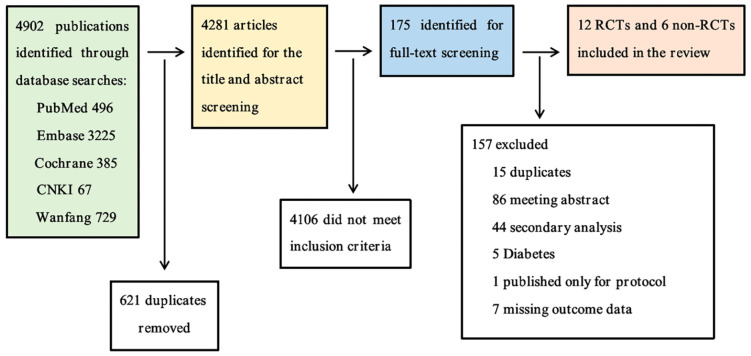
“Eligibility criteria We defined studies as eligible for inclusion in this analysis if they met the following criteria: (1) Obese/overweight adults who use liraglutide or semaglutide; (2) RCTs, observational studies; (3) reporting clinical events data of efficacy and safety; and (4) published before 2021/8/1, English o…”
BackgroundMethodA Randomized, Controlled Trial of 3.0 mg of Liraglutide in Weight Management
Pi-Sunyer, X., Astrup, A., Fujioka, K., Greenway, F., Halpern, A., Krempf, M., Lau, D. C. W., le Roux, C. W., Violante Ortiz, R., Jensen, C. B., et al. (2015) · New England Journal of Medicine · doi:10.1056/nejmoa1411892 · Cited by 2,724
DONNELLY, J. E., BLAIR, S. N., JAKICIC, J. M., MANORE, M. M., RANKIN, J. W., & SMITH, B. K. (2009) · Medicine & Science in Sports & Exercise · doi:10.1249/mss.0b013e3181949333 · Cited by 2,658
Mechanisms of Action and Therapeutic Application of Glucagon-like Peptide-1
Drucker, D. J. (2018) · Cell Metabolism · doi:10.1016/j.cmet.2018.03.001 · Cited by 2,170
Tirzepatide versus Semaglutide Once Weekly in Patients with Type 2 Diabetes
Frías, J. P., Davies, M. J., Rosenstock, J., Pérez Manghi, F. C., Fernández Landó, L., Bergman, B. K., Liu, B., Cui, X., & Brown, K. (2021) · New England Journal of Medicine · doi:10.1056/nejmoa2107519 · Cited by 2,096
Obesity Phenotypes, Diabetes, and Cardiovascular Diseases
Piché, M.-E., Tchernof, A., & Després, J.-P. (2020) · Circulation Research · doi:10.1161/circresaha.120.316101 · Cited by 1,986 · cited 2×
“Eligibility criteria We defined studies as eligible for inclusion in this analysis if they met the following criteria: (1) Obese/overweight adults who use liraglutide or semaglutide; (2) RCTs, observational studies; (3) reporting clinical events data of efficacy and safety; and (4) published before 2021/8/1, English o…”
BackgroundMethod
Research works printed but not linked: 1
- Zhou JL Zhang JW. Effects of liraglutide on metabolism and inflammatory indices in patients with impaired glucose regulation in obesity. J Pract Diabetol 2018; 2018: 13– 14.
Cited by
Sherwin, M., Hamburger, J., Katz, D., & DeMaria, S. (2023) · Canadian Journal of Anesthesia/Journal canadien d'anesthésie · doi:10.1007/s12630-023-02549-5 · Cited by 132
“Indeed, use of GLP1RAs in patients with no obesity is an increasingly accepted and studied practice.(30)”
BackgroundGlucagon‐like peptide agonists: A prospective review
Mariam, Z., & Niazi, S. K. (2023) · Endocrinology Diabetes & Metabolism · doi:10.1002/edm2.462 · Cited by 131
Moll, H., Frey, E., Gerber, P., Geidl, B., Kaufmann, M., Braun, J., Beuschlein, F., Puhan, M. A., & Yebyo, H. G. (2024) · eClinicalMedicine · doi:10.1016/j.eclinm.2024.102661 · Cited by 73
Effectiveness and safety of drugs for obesity
Henderson Lewis, K., Sloan, C. E., Bessesen, D. H., & Arterburn, D. (2024) · BMJ · doi:10.1136/bmj-2022-072686 · Cited by 66
Lawrence, E. C. N., Guo, M., Schwartz, T. D., Wu, J. J., Lu, J., Nikonov, S. S., Sterling, J. K., & Cui, Q. N. (2023) · Frontiers in Cellular Neuroscience · doi:10.3389/fncel.2023.1156829 · Cited by 46
“Liraglutide and semaglutide were also recently approved for weight-loss in non-diabetic patients (Rubino et al., 2021; Deng et al., 2022).”
BackgroundAlhajahjeh, A. A., Al‐Faouri, R., Bahmad, H. F., Bader, T., Dobbs, R. W., Abdulelah, A., Abou-Kheir, W. G., Davicioni, E., Lee, D. I., & Shahait, M. (2024) · Cancers · doi:10.3390/cancers16081538 · Cited by 32
“While resolving this challenge, the use of GLP-1 treatments, such as Liraglutide and Exendin-4 (Exenatide; Ex-4), has garnered attention for their potential role in weight loss management [8].”
BackgroundCornejo-Estrada, A., Nieto-Rodríguez, C., León‐Figueroa, D. A., Moreno-Ramos, E., Cabanillas-Ramirez, C., & Barboza, J. J. (2023) · Children · doi:10.3390/children10020208 · Cited by 38
“Currently, there is little usage of pharmacological therapies for childhood obesity in the pediatric population, with inadequate evidence for each treatment choice [41].”
BackgroundHow ‘miracle’ weight‐loss semaglutide promises to change medicine but can we afford the expense?
Weiskirchen, R., & Lonardo, A. (2025) · British Journal of Pharmacology · doi:10.1111/bph.70003 · Cited by 30
“As our understanding deepens into individual differences in drug response based on genetics or metabolic profiles, tailored interventions will become feasible and potentially transformative for effective obesity management (Deng et al., 2022).”
Incretin hormone agonists: Current and emerging pharmacotherapy for obesity management
Alhomoud, I. S., Talasaz, A. H., Chandrasekaran, P., Brown, R., Mehta, A., & Dixon, D. L. (2024) · Pharmacotherapy The Journal of Human Pharmacology and Drug Therapy · doi:10.1002/phar.4607 · Cited by 28
Breit, S., & Hubl, D. (2025) · Psychoneuroendocrinology · doi:10.1016/j.psyneuen.2025.107415 · Cited by 29
Glucagon-like peptide-1 receptor agonism improves lung cancer outcomes and tumor growth control
Pachimatla, A. G., Fitzgerald, B. G., Ogidigo, J., Bhatia, M., Smith, R. J., Ratnakaram, K., Kalvapudi, S., Vedire, Y., Washington, D., rr, R. V., et al. (2025) · JCI Insight · doi:10.1172/jci.insight.195484 · Cited by 21
“Glucagon-like peptide-1 receptor agonists (GLP-1RAs), initially introduced as a class of antidiabetic drugs, have entered widespread use after their recent approval for the treatment of obesity and obesity-related conditions (1).”
The role of incretin receptor agonists in the treatment of obesity
Forst, T. M., Block, C. E. M. D., Prato, S. D., Armani, S., Frías, J. P., Lautenbach, A., Ludvik, B. H., Marinez, M., Mathieu, C., Müller, T. D., et al. (2024) · Diabetes Obesity and Metabolism · doi:10.1111/dom.15796 · Cited by 22
Forst, T. M., Block, C. E. M. D., Prato, S. D., Frías, J. P., Lautenbach, A., Ludvik, B. H., Marinez, M., Mathieu, C., Müller, T. D., & Schnell, O. (2025) · Diabetes Obesity and Metabolism · doi:10.1111/dom.16247 · Cited by 15
Hashmi, T. M., Ahmed, M., Haider, A., Naseem, S., Jafar, U., Hussain, M., Iqbal, J., Ali, W., & Ahmed, R. (2025) · Clinical and Translational Science · doi:10.1111/cts.70127 · Cited by 17
The expanding role of semaglutide: beyond glycemic control
Zarei, M., Sabetkasaei, M., Mozafari, M., & Zaeri, S. (2025) · Journal of Diabetes & Metabolic Disorders · doi:10.1007/s40200-025-01663-z · Cited by 11
“Deng et al. noted clinically relevant weight loss ranging from 48.2 to 88.7% [ 92 ].”
InfluentialHoffmann, K., Michalak, M., & Paczkowska, A. (2025) · Diabetes Metabolic Syndrome and Obesity · doi:10.2147/dmso.s531697 · Cited by 11
“34 Head-to-head switching studies further support semaglutide’s clinical advantage.”
Hachuła, M., Kosowski, M., Basiak, M., & Okopień, B. (2023) · Pharmaceuticals · doi:10.3390/ph16091190 · Cited by 10
Hunger & satiety signals: another key mechanism involved in the NAFLD pathway
López-Méndez, I., Maldonado-Rojas, A. D. C., Uribe, M., & Juárez-Hernández, E. (2023) · Frontiers in Endocrinology · doi:10.3389/fendo.2023.1213372 · Cited by 10
Wen, J., How-Volkman, C., Truong, A., Nadora, D., Bernstein, E. M., Akhtar, M., Puglisi, J. L., & Frezza, E. E. (2024) · Cureus · doi:10.7759/cureus.75304 · Cited by 12
“Thus, semaglutide’s superior weight loss has been theorized to be a result of improved metabolic activity via neurohumoral pathways and decreased compensatory downregulations of energy expenditure [17].”
O RISCO DE INTOXICAÇÃO PELO USO DO OZEMPIC (SEMAGLUTIDA) EM PACIENTES NÃO DIABÉTICOS
Sagratzki, R. M. G., da Silva, S. S., Mascarenhas, A. R. R., Póvoa, C. S., Souza, E. M., da Silva, J. T., Santos, P. H. Q. D., Silva, V. B. M., & de Paiva, M. J. M. (2023) · Brazilian Journal of Implantology and Health Sciences · doi:10.36557/2674-8169.2023v5n4p1826-1837 · Cited by 7
Palecek, E. J., Kimzey, M. M., Zhang, J., Marsden, J. E., Bays, C., Moran, W. P., Mauldin, P. D., & Schreiner, A. D. (2024) · Journal of Investigative Medicine · doi:10.1177/10815589241270427 · Cited by 7
Overweight and obesity in metabolic syndrome
Nedogoda, S. V., & Васильевна, Ц. О. (2025) · Russian Journal of Cardiology · doi:10.15829/1560-4071-2025-6535 · Cited by 5
Papantoniou, P., & Maniadakis, N. (2025) · Frontiers in Public Health · doi:10.3389/fpubh.2025.1690211 · Cited by 4
New Approaches to the Treatment of Severe Obesity—Prehabilitation as the Key to Success
Budny, A., Janczy, A., & Mika, A. (2025) · Current Nutrition Reports · doi:10.1007/s13668-025-00652-1 · Cited by 4
Semaglutida no tratamento de obesidade e sobrepeso
de Oliveira, I. P., Lino, F. G., Rabano, J. L. R., Silva, J. R., de Oliveira, L. Z., Pezzotto, P., Miranda, T. L. M., Brunhara, V. G., de Oliveira, É. À., & Rocha, C. M. (2023) · Research Society and Development · doi:10.33448/rsd-v12i3.40656 · Cited by 10
Effect of Semaglutide in Individuals With Obesity or Overweight Without Diabetes
Alanazi, M., Alshahrani, J. A., Aljaberi, A. S., Alqahtani, B. A. A., & Muammer, M. (2024) · Cureus · doi:10.7759/cureus.67889 · Cited by 5
“However, limitations include varying discontinuation rates and the severity of adverse events, which range from mild to moderate [11].”
BackgroundResultInfluentialGoldman, V. E., Ryabets‐Lienhard, A., Howard, L. E., Kohli, R., Sousa, E., Patel, P., Marpuri, I., & Vidmar, A. P. (2025) · Childhood Obesity · doi:10.1089/chi.2024.0297 · Cited by 3
GLP-1 receptor agonists in asthma: targeting metabolic-inflammatory crossroads
O’Brien, H., Franciosi, A. N., & Butler, M. W. (2026) · Current Opinion in Pulmonary Medicine · doi:10.1097/mcp.0000000000001249 · Cited by 3
Rabbani, S. A., Saini, M., El-Tanani, M. E.-T., Kumar, R., Matalka, I. I., El‐Tanani, Y., Sharma, S., & Rizzo, M. (2026) · Pharmaceuticals · doi:10.3390/ph19050732 · Cited by 5
Pharmacological treatment of obesity
Anglart, G., Dominiak, K., & Dettlaff, K. (2023) · Farmacja Polska · doi:10.32383/farmpol/161473 · Cited by 5
Shin, W., Hompesch, M., Byeon, J., Kang, S., Choi, J., & Baek, S. J. (2023) · Diabetes Obesity and Metabolism · doi:10.1111/dom.15162 · Cited by 3
Bieganek, P., Sadłowski, B., Łukaszewicz, S., Pawłowski, P., Rybak, J., Kordialik, J., Koćwin, J., Sarnacka, S., Tokarski, M. P., & Banasiak, A. (2024) · Health Problems of Civilization · doi:10.5114/hpc.2024.140505 · Cited by 3
Nasir, A. B., Zouridis, S., Aspichueta, P., Manka, P. P., & Syn, W. (2025) · The American Journal of the Medical Sciences · doi:10.1016/j.amjms.2025.07.018 · Cited by 2
Young, A., Ajaz, M., Vugic, L., & Shilton, N. (2026) · Food Science & Nutrition · doi:10.1002/fsn3.71527 · Cited by 2
“Current medications that are directed to improve weight loss, such as Contrave and Semaglutide, have proven to work long-term, but can lead to several side effects and are expensive, making them inaccessible to much of the population (Deng et al. 2022; Sherman et al. 2016; Wilding et al. 2021).”
Christensen, J. C., Anand, S., Chertow, G. M., Lyden, K. A., Sarwal, A., Bjordahl, T. S., Boucher, R. E., Mohammed, A. A., Oro, E. G., Akramimoghaddam, F., et al. (2024) · Contemporary Clinical Trials · doi:10.1016/j.cct.2024.107766 · Cited by 2
Moll, H., Puhan, M. A., Gerber, P. A., Beuschlein, F., Frenes, K., Spanu, A., Walter, J. E., & Yebyo, H. G. (2025) · medRxiv · doi:10.64898/2025.12.15.25342259 · Cited by 2
Breaking the mold: revolutionary new obesity drugs set to transform treatment landscape?
Seetharaman, R., & Pandit, S. (2023) · Journal of Basic and Clinical Physiology and Pharmacology · doi:10.1515/jbcpp-2023-0172 · Cited by 1
Modern Approaches to Obesity Treatment – literature review
Romaniuk, M., Wachowska, M., Sowiński, W. J., Rycąbel, P. M., Szymura, M., Molenda, M. J., Woszczyńska, O. B., Wojciechowska, A. E., Krawczyk, M. B., & Paniak, M. (2025) · Quality in Sport · doi:10.12775/qs.2025.41.60022 · Cited by 1
Ordemann, J., & Elbelt, U. (2025) · Herz · doi:10.1007/s00059-025-05319-9 · Cited by 1
Next-generation anti-obesity drugs: Mechanisms, molecules, and momentum
Mukheja, Y., Kondepudi, K. K., Chopra, K., & Bishnoi, M. (2026) · Obesity Medicine · doi:10.1016/j.obmed.2026.100701 · Cited by 1
Evaluation of the Effectiveness of Liraglutide on Metabolic Parameters in the Treatment of Obesity
Akkurt, A. (2023) · Cureus · doi:10.7759/cureus.50544 · Cited by 1
“Our study, consistent with a recent meta-analysis, showed a significant decrease in glycemic control variables such as HbA1c, FG, FI, HOMA-IR, and fasting lipid parameters [25].”
ResultGonzález, L. A. L., González-Correa, C. H., Muñoz, E. Y. A., & López, M. (2025) · Nutrición clínica y dietética hospitalaria/Nutrición clínica, dietética hospitalaria · doi:10.12873/451lopez · Cited by 1
Utilizing Semaglutide for Addressing Type-2 Diabetes and Obesity
Gupta, R., & Sharma, S. (2025) · Current Signal Transduction Therapy · doi:10.2174/0115743624346660250317013032 · Cited by 2
Jayanthi, R. (2025) · Carolina Digital Repository (University of North Carolina at Chapel Hill) · doi:10.17615/6ta9-kz32 · Cited by 3
Efikasi Liraglutide Dalam Tatalaksana Obesitas Pada Pasien Dewasa Diabetik dan Non-Diabetik
Bramasta, A. A., & Novitasari, D. (2024) · Malahayati Nursing Journal · doi:10.33024/mnj.v6i2.12883
Reindeer: a protein-ligand feature generator software for machine learning algorithms
Rayka, M., & Naghavi, S. S. (2026) · BMC Bioinformatics · doi:10.1186/s12859-026-06452-w
“Specifically in metabolic disorders, peptides like glucagon–like peptide-1 (GLP-1) analogs, e.g., liraglutide and sema-glutide, are broadly used to treat type 2 diabetes and chronic obesity [50, 51].”
Pires, D. F., Fonseca, M. C. M., Cabanelas, L. L., Fonseca, R. C. M., & Lobo, M. J. M. (2024) · Brazilian Journal of Implantology and Health Sciences · doi:10.36557/2674-8169.2024v6n5p36-48
Obesidad y riesgo cardiovascular: liraglutida y sus beneficios terapéuticos
Mendoza, W. M. M., Vaca, L. E. B., Bazurto, M. A. C., Velez, E. M. D. V., Pin, M. B. M., & Alencastro, J. A. P. (2024) · AlfaPublicaciones · doi:10.33262/ap.v6i3.1.526
“…en sujetos varones sanos que recibieron múltiples dosis subcutáneas de liraglutida reportaron un tiempo de concentración plasmática máxima de 12 horas y una vida media de eliminación plasmática, t 1/2, que oscilaba entre 10 a 14 horas, dependiendo de la manera de dosificarse (Deng et al., 2022).”
BackgroundRecent Trends in the Prevention and Management of Obesity Among Adults: A Systematic Review
Shankar, G., Sharma, J., Soni, R., Gondalia, S., & Kumar, V. (2025) · Cureus · doi:10.7759/cureus.89207 · Cited by 4
“Some studies suggest semaglutide may have greater weight loss efficacy than liraglutide, especially in diabetic populations, but our study and others in mixed or non-diabetic populations show comparable efficacy [26,27].”
Exploring the therapeutic potential of GLP-1 receptor agonists in pulmonary arterial hypertension
Aguado, B., Lacoste-Palasset, T., Ruffenach, G., Bauer, F., Savale, L., Humbert, M. J. C., Montani, D., & Antigny, F. (2025) · ERJ Open Research · doi:10.1183/23120541.01479-2025
“Liraglutide has a plasma half-life of approximately 13 h, permitting once-daily subcutaneous administration, whereas semaglutide features a prolonged half-life ( ≈ 160 h), enabling weekly dosing [43, 44].”
Lipid rewiring by adipose tissue macrophages during diet-induced inflammation and insulin resistance
Dahik, V. D. (2023) · theses.fr (ABES) · doi:10.70675/8f4f001ez6ebez4d7az934bz039a1f4d4116
Bojanowski, H. T., Marczak, Z., Sito, M., Jurkowski, F., Wójcik, Ł., Gawron, N., Dobracka, A., Zachar, K., Jarowicz, M., & Czmyr, J. (2026) · Journal of Education Health and Sport · doi:10.12775/jehs.2026.90.70093
McCrindle, B. W., Arslanian, S. A., Mietus‐Snyder, M., Urbina, E. M., Ware, A. L., Teng, J. E., Trachtenberg, F. L., Russell, M. W. W., SHAH, A. S., Cartoski, M. J., et al. (2026) · Journal of clinical lipidology · doi:10.1016/j.jacl.2026.04.007 · Cited by 1
Jayanthi, R. (2025) · Carolina Digital Repository (University of North Carolina at Chapel Hill) · doi:10.17615/kerc-rs37
Moll, H., Puhan, M. A., Beuschlein, F., Gerber, P. A., Frenes, K., Spanu, A., Walter, J. E., Albertani, S., & Yebyo, H. G. (2026) · SSRN Electronic Journal · doi:10.2139/ssrn.7237739
Lee, C.-M., Kim, J.-Y., Shim, J.-H., & Cho, G.-W. (2026) · Hormone and Metabolic Research · doi:10.1055/a-2928-5204
Peptide-protein interactions in drug discovery
Ying, H., Lei, Y., Luo, Y., Zeng, J., & de la Fuente‐Núñez, C. (2026) · Cell Biomaterials · doi:10.1016/j.celbio.2026.100598
Metadata
- Authors
- Deng, Y., Park, A., Zhu, L., Xie, W., & Pan, C. Q.
- Affiliations
- Capital Medical University (CN)
- Northern Valley Regional High School at Old Tappan, Old Tappan, NJ, USA
- Corresponding author
- Xie, Wen
- Venue
- Therapeutic Advances in Chronic Disease
- Publisher
- SAGE Publications
- Published
- 2022-01
- Volume
- 13
- Pages
- 20406223221108064-20406223221108064
- ISSN
- 2040-6223 (ISSN-L)
- 2040-6231
- PMC
- PMC9260566
- OpenAlex
- W4285035640
- Semantic Scholar
- 34ae896c105249b614dcc187978f767606d4d277
- Cited by
- 51
- References
- 54
- Citations by year
- 2026: 7 · 2025: 17 · 2024: 14 · 2023: 13
- FWCI
- 1.58
- Type
- journal article
- Language
- en
- Open access
- gold
- doi.org
- Licence
- Locations
- Therapeutic Advances in Chronic Disease (publishedVersion, cc-by-nc)
- PubMed Central (publishedVersion, cc-by-nc)
- PubMed (publishedVersion)
- DOAJ (DOAJ: Directory of Open Access Journals) (submittedVersion, cc-by-sa)
- Funders
- National Natural Science Foundation Youth Fund Project (81600454)
- Clinical Medicine Development Project of Beijing Municipal Administration of Hospitals (ZYLX201828)
- National Natural Science Foundation of China (81770577)
- Topics
- Health Sciences › Medicine › Pharmacology (medical) › Pharmacology and Obesity Treatment
- Health Sciences › Medicine › Endocrinology, Diabetes and Metabolism › Diabetes Treatment and Management
- Life Sciences › Neuroscience › Endocrine and Autonomic Systems › Regulation of Appetite and Obesity
- Keywords
- semaglutide, liraglutide, obesity, overweight, weight loss, GLP-1 receptor agonists, non-diabetic adults, adverse events, treatment discontinuation, glycemic control, lipid profile
About these checks
Registry, retraction, Cites and statistics results are computed, not judged, with one exception: a printed reference that no index lists is read once by a model before it counts as a citation error. Claims are extracted by a model and kept only when their quote appears verbatim in the text; each cited source is then checked, with a model’s help, for whether it says what the claim relies on. Those verdicts can be wrong — read the claim’s quote and the cited source before relying on one.
Statistics and arithmetic are recomputed, not judged.
Confidence bands are shown only for fields calibrated on our annotated test set. None is calibrated yet, so no band is shown.
What counts as a claim ›How we measure confidence ›How we check this ›
Are you an author, or do you see a problem with this page? Request a review
Data sources
Bibliographic data: Semantic Scholar, OpenAlex, Crossref.
Contains information from the Semantic Scholar Academic Graph Datasets, made available under the ODC Attribution License (ODC-BY 1.0).
Semantic Scholar’s data is described in: Kinney, R., et al. (2023). The Semantic Scholar Open Data Platform. arXiv:2301.10140.
