

GLP-1 receptor agonists: an updated review of head-to-head clinical studies
Open accessThe DOI matches its Crossref record; 27 of the 27 references it cites were found in a registry or an index.
Abstract
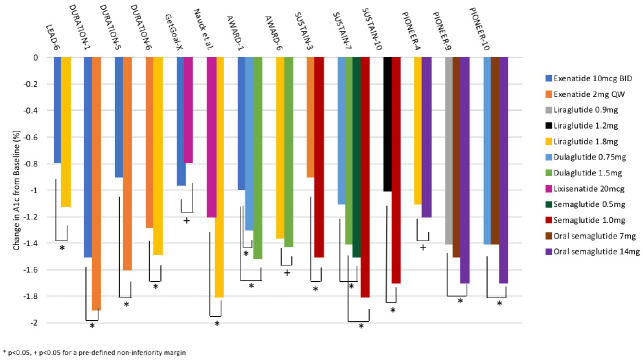
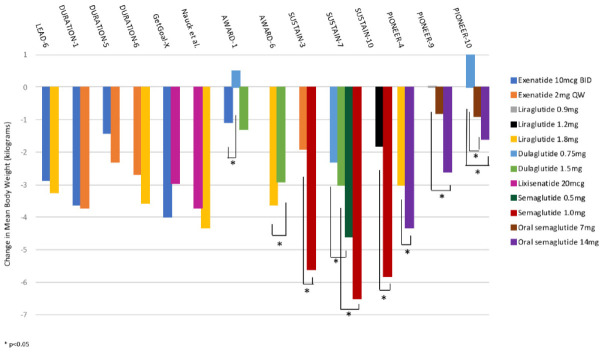
Glucagon-like peptide-1 receptor agonists (GLP-1 RA) are attractive options for the treatment of type 2 diabetes (T2D) because they effectively lower A1C and weight while having a low risk of hypoglycemia. Some also have documented cardiovascular benefit. The GLP-1 RA class has grown in the last decade, with several agents available for use in the United States and Europe. Since the efficacy and tolerability, dosing frequency, administration requirements, and cost may vary between agents within the class, each agent may offer unique advantages and disadvantages. Through a review of phase III clinical trials studying dulaglutide, exenatide twice daily, exenatide once weekly, liraglutide, lixisenatide, semaglutide, and oral semaglutide, 14 head-to-head trials were identified that evaluated the safety and efficacy of GLP-1 RA active comparators. The purpose of this review is to provide an analysis of these trials. The GLP-1 RA head-to-head clinical studies have demonstrated that all GLP-1 RA agents are effective therapeutic options at reducing A1C. However, differences exist in terms of magnitude of effect on A1C and weight as well as frequency of adverse effects.
Overview
The claims and statistics of this paper haven’t been checked yet.
Free: it reads the open-access text and checks the first 5 claims that cite a source we can check. Create a free account to check every claim.
Integrity signals
Registry
Cites
Statistics
Figures
Verification
Claims the paper makes
The claims and statistics of this paper haven’t been checked yet.
Free: it reads the open-access text and checks the first 5 claims that cite a source we can check. Create a free account to check every claim.
Claims other papers make about this one
Each is checked against this paper’s own text: does it say what the citing paper says it does?
The source backs part of the claim, not all of it — or backs it for a different population, condition or comparison.
In the citing paper
“The chronic treatment with GLP-1 RAs is able to reduce glycosylated hemoglobin from 0.8% to 1.9%, in relation to molecule and dosage used [23].”
From GLP-1 Receptor Agonists in Non-Alcoholic Fatty Liver Disease: Current Evidence and Future Perspectives (2023) · cites this paper as [23]
Experimental — accuracy not yet measuredThe source backs part of the claim, not all of it — or backs it for a different population, condition or comparison.
In the citing paper
“These GLP-1 analogues are effective insulinotropic agents and successfully suppress glucagon secretion in a glucose-dependent manner.260–261”
From A review of current trends with type 2 diabetes epidemiology, aetiology, pathogenesis, treatments and future perspectives (2021) · cites this paper as [260]
Experimental — accuracy not yet measuredThe cited source says what the claim attributes to it.
In the citing paper
“Of the GLP-1RAs, semaglutide and liraglutide have the most significant effect on weight loss, 2”
From Discontinuing glucagon-like peptide-1 receptor agonists and body habitus: A systematic review and meta-analysis (2025) · cites this paper as [2]
The cited source says what the claim attributes to it.
In the citing paper
“Some GLP1-RA may cause injection site reactions, with an incidence rate varying between 0% and 22% [57].”
From Glucagon-like peptide-1 receptor agonists in diabetic kidney disease: a review of their kidney and heart protection (2023) · cites this paper as [57]
In the citing paper
“The effect of treatment with GLP-1 on body weight accounts for a decrease from 1.5 to 6 kg, in relation to the molecule and dosage, with greater effect for semaglutide [23].”
From GLP-1 Receptor Agonists in Non-Alcoholic Fatty Liver Disease: Current Evidence and Future Perspectives (2023) · cites this paper as [23]
1 more claim about this paper
Create a free account to see every claim other papers make about this one.
Self-check
Percentages, sums and reported differences re-computed from the paper’s own numbers.
The self-check needs the paper’s full text.
Citations
Cites
International Diabetes Federation 2017
Carracher, A. M., Marathe, P. H., & Close, K. L. (2018) · Journal of Diabetes · doi:10.1111/1753-0407.12644 · Cited by 13,418
Buse, J. B., Rosenstock, J., Sesti, G., Schmidt, W. E., Montanya, E., Brett, J. H., Zychma, M., & Blonde, L. (2009) · The Lancet · doi:10.1016/s0140-6736(09)60659-0 · Cited by 1,503 · cited 1×
“75 mg QW 39/299 (13) 12/299 (4) 23/299 (8) 4/299 (1) 14”
Drucker, D. J., Buse, J. B., Taylor, K., Kendall, D. M., Trautmann, M., Zhuang, D., & Porter, L. (2008) · The Lancet · doi:10.1016/s0140-6736(08)61206-4 · Cited by 1,070 · cited 2×
“5 mg QW 68/301 (23) 31/301 (10) 43/301 (14) 4/301 (1) 24”
9. Pharmacologic Approaches to Glycemic Treatment: Standards of Medical Care in Diabetes—2021
American Diabetes Association (2021) · Diabetes Care · doi:10.2337/dc21-s009 · Cited by 972
Pratley, R. E., Aroda, V. R., Lingvay, I., Lüdemann, J., Andreassen, C., Navarria, A., & Viljoen, A. (2018) · The Lancet Diabetes & Endocrinology · doi:10.1016/s2213-8587(18)30024-x · Cited by 790
Garber, A. J., Handelsman, Y., Grunberger, G., Einhorn, D., Abrahamson, M. J., Barzilay, J. I., Blonde, L., Bush, M. A., DeFronzo, R. A., Garber, J. R., et al. (2020) · Endocrine Practice · doi:10.4158/cs-2019-0472 · Cited by 598 · cited 1×
“0 mg QW 60/299 (20) 29/299 (10) 53/299 (18) 8/299 (3) 20”
Ahmann, A. J., Capehorn, M., Charpentier, G., Dotta, F., Henkel, E., Lingvay, I., Holst, A. G., Annett, M. P., & Aroda, V. R. (2018) · Diabetes Care · doi:10.2337/dc17-0417 · Cited by 596 · cited 1×
“0 mg QW 63/300 (21) 31/300 (19) 41/300 (14) 6/300 (2) 29”
Pratley, R., Amod, A., Hoff, S. T., Kadowaki, T., Lingvay, I., Nauck, M., Pedersen, K. B., Saugstrup, T., & Meier, J. J. (2019) · The Lancet · doi:10.1016/s0140-6736(19)31271-1 · Cited by 594
Buse, J. B., Nauck, M., Forst, T., Sheu, W. H.-H., Shenouda, S. K., Heilmann, C. R., Hoogwerf, B. J., Gao, A., Boardman, M. K., Fineman, M., et al. (2013) · The Lancet · doi:10.1016/s0140-6736(12)61267-7 · Cited by 565
Dungan, K. M., Povedano, S. T., Forst, T., González, J. G. G., Atisso, C., Sealls, W., & Fahrbach, J. L. (2014) · The Lancet · doi:10.1016/s0140-6736(14)60976-4 · Cited by 486 · cited 2×
“)24 Oral semaglutide 14mg QD 56/285 (20) 25/285 (9) 43/285 (15) Not applicable 31”
Research works printed but not linked: 1
- Mody R Yu M Nepal BK, et al. Dulaglutide has higher adherence and persistence than semaglutide and exenatide QW: 6-month follow-up from US Real-World Data. Paper presented virtually at the 80th American Diabetes Association Scientific Sessions, 12–16 June 2020. Abstract 928-P.
Cited by
Items 101–200 of 288
Chen, H., Li, X., Chen, J.-Q., Ren, T., Zhang, Y., Wang, Y.-N., & Zhao, Q. (2023) · Medicine · doi:10.1097/md.0000000000034122 · Cited by 13
Zhao, Y., Jiang, L., Li, N., Cao, J., & Pi, J. (2025) · Reproductive Sciences · doi:10.1007/s43032-025-01788-9 · Cited by 14
“These side effects tend to be dose-dependent and often diminish over time but can still impact patient adherence [35].”
Rahman, A., Alqaisi, S., Saith, S. E., Al-Zakhari, R., & Levy, R. (2023) · Cardiology Research · doi:10.14740/cr1523 · Cited by 14
“Consequently, GLP-1 RA has become an attractive choice for the treatment of type 2 diabetes mellitus (T2DM) due to the effective reduction of glycosylated hemoglobin (HbA1c) with a lower risk of hypoglycemia and increased weight reduction [5].”
BackgroundControl of human pancreatic beta cell kinome by glucagon‐like peptide‐1 receptor biased agonism
Xiao, J., Eid, L. E., Buenaventura, T., Boutry, R., Bonnefond, A., Jones, B. J., Rutter, G. A., Froguel, P., & Tomás, A. (2023) · Diabetes Obesity and Metabolism · doi:10.1111/dom.15083 · Cited by 13
“GLP-1R–biased agonists are therefore potentially attractive options to improve existing incretin therapies.(11) Indeed, the newly approved incretin mimetic tirzepatide may depend partly on biased GLP-1R agonism for its high therapeutic efficacy.”
BackgroundBoianelli, A., Nordell, P., Earl, J., Naylor, J., Hornigold, D. C., Jansson‐Löfmark, R., & Sundqvist, M. (2024) · Pharmaceutics · doi:10.3390/pharmaceutics16101310 · Cited by 15
“GLP-1RAs can now be divided into short-acting (exenatide twice daily, lixisenatide), intermediate (liraglutide), and long-acting (albiglutide, dulaglutide, semaglutide, and exenatide once weekly (QW)) [4,9].”
BackgroundMethodThe future of complement therapeutics
Kolev, M. V., Rao, K. N., Yeh, M. W., Parikh, A., & Deschatelets, P. (2024) · Exploration of Immunology · doi:10.37349/ei.2024.00161 · Cited by 15
Zhu, H., Conley, J. M., Surendra, K., LaVigne, J. E., Watts, V. J., Sun, H., Shen, M., Hall, M. D., Ren, H., & Patnaik, S. (2025) · European Journal of Medicinal Chemistry · doi:10.1016/j.ejmech.2025.117794 · Cited by 12
Evans, M., Berry, S., Malkin, S. J. P., Hunt, B., & Sharma, A. K. (2023) · Diabetes Therapy · doi:10.1007/s13300-023-01408-2 · Cited by 15
“However, in the years since the approval of liraglutide, many other GLP-1 receptor agonists have been developed, and once-weekly semaglutide represents arguably the most effective GLP-1 receptor agonist currently available [12, 14, 15].”
BackgroundNiu, C., Sun, K., Zhang, J., Elkhapery, A. M. R., Zhu, K., Malik, S., Xue, C., & Okolo, P. I., III (2025) · The American Journal of Gastroenterology · doi:10.14309/ajg.0000000000003760 · Cited by 20
Jeong, N., Chuang, L.-H., & Ho, Y. (2025) · Frontiers in Clinical Diabetes and Healthcare · doi:10.3389/fcdhc.2025.1679511 · Cited by 11
Ligumsky, H., Amir, S., Rubinstein, T. A., Guion, K., Scherf, T., Karasik, A., Wolf, I., & Rubinek, T. (2024) · Medical Oncology · doi:10.1007/s12032-024-02390-w · Cited by 17
“After-wards, other GLP-1 analogs such as liraglutide, semaglu-tide, albiglutide, ixisenatide and dulaglutide were developed and approved for the treatment of T2DM and/or obesity and are widely used in current clinical practice [5].”
Marshall, S., Ryan, E., Rivera, J. V., Reynolds, L. M., & Atti, S. K. (2024) · Journal of Medical Toxicology · doi:10.1007/s13181-024-01008-x · Cited by 11
“Minor hypoglycemia, which is also not universally defined by available clinical trials but typically involves symptoms of hypoglycemia in which the patient self-treated, is reported at a higher incidence of 0-15.9% [7].”
BackgroundInfluentialBumps and humps in the success of Tirzepatide as the first GLP1 and GIP receptor agonist
Ali, R., Virendra, S. A., & Chawla, P. A. (2022) · Health Sciences Review · doi:10.1016/j.hsr.2022.100032 · Cited by 17
Oestrogen changes at menopause: insights into obesity-associated breast risk and outcomes
Sho, M., Qureshi, R., & Slingerland, J. M. (2025) · Nature Reviews Endocrinology · doi:10.1038/s41574-025-01208-7 · Cited by 10
Evaluating Weight Loss With Semaglutide in Elderly Patients With Type II Diabetes
Huynh, G., Runeberg, H. A., & Weideman, R. A. (2022) · Journal of Pharmacy Technology · doi:10.1177/87551225221137493 · Cited by 10
Hachuła, M., Kosowski, M., Basiak, M., & Okopień, B. (2023) · Pharmaceuticals · doi:10.3390/ph16091190 · Cited by 10
“The GLP1-RA, due to their beneficial effect on numerous CKD risk factors, are of interest to scientists as drugs with nephroprotective potential.”
BackgroundInfluentialAlenezi, B. T., Elfezzani, N., Uddin, R., Patel, H., Chester, S., Abdelmaksoud, A., Hussein, M. H., Zaitone, S. A., Fawzy, M. S., Aiash, H., et al. (2024) · Journal of Clinical Medicine · doi:10.3390/jcm13164896 · Cited by 13
“Despite these intriguing connections, there is a notable paucity of large-scale studies specifically examining the association between GLP-1R agonist use and the risk of hypocalcemia or hypercalcemia [16].”
BackgroundDose-dependent pancreatitis risk associated with GLP-1 agonists
Gu, J. H., & Samarneh, M. (2025) · Journal of Diabetes & Metabolic Disorders · doi:10.1007/s40200-024-01552-x · Cited by 12
Nitroglycerin-responsive gene switch for the on-demand production of therapeutic proteins
Mahameed, M., Xue, S., Danuser, B., Hamri, G. C., Xie, M., & Fussenegger, M. (2025) · Nature Biomedical Engineering · doi:10.1038/s41551-025-01350-7 · Cited by 14
“https://doi.org/10.1038/s41551-025-01350-7 of type 2 diabetes and associated obesity as well as lifestyle drugs to reduce body weight in the absence of exercise by increasing satiety and lowering gastric emptying 45 .”
InfluentialKatranski, J., Liang, S., Morris, D., Suppiah, V., & Lim, C. X. (2025) · International Journal of Clinical Pharmacy · doi:10.1007/s11096-025-01943-x · Cited by 14
“Gastrointestinal AEs are by far the most common, ranging from nausea and diarrhoea (in up to 50% of users) to abdominal pain and constipation (in up to 10% of users) [5, 6].”
Incretin Therapies for Patients with Type 2 Diabetes and Chronic Kidney Disease
Alicic, R. Z., & Neumiller, J. J. (2023) · Journal of Clinical Medicine · doi:10.3390/jcm13010201 · Cited by 16
Evans, M., Chubb, B., Malkin, S. J. P., Berry, S., Lawson, J., & Hunt, B. (2022) · Diabetes Obesity and Metabolism · doi:10.1111/dom.14892 · Cited by 11
Lucidi, P., Perriello, G., Porcellati, F., Pampanelli, S., Fano, M. D., Tura, A., Bolli, G. B., & Fanelli, C. G. (2023) · Diabetes · doi:10.2337/db22-0721 · Cited by 20
Wen, J., Nadora, D., Bernstein, E., How-Volkman, C., Truong, A., Akhtar, M., Prakash, N. A., Puglisi, J. L., & Frezza, E. E. (2024) · Cureus · doi:10.7759/cureus.69008 · Cited by 22
“Before the development of semaglutide, liraglutide, in direct comparison to other GLP-1 RAs (exenatide, albiglutide, dulaglutide, lixisenatide), showed significantly greater weight loss [20,24].”
BackgroundResultInfluentialSimeone, P., Costantino, S., Liani, R., Tripaldi, R., Castelnuovo, A. F. D., Tartaro, A., Mengozzi, A., Cosentino, F., Cipollone, F., Consoli, A., et al. (2025) · Cardiovascular Diabetology · doi:10.1186/s12933-025-02706-8 · Cited by 13
“It is also still debated whether different types of weight loss intervention (i.e. diet or GLP1-RA [13, 14]) have similar or different effects on MASLD status.”
Discovery of peptides as key regulators of metabolic and cardiovascular crosstalk
Zhang, Z., & Svensson, K. J. (2025) · Cell Reports · doi:10.1016/j.celrep.2025.115836 · Cited by 10
Addressing the risk of ocular complications of GLP ‐ 1RAs ; a multi‐disciplinary expert consensus
Carter, P., Simó, R., Lövestam‐Adrian, M., Pearce, I., Bain, S. C., Dinah, C. B., Davies, S. J., Strain, W. D., Burgess, P. I., Gamble, A., et al. (2025) · Diabetes Obesity and Metabolism · doi:10.1111/dom.70160 · Cited by 16
“3,20,21 The participants also agreed (80”
GLP-1 signaling in tumor metabolism and immunity: mechanisms and strategies
Luo, Y., Xu, H., Zhao, Y., Yang, B., & Zhang, Y. (2025) · Food & Function · doi:10.1039/d5fo03273c · Cited by 12
An Uncommon Case of Dulaglutide-Related Morbilliform Drug Eruption
Kyriakos, G., Diamantis, E., Memi, E., & Elefsiniotis, I. S. (2022) · Cureus · doi:10.7759/cureus.21536 · Cited by 9
Hirsch, I. B., Parkin, C. G., Cavaiola, T. S., & Bergenstal, R. M. (2024) · Diabetes Obesity and Metabolism · doi:10.1111/dom.15883 · Cited by 8
Dril, E. V., Allison, M., & Schumacher, C. (2022) · American Heart Journal Plus Cardiology Research and Practice · doi:10.1016/j.ahjo.2022.100163 · Cited by 11
“Both sulfo-nylureas and GLP-1 receptor agonists have the potential to lower A1C 1 – 2 % depending on their dose and patients' individual response to these agents [28,29].”
BackgroundKhadanga, S., Barrett, K. V., Sheahan, K. H., & Savage, P. D. (2022) · Journal of Cardiopulmonary Rehabilitation and Prevention · doi:10.1097/hcr.0000000000000761 · Cited by 11
Polyagonists in Type 2 Diabetes Management
Dissanayake, H. A., & Somasundaram, N. P. (2024) · Current Diabetes Reports · doi:10.1007/s11892-023-01530-2 · Cited by 8
“Injection site reactions (itching, rash, erythema) have been reported with all GLP-1RAs, affecting 1–20% of the patients, often mild and transient, commoner with long-acting preparations, and with more immunogenic agents [61, 62].”
Glucagon-Like Peptide 1 Receptor Agonists for Obesity: Efficacy, Side Effects, and Risks
Thota-Kammili, S., Tama, E., & Andrade, M. D. H. (2024) · Current Treatment Options in Gastroenterology · doi:10.1007/s11938-024-00452-6 · Cited by 10
“Semaglutide had the highest HbA1C lowering ability followed by Liraglutide [25].”
Mandour, D. A., Shalaby, S. M., & Bendary, M. A. (2022) · Journal of Chemical Neuroanatomy · doi:10.1016/j.jchemneu.2022.102079 · Cited by 8
Waataja, J. J., Asp, A. J., & Billington, C. J. (2023) · Biomedicines · doi:10.3390/biomedicines11092452 · Cited by 11
“9% [25], and weight loss up to 12% from baseline [26].”
BackgroundSabina, M., & Alsamman, M. (2024) · Cardiology Research · doi:10.14740/cr1600 · Cited by 10
“A previous study done by Trujillo et al provided a detailed meta-analysis of GLP-1 receptor agonists and ranked them in A1c lowering, weight loss efficacy, and GI side effects when comparing head-to-head trial data [4].”
MethodResultvon Arx, L., Rachman, J., Webb, J., Casey, C. S., Patel, A. A., Diomatari, C., Wood, R. P., & IDRIS, I. R. (2023) · Diabetes Obesity and Metabolism · doi:10.1111/dom.14985 · Cited by 9
“These side effects are related to GLP-1 pharmacology and tend to increase in a dose-dependent way.(4) Early in the development of the GLP-1RA class, it was recognized that giving therapeutic doses of GLP-1RAs immediately to patients led to unacceptably high rates of nausea and vomiting, but that gradually uptitrating…”
BackgroundZhang, L., Chen, X., Xu, Y., Liu, J., & Liu, Z. (2025) · BMC Psychiatry · doi:10.1186/s12888-025-06914-0 · Cited by 9
“GLP-1R agonists mimic the natural hormone’s action to regulate glucose metabolism and other physiological processes [6].”
Zhou, J., Husain, M., Li, Y., Liu, W., Shen, Z., Vilsbøll, T., & Ge, J. (2025) · Diabetes Obesity and Metabolism · doi:10.1111/dom.16621 · Cited by 10
“11 Furthermore, GLP-1RAs affect the CV system 12 and kidneys.”
AI‐Driven De Novo Design of Ultra Long‐Acting GLP‐1 Receptor Agonists
Wei, T., Ma, J., Cui, X., Lin, J., Zheng, Z., Cheng, L., Cui, T., Lin, X., Zhu, J., Ran, X., et al. (2025) · Advanced Science · doi:10.1002/advs.202507044 · Cited by 12
Ho, L. T., Fang, Y., Hsu, P.-S., Wang, J., & Tsai, M. (2025) · Scientific Reports · doi:10.1038/s41598-025-19657-5 · Cited by 13
Joy, B., Ramsamooj, A., Ibrahim, S., Wen, J., Hsu, N., & Frezza, E. (2026) · Endocrine · doi:10.1007/s12020-025-04494-3 · Cited by 13
Speed of innovation: How quickly are different therapeutic areas adopting paradigm-shifting drugs?
Gutzeit, V. A., Bhattacharya, S., Wu, J., Chandran, P., & Meier, C. (2024) · Drug Discovery Today · doi:10.1016/j.drudis.2024.104284 · Cited by 7
The critical role of GLP-1 signaling pathways in the pathology of Parkinson's disease and diabetes
Chen, J., Dong, X., Lin, Y., & Lv, C. (2025) · Pathology - Research and Practice · doi:10.1016/j.prp.2025.155985 · Cited by 7
GLP-1 Receptor Agonists in the Treatment of Patients with Type 2 Diabetes and Chronic Kidney Disease
Neumiller, J. J., Alicic, R. Z., & Tuttle, K. R. (2022) · Kidney and Dialysis · doi:10.3390/kidneydial2030034 · Cited by 7
Designer GLP1 poly-agonist peptides in the management of diabesity
Statham, L., Pelling, M., Hanson, P., Kyrou, I., Randeva, H. S., & Barber, T. M. (2023) · Expert Review of Endocrinology & Metabolism · doi:10.1080/17446651.2023.2204976 · Cited by 8
“and approved for use in T2D and, latterly, for obesity management [40].”
BackgroundUtilizing AI and Social Media Analytics to Discover Adverse Side Effects of GLP-1 Receptor AgonistsPreprint
Bartal, A., Jagodnik, K. M., Pliskin, N., & Seidmann, A. A. (2024) · SSRN Electronic Journal · doi:10.2139/ssrn.4790676 · Cited by 9
Han, J., Lee, W. J., Hur, K. Y., Cho, J., Lee, B., & Park, C. (2024) · Diabetes & Metabolism Journal · doi:10.4093/dmj.2023.0030 · Cited by 6
“The statistically significant change from baseline in MMRM LS mean body weight at 12±4 weeks (–0.75 kg) and 24±4 weeks (–1.21 kg) aligns with previous literature [3,4,6,12,14-16, 28, 29].”
ResultInfluentialPalecek, E. J., Kimzey, M. M., Zhang, J., Marsden, J. E., Bays, C., Moran, W. P., Mauldin, P. D., & Schreiner, A. D. (2024) · Journal of Investigative Medicine · doi:10.1177/10815589241270427 · Cited by 7
“22,23 25–30 The TROPHIES observational prospective study of 2005 patients found that over 12 months dulaglutide reduced HbA1c by 2 1.18% and liraglutide reduced HbA1c by 2 1.15%.”
InfluentialSaeed, Z. I., Aktürk, H. K., Aleppo, G., Kruger, D. F., Levy, C. J., Mader, J. K., Sherr, J. L., & Shah, V. N. (2024) · Clinical Diabetes · doi:10.2337/cd24-0067 · Cited by 8
Grasset, E., Briand, F., Virgilio, N., Schön, C., Wilhelm, M. G., Cudennec, B., Ravallec, R., Aboubacar, H., Vleminckx, S., Prawitt, J., et al. (2024) · Food Science & Nutrition · doi:10.1002/fsn3.4538 · Cited by 9
“Several DPP- 4-resistant GLP-1 receptor agonists have been developed, e.g., liraglutide, lixisenatide, dulaglutide or semaglutide to cite a few (Trujillo, Nuffer, and Smith 2021).”
Efeitos adversos da semaglutida comparada à liraglutida: uma revisão integrativa de literatura
de Moraes, A. L. S. M., Vilela, B. S., Souza, B. C., Falleiros, I. D. F. I., Monteiro, I. D. L. P., & Ribeiro, J. S. O. (2022) · Research Society and Development · doi:10.33448/rsd-v11i10.33181 · Cited by 32
Kang, S., Kim, N. H., & Yu, Y. G. (2021) · Biochemical and Biophysical Research Communications · doi:10.1016/j.bbrc.2021.10.071 · Cited by 6
Elimihele, T. A., Mangrola, A. M., Oshomoji, O., Wilson, N., Nnamani, I., Ashong, B., Billings, S., Getu, D. K., Kumar, S., & Maliakkal, B. J. (2024) · Cureus · doi:10.7759/cureus.69152 · Cited by 6
Xu, B., Gaynor-Sodeifi, K., & Kundel, V. (2025) · Advances in Therapy · doi:10.1007/s12325-025-03312-6 · Cited by 6
“However, GLP-1 agonists (including exenatide, liraglutide, dulaglutide, and semaglutide) [97, 98] have shown superior glycemic control and weight loss benefits compared to DPP-4 inhibitors, and have seen a surge in popularity in recent years [97–99].”
Alqatari, S. G., Alwaheed, A., Hasan, M. A., Argan, R. A., Alabdullah, M. M., & Shubbar, M. D. A. (2025) · Medicina · doi:10.3390/medicina61071292 · Cited by 11
“Additionally, they delay gastric emptying, contributing further to weight loss [17,18].”
An overview of the oral medicines used in the management of type 2 diabetes
Stewart, M. (2021) · Nursing Standard · doi:10.7748/ns.2021.e11804 · Cited by 5
Vargas‐Uricoechea, H., Frías, J. P., & Vargas-Sierra, H. D. (2023) · The Review of Diabetic Studies · doi:10.1900/rds.2023.19.14 · Cited by 10
“The use of GLP-1RAs is another intensification strategy, since in addition to its efficacy in glycemic control, it also causes weight loss and a low risk of hypoglycemia, which makes it an attractive option for intensification [17-20].”
BackgroundКуркин, Д. В., Макарова, Е. В., Сергеевич, К. И., Bakulin, D. A., Robertus, A. I., Ivanova, O. V., Kolosov, Y. A., & Kudrin, R. A. (2023) · Problems of Endocrinology · doi:10.14341/probl13200 · Cited by 5
Leitgeb, E. P., Kerčmar, J., Bombek, L. K., Pohorec, V., Klemen, M. S., Rupnik, M. S., Gosak, M., Dolenšek, J., & Stožer, A. (2024) · Frontiers in Endocrinology · doi:10.3389/fendo.2023.1315520 · Cited by 8
“…is one of the main considerations in evaluating the safety of pharmaceuticals which potentiate insulin secretion, and GLP-1RA are considered low risk for hypoglycaemia due to their glucose-dependent insulinotropic action (119), activation of GLP-1R in substimulatory glucose seems contradictory.”
The Emerging Role of GLP-1 Agonists in Burn Care: What Do We Know?
Manasyan, A., Cannata, B., Ross, E. E., Lasky, S., Stanton, E. W., Malkoff, N., Collier, Z. J., Johnson, M. B., & Gillenwater, J. T. (2024) · Journal of Burn Care & Research · doi:10.1093/jbcr/irae189 · Cited by 6
Jiménez-Martí, E., Hurtado-Genovés, G., Aguilar-Ballester, M., Martínez‐Hervás, S., & Navarro, H. G. (2022) · Nutrients · doi:10.3390/nu14183775 · Cited by 7
“Notably, all developed GLP-1R agonist drugs produce generally positive results in decreasing plasma glucose levels, lowering the Hb1Ac concentrations, and improving surrogate cardiometabolic markers, hence proving their effectivity not only in restoring carbohydrate metabolism but also in preventing death from CVD cau…”
BackgroundA novel gene therapy platform for the treatment of type 2 diabetes and obesity
Lourie, J., Goraltchouk, A., Hollander, J. M., BERGER, N. J. A., Rosen, H. G., Fujishiro, A. A., Luppino, F., Seregin, A., Rhym, L. H., & Zou, K. (2025) · Molecular Therapy — Nucleic Acids · doi:10.1016/j.omtn.2025.102739 · Cited by 6
“47 Discontinuation is driven primarily by pharmacokinetic spike-mediated GI side effects, as well as the high treatment cost and repeat injection burden, 48–50 which are major barriers to the global accessibility of GLP1 therapy.”
GLP-1 Receptor Agonists: From Clinical Success to Mechanistic Insight
Patel, T., Rose, J., Katsurada, K., Yada, T., Koutakis, P., Salomon, J., Patel, K. P., & Alfaidi, M. (2026) · Circulation Research · doi:10.1161/circresaha.126.327683 · Cited by 5
Galindo, R. J., Lee, C. J., Allen, S. E., Dib, A., Boye, K. S., Thieu, V. T., Dong, W., Sapin, H., & Wiese, R. J. (2025) · Diabetes Obesity and Metabolism · doi:10.1111/dom.16620 · Cited by 3
Ahmed, M., Hashmi, T. M., Shahzad, M., Zia, R., Ashraf, H., Ahmed, R., Rashid, M. O., Greene, S. J., Mentz, R. J., Fudim, M., et al. (2026) · European Heart Journal - Quality of Care and Clinical Outcomes · doi:10.1093/ehjqcco/qcag079 · Cited by 4
Chen, Y., Loucks, A., Sullivan, S. D., Pearson, S. D., Kent, D., & Yeung, K. (2023) · Value in Health · doi:10.1016/j.jval.2023.02.004 · Cited by 6
Vitreous hemorrhage during GLP-1 receptor agonist treatment
Kim, D. S., Latollari, A., & Khaimova, R. (2023) · Journal of the American Pharmacists Association · doi:10.1016/j.japh.2023.02.018 · Cited by 4
Abdelmannan, D. K., AlBuflasa, M., Ajlouni, H. K., Zidan, M. A., Rahman, F., Farooqi, M. H., & Caballero, A. E. (2023) · Diabetes Research and Clinical Practice · doi:10.1016/j.diabres.2023.111045 · Cited by 5
Accidental Once-Daily Use of Dulaglutide: A Case Report
Moore, H. E., Zaya, V., Burns, C. V., & Berlie, H. D. (2024) · Clinical Diabetes · doi:10.2337/cd23-0035 · Cited by 4
Wang, J., Clarke, J., Badland, M., Broadbelt, B., Dow, L. F., Fenton, H. A. M., Laity, D. A., Mathew, J. S., Rose, E. K., Tamosiunaite, N., et al. (2024) · Organic Process Research & Development · doi:10.1021/acs.oprd.3c00472 · Cited by 4
Katz, G. (2025) · Hormone and Metabolic Research · doi:10.1055/a-2569-7315 · Cited by 7
“The literature search strategy was based on a comprehensive review of prior studies investigating the efficacy and safety of GLP-1 agonists [5].”
EVOO’s Effects on Incretin Production: Is There a Rationale for a Combination in T2DM Therapy?
Amodeo, S., Mirarchi, L., Seidita, A., Citarrella, R., Licata, A., Soresi, M., Iovanna, J., & Giannitrapani, L. (2022) · International Journal of Molecular Sciences · doi:10.3390/ijms231710120 · Cited by 5
“In particular, long-acting agents appear to result in a greater reduction in HbA1c rates than short-acting agents [31].”
BackgroundKimura, T., Kubo, M., Takahashi, K., Wamata, R., Iwamoto, Y., Iwamoto, H., Katakura, Y., Sanada, J., Fushimi, Y., Shimoda, M., et al. (2024) · Journal of Diabetes Research · doi:10.1155/2024/5880589 · Cited by 4
“It is known, however, that semaglutide has more side e ff ects such as gastrointestinal symptoms compared to dulaglutide especially in elderly subjects [31, 32].”
BackgroundLi, W. (2024) · Preprints.org · doi:10.20944/preprints202405.0258.v1 · Cited by 4
Salvatore, M., Zhang, B., Tang, H., Lu, Y., Zhang, D., Zhou, T., Lu, Y., Amaro, A., Ritchie, M. D., & Chen, Y. (2025) · medRxiv · doi:10.1101/2025.06.03.25328908 · Cited by 4
“GLP-1 RA analyses may be affected by heterogeneity in effects 16,29,84–86 and prescribing practices, 87,88 as shown by statistically significant baseline covariate differences between semaglutide and other GLP-1 RAs (Table 1).”
Tanaka, M., & Itoh, H. (2025) · International Summit on Diabetes, Endocrinology and Metabolic Disorders · doi:10.1038/s41440-025-02418-2 · Cited by 3
“…plasma half-life of native GLP-1 which is caused by rapid degradation by the enzyme dipeptidyl peptidase 4 (DPP-4), several synthesized GLP-1 receptor agonists (RAs) were developed for type 2 diabetes mellitus (DM) treatment, with different chemical structures and pharmacokinetic pro fi les [5, 6].”
Shirmard, F. O., Pourfaraji, S. M., Omouri‐Kharashtomi, M., & Amani, A. (2025) · BMC Gastroenterology · doi:10.1186/s12876-025-04496-5 · Cited by 6
“Articles investigating the GLP-1 RAs side effects in non-IBD populations demonstrated comparable rates of gastrointestinal events [15, 20, 39, 41].”
Rabbani, S. A., Saini, M., El-Tanani, M. E.-T., Kumar, R., Matalka, I. I., El‐Tanani, Y., Sharma, S., & Rizzo, M. (2026) · Pharmaceuticals · doi:10.3390/ph19050732 · Cited by 5
“Therefore, comparisons between oral and injectable formulations should be interpreted cautiously within the context of these methodological differences [98,127–129].”
Person-Centered Medication Therapy for Diabetes in Older Adults: A Practical Review
Wilson, E. (2021) · Journal of Gerontological Nursing · doi:10.3928/00989134-20210908-02 · Cited by 3
Mitkin, N. A., Pavshintsev, V. V., Sukhanova, I. A., Doronin, I. I., Babkin, G. A., Sadagurski, M., & Malyshev, A. V. (2022) · Pharmaceutics · doi:10.3390/pharmaceutics14102088 · Cited by 5
“CHM-273S administration was applied as the model of the subcutaneous route that is the most common for peptide-based glucose-lowering drugs of modern generations, such as GLP-1 receptor agonists [72].”
MethodAbu‐Alfa, A. K., Atallah, P., Azar, S. T., Dagher, E., Echtay, A. S., Amm, M., Hazkial, H. G., Kassab, R., Medlej, R., & Mohamad, M. A. (2022) · Diabetes Therapy · doi:10.1007/s13300-022-01340-x · Cited by 4
“Regarding treatment with GLP-1 RA, the most common adverse events are predictably gastrointestinal in nature, notably nausea, vomiting, and diarrhea [72].”
BackgroundGlucagon‐like peptide‐1 receptor agonists in the perioperative period: to cease or not to cease?
Martis, W. R., Sachithanandan, N., Chiang, C. Y., & Riedel, B. (2023) · ANZ Journal of Surgery · doi:10.1111/ans.18804 · Cited by 3
Role of Liraglutide Use in Patients With Heart Failure
Allam, S. R., Sartaj, S., Moquim, H., Husnain, M. A., Bustos, D., Lakkimsetti, M., Randhawa, A. K., & Gupta, I. (2023) · Cureus · doi:10.7759/cureus.50065 · Cited by 4
“The following seven drugs are currently being used in practice: exenatide, lixisenatide, liraglutide, exenatide, dulaglutide, and semaglutide, of which liraglutide and semaglutide have shown promising cardiovascular benefits [10,11].”
BackgroundConroy, L., McCann, A., Zhang, N., & de Gaetano, M. (2024) · American Journal of Physiology-Cell Physiology · doi:10.1152/ajpcell.00695.2023 · Cited by 5
Peart, L. A., Draper, M., & Tarasov, A. I. (2024) · Peptides · doi:10.1016/j.peptides.2024.171243 · Cited by 5
Horská, K., Kucera, J., Dražanová, E., Kuzmínová, G., Amchová, P., Hrickova, M., Kučerová, J., & Skrede, S. (2024) · Biomedicine & Pharmacotherapy · doi:10.1016/j.biopha.2024.116763 · Cited by 4
Perreault, L., & Bergman, B. C. (2023) · Journal of Diabetes · doi:10.1111/1753-0407.13505 · Cited by 3
Hedin, K. A., Zhang, H., Kruse, V., Rees, V. E., Bäckhed, F., Greiner, T. U., Vazquez-Uribe, R., & Sommer, M. O. A. (2022) · bioRxiv (Cold Spring Harbor Laboratory) · doi:10.1101/2022.12.21.521368 · Cited by 3
Qi, W., Boca, S. M., Boianelli, A., Fredberg, M., Lundqvist, S., Davies, G., Field, J., Brighton, C. A., Snijder, A., Grundevik, P., et al. (2025) · Journal of Pharmacology and Experimental Therapeutics · doi:10.1016/j.jpet.2025.103683 · Cited by 3
Impact of GLP-1 receptor agonists on gastrointestinal function and symptoms
Frazier, R., & Hasler, W. L. (2025) · Expert Review of Gastroenterology & Hepatology · doi:10.1080/17474124.2025.2579117 · Cited by 4
“Tirzepatide, with a 5-day half-life, is the first GLP-1RA with a second action as a glucose-dependent insulinotropic polypeptide (GIP) receptor agonist [9].”
Piccione, A., Bonsangue, M., Barone, M., Vigneri, E., Mineo, M. I., Tomasello, L., Maniscalco, L., Pantò, F., Arnaldi, G., & Guarnotta, V. (2025) · Nutrition Metabolism and Cardiovascular Diseases · doi:10.1016/j.numecd.2025.104462 · Cited by 2
Méndez-Pino, L., Goldblatt, J., Godie, D., Ravi, S., Williams, K., Amcheslavsky, J., Guerra‐Londono, C. E., & Ravikant, N. T. (2026) · Canadian Journal of Anesthesia/Journal canadien d anesthésie · doi:10.1007/s12630-026-03187-3 · Cited by 2
Ryan, P. M., & Hamilton, J. K. (2022) · Paediatrics & Child Health · doi:10.1093/pch/pxac026 · Cited by 2
The Glucagon-Like Peptide-1 Analogues therapy in the non-diabetic patients
Sienicka, A., Kubasik, K., & Pisula, A. (2023) · Prospects in Pharmaceutical Sciences · doi:10.56782/pps.127 · Cited by 3
Ren, H., Berry, S., Malkin, S. J. P., Hunt, B., & Bain, S. C. (2023) · BMJ Open · doi:10.1136/bmjopen-2022-070473 · Cited by 5
Exocrine Pancreatic Insufficiency During the Use of Semaglutide: A Case Report
de Melo, C. A., Júnior, N. E. G., Ribeiro-Sousa, M. A. D. S., & da Cunha, S. F. D. C. (2024) · Cureus · doi:10.7759/cureus.55549 · Cited by 2
“Glucagon-like peptide-1 receptor agonists (GLP-1 RAs) are a class of medications primarily developed for the treatment of type 2 diabetes that have shown a favorable effect on cardiovascular risk reduction [2].”
BackgroundKukova, L., Munir, K. M., Sayeed, A., & Davis, S. N. (2024) · Expert Opinion on Drug Metabolism & Toxicology · doi:10.1080/17425255.2024.2401589 · Cited by 4
“A review by Trujillo et al. [6] looked at 14 key head-to-head GLP-1RA trials which collectively focused on studying the impact of seven different GLP-1RAs [dulaglutide, exenatide BID, exenatide QW, liraglutide, lixisenatide, semaglutide QD, and semaglutide QW], with special attention to reduction…”
InfluentialHoubachi, L., WALKER, P. M., Fournel, I., Ksiazek, E., Petit, J., Cochet, A., Leclercq, T., Roger, A., Simoneau, I., Bouillet, B., et al. (2025) · Diabetes Research and Clinical Practice · doi:10.1016/j.diabres.2025.112017 · Cited by 3
Metadata
- Authors
- Trujillo, J. M., Nuffer, W., & Smith, B. A.
- Affiliations
- University of Colorado Skaggs School of Pharmacy and Pharmaceutical Sciences, Mail Stop C238, 12850 E. Montview Blvd., V20-1222, Aurora, CO 80045, USA
- University of Colorado Skaggs School of Pharmacy and Pharmaceutical Sciences, Aurora, CO, USA
- Corresponding author
- Trujillo, Jennifer M.
- Venue
- Therapeutic Advances in Endocrinology and Metabolism
- Publisher
- SAGE Publications
- Published
- 2021-01
- Volume
- 12
- Pages
- 2042018821997320-2042018821997320
- ISSN
- 2042-0188 (ISSN-L)
- 2042-0196
- PMC
- PMC7953228
- OpenAlex
- W3134100899
- Cited by
- 289
- References
- 27
- Citations by year
- 2026: 43 · 2025: 60 · 2024: 66 · 2023: 65 · 2022: 46 · 2021: 9
- FWCI
- 7.14
- Type
- journal article
- Language
- en
- Open access
- gold
- doi.org
- Licence
- Locations
- Therapeutic Advances in Endocrinology and Metabolism (publishedVersion, cc-by-nc)
- PubMed Central (publishedVersion, cc-by-nc)
- PubMed (publishedVersion)
- DOAJ (DOAJ: Directory of Open Access Journals) (submittedVersion, cc-by-sa)
- Topics
- Health Sciences › Medicine › Endocrinology, Diabetes and Metabolism › Diabetes Treatment and Management
- Health Sciences › Medicine › Endocrinology, Diabetes and Metabolism › Diabetes Management and Research
- Health Sciences › Medicine › Pharmacology (medical) › Pharmacology and Obesity Treatment
- Keywords
- GLP-1 receptor agonists, type 2 diabetes, dulaglutide, exenatide twice daily, exenatide once weekly, liraglutide, lixisenatide, semaglutide, oral semaglutide, weight loss, adverse effects, cardiovascular benefits, drug efficacy and tolerability
About these checks
Registry, retraction, Cites and statistics results are computed, not judged, with one exception: a printed reference that no index lists is read once by a model before it counts as a citation error. Claims are extracted by a model and kept only when their quote appears verbatim in the text; each cited source is then checked, with a model’s help, for whether it says what the claim relies on. Those verdicts can be wrong — read the claim’s quote and the cited source before relying on one.
Statistics and arithmetic are recomputed, not judged.
Confidence bands are shown only for fields calibrated on our annotated test set. None is calibrated yet, so no band is shown.
What counts as a claim ›How we measure confidence ›How we check this ›
Are you an author, or do you see a problem with this page? Request a review
Data sources
Bibliographic data: Semantic Scholar, OpenAlex, Crossref.
Contains information from the Semantic Scholar Academic Graph Datasets, made available under the ODC Attribution License (ODC-BY 1.0).
Semantic Scholar’s data is described in: Kinney, R., et al. (2023). The Semantic Scholar Open Data Platform. arXiv:2301.10140.
