

Inside help: An integrative review of champions in healthcare-related implementation
Open accessThe DOI matches its Crossref record; 44 of the 44 references it cites were found in a registry or an index.
Abstract
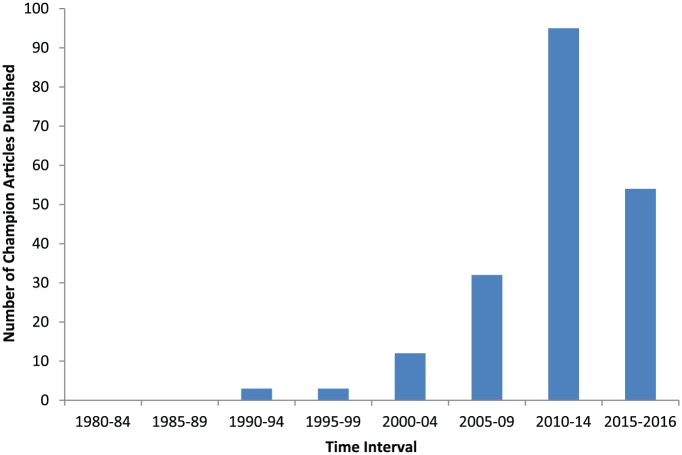
Background/aims: The idea that champions are crucial to effective healthcare-related implementation has gained broad acceptance; yet the champion construct has been hampered by inconsistent use across the published literature. This integrative review sought to establish the current state of the literature on champions in healthcare settings and bring greater clarity to this important construct. Methods: This integrative review was limited to research articles in peer-reviewed, English-language journals published from 1980 to 2016. Searches were conducted on the online MEDLINE database via OVID and PubMed using the keyword “champion.” Several additional terms often describe champions and were also included as keywords: implementation leader, opinion leader, facilitator, and change agent. Bibliographies of full-text articles that met inclusion criteria were reviewed for additional references not yet identified via the main strategy of conducting keyword searches in MEDLINE. A five-member team abstracted all full-text articles meeting inclusion criteria. Results: The final dataset for the integrative review consisted of 199 unique articles. Use of the term champion varied widely across the articles with respect to topic, specific job positions, or broader organizational roles. The most common method for operationalizing champion for purposes of analysis was the use of a dichotomous variable designating champion presence or absence. Four studies randomly allocated of the presence or absence of champions. Conclusions: The number of published champion-related articles has markedly increased: more articles were published during the last two years of this review (i.e. 2015–2016) than during its first 30 years (i.e. 1980–2009). The number of champion-related articles has continued to increase sharply since the year 2000. Individual studies consistently found that champions were important positive influences on implementation effectiveness. Although few in number, the randomized trials of champions that have been conducted demonstrate the feasibility of using experimental design to study the effects of champions in healthcare.
Overview
The claims and statistics of this paper haven’t been checked yet.
Free: it reads the open-access text and checks the first 5 claims that cite a source we can check. Create a free account to check every claim.
Integrity signals
Registry
Cites
Statistics
Figures
Verification
Claims the paper makes
The claims and statistics of this paper haven’t been checked yet.
Free: it reads the open-access text and checks the first 5 claims that cite a source we can check. Create a free account to check every claim.
Claims other papers make about this one
Each is checked against this paper’s own text: does it say what the citing paper says it does?
The source backs part of the claim, not all of it — or backs it for a different population, condition or comparison.
In the citing paper
“the Formally Appointed Internal Implementation Leader and Champion constructs were combined into the Implementation Leads role because of the inability of users to distinguish between the two roles [61], and as affirmed in a review of champions [62].”
From The updated consolidated framework for implementation research based on user feedback (2022) · cites this paper as [62]
Experimental — accuracy not yet measured
Self-check
Percentages, sums and reported differences re-computed from the paper’s own numbers.
The self-check needs the paper’s full text.
Citations
Cites
Damschroder, L. J., Aron, D. C., Keith, R. E., Kirsh, S. R., Alexander, J. A., & Lowery, J. C. (2009) · Implementation Science · doi:10.1186/1748-5908-4-50 · Cited by 14,496
Self-citationA typology of reviews: an analysis of 14 review types and associated methodologies
Grant, M. J., & Booth, A. (2009) · Health Information & Libraries Journal · doi:10.1111/j.1471-1842.2009.00848.x · Cited by 10,817
The integrative review: updated methodology
Whittemore, R., & Knafl, K. (2005) · Journal of Advanced Nursing · doi:10.1111/j.1365-2648.2005.03621.x · Cited by 10,241
Welcome to Implementation Science
Eccles, M. P., & Mittman, B. S. (2006) · Implementation Science · doi:10.1186/1748-5908-1-1 · Cited by 2,254 · cited 2×
“Use of the term “champion” varied widely across the articles with respect to (1) topic (e.”
BackgroundProcess-Tracing Methods: Foundations and Guidelines
Beach, D., & Pedersen, R. (2013) · doi:10.3998/mpub.2556282 · Cited by 1,140
Damschroder, L. J., & Lowery, J. C. (2013) · Implementation Science · doi:10.1186/1748-5908-8-51 · Cited by 734
Self-citationHelfrich, C. D., Li, Y.-F., Sharp, N. D., & Sales, A. E. (2009) · Implementation Science · doi:10.1186/1748-5908-4-38 · Cited by 564
The Role of Perceived Team Effectiveness in Improving Chronic Illness Care
Shortell, S. M., Marsteller, J. A., Lin, M., Pearson, M. L., Wu, S.-Y., Mendel, P., Cretin, S., & Rosen, M. (2004) · Medical Care · doi:10.1097/00005650-200411000-00002 · Cited by 395
The role of the "champion" in infection prevention: results from a multisite qualitative study
Damschroder, L. J., Banaszak-Holl, J., Kowalski, C. P., Forman, J., Saint, S., & Krein, S. L. (2009) · Quality and Safety in Health Care · doi:10.1136/qshc.2009.034199 · Cited by 219
Self-citationShaw, E. K., Howard, J., West, D. R., Crabtree, B. F., Nease, D. E., Tutt, B., & Nutting, P. A. (2012) · The Journal of the American Board of Family Medicine · doi:10.3122/jabfm.2012.05.110281 · Cited by 215
Research works printed but not linked: 1
- Morrison A Moulton K Clark M et al English-language restriction when conducting systematic review-based meta analyses: systematic review of published studies. Ottawa, ON, Canada: Canadian Agency for Drugs and Technologies in Health, 2009.
Cited by
Items 201–300 of 541
Bartels, S. M., Rai, Z., Martel, M., Adjognon, O. L., Dvorin, K., Engel, C. C., Schult, T. M., Doherty, T. M., Kim, B., & Hyde, J. K. (2026) · Implementation Science Communications · doi:10.1186/s43058-026-00873-7 · Cited by 8
Windle, A., Marshall, A., Harvey, G., & Davy, C. P. (2025) · International Journal of Evidence-Based Healthcare · doi:10.1097/xeb.0000000000000493 · Cited by 7
Flynn, N., Froude, E., Cooke, D. M., & Kuys, S. S. (2025) · Australian Occupational Therapy Journal · doi:10.1111/1440-1630.70010 · Cited by 6
“The importance of nominating clinical champions is a well-established implementation strategy (Miech et al., 2018).”
Shrubsole, K., Wallace, S. J., Isaksen, J., Copland, D. A., & Power, E. (2025) · Topics in Stroke Rehabilitation · doi:10.1080/10749357.2025.2532412 · Cited by 6
“Potential solutions include non-SLP delivery through train-the-trainer models and/or designated CPT “champions” who facilitate implementation within the clinical environment, 53–55 a strategy linked to improved care processes and outcomes in conditions such as delirium.”
Brenner, A. T., Odebunmi, O. O., Waters, A. R., Wangen, M., Marciniak, M. W., Ferrari, R. M., Wheeler, S. B., & Shah, P. D. (2025) · Cancer Epidemiology Biomarkers & Prevention · doi:10.1158/1055-9965.epi-25-0275 · Cited by 6
Kent, J., & McDonald, S. (2020) · Child Language Teaching and Therapy · doi:10.1177/0265659020974426 · Cited by 6
Ware, S. L., Studts, C. R., Lei, F., Bush, H., Higgins, E., Studts, J. L., & Bastos-Carvalho, A. (2022) · BMC Health Services Research · doi:10.1186/s12913-022-07915-5 · Cited by 7
“Tracing back to the importance of the communication behavior of opinion leaders in Rogers’ DOI [52], the importance of intervention champions to successful evidence-based intervention (EBI) implementation has been well established [53].”
BackgroundDickson, K. S., Sklar, M., Chen, S. Z., & Kim, B. (2022) · BMC Health Services Research · doi:10.1186/s12913-022-07748-2 · Cited by 6
“Such processes and practices are considered relevant factors for promoting interagency collaboration and successful care transitions [21, 120] and consistent with findings noting the importance of a champion in the promotion of new care practices [127].”
BackgroundCloutier, R. M., Talbert, A., Weidman, J. J., & Pringle, J. L. (2023) · The American Journal of Drug and Alcohol Abuse · doi:10.1080/00952990.2023.2185891 · Cited by 6
“identified staff members who ensured the implementation integrated seamlessly into the clinical workflows at their organization (33).”
BackgroundImplementing Preference-Based Communication Tools in Nursing Homes: Influence of Champions
Kunkel, M. C., Kasler, K., Heppner, A., Haitsma, K. S. V., & Abbott, K. H. (2023) · Activities Adaptation & Aging · doi:10.1080/01924788.2023.2213022 · Cited by 6
“According to Miech et al. (2018), “a champion is an implementation-related role occupied by people who (1) are internal to an organization; (2) generally have an intrinsic interest and commitment to implementing a change; (3) work diligently and relentlessly to drive implementation forward, even if…”
School Nurse Leadership and the Implementation of School-Based Support for LGBTQ+ Students
Shattuck, D. G., Ramos, M. M., Richard, B. O., Hall, J. L., Sparks, R., & Willging, C. E. (2024) · The Journal of School Nursing · doi:10.1177/10598405241265706 · Cited by 6
“School nurses were thus centered as the school-based implementation champions — individuals committed to driving the implementation of new practices in their work contexts (Miech et al., 2018) — and leaders of the IRTs.”
Salma, I., & Waelli, M. (2021) · BMC Health Services Research · doi:10.1186/s12913-021-06940-0 · Cited by 6
Evaluating the Appropriateness and Feasibility of the Care Partner Hospital Assessment Tool (CHAT)
Carbery, M., Schulz, R., Rodakowski, J. L., Terhorst, L. A., & Fields, B. (2021) · International Journal of Environmental Research and Public Health · doi:10.3390/ijerph182413355 · Cited by 6
“A champion i staff person within an org nization who has an intrinsic commitment to i plementing ch ge and works diligently to move an inn vation forward [42].”
BackgroundTrevethan, M., Bennett, S. H., Doig, E., Patterson, F., & Pigott, A. E. (2022) · Health & Social Care in the Community · doi:10.1111/hsc.13979 · Cited by 6
Desveaux, L., Nguyen, M. D., Ivers, N. M., Devotta, K., Upshaw, T. L., Ramji, N., Weyman, K., & Kiran, T. (2023) · Translational Behavioral Medicine · doi:10.1093/tbm/ibac114 · Cited by 6
“A “champion” is an implementation role whereby the individual is: 1) internal to the organization; 2) has an intrinsic interest and commitment to implementing change; 3) works diligently to drive implementation forward; 4) is enthusiastic and persistent; and 5) has strength of conviction [23].”
BackgroundKokorelias, K. M., Singh, H. K., Abdelhalim, R., Saragosa, M., Fat, G. L., & Sheppard, C. L. (2023) · PLoS ONE · doi:10.1371/journal.pone.0291252 · Cited by 6
“While research on champions is emerging in some healthcare contexts (e.g., [42, 50–53]), there remains a lack of understanding of the unique role of champions within the context of community-based interventions for older adults.”
BackgroundUsing implementation science to promote the use of the fascia iliaca blocks in hip fracture care
Hammond, M., Law, V., de Launay, K. Q., Cooper, J., Togo, E., Silveira, K., MacKinnon, D., Lo, N., Ward, S. E., Chan, S. K. W., et al. (2023) · Canadian Journal of Anesthesia/Journal canadien d anesthésie · doi:10.1007/s12630-023-02665-2 · Cited by 6
“27 The champion would promote the timely administration of FICBs, be a resource for colleagues, and assist in disseminating training.”
Bracci, E. L., Barnett, A. G., Brown, C., Callaway, L. K., Cardona, M., Carter, H. E., Graves, N., Hillman, K., Lee, X. J., McPhail, S., et al. (2024) · BMC Geriatrics · doi:10.1186/s12877-024-04818-4 · Cited by 6
“Important champion attributes include influence, enthusiasm, physical presence, persuasiveness, grit, and participative leadership style, coupled with skills in negotiation skills and communication [24].”
BackgroundHyam, L., Yeadon-Ray, O., Richards, K. L., Semple, A. K., Allen, K. L., Owens, J., Jackson, A., Semple, L., Glennon, D., Clemente, G. D., et al. (2024) · Frontiers in Psychiatry · doi:10.3389/fpsyt.2024.1327328 · Cited by 7
Jacob, N., Rice, B. D., Kalk, E., Heekes, A., Morgan, J., Brinkmann, S., Hargreaves, J., Orgill, M., & Boulle, A. (2020) · BMC Health Services Research · doi:10.1186/s12913-020-05517-7 · Cited by 6
MacKay, D., Freeman, N. S., Boyle, J. A., Campbell, S., McLean, A., Peiris, D., Corpus, S., Connors, C. M., Moore, E., Wenitong, M., et al. (2021) · International Journal of Gynecology & Obstetrics · doi:10.1002/ijgo.13850 · Cited by 6
“This difference was partly offset by the pre-existing relationships of key champions in FNQ, demonstrating the value of time invested in relationship-building [37].”
BackgroundZhang, N., Zhang, Q., Li, C., Huang, Y., Hu, J., Wang, J., & Pang, D. (2025) · International Journal of Nursing Sciences · doi:10.1016/j.ijnss.2025.04.002 · Cited by 8
“Even non-administrative nurses can actively contribute to applying evidence [32].”
Champions as catalysts for change: a realist evaluation of their impact in primary care
Martin, É., Bergeron, D. A., & Gaboury, I. (2025) · BMC Health Services Research · doi:10.1186/s12913-025-13573-0 · Cited by 7
“The presence of a champion appears to be a critical factor in the successful implementation of change [20].”
Vreman, J., van den Boogaard, M., van der Hoeven, J. G., Lemson, J., & Tilburgs, B. (2025) · Intensive and Critical Care Nursing · doi:10.1016/j.iccn.2025.104305 · Cited by 7
Magid, K. H., Murray, A., Haverhals, L. M., Cole, C. S., Kononowech, J., Levy, C. R., Ersek, M. T., & Carpenter, J. G. (2026) · Implementation Science · doi:10.1186/s13012-026-01483-6 · Cited by 5
“An integrative review of health care implementation champi-ons similarly found that effective champions believed in the initiative they were championing [13].”
Simulation Competition Enhances Emergency Manual Uses During Actual Critical Events
Huang, J. J., Parus, A., Wu, J., & Zhang, C. (2018) · Cureus · doi:10.7759/cureus.3188 · Cited by 5
“They are also in control of educating and training staff about an initiative, recruiting team members for implementation, utilizing data for persuasion, as well as troubleshooting problems that emerge during the implementation process [14].”
BackgroundTargets and Methods to Improve Outpatient Antibiotic Prescribing for Pediatric Patients
Poole, N. M., & Frost, H. M. (2022) · Infectious Disease Clinics of North America · doi:10.1016/j.idc.2021.11.009 · Cited by 5
Hut-Mossel, L., Ahaus, K., Welker, G. A., & Gans, R. O. B. (2022) · International Journal of Environmental Research and Public Health · doi:10.3390/ijerph192316335 · Cited by 5
“To date, much of the literature on how to lead QI projects and enact the role of champion has focused on physicians who have already attained a leadership position [1,3,17,18].”
BackgroundImproving comprehensive emergency obstetric and newborn care in Tanzania: A qualitative study
Mselle, L. T., O’Hearn, S., Aston, M. L., Murphy, G. T., & Rigby, J. A. (2023) · Midwifery · doi:10.1016/j.midw.2023.103698 · Cited by 5
Velez, D. S., Gundewar, A. U., Persaud, A., Simione, M., Castro, I., Perkins, M. E., Lindros, J., Salmon, J., Smith, J. D., Taveras, E. M., et al. (2023) · Frontiers in Public Health · doi:10.3389/fpubh.2023.1045618 · Cited by 5
“Champions were quintessential to the success of the intervention, in keeping with the implementation science literature (40).”
Juviler, P. G., Greene, A. C., Fisher, T., Kulaylat, A. N., Chandler, J. C., Gray, F., Gingalewski, C., Ehster, C., Bolhuis, M., Garcia, E. I., et al. (2024) · Journal of Pediatric Surgery · doi:10.1016/j.jpedsurg.2024.03.040 · Cited by 7
ICU Care Team’s Perception of Clinical Research in the ICU: A Cross-Sectional Study
Krewulak, K. D., Ogunyannwo, T., Martin, D.-A., Ruddell, S., Yasmeen, I., & Fiest, K. M. (2024) · Critical Care Explorations · doi:10.1097/cce.0000000000001072 · Cited by 5
“Champions have been demonstrated to be key facilitators for successful change efforts in healthcare such as promoting a research culture (20).”
BackgroundHeisler-MacKinnon, J., Queen, T. L., Kong, W. Y., Kennedy, K. L., Thomas, T. L., Calo, W. A., & Gilkey, M. B. (2024) · Vaccine · doi:10.1016/j.vaccine.2024.04.003 · Cited by 5
Skurla, S. E., Leishman, N. J., Fagerlin, A., Wiener, R. S., Lowery, J. C., & Caverly, T. J. (2024) · MDM Policy & Practice · doi:10.1177/23814683241252786 · Cited by 5
“…leadership at the health-system level, or national guideline recommendations supporting a prediction-based approach to personalizing SDM. 4,31 In addition, dedicated screening coordinators trained in implementing personalized, prediction-based SDM for LCS can prevent the need for all…”
Kennedy, K. L., Gilkey, M. B., Queen, T. L., Heisler-MacKinnon, J., Hanson, B., Kong, W. Y., Brewington, M., & Grabert, B. K. (2024) · Preventive Medicine · doi:10.1016/j.ypmed.2024.108104 · Cited by 5
Kennedy, B., Curtis, K. A., Kourouche, S., Casey, L., Hughes, D., & McCloughen, A. (2024) · International Emergency Nursing · doi:10.1016/j.ienj.2024.101538 · Cited by 6
Garner, B. R., Bouris, A. M., Charlebois, E. D., Li, D. H., Dakin, A., Moskowitz, J. T., Benbow, N., Christopoulos, K., Hickey, M. D., & Imbert, E. (2025) · JAIDS Journal of Acquired Immune Deficiency Syndromes · doi:10.1097/qai.0000000000003613 · Cited by 5
Pole, M., Blamires, J., & Dickinson, A. R. (2022) · Saudi Journal of Nursing and Health Care · doi:10.36348/sjnhc.2022.v05i02.002 · Cited by 5
Wang, J. M. H., Hart, M., Jain, P., Fox, C. J., Roelfsema, L., de Dios, D. V., Simniceanu, C., Gutierrez, E., Quilliam, E., Wang, C., et al. (2022) · Journal of medical imaging and radiation sciences · doi:10.1016/j.jmir.2022.02.009 · Cited by 5
Boutcher, F., Berta, W. B., Urquhart, R., & Gagliardi, A. R. (2022) · Worldviews on Evidence-Based Nursing · doi:10.1111/wvn.12594 · Cited by 5
“Research has encouraged MMs to leverage champions to achieve innovation implementation (Bunce et al., 2020; Miech et al., 2018).”
BackgroundBurningham, Z. R., Jackson, G. L., Kelleher, J. L., Morris, I. J., Stevens, M. B., Cohen, J., Maloney, G. E., Sauer, B. C., Halwani, A. S., Chen, W., et al. (2023) · Applied Clinical Informatics · doi:10.1055/s-0043-1771393 · Cited by 5
Liaw, Y. Q., & Goh, M. L. (2020) · JBI Evidence Synthesis · doi:10.11124/jbisrir-d-19-00149 · Cited by 5
Knerr, S. A., West, K. M., & Angelo, F. (2020) · Journal of Genetic Counseling · doi:10.1002/jgc4.1216 · Cited by 5
Bacidore, V., Kameg, B., & Mitchell, A. M. (2020) · Advanced Emergency Nursing Journal · doi:10.1097/tme.0000000000000311 · Cited by 5
“Characteristics of successful nurse champions are good negotiation skills, political insight, advocacy skills, strong presentation abilities, an excellent knowledge base of clinical practice in the ED, collaboration and project planning skills, and the ability to collect data and track progress to provide feedback to…”
BackgroundBuck, H. G., Boltz, M. P., Madrigal, C. B., Eshraghi, K. J., & Kolanowski, A. M. (2021) · Journal of Gerontological Nursing · doi:10.3928/00989134-20210706-01 · Cited by 5
Lau, E. Y., Small, S. S., Butcher, K., Cragg, A., Loh, G. W., Shalansky, S., & Hohl, C. M. (2023) · Frontiers in Health Services · doi:10.3389/frhs.2023.1106586 · Cited by 5
Two sides of the story: bridging organizational and individual resilience - a qualitative study
Lyng, H. B., Cheek, C., & Haraldseid-Driftland, C. (2025) · BMC Health Services Research · doi:10.1186/s12913-025-13013-z · Cited by 4
“The role of champions as a means of social influence within organisations is well established [4, 5, 26].”
Pangalangan, J. M. L., Frates, E. P., Tollefson, M., Farewell, C. V., Brooks‐Russell, A., & Puma, J. E. (2025) · American Journal of Lifestyle Medicine · doi:10.1177/15598276251388439 · Cited by 5
Anaraki, N. R., Mukhopadhyay, M., Patey, C., Norman, P., Jewer, J., Etchegary, H., Hurley, O., Walsh, A., Senior, D. M., Wang, P., et al. (2025) · PLoS ONE · doi:10.1371/journal.pone.0337389 · Cited by 4
Lüchinger, R., Blondon, K., Perron, N. J., & Audétat, M. (2026) · Journal of Healthcare Leadership · doi:10.2147/jhl.s584769 · Cited by 4
Implementing the Brøset Violence Checklist in the ED
Lawrence, J., Emory, J., Sousa, S., Thompson, D., Jenkins, K., Bettencourt, A. P., McLaughlin, M. K., & Russell-Babin, K. (2024) · AJN American Journal of Nursing · doi:10.1097/01.naj.0001025656.82073.13 · Cited by 4
“34 Ongoing communication between the IS team and stakeholders helped to invigorate the cause and drive momentum.”
BackgroundSaberi, E., Hutchinson, M., & Hurley, J. (2024) · Australian Journal of Rural Health · doi:10.1111/ajr.13176 · Cited by 5
Mills, T. A., Danna, V. A., Ayebare, E. O., Bedwell, C., Byrne-Davis, L. M. T., Lovell, K., Mukwhana, R., Nabisere, A., Okello, M., Omoni, G. M., et al. (2024) · Global Health Research · doi:10.3310/jnwa6983 · Cited by 4
Primary Care Clinicians' Interest In, and Barriers To, Medication Abortion
Neufeld, L. M., & Mark, K. P. (2024) · The Journal of the American Board of Family Medicine · doi:10.3122/jabfm.2024.240005r1 · Cited by 4
Day, J., O’Rourke, S., Lang, I., Wyatt, K. M., & Stabler, L. (2025) · The British Journal of Social Work · doi:10.1093/bjsw/bcaf232 · Cited by 4
Ramsden, R., Hewitt, D., Williams, J. W., Emberton, L., & Bennett, C. M. (2021) · Health Education · doi:10.1108/he-01-2021-0006 · Cited by 4
Högberg, U. (2022) · Implementation Science · doi:10.1186/s13012-022-01188-6 · Cited by 4
“Organisational champions and leadership [8, 10, 11] and a positive managerial attitude toward changing guidelines regarding SBS/AHT in professional societies, healthcare and government agencies [8] can be identified as core factors.”
BackgroundBoisson-Walsh, A. J. N., Fried, B. J., Shea, C. M., Ngimbi, P., Mbonze, N., Tabala, M., Kashamuka, M. M., Babakazo, P., Yotebieng, M., & Thompson, P. (2024) · PLOS Global Public Health · doi:10.1371/journal.pgph.0002641 · Cited by 4
“Available evidence suggests that champions are facilitators of successful change efforts and are crucial to practical implementation in health care [26].”
BackgroundHorck, S. (2024) · Leadership in health services · doi:10.1108/lhs-04-2024-0036 · Cited by 4
Holtrop, J. S., Gurfinkel, D., Nederveld, A., Reedy, J., Rubinson, C., & Kwan, B. M. (2024) · Implementation Science Communications · doi:10.1186/s43058-024-00608-6 · Cited by 5
“…resources–including the presence of a person who serves as an implementation champion and not only advocates for and implements the intervention, but is also well connected and able to navigate the practice setting effectively–is critical to the success of novel healthcare initiatives [38].”
BackgroundResultKokorelias, K. M., Hayes, A., Fat, G. L., Abdelhalim, R., Singh, H., Saragosa, M., & Sheppard, C. L. (2024) · Health & Social Care in the Community · doi:10.1155/2024/5025234 · Cited by 4
Safety Champions: An Innovative Role During an Evolving Pandemic
Djen, E., Given, C., O’Connor, T., Murray, K., Rodriguez, M., & Marcarian, T. (2021) · Critical Care Nurse · doi:10.4037/ccn2021906 · Cited by 4
Jones, C., Gibbons, M., Magsamen‐Conrad, K., Ulanday, K. T., Watterson, J., Oakley-Girvan, I. A., Houghton, L. C., & Gokal, K. (2021) · American Journal of Health Promotion · doi:10.1177/08901171211055317 · Cited by 4
“A community champion is defined as (1) internal to an organization or community; (2) generally has an intrinsic interest and commitment to implementing a change; (3) works diligently and relentlessly to drive implementation forward, even if those efforts receive no formal recognition or compensation; (4) is enthusiast…”
BackgroundInfluentialParchman, M. L., Perloff, J. N., & Ritter, G. A. (2022) · Implementation Science · doi:10.1186/s13012-022-01237-0 · Cited by 5
“There is a clear rationale for why clinician champions are uniquely suited to lead a multi-level context-specific de-implementation change effort [21].”
BackgroundWallen, E. S., Sippel, J. L., Park, M. E., Etingen, B., Weaver, F. M., Hogan, T. P., Smith, B., Bokhour, B. G., & Wickremasinghe, I. M. (2023) · Journal of Spinal Cord Medicine · doi:10.1080/10790268.2023.2183325 · Cited by 4
“For instance, the use of clinical champions (individuals who support an implementation effort from within the implementation setting) can effectively facilitate successful implementation (23).”
BackgroundPugmire, J., Wilkes, M., Wolfberg, A., & Zahradka, N. (2023) · Frontiers in Digital Health · doi:10.3389/fdgth.2023.1157643 · Cited by 4
“Participants all acknowledged the importance of finding the right people to make the CRPM pilot program happen, and indeed, clinical champions have been described in the literature as being essential for successful process implementation (63).”
BackgroundBond, C. B., Stochkendahl, M. J., Søgaard, K., & Andersen, L. N. (2023) · International Journal of Workplace Health Management · doi:10.1108/ijwhm-10-2022-0158 · Cited by 4
Saberi, E., Hurley, J., & Hutchinson, M. (2025) · Journal of Nursing Management · doi:10.1155/jonm/6615231 · Cited by 4
“Champion research has identifed that, through sharing knowledge and expertise, clinical champions can promote evidence-based practice [26].”
Building a Culture of Champions: The Importance of Leadership in Resuscitation
O’Halloran, A. J., Shepard, L. N., & Nadkarni, V. (2021) · Journal of the American Heart Association · doi:10.1161/jaha.121.020390 · Cited by 4
Jauregui, K., Liu, S., Patanwala, A. E., Begley, D., Khor, K. E., Bugeja, B. A., Fong, I., Rimington, J., & Penm, J. H.-D. (2024) · Journal of Opioid Management · doi:10.5055/jom.0863 · Cited by 3
Health literacy in Ireland: insights from rural and urban community perspectives
Murray, M., Behan, S., Meegan, S., O’Brien, W., Smith, C. W., & Goss, H. R. (2025) · Health Promotion International · doi:10.1093/heapro/daaf072 · Cited by 3
“Network structures, however, may be more effective than solo champions (Miech et al .”
Calnan, S., Matvienko‐Sikar, K., Fitzgerald, N., Gilheany, S., & Kabir, Z. (2025) · International Journal of Drug Policy · doi:10.1016/j.drugpo.2025.104870 · Cited by 3
Escoffery, C., Sun, J., DeGroff, A. S., Sharma, K. P., Masud, M., Vu, T. T., Schlueter, D., & Hannon, P. A. (2025) · Implementation Science Communications · doi:10.1186/s43058-025-00759-0 · Cited by 3
“Further research could evaluate the linkages between champion and various aspects of program implementation (such as quality and integration of EBIs) to identify the mechanisms by which champi-ons contribute to program effectiveness [38].”
Changaris, M. (2025) · Frontiers in Public Health · doi:10.3389/fpubh.2025.1453485 · Cited by 5
“Clinical champions drive sustained change by modeling SEA-aligned practice, leading huddles, and troubleshooting barriers (20, 28).”
InfluentialThomas, C. L., Unlap, J. M., Watson, C. R., Jones, R. M., Park, R. W., Shinick, V. S., Tofil, N. M., Newman, J. W., & Loberger, J. M. (2025) · Respiratory Care · doi:10.1177/19433654251384242 · Cited by 3
“13 – 16 A 2015 case-control study found a $36,692 increase in health care costs associated with each pediatric UE event.”
An inventory of policy levers to reduce low value care: Results of a rapid scoping review
Warkentin, L. M., Tjosvold, L., & Bond, K. (2025) · Health Policy · doi:10.1016/j.healthpol.2025.105508 · Cited by 4
Wenneberg, L. Å., Olsson, C., Eklund, A. J., Larsson, M., & Ringnér, A. (2026) · European Journal of Oncology Nursing · doi:10.1016/j.ejon.2026.103148 · Cited by 3
“Here, they act as clinical champions for the BETTER model. i.e. local change agents who typically educate and motivate colleagues, facilitate reflection, and compile educational materials (Miech et al., 2018).”
Lafferty, L., Popovic, N., Weiss, E., Hajarizadeh, B., Lloyd, A. R., Altice, F. L., & Kronfli, N. (2026) · International Journal of Drug Policy · doi:10.1016/j.drugpo.2026.105197 · Cited by 3
Kong, W. Y., Heisler-MacKinnon, J., Oh, N. L., McKeithen, M. C., Stalford, S., Brennan, M. B., Shea, C. M., Liu, A. W. K., Gottfredson, N. C., Ozawa, S., et al. (2024) · Translational Behavioral Medicine · doi:10.1093/tbm/ibae054 · Cited by 3
“Most existing studies have assessed the presence of champions in healthcare systems simplistically, as present versus absent, and some existing reviews describe champion attributes and strategies in a general way that does not consider the specific context of vaccination [2, 13].”
Assessing Preliminary Implementation Outcomes of a Lifestyle Medicine Intervention
Pangalangan, J. M. L., Farewell, C. V., Frates, E. P., Tollefson, M., Brooks‐Russell, A., & Puma, J. E. (2026) · Health Promotion Practice · doi:10.1177/15248399261419077 · Cited by 5
Multilevel Factors Associated With Participation in Group Well-Child Care
Aloe, C. F., Hall, K. L., Pérez‐Escamilla, R., Rosenthal, M. S., Fenick, A. M., & Sharifi, M. (2023) · Academic Pediatrics · doi:10.1016/j.acap.2023.03.004 · Cited by 3
Al‐Attar, N., Gaer, J. A., Giordano, V., Harris, E., Kirk, A. J. B., Loubani, M., Meybohm, P., Sayeed, R. A., Stock, U. A., Travers, J., et al. (2023) · Journal of Cardiothoracic Surgery · doi:10.1186/s13019-023-02195-4 · Cited by 3
“[61] highlighting the role of clinical champions as important positive influences on implementation and effectiveness.”
BackgroundClinician Champions’ Influence on Social Needs Screening Volumes in Pediatric Practices
Berman, R. S., Nguyen, H.-A. T., Levano, S. R., & Fiori, K. P. (2023) · Clinical Pediatrics · doi:10.1177/00099228231200404 · Cited by 3
Rutten, J. J. S., Smalbrugge, M., van Buul, L. W., van Eijk, J., Geerlings, S. E., Natsch, S., Sloane, P. D., van der Wouden, J. C., Hertogh, C. M. P. M., & Gerritsen, D. L. (2023) · Journal of the American Medical Directors Association · doi:10.1016/j.jamda.2023.09.016 · Cited by 3
NeMoyer, A., Pollard, A., Le, T., Kreimer, R., Lattanzio, M., & Goldstein, N. E. S. (2024) · Journal of Crime and Justice · doi:10.1080/0735648x.2024.2355241 · Cited by 3
“Given that the presence of a strong program champion has been identified as a critical component of successful implementation (e.g., Miech et al. 2018), jurisdictions seeking to execute similar initiatives should identify program champions early in the development process and use their influence to…”
Covell, N. H., Foster, F. P., Lipton, N., Kingman, E., Tse, J., Aquila, A., & Williams, J. M. (2021) · Community Mental Health Journal · doi:10.1007/s10597-021-00890-x · Cited by 3
“Implementation science shows that processes for addressing the local culture and engaging leadership, as well as the specific processes for change (including having champions and developing planning and evaluating) are essential for the success of the initiative (Miech et al., 2018).”
BackgroundLessons From a Personal Protective Equipment Champion on a COVID-19 Unit
Dale-Tam, J. (2022) · Journal for Nurses in Professional Development · doi:10.1097/nnd.0000000000000884 · Cited by 3
Holcomb, L. A., Koob, C., Mayo, R. M., Charron, E. M., Dickes, L., Sherrill, W. W., & Hudson, J. A. (2023) · BMC Health Services Research · doi:10.1186/s12913-023-09734-8 · Cited by 2
Florida-California Cancer Health Equity Center (CaRE2) Community Scientist Research Advocacy Program
Hensel, B., Askins, N., Ibarra, E., Aristizábal, C., Guzman, I., Barahona, R., Hazelton-Glenn, B., Lee, J., Zhang, Z., Odedina, F. T., et al. (2023) · Journal of Cancer Education · doi:10.1007/s13187-023-02351-3 · Cited by 2
PA leadership: Implementation, structure, and sustainability
DePalma, S. M., Walker, C. S., Simon, T., & Walczyk, E. (2024) · JAAPA · doi:10.1097/01.jaa.0000000000000126 · Cited by 2
Reaves, S., Parham, B. R., Figas, K., Chehoski, B. E., Palmer, K., & Weist, M. D. (2024) · American Journal of Health Education · doi:10.1080/19325037.2024.2422070 · Cited by 2
“Champions have consistently been named as important elements of successful uptake of new practices (Miech et al., 2018).”
From Data to Improvement: Social Mechanisms as a Key to Understanding Dashboard Adoption
Broughton, T. C., Weggelaar‐Jansen, A. M., & Sülz, S. (2025) · American Journal of Medical Quality · doi:10.1097/jmq.0000000000000225 · Cited by 3
“27,28 Most research report the presence or absence of champions in implementation studies (eg, Poba-Nzaou et al 29 ), whereas the empirical data shows how a champion can contribute to a psychological safe environment.”
Implementation of Goal-Oriented Care in Belgium: Experiences From 25 Primary Care Organisations
Vanneste, L., Heymans, I., Belche, J.-L., Huybrechts, I., VELDE, D. V. D., VRIENDT, P. D., Haverals, R., Boeykens, D., Anthierens, S., & Boeckxstaens, P. (2025) · International Journal of Integrated Care · doi:10.5334/ijic.8983 · Cited by 2
Pebley, K., Nelson, J., Marshall, J. L., & Rojewski, A. M. (2025) · Substance Abuse Treatment Prevention and Policy · doi:10.1186/s13011-025-00654-w · Cited by 2
“From a tobacco control perspective this would allow clinics with fewer resources to designate a tobacco cessation “cham-pion,” [23] or person who is tasked with making smoking cessation counseling a priority and increase reach of evidence-based interventions among at-risk populations such as those…”
Halpin, S. N., & Konomos, M. (2025) · Journal of Cancer Education · doi:10.1007/s13187-025-02692-1 · Cited by 3
“Instilling implementation champions is crucial for the success of a program in all stages from adoption through maintenance [23].”
Collins, J. P., & Krause, A. (2025) · Journal of Hospital Infection · doi:10.1016/j.jhin.2025.04.038 · Cited by 2
Wakida, E. K., Ainamani, H., Maling, S., Talib, Z. M., Boyadzhyan, S., Obua, C., & Rukundo, G. Z. (2026) · Implementation Science Communications · doi:10.1186/s43058-026-01004-y · Cited by 2
“The strategy has been shown to improve adoption, reduce resistance to change, and strengthen collective ownership of new interventions, particularly in complex, resource-constrained systems [21, 22].”
Subhi, R., Burhin, M., Sogbesan, A., Muramuzi, D., Bakare, A. A., Falade, A. G., Kitutu, F. E., Ssengooba, F., King, C., Dawson-McClaren, B., et al. (2026) · The Lancet Global Health · doi:10.1016/j.langlo.2026.103972 · Cited by 2
School – based oral health promotion strategies: A global scoping review
Shrivastava, R., Mehta, N., Patyal, N., Ahsan, I., & Gupta, A. (2026) · Community Dental Health · doi:10.1177/0265539x261463937 · Cited by 2
Oshman, L. D., Solomonides, A. E., Masi, C. M., Liederbauer, V., Rao, G., & Ewigman, B. (2021) · American Journal of Medical Quality · doi:10.1097/01.jmq.0000750800.92547.8a · Cited by 2
Metadata
- Authors
- Miech, E. J., Rattray, N. A., Flanagan, M. E., Damschroder, L., Schmid, A. A., & Damush, T. M.
- Affiliations
- Regenstrief Institute (US)
- Richard L. Roudebush VA Medical Center (US)
- Health Services Research & Development (US)
- Colorado State University (US)
- Corresponding author
- Miech, Edward J
- ORCID
- Venue
- SAGE Open Medicine
- Publisher
- SAGE Publications
- Published
- 2018-01-01
- Volume
- 6
- Pages
- 2050312118773261-2050312118773261
- ISSN
- 2050-3121 (ISSN-L)
- PMC
- PMC5960847
- OpenAlex
- W2803183181
- Cited by
- 508
- References
- 44
- Citations by year
- 2026: 61 · 2025: 60 · 2024: 85 · 2023: 68 · 2022: 104 · 2021: 65 · 2020: 48 · 2019: 15 · 2018: 2
- FWCI
- 6.01
- Type
- journal article
- Language
- en
- Open access
- gold
- doi.org
- Licence
- cc-by-nc
- journals.sagepub.com/page/policies/text-and-data-mining-license (tdm)
- Locations
- SAGE Open Medicine (publishedVersion, cc-by-nc)
- Europe PMC (PubMed Central) (publishedVersion, cc-by-nc)
- PubMed Central (publishedVersion, cc-by-nc)
- PubMed (publishedVersion)
- IUScholarWorks (Indiana University) (acceptedVersion, cc-by-nc)
- DOAJ (DOAJ: Directory of Open Access Journals) (submittedVersion, cc-by-sa)
- IUScholarWorks (Indiana University) (submittedVersion, cc-by-nc)
- Funders
- VA Stroke QUERI Center (VA HSRD/QUERI STR-03-168)
- Topics
- Health Sciences › Health Professions › General Health Professions › Health Policy Implementation Science
- Health Sciences › Health Professions › General Health Professions › Health Sciences Research and Education
- Social Sciences › Business, Management and Accounting › Organizational Behavior and Human Resource Management › Organizational Change and Leadership
- Keywords
- champions, implementation leadership, healthcare implementation, opinion leaders, change agents, facilitators, implementation effectiveness
About these checks
Registry, retraction, Cites and statistics results are computed, not judged, with one exception: a printed reference that no index lists is read once by a model before it counts as a citation error. Claims are extracted by a model and kept only when their quote appears verbatim in the text; each cited source is then checked, with a model’s help, for whether it says what the claim relies on. Those verdicts can be wrong — read the claim’s quote and the cited source before relying on one.
Statistics and arithmetic are recomputed, not judged.
Confidence bands are shown only for fields calibrated on our annotated test set. None is calibrated yet, so no band is shown.
What counts as a claim ›How we measure confidence ›How we check this ›
Are you an author, or do you see a problem with this page? Request a review
Data sources
Bibliographic data: Semantic Scholar, OpenAlex, Crossref.
Contains information from the Semantic Scholar Academic Graph Datasets, made available under the ODC Attribution License (ODC-BY 1.0).
Semantic Scholar’s data is described in: Kinney, R., et al. (2023). The Semantic Scholar Open Data Platform. arXiv:2301.10140.
