

Inside help: An integrative review of champions in healthcare-related implementation
Open accessThe DOI matches its Crossref record; 44 of the 44 references it cites were found in a registry or an index.
Abstract
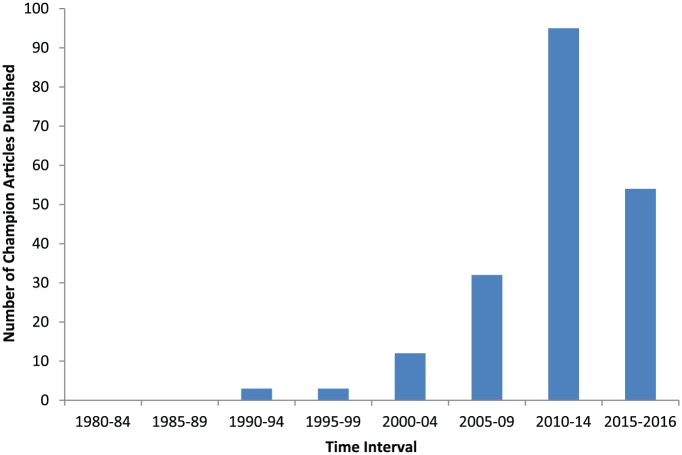
Background/aims: The idea that champions are crucial to effective healthcare-related implementation has gained broad acceptance; yet the champion construct has been hampered by inconsistent use across the published literature. This integrative review sought to establish the current state of the literature on champions in healthcare settings and bring greater clarity to this important construct. Methods: This integrative review was limited to research articles in peer-reviewed, English-language journals published from 1980 to 2016. Searches were conducted on the online MEDLINE database via OVID and PubMed using the keyword “champion.” Several additional terms often describe champions and were also included as keywords: implementation leader, opinion leader, facilitator, and change agent. Bibliographies of full-text articles that met inclusion criteria were reviewed for additional references not yet identified via the main strategy of conducting keyword searches in MEDLINE. A five-member team abstracted all full-text articles meeting inclusion criteria. Results: The final dataset for the integrative review consisted of 199 unique articles. Use of the term champion varied widely across the articles with respect to topic, specific job positions, or broader organizational roles. The most common method for operationalizing champion for purposes of analysis was the use of a dichotomous variable designating champion presence or absence. Four studies randomly allocated of the presence or absence of champions. Conclusions: The number of published champion-related articles has markedly increased: more articles were published during the last two years of this review (i.e. 2015–2016) than during its first 30 years (i.e. 1980–2009). The number of champion-related articles has continued to increase sharply since the year 2000. Individual studies consistently found that champions were important positive influences on implementation effectiveness. Although few in number, the randomized trials of champions that have been conducted demonstrate the feasibility of using experimental design to study the effects of champions in healthcare.
Overview
The claims and statistics of this paper haven’t been checked yet.
Free: it reads the open-access text and checks the first 5 claims that cite a source we can check. Create a free account to check every claim.
Integrity signals
Registry
Cites
Statistics
Figures
Verification
Claims the paper makes
The claims and statistics of this paper haven’t been checked yet.
Free: it reads the open-access text and checks the first 5 claims that cite a source we can check. Create a free account to check every claim.
Claims other papers make about this one
Each is checked against this paper’s own text: does it say what the citing paper says it does?
The source backs part of the claim, not all of it — or backs it for a different population, condition or comparison.
In the citing paper
“the Formally Appointed Internal Implementation Leader and Champion constructs were combined into the Implementation Leads role because of the inability of users to distinguish between the two roles [61], and as affirmed in a review of champions [62].”
From The updated consolidated framework for implementation research based on user feedback (2022) · cites this paper as [62]
Experimental — accuracy not yet measured
Self-check
Percentages, sums and reported differences re-computed from the paper’s own numbers.
The self-check needs the paper’s full text.
Citations
Cites
Damschroder, L. J., Aron, D. C., Keith, R. E., Kirsh, S. R., Alexander, J. A., & Lowery, J. C. (2009) · Implementation Science · doi:10.1186/1748-5908-4-50 · Cited by 14,496
Self-citationA typology of reviews: an analysis of 14 review types and associated methodologies
Grant, M. J., & Booth, A. (2009) · Health Information & Libraries Journal · doi:10.1111/j.1471-1842.2009.00848.x · Cited by 10,817
The integrative review: updated methodology
Whittemore, R., & Knafl, K. (2005) · Journal of Advanced Nursing · doi:10.1111/j.1365-2648.2005.03621.x · Cited by 10,241
Welcome to Implementation Science
Eccles, M. P., & Mittman, B. S. (2006) · Implementation Science · doi:10.1186/1748-5908-1-1 · Cited by 2,254 · cited 2×
“Use of the term “champion” varied widely across the articles with respect to (1) topic (e.”
BackgroundProcess-Tracing Methods: Foundations and Guidelines
Beach, D., & Pedersen, R. (2013) · doi:10.3998/mpub.2556282 · Cited by 1,140
Damschroder, L. J., & Lowery, J. C. (2013) · Implementation Science · doi:10.1186/1748-5908-8-51 · Cited by 734
Self-citationHelfrich, C. D., Li, Y.-F., Sharp, N. D., & Sales, A. E. (2009) · Implementation Science · doi:10.1186/1748-5908-4-38 · Cited by 564
The Role of Perceived Team Effectiveness in Improving Chronic Illness Care
Shortell, S. M., Marsteller, J. A., Lin, M., Pearson, M. L., Wu, S.-Y., Mendel, P., Cretin, S., & Rosen, M. (2004) · Medical Care · doi:10.1097/00005650-200411000-00002 · Cited by 395
The role of the "champion" in infection prevention: results from a multisite qualitative study
Damschroder, L. J., Banaszak-Holl, J., Kowalski, C. P., Forman, J., Saint, S., & Krein, S. L. (2009) · Quality and Safety in Health Care · doi:10.1136/qshc.2009.034199 · Cited by 219
Self-citationShaw, E. K., Howard, J., West, D. R., Crabtree, B. F., Nease, D. E., Tutt, B., & Nutting, P. A. (2012) · The Journal of the American Board of Family Medicine · doi:10.3122/jabfm.2012.05.110281 · Cited by 215
Research works printed but not linked: 1
- Morrison A Moulton K Clark M et al English-language restriction when conducting systematic review-based meta analyses: systematic review of published studies. Ottawa, ON, Canada: Canadian Agency for Drugs and Technologies in Health, 2009.
Cited by
Items 101–200 of 541
Stout, N. L., Harrington, S., Perry, A. M., Alappattu, M. J., Pfab, V., Stewart, B., & Manes, M. R. (2023) · Journal of Cancer Survivorship · doi:10.1007/s11764-023-01374-5 · Cited by 16
Smith, M. A., Nordby, P., Yu, M., & Jaffery, J. B. (2019) · Applied Ergonomics · doi:10.1016/j.apergo.2019.103023 · Cited by 15
Costa, L., Bobay, K. L., Hughes, R. G., Bahr, S. J., Siclovan, D. M., Nuccio, S. A., & Weiss, M. (2020) · Nursing Outlook · doi:10.1016/j.outlook.2020.07.005 · Cited by 15
Shattuck, D. G., Richard, B. O., Jaramillo, E. T., Byrd, E., & Willging, C. E. (2022) · Frontiers in Health Services · doi:10.3389/frhs.2022.920790 · Cited by 16
Aravind, G., Graham, I. D., Cameron, J. I., Ploughman, M., & Salbach, N. M. (2023) · Frontiers in Rehabilitation Sciences · doi:10.3389/fresc.2023.1064266 · Cited by 15
“When present, program champions - individuals who believe in and support the program and its potential for impact-helped to increase organizational, and community buy-in for the program, support training, aid in resolving challenges and maintain motivation (56, 57).”
BackgroundMena, S., Moullin, J. C., Schneider, M. P., & Niquille, A. (2023) · BMC Geriatrics · doi:10.1186/s12877-023-04335-w · Cited by 15
“The mechanism for how this implementation strategy works varies, for example it may be by them having a positive attitude towards it, by serving as team leader or by educating staff about the intervention [58, 59].”
BackgroundVarpula, J., Ameel, M., & Lantta, T. (2024) · Journal of Psychiatric and Mental Health Nursing · doi:10.1111/jpm.13069 · Cited by 14
Sharma, K. P., DeGroff, A. S., Maxwell, A. E., Cole, A., Escoffery, N. C., & Hannon, P. A. (2021) · American Journal of Preventive Medicine · doi:10.1016/j.amepre.2021.03.002 · Cited by 15
Sommer, R., Linder, S., Ziemainz, H., & Gelius, P. C. (2021) · German Journal of Exercise and Sport Research · doi:10.1007/s12662-021-00745-3 · Cited by 16
“Our findings add to the existing literature, which states that champions are a prerequisite for project’ institutionalization (Goodman & Steckler, 1989) and can positively influence implementation effectiveness (Miech et al., 2018).”
ResultLaur, C. V., Bell, J., Valaitis, R. F., Ray, S., & Keller, H. (2021) · BMJ Nutrition Prevention & Health · doi:10.1136/bmjnph-2021-000281 · Cited by 14
“18 In addition, the focus is typically on the role of champions during initial implementation, rather than how that role continues longer term or facilitates spread to other sites, thus leaving gaps in our understanding of the long-term role of champions and how the role changes over time.”
InfluentialProgram Barriers and Facilitators in Virtual Cancer Exercise Implementation: A Qualitative Analysis
Gorzelitz, J., Bouji, N., & Stout, N. L. (2022) · Translational Journal of the American College of Sports Medicine · doi:10.1249/tjx.0000000000000199 · Cited by 16
“This was reflected by our interviewees as a critical component to the success of their virtual program implementation and is a well-characterized strategy in successful implementation efforts (27).”
BackgroundMorgan, T. L., Pletch, J., Faught, E., Fortier, M., Gazendam, M. K., Howse, K., Jain, R., Lane, K. N., Maclaren, K., McFadden, T., et al. (2023) · BMC Medical Informatics and Decision Making · doi:10.1186/s12911-023-02147-x · Cited by 14
Development of a managed clinical network for children’s palliative care – a qualitative evaluation
Papworth, A., Fraser, L., & Taylor, J. (2021) · BMC Palliative Care · doi:10.1186/s12904-021-00712-7 · Cited by 14
Peeples, A., Muralidharan, A., McCarthy, S., Goldberg, R. W., Kuykendall, L., Vineyard, N., & Chinman, M. (2022) · Journal of General Internal Medicine · doi:10.1007/s11606-022-07782-0 · Cited by 14
Sperling, D., Shadmi, E., Drach‐Zahavy, A., & Luz, S. (2022) · Frontiers in Psychology · doi:10.3389/fpsyg.2022.872131 · Cited by 14
“care from within the organization (Miech et al., 2018; Bonawitz et al., 2020).”
Dontje, M. L., Reenen, E. T. K., van Wijk, E., Baars, E., Visser‐Meily, J. M. A., Beelen, A., on behalf of the Study Group ALS Home monitoring & Coaching, van Os, J., van den Berg, L. H., van der Meijden, C., et al. (2022) · BMC Health Services Research · doi:10.1186/s12913-022-08724-6 · Cited by 14
“According to literature, project ‘champions’ have a positive effect on implementation outcomes and are often considered as a key factor for implementation success [41].”
BackgroundKatz, C., Robles, N., Novillo-Ortiz, D., & Saigí-Rubió, F. (2024) · Digital Health · doi:10.1177/20552076241251951 · Cited by 15
“…that champions play in the telemedicine implementation process is inconclusive, 12 which in part is due to the diversity of the TC approaches used, making comparative analysis dif fi cult, 98 and also to the challenge of determining TC attributes from other telemedicine implementation strategies.”
Ray, J. M., Finn, E. B., Tyrrell, H., Aloe, C. F., Perrin, E. M., Wood, C. T., Miner, D. S., Grout, R. W., Michel, J. J., Damschroder, L. J., et al. (2024) · Journal of Medical Internet Research · doi:10.2196/51952 · Cited by 14
“Health care environments are complex, where interactions occur among and between people engaged in the system (eg, clinician, patient, and chief medical information officer) as well as tools and technologies needed to complete tasks within the clinical environments [12,16].”
BackgroundSelf-citationSchol, C. M. A., Ista, E., Rinket, M. A., Berger, E., Gommers, D. A. M. P. J., & van Mol, M. M. C. (2024) · Intensive and Critical Care Nursing · doi:10.1016/j.iccn.2024.103921 · Cited by 13
Ang, W. L. S., Zhang, D., Cai, H., & Chew, H. S. J. (2025) · Journal of Clinical Nursing · doi:10.1111/jocn.17629 · Cited by 15
Calo, W. A., Doerksen, S. E., Spanos, K. E., Pergolotti, M., & Schmitz, K. H. (2020) · Implementation Science Communications · doi:10.1186/s43058-020-00060-2 · Cited by 13
Development of a Clinical-Academic-Community Collaboration to Improve Health Literacy
Friedman, D. B., Arent, M. A., Yelton, B., Sakhuja, M., Haynes, V. E., Noblet, S. B., Brandt, H. M., Isenhower, W. D., Wandersman, A. H., Zona, D., et al. (2020) · Journal of Primary Care & Community Health · doi:10.1177/2150132720957440 · Cited by 14
Martyn, M. M., McClaren, B., Janinski, M., Lynch, E. L., Cunningham, F., & Gaff, C. (2020) · Patient Education and Counseling · doi:10.1016/j.pec.2020.10.013 · Cited by 13
Baggett, K. M., Davis, B., Landry, S. H., Feil, E. G., Whaley, A., Schnitz, A. G., & Leve, C. S. (2020) · Journal of Medical Internet Research · doi:10.2196/18519 · Cited by 13
“This norm-referenced measure, with demonstrated adequate reliability and validity [29], provides a cutoff score for social-emotional behaviors in the concern range.”
BackgroundSims‐Gould, J., McKay, H. A., & Franke, T. (2022) · Health & Social Care in the Community · doi:10.1111/hsc.13751 · Cited by 14
de Wit, M., Kleijnen, M. H. P., Lissenberg-Witte, B. I., van Uden‐Kraan, C. F., Millet, K., Frambach, R. T., & Leeuw, I. M. V. (2019) · Journal of Medical Internet Research · doi:10.2196/14985 · Cited by 18
“This finding sheds light on the commonly used practice of “implementation champions” [46], suggesting that this is not always the straightforward choice; however, more research is needed to understand this process.”
Levine, R., Zingelman, S., McSween, M., Shrubsole, K., Hill, A. J., & Copland, D. A. (2023) · Archives of Physical Medicine and Rehabilitation · doi:10.1016/j.apmr.2023.08.018 · Cited by 13
Langley, J. E., Urquhart, R., Tschupruk, C., Christian, E., & Warner, G. (2024) · BMJ Open · doi:10.1136/bmjopen-2023-079234 · Cited by 16
“43 The champion role was pivotal to practices maintaining momentum and truly integrating EPIC into their practice and is an acknowledged strategy to help overcome implementation barriers.”
Chavez, M., Blevins, K. R., Brown, C., Giles, A. J., Matthieu, M. M., Wester, M., Heuer, J. N., Hahm, B., Lind, J. D., Melillo, C., et al. (2022) · Journal of Veterans Studies · doi:10.21061/jvs.v8i2.360 · Cited by 12
Cloutier, R. M., Cole, E. S., McDonough, B. L., Lomauro, D., Miller, J. P., Talbert, A., Bear, T., Bridges, N. C., Foulds, A. L., Taber, R., et al. (2023) · Implementation Research and Practice · doi:10.1177/26334895231152808 · Cited by 12
“In Project RAMP, MOUD Champions promoted MOUD adoption, assisted in coordinating and completing key project activities, as well as facilitated the recruitment of additional practices (Miech et al., 2018).”
BackgroundImplementing Parenting Programs in Primary Care: A Framework and a Call for Action
Buchanan, G. J. R., Sullivan, E., Berkel, C., Breitenstein, S. M., Feinberg, E., Valado, T., & Willis, D. (2023) · Academic Pediatrics · doi:10.1016/j.acap.2023.04.006 · Cited by 13
Change agent’s role in facilitating use of technology in residential aged care: A systematic review
Rigby, K., Redley, B., & Hutchinson, A. M. (2023) · International Journal of Medical Informatics · doi:10.1016/j.ijmedinf.2023.105216 · Cited by 13
Denninger, N.-E., Brefka, S., Skudlik, S., Leinert, C., Mross, T., Meyer, G., Sulmann, D., Dallmeier, D., Denkinger, M. D., & Müller, M. (2023) · International Journal of Nursing Studies · doi:10.1016/j.ijnurstu.2023.104645 · Cited by 13
Identifying Healthcare Information Systems Enablers in a Developing Economy
Ebardo, R. A., & Tuazon, J. B. (2019) · IEEE International Conference on Engineering Technologies and Applied Sciences (ICETAS) · doi:10.1109/icetas48360.2019.9117421 · Cited by 12
“The role of project champions is crucial so that the benefits are cascaded within the organization and that change management is executed [49].”
BackgroundCzaja, A. S., Mink, R. B., Herman, B. E., Weiss, P. G., Turner, D. A., Curran, M. L., Stafford, D. E. J., Myers, A., & Langhan, M. L. (2024) · Journal of Medical Education and Curricular Development · doi:10.1177/23821205231225011 · Cited by 11
“37,38 Self-directed learning was less commonly reported, primarily among those who were more actively engaged in the development of EPAs.”
BackgroundNurses' engagement in advance care planning practices: A descriptive cross‐sectional study
Lee, S., Cui, N., & Kim, H. (2024) · Journal of Clinical Nursing · doi:10.1111/jocn.17376 · Cited by 11
Mental health screening in pediatric primary care for children with autism
Stadnick, N. A., Martinez, K., Coleman, K. J., Gizzo, D. P., Lane, E., Lee, N., Kuelbs, C. L., Aarons, G. A., & Brookman-Frazee, L. I. (2022) · Autism · doi:10.1177/13623613211062963 · Cited by 11
“, in press) and three primary implementation strategies: (1) provider/clinic champions (Miech et al., 2018), (2) periodic reflections (Finley et al.”
Stevens, B., Bueno, M., Rao, M., Almeida, C., Cotic, A., Streitenberger, L., Fleming‐Carroll, B., & Breen‐Reid, K. (2022) · Implementation Science Communications · doi:10.1186/s43058-022-00294-2 · Cited by 12
“Clinical champions notably have intrinsic interest and commitment to implementing change; are enthusiastic, dynamic, and persistent; and have the strength of conviction [1].”
BackgroundGreen, A., Hosie, A., Phillips, J. L., Kochovska, S., Noble, B., Brassil, M., Cumming, A., Lawlor, P. G., Bush, S. H., Davis, J. M., et al. (2022) · Palliative Medicine · doi:10.1177/02692163221113163 · Cited by 12
Hancock, N., Houghton, J. R., & Jones, F. (2022) · Disability and Rehabilitation · doi:10.1080/09638288.2022.2127930 · Cited by 11
Yanguela, J., Pence, B. W., Udedi, M. M., Banda, J. C., Kulisewa, K., Zimba, C. C., Malava, J., Akiba, C. F., Dussault, J. M., Morrison, A. M., et al. (2024) · The Lancet Global Health · doi:10.1016/s2214-109x(23)00597-1 · Cited by 12
“22 However, champion performance is affected by multiple factors, including the level of support from organisational leaders.”
Perera, N., Haldane, V. E., Ratnapalan, S., Samaraweera, S., Karunathilake, M., Gunarathna, C., Bandara, P., Kawirathne, P., & Wei, X. (2022) · International Journal of Evidence-Based Healthcare · doi:10.1097/xeb.0000000000000307 · Cited by 11
“Champions are key to the success of many quality improvement endeavours, including those related to IPC, and more broadly are viewed as agents of change within health facili-ties.(21,25,26) The potential of champions and staff leaders to lead change is particularly important during emergencies where the demands of the…”
BackgroundSlatore, C. G., Golden, S. E., Thomas, T., Bumatay, S., Shannon, J., & Davis, M. (2021) · Annals of the American Thoracic Society · doi:10.1513/annalsats.202103-333oc · Cited by 11
Paul, C. L., Warren, G., Vinod, S., Meiser, B., Stone, E., Barker, D., White, K., McLennan, J., Day, F., McCarter, K., et al. (2021) · Implementation Science · doi:10.1186/s13012-021-01092-5 · Cited by 10
Weiner, B. J., Meza, R. D., Klasnja, P., Lengnick‐Hall, R., Buchanan, G. J. R., Lyon, A. R., Mettert, K. D., Boynton, M. H., Powell, B. J., & Lewis, C. C. (2024) · Frontiers in Health Services · doi:10.3389/frhs.2024.1443955 · Cited by 10
“Although evidence from primary studies is limited in quantity and quality, systematic reviews conducted by Miech et al. (44) and Santos et al. (45) conclude that champions can be effective in both promoting use of evidence-based interventions and increasing adherence to clinical guidelines, which comport with two impl…”
BackgroundDorhout, B. G., de Groot, C. P. G. M., van Dongen, E. J. I., Doets, E. L., & Haveman‐Nies, A. (2022) · BMC Geriatrics · doi:10.1186/s12877-021-02733-6 · Cited by 12
“The involvement of champions, who are committed to and experienced with the intervention is associated with the intervention’s success [15, 31].”
BackgroundReese, S. E., Glover, A., Fitch, S., Salyer, J., Lofgren, V., & McCracken, C. (2023) · Maternal and Child Health Journal · doi:10.1007/s10995-023-03842-x · Cited by 10
“The research team included a physician champion (Miech et al., 2018; Shaw et al., 2012), clinic leadership, the Empaths principal investigator (a Licensed Clinical Social Worker), and the principal investigator of the Montana Maternal Health Innovation Grant funded by HRSA, where Empaths is nested.”
Richards, K. L., Phillips, M. D., Grycuk, L., Hyam, L., Allen, K. L., & Schmidt, U. H. (2024) · Journal of Eating Disorders · doi:10.1186/s40337-024-01000-4 · Cited by 10
“This aligns with research demonstrating that change efforts are more likely to be successful if there are multiple layers of champions across different levels within an organisation [44].”
BackgroundMorrow, A., Baffsky, R., Tucker, K., Parkinson, B., Steinberg, J., Chan, P., Kennedy, E., Debono, D. S., Hogden, E., & Taylor, N. J. (2024) · BMC Health Services Research · doi:10.1186/s12913-024-11857-5 · Cited by 11
Olojede, O. E., Falade, A. G., Bakare, A. A., McCollum, E. D., Iuliano, A., Isah, A., Osebi, A., Ahmar, S., Valentine, P., Olowookere, T. F., et al. (2024) · BMJ Public Health · doi:10.1136/bmjph-2024-001211 · Cited by 10
“While there have been some positive developments in pulse oximeter and probe technology, 37 39 there are few affordable oximeters currently available and many examples of cheap and unregulated devices in the market.”
Establishing a Collaborative Care CBT Milieu in Adolescent Inpatient Units
Creed, T. A., Waltman, S. H., & Williston, M. A. (2020) · Cognitive Therapy and Research · doi:10.1007/s10608-020-10134-z · Cited by 10
“The organization’s leadership, board members, and other identified implementation champions voiced their commitment to, and support for, CBT implementation (Miech et al. 2018), and then acted on that support by adjusting staffing for coverage, work schedules, and other policies to facilitate participation by staff.”
BackgroundWhat strategies are used by clinician champions to reduce low-value care?
Parchman, M. L., Palazzo, L. G., Mogk, J. M., Webbon, J. C., Demosthenes, L. D., Vossenkemper, E., Hoke, G., Moskovitz, J. B., Dunlap, L., & Carpio, R. O. D. D. (2022) · SAGE Open Medicine · doi:10.1177/20503121211069855 · Cited by 11
Ma, T., Tellegen, C. L., & Sanders, M. R. (2022) · American Journal of Community Psychology · doi:10.1002/ajcp.12623 · Cited by 11
Adnan, N. B. B., Baldwin, C. E., Dafny, H. A., & Chamberlain, D. J. (2022) · Frontiers in Psychology · doi:10.3389/fpsyg.2022.991946 · Cited by 11
Fasugba, O., Cheng, H., Dale, S., Coughlan, K., McInnes, E., Cadilhac, D. A.-M., Cheung, N. W., Hill, K. M., Page, K., Sanjuán, E., et al. (2025) · Implementation Science · doi:10.1186/s13012-025-01415-w · Cited by 9
“…are considered as ‘change agents’ or ‘champi-ons’ and their key roles are to identify, engage, and connect stakeholders; facilitate collaboration including the development of implementation action plans; support communication and information sharing; and evaluate practice change [6, 8–10].”
Gawthorne, J. L., McCloughen, A., Branch, J., McPhillips, O., Scott, D., & Curtis, K. A. (2025) · Journal of Advanced Nursing · doi:10.1111/jan.70169 · Cited by 10
“Champions have consistently been shown to support the uptake and sustained use of evidence-based practices by influencing peer behaviours and reinforcing change within local contexts (Miech et al. 2018; Morena et al. 2022; Santos et al. 2022).”
Shaw, A., Morton, K., King, A. J. L., Chalder, M., Calvert, J., Jenkins, S., & Purdy, S. (2020) · BMJ Open Respiratory Research · doi:10.1136/bmjresp-2019-000515 · Cited by 9
Penney, L., Moreau, J. L., Miake-Lye, I. M., Lewis, D., D'Amico, A., Lee, K., Scott, B., Kirsh, S., & Cordasco, K. M. (2020) · Healthcare · doi:10.1016/j.hjdsi.2020.100516 · Cited by 9
Venkatraman, S., Sundarraj, R. P., & Seethamraju, R. (2022) · Information and Organization · doi:10.1016/j.infoandorg.2022.100430 · Cited by 10
Sprang, G., Miech, E. J., & Gusler, S. (2023) · Implementation Research and Practice · doi:10.1177/26334895231164582 · Cited by 10
“…in healthcare revealed that over 90% of the studies focused on determining the presence or absence of champions, with only a few providing estimates of degree of leadership, advocacy effectiveness, and the relative strength and direction of their influence on implementation (Miech et al., 2018).”
BackgroundMethodInfluentialSelf-citationBrewington, M., Queen, T. L., Heisler-MacKinnon, J., Calo, W. A., Weaver, S., Barry, C., Kong, W. Y., Kennedy, K. L., Shea, C. M., & Gilkey, M. B. (2024) · Implementation Science Communications · doi:10.1186/s43058-024-00557-0 · Cited by 9
“Such an approach would be consistent with prior studies which have found that engaging multiple cham-pions is preferable to having champions serve alone and could also offer potential relief for over-burdened physicians with limited time for additional duties [2].”
BackgroundResultvan Drumpt, S., Timan, T., Talie, S., Veugen, T., & van de Burgwal, L. (2024) · Health and Technology · doi:10.1007/s12553-024-00850-x · Cited by 11
“An active facilitator, often termed a champion in literature [40], significantly influences the co-creation process's success.”
Siebeck, O. S., & Hoving, C. (2024) · PEC Innovation · doi:10.1016/j.pecinn.2024.100339 · Cited by 10
Doherty, T., Petrus, R., Land, S. J., Horwood, C. M., Filippi, V., Haskins, L., Phewa, C., Mapumulo, S., Luthuli, S., & John, V. M. (2025) · Global Health Action · doi:10.1080/16549716.2024.2440982 · Cited by 10
“We chose to use the term ‘cham-pion’ because this term has been used in health systems interventions to reflect someone who is internal to an organisation with an interest and commitment to implementing change [38].”
Using Lean-Facilitation to Improve Quality of Hepatitis C Testing in Primary Care
Yakovchenko, V., DeSotto, K., Drainoni, M., Lukesh, W., Miller, D. R., Park, A. Y. S., Shao, Q., Thornton, D. J., & Gifford, A. L. (2020) · Journal of General Internal Medicine · doi:10.1007/s11606-020-06210-5 · Cited by 9
Implementing specialised vestibular physiotherapy in an emergency department: a process evaluation
Ip, K., Lloyd, M., Luscombe, A., & Hitch, D. (2022) · Implementation Science Communications · doi:10.1186/s43058-022-00313-2 · Cited by 10
“The use of champions has also been found to enable successful implementation in healthcare (28), however similar to previous innovations the position was not operationalized formally in this study.”
ResultStout, N. L., Utzman, R. R., Hazard-Jenkins, H. W., Burkart, M., & Swisher, A. K. (2022) · Journal of Cancer Survivorship · doi:10.1007/s11764-022-01304-x · Cited by 9
Horgan, S., Hegarty, J. M., Andrews, E. J., Hooton, C., & Drennan, J. (2023) · Journal of Clinical Nursing · doi:10.1111/jocn.16690 · Cited by 11
Golden, S. E., Currier, J. J., Ramalingam, N., Patzel, M., Shannon, J., Davis, M. M., & Slatore, C. G. (2023) · The Journal of the American Board of Family Medicine · doi:10.3122/jabfm.2023.230109r1 · Cited by 10
Elwy, A. R., Kim, B., Plumb, D. N., Wang, S., Gifford, A. L., Asch, S. M., Bormann, J. E., Mittman, B. S., Valente, T. W., & Palinkas, L. A. (2019) · Administration and Policy in Mental Health and Mental Health Services Research · doi:10.1007/s10488-019-00945-y · Cited by 9
“The term “champion” is often used to describe providers who serve as these critical change agents; these provider champions have been defined as those who are internal to an organization, have an intrinsic interest or commitment to implementing change, and who are enthusiastic people who work diligently to drive imple…”
BackgroundKnobloch, M. J., Musuuza, J., McKinley, L. L., Zimbric, M. L., Baubie, K., Hundt, A. S., Carayon, P., Hagle, M. E., Pfeiffer, C. D., Galea, M., et al. (2020) · American Journal of Infection Control · doi:10.1016/j.ajic.2020.12.012 · Cited by 9
Adcock, A., Cram, F., Edmonds, L., & Lawton, B. (2023) · Qualitative Health Research · doi:10.1177/10497323231164550 · Cited by 8
“commitment, diligence, enthusiasm, and conviction (Bonawitz et al., 2020; Miech et al., 2018).”
BackgroundHurtado, D. A., Greenspan, S. A., Dumet, L. M., & Heinonen, G. A. (2020) · The Joint Commission Journal on Quality and Patient Safety · doi:10.1016/j.jcjq.2020.08.003 · Cited by 8
Hill, A., Loo, C. Y., Coulter, S., Watson, C., Vaz, S. M. A., Morris, M. E., Flicker, L. A., & Weselman, T. (2025) · Western Journal of Nursing Research · doi:10.1177/01939459251319078 · Cited by 8
Quintana, A., Mayhew, S., Kovats, S., & Gilson, L. (2025) · Oxford Open Climate Change · doi:10.1093/oxfclm/kgaf014 · Cited by 9
Cook, N., Gunn, R., McGrath, R., Donovan, J., Pisciotta, M., Owens-Jasey, C., Fein, H. L., Templeton, A. R., Larson, Z., & Gold, R. B. (2025) · BMJ Open · doi:10.1136/bmjopen-2025-100340 · Cited by 9
Pineda‐Antúnez, C., Contreras-Loya, D., Rodríguez-Atristain, A., Opuni, M., & Bautista-Arredondo, S. A. (2021) · PLoS ONE · doi:10.1371/journal.pone.0260571 · Cited by 10
“Our result that provider knowledge scores were higher in facilities with at least one senior staff is supported by the extensive literature on champions as important facilitators in the successful implementation of health care services [71].”
BackgroundForsgren, E., & Saldert, C. (2022) · Health Expectations · doi:10.1111/hex.13606 · Cited by 10
“Implementation also has to adapt to the local context,(27,28) and some note the importance of engaging key individuals or champions who support the project in the organization's social networks.(29) Moreover, the support of active and empowering managers has been found to be essential,(28,30) and giving feedback on th…”
BackgroundCBT for Youth Anxiety: How Does It Fit Within Community Mental Health?
Kendall, P. C., Maxwell, C. A., Jakubovic, R. J., Ney, J. S., McKnight, D. S., & Baker, S. (2022) · Current Psychiatry Reports · doi:10.1007/s11920-022-01403-7 · Cited by 10
Research With Marginalized Communities: Reflections on Engaging Roma Women in Northern England
Hubbard, L., Hardman, M. L., Race, O., Palmai, M., & Vamosi, G. (2023) · Qualitative Inquiry · doi:10.1177/10778004231176770 · Cited by 8
“Furthermore, employing RCs has become a common occurrence when undertaking quality health improvements and implementing new interventions (Miech et al., 2018).”
BackgroundBaumann, A. A., Hankins, J. S., Hsu, L. L.-Y., Gibson, R. W., Richardson, L. D., Treadwell, M. J., Glassberg, J., Bourne, S., Luo, L., Masese, R. V., et al. (2023) · BMC Health Services Research · doi:10.1186/s12913-023-10255-7 · Cited by 8
“The concept of champions to support the implementation of healthcare interventions has garnered importance in the literature, albeit with different names (e.g., champion, knowledge broker, change agent) [32, 33].”
BackgroundPenney, L., Bharath, P., Miake-Lye, I. M., Leng, M., Olmos‐Ochoa, T. T., Finley, E. P., Chawla, N., Barnard, J. M., & Ganz, D. A. (2021) · BMC Health Services Research · doi:10.1186/s12913-021-06850-1 · Cited by 9
Presant, C. A., Ashing, K. T., Yeung, S., Macalintal, J., Tiep, B. L., Sandoval, A., Brown, S., Cianfrocca, M. E., Erhunmwunsee, L., Raz, D. J., et al. (2022) · Cancer Causes & Control · doi:10.1007/s10552-022-01619-1 · Cited by 9
EBP champion responsibilities and sustainability: A scoping review
Ferren, M. D., Ah, D. M. V., & Menachemi, N. (2022) · Nursing Management · doi:10.1097/01.numa.0000853152.64293.46 · Cited by 10
Yang, S., Tao, R., Bhattar, M., Shen, L., Jones, M., Garbacz, A., & Passmore, S. R. (2023) · Preventive Medicine Reports · doi:10.1016/j.pmedr.2023.102508 · Cited by 9
“(Miech et al., 2018) The C3 campaign collaborated with a community partner, the South-western Wisconsin Community Action Program, to identify two types of community champions in southwestern Wisconsin: (a) clinicians serving rural counties and (b) local community leaders (e.g., pastors, local…”
BackgroundNurse Champions: Transforming Evidence-Based Practice
Universidad Industrial de Santander, B., Quiroga-Pico, L. N., Lora, A. M. A., Fundación Cardiovascular de Colombia, F., Díaz-Castañeda, T. M., Fundación Cardiovascular de Colombia, F., Rojas, L. Z., & Fundación Cardiovascular de Colombia, U. I. D. S. (2024) · Revista CUIDARTE · doi:10.15649/cuidarte.3745 · Cited by 9
Black, C. J., Placencio‐Castro, M., Phend, G., Havugimana, J. M. V., Umulisa, G., Uwamahoro, P., Nyirahabimana, M. G., Bond, L., Hernandez, K., Jensen, S. K. G., et al. (2025) · Journal of Child Psychology and Psychiatry · doi:10.1111/jcpp.14160 · Cited by 9
“…communication; and (f) the identification and engagement of champions in the government and community to advocate for the programme’s expansion and sustainment (Aarons, Sklar, Mustanski, Benbow, & Brown, 2017; Hurlburt et al., 2014; Miech et al., 2018; Powell et al., 2015; Tyler & Glasgow, 2021).”
Salma, I., & Waelli, M. (2022) · Healthcare · doi:10.3390/healthcare10030417 · Cited by 9
“Definitions of IFINP components based on the previous literature [33,43,63].”
BackgroundBoklage, E., Weiß, B., Hanefeld, J., Steinecke, K., Jansen, A., Эркинович, А. Х., Алиханович, В. А., Alimov, A., Seybold, J., Spies, C., et al. (2023) · BMJ Health & Care Informatics · doi:10.1136/bmjhci-2022-100675 · Cited by 7
“An integrative review of champions in healthcare found them among critical factors in project implementation success 9 .”
BackgroundLuckett, T., Phillips, J. L., Agar, M. R., Richards, L., Reynolds, N. L., Garcia, M., Davidson, P. M., Shaw, T. J., Currow, D. C., Boyle, F. M., et al. (2024) · BMC Health Services Research · doi:10.1186/s12913-024-11243-1 · Cited by 11
“Like most research to date [33, 34], our trial focused largely on the advocacy role played by clinical champions, neglecting more practical and time consuming aspects that our interviews identified to be just as important.”
MethodLunz, L., Würth, S., & Kulnik, S. T. (2025) · JMIR Cardio · doi:10.2196/71366 · Cited by 7
“The concept of implementation champions stems from implementation science and describes a role occupied by people who are internal to an organization, have an intrinsic interest to implementing a change, and are committed to drive implementation forward [33].”
Cooper, S., & Stevenson, F. A. (2022) · Health Expectations · doi:10.1111/hex.13519 · Cited by 7
Sebastian, R. A., Gunderson, L. M., Ramos, M. M., & Willging, C. E. (2022) · Journal of Community Psychology · doi:10.1002/jcop.22937 · Cited by 8
Clinicians’ Perspectives on Equitable Health Care Delivery in Group Well-Child Care
Gresh, A., Ahmed, N., Boynton‐Jarrett, R., Sharifi, M., Rosenthal, M. S., & Fenick, A. M. (2023) · Academic Pediatrics · doi:10.1016/j.acap.2023.06.010 · Cited by 7
Hyde, A. M., Johnson, E., Luig, T., Schroeder, D., Carbonneau, M., Campbell-Scherer, D. L., & Tandon, P. (2023) · BMC Health Services Research · doi:10.1186/s12913-023-09632-z · Cited by 7
“Key to overcoming these contextual challenges will be a focus on fostering communities of engaged healthcare providers at each study site, identifying site champions [59], and creating awareness of the positive impacts of the order set [32, 60].”
BackgroundHaugsten, E. R., Vestergaard, T., & Trettin, B. (2023) · JMIR Dermatology · doi:10.2196/44913 · Cited by 10
“A study by Miech et al [27] corroborated this view and identified the existence of champions to be among the elements associated with successful implementation in health care.”
BackgroundCarlisle, N. H., Watson, H. A., & Shennan, A. H. (2021) · BMJ Open Quality · doi:10.1136/bmjoq-2020-001272 · Cited by 7
Oboirien, K., Goudge, J., Harris, B., & Eyles, J. D. (2019) · Health Policy and Planning · doi:10.1093/heapol/czz110 · Cited by 8
Paul, D., Glover, S., Roche, M. A., Klarnett, K., Chen, X., Wall, J., & Joyce, M. A. (2021) · Contemporary Nurse · doi:10.1080/10376178.2021.1999837 · Cited by 7
“Several key features of the education and support package may explain the changes, which are consistent with those seen by Miech et al. (2018), who noted that the modelling of senior clinicians, ‘champions’, at point of care were highly influential in successful implementations of practice change.”
ResultHIV Preexposure Prophylaxis Service Delivery Models for Emergency Departments: A Qualitative Study
Cowan, E. A., Hoffman, S., Bauman, L. J., Calderon, Y., Gonzalez-Argoti, T., Rael, C. T., Porter, J., & Mantell, J. E. (2025) · Journal of the International Association of Providers of AIDS Care (JIAPAC) · doi:10.1177/23259582251342842 · Cited by 6
“49 Another key facilitator is minimizing disruptions to standard ED work fl ows and reducing the burden on already overextended treatment providers.”
Metadata
- Authors
- Miech, E. J., Rattray, N. A., Flanagan, M. E., Damschroder, L., Schmid, A. A., & Damush, T. M.
- Affiliations
- Regenstrief Institute (US)
- Richard L. Roudebush VA Medical Center (US)
- Health Services Research & Development (US)
- Colorado State University (US)
- Corresponding author
- Miech, Edward J
- ORCID
- Venue
- SAGE Open Medicine
- Publisher
- SAGE Publications
- Published
- 2018-01-01
- Volume
- 6
- Pages
- 2050312118773261-2050312118773261
- ISSN
- 2050-3121 (ISSN-L)
- PMC
- PMC5960847
- OpenAlex
- W2803183181
- Cited by
- 508
- References
- 44
- Citations by year
- 2026: 61 · 2025: 60 · 2024: 85 · 2023: 68 · 2022: 104 · 2021: 65 · 2020: 48 · 2019: 15 · 2018: 2
- FWCI
- 6.01
- Type
- journal article
- Language
- en
- Open access
- gold
- doi.org
- Licence
- cc-by-nc
- journals.sagepub.com/page/policies/text-and-data-mining-license (tdm)
- Locations
- SAGE Open Medicine (publishedVersion, cc-by-nc)
- Europe PMC (PubMed Central) (publishedVersion, cc-by-nc)
- PubMed Central (publishedVersion, cc-by-nc)
- PubMed (publishedVersion)
- IUScholarWorks (Indiana University) (acceptedVersion, cc-by-nc)
- DOAJ (DOAJ: Directory of Open Access Journals) (submittedVersion, cc-by-sa)
- IUScholarWorks (Indiana University) (submittedVersion, cc-by-nc)
- Funders
- VA Stroke QUERI Center (VA HSRD/QUERI STR-03-168)
- Topics
- Health Sciences › Health Professions › General Health Professions › Health Policy Implementation Science
- Health Sciences › Health Professions › General Health Professions › Health Sciences Research and Education
- Social Sciences › Business, Management and Accounting › Organizational Behavior and Human Resource Management › Organizational Change and Leadership
- Keywords
- champions, implementation leadership, healthcare implementation, opinion leaders, change agents, facilitators, implementation effectiveness
About these checks
Registry, retraction, Cites and statistics results are computed, not judged, with one exception: a printed reference that no index lists is read once by a model before it counts as a citation error. Claims are extracted by a model and kept only when their quote appears verbatim in the text; each cited source is then checked, with a model’s help, for whether it says what the claim relies on. Those verdicts can be wrong — read the claim’s quote and the cited source before relying on one.
Statistics and arithmetic are recomputed, not judged.
Confidence bands are shown only for fields calibrated on our annotated test set. None is calibrated yet, so no band is shown.
What counts as a claim ›How we measure confidence ›How we check this ›
Are you an author, or do you see a problem with this page? Request a review
Data sources
Bibliographic data: Semantic Scholar, OpenAlex, Crossref.
Contains information from the Semantic Scholar Academic Graph Datasets, made available under the ODC Attribution License (ODC-BY 1.0).
Semantic Scholar’s data is described in: Kinney, R., et al. (2023). The Semantic Scholar Open Data Platform. arXiv:2301.10140.
