

The conundrum of police officer-involved homicides: Counter-data in Los Angeles County
Open accessThe DOI matches its Crossref record; 32 of the 32 references it cites were found in a registry or an index.
Abstract
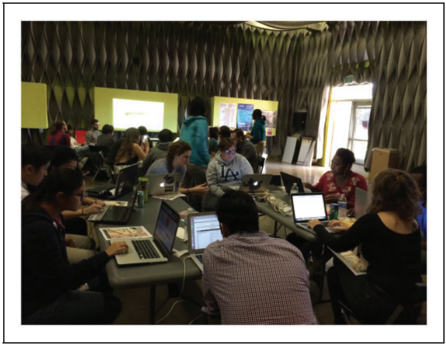
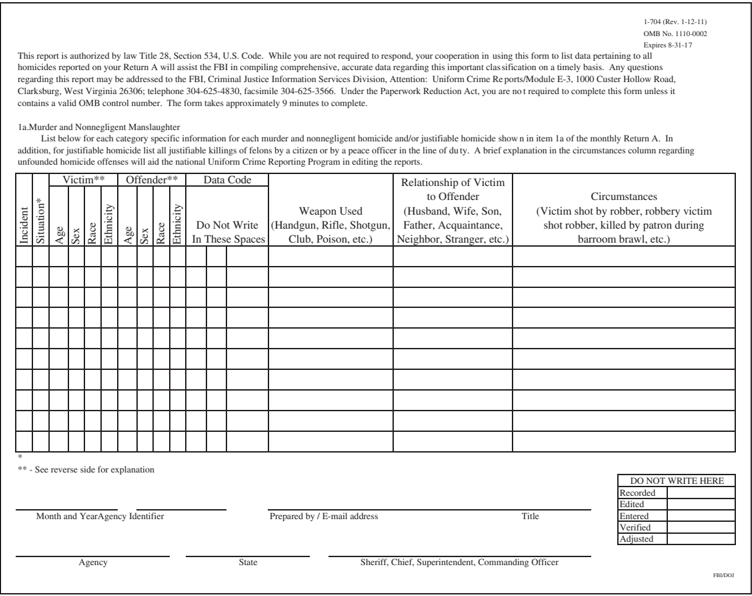
This paper draws from critical data studies and related fields to investigate police officer-involved homicide data for Los Angeles County. We frame police officer-involved homicide data as a rhetorical tool that can reify certain assumptions about the world and extend regimes of power. We highlight the possibility that this type of sensitive civic data can be investigated and employed within local communities through creative practice. Community involvement with data can create a countervailing force to powerful dominant narratives and supplement activist projects that hold local officials accountable for their actions. Our analysis examines four Los Angeles County police officer-involved homicide data sets. First, we provide accounts of the semantics, granularity, scale and transparency of this local data. Then, we describe a “counter data action,” an event that invited members of the community to identify the limits and challenges present in police officer-involved homicide data and to propose new methods for deriving meaning from these indicators and statistics.
Overview
The claims and statistics of this paper haven’t been checked yet.
Free: it reads the open-access text and checks the first 5 claims that cite a source we can check. Create a free account to check every claim.
Integrity signals
Registry
Cites
Statistics
Figures

Verification
Claims the paper makes
The claims and statistics of this paper haven’t been checked yet.
Free: it reads the open-access text and checks the first 5 claims that cite a source we can check. Create a free account to check every claim.
Claims other papers make about this one
Each is checked against this paper’s own text: does it say what the citing paper says it does?
In the citing paper
“Each of these practical choices can have profound ethical implications [10,13,24,31,40], of which data scientists are sometimes well aware.”
From Problem Formulation and Fairness (2019) · cites this paper as [10]
Self-check
Percentages, sums and reported differences re-computed from the paper’s own numbers.
The self-check needs the paper’s full text.
Citations
Cites
boyd, D., & Crawford, K. (2012) · Information, Communication & Society · doi:10.1080/1369118x.2012.678878 · Cited by 5,479 · cited 1×
“We take seriously the claim that ‘‘we are our tools,’’ as the quantification of human features and actions can both enable and place limits on knowledge and action (boyd & Crawford, 2012; Thatcher, 2015).”
BackgroundSorting Things Out: Classification and Its Consequences
(2000) · The Journal of Academic Librarianship · doi:10.1016/s0099-1333(00)00155-5 · Cited by 5,210
The Data Revolution: Big Data, Open Data, Data Infrastructures & Their Consequences
Kitchin, R. (2014) · doi:10.4135/9781473909472 · Cited by 1,469 · cited 2×
“Critical data studies generally critiques the widely held understanding of data as an objective set of facts that exist prior to ideology, politics, or interpretation (Kitchin, 2014).”
BackgroundSorting things out: classification and its consequences
(2000) · Choice Reviews Online · doi:10.5860/choice.37-5139 · Cited by 1,002
Reconstructing Individualism: Autonomy, Individuality, and the Self in Western Thought
Heller, T., & Brooke‐Rose, C. (1986) · Cited by 927
The Politics of Large Numbers: A History of Statistical Reasoning
Houser, J. A., Desrosieres, A., & Naish, C. (1999) · Contemporary Sociology · doi:10.2307/2654208 · Cited by 911 · cited 2×
“Scholars of critical data scholars, rather, set out to expose ‘‘the double role of statistics in representing as well as criticizing reality’’ (Desrosières and Naish, 2002).”
BackgroundToward Information Infrastructure Studies: Ways of Knowing in a Networked Environment
Bowker, G. C., Baker, K., Millerand, F., & Ribes, D. (2009) · International Handbook of Internet Research · doi:10.1007/978-1-4020-9789-8_5 · Cited by 654 · cited 1×
“Infrastructure studies works in tandem with critical data studies to offer a method for analyzing the decisions made at various steps of data gathering, management, design, and display (Bowker, 2007; Bowker et al., 2010).”
MethodMemory Practices in the Sciences
(2006) · Journal of Documentation · doi:10.1108/00220410610688804 · Cited by 603
Critical Making: Conceptual and Material Studies in Technology and Social Life
Ratto, M. (2011) · The Information Society · doi:10.1080/01972243.2011.583819 · Cited by 577 · cited 1×
“Critical making focuses on interrogations of the socio-technical through tracing back the ways ‘‘things are made’’ in order to produce, re-produce, or imagine various objects (Ratto, 2011).”
BackgroundInformation: A Very Short Introduction
Floridi, L. (2010) · Cited by 558
Research works printed but not linked: 5
- Currie M, Paris B, Pasquetto I, et al. (2015) The Police Officer Involved Homicide Database Project. iSchools. iConference Proceedings Newport Beach, CA, 2015. http://hdl.handle.net/2142/73781.
- Mumola CJ (2007) Arrest-Related Deaths in the United States, 2003-2005 . Washington, D.C: Bureau of Justice Statistics.
- Obama B (2015, March) Remarks by the President after meeting with task force on 21st century policing . Press Conference, Washington, D.C. Available at: www.white house.gov/the-press-office/2015/03/02/remarks-presidentafter-meeting-task-force-21st-century-policing (accessed 22 July 2016).
- Thatcher J (2015) Understanding Spatial Media: Locative and Sousveillant Media (SSRN Scholarly Paper No. ID 2657663). Rochester, NY: Social Science Research Network. Available at: http://papers.ssrn.com/abstract= 2657663 (accessed 22 July 2016).
- Uniform Crime Reporting Handbook (2004) 22 . Washington, DC: U.S. Department of Justice, Federal Bureau of Investigation.
Cited by
D'Ignazio, C., & Klein, L. F. (2020) · doi:10.7551/mitpress/11805.001.0001 · Cited by 1,738
Critical data studies: An introduction
Iliadis, A., & Russo, F. (2016) · Big Data & Society · doi:10.1177/2053951716674238 · Cited by 463
Problem Formulation and Fairness
Passi, S., & Barocas, S. (2019) · Proceedings of the Conference on Fairness, Accountability, and Transparency · doi:10.1145/3287560.3287567 · Cited by 283
“Each of these practical choices can have profound ethical implications [10,13,24,31,40], of which data scientists are sometimes well aware.”
BackgroundPlatformic Management, Boundary Resources for Gig Work, and Worker Autonomy
Jarrahi, M. H., Sutherland, W., Nelson, S. B., & Sawyer, S. (2020) · Computer Supported Cooperative Work (CSCW) · doi:10.1007/s10606-019-09368-7 · Cited by 230
Passi, S., & Jackson, S. J. (2018) · Proceedings of the ACM on Human-Computer Interaction · doi:10.1145/3274405 · Cited by 225
“Data science tools and techniques constitute an increasingly common and complex feature of contemporary work settings, impacting modes of knowledge and governance [27,66,67], shaping organizational practices [15,52,99], reconfiguring publics [20,50,56], and simultaneously enabling and constraining the possibilities of…”
BackgroundDatafication and data fiction: Narrating data and narrating with data
Dourish, P., & Gómez Cruz, E. (2018) · Big Data & Society · doi:10.1177/2053951718784083 · Cited by 220
“This is a claim, of course, that has been subject to significant critique from the social science community, with examinations of problems of bias (Angwin et al., 2016), of error (Garnett, 2016), of locality (Bartlett et al., 2018), of power (Currie et al., 2016), and of opacity (Burrell, 2016).”
BackgroundGetting Ourselves Together: Data-centered participatory design research & epistemic burden
Pierre, J., Crooks, R., Currie, M., Paris, B., & Pasquetto, I. (2021) · Proceedings of the 2021 CHI Conference on Human Factors in Computing Systems · doi:10.1145/3411764.3445103 · Cited by 112
“As calls for reckoning with racism embedded in civic systems grew louder, news outlets reported that there was no trusted official database tracking how many people were killed by police across the United States at the time, or historically [14, 21].”
BackgroundInfluentialSelf-citationImprecision farming? Examining the (in)accuracy and risks of digital agriculture
Виссер, О., Sippel, S. R., & Thiemann, L. (2021) · Journal of Rural Studies · doi:10.1016/j.jrurstud.2021.07.024 · Cited by 140
Zukin, S., & Papadantonakis, M. (2017) · Emerald Group Publishing Limited eBooks · doi:10.1108/s0277-283320170000031005 · Cited by 102
Shin, D., Chotiyaputta, V., & Zaid, B. (2022) · Computers in Human Behavior · doi:10.1016/j.chb.2021.107007 · Cited by 84
Suresh, H., Movva, R., Dogan, A. L., Bhargava, R., Cruxen, I., Cuba, A. M., Taurino, G., So, W., & D'Ignazio, C. (2022) · 2022 ACM Conference on Fairness Accountability and Transparency · doi:10.1145/3531146.3533132 · Cited by 64
“When the state and its institutions fail to collect important data, civil society organizations increasingly step in to fill these gaps, performing counterdata collection as a way to regain empowerment, legitimization, and visibility [23, 29, 58].”
BackgroundThylstrup, N. B. (2022) · Media Culture & Society · doi:10.1177/01634437211060226 · Cited by 98
“…formation as critical data set studies, which encompasses the human and social sciences (Bates et al., 2016; Borgman, 2019; Cifor et al., 2019; Currie et al., 2016; Edwards et al., 2013; Hunger, 2018; Kaufmann et al., 2020; Loukissas, 2019; Metcalf and Crawford, 2016; Offert and Bell, 2021;…”
BackgroundCollaborative Data Work Towards a Caring Democracy
Meng, A., DiSalvo, C. F., & Zegura, E. W. (2019) · Proceedings of the ACM on Human-Computer Interaction · doi:10.1145/3359144 · Cited by 85
“Beyond CSCW, scholars have advocated for forms of push-back through practices of counter-data action, practices of employing the tool and processes of data to make contestational claims [14,18].”
MethodDalton, C. M., & Stallmann, T. (2018) · Canadian Geographies / Géographies canadiennes · doi:10.1111/cag.12398 · Cited by 72
“Fortun et al. (2016), Gabrys (2016), Currie et al. (2016), and Brucato (2017) describe the use of data by data designers, citizens, and community members in environmental and police brutality initiatives.”
BackgroundGrassroots resource mobilization through counter-data action
Meng, A., & DiSalvo, C. (2018) · Big Data & Society · doi:10.1177/2053951718796862 · Cited by 51
“Building off of the work of Dalton and Thatcher (2014), Currie et al. (2016) define counterdata action as an act of data appropriation, whereby individuals intervene to contest the truth of a dataset and construct their own metrics (Currie et al., 2016: 4).”
BackgroundMethodInfluentialThe Stakes of Uncertainty: Developing and Integrating Machine Learning in Clinical Care
ELISH, M. C. (2018) · Ethnographic Praxis in Industry Conference Proceedings · doi:10.1111/1559-8918.2018.01213 · Cited by 59
Jones, K. M. L., & McCoy, C. (2018) · Learning Media and Technology · doi:10.1080/17439884.2018.1556216 · Cited by 63
The machine that ate bad people: The ontopolitics of the precrime assemblage
Mantello, P. (2016) · Big Data & Society · doi:10.1177/2053951716682538 · Cited by 53
D’Ignazio, C., Cruxên, I. A., Val, H. S., Cuba, A. M., García-Montes, M., Fumega, S., Suresh, H., & So, W. (2022) · Patterns · doi:10.1016/j.patter.2022.100530 · Cited by 71
“As the literature on data activism has shown, counterdata production may be undertaken by activists, journalists, nonprofit organizations, librarians, citizens, and other groups.(34,35,40,41) Pine and Liboiron(42) have shown that data activism may also come from insiders and experts looking to reframe political proble…”
BackgroundReading datasets: Strategies for interpreting the politics of data signification
Poirier, L. (2021) · Big Data & Society · doi:10.1177/20539517211029322 · Cited by 62
“…the TRI has been effective in addressing pollution—prompting activists to protest polluters, local governments to lower emission standards, and industries to set targets for reductions (Konar and Cohen, 1997; see Currie, 2016, for a discussion of the monitory implications of the TRI’s openness).”
BackgroundConsumer Choicemaking and Choicelessness in Hyperdigital Marketspaces
Dholakia, N., Darmody, A., Zwick, D., Dholakia, R. R., & Fırat, A. F. (2020) · Journal of Macromarketing · doi:10.1177/0276146720978257 · Cited by 50
Digitize and punish: Computerized crime mapping and racialized carceral power in Chicago
Jefferson, B. J. (2017) · Environment and Planning D: Society and Space · doi:10.1177/0263775817697703 · Cited by 48
When open data and data activism meet: An analysis of civic participation in Cape Town, South Africa
Ricker, B. A., Cinnamon, J., & Dierwechter, Y. (2020) · Canadian Geographies / Géographies canadiennes · doi:10.1111/cag.12608 · Cited by 51
Data Practice for a Politics of Care: Food Assistance as a Site of Careful Data Work
Boone, A., DiSalvo, C. F., & Dantec, C. A. L. (2023) · CHI Conference on Human Factors in Computing Systems · doi:10.1145/3544548.3580831 · Cited by 47
Weir, D., McQuillan, D., & Francis, R. A. (2019) · Environmental Monitoring and Assessment · doi:10.1007/s10661-019-7773-9 · Cited by 49
Attack the Data: Agency, Power, and Technopolitics in South African Data Activism
Cinnamon, J. (2019) · Annals of the American Association of Geographers · doi:10.1080/24694452.2019.1644991 · Cited by 46
“…social audit is designed to address data gaps left by official government data production regimes or to produce “counterdata” to contest official data sources and what is believed to be their partial or inaccurate representations of reality (Currie et al. 2016; Dalton, Taylor, and Thatcher 2016).”
BackgroundRubel, L. H., Nicol, C., & Chronaki, A. (2021) · Educational Studies in Mathematics · doi:10.1007/s10649-021-10087-4 · Cited by 42
Data in movement: the social movement society in the age of datafication
Milan, S., & Beraldo, D. (2024) · Social movement studies · doi:10.1080/14742837.2024.2331550 · Cited by 40
“Movements mobilizing on issues like climate change or racism, among others, increasingly embrace data-enabled practices: they may ‘start counting’ (Currie et al., 2016) to gather independent evidence on social problems for advocacy purposes, as showcased by the examples introducing the article.”
BackgroundMeng, A., DiSalvo, C. F., Tsui, L., & Best, M. L. (2019) · The Information Society · doi:10.1080/01972243.2019.1613464 · Cited by 33
Prost, S., Ntouros, V., Wood, G., Collingham, H., Taylor, N., Crivellaro, C., Rogers, J., & Vines, J. (2023) · Designing Interactive Systems Conference · doi:10.1145/3563657.3596054 · Cited by 31
Huelss, H. (2019) · International Political Sociology · doi:10.1093/ips/olz023 · Cited by 31
Epidemiological rage: Population, biography, and state responsibility in trans- health activism
Hanssmann, C. (2020) · Social Science & Medicine · doi:10.1016/j.socscimed.2020.112808 · Cited by 28
Endangered Salares : micro-disasters in Northern Chile
Bonelli, C., & Dorador, C. (2021) · Tapuya: Latin American Science, Technology and Society · doi:10.1080/25729861.2021.1968634 · Cited by 25
Configuring Fakes: Digitized Bodies, the Politics of Evidence, and Agency
Paris, B. S. (2021) · Social Media + Society · doi:10.1177/20563051211062919 · Cited by 29
“However, set within the legal system and related structures of inequality, there has been little substantive change based on this audiovisual evidence wielded by nonexperts (Currie et al., 2016; Paris & Pierre, 2017; Wood, 2017).”
BackgroundSelf-citationSun, Y., & Yin, S. (2022) · New Media & Society · doi:10.1177/14614448221096806 · Cited by 23
“Crowdsourcing a dataset of grassroots data and making an alternative infrastructure in which to archive the citizen data are good examples of “counter-data action” (Currie et al., 2016: 2) involving critical making processes.”
BackgroundMethodWhat difference do data make? Data management and social change
Currie, M. E., Paris, B. S., & Donovan, J. (2018) · Online Information Review · doi:10.1108/oir-02-2018-0052 · Cited by 21
“…set of literature examines social and activist movements that organise in response to data collection by corporations and the state (Milan and Van der Velden, 2016; Liboiron, 2015; Currie et al, 2016; Bruno et al., 2014; Dalton and Stallmann, 2018; Dalton and Thatcher, 2014; Gieseking 2018).”
BackgroundSelf-citationReconfiguring Data Relations: Institutional Dynamics around Data in Local Governance
Lee, S., & Dourish, P. (2024) · Proceedings of the ACM on Human-Computer Interaction · doi:10.1145/3686959 · Cited by 15
“Studies have also highlighted that the stories of data not only function as a factual description of the world but have a symbolic value in organizational communications [14, 22, 24].”
Urban Data Power: Capitalism, Governance, Ethics, and Justice
Kitchin, R. (2023) · Bristol University Press eBooks · doi:10.56687/9781529233551-005 · Cited by 31
Huang, V. G., & Lyu, Y. (2022) · Information Communication & Society · doi:10.1080/1369118x.2022.2128848 · Cited by 13
“Explorations of this field suggest that such data activism does not just assess the state’s performance of open data or contest the quality of government data through civic technology-mediated tactics (e.g., Beraldo & Milan, 2019; Currie et al., 2016; Meng & DiSalvo, 2018; Ricker et al., 2020; Sun & Yan, 2020); data a…”
BackgroundFairFare : A Tool for Crowdsourcing Rideshare Data to Empower Labor Organizers
Calacci, D., Rao, V. N., Dalal, S., Di, C., Pua, K.-W., Schwartz, A., Spitzberg, D., & Monroy‐Hernández, A. (2026) · ACM Transactions on Computer-Human Interaction · doi:10.1145/3769680 · Cited by 14
“This approach works around platforms’ API usage restrictions and can enable individual community members to more actively participate in the audit process[16, 20].”
Data Justice and the Right to the City
Currie, M. (2022) · Edinburgh University Press eBooks · doi:10.1515/9781474492973 · Cited by 14
Self-citationWhat would Wittgenstein say about social media?
Brooker, P., Dutton, W. H., & Greiffenhagen, C. (2017) · Qualitative Research · doi:10.1177/1468794117713058 · Cited by 17
“Other such studies include: Baker and McEnery, 2015; Bingham-Hall and Law, 2015; Bronson and Knezevic, 2016; Burnap et al., 2014; Citron, 2014; Currie et al., 2016; Lachlan et al., 2014; Markham and Baym, 2009; Vidal et al., 2015; and many more.”
BackgroundSun, Y., & Huang, V. G. (2021) · Chinese Journal of Communication · doi:10.1080/17544750.2021.1963997 · Cited by 14
“Since data activism manifests its power in a mainly discursive form, and since the data-based representation of reality has the advantage of avoiding emotional claims (Currie et al., 2016), the potential of triggering large-scale offline collective action is low.”
BackgroundPower in numbers/Power and numbers: Gentle data activism as strategic collaboration
Cinnamon, J. (2020) · Area · doi:10.1111/area.12622 · Cited by 13
Reimagining the Big Data assemblage
Carter, D. L. (2018) · Big Data & Society · doi:10.1177/2053951718818194 · Cited by 13
“Currie et al. (2016: 2), for example, consider the politics of police officer-involved homicide data and argue that official statistics are produced in incomplete and misleading ways.”
BackgroundChapter 13 DATA BURDENS: EPISTEMOLOGIES OF EVIDENCE IN POLICE REFORM AND ABOLITION MOVEMENTS
Paris, B. S., Currie, M. E., Pasquetto, I. V., Pierre, J., & Currie, M. E. (2022) · Edinburgh University Press eBooks · doi:10.1515/9781474492973-023 · Cited by 11
Self-citationBig Data from the South(s): An Analytical Matrix to Investigate Data at the Margins
Milan, S., & Treré, E. (2021) · Oxford University Press eBooks · doi:10.1093/oxfordhb/9780197510636.013.7 · Cited by 21
Muravyov, D. (2022) · Social movement studies · doi:10.1080/14742837.2022.2128327 · Cited by 12
“…and reconfigure long-342 standing political ideas and institutions such as democracy (Baack, 2015) or citizenship (Gabrys et al., 2016); or how data are used in a ‘counter-data action’ manner to express political dissent and challenge the status quo (Currie et al., 2016; Meng & DiSalvo, 2018).”
BackgroundCounting Up: Designing Agonistic Data Collection in the Court Room
Tran, A.-T., & DiSalvo, C. F. (2024) · Designing Interactive Systems Conference · doi:10.1145/3643834.3661616 · Cited by 9
Policing, Technology, and Public Values: A Public Administration Research Agenda
Feeney, M. K., & Mughan, S. (2024) · Perspectives on Public Management and Governance · doi:10.1093/ppmgov/gvae011 · Cited by 11
Exploring Alternative Socio-Technical Systems for Careful Data Work in Recovery Contexts
Claisse, C., Osborne, A. K., Sillence, E., Glascott, A., Cameron, A., & Durrant, A. C. (2025) · CHI Conference on Human Factors in Computing Systems · doi:10.1145/3706598.3713537 · Cited by 8
“…tools and processes for data work are used to make contestational claims [44] in the form of counter-data action [19, 55]: ‘acts of appropriation and intervention, a means of wresting control of the power of statistics by either decrying certain authoritative metrics or devising new ones’ [15].”
Smart Cities and the Digital Geographies of Technical Memory
Ash, J. (2018) · Annals of the American Association of Geographers · doi:10.1080/24694452.2018.1489214 · Cited by 7
Do Sheriff-Coroners Underreport Officer-Involved Homicides?
Prados, M., Baker, T., Beck, A. N., Burghart, D. B., Johnson, R. R., KLINGER, D. A., Thomas, K., & Finch, B. K. (2022) · Academic Forensic Pathology · doi:10.1177/19253621221142473 · Cited by 7
“Further, “justifiable homicides” voluntarily reported in the Federal Bureau of Investigation’s (FBI) Uniform Crime ReportsSupplementary Homicides Report (SHR) data system are often estimated to annually underreport 50% or more of officer-involved homicides (7-9).”
BackgroundMending the Fabric: the Contentious, Collaborative Work of Repairing Broadband Maps
Abad, B. P., Belding, E., Vigil-Hayes, M., & Zegura, E. W. (2024) · Proceedings of the ACM on Human-Computer Interaction · doi:10.1145/3687003 · Cited by 5
“While correcting data on official broadband maps can be likened to counter-data efforts [9], repair provides an analytical lens which is better suited for the ongoing efforts of broadband workers.”
BackgroundDesign(ing) Fictions for Collective Civic Reporting of Privacy Harms
Wu, Y., Agnew, W. S., Edwards, W. K., & Das, S. (2025) · Proceedings of the ACM on Human-Computer Interaction · doi:10.1145/3710961 · Cited by 6
“…to scaffold and nurture it into something collective and persistent, such that people can, over time, construct their own deeper understandings of the slow violence of privacy harms and engage with it on their own terms (recalling both “slow observation” [21] and “counter-data action” [19, 20]).”
Meeting People Where They Are: Hyper‐local Engagements Around COVID ‐19 Misinformation in New Jersey
Paris, B. S., & White, K. C. (2023) · Proceedings of the Association for Information Science and Technology · doi:10.1002/pra2.791 · Cited by 5
“…utility of town halls over the public health issue of the opioid epidemic across New Jersey. participatory action research (Burgess et al., 2021; M. Currie et al., 2016) and community-based research (Harrington et al., 2019; Unertl et al., 2016) to engage a concerned public, of which the…”
BackgroundSelf-citationData, anecdotes, anecdotal data: Feminist data activism against gendered violence post #Metoo
Le, T. (2024) · Big Data & Society · doi:10.1177/20539517241306347 · Cited by 15
“…data activism efforts (see, e.g. Alvarado Garcia et al., 2017; Cinnamon, 2020; Gutiérrez and Milan, 2019; Lehtiniemi and Ruckenstein, 2019; Meng and Disalvo, 2018), or the civic tech participants — who participate in hackathon events and are often technologically skilled (see Currie et al., 2016).”
Naming Experience: Registering Resistance and Mobilizing Change with Qualitative Tools
Paris, B. S., & Pierre, J. (2017) · InterActions UCLA Journal of Education and Information Studies · doi:10.5070/d4131032522 · Cited by 6
Self-citationDigitalisierung von Schule, Schulverwaltung und Schulaufsicht
Hartong, S., Breiter, A., Jarke, J., & Förschler, A. (2020) · Springer eBooks · doi:10.1007/978-3-658-23668-7_43 · Cited by 8
Magaña, M. I., & García‐Perdomo, V. (2024) · Journal of Applied Journalism & Media Studies · doi:10.1386/ajms_00152_1 · Cited by 4
Barnett‐Ryan, C. (2021) · Police Practice and Research · doi:10.1080/15614263.2021.2017933 · Cited by 5
“…sources of information in efforts to explore and test concepts when fewer resources, such as personnel or monetary support, are available to back purposeful data collection of official crime data (Currie et al., 2016; Fryer, 2016; Janssen et al., 2012; Molloy, 2011; Reichman et al., 2011).”
BackgroundNote: Towards Community-Empowered Network Data Action
Abad, B. P., Belding, E., Vigil-Hayes, M., & Zegura, E. W. (2022) · ACM SIGCAS/SIGCHI Conference on Computing and Sustainable Societies (COMPASS) · doi:10.1145/3530190.3534836 · Cited by 3
Bailly, J. (2025) · Social movement studies · doi:10.1080/14742837.2025.2458821 · Cited by 3
“…against social inequalities (Concialdi, 2014), advocacy for minority community rights (Crooks & Currie, 2021), efforts against police violence (Currie et al., 2016) and movements advocating for the right to information (Schudson, 2015; Torres, 2020) and supporting open data initiatives…”
InfluentialRadical Infrastructure: Imagining the Internet from the Ground Up
Paris, B. S. (2026) · University of California Press eBooks · doi:10.1525/luminos.261 · Cited by 2
Self-citationReimagining Data Work: Participatory Annotation Workshops as Feminist Practice
Gao, Y., Cruxên, I. A., Val, H. S., de Almeida, A. J., D’Ignazio, C., & Suresh, H. (2026) · CHI Conference on Human Factors in Computing Systems · doi:10.1145/3772318.3791132 · Cited by 2
“In data science and AI, participatory approaches have been increasingly recognized as a way to challenge default power imbalances in technological development through shifting decision-making power or system ownership to those who are marginalized by structural inequalities [9, 16].”
Preserving for a More Just Future: Tactics of Activist Data Archiving
Currie, M. E., Donovan, J., & Paris, B. (2018) · Studies in big data · doi:10.1007/978-981-10-7515-5_5 · Cited by 2
Self-citationTowards a Critical Data Quality Analysis of Open Arrest Record Datasets
Wickett, K. M., & Newman, J. (2024) · Lecture notes in computer science · doi:10.1007/978-3-031-57867-0_23 · Cited by 2
Crafting Compliant Data: Enacting Aggregate Spend Transparency in the US Life Science Industry
Poirier, L. (2025) · Economic Anthropology · doi:10.1002/sea2.70010 · Cited by 2
Wood, S. (2018) · KULA knowledge creation dissemination and preservation studies · doi:10.5334/kula.34 · Cited by 2
Music, Recommender Systems and the Techno-Politics of Platforms, Data, and Algorithms
Passoth, J.-H. (2020) · Sociology of the sciences/Sociology of the sciences yearbook · doi:10.1007/978-3-030-43965-1_9 · Cited by 3
Geocaching: tracing geotagged social media research using mixed methods
Varga, J. (2021) · Nottingham ePrints (University of Nottingham) · Cited by 3
Lee, S., Warren, R. B., & Mazmanian, M. (2025) · Big Data & Society · doi:10.1177/20539517251359219 · Cited by 1
“Thecityof LA has been an active site of critical research and advocacy activities since the 2010s, as the city launched several data-driven initiatives under the purview of public service management (Currie et al., 2016; Eubanks, 2018).”
Pearson, B., Paul, F. C., & Cumbers, A. (2026) · Social movement studies · doi:10.1080/14742837.2026.2616459 · Cited by 1
Lobinger, K., Reißmann, W., Pfurtscheller, D., Brantner, C., Venema, R., & Marchiori, E. (2018) · Springer Reference Sozialwissenschaften · doi:10.1007/978-3-658-06738-0_37-1 · Cited by 1
Gries, L. E. (2024) · Rhetorica Scandinavica · doi:10.52610/rhs.v27i87.310 · Cited by 1
Big Data a Partir do Sul/ dos Suis: : uma matriz analítica para investigar dados nas margens
Milan, S., & Treré, E. (2022) · Fronteiras - estudos midiáticos · doi:10.4013/fem.2022.242.10 · Cited by 8
Danger and Data Collection in American Policing
Arsiniega, B. (2019) · eScholarship (California Digital Library) · Cited by 1
Three Essays on residential mobility, housing, and health
Daepp, M. I. G. (2020) · DSpace@MIT (Massachusetts Institute of Technology) · Cited by 1
Boundaries and Policing: Space, Jurisdictions, and Roles in the Collection of Official Crime Data
Barnett‐Ryan, C. (2019) · The Research Repository @ WVU (West Virginia University) · doi:10.33915/etd.3865
Databases of dignity: the politics of open data in post revolutionary Ukraine
Phan, V. T. A. (2018) · Summit (Simon Fraser University)
Reflecting on a Multi-Perspective Approach to Teaching and Learning about Police Shootings
Ferrandino, J. (2020) · Journal of the Scholarship of Teaching and Learning · doi:10.14434/josotl.v20i3.26920
“This field views data as existing within power structures and rhetoric and taking on meaning and value that is defined by its owner, who controls the process from collection to dissemination, a perspective that has been applied to police shootings (Currie, Paris, Pasquetto & Pierre, 2016).”
BackgroundBig Data e as Ciências Sociais: um estudo quali-quantitativo a partir da Big Data & Society
Silva, G. C. (2020) · doi:10.47749/t/unicamp.2020.1128909 · Cited by 1
Watson, W. (2023) · Oxford University Press eBooks · doi:10.1093/oxfordhb/9780190945442.013.38
Muravyov, D. (2024) · Routledge eBooks · doi:10.4324/9781003541028-6
Context and Participation in Machine Learning
Suresh, H. (2023) · DSpace@MIT (Massachusetts Institute of Technology)
Building a framework for databased community engagement events
Dev, J. (2019) · DSpace@MIT (Massachusetts Institute of Technology)
The Struggle Around Municipal Internet
Paris, B. S. (2026) · University of California Press eBooks · doi:10.1525/luminos.261.e
Self-citationMining Silicon Holler for Alternatives
Paris, B. S. (2026) · University of California Press eBooks · doi:10.1525/luminos.261.d
Self-citationImagining and Managing Relations from the Ground to the Cloud
Paris, B. S. (2026) · University of California Press eBooks · doi:10.1525/luminos.261.f
Self-citationReading Futures for Internet Infrastructure
Paris, B. S. (2026) · University of California Press eBooks · doi:10.1525/luminos.261.g
Self-citationBuried Bodies of Internet Infrastructure
Paris, B. S. (2026) · University of California Press eBooks · doi:10.1525/luminos.261.c
Self-citationMobilizing Theories of Change and Organizing Tactics for Radical Internet Infrastructure
Paris, B. S. (2026) · University of California Press eBooks · doi:10.1525/luminos.261.h
Self-citationParis, B. S. (2026) · University of California Press eBooks · doi:10.1525/luminos.261.b
Self-citationInternet and Infrastructure: What Is and What Shouldn’t Be
Paris, B. S. (2026) · University of California Press eBooks · doi:10.1525/luminos.261.a
Self-citation385Chapter 19 A Count: Data-Driven News Audits of ‘War on Terror’ Coverage
Husain, N., & Bhandari, A. (2026) · De Gruyter eBooks · doi:10.1515/9783111373096-020
Metadata
- Authors
- Currie, M., Paris, B. S., Pasquetto, I., & Pierre, J.
- Affiliations
- University of California, Los Angeles (US)
- Corresponding author
- Paris, Britt S
- Venue
- Big Data & Society
- Publisher
- SAGE Publications
- Published
- 2016-08-10
- Volume
- 3
- Issue
- 2
- ISSN
- 2053-9517 (ISSN-L)
- OpenAlex
- W2483388053
- Cited by
- 86
- References
- 30
- Citations by year
- 2026: 10 · 2025: 7 · 2024: 9 · 2023: 5 · 2022: 10 · 2021: 10 · 2020: 9 · 2019: 8 · 2018: 11 · 2017: 5 · 2016: 2
- FWCI
- 43.85
- Type
- journal article
- Language
- en
- Open access
- gold
- doi.org
- Licence
- cc-by
- journals.sagepub.com/page/policies/text-and-data-mining-license (tdm)
- Locations
- Big Data & Society (publishedVersion, cc-by)
- DOAJ (DOAJ: Directory of Open Access Journals) (submittedVersion, cc-by-sa)
- Edinburgh Research Explorer (University of Edinburgh) (submittedVersion, cc-by)
- Funders
- Microsoft Research
- Topics
- Social Sciences › Political Science and International Relations › Policing Practices and Perceptions
- Physical Sciences › Computer Science › Artificial Intelligence › Ethics and Social Impacts of AI
- Social Sciences › Decision Sciences › Information Systems and Management › Big Data Technologies and Applications
- Keywords
- police killings, civic data, critical data studies, data transparency, police accountability, Los Angeles County
About these checks
Registry, retraction, Cites and statistics results are computed, not judged, with one exception: a printed reference that no index lists is read once by a model before it counts as a citation error. Claims are extracted by a model and kept only when their quote appears verbatim in the text; each cited source is then checked, with a model’s help, for whether it says what the claim relies on. Those verdicts can be wrong — read the claim’s quote and the cited source before relying on one.
Statistics and arithmetic are recomputed, not judged.
Confidence bands are shown only for fields calibrated on our annotated test set. None is calibrated yet, so no band is shown.
What counts as a claim ›How we measure confidence ›How we check this ›
Are you an author, or do you see a problem with this page? Request a review
Data sources
Bibliographic data: Semantic Scholar, OpenAlex, Crossref.
Contains information from the Semantic Scholar Academic Graph Datasets, made available under the ODC Attribution License (ODC-BY 1.0).
Semantic Scholar’s data is described in: Kinney, R., et al. (2023). The Semantic Scholar Open Data Platform. arXiv:2301.10140.
