

The DOI matches its Crossref record; 64 of the 64 references it cites were found in a registry or an index; 11 of the 35 sources its claims cite were checked for support.
Artificial intelligence (AI)-driven technologies for managing pediatric speech and language therapy: A scoping review
Open accessAbstract
Objective: Despite the high demand for speech and language therapy (SLT) for children with speech sound disorders (SSDs), accessible services remain limited. Technology-driven efforts have led to the development of systems and applications to assist children, parents, and therapists in the SLT process. AI and machine learning (ML), particularly through automatic speech recognition and audio processing techniques, play a central role in these advancements. This scoping review examines studies focusing on these techniques for managing the SLT process. Methods: To include the most relevant studies, a systematic search was conducted on 3 February 2025 across five major databases (PubMed, Scopus, ScienceDirect, ACM Digital Library, and IEEE Xplore), following the Preferred Reporting Items for Systematic Reviews and Meta-Analyses for Scoping Reviews guidelines. After applying our criteria, 30 of the 188 identified studies met the eligibility requirements. Results: These studies predominantly utilize deep neural networks, ML classifiers, acoustic features, and audio processing techniques to detect SSDs. The findings demonstrate the effectiveness of these applications to support therapists in diagnostics. Moreover, computer-based tools have proven more engaging for children than traditional therapy by offering personalized therapy plans and real-time feedback. These systems enable therapists to monitor progress and adjust treatments. Conclusion: This review provides an overview of AI-assisted SLT models, highlights gaps, and suggests directions for future research. It shows the effectiveness and potential of AI in enhancing the SLT process. However, challenges related to data privacy, accessibility, and the need for clinical validation persist and need to be addressed in the future.
Overview
CoChat Summary
## TL;DR
This scoping review maps AI-driven technologies for pediatric speech and language therapy (SLT), synthesizing 30 eligible studies from 188 identified records across five databases. It finds promising AI support for SSD detection, ASR adaptation, and child engagement, but highlights major gaps in data scarcity, multilingual support, clinical validation, and severity/type classification.
## Key findings
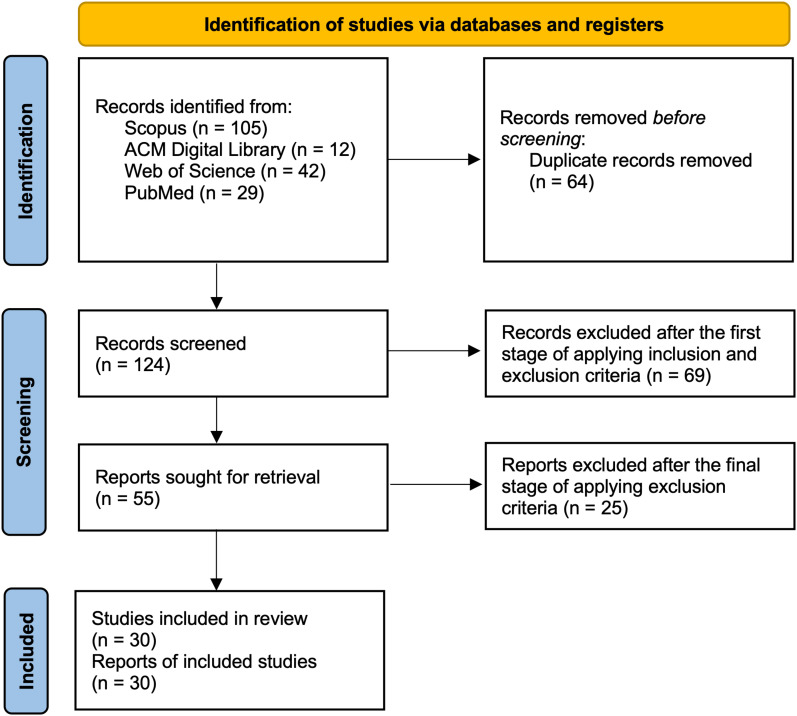
- The search on 3 February 2025 across PubMed, Scopus, ScienceDirect, ACM Digital Library, and IEEE Xplore identified 188 papers; after removing 64 duplicates and applying eligibility criteria, 30 studies were included.
- The included studies mainly fell into two technical goals: SSD detection and SLT games; most studies focused on disorder detection, and most systems used binary output rather than classifying disorder type or severity.
- The review reports that the most common approaches were traditional ML classifiers (especially SVM) and deep learning/ASR methods; among the reviewed papers, SVM was the most frequently used classifier in papers A, C, G, I, K, M, P, R, S, U, and Y.
- Participant ages ranged from 2 to 16 years, with an average focus on children aged 4 to 10 years; reported sample sizes ranged from 12 in paper W to 1362 in paper U, and the papers J, O, P, Q, R, S, and Y reported 231 boys (63%) and 137 girls (37%).
## Methods
- Scoping review following PRISMA-ScR guidelines, with a systematic search conducted on 3 February 2025 in five databases: PubMed, Scopus, ScienceDirect, ACM Digital Library, and IEEE Xplore.
- Included studies were charted in a spreadsheet by author, year, country, study aims, methods, results, and conclusions; 30 studies met criteria after full-text screening.
- The review addressed six research questions covering technical goals, languages and participant selection, pathologies, application features, AI models/speech properties, and datasets.
## Limitations
- The paper states that it was restricted to English-language articles, which may have missed relevant work published in other languages.
- The paper states that it focused mainly on papers published after 2018, and its keyword strategy may have excluded relevant studies that did not explicitly mention “children” in the title.
- Evident from the text: the review is limited to AI-based systems and does not evaluate pathological components or whether therapy methods are well aligned with the technology, which the authors explicitly note lies outside their expertise.
Model-written summary. Check it against the paper before relying on it.
Integrity signals
Registry
Cites
Statistics
Figures
Verification
Claims the paper makes
9 Valid · 7 Not valid · 22 Not checked · 111 Own results and interpretations
The cited sources support only part of this claim — read each source’s verdict below.
In the paper
“While various efforts have been made to consolidate information and research in review papers, few are specifically tailored to children’s speech therapy.”
§ Artificial intelligence (AI)-driven technologies for managing pediatric speech and language therapy: A scoping review > Introduction Effective communication is a key determinant of success in modern life, and speech is the primary mode of communication we learn from early childhood. 1 However, some children face challenges in developing clear speech, which can negatively affect their social interactions and future opportunities. Speech sound disorders (SSDs) encompass a range of difficulties in speech production and may be associated with underlying conditions such as structural anomalies (e.g. cleft palate), neurodevelopmental disorders (e.g. autism spectrum disorders, cerebral palsy, and Down syndrome), phonological disorders which are language-specific, and motor impairments, all of which can impact the clarity and accuracy of speech sounds.2,3 Early and adequate diagnosis of speech disorders can contribute to the quality of treatment and thus to treatment success rates. 4 As reported by Niegia et al., 5 up to 24.6% of children are affected by some form of SSD. However, only a few receive appropriate and consistent treatment. Speech and language therapy (SLT) is widely recognized as an effective intervention for managing SSDs. 6 However, despite the growing demand for SLT services, access remains limited due to a shortage of qualified therapists and available appointments. 7 Studies indicate that personalized and consistent therapy plans are critical for effective treatment, 8 but many children lack access to these tailored services. 7 Personalized SLT plans require significant time and effort from therapists to account for the specific needs of each child, which can be resource intensive. 9 In addition, therapy sessions must be engaging for the children to ensure that they adhere to prescribed exercises. 10 As a result, the high cost, long waiting times, and inaccessibility of traditional SLT approaches pose significant challenges to providing comprehensive care for children with SSDs. In today’s technology-driven world, computer systems, mobile applications, and interactive games have emerged as promising tools in addressing the challenges in SLT. These digital solutions, combined with advancements in artificial intelligence (AI) and machine learning (ML), offer scalable approaches to diagnosing and managing SSDs. Specifically, automatic speech recognition (ASR) systems and natural language processing technologies, coupled with signal processing techniques, can transcribe speech and analyze audio and acoustic features to detect impairments. By incorporating these approaches into SLT applications, these tools can provide SSD detection models, real-time feedback, track progress, and engage children through interactive games, making therapy more accessible, effective, and engaging. Such technologies have shown potential in addressing the shortage of therapists and reducing the time and cost associated with traditional therapy. 11 Although there is significant research focused on AI-driven systems for SLT, relatively few studies address the unique challenges posed by children’s speech. Children’s speech varies significantly across individuals and evolves rapidly, making it difficult for AI models, particularly those trained on adult data, to accurately analyze and detect impairments in younger users. 12 Additionally, the lack of large, comprehensive datasets on children’s speech, especially for those with SSDs, presents a major obstacle for developing robust AI models. Data privacy concerns also limit the availability of extensive corpora, further complicating the task of refining AI systems for pediatric speech therapy. The same holds true for survey papers on SLT systems for children. While various efforts have been made to consolidate information and research in review papers, few are specifically tailored to children’s speech therapy. Targeted reviews for children’s speech are essential due to the unique characteristics of children’s speech, for example, child speech exhibits greater inter- and intra-speaker variability compared to adult speech, posing additional challenges for processing and analysis. 12 This variability arises due to factors such as developmental differences in articulation, inconsistent speech patterns, and limited phonemic inventories. 13 Although there are valuable existing reviews for pediatric SLT, they primarily focus on applications and games, emphasizing game design and high-level system analysis.14,15 However, a deep understanding of the current AI models and ML algorithms is necessary for future researchers aiming to build on current approaches. For instance, Atwell et al. 14 briefly list the ML algorithms utilized in its included studies without providing a detailed analysis about their development process, evaluation, and the results. Similarly, Saeedi et al. 15 primarily focused on game design rather than on AI models or implementation. In Moulaei et al., 16 tele-speech therapy is evaluated from a high-level perspective, incorporating relevant studies. While the paper primarily examines the advantages and practicality of these systems, it does not delve into AI-driven solutions or the in-depth development aspects of these technologies. These gaps in detailed evaluation of AI and ML methods specific to children across existing studies highlight the need for a scoping review to systematically map the current landscape, identify key characteristics of ML-based SLT systems, and uncover areas requiring further in-depth research. In light of this, in this review, we provide a detailed analysis and explanation of the ML centric systems currently developed for pediatric SLT, showcasing state-of-the-art technologies to serve as a foundation for future research. Additionally, we categorize these works by factors such as ML model architectures, application features, and more. These categorizations offer a structured overview that can serve as a valuable reference for examining the current state of SLT technologies and identifying existing gaps in the field. Given these gaps in the literature and the growing importance of AI-driven tools, our review covers works that utilize speech and audio data for SSD detection, focusing on the AI techniques and data processing methods employed in these applications. By analyzing the models used, including deep neural networks (DNNs) and ML classifiers, we identify key trends and challenges in the field. A consistent challenge highlighted across nearly all the reviewed studies is the scarcity of child speech data. This limitation applies to both typically developing (TD) children and children diagnosed with SSD, complicating the training and evaluation of these models. We also discuss the effectiveness of real-time feedback, the quality of the acoustic features employed, and the contributions of these systems to the broader goal of creating reliable, fully automated speech therapy tools for children.
What the sources say
- Partly supportedcites [14] sourceExperimental — accuracy not yet measured
The Conclusions state that previous systematic reviews of online speech therapy systems for children with speech sound disorders are limited. That supports the claim for this specific topic, but not its broader implication that few review papers address children’s speech therapy in general. No page number is provided in our copy. (LLM, conf=0.83)
- Partly supportedcites [15] sourceExperimental — accuracy not yet measured
The Introduction (page unavailable) discusses several speech-therapy reviews, including two concerning children, and says none of those mentioned reviewed published studies of digital games for children’s speech therapy. This supports a gap for that specific topic, but not the broader claim that few reviews address children’s speech therapy at all. (LLM, conf=0.82)
- Not checked — no full text of the sourcecites [16] source
plain- Asserted: passes — The authors put it forward as true.
- Checkable: passes — It can be checked against evidence.
- Load-bearing: passes — The paper’s conclusions depend on it.
- Based: passes — The paper gives a reason why it holds.
- Partly supported
Every source the paper cites for this claim was checked and supports it.
In the paper
“Similarly, Saeedi et al. 15 primarily focused on game design rather than on AI models or implementation.”
§ Artificial intelligence (AI)-driven technologies for managing pediatric speech and language therapy: A scoping review > Introduction Effective communication is a key determinant of success in modern life, and speech is the primary mode of communication we learn from early childhood. 1 However, some children face challenges in developing clear speech, which can negatively affect their social interactions and future opportunities. Speech sound disorders (SSDs) encompass a range of difficulties in speech production and may be associated with underlying conditions such as structural anomalies (e.g. cleft palate), neurodevelopmental disorders (e.g. autism spectrum disorders, cerebral palsy, and Down syndrome), phonological disorders which are language-specific, and motor impairments, all of which can impact the clarity and accuracy of speech sounds.2,3 Early and adequate diagnosis of speech disorders can contribute to the quality of treatment and thus to treatment success rates. 4 As reported by Niegia et al., 5 up to 24.6% of children are affected by some form of SSD. However, only a few receive appropriate and consistent treatment. Speech and language therapy (SLT) is widely recognized as an effective intervention for managing SSDs. 6 However, despite the growing demand for SLT services, access remains limited due to a shortage of qualified therapists and available appointments. 7 Studies indicate that personalized and consistent therapy plans are critical for effective treatment, 8 but many children lack access to these tailored services. 7 Personalized SLT plans require significant time and effort from therapists to account for the specific needs of each child, which can be resource intensive. 9 In addition, therapy sessions must be engaging for the children to ensure that they adhere to prescribed exercises. 10 As a result, the high cost, long waiting times, and inaccessibility of traditional SLT approaches pose significant challenges to providing comprehensive care for children with SSDs. In today’s technology-driven world, computer systems, mobile applications, and interactive games have emerged as promising tools in addressing the challenges in SLT. These digital solutions, combined with advancements in artificial intelligence (AI) and machine learning (ML), offer scalable approaches to diagnosing and managing SSDs. Specifically, automatic speech recognition (ASR) systems and natural language processing technologies, coupled with signal processing techniques, can transcribe speech and analyze audio and acoustic features to detect impairments. By incorporating these approaches into SLT applications, these tools can provide SSD detection models, real-time feedback, track progress, and engage children through interactive games, making therapy more accessible, effective, and engaging. Such technologies have shown potential in addressing the shortage of therapists and reducing the time and cost associated with traditional therapy. 11 Although there is significant research focused on AI-driven systems for SLT, relatively few studies address the unique challenges posed by children’s speech. Children’s speech varies significantly across individuals and evolves rapidly, making it difficult for AI models, particularly those trained on adult data, to accurately analyze and detect impairments in younger users. 12 Additionally, the lack of large, comprehensive datasets on children’s speech, especially for those with SSDs, presents a major obstacle for developing robust AI models. Data privacy concerns also limit the availability of extensive corpora, further complicating the task of refining AI systems for pediatric speech therapy. The same holds true for survey papers on SLT systems for children. While various efforts have been made to consolidate information and research in review papers, few are specifically tailored to children’s speech therapy. Targeted reviews for children’s speech are essential due to the unique characteristics of children’s speech, for example, child speech exhibits greater inter- and intra-speaker variability compared to adult speech, posing additional challenges for processing and analysis. 12 This variability arises due to factors such as developmental differences in articulation, inconsistent speech patterns, and limited phonemic inventories. 13 Although there are valuable existing reviews for pediatric SLT, they primarily focus on applications and games, emphasizing game design and high-level system analysis.14,15 However, a deep understanding of the current AI models and ML algorithms is necessary for future researchers aiming to build on current approaches. For instance, Atwell et al. 14 briefly list the ML algorithms utilized in its included studies without providing a detailed analysis about their development process, evaluation, and the results. Similarly, Saeedi et al. 15 primarily focused on game design rather than on AI models or implementation. In Moulaei et al., 16 tele-speech therapy is evaluated from a high-level perspective, incorporating relevant studies. While the paper primarily examines the advantages and practicality of these systems, it does not delve into AI-driven solutions or the in-depth development aspects of these technologies. These gaps in detailed evaluation of AI and ML methods specific to children across existing studies highlight the need for a scoping review to systematically map the current landscape, identify key characteristics of ML-based SLT systems, and uncover areas requiring further in-depth research. In light of this, in this review, we provide a detailed analysis and explanation of the ML centric systems currently developed for pediatric SLT, showcasing state-of-the-art technologies to serve as a foundation for future research. Additionally, we categorize these works by factors such as ML model architectures, application features, and more. These categorizations offer a structured overview that can serve as a valuable reference for examining the current state of SLT technologies and identifying existing gaps in the field. Given these gaps in the literature and the growing importance of AI-driven tools, our review covers works that utilize speech and audio data for SSD detection, focusing on the AI techniques and data processing methods employed in these applications. By analyzing the models used, including deep neural networks (DNNs) and ML classifiers, we identify key trends and challenges in the field. A consistent challenge highlighted across nearly all the reviewed studies is the scarcity of child speech data. This limitation applies to both typically developing (TD) children and children diagnosed with SSD, complicating the training and evaluation of these models. We also discuss the effectiveness of real-time feedback, the quality of the acoustic features employed, and the contributions of these systems to the broader goal of creating reliable, fully automated speech therapy tools for children.
What the sources say
- Supportedcites [15] source
The Methods describe a systematic review that extracts the features and challenges of speech-therapy games, and the Discussion frames its findings around those games. Section 3.3 mentions speech-recognition algorithms and game engines, but these are surveyed as features rather than developed as AI models or implementations. (LLM, conf=0.87)
plain- Asserted: passes — The authors put it forward as true.
- Checkable: passes — It can be checked against evidence.
- Load-bearing: passes — The paper’s conclusions depend on it.
- Based: passes — The paper gives a reason why it holds.
- Supported
The cited sources support only part of this claim — read each source’s verdict below.
In the paper
“Although there are valuable existing reviews for pediatric SLT, they primarily focus on applications and games, emphasizing game design and high-level system analysis.14,15”
§ Artificial intelligence (AI)-driven technologies for managing pediatric speech and language therapy: A scoping review > Introduction Effective communication is a key determinant of success in modern life, and speech is the primary mode of communication we learn from early childhood. 1 However, some children face challenges in developing clear speech, which can negatively affect their social interactions and future opportunities. Speech sound disorders (SSDs) encompass a range of difficulties in speech production and may be associated with underlying conditions such as structural anomalies (e.g. cleft palate), neurodevelopmental disorders (e.g. autism spectrum disorders, cerebral palsy, and Down syndrome), phonological disorders which are language-specific, and motor impairments, all of which can impact the clarity and accuracy of speech sounds.2,3 Early and adequate diagnosis of speech disorders can contribute to the quality of treatment and thus to treatment success rates. 4 As reported by Niegia et al., 5 up to 24.6% of children are affected by some form of SSD. However, only a few receive appropriate and consistent treatment. Speech and language therapy (SLT) is widely recognized as an effective intervention for managing SSDs. 6 However, despite the growing demand for SLT services, access remains limited due to a shortage of qualified therapists and available appointments. 7 Studies indicate that personalized and consistent therapy plans are critical for effective treatment, 8 but many children lack access to these tailored services. 7 Personalized SLT plans require significant time and effort from therapists to account for the specific needs of each child, which can be resource intensive. 9 In addition, therapy sessions must be engaging for the children to ensure that they adhere to prescribed exercises. 10 As a result, the high cost, long waiting times, and inaccessibility of traditional SLT approaches pose significant challenges to providing comprehensive care for children with SSDs. In today’s technology-driven world, computer systems, mobile applications, and interactive games have emerged as promising tools in addressing the challenges in SLT. These digital solutions, combined with advancements in artificial intelligence (AI) and machine learning (ML), offer scalable approaches to diagnosing and managing SSDs. Specifically, automatic speech recognition (ASR) systems and natural language processing technologies, coupled with signal processing techniques, can transcribe speech and analyze audio and acoustic features to detect impairments. By incorporating these approaches into SLT applications, these tools can provide SSD detection models, real-time feedback, track progress, and engage children through interactive games, making therapy more accessible, effective, and engaging. Such technologies have shown potential in addressing the shortage of therapists and reducing the time and cost associated with traditional therapy. 11 Although there is significant research focused on AI-driven systems for SLT, relatively few studies address the unique challenges posed by children’s speech. Children’s speech varies significantly across individuals and evolves rapidly, making it difficult for AI models, particularly those trained on adult data, to accurately analyze and detect impairments in younger users. 12 Additionally, the lack of large, comprehensive datasets on children’s speech, especially for those with SSDs, presents a major obstacle for developing robust AI models. Data privacy concerns also limit the availability of extensive corpora, further complicating the task of refining AI systems for pediatric speech therapy. The same holds true for survey papers on SLT systems for children. While various efforts have been made to consolidate information and research in review papers, few are specifically tailored to children’s speech therapy. Targeted reviews for children’s speech are essential due to the unique characteristics of children’s speech, for example, child speech exhibits greater inter- and intra-speaker variability compared to adult speech, posing additional challenges for processing and analysis. 12 This variability arises due to factors such as developmental differences in articulation, inconsistent speech patterns, and limited phonemic inventories. 13 Although there are valuable existing reviews for pediatric SLT, they primarily focus on applications and games, emphasizing game design and high-level system analysis.14,15 However, a deep understanding of the current AI models and ML algorithms is necessary for future researchers aiming to build on current approaches. For instance, Atwell et al. 14 briefly list the ML algorithms utilized in its included studies without providing a detailed analysis about their development process, evaluation, and the results. Similarly, Saeedi et al. 15 primarily focused on game design rather than on AI models or implementation. In Moulaei et al., 16 tele-speech therapy is evaluated from a high-level perspective, incorporating relevant studies. While the paper primarily examines the advantages and practicality of these systems, it does not delve into AI-driven solutions or the in-depth development aspects of these technologies. These gaps in detailed evaluation of AI and ML methods specific to children across existing studies highlight the need for a scoping review to systematically map the current landscape, identify key characteristics of ML-based SLT systems, and uncover areas requiring further in-depth research. In light of this, in this review, we provide a detailed analysis and explanation of the ML centric systems currently developed for pediatric SLT, showcasing state-of-the-art technologies to serve as a foundation for future research. Additionally, we categorize these works by factors such as ML model architectures, application features, and more. These categorizations offer a structured overview that can serve as a valuable reference for examining the current state of SLT technologies and identifying existing gaps in the field. Given these gaps in the literature and the growing importance of AI-driven tools, our review covers works that utilize speech and audio data for SSD detection, focusing on the AI techniques and data processing methods employed in these applications. By analyzing the models used, including deep neural networks (DNNs) and ML classifiers, we identify key trends and challenges in the field. A consistent challenge highlighted across nearly all the reviewed studies is the scarcity of child speech data. This limitation applies to both typically developing (TD) children and children diagnosed with SSD, complicating the training and evaluation of these models. We also discuss the effectiveness of real-time feedback, the quality of the acoustic features employed, and the contributions of these systems to the broader goal of creating reliable, fully automated speech therapy tools for children.
What the sources say
- Partly supportedcites [14] sourceExperimental — accuracy not yet measured
The Introduction and Conclusions describe a review of online speech-therapy systems for children, and Section 4 analyzes their goals, architectures, and evaluation. But the paper does not characterize its review as primarily focused on applications and games or as emphasizing game design; Section 2.5 instead describes earlier reviews in terms of technological details and efficacy. The indexed copy provides section labels but no page numbers. (LLM, conf=0.78)
- Supportedcites [15] source
The Introduction describes the paper as a systematic review of games developed for children’s speech therapy. The Results section, “Description of the Features of Speech Therapy Games,” analyzes design and system-level features including 2D/3D format, game engines, and speech-recognition technologies; the Discussion also addresses game-design principles. This supports the characterization of this review, without establishing the focus of the other review cited in the same sentence. (LLM, conf=0.88)
plain- Asserted: passes — The authors put it forward as true.
- Checkable: passes — It can be checked against evidence.
- Load-bearing: passes — The paper’s conclusions depend on it.
- Based: passes — The paper gives a reason why it holds.
- Partly supported
Every source the paper cites for this claim was checked and supports it.
In the paper
“ML models require substantial amounts of data to deliver reliable results, 67”
§ Artificial intelligence (AI)-driven technologies for managing pediatric speech and language therapy: A scoping review > Discussion
What the sources say
- Supportedcites [67] source
The Abstract says data-driven methods require far larger quantities of data than anticipated to produce statistically reliable results. The “Radical empiricism (big data)” section also explains that larger feature spaces require more data and that small samples make accuracy difficult to assess. (LLM, conf=0.94)
plainstates a cause- Asserted: passes — The authors put it forward as true.
- Checkable: passes — It can be checked against evidence.
- Load-bearing: passes — The paper’s conclusions depend on it.
- Based: passes — The paper gives a reason why it holds.
- Supported
A result the paper reports from its own data — it cites no other source for it, so there is none to check. The quote shows it is in the paper.
In the paper
“After applying our criteria, 30 of the 188 identified studies met the eligibility requirements.”
- Also stated in: § Inclusion and exclusion criteria used · plain
“As a result, 30 papers met all the criteria and were retained.”
§ Artificial intelligence (AI)-driven technologies for managing pediatric speech and language therapy: A scoping review > Abstract > Methods
plain- Asserted: passes — The authors put it forward as true.
- Checkable: passes — It can be checked against evidence.
- Load-bearing: passes — The paper’s conclusions depend on it.
- Based: passes — The paper gives a reason why it holds.
- Also stated in: § Inclusion and exclusion criteria used · plain
40 more claims
Create a free account to see all 149 claims and every source verdict.
- Probably not a substantial claim. 74
- It may state two separate claims as one. 58
- The quote only partly states this claim. 1
Citations
Cites
Cortes, C., & Vapnik, V. (1995) · Machine Learning · doi:10.1007/bf00994018 · Cited by 59,421
Cortes, C., & Vapnik, V. (1995) · Machine-mediated learning · doi:10.1023/a:1022627411411 · Cited by 48,445 · cited 1×
“55 ) In paper AC, the performance of various ML classi fi cation models, such as a radial basis function kernel, random forest, and quadratic discriminant analysis are compared with SVM which in the most cases, SVM consistently outperforms traditional ML algorithms due to its ability to handle…”
PRISMA Extension for Scoping Reviews (PRISMA-ScR): Checklist and Explanation
Tricco, A. C., Lillie, E., Zarin, W., O'Brien, K. K., Colquhoun, H., Levac, D., Moher, D., Peters, M. D. J., Horsley, T., Weeks, L., et al. (2018) · Annals of Internal Medicine · doi:10.7326/m18-0850 · Cited by 43,565
Gene selection for cancer classification using support vector machines
Guyon, I., Weston, J., Barnhill, S., & Vapnik, V. (2002) · Machine Learning · doi:10.1023/a:1012487302797 · Cited by 9,954 · cited 1×
“53 In paper R, they use the forward feature selection algorithm, a method that fi nds the most effective features in the classi fi cation output of the model.”
Toward a Theory of Situation Awareness in Dynamic Systems
Endsley, M. R. (1995) · Human Factors: The Journal of the Human Factors and Ergonomics Society · doi:10.1518/001872095779049543 · Cited by 8,875 · cited 1×
“…the issue by mapping the problem to a situation awareness —“ the perception of the elements in the environment within a volume of time and space, the understanding of its meaning and projection of its effects in the near future ” 59 — framework, offering a fresh perspective on speech processing.”
Scale for the assessment and rating of ataxia: Development of a new clinical scale
Schmitz-Hübsch, T., du Montcel, S. T., Baliko, L., Berciano, J., Boesch, S., Depondt, C., Giunti, P., Globas, C., Infante, J., Kang, J. S., et al. (2006) · Neurology · doi:10.1212/01.wnl.0000219042.60538.92 · Cited by 1,967
The Geneva Minimalistic Acoustic Parameter Set (GeMAPS) for Voice Research and Affective Computing
Eyben, F., Scherer, K. R., Schuller, B. W., Sundberg, J., Andre, E., Busso, C., Devillers, L. Y., Epps, J., Laukka, P., Narayanan, S. S., et al. (2016) · IEEE Transactions on Affective Computing · doi:10.1109/taffc.2015.2457417 · Cited by 1,818 · cited 1×
“…Shimmer, Loudness, Spectral Energies, fi rst four Mel-Frequency Cepstral Coef fi cients (MFCCs), and mean and standard deviation of voiced/unvoiced regions, respectively, etc. 51 While paper C also using eGeMAPS, they mention that computational paralinguistic challenge (ComParE) feature set —”
A Normalized Levenshtein Distance Metric
Yujian, L., & Bo, L. (2007) · IEEE Transactions on Pattern Analysis and Machine Intelligence · doi:10.1109/tpami.2007.1078 · Cited by 986
Schuller, B., Steidl, S., Batliner, A., Vinciarelli, A., Scherer, K., Ringeval, F., Chetouani, M., Weninger, F., Eyben, F., Marchi, E., et al. (2013) · Interspeech 2013 · doi:10.21437/interspeech.2013-56 · Cited by 731 · cited 1×
“A large feature set was introduced in ComParE, 52 which is well-known for being computationally ef fi cient while effectively representing speech characteristics — outperforms eGeMAPS for SSD detection.”
Toward a model for lexical access based on acoustic landmarks and distinctive features
Stevens, K. N. (2002) · The Journal of the Acoustical Society of America · doi:10.1121/1.1458026 · Cited by 597
Research works printed but not linked: 4
- Radford A Kim JW Xu T et al. Robust speech recognition via large-scale weak supervision. In: Proceedings of the 40th International conference on machine learning (ICML) Honolulu HI USA; Proceedings of Machine Learning Research (PMLR) Scotts Valley CA 23–29 July 2023 pp.28492–28518. PMLR.
- Bhat HF. Evaluating SVM algorithms for bioinformatics gene expression analysis. Int J Comput Sci Eng 2017; 6: 42–52.
- Fohr D Mella O Illina I. New paradigm in speech recognition: Deep neural networks. In: Seventh international conference on information systems and economic intelligence (SIIE) Al-Hoceima Morocco 2017 May 11–13 pp.1–6. Piscataway NJ: IEEE.
- Howitt AW. Automatic syllable detection for vowel landmarks. ScD Thesis Massachusetts Institute of Technology Cambridge MA USA 2000.
Cited by
Advancing Artificial Intelligence (AI) in the field of speech-language pathology
Schlosser, R. W., Koul, R., & Lang, R. B. (2026) · Evidence-Based Communication Assessment and Intervention · doi:10.1080/17489539.2026.2688952
“In Dadgar et al. (2025), personalization appears primarily through adaptive interventions and individualized therapy planning.”
Papadopoulou, S. L., Megari, K., Katsarou, D. V., & Toki, E. I. (2026) · IGI Global eBooks · doi:10.4018/979-8-2600-3311-1.ch002
Inteligencia artificial en logopedia: oportunidades, límites y responsabilidad profesional
Mora, C. T. E. (2026) · Revista de Logopedia Foniatría y Audiología · doi:10.1016/j.rlfa.2026.100584
Metadata
- Authors
- Dadgar, M., Ennis, C., Mokgosi, K., & Ross, R.
- Affiliations
- Technological University Dublin (IE)
- National University of Ireland, Maynooth (IE)
- Corresponding author
- Dadgar, Milad
- Venue
- DIGITAL HEALTH
- Publisher
- SAGE Publications
- Published
- 2025-05
- Volume
- 11
- Pages
- 20552076251376533-20552076251376533
- ISSN
- 2055-2076 (ISSN-L)
- PMC
- PMC12589799
- OpenAlex
- W4416168658
- Cited by
- 4
- References
- 59
- Citations by year
- 2026: 4
- FWCI
- 0.99
- Type
- journal article
- Language
- en
- Open access
- gold
- doi.org
- Licence
- cc-by
- creativecommons.org/licenses/by/4.0/ (vor)
- journals.sagepub.com/page/policies/text-and-data-mining-license (tdm)
- Locations
- Digital Health (publishedVersion, cc-by)
- Europe PMC (PubMed Central) (publishedVersion, cc-by)
- PubMed (publishedVersion)
- Maynooth University ePrints and eTheses Archive (Maynooth University) (acceptedVersion, cc-by)
- DOAJ (DOAJ: Directory of Open Access Journals) (submittedVersion, cc-by-sa)
- Funders
- Science Foundation Ireland (18/CRT/6183)
- Topics
- Social Sciences › Psychology › Developmental and Educational Psychology › Language Development and Disorders
- Health Sciences › Health Professions › Speech and Hearing › Voice and Speech Disorders
- Physical Sciences › Computer Science › Artificial Intelligence › Speech Recognition and Synthesis
- Keywords
- artificial intelligence, speech therapy, speech recognition, machine learning, deep neural network, acoustic features, computer-based therapy, real-time feedback, data privacy
About these checks
Registry, retraction, Cites and statistics results are computed, not judged, with one exception: a printed reference that no index lists is read once by a model before it counts as a citation error. Claims are extracted by a model and kept only when their quote appears verbatim in the text; each cited source is then checked, with a model’s help, for whether it says what the claim relies on. Those verdicts can be wrong — read the claim’s quote and the cited source before relying on one.
The claim verdicts this report counts are experimental: their accuracy is not yet measured.
A language model drew the claims from the paper on 2026-10-01, under version 3 of the claim definition (model deepseek-v4.1-flash, prompt extract-v3).
A second model labelled each claim on 2026-10-01 (model jev-1.13-20260917, definition revision gold-guideline-v0.2).
Cited sources are checked with a language model’s help (gpt-6-sol).
Statistics and arithmetic are recomputed, not judged.
Confidence bands are shown only for fields calibrated on our annotated test set. None is calibrated yet, so no band is shown.
What counts as a claim ›How we measure confidence ›How we check this ›
Are you an author, or do you see a problem with this page? Request a review
How to cite
Cite CoChat for the checks on this page, and the paper for its own findings.
- This page
- CoChat. (2026). Citation check: Artificial intelligence (AI)-driven technologies for managing pediatric speech and language therapy: A scoping review. https://app.cochat.ai/papers/10.1177/20552076251376533
- The paper
- Dadgar, M., Ennis, C., Mokgosi, K., & Ross, R. (2025). Artificial intelligence (AI)-driven technologies for managing pediatric speech and language therapy: A scoping review. DIGITAL HEALTH. https://doi.org/10.1177/20552076251376533
Data sources
Bibliographic data: Semantic Scholar, OpenAlex, Crossref.
Contains information from the Semantic Scholar Academic Graph Datasets, made available under the ODC Attribution License (ODC-BY 1.0).
Semantic Scholar’s data is described in: Kinney, R., et al. (2023). The Semantic Scholar Open Data Platform. arXiv:2301.10140.
