

Changing Hospital Care For Older Adults: The Case for Geriatric Hospitals in the United States
Open accessThe DOI matches its Crossref record; 91 of the 91 references it cites were found in a registry or an index.
Abstract
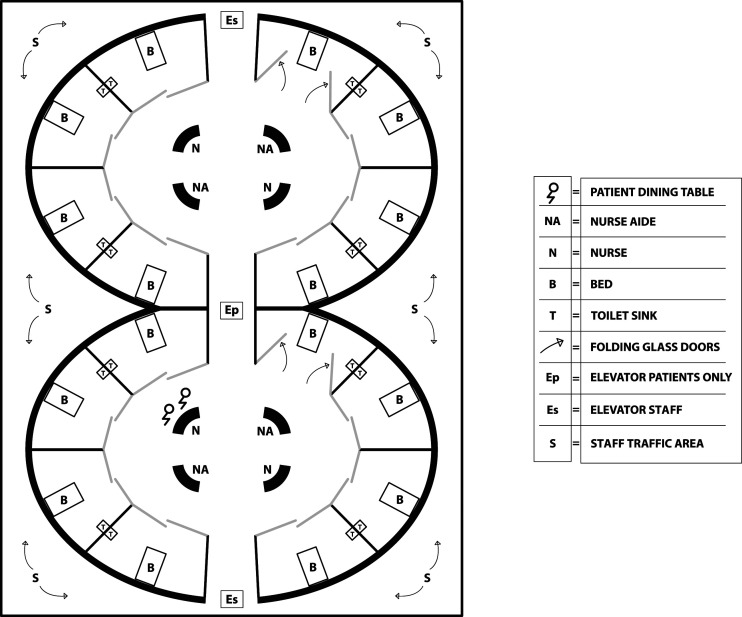
Hospital care of frail older adults is far from optimal. Although some geriatric models of care have been shown to improve outcomes, the effect size is small and models are difficult to fully implement, sustain and replicate. The two root causes for these shortcomings are competing interests (high revenue generating diseases, procedures and surgeries) and current hospital cultures (for example a culture of safety that emphasizes bed alarms and immobility rather than frequent ambulation). Geriatric hospitals would be hospitals completely dedicated to the care of frail older patients, a group which is most vulnerable to the negative consequences of a hospitalization. They would differ from a typical adult hospital because they could implement evidence based principles of successful geriatric models of care on a hospital wide basis, which would make them sustainable and allow for scaling up of proven outcomes. Innovative structural designs, unachievable in a typical adult hospital, would enhance mobility while maintaining safety. Financial viability and stability would be a challenge but should be feasible, likely through affiliation with larger health care systems with other hospitals because of cost savings associated with geriatric models of care (decreased length of stay, increased likelihood of discharge home, without increasing costs).
Overview
The claims and statistics of this paper haven’t been checked yet.
Free: it reads the open-access text and checks the first 5 claims that cite a source we can check. Create a free account to check every claim.
Integrity signals
Registry
Cites
Statistics
Figures
Verification
Claims the paper makes
The claims and statistics of this paper haven’t been checked yet.
Free: it reads the open-access text and checks the first 5 claims that cite a source we can check. Create a free account to check every claim.
Claims other papers make about this one
Each is checked against this paper’s own text: does it say what the citing paper says it does?
The source backs part of the claim, not all of it — or backs it for a different population, condition or comparison.
In the citing paper
“Finally, there is a common perception that physical activity may increase falls and other negative events (fostering the culture of 'bed rest' while in hospital).7 9”
From Optimal dose and type of physical activity to improve functional capacity and minimise adverse events in acutely hospitalised older adults: a systematic review with dose-response network meta-analysis of randomised controlled trials (2023) · cites this paper as [9]
Experimental — accuracy not yet measured
Self-check
Percentages, sums and reported differences re-computed from the paper’s own numbers.
The self-check needs the paper’s full text.
Citations
Cites
Frailty in Older Adults: Evidence for a Phenotype
Fried, L. P., Tangen, C. M., Walston, J., Newman, A. B., Hirsch, C., Gottdiener, J., Seeman, T., Tracy, R., Kop, W. J., Burke, G., et al. (2001) · The Journals of Gerontology Series A: Biological Sciences and Medical Sciences · doi:10.1093/gerona/56.3.m146 · Cited by 24,907 · cited 2×
“Frailty is a well known entity (Fried et al., 2001) and many validated tools exist to identify this syndrome (Hewitt et al.”
BackgroundA Multicomponent Intervention to Prevent Delirium in Hospitalized Older Patients
Inouye, S. K., Bogardus, S. T., Charpentier, P. A., Leo-Summers, L., Acampora, D., Holford, T. R., & Cooney, L. M. (1999) · New England Journal of Medicine · doi:10.1056/nejm199903043400901 · Cited by 2,917 · cited 4×
“Subsequent models which pertain to hospitalized older adults, included delirium prevention (Inouye et al., 1999), and management models (Flaherty et al.”
BackgroundInfluentialNygren, J., Thacker, J., Carli, F., Fearon, K. C. H., Norderval, S., Lobo, D. N., Ljungqvist, O., Soop, M., & Ramirez, J. (2013) · World Journal of Surgery · doi:10.1007/s00268-012-1787-6 · Cited by 2,171
Gustafsson, U. O., Scott, M. J., Hubner, M., Nygren, J., Demartines, N., Francis, N., Rockall, T. A., Young‐Fadok, T. M., Hill, A. G., Soop, M., et al. (2019) · World Journal of Surgery · doi:10.1007/s00268-018-4844-y · Cited by 2,119 · cited 1×
“(Gustafsson et al., 2019; Tóth et al., 2020; Warnock & Latifi.”
Comprehensive geriatric assessment: a meta-analysis of controlled trials
Stuck, A. E., Siu, A. L., Wieland, G. D., Rubenstein, L. Z., & Adams, J. (1993) · The Lancet · doi:10.1016/0140-6736(93)92884-v · Cited by 1,974 · cited 1×
“…CGA (which identifies geriatric syndromes and psychosocial problems in addition to medical conditions, especially among frail older adults), (Stuck et al., 1993) a geriatric-focused interdisciplinary team (for example, nurses, therapists, and social workers with special interest or training…”
BackgroundThe Journal of Rehabilitation Research and Development
(2025) · The Journal of Rehabilitation Research and Development · doi:10.1682/jrrd.0000.00.0000 · Cited by 1,566
Gilbert, T., Neuburger, J., Kraindler, J., Keeble, E., Smith, P., Ariti, C., Arora, S., Street, A., Parker, S., Roberts, H. C., et al. (2018) · The Lancet · doi:10.1016/s0140-6736(18)30668-8 · Cited by 1,504 · cited 2×
“These models have their greatest impact on frail older patients (Gilbert et al., 2018; Gillick, 2014; Searle & Rockwood, 2018).”
BackgroundHazards of Hospitalization of the Elderly
Creditor, M. C. (1993) · Annals of Internal Medicine · doi:10.7326/0003-4819-118-3-199302010-00011 · Cited by 1,409 · cited 2×
“In addition to the morbidity and mortality associated with these negative consequences (Creditor, 1993; Wald, 2017), all of these are associated with additional health care costs.”
BackgroundTeamwork in healthcare: Key discoveries enabling safer, high-quality care.
Rosen, M. A., DiazGranados, D., Dietz, A. S., Benishek, L. E., Thompson, D., Pronovost, P. J., & Weaver, S. J. (2018) · American Psychologist · doi:10.1037/amp0000298 · Cited by 1,283 · cited 1×
“The goals of the interprofessional teams would become more clear and accurate, leading to better decisions about the inpatient treatment and discharge plans (Rosen et al., 2018).”
BackgroundKavalieratos, D., Corbelli, J., Zhang, D., Dionne-Odom, J. N., Ernecoff, N. C., Hanmer, J., Hoydich, Z. P., Ikejiani, D. Z., Klein-Fedyshin, M., Zimmermann, C., et al. (2016) · JAMA · doi:10.1001/jama.2016.16840 · Cited by 1,121 · cited 4×
“Based on meta-analyses, several of these models have been shown to improve outcomes (Ellis et al., 2017; Van Creen et al., 2010; Baztán et al., 2009; Hshieh et al., 2015; Grigoryan et al., 2014; Kavalieratos et al., 2016).”
BackgroundMethodInfluential
Research works printed but not linked: 6
- Agency for Healthcare Research and Quality (2018). HCUP fast stats - most common diagnoses for inpatient stays. https://www.hcup-us.ahrq.gov/faststats/NationalDiagnosesServlet?year1=2018&characteristic1=25&included1=1&year2=&characteristic2=0&included2=1&expansionInfoState=hide&dataTablesState=hide&definitionsState=hide&exportState=hide 34428003
- American Geriatrics Society. (2021). Choosing wisely: Ten things clinicians and patients should question. https://www.choosingwisely.org/societies/american-geriatrics-society/
- Clark C. (2013) If ACE units are so great, why aren’t they everywhere? Health Leaders Media. https://www.healthleadersmedia.com/clinical-care/if-ace-units-are-so-great-why-arent-they-everywhere
- Commins J. (2013). Changing a stubborn hospital culture. HealthLeaders Media. http://healthleadersmedia.com/page-1/LED-298351/Changing-a-Stubborn-Hospital-Culture
- Michas F. (2021). Number of hospitals in the United States by number of beds 2019. Statista. https://www.statista.com/statistics/459779/total-hospital-numbers-in-the-us-by-number-of-beds/
- Sullivan-Marx E. Strumpf N. Evans L Capezuti E. Maislin G. (2003). Effects of an advanced practice nursing intervention with physical restraint use among hospitalized nursing home residents. The Gerontologist, 43(Special Issue I), 310.
Cited by
Gallardo-Gómez, D., del Pozo-Cruz, J., Pedder, H., Alfonso-Rosa, R. M., Álvarez-Barbosa, F., Noetel, M., Jasper, U., Chastin, S., Ramos-Munell, J., & del Pozo Cruz, B. (2023) · British Journal of Sports Medicine · doi:10.1136/bjsports-2022-106409 · Cited by 59
Werner, C., Bauknecht, L., Heldmann, P., Hummel, S., Günther-Lange, M., Bauer, J. M., & Hauer, K. A. (2023) · European Geriatric Medicine · doi:10.1007/s41999-023-00869-9 · Cited by 21
Establishing and sustaining an acute care for elders unit: An incremental journey to success
Lynch, D. H., Mournighan, K. J., Dale, M. C., Spangler, H., Gotelli, J., Davis, R., Felton, K., Lingley, K., Busby‐Whitehead, J., Batsis, J. A., et al. (2023) · Journal of the American Geriatrics Society · doi:10.1111/jgs.18561 · Cited by 7
“Several factors drive the lack of dissemination of ACE units.(6) Health system leaders may regard ACE units as overly complex and impractical, especially when the initial investment of time and resources is high, and perceived rewards in cost-savings and patient outcomes are delayed or small.”
BackgroundShoukr, E. M. M., Hassen, H. A. M., Mohammed, A., Khedr, M. A., Eweida, R. S., Nashwan, A. J., & Abdallah, H. M. M. (2025) · Geriatric Nursing · doi:10.1016/j.gerinurse.2025.103436 · Cited by 6
Lynch, D. H., Houston, E. R., Andrews, A. L., Mournighan, K. J., Butler, W. F., Batsis, J. A., Niznik, J. D., Leeman, J., & Hanson, L. C. (2025) · Journal of the American Geriatrics Society · doi:10.1111/jgs.19479 · Cited by 5
“CoCare-CI builds on these principles by integrating structured dementia care strategies into daily clinical [11, 28, 29].”
Siddique, S. M., Hettinger, G., Dash, A., Neuman, M. D., Mitra, N., & Lewis, J. D. (2024) · The American Journal of Gastroenterology · doi:10.14309/ajg.0000000000002755 · Cited by 3
“Identifying hospital factors, including both structural and process components, can inform care models to improve disease-speci fi c care (15).”
Lindemann, C. H., Burst, V. R., Völker, L. A., Brähler, S., Simić, D., Becker, I., Hellmich, M., Kurscheid, C., Scholten, N., Krauspe, R., et al. (2024) · Trials · doi:10.1186/s13063-024-08026-8 · Cited by 2
From perpetual pilots to sustainable transformation: Scaling up geriatric care
Elliott, J. B., Heckman, G. A., Chalmers, K., Omaña, H., Hiebert, B., & Kane, S.-L. (2024) · Healthcare Management Forum · doi:10.1177/08404704241299341 · Cited by 1
“38 Lim-Fat and colleagues conclude that patients who are designated as ALC have increased adverse-events, impacting patient care and outcomes while they wait in hospital.”
Outcomes Prediction in Critically Ill Elderly Patients Using MPM0-III and SAPS 3 Scores
Yaski, S. E., Maamoun, M. M. A., Mahmoud, A. A. A. G., & Kamel, H. (2024) · Egyptian Journal of Geriatrics and Gerontology · doi:10.21608/ejgg.2024.253153.1102
Patient allocation and preparation to surgery
Astro, G. (2024) · Elsevier eBooks · doi:10.1016/b978-0-443-21909-2.00008-9
Alshehri, A., Alyazidi, F., Bartušová, M., Rekhis, M., Stockfelt, L., & Hussain‐Alkhateeb, L. (2025) · PLoS ONE · doi:10.1371/journal.pone.0335669
“…aged 61–75 years may have had more complex health conditions and a greater need for intensive care [30], and hospitalization helps cover comorbidities [31], consistent with studies indicating that older individuals with chronic illnesses are more frequently hospitalized at the end of life [32–34].”
Udontre, E. E. (2026) · IntechOpen eBooks · doi:10.5772/intechopen.1013830 · Cited by 1
Shoukr, E. M. M., Abdallah, H. M. M., Elzeky, M. E. H., Khedr, M. A., Mohamed, A. A. E.-R., Hassen, H. A. M., Almegewly, W. H., Baazeem, M., & Shahine, N. F. M. (2026) · Healthcare · doi:10.3390/healthcare14203473
“Existing research on patient safety culture and geriatric care provides a foundation for this study [12,15–17 , 20 ].”
Metadata
- Authors
- Flaherty, J. H., Rodin, M. B., & Morley, J. E.
- Affiliations
- The University of Texas Southwestern Medical Center (US)
- Saint Louis University (US)
- Corresponding author
- Flaherty, Joseph H.
- Venue
- Gerontology and Geriatric Medicine
- Publisher
- SAGE Publications
- Published
- 2022-01
- Volume
- 8
- Pages
- 23337214221109005-23337214221109005
- ISSN
- 2333-7214 (ISSN-L)
- PMC
- PMC9260589
- OpenAlex
- W4283801130
- Cited by
- 13
- References
- 91
- Citations by year
- 2026: 2 · 2025: 3 · 2024: 5 · 2023: 3
- FWCI
- 3.16
- Type
- journal article
- Language
- en
- Open access
- gold
- doi.org
- Licence
- Locations
- Gerontology and Geriatric Medicine (publishedVersion, cc-by-nc)
- PubMed Central (publishedVersion, cc-by-nc)
- PubMed (publishedVersion)
- DOAJ (DOAJ: Directory of Open Access Journals) (submittedVersion, cc-by-sa)
- Topics
- Health Sciences › Medicine › Geriatrics and Gerontology › Geriatric Care and Nursing Homes
- Health Sciences › Medicine › Geriatrics and Gerontology › Frailty in Older Adults
- Health Sciences › Nursing › Leadership and Management › Hospital Admissions and Outcomes
- Keywords
- geriatric hospital, frail elderly, hospital care of older adults, hospital culture, bed alarms, financial feasibility, length of hospital stay, discharge outcomes
About these checks
Registry, retraction, Cites and statistics results are computed, not judged, with one exception: a printed reference that no index lists is read once by a model before it counts as a citation error. Claims are extracted by a model and kept only when their quote appears verbatim in the text; each cited source is then checked, with a model’s help, for whether it says what the claim relies on. Those verdicts can be wrong — read the claim’s quote and the cited source before relying on one.
Statistics and arithmetic are recomputed, not judged.
Confidence bands are shown only for fields calibrated on our annotated test set. None is calibrated yet, so no band is shown.
What counts as a claim ›How we measure confidence ›How we check this ›
Are you an author, or do you see a problem with this page? Request a review
Data sources
Bibliographic data: Semantic Scholar, OpenAlex, Crossref.
Contains information from the Semantic Scholar Academic Graph Datasets, made available under the ODC Attribution License (ODC-BY 1.0).
Semantic Scholar’s data is described in: Kinney, R., et al. (2023). The Semantic Scholar Open Data Platform. arXiv:2301.10140.
