

Development of a Modular Automated System for Maintenance and Differentiation of Adherent Human Pluripotent Stem Cells
Open accessPublished version of a preprint
The DOI matches its Crossref record; 21 of the 23 references it cites were found in a registry or an index.
Abstract
Patient-specific induced pluripotent stem cells (iPSCs) have tremendous potential for development of regenerative medicine, disease modeling, and drug discovery. However, the processes of reprogramming, maintenance, and differentiation are labor intensive and subject to intertechnician variability. To address these issues, we established and optimized protocols to allow for the automated maintenance of reprogrammed somatic cells into iPSCs to enable the large-scale culture and passaging of human pluripotent stem cells (PSCs) using a customized TECAN Freedom EVO. Generation of iPSCs was performed offline by nucleofection followed by selection of TRA-1-60-positive cells using a Miltenyi MultiMACS24 Separator. Pluripotency markers were assessed to confirm pluripotency of the generated iPSCs. Passaging was performed using an enzyme-free dissociation method. Proof of concept of differentiation was obtained by differentiating human PSCs into cells of the retinal lineage. Key advantages of this automated approach are the ability to increase sample size, reduce variability during reprogramming or differentiation, and enable medium- to high-throughput analysis of human PSCs and derivatives. These techniques will become increasingly important with the emergence of clinical trials using stem cells.
Overview
The claims and statistics of this paper haven’t been checked yet.
Free: it reads the open-access text and checks the first 5 claims that cite a source we can check. Create a free account to check every claim.
Integrity signals
Registry
Cites
Statistics
Figures

Verification
Claims the paper makes
The claims and statistics of this paper haven’t been checked yet.
Free: it reads the open-access text and checks the first 5 claims that cite a source we can check. Create a free account to check every claim.
Claims other papers make about this one
Each is checked against this paper’s own text: does it say what the citing paper says it does?
The source backs part of the claim, not all of it — or backs it for a different population, condition or comparison.
In the citing paper
“The use of large scale automated systems have been shown to reduce this source of variation25”
From Examining iPSC derived motor neuron variability and genome stability monitoring as a solution (2025) · cites this paper as [25]
Experimental — accuracy not yet measured
Self-check
Percentages, sums and reported differences re-computed from the paper’s own numbers.
The self-check needs the paper’s full text.
Citations
Cites
Induction of Pluripotent Stem Cells from Adult Human Fibroblasts by Defined Factors
Takahashi, K., Tanabe, K., Ohnuki, M., Narita, M., Ichisaka, T., Tomoda, K., & Yamanaka, S. (2007) · Cell · doi:10.1016/j.cell.2007.11.019 · Cited by 20,221
Induced Pluripotent Stem Cell Lines Derived from Human Somatic Cells
Yu, J., Vodyanik, M. A., Smuga-Otto, K., Antosiewicz-Bourget, J., Frane, J. L., Tian, S., Nie, J., Jonsdottir, G. A., Ruotti, V., Stewart, R., et al. (2007) · Science · doi:10.1126/science.1151526 · Cited by 10,310 · cited 3×
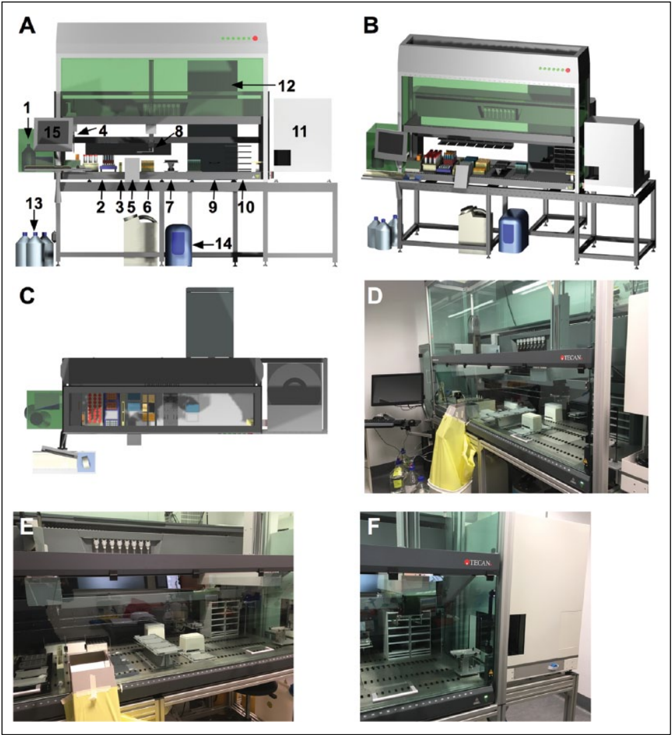
“As illustrated in Figure 1, on the workbench, from left to right, are a cabinet with medium bottle and pump (1) which can deliver medium to a LiHa medium refill trough contained within a Torrey Pines heater; three carriers for up to 24 × 50 mL Falcon tubes (2), a LiHa wash station (3), a carrier for 5 mL DiTis (4), a…”
BackgroundReprogramming of human somatic cells to pluripotency with defined factors
Park, I.-H., Zhao, R., West, J. A., Yabuuchi, A., Huo, H., Ince, T. A., Lerou, P. H., Lensch, M. W., & Daley, G. Q. (2008) · Nature · doi:10.1038/nature06534 · Cited by 2,436 · cited 3×
“Advances in technology have enabled the reprogramming of adult somatic cells into human induced pluripotent stem cells (iPSCs) (Park et al. 2008; Takahashi et al. 2007; Yu et al. 2007), which can be subsequently differentiated into cells of interest, providing a potentially inexhaustible supply of…”
BackgroundA more efficient method to generate integration-free human iPS cells
Okita, K., Matsumura, Y., Sato, Y., Okada, A., Morizane, A., Okamoto, S., Hong, H., Nakagawa, M., Tanabe, K., Tezuka, K.-I., et al. (2011) · Nature Methods · doi:10.1038/nmeth.1591 · Cited by 2,061 · cited 2×
“(1) Cabinet with medium bottle and pump, (2) carriers for tubes, (3) LiHa wash station, (4) carrier for 5 mL DiTis, (5) waste, (6) carrier for tip boxes, (7) tilting carrier, (8) microplate carrier, (9) transfer station to the Liconic incubator, (10) hotel, (11) carousel, (12) incubator, (13) autoclaved water bottles,…”
BackgroundMethodEfficient generation of retinal progenitor cells from human embryonic stem cells
Lamba, D. A., Karl, M. O., Ware, C. B., & Reh, T. A. (2006) · Proceedings of the National Academy of Sciences · doi:10.1073/pnas.0601990103 · Cited by 689 · cited 2×
“2015) was performed via an adapted protocol originally described by (Lamba et al. 2006) using DMEM F12 with glutaMAX (Life Technologies), 10% Knockout Serum Replacement (Life Technologies), IGF1 (10 ng/mL, Peprotech), Dkk1”
MethodLive cell imaging distinguishes bona fide human iPS cells from partially reprogrammed cells
Chan, E. M., Ratanasirintrawoot, S., Park, I.-H., Manos, P. D., Loh, Y.-H., Huo, H., Miller, J. D., Hartung, O., Rho, J., Ince, T. A., et al. (2009) · Nature Biotechnology · doi:10.1038/nbt.1580 · Cited by 487 · cited 1×
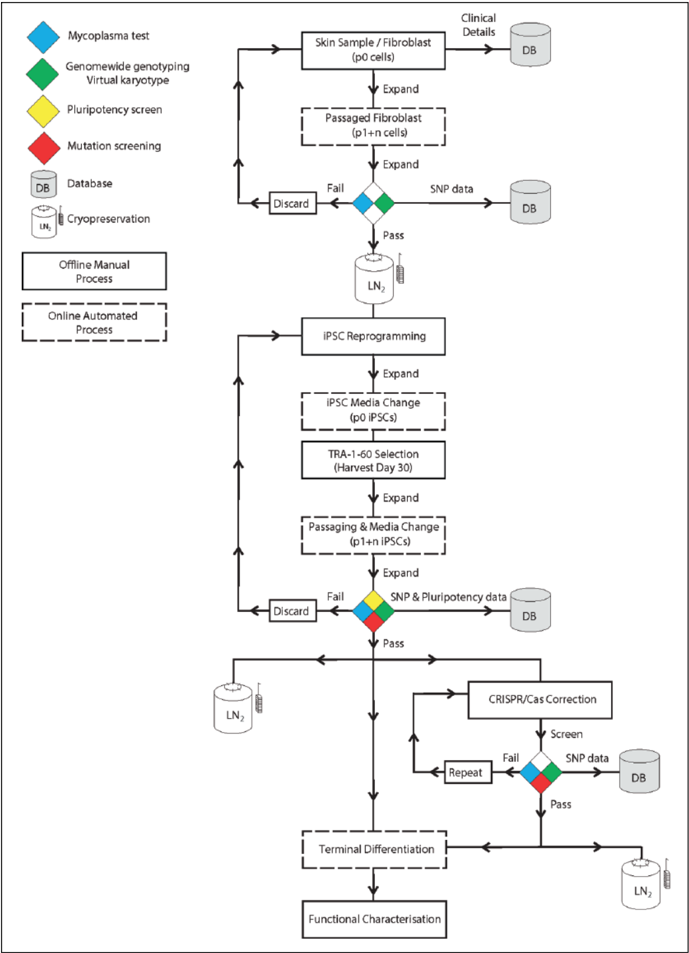
“To identify and isolate iPSCs, we utilized the marker TRA-1-60 which was previously shown to be a marker of fully reprogrammed iPSCs (Chan et al. 2009).”
MethodPaull, D., Sevilla, A., Zhou, H., Hahn, A. K., Kim, H., Napolitano, C., Tsankov, A., Shang, L., Krumholz, K., Jagadeesan, P., et al. (2015) · Nature Methods · doi:10.1038/nmeth.3507 · Cited by 263 · cited 4×
“(Hamilton Robotics) to carry-out the maintenance and passaging of human iPSCs (Paull et al. 2015).”
BackgroundMethodResultInfluentialDifferentiation of human ESCs to retinal ganglion cells using a CRISPR engineered reporter cell line
Sluch, V. M., Davis, C.-H. O., Ranganathan, V., Kerr, J. M., Krick, K., Martin, R., Berlinicke, C. A., Marsh-Armstrong, N., Diamond, J. S., Mao, H.-Q., et al. (2015) · Scientific Reports · doi:10.1038/srep16595 · Cited by 154 · cited 3×
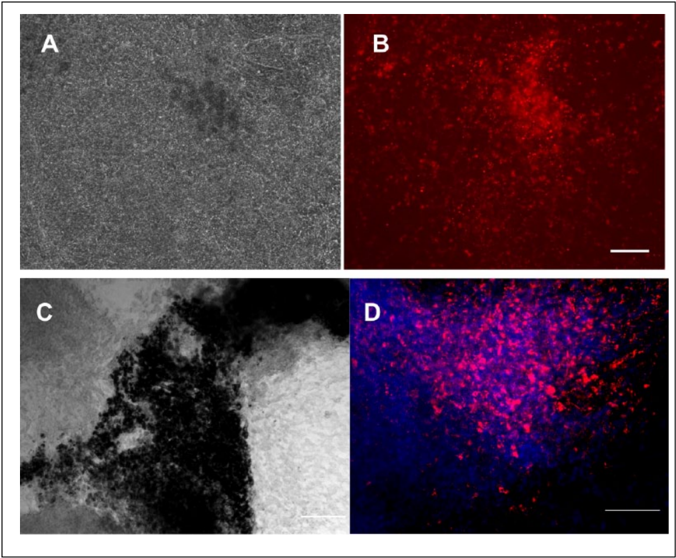
“We used the reporter line BRN3B-mCherry H7 (Sluch et al. 2015) for the RGC differentiation assay as this line fluoresces with expression of the specific RGC marker BRN3B, allowing for the screening of successful RGC differentiation.”
MethodSelf-citationElectrical Stimulation Promotes Cardiac Differentiation of Human Induced Pluripotent Stem Cells
Hernández, D., Millard, R. E., Sivakumaran, P., Wong, R. C. B., Crombie, D. E., Hewitt, A. W., Liang, H. H., Hung, S. S. C., Pébay, A., Shepherd, R. K., et al. (2015) · Stem Cells International · doi:10.1155/2016/1718041 · Cited by 120 · cited 2×
“(1) Cabinet with medium bottle and pump, (2) carriers for tubes, (3) LiHa wash station, (4) carrier for 5 mL DiTis, (5) waste, (6) carrier for tip boxes, (7) tilting carrier, (8) microplate carrier, (9) transfer station to the Liconic incubator, (10) hotel, (11) carousel, (12) incubator, (13) autoclaved water bottles,…”
BackgroundMethodSelf-citationLong-term maintenance of human induced pluripotent stem cells by automated cell culture system
Konagaya, S., Ando, T., Yamauchi, T., Suemori, H., & Iwata, H. (2015) · Scientific Reports · doi:10.1038/srep16647 · Cited by 94 · cited 4×
“Another automated platform was described for the maintenance of human iPSCs, using a robotic arm (MELFA, RV-4FC-D, Mitsubishi) for liquid handling (Konagaya et al. 2015).”
BackgroundMethodInfluential
Cited by
Automation in the Life Science Research Laboratory
Holland, I., & Davies, J. A. (2020) · Frontiers in Bioengineering and Biotechnology · doi:10.3389/fbioe.2020.571777 · Cited by 200
“Despite these difficulties, with considerate design allowing for reconfiguration and modification premature obsolescence can be delayed (Harrison et al., 2007; Crombie et al., 2017), referred to in some industries as future-proofing.”
BackgroundPSEN1ΔE9, APPswe, and APOE4 Confer Disparate Phenotypes in Human iPSC-Derived Microglia
Konttinen, H., Cabral-da-Silva, M. E. C., Ohtonen, S., Wojciechowski, S., Shakirzyanova, A., Caligola, S., Giugno, R., Ishchenko, Y., Hernández, D., Fazaludeen, M. F., et al. (2019) · Stem Cell Reports · doi:10.1016/j.stemcr.2019.08.004 · Cited by 191
“cultured as described previously (Crombie et al., 2017; Qu et al., 2013) and were reprogrammed to iPSCs either with Sendai virus using CytoTune 1.”
MethodSelf-citationSluch, V. M., Chamling, X., Liu, M. M., Berlinicke, C. A., Cheng, J., Mitchell, K. L., Welsbie, D. S., & Zack, D. J. (2017) · Stem Cells Translational Medicine · doi:10.1002/sctm.17-0059 · Cited by 157
Self-citationJarrige, M., Frank, E., Herardot, E., Martineau, S., Darle, A., Benabidès, M., Domingues, S., Chose, O., Habeler, W., Lorant, J., et al. (2021) · Cells · doi:10.3390/cells10020240 · Cited by 117
Neavin, D., Nguyen, Q., Daniszewski, M. S., Liang, H. H., Chiu, H. S., Wee, Y. K., Senabouth, A., Lukowski, S. W., Crombie, D. E., Lidgerwood, G. E., et al. (2021) · Genome Biology · doi:10.1186/s13059-021-02293-3 · Cited by 103
“shRNA against p53 [38], in feeder- and serum-free conditions using TeSRTM-E7TM medium (STEMCELL Technologies, Canada) and selected by sorting with anti-human TRA-1-60 Microbeads using a MultiMACS (Miltenyi, Germany) as described in [39] and [40].”
MethodSelf-citationHernández, D., Rooney, L. A., Daniszewski, M., Gulluyan, L. M., Liang, H. H., Cook, A. L., Hewitt, A. W., & Pébay, A. (2021) · Stem Cell Reviews and Reports · doi:10.1007/s12015-021-10147-5 · Cited by 88
“and selected as a polyclonal line using an automated platform as described in [32] (these two lines were selected by TRA-1-”
MethodSelf-citationSenabouth, A., Daniszewski, M., Lidgerwood, G. E., Liang, H. H., Hernández, D., Mirzaei, M., Keenan, S. N., Zhang, R., Han, X., Neavin, D. R., et al. (2022) · Nature Communications · doi:10.1038/s41467-022-31707-4 · Cited by 76
Self-citationAutomated Cell Culture Systems and Their Applications to Human Pluripotent Stem Cell Studies
Daniszewski, M., Crombie, D. E., Henderson, R., Liang, H. H., Wong, R. C. B., Hewitt, A. W., & Pébay, A. (2018) · SLAS Technology · doi:10.1177/2472630317712220 · Cited by 57
Self-citationElanzew, A., Nießing, B., Langendoerfer, D., Rippel, O., Piotrowski, T., Schenk, F., Kulik, M., Peitz, M., Breitkreuz, Y., Jung, S., et al. (2020) · Frontiers in Bioengineering and Biotechnology · doi:10.3389/fbioe.2020.580352 · Cited by 47
M’Barek, K. B., & Monville, C. (2019) · Stem Cells International · doi:10.1155/2019/4568979 · Cited by 41
“To further progress in the large-scale production of RPE cells, automated systems of manufacturing could help increase the reproducibility and consistency from batch to batch of the therapeutic cells [99].”
MethodAddressing Variability and Heterogeneity of Induced Pluripotent Stem Cell-Derived Cardiomyocytes
Biendarra‐Tiegs, S. M., Secreto, F. J., & Nelson, T. J. (2019) · Advances in experimental medicine and biology · doi:10.1007/5584_2019_350 · Cited by 39
Retinal ganglion cell-specific genetic regulation in primary open-angle glaucoma
Daniszewski, M., Senabouth, A., Liang, H. H., Han, X., Lidgerwood, G. E., Hernández, D., Sivakumaran, P., Clarke, J. E., Lim, S. Y., Lees, J. G., et al. (2022) · Cell Genomics · doi:10.1016/j.xgen.2022.100142 · Cited by 40
“Participants underwent skin biopsy, and fibroblasts were cultured and reprogrammed to iPSCs using episomal vectors aswe described previously.(39) Genotyping data were also generated from participants and, after quality control and imputation, yielded 7,691,208 autosomal SNPs at a minor allele frequency above 0.”
MethodSelf-citationDaniszewski, M., Nguyen, Q. H., Chy, H. S., Singh, V., Crombie, D. E., Kulkarni, T., Liang, H. H., Sivakumaran, P., Lidgerwood, G. E., Hernández, D., et al. (2018) · iScience · doi:10.1016/j.isci.2018.08.016 · Cited by 33
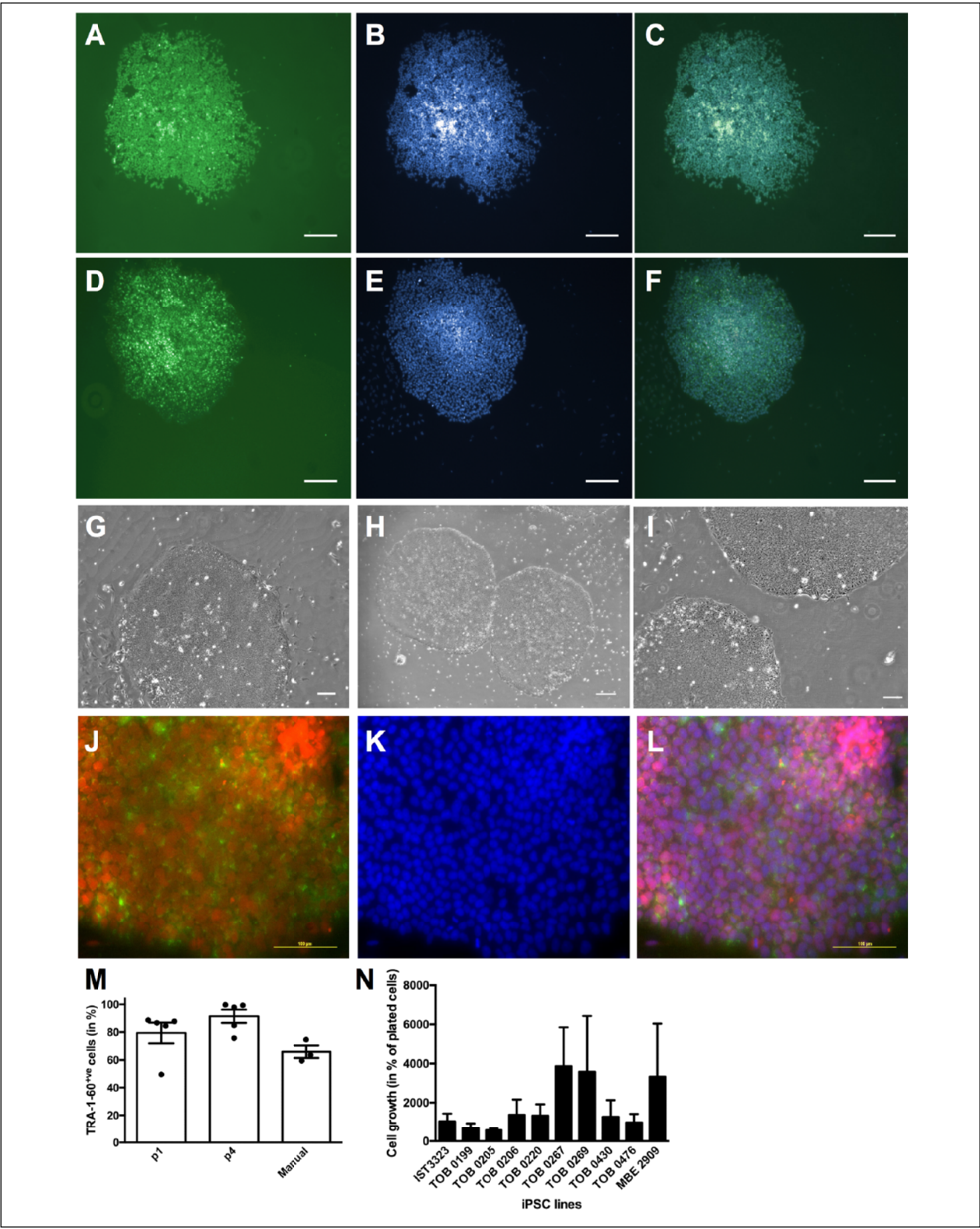
“We had already adapted automation for the culture of pluripotent stem cells using TeSR-E8 (Crombie et al., 2017), and StemFlex also allowed maintenance on the automated platform, with colonies showing typical pluripotent stem cell morphology (Figures 1B and S1) and similar levels of expression of TRA-1-60 (Figures 1C…”
BackgroundMethodSelf-citationPlate-Based Phenotypic Screening for Pain Using Human iPSC-Derived Sensory Neurons
Stacey, P., Wassermann, A. M., Kammonen, L. R., Impey, E., Wilbrey, A. L., & Cawkill, D. (2018) · SLAS DISCOVERY · doi:10.1177/2472555218764678 · Cited by 31
Truong, V., Viken, K., Geng, Z., Barkan, S., Johnson, B., Ebeling, M. C., Montezuma, S. R., Ferrington, D. A., & Dutton, J. R. (2021) · SLAS TECHNOLOGY · doi:10.1177/2472630320972110 · Cited by 30
Bye, C. R., Qian, E. L., Lim, K., Daniszewski, M., Garton, F. C., Trần-Lê, B. C., Liang, H. H., Lin, T., Lock, J. G., Crombie, D. E., et al. (2025) · Nature Neuroscience · doi:10.1038/s41593-025-02118-7 · Cited by 35
“Primary fibroblasts were isolated from skin biopsy specimens and reprogrammed using nonintegrating vectors in feeder-free conditions 62 with automated cell handling robotics (Tecan) to minimize variation, as previously described 26 .”
InfluentialSelf-citationHuman pluripotent stem cells: A toolbox to understand and treat retinal degeneration
Morizur, L., Herardot, E., Monville, C., & M’Barek, K. B. (2020) · Molecular and Cellular Neuroscience · doi:10.1016/j.mcn.2020.103523 · Cited by 33
“The use of a modular platform was reported for the long-term maintenance and passaging of hiPSCs and suggested the potential to differentiate cells to retinal lineages, including RPE [56].”
Current Developments in the Stable Production of Human Induced Pluripotent Stem Cells
Horiguchi, I., & Kino‐oka, M. (2021) · Engineering · doi:10.1016/j.eng.2021.01.001 · Cited by 30
Mullin, N. K., Voigt, A. P., Cooke, J. A., Bohrer, L. R., Burnight, E. R., Stone, E. M., Mullins, R. F., & Tucker, B. A. (2020) · Progress in Retinal and Eye Research · doi:10.1016/j.preteyeres.2020.100918 · Cited by 28
A Variable Scheduling Maintenance Culture Platform for Mammalian Cells
Ochiai, K., Motozawa, N., Terada, M., Horinouchi, T., Masuda, T., Kudo, T., Kamei, M., Tsujikawa, A., Matsukuma, K., Natsume, T., et al. (2020) · SLAS TECHNOLOGY · doi:10.1177/2472630320972109 · Cited by 29
Testing Mitochondrial-Targeted Drugs in iPSC-RPE from Patients with Age-Related Macular Degeneration
Ebeling, M. C., Geng, Z., Stahl, M. R., Kapphahn, R. J., Roehrich, H., Montezuma, S. R., Ferrington, D. A., & Dutton, J. R. (2022) · Pharmaceuticals · doi:10.3390/ph15010062 · Cited by 25
Gregor, B. W., Coston, M. E., Adams, E. M., Arakaki, J., Borensztejn, A., Do, T. P., Fuqua, M. A., Haupt, A., Hendershott, M. C., Leung, W. W., et al. (2023) · Nature Protocols · doi:10.1038/s41596-023-00912-w · Cited by 25
iPS cell therapy 2.0: Preparing for next‐generation regenerative medicine
Hui, K. K., & Yamanaka, S. (2024) · BioEssays · doi:10.1002/bies.202400072 · Cited by 24
Chear, S., Perry, S. E., Wilson, R., Bindoff, A. D., Talbot, J., Ware, T. L., Grubman, A., Vickers, J. C., Pébay, A., Ruddle, J. B., et al. (2022) · Disease Models & Mechanisms · doi:10.1242/dmm.049651 · Cited by 21
Self-citationDeveloping Cell-Based Therapies for RPE-Associated Degenerative Eye Diseases
M’Barek, K. B., Habeler, W., Régent, F., & Monville, C. (2019) · Advances in experimental medicine and biology · doi:10.1007/978-3-030-28471-8_3 · Cited by 19
Wang, J.-H., Lidgerwood, G. E., Daniszewski, M., Hu, M. L., Roberts, G. E., Wong, R. C. B., Hung, S. S. C., McClements, M. E., Hewitt, A. W., Pébay, A., et al. (2022) · Scientific Reports · doi:10.1038/s41598-022-12210-8 · Cited by 16
Self-citationOhta, A., Kawai, S., Pretemer, Y., Nishio, M., Nagata, S., Fuse, H., Yamagishi, Y., & Toguchida, J. (2023) · SLAS TECHNOLOGY · doi:10.1016/j.slast.2023.08.002 · Cited by 13
The Artificial Intelligence-Driven Intelligent Laboratory for Organic Chemistry Synthesis
Li, T., Song, W., Chen, N., Wang, Q., Gao, F., Xing, Y., Wu, S., Song, C. L., Li, J., Liu, Y., et al. (2025) · Applied Sciences · doi:10.3390/app15137387 · Cited by 14
Herardot, E., Liboz, M., Lamour, G., Malo, M., Plancheron, A., Habeler, W., Geiger, C., Frank, E., Campillo, C. C., Monville, C., et al. (2024) · Stem Cell Reviews and Reports · doi:10.1007/s12015-024-10717-3 · Cited by 13
Automated sensing and splitting of stem cell colonies on microraft arrays
DiSalvo, M., Smiddy, N. M., & Allbritton, N. L. (2019) · APL Bioengineering · doi:10.1063/1.5113719 · Cited by 10
Automated CRISPR/Cas9-based genome editing of human pluripotent stem cells using the StemCellFactory
Nießing, B., Breitkreuz, Y., Elanzew, A., Toledo, M. A. S., Vajs, P., Nolden, M., Erkens, F., Wanek, P., Yeung, S. W. C. A., Haupt, S., et al. (2024) · Frontiers in Bioengineering and Biotechnology · doi:10.3389/fbioe.2024.1459273 · Cited by 8
Eggert, S., Kahl, M., Kent, R., Gaats, L., Bock, N., Meinert, C., & Hutmacher, D. W. (2022) · Journal of Visualized Experiments · doi:10.3791/61261 · Cited by 8
Automated hiPSC culture and sample preparation for 3D live cell microscopy
Coston, M. E., Gregor, B. W., Arakaki, J., Borensztejn, A., Do, T. P., Fuqua, M. A., Haupt, A., Hendershott, M. C., Leung, W., Mueller, I. A., et al. (2020) · doi:10.1101/2020.12.18.423371 · Cited by 6
“…with a wide range of diseases (Thomas et al., 2009), others have emphasized the automation of differentiation protocols (Chatterjee et al., 2015; Crombie et al., 2017; Hussain et al., 2013; Le and Hasegawa, 2019; Paull et al., 2015) or reprograming protocols (Baghbaderani et al., 2015; Chan et…”
BackgroundInduced Pluripotent Stem Cells, a Stepping Stone to In Vitro Human Models of Hearing Loss
Alonso, M. B. D., & Petković, H. (2022) · Cells · doi:10.3390/cells11203331 · Cited by 6
Zhu, K., Ding, Y., Chen, Y., Su, K. C., Zheng, J., Zhang, Y., Hu, Y. J., Wei, J., & Wang, Z. (2025) · Biofabrication · doi:10.1088/1758-5090/adb803 · Cited by 5
“However, its compatibility is limited due to the requirement for RoboFlask for cell processing [34, 35].”
Examining iPSC derived motor neuron variability and genome stability monitoring as a solution
Gaffey, F., McCoull, D., Vaitone, E., Hedges, E., Lovejoy, C., Yao, Z., Wright, P. D., Mead, R. J., & Stebbeds, W. (2025) · Scientific Reports · doi:10.1038/s41598-025-23378-0 · Cited by 4
Hall, J. C., Daniszewski, M., Cheung, S., Shobhana, K., Kumar, H., Liang, H. H., Beetham, H. G., Cho, H., Abbott, C. J., Hewitt, A. W., et al. (2023) · SLAS TECHNOLOGY · doi:10.1016/j.slast.2023.08.006 · Cited by 4
“…(Thermo Fisher Scientific, Neon ™ Trans-fection System 10 µ L kit, MPK1096) of episomal vectors expressing OCT-4, SOX2, KLF4, L -MYC, LIN28 and shRNA against p53 [12] in feeder-and serum-free conditions using TeSR ™ -E7 ™ medium (STEM-CELL Technologies, 05914) as described previously [13,14].”
MethodSelf-citationIn vitro models for neuropathic pain phenotypic screening in brain therapeutics
Martínez, A. L., Brea, J. M., López, D., Cosme, N., Barro, M., Monroy, X., Burgueño, J., Merlos, M., & Loza, M. I. (2024) · Pharmacological Research · doi:10.1016/j.phrs.2024.107111 · Cited by 4
“…due to the high cost of reproducibly scaling up differentiation protocols and cell production [41], poor efficiency of replating into microtiter assay plates at the appropriate state of maturation, and challenges in identifying a disease-relevant phenotype suitable for assay development [59 – 62].”
Bǎdilescu, S., Parimalam, S. S., & Packirisamy, M. (2023) · Frontiers in Nanotechnology · doi:10.3389/fnano.2023.1264498 · Cited by 4
Hall, J. C., Sudhakar, K. K., Daniszewski, M., Senabouth, A., Abbott, C. J., Liang, H. H., Kumar, H., Lidgerwood, G. E., Mirzaei, M., Ma, J. Y. W., et al. (2026) · Genome Medicine · doi:10.1186/s13073-026-01658-2 · Cited by 3
“Pluripotent cells were selected using anti-human TRA-1–60 Microbeads (Miltenyi) [44], maintained onto vitronectin XF™-coated plates (Stem Cell Technologies) in StemFlex™ (Thermo Fisher Scientific), with media changes every 2–3 days and weekly passaging using ReLeSR™ (Stem Cell Technologies).”
Self-citationhPSC-Derived Astrocytes at the Forefront of Translational Applications in Neurological Disorders
Jovanovic, V. M., Mesch, K. T., & Tristan, C. A. (2024) · Cells · doi:10.3390/cells13110903 · Cited by 3
“The use of scalable and self-contained robotic liquid handlers with or without a manipulator arm have been demonstrated as an economical alternative to large-scale platforms for maintaining and differentiating adherent hPSC cultures in multi-well plate formats [108,111,112].”
MethodUse of robotics in healthcare digitalization
Bankar, N. J., Khatib, K. N., Bandre, G. R., & Kale, S. G. (2024) · AIP conference proceedings · doi:10.1063/5.0240197 · Cited by 1
Lee, H., Desai, R., Kim, B., & Kim, D. (2026) · Advanced Intelligent Systems · doi:10.1002/aisy.70552
Metadata
- Authors
- Crombie, D. E., Daniszewski, M., Liang, H. H., Kulkarni, T., Li, F., Lidgerwood, G. E., Conquest, A., Hernández, D., Hung, S. S., Gill, K. P., De Smit, E., Kearns, L. S., Clarke, L., Sluch, V. M., Chamling, X., Zack, D. J., Wong, R. C. B., Hewitt, A. W., & Pébay, A.
- Affiliations
- The University of Melbourne (AU)
- University of Tasmania (AU)
- Johns Hopkins University (US)
- Corresponding author
- Pébay, Alice
- ORCID
- Venue
- SLAS Discovery
- Publisher
- Elsevier BV
- Published
- 2017-09
- Volume
- 22
- Issue
- 8
- Pages
- 1016-1025
- ISSN
- 2472-5552 (ISSN-L)
- OpenAlex
- W2949246756
- Cited by
- 46
- References
- 23
- Citations by year
- 2026: 2 · 2025: 4 · 2024: 6 · 2023: 4 · 2022: 8 · 2021: 4 · 2020: 9 · 2019: 5 · 2018: 2 · 2017: 2
- FWCI
- 2.01
- Type
- journal article
- Language
- en
- Open access
- hybrid
- doi.org
- Licence
- cc-by-nc-nd
- www.elsevier.com/tdm/userlicense/1.0/ (tdm)
- www.elsevier.com/legal/tdmrep-license (tdm)
- creativecommons.org/licenses/by-nc-nd/4.0/ (vor, 1671 d)
- Locations
- SLAS DISCOVERY (publishedVersion, cc-by-nc-nd)
- bioRxiv (Cold Spring Harbor Laboratory) (acceptedVersion, cc-by-nc-nd)
- PubMed (publishedVersion)
- eCite Digital Repository (University of Tasmania) (submittedVersion)
- UTAS Research Repository (submittedVersion)
- Own your potential (DEAKIN) (submittedVersion)
- Figshare (submittedVersion, cc-by)
- Funders
- Joan and Peter Clemenger Foundation
- The Ophthalmic Research Institute of Australia
- National Health and Medical Research Council
- Philip Neal bequest
- Australian Research Council (FT140100047)
- Topics
- Life Sciences › Biochemistry, Genetics and Molecular Biology › Molecular Biology › Pluripotent Stem Cells Research
- Life Sciences › Biochemistry, Genetics and Molecular Biology › Cell Biology › Mesenchymal stem cell research
- Life Sciences › Neuroscience › Developmental Neuroscience › Neurogenesis and neuroplasticity mechanisms
- Keywords
- induced pluripotent stem cells, human pluripotent stem cells, automated cell culture, iPSC reprogramming, nucleofection, TRA-1-60, retinal differentiation, patient-derived iPSCs
- MeSH terms
- Automation, Cell Adhesion, Cell Differentiation, Cell Line, Fibroblasts, Humans, Retina, Cell Culture Techniques, Induced Pluripotent Stem Cells, Cellular Reprogramming
About these checks
Registry, retraction, Cites and statistics results are computed, not judged, with one exception: a printed reference that no index lists is read once by a model before it counts as a citation error. Claims are extracted by a model and kept only when their quote appears verbatim in the text; each cited source is then checked, with a model’s help, for whether it says what the claim relies on. Those verdicts can be wrong — read the claim’s quote and the cited source before relying on one.
Statistics and arithmetic are recomputed, not judged.
Confidence bands are shown only for fields calibrated on our annotated test set. None is calibrated yet, so no band is shown.
What counts as a claim ›How we measure confidence ›How we check this ›
Are you an author, or do you see a problem with this page? Request a review
Data sources
Bibliographic data: Semantic Scholar, OpenAlex, Crossref.
Contains information from the Semantic Scholar Academic Graph Datasets, made available under the ODC Attribution License (ODC-BY 1.0).
Semantic Scholar’s data is described in: Kinney, R., et al. (2023). The Semantic Scholar Open Data Platform. arXiv:2301.10140.
