

Enhanced labile plasma iron in hematopoietic stem cell transplanted patients promotes Aspergillus outgrowth
Open accessThe DOI matches its Crossref record; 23 of the 23 references it cites were found in a registry or an index.
Abstract
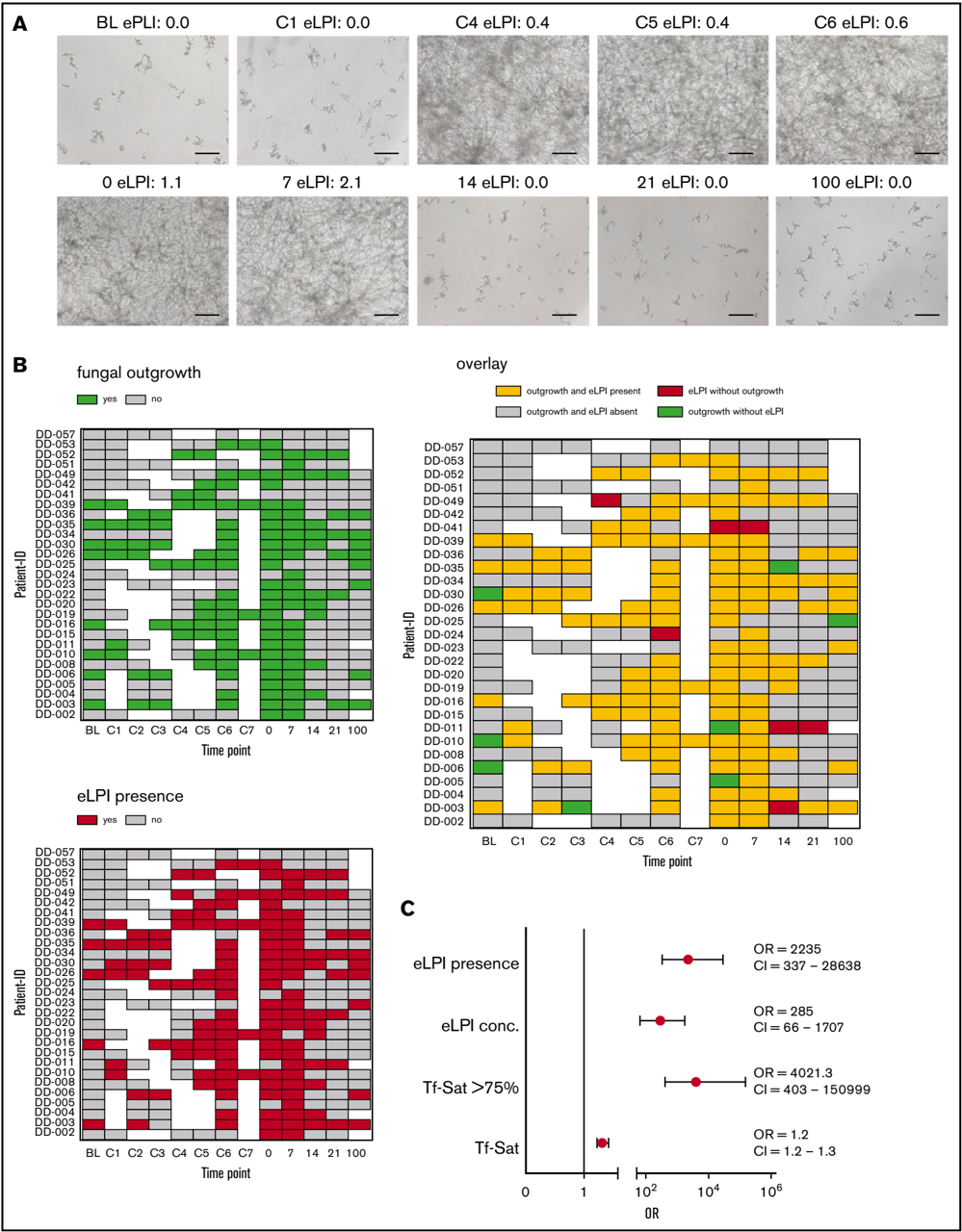
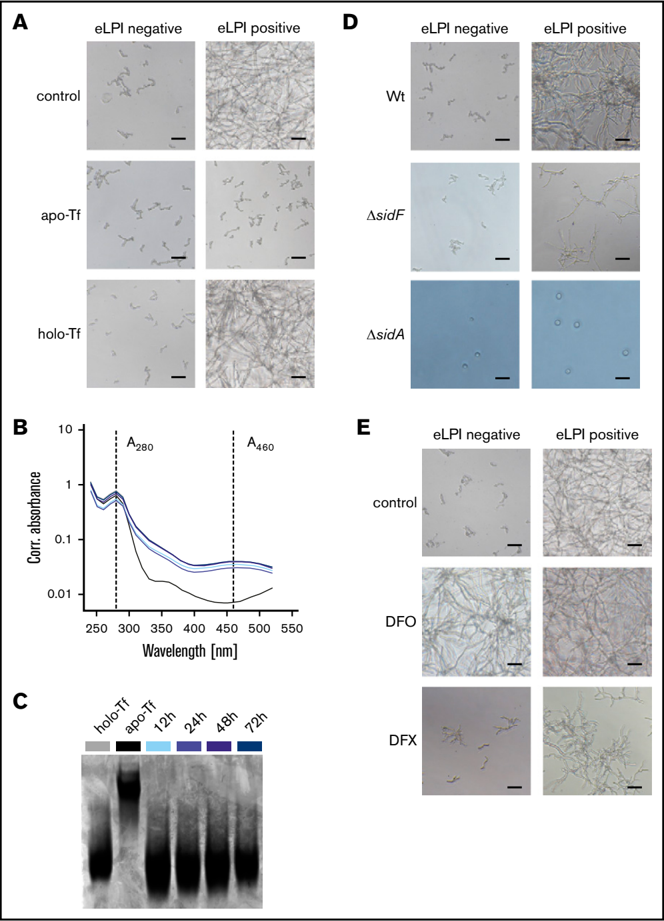
Key Points Serum-enhanced labile plasma iron in patients undergoing allogeneic HSCT is critical for Aspergillus fumigatus growth in vitro. Transferrin iron in serum is inaccessible for A fumigatus, and uptake of iron in the form of eLPI involves fungal siderophores.
Overview
The claims and statistics of this paper haven’t been checked yet.
Free: it reads the open-access text and checks the first 5 claims that cite a source we can check. Create a free account to check every claim.
Integrity signals
Registry
Cites
Statistics
Figures
Verification
Claims the paper makes
The claims and statistics of this paper haven’t been checked yet.
Free: it reads the open-access text and checks the first 5 claims that cite a source we can check. Create a free account to check every claim.
Claims other papers make about this one
Each is checked against this paper’s own text: does it say what the citing paper says it does?
The source backs part of the claim, not all of it — or backs it for a different population, condition or comparison.
In the citing paper
“A. fumigatus grows substantially better in the presence of NTBI in the plasma or in an iron-rich microenvironment in the lung, supporting the concept that iron availability and fungal iron uptake determines the virulence of many fungal pathogens (Haas, 2012;Hsu et al., 2018;Petzer et al., 2019).”
From Iron in infection and immunity (2020) · cites this paper as Petzer et al., 2019
Experimental — accuracy not yet measuredThe source backs part of the claim, not all of it — or backs it for a different population, condition or comparison.
In the citing paper
“This form of “nutritional immunity” is particularly important in infections with gram negative bacteria and some fungi ([54,56,57,58].”
From Hepcidin-Ferroportin Interaction Controls Systemic Iron Homeostasis (2021) · cites this paper as [58]
Experimental — accuracy not yet measured
Self-check
Percentages, sums and reported differences re-computed from the paper’s own numbers.
The self-check needs the paper’s full text.
Citations
Cites
Non-transferrin bound iron: a key role in iron overload and iron toxicity
Brissot, P., Ropert, M., Le Lan, C., & Loréal, O. (2012) · Biochimica et Biophysica Acta (BBA) - General Subjects · doi:10.1016/j.bbagen.2011.07.014 · Cited by 654 · cited 1×
“However, under pathologic conditions, once Tf’s binding capacity is exceeded, enhanced labile plasma iron (eLPI) develops.(2) Indeed, iron-overloaded patients with myelodysplastic syndrome or acute myeloid leukemia undergoing HSCT are at risk of developing eLPI as a result of chemotherapy-induced shutdown of erythropo…”
BackgroundAspergillus Infections in Transplant Recipients
Singh, N., & Paterson, D. L. (2005) · Clinical Microbiology Reviews · doi:10.1128/cmr.18.1.44-69.2005 · Cited by 579 · cited 1×
“Despite improved antifungal prophylaxis regimens, invasive aspergillosis (IA) still poses a major threat, with mortality rates up to 80% among infected HSCT patients.(1) Thus, novel biomarkers to identify patients at risk and a better understanding of underlying pathomechanisms are needed.”
BackgroundSchrettl, M., Bignell, E., Kragl, C., Joechl, C., Rogers, T., Arst, H. N., Haynes, K., & Haas, H. (2004) · The Journal of Experimental Medicine · doi:10.1084/jem.20041242 · Cited by 493 · cited 4×
“These results are in accordance with DsidF displaying attenuated virulence and DsidA being avirulent in murine aspergillosis models.(11,15)”
BackgroundResultSelf-citationDistinct Roles for Intra- and Extracellular Siderophores during Aspergillus fumigatus Infection
Schrettl, M., Bignell, E., Kragl, C., Sabiha, Y., Loss, O., Eisendle, M., Wallner, A., Arst, H. N., Haynes, K., & Haas, H. (2007) · PLoS Pathogens · doi:10.1371/journal.ppat.0030128 · Cited by 405 · cited 1×
“These results are in accordance with DsidF displaying attenuated virulence and DsidA being avirulent in murine aspergillosis models.(11,15)”
ResultSelf-citationSpellberg, B., Ibrahim, A. S., Chin-Hong, P. V., Kontoyiannis, D. P., Morris, M. I., Perfect, J. R., Fredricks, D., & Brass, E. P. (2012) · Journal of Antimicrobial Chemotherapy · doi:10.1093/jac/dkr375 · Cited by 308 · cited 1×
“Notably, application of deferasirox for mucormycosis in mice and humans yielded inconsistent outcomes, so that further work up is warranted and data must be interpreted with caution.(22) Moreover, pharmacologic increase of hepcidin levels, being the master regulator of systemic iron homeostasis, may also turn out to b…”
BackgroundThe Iron age of host–microbe interactions
Soares, M. P., & Weiss, G. (2015) · The EMBO Reports · doi:10.15252/embr.201540558 · Cited by 227 · cited 1×
“Referring to IA, studies have proposed iron overload as a risk factor for the occurrence of IA after transplantation.(9,10) Furthermore, iron is known to be essential for Aspergillus fumigatus (AFU) growth and virulence.”
BackgroundKontoyiannis, D. P., Chamilos, G., Lewis, R. E., Giralt, S., Cortes, J., Raad, I. I., Manning, J. T., & Han, X. (2007) · Cancer · doi:10.1002/cncr.22909 · Cited by 152 · cited 1×
“Referring to IA, studies have proposed iron overload as a risk factor for the occurrence of IA after transplantation.(9,10) Furthermore, iron is known to be essential for Aspergillus fumigatus (AFU) growth and virulence.”
BackgroundStefanova, D., Raychev, A., Arezes, J., Ruchala, P., Gabayan, V., Skurnik, M., Dillon, B. J., Horwitz, M. A., Ganz, T., Bulut, Y., et al. (2017) · Blood · doi:10.1182/blood-2017-03-772715 · Cited by 145 · cited 2×
“Preclinical studies have shown the potential of minihepcidin therapy in reversing bacterial infections.(7)”
BackgroundNon‐transferrin‐bound iron during allogeneic stem cell transplantation
Sahlstedt, L., Ebeling, F., Von Bonsdorff, L., Parkkinen, J., & Ruutu, T. (2001) · British Journal of Haematology · doi:10.1046/j.1365-2141.2001.02820.x · Cited by 134
Hepcidin agonists as therapeutic tools
Casu, C., Nemeth, E., & Rivella, S. (2018) · Blood · doi:10.1182/blood-2017-11-737411 · Cited by 128
Cited by
Hepcidin-Ferroportin Interaction Controls Systemic Iron Homeostasis
Nemeth, E., & Ganz, T. (2021) · International Journal of Molecular Sciences · doi:10.3390/ijms22126493 · Cited by 540
Iron in infection and immunity
Nairz, M., & Weiss, G. (2020) · Molecular Aspects of Medicine · doi:10.1016/j.mam.2020.100864 · Cited by 359
Fungal iron homeostasis with a focus on Aspergillus fumigatus
Misslinger, M., Hortschansky, P., Brakhage, A. A., & Haas, H. (2020) · Biochimica et Biophysica Acta (BBA) - Molecular Cell Research · doi:10.1016/j.bbamcr.2020.118885 · Cited by 154
Self-citationBrandtner, A. K., Tymoszuk, P., Nairz, M., Lehner, G. F., Fritsche, G., Vales, A., Falkner, A., Schennach, H., Theurl, I., Joannidis, M., et al. (2020) · Journal of Intensive Care · doi:10.1186/s40560-020-00495-8 · Cited by 78
Self-citationRiedelberger, M., Penninger, P., Tscherner, M., Seifert, M., Jenull, S., Brunnhofer, C., Scheidl, B., Tsymala, I., Bourgeois, C., Petryshyn, A., et al. (2020) · Cell Host & Microbe · doi:10.1016/j.chom.2020.01.023 · Cited by 64
Self-citationThe Siderophore Transporter Sit1 Determines Susceptibility to the Antifungal VL-2397
Dietl, A., Misslinger, M., Aguiar, M. M., Ivashov, V. A., Teis, D., Pfister, J., Decristoforo, C., Hermann, M., Sullivan, S. M., Smith, L. R., et al. (2019) · Antimicrobial Agents and Chemotherapy · doi:10.1128/aac.00807-19 · Cited by 57
Self-citationThe monothiol glutaredoxin GrxD is essential for sensing iron starvation in Aspergillus fumigatus
Misslinger, M., Scheven, M. T., Hortschansky, P., López‐Berges, M. S., Heiss, K., Beckmann, N., Heigl, T., Hermann, M., Krüger, T., Kniemeyer, O., et al. (2019) · PLoS Genetics · doi:10.1371/journal.pgen.1008379 · Cited by 56
Self-citationIron overload and its impact on outcome of patients with hematological diseases
Franke, G., Kubasch, A. S., Cross, M. A., Vučinić, V., & Platzbecker, U. (2020) · Molecular Aspects of Medicine · doi:10.1016/j.mam.2020.100868 · Cited by 43
Self-citationControversies on the Consequences of Iron Overload and Chelation in MDS
Vinchi, F., Hell, S., & Platzbecker, U. (2020) · HemaSphere · doi:10.1097/hs9.0000000000000357 · Cited by 42
“Likewise, a recent work showed that fungal outgrowth in the sera of transplanted patients from the ALLIVE study was dependent on the presence of NTBI and rescued by deferasirox (but not the xenosiderophore deferoxamine), providing evidence of chelation benefit against invasive fungal infections in transplanted patient…”
BackgroundSelf-citationPfister, J., Summer, D., Petřík, M., Khoylou, M., Lichius, A., Kaeopookum, P., Kochinke, L., Orasch, T., Haas, H., & Decristoforo, C. (2020) · Biomolecules · doi:10.3390/biom10020168 · Cited by 41
“In addition, under pathogenic conditions, enhanced labile plasma iron can be found, but they are not directly available for the pathogen [8,9].”
BackgroundSelf-citationSusceptibility of acute myeloid leukemia cells to ferroptosis and evasion strategies
Zhang, H., Sun, C., Sun, Q., Ye, L., Zhou, C., & Sun, C. (2023) · Frontiers in Molecular Biosciences · doi:10.3389/fmolb.2023.1275774 · Cited by 36
Happacher, I., Aguiar, M. M., Yap, A., Decristoforo, C., & Haas, H. (2023) · Essays in Biochemistry · doi:10.1042/ebc20220252 · Cited by 36
Self-citationHoffmann, A., Haschka, D., de Souza, L. V., Tymoszuk, P., Seifert, M., von Raffay, L., Hilbe, R., Petzer, V., Moser, P. L., Nairz, M., et al. (2021) · EBioMedicine · doi:10.1016/j.ebiom.2021.103568 · Cited by 34
“[35] Petzer V, Wermke M, Tymoszuk P, Wolf D, Seifert M, Ovaçin R, et al.”
BackgroundMethodSelf-citationImpact of bacterial infections on erythropoiesis
de Souza, L. V., Hoffmann, A., & Weiß, G. (2020) · Expert Review of Anti-infective Therapy · doi:10.1080/14787210.2021.1841636 · Cited by 32
Hypoferremia of inflammation: Innate host defense against infections
Ganz, T., & Nemeth, E. (2023) · Blood Cells Molecules and Diseases · doi:10.1016/j.bcmd.2023.102777 · Cited by 33
Ganz, T. (2025) · Advances in experimental medicine and biology · doi:10.1007/978-3-031-92033-2_3 · Cited by 25
Teichman, J., Geddes, M. N., Zhu, N. Y., Keating, M., Sabloff, M., Christou, G., Leber, B. F., Khalaf, D., St‐Hilaire, È., Finn, N., et al. (2022) · Haematologica · doi:10.3324/haematol.2022.280723 · Cited by 16
“36,37 In the latter study, elevated LPI and fungal growth in vitro were associated with a TSAT >75%.”
Brantl, V., Boysen, J. M., Yap, A., Golubtsov, E., Ruf, D., Heinekamp, T., Straßburger, M., Dichtl, K., Haas, H., Hillmann, F., et al. (2021) · mBio · doi:10.1128/mbio.00976-21 · Cited by 16
“Serum is known to be a harsh environment for Aspergillus because iron is bound to transferrin and difficult to access (33, 34).”
BackgroundSelf-citationHoffmann, A., de Souza, L. V., Seifert, M., von Raffay, L., Haschka, D., Grubwieser, P., Grander, M., Mitterstiller, A., Nairz, M., Poli, M., et al. (2021) · Frontiers in Cellular and Infection Microbiology · doi:10.3389/fcimb.2021.705087 · Cited by 12
Self-citationParisi, S., & Finelli, C. (2021) · Journal of Blood Medicine · doi:10.2147/jbm.s287876 · Cited by 10
“Given the detrimental effect of high levels of NTBI on transplant outcome, in terms of higher incidence of infections and poor engraftment, patients who are candidates for HSCT should receive iron chelation therapy pre and peritransplantation.(71,72) In 2019 Cremers et al showed that the reduction of iron overload wit…”
BackgroundHu, L., Luan, J., Liu, X., Zhang, Z., Tong, Z., Qu, Y., Jiang, Z., & Lin, J. (2026) · International Journal of Nanomedicine · doi:10.2147/ijn.s595236 · Cited by 1
Ferrostatin-1-Loaded Apotransferrin Liposomes for the Treatment of Fungal Keratitis
胡, 露. (2026) · Advances in Clinical Medicine · doi:10.12677/acm.2026.1641711
Transfusion-associated hemolysis links RBC transfusion to bloodstream infection risk
Eisler, L. D., Kreuziger, L. B., Kleinman, S. H., Hendrickson, J. E., Norris, P. J., Roubinian, N. H., Custer, B., Grebe, E., Kelly, S., Mast, A. E., et al. (2026) · Blood Red Cells & Iron · doi:10.1016/j.brci.2026.100149 · Cited by 1
Metadata
- Authors
- Petzer, V., Wermke, M., Tymoszuk, P., Wolf, D., Seifert, M., Ovaçin, R., Berger, S., Orth-Höller, D., Loacker, L., Weiss, G., Haas, H., Platzbecker, U., & Theurl, I.
- Affiliations
- Innsbruck Medical University (AT)
- University Hospital Carl Gustav Carus (DE)
- Division of Hygiene and Medical Microbiology,
- Central Institute for Medical and Chemical Laboratory Diagnostics, and
- University Hospital Leipzig (DE)
- Corresponding author
- Platzbecker, Uwe
- Theurl, Igor
- ORCID
- Venue
- Blood Advances
- Publisher
- American Society of Hematology
- Published
- 2019-06-05
- Volume
- 3
- Issue
- 11
- Pages
- 1695-1700
- ISSN
- 2473-9529 (ISSN-L)
- 2473-9537
- PMC
- PMC6560355
- OpenAlex
- W2948056888
- Cited by
- 22
- References
- 23
- Citations by year
- 2026: 2 · 2025: 1 · 2023: 3 · 2022: 1 · 2021: 5 · 2020: 8 · 2019: 2
- FWCI
- 3.06
- Type
- journal article
- Language
- en
- Open access
- gold
- doi.org
- Licence
- cc-by-nc-nd
- Locations
- Blood Advances (publishedVersion, cc-by-nc-nd)
- PubMed Central (publishedVersion)
- PubMed (publishedVersion)
- Topics
- Health Sciences › Medicine › Infectious Diseases › Antifungal resistance and susceptibility
- Health Sciences › Medicine › Hematology › Iron Metabolism and Disorders
- Life Sciences › Biochemistry, Genetics and Molecular Biology › Molecular Biology › Fungal and yeast genetics research
- Keywords
- labile plasma iron, Aspergillus fumigatus, allogeneic hematopoietic stem cell transplantation, siderophores, iron metabolism
- MeSH terms
- Aspergillus fumigatus, Female, Humans, Iron, Male, Transferrin, Hematopoietic Stem Cell Transplantation
About these checks
Registry, retraction, Cites and statistics results are computed, not judged, with one exception: a printed reference that no index lists is read once by a model before it counts as a citation error. Claims are extracted by a model and kept only when their quote appears verbatim in the text; each cited source is then checked, with a model’s help, for whether it says what the claim relies on. Those verdicts can be wrong — read the claim’s quote and the cited source before relying on one.
Statistics and arithmetic are recomputed, not judged.
Confidence bands are shown only for fields calibrated on our annotated test set. None is calibrated yet, so no band is shown.
What counts as a claim ›How we measure confidence ›How we check this ›
Are you an author, or do you see a problem with this page? Request a review
Data sources
Bibliographic data: Semantic Scholar, OpenAlex, Crossref.
Contains information from the Semantic Scholar Academic Graph Datasets, made available under the ODC Attribution License (ODC-BY 1.0).
Semantic Scholar’s data is described in: Kinney, R., et al. (2023). The Semantic Scholar Open Data Platform. arXiv:2301.10140.
