

Myelodysplastic syndrome unrelated to lentiviral vector in a patient treated with gene therapy for sickle cell disease
Open accessThe DOI matches its Crossref record; 32 of the 32 references it cites were found in a registry or an index.
Abstract
Key Points: Ability to accurately attribute adverse events post–gene therapy is required to describe the benefit-risk of these novel treatments. A SCD patient developed myelodysplastic syndrome post-LentiGlobin treatment; we show how insertional oncogenesis was excluded as the cause.
Overview
The claims and statistics of this paper haven’t been checked yet.
Free: it reads the open-access text and checks the first 5 claims that cite a source we can check. Create a free account to check every claim.
Integrity signals
Registry
Cites
Statistics
Figures

Verification
Claims the paper makes
The claims and statistics of this paper haven’t been checked yet.
Free: it reads the open-access text and checks the first 5 claims that cite a source we can check. Create a free account to check every claim.
Claims other papers make about this one
Each is checked against this paper’s own text: does it say what the citing paper says it does?
The source backs part of the claim, not all of it — or backs it for a different population, condition or comparison.
In the citing paper
“Although insertional mutagenesis risk has been reduced by improved vector design19, the development of myelodysplastic syndrome (MDS) and acute myeloid leukemia (AML) at 3–5.5 years post-transplantation in 2 of 47 patients who had undergone GT for SCD20–23 has generated renewed concerns.”
From Clonal selection of hematopoietic stem cells after gene therapy for sickle cell disease (2023) · cites this paper as [20]
Experimental — accuracy not yet measuredThe cited source says what the claim attributes to it.
In the citing paper
“Myeloablative conditioning is required for all cell-based therapeutics but has been associated with myelodysplasia”
From Fetal hemoglobin in sickle cell anemia (2020) · cites this paper as [129]
In the citing paper
“though neither were reported to be mutated in patients who experienced post-GT myeloid malignancies20,21”
From Clonal selection of hematopoietic stem cells after gene therapy for sickle cell disease (2023) · cites this paper as [20]
Self-check
Percentages, sums and reported differences re-computed from the paper’s own numbers.
The self-check needs the paper’s full text.
Citations
Cites
Lentiviral Hematopoietic Stem Cell Gene Therapy Benefits Metachromatic Leukodystrophy
Biffi, A., Montini, E., Lorioli, L., Cesani, M., Fumagalli, F., Plati, T., Baldoli, C., Martino, S., Calabria, A., Canale, S., et al. (2013) · Science · doi:10.1126/science.1233158 · Cited by 1,180
Self-citationMontini, E., Cesana, D., Schmidt, M., Sanvito, F., Ponzoni, M., Bartholomae, C., Sergi, L. S., Benedicenti, F., Ambrosi, A., Di Serio, C., et al. (2006) · Nature Biotechnology · doi:10.1038/nbt1216 · Cited by 701
Self-citationGene therapy in a patient with sickle cell disease
Ribeil, J.-A., Hacein-Bey-Abina, S., Payen, E., Magnani, A., Semeraro, M., Magrin, E., Caccavelli, L., Neven, B., Bourget, P., El Nemer, W., et al. (2017) · New England Journal of Medicine · doi:10.1056/nejmoa1609677 · Cited by 696 · cited 3×
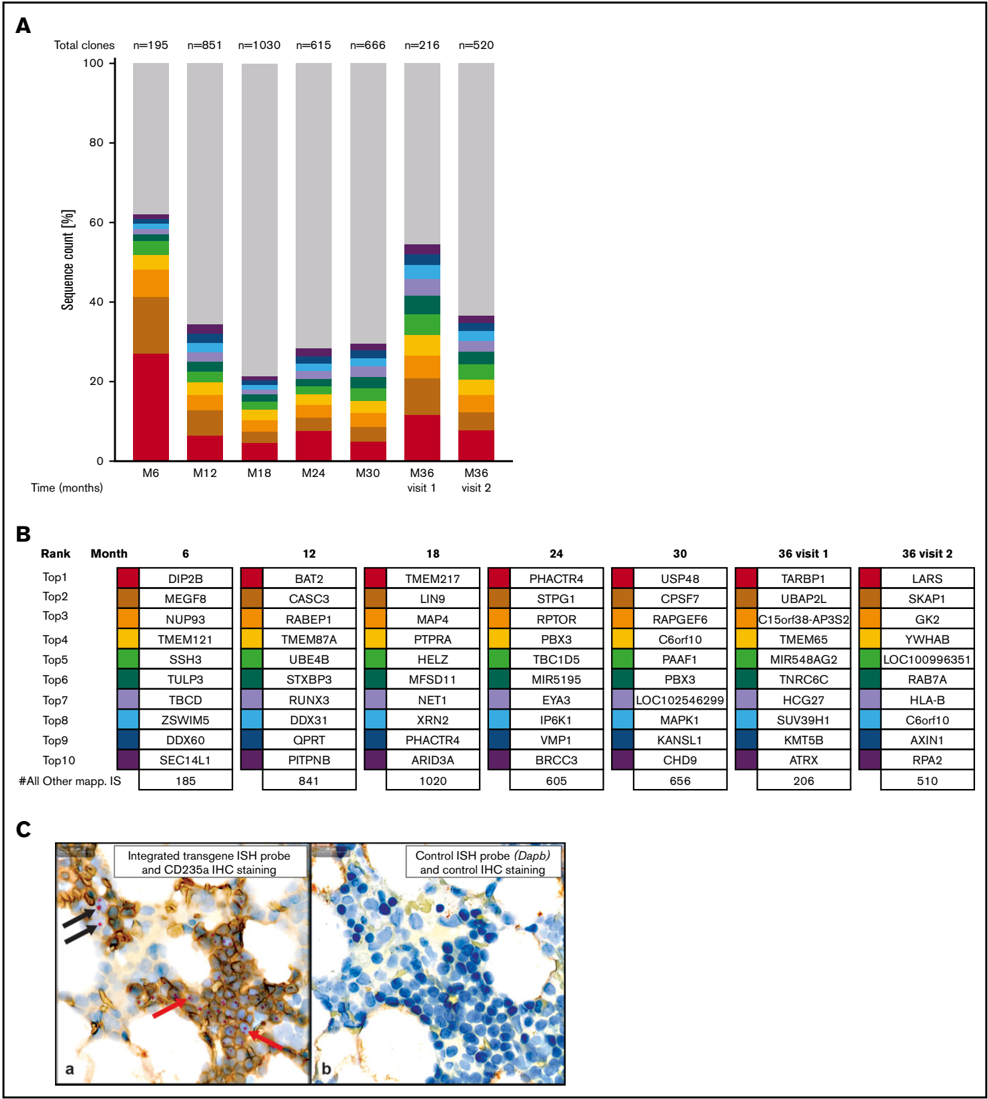
“Routine integration site (IS) analyses performed at 6-month intervals post-LentiGlobin infusion showed no protocol-defined clonal dominance through 36 months (Figure 1A).(2) No single IS represented .”
BackgroundMethodGene Therapy in Patients with Transfusion-Dependent β-Thalassemia
Thompson, A. A., Walters, M. C., Kwiatkowski, J., Rasko, J. E. J., Ribeil, J.-A., Hongeng, S., Magrin, E., Schiller, G. J., Payen, E., Semeraro, M., et al. (2018) · New England Journal of Medicine · doi:10.1056/nejmoa1705342 · Cited by 684
Self-citationThe incidence of secondary leukemias.
Leone, G. G. M., Mele, L., Pulsoni, A., Equitani, F., & Pagano, L. (1999) · PubMed · Cited by 346
Stable mixed hematopoietic chimerism after bone marrow transplantation for sickle cell anemia
Walters, M. C., Patience, M., Leisenring, W., Rogers, Z. R., Aquino, V. M., Buchanan, G. R., Roberts, I. A. G., Yeager, A. M., Hsu, L., Adamkiewicz, T., et al. (2001) · Biology of Blood and Marrow Transplantation · doi:10.1053/bbmt.2001.v7.pm11787529 · Cited by 324
Self-citationSystematic Review: Hydroxyurea for the Treatment of Adults with Sickle Cell Disease
Lanzkron, S., Strouse, J. J., Wilson, R., Beach, M. C., Haywood, C., Park, H., Witkop, C., Bass, E. B., & Segal, J. B. (2008) · Annals of Internal Medicine · doi:10.7326/0003-4819-148-12-200806170-00221 · Cited by 287 · cited 2×
“Although MDS has been reported in 2 individuals with SCD after 14 and 15 years of HU treatment, respectively,(16,17) a systematic literature review (with up to 9 years of patient follow-up) concluded that HU use is not leukemogenic in patients with SCD.(18) Whether underlying SCD increases the risk of myeloid neoplasm…”
BackgroundPalchaudhuri, R., Saez, B., Hoggatt, J., Schajnovitz, A., Sykes, D. B., Tate, T. A., Czechowicz, A., Kfoury, Y., Ruchika, F., Rossi, D. J., et al. (2016) · Nature Biotechnology · doi:10.1038/nbt.3584 · Cited by 217 · cited 1×
“More recently, preclinical models were used to investigate approaches coupling cytotoxic conjugates, such as saporin, to antibodies targeting either CD45, expressed exclusively on most hematopoietic cells including HSCs, or CD117 (c-Kit), a marker of HSCs and hematopoietic progenitors.(28,29) Additionally, anti–c-Kit…”
MethodBiffi, A., Bartolomae, C. C., Cesana, D., Cartier, N., Aubourg, P., Ranzani, M., Cesani, M., Benedicenti, F., Plati, T., Rubagotti, E., et al. (2011) · Blood · doi:10.1182/blood-2010-09-306761 · Cited by 216
Self-citationFerrua, F., Cicalese, M. P., Galimberti, S., Giannelli, S., Dionisio, F., Barzaghi, F., Migliavacca, M., Bernardo, M. E., Calbi, V., Assanelli, A. A., et al. (2019) · The Lancet Haematology · doi:10.1016/s2352-3026(19)30021-3 · Cited by 214
Cited by
Items 101–162 of 162
Role of gene therapy in sickle cell disease
Raghuraman, A., Lawrence, R., Shetty, R., Avanthika, C., Jhaveri, S., Pichardo, B. V., & Mujakari, A. (2024) · Disease-a-Month · doi:10.1016/j.disamonth.2024.101689 · Cited by 7
Montepeloso, A., Mattioli, D., Pellin, D., Peviani, M., Genovese, P., & Biffi, A. (2024) · Nature Communications · doi:10.1038/s41467-024-54515-4 · Cited by 6
Abdelazim, O., Sharafeldin, A.-B. K., Kawari, M., Hasan, Z. A. I. Y., & Toorani, Z. A. (2025) · Stem Cells and Development · doi:10.1177/15473287251362882 · Cited by 6
“49,50 No new cases of hematological disorders have been reported with the newer manufacturing process, which is a promising feat.”
Kansal, R. (2025) · Genes · doi:10.3390/genes16111367 · Cited by 6
“…patient harbored monosomy 7 and structurally abnormal chromosome 19p in 8 of 20 metaphases, along with mutations in RUNX1 , KRAS , and PTPN11 [90]; in the second patient, monosomy 7 was observed in 70% of cells and partial loss of 11p involving WT1 in 50% of cells, along with mutations in…”
InfluentialGene Therapeutic Delivery to the Salivary Glands
Upadhyay, A., Cao, U. M. N., Hariharan, A., Almansoori, A. A., & Tran, S. D. (2023) · Advances in experimental medicine and biology · doi:10.1007/5584_2023_766 · Cited by 6
Fostering a healthier generation of children with sickle cell disease through advancements in care
Franco, E., Nimura, C. A., & McGann, P. T. (2024) · Pediatric Research · doi:10.1038/s41390-024-03566-w · Cited by 6
Yannaki, E., Psatha, N., Παπαδοπούλου, Α., Athanasopoulos, T., Gravanis, A., Roubelakis, M. G., Tsirigotis, P. D., Anagnostopoulos, Α., Anagnou, N. P., & Vassilopoulos, G. (2021) · Human Gene Therapy · doi:10.1089/hum.2021.196 · Cited by 6
Allogeneic Transplant and Gene Therapy
Lawal, R. A., Walters, M. C., & Fitzhugh, C. D. (2022) · Hematology/Oncology Clinics of North America · doi:10.1016/j.hoc.2022.06.007 · Cited by 6
Self-citationFlevari, P., Voskaridou, E., Galactéros, F., Cannas, G., Loko, G., Joseph, L., Bartolucci, P., Gellen‐Dautremer, J., Bernit, E., Charneau, C., et al. (2022) · Biomedicines · doi:10.3390/biomedicines10123201 · Cited by 6
“Case Nr, Ref, Country Case 1, US [11] Case 2, UK [12] Case 3, FR [13] Case 4, US [14] Case 5, GR (Current Report) Case 6, US [15]”
BackgroundSharma, A., & John, T. D. (2025) · Blood Advances · doi:10.1182/bloodadvances.2024015413 · Cited by 5
“57 In yet another report, somatic mutations in RUNX1 and PTPN11 , and monosomy 7 were noted in 2 patients who developed leukemia after gene addition in the HGB-206 clinical trial of gene therapy for SCD. 58,59 It is unclear whether these mutations were present at baseline.”
Gene-addition/editing therapy in sickle cell disease
Pollock, G., Nègre, O., & Ribeil, J. (2023) · La Presse Médicale · doi:10.1016/j.lpm.2023.104214 · Cited by 6
Shimada, Y., Ishii, N., Higuchi, T., Goto, M., Ohashi, T., & Kobayashi, H. (2022) · Gene Therapy · doi:10.1038/s41434-022-00357-y · Cited by 5
“Indeed, AML and MDS have been recently reported in two patients with sickle cell disease after being treated with autologous HSC-GT using lentiviral vector carrying internal erythroid-specific promoter and β-globin gene [54, 55].”
BackgroundInduction of Fetal Hemoglobin by Gene Therapy
Walters, M. C. (2021) · New England Journal of Medicine · doi:10.1056/nejme2034338 · Cited by 5
Self-citationBernaudin, F., Verlhac, S., Ducros-Miralles, E., Arnaud, C., Genty, I., Petras, M., Paillard, C., Luna, G. D., Meunier, B., Thuret, I., et al. (2026) · American Journal of Hematology · doi:10.1002/ajh.70336 · Cited by 4
Hosuru, R. V., Yang, J., Zhou, Y., Gin, A. L., Hayal, T. B., Hong, S. G., Dunbar, C. E., & Wu, C. (2024) · British Journal of Haematology · doi:10.1111/bjh.19889 · Cited by 4
“6,7 A recent SCD gene therapy study reported an increased frequency of myeloid driver mutations in both genetically modified and unmodified cells, suggesting positive selection of mutant clones and highlighting the potential impact of gene therapy on HSPC clonal dynamics and the mutational…”
Butt, H., Sathish, S., London, E., Le, A., Li, Q., Gudmundsdottir, B., Lee, D., Burke, E. V., Yates, B. P., Liu, D. R., et al. (2026) · Blood Advances · doi:10.1182/bloodadvances.2025017321 · Cited by 4
“45 Lentiviral vectors raise concerns about insertional mutagenesis; BB305 has shown safe polyclonal hematopoiesis in trials, 16,46 but vector-driven clonal dominance must be monitored long-term in our system.”
Self-citationCurrent and emerging drug treatment strategies to tackle sickle cell anemia
Persaud, Y., Leonard, A. K., & Rai, P. (2024) · Expert Opinion on Emerging Drugs · doi:10.1080/14728214.2024.2379260 · Cited by 4
History, Advances, and Challenges of Sickle Cell Disease Treatment
Walia, R., Fertrin, K. Y., & Sabath, D. E. (2024) · Clinics in Laboratory Medicine · doi:10.1016/j.cll.2024.07.004 · Cited by 4
Gene Editing in Hematopoietic Stem Cells
Liao, J., & Wu, Y. (2023) · Advances in experimental medicine and biology · doi:10.1007/978-981-99-7471-9_11 · Cited by 4
Esrick, E. B., Lehmann, L., Federico, A., Vincon, H., Liu, B., Daley, H., Dansereau, C., Oliveira, S. D., Everett, J. K., Kao, P., et al. (2026) · Blood · doi:10.1182/blood.2026033871 · Cited by 3
Gene Therapies for Hemoglobinopathies: Efficacy, Cell Collection & Transfusion Support
Inam, Z. S., Han, H., Webb, J. L., & Delaney, M. (2025) · Transfusion Medicine Reviews · doi:10.1016/j.tmrv.2025.150930 · Cited by 3
Sickle cell disease and risk of haematological malignancies
Bernaudin, F., Kuentz, M., & Beuzard, Y. (2021) · Hématologie · doi:10.1684/hma.2021.1660 · Cited by 3
Wang, X., McKillop, W. M., Dlugi, T. A., Faber, M. L., Argote, J. A., Chambers, C. B., Wilber, A. C., & Medin, J. A. (2023) · The Journal of Gene Medicine · doi:10.1002/jgm.3567 · Cited by 3
Thérapie génique pour la drépanocytose : avancées et obstacles
Cavazzana, M. (2023) · Bulletin de l Académie Nationale de Médecine · doi:10.1016/j.banm.2023.06.015 · Cited by 3
Demirci, S., & Tisdale, J. F. (2023) · Molecular Therapy — Methods & Clinical Development · doi:10.1016/j.omtm.2023.08.005 · Cited by 3
“Molecular Therapy: Methods & Clinical D le under the CC BY-NC-ND license (http://creative toxicity and pose an elevated risk of hematological malignancies.(8,9) In this context, considering naked antibodies or antibody drug conjugates targeting all white cells including HSCs (i.”
BackgroundSelf-citationWhen Blood Disorders Meet Cancer: Uncovering the Oncogenic Landscape of Sickle Cell Disease
Casadessus, E., Saby, M., Forté, S., Pastore, Y. D., Lavallée, V., & Pincez, T. (2025) · Journal of Clinical Medicine · doi:10.3390/jcm14238509 · Cited by 2
“Two AML cases occurred after gene therapy with lentiviral vector-based LentiGlobin after myeloablation with an alkylating agent [42,44].”
InfluentialGene Therapy of Beta Hemoglobinopathies
Testa, U., Pelosi, E., & Castelli, G. (2025) · Biomedicines · doi:10.3390/biomedicines13123093 · Cited by 2
“…insertional oncogenesis have been observed in β -thal patients treated with Beta-Cel; however, two SCD patients who received Lov-Cel developed AML at 3 and 5.5 years after infusion did not show insertional oncogenesis; in one patient, leukemic cells contained the BB305 lentiviral vector [138,139].”
InfluentialA Primer on Gene Editing: What Does It Mean for Pathologists?
Cushman‐Vokoun, A. M., Schmidt, R. J., Hiemenz, M., Fung, M. K. Y., Zhang, B. M., Bradshaw, G., Gandhi, M. J., Yao, J., Yohe, S. L., Beckman, A. K., et al. (2023) · Archives of Pathology & Laboratory Medicine · doi:10.5858/arpa.2022-0410-cp · Cited by 2
Assaf, B. T., Harper, C. G., & Phillips, J. A. (2023) · Elsevier eBooks · doi:10.1016/b978-0-12-821047-5.00034-8 · Cited by 2
Gotzhein, F., Aranyossy, T., Thielecke, L., Sonntag, T., Thaden, V., Fehse, B., Müller, I., Glauche, I., & Cornils, K. (2022) · International Journal of Molecular Sciences · doi:10.3390/ijms23063160 · Cited by 2
“, stem cell gene therapy for sickle cell disease, will also include adult patients [73] and provide a potential reference system in the future.”
BackgroundFetal Hemoglobin Research and Clinical Relevance in Sickle Cell Disease
Gudmundsdóttir, B. K., & Tisdale, J. F. (2025) · Physiology · doi:10.1152/physiol.00024.2025 · Cited by 1
Self-citationTherapeutic Genome Engineering for the Treatment of Sickle Cell Disease
Leonard, A. K., Sharma, A., Chao, F.-Y., & Yen, J. S. (2026) · Springer eBooks · doi:10.1007/978-3-032-12532-3_9 · Cited by 1
Ten years of clinical genetic therapies for sickle cell disease: Current and future directions
Leonard, A. (2026) · Seminars in Hematology · doi:10.1053/j.seminhematol.2026.03.013 · Cited by 1
Eapen, M., & Williams, D. A. (2026) · Cytotherapy · doi:10.1016/j.jcyt.2026.102906 · Cited by 1
Should Sickle Cell Disease Be Considered a Cancer Predisposition Syndrome?
Casadessus, E., Pastore, Y. D., & Pincez, T. (2026) · Children · doi:10.3390/children13050683 · Cited by 1
Clonal hematopoiesis in the setting of sickle cell disease and its relevance to curative therapies
Weeks, L. D. (2026) · Seminars in Hematology · doi:10.1053/j.seminhematol.2026.05.008 · Cited by 1
Shaik, M. Y., & Divers, S. (2026) · European Journal Of Haematology · doi:10.1111/ejh.70260 · Cited by 1
“…syndrome and leukemia cases required extensive investigation; available analyses found the absence of the therapeutic vector in malignant cells or did not support vector-mediated insertional oncogenesis, suggesting busulfan-related, disease-related, or preexisting clonal mechanisms [28, 29].”
Weeks, L. D., Neuberg, D. S., Limerick, E. M., Hsieh, M. M., Xu, X., Kabore, M. D., Lawal, R. A., Leonard, A. K., Wang, Y., Phang, O. A., et al. (2026) · Blood · doi:10.1182/blood.2026033476 · Cited by 2
Self-citationSubash, C., Santhi, K. R., Yahya, A., Sunil, S., S., B., & Chellatamilan, T. (2024) · Research Square · doi:10.21203/rs.3.rs-4789139/v1 · Cited by 1
Aktuelle gentherapeutische Behandlungsansätze bei Hämoglobinopathien
Meisel, R. (2022) · Kinder- und Jugendmedizin · doi:10.1055/a-1683-2186
Gene and Cell Therapy: How to Build a BioDrug
Baumeister, S. H. C., & Woolfrey, A. E. (2022) · Pediatric oncology · doi:10.1007/978-3-031-06357-2_6
Gene therapy approaches for sickle cell anemia
Ulaş, T., & Dal, M. S. (2023) · Transfusion and Apheresis Science · doi:10.1016/j.transci.2023.103677
Hematopoietic Stem Cell-Targeted Gene Therapy Using Lentiviral Vectors
Uchida, N. (2023) · Nihon Ika Daigaku Igakkai Zasshi · doi:10.1272/manms.19.205
Self-citationMohan, G. S., Kats, D. J., Martin, S. D., & Miozzo, P. (2023) · Springer eBooks · doi:10.1007/978-3-031-38058-7_5
Gene Editing Approaches for Haematological Disorders
Ferrari, S., & Canarutto, D. (2024) · Elsevier eBooks · doi:10.1016/b978-0-443-15717-2.00053-6 · Cited by 1
Manu on Lenti G2B Gene Therapy for β-ThalassemiaPreprint
Zhang, X., Gao, Z., Yang, Z.-X., Deng, D.-H., Zhang, F., Zhang, Z., Yu, B., Zhang, Y., Lv, X., Nakamura, Y., et al. (2024) · Research Square · doi:10.21203/rs.3.rs-4249953/v1
Fuad, Z., Redha, Z. A., & Abuidrees, A. (2024) · International Journal of Biomedicine · doi:10.21103/article14(3)_ra2
Disease background influences fate of transplanted stem cells
Gao, T., & Sankaran, V. G. (2024) · Nature · doi:10.1038/d41586-024-03112-y
Lentiviral vector-mediated gene therapy for hematopoietic stem cells
Uchida, N. (2024) · Drug Delivery System · doi:10.2745/dds.39.267
Self-citationTwo is better than one: Advancing gene therapy protocols for enhanced safety and efficacy
Hardouin, G., & Miccio, A. (2025) · Cell stem cell · doi:10.1016/j.stem.2024.12.009
Demystifying Gene-Based Therapies in Pediatric Health Care
Tinkle, M. B., & Schluter, W. (2025) · The Journal for Nurse Practitioners · doi:10.1016/j.nurpra.2025.105611
Liver directed lentiviral gene therapy for ARC syndrome
Cozmescu, A. C. (2023) · UCL Discovery (University College London)
Segura, E. (2025) · eScholarship (California Digital Library)
Boccacci, Y. (2023) · Corpus Université Laval (Université Laval)
Enfoque terapéutico de la anemia falciforme
Soto-Manzano, A. V., Córdoba-García, S., Castaño, L. M. F., Uribe-Ramírez, M., & Sánchez, L. M. M. (2025) · Revista Repertorio de Medicina y Cirugía · doi:10.31260/repertmedcir.01217372.1553
Fundamentos da Terapia Gênica baseada em vetores virais - Revisão da Literatura
Filho, L. A. I., Vilar, B. D. A., & Mello, G. S. V. (2025) · Health and Biosciences · doi:10.47456/hb.64.50214
Base editing approaches for the treatment of ß-hemoglobinopathies
Hardouin, G. (2022) · theses.fr (ABES) · doi:10.70675/593cd291z9d0ez45a6z82cdz64ffb2e65ff8
Sharma, A., & Corbacioglu, S. (2026) · Blood Advances · doi:10.1182/bloodadvances.2026019856
Karsenty, C. L., George, A. P., Yassine, K., Nguyen, D. T., Fasipe, T., Tubman, V. N., Abraham, A., Horan, J., Heslop, H. E., & Ngwube, A. I. (2026) · Blood Immunology & Cellular Therapy · doi:10.1016/j.bict.2026.100074
Sickle cell disease-specific barriers to in vivo hematopoietic stem cell gene therapy
Choi, R., & Sheehan, V. (2026) · Seminars in Hematology · doi:10.1053/j.seminhematol.2026.09.003
Usmani, F., Ali, S. U., Ahad, F., & Saifullah (2026) · Molecular Biology Reports · doi:10.1007/s11033-026-12908-2
“Although gene treatments have the capacity to treat β-thalassemia, there are associated hazards, particularly the possibility of genotoxicity from genome alteration [25].”
CRISPR-Cas9 as a Curative Frontier: Precision Editing Strategies for Sickle Cell Disease
Santosh, D. (2026) · Acta Pharma Reports. · doi:10.51470/apr.2026.05.02.01
Metadata
- Authors
- Hsieh, M. M., Bonner, M., Pierciey, F. J., Uchida, N., Rottman, J., Demopoulos, L., Schmidt, M., Kanter, J., Walters, M. C., Thompson, A. A., Asmal, M., & Tisdale, J. F.
- Affiliations
- National Institutes of Health (US)
- Bluebird Bio (United States) (US)
- GeneWerk GmbH, Heidelberg, Germany;
- University of Alabama at Birmingham (US)
- University of California, San Francisco (US)
- Northwestern University (US)
- ORCID
- Venue
- Blood Advances
- Publisher
- American Society of Hematology
- Published
- 2020-05-12
- Volume
- 4
- Issue
- 9
- Pages
- 2058-2063
- ISSN
- 2473-9529 (ISSN-L)
- 2473-9537
- PMC
- PMC7218414
- OpenAlex
- W3024470836
- Semantic Scholar
- db43b7cc489cc960858f76584a7f5aeb74c17f9b
- Cited by
- 152
- References
- 32
- Citations by year
- 2026: 14 · 2025: 24 · 2024: 25 · 2023: 35 · 2022: 29 · 2021: 23 · 2020: 2
- FWCI
- 13.03
- Type
- journal article
- Language
- en
- Open access
- gold
- doi.org
- Licence
- cc-by-nc-nd
- Locations
- Blood Advances (publishedVersion, cc-by-nc-nd)
- PubMed Central (publishedVersion)
- PubMed (publishedVersion)
- eScholarship (California Digital Library) (submittedVersion)
- Funders
- bluebird bio
- Topics
- Life Sciences › Biochemistry, Genetics and Molecular Biology › Genetics › Virus-based gene therapy research
- Health Sciences › Medicine › Genetics (clinical) › Hemoglobinopathies and Related Disorders
- Health Sciences › Medicine › Genetics (clinical) › Lysosomal Storage Disorders Research
- Keywords
- myelodysplastic syndrome, sickle cell disease, gene therapy, lentiviral vectors, insertional oncogenesis, risk-benefit assessment
- MeSH terms
- Anemia, Sickle Cell, Humans, Myelodysplastic Syndromes, Genetic Therapy, Lentivirus
About these checks
Registry, retraction, Cites and statistics results are computed, not judged, with one exception: a printed reference that no index lists is read once by a model before it counts as a citation error. Claims are extracted by a model and kept only when their quote appears verbatim in the text; each cited source is then checked, with a model’s help, for whether it says what the claim relies on. Those verdicts can be wrong — read the claim’s quote and the cited source before relying on one.
Statistics and arithmetic are recomputed, not judged.
Confidence bands are shown only for fields calibrated on our annotated test set. None is calibrated yet, so no band is shown.
What counts as a claim ›How we measure confidence ›How we check this ›
Are you an author, or do you see a problem with this page? Request a review
Data sources
Bibliographic data: Semantic Scholar, OpenAlex, Crossref.
Contains information from the Semantic Scholar Academic Graph Datasets, made available under the ODC Attribution License (ODC-BY 1.0).
Semantic Scholar’s data is described in: Kinney, R., et al. (2023). The Semantic Scholar Open Data Platform. arXiv:2301.10140.
