

Bidirectional relationships of comorbidity with obstructive sleep apnoea
Open accessThe DOI matches its Crossref record; 137 of the 138 references it cites were found in a registry or an index.
Abstract
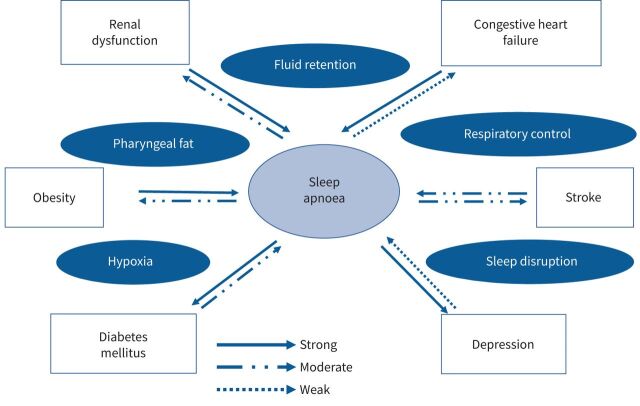
Obstructive sleep apnoea (OSA) is frequently associated with comorbidities that include metabolic, cardiovascular, renal, pulmonary and neuropsychiatric. There is considerable evidence that OSA is an independent risk factor for many of these comorbidities but, more recently, there is evidence that some of these comorbidities may predispose to the development of OSA. Thus, there is growing evidence of a bidirectional relationship between OSA and comorbidity, especially for heart failure, metabolic syndrome and stroke. Potential mechanisms of bidirectional relationships differ in individual comorbidities with fluid retention and redistribution being especially important in heart failure and end-stage renal disease, whereas neural mechanisms may be more important in diabetes mellitus and stroke. The evidence for other comorbidities, such as hypertension and atrial fibrillation, support these being more a consequence of OSA with limited evidence to support a bidirectional relationship. The present review explores the evidence for such bidirectional relationships with a particular perspective on comorbidities that may predispose to OSA. The impact of therapy in bidirectional relationships is also reviewed, which highlights the clinical importance of accurate diagnosis. This aspect is especially true of COPD, where the identification of co-existing OSA has important implications for optimum therapy.
Overview
The claims and statistics of this paper haven’t been checked yet.
Free: it reads the open-access text and checks the first 5 claims that cite a source we can check. Create a free account to check every claim.
Integrity signals
Registry
Cites
Statistics
Figures
Verification
Claims the paper makes
The claims and statistics of this paper haven’t been checked yet.
Free: it reads the open-access text and checks the first 5 claims that cite a source we can check. Create a free account to check every claim.
Claims other papers make about this one
Each is checked against this paper’s own text: does it say what the citing paper says it does?
The cited source says what the claim attributes to it.
In the citing paper
“there is growing evidence of bidirectional relationships between OSA and comorbidity, especially for heart failure, metabolic syndrome, and stroke.”
From Obstructive sleep apnea: transition from pathophysiology to an integrative disease model (2022) · cites this paper as Gleeson & McNicholas, 2022
The cited source says what the claim attributes to it.
In the citing paper
“Renal disease and OSA have a bi‐directional relationship (Gleeson & McNicholas, 2022).”
From Obstructive sleep apnea: transition from pathophysiology to an integrative disease model (2022) · cites this paper as Gleeson & McNicholas, 2022
Self-check
Percentages, sums and reported differences re-computed from the paper’s own numbers.
The self-check needs the paper’s full text.
Citations
Cites
Prospective Study of the Association between Sleep-Disordered Breathing and Hypertension
Peppard, P. E., Young, T., Palta, M., & Skatrud, J. (2000) · New England Journal of Medicine · doi:10.1056/nejm200005113421901 · Cited by 4,973
Marin, J. M., Carrizo, S. J., Vicente, E., & Agusti, A. G. (2005) · The Lancet · doi:10.1016/s0140-6736(05)71141-7 · Cited by 4,678
Nieto, F. J. (2000) · JAMA · doi:10.1001/jama.283.14.1829 · Cited by 3,369
The Triad of Sleep Apnea, Hypertension, and Chronic Kidney Disease: A Spectrum of Common Pathology
Aziz, F., & Chaudhary, K. (2017) · Cardiorenal Medicine · doi:10.1159/000450796 · Cited by 3,267
CPAP for Prevention of Cardiovascular Events in Obstructive Sleep Apnea
McEvoy, R. D., Antic, N. A., Heeley, E., Luo, Y., Ou, Q., Zhang, X., Mediano, O., Chen, R., Drager, L. F., Liu, Z., et al. (2016) · New England Journal of Medicine · doi:10.1056/nejmoa1606599 · Cited by 2,101
Gottlieb, D. J., Yenokyan, G., Newman, A. B., O'Connor, G. T., Punjabi, N. M., Quan, S. F., Redline, S., Resnick, H. E., Tong, E. K., Diener-West, M., et al. (2010) · Circulation · doi:10.1161/circulationaha.109.901801 · Cited by 1,551
Yeghiazarians, Y., Jneid, H., Tietjens, J. R., Redline, S., Brown, D. L., El-Sherif, N., Mehra, R., Bozkurt, B., Ndumele, C. E., Somers, V. K., et al. (2021) · Circulation · doi:10.1161/cir.0000000000000988 · Cited by 1,431
Obstructive Sleep Apnea–Hypopnea and Incident Stroke: The Sleep Heart Health Study
Redline, S., Yenokyan, G., Gottlieb, D. J., Shahar, E., O'Connor, G. T., Resnick, H. E., Diener-West, M., Sanders, M. H., Wolf, P. A., Geraghty, E. M., et al. (2010) · American Journal of Respiratory and Critical Care Medicine · doi:10.1164/rccm.200911-1746oc · Cited by 1,269
Obstructive sleep apnoea syndrome
Lévy, P., Kohler, M., McNicholas, W. T., Barbé, F., McEvoy, R. D., Somers, V. K., Lavie, L., & Pépin, J.-L. (2015) · Nature Reviews Disease Primers · doi:10.1038/nrdp.2015.15 · Cited by 1,235
Self-citationDepression in sleep disturbance: A review on a bidirectional relationship, mechanisms and treatment
Fang, H., Tu, S., Sheng, J., & Shao, A. (2019) · Journal of Cellular and Molecular Medicine · doi:10.1111/jcmm.14170 · Cited by 1,141
Research works printed but not linked: 2
- Wilcox I, McNamara SG, Collins FL, et al. “Syndrome Z”: the interaction of sleep apnoea, vascular risk factors and heart disease. Thorax 1998; 53: Suppl. 3, S25– SS8. PMC1765908 10193357
- 10.1056/NEJM200303273481327 · doi:10.1056/nejm200303273481327
Cited by
Obstructive sleep apnoea heterogeneity and cardiovascular disease
Redline, S., Azarbarzin, A., & Peker, Y. (2023) · Nature Reviews Cardiology · doi:10.1038/s41569-023-00846-6 · Cited by 325
Obstructive sleep apnea: transition from pathophysiology to an integrative disease model
McNicholas, W. T., & Pevernagie, D. (2022) · Journal of Sleep Research · doi:10.1111/jsr.13616 · Cited by 153
“Renal disease and OSA have a bi-directional relationship (Gleeson & McNicholas, 2022).”
BackgroundSelf-citationCardiovascular disease and risk in COPD: a state of the art review
Polman, R., Hurst, J. R., Uysal, O. F., Mandal, S., Linz, D., & Simons, S. O. (2024) · Expert Review of Cardiovascular Therapy · doi:10.1080/14779072.2024.2333786 · Cited by 122
“Diagnosing COPD-OSA overlap is important since effective treatment may lower mortality and hospitalizations for exacerbations of COPD [48].”
BackgroundThe economic cost of obstructive sleep apnea: A systematic review
Alakörkkö, I., Törmälehto, S., Leppänen, T., McNicholas, W. T., Arnardóttir, E. S., & Sund, R. (2023) · Sleep Medicine Reviews · doi:10.1016/j.smrv.2023.101854 · Cited by 59
Self-citationStrumpf, Z. B., Gu, W., Tsai, C.-W., Chen, P., Yeh, E., Leung, L., Cheung, C., Wu, I.-C., Strohl, K. P., Tsai, T., et al. (2023) · Sleep Health · doi:10.1016/j.sleh.2023.05.001 · Cited by 51
Obstructive Sleep Apnea and Cardiovascular Disease: Where Do We Stand?
Peker, Y., Akdeniz, B., Altay, S., Balcan, B., Başaran, Ö., Baysal, E., Çelik, A., Dursunoğlu, D., Dursunoğlu, N., Fırat, S., et al. (2023) · The Anatolian Journal of Cardiology · doi:10.14744/anatoljcardiol.2023.3307 · Cited by 64
Comorbidity of patients with noncommunicable diseases in general practice. Eurasian guidelines
Drapkina, O. M., Васильевна, К. А., Калинина, А. М., Avdeev, S. N., Викторович, А. М., Алексеева, Л. И., Almazova, I. I., Andreenko, Е. Y., Antipushina, D. N., Balanova, Y. А., et al. (2024) · CARDIOVASCULAR THERAPY AND PREVENTION · doi:10.15829/1728-8800-2024-3996 · Cited by 65
Govindharaj, K., Manoharan, M., Muthumalai, K., Saravanan, P., Thirugnanam, S., Haldorai, Y., & Kumar, R. T. R. (2024) · Chemical Engineering Journal · doi:10.1016/j.cej.2024.148759 · Cited by 36
OSA diagnosis goes wearable: are the latest devices ready to shine?
Chiang, A. A.-P., Jerkins, E., Holfinger, S. J., Schutte-Rodin, S., Chandrakantan, A., Mong, L., Glinka, S., & Khosla, S. (2024) · Journal of Clinical Sleep Medicine · doi:10.5664/jcsm.11290 · Cited by 42
Heffernan, A., Duplančić, D., Kumrić, M., Kurir, T. T., & Božić, J. (2024) · International Journal of Molecular Sciences · doi:10.3390/ijms25063243 · Cited by 39
“Excessive sympathetic excitation appears to be the most noteworthy, with further potential involvement of the renin–angiotensin–aldosterone system (RAAS), and altered gut microbiome and inflammation [111].”
BackgroundTondo, P., Scioscia, G., Sabato, R., Leccisotti, R., Hoxhallari, A., Sorangelo, S., Mansueto, G., Campanino, T., Carone, M., Barbaro, M. P. F., et al. (2023) · Sleep Medicine · doi:10.1016/j.sleep.2023.10.011 · Cited by 32
Luyster, F. S., Baniak, L. M., Imes, C. C., Jeon, B., Morris, J. L., Orbell, S. L., & Scott, P. W. (2024) · Sleep Health · doi:10.1016/j.sleh.2024.03.001 · Cited by 30
Biological pathways and mechanisms linking COPD and cardiovascular disease
Ragnoli, B., Chiazza, F., Tarsi, G., & Malerba, M. (2025) · Therapeutic Advances in Chronic Disease · doi:10.1177/20406223251314286 · Cited by 43
“51 Comorbid COPD-OSA may have an important clinical impact on patients due to worse sleep quality, 52 an increases risk of exacerbations and medical costs.”
Tsai, C.-Y., Huang, H.-T., Cheng, H.-C. R., Wang, J., Duh, P.-J., Hsu, W.-H., Stettler, M. E. J., Kuan, Y., Lin, Y.-T., Hsu, C.-R., et al. (2022) · Sensors · doi:10.3390/s22228630 · Cited by 31
“Fourth, this retrospective study lacked information regarding lifestyle habits (tobacco and alcohol use) [48] or personal health status (menopausal status and comorbidities) [49,50].”
BackgroundFang, Y., Hu, Y., Xu, F., & Feng, X. (2024) · Frontiers in Immunology · doi:10.3389/fimmu.2024.1374236 · Cited by 31
“These conditions cause a series of adverse outcomes related to cardio-metabolic and cerebrovascular diseases, among others, that seriously affect patients ’ quality of life while also increasing the risk of mortality (1, 2).”
BackgroundReview and perspective on sleep-disordered breathing research and translation to clinics
Korkalainen, H., Kainulainen, S., Íslind, A. S., Óskarsdóttir, M., Straßberger, C., Nikkonen, S., Töyräs, J., Kulkas, A., Grote, L., Hedner, J. A., et al. (2023) · Sleep Medicine Reviews · doi:10.1016/j.smrv.2023.101874 · Cited by 31
“Furthermore, there is evidence of a bidirectional relationship between SDB and many linked comorbidities such as heart failure, stroke, and renal failure, which further complicates the assessment of causality [41].”
Self-citationVelescu, D. R., Marc, M. S., Trăilă, D., Pescaru, C. C., Hogea, P., Suppini, N., Crișan, A. F., Wellmann, N., & Oancea, C. I. (2024) · Medicina · doi:10.3390/medicina60020261 · Cited by 32
Draelants, L., Point, C., Wacquier, B., Lanquart, J., Loas, G., & Hein, M. (2023) · Life · doi:10.3390/life13061379 · Cited by 28
“Some pathophysiological elements could explain this bidirectional relationship: (1) fluctuations of blood pressure in hypertensive individuals may promote obstructive respiratory events by a negative impact on the muscle tone of the upper airways, and (2) sleep fragmentation and intermittent hypoxia associated with OS…”
BackgroundLitvin, A. Y., Chazova, I. E., Elfimova, E. M., Pevzner, A. V., Poluektov, M. G., Danilov, N. M., Mikhailova, O. O., & Владимировна, А. А. (2024) · Eurasian heart journal · doi:10.38109/2225-1685-2024-3-6-27 · Cited by 24
Intermittent Hypoxia as a Model of Obstructive Sleep Apnea
Badran, M., & Gozal, D. (2024) · Sleep Medicine Clinics · doi:10.1016/j.jsmc.2024.10.009 · Cited by 23
Zhu, Q., Hua, L., Chen, L., Mu, T., Dong, D., Xu, J., & Shen, C. (2023) · Frontiers in Genetics · doi:10.3389/fgene.2023.1111144 · Cited by 23
Mohit, M., Tomar, M. S., Araniti, F., Pateriya, A., Kushwaha, R. A. S., Singh, B. P., Jurel, S. K., Singh, R. D., Shrivastava, A., & Chand, P. (2022) · Frontiers in Molecular Biosciences · doi:10.3389/fmolb.2022.1026848 · Cited by 17
“The onset of OSA has been known to predispose individuals to comorbidities and metabolic disorders (Gleeson and McNicholas, 2022).”
BackgroundZhao, Y., Jiang, Y., Wang, Y., Zhang, H., Zhu, J., Jiang, X., Shen, B., Chen, Y., Li, D., Pan, Y., et al. (2024) · SLEEP · doi:10.1093/sleep/zsae169 · Cited by 15
“It can cause multiorgan and multisystem damage and is an independent risk factor for chronic conditions, including hypertension, coronary heart disease, and stroke [3–5].”
Wang, G., Miao, H., Hao, W., Zhao, G., Yan, Y., Gong, W., Fan, J., Ai, H., Que, B., Wang, X., et al. (2023) · BMJ Open Respiratory Research · doi:10.1136/bmjresp-2023-001662 · Cited by 16
Fauska, C., Bastiampillai, T. J., Adams, R., Wittert, G., Eckert, D. J., & Loffler, K. A. (2023) · Journal of Sleep Research · doi:10.1111/jsr.14051 · Cited by 20
“There is a bidirectional relationship between OSA and metabolic syndrome, compounding the severity of each condition (Gleeson & McNicholas, 2022).”
BackgroundZhou, E., Zhou, T., Wang, X., Zhang, J., Guan, J., Yin, S., Huang, W., Yi, H., & Zou, J. (2025) · Scientific Reports · doi:10.1038/s41598-025-93915-4 · Cited by 14
Solelhac, G., Wachinou, A. P., Goyal, A., Imler, T., Pakhare, A. P., Sen, A. K., Haba-Rubio, J., Heiniger, G., Waeber, A., Vollenweider, P., et al. (2025) · Sleep Medicine · doi:10.1016/j.sleep.2025.106526 · Cited by 17
Wang, X., Song, S., Dong, N., Lv, R., He, Y., Zhao, Y., & Yue, H. (2024) · Journal of Psychosomatic Research · doi:10.1016/j.jpsychores.2024.111620 · Cited by 12
Pelczyńska, M., Moszak, M., Wojciechowska, J., Płócienniczak, A., Potocki, J., Blok, J., Balcerzak, J., Zblewski, M., & Bogdański, P. (2024) · Nutrients · doi:10.3390/nu17010080 · Cited by 23
“Despite the impact of OSA on sleep quality, it is associated with multiple comorbidities, including cardiovascular and metabolic complications, especially among subjects struggling with obesity [162,163].”
Bonsignore, M. R., & ESADA Study Group (2023) · The Journal of Physiology · doi:10.1113/jp284108 · Cited by 12
“OSA increases the risk of driving accidents (Bonsignore et al., 2021), metabolic diseases and possibly cancer (Gleeson & McNicholas, 2022).”
BackgroundEffects of Obstructive Sleep Apnea on Airway Immunity and Susceptibility to Respiratory Infections
Epstein, S., Jun, D., Deng, J. C., & Zeidler, M. R. (2024) · Sleep Medicine Clinics · doi:10.1016/j.jsmc.2024.02.002 · Cited by 14
Tsai, C.-Y., Liu, W., Hsu, W.-H., Majumdar, A., Stettler, M. E. J., Lee, K., Cheng, W.-H., Wu, D., Lee, H., Kuan, Y., et al. (2023) · Digital Health · doi:10.1177/20552076231152751 · Cited by 15
Up-to-date advance in the relationship between OSA and stroke: a narrative review
Sun, B., Ma, Q., Shen, J., Meng, Z., & Xu, J. (2023) · Sleep And Breathing · doi:10.1007/s11325-023-02904-2 · Cited by 13
Dong, M., Liang, X., Zhu, T., Xu, T., Xie, L., & Feng, Y. (2024) · Nature and Science of Sleep · doi:10.2147/nss.s454297 · Cited by 13
Wang, V. H.-C., Li, Y., Kent, D. T., Pagán, J. A., Arabadjian, M. E., Divers, J., & Zhang, D. “. (2024) · Sleep Medicine · doi:10.1016/j.sleep.2024.09.011 · Cited by 10
Sun, X., Wang, C., He, Y., Chen, K., & Miao, Y. (2024) · Frontiers in Immunology · doi:10.3389/fimmu.2024.1416870 · Cited by 13
“Nonetheless, OSA progresses slowly, often leading patients to seek medical attention only when complications arise (7).”
BackgroundChaszczewska-Markowska, M., Górna, K., Bogunia‐Kubik, K., Brzecka, A., & Kosacka, M. (2023) · Journal of Clinical Medicine · doi:10.3390/jcm12030801 · Cited by 11
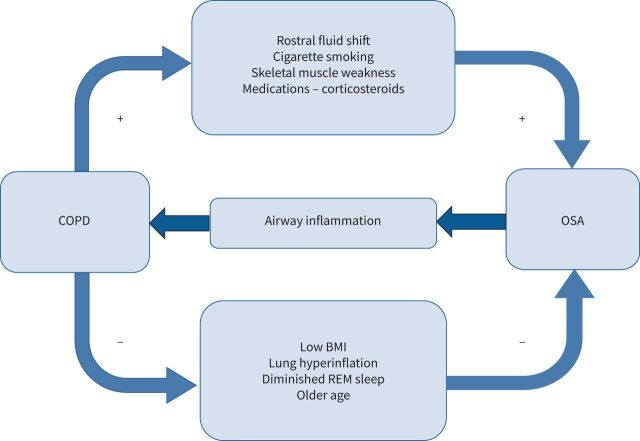
“COPD is not a clear predisposing factor for OSA, but in cases with obesity, predominant bronchitis, and fluid retention, it may constitute an increased risk for OSA [24].”
BackgroundInsalaco, G., Braghiroli, A., Buzzi, F., Cappellano, S., Castelli, A., Castelnuovo, A., Fanfulla, F., Ferini‐Strambi, L., Bue, A. L., Marelli, S., et al. (2025) · Sleep Medicine · doi:10.1016/j.sleep.2025.106819 · Cited by 10
Wang, B., Zhang, Y., Hao, W., Fan, J., Yan, Y., Gong, W., Zheng, W., Que, B., Ai, H., Wang, X., et al. (2023) · Journal of Thrombosis and Thrombolysis · doi:10.1007/s11239-023-02830-w · Cited by 11
Comorbidities and Laryngeal Cancer in Patients with Obstructive Sleep Apnea: A Review
Kiss, B., Neagoș, C. M., Jimborean, G., Sárközi, H. K., Szathmáry, M., & Neagoş, A. (2023) · Medicina · doi:10.3390/medicina59111959 · Cited by 11
“The prevalence of OSA is 49.5% in individuals with asthma, 21.8% in obese women, and 65% in those with gastroesophageal reflux [7,9].”
BackgroundMethodInfluentialMi, C., Hou, A., Liu, Y., Qi, X., & Jing, T. (2024) · Frontiers in Psychiatry · doi:10.3389/fpsyt.2024.1351216 · Cited by 13
Başoğlu, Ö. K., Taşbakan, M. S., & Kayıkçıoğlu, M. (2023) · Journal of Clinical Sleep Medicine · doi:10.5664/jcsm.10490 · Cited by 12
Suša, R., Ratinac, M., Ćupurdija, V., Novković, L., Milojević-Ilić, M., Petrovic, M. D., Igrutinović, N., Vuleta, M., Timotijević, L., Kostić, O., et al. (2023) · Medicina · doi:10.3390/medicina59111938 · Cited by 11
“The authors believe that this classification facilitates a better stratification of patients with OSA and can be a good guide for deciding on the therapeutic approach and clinical monitoring of patients with OSA, compared to the AHI itself [9].”
BackgroundResultInfluentialBłaszczyk, B., Martynowicz, H., Niemiec, P., Przegrałek, J., Staszkiewicz, M., Wojakowska, A., Budrewicz, S. P., & Waliszewska‐Prosół, M. (2024) · Journal of Clinical Medicine · doi:10.3390/jcm13133835 · Cited by 8
“OSA is a well-known factor for increased cardiovascular risk [16,17], hypertension, stroke, arrhythmias, coronary artery disease, and metabolic syndrome [16,18,19].”
BackgroundPolysomnography validation of SANSA to detect obstructive sleep apnea
Goldstein, C. A., Ghanbari, H., Sharma, S., Collop, N. A., Namen, A. M., Kirsch, D. B., Drucker, M., Khayat, R., POLLOCK, M. T., Torstrick, B., et al. (2025) · Frontiers in Neurology · doi:10.3389/fneur.2025.1592690 · Cited by 10
Lin, C.-H., Liu, Y., Lin, L., Huang, H., Ho, L., Wu, Y., Lai, L., Chen, W., Ho, Y., & Yu, C. (2023) · IJC Heart & Vasculature · doi:10.1016/j.ijcha.2023.101320 · Cited by 10
“Although the risk of AF increases with OSA severity, it is unclear whether AF severity contributes to the risk of OSA [14].”
BackgroundFanaridis, M., Bouloukaki, I., Stathakis, G., Steiropoulos, P., Tzanakis, N., Moniaki, V., Mavroudi, E., Tsiligianni, I., & Schiza, S. E. (2024) · Life · doi:10.3390/life14050547 · Cited by 10
“Additional research is warranted to better understand the clinical significance, synergetic effect, and outcomes of OVS.”
BackgroundHalder, P., Das, S., Mamgai, A., Nongkynrih, B., Bisoi, S., Chattopadhyay, A., & Pal, S. (2024) · International Journal of Community Medicine and Public Health · doi:10.18203/2394-6040.ijcmph20242172 · Cited by 9
Tang, Y., Liu, J., Zhang, J., Zhu, Y., & Zhou, J. (2025) · Lipids in Health and Disease · doi:10.1186/s12944-025-02604-8 · Cited by 7
“This reciprocal relationship between metabolic dysregulation and OSA creates a self-perpetuating cycle [7].”
Wang, W., Song, R., Wu, Y., Zheng, L., Zhang, W., Chen, Z., Li, G., & Xu, Z. (2025) · Sleep Health · doi:10.1016/j.sleh.2025.06.006 · Cited by 8
“Long-term repeated sleep respiratory events and disruption of sleep architecture have been linked to a series of complications include hypertension, growth retardation, insulin resistance in children [2-5].”
Su, K., Feng, Z., Wang, L., Zhao, G., & Li, J. (2025) · Sleep And Breathing · doi:10.1007/s11325-025-03509-7 · Cited by 13
Xu, J., Wang, J., Wu, H., Han, F., Wang, Q., Jiang, Y., & Chen, R. (2022) · Sleep Medicine · doi:10.1016/j.sleep.2022.11.035 · Cited by 8
Hajipour, M., Gonzalo Labarca, T., Ayas, N., & Azarbarzin, A. (2025) · Seminars in Respiratory and Critical Care Medicine · doi:10.1055/a-2618-7422 · Cited by 8
A risk prediction nomogram for resistant hypertension in patients with obstructive sleep apnea
Lin, H., Zhou, C., Li, J., Ma, X., Yang, Y., & Zhu, T. (2024) · Scientific Reports · doi:10.1038/s41598-024-56629-7 · Cited by 9
Sleep apnea-related hypoxic burden as a predictor of pregnancy and neonatal outcome
Ni, Y.-N., Lei, F., Tang, X., Liang, Z., & THOMAS, R. J. (2024) · Sleep Medicine · doi:10.1016/j.sleep.2024.05.012 · Cited by 9
Jiang, Y., Lin, C., Xu, M., Zhu, T., Li, X., & Wang, W. (2024) · Nature and Science of Sleep · doi:10.2147/nss.s458098 · Cited by 7
Kurra, N., Gandrakota, N., Ramakrishnan, M., Sudireddy, K., Boorle, N. V. L. D., & Jillella, D. V. (2024) · Journal of Clinical Medicine · doi:10.3390/jcm13185646 · Cited by 12
“Furthermore, evidence suggests an independent bidirectional relationship between stroke and OSA [5].”
BackgroundWang, L., Dai, L., Wang, X., Guo, J., Huang, R., & Xiao, Y. (2024) · Sleep And Breathing · doi:10.1007/s11325-024-03220-z · Cited by 10
Diagnostic accuracy of screening questionnaires for obstructive sleep apnea in psychiatric patients
Bailer, M., Sprügel, M. I., Stein, E. M., Utz, J., Mestermann, S., Spitzer, P., & Kornhuber, J. (2025) · Journal of Psychiatric Research · doi:10.1016/j.jpsychires.2025.04.026 · Cited by 7
López-Monzoni, S., Pumarega, I. C., Puech, C., Mediano, O., & Sánchez‐de‐la‐Torre, M. (2025) · Therapeutic Advances in Respiratory Disease · doi:10.1177/17534666251384397 · Cited by 6
“94 Growing evidence supports a bidirectional relationship between OSA and these comorbidities, particularly heart failure, metabolic syndrome, and stroke.”
Does Obstructive Sleep Apnea Lead to Progression of Chronic Obstructive Pulmonary Disease
McNicholas, W. T. (2024) · Sleep Medicine Clinics · doi:10.1016/j.jsmc.2024.02.005 · Cited by 5
Self-citationStavrou, V. T., Vavougyios, G. D., Tsirimona, G., Boutlas, S., Santo, M., Hadjigeorgiou, G. M., Bargiotas, P., & Gourgoulianis, K. I. (2025) · Applied Sciences · doi:10.3390/app15052532 · Cited by 6
Lan, C., Lee, C., Jao, L.-Y., Wu, Y., Huang, K.-L., Su, W., Huang, Y.-C., Wu, C., & Yang, M. (2025) · Biomedicines · doi:10.3390/biomedicines13040905 · Cited by 5
“…along with the circadian activation and fluctuations of the renin–angiotensin–aldosterone system, accelerated atherosclerosis, cardiac arrhythmias, platelet aggregation, hypercoagu-lability, and endothelial damage, are all reported to be associated with an increased risk of stroke in OSAS [48].”
InfluentialO’Neill, E., Ryan, S., & McNicholas, W. T. (2022) · Current Opinion in Pulmonary Medicine · doi:10.1097/mcp.0000000000000922 · Cited by 9
Self-citationPark, S.-L., Lim, J., & Lee, J.-H. (2024) · Journal of Personalized Medicine · doi:10.3390/jpm14050532 · Cited by 7
“These include cardiovascular issues such as hypertension and increased risks of heart disease, metabolic syndrome, renal dysfunction, chronic obstructive pulmonary disease, and various neuropsychiatric disorders including depression, influenced by the severity of OSA [7].”
BackgroundMultidiagnostic chest-worn patch to detect obstructive sleep apnea and cardiac arrhythmias
Goldstein, C. A., Ghanbari, H., Sharma, S., Collop, N. A., Loring, Z., Walsh, C., Torstrick, B., Herreshoff, E. G., POLLOCK, M. T., Frankel, D. S., et al. (2025) · Journal of Clinical Sleep Medicine · doi:10.5664/jcsm.11522 · Cited by 5
Feng, T., Li, Q., & Duan, R. (2025) · European Archives of Oto-Rhino-Laryngology · doi:10.1007/s00405-025-09209-y · Cited by 6
Objective and subjective sleep patterns in adults with maturity-onset diabetes of the young (MODY)
Arosemena, M., Salguero, M. V., Naylor, R. N., Wroblewski, K., Tasali, E., & Philipson, L. H. (2023) · Diabetes Care · doi:10.2337/dc22-1343 · Cited by 4
Tahmasian, M., Elberse, J. D., Ahmadi, R., Wen, L., Rosenzweig, I., Genon, S., Eickhoff, S. B., & Mander, B. A. (2026) · GeroScience · doi:10.1007/s11357-026-02152-8 · Cited by 9
Zhang, Y., Zhou, P., Xu, C., Su, H., Li, R., Sun, L., & Yang, Y. (2025) · Nature and Science of Sleep · doi:10.2147/nss.s499446 · Cited by 4
“14 Moreover, OSA can amplify mortality risks associated with these complications.”
Zhang, Y., Huang, Y., Jing, D., Liang, H., Tian, Y., Zhou, G., Zhang, G., Shen, M., Xiao, Y., Chen, X., et al. (2025) · Journal of Investigative Dermatology · doi:10.1016/j.jid.2025.08.048 · Cited by 4
Souza, M. R., Rosa, D. S., Alvarenga, T. A., Morelhao, P. K., Tufik, S. B., & Andersen, M. L. (2023) · Sleep And Breathing · doi:10.1007/s11325-023-02935-9 · Cited by 5
Chen, X., Zhen, L., Ai, H., Que, B., Fan, J., Wang, X., Yan, Y., Li, S., Zhang, Z., Zhou, Y., et al. (2023) · Respiratory Research · doi:10.1186/s12931-023-02627-8 · Cited by 5
“Another explanation was that OSA patients with metabolic dysfunction were recommended to have more aggressive lifestyle improvements, including diet, exercise and the combination [3, 52, 53].”
BackgroundThe Repeatability of Pharyngeal Opening Pressure Under Drug‐Induced Sleep Endoscopy
Chan, T. G., Plageman, J., & Yu, J. L. (2024) · Otolaryngology · doi:10.1002/ohn.730 · Cited by 5
Oh, C., Lee, J., Lee, J., Jo, Y., Kwon, S., Bang, M., Lim, C., Kim, Y. H., Lee, S. Y., & Hong, B. (2024) · PLoS ONE · doi:10.1371/journal.pone.0301635 · Cited by 9
Gabryelska, A., Turkiewicz, S., Ditmer, M., Gajewski, A., Strzelecki, D., Białasiewicz, P., Chałubiński, M., & Sochal, M. (2024) · International Journal of Molecular Sciences · doi:10.3390/ijms25158469 · Cited by 5
Bailer, M., Stein, E. M., Sprügel, M. I., Mestermann, S., Spitzer, P., Utz, J., Zirlik, S., Fuchs, F. S., & Kornhuber, J. (2024) · BMC Psychiatry · doi:10.1186/s12888-024-06049-8 · Cited by 6
“[36, 37].”
Zhang, M., Zhang, W., Lu, Y., Yu, L., Han, X., Xu, Y., Wu, M., Ding, W., & Liu, Y. (2024) · iScience · doi:10.1016/j.isci.2024.111143 · Cited by 4
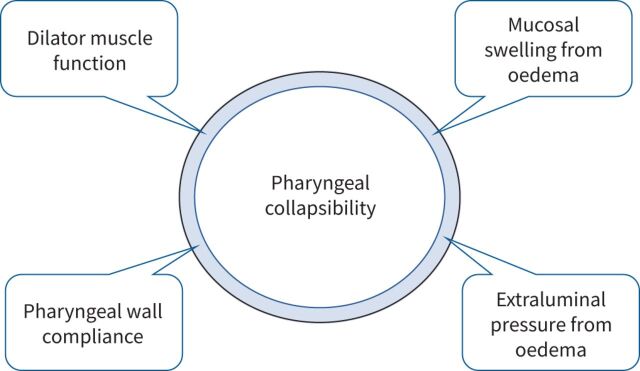
“9 The genioglossus (GG) is the largest dilatormuscle controlling the upperairway.”
Ernest, D. K., Chandrasekhar, A., Xie, L., Almandoz, J. P., & Messiah, S. E. (2025) · Obesity Science & Practice · doi:10.1002/osp4.70071 · Cited by 4
“A mounting body of evidence has suggested a bidirectional relationship be-tween SA and MetSyn [12–14].”
Chen, X., Qiu, Z., Hu, C., & Liu, Z. (2025) · Frontiers in Psychiatry · doi:10.3389/fpsyt.2025.1568830 · Cited by 4
Association of vertigo with adult obstructive sleep apnea: A systematic review and meta-analysis
Kang, K., Lin, M., Nakayama, M., Young, Y., & Hsu, W. (2024) · Sleep Medicine · doi:10.1016/j.sleep.2024.12.014 · Cited by 3
Evaluation of chronotype and its predictive factors among obstructive sleep apnea patients
Gabryelska, A., Białasiewicz, P., Malicki, M., Strzelecki, D., & Sochal, M. (2023) · Polskie Archiwum Medycyny Wewnętrznej · doi:10.20452/pamw.16541 · Cited by 5
Prevalence of obstructive sleep apnea and its associated factors in primary health care in Morocco
Kasmaoui, F. E., Benksim, A., Harsi, E. M. E., Mansoury, O., & Amine, M. (2024) · Sleep And Breathing · doi:10.1007/s11325-024-03077-2 · Cited by 5
Hong, P.-Y., Liu, D., Liu, A., Su, X., Zhang, X., & Zeng, Y.-M. (2024) · Frontiers in Genetics · doi:10.3389/fgene.2024.1359108 · Cited by 3
Interplay between gut microbiota and exosome dynamics in sleep apnea
Hicks, R. R., Gozal, D., Ahmed, S., & Khalyfa, A. (2025) · Sleep Medicine · doi:10.1016/j.sleep.2025.106493 · Cited by 5
Wang, H., Heizhati, M., Li, N., Gan, L., Yao, L., Li, M., Cai, L., Li, X., Aierken, X., Yu, D., et al. (2025) · Diabetology & Metabolic Syndrome · doi:10.1186/s13098-025-01682-z · Cited by 4
“In both animal models and humans, intermittent hypoxia and circadian disruption lead to sympathetic arousal and inflammation, which have been shown to be associated with pancreatic beta cell loss and dysfunction [31–33].”
Neuroregulation of histamine of circadian rhythm disorder induced by chronic intermittent hypoxia
Xie, L., Wu, Q., Huang, H., Wang, K., Ying, K., Liu, Z., & Li, S. (2025) · European Journal of Pharmacology · doi:10.1016/j.ejphar.2025.177662 · Cited by 3
Wang, B., Liu, X., Hao, W., Fan, J., Que, B., Ai, H., Wang, X., & Nie, S. (2023) · Clinical Cardiology · doi:10.1002/clc.24020 · Cited by 3
“Emerging evidence has demonstrated that MetS is considered a major risk factor for the development and progression of OSA.(2) Additionally, OSA has itself been linked to an increased likelihood of adverse cardiovascular outcomes following ACS.”
BackgroundInfluentialHao, W., Wang, B., Fan, J., Que, B., Ai, H., Wang, X., & Nie, S. (2023) · Sleep Medicine · doi:10.1016/j.sleep.2023.10.009 · Cited by 6
Wang, L., Xiao, Y., Luo, M., & Huang, R. (2025) · Climacteric · doi:10.1080/13697137.2025.2470450 · Cited by 4
“…and frequent awakenings. common symptoms include excessive daytime sleepiness, morning headaches and impaired cognitive function [2]. the relationship between OSA and sleep disorders is bidirectional [64], as poor sleep quality may aggravate OSA symptoms, which in turn degrade sleep quality.”
Mo, C., Zhao, C., & Li, W. (2025) · The Innovation Medicine · doi:10.59717/j.xinn-med.2025.100140 · Cited by 3
Xu, X. J., Yu, H., Yang, M., Xie, J., Xu, K., Li, E., Wan, X., Wang, J., Wang, G., Pan, Y., et al. (2024) · Experimental Gerontology · doi:10.1016/j.exger.2024.112657 · Cited by 3
Shamim-Uzzaman, Q. A., Zeidler, M. R., Boudreau, E. A., Chowdhuri, S., Donovan, L. M., El-Solh, A., Freire, A. X., Gottlieb, D. J., Jindal, R. D., Hesselbacher, S. E., et al. (2025) · Journal of Clinical Sleep Medicine · doi:10.5664/jcsm.11734 · Cited by 3
Wu, J., Lai, H., Yin, J., Zhu, S., Yang, H., & Hong, H. (2025) · Diabetes Metabolic Syndrome and Obesity · doi:10.2147/dmso.s526411 · Cited by 4
Ou, Y., Wang, X., Zong, D., & Ouyang, R. (2025) · Nature and Science of Sleep · doi:10.2147/nss.s554387 · Cited by 2
Zhu, S., Li, Y., Hu, Q., fang, P. X., Wang, J., Yu, J., Ding, S., Zhu, J., & Zhu, D. (2025) · Journal of Psychosomatic Research · doi:10.1016/j.jpsychores.2025.112418 · Cited by 2
Medical comorbidities prognosticate survival in glioblastoma
Bessette, J., Arditi, J., Noreck, J., Edwards, R. P., Kaiserman, J., Wortelboer, R., Nguyen, M. A., Siwik, W., Gautam, S., Szymanski, T., et al. (2025) · BJC Reports · doi:10.1038/s44276-025-00189-4 · Cited by 2
“Future studies should focus on optimizing patient care based on relevant medical comorbidity pro fi les.”
Dose–response relationship of sleep apnea therapy and healthcare use in patients with comorbidities
Malhotra, A., More, S., Alpert, N., Pépin, J., Cole, K. V., Woodford, C., Benjafield, A., Cistulli, P. A., Sterling, K. L., medXcloud Group, et al. (2025) · SLEEP · doi:10.1093/sleep/zsaf333 · Cited by 7
“OSA is frequently associated with cardiovascular, metabolic, pulmonary, and psychiatric comorbidities [4].”
Evaluation of an automated sleep apnea scoring algorithm via the Wesper Lab home sleep apnea test
Rohrscheib, C. E., Moura, A. A., Raphelson, J. R., Orr, J. E., Patel, R. P., & Malhotra, A. (2026) · Sleep Medicine · doi:10.1016/j.sleep.2026.108828 · Cited by 2
Daytime sleepiness in patients with obstructive sleep apnea and associated comorbidities
di Chiara, C., Sartori, G., Castaldo, N., Fantin, A., Ferrari, M., & Crisafulli, E. (2026) · Expert Review of Respiratory Medicine · doi:10.1080/17476348.2026.2651412 · Cited by 4
“There is substantial evidence that OSA is an independent risk factor for metabolic, cardiovascular, renal, pulmonary, and neuropsychiatric comorbidities; more recently, several comorbidities have also been proposed to predispose to OSA, supporting a bidirectional relationship [35].”
Metadata
- Authors
- Gleeson, M., & McNicholas, W. T.
- Affiliations
- University College Dublin (IE)
- Corresponding author
- McNicholas, Walter T.
- Venue
- European Respiratory Review
- Publisher
- European Respiratory Society (ERS)
- Published
- 2022-05-04
- Volume
- 31
- Issue
- 164
- Pages
- 210256
- ISSN
- 0905-9180 (ISSN-L)
- 1600-0617
- PMC
- PMC9488957
- OpenAlex
- W4225390766
- Semantic Scholar
- b99c1c8c0929bca5bab567e5c3417808fe3b6a79
- Cited by
- 203
- References
- 138
- Citations by year
- 2026: 33 · 2025: 63 · 2024: 59 · 2023: 40 · 2022: 7
- FWCI
- 5.81
- Type
- journal article
- Language
- en
- Open access
- diamond
- doi.org
- Licence
- Locations
- European Respiratory Review (publishedVersion, cc-by-nc)
- PubMed Central (publishedVersion, cc-by-nc)
- PubMed (publishedVersion)
- DOAJ (DOAJ: Directory of Open Access Journals) (submittedVersion, cc-by-sa)
- Topics
- Health Sciences › Medicine › Physiology (medical) › Obstructive Sleep Apnea Research
- Social Sciences › Psychology › Experimental and Cognitive Psychology › Sleep and related disorders
- Life Sciences › Neuroscience › Endocrine and Autonomic Systems › Neuroscience of respiration and sleep
- Keywords
- obstructive sleep apnea, comorbidities, bidirectional relationship, heart failure, metabolic syndrome, stroke, diabetes mellitus, hypertension, atrial fibrillation, end-stage renal disease, chronic obstructive pulmonary disease, fluid retention, neural mechanisms
- MeSH terms
- Atrial Fibrillation, Heart Failure, Humans, Comorbidity, Sleep Apnea, Obstructive, Stroke
About these checks
Registry, retraction, Cites and statistics results are computed, not judged, with one exception: a printed reference that no index lists is read once by a model before it counts as a citation error. Claims are extracted by a model and kept only when their quote appears verbatim in the text; each cited source is then checked, with a model’s help, for whether it says what the claim relies on. Those verdicts can be wrong — read the claim’s quote and the cited source before relying on one.
Statistics and arithmetic are recomputed, not judged.
Confidence bands are shown only for fields calibrated on our annotated test set. None is calibrated yet, so no band is shown.
What counts as a claim ›How we measure confidence ›How we check this ›
Are you an author, or do you see a problem with this page? Request a review
Data sources
Bibliographic data: Semantic Scholar, OpenAlex, Crossref.
Contains information from the Semantic Scholar Academic Graph Datasets, made available under the ODC Attribution License (ODC-BY 1.0).
Semantic Scholar’s data is described in: Kinney, R., et al. (2023). The Semantic Scholar Open Data Platform. arXiv:2301.10140.
