

Lipid raft/caveolae signaling is required for Cryptococcus neoformans invasion into human brain microvascular endothelial cells
Open accessThe DOI matches its Crossref record; 35 of the 35 references it cites were found in a registry or an index.
Abstract
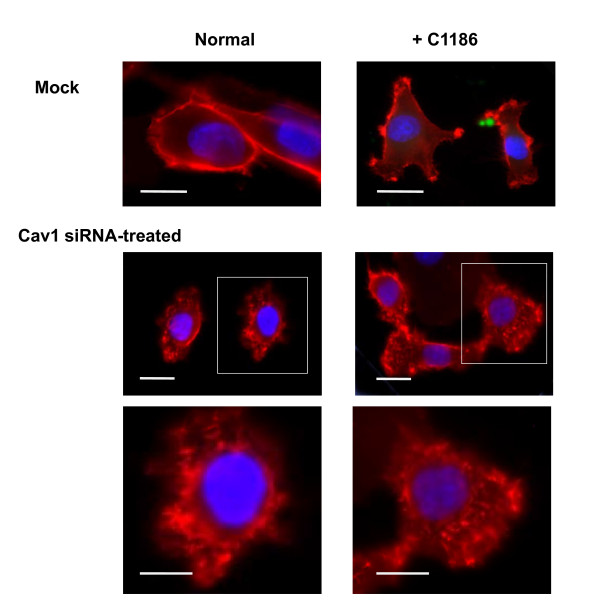
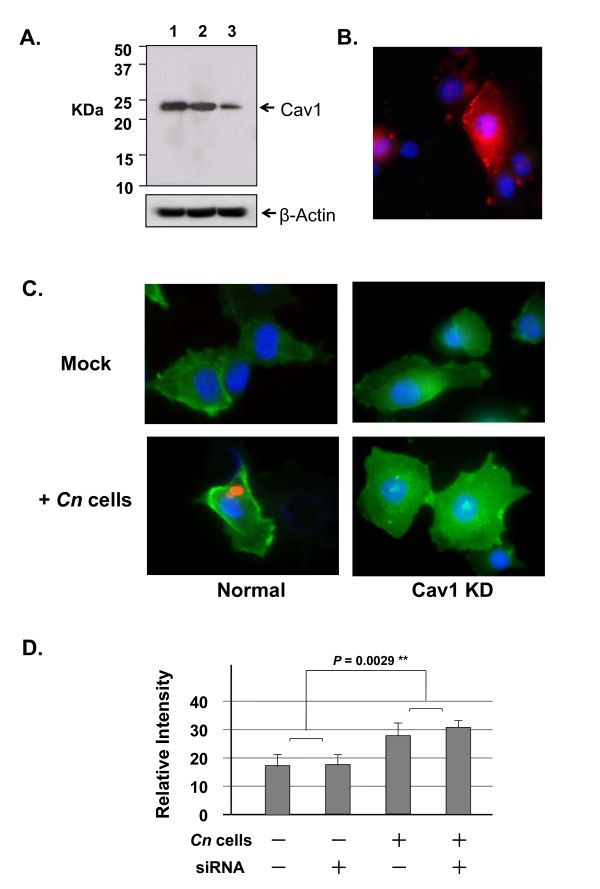
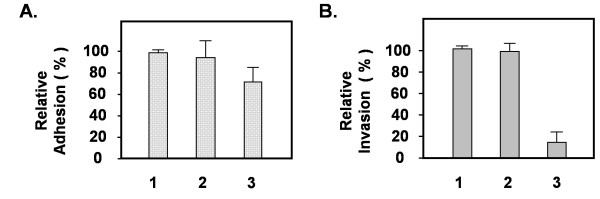
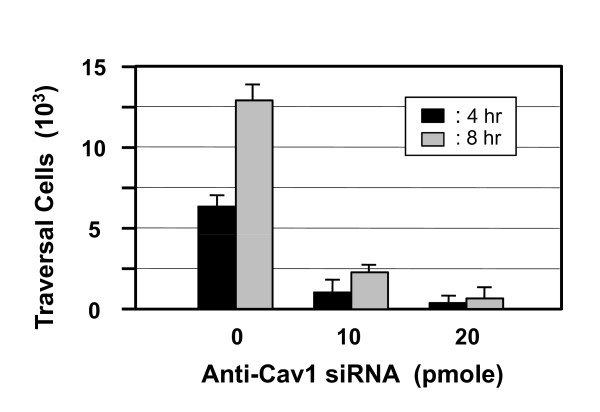
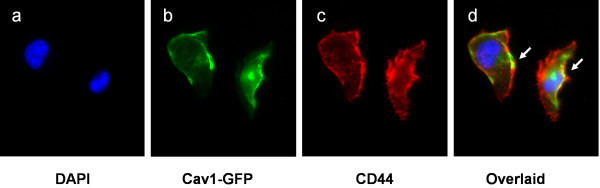
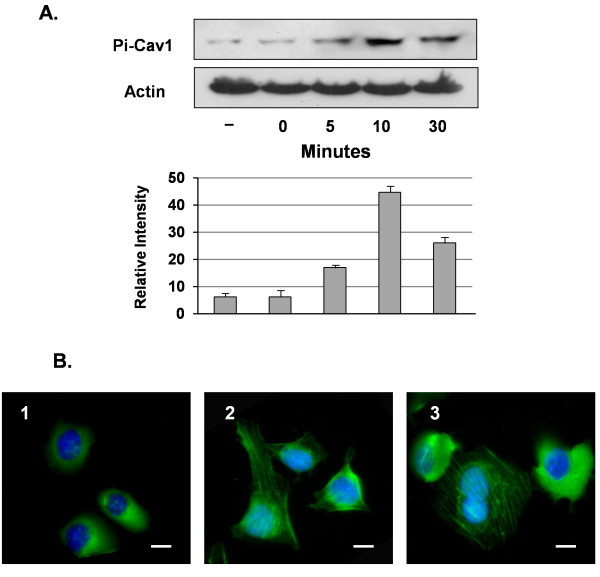
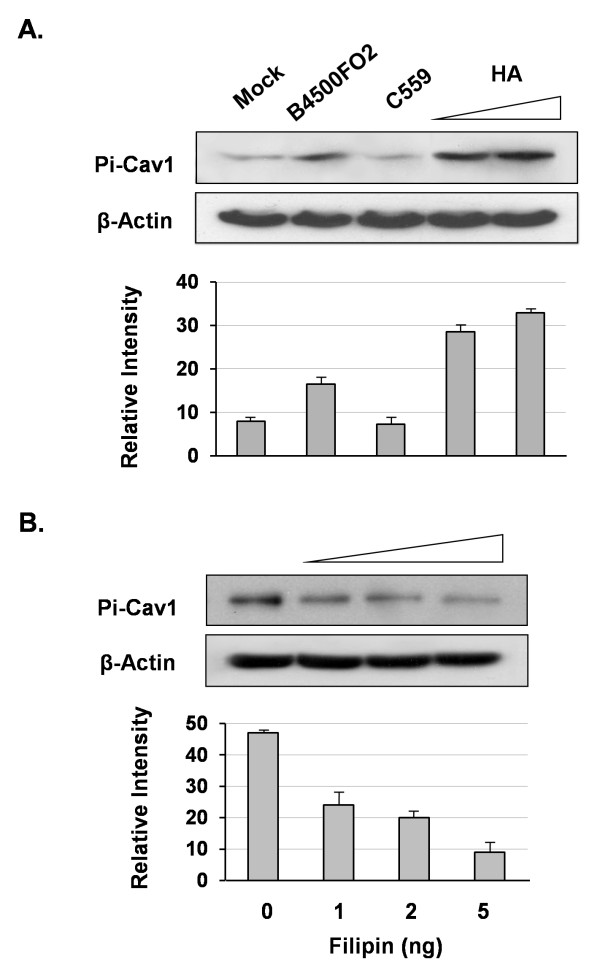
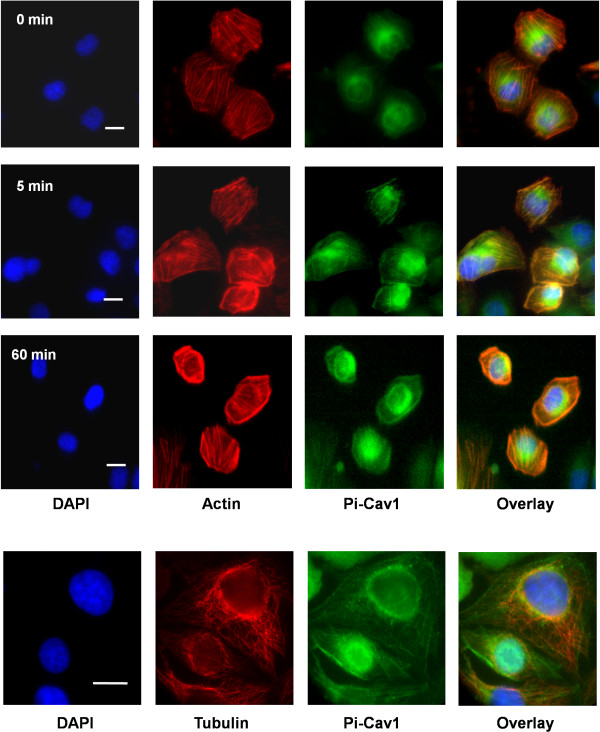
Background: Cryptococcus neoformans has a predilection for central nervous system infection. C. neoformans traversal of the blood brain barrier, composed of human brain microvascular endothelial cells (HBMEC), is the crucial step in brain infection. However, the molecular mechanism of the interaction between Cryptococcus neoformans and HBMEC, relevant to its brain invasion, is still largely unknown. Methods: In this report, we explored several cellular and molecular events involving the membrane lipid rafts and caveolin-1 (Cav1) of HBMEC during C. neoformans infection. Immunofluorescence microscopy was used to examine the roles of Cav1. The knockdown of Cav1 by the siRNA treatment was performed. Phosphorylation of Cav1 relevant to its invasion functions was investigated. Results: We found that the host receptor CD44 colocalized with Cav1 on the plasma membrane, and knockdown of Cav1 significantly reduced the fungal ability to invade HBMEC. Although the CD44 molecules were still present, HBMEC membrane organization was distorted by Cav1 knockdown. Concomitantly, knockdown of Cav1 significantly reduced the fungal crossing of the HBMEC monolayer in vitro. Upon C. neoformans engagement, host Cav1 was phosphorylated in a CD44-dependent manner. This phosphorylation was diminished by filipin, a disrupter of lipid raft structure. Furthermore, the phosphorylated Cav1 at the lipid raft migrated inward to the perinuclear localization. Interestingly, the phospho-Cav1 formed a thread-like structure and colocalized with actin filaments but not with the microtubule network. Conclusion: These data support that C. neoformans internalization into HBMEC is a lipid raft/caveolae-dependent endocytic process where the actin cytoskeleton is involved, and the Cav1 plays an essential role in C. neoformans traversal of the blood-brain barrier.
Overview
The claims and statistics of this paper haven’t been checked yet.
Free: it reads the open-access text and checks the first 5 claims that cite a source we can check. Create a free account to check every claim.
Integrity signals
Registry
Cites
Statistics
Figures
Verification
Claims the paper makes
The claims and statistics of this paper haven’t been checked yet.
Free: it reads the open-access text and checks the first 5 claims that cite a source we can check. Create a free account to check every claim.
Claims other papers make about this one
Each is checked against this paper’s own text: does it say what the citing paper says it does?
The cited source says what the claim attributes to it.
In the citing paper
“These demonstrate that transcytosis of C. neoformans across the BBB occurs through a lipid raft/caveolae-dependent endocytotic process [143, 148].”
From Mechanisms of fungal dissemination (2021) · cites this paper as [148]
In the citing paper
“Lipid rafts also play a role in the internalization of C. neoformans by endothelial cells. Supporting this, is the report that the HA receptor CD44 co-localizes with the lipid raft marker ganglioside GM1 on the plasma membrane of endothelial cells, and that C. neoformans adheres to host cells in areas where GM1 is enriched [143]. CD44 was also found to co-localize with and activate the caveolae”
From Mechanisms of fungal dissemination (2021) · cites this paper as [148]
Self-check
Percentages, sums and reported differences re-computed from the paper’s own numbers.
The self-check needs the paper’s full text.
Citations
Cites
Park, B. J., Wannemuehler, K. A., Marston, B. J., Govender, N., Pappas, P. G., & Chiller, T. M. (2009) · AIDS · doi:10.1097/qad.0b013e328322ffac · Cited by 2,014
The multiple faces of caveolae
Parton, R. G., & Simons, K. (2007) · Nature Reviews Molecular Cell Biology · doi:10.1038/nrm2122 · Cited by 1,454 · cited 2×
“Caveolae are small invaginations in the plasma membrane that mediate multiple functions, including signal transduction and endocytosis [19,20] and are characterized by the marker protein caveolins [21].”
THE CELL BIOLOGY OF THE BLOOD-BRAIN BARRIER
Rubin, L. L., & Staddon, J. M. (1999) · Annual Review of Neuroscience · doi:10.1146/annurev.neuro.22.1.11 · Cited by 1,000 · cited 1×
“A special type of cell constitutes the BBB, the brain microvascular endothelial cells (BMEC), which are characterized by extremely tight intercellular junctions [4].”
Caveolae/raft-dependent endocytosis
Nabi, I. R., & Le, P. U. (2003) · The Journal of Cell Biology · doi:10.1083/jcb.200302028 · Cited by 749
Lipid Rafts and Caveolae as Portals for Endocytosis: New Insights and Common Mechanisms
Parton, R. G., & Richards, A. A. (2003) · Traffic · doi:10.1034/j.1600-0854.2003.00128.x · Cited by 603 · cited 4×
“Caveolae are small invaginations in the plasma membrane that mediate multiple functions, including signal transduction and endocytosis [19,20] and are characterized by the marker protein caveolins [21].”
InfluentialWilliams, T. M., & Lisanti, M. P. (2004) · Genome biology · doi:10.1186/gb-2004-5-3-214 · Cited by 563
Pelkmans, L., Bürli, T., Zerial, M., & Helenius, A. (2004) · Cell · doi:10.1016/j.cell.2004.09.003 · Cited by 536
Host‐Pathogen Interactions: The Attributes of Virulence
Casadevall, A., & Pirofski, L. (2001) · The Journal of Infectious Diseases · doi:10.1086/322044 · Cited by 463 · cited 1×
“In the case of the immunocompromised, this fungus could cause lifethreatening cryptococcal meningitis [1,2].”
Chapter 4 The Capsule of the Fungal Pathogen Cryptococcus neoformans
Zaragoza, O., Rodrigues, M. L., De Jesus, M., Frases, S., Dadachova, E., & Casadevall, A. (2009) · Advances in Applied Microbiology · doi:10.1016/s0065-2164(09)01204-0 · Cited by 457 · cited 1×
“It is generally accepted that the fungal capsule is the major virulence factor of this pathogen (reviewed by [5]).”
The Biology of the Cryptococcus neoformans Species Complex
Lin, X., & Heitman, J. (2006) · Annual Review of Microbiology · doi:10.1146/annurev.micro.60.080805.142102 · Cited by 397 · cited 1×
“In the case of the immunocompromised, this fungus could cause lifethreatening cryptococcal meningitis [1,2].”
Research works printed but not linked: 1
- Williams TM Lisanti MP The caveolin proteins Genome Biol 2004 5 214 10.1186/gb-2004-5-3-214 15003112 PMC395759 · DOI
Cited by
Hyaluronic acid for anticancer drug and nucleic acid delivery
Dosio, F., Arpicco, S., Stella, B., & Fattal, E. (2016) · Advanced Drug Delivery Reviews · doi:10.1016/j.addr.2015.11.011 · Cited by 596
Mechanisms of outer membrane vesicle entry into host cells: MicroReview - OMV entry into host cells
O'Donoghue, E. J., & Krachler, A. M. (2016) · Cellular Microbiology · doi:10.1111/cmi.12655 · Cited by 358
“…invasion mechanism for many pathogens, including bacteria, viruses and fungi, as the internalised caveolae are thought to avoid fusion with lysosomal compartments and subsequent degradation, in contrast to clathrin coated pits (Anderson, Chen, & Norkin, 1996; Long et al., 2012; Lim et al., 2014).”
BackgroundVu, K., Tham, R., Uhrig, J. P., Thompson, G. R., Na Pombejra, S., Jamklang, M., Bautos, J. M., & Gelli, A. (2014) · mBio · doi:10.1128/mbio.01101-14 · Cited by 159
Sepsis-Associated Encephalopathy: The Blood–Brain Barrier and the Sphingolipid Rheostat
Kuperberg, S. J., & Wadgaonkar, R. (2017) · Frontiers in Immunology · doi:10.3389/fimmu.2017.00597 · Cited by 125
Mechanisms of fungal dissemination
Strickland, A. B., & Shi, M. (2021) · Cellular and Molecular Life Sciences · doi:10.1007/s00018-020-03736-z · Cited by 127
Cryptococcus neoformans-Derived Microvesicles Enhance the Pathogenesis of Fungal Brain Infection
Huang, S.-H., Wu, C.-H., Chang, Y. C., Kwon-Chung, K. J., Brown, R. J., & Jong, A. (2012) · PLoS ONE · doi:10.1371/journal.pone.0048570 · Cited by 125
“4A, subpopulations of CD44 and caveolin-1 molecules redistribute to the membrane lipid rafts, a site of portal entry [3–5].”
BackgroundSelf-citationWojcicki, A. D., Hillaireau, H., Nascimento, T. L., Arpicco, S., Taverna, M., Ribes, S., Bourge, M., Nicolas, V., Bochot, A., Vauthier, C., et al. (2012) · Journal of Controlled Release · doi:10.1016/j.jconrel.2012.07.015 · Cited by 120
“Inhibition of CD44 by an excess of HA or CD44 antibody are known to block one of the pathways for caveolin phosphorylation which is necessary to start the caveolae-dependent endocytosis [32].”
BackgroundThe Role of Endothelial Surface Glycocalyx in Mechanosensing and Transduction
Zeng, Y., Zhang, X. H., Fu, B. M., & Tarbell, J. M. (2018) · Advances in experimental medicine and biology · doi:10.1007/978-3-319-96445-4_1 · Cited by 120
Host Cell Invasion by Medically Important Fungi
Sheppard, D. C., & Filler, S. G. (2015) · Cold Spring Harbor Perspectives in Medicine · doi:10.1101/cshperspect.a019687 · Cited by 89
“CD44 is located in plasma membrane lipid rafts on the endothelial cell surface (Long et al. 2012).”
BackgroundLiu, T.-B., Kim, J.-C., Wang, Y., Toffaletti, D. L., Eugenin, E., Perfect, J. R., Kim, K. J., & Xue, C. (2013) · PLoS Pathogens · doi:10.1371/journal.ppat.1003247 · Cited by 89
“Our in vitro BBB system is composed of human brain microvascular endothelial cells (HBMECs) grown on Transwell membranes to confluence, separating the top compartment (blood side) and bottom compartment (brain side) as described in Materials and Methods.”
MethodInfluentialBacterial Membrane Vesicles: Physiological Roles, Infection Immunology, and Applications
Gan, Y., Zhao, G., Wang, Z., Zhang, X., Wu, M. X., & Lu, M. (2023) · Advanced Science · doi:10.1002/advs.202301357 · Cited by 89
Zhao, Y., Gao, H., He, J., Jiang, C., Lu, J., Zhang, W., Yang, H., & Liu, J. (2018) · Journal of Controlled Release · doi:10.1016/j.jconrel.2018.05.041 · Cited by 75
Salimi, H., Cain, M. D., Jiang, X., Roth, R. A., Beatty, W. L., Sun, C., Klimstra, W. B., Hou, J., & Klein, R. S. (2020) · mBio · doi:10.1128/mbio.02731-19 · Cited by 74
Role of caveolin-1 in the biology of the blood-brain barrier
Zhao, Y.-L., Song, J.-N., & Zhang, M. (2014) · Reviews in the Neurosciences · doi:10.1515/revneuro-2013-0039 · Cited by 59
Zhu, H., Chen, M., Wen, Q., & Li, Y. (2014) · Scientia Horticulturae · doi:10.1016/j.scienta.2014.12.007 · Cited by 66
Bacteria extracellular vesicle as nanopharmaceuticals for versatile biomedical potential
Ho, M. Y., Liu, S., & Xing, B. (2024) · Nano Convergence · doi:10.1186/s40580-024-00434-5 · Cited by 64
Evading P-glycoprotein mediated-efflux chemoresistance using Solid Lipid Nanoparticles
Cavaco, M. C., Pereira, C. A., Kreutzer, B., Gouveia, L. F., Lima, B. S., Brito, M. A., & Videira, M. (2016) · European Journal of Pharmaceutics and Biopharmaceutics · doi:10.1016/j.ejpb.2016.10.024 · Cited by 64
Huang, S., Chi, F., Peng, L., Bo, T., Zhang, B., Liu, L.-Q., Wu, X., Mor‐Vaknin, N., Markovitz, D. M., Cao, H., et al. (2016) · PLoS ONE · doi:10.1371/journal.pone.0162641 · Cited by 53
Self-citationUnraveling the role of membrane microdomains during microbial infections
Bagam, P., Singh, D. P., Inda, M. E., & Batra, S. (2017) · Cell Biology and Toxicology · doi:10.1007/s10565-017-9386-9 · Cited by 50
“It is known that in caveolin-1 knockdown HBMECs, GM1 and CD44 protein become randomly distributed and clustered into irregularislands on the cell surface (Long et al.”
BackgroundChandra, J., Molugulu, N., Annadurai, S., Wahab, S., Karwasra, R., Singh, S., Shukla, R., & Kesharwani, P. (2023) · Environmental Research · doi:10.1016/j.envres.2023.116506 · Cited by 49
Nascimento, T. L., Hillaireau, H., Vergnaud, J., & Fattal, E. (2016) · Nanomedicine · doi:10.2217/nnm-2016-5000 · Cited by 48
Fernandes, K. E., Dwyer, C., Campbell, L. T., & Carter, D. A. (2016) · mSphere · doi:10.1128/msphere.00350-16 · Cited by 48
“disseminate from the lungs and cross the blood-brain barrier more easily (45, 46), and”
BackgroundZhang, Q., Chen, L., Huang, L., Cheng, H., Wang, L., Xu, L., Hu, D., He, C., Fu, C., & Wei, Q. (2022) · Molecular Medicine · doi:10.1186/s10020-022-00575-5 · Cited by 48
“neoformans internalization in human brain MVECs (Long et al. 2012), to date, there is no evidence supporting the correlation between CD44 and CAV1 in exosome uptake.”
BackgroundHow Cryptococcus Interacts with the Blood–Brain Barrier
Tseng, H.-K., Huang, T.-Y., Wu, A. Y.-J., Chen, H.-H., Liu, C.-P., & Jong, A. (2015) · Future Microbiology · doi:10.2217/fmb.15.83 · Cited by 44
Self-citationCoelho-Santos, V., Socodato, R., Portugal, C., Leitão, R. A., Rito, M., Barbosa, M., Couraud, P.-O., Romero, I. A., Weksler, B., Minshall, R. D., et al. (2016) · Cellular and Molecular Life Sciences · doi:10.1007/s00018-016-2301-3 · Cited by 36
Zhao, Y.-L., Wei, X., Song, J., Zhang, M., Huang, T., & Qin, J. (2018) · Inflammation · doi:10.1007/s10753-018-0940-2 · Cited by 31
Yang, C., Wang, J., & Zou, L. (2017) · Experimental and Therapeutic Medicine · doi:10.3892/etm.2017.5220 · Cited by 31
“CD44 is the endothelial cell receptor for hyaluronic acid, and is located in lipid rafts/caveolae on the endothelial cell surface (77,78).”
Zhang, B., Yu, J., Liu, L., Peng, L., Chi, F., Wu, C., Jong, A., Wang, S., Cao, H., & Huang, S. (2015) · BMC Infectious Diseases · doi:10.1186/s12879-015-1075-9 · Cited by 29
“caveolin-1 [7], and PKCα [8] on the membrane lipid rafts, and the role of endocytic kinase DYRK3 during the C.”
Self-citationAaron, P. A., Vu, K., & Gelli, A. (2020) · mBio · doi:10.1128/mbio.01249-20 · Cited by 28
Voronin, D., Schnall, E., Grote, A., Jawahar, S., Ali, W. M., Unnasch, T. R., Ghedin, E., & Lustigman, S. (2019) · PLoS Pathogens · doi:10.1371/journal.ppat.1008085 · Cited by 27
He, X., Shi, X., Puthiyakunnon, S., Zhang, L., Zeng, Q., Li, Y., Boddu, S., Qiu, J., Lai, Z., Ma, C., et al. (2016) · Journal of Biomedical Science · doi:10.1186/s12929-016-0247-2 · Cited by 27
“Many signaling molecules, including CD44, caveolin-1, PKCα, endocytic kinase DYRK3, in lipid rafts have been characterized and shown to play an important role during the Cn internalization [2, 13–16].”
BackgroundSelf-citationThe pathways and the mechanisms by which Cryptococcus enters the brain
Zhou, Y., Huang, Y., Yang, C., Zang, X., Deng, H., Liu, J., Zhao, E., Tian, T., Pan, L., & Xue, X. (2024) · Mycology: An International Journal on Fungal Biology · doi:10.1080/21501203.2023.2295409 · Cited by 23
“CD44, a cluster of differentiation glycoprotein, is located in lipid rafts/vesicles on the surface of BMECs (Huang et al. 2011a; Long et al. 2012).”
Guerra, C. R., Seabra, S. H., de Souza, W., & Rozental, S. (2014) · PLoS ONE · doi:10.1371/journal.pone.0089250 · Cited by 23
Liu, N., Liang, X., Yang, C., Hu, S., Luo, Q., & Luo, H. (2022) · Theranostics · doi:10.7150/thno.76574 · Cited by 21
“Thus, the reorganization of the cerebrovascular endothelial cytoskeleton and the formation of pseudopodia are triggered to exert their phagocytic function into the brain [40-42].”
BackgroundClark, H. R., Powell, A. B., Simmons, K., Ayubi, T., & Kale, S. D. (2019) · mSphere · doi:10.1128/msphere.00663-18 · Cited by 21
“Endocytosis of Cryptococcus neoformans, a clinically relevant fungus, occurs through a caveolin-1-dependent process in human brain microvascular endothelial cells (35, 36).”
Choi, J. H., Hwang, Y. P., Jin, S. W., Lee, G. H., Kim, H. G., Han, E. H., Kim, S. K., Kang, K. W., Chung, Y., & Jeong, H. G. (2018) · Food and Chemical Toxicology · doi:10.1016/j.fct.2018.12.038 · Cited by 20
Dancing cheek to cheek: Cryptococcus neoformans and phagocytes
Zhang, M., Sun, D., & Shi, M. (2015) · SpringerPlus · doi:10.1186/s40064-015-1192-3 · Cited by 19
Is the Nickel-Dependent Urease Complex of Cryptococcus the Pathogen’s Achilles’ Heel?
Morrow, C. A., & Fraser, J. A. (2013) · mBio · doi:10.1128/mbio.00408-13 · Cited by 19
“This process involves membrane lipid raft-dependent endocytosis, and inhibition of dual-specificity tyrosine phosphorylation-regulated kinase 3 (DYRK3) or caveolin-1 also reduces the ability of Cryp- tococcus to invade HBMECs (12).”
BackgroundInfluentialPool, A., Lowder, L. J., Wu, Y., Forrester, K., & Rumbaugh, J. A. (2013) · Journal of NeuroVirology · doi:10.1007/s13365-013-0169-7 · Cited by 18
“2012) and brain invasion is thought to occur by organisms crossing the blood–brain barrier through cortical capillaries (Long et al. 2012; Charlier et al. 2009).”
Can host receptors for fungi be targeted for treatment of fungal infections?
Filler, S. G. (2013) · Trends in Microbiology · doi:10.1016/j.tim.2013.05.006 · Cited by 16
“The endothelial cell receptor for hyaluronic acid is CD44, which is located in lipid rafts/caveolae on the endothelial cell surface [39, 40].”
BackgroundClinical characteristics and prognostic factors of pulmonary and extrapulmonary cryptococcosis
Tao, Z., Pu, Q., Shen, Y., Zhang, S., Wang, C., Hu, Z., Jin, Y., Zhu, X., & Weng, Y. (2024) · BMC Infectious Diseases · doi:10.1186/s12879-024-09895-9 · Cited by 15
Selvan, L. D. N., Sreenivasamurthy, S. K., Kumar, S., Yelamanchi, S. D., Madugundu, A. K., Anil, A. K., Renuse, S., Nair, B. G., Gowda, H., Mathur, P. P., et al. (2015) · Molecular BioSystems · doi:10.1039/c5mb00187k · Cited by 16
Fine-tuning of liposome integrity for differentiated transcytosis and enhanced antitumor efficacy
Su, J., Wu, C., Zou, J., Wang, X., Yang, K., Liu, J., Wu, Z., & Zhang, W. (2024) · Journal of Controlled Release · doi:10.1016/j.jconrel.2024.06.025 · Cited by 13
Self-citationStie, J., & Fox, D. (2012) · PLoS ONE · doi:10.1371/journal.pone.0049402 · Cited by 12
“organization [9,12], metabolism [86] and signaling [9,12,87], may”
BackgroundSoliman, M., Kim, D.-S., Kim, C., Seo, J.-Y., Kim, J.-Y., Park, J., Alfajaro, M. M., Baek, Y., Cho, E.-H., Park, S., et al. (2018) · Veterinary Research · doi:10.1186/s13567-018-0584-0 · Cited by 11
Host cell membrane microdomains and fungal infection
de Souza, T. N., Valdez, A. F., Rizzo, J., Zamith‐Miranda, D., Guimaraes, A. J., Nosanchuk, J. D., & Nimrichter, L. (2021) · Cellular Microbiology · doi:10.1111/cmi.13385 · Cited by 8
Human‐Based In Vitro Brain Endothelial Cell Models
Wilson, H. K., & Shusta, E. V. (2015) · Wiley eBooks · doi:10.1002/9781118788523.ch11 · Cited by 5
Reconsidering the blood-brain barrier: histopathology and microanatomy of cryptococcal CNS infection
Sorrell, T. C., & Davis, J. M. (2025) · Microbiology and Molecular Biology Reviews · doi:10.1128/mmbr.00078-25 · Cited by 4
“It has been shown that this pathway is appropriated and required by Cryptococcus for entry into the CNS endothelium (138).”
Rosa, I. D. A., Atella, G. C., & Benchimol, M. (2014) · Protist · doi:10.1016/j.protis.2014.03.006 · Cited by 4
Mahadevan, A., & Krishna, S. S. (2019) · Springer eBooks · doi:10.1007/978-3-030-06088-6_12 · Cited by 4
Potential therapeutic targets for Cryptococcus
Liu, J., Dong, X., Huang, Y., Deng, H., Zhou, Y., Zhao, E., Zang, X., Zhao, Z., & Xue, X. (2026) · Medical Mycology · doi:10.1093/mmy/myag015 · Cited by 2
Charles‐Orszag, A. (2017) · theses.fr (ABES) · doi:10.70675/6e6f3a21zbe80z4a49z8b14z3cef1cbad444 · Cited by 2
Bennett, A. B., Lanser, D. M., Vu, K., Sahoo, A. R., Buck, M., & Gelli, A. (2026) · Communications Biology · doi:10.1038/s42003-026-10597-y · Cited by 1
“1d, e), consistent withcytoskeletonremodeling andinagreementwith similarmorphological changes observed in previous studies 13,16,31 .”
Endothelial Surface Glycocalyx in Vascular Functions and Diseases
Zeng, Y., Fu, B. M., & Tarbell, J. M. (2026) · Advances in experimental medicine and biology · doi:10.1007/978-3-032-22285-5_1 · Cited by 1
Wu, S. (2014) · Elsevier eBooks · doi:10.1016/b978-0-12-397169-2.00025-1 · Cited by 1
Clathrin and Lipid Raft-dependent Internalization of Porphyromonas gingivalis in Endothelial Cells
Kim, S.-Y., Kim, S.-H., Choi, E.-K., Paek, Y., & Kang, I. (2014) · International Journal of Oral Biology · doi:10.11620/ijob.2014.39.3.131 · Cited by 1
Nanomedicines, a strategy to evade multidrug resistance
Pereira, C. C. D. F. A. (2015) · Portuguese National Funding Agency for Science, Research and Technology (RCAAP Project by FCT)
O’Donoghue, E. J. (2018) · University of Birmingham Institutional Research Archive (University of Birmingham)
Impact of Methylphenidate on Microglial cells
Lourenço, T. S. (2019) · Portuguese National Funding Agency for Science, Research and Technology (RCAAP Project by FCT)
Winter, C. E. (2019) · Faculty Opinions – Post-Publication Peer Review of the Biomedical Literature · doi:10.3410/f.736688035.793566931
Vimentin contributes to the comorbidities of Cryptococcus neoformans and HIV-1 gp120Preprint
He, L.-X., Zhang, T., Li, L., Zhang, M.-J., Liang, J., Zeng, Q., Zhang, B., Huang, S., Cao, H., & Peng, L. (2023) · Research Square · doi:10.21203/rs.3.rs-3363411/v1
Self-citationBozza, A., Beraza-Millor, M., Rodríguez-Castejón, J., Arratia, F. A. S., Cavalli, R., Camisassa, E., Muntoni, E., Marengo, A., Valsania, M. C., del Pozo‐Rodríguez, A., et al. (2025) · European Journal of Pharmaceutics and Biopharmaceutics · doi:10.1016/j.ejpb.2025.114795
The Pain Is in the Brain With the Sugar-Coated Killer
Messina, J. A., & Perfect, J. R. (2025) · The Journal of Infectious Diseases · doi:10.1093/infdis/jiaf496
Avaliação do fenômeno de tolerância ao itraconazol em Cryptococcus neoformans
dos Santos, J. R. E. (2022) · LA Referencia (Red Federada de Repositorios Institucionales de Publicaciones Científicas)
Chen, J., Zhou, B., Zou, J., Wang, P., Meng, X., Huang, P., Chen, J., & Cao, H. (2026) · Microbial Pathogenesis · doi:10.1016/j.micpath.2026.108377
Boczula, A. E. (2022) · TSpace (University of Toronto)
Dufaÿ, A. (2012) · theses.fr (ABES) · doi:10.70675/d3263f50z37b3z43bcz821eze2c2353fd496
“Inhibition of CD44 by an excess of HA or CD44 antibody are known to block one of the pathways for caveolin phosphorylation which is necessary to start the caveolaedependent endocytosis (Long et al., 2012).”
BackgroundNascimento, T. L. (2015) · theses.fr (ABES) · doi:10.70675/382bdfa3z26a9z46aazb229zaee7e2c6b2c4
Metadata
- Authors
- Long, M., Huang, S.-H., Wu, C.-H., Shackleford, G. M., & Jong, A.
- Affiliations
- Southern Medical University (CN)
- University of Southern California (US)
- Corresponding author
- Jong, Ambrose
- Venue
- Journal of Biomedical Science
- Published
- 2012-02-08
- Volume
- 19
- Issue
- 1
- Pages
- 19-19
- ISSN
- 1021-7770 (ISSN-L)
- 1423-0127
- PMC
- PMC3308189
- OpenAlex
- W2048150120
- Cited by
- 64
- References
- 35
- Citations by year
- 2026: 4 · 2025: 3 · 2024: 4 · 2023: 3 · 2022: 3 · 2021: 2 · 2020: 2 · 2019: 5 · 2018: 5 · 2017: 3 · 2016: 7 · 2015: 8 · 2014: 8 · 2013: 4 · 2012: 3
- FWCI
- 3.48
- Type
- journal article
- Language
- en
- Open access
- diamond
- doi.org
- Licence
- cc-by
- Locations
- Journal of Biomedical Science (publishedVersion, cc-by)
- PubMed Central (publishedVersion, cc-by)
- PubMed (publishedVersion)
- DOAJ (DOAJ: Directory of Open Access Journals) (submittedVersion, cc-by-sa)
- Funders
- University of Southern California
- Children's Hospital Los Angeles
- Southern Medical University
- Saban Research Institute
- National Institute of Allergy and Infectious Diseases (R01 AI40635, R01AI040635)
- National Institute of Neurological Disorders and Stroke (R01NS047599)
- Topics
- Life Sciences › Biochemistry, Genetics and Molecular Biology › Cell Biology › Caveolin-1 and cellular processes
- Health Sciences › Medicine › Infectious Diseases › Fungal Infections and Studies
- Life Sciences › Neuroscience › Neurology › Barrier Structure and Function Studies
- Keywords
- Cryptococcus neoformans, brain microvascular endothelial cells, blood-brain barrier, caveolin-1, lipid rafts, caveolae, CD44, fungal invasion, caveolin-1 phosphorylation, actin cytoskeleton, endocytosis, cryptococcal meningitis, host-pathogen interaction
- MeSH terms
- Blood-Brain Barrier, Cell Membrane, Cells, Cultured, Central Nervous System Infections, Cryptococcus neoformans, Endocytosis, Filipin, Humans, Actin Cytoskeleton, Phosphorylation, Hyaluronan Receptors, Caveolae, Membrane Microdomains, RNA, Small Interfering, Endothelial Cells, Caveolin 1, Gene Knockdown Techniques
About these checks
Registry, retraction, Cites and statistics results are computed, not judged, with one exception: a printed reference that no index lists is read once by a model before it counts as a citation error. Claims are extracted by a model and kept only when their quote appears verbatim in the text; each cited source is then checked, with a model’s help, for whether it says what the claim relies on. Those verdicts can be wrong — read the claim’s quote and the cited source before relying on one.
Statistics and arithmetic are recomputed, not judged.
Confidence bands are shown only for fields calibrated on our annotated test set. None is calibrated yet, so no band is shown.
What counts as a claim ›How we measure confidence ›How we check this ›
Are you an author, or do you see a problem with this page? Request a review
Data sources
Bibliographic data: Semantic Scholar, OpenAlex, Crossref.
Contains information from the Semantic Scholar Academic Graph Datasets, made available under the ODC Attribution License (ODC-BY 1.0).
Semantic Scholar’s data is described in: Kinney, R., et al. (2023). The Semantic Scholar Open Data Platform. arXiv:2301.10140.
