

The DOI matches its Crossref record; 24 of the 24 references it cites were found in a registry or an index.
Systematic survey reveals general applicability of "guilt-by-association" within gene coexpression networks
Open accessAbstract
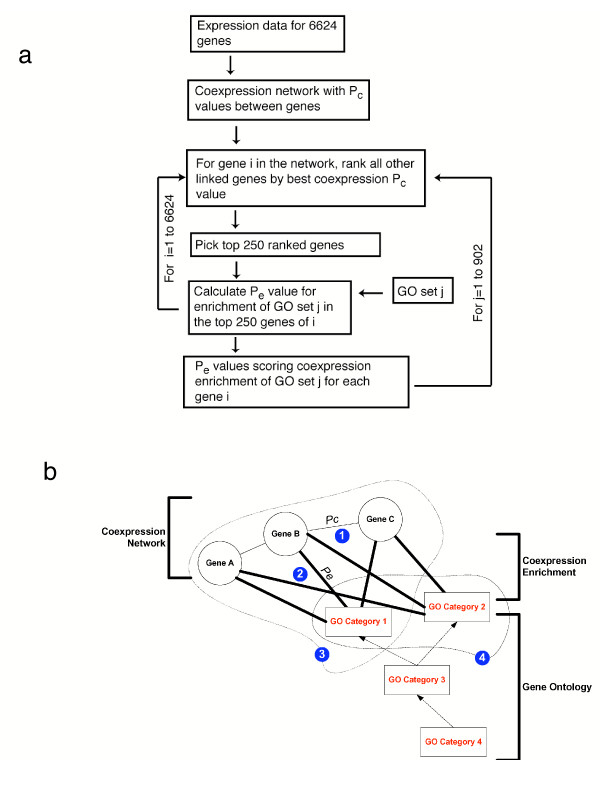
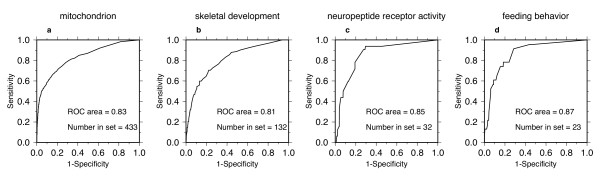
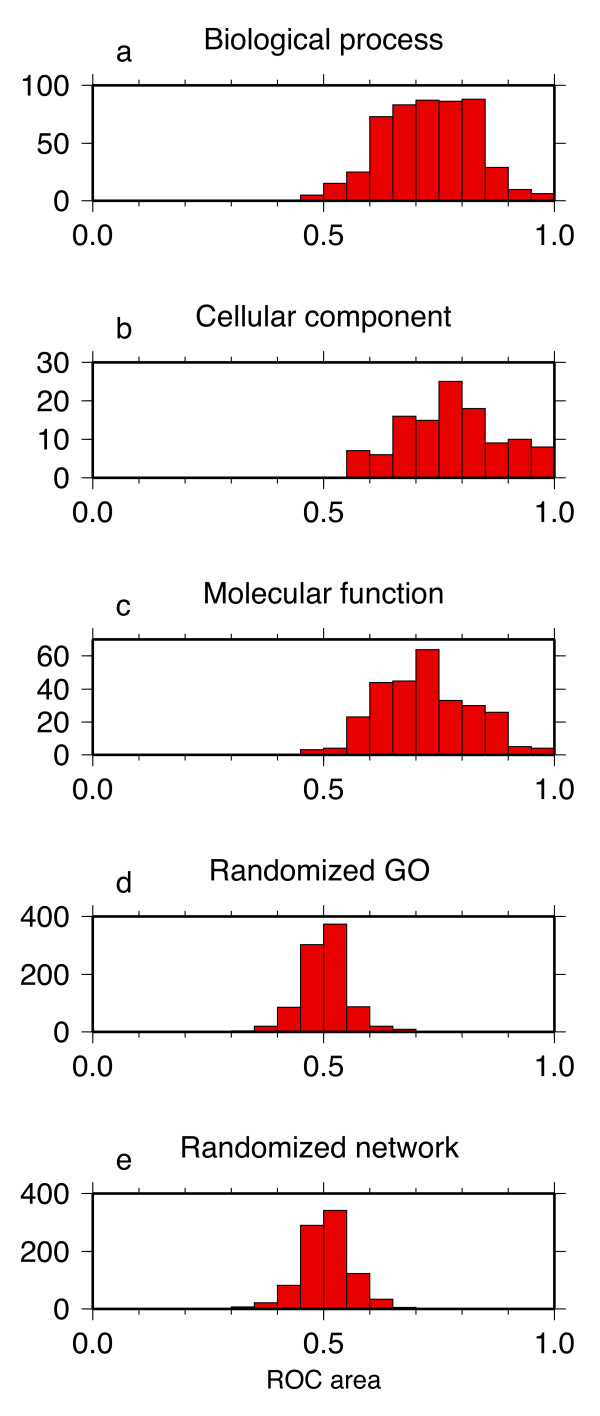
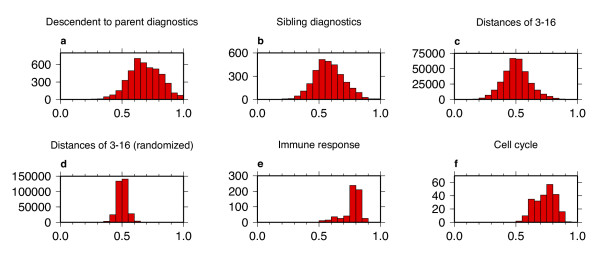
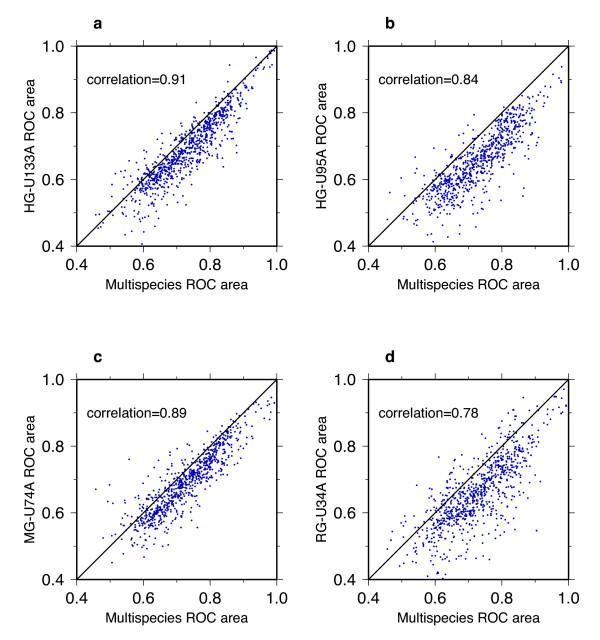
Background: Biological processes are carried out by coordinated modules of interacting molecules. As clustering methods demonstrate that genes with similar expression display increased likelihood of being associated with a common functional module, networks of coexpressed genes provide one framework for assigning gene function. This has informed the guilt-by-association (GBA) heuristic, widely invoked in functional genomics. Yet although the idea of GBA is accepted, the breadth of GBA applicability is uncertain. Results: We developed methods to systematically explore the breadth of GBA across a large and varied corpus of expression data to answer the following question: To what extent is the GBA heuristic broadly applicable to the transcriptome and conversely how broadly is GBA captured by a priori knowledge represented in the Gene Ontology (GO)? Our study provides an investigation of the functional organization of five coexpression networks using data from three mammalian organisms. Our method calculates a probabilistic score between each gene and each Gene Ontology category that reflects coexpression enrichment of a GO module. For each GO category we use Receiver Operating Curves to assess whether these probabilistic scores reflect GBA. This methodology applied to five different coexpression networks demonstrates that the signature of guilt-by-association is ubiquitous and reproducible and that the GBA heuristic is broadly applicable across the population of nine hundred Gene Ontology categories. We also demonstrate the existence of highly reproducible patterns of coexpression between some pairs of GO categories. Conclusion: We conclude that GBA has universal value and that transcriptional control may be more modular than previously realized. Our analyses also suggest that methodologies combining coexpression measurements across multiple genes in a biologically-defined module can aid in characterizing gene function or in characterizing whether pairs of functions operate together.
Overview
The claims and statistics of this paper haven’t been checked yet.
Run the check — free, no account needed. It reads the open-access text and checks the sources it cites.
Integrity signals
Registry
Cites
Statistics
Figures
Verification
Claims the paper makes
The claims and statistics of this paper haven’t been checked yet.
Run the check — free, no account needed. It reads the open-access text and checks the sources it cites.
Claims other papers make about this one
Each is checked against this paper’s own text: does it say what the citing paper says it does?
In the citing paper
“Thus, gene products that are involved in an unknown cell type or biological process can be annotated on the basis of their proximity to marker genes of known function (‘guilt by association’)26,33,34.”
From Systems biology and gene networks in neurodevelopmental and neurodegenerative disorders (2015) · cites this paper as [33]
Self-check
Percentages, sums and reported differences re-computed from the paper’s own numbers.
The self-check needs the paper’s full text.
Citations
Cites
Gene Ontology: tool for the unification of biology
Ashburner, M., Ball, C. A., Blake, J. A., Botstein, D., Butler, H., Cherry, J. M., Davis, A. P., Dolinski, K., Dwight, S. S., Eppig, J. T., et al. (2000) · Nature Genetics · doi:10.1038/75556 · Cited by 43,206
The meaning and use of the area under a receiver operating characteristic (ROC) curve.
Hanley, J. A., & McNeil, B. J. (1982) · Radiology · doi:10.1148/radiology.143.1.7063747 · Cited by 21,856
Cluster analysis and display of genome-wide expression patterns
Eisen, M. B., Spellman, P. T., Brown, P. O., & Botstein, D. (1998) · Proceedings of the National Academy of Sciences · doi:10.1073/pnas.95.25.14863 · Cited by 16,184
Mootha, V. K., Lindgren, C. M., Eriksson, K.-F., Subramanian, A., Sihag, S., Lehar, J., Puigserver, P., Carlsson, E., Ridderstråle, M., Laurila, E., et al. (2003) · Nature Genetics · doi:10.1038/ng1180 · Cited by 10,197
From molecular to modular cell biology.
Hartwell, L. H., Hopfield, J. J., Leibler, S., & Murray, A. W. (1999) · Nature · doi:10.1038/35011540 · Cited by 3,632
Functional Discovery via a Compendium of Expression Profiles
Hughes, T. R., Marton, M. J., Jones, A. R., Roberts, C. J., Stoughton, R. B., Armour, C. D., Bennett, H. A., Coffey, E. M., Dai, H. A., He, Y. D., et al. (2000) · Cell · doi:10.1016/s0092-8674(00)00015-5 · Cited by 2,534
Systematic determination of genetic network architecture
Tavazoie, S., Hughes, J. D., Campbell, M. J., Cho, R. J., & Church, G. M. (1999) · Nature Genetics · doi:10.1038/10343 · Cited by 2,509
Exploring the new world of the genome with DNA microarrays
Brown, P. O., & Botstein, D. (1999) · Nature Genetics · doi:10.1038/4462 · Cited by 2,430
A Gene-Coexpression Network for Global Discovery of Conserved Genetic Modules
Stuart, J. M., Segal, E., Koller, D., & Kim, S. K. (2003) · Science · doi:10.1126/science.1087447 · Cited by 2,274
Computational analysis of microarray data
Quackenbush, J. (2001) · Nature Reviews Genetics · doi:10.1038/35076576 · Cited by 1,481
Cited by
Sorted by citations
Gut microbiome structure and metabolic activity in inflammatory bowel disease
Franzosa, E. A., Sirota-Madi, A., Avila-Pacheco, J., Fornelos, N., Haiser, H. J., Reinker, S., Vatanen, T., Hall, A. B., Mallick, H., McIver, L. J., et al. (2018) · Nature Microbiology · doi:10.1038/s41564-018-0306-4 · Cited by 1,995
Buffa, F. M., Harris, A. L., West, C., & Miller, C. J. (2010) · British Journal of Cancer · doi:10.1038/sj.bjc.6605450 · Cited by 545
Co‐expression tools for plant biology: opportunities for hypothesis generation and caveats
Usadel, B., Obayashi, T., Mutwil, M., Giorgi, F. M., Bassel, G. W., Tanimoto, M., CHOW, A., Steinhauser, D., Persson, S., & Provart, N. J. (2009) · Plant Cell & Environment · doi:10.1111/j.1365-3040.2009.02040.x · Cited by 476
Comparison of co-expression measures: mutual information, correlation, and model based indices
Song, L., Langfelder, P., & Horvath, S. (2012) · BMC Bioinformatics · doi:10.1186/1471-2105-13-328 · Cited by 460
Systems biology and gene networks in neurodevelopmental and neurodegenerative disorders
Parikshak, N. N., Gandal, M. J., & Geschwind, D. H. (2015) · Nature Reviews Genetics · doi:10.1038/nrg3934 · Cited by 430
Metadata
- Authors
- Wolfe, C. J., Kohane, I. S., & Butte, A. J.
- Affiliations
- Harvard University (US)
- Corresponding author
- Wolfe, Cecily J
- Venue
- BMC Bioinformatics
- Published
- 2005-09-14
- Volume
- 6
- Issue
- 1
- Pages
- 227-227
- ISSN
- 1471-2105 (ISSN-L)
- PMC
- PMC1239911
- OpenAlex
- W2159767718
- Cited by
- 422
- References
- 24
- Citations by year
- 2026: 5 · 2025: 10 · 2024: 12 · 2023: 14 · 2022: 28 · 2021: 39 · 2020: 40 · 2019: 29 · 2018: 24 · 2017: 19 · 2016: 17 · 2015: 20 · 2014: 18 · 2013: 20 · 2012: 20
- FWCI
- 5.90
- Type
- journal article
- Language
- en
- Open access
- gold
- doi.org
- Licence
- cc-by
- Locations
- BMC Bioinformatics (publishedVersion, cc-by)
- PubMed Central (publishedVersion, cc-by)
- PubMed (publishedVersion)
- Digital Access to Scholarship at Harvard (DASH) (Harvard University) (submittedVersion, cc-by)
- DOAJ (DOAJ: Directory of Open Access Journals) (submittedVersion)
- Funders
- Pediatric Endocrine Society
- National Institutes of Health (LM008748)
- National Institute of Diabetes and Digestive and Kidney Diseases (R01 DK62948, K12DK63696, K12DK063696, R01DK062948)
- U.S. National Library of Medicine (U54LM008748, 5T15 LM07092, 2 TA5 LM 07092-11, T15LM007092)
- Topics
- Life Sciences › Biochemistry, Genetics and Molecular Biology › Molecular Biology › Bioinformatics and Genomic Networks
- Health Sciences › Medicine › Health Informatics › Biomedical Text Mining and Ontologies
- Life Sciences › Biochemistry, Genetics and Molecular Biology › Molecular Biology › Gene expression and cancer classification
- Keywords
- guilt by association, gene co-expression network, Gene Ontology, gene function prediction, functional modules, probabilistic scoring, transcriptome, transcriptional regulation
- MeSH terms
- Animals, Bone Development, Feeding Behavior, Humans, Phylogeny, Probability, ROC Curve, Species Specificity, Reproducibility of Results, Receptors, Neuropeptide, Oligonucleotide Array Sequence Analysis, Gene Expression Profiling, Synteny, Mice, Rats
About these checks
Registry, retraction, Cites and statistics results are computed, not judged, with one exception: a printed reference that no index lists is read once by a model before it counts as a citation error. Claims are extracted by a model and kept only when their quote appears verbatim in the text; each cited source is then checked, with a model’s help, for whether it says what the claim relies on. Those verdicts can be wrong — read the claim’s quote and the cited source before relying on one.
Statistics and arithmetic are recomputed, not judged.
Confidence bands are shown only for fields calibrated on our annotated test set. None is calibrated yet, so no band is shown.
What counts as a claim ›How we measure confidence ›How we check this ›
Are you an author, or do you see a problem with this page? Request a review
