

The DOI matches its Crossref record; 42 of the 42 references it cites were found in a registry or an index.
Improved human disease candidate gene prioritization using mouse phenotype
Open accessAbstract
Background: The majority of common diseases are multi-factorial and modified by genetically and mechanistically complex polygenic interactions and environmental factors. High-throughput genome-wide studies like linkage analysis and gene expression profiling, tend to be most useful for classification and characterization but do not provide sufficient information to identify or prioritize specific disease causal genes. Results: Extending on an earlier hypothesis that the majority of genes that impact or cause disease share membership in any of several functional relationships we, for the first time, show the utility of mouse phenotype data in human disease gene prioritization. We study the effect of different data integration methods, and based on the validation studies, we show that our approach, ToppGene http://toppgene.cchmc.org , outperforms two of the existing candidate gene prioritization methods, SUSPECTS and ENDEAVOUR. Conclusion: The incorporation of phenotype information for mouse orthologs of human genes greatly improves the human disease candidate gene analysis and prioritization.
Overview
The claims and statistics of this paper haven’t been checked yet.
Run the check — free, no account needed. It reads the open-access text and checks the sources it cites.
Integrity signals
Registry
Cites
Statistics
Figures
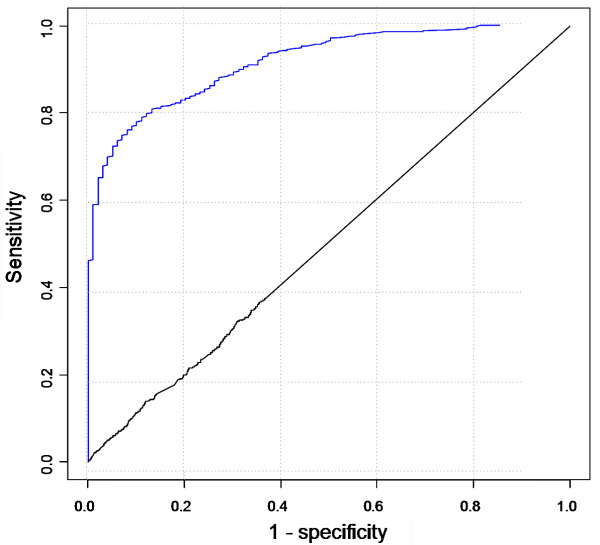
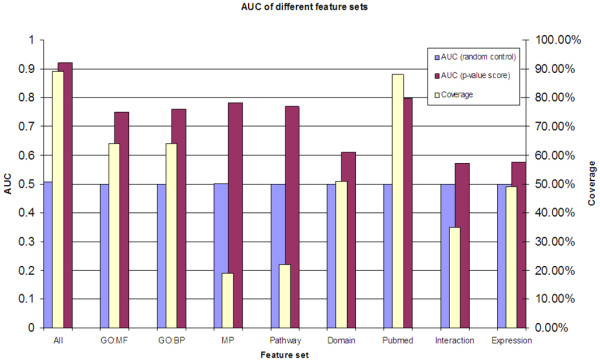
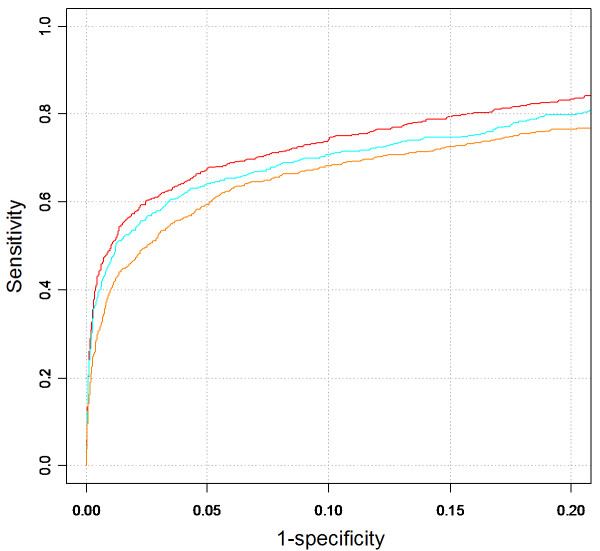
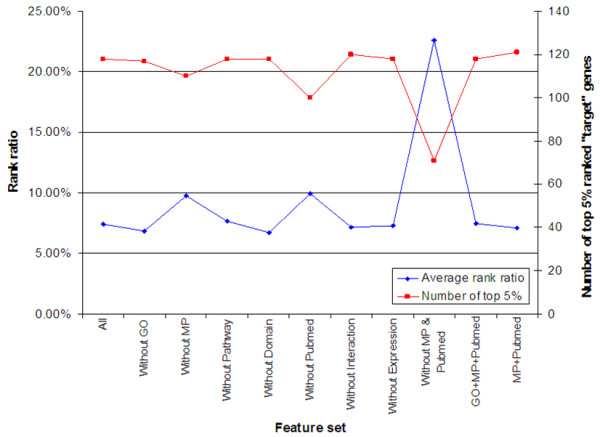
Verification
Claims the paper makes
The claims and statistics of this paper haven’t been checked yet.
Run the check — free, no account needed. It reads the open-access text and checks the sources it cites.
Claims other papers make about this one
Each is checked against this paper’s own text: does it say what the citing paper says it does?
The cited source says what the claim attributes to it.
In the citing paper
“mining genes associated with phenotypes from the Mammalian Phenotype Ontology resource (Smith et al, 2005; Chen et al, 2007) revealed that, albeit less significant when compared to Hep‐ID TFs, Hep‐IDCONNECT TF‐encoding genes are linked to abnormal liver phenotypes and metabolic functions (Fig 2G).”
From An extended transcription factor regulatory network controls hepatocyte identity (2023) · cites this paper as Chen et al, 2007
Self-check
Percentages, sums and reported differences re-computed from the paper’s own numbers.
The self-check needs the paper’s full text.
Citations
Cites
Subramanian, A., Tamayo, P., Mootha, V. K., Mukherjee, S., Ebert, B. L., Gillette, M. A., Paulovich, A., Pomeroy, S. L., Golub, T. R., Lander, E. S., et al. (2005) · Proceedings of the National Academy of Sciences · doi:10.1073/pnas.0506580102 · Cited by 53,625
DAVID: Database for Annotation, Visualization, and Integrated Discovery
Dennis, G., Sherman, B. T., Hosack, D. A., Yang, J., Gao, W., Lane, H. C., & Lempicki, R. A. (2003) · Genome Biology · doi:10.1186/gb-2003-4-5-p3 · Cited by 9,327
The Gene Ontology (GO) database and informatics resource
Gene Ontology Consortium (2003) · Nucleic Acids Research · doi:10.1093/nar/gkh036 · Cited by 4,596
The unified medical language system (UMLS): integrating biomedical terminology
Bodenreider, O. (2004) · Nucleic Acids Research · doi:10.1093/nar/gkh061 · Cited by 4,356
BioGRID: a general repository for interaction datasets
Stark, C. (2006) · Nucleic Acids Research · doi:10.1093/nar/gkj109 · Cited by 3,960
A gene atlas of the mouse and human protein-encoding transcriptomes
Su, A. I., Wiltshire, T., Batalov, S., Lapp, H., Ching, K. A., Block, D., Zhang, J., Soden, R., Hayakawa, M., Kreiman, G., et al. (2004) · Proceedings of the National Academy of Sciences · doi:10.1073/pnas.0400782101 · Cited by 3,475
From genomics to chemical genomics: new developments in KEGG
Kanehisa, M. I. (2005) · Nucleic Acids Research · doi:10.1093/nar/gkj102 · Cited by 3,126
Pfam: clans, web tools and services
Finn, R. D. (2005) · Nucleic Acids Research · doi:10.1093/nar/gkj149 · Cited by 2,291
Evolving gene/transcript definitions significantly alter the interpretation of GeneChip data
Dai, M. (2005) · Nucleic Acids Research · doi:10.1093/nar/gni179 · Cited by 1,807
BIND--The Biomolecular Interaction Network Database
Bader, G. D. (2001) · Nucleic Acids Research · doi:10.1093/nar/29.1.242 · Cited by 1,560
Research works printed but not linked: 2
- Entrez Gene. [http://www.ncbi.nlm.nih.gov/entrez/query.fcgi?db=gene]
- NCBI Gene Expression Omnibus (GEO). [http://www.ncbi.nlm.nih.gov/projects/geo/]
Cited by
Sorted by citations
ToppGene Suite for gene list enrichment analysis and candidate gene prioritization
Chen, J., Bardes, E. E., Aronow, B. J., & Jegga, A. G. (2009) · Nucleic Acids Research · doi:10.1093/nar/gkp427 · Cited by 2,952
Self-citationDivergence of human and mouse brain transcriptome highlights Alzheimer disease pathways
Miller, J. A., Horvath, S., & Geschwind, D. H. (2010) · Proceedings of the National Academy of Sciences · doi:10.1073/pnas.0914257107 · Cited by 480
Computational tools for prioritizing candidate genes: boosting disease gene discovery
Moreau, Y., & Tranchevent, L.-C. (2012) · Nature Reviews Genetics · doi:10.1038/nrg3253 · Cited by 417
Kaimal, V., Bardes, E. E., Tabar, S., Jegga, A. G., & Aronow, B. J. (2010) · Nucleic Acids Research · doi:10.1093/nar/gkq418 · Cited by 369
Self-citationDisease candidate gene identification and prioritization using protein interaction networks
Chen, J., Aronow, B. J., & Jegga, A. G. (2009) · BMC Bioinformatics · doi:10.1186/1471-2105-10-73 · Cited by 374
Self-citation
Metadata
- Authors
- Chen, J., Xu, H., Aronow, B. J., & Jegga, A. G.
- Affiliations
- Cincinnati Children's Hospital Medical Center (US)
- Corresponding author
- Jegga, Anil G
- Venue
- BMC Bioinformatics
- Published
- 2007-10-16
- Volume
- 8
- Issue
- 1
- Pages
- 392-392
- ISSN
- 1471-2105 (ISSN-L)
- PMC
- PMC2194797
- OpenAlex
- W2128245545
- Cited by
- 284
- References
- 42
- Citations by year
- 2026: 7 · 2025: 14 · 2024: 13 · 2023: 21 · 2022: 18 · 2021: 15 · 2020: 13 · 2019: 18 · 2018: 22 · 2017: 7 · 2016: 20 · 2015: 9 · 2014: 19 · 2013: 11 · 2012: 21
- FWCI
- 4.63
- Type
- journal article
- Language
- en
- Open access
- gold
- doi.org
- Licence
- cc-by
- Locations
- BMC Bioinformatics (publishedVersion, cc-by)
- PubMed Central (publishedVersion, cc-by)
- PubMed (publishedVersion)
- DOAJ (DOAJ: Directory of Open Access Journals) (submittedVersion, cc-by-sa)
- Funders
- National Cancer Institute (U01 CA84291-07, UO1 CA84291-07, CA84291, U01CA084291, CA84291-07)
- Topics
- Life Sciences › Biochemistry, Genetics and Molecular Biology › Molecular Biology › Bioinformatics and Genomic Networks
- Health Sciences › Medicine › Health Informatics › Biomedical Text Mining and Ontologies
- Life Sciences › Biochemistry, Genetics and Molecular Biology › Genetics › Genomics and Rare Diseases
- Keywords
- candidate gene prioritization, human disease genes, mouse phenotypes, mouse orthologs, data integration, polygenic disease
- MeSH terms
- Algorithms, Animals, Chromosome Mapping, Humans, Phenotype, Species Specificity, Linkage Disequilibrium, Genetic Predisposition to Disease, Mice
About these checks
Registry, retraction, Cites and statistics results are computed, not judged, with one exception: a printed reference that no index lists is read once by a model before it counts as a citation error. Claims are extracted by a model and kept only when their quote appears verbatim in the text; each cited source is then checked, with a model’s help, for whether it says what the claim relies on. Those verdicts can be wrong — read the claim’s quote and the cited source before relying on one.
Statistics and arithmetic are recomputed, not judged.
Confidence bands are shown only for fields calibrated on our annotated test set. None is calibrated yet, so no band is shown.
What counts as a claim ›How we measure confidence ›How we check this ›
Are you an author, or do you see a problem with this page? Request a review
