

The DOI matches its Crossref record; 45 of the 45 references it cites were found in a registry or an index.
Low physiologic oxygen tensions reduce proliferation and differentiation of human multipotent mesenchymal stromal cells
Open accessAbstract
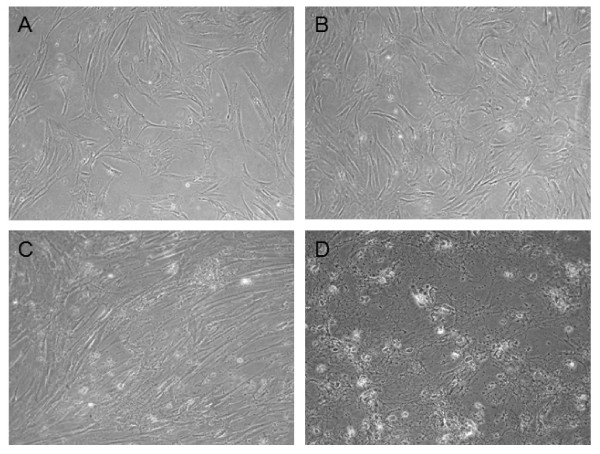
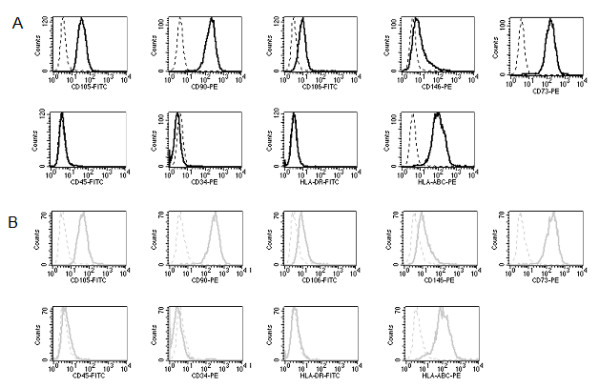
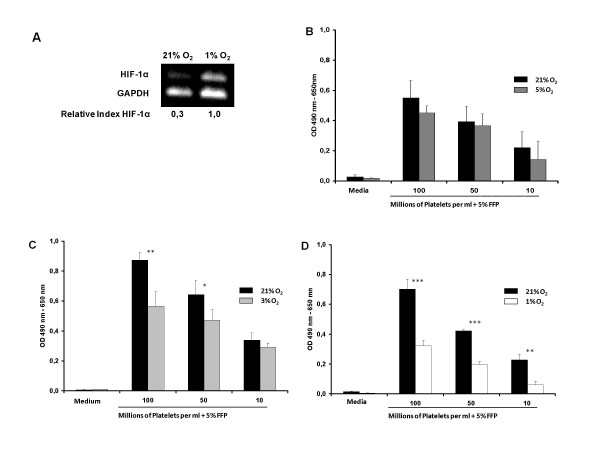
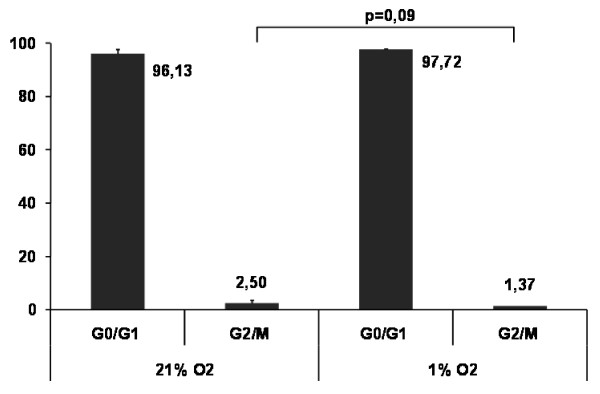
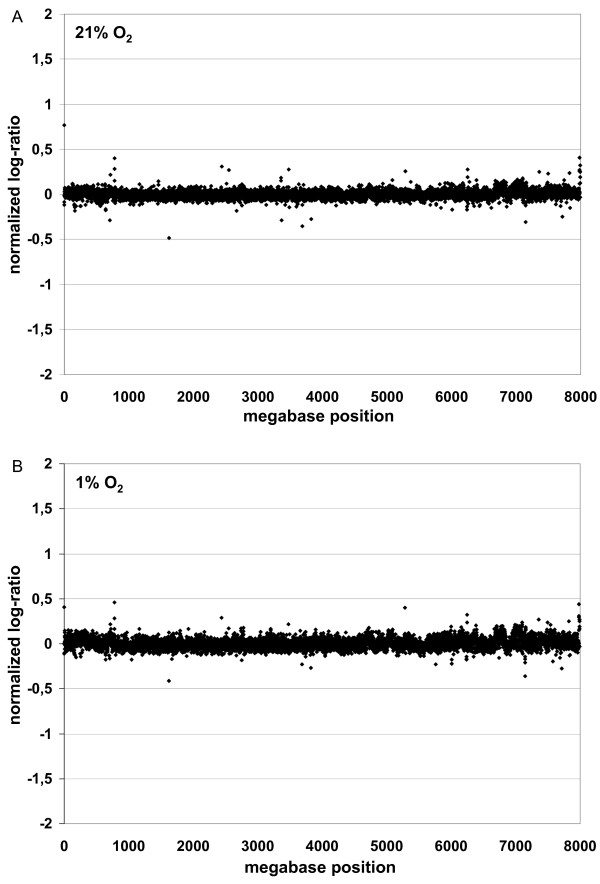
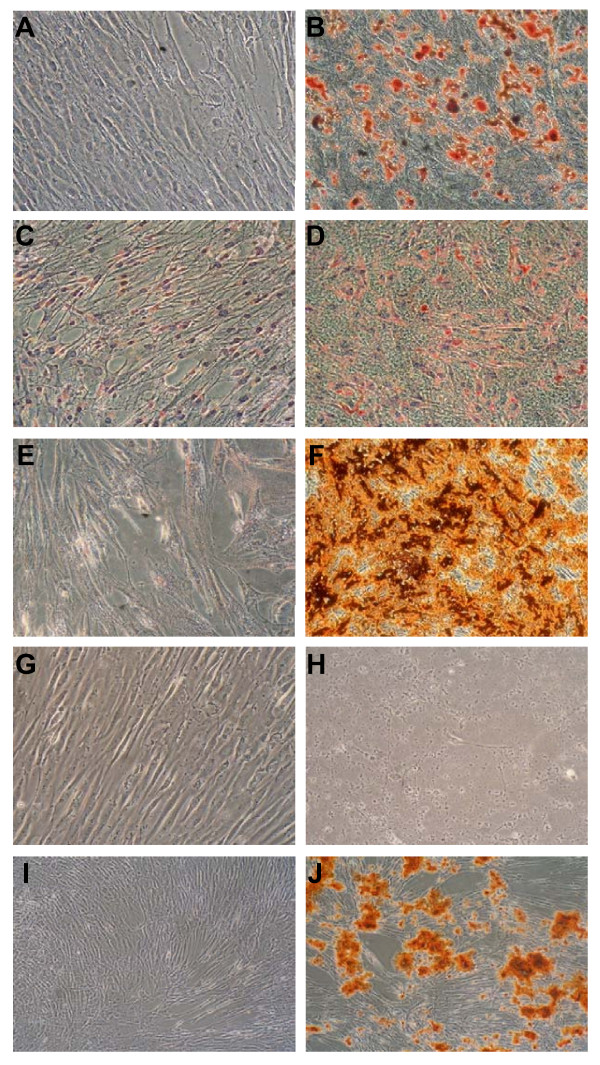
Background: Human multipotent mesenchymal stromal cells (MSC) can be isolated from various tissues including bone marrow. Here, MSC participate as bone lining cells in the formation of the hematopoietic stem cell niche. In this compartment, the oxygen tension is low and oxygen partial pressure is estimated to range from 1% to 7%. We analyzed the effect of low oxygen tensions on human MSC cultured with platelet-lysate supplemented media and assessed proliferation, morphology, chromosomal stability, immunophenotype and plasticity. Results: After transferring MSC from atmospheric oxygen levels of 21% to 1%, HIF-1α expression was induced, indicating efficient oxygen reduction. Simultaneously, MSC exhibited a significantly different morphology with shorter extensions and broader cell bodies. MSC did not proliferate as rapidly as under 21% oxygen and accumulated in G 1 phase. The immunophenotype, however, was unaffected. Hypoxic stress as well as free oxygen radicals may affect chromosomal stability. However, no chromosomal abnormalities in human MSC under either culture condition were detected using high-resolution matrix-based comparative genomic hybridization. Reduced oxygen tension severely impaired adipogenic and osteogenic differentiation of human MSC. Elevation of oxygen from 1% to 3% restored osteogenic differentiation. Conclusion: Physiologic oxygen tension during in vitro culture of human MSC slows down cell cycle progression and differentiation. Under physiological conditions this may keep a proportion of MSC in a resting state. Further studies are needed to analyze these aspects of MSC in tissue regeneration.
Overview
The claims and statistics of this paper haven’t been checked yet.
Run the check — free, no account needed. It reads the open-access text and checks the sources it cites.
Integrity signals
Registry
Cites
Statistics
Figures
Verification
Claims the paper makes
The claims and statistics of this paper haven’t been checked yet.
Run the check — free, no account needed. It reads the open-access text and checks the sources it cites.
Claims other papers make about this one
Each is checked against this paper’s own text: does it say what the citing paper says it does?
In the citing paper
“Yet, some studies reported conflicting results showing negative or no effects on MSCs by hypoxia [34–36].”
From Short-term physiological hypoxia potentiates the therapeutic function of mesenchymal stem cells (2018) · cites this paper as [34]
Self-check
Percentages, sums and reported differences re-computed from the paper’s own numbers.
The self-check needs the paper’s full text.
Citations
Cites
Dominici, M., Le Blanc, K., Mueller, I., Slaper-Cortenbach, I., Marini, F. C., Krause, D. S., Deans, R. J., Keating, A., Prockop, D. J., & Horwitz, E. M. (2006) · Cytotherapy · doi:10.1080/14653240600855905 · Cited by 17,766
Le Blanc, K., Rasmusson, I., Sundberg, B., Götherström, C., Hassan, M., Uzunel, M., & Ringdén, O. (2004) · The Lancet · doi:10.1016/s0140-6736(04)16104-7 · Cited by 2,734
Tan, P. H. (2001) · WORLD SCIENTIFIC eBooks · doi:10.1142/9789810248178_0024 · Cited by 2,716
Blanc, K. L., Frassoni, F., Ball, L. M., Locatelli, F., Roelofs, H., Lewis, I., Lanino, E., Sundberg, B., Bernardo, M. E., Remberger, M., et al. (2008) · The Lancet · doi:10.1016/s0140-6736(08)60690-x · Cited by 2,692
Horwitz, E. M., Gordon, P. L., Koo, W. K. K., Marx, J. C., Neel, M. D., McNall, R. Y., Muul, L., & Hofmann, T. (2002) · Proceedings of the National Academy of Sciences · doi:10.1073/pnas.132252399 · Cited by 1,650
Meisel, R., Zibert, A., Laryea, M. D., Göbel, U., Däubener, W., & Dilloo, D. (2004) · Blood · doi:10.1182/blood-2003-11-3909 · Cited by 1,638
Hypoxia-Inducible Factors, Stem Cells, and Cancer
Keith, B., & Simon, M. C. (2007) · Cell · doi:10.1016/j.cell.2007.04.019 · Cited by 1,179
Gnecchi, M., He, H., Noiseux, N., Liang, O. D., Zhang, L., Morello, F., Mu, H., Melo, L. G., Pratt, R. E., Ingwall, J. S., et al. (2006) · The FASEB Journal · doi:10.1096/fj.05-5211com · Cited by 1,175
The role of oxygen availability in embryonic development and stem cell function
Simon, M. C., & Keith, B. (2008) · Nature Reviews Molecular Cell Biology · doi:10.1038/nrm2354 · Cited by 1,015
Matrix-based comparative genomic hybridization: Biochips to screen for genomic imbalances
Solinas‐Toldo, S., Lampel, S., Stilgenbauer, S., Nickolenko, J., Benner, A., Döhner, H., Cremer, T. J., & Lichter, P. (1997) · Genes Chromosomes and Cancer · doi:10.1002/(sici)1098-2264(199712)20:4 · Cited by 1,002
Cited by
Sorted by citations
Items 301–312 of 312
Low oxygen content as a potential risk factor for scoliosis: a school-based cross-sectional study
Hao, J., Zhang, L., Zhao, Z., Wang, Y., Zhe, S., Gao, F., Li, T. L., & Shi, Z. (2026) · Frontiers in Public Health · doi:10.3389/fpubh.2026.1804995
郝, 家. (2026) · Advances in Clinical Medicine · doi:10.12677/acm.2026.1651912
Jia, C., Lin, Z., Zhang, T., He, L., Li, Y., Li, J., Li, X., Zhang, Y., Cai, B., Zou, M., et al. (2026) · Biological Research · doi:10.1186/s40659-026-00703-z
Oxygen-releasing biomaterials for bone tissue regeneration
Zhang, Z. C., Wang, Y., Yang, X., & Li, J. (2026) · Journal of Controlled Release · doi:10.1016/j.jconrel.2026.115067
Sotiropoulou, P., Gerdemann, A., Jovanovic, S., Humpf, H.-U., Bürkle, A., & Dietrich, D. R. (2026) · Archives of Toxicology · doi:10.1007/s00204-026-04472-2
Filippi, I., Monaci, S., Aldinucci, C., Falsini, A., Bardotti, M., Coppola, F., Naldini, A., & Carraro, F. (2026) · International Journal of Molecular Sciences · doi:10.3390/ijms27146324
Golovina, M., Efremov, A. A., Syrtsov, D. A., Smirnova, K. A., Sulyaeva, V. S., Poryvaev, A. S., & Fedin, M. V. (2026) · ACS Applied Materials & Interfaces · doi:10.1021/acsami.6c14079
Metadata
- Authors
- Holzwarth, C., Vaegler, M., Gieseke, F., Pfister, S. M., Handgretinger, R., Kerst, G., & Müller, I.
- Affiliations
- University Children's Hospital Tübingen (DE)
- German Cancer Research Center (DE)
- Corresponding author
- Müller, Ingo
- Venue
- BMC Cell Biology
- Published
- 2010-01-28
- Volume
- 11
- Issue
- 1
- Pages
- 11-11
- ISSN
- 1471-2121 (ISSN-L)
- PMC
- PMC2827377
- OpenAlex
- W2057597564
- Cited by
- 314
- References
- 45
- Citations by year
- 2026: 9 · 2025: 6 · 2024: 11 · 2023: 11 · 2022: 16 · 2021: 19 · 2020: 21 · 2019: 21 · 2018: 19 · 2017: 22 · 2016: 33 · 2015: 28 · 2014: 26 · 2013: 26 · 2012: 20
- FWCI
- 10.11
- Type
- journal article
- Language
- en
- Open access
- gold
- doi.org
- Licence
- cc-by
- Locations
- BMC Cell Biology (publishedVersion, cc-by)
- PubMed Central (publishedVersion, cc-by)
- PubMed (publishedVersion)
- DOAJ (DOAJ: Directory of Open Access Journals) (submittedVersion, cc-by-sa)
- Funders
- Deutsche Forschungsgemeinschaft
- José Carreras Leukämie-Stiftung
- Topics
- Life Sciences › Biochemistry, Genetics and Molecular Biology › Cell Biology › Mesenchymal stem cell research
- Health Sciences › Medicine › Hematology › Hematopoietic Stem Cell Transplantation
- Physical Sciences › Engineering › Biomedical Engineering › Bone Tissue Engineering Materials
- Keywords
- mesenchymal stem cells, hypoxia, oxygen partial pressure, HIF-1α, cell proliferation, cell cycle, adipogenesis, osteogenic differentiation, chromosome stability, immunophenotype, hematopoietic niche, bone marrow, cellular plasticity, platelet lysate
- MeSH terms
- Adolescent, Bone Marrow Cells, Cell Differentiation, Child, Child, Preschool, Female, Humans, Infant, Male, Cell Hypoxia, Immunophenotyping, G1 Phase, Stromal Cells, Multipotent Stem Cells, Chromosomal Instability, Cell Proliferation, Hypoxia-Inducible Factor 1, alpha Subunit, Mesenchymal Stem Cells
About these checks
Registry, retraction, Cites and statistics results are computed, not judged, with one exception: a printed reference that no index lists is read once by a model before it counts as a citation error. Claims are extracted by a model and kept only when their quote appears verbatim in the text; each cited source is then checked, with a model’s help, for whether it says what the claim relies on. Those verdicts can be wrong — read the claim’s quote and the cited source before relying on one.
Statistics and arithmetic are recomputed, not judged.
Confidence bands are shown only for fields calibrated on our annotated test set. None is calibrated yet, so no band is shown.
What counts as a claim ›How we measure confidence ›How we check this ›
Are you an author, or do you see a problem with this page? Request a review
