

Site-specific time heterogeneity of the substitution process and its impact on phylogenetic inference
Open accessThe DOI matches its Crossref record; 78 of the 78 references it cites were found in a registry or an index.
Abstract
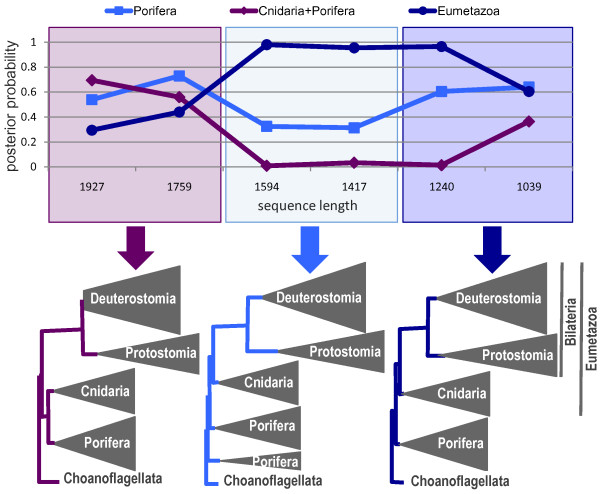
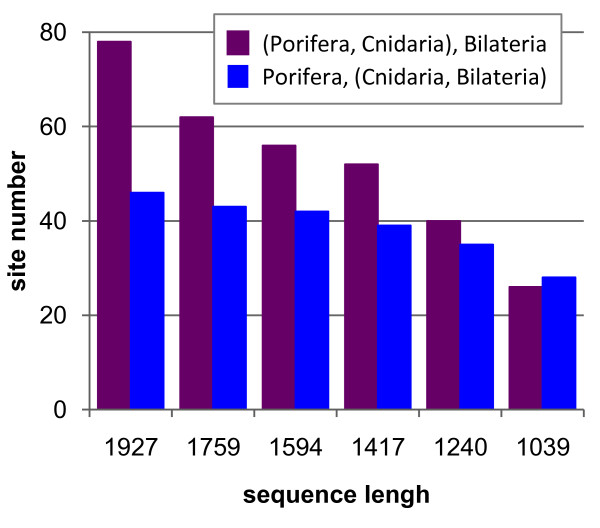
BACKGROUND: Model violations constitute the major limitation in inferring accurate phylogenies. Characterizing properties of the data that are not being correctly handled by current models is therefore of prime importance. One of the properties of protein evolution is the variation of the relative rate of substitutions across sites and over time, the latter is the phenomenon called heterotachy. Its effect on phylogenetic inference has recently obtained considerable attention, which led to the development of new models of sequence evolution. However, thus far focus has been on the quantitative heterogeneity of the evolutionary process, thereby overlooking more qualitative variations. RESULTS: We studied the importance of variation of the site-specific amino-acid substitution process over time and its possible impact on phylogenetic inference. We used the CAT model to define an infinite mixture of substitution processes characterized by equilibrium frequencies over the twenty amino acids, a useful proxy for qualitatively estimating the evolutionary process. Using two large datasets, we show that qualitative changes in site-specific substitution properties over time occurred significantly. To test whether this unaccounted qualitative variation can lead to an erroneous phylogenetic tree, we analyzed a concatenation of mitochondrial proteins in which Cnidaria and Porifera were erroneously grouped. The progressive removal of the sites with the most heterogeneous CAT profiles across clades led to the recovery of the monophyly of Eumetazoa (Cnidaria+Bilateria), suggesting that this heterogeneity can negatively influence phylogenetic inference. CONCLUSION: The time-heterogeneity of the amino-acid replacement process is therefore an important evolutionary aspect that should be incorporated in future models of sequence change.
Overview
The claims and statistics of this paper haven’t been checked yet.
Free: it reads the open-access text and checks the first 5 claims that cite a source we can check. Create a free account to check every claim.
Integrity signals
Registry
Cites
Statistics
Figures
Verification
Claims the paper makes
The claims and statistics of this paper haven’t been checked yet.
Free: it reads the open-access text and checks the first 5 claims that cite a source we can check. Create a free account to check every claim.
Claims other papers make about this one
Each is checked against this paper’s own text: does it say what the citing paper says it does?
The source backs part of the claim, not all of it — or backs it for a different population, condition or comparison.
In the citing paper
“This is suggested by analyses in which most heteropecillous sites (i.e., violating CAT model assumptions [32]) were removed: in these trees, ctenophores are sister-group to other eumetazoans (Figure S4A) or to cnidarians (Figure S4B) [1], consistent with a single origin of eumetazoan features including nerve cells.”
From A Large and Consistent Phylogenomic Dataset Supports Sponges as the Sister Group to All Other Animals (2017) · cites this paper as [32]
Experimental — accuracy not yet measuredThe source backs part of the claim, not all of it — or backs it for a different population, condition or comparison.
In the citing paper
“Nonetheless, our observations with different sub-samplings of the sponge classes indicate that the site-heterogeneous CAT model, despite outcompeting any site-homogeneous model, is unsurprisingly not immune to reconstruction artifacts [23, 32].”
From A Large and Consistent Phylogenomic Dataset Supports Sponges as the Sister Group to All Other Animals (2017) · cites this paper as [32]
Experimental — accuracy not yet measuredThe cited source says what the claim attributes to it.
In the citing paper
“Since heteropecillous positions (i.e., sites with a substitution process that is heterogeneous in time) violate the assumptions of the CAT model, they may lead to systematic error [32].”
From A Large and Consistent Phylogenomic Dataset Supports Sponges as the Sister Group to All Other Animals (2017) · cites this paper as [32]
Self-check
Percentages, sums and reported differences re-computed from the paper’s own numbers.
The self-check needs the paper’s full text.
Citations
Cites
1 retracted
RETRACTED ARTICLE: TREEFINDER: a powerful graphical analysis environment for molecular phylogenetics
Jobb, G., von Haeseler, A., & Strimmer, K. (2004) · BMC Evolutionary Biology · doi:10.1186/1471-2148-4-18 · Cited by 1,112
RetractedThompson, J. D., Higgins, D. G., & Gibson, T. J. (1994) · Nucleic Acids Research · doi:10.1093/nar/22.22.4673 · Cited by 64,617 · cited 2×
“For each dataset, proteins have been aligned by ClustalW [62], manually refined using ED [63], and then concatenated into a super-matrix using SCaFoS [64].”
MethodA simple method for displaying the hydropathic character of a protein
Kyte, J., & Doolittle, R. F. (1982) · Journal of Molecular Biology · doi:10.1016/0022-2836(82)90515-0 · Cited by 22,843
Evolutionary trees from DNA sequences: A maximum likelihood approach.
Felsenstein, J. (1981) · Journal of Molecular Evolution · doi:10.1007/bf01734359 · Cited by 14,571 · cited 1×
“on phylogenetic inference when not adequately handled: heterogeneity of rate across lineages [55], of substitution type [56], of rate across sites [57], of composition across taxa [58] and of substitution process across sites [23,24].”
BackgroundEvolution of Protein Molecules
JUKES, T. H., & CANTOR, C. R. (1969) · Mammalian Protein Metabolism · doi:10.1016/b978-1-4832-3211-9.50009-7 · Cited by 11,032 · cited 1×
“Since the first substitution model [ 13 ] several simplifying assumptions have been relaxed; the evolutionary process is considered as heterogeneous (i) between character states, (ii) over time and (iii) along the alignment.”
BackgroundSelection of Conserved Blocks from Multiple Alignments for Their Use in Phylogenetic Analysis
Castresana, J. (2000) · Molecular Biology and Evolution · doi:10.1093/oxfordjournals.molbev.a026334 · Cited by 10,508 · cited 1×
“Ambiguously aligned positions have been removed using Gblocks [65], with some manual refinements (necessary because of an inadequate stringency of Gblocks in the presence of missing data).”
MethodA Bayesian Analysis of Some Nonparametric Problems
Ferguson, T. S. (1973) · The Annals of Statistics · doi:10.1214/aos/1176342360 · Cited by 4,697 · cited 1×
“Of particular interest is the CAT model [24], a mixture model that infers categories from the data without any a priori biological assumptions and takes advantage of the Dirichlet process prior [26] to control the number of categories through a set of hyperparameters (i.”
BackgroundMOLECULAR BIOLOGY AND EVOLUTION
(2021) · WORLD SCIENTIFIC eBooks · doi:10.1142/9789811250378_0003 · Cited by 4,434
Atlas of protein sequence and structure
Chang, M.-Y., Dayhoff, M. O., Eck, R. V., & Sochard, M. R. (1965) · NASA Technical Reports Server (NASA) · Cited by 4,383
(1964) · Mammalian Protein Metabolism · doi:10.1016/b978-1-4832-3210-2.50006-6 · Cited by 3,059
Research works printed but not linked: 1
- Felsenstein J PHYLIP (Phylogene Inference Package) 2001 3.6 Distributed by the author, Department of Genetics, University of Washington, Seattle
Cited by
Simion, P., Philippe, H., Baurain, D., Jager, M., Richter, D. J., Di Franco, A., Roure, B., Satoh, N., Quéinnec, É., Ereskovsky, A., et al. (2017) · Current Biology · doi:10.1016/j.cub.2017.02.031 · Cited by 518
“These observations suggest that the levels of pattern heterogeneity present in empirical sequence alignments cannot be appropriately modeled by empirical finite mixtures and require instead the use of Dirichlet process models, such as CAT.”
InfluentialSelf-citationAcoelomorph flatworms are deuterostomes related to Xenoturbella
Philippe, H., Brinkmann, H., Copley, R. R., Moroz, L. L., Nakano, H., Poustka, A. J., Wallberg, A., Peterson, K. J., & Telford, M. J. (2011) · Nature · doi:10.1038/nature09676 · Cited by 445
Self-citationImpact of missing data on phylogenies inferred from empirical phylogenomic data sets
Roure, B., Baurain, D., & Philippe, H. (2013) · Molecular Biology and Evolution · doi:10.1093/molbev/mss208 · Cited by 365
“Thus, using the model that best fits the data globally improves phylogenetic accuracy, albeit the lack of deuterostome monophyly in the CAT+ tree indicates that this sophisticated model does not yet handle all important model violations (for details see Lartillot et al. 2007; Roure and Philippe 2011).”
BackgroundMethodResultInfluentialSelf-citationRevisiting metazoan phylogeny with genomic sampling of all phyla
Laumer, C. E., Fernández, R., Lemer, S., Combosch, D., Kocot, K. M., Riesgo, A., Andrade, S. C. S., Sterrer, W., Sørensen, M. V., & Giribet, G. (2019) · Proceedings of the Royal Society B: Biological Sciences · doi:10.1098/rspb.2019.0831 · Cited by 360
Improved Modeling of Compositional Heterogeneity Supports Sponges as Sister to All Other Animals
Feuda, R., Dohrmann, M., Pett, W., Philippe, H., Rota-Stabelli, O., Lartillot, N., Wörheide, G., & Pisani, D. (2017) · Current Biology · doi:10.1016/j.cub.2017.11.008 · Cited by 291
“[7] also showed that the exclusion of sites for which site-specific replacement patterns change over time (heteropecillous sites [58]) uncovers support for Coelenterata (i.”
Self-citationDeep metazoan phylogeny: When different genes tell different stories
Nosenko, T., Schreiber, F., Adamska, M., Adamski, M., Eitel, M., Hammel, J., Maldonado, M., Müller, W. E. G., Nickel, M., Schierwater, B., et al. (2013) · Molecular Phylogenetics and Evolution · doi:10.1016/j.ympev.2013.01.010 · Cited by 254
“The factors that contribute to among-lineage compositional heterogeneity include a historical shift in site-specific substitution rates and qualitative changes of substitution patterns over time (Lopez et al., 2002; Roure and Philippe, 2011).”
Cnidarian phylogenetic relationships as revealed by mitogenomics
Kayal, E., Roure, B., Philippe, H., Collins, A. G., & Lavrov, D. V. (2013) · BMC Evolutionary Biology · doi:10.1186/1471-2148-13-5 · Cited by 242
“phylogenomic trees that attract other long branches, resulting in Long Branch Attraction artifacts [42,43].”
BackgroundSelf-citationPhylogenomic Insights into Animal Evolution
Telford, M. J., Budd, G. E., & Philippe, H. (2015) · Current Biology · doi:10.1016/j.cub.2015.07.060 · Cited by 213
Self-citationPhylogenomics of Lophotrochozoa with Consideration of Systematic Error
Kocot, K. M., Struck, T. H., Merkel, J., Waits, D. S., Todt, C., Brannock, P. M., Weese, D. A., Cannon, J. T., Moroz, L. L., Lieb, B., et al. (2016) · Systematic Biology · doi:10.1093/sysbio/syw079 · Cited by 208
“Model-based approaches like ML or BI performed worse at modelling evolutionary rates accurately in heterotachous datasets (Kolaczkowski and Thornton 2004; Gadagkar and Kumar 2005; Roure and Philippe 2011), that is datasets with strong branch-length heterogeneity.”
BackgroundPitfalls in supermatrix phylogenomics
Philippe, H., Vienne, D. M. D., Ranwez, V., Roure, B., Baurain, D., & Delsuc, F. (2017) · European Journal of Taxonomy · doi:10.5852/ejt.2017.283 · Cited by 173
“As an illustration, Roure & Philippe (2011) obtained a sister-group relationship between cnidarians and poriferans in a phylogeny of animals based on proteins encoded in the mitochondrial genome using the CAT + Γ4 model.”
Self-citationKapli, P., & Telford, M. J. (2020) · Science Advances · doi:10.1126/sciadv.abc5162 · Cited by 162
Betancur-R., R., Li, C., Munroe, T. A., Ballesteros, J. A., & Ortí, G. (2013) · Systematic Biology · doi:10.1093/sysbio/syt039 · Cited by 140
“The importance of non-homogeneity across the evolutionary process has been recognized for some time, in particular the effects of rate variation among lineages or heterotachy (López et al. 2002; Lockhart et al. 2006; Lartillot et al. 2007; Evans et al. 2010; Roure and Philippe 2011) and base composition heterogeneity…”
BackgroundOrigin of land plants revisited in the light of sequence contamination and missing data
Laurin-Lemay, S., Brinkmann, H., & Philippe, H. (2012) · Current Biology · doi:10.1016/j.cub.2012.06.013 · Cited by 149
Self-citationTalavera, G., & Vila, R. (2011) · BMC Evolutionary Biology · doi:10.1186/1471-2148-11-315 · Cited by 134
“6) Using a site-heterogeneous mixture model (CAT) to allow flexible probabilities of the aminoacid replacement equilibrium frequencies, in order to minimise LBA effects [38,54,55].”
MethodA comparative analysis of complete mitochondrial genomes among Hexapoda
Simon, S., & Hadrys, H. (2013) · Molecular Phylogenetics and Evolution · doi:10.1016/j.ympev.2013.03.033 · Cited by 124
Husník, F., Chrudimský, T., & Hypša, V. (2011) · BMC Biology · doi:10.1186/1741-7007-9-87 · Cited by 96
“The removal of the heteropecillous sites was recently shown to have similar effectiveness as our new method [61], which further supports the results.”
ResultEffects of missing data on topological inference using a Total Evidence approach
Guillerme, T., & Cooper, N. (2015) · Molecular Phylogenetics and Evolution · doi:10.1016/j.ympev.2015.08.023 · Cited by 101
“Since the molecular part of a Total Evidence matrix acts like a ‘‘classical” molecular matrix containing only the living taxa (Ronquist et al., 2012a), the effect of missing data on such matrices is well known (Wiens, 2006; Wiens and Moen, 2008; Lemmon et al., 2009; Roure and Philippe, 2011).”
BackgroundMethodResultInfluentialRooting the tree of life: the phylogenetic jury is still out
Gouy, R., Baurain, D., & Philippe, H. (2015) · Philosophical Transactions of the Royal Society B: Biological Sciences · doi:10.1098/rstb.2014.0329 · Cited by 96
Self-citationInsights into the phylogeny of Hemiptera from increased mitogenomic taxon sampling
Song, N., Zhang, H., & Zhao, T. (2019) · Molecular Phylogenetics and Evolution · doi:10.1016/j.ympev.2019.05.009 · Cited by 109
Cavalier-Smith, T., Chao, E. E., & Lewis, R. (2015) · Molecular Phylogenetics and Evolution · doi:10.1016/j.ympev.2015.07.004 · Cited by 92
de Moya, R. S., Yoshizawa, K., Walden, K. K. O., Sweet, A. D., Dietrich, C. H., & Johnson Kevin, P. (2020) · Systematic Biology · doi:10.1093/sysbio/syaa075 · Cited by 86
“However, most methods that incorporate time-heterogeneous 85 approaches (Philippe et al. 2011; Roure and Philippe 2011) are extremely computationally 86 intensive and would be difficult to apply to large phylogenomic data sets, although they have 87 been applied in mitochondrial phylogenomics with…”
MethodDifficult phylogenetic questions: more data, maybe; better methods, certainly
Philippe, H., & Roure, B. (2011) · BMC Biology · doi:10.1186/1741-7007-9-91 · Cited by 76
“The removal of fast evolving sites has no effect, whereas the removal of heteropecillous sites, ones that change their substitution pattern over time, leads to the correct topology [10].”
BackgroundResultSelf-citationConserved Genes, Sampling Error, and Phylogenomic Inference
Betancur‐R, R., Naylor, G. J. P., & Ortí, G. (2014) · Systematic Biology · doi:10.1093/sysbio/syt073 · Cited by 81
“Methodological artifacts include spurious results due to sampling error (low signal-to-noise ratio), or a failure of evolutionary models to accommodate convoluted patterns in the data (e.g., López et al. 2002; Pagel and Meade 2004; Collins et al. 2005; Lockhart et al. 2006; Phillips et al. 2006; Rasmussen and Kellis 2…”
BackgroundUribe, J. E., Irisarri, I., Templado, J., & Zardoya, R. (2018) · Molecular Phylogenetics and Evolution · doi:10.1016/j.ympev.2018.12.019 · Cited by 77
The impact of GC bias on phylogenetic accuracy using targeted enrichment phylogenomic data
Bossert, S., Murray, E. A., Blaimer, B. B., & Danforth, B. N. (2017) · Molecular Phylogenetics and Evolution · doi:10.1016/j.ympev.2017.03.022 · Cited by 77
“Methodological factors are primarily conceptual or analytical limitations, such as the inadequacy of our current substitution models to accurately characterize sequence evolution (e.g., Kolaczkowski and Thornton, 2004; Roure and Philippe, 2011).”
A Practical Guide to Design and Assess a Phylogenomic Study
Lozano-Fernández, J. (2022) · Genome Biology and Evolution · doi:10.1093/gbe/evac129 · Cited by 88
“…heterogeneity), differences in substitution rates between lineages or sites (rate heterogeneity), differences in substitution rates of sites through time (heterotachy; Lopez et al. 2002), and clade-specific substitution rates changing over time (heteropecilly; Roure and Philippe 2011).”
BackgroundAgent of whirling disease meets orphan worm: phylogenomic analyses firmly place Myxozoa in Cnidaria
Nesnidal, M. P., Helmkampf, M., Bruchhaus, I., El-Matbouli, M., & Hausdorf, B. (2013) · PLoS ONE · doi:10.1371/journal.pone.0054576 · Cited by 64
“Actually, such a systematic error affected the reconstruction of the phylogenetic relationships among diploblasts based on mitochondrial protein sequences [46] and it may also be the cause of the weak support for the relationships of myxozoans within diploblasts in our analysis.”
BackgroundMethodThe effects of model choice and mitigating bias on the ribosomal tree of life
Lasek‐Nesselquist, E., & Gogarten, J. P. (2013) · Molecular Phylogenetics and Evolution · doi:10.1016/j.ympev.2013.05.006 · Cited by 73
Deep Residual Neural Networks Resolve Quartet Molecular Phylogenies
Zou, Z., Zhang, H., Guan, Y., & Zhang, J. (2020) · Molecular Biology and Evolution · doi:10.1093/molbev/msz307 · Cited by 59
Compositionally Constrained Sites Drive Long-Branch Attraction
Szánthó, L. L., Lartillot, N., Szöllősi, G. J., & Schrempf, D. (2023) · Systematic Biology · doi:10.1093/sysbio/syad013 · Cited by 50
Soares, A. E. R., & Schrago, C. G. (2014) · Journal of Theoretical Biology · doi:10.1016/j.jtbi.2014.09.004 · Cited by 39
Giant taxon‐character matrices II : a response to Laing et al. (2017)
Simões, T. R., Caldwell, M. W., Palci, A., & Nydam, R. L. (2017) · Cladistics · doi:10.1111/cla.12231 · Cited by 39
“Alternatively to fast-site removal, removing sites that violate model assumptions (e.g., removing heteropecillous sites in analysis with the CAT model) may provide a more appropriate analysis of genomic-scale molecular datasets (Roure and Philippe, 2011).”
MethodPower, resolution and bias: recent advances in insect phylogeny driven by the genomic revolution
Yeates, D. K., Meusemann, K., Trautwein, M., Wiegmann, B. M., & Zwick, A. (2015) · Current Opinion in Insect Science · doi:10.1016/j.cois.2015.10.007 · Cited by 42
Bazykin, G. A. (2015) · Biology Letters · doi:10.1098/rsbl.2015.0315 · Cited by 39
Pandey, A., & Braun, E. L. (2020) · Biology · doi:10.3390/biology9040064 · Cited by 32
“The phenomenon of shifting amino acid propensities has been given a name: heteropecilly [99].”
BackgroundVery few sites can reshape the inferred phylogenetic tree
Francis, W. R., & Canfield, D. E. (2020) · PeerJ · doi:10.7717/peerj.8865 · Cited by 31
“This position of Ambulacraria was also found by Simion et al. (2017) after substantial trimming of the dataset, whereupon 70% of ‘‘heteropecillious’’ sites were removed ( Roure & Philippe, 2011 ).”
Schmitt, N., Double, M. C., Jarman, S., Gales, N. J., Marthick, J. R., Polanowski, A. M., Baker, C. S., Steel, D. J., Jenner, K. C. S., Jenner, M.-N., et al. (2013) · Marine Mammal Science · doi:10.1111/mms.12045 · Cited by 42
Evolutionary terrestrialization scenarios for soil invertebrates
van Straalen, N. M. (2021) · Pedobiologia · doi:10.1016/j.pedobi.2021.150753 · Cited by 33
Parallel Evolution of Metazoan Mitochondrial Proteins
Klink, G. V., & Bazykin, G. A. (2017) · Genome Biology and Evolution · doi:10.1093/gbe/evx025 · Cited by 23
“…class of heterotachy models in which the overall rates of evolution of a site vary with time (Lopez et al. 2002; Yang and Nielsen 2002; Murrell et al. 2012), but require heteropecilly (Tamuri et al. 2009; Roure and Philippe 2011), i.e., variation with time of rates of individual substitutions.”
BackgroundProtein Complexes Form a Basis for Complex Hybrid Incompatibility
Swamy, K. B. S., Schuyler, S. C., & Leu, J. (2021) · Frontiers in Genetics · doi:10.3389/fgene.2021.609766 · Cited by 27
Johanson, K. A., Malm, T., & Espeland, M. (2016) · Systematic Entomology · doi:10.1111/syen.12209 · Cited by 24
Lower Statistical Support with Larger Data Sets: Insights from the Ochrophyta Radiation
Franco, A. D., Baurain, D., Glöckner, G., Melkonian, M., & Philippe, H. (2021) · Molecular Biology and Evolution · doi:10.1093/molbev/msab300 · Cited by 21
Self-citationInferring Ancient Relationships with Genomic Data: A Commentary on Current Practices
Laumer, C. E. (2018) · Integrative and Comparative Biology · doi:10.1093/icb/icy075 · Cited by 15
Budd, A., & Devos, D. P. (2012) · Frontiers in Microbiology · doi:10.3389/fmicb.2012.00401 · Cited by 13
“…and Goldman, 2008), or differences between the substitution model used to estimate the phylogeny and the true process of point mutation experienced by sequences during their evolution (Huelsenbeck and Rannala, 2004; Mar et al., 2005; Kolaczkowski and Thornton, 2008; Roure and Philippe, 2011).”
BackgroundInfluentialEpisodic evolution of coadapted sets of amino acid sites in mitochondrial proteins
Neverov, A. D., Fedonin, G. G., Cheremukhin, E. A., Klink, G. V., Popova, A. V., & Bazykin, G. A. (2021) · PLoS Genetics · doi:10.1371/journal.pgen.1008711 · Cited by 24
“This variability can uniformly affect all substitution types (“heterotachy” [1,2]) or differentiate between them (“heteropecilly” [2]).”
BackgroundInterchanging Functionality Among Homologous Elongation Factors Using Signatures of Heterotachy
Çaçan, E., Kratzer, J. T., Cole, M. F., & Gaucher, E. A. (2013) · Journal of Molecular Evolution · doi:10.1007/s00239-013-9540-9 · Cited by 9
Untying the Gordian knot of plastid phylogenomic conflict: A case from ferns
Wang, T., Li, T., Chen, S., Yang, T., Shu, J., Mu, Y.-N., Wang, K., Chen, J., Xiang, J., & Yan, Y. (2022) · Frontiers in Plant Science · doi:10.3389/fpls.2022.918155 · Cited by 7
A new species of Notalina Mosely, 1936 (Trichoptera: Leptoceridae) from Southeastern
Henriques-Oliveira, A. L., Spies, M. R., & Dumas, L. L. (2012) · Biota Neopropica/Biota Neotropica · doi:10.1590/s1676-06032012000400014 · Cited by 6
Detecting amino acid preference shifts with codon-level mutation-selection mixture models
Kazmi, S. O., & Rodrigue, N. (2019) · BMC Evolutionary Biology · doi:10.1186/s12862-019-1358-7 · Cited by 5
Compositionally Constrained Sites Drive Long Branch AttractionPreprint
Szánthó, L. L., Lartillot, N., Szöllősi, G. J., & Schrempf, D. (2022) · bioRxiv (Cold Spring Harbor Laboratory) · doi:10.1101/2022.03.03.482715 · Cited by 5
“For example, model violation may occur due to improper description of the heterogeneity of the substitution process across sites (Yang, 1993), across branches (Tuffley and Steel, 1998), or more finegrained modulations through time (heterotachy and heteropecilly: Philippe and Lopez, 2001; Roure and Philippe, 2011), all…”
BackgroundOsmoregulation and HSP70 abundance in freshwater catfish Rhamdia quelen under acute salt exposure
Maraschi, A. C., Gutierre, S. M. M., & Prodocimo, V. (2024) · Environmental Biology of Fishes · doi:10.1007/s10641-024-01556-9 · Cited by 3
Phylogenetic inference of changes in amino acid propensities with single-position resolution
Klink, G. V., Kalinina, O. V., & Bazykin, G. A. (2022) · PLoS Computational Biology · doi:10.1371/journal.pcbi.1009878 · Cited by 2
Multilocus phylogeny of the land snail Helix differs substantially from the mitochondrial gene tree
Korábek, O., & Hausdorf, B. (2025) · Molecular Phylogenetics and Evolution · doi:10.1016/j.ympev.2025.108516 · Cited by 2
Evaluating strategies of phylogenetic analyses by the coherence of their results
Li, B. (2013) · Comptes Rendus Palevol · doi:10.1016/j.crpv.2013.07.001 · Cited by 1
“All of these aspects form the analytical strategy that leads from the raw data to an annotated tree ready for drawing phylogenetic conclusions use the a posteriori approach for selecting strategies of phylogenetic analyses using the reproducibility of the results as a criterion,”
MethodRecent Progress on Methods for Estimating and Updating Large PhylogeniesPreprint
Zaharias, P., & Warnow, T. J. (2022) · Preprints.org · doi:10.20944/preprints202110.0258.v2
Faculty Opinions recommendation of Revisiting metazoan phylogeny with genomic sampling of all phyla.
Clarke, A. (2019) · Faculty Opinions – Post-Publication Peer Review of the Biomedical Literature · doi:10.3410/f.736173820.793562806
Detecting Amino Acid Preference Shifts with Codon-Level Mixture Models
Kazmi, S. (2018) · Carleton University's Institutional Repository (MacOdrum Library, Carleton University) · doi:10.22215/etd/2018-12712
Phylogenomics of Oceanic Bacteria
Viklund, J. (2013) · KTH Publication Database DiVA (KTH Royal Institute of Technology)
Modelling compositional and exchange rate changes over time
Foster, P. G. (2026) · Evolutionary Journal of the Linnean Society · doi:10.1093/evolinnean/kzag001
Franco, A. D. (2019) · theses.fr (ABES) · doi:10.70675/9c8d2b6cz53cfz4351za1cbz83d9c20217f1 · Cited by 1
“…lineages, being subject to heterotachy (e.g., differences in the sets of sites free to vary (Lockhart 1996; Germot and Philippe 1999)) and/or heteropecilly (different substitution processes at play) (Roure and Philippe 2011), which violate the stationarity assumption made by almost all models.”
BackgroundData from: Origin of land plants revisited in the light of sequence contamination and missing data
Laurin-Lemay, S., Brinkmann, H., & Philippe, H. (2012) · Data Archiving and Networked Services (DANS) · doi:10.5061/dryad.hb5b0.1
Self-citationData from: Phylogenomics of Lophotrochozoa with consideration of systematic error
Kocot, K., Struck, T., Merkel, J., Waits, D. S., Todt, C., Brannock, P., Weese, D., Cannon, J., Moroz, L., Lieb, B., et al. (2016) · Data Archiving and Networked Services (DANS) · doi:10.5061/dryad.30k4v.1
Metadata
- Authors
- Roure, B., & Philippe, H.
- Affiliations
- Université de Montréal (CA)
- Corresponding author
- Philippe, Hervé
- ORCID
- Philippe, Hervé
- Venue
- BMC Evolutionary Biology
- Published
- 2011-01-14
- Volume
- 11
- Issue
- 1
- Pages
- 17-17
- ISSN
- 1471-2148 (ISSN-L)
- PMC
- PMC3034684
- OpenAlex
- W2110972501
- Cited by
- 64
- References
- 78
- Citations by year
- 2026: 1 · 2025: 1 · 2024: 1 · 2023: 1 · 2022: 5 · 2021: 4 · 2020: 5 · 2019: 6 · 2018: 3 · 2017: 6 · 2016: 3 · 2015: 6 · 2014: 1 · 2013: 12 · 2012: 5
- FWCI
- 2.86
- Type
- journal article
- Language
- en
- Open access
- gold
- doi.org
- Licence
- Locations
- BMC Evolutionary Biology (publishedVersion, cc-by)
- PubMed Central (publishedVersion, cc-by)
- PubMed (publishedVersion)
- DOAJ (DOAJ: Directory of Open Access Journals) (submittedVersion, cc-by-sa)
- Funders
- Université de Montréal
- Canadian Institutes of Health Research
- Natural Sciences and Engineering Research Council of Canada
- Topics
- Life Sciences › Biochemistry, Genetics and Molecular Biology › Molecular Biology › Genomics and Phylogenetic Studies
- Life Sciences › Biochemistry, Genetics and Molecular Biology › Molecular Biology › RNA and protein synthesis mechanisms
- Physical Sciences › Earth and Planetary Sciences › Paleontology › Evolution and Paleontology Studies
- Keywords
- heterotachy, cat model, protein evolution, phylogenetic inference, model violations, mitochondrial proteins, Cnidaria, sponges, amino acid substitution rates
- MeSH terms
- Animals, Base Sequence, Models, Genetic, Molecular Sequence Data, Phylogeny, Proteins, Time Factors, Evolution, Molecular, Amino Acid Substitution, Mutation, Missense, Databases, Nucleic Acid, Eukaryota
About these checks
Registry, retraction, Cites and statistics results are computed, not judged, with one exception: a printed reference that no index lists is read once by a model before it counts as a citation error. Claims are extracted by a model and kept only when their quote appears verbatim in the text; each cited source is then checked, with a model’s help, for whether it says what the claim relies on. Those verdicts can be wrong — read the claim’s quote and the cited source before relying on one.
Statistics and arithmetic are recomputed, not judged.
Confidence bands are shown only for fields calibrated on our annotated test set. None is calibrated yet, so no band is shown.
What counts as a claim ›How we measure confidence ›How we check this ›
Are you an author, or do you see a problem with this page? Request a review
Data sources
Bibliographic data: Semantic Scholar, OpenAlex, Crossref.
Contains information from the Semantic Scholar Academic Graph Datasets, made available under the ODC Attribution License (ODC-BY 1.0).
Semantic Scholar’s data is described in: Kinney, R., et al. (2023). The Semantic Scholar Open Data Platform. arXiv:2301.10140.
