

Site-specific time heterogeneity of the substitution process and its impact on phylogenetic inference
Open accessThe DOI matches its Crossref record; 78 of the 78 references it cites were found in a registry or an index.
Abstract
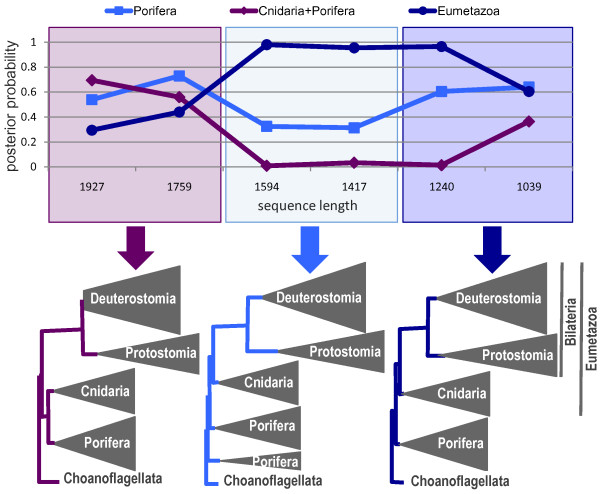
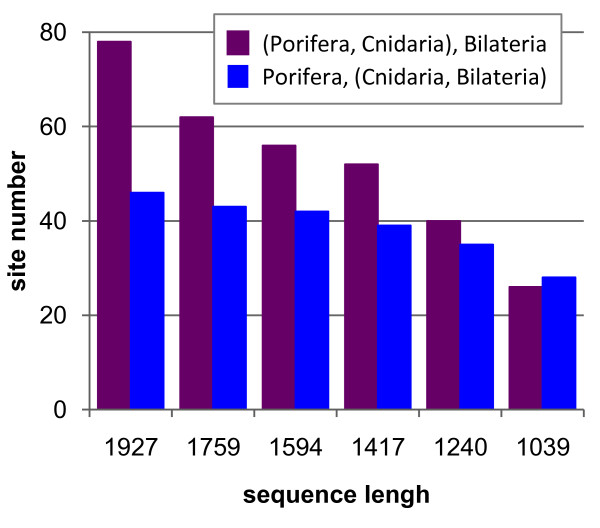
BACKGROUND: Model violations constitute the major limitation in inferring accurate phylogenies. Characterizing properties of the data that are not being correctly handled by current models is therefore of prime importance. One of the properties of protein evolution is the variation of the relative rate of substitutions across sites and over time, the latter is the phenomenon called heterotachy. Its effect on phylogenetic inference has recently obtained considerable attention, which led to the development of new models of sequence evolution. However, thus far focus has been on the quantitative heterogeneity of the evolutionary process, thereby overlooking more qualitative variations. RESULTS: We studied the importance of variation of the site-specific amino-acid substitution process over time and its possible impact on phylogenetic inference. We used the CAT model to define an infinite mixture of substitution processes characterized by equilibrium frequencies over the twenty amino acids, a useful proxy for qualitatively estimating the evolutionary process. Using two large datasets, we show that qualitative changes in site-specific substitution properties over time occurred significantly. To test whether this unaccounted qualitative variation can lead to an erroneous phylogenetic tree, we analyzed a concatenation of mitochondrial proteins in which Cnidaria and Porifera were erroneously grouped. The progressive removal of the sites with the most heterogeneous CAT profiles across clades led to the recovery of the monophyly of Eumetazoa (Cnidaria+Bilateria), suggesting that this heterogeneity can negatively influence phylogenetic inference. CONCLUSION: The time-heterogeneity of the amino-acid replacement process is therefore an important evolutionary aspect that should be incorporated in future models of sequence change.
Overview
The claims and statistics of this paper haven’t been checked yet.
Free: it reads the open-access text and checks the first 5 claims that cite a source we can check. Create a free account to check every claim.
Integrity signals
Registry
Cites
Statistics
Figures
Verification
Claims the paper makes
The claims and statistics of this paper haven’t been checked yet.
Free: it reads the open-access text and checks the first 5 claims that cite a source we can check. Create a free account to check every claim.
Claims other papers make about this one
Each is checked against this paper’s own text: does it say what the citing paper says it does?
The source backs part of the claim, not all of it — or backs it for a different population, condition or comparison.
In the citing paper
“This is suggested by analyses in which most heteropecillous sites (i.e., violating CAT model assumptions [32]) were removed: in these trees, ctenophores are sister-group to other eumetazoans (Figure S4A) or to cnidarians (Figure S4B) [1], consistent with a single origin of eumetazoan features including nerve cells.”
From A Large and Consistent Phylogenomic Dataset Supports Sponges as the Sister Group to All Other Animals (2017) · cites this paper as [32]
Experimental — accuracy not yet measuredThe source backs part of the claim, not all of it — or backs it for a different population, condition or comparison.
In the citing paper
“Nonetheless, our observations with different sub-samplings of the sponge classes indicate that the site-heterogeneous CAT model, despite outcompeting any site-homogeneous model, is unsurprisingly not immune to reconstruction artifacts [23, 32].”
From A Large and Consistent Phylogenomic Dataset Supports Sponges as the Sister Group to All Other Animals (2017) · cites this paper as [32]
Experimental — accuracy not yet measuredThe cited source says what the claim attributes to it.
In the citing paper
“Since heteropecillous positions (i.e., sites with a substitution process that is heterogeneous in time) violate the assumptions of the CAT model, they may lead to systematic error [32].”
From A Large and Consistent Phylogenomic Dataset Supports Sponges as the Sister Group to All Other Animals (2017) · cites this paper as [32]
Self-check
Percentages, sums and reported differences re-computed from the paper’s own numbers.
The self-check needs the paper’s full text.
Citations
Cites
1 retracted
RETRACTED ARTICLE: TREEFINDER: a powerful graphical analysis environment for molecular phylogenetics
Jobb, G., von Haeseler, A., & Strimmer, K. (2004) · BMC Evolutionary Biology · doi:10.1186/1471-2148-4-18 · Cited by 1,112
RetractedThompson, J. D., Higgins, D. G., & Gibson, T. J. (1994) · Nucleic Acids Research · doi:10.1093/nar/22.22.4673 · Cited by 64,617 · cited 2×
“For each dataset, proteins have been aligned by ClustalW [62], manually refined using ED [63], and then concatenated into a super-matrix using SCaFoS [64].”
MethodA simple method for displaying the hydropathic character of a protein
Kyte, J., & Doolittle, R. F. (1982) · Journal of Molecular Biology · doi:10.1016/0022-2836(82)90515-0 · Cited by 22,843
Evolutionary trees from DNA sequences: A maximum likelihood approach.
Felsenstein, J. (1981) · Journal of Molecular Evolution · doi:10.1007/bf01734359 · Cited by 14,571 · cited 1×
“on phylogenetic inference when not adequately handled: heterogeneity of rate across lineages [55], of substitution type [56], of rate across sites [57], of composition across taxa [58] and of substitution process across sites [23,24].”
BackgroundEvolution of Protein Molecules
JUKES, T. H., & CANTOR, C. R. (1969) · Mammalian Protein Metabolism · doi:10.1016/b978-1-4832-3211-9.50009-7 · Cited by 11,032 · cited 1×
“Since the first substitution model [ 13 ] several simplifying assumptions have been relaxed; the evolutionary process is considered as heterogeneous (i) between character states, (ii) over time and (iii) along the alignment.”
BackgroundSelection of Conserved Blocks from Multiple Alignments for Their Use in Phylogenetic Analysis
Castresana, J. (2000) · Molecular Biology and Evolution · doi:10.1093/oxfordjournals.molbev.a026334 · Cited by 10,508 · cited 1×
“Ambiguously aligned positions have been removed using Gblocks [65], with some manual refinements (necessary because of an inadequate stringency of Gblocks in the presence of missing data).”
MethodA Bayesian Analysis of Some Nonparametric Problems
Ferguson, T. S. (1973) · The Annals of Statistics · doi:10.1214/aos/1176342360 · Cited by 4,697 · cited 1×
“Of particular interest is the CAT model [24], a mixture model that infers categories from the data without any a priori biological assumptions and takes advantage of the Dirichlet process prior [26] to control the number of categories through a set of hyperparameters (i.”
BackgroundMOLECULAR BIOLOGY AND EVOLUTION
(2021) · WORLD SCIENTIFIC eBooks · doi:10.1142/9789811250378_0003 · Cited by 4,434
Atlas of protein sequence and structure
Chang, M.-Y., Dayhoff, M. O., Eck, R. V., & Sochard, M. R. (1965) · NASA Technical Reports Server (NASA) · Cited by 4,383
(1964) · Mammalian Protein Metabolism · doi:10.1016/b978-1-4832-3210-2.50006-6 · Cited by 3,059
Whelan, S., & Goldman, N. (2001) · Molecular Biology and Evolution · doi:10.1093/oxfordjournals.molbev.a003851 · Cited by 2,849 · cited 4×
“Topologies were inferred by maximum likelihood separately for each monophyletic group under a WAG [66] or a mtREV [67] model with four gamma discrete categories using Treefinder [68], for the nuc80 and the mitochondrial datasets respectively.”
MethodInfluentialAtlas of Protein Sequence and Structure, 1972.
Fitch, W. M., & Dayhoff, M. O. (1973) · Systematic Zoology · doi:10.2307/2412105 · Cited by 2,436
Broad phylogenomic sampling improves resolution of the animal tree of life
Dunn, C. W., Hejnol, A., Matus, D. Q., Pang, K., Browne, W. E., Smith, S. A., Seaver, E., Rouse, G. W., Obst, M., Edgecombe, G. D., et al. (2008) · Nature · doi:10.1038/nature06614 · Cited by 1,921
Atlas of Protein Sequence and Structure, 1966.
Hersh, R. T., Eck, R. V., & Dayhoff, M. O. (1967) · Systematic Zoology · doi:10.2307/2412074 · Cited by 1,779
A Bayesian Mixture Model for Across-Site Heterogeneities in the Amino-Acid Replacement Process
Lartillot, N., & Philippe, H. (2004) · Molecular Biology and Evolution · doi:10.1093/molbev/msh112 · Cited by 1,516 · cited 23×
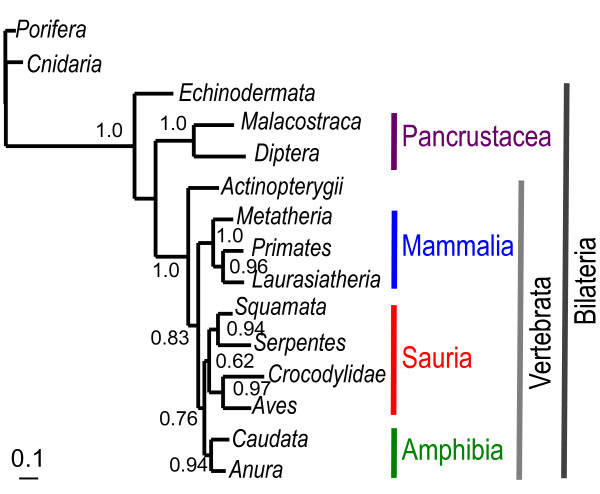
“This hypothesis predicts Echinodermata Malacostraca Diptera Metatheria Primates Laurasiatheria Crocodylidae Aves Squamata Serpentes Caudata Actinopterygii Anura Porifera Cnidaria 0.1 1.0 1.0 0.96 0.97 1.0 0.83 0.62 1.0 0.76 0.94 0.94 Bi lat er ia Ve rte br ata Mammalia Sauria Amphibia Pancrustacea Figure 3 Topology in…”
BackgroundMethodInfluentialSelf-citationRAxML-III: a fast program for maximum likelihood-based inference of large phylogenetic trees
Stamatakis, A., Ludwig, T., & Meier, H. (2005) · Bioinformatics · doi:10.1093/bioinformatics/bti191 · Cited by 1,438 · cited 2×
“Stamatakis A, Ludwig T, Meier H: RAxML-III: a fast program for maximum likelihood-based inference of large phylogenetic trees.”
MethodEstimating the rate of evolution of the rate of molecular evolution
Thorne, J. L., Kishino, H., & Painter, I. S. (1998) · Molecular Biology and Evolution · doi:10.1093/oxfordjournals.molbev.a025892 · Cited by 1,317 · cited 1×
“The same observation has been made for evolutionary rates, leading to local molecular clock [48] or auto-correlated relaxed molecular clock models [49].”
BackgroundPhyloBayes 3: a Bayesian software package for phylogenetic reconstruction and molecular dating
Lartillot, N., Lepage, T., & Blanquart, S. (2009) · Bioinformatics · doi:10.1093/bioinformatics/btp368 · Cited by 1,297 · cited 1×
“JTT, WAG or GTR) [5,24, 27-30 ] and renders phylogenetic inference less sensitive to long branch attraction artefact [5,10,31-34].”
BackgroundPhylogenomics and the reconstruction of the tree of life
Delsuc, F., Brinkmann, H., & Philippe, H. (2005) · Nature Reviews Genetics · doi:10.1038/nrg1603 · Cited by 1,236 · cited 1×
“Nevertheless, some nodes remain unresolved even at the genome-scale level [6-9].”
BackgroundSelf-citationAmong-site rate variation and its impact on phylogenetic analyses
Yang, Z. (1996) · Trends in Ecology & Evolution · doi:10.1016/0169-5347(96)10041-0 · Cited by 1,209 · cited 1×
“on phylogenetic inference when not adequately handled: heterogeneity of rate across lineages [55], of substitution type [56], of rate across sites [57], of composition across taxa [58] and of substitution process across sites [23,24].”
Background(1993) · Molecular Biology and Evolution · doi:10.1093/oxfordjournals.molbev.a040082 · Cited by 1,036 · cited 1×
“empirical exchangeability matrices [14], non-stationary nucleotide content [15], or gamma distribution of rates across sites [16]) improve fit to the data and phylogenetic accuracy, and are therefore widely used.”
BackgroundRecovering evolutionary trees under a more realistic model of sequence evolution.
(1994) · Molecular Biology and Evolution · doi:10.1093/oxfordjournals.molbev.a040136 · Cited by 960 · cited 1×
“on phylogenetic inference when not adequately handled: heterogeneity of rate across lineages [55], of substitution type [56], of rate across sites [57], of composition across taxa [58] and of substitution process across sites [23,24].”
BackgroundThe earliest angiosperms: evidence from mitochondrial, plastid and nuclear genomes
Qiu, Y.-L., Lee, J., Bernasconi-Quadroni, F., Soltis, D. E., Soltis, P. S., Zanis, M., Zimmer, E. A., Chen, Z., Savolainen, V., & Chase, M. W. (1999) · Nature · doi:10.1038/46536 · Cited by 842
Lartillot, N., Brinkmann, H., & Philippe, H. (2007) · BMC Evolutionary Biology · doi:10.1186/1471-2148-7-s1-s4 · Cited by 705 · cited 3×
“The first violation is known to seriously exacerbate LBA artifacts, because the amount of homoplasy is underestimated [31].”
Self-citationPhylogenomics: The beginning of incongruence?
JEFFROY, O., BRINKMANN, H., DELSUC, F., & PHILIPPE, H. (2006) · Trends in Genetics · doi:10.1016/j.tig.2006.02.003 · Cited by 698 · cited 2×
“First, since a correlation exists between evolutionary rate and heteropecilly (Tables 1 and 2), improvements in phylogenetic inference could be due to the removal of fast evolving sites [12,53].”
BackgroundSelf-citationPhylogenomics Revives Traditional Views on Deep Animal Relationships
Philippe, H., Derelle, R., Lopez, P., Pick, K., Borchiellini, C., Boury-Esnault, N., Vacelet, J., Renard, E., Houliston, E., Quéinnec, E., et al. (2009) · Current Biology · doi:10.1016/j.cub.2009.02.052 · Cited by 695 · cited 18×
“This hypothesis predicts Echinodermata Malacostraca Diptera Metatheria Primates Laurasiatheria Crocodylidae Aves Squamata Serpentes Caudata Actinopterygii Anura Porifera Cnidaria 0.1 1.0 1.0 0.96 0.97 1.0 0.83 0.62 1.0 0.76 0.94 0.94 Bi lat er ia Ve rte br ata Mammalia Sauria Amphibia Pancrustacea Figure 3 Topology in…”
BackgroundMethodInfluentialSelf-citationParallel adaptive radiations in two major clades of placental mammals
Madsen, O., Scally, M., Douady, C. J., Kao, D. J., DeBry, R. W., Adkins, R., Amrine, H. M., Stanhope, M. J., de Jong, W. W., & Springer, M. S. (2001) · Nature · doi:10.1038/35054544 · Cited by 653
Performance of maximum parsimony and likelihood phylogenetics when evolution is heterogeneous
Kolaczkowski, B., & Thornton, J. W. (2004) · Nature · doi:10.1038/nature02917 · Cited by 615 · cited 1×
“To handle this heterogeneity, models have been proposed that allow the substitution rate to vary over time [41-46].”
MethodMUST, a computer package of Management Utilities for Sequences and Trees
Philippe, H. (1993) · Nucleic Acids Research · doi:10.1093/nar/21.22.5264 · Cited by 600 · cited 1×
“For each dataset, proteins have been aligned by ClustalW [62], manually refined using ED [63], and then concatenated into a super-matrix using SCaFoS [64].”
MethodSelf-citationPagel, M., & Meade, A. (2004) · Systematic Biology · doi:10.1080/10635150490468675 · Cited by 549 · cited 2×
“More recently, probabilistic models have been developed to take into account heterogeneity of the qualitative aspect of amino-acid replacements along the alignment, by assigning sites to different classes of substitutional processes [ 17-25 ].”
BackgroundModel of amino acid substitution in proteins encoded by mitochondrial DNA
Adachi, J., & Hasegawa, M. (1996) · Journal of Molecular Evolution · doi:10.1007/bf02498640 · Cited by 517 · cited 1×
“Topologies were inferred by maximum likelihood separately for each monophyletic group under a WAG [66] or a mtREV [67] model with four gamma discrete categories using Treefinder [68], for the nuc80 and the mitochondrial datasets respectively.”
MethodDeciphering ancient rapid radiations
Whitfield, J. B., & Lockhart, P. J. (2007) · Trends in Ecology & Evolution · doi:10.1016/j.tree.2007.01.012 · Cited by 511 · cited 1×
“Nevertheless, some nodes remain unresolved even at the genome-scale level [6-9].”
BackgroundEstimation of primate speciation dates using local molecular clocks.
Yoder, A. D., & Yang, Z. (2000) · Molecular Biology and Evolution · doi:10.1093/oxfordjournals.molbev.a026389 · Cited by 494 · cited 1×
“The same observation has been made for evolutionary rates, leading to local molecular clock [48] or auto-correlated relaxed molecular clock models [49].”
BackgroundFitch, W. M., & Markowitz, E. (1970) · Biochemical Genetics · doi:10.1007/bf00486096 · Cited by 460 · cited 1×
“To handle this heterogeneity, models have been proposed that allow the substitution rate to vary over time [41-46].”
MethodGenome-scale phylogeny and the detection of systematic biases.
Phillips, M. J., Delsuc, F., & Penny, D. (2004) · Molecular Biology and Evolution · doi:10.1093/molbev/msh137 · Cited by 450 · cited 1×
“In the worst case, this leads to erroneous phylogenies with a high statistical support [11,12].”
BackgroundAnimal Evolution and the Molecular Signature of Radiations Compressed in Time
Rokas, A., Krüger, D., & Carroll, S. B. (2005) · Science · doi:10.1126/science.1116759 · Cited by 372 · cited 1×
“Nevertheless, some nodes remain unresolved even at the genome-scale level [6-9].”
BackgroundModeling the covarion hypothesis of nucleotide substitution
Tuffley, C., & Steel, M. (1998) · Mathematical Biosciences · doi:10.1016/s0025-5564(97)00081-3 · Cited by 364 · cited 1×
“This could be achieved via a Markov modulated CAT model, similar to the covarion model [60], or via the use of breakpoints [61].”
MethodEmpirical profile mixture models for phylogenetic reconstruction
Si Quang, L., Gascuel, O., & Lartillot, N. (2008) · Bioinformatics · doi:10.1093/bioinformatics/btn445 · Cited by 358 · cited 2×
“(iii) Three additional sets of profiles were used in the case of mt336 alignment: 45 profiles defined using a different threshold on the UPGMA tree, the 25 stable profiles obtained from the analysis of the complete alignment, and the 20 profiles obtained by Le et al. [ 70 ].”
MethodA Compound Poisson Process for Relaxing the Molecular Clock
Huelsenbeck, J. P., Larget, B., & Swofford, D. (2000) · Genetics · doi:10.1093/genetics/154.4.1879 · Cited by 351
Heterotachy, an Important Process of Protein Evolution
Lopez, P., Casane, D., & Philippe, H. (2002) · Molecular Biology and Evolution · doi:10.1093/oxfordjournals.molbev.a003973 · Cited by 350 · cited 1×
“This results in variation of the site-specific evolutionary rate across time [35,36], a phenomenon called heterotachy [37], which is recurrent in biological sequences [38-40].”
BackgroundSelf-citationCompositional Bias May Affect Both DNA-Based and Protein-Based Phylogenetic Reconstructions
Foster, P. G., & Hickey, D. A. (1999) · Journal of Molecular Evolution · doi:10.1007/pl00006471 · Cited by 337 · cited 1×
“Since the amino acid composition is influenced by the genomic nucleotide composition [50], heteropecilly could be the result of the heterogeneity of the mutation process over time, i.”
BackgroundDetecting and Overcoming Systematic Errors in Genome-Scale Phylogenies
Rodríguez-Ezpeleta, N., Brinkmann, H., Roure, B., Lartillot, N., Lang, B. F., & Philippe, H. (2007) · Systematic Biology · doi:10.1080/10635150701397643 · Cited by 323 · cited 2×
“In fact, systematic errors may be more pronounced in phylogenomics: in some cases, the gain in phylogenetic signal is masked by an increased level of systematic error, which can attain the same order of magnitude [8].”
BackgroundSelf-citationMathematical Elegance with Biochemical Realism: The Covarion Model of Molecular Evolution
Penny, D., McComish, B. J., Charleston, M. A., & Hendy, M. D. (2001) · Journal of Molecular Evolution · doi:10.1007/s002390010258 · Cited by 287
Assessing the Impact of Secondary Structure and Solvent Accessibility on Protein Evolution
Goldman, N., Thorne, J. L., & Jones, D. T. (1998) · Genetics · doi:10.1093/genetics/149.1.445 · Cited by 281
Maximum-Likelihood Phylogenetic Analysis Under a Covarion-like Model
Galtier, N. (2001) · Molecular Biology and Evolution · doi:10.1093/oxfordjournals.molbev.a003868 · Cited by 273
Brinkmann, H., & Philippe, H. (1999) · Molecular Biology and Evolution · doi:10.1093/oxfordjournals.molbev.a026166 · Cited by 258 · cited 1×
“When fast evolving sites are progressively removed according to the SF method [54], support for the incorrect grouping of Cnidaria and Porifera slightly increases (Additional file 1: Figure S11).”
MethodSelf-citationAdditional molecular support for the new chordate phylogeny
Delsuc, F., Tsagkogeorga, G., Lartillot, N., & Philippe, H. (2008) · genesis · doi:10.1002/dvg.20450 · Cited by 229 · cited 1×
“JTT, WAG or GTR) [5,24,27-30] and renders phylogenetic inference less sensitive to long branch attraction artefact [5,10,31-34].”
BackgroundSelf-citationOn the use of nucleic acid sequences to infer early branchings in the tree of life.
(1995) · Molecular Biology and Evolution · doi:10.1093/oxfordjournals.molbev.a040220 · Cited by 207 · cited 1×
“empirical exchangeability matrices [14], non-stationary nucleotide content [15], or gamma distribution of rates across sites [16]) improve fit to the data and phylogenetic accuracy, and are therefore widely used.”
BackgroundTesting a Covariotide Model of DNA Substitution
Huelsenbeck, J. P. (2002) · Molecular Biology and Evolution · doi:10.1093/oxfordjournals.molbev.a004128 · Cited by 205 · cited 1×
“To handle this heterogeneity, models have been proposed that allow the substitution rate to vary over time [41-46].”
MethodCombining protein evolution and secondary structure
Thorne, J. L., Goldman, N., & Jones, D. T. (1996) · Molecular Biology and Evolution · doi:10.1093/oxfordjournals.molbev.a025627 · Cited by 203 · cited 1×
“More recently, probabilistic models have been developed to take into account heterogeneity of the qualitative aspect of amino-acid replacements along the alignment, by assigning sites to different classes of substitutional processes [17-25].”
BackgroundSCaFoS: a tool for Selection, Concatenation and Fusion of Sequences for phylogenomics
Roure, B., Rodriguez-Ezpeleta, N., & Philippe, H. (2007) · BMC Evolutionary Biology · doi:10.1186/1471-2148-7-s1-s2 · Cited by 190
Self-citationToward Resolving the Eukaryotic Tree: The Phylogenetic Positions of Jakobids and Cercozoans
Rodríguez-Ezpeleta, N., Brinkmann, H., Burger, G., Roger, A. J., Gray, M. W., Philippe, H., & Lang, B. F. (2007) · Current Biology · doi:10.1016/j.cub.2007.07.036 · Cited by 182
Self-citationImprovement of molecular phylogenetic inference and the phylogeny of Bilateria
Lartillot, N., & Philippe, H. (2008) · Philosophical Transactions of the Royal Society B: Biological Sciences · doi:10.1098/rstb.2007.2236 · Cited by 177 · cited 17×
“This hypothesis predicts Echinodermata Malacostraca Diptera Metatheria Primates Laurasiatheria Crocodylidae Aves Squamata Serpentes Caudata Actinopterygii Anura Porifera Cnidaria 0.1 1.0 1.0 0.96 0.97 1.0 0.83 0.62 1.0 0.76 0.94 0.94 Bi lat er ia Ve rte br ata Mammalia Sauria Amphibia Pancrustacea Figure 3 Topology in…”
BackgroundInfluentialSelf-citationEcdysozoan Mitogenomics: Evidence for a Common Origin of the Legged Invertebrates, the Panarthropoda
Rota-Stabelli, O., Kayal, E., Gleeson, D., Daub, J., Boore, J. L., Telford, M. J., Pisani, D., Blaxter, M., & Lavrov, D. V. (2010) · Genome Biology and Evolution · doi:10.1093/gbe/evq030 · Cited by 174 · cited 15×
“This hypothesis predicts Echinodermata Malacostraca Diptera Metatheria Primates Laurasiatheria Crocodylidae Aves Squamata Serpentes Caudata Actinopterygii Anura Porifera Cnidaria 0.1 1.0 1.0 0.96 0.97 1.0 0.83 0.62 1.0 0.76 0.94 0.94 Bi lat er ia Ve rte br ata Mammalia Sauria Amphibia Pancrustacea Figure 3 Topology in…”
BackgroundInfluentialSperling, E. A., Peterson, K. J., & Pisani, D. (2009) · Molecular Biology and Evolution · doi:10.1093/molbev/msp148 · Cited by 172 · cited 15×
“This hypothesis predicts Echinodermata Malacostraca Diptera Metatheria Primates Laurasiatheria Crocodylidae Aves Squamata Serpentes Caudata Actinopterygii Anura Porifera Cnidaria 0.1 1.0 1.0 0.96 0.97 1.0 0.83 0.62 1.0 0.76 0.94 0.94 Bi lat er ia Ve rte br ata Mammalia Sauria Amphibia Pancrustacea Figure 3 Topology in…”
BackgroundInfluentialBaurain, D., Brinkmann, H., & Philippe, H. (2007) · Molecular Biology and Evolution · doi:10.1093/molbev/msl137 · Cited by 168 · cited 2×
“, short internal branches due to speciation events closely spaced in time) or to inadequate inference methods [10].”
BackgroundSelf-citationThe Root of the Tree of Life in the Light of the Covarion Model
Lopez, P., Forterre, P., & Philippe, H. (1999) · Journal of Molecular Evolution · doi:10.1007/pl00006572 · Cited by 158 · cited 1×
“[74] (the improved test of Baele et al.”
BackgroundSelf-citationPhilippe* and, H., & Germot, A. (2000) · Molecular Biology and Evolution · doi:10.1093/oxfordjournals.molbev.a026362 · Cited by 154 · cited 1×
“We followed the same approach as for heterotachous positions [71, 72 ], by removing the most heterogeneous sites, as estimated by PIPn.”
MethodRodrigue, N., Philippe, H., & Lartillot, N. (2010) · Proceedings of the National Academy of Sciences · doi:10.1073/pnas.0910915107 · Cited by 152 · cited 1×
“Analyses at the codon level [47] are nevertheless required to estimate whether heteropecilly is driven by positive selection or is the result of changes in purifying selection properties.”
BackgroundSelf-citationAcoel Flatworms Are Not Platyhelminthes: Evidence from Phylogenomics
Philippe, H., Brinkmann, H., Martinez, P., Riutort, M., & Baguñà, J. (2007) · PLoS ONE · doi:10.1371/journal.pone.0000717 · Cited by 148 · cited 1×
“JTT, WAG or GTR) [5,24,27-30] and renders phylogenetic inference less sensitive to long branch attraction artefact [5,10,31-34].”
BackgroundSelf-citationModeling residue usage in aligned protein sequences via maximum likelihood
Bruno, W. J. (1996) · Molecular Biology and Evolution · doi:10.1093/oxfordjournals.molbev.a025583 · Cited by 111 · cited 1×
“More recently, probabilistic models have been developed to take into account heterogeneity of the qualitative aspect of amino-acid replacements along the alignment, by assigning sites to different classes of substitutional processes [17-25].”
BackgroundWang, H.-C., Li, K., Susko, E., & Roger, A. J. (2008) · BMC Evolutionary Biology · doi:10.1186/1471-2148-8-331 · Cited by 110 · cited 1×
“More recently, probabilistic models have been developed to take into account heterogeneity of the qualitative aspect of amino-acid replacements along the alignment, by assigning sites to different classes of substitutional processes [17-25].”
Pisani, D. (2004) · Systematic Biology · doi:10.1080/10635150490888877 · Cited by 107 · cited 1×
“First, since a correlation exists between evolutionary rate and heteropecilly (Tables 1 and 2), improvements in phylogenetic inference could be due to the removal of fast evolving sites [12,53].”
BackgroundInagaki, Y., Susko, E., Fast, N. M., & Roger, A. J. (2004) · Molecular Biology and Evolution · doi:10.1093/molbev/msh130 · Cited by 92 · cited 1×
“We followed the same approach as for heterotachous positions [71,72], by removing the most heterogeneous sites, as estimated by PIPn.”
MethodWang, X., & Lavrov, D. V. (2006) · Molecular Biology and Evolution · doi:10.1093/molbev/msl167 · Cited by 82 · cited 1×
“Since slow-evolving Porifera and Cnidaria are grouped together [52], the monophyly of Eumetazoa (Cnidaria +Bilateria), long proposed by morphologists and recovered with nuclear genes [5], is not observed for the mitochondrial data.”
BackgroundTesting for Covarion-like Evolution in Protein Sequences
Wang, H.-C., Spencer, M., Susko, E., & Roger, A. J. (2006) · Molecular Biology and Evolution · doi:10.1093/molbev/msl155 · Cited by 75 · cited 1×
“To handle this heterogeneity, models have been proposed that allow the substitution rate to vary over time [41-46].”
MethodUsing physical-chemistry-based substitution models in phylogenetic analyses of HIV-1 subtypes
Koshi, J. M., Mindell, D. P., & Goldstein, R. A. (1999) · Molecular Biology and Evolution · doi:10.1093/oxfordjournals.molbev.a026100 · Cited by 74 · cited 1×
“More recently, probabilistic models have been developed to take into account heterogeneity of the qualitative aspect of amino-acid replacements along the alignment, by assigning sites to different classes of substitutional processes [17-25].”
BackgroundHaen, K. M., Lang, B. F., Pomponi, S. A., & Lavrov, D. V. (2007) · Molecular Biology and Evolution · doi:10.1093/molbev/msm070 · Cited by 67
On the conservation of protein sequences in evolution
Philippe, H., & Lopez, P. (2001) · Trends in Biochemical Sciences · doi:10.1016/s0968-0004(01)01877-1 · Cited by 64
Self-citationThe nonidentity of invariable positions in the cytochromes c of different species
Fitch, W. M. (1971) · Biochemical Genetics · doi:10.1007/bf00485794 · Cited by 59 · cited 3×
“However, except for a few constant positions for which the evolutionary constraints are uniformly strong, the functional constraints of most positions are likely to have changed over their evolutionary history [35,36].”
BackgroundHow Molecules Evolve in Eubacteria
Lockhart, P. J., Huson, D., Maier, U., Fraunholz, M. J., Van de Peer§, Y., Barbrook, A. C., Howe, C. J., & Steel, M. A. (2000) · Molecular Biology and Evolution · doi:10.1093/oxfordjournals.molbev.a026363 · Cited by 43 · cited 1×
“This results in variation of the site-specific evolutionary rate across time [35,36], a phenomenon called heterotachy [37], which is recurrent in biological sequences [38-40].”
BackgroundBourlat, S. J., Rota-Stabelli, O., Lanfear, R., & Telford, M. J. (2009) · BMC Evolutionary Biology · doi:10.1186/1471-2148-9-107 · Cited by 40 · cited 1×
“JTT, WAG or GTR) [5,24,27-30] and renders phylogenetic inference less sensitive to long branch attraction artefact [5,10,31-34].”
BackgroundMODELING EVOLUTION AT THE PROTEIN LEVEL USING AN ADJUSTABLE AMINO ACID FITNESS MODEL
DIMMIC, M. W., MINDELL, D. P., & GOLDSTEIN, R. A. (1999) · Biocomputing 2000 · doi:10.1142/9789814447331_0003 · Cited by 36 · cited 1×
“More recently, probabilistic models have been developed to take into account heterogeneity of the qualitative aspect of amino-acid replacements along the alignment, by assigning sites to different classes of substitutional processes [17-25].”
BackgroundAn Improved Statistical Method for Detecting Heterotachy in Nucleotide Sequences
Baele, G., Raes, J., de Peer, Y. V., & Vansteelandt, S. (2006) · Molecular Biology and Evolution · doi:10.1093/molbev/msl006 · Cited by 29 · cited 2×
“[40] is not implemented for amino acid sequences).”
BackgroundIdentifying dramatic selection shifts in phylogenetic trees
Dorman, K. S. (2007) · BMC Evolutionary Biology · doi:10.1186/1471-2148-7-s1-s10 · Cited by 25 · cited 1×
“To handle this heterogeneity, models have been proposed that allow the substitution rate to vary over time [41-46].”
MethodDayhoff, M. O., Barker, W. C., & McLaughlin, P. J. (1974) · Origins of Life · doi:10.1007/bf01207633 · Cited by 17 · cited 1×
“on phylogenetic inference when not adequately handled: heterogeneity of rate across lineages [55], of substitution type [56], of rate across sites [57], of composition across taxa [58] and of substitution process across sites [23,24].”
BackgroundBeyond Mutation Matrices: Physical-Chemistry Based Evolutionary Models.
Koshi, J. M., Mindell, D. P., & Goldstein, R. A. (1997) · PubMed · Cited by 10
Limited effects of among-lineage rate variation on the phylogenetic performance of molecular markers
Schwartz, R. S., & Mueller, R. L. (2010) · Molecular Phylogenetics and Evolution · doi:10.1016/j.ympev.2009.12.025 · Cited by 7 · cited 1×
“Some of them, such as heterotachy, seem to have a more limited effect on phylogenetic accuracy [59].”
Background
Research works printed but not linked: 1
- Felsenstein J PHYLIP (Phylogene Inference Package) 2001 3.6 Distributed by the author, Department of Genetics, University of Washington, Seattle
Cited by
Simion, P., Philippe, H., Baurain, D., Jager, M., Richter, D. J., Di Franco, A., Roure, B., Satoh, N., Quéinnec, É., Ereskovsky, A., et al. (2017) · Current Biology · doi:10.1016/j.cub.2017.02.031 · Cited by 518
“These observations suggest that the levels of pattern heterogeneity present in empirical sequence alignments cannot be appropriately modeled by empirical finite mixtures and require instead the use of Dirichlet process models, such as CAT.”
InfluentialSelf-citationAcoelomorph flatworms are deuterostomes related to Xenoturbella
Philippe, H., Brinkmann, H., Copley, R. R., Moroz, L. L., Nakano, H., Poustka, A. J., Wallberg, A., Peterson, K. J., & Telford, M. J. (2011) · Nature · doi:10.1038/nature09676 · Cited by 445
Self-citationImpact of missing data on phylogenies inferred from empirical phylogenomic data sets
Roure, B., Baurain, D., & Philippe, H. (2013) · Molecular Biology and Evolution · doi:10.1093/molbev/mss208 · Cited by 365
“Thus, using the model that best fits the data globally improves phylogenetic accuracy, albeit the lack of deuterostome monophyly in the CAT+ tree indicates that this sophisticated model does not yet handle all important model violations (for details see Lartillot et al. 2007; Roure and Philippe 2011).”
BackgroundMethodResultInfluentialSelf-citationRevisiting metazoan phylogeny with genomic sampling of all phyla
Laumer, C. E., Fernández, R., Lemer, S., Combosch, D., Kocot, K. M., Riesgo, A., Andrade, S. C. S., Sterrer, W., Sørensen, M. V., & Giribet, G. (2019) · Proceedings of the Royal Society B: Biological Sciences · doi:10.1098/rspb.2019.0831 · Cited by 360
Improved Modeling of Compositional Heterogeneity Supports Sponges as Sister to All Other Animals
Feuda, R., Dohrmann, M., Pett, W., Philippe, H., Rota-Stabelli, O., Lartillot, N., Wörheide, G., & Pisani, D. (2017) · Current Biology · doi:10.1016/j.cub.2017.11.008 · Cited by 291
“[7] also showed that the exclusion of sites for which site-specific replacement patterns change over time (heteropecillous sites [58]) uncovers support for Coelenterata (i.”
Self-citation
Metadata
- Authors
- Roure, B., & Philippe, H.
- Affiliations
- Université de Montréal (CA)
- Corresponding author
- Philippe, Hervé
- ORCID
- Philippe, Hervé
- Venue
- BMC Evolutionary Biology
- Published
- 2011-01-14
- Volume
- 11
- Issue
- 1
- Pages
- 17-17
- ISSN
- 1471-2148 (ISSN-L)
- PMC
- PMC3034684
- OpenAlex
- W2110972501
- Cited by
- 64
- References
- 78
- Citations by year
- 2026: 1 · 2025: 1 · 2024: 1 · 2023: 1 · 2022: 5 · 2021: 4 · 2020: 5 · 2019: 6 · 2018: 3 · 2017: 6 · 2016: 3 · 2015: 6 · 2014: 1 · 2013: 12 · 2012: 5
- FWCI
- 2.86
- Type
- journal article
- Language
- en
- Open access
- gold
- doi.org
- Licence
- Locations
- BMC Evolutionary Biology (publishedVersion, cc-by)
- PubMed Central (publishedVersion, cc-by)
- PubMed (publishedVersion)
- DOAJ (DOAJ: Directory of Open Access Journals) (submittedVersion, cc-by-sa)
- Funders
- Université de Montréal
- Canadian Institutes of Health Research
- Natural Sciences and Engineering Research Council of Canada
- Topics
- Life Sciences › Biochemistry, Genetics and Molecular Biology › Molecular Biology › Genomics and Phylogenetic Studies
- Life Sciences › Biochemistry, Genetics and Molecular Biology › Molecular Biology › RNA and protein synthesis mechanisms
- Physical Sciences › Earth and Planetary Sciences › Paleontology › Evolution and Paleontology Studies
- Keywords
- heterotachy, cat model, protein evolution, phylogenetic inference, model violations, mitochondrial proteins, Cnidaria, sponges, amino acid substitution rates
- MeSH terms
- Animals, Base Sequence, Models, Genetic, Molecular Sequence Data, Phylogeny, Proteins, Time Factors, Evolution, Molecular, Amino Acid Substitution, Mutation, Missense, Databases, Nucleic Acid, Eukaryota
About these checks
Registry, retraction, Cites and statistics results are computed, not judged, with one exception: a printed reference that no index lists is read once by a model before it counts as a citation error. Claims are extracted by a model and kept only when their quote appears verbatim in the text; each cited source is then checked, with a model’s help, for whether it says what the claim relies on. Those verdicts can be wrong — read the claim’s quote and the cited source before relying on one.
Statistics and arithmetic are recomputed, not judged.
Confidence bands are shown only for fields calibrated on our annotated test set. None is calibrated yet, so no band is shown.
What counts as a claim ›How we measure confidence ›How we check this ›
Are you an author, or do you see a problem with this page? Request a review
Data sources
Bibliographic data: Semantic Scholar, OpenAlex, Crossref.
Contains information from the Semantic Scholar Academic Graph Datasets, made available under the ODC Attribution License (ODC-BY 1.0).
Semantic Scholar’s data is described in: Kinney, R., et al. (2023). The Semantic Scholar Open Data Platform. arXiv:2301.10140.
