

Modern and ancient red fox (Vulpes vulpes) in Europe show an unusual lack of geographical and temporal structuring, and differing responses within the carnivores to historical climatic change
Open accessThe DOI matches its Crossref record; 54 of the 54 references it cites were found in a registry or an index.
Abstract
BACKGROUND: Despite phylogeographical patterns being well characterised in a large number of species, and generalised patterns emerging, the carnivores do not all appear to show consistent trends. While some species tend to fit with standard theoretical phylogeographic expectations (e.g. bears), others show little obvious modern phylogeographic structure (e.g. wolves). In this study we briefly review these studies, and present a new phylogeographical study of the red fox (Vulpes vulpes) throughout Europe, using a combination of ancient DNA sequences obtained from museum specimens, and modern sequences collated from GenBank. We used cytochrome b (250 bp) and the mitochondrial control region (268 bp) to elucidate both current and historical phylogeographical patterning. RESULTS: We found evidence for slight isolation by distance in modern populations, as well as differentiation associated with time, both of which can likely be attributed to random genetic drift. Despite high sequence diversity (11.2% cytochrome b, 16.4% control region), no evidence for spatial structure (from Bayesian trees) is found either in modern samples or ancient samples for either gene, and Bayesian skyline plots suggested little change in the effective population size over the past 40,000 years. CONCLUSIONS: It is probable that the high dispersal ability and adaptability of the red fox has contributed to the lack of observable differentiation, which appears to have remained consistent over tens of thousands of years. Generalised patterns of how animals are thought to have responded to historical climatic change are not necessarily valid for all species, and so understanding the differences between species will be critical for predicting how species will be affected by future climatic change.
Overview
The claims and statistics of this paper haven’t been checked yet.
Free: it reads the open-access text and checks the first 5 claims that cite a source we can check. Create a free account to check every claim.
Integrity signals
Registry
Cites
Statistics
Figures
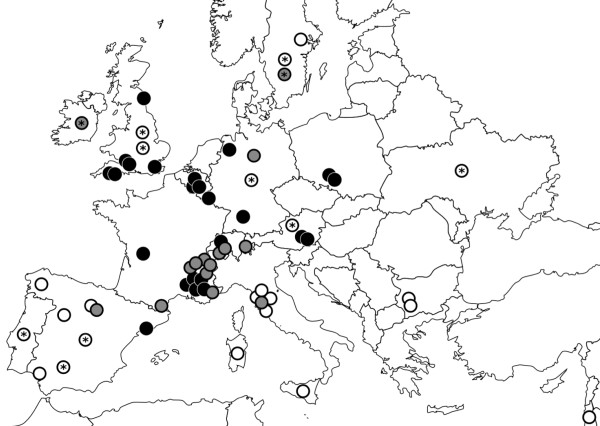
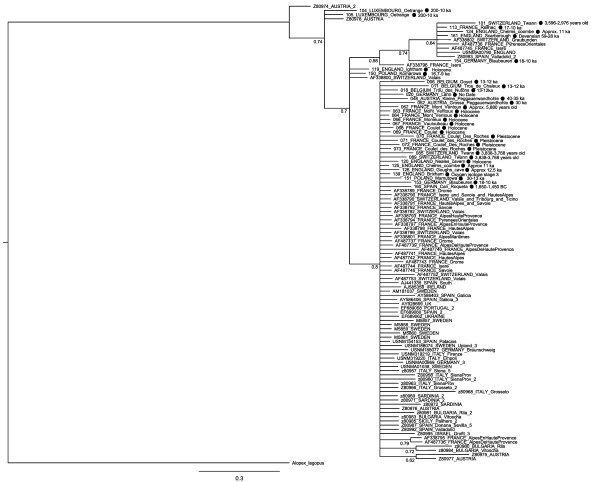
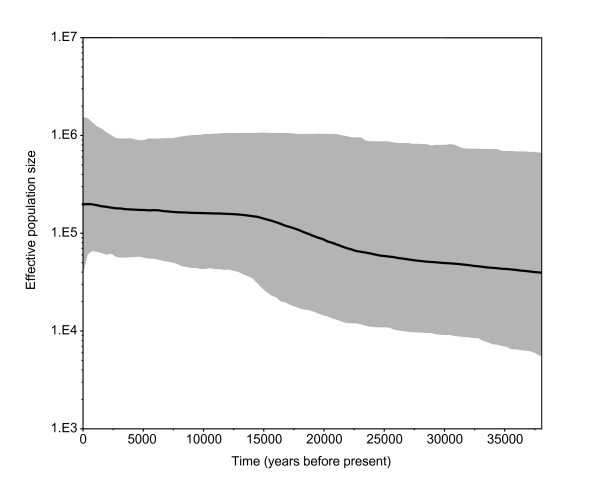
Verification
Claims the paper makes
The claims and statistics of this paper haven’t been checked yet.
Free: it reads the open-access text and checks the first 5 claims that cite a source we can check. Create a free account to check every claim.
Claims other papers make about this one
Each is checked against this paper’s own text: does it say what the citing paper says it does?
The cited source says what the claim attributes to it.
In the citing paper
“Concerning the red fox in Europe, population genetic studies indicate a high gene flow and weak or total absence of a genetic structure of the red fox at European level [31,32].”
The cited source says what the claim attributes to it.
In the citing paper
“This result highlights the adaptability of foxes to different habitats and their potential for dispersal [1,4,31].”
The cited source says what the claim attributes to it.
In the citing paper
“Consistently with previous studies, we revealed the lack of a strong genetic structure in the fox population in the study area [31,33,34,72].”
Self-check
Percentages, sums and reported differences re-computed from the paper’s own numbers.
The self-check needs the paper’s full text.
Citations
Cites
Tamura, K., Peterson, D., Peterson, N., Stecher, G., Nei, M., & Kumar, S. (2011) · Molecular Biology and Evolution · doi:10.1093/molbev/msr121 · Cited by 39,969 · cited 2×
“0 [28], using 500 bootstraps and the HKY model of evolution for the following datasets: (i) Cytb modern samples, (ii) Cytb modern+ancient samples combined, (iii) control region modern samples, (iv) control region modern +ancient samples combined, and (v) Cytb and control region combined for ancient samples.”
BackgroundMethodMRBAYES: Bayesian inference of phylogenetic trees.
Huelsenbeck, J. P., & Ronquist, F. (2001) · Bioinformatics · doi:10.1093/bioinformatics/17.8.754 · Cited by 21,937 · cited 1×
“[ 27 ]. Cytochrome b and control region sequences were concatenated for each individual, and for modern individuals where both gene sequences were not available the sequences were simply coded as missing data.”
MethodA Simple, Fast, and Accurate Algorithm to Estimate Large Phylogenies by Maximum Likelihood
Guindon, S., & Gascuel, O. (2003) · Systematic Biology · doi:10.1080/10635150390235520 · Cited by 16,806 · cited 2×
“For the BEAST analysis, models of sequence evolution for each partition were determined in jModelTest [25,26], with the nucleotide frequencies and substitution rate parameters estimated from the data.”
BackgroundMethodGENEPOP (Version 1.2): Population Genetics Software for Exact Tests and Ecumenicism
Raymond, M., & Rousset, F. (1995) · Journal of Heredity · doi:10.1093/oxfordjournals.jhered.a111573 · Cited by 15,397 · cited 1×
“Mantel tests were performed for each dataset using the Isolde function in GenePop on the Web [34,35], with 10,000 permutations.”
MethodPrimer3 on the WWW for General Users and for Biologist Programmers
Rozen, S., & Skaletsky, H. (2003) · Bioinformatics Methods and Protocols · doi:10.1385/1-59259-192-2:365 · Cited by 15,013 · cited 1×
“Six primer pairs were designed to amplify the cytochrome b and control region in six overlapping fragments for each marker, using Primer3 [ 24 ].”
MethodBEAST: Bayesian evolutionary analysis by sampling trees
Drummond, A. J., & Rambaut, A. (2007) · BMC Evolutionary Biology · doi:10.1186/1471-2148-7-214 · Cited by 12,919
jModelTest: Phylogenetic Model Averaging
Posada, D. (2008) · Molecular Biology and Evolution · doi:10.1093/molbev/msn083 · Cited by 10,499 · cited 2×
“For the BEAST analysis, models of sequence evolution for each partition were determined in jModelTest [25,26], with the nucleotide frequencies and substitution rate parameters estimated from the data.”
BackgroundMethodTCS: a computer program to estimate gene genealogies
Clement, M., Posada, D., & Crandall, K. A. (2000) · Molecular Ecology · doi:10.1046/j.1365-294x.2000.01020.x · Cited by 9,861 · cited 1×
“21 [29], converted to Arlequin format [30] using FaBox v.”
Methodgenepop’007: a complete re‐implementation of the genepop software for Windows and Linux
ROUSSET, F. (2008) · Molecular Ecology Resources · doi:10.1111/j.1471-8286.2007.01931.x · Cited by 8,497 · cited 1×
“Mantel tests were performed for each dataset using the Isolde function in GenePop on the Web [34, 35 ], with 10,000 permutations.”
MethodThe genetic legacy of the Quaternary ice ages
Hewitt, G. (2000) · Nature · doi:10.1038/35016000 · Cited by 7,127 · cited 3×
“These fluctuations in climate had profound effects on species distributions, and during glacial periods temperate species in Europe are thought to have been forced south into warmer refugial areas, primarily in Iberia, Italy and the Balkans, although other smaller cryptic refugia have also been proposed [3-6].”
BackgroundMolecular Markers, Natural History and Evolution
Avise, J. C. (1994) · Springer eBooks · doi:10.1007/978-1-4615-2381-9 · Cited by 5,242 · cited 1×
“Cytochrome b (Cytb) is relatively conserved, and as such can be used to resolve deeper splits, whilst the control region harbours higher diversity and can provide higher resolution [20,21].”
BackgroundMRBAYES: Bayesian inference of phylogeny
Huelsenbeck, J. P., & Ronquist, F. (2001) · Bioinformatics · Cited by 4,892
Phylogeography: the history and formation of species
(2000) · Choice Reviews Online · doi:10.5860/choice.37-5647 · Cited by 4,538
Phylogeography: The History and Formation of Species
AVISE, J. C. (2000) · Harvard University Press eBooks · doi:10.2307/j.ctv1nzfgj7 · Cited by 3,554
Genetic consequences of climatic oscillations in the Quaternary
Hewitt, G. M. (2004) · Philosophical Transactions of the Royal Society of London. Series B: Biological Sciences · doi:10.1098/rstb.2003.1388 · Cited by 3,528 · cited 4×
“Background Many studies have looked at the phylogeographic patterns of species, primarily using mitochondrial DNA sequence comparisons, and linked the patterns seen today to severe climatic changes in the past [1,2].”
BackgroundInfluentialComparative phylogeography and postglacial colonization routes in Europe
TABERLET, P., FUMAGALLI, L., WUST‐SAUCY, A., & COSSON, J. (1998) · Molecular Ecology · doi:10.1046/j.1365-294x.1998.00289.x · Cited by 2,987 · cited 10×
“Many taxa show a deep split between Eastern and Western European clades, which likely reflects two main refugial origins in Iberia and the Italo-Balkan region [2], and generally speaking, we now have a good understanding of the routes of post-glacial expansions for various terrestrial species [1,4](Hewitt, 1999, Hewit…”
BackgroundInfluentialPost-glacial re-colonization of European biota
Hewitt, G. M. (1999) · Biological Journal of the Linnean Society · doi:10.1006/bijl.1999.0332 · Cited by 2,986
RANDOM DISPERSAL IN THEORETICAL POPULATIONS
SKELLAM, J. G. (1951) · Biometrika · doi:10.1093/biomet/38.1-2.196 · Cited by 2,470
Refugia revisited: individualistic responses of species in space and time
Stewart, J. R., Lister, A. M., Barnes, I., & Dalén, L. (2010) · Proceedings of the Royal Society B: Biological Sciences · doi:10.1098/rspb.2009.1272 · Cited by 1,255 · cited 1×
“These fluctuations in climate had profound effects on species distributions, and during glacial periods temperate species in Europe are thought to have been forced south into warmer refugial areas, primarily in Iberia, Italy and the Balkans, although other smaller cryptic refugia have also been proposed [3-6].”
BackgroundSelf-citationCryptic northern refugia and the origins of the modern biota
Stewart, J. R., & Lister, A. M. (2001) · Trends in Ecology & Evolution · doi:10.1016/s0169-5347(01)02338-2 · Cited by 922
FaBox: an online toolbox for fasta sequences
VILLESEN, P. (2007) · Molecular Ecology Notes · doi:10.1111/j.1471-8286.2007.01821.x · Cited by 841 · cited 1×
“35 online [31], and the resulting files were used to obtain network distance connections using Arlequin v.”
MethodThe Greenland Ice Core Chronology 2005, 15–42ka. Part 1: constructing the time scale
Andersen, K. K., Svensson, A., Johnsen, S. J., Rasmussen, S. O., Bigler, M., Röthlisberger, R., Ruth, U., Siggaard-Andersen, M.-L., Peder Steffensen, J., & Dahl-Jensen, D. (2006) · Quaternary Science Reviews · doi:10.1016/j.quascirev.2006.08.002 · Cited by 801 · cited 1×
“Furthermore, there is no evidence of a severe loss of unique haplotypes dating to before the Last Glacial Maximum (LGM, circa 23,300 to 27,800 years ago [40]) as might be expected from a bottleneck (Figure 3).”
BackgroundIbrahim, K. M., Nichols, R. A., & Hewitt, G. M. (1996) · Heredity · doi:10.1038/hdy.1996.142 · Cited by 779 · cited 1×
“Furthermore, we also have a good understanding of how these expansions occurred; theory suggests that long-distance migrants become founders of new populations [7,8], replacing the previous orthodoxy which suggested that expansions were a result of substantial genetic drift [9,10].”
BackgroundGilbert, M. T. P., Bandelt, H.-J., Hofreiter, M., & Barnes, I. (2005) · Trends in Ecology & Evolution · doi:10.1016/j.tree.2005.07.005 · Cited by 602 · cited 1×
“Extractions were performed in a separate isolated laboratory, and standard precautions were taken for working with ancient DNA [23].”
BackgroundSelf-citation(1994) · Molecular Biology and Evolution · doi:10.1093/oxfordjournals.molbev.a040137 · Cited by 403 · cited 2×
“Another species that shows little phylogeographic structure, the grey wolf, also has a very high dispersal rate, with movements of over 1,000 km recorded for an individual [14], and coyotes also show low structuring and high dispersal (50-100 km) [13,46,47].”
BackgroundIucn Red List Of Threatened Species
Ragle, J. S., & Remsen, D. P. (2010) · Zenodo (CERN European Organization for Nuclear Research) · doi:10.5281/zenodo.46240 · Cited by 398
Mitochondrial DNA phylogeography and population history of the grey wolf Canis lupus
Vilà, C., Amorim, I. R., Leonard, J. A., Posada, D., Castroviejo, J., Petrucci‐Fonseca, F., Crandall, K. A., Ellegren, H., & Wayne, R. K. (1999) · Molecular Ecology · doi:10.1046/j.1365-294x.1999.00825.x · Cited by 367 · cited 2×
“Another species that shows little phylogeographic structure, the grey wolf, also has a very high dispersal rate, with movements of over 1,000 km recorded for an individual [14], and coyotes also show low structuring and high dispersal (50-100 km) [13,46,47].”
BackgroundGlacial refugia of mammals in Europe: evidence from fossil records
SOMMER, R. S., & NADACHOWSKI, A. (2006) · Mammal Review · doi:10.1111/j.1365-2907.2006.00093.x · Cited by 345
Using Time-Structured Data to Estimate Evolutionary Rates of Double-Stranded DNA Viruses
Firth, C., Kitchen, A., Shapiro, B., Suchard, M. A., Holmes, E. C., & Rambaut, A. (2010) · Molecular Biology and Evolution · doi:10.1093/molbev/msq088 · Cited by 327 · cited 1×
“[37].”
INTROGRESSION OF COYOTE MITOCHONDRIAL DNA INTO SYMPATRIC NORTH AMERICAN GRAY WOLF POPULATIONS
Lehman, N., Eisenhawer, A., Hansen, K., Mech, L. D., Peterson, R. O., Gogan, P. J. P., & Wayne, R. K. (1991) · Evolution · doi:10.1111/j.1558-5646.1991.tb05270.x · Cited by 313 · cited 1×
“Another species that shows little phylogeographic structure, the grey wolf, also has a very high dispersal rate, with movements of over 1,000 km recorded for an individual [14], and coyotes als os how low structuring and high dispersal (50-100 km) [13, 46 ,47].”
BackgroundHapStar: automated haplotype network layout and visualization
TEACHER, A. G. F., & GRIFFITHS, D. J. (2011) · Molecular Ecology Resources · doi:10.1111/j.1755-0998.2010.02890.x · Cited by 311 · cited 2×
“Networks were then drawn separately for each gene fragment (as it is not possible to allow for a partitioned dataset for such analyses) using HapStar [32].”
MethodSelf-citationThe genetic consequences of long distance dispersal during colonization
Nichols, R. A., & Hewitt, G. M. (1994) · Heredity · doi:10.1038/hdy.1994.41 · Cited by 280 · cited 1×
“Furthermore, we also have a good understanding of how these expansions occurred; theory suggests that long-distance migrants become founders of new populations [7,8], replacing the previous orthodoxy which suggested that expansions were a result of substantial genetic drift [9,10].”
BackgroundMitochondrial DNA Phylogeography of the North American Brown Bear and Implications for Conservation
Waits, L. P., Talbot, S. L., Ward, R. H., & Shields, G. F. (1998) · Conservation Biology · doi:10.1046/j.1523-1739.1998.96351.x · Cited by 212 · cited 8×
“Our findings do however appear to be contradictory to a previous study in the red fox which found some evidence for phylogeographic structuring in North America [18], however it is probable that this difference reflects the very different histories of the two regions.”
BackgroundInfluentialAncient DNA reveals lack of postglacial habitat tracking in the arctic fox
Dalén, L., Nyström, V., Valdiosera, C., Germonpré, M., Sablin, M., Turner, E., Angerbjörn, A., Arsuaga, J. L., & Götherström, A. (2007) · Proceedings of the National Academy of Sciences · doi:10.1073/pnas.0701341104 · Cited by 172 · cited 1×
“This study indicated that arctic fox populations from mid-latitude Europe became extinct as the climate warmed at the end of the last ice-age, and that this species did not track its arctic habitat as it shifted North to Scandinavia; the present-day Scandinavian arctic foxes are thought to originate from a later expan…”
BackgroundDALÉN, L., FUGLEI, E., HERSTEINSSON, P., KAPEL, C. M. O., ROTH, J. D., SAMELIUS, G., TANNERFELDT, M., & ANGERBJÖRN, A. (2004) · Biological Journal of the Linnean Society · doi:10.1111/j.1095-8312.2005.00415.x · Cited by 163 · cited 1×
“The swift fox, kit fox and arctic fox have also been shown to have little within-species phylogeographical structuring [16,17], however these species are refined to relatively small, specific habitat regions and so might not be expected to show structure within such restricted areas (see http://www.”
BackgroundPhylogeographic history of grey wolves in Europe
Pilot, M., Branicki, W., Jędrzejewski, W., Goszczyński, J., Jędrzejewska, B., Dykyy, I., Shkvyrya, M., & Tsingarska, E. (2010) · BMC Evolutionary Biology · doi:10.1186/1471-2148-10-104 · Cited by 158 · cited 1×
“Likewise, little evidence for partitioning of haplotypes at a regional or even continental scale has been found for another carnivore, the grey wolf [14,15].”
BackgroundPhylogeography and pleistocene evolution in the North American black bear
Wooding, S., & Ward, R. H. (1997) · Molecular Biology and Evolution · doi:10.1093/oxfordjournals.molbev.a025719 · Cited by 150 · cited 8×
“Our findings do however appear to be contradictory to a previous study in the red fox which found some evidence for phylogeographic structuring in North America [18], however it is probable that this difference reflects the very different histories of the two regions.”
BackgroundInfluentialVALDIOSERA, C. E., GARCÍA, N., ANDERUNG, C., DALÉN, L., CRÉGUT‐BONNOURE, E., KAHLKE, R., STILLER, M., BRANDSTRÖM, M., THOMAS, M. G., ARSUAGA, J. L., et al. (2007) · Molecular Ecology · doi:10.1111/j.1365-294x.2007.03590.x · Cited by 148 · cited 1×
“[38] showed that although bears in modern Europe do show differentiation into major lineages, this pattern breaks down in ancient samples.”
BackgroundSelf-citationPhylogeography of the North American red fox: vicariance in Pleistocene forest refugia
AUBRY, K. B., STATHAM, M. J., SACKS, B. N., PERRINE, J. D., & WISELY, S. M. (2009) · Molecular Ecology · doi:10.1111/j.1365-294x.2009.04222.x · Cited by 144 · cited 3×
“[18] are not necessarily contradictory to each other.”
BackgroundResultLate-Pleistocene and early Holocene history of the canid fauna of Europe (Canidae)
Sommer, R. S., & Benecke, N. (2005) · Mammalian Biology · doi:10.1016/j.mambio.2004.12.001 · Cited by 130
Introgression of Coyote Mitochondrial DNA Into Sympatric North American Gray Wolf Populations
Lehman, N., Eisenhawer, A., Hansen, K., Mech, L. D., Peterson, R. O., Gogan, P. J. P., & Wayne, R. K. (1991) · Evolution · doi:10.2307/2409486 · Cited by 127
Mercure, A., Ralls, K., Koepfli, K. P., & Wayne, R. K. (1993) · Evolution · doi:10.1111/j.1558-5646.1993.tb02157.x · Cited by 125 · cited 1×
“The swift fox, kit fox and arctic fox have also been shown to have little within-species phylogeographical structuring [16,17], however these species are refined to relatively small, specific habitat regions and so might not be expected to show structure within such restricted areas (see http://www.”
BackgroundLehman, N., & Wayne, R. K. (1991) · Genetics · doi:10.1093/genetics/128.2.405 · Cited by 106
Frati, F., Hartl, G. B., Lovari, S., Delibes, M., & Markov, G. (1998) · Journal of Zoology · doi:10.1111/j.1469-7998.1998.tb00070.x · Cited by 85 · cited 2×
“Our findings provide strong support for those of previous smaller scale studies, which found little genetic structuring in modern red foxes in the South of Europe and Israel [19], or in France [41].”
BackgroundResultFocus Expansion in Plant Disease. II: Realistic Parameter-Sparse Models
van den Bosch, F. (1988) · Phytopathology · doi:10.1094/phyto-78-59 · Cited by 84
Fitness costs of dispersal in red foxes (Vulpes vulpes)
Soulsbury, C. D., Baker, P. J., Iossa, G., & Harris, S. (2008) · Behavioral Ecology and Sociobiology · doi:10.1007/s00265-008-0557-9 · Cited by 80 · cited 1×
“The red fox has a highly flexible social system, with both dispersing and non-dispersing males and females [44].”
BackgroundDispersal patterns of red foxes relative to population density
Allen, S. H., & Sargeant, A. B. (1993) · The Journal of Wildlife Management · doi:10.2307/3809277 · Cited by 73 · cited 1×
“Those that do disperse are known to do so over large distances, for example a mark-recapture study showed that a single fox, tagged as a pup, had dispersed 302 km in North Dakota [45].”
BackgroundMercure, A., Ralls, K., Koepfli, K., et al. (1993) · Evolution · doi:10.2307/2410150 · Cited by 69
Pleistocene mammals of the Yukon Territory
Harington, C. R. (1977) · ERA: Education and Research Archive (University of Alberta) · doi:10.7939/r3125qg2p · Cited by 68 · cited 1×
“American red foxes are thought to have been isolated for a long time (during the Wisconsin glaciation, between 110,000 and 10,000 BP) in two disjunct refugia [42,43], However, there is no evidence for such a prolonged glaciation and subsequent isolation of populations in Europe; as such, the results of our study and t…”
ResultRADIOCARBON DATES FROM THE OXFORD AMS SYSTEM: ARCHAEOMETRY DATELIST 22
Hedges, R. E. M., Pettitt, P., Ramsey, C. B., & KLINKEN, G. J. V. (1996) · Archaeometry · doi:10.1111/j.1475-4754.1996.tb00785.x · Cited by 64
Gachot-Neveu, H., Lefevre, P., Roeder, J.-J., Henry, C., & Poulle, M.-L. (2009) · Zoological Science · doi:10.2108/zsj.26.145 · Cited by 17
Bd. 35 : Das Magdalénien der Kniegrotte : ein Höhlenfundplatz bei Döbritz, Saale-Orla-Kreis
Höck, C. (2013) · Cited by 9
Höck C. (2000) - Das Magdalenien der Kniegrotte
Djindjian, F. (2002) · Périodiques Scientifiques en Édition Électronique · Cited by 2
Yang, D. Y. (1998) · doi:10.1002/(sici)1096-8644(199804)105:4<539::aid-ajpa10>3.0.co;2-1 · cited 1×
“Approximately 10-40 mg of bone powder was used for DNA extraction using a standard protocol for ancient bone samples [ 22 ].”
Method
Research works printed but not linked: 2
- Faunmap (1994): FAUNMAP: A database documenting late quaternaty distributions of mammal species in the United States Illinois: Illinnois State Museum, Scientific Papers; 1999.
- Street M, Baales M: Pleistocene/Holocene changes in the Rhineland fauna in a northwest European context. Archäologie in Eurasien 1999, 6:9-42.
Cited by
Welker, F., Hajdinjak, M., Talamo, S., Jaouen, K., Dannemann, M., David, F., Julien, M., Meyer, M., Kelso, J., Barnes, I., et al. (2016) · Proceedings of the National Academy of Sciences · doi:10.1073/pnas.1605834113 · Cited by 309
Self-citationStatham, M. J., Murdoch, J., Janecka, J., Aubry, K. B., Edwards, C. J., Soulsbury, C. D., Berry, O., Wang, Z., Harrison, D., Pearch, M., et al. (2014) · Molecular Ecology · doi:10.1111/mec.12898 · Cited by 117
Porretta, D., Mastrantonio, V., Bellini, R., Somboon, P., & Urbanelli, S. (2012) · PLoS ONE · doi:10.1371/journal.pone.0044515 · Cited by 106
“A similar scenario has been found in species with wide ecological flexibility in Australia [36], in Southeast Asia [35] and in the Western Palaearctic [34,39,37,92], most likely as a result of their ability to exploit different habitats or to adapt to different resources or different hosts.”
BackgroundLate‐glacial recolonization and phylogeography of E uropean red deer ( C ervus elaphus L .)
Meiri, M., Lister, A. M., Higham, T., Stewart, J. R., Straus, L. G., Obermaier, H., Morales, M. R. G., Marín-Arroyo, A. B., & Barnes, I. (2013) · Molecular Ecology · doi:10.1111/mec.12420 · Cited by 109
“The success rate for DNA extraction from ancient specimens was 25%, similar to other studies from Europe (e.g. Valdiosera et al. 2007; Teacher et al. 2011).”
BackgroundResultInfluentialSelf-citationHornok, S., Sándor, A. D., Beck, R., Farkas, R., Béati, L., Kontschán, J., Takács, N., Földvári, G., Silaghi, C., Meyer-Kayser, E., et al. (2017) · Parasites & Vectors · doi:10.1186/s13071-017-2424-x · Cited by 78
Metadata
- Authors
- Teacher, A. G., Thomas, J. A., & Barnes, I.
- Affiliations
- Royal Holloway University of London (GB)
- Corresponding author
- Teacher, Amber GF
- Venue
- BMC Evolutionary Biology
- Published
- 2011-07-20
- Volume
- 11
- Issue
- 1
- Pages
- 214-214
- ISSN
- 1471-2148 (ISSN-L)
- PMC
- PMC3154186
- OpenAlex
- W2166139273
- Cited by
- 60
- References
- 53
- Citations by year
- 2026: 1 · 2025: 1 · 2024: 6 · 2023: 2 · 2022: 1 · 2021: 4 · 2020: 2 · 2019: 8 · 2018: 4 · 2017: 4 · 2016: 3 · 2015: 6 · 2014: 6 · 2013: 5 · 2012: 7
- FWCI
- 3.59
- Type
- journal article
- Language
- en
- Open access
- gold
- doi.org
- Licence
- Locations
- BMC Evolutionary Biology (publishedVersion, cc-by)
- PubMed Central (publishedVersion, cc-by)
- PubMed (publishedVersion)
- DOAJ (DOAJ: Directory of Open Access Journals) (submittedVersion)
- Royal Holloway Digital Repository (Royal Holloway University of London) (submittedVersion)
- Funders
- Biodiversa+
- European Commission
- Christian-Albrechts-Universität zu Kiel
- Natural Environment Research Council (NE/G00269X/1)
- Topics
- Life Sciences › Biochemistry, Genetics and Molecular Biology › Genetics › Genetic diversity and population structure
- Life Sciences › Biochemistry, Genetics and Molecular Biology › Genetics › Forensic and Genetic Research
- Physical Sciences › Environmental Science › Ecology › Wildlife Ecology and Conservation
- Keywords
- red fox, phylogeography, ancient DNA, museum specimens, carnivores, isolation by distance, genetic drift, dispersal, effective population size, cytochrome b, mitochondrial DNA control region, Europe
- MeSH terms
- Animals, Base Sequence, Carnivora, Europe, Foxes, Molecular Sequence Data, Phylogeny, Evolution, Molecular, Wolves, Cytochromes b, History, Ancient, Climate Change, Phylogeography
About these checks
Registry, retraction, Cites and statistics results are computed, not judged, with one exception: a printed reference that no index lists is read once by a model before it counts as a citation error. Claims are extracted by a model and kept only when their quote appears verbatim in the text; each cited source is then checked, with a model’s help, for whether it says what the claim relies on. Those verdicts can be wrong — read the claim’s quote and the cited source before relying on one.
Statistics and arithmetic are recomputed, not judged.
Confidence bands are shown only for fields calibrated on our annotated test set. None is calibrated yet, so no band is shown.
What counts as a claim ›How we measure confidence ›How we check this ›
Are you an author, or do you see a problem with this page? Request a review
Data sources
Bibliographic data: Semantic Scholar, OpenAlex, Crossref.
Contains information from the Semantic Scholar Academic Graph Datasets, made available under the ODC Attribution License (ODC-BY 1.0).
Semantic Scholar’s data is described in: Kinney, R., et al. (2023). The Semantic Scholar Open Data Platform. arXiv:2301.10140.
